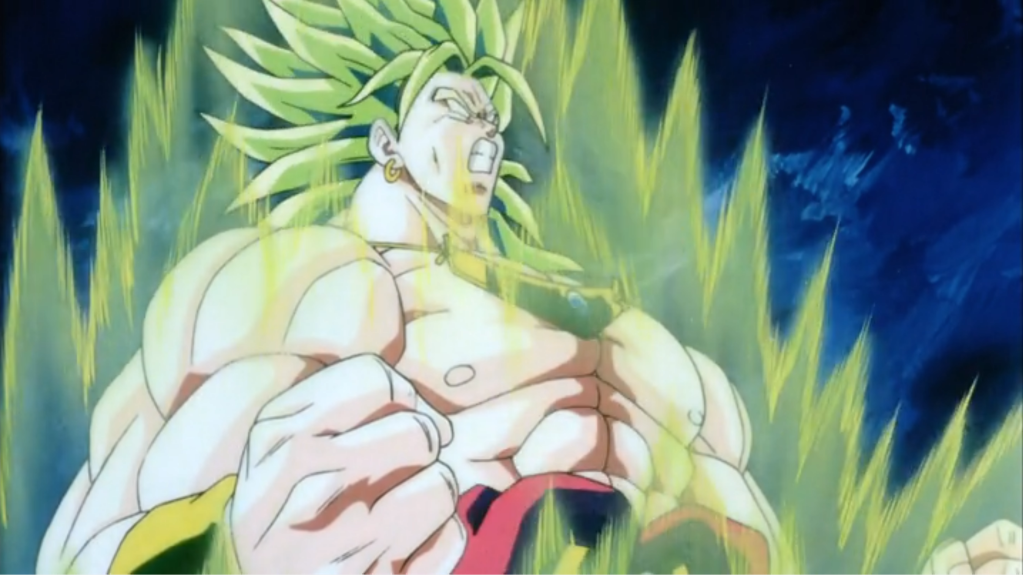
Broly: The Ultimate Deep Dive into Legendary Power
How strong is Broly in Dragon Ball Z? Will he destroy the universe?! This article brings to you the most comprehensive, evidence-based deep dive ever created on this character. Utilizing rare guidebook scans and direct quotes from Takao Koyama, this definitive analysis is unlike any other. Whether you’re a longtime fan or just curious, this guide will help you truly understand Broly.
If this is your first time reading this article, please read it from top-to-bottom. Some things may not make sense if you do not read the entire article or skip around. This article is LONG, but if you want to truly understand Broly in Dragon Ball Z, then it is worth your time. Also, you can click on every picture for more information about them. If you click on a picture while using a mobile phone, click the circled i in the bottom right corner for more information on that picture. If you are using a slow Internet connection, it may take some time for all of the pictures to load, but I assure you they are there. This article is best viewed on a desktop, but works perfectly fine on mobile phones. This article contains hundreds of scans. While you may personally feel that some of these scans are irrelevant, others may not. I’ve included everything so that the readers can make their own determinations. This article was written to address ALL interpretations on Z Broly, and not just a single reader’s perspective. For returning readers, please feel free to use the Table of Contents. If you read this article before March 8th, 2026, I recommend re-reading it as an important update was made on that day. Please see the About section of this website for the list of Dragon Ball guidebooks I own. This article is a living document that is updated to reflect new discoveries, so it may look different if you read this again in the future. It was last updated on March 15th, 2026.
If you like my content, please consider supporting me on Ko-fi or Patreon. Your support would help free up my time so that I can focus on this website. Subscribers on Patreon get to chat with me, vote on future Deep Dives, get sneak peeks at upcoming content, get to see every update I make to the website, and more. Thank you!
Table of Contents
- Who is Broly?
- Dragon Ball Cosmology and the Southern Galaxy’s Destruction
- Dragon Ball Z: Broly — The Legendary Super Saiyan
- Dragon Ball Z: Broly — Second Coming
- Dragon Ball Z: Bio-Broly
- Movie Scaling
Who is Broly?
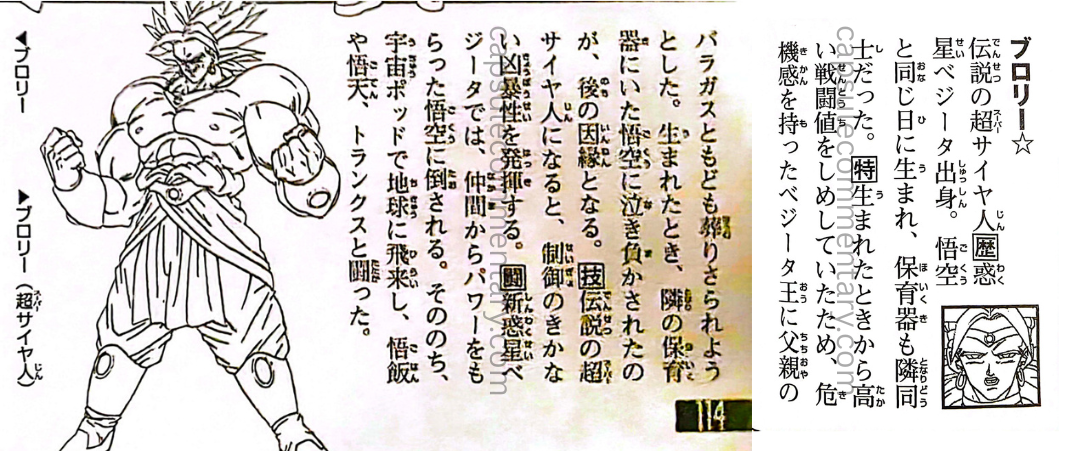
Before being canonized in Dragon Ball Super: Broly, Broly was first a recurring villain in the Dragon Ball Z movies. Broly was, and still is, massively popular among fans for being a truly evil Super Saiyan and for defeating his opponents with a brutality nearly unseen in Dragon Ball. Broly was so popular that he appeared in three Dragon Ball Z movies, dozens of games, and was the inspiration for his Super spin-off and Kale. This iteration of Broly is often called “Z Broly” to distinguish him from the canon version in Dragon Ball Super. For this article, all mentions of “Broly” refer to “Z Broly.” Since he is a non-canon character, Akira Toriyama was only minimally involved in his creation. Broly was instead created by Takao Koyama, who designed him with only the idea of a villain that was stronger than Goku and who Goku could not beat through ordinary means. (However, Kōzō Morishita, the series planner of Dragon Ball at Toei, credits Yu Kondō, Toriyama’s second editor, as Broly’s creator.) Koyama even goes so far as to tweet things like: “In my own interpretation of the Dragon Ball world (up to Z), Broly is the strongest warrior. I’m not involved with the characters that came after Z, so I don’t know about them.” He’s also said in his interview for Dragon Ball The Movies: “Because [Broly is] the strongest (laughs). There’s simply no one stronger than Broly in the world — including the TV anime. After all, even the Prince of Saiyans, Vegeta, was terrified of him (laughs).”
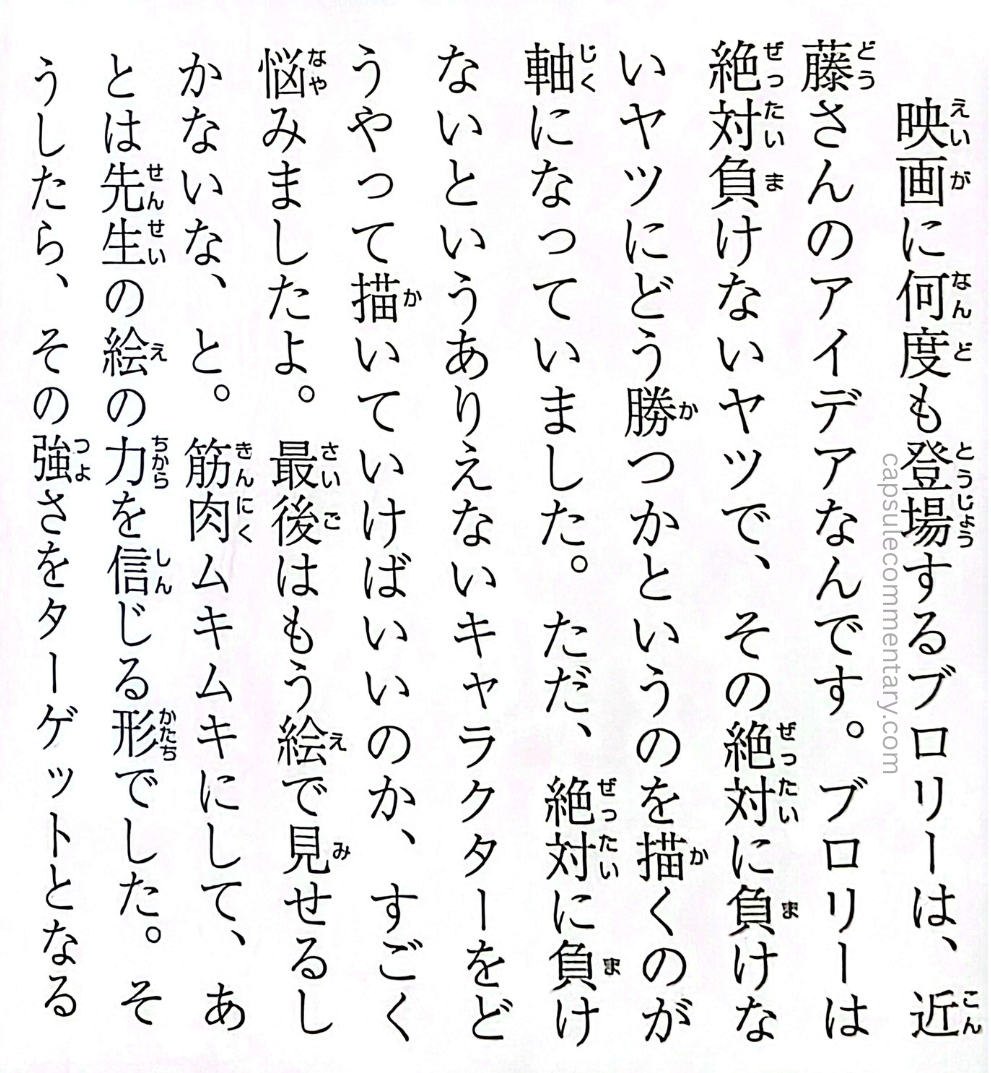
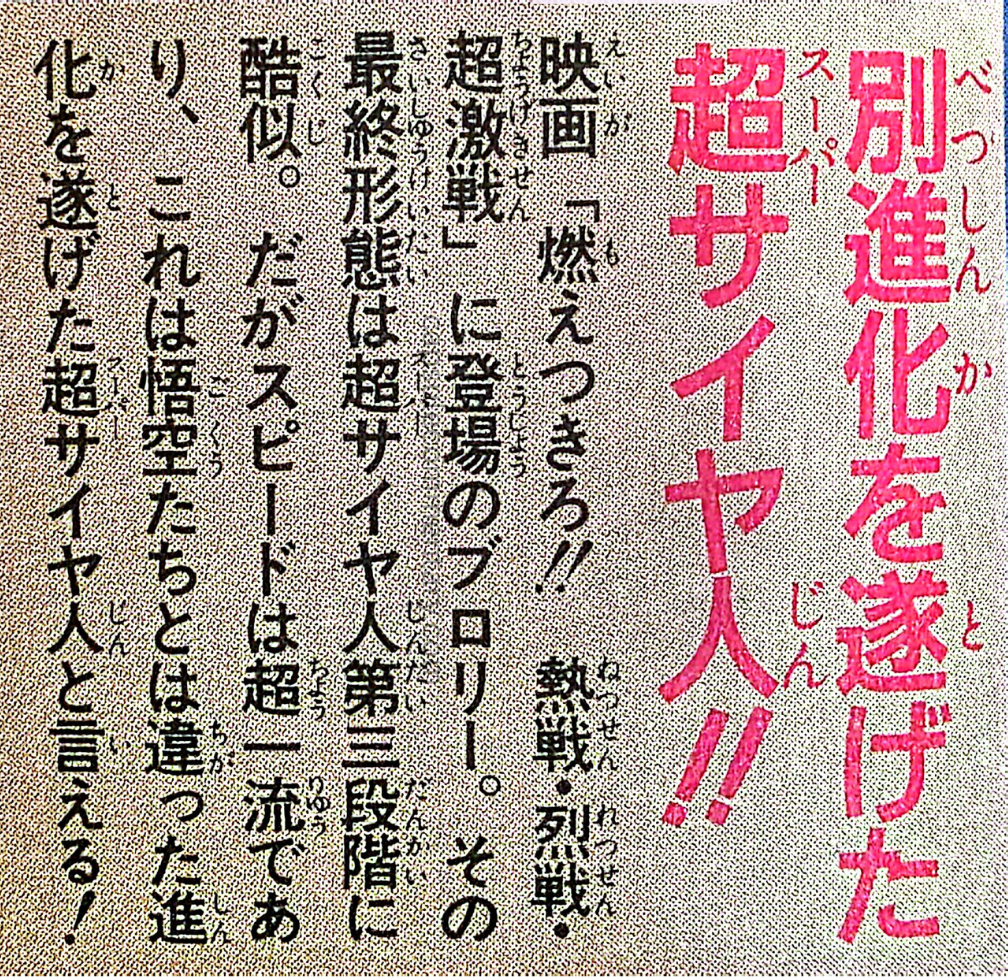

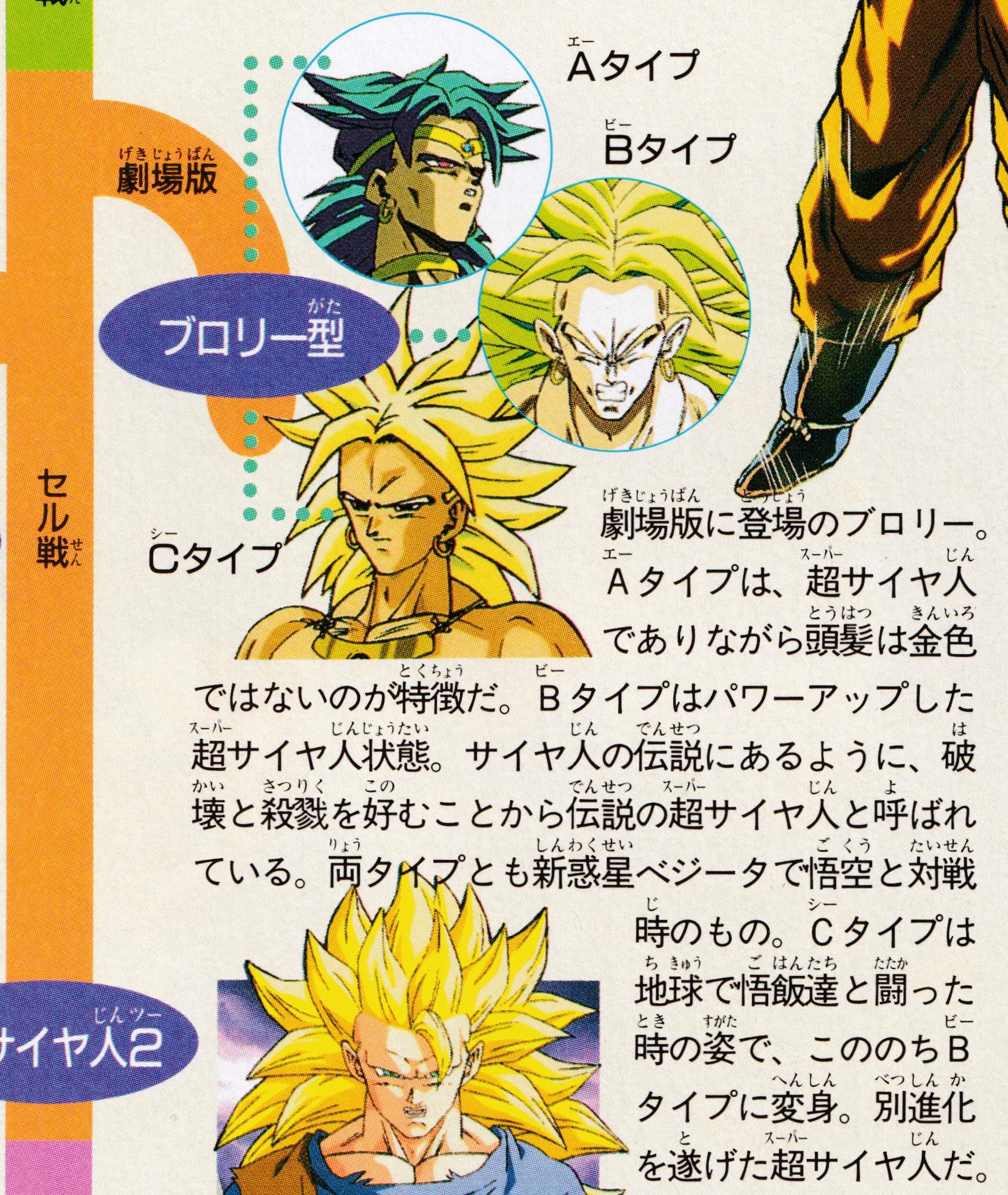
If you’re reading this, you are undoubtedly already familiar with Broly’s story, so I will skip over retelling that. Page 92 of Daizenshū 10 explains Broly’s three Super Saiyan forms as Type A, Type B, and Type C. His restricted Super Saiyan form is classified as Type A, his Legendary Super Saiyan form as Type B, and his normal Super Saiyan form as Type C; essentially in the order of appearance. It then goes on to say Broly is “a Super Saiyan who underwent a separate evolution.” Similarly, Dragon Ball Z Shueisha Jump Remix Vol. 3 page 287 states Broly is “a Super Saiyan who underwent divergent evolution!! His final form closely resembles the third grade of Super Saiyan. However, his speed is top class—this can be called a Super Saiyan who evolved differently from Goku and the others!” Thus it seems that the concept behind Broly’s Legendary Super Saiyan form can be understood simply as, “What if Super Saiyan Grade 3 wasn’t slow?”
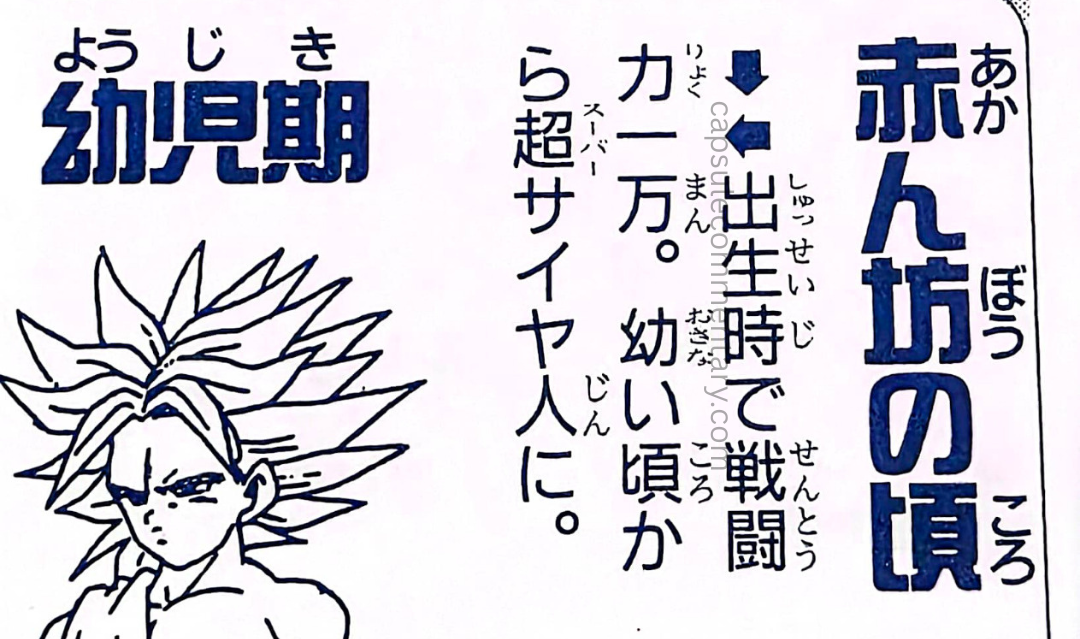
True to his divergent evolution, Broly was born with a Saiyan Saga-level battle power of 10,000. On Twitter, Koyama wrote of Goku’s involvement in Broly’s growth: “I believe Broly had latent potential, and baby Goku somehow stimulated that power, which later ended up awakening it.” This strength allowed him to save himself and his father Paragus when Freeza destroyed Planet Vegeta.
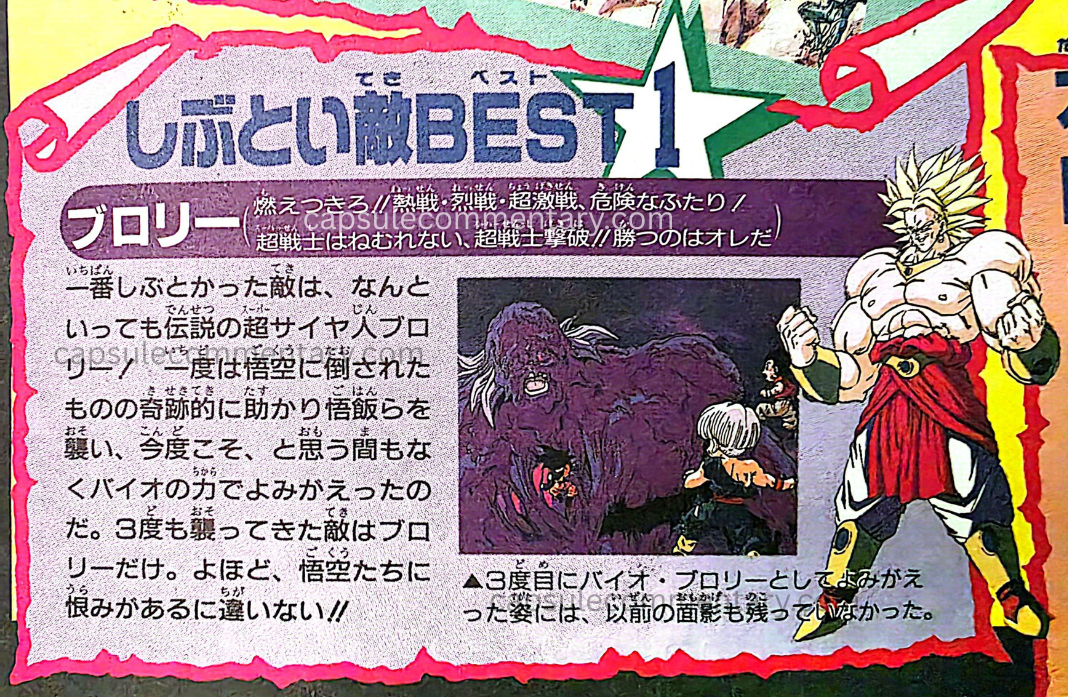
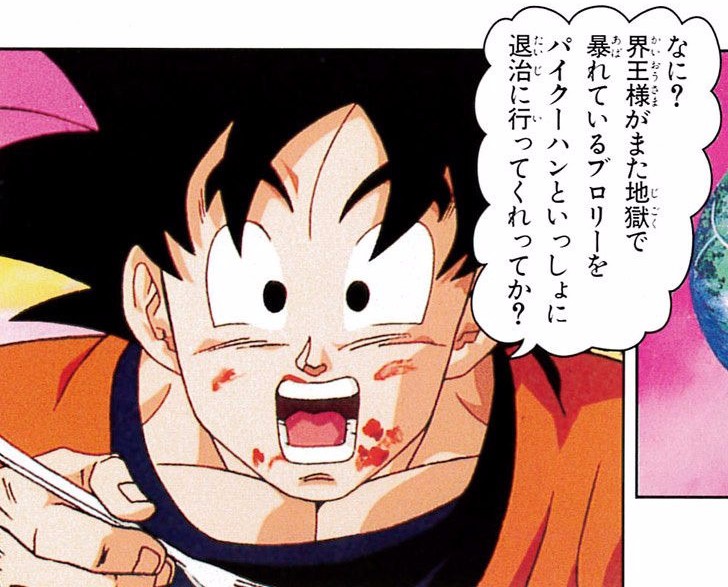
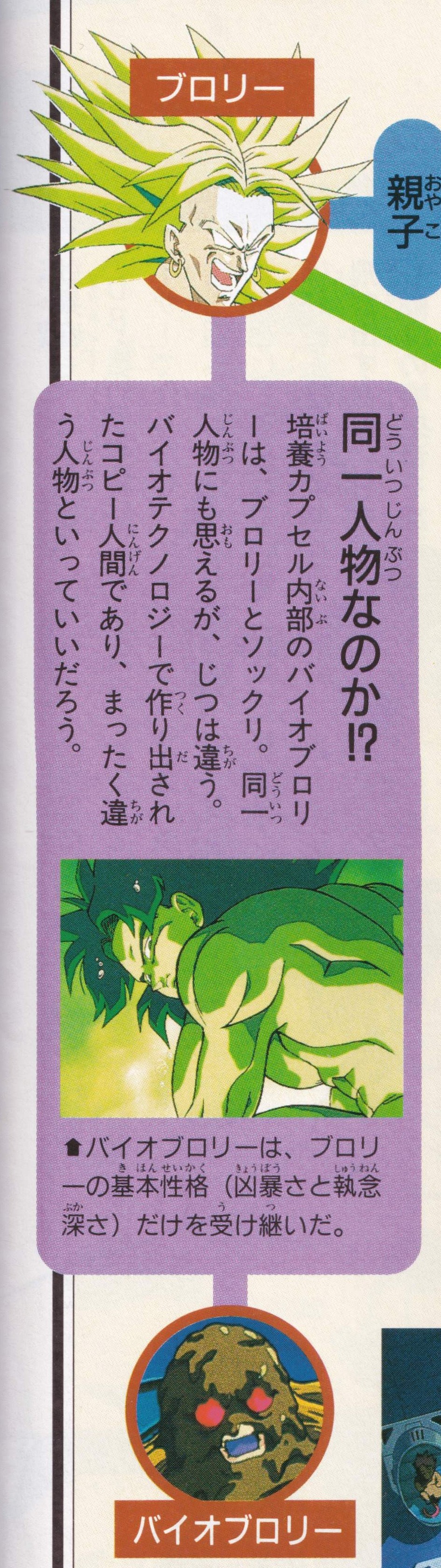
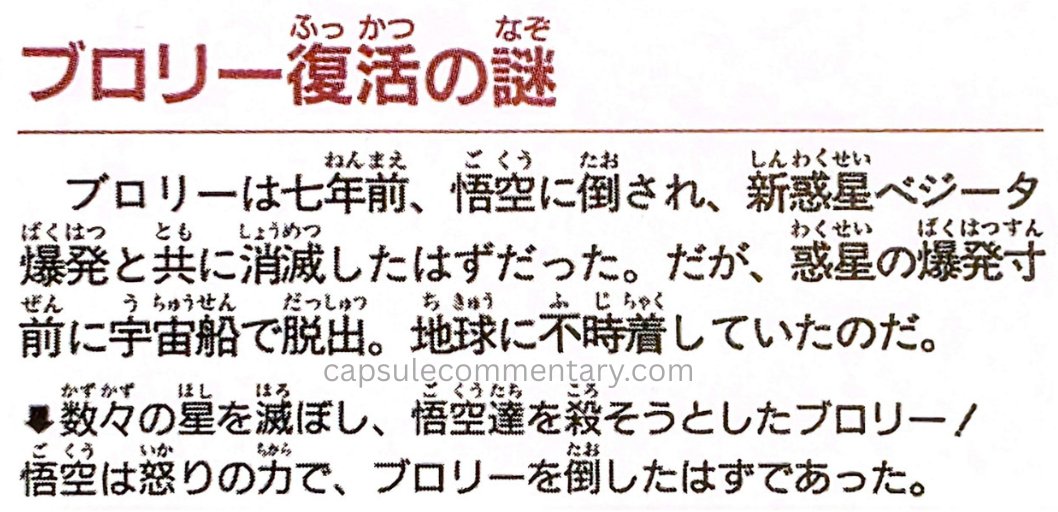
Page 12 of Spring 1995 Toei Anime Fair (DBZ Movie 12)’s pamphlet says of Broly: “The most tenacious enemy, without a doubt, was the Legendary Super Saiyan Broly! Though he was once defeated by Goku, he was miraculously saved and attacked Gohan and the others, and before one could even think ‘this time for sure,’ he was revived through the power of bio-technology. Broly is the only enemy who attacked three times. He must really bear a deep grudge against Goku and the others!!” The statement about attacking three times is no longer accurate because of Freeza, and the implication that Bio-Broly is Broly is also not true. Koyama confirmed they are separate beings on Twitter, writing, “Broly and Bio-Broly are different individuals, after all.” Bio-Broly was also confirmed to be a separate being on page 72 of Daizenshū 10. The end of Movie 11 even seems to suggest that Goku was absent during the events of it because he was fighting the original Broly with Paikuhan, which also means they are separate characters. Bio-Broly will be covered by this article nonetheless.

Dragon Ball Cosmology and the Southern Galaxy’s Destruction

Dragon Ball Cosmology and the Southern Galaxy’s Destruction
The first Broly movie, Dragon Ball Z: Broly — The Legendary Super Saiyan, opens with his attack on the Southern Galaxy wherein it appears as though he destroys it completely, so this section will explain the cosmology of Dragon Ball in order to better understand this feat. Dragon Ball Super and Daima expanded upon the cosmology of the franchise considerably and retconned certain aspects revealed in guidebooks. Therefore, I will refer to only what is currently true and not use outdated information. However, I will skip over parallel worlds and time travel as they’re not directly relevant. Many of the pictures in this section will contain outdated information alongside information that’s still currently accurate. I encourage you to click on all of the pictures in this section to better understand what I am referencing, as I don’t list the sources in each paragraph due to this mix of correct and incorrect information. The first set of pictures deal with the multiverse1, the second set with Universe 7, the third set with galaxies, and the fourth set with Earth.
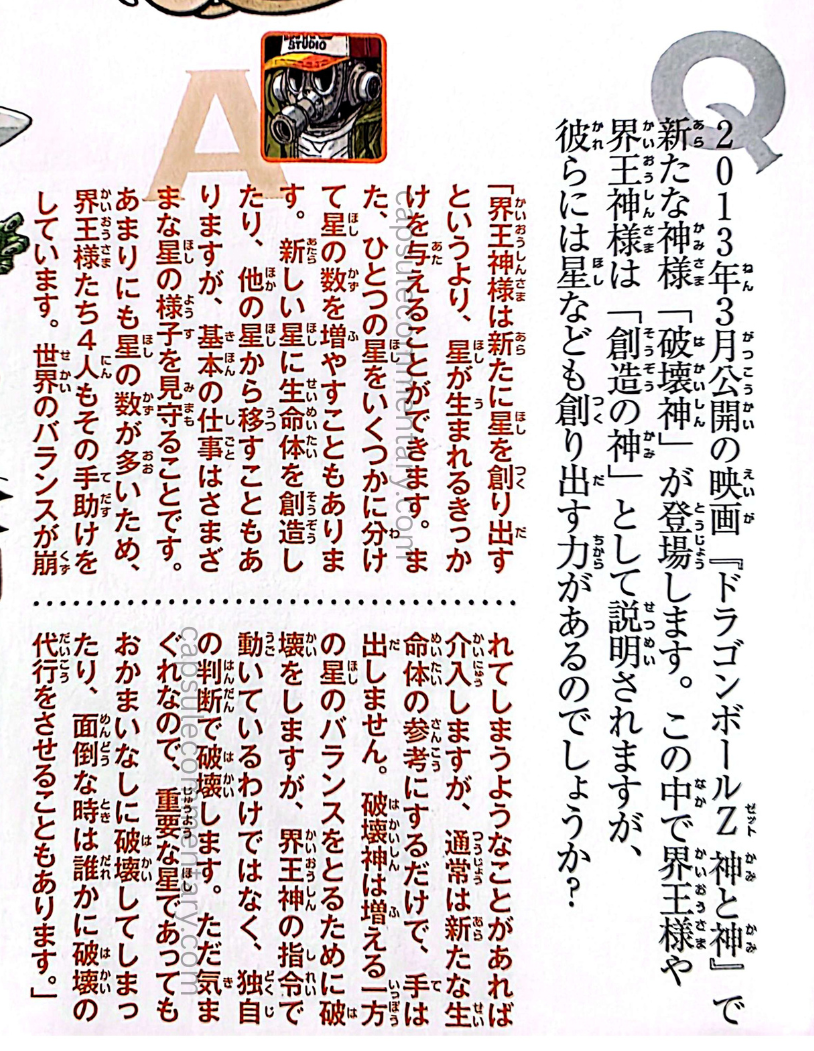
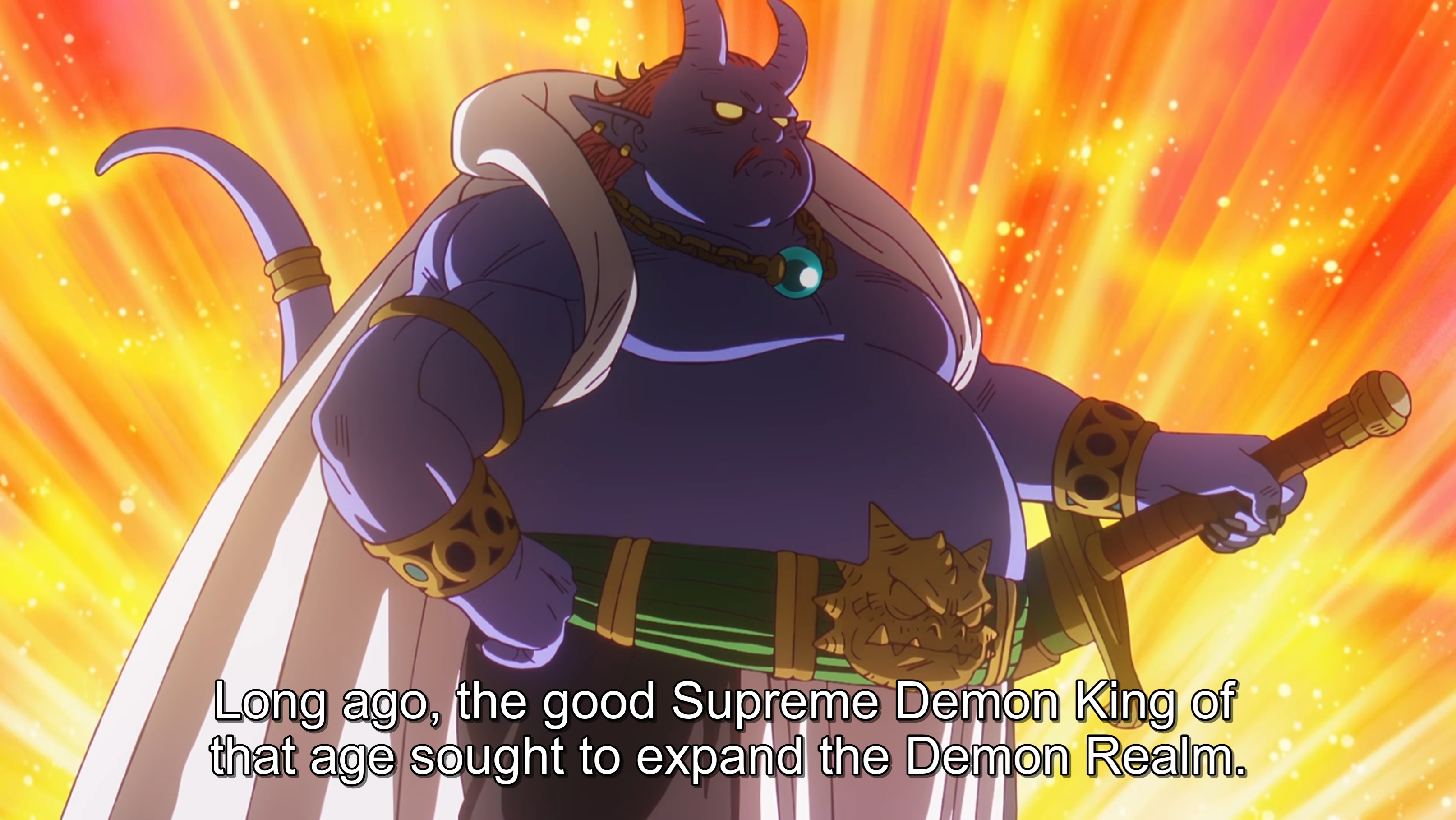
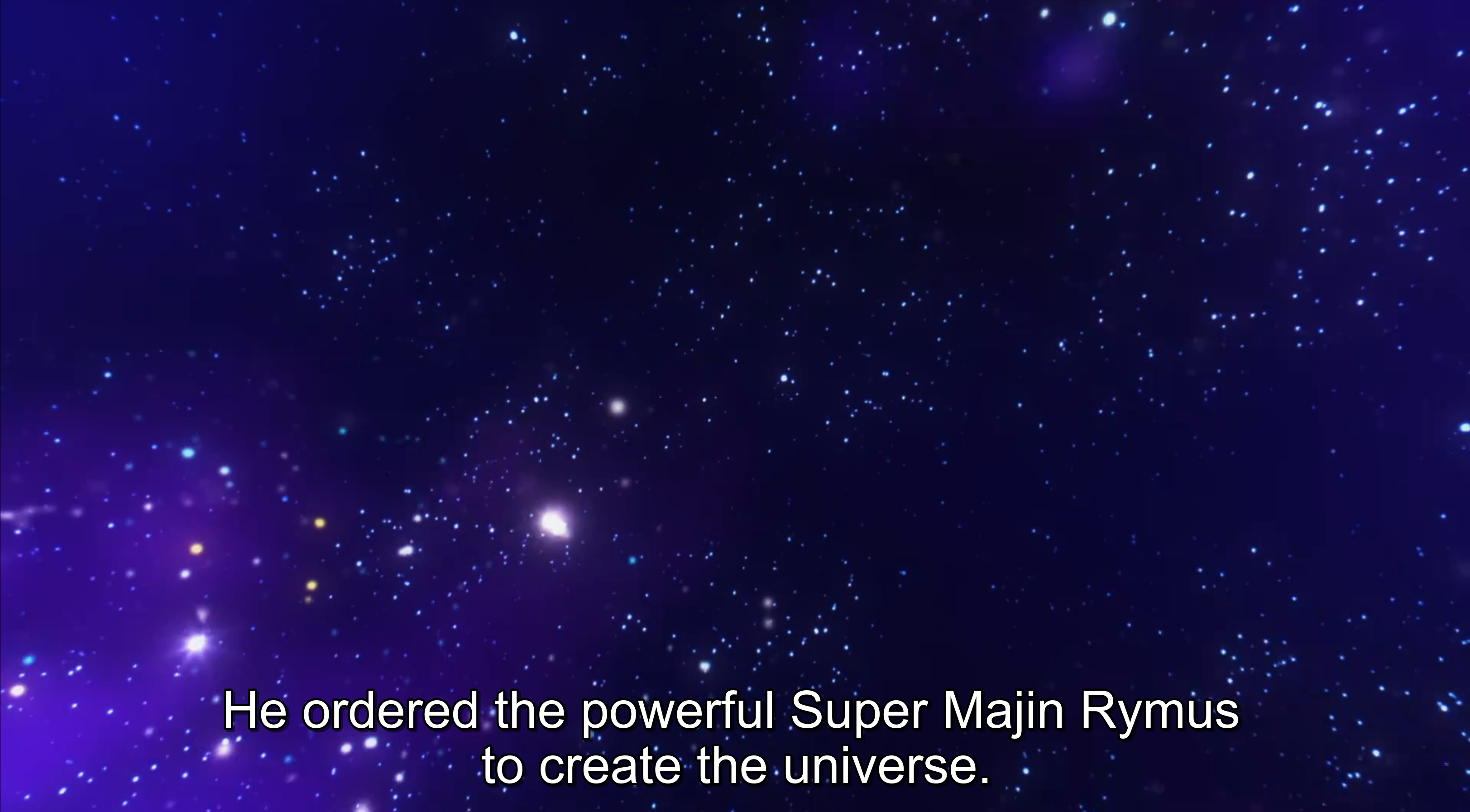
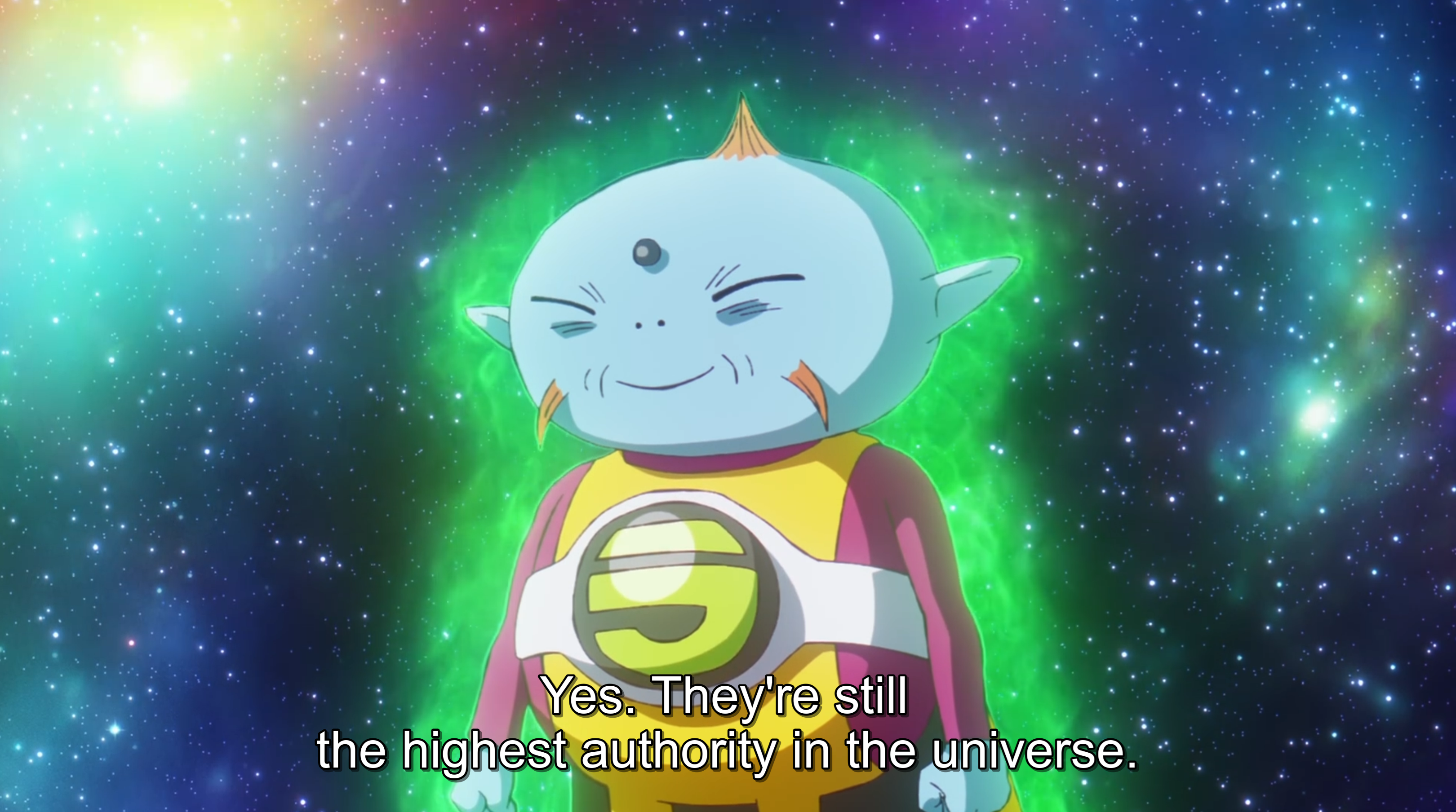
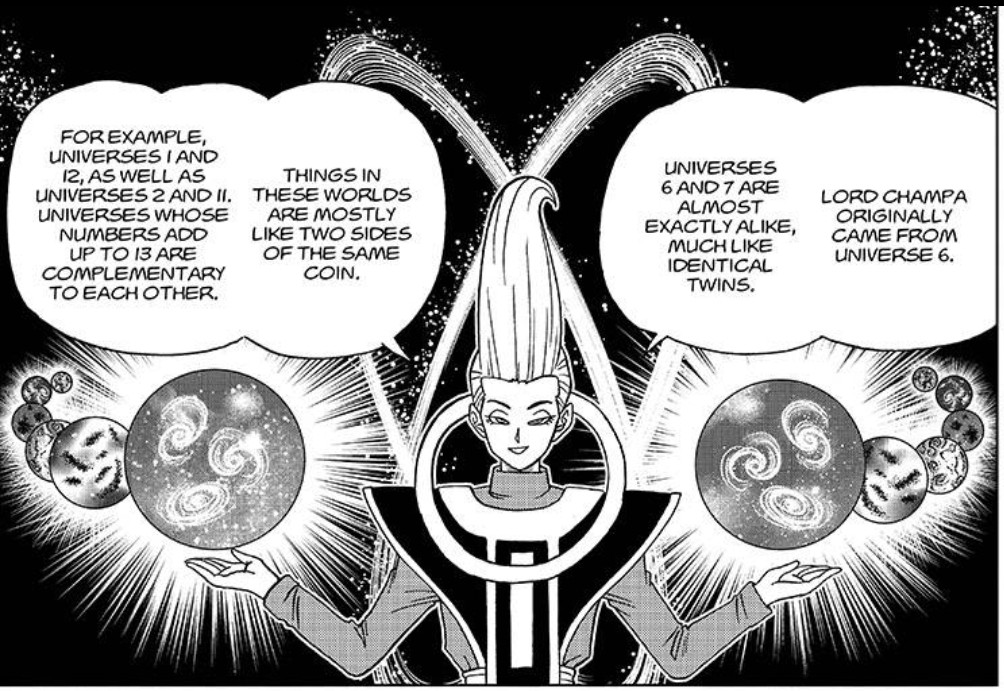
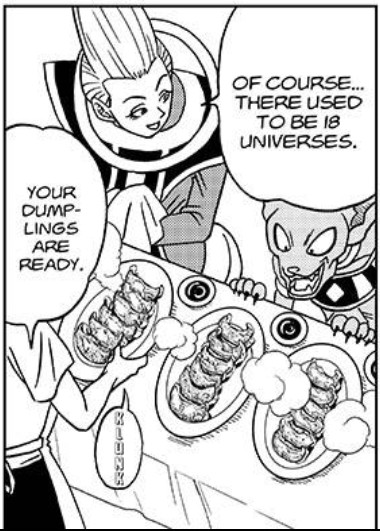
In Dragon Ball, there are currently 12 universes composing a multiverse and a Demon Realm that exists alongside the 12 universes. In Dragon Ball Daima episode 10, Kaiōshin explains that a very long time ago, the King of the Demon Realm ordered a Super Majin named Rymus to create the multiverse—18 universes—which are now ruled over by Zeno and Future Zeno. For reasons not fully explained, Universes 13 to 18 were destroyed by Zeno. It is also currently unknown how Rymus and the Zenos co-exist, if the Zenos’ authority extends to the Demon Realm, and who is above the other in hierarchy. Additionally, travel between the universes, and between the universes and the Demon Realm, is extremely difficult and rarely happens. The space between the universes is a neutral space not formally aligned with any one universe. After the universes started being populated by Majin (beings from the Demon Realm), Rymus selected some Glind from the Demon Realm to monitor the universes as Kaiōshin. Through the work of the Kaiōshin, certain species (such as Saiyans and Earthlings) would eventually be born within the multiverse as beings with no direct ties to the Demon Realm. Also, any two universes that add to the number 13 are complementary to each other, e.g., Universes 6 and 7. So those two universes will have similar species, planets, etc. This is why both Universes 6 and 7 have Saiyans, for example, but Universe 11 doesn’t.
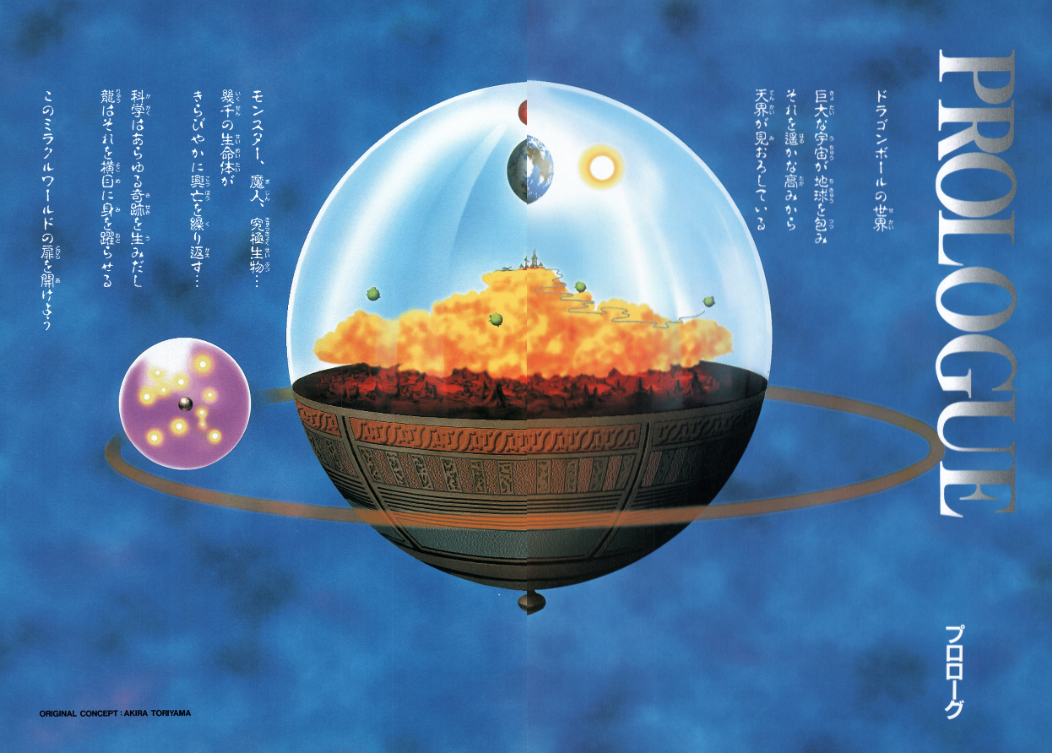
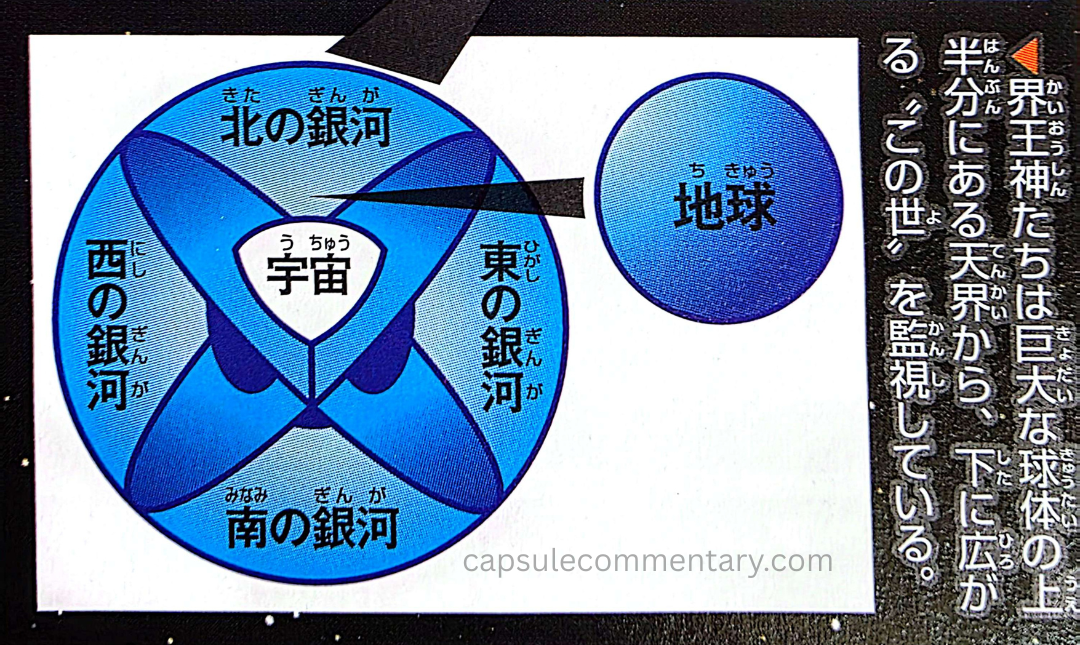
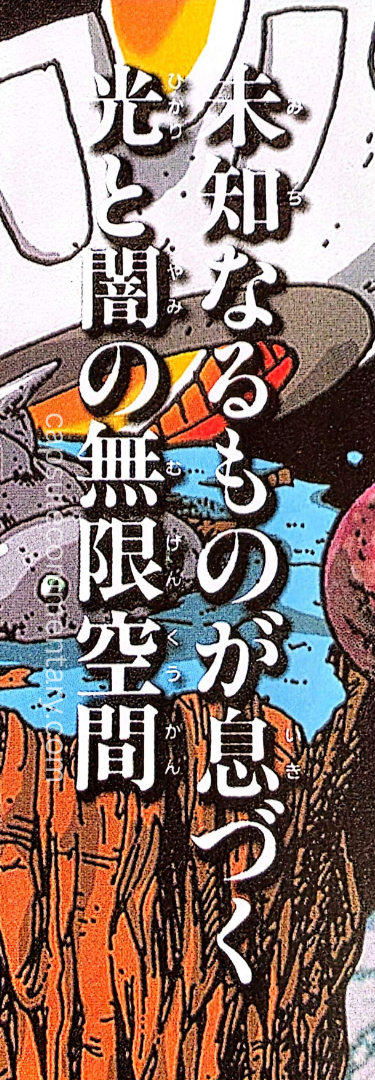
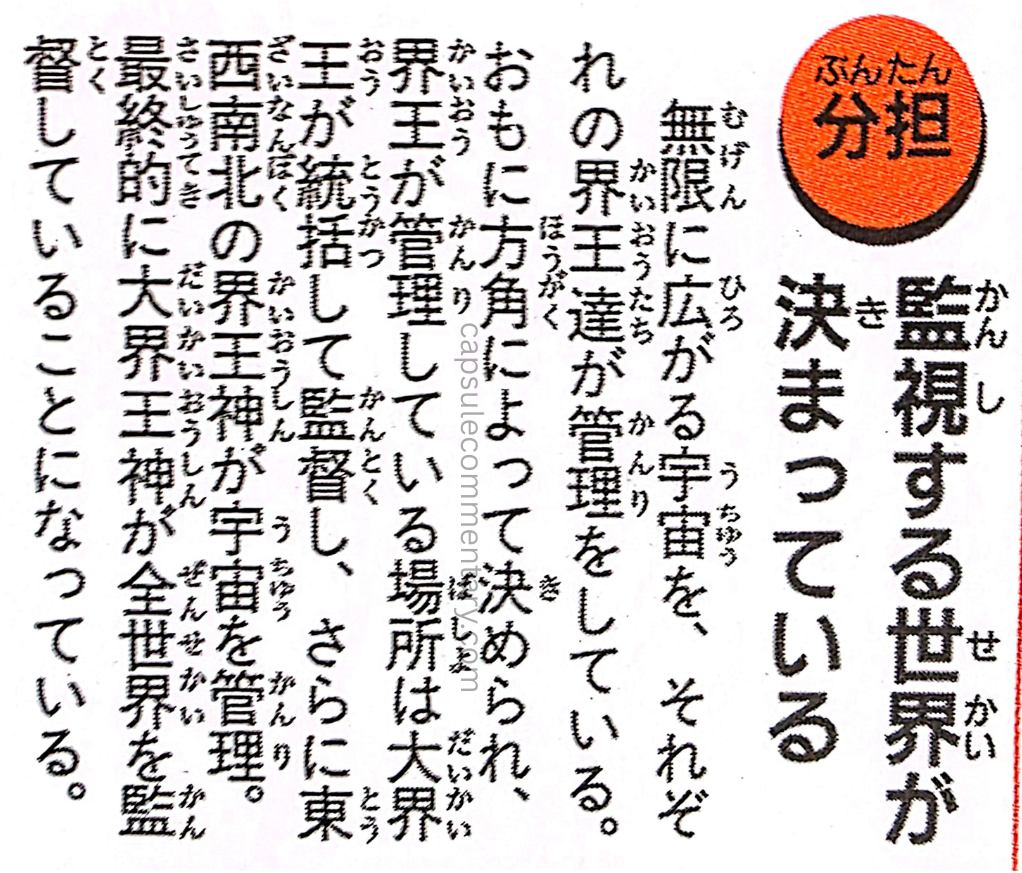
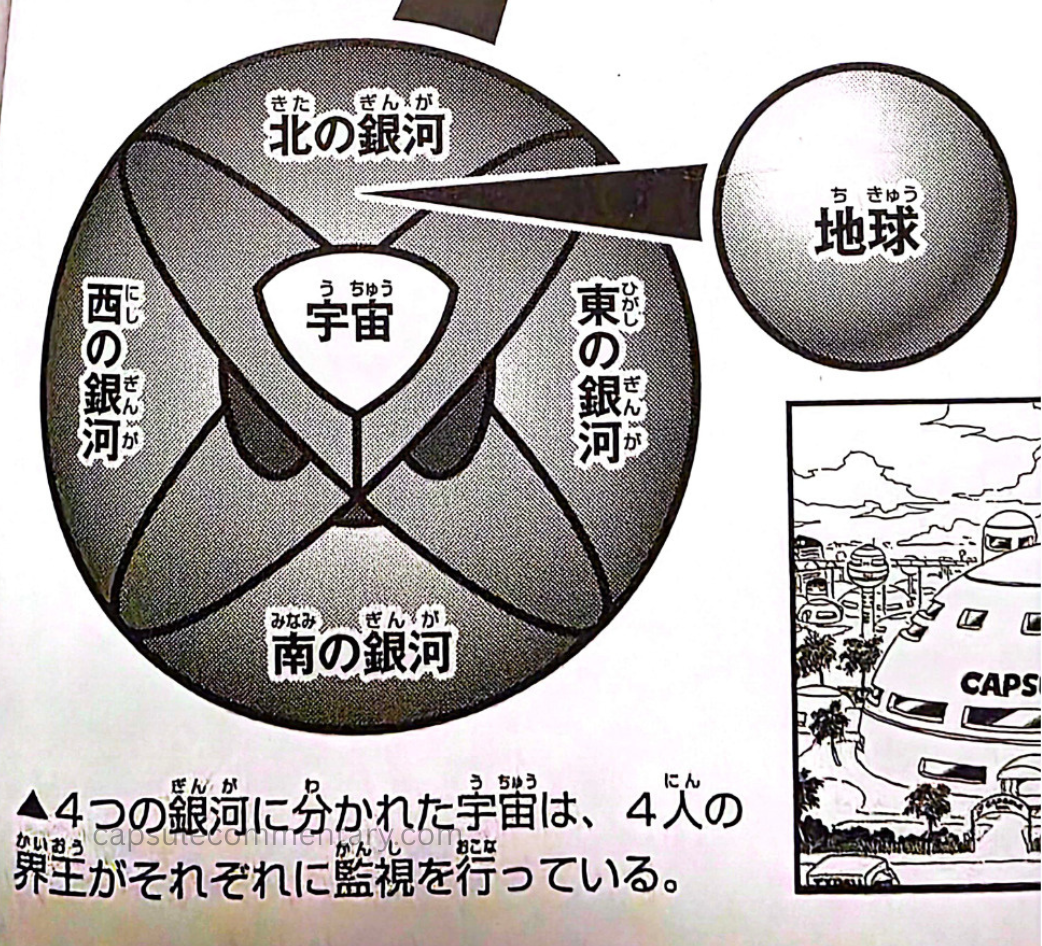
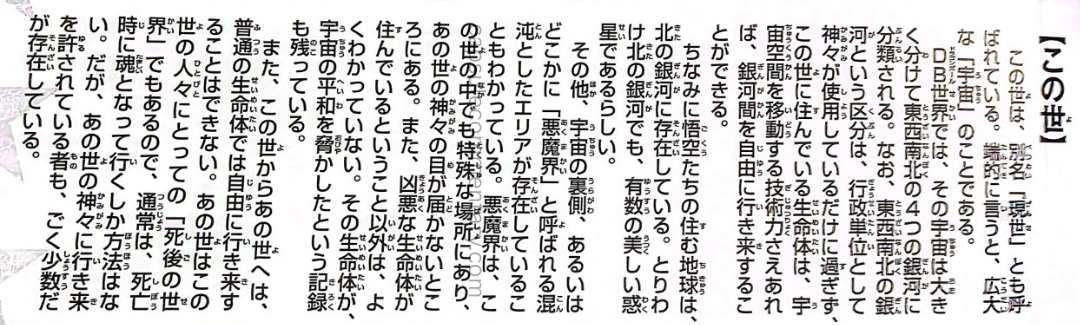

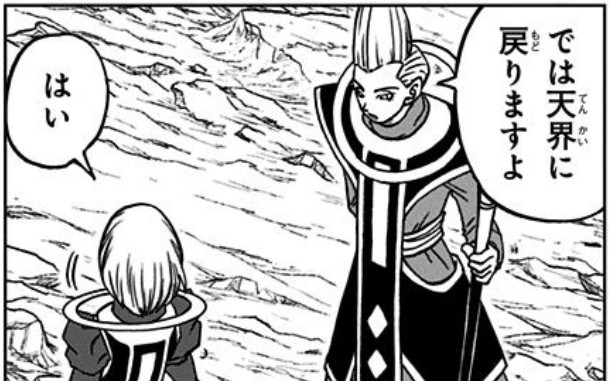
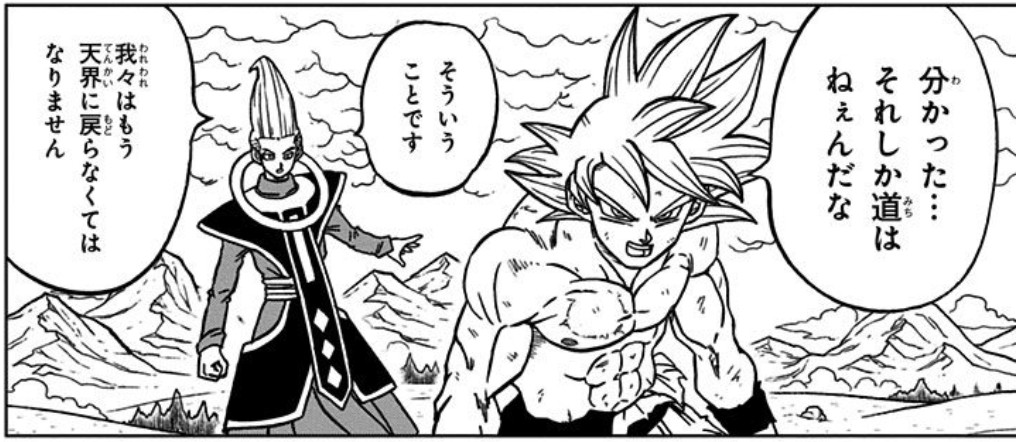
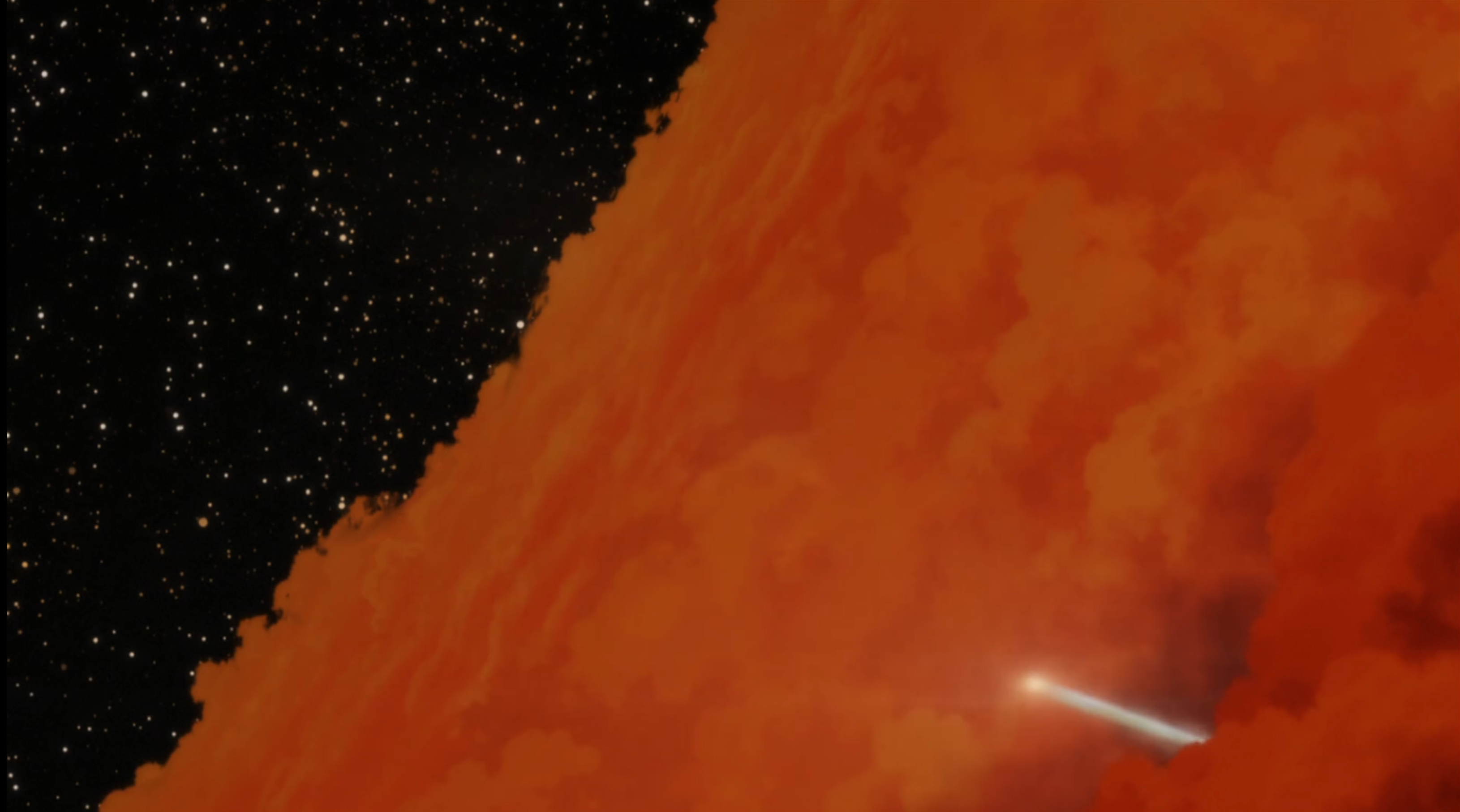
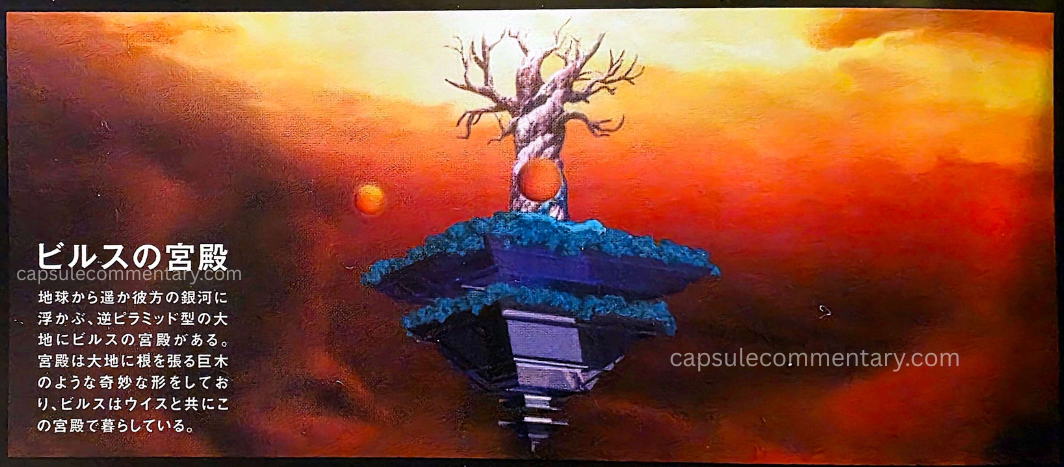
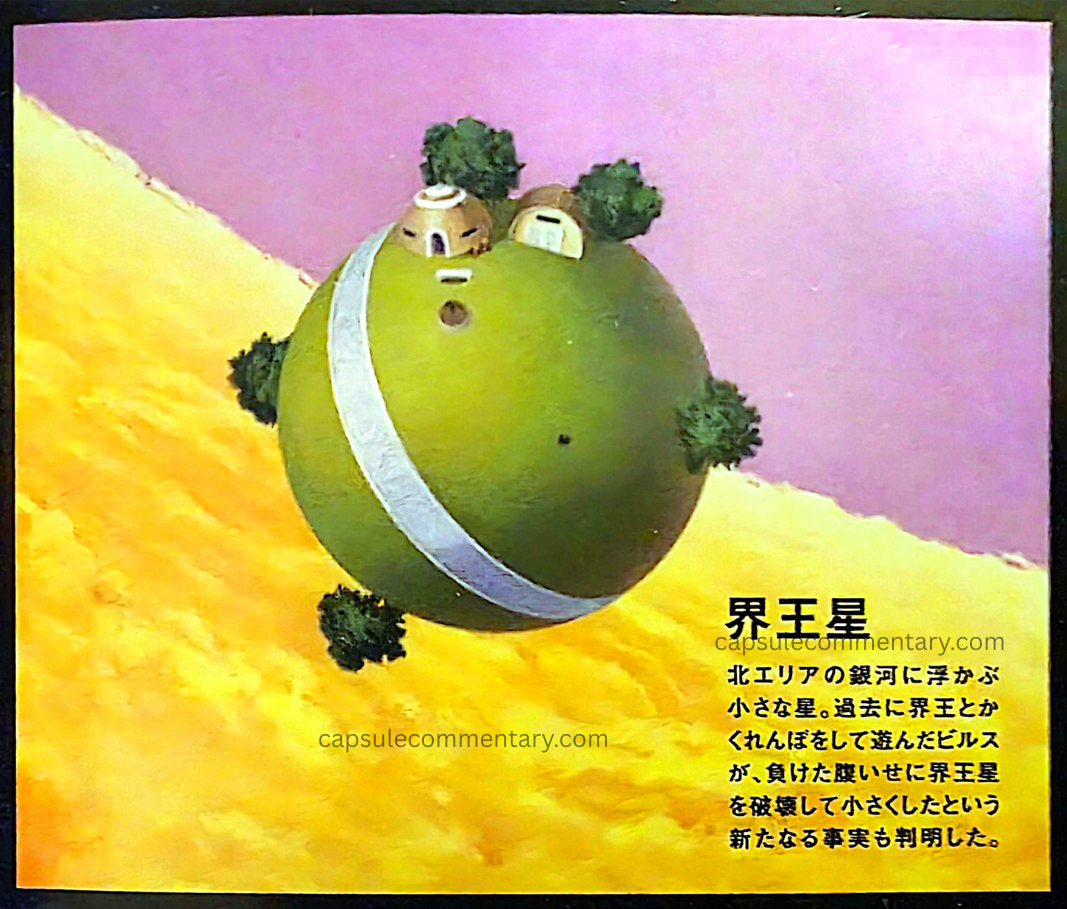
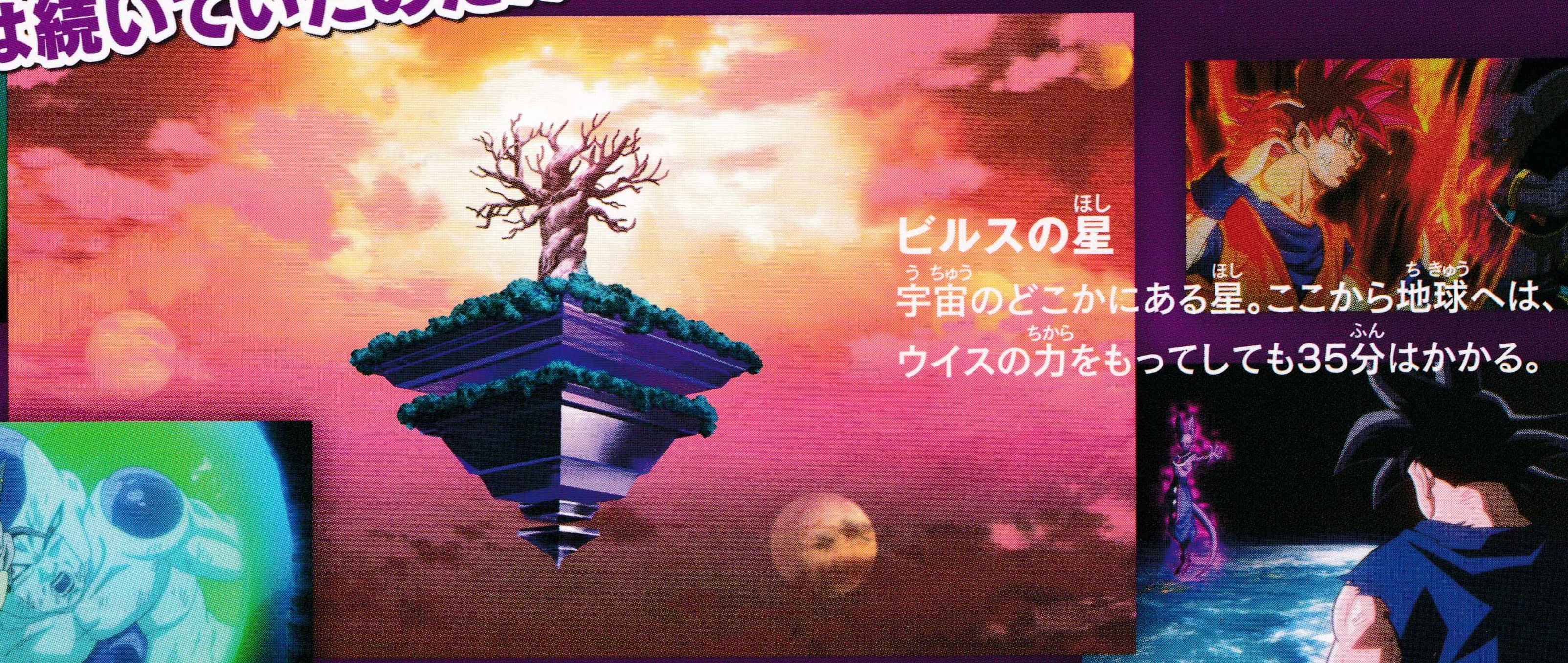
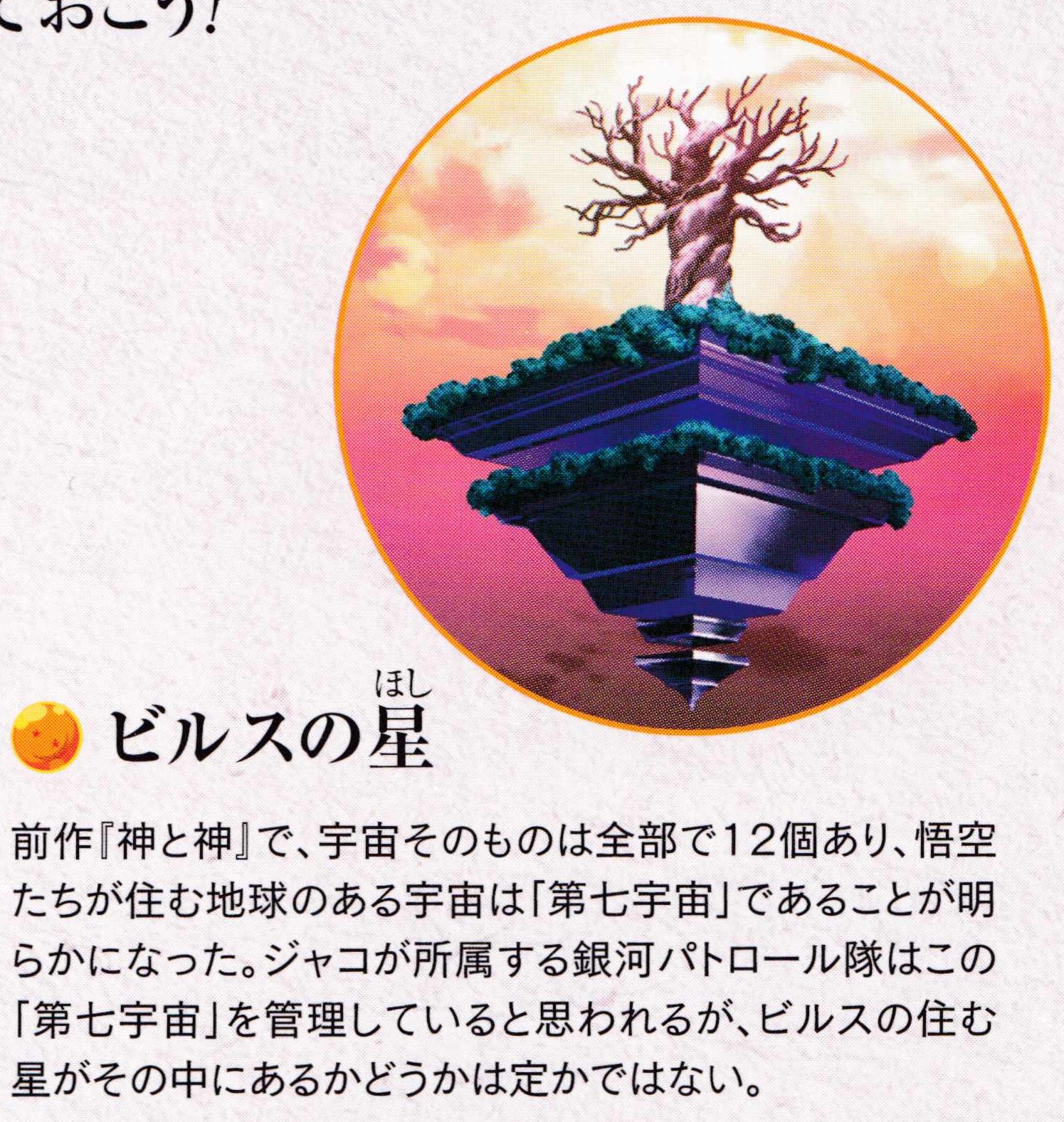

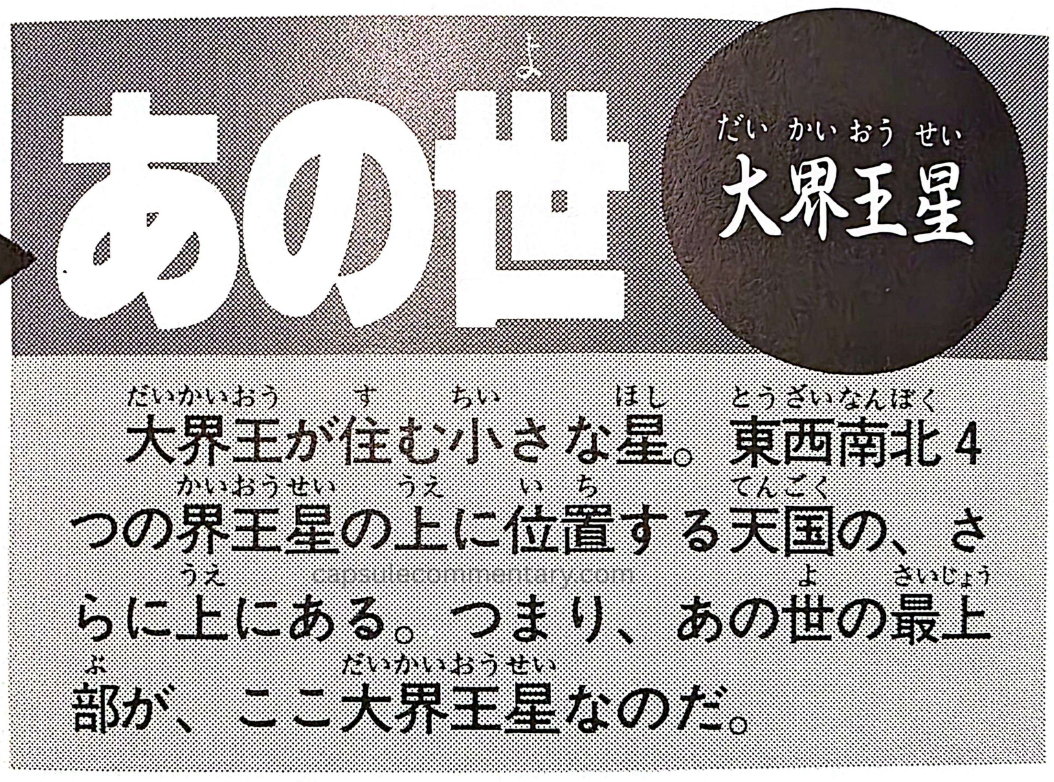
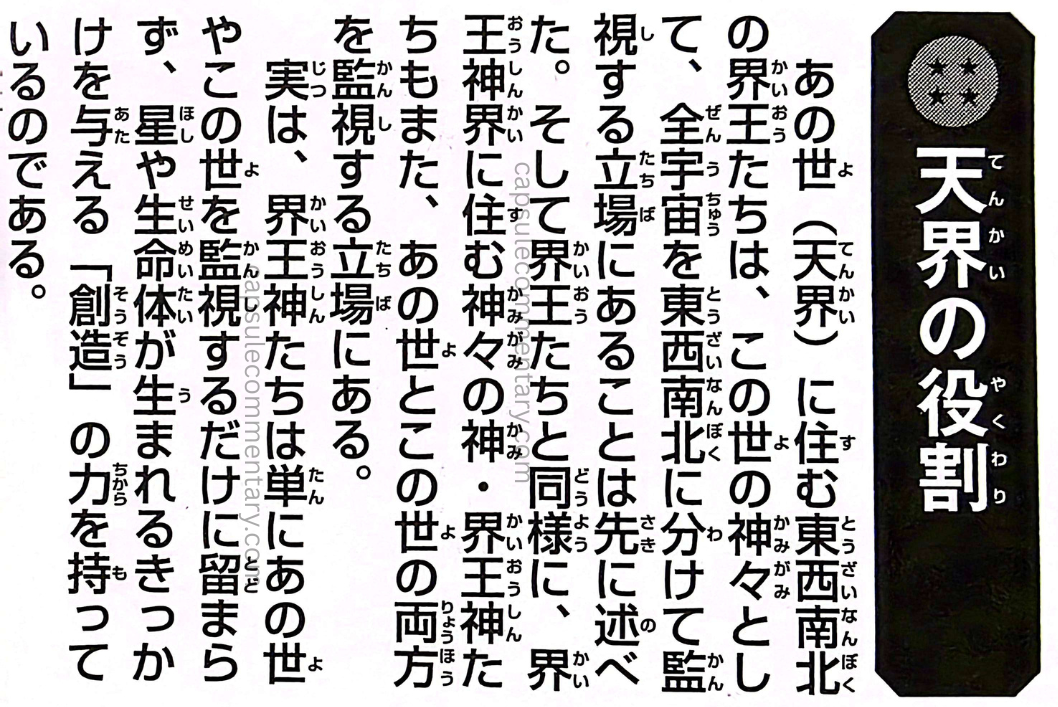
The structure of Universe 7, where the main story of Dragon Ball takes place, is a sphere orbited by a smaller sphere. The orbiting sphere is a holy realm where the Kaiōshin live and monitor all of the larger sphere. Some guidebooks use the word 「天界」 or “the heavens” to refer to this realm. Whis also uses 「天界」 to refer to the locations of Beerus’s planet and Zeno’s castle. As no exact location is ever given for them, it’s plausible that Beerus’s planet is within the same holy realm as the Kaiōshin’s planet, but this is implausible for Zeno’s castle. In fact, the only official statements given on the location of Beerus’s planet is that it is “uncertain” if it’s even within Universe 7, that it’s “somewhere in the universe,” and also that it’s “in a galaxy far beyond Earth.” The last of these examples also says that Kaiō’s planet is “floating in the North Area galaxy,” though. The larger sphere is divided into halves: a top half that comprises the Afterlife and a bottom half that comprises the living world. A wall inscribed with mysterious patterns separates the two. From the bottom to the top, the Afterlife is structured as: Hell, Snake Way, the Kaiō planets, Heaven, and then the Dai Kaiō’s planet.
The Kaiōshin monitor their respective quadrants of both the living world and the Afterlife, as well as create the conditions for life and planets. The Kaiō only monitor their respective quadrants of the living world. The Dai Kaiō oversees the Afterlife, but not the living world. The hierarchies of the Kaiōshin and Kaiō are similar; both have 4 Kaiōshin or Kaiō who monitor a single cardinal direction of the living world with a Dai Kaiōshin or Dai Kaiō above them. However, 3 of the Kaiōshin and the Dai Kaiōshin were killed by Majin Buu before the start of Dragon Ball and their positions were never restaffed. This is because the 5 Glind Trees of the Demon Realm, which give birth to the Glind, have died, and so there are likely no more Glind to fill those roles. Thus, Elder Kaiōshin has effectually become the Dai Kaiōshin through seniority.
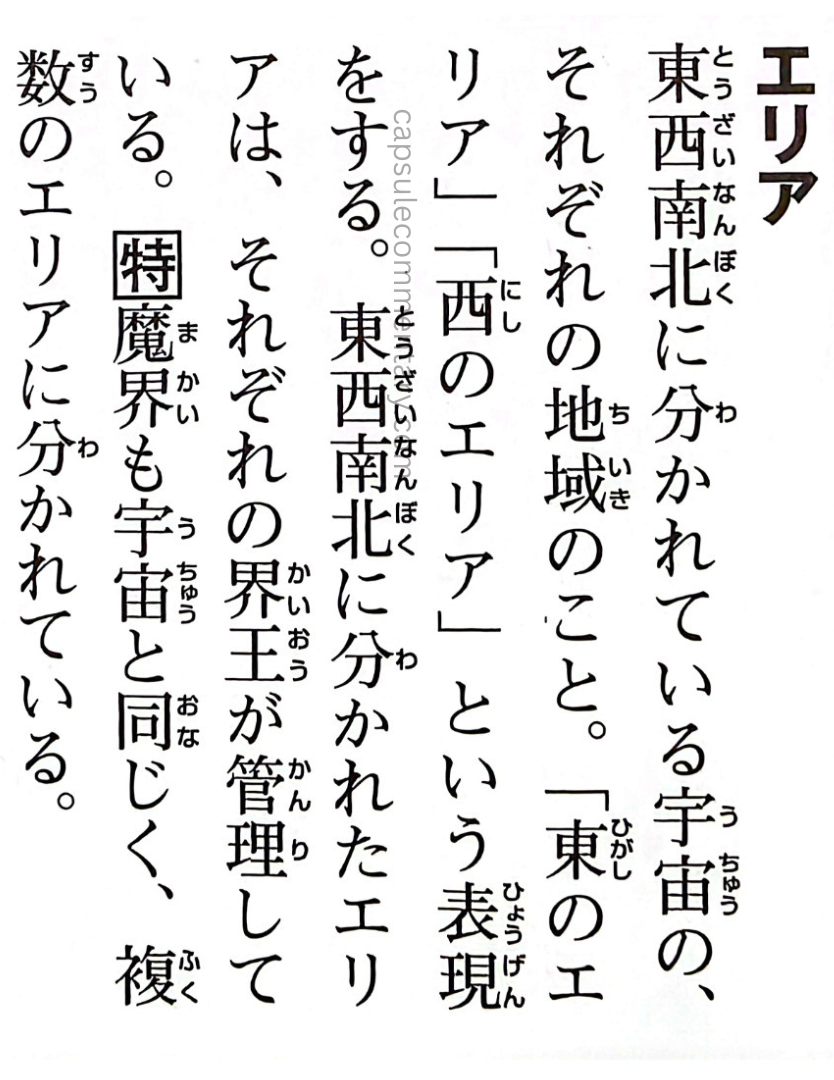
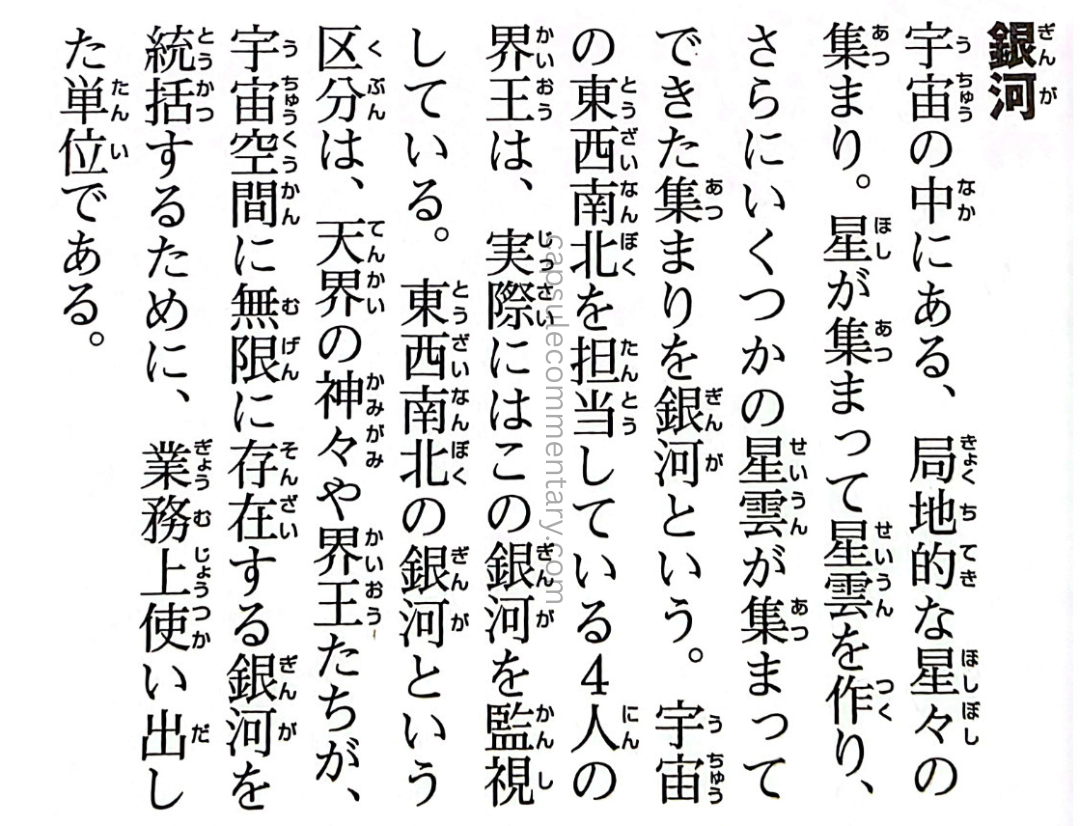

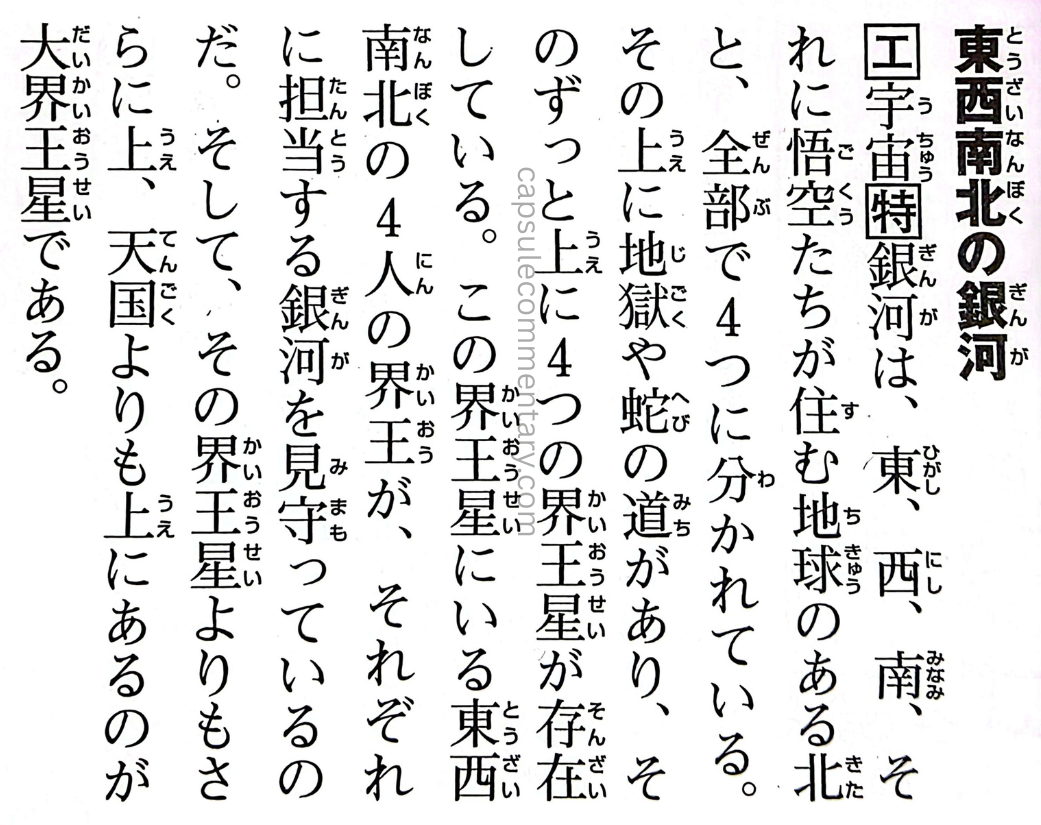
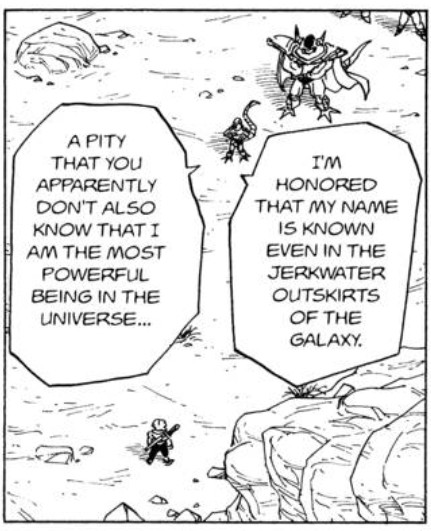
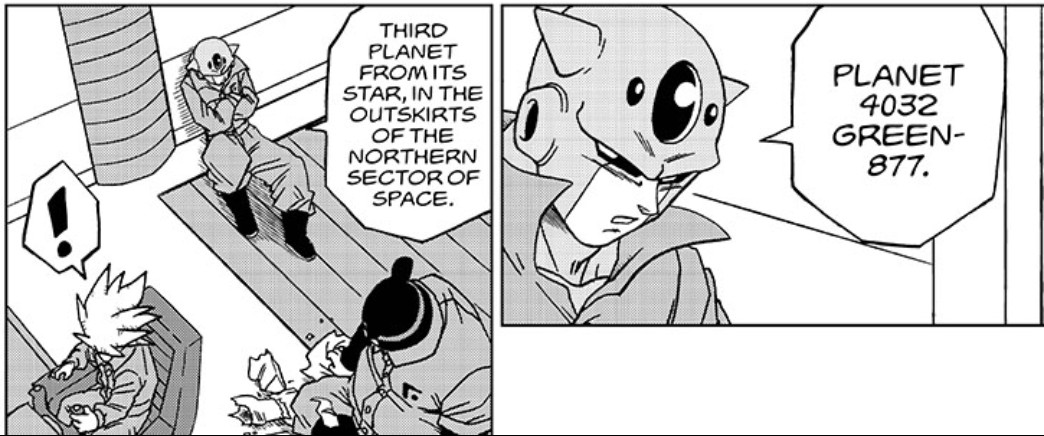
The living world is divided into four quadrants, areas, or districts that are most commonly referred to as “galaxies”—even though, similar to our own universe, it contains countless actual galaxies. This makes using the term “galaxy” for the quadrants potentially confusing. Likewise, the universe itself is endlessly expanding, which is also like our universe in real life. The Northern Galaxy is where the bulk of the story of the Dragon Ball franchise takes place as this is where Earth, or “4032 Green Planet No. 877” as it is called in Dragon Ball Super, is located. Earth is considered to be one of the most beautiful planets in Universe 7 (and I would say in real life, too). It exists on the far edge of the Northern Galaxy, away from the center of the living world in the “Milky Way Galaxy,” or 「天の川銀河」 (again, just like in real life).
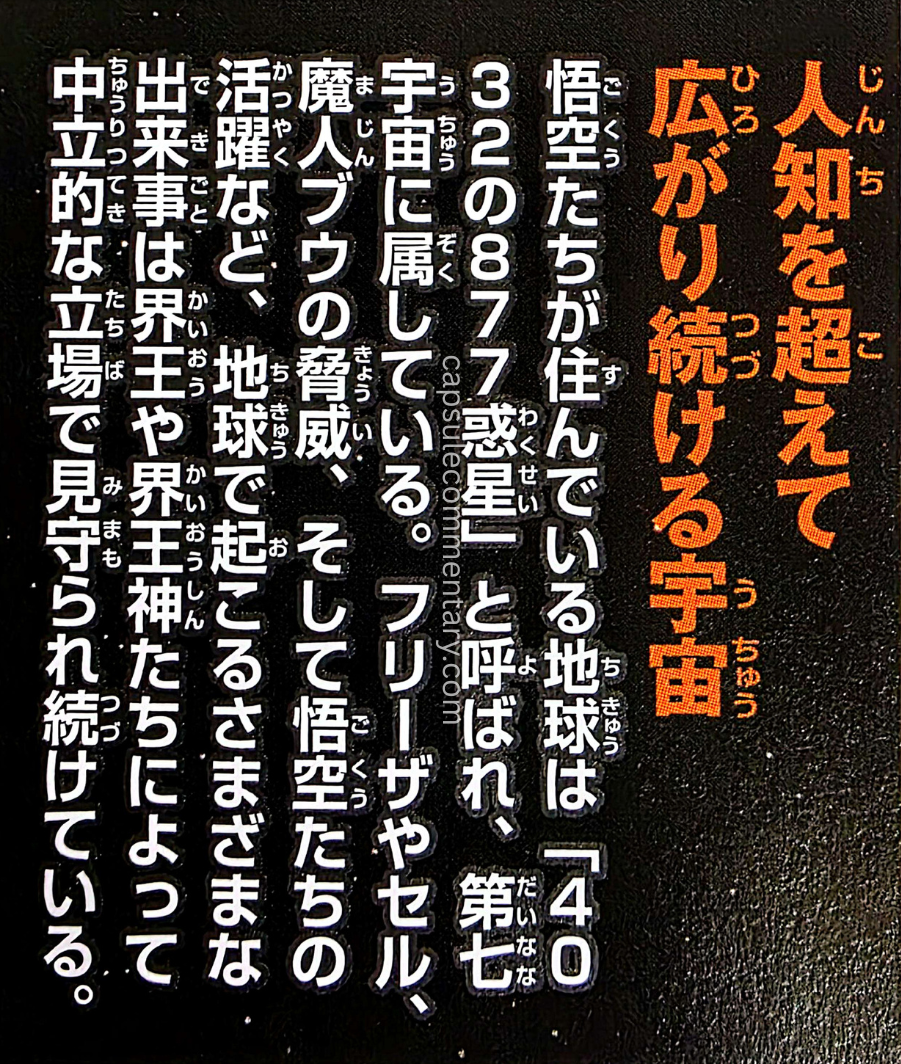
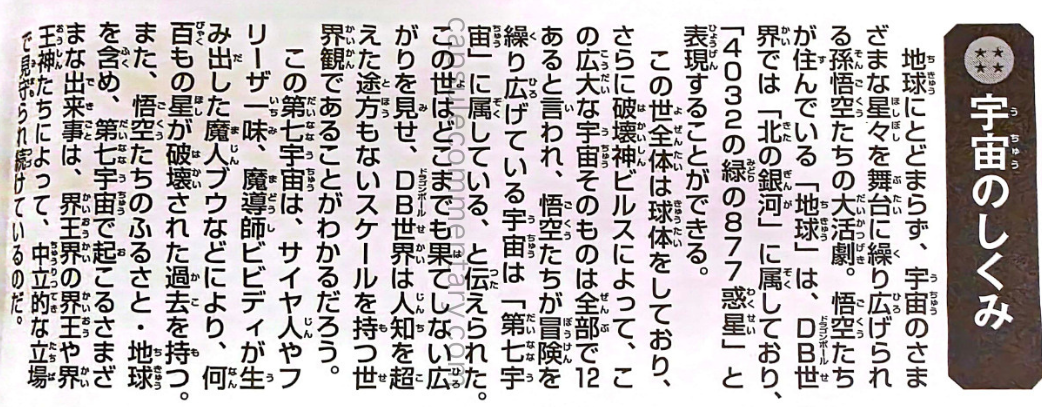


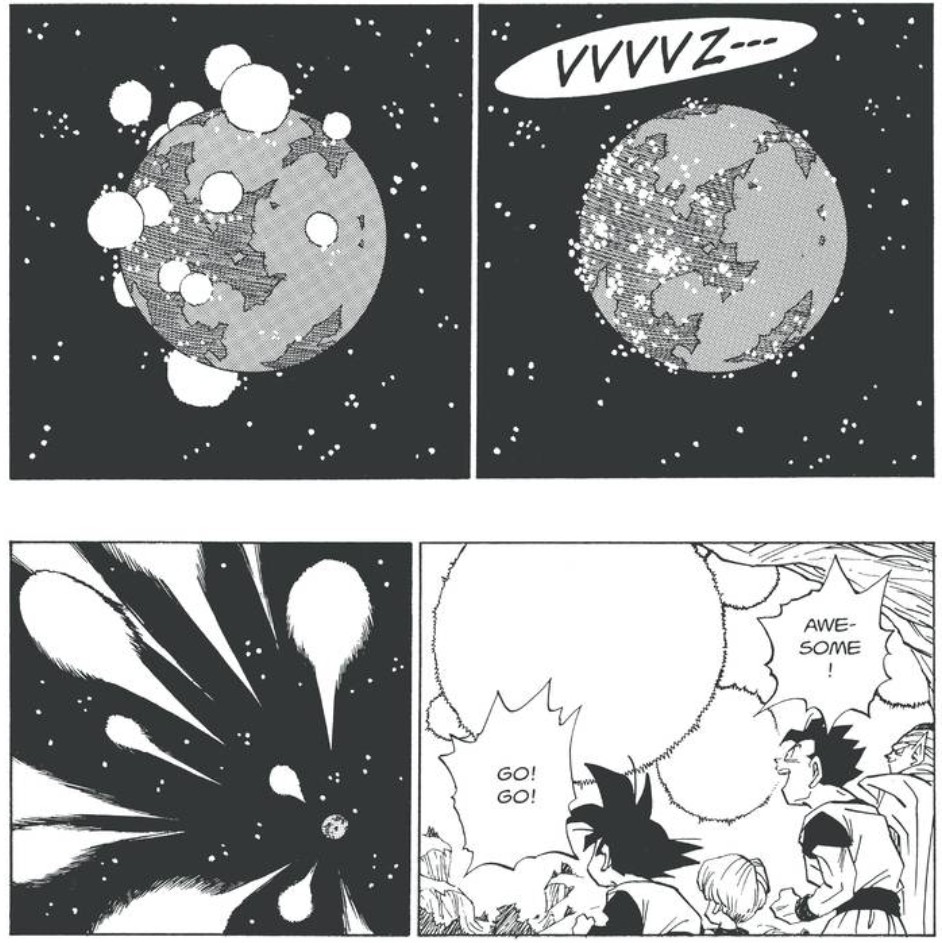
If the depiction of Broly’s attack on the Southern Galaxy is accurate, it would be the single greatest feat of power in Dragon Ball until Battle of Gods premiered. Destroying an endlessly expanding quadrant of the living world is something that not even Majin Buu did. A villain has not even threatened to do that until Fused Zamasu did in Dragon Ball Super chapter 25 on page 14. However, nearly all of this cosmology was developed AFTER the three Broly movies. So the creators of the first film were almost certainly operating under the assumption that the Southern Galaxy was exactly that—a galaxy—rather than what it actually is: a quadrant of the ever-expanding living world. The depiction of the Southern Galaxy as a spiral galaxy is a testament to this reasonable assumption by the animators.
In an interview, Shigeyasu Yamauchi, the director of the film, said, “When I had to work on the Broly film, I realized that something was missing from the character, even though he was the most powerful of the Saiyan warriors. I wanted to portray this idea of the solitude of the powerful. He can destroy galaxies, but he is lonely—unlike Goku, whom he loathes, but who has a family, just like Vegeta. When he loses at the end, he realizes that strength is not only physical; he could have reached a different kind of power if he had had something to protect, for example.” It’s important to note that Yamauchi never specified that Broly could destroy a galaxy in a single attack. Moreover, the off-hand mention of that galaxy-destroying power is better understood as being thematic rather than literal, as it’s used to contrast Broly’s loneliness with his immense power.
This is especially true when we consider comments given by Koyama, Broly’s creator. When asked questions about Dragon Ball‘s cosmology on Twitter, Koyama often distances himself from them with tweets like: “Please direct any questions regarding the setting of Dragon Ball to the original author’s side. I’m not involved in that.” When asked to clarify if the opening sequence was a depiction of a single galaxy within the quadrant being destroyed or the entire quadrant, Koyama guessed that it was the former. He even wrote: “At the very least, when I first introduced Broly in the movies, I had not conceived of him as someone who could destroy a galaxy with a single attack.” Koyama further clarified that he did not write the opening sequence and has expressed frustration over its inclusion, calling it “unnecessary” and the source of “needless debates.”
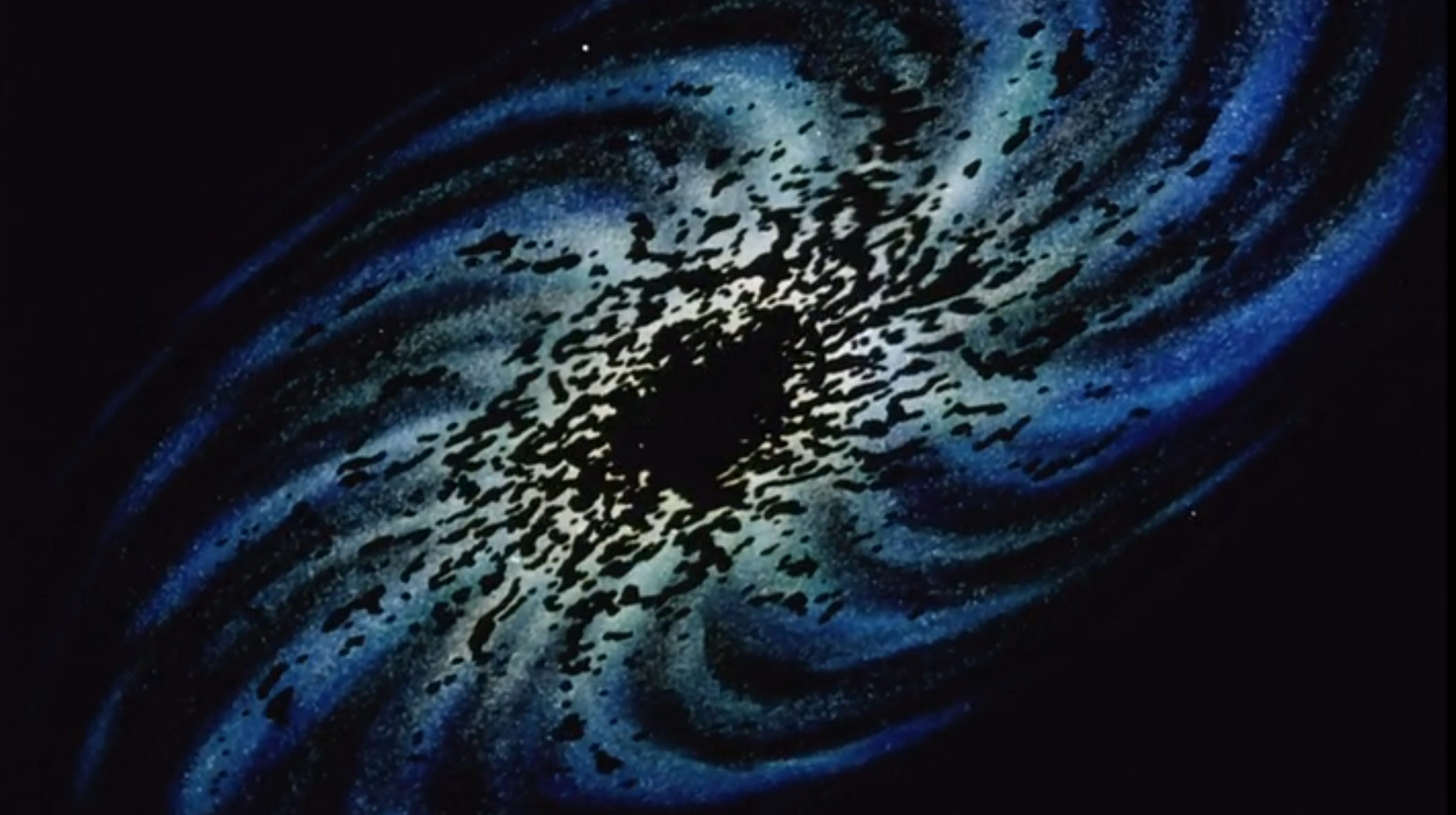
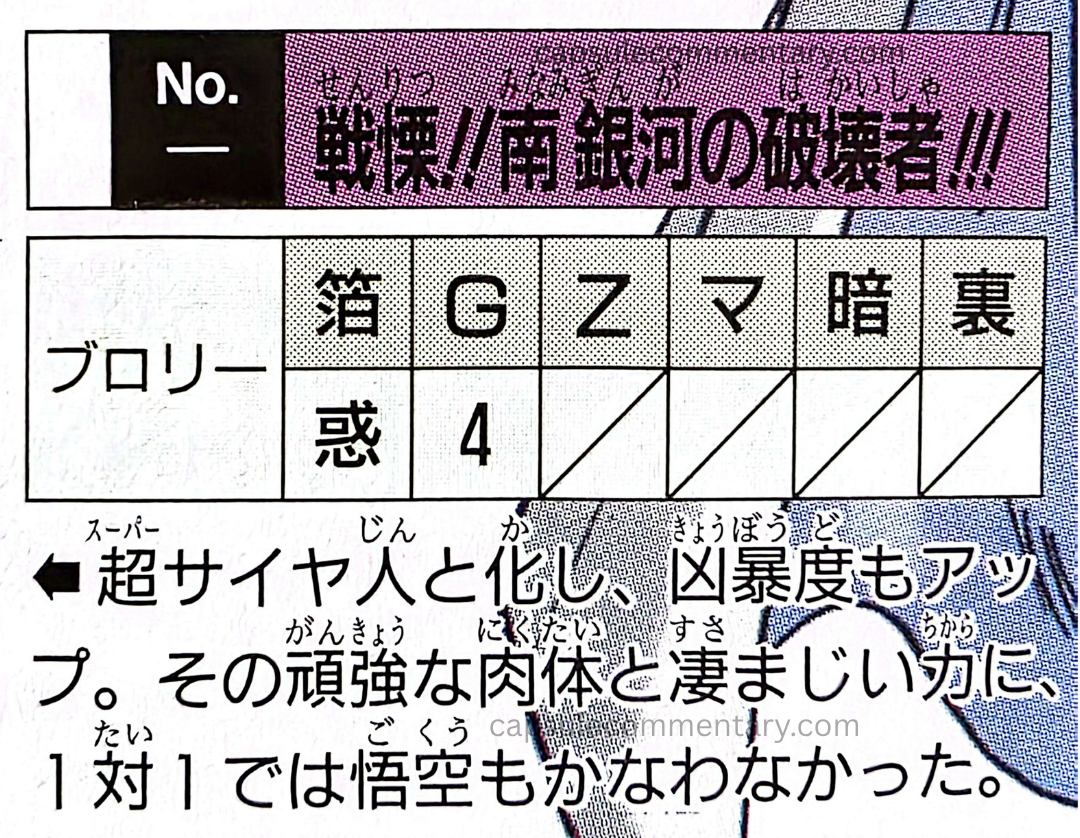
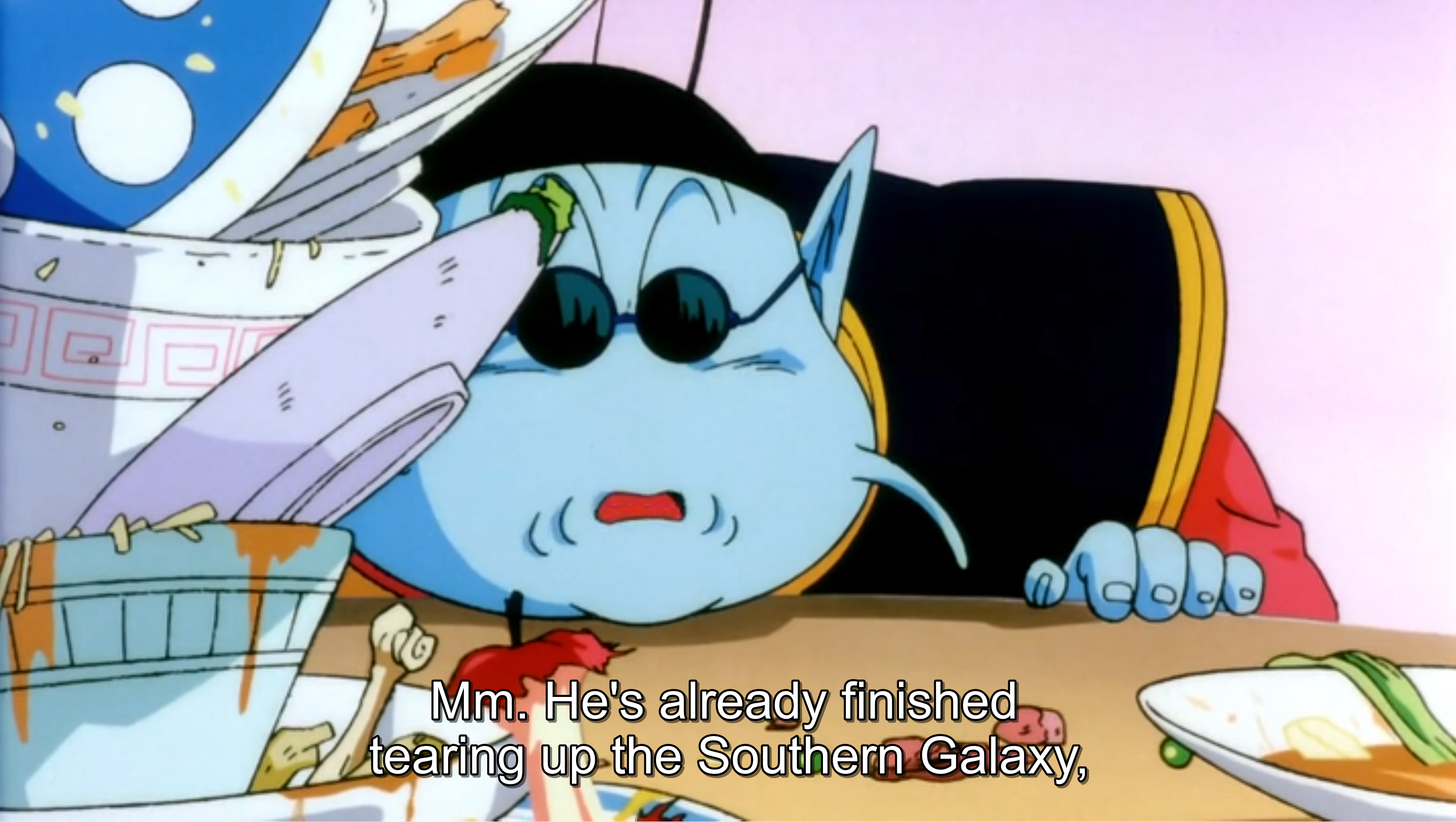
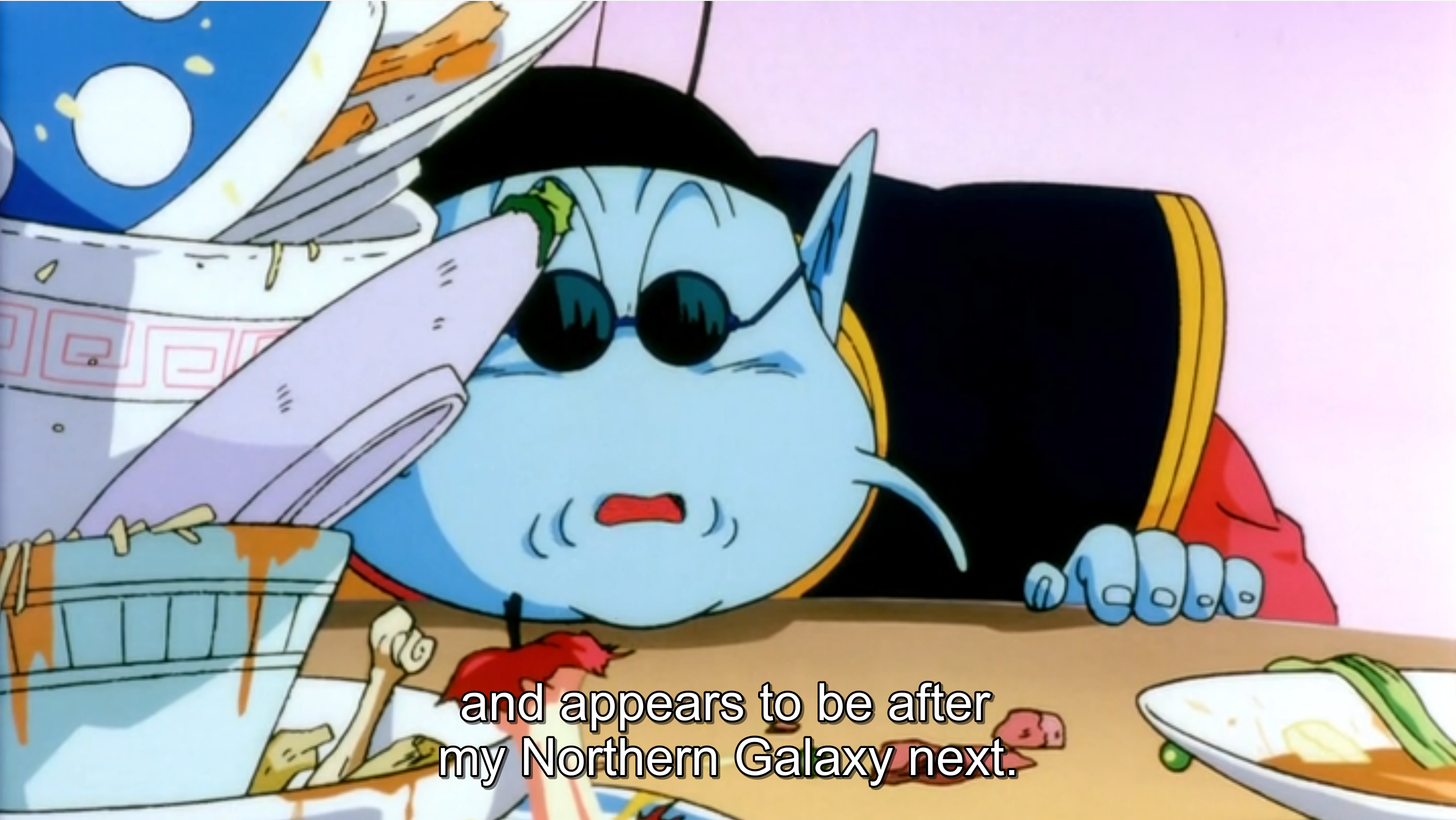
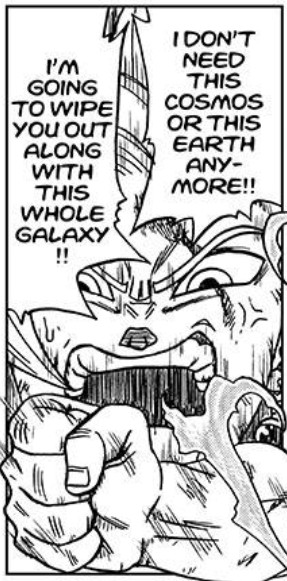
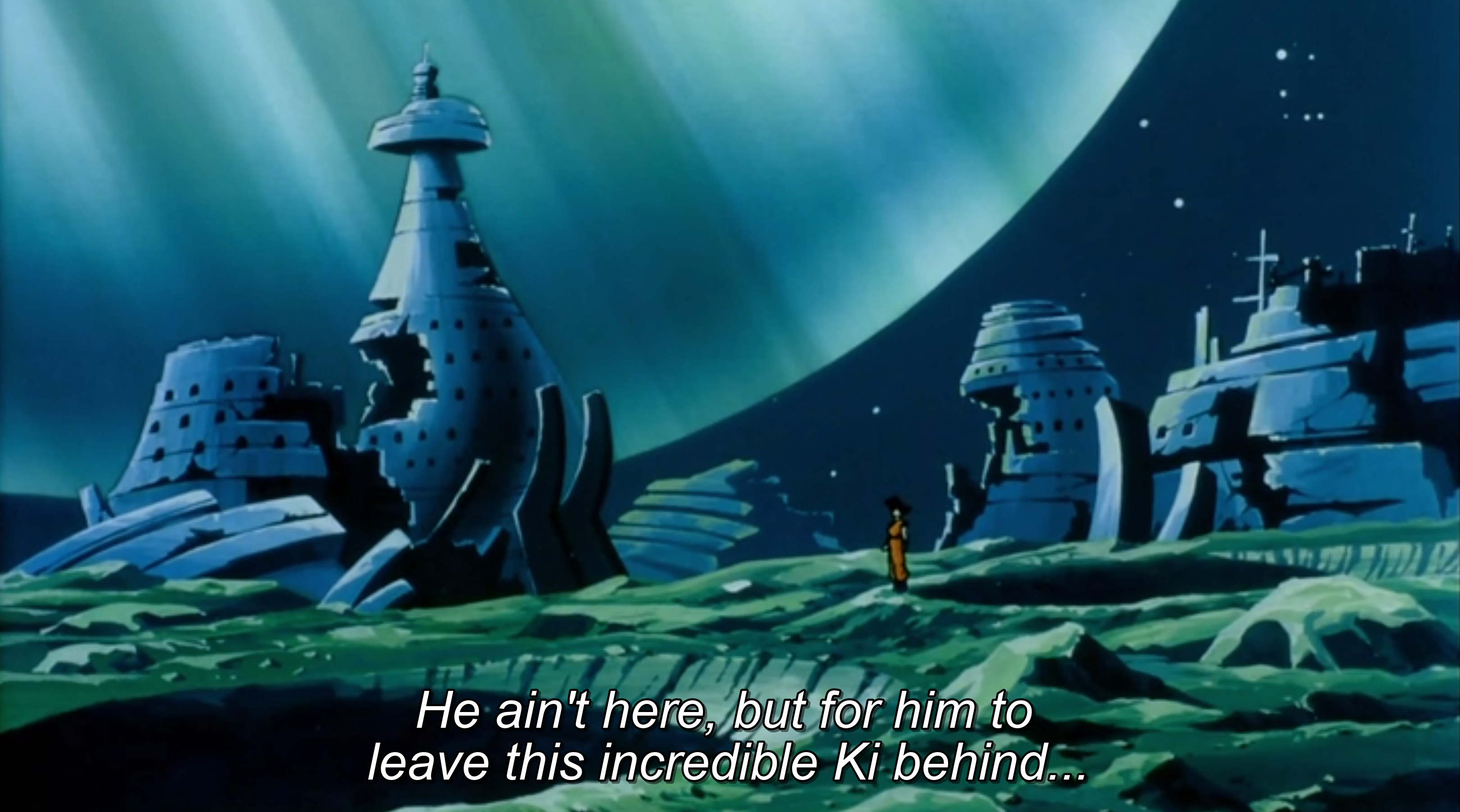
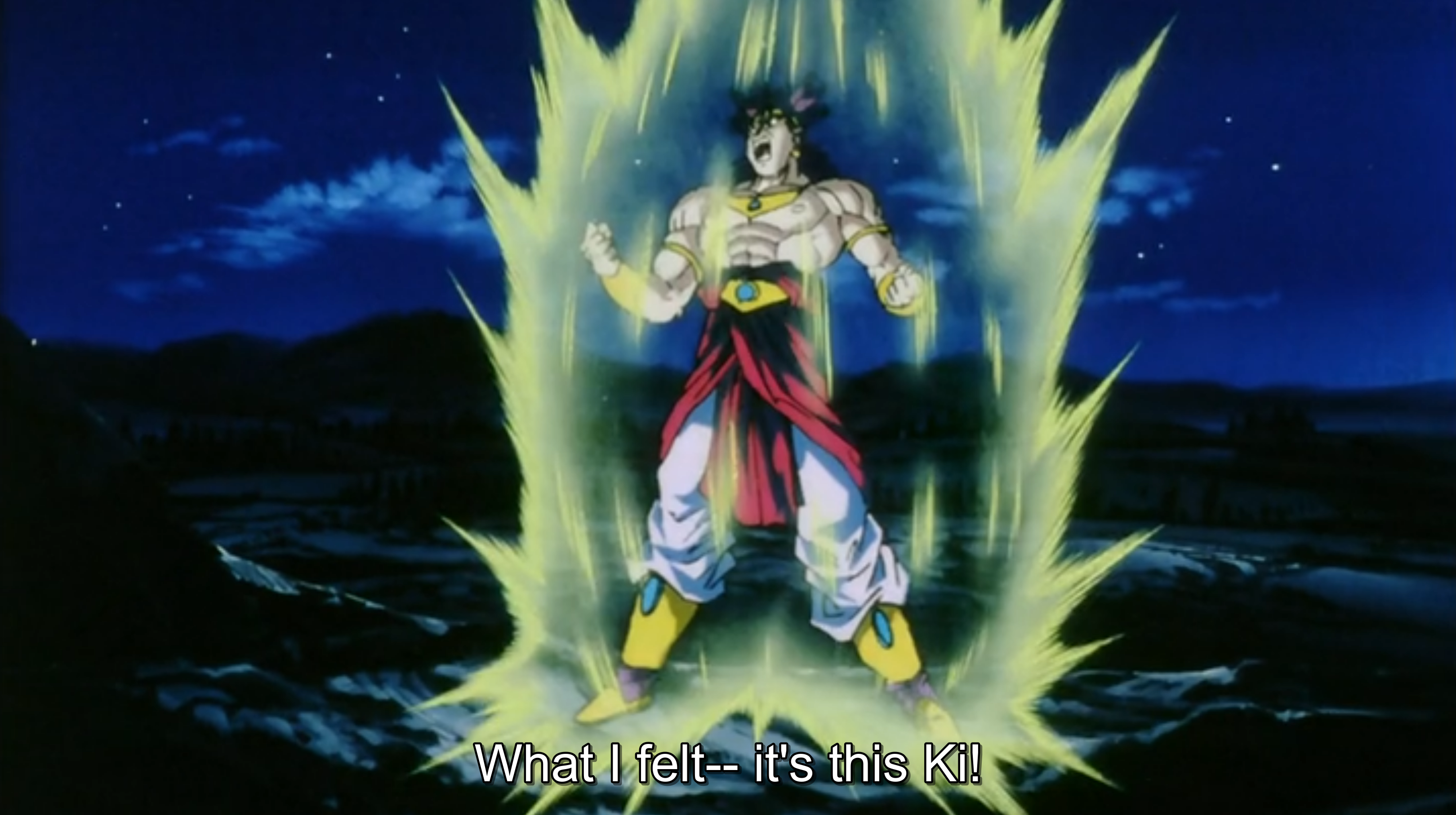
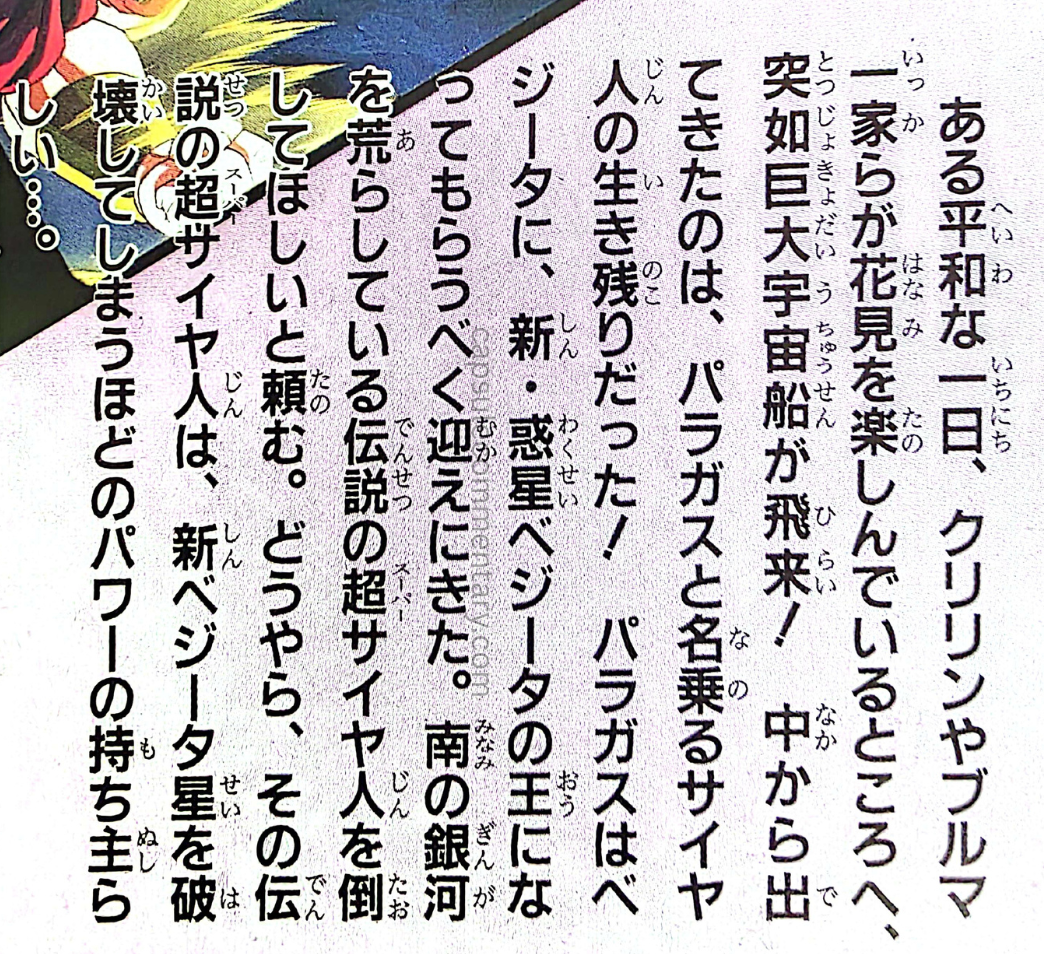
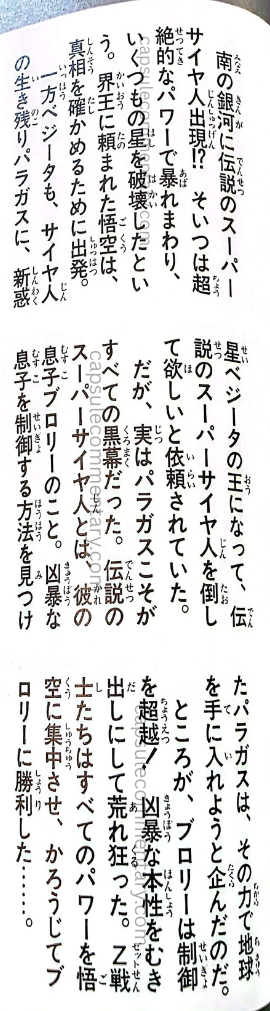
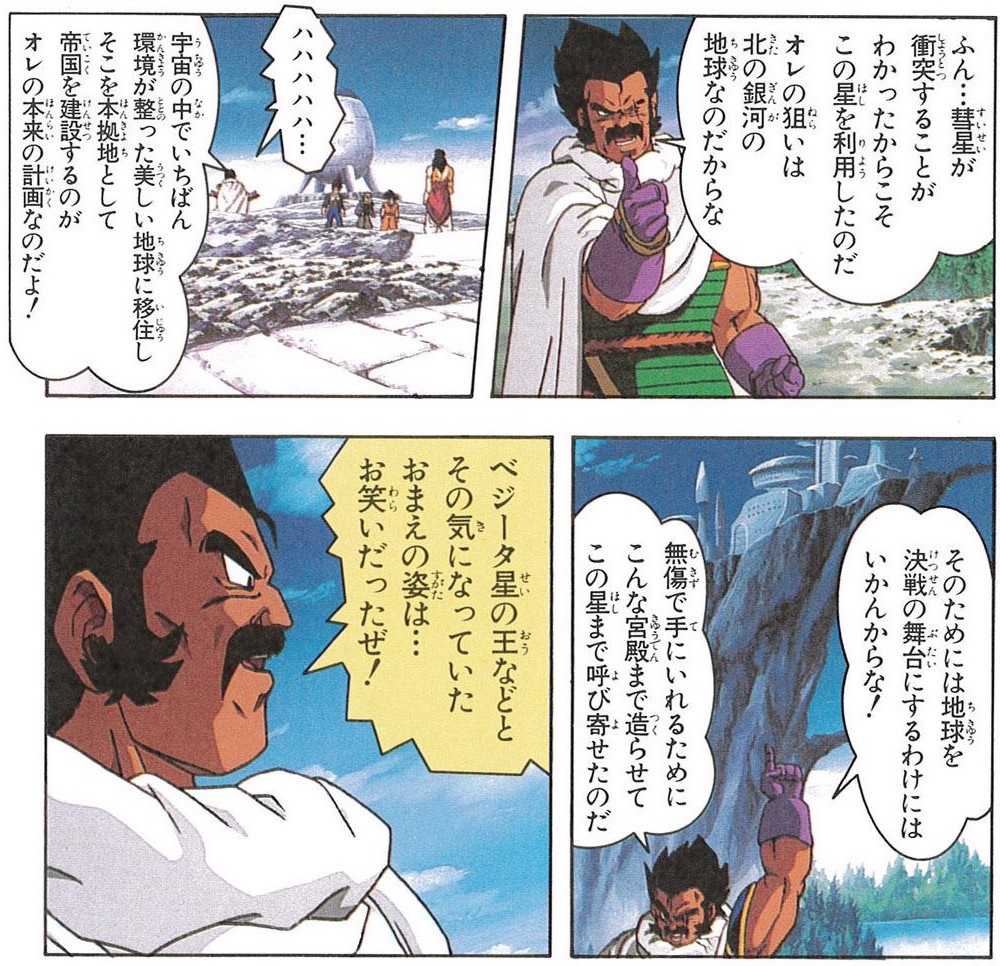


![Dragon Ball Z Movie 8 Anime Comic page 19. Paragus: “[The Legendary Super Saiyan's] rampaging across the entire Southern Galaxy with terrifying power!"](https://capsulecommentary.com/wp-content/uploads/2025/07/021-raz.jpg)


Besides the fact that Koyama didn’t write it, the opening sequence cannot be correct for the following reasons:
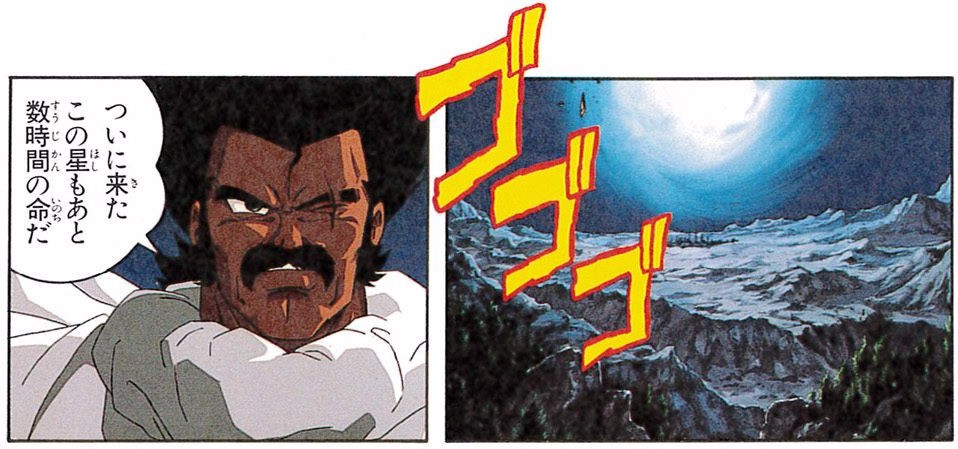
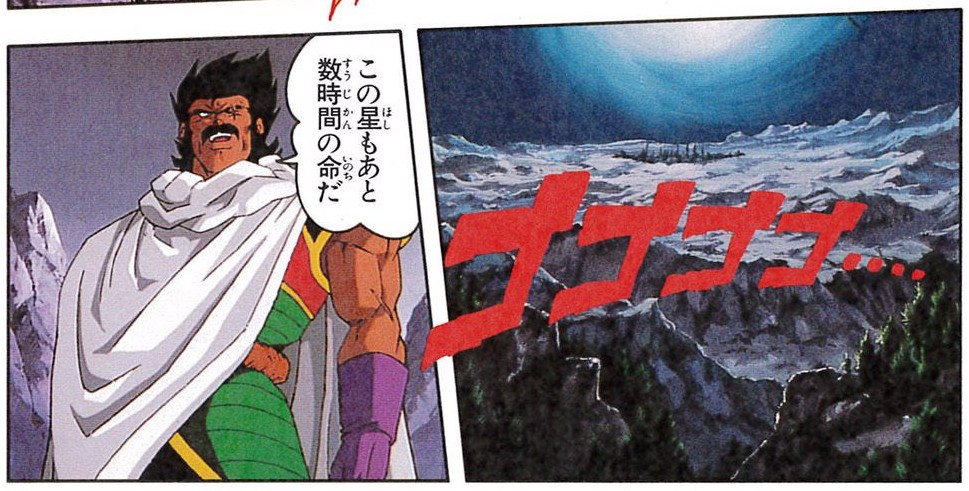
- It was mistranslated: The opening sequence says 「南の銀河を超サイヤ人が襲った!!」 which more accurately translates to: “A Super Saiyan attacked the Southern Galaxy!!” Then Paragus explains to Vegeta: 「南の銀河一帯をその驚異のパワーで暴れまわっております!」 which more accurately translates to: “[The Legendary Super Saiyan’s] rampaging across the entire Southern Galaxy with terrifying power!” It’s not until later when Kaiō explains the plot to Goku that “destroy” or 「破壊 」 is used. He says: 「うむ…南の銀河をメチャクチャに破壊しつくしどうやら次はこの北の銀河を狙っているらしいのだ」 and this more accurately translates to “Yes… he has completely wrecked the Southern Galaxy, and it seems he’s now aiming for this Northern Galaxy.” Later still, when Broly attacks Goku at night, Goku says to him: 「南の銀河を破壊したのはおめえだな! ブロリー!!」which more accurately translates to: “So you’re the one who destroyed the Southern Galaxy, Broly!!” So the opening narration and Paragus say it’s an on-going event, while Kaiō and Goku say it’s a finished event.
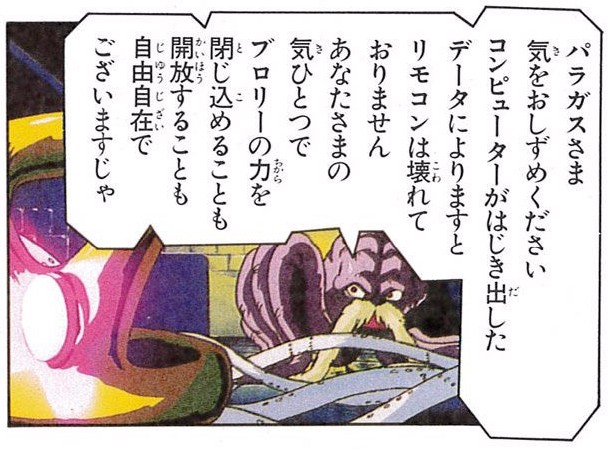
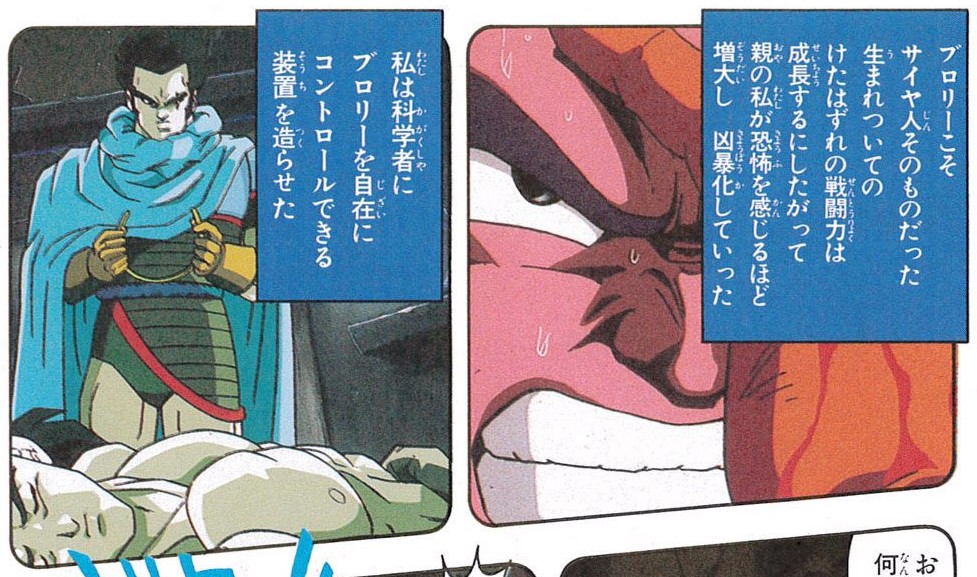
- Paragus’s Plan: When Super Saiyan Broly (not Legendary Super Saiyan Broly) attacks Goku while he was sleeping in bed, Goku recognizes his ki as the one he sensed on the first planet he went to in the Southern Galaxy. This is because during the destruction, Broly was still under Paragus’s control. Paragus’s control over Broly didn’t break until the next day when everyone was ready to leave New Planet Vegeta. So the supposed destruction of the Southern Galaxy would have been at the hands of a much weaker form of Super Saiyan, which makes it even less likely to be an accurate depiction. Additionally, Paragus’s plan was to establish a universal empire with his son, not to destroy everything. One cannot be an emperor of ashes, you need land and people (or in this case, planets and aliens). He chose to have Broly attack the Southern Galaxy, rather than the Northern Galaxy, in order to lure Vegeta to a planet doomed to be destroyed by Comet Gumori.2 The fact that Comet Gumori has a predictable path at all means that it was able to travel undisturbed during the supposed destruction.
- Planets: The fact that the first Broly movie takes place in the Southern Galaxy at all demonstrates that Kaiō’s conversation with Goku is figurative and not representative of Broly’s actual attack on it. Right after Kaiō asked Goku to investigate the Legendary Super Saiyan, Goku arrived on a not-destroyed planet in the Southern Galaxy. At the same time, the rest of the Dragon Team arrived on New Planet Vegeta and they met the Shamo aliens, both of which are in and from the Southern Galaxy.
- Stars: When Goku uses Shunkan Idō (Instant Transmission) to teleport to the first planet in the Southern Galaxy, he passes by hundreds to thousands of stars and presumably star systems along the way. The night skies of that first planet Goku goes to and that of New Planet Vegeta are both filled with stars. This all may seem insignificant at first, but the stars you can see from a normal planet, like our own, are all from within the galaxy that the planet exists in. Additionally, New Planet Vegeta has a day-night cycle, so it is clearly orbiting a star.
- Simple Logic: If the Southern Galaxy was destroyed, that means it would be impossible for Movie 8 to take place there, except in a situation to show the empty blackness of space. Goku and Vegeta didn’t fight Kid Buu on Earth after Earth was destroyed for obvious reasons. The Saiyans did not return to Planet Vegeta or Sadala. The Namekians did not return to Namek. Without using the Dragon Balls or traveling back in time, it is impossible to go to a place that was completely annihilated.
There are two major misconceptions I’d like to address now. The first is that the Dragon Ball living world mirrors our own in both scale and astrophysics, and the second is that only “most” of the Southern Galaxy was destroyed in the opening sequence. For the first argument, this argument is used to claim that the Southern Galaxy might still appear intact because the light of Broly’s destruction hasn’t reached the characters yet. For example, the star responsible for GRB 250314A exploded approximately 13.1 billion years ago, but its light was only just recently detected by the James Webb Space Telescope. In other words, this star died shortly after the universe was created and the light from that only just now reached us. So their argument is that Broly destroyed the entire galaxy, but the characters just can’t see it yet (and maybe they’ll be able to see it in a few million years). However, Dragon Ball does NOT follow real astrophysics. Here are just a few examples of how we know this:
- When Goku unveiled Super Saiyan 3, the force of this was felt instantly outside the bounds of the universe, not millions to billions of years later.
- When Goku gathered energy for the Genki-dama to kill Kid Buu, energy from across the universe arrived in seconds, not millions to billions of years later.
- Bulma is able to make a call from Namek to Earth with no delay instead of needing to wait even a single day.
- The gods of Dragon Ball, who are in no way omniscient, omnipotent, nor omnipresent, are able to view cosmic destruction as it unfolds with zero light-speed delay despite these gods being extremely far away from the events. Kibitoshin and Elder Kaiōshin watch in real time as Beerus destroys planets early in Dragon Ball Super; they don’t see these events unfold millions to billions of years later.
- If the opening sequence was depicting real astrophysics, then the destruction would have taken place over the course of millions of years. The Milky Way galaxy takes roughly 240 million years to make one full rotation. In the opening sequence, we see the Southern Galaxy, represented as a spiral galaxy like our own, rotate approximately 10% of the way before being completely destroyed. If Dragon Ball was following real astrophysics and the opening sequence is correct, that means it would have taken Broly approximately 24 MILLION years to destroy the Southern Galaxy. Unfortunately, Saiyan lifespans aren’t quite that long! When Koyama was asked on Twitter how long he thought it took Broly to destroy the galaxy as depicted, he guessed it was within a day.3 If the Southern Galaxy behaves like a real spiral galaxy and was destroyed within a day, that means the size of the Southern Galaxy is equivalent to that of a real solar system. The reason for this being a galaxy’s rotation speed and period are set by its size and the gravitational field binding it. If it rotates as much as it did in the opening sequence within a single day, it would necessarily be required to be incredibly small.

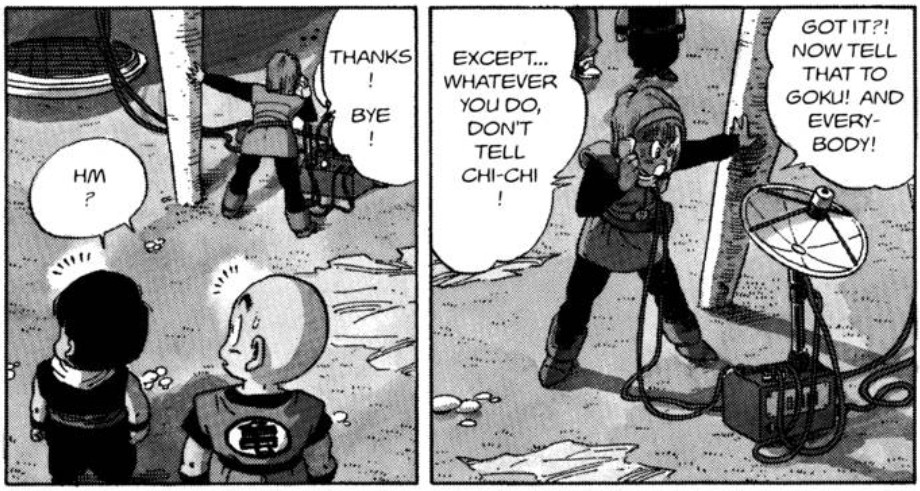
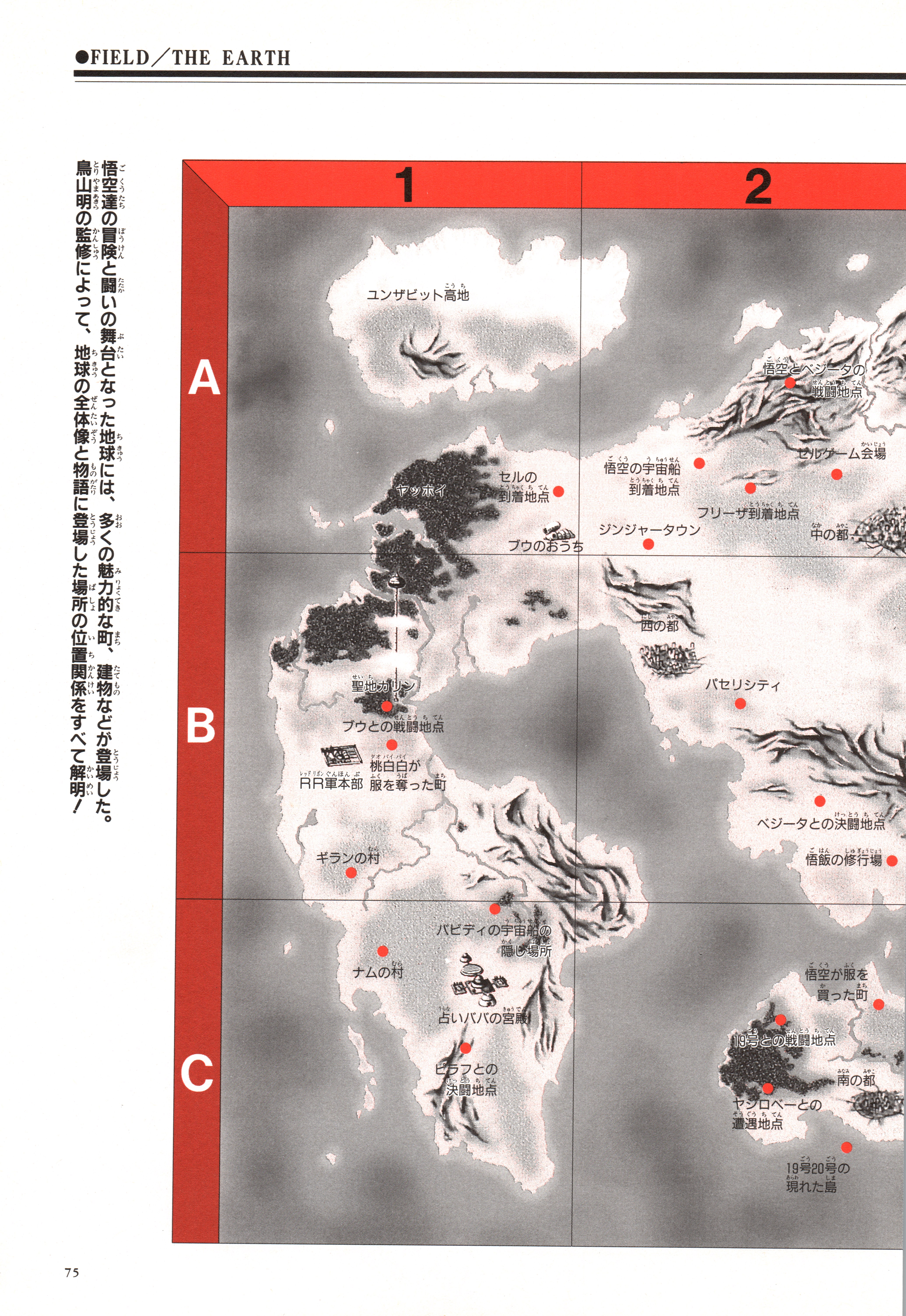
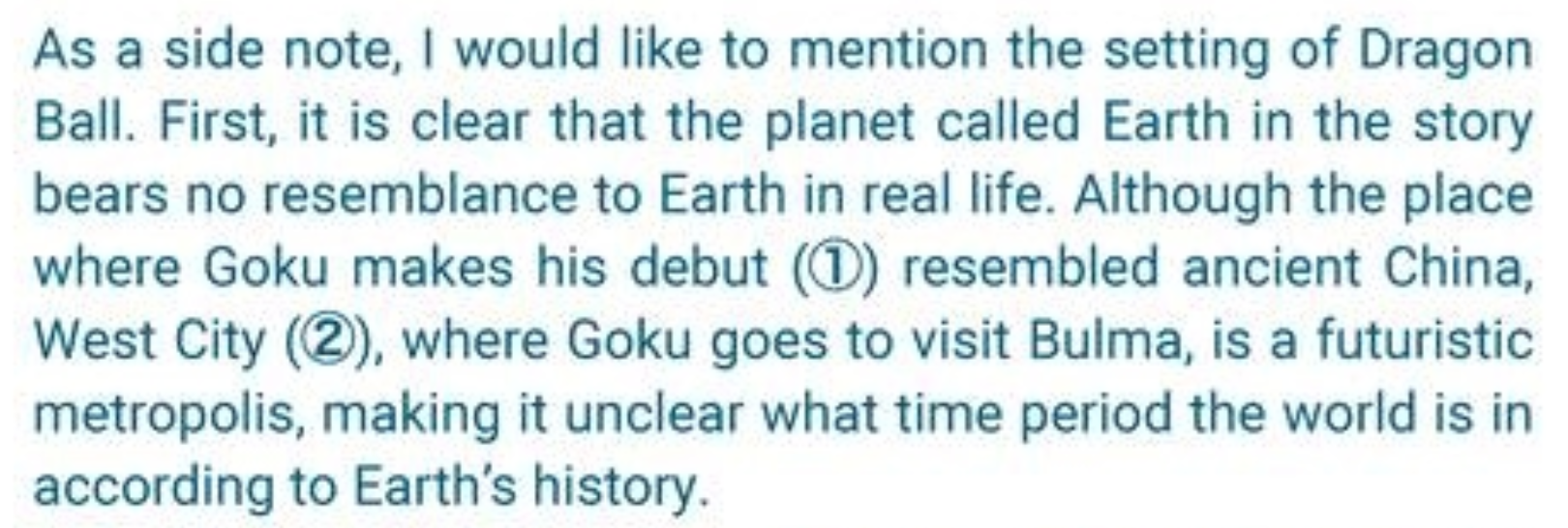
Even just the Earth of Dragon Ball proves that its scale is much smaller than ours. The Earth in Dragon Ball has approximately 7 cities TOTAL (Central City, East City, North City, Parsley City (where Future Trunks killed #17 and #18), Satan City, South City, and West City), all of which are modestly populated. Pick any country in the real world and you will have found a place with more cities than Dragon Ball, and just one of those cities likely contains more people than entire Earth in Dragon Ball. To further demonstrate this, in Dragon Ball Online (“fully supervised” by Toriyama), the entire human population (likely excluding Upa’s tribe) has trace amounts of Saiyan DNA by Age 1000. If the population of the Dragon Ball Earth were to match the 8.3 billion people on our real Earth, that means Goten, Trunks, Pan, Bulla, and every descendant of theirs would each need to have 22 to 43 children per couple. Therefore, there is simply no reason to assume the Dragon Ball living world matches the scale of ours when even their Earth doesn’t. Torishima, Toriyama’s first editor, even writes on page 49 of Dr. Mashirito’s Ultimate Manga Techniques: “First, it is clear that the planet called Earth in the story bears no resemblance to Earth in real life.”

For the second argument, this is used to argue that the three planets we see in the movie (the first planet Goku goes to, the Shamo homeworld, and New Planet Vegeta) are just a few outliers that happened to survive Broly’s rampage. However, the opening sequence does not depict “most” of the galaxy being destroyed. It depicts ALL of it being destroyed. The only things that remain are background stars that were never a part of the swirling spiral galaxy.
Therefore the destruction of the Southern Galaxy can be better understood not as the annihilation of every star and planet of the Southern Galaxy but as a violent rampage destroying life.
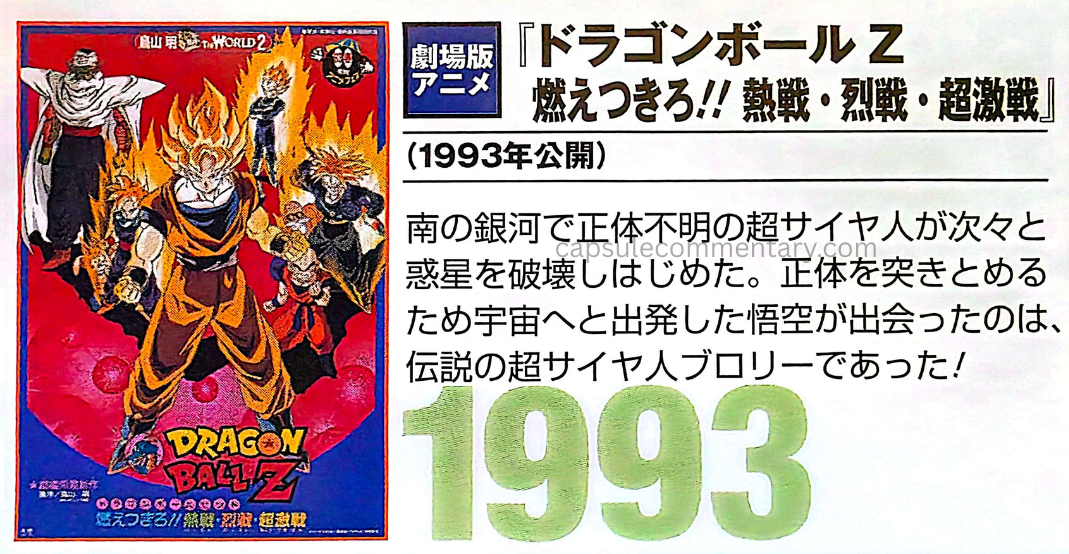
- On page 26 of Akira Toriyama: The World of Dragon Ball‘s pamphlet, it states, “In the Southern Galaxy, an unknown Super Saiyan began destroying planets one after another. Goku set off into space to uncover the truth — and the one he encountered was the Legendary Super Saiyan, Broly!” It doesn’t state that he destroyed the galaxy.
- Dragon Ball: Chōzenshū 3 page 134 (Daizenshū 6 page 128) states Broly destroyed “countless planets” and not a galaxy.
- The original Japanese VHS release of Movie 8 states on its back cover: “At that time, Goku received contact from Kaiō, and in order to fight the Legendary Super Saiyan who was attacking and destroying the Southern Galaxy…”
- Three different home releases of Movie 8 by Funimation describe Broly only as “threatening to destroy the entire galaxy” and not as having destroyed it: one, two, and three.
- Toei’s official website for the individual movie Blu-Rays (i.e., not the Dragon Box release) describes Broly’s attack on the Southern Galaxy in the present progressive form: “is attacking and destroying.”
- The back cover of Dragon Ball The Movies Volume 4 on Blu-Ray also says he was “was attacking and destroying the galaxy.”
- The cards of Broly and Legendary Super Saiyan Broly in Itajaga Dragon Ball Vol. 3 state, respectively, that Broly “possesses combat power so great that it is enough to destroy the entire Southern Galaxy region” and that he “had been destroying the entire Southern Galaxy region.” In the second card, the 「していた」 in 「破壊していた」 changes it into the past progressive form of destroy, “had been destroying.” Neither of these are compatible with the opening sequence where the destruction is a finished event.
- Jump Anime Library 1: Dragon Ball Z Movie 12 page 97 confirms it is not the total annihilation of the galaxy, writing: “The Legendary Super Saiyan appeared in the Southern Galaxy! With overwhelming power, he rampaged and destroyed many planets. Taking the situation seriously, the Kaiō dispatched Goku to investigate.”
- In the Spring 1993 Toei Anime Fair (DBZ Movie 8)‘s pamphlet on page 4, it shows that the destruction is ongoing, stating: “[Paragus] asked for help to defeat the Legendary Super Saiyan who was wreaking havoc in the Southern Galaxy. Apparently, this Legendary Super Saiyan possesses enough power to destroy the new Planet Vegeta.”
- V-Jump February 1993 pages 16 and 17, in the character descriptions for Broly, Paragus, and Goku, never once refer to the attack on the Southern Galaxy as its complete destruction nor as a finished event.
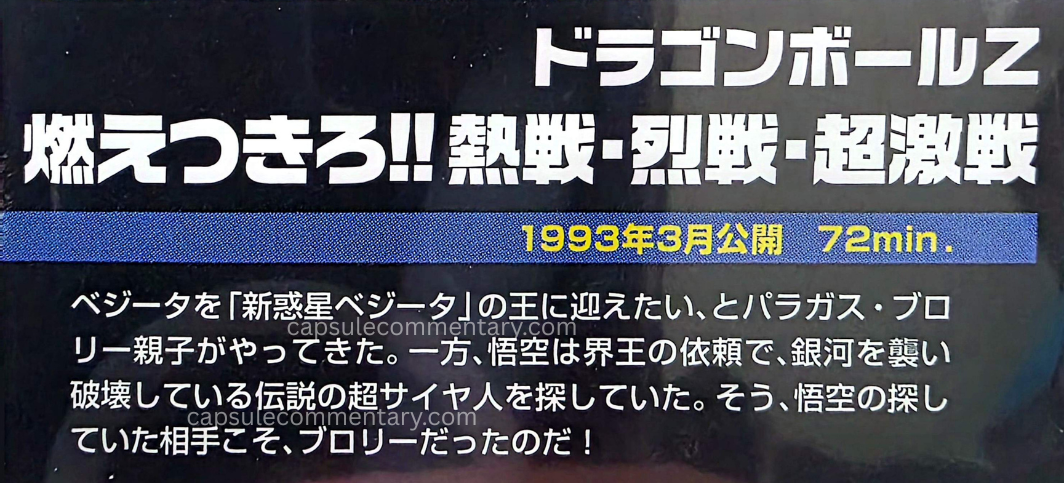
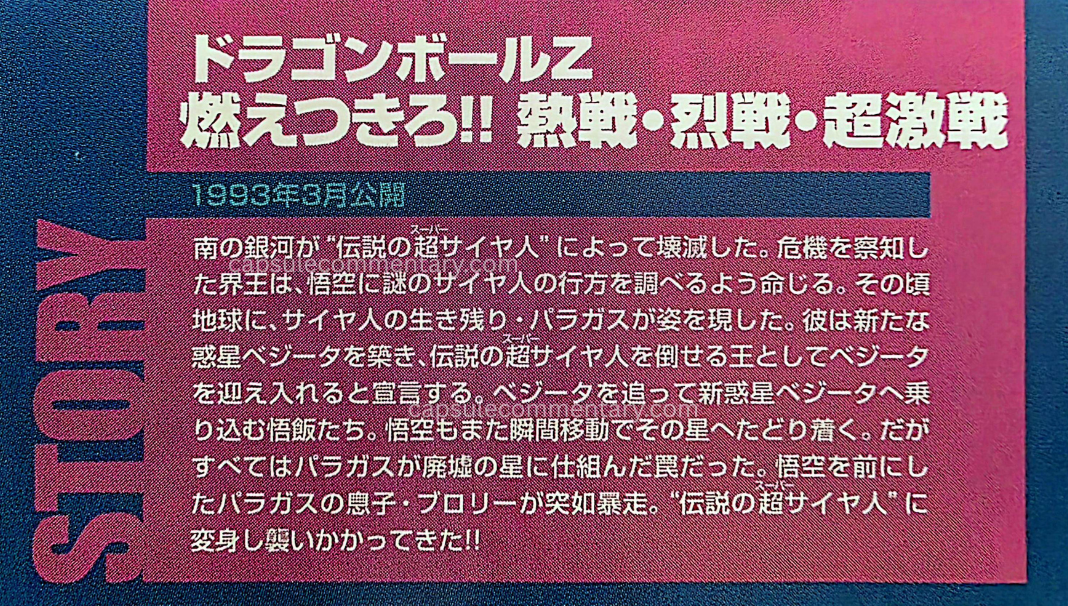
In addition to what Kaio and Goku say in the film itself, there is one other source that presents the Southern Galaxy’s destruction as a finished event and that is on page 4 of the booklet in Dragon Ball The Movies Volume 4 on Blu-Ray. This reads: “The Southern Galaxy was annihilated by the ‘Legendary Super Saiyan.’ Sensing the crisis, Kaiō orders Goku to investigate the whereabouts of the mysterious Saiyan.” Just like Kaiō and Goku’s statements are contradicted by the opening narration and Paragus’s statement, this too is contradicted by the back cover of the Blu-Ray (see above).
To be clear and emphasize this: Broly does not literally destroy the entire Southern Galaxy in the sense of its total annihilation like the opening scene depicts because the entire rest of the movie contradicts this. Or, put another way, to believe the depiction in the opening sequence is correct, you would have to disagree with Broly’s creator and ignore the fact that nearly all of Movie 8 takes place in the Southern Galaxy.
Dragon Ball Z: Broly — The Legendary Super Saiyan
Dragon Ball Z: Broly — The Legendary Super Saiyan
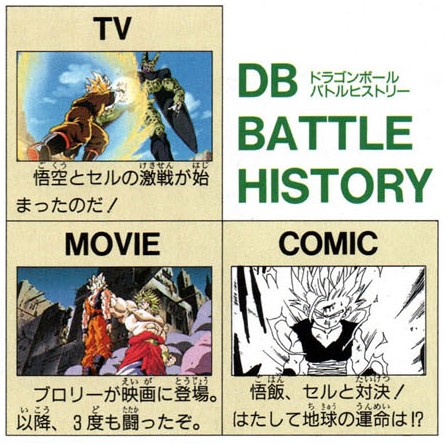
This section and the next two following this will focus on how strong Broly is on a movie-by-movie basis. First, it must be established when exactly Dragon Ball Z: Broly — The Legendary Super Saiyan (Movie 8) takes place. In Chōzenshū 3 on page 114 (Daizenshū 6 page 106), it states, “Based on Gohan turning into a Super Saiyan and other elements, this seems to take place around the time of the final battle with Cell. However, even though Goku and the others should be in a tense situation due to the Cell Games, there’s the mystery of them leisurely enjoying a flower-viewing party in the movie…” While that description is accurate, the movie specifically takes place during chapter 390. The reason for this is that Gohan has short hair, can turn into a Super Saiyan, and is wearing Piccolo’s clothing—the last of which he does not get until chapter 390. The reason the timeline does not extend to chapter 391 or beyond is that in chapter 391, we get our first hint that Gohan is stronger than Goku—even without Super Saiyan 2—and at no point in this film is it even suggested that Gohan might be stronger than Goku. In fact, he’s treated like fodder that needs to be rescued.
Daizenshū 9 page 46 states that Broly “completely overpowers even Goku,” implying Goku is the one to beat and not Gohan. The official comic adaptation of the movie even says on page 2 that “Goku is now the greatest warrior among the Saiyan race—no, among all Super Saiyans!” Notably, the official comic adaptation acknowledges Gohan is stronger than Goku on page 3, depicting Super Saiyan 2 Gohan—a form not shown in the film—but it was, of course, published after the movie’s release. This was one of the challenges of developing movies in tandem with the manga—the screenwriters had to just guess what Toriyama’s intentions were without actually knowing them. On Twitter, Koyama wrote on this: “Carrying out a magazine serialization and anime production at the same time leads to various problems. It’s a difficult task, because you have to write without knowing how the story will unfold.”

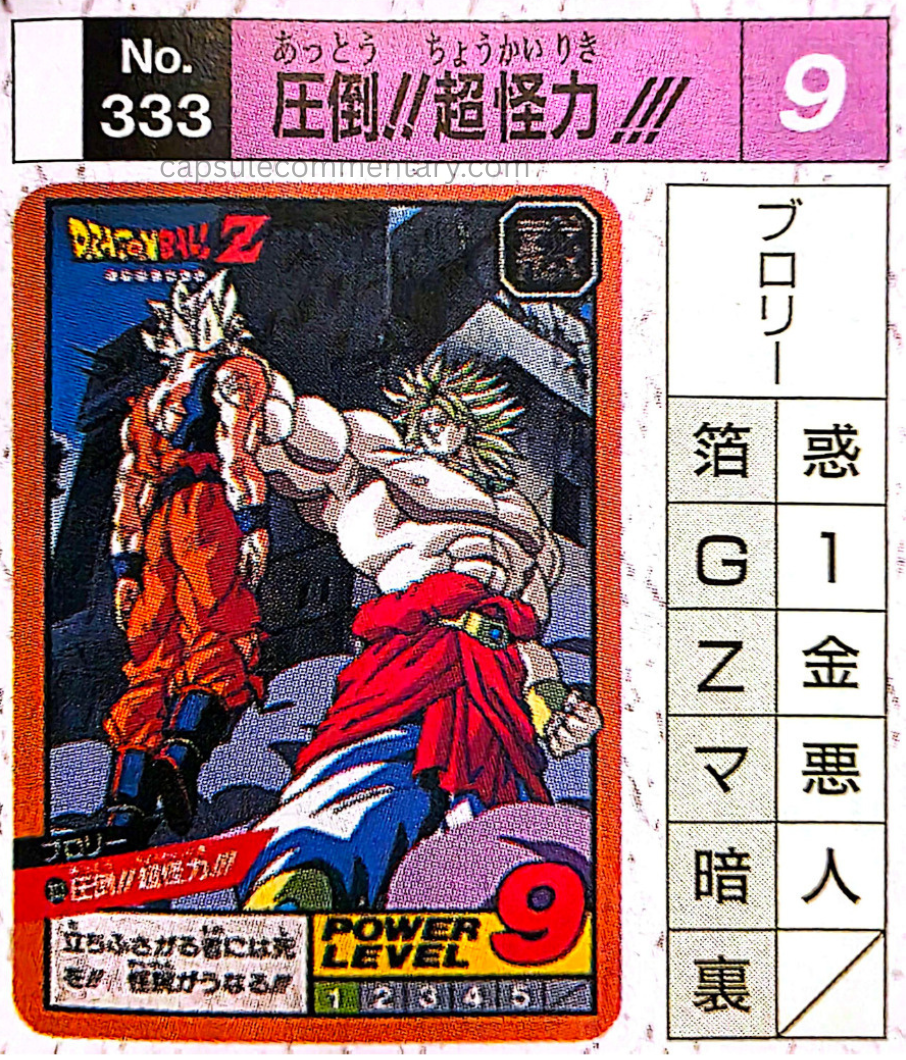
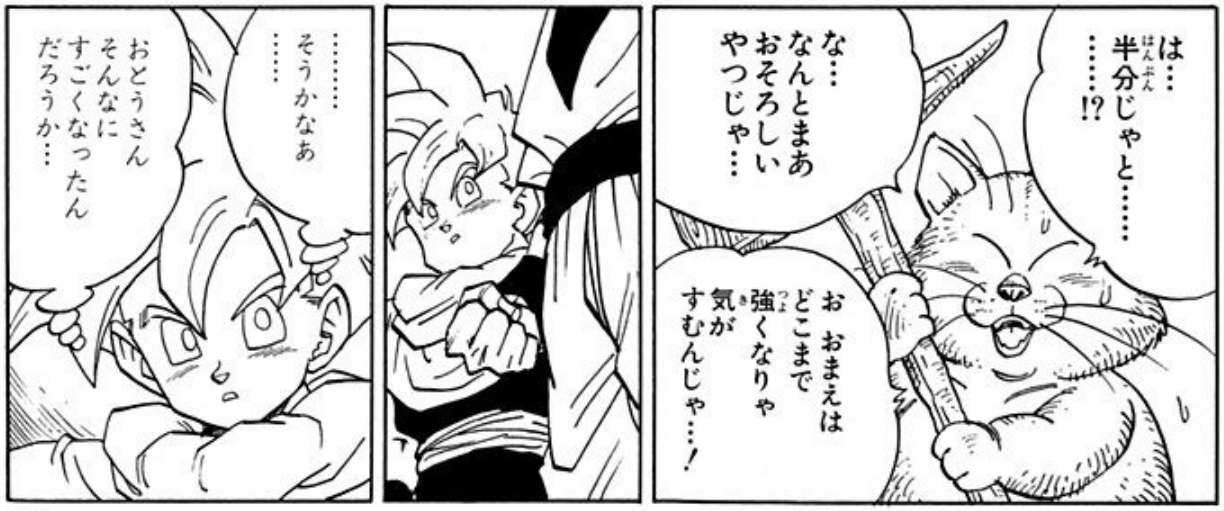
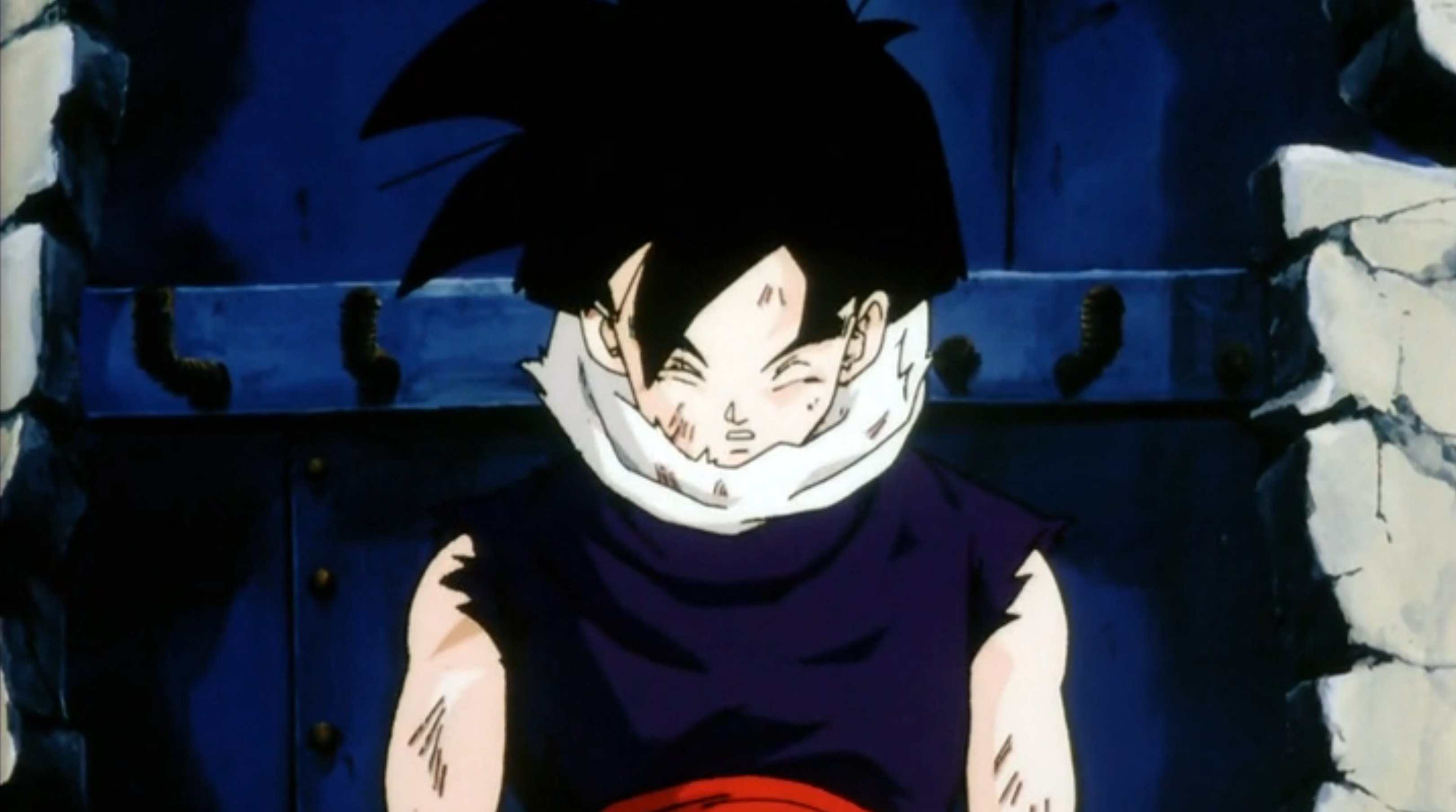
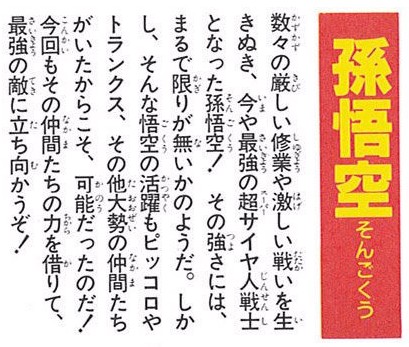
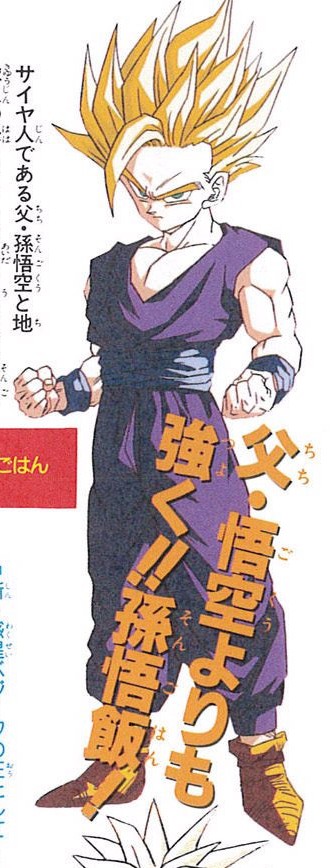
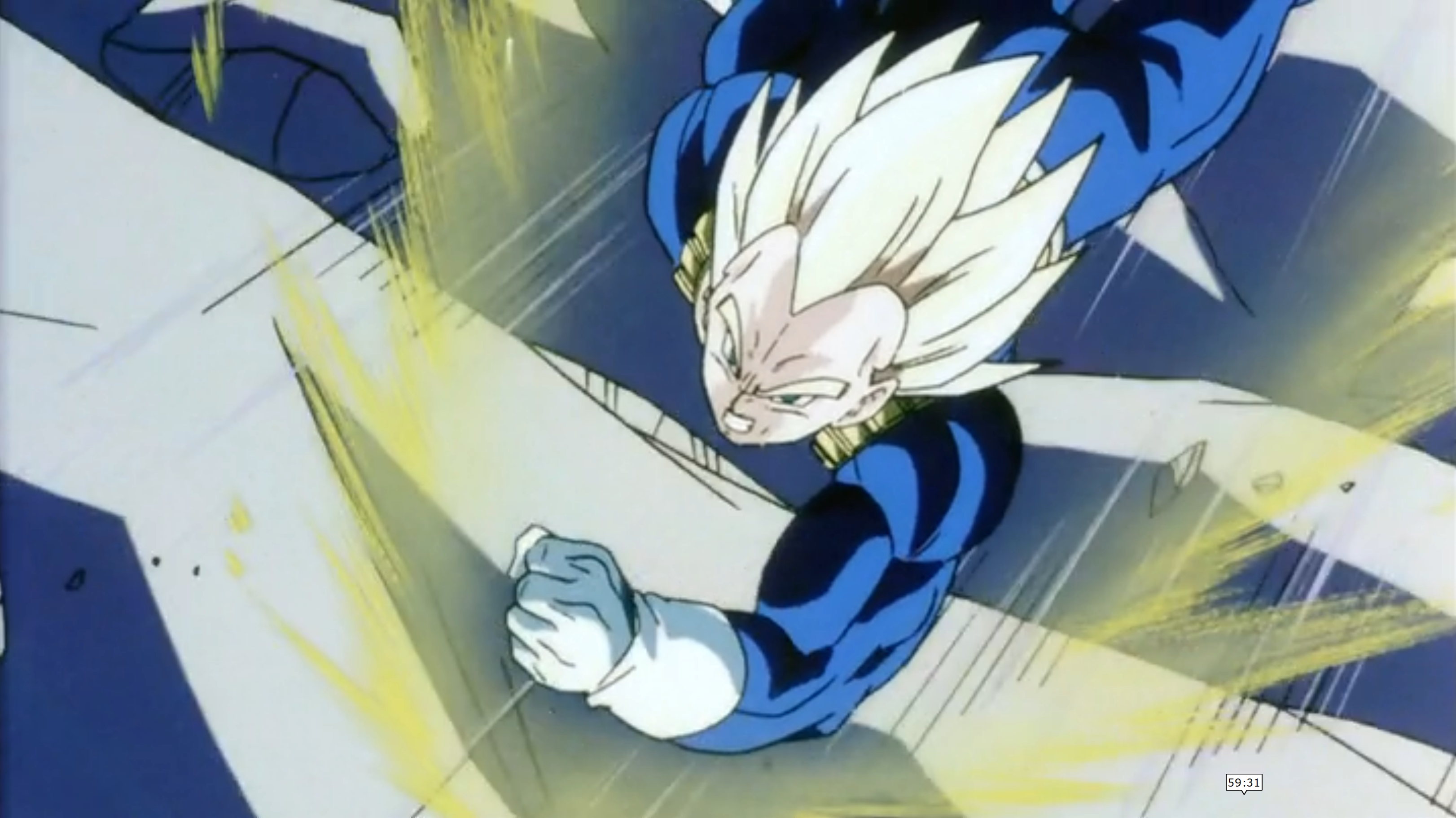
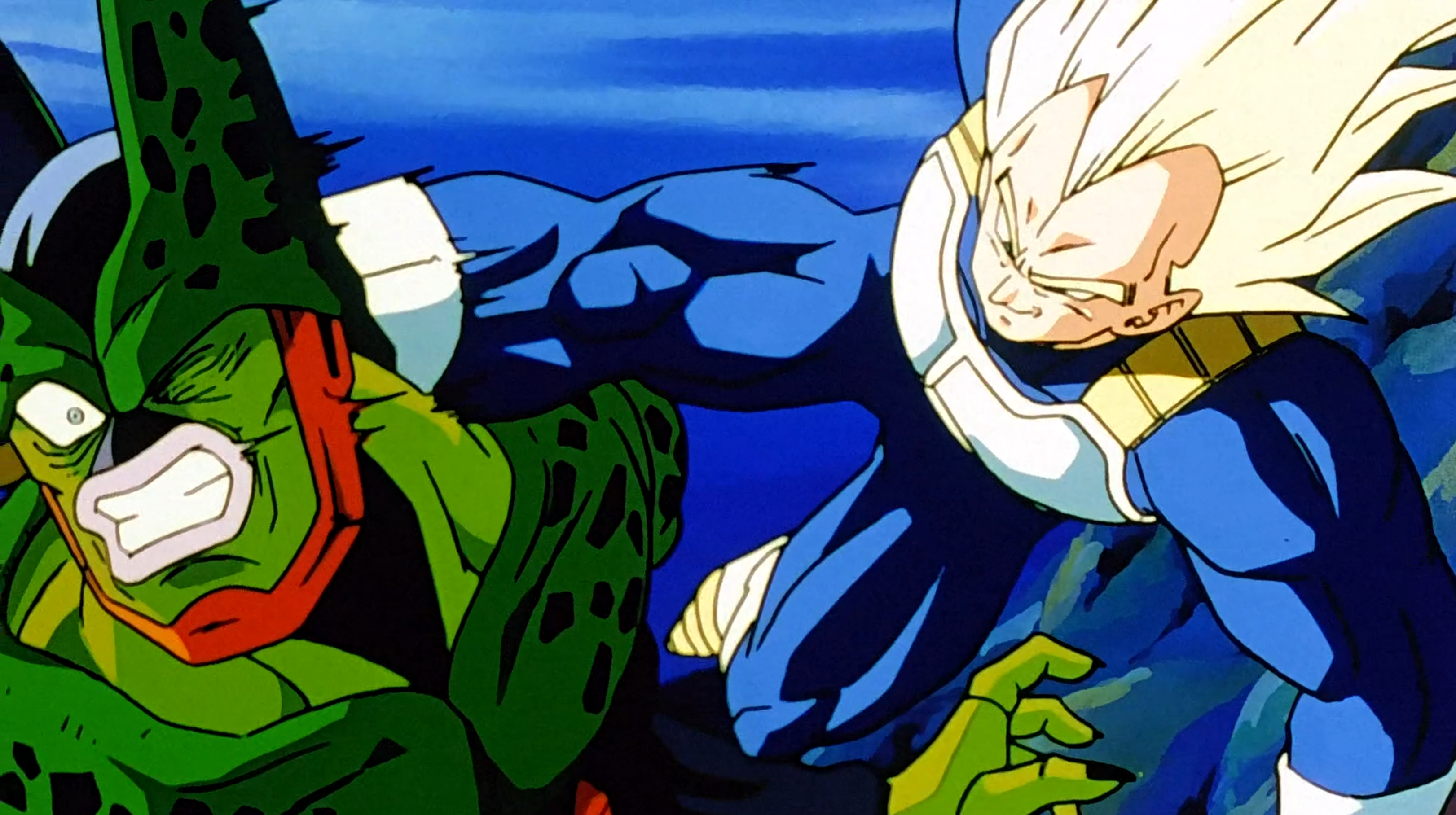
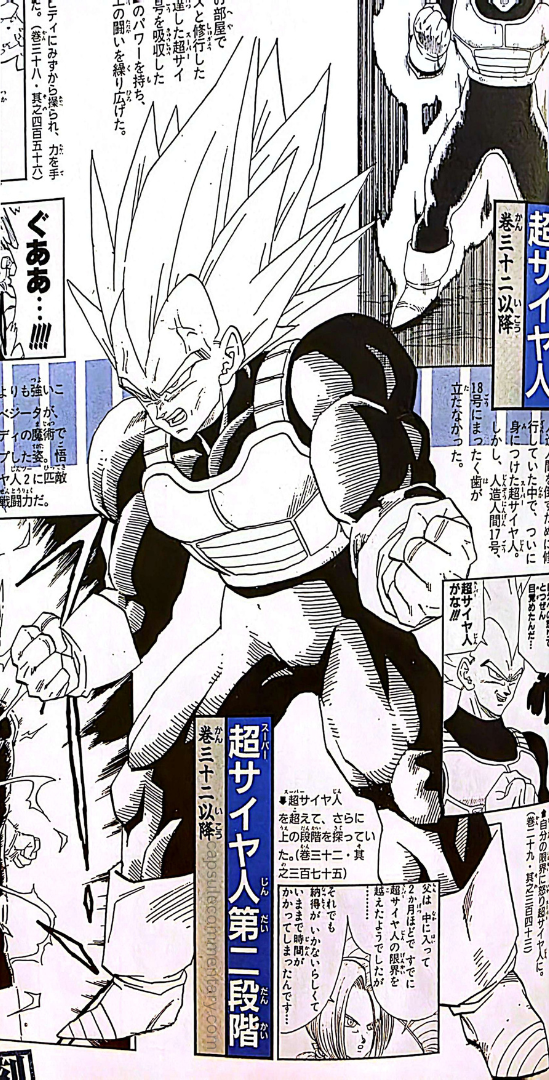
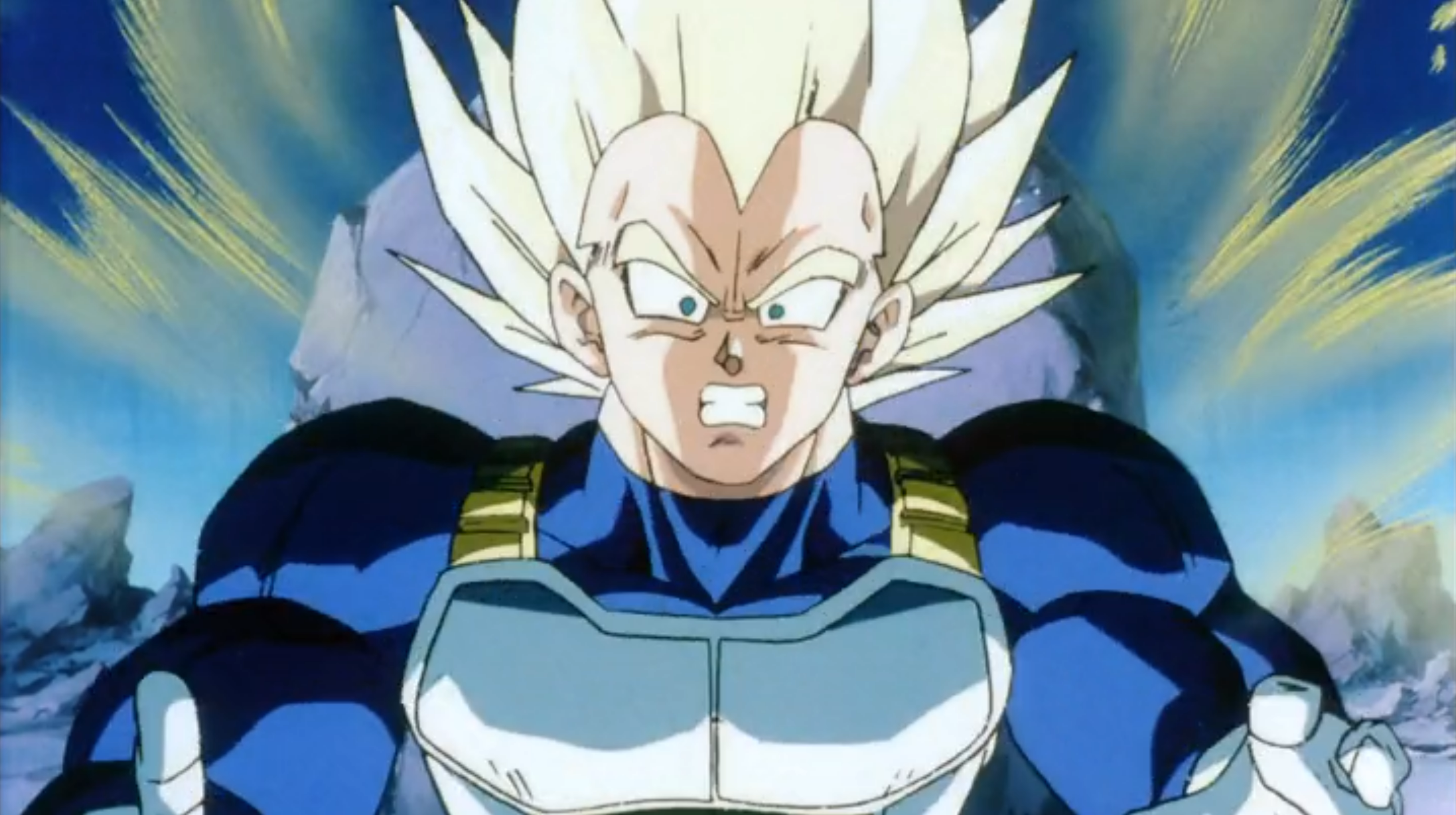
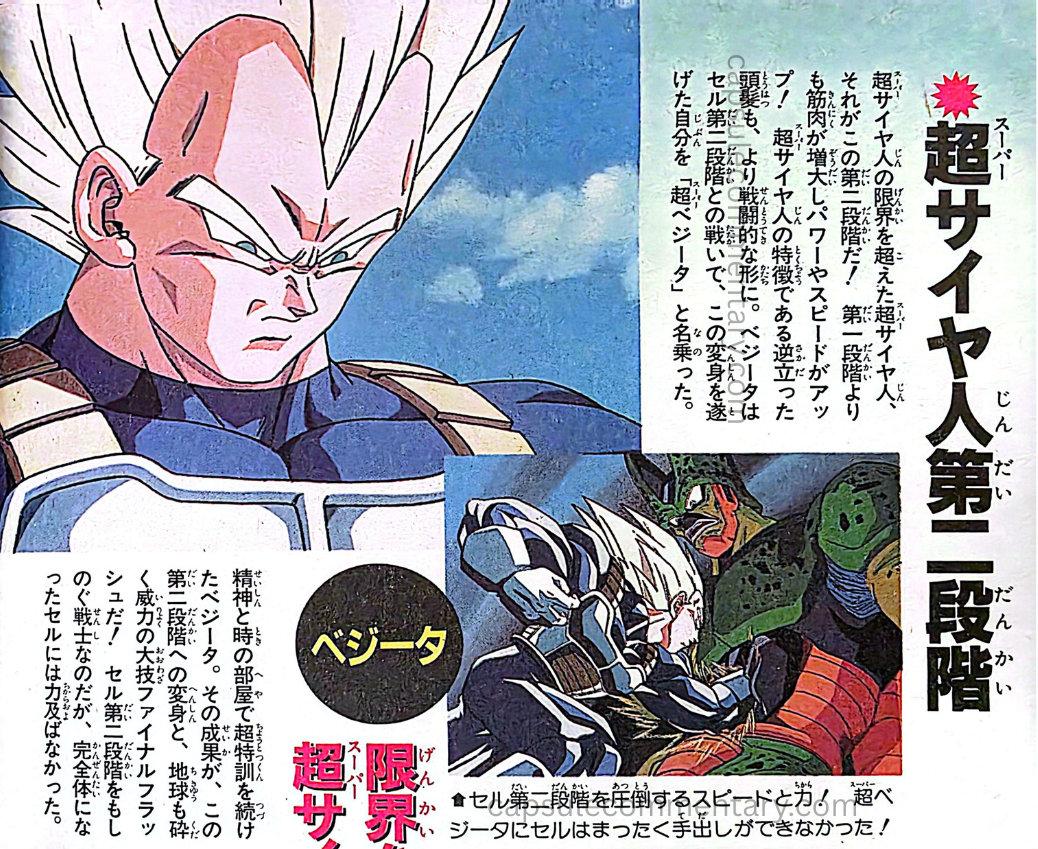
To further understand how strong Broly was in his first appearance, we have to understand if Vegeta and Future Trunks were using Super Saiyan Grade 1 or Grade 2 during this film. In the manga, the distinction between Vegeta’s base form and Grade 2 is self-evident. A comparison between Vegeta’s appearance in chapter 375 and chapter 377, where he reveals Grade 2, shows that Grade 2 results in significant muscle growth and sharper hair resembling hedgehog quills. His aura also becomes more angular, unlike the flame-like auras of Grades 1 and 4. Dragon Ball Z Shueisha Jump Remix Vol. 3 page 284 describes Grade 2 as: “A Super Saiyan who has surpassed the limits—Super Saiyan Second Grade! That’s what this ‘Second Grade’ form is! Muscles enlarge, and power increases! The signature upright hair of a Super Saiyan takes on an even more aggressive shape.”
While Toriyama was able to draw a clear-cut distinction between Grade 2 and base, its depiction in animation varies significantly between animators. Additionally, guidebooks are by and large unhelpful when it comes to identifying the Super Saiyan grades (and even Super Saiyan 2), labeling them either simply as “Super Saiyan” or with vague descriptions such as “a form beyond the Super Saiyan wall.” While it’s true that they are all Super Saiyans, it makes identifying which type of Super Saiyan trickier. Some guidebooks even refer to Broly’s Legendary Super Saiyan form as just “Super Saiyan” or “Super Saiyan Stage 2.”
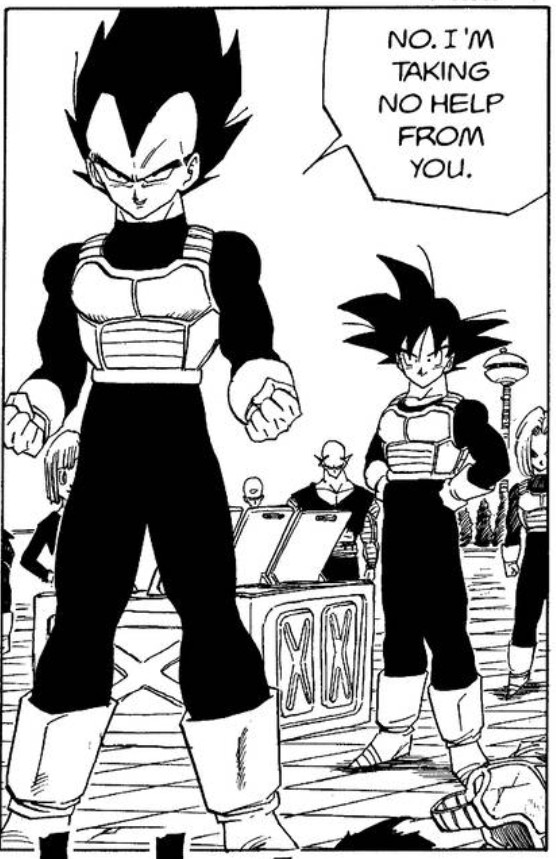
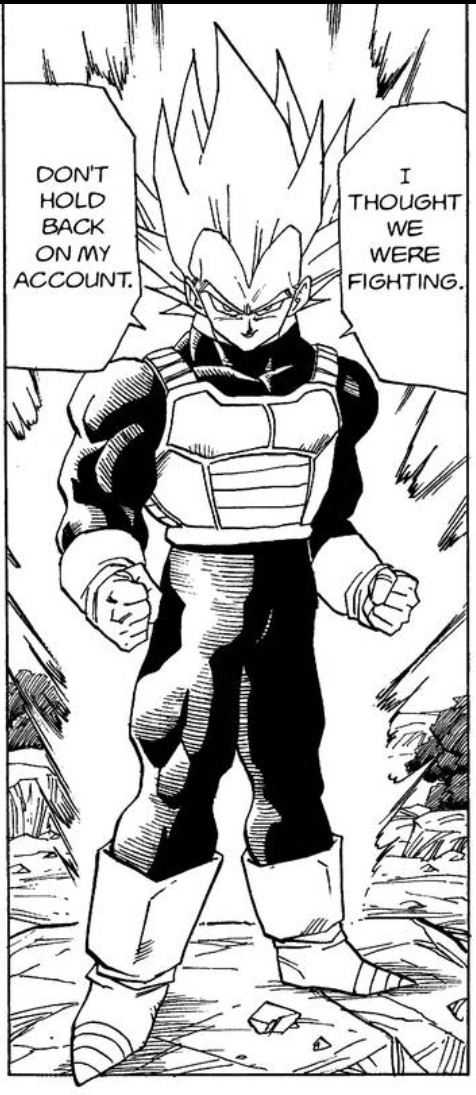

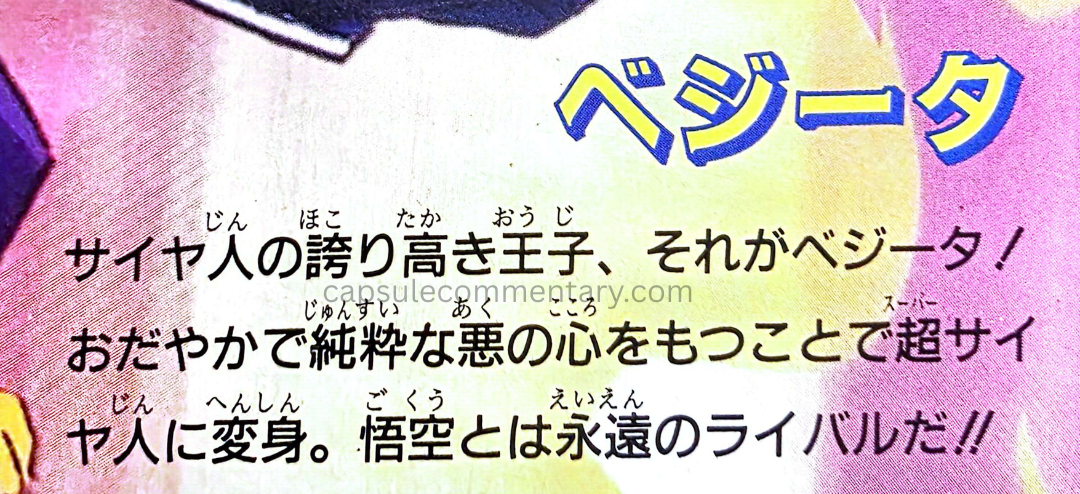
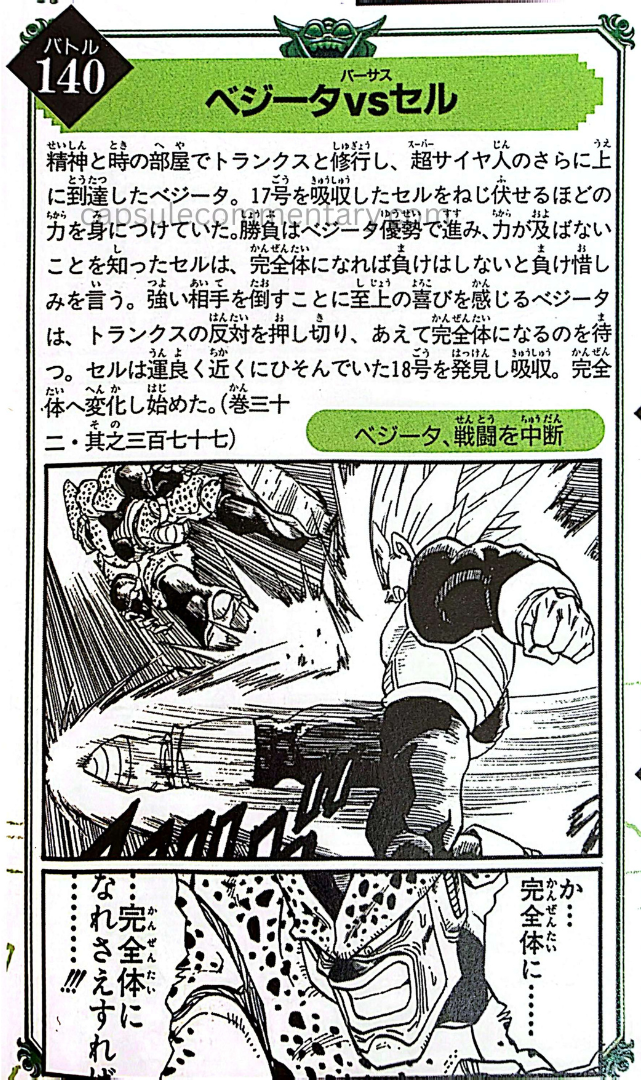
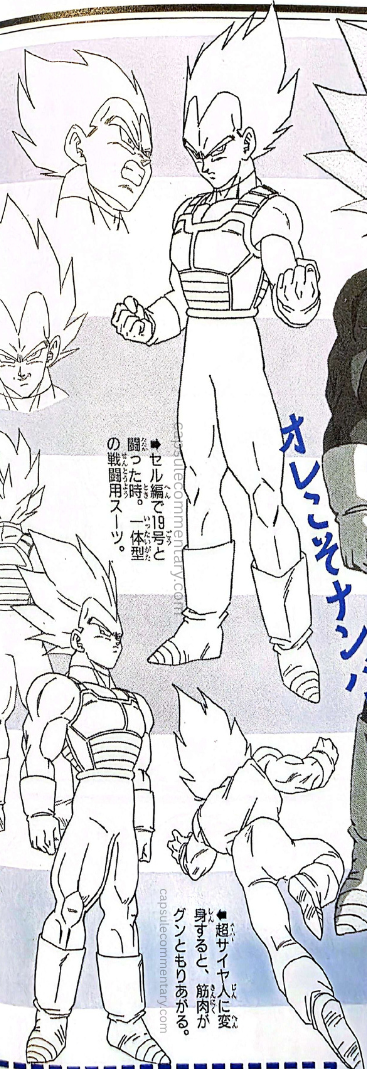
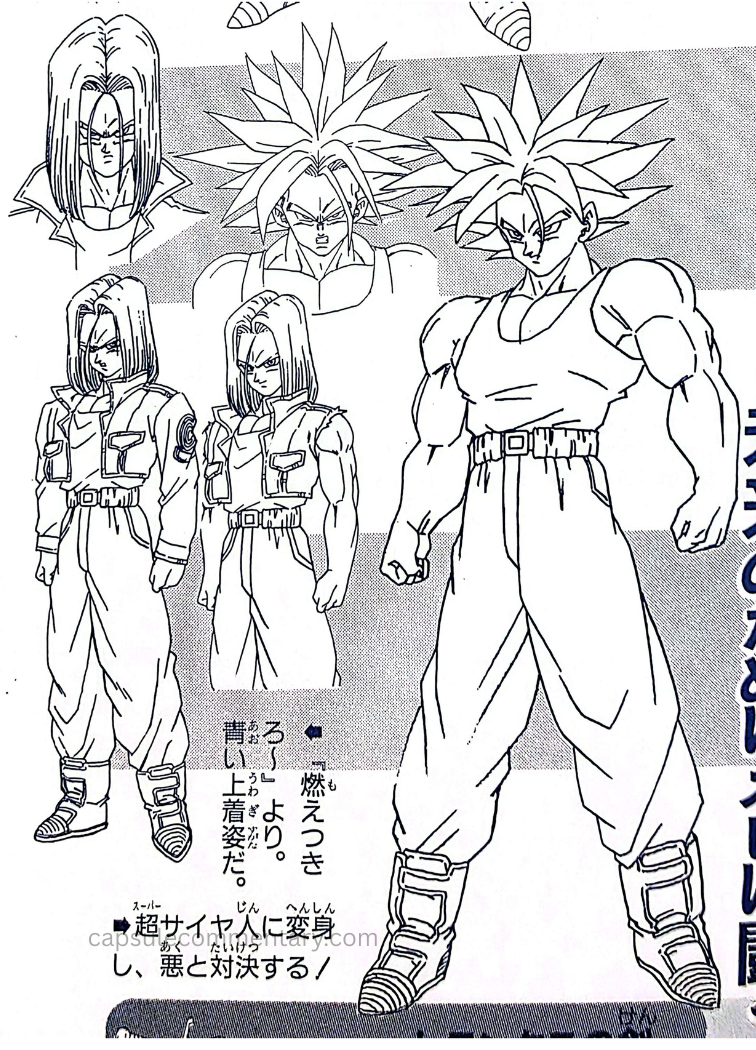
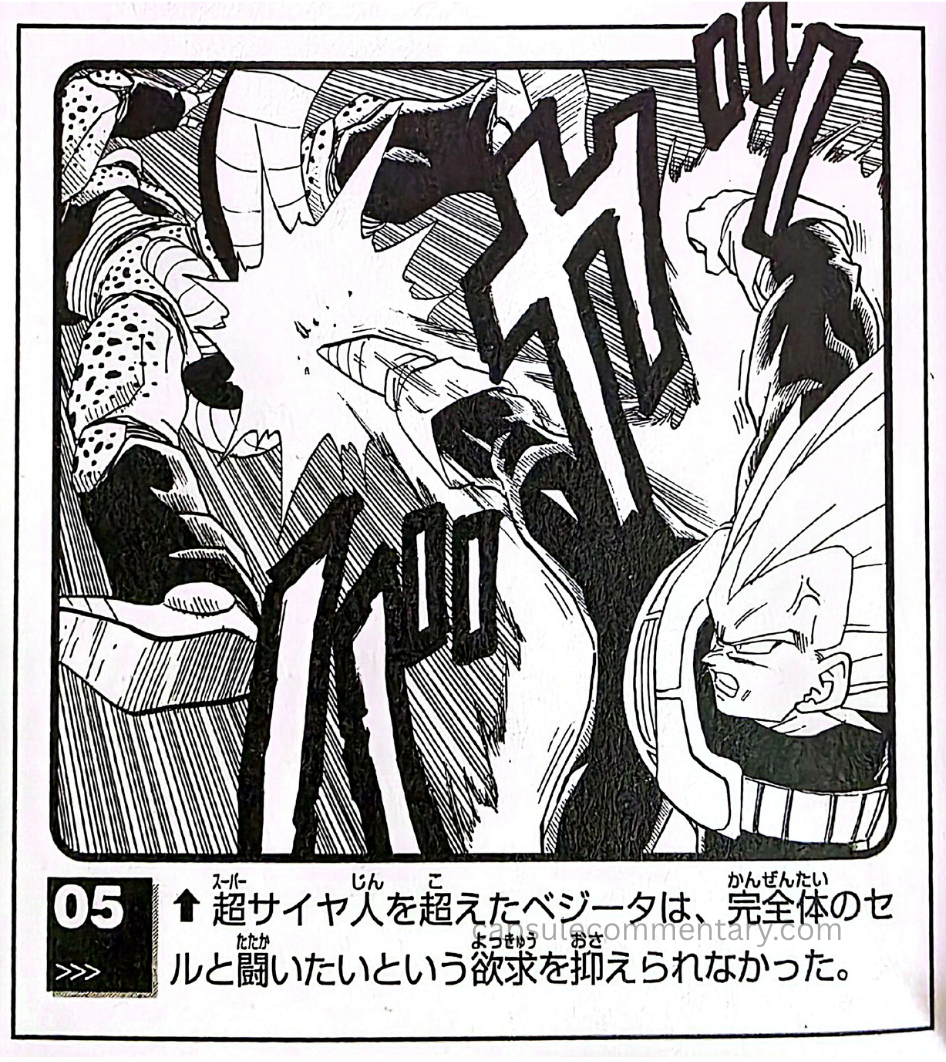
The reason this is difficult to ascertain is because Vegeta’s muscles don’t bulk up that much when he transforms during Movie 8, and Future Trunks has a completely different hair style compared to the manga. Movie 8 Vegeta’s base form is already way more muscular than Toriyama drew him during this time. Thus, the way Tadayoshi Yamamuro, specifically, depicts Grade 2 is important, as he was the animation supervisor for Movie 8. Yamamuro was also the animation supervisor for episodes 157 and 162, in which Vegeta is confirmed to be using Grade 2. Although there is little difference between his base form and his transformation in Movie 8, the form he uses in the movie is identical to the form seen in episodes 157 and 162, which are confirmed to be Grade 2. Therefore it can be safely surmised that Vegeta and therefore Future Trunks were both using Grade 2 during Movie 8.

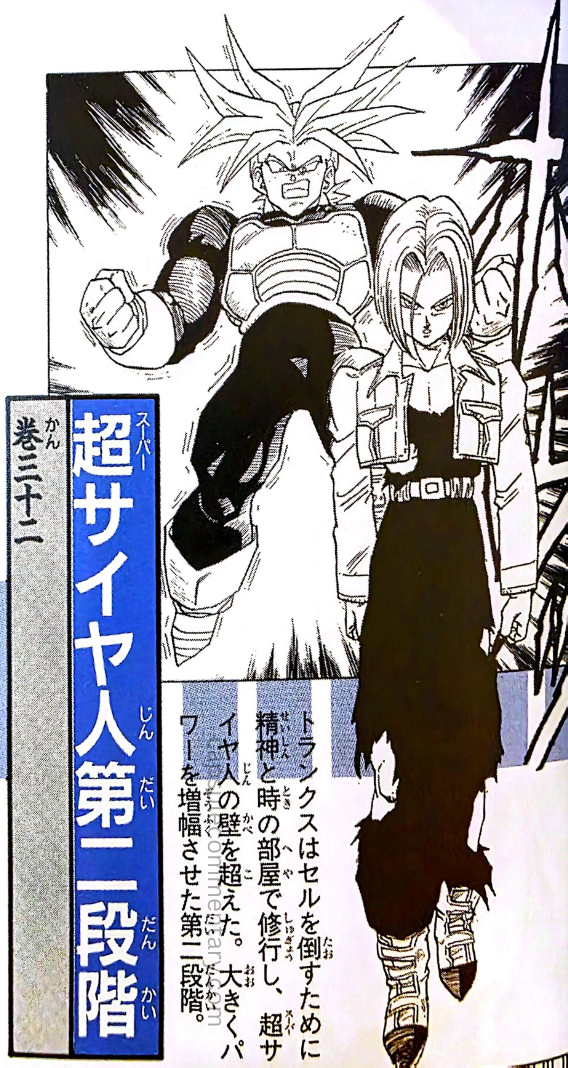
The next step for determining how strong Broly is in this movie is determining if Goku and Gohan were using Grade 4. As previously stated, this movie takes place during chapter 390. While Grade 4 does debut in this chapter, it is not shown how effective nor how powerful it is. And importantly, there is no visual distinction between Grade 1 and Grade 4 when the character is making a serious face. One factor that would suggest Goku is not using Grade 4 is the fact that he is not walking around the entire film in the Super Saiyan form and only transforms when he needs to. The biggest clue that this is in fact Grade 4 are Super Saiyan Goku’s eyes when he’s not making a serious face. In Grade 4, his eyes can also become half-ovals when he’s not serious. In Grade 1, his eyes are always some sort of trapezoid or similarly shaped quadrilateral.
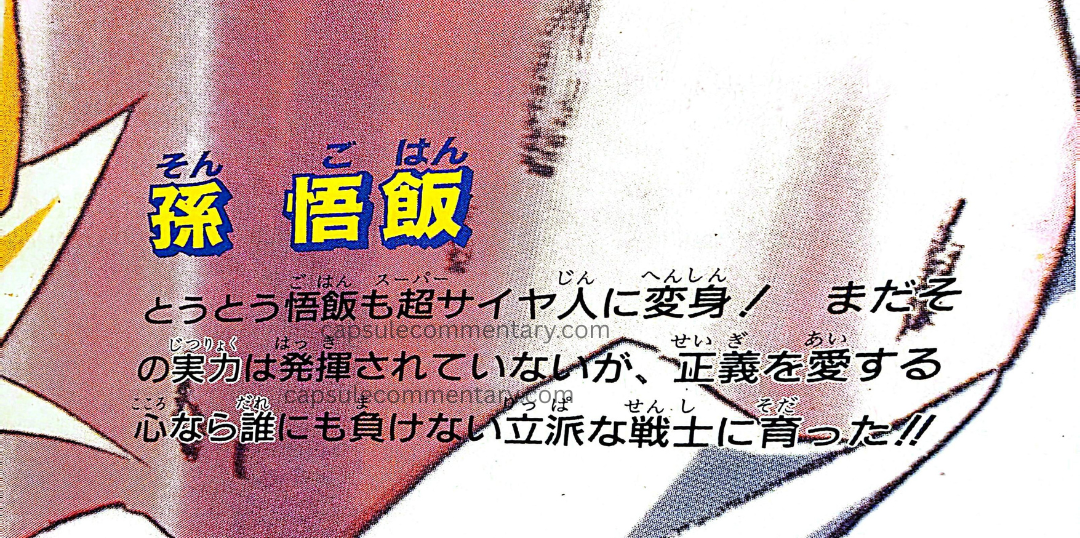
Even though Goku hadn’t yet revealed the power of Grade 4, the production crew worked under the correct assumption that he must have at least surpassed Grade 2 Future Trunks and Vegeta. However, they also worked under the false assumption that Goku was still stronger than Gohan. While we can safely conclude that Goku was using Grade 4, we can’t do the same for Gohan because, again, Gohan was stronger than Goku at this point in the story. The insert for the standalone DVD of this movie even states: “[Gohan] has already acquired power greater than Goku’s, but in this work that power remains dormant.” Page 6 of the booklet in Dragon Ball The Movies Volume 4 on Blu-Ray states: “In the 11th theatrical film [This numbering includes non-Z films.], Gohan finally reveals his form as a Super Saiyan! It will still be some time before he fully brings out the innate potential he was born with, but he grows into a warrior worthy of being the next generation’s hero.” And page 2 of the Spring 1993 Toei Anime Fair (DBZ Movie 8) pamphlet states: “At last, Gohan can transform into a Super Saiyan! Although he hasn’t fully demonstrated his true power yet, his love for justice is second to none. He has grown into a splendid warrior!!” Therefore, Gohan is only visually using Grade 4 and not functionally.

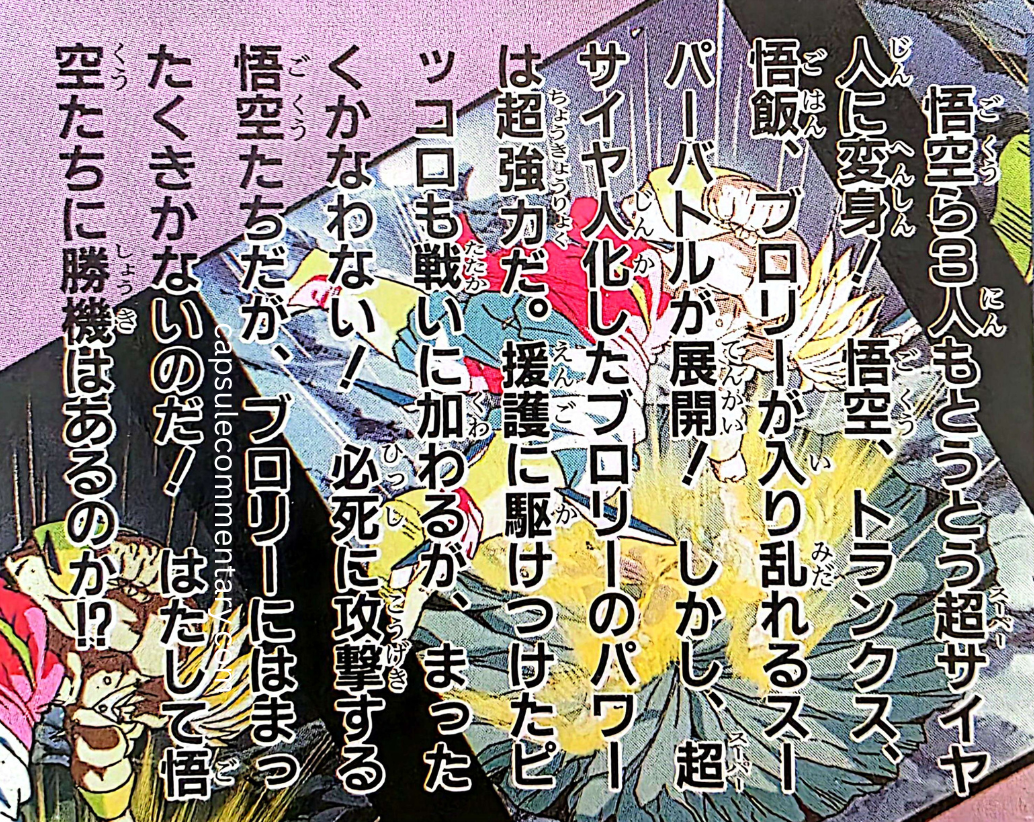
![Dragon Ball Z Movie 8 standalone DVD insert. "Son Gohan. In the 11th theatrical film [this includes Dragon Ball films], he became able to transform into a Super Saiyan for the first time! He has already acquired power greater than Goku’s, but in this work that power remains dormant. However, he shows great activity, such as helping the Shamo who are being abused and standing up to Broly!!"](https://capsulecommentary.com/wp-content/uploads/2025/07/188.png)
![Dragon Ball The Movies Volume 4 Blu-Ray booklet page 6. "In the 11th theatrical film [This includes non-Z movies.], Gohan finally reveals his form as a Super Saiyan! It will still be some time before he fully brings out the innate potential he was born with, but he grows into a warrior worthy of the next generation’s hero. In this work, while protecting the Shamo who are being oppressed as slaves, he displays great exploits as he stands up to Broly."](https://capsulecommentary.com/wp-content/uploads/2025/07/199.png)
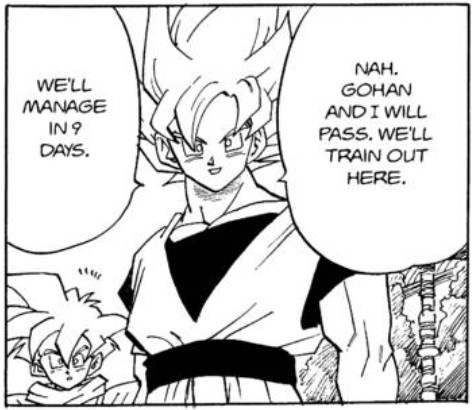
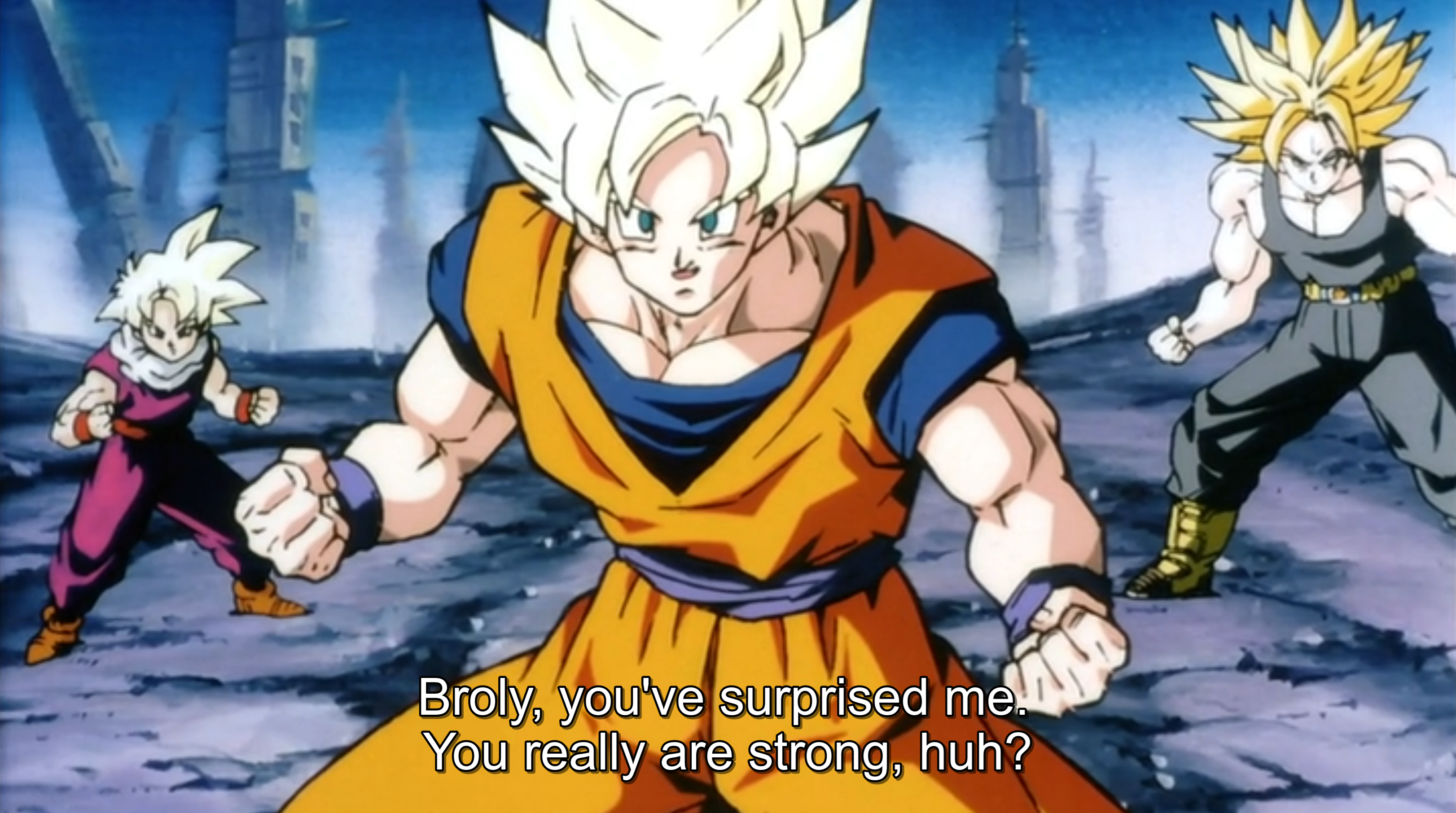
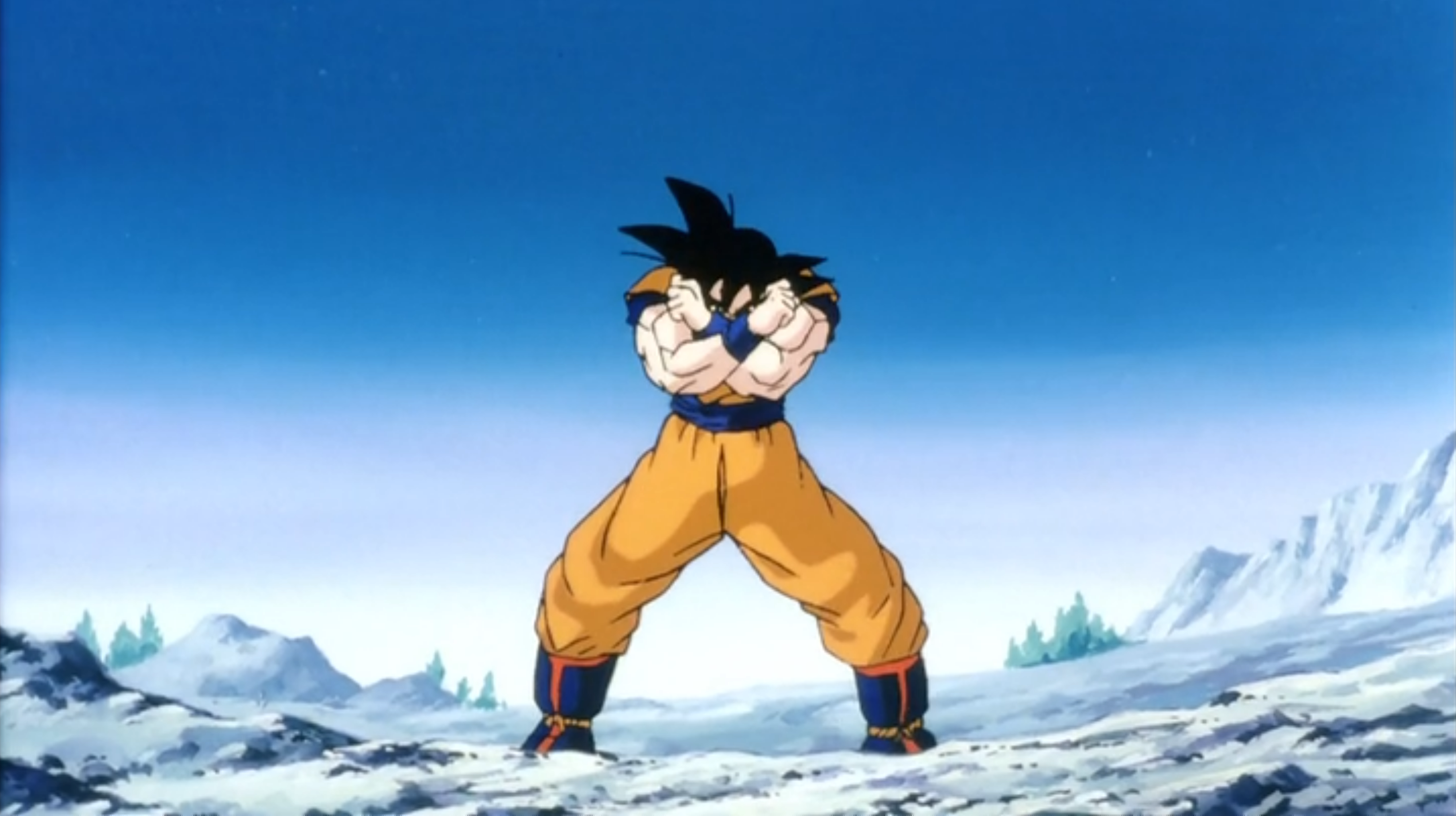
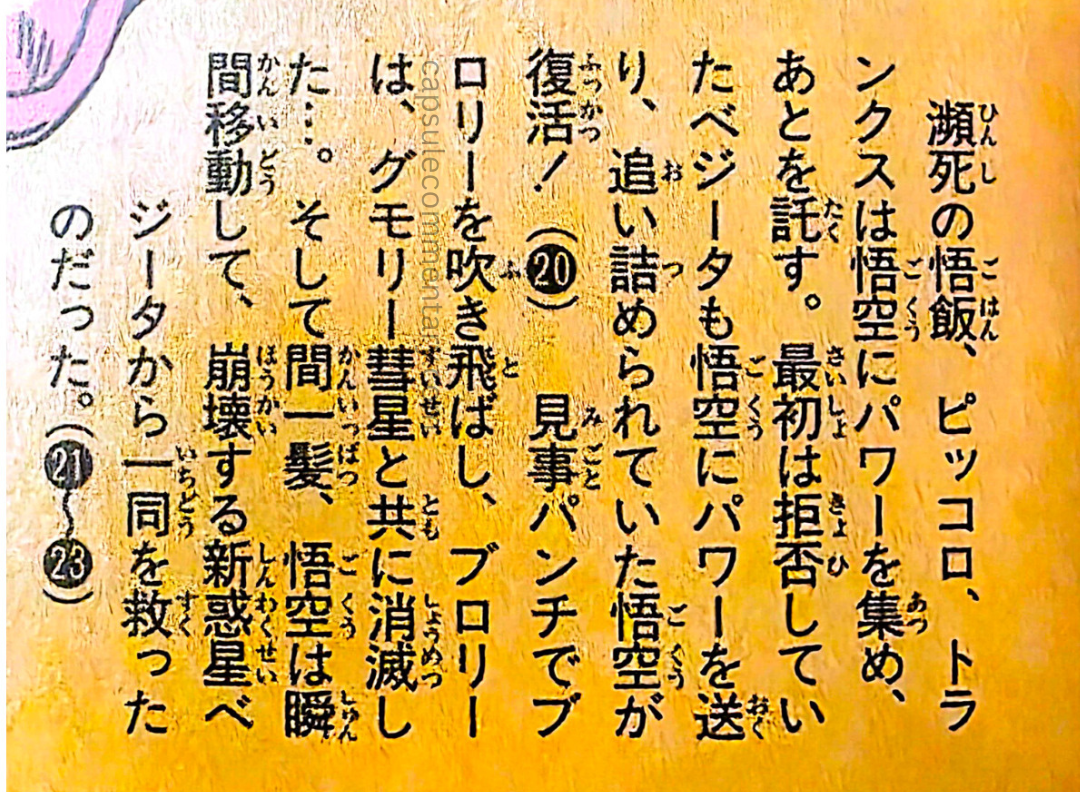
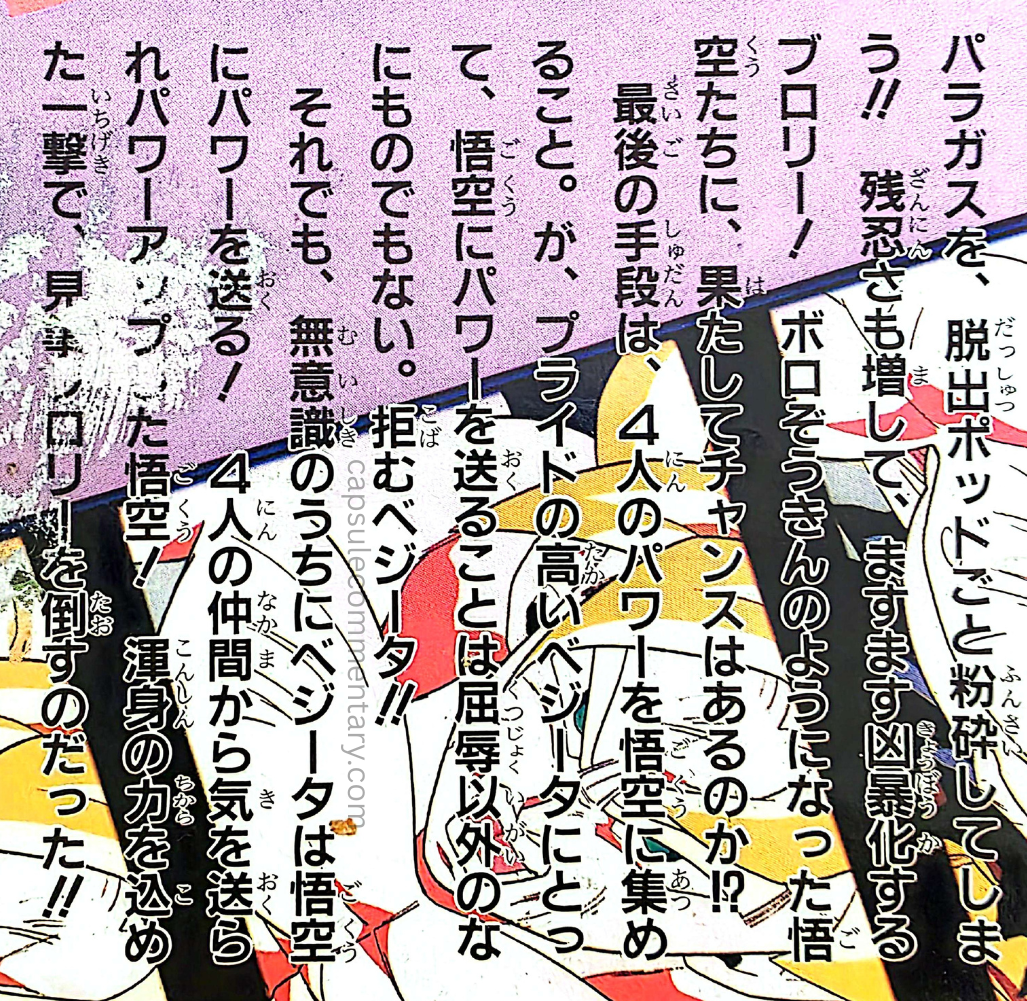
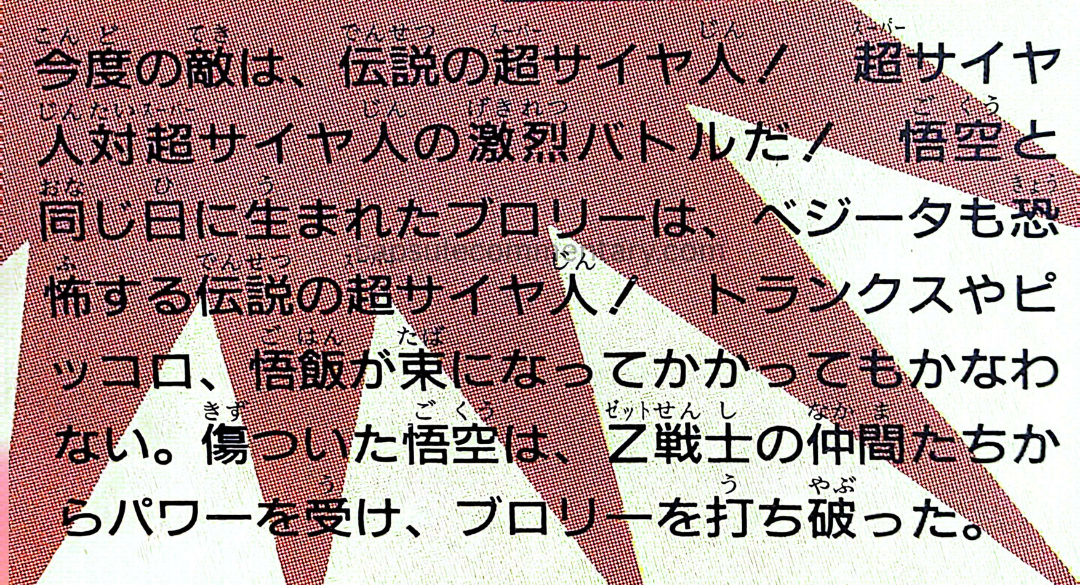
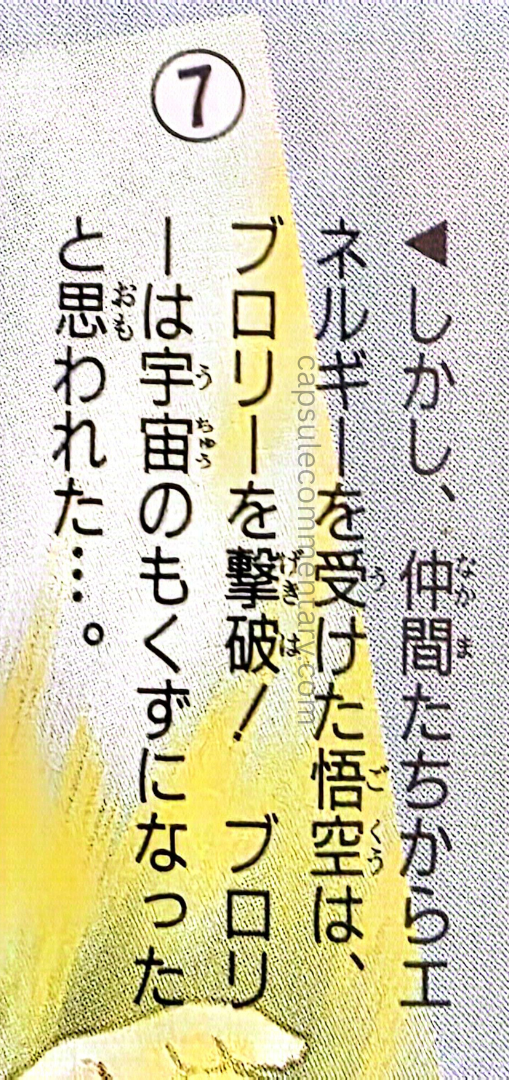
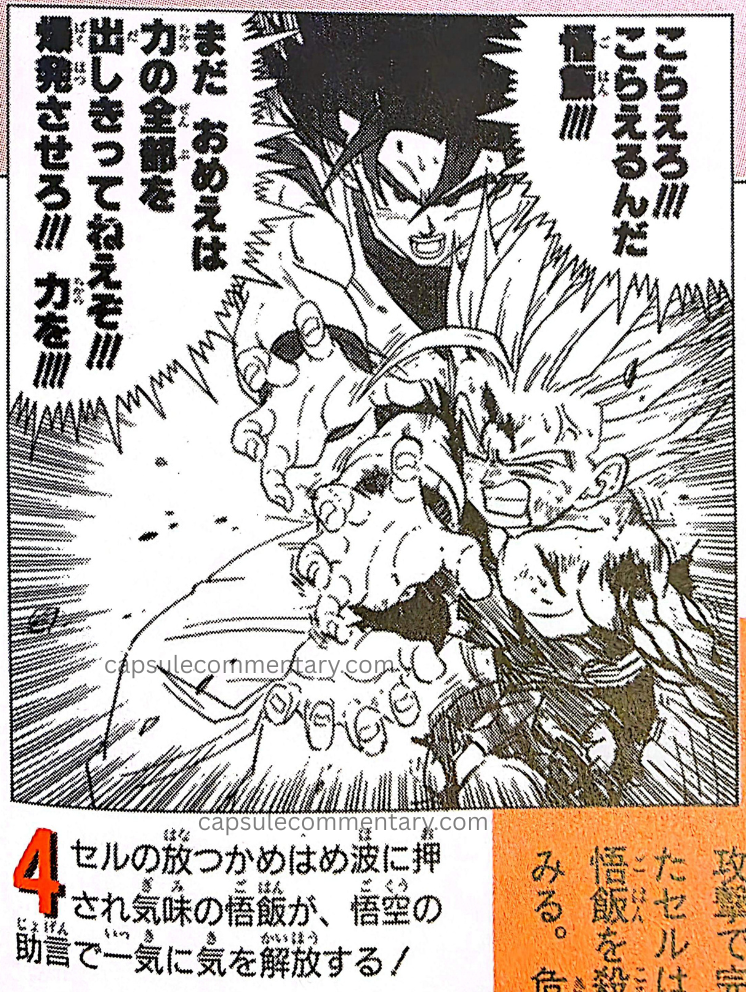
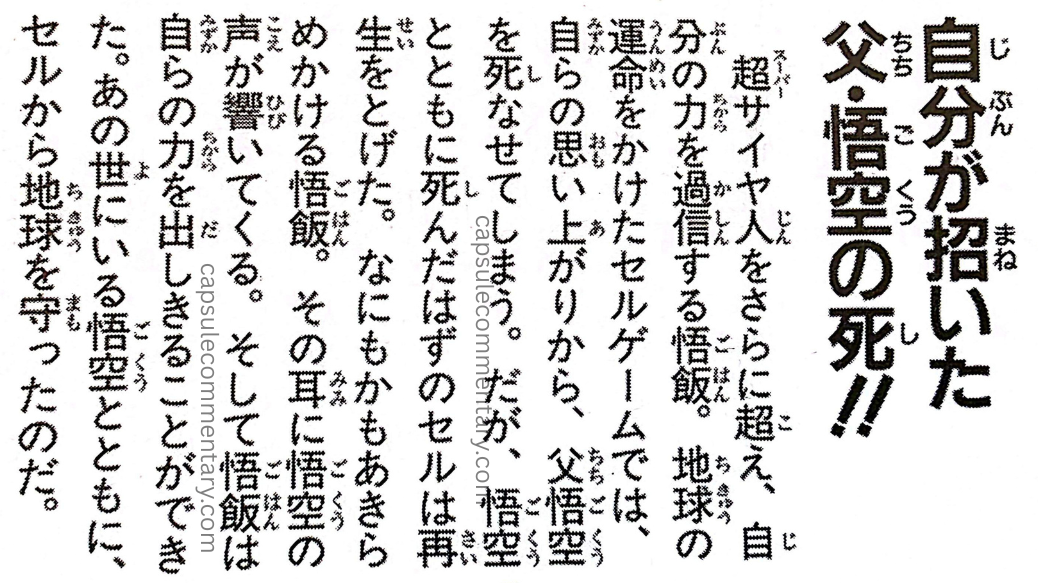
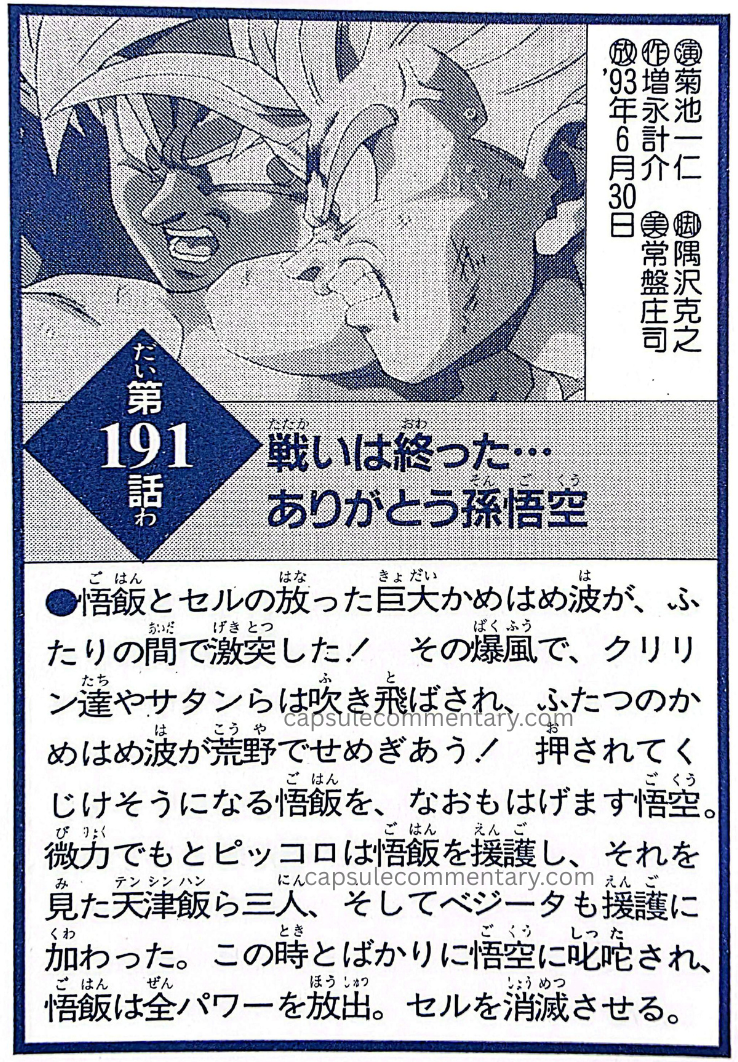
Now let’s examine Goku defeating Broly with the power of his allies. It resembles the formation of the Genki-dama in this regard. The power he receives is called “power,” “energy,” etc. across different guidebooks. Gohan, Piccolo, Future Trunks, and Vegeta were so heavily injured that they could barely move beyond holding one arm up and opening their eyes halfway to donate their energy. And once they finished donating it, they all passed out from exhaustion. Chōzenshū 3 page 121 (Daizenshū 6 page 113) describes them as being “critically wounded,” and Dragon Book The Movies page 37 describes their power as “exhausted” before giving it to Goku. Thus the amount they were able to give can in no way represent their total energy, but rather a small fraction of it. In Spring 1993 Toei Anime Fair (DBZ Movie 8)‘s pamphlet on page 10, there is a statement that reads: “With friends, your courage multiplies a thousandfold!! No matter how strong the enemy, absolute victory!!!” This has frequently been misunderstood as meaning that Goku gained a 1000x power boost after receiving energy from Gohan, Piccolo, Future Trunks, and Vegeta. Due to the growing popularity of this scan, this must be thoroughly addressed.
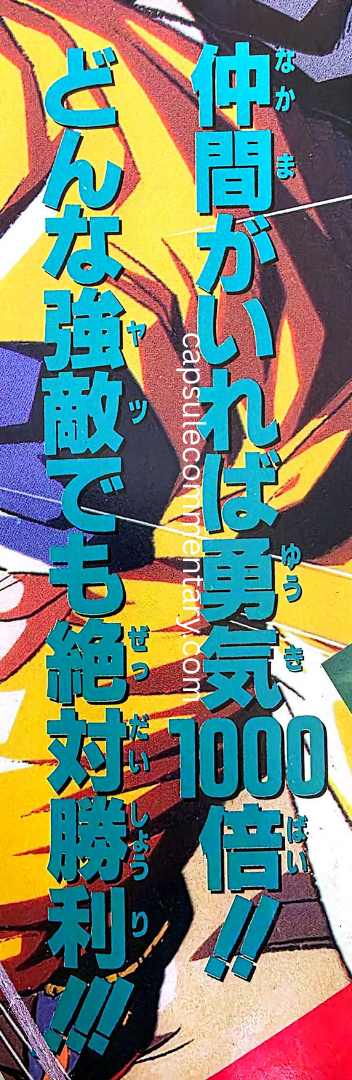
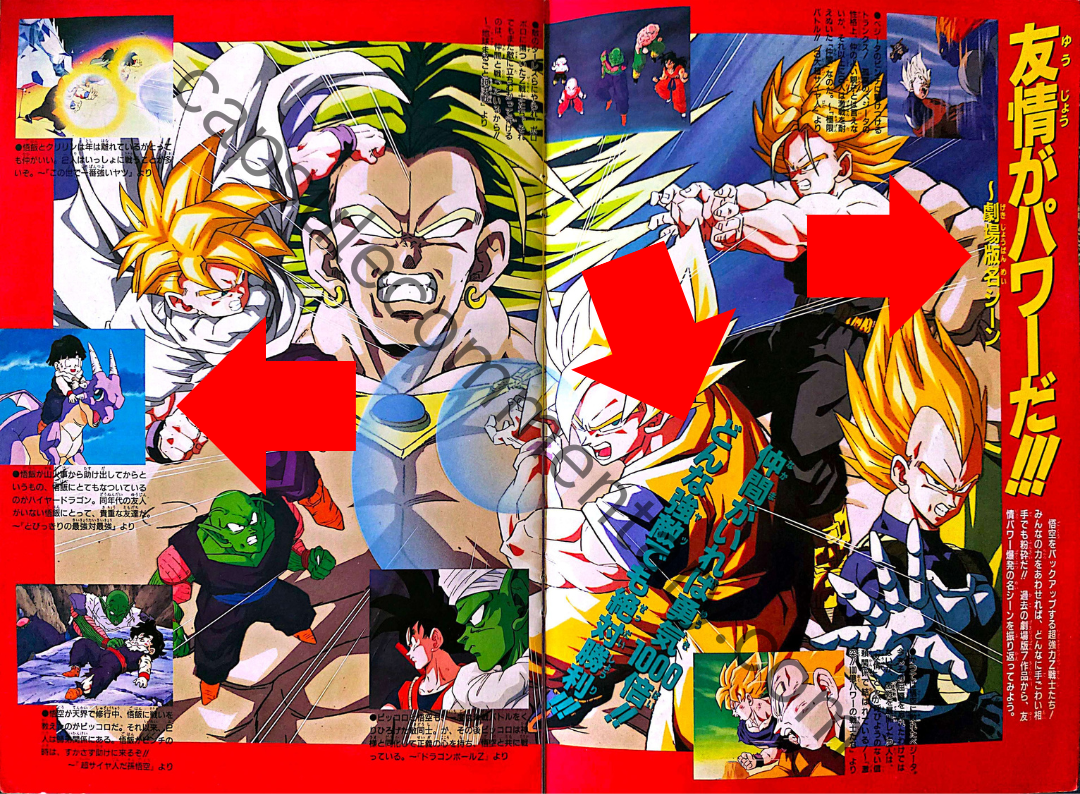
First of all, it does not comment on power at all; it comments on courage, 「勇気」. Secondly, it appears on a two-page spread titled “Friendship is power!!!” These two pages describe how the Dragon Team has used friendship and teamwork to overcome powerful enemies. It is essentially saying, “Teamwork makes the dream work.” It also applies to everything on the two-page spread and is not even specific to Goku receiving power to defeat Broly. Did Gohan get 1000x stronger by riding Haiyā Dragon (Icarus)? That’s actually on the spread, unlike Goku defeating Broly. Thirdly, how would four “critically wounded” fighters increase Goku’s power a thousandfold anyway? All four of them were already objectively weaker than Goku during this film even before fighting Broly. To reach 1000x, they would each need to individually multiply Goku’s own power by 5.62.
Importantly, even Koyama says the “1000x” is not meant to be taken literally. He wrote on Twitter: “I can’t say for sure since I don’t have the pamphlet in question on hand, but isn’t the ‘1000 times power’ mentioned there not an actual number, but rather a way of expressing that he powered up massively thanks to the support of his allies?” Koyama references “power” here because the other Twitter user claimed the pamphlet said that and Koyama is just giving the Twitter user the benefit of the doubt that they didn’t misunderstand it. To be clear, it does not say “power.” Large numbers like this are almost always used for hyperbolic effect, and are not meant to be taken literally. For example: Dragon Ball Z: The Return of Cooler is known in Japan as “Dragon Ball Z: Clash!! The 10 Billion Power Warriors,” and while there are a lot of Metal Coolers in the film, they do not even remotely approach the number 10 billion.
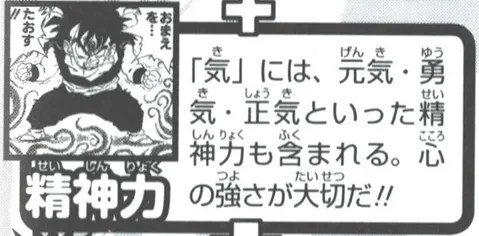
And for one last point before moving on, 「勇気」 or “yūki” is a real, non-Dragon Ball word that predates Dragon Ball by hundreds to thousands of years. In Dragon Ball: Super Exciting Guide: Character Volume on page 72, the components of ki are explained for the first time to readers. One of these components is yūki. One may come to the conclusion that the pamphlet must be referring to this component of ki and not to the traditional definition of yūki. The issue with this reasoning is that Movie 8 and its pamphlet came out in 1993 and the Super Exciting Guides came out in 2009—16 years later. Toei is not composed of soothsayers, so the yūki in this pamphlet is very obviously referring to the traditional definition. In my Deep Dive on Majin Buu, when discussing the Genki-dama, I take the idea of yūki as a component of ki seriously because in that situation, Toriyama is revealing new information about his manga.
For the sake of argument, let’s just assume Goku really did get 1000x stronger at the end of Movie 8. After he received this power, he defeated Broly with a single punch. Broly was completely powerless against him. The power Goku received didn’t just give him a slight edge; it made him massively dwarf Broly in power. In fact, his punch made Broly explode and, for all intents and purposes, it placed Broly into a 7-year coma. Goku may have even given him permanent brain damage considering Broly’s characterization and dialogue in Movie 10. So this punch doesn’t help us scale Broly’s strength at all. The only thing it can be used to scale is Broly’s durability, as he didn’t just simply die from it.



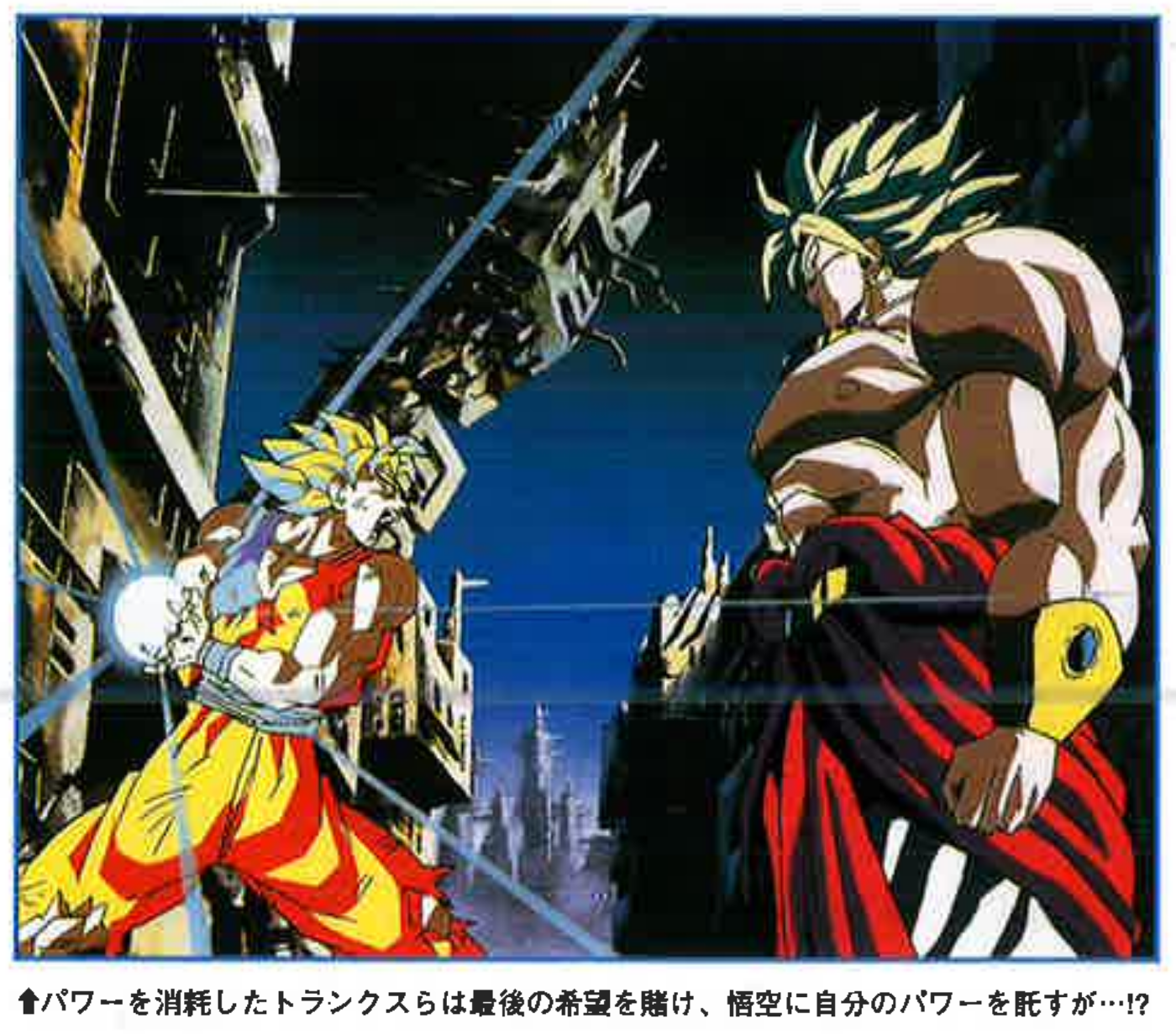
By Broly’s and his creator Koyama’s (albeit contradictory) admissions, Broly was fighting Goku at full power and was not holding back. First, on July 29, 2022, Koyama stated that Broly was not using his full power and he reaffirmed this position on May 11, 2023.4 But then only four minutes after that second tweet, he tweeted—and has not yet contradicted, to my knowledge: “When we made the first Broly movie, the intention was to introduce the strongest warrior. His fight with Goku was, of course, a full power battle.”
Koyama often gets himself into these damage control situations where he’ll tweet something unknowingly provocative and then later try to tone down his original message. Another example being where he tweeted Broly was the strongest warrior throughout all of Dragon Ball Z, but then 10 hours later clarified that “the difference in combat power between Boo and Broly will be slight.” If the difference between Majin Buu and Broly is only slight, then that means Broly cannot be the strongest because the difference in power between Vegito and Majin Buu was anything but slight.
In reality, when has the final antagonist in a Dragon Ball Z movie or story arc ever been defeated at anything less than their full power? In every single Dragon Ball Z movie before and after this, and in every single story arc in the manga—yes, including Majin Buu —the final antagonists are defeated at their strongest. The only exceptions to this rule are Vegeta in the Saiyan Saga, whose tail was cut off rather than being beaten as a Great Ape, and Beerus in Battle of Gods, who was never forced to use his full power and wasn’t defeated. Vegeta is not a genuine exception, though; throughout Dragon Ball, it had been well-established that the tail and absence of the Moon are the critical weaknesses of the Great Ape form, and that the canonical methods of defeating (or preventing) the form are to cut the tail off or destroy the Moon. Multiple characters, namely Puar, Kame Sen’nin, Grandpa Gohan, Kami, Piccolo, Yajirobe, and Vegeta himself, exploit these weaknesses throughout the series. Preventing Vegeta from using the form is partially the reason Piccolo even destroyed the Moon.
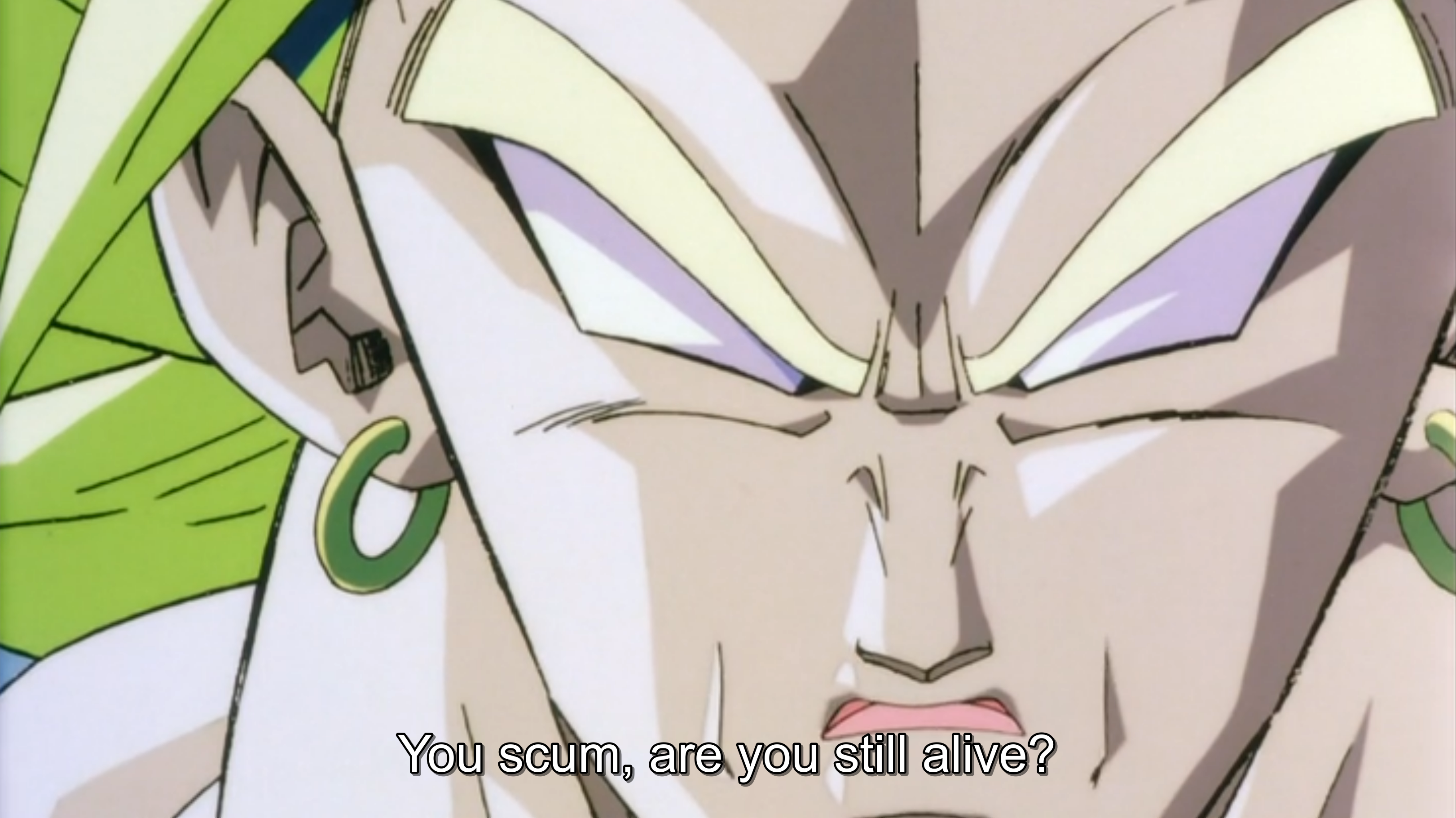

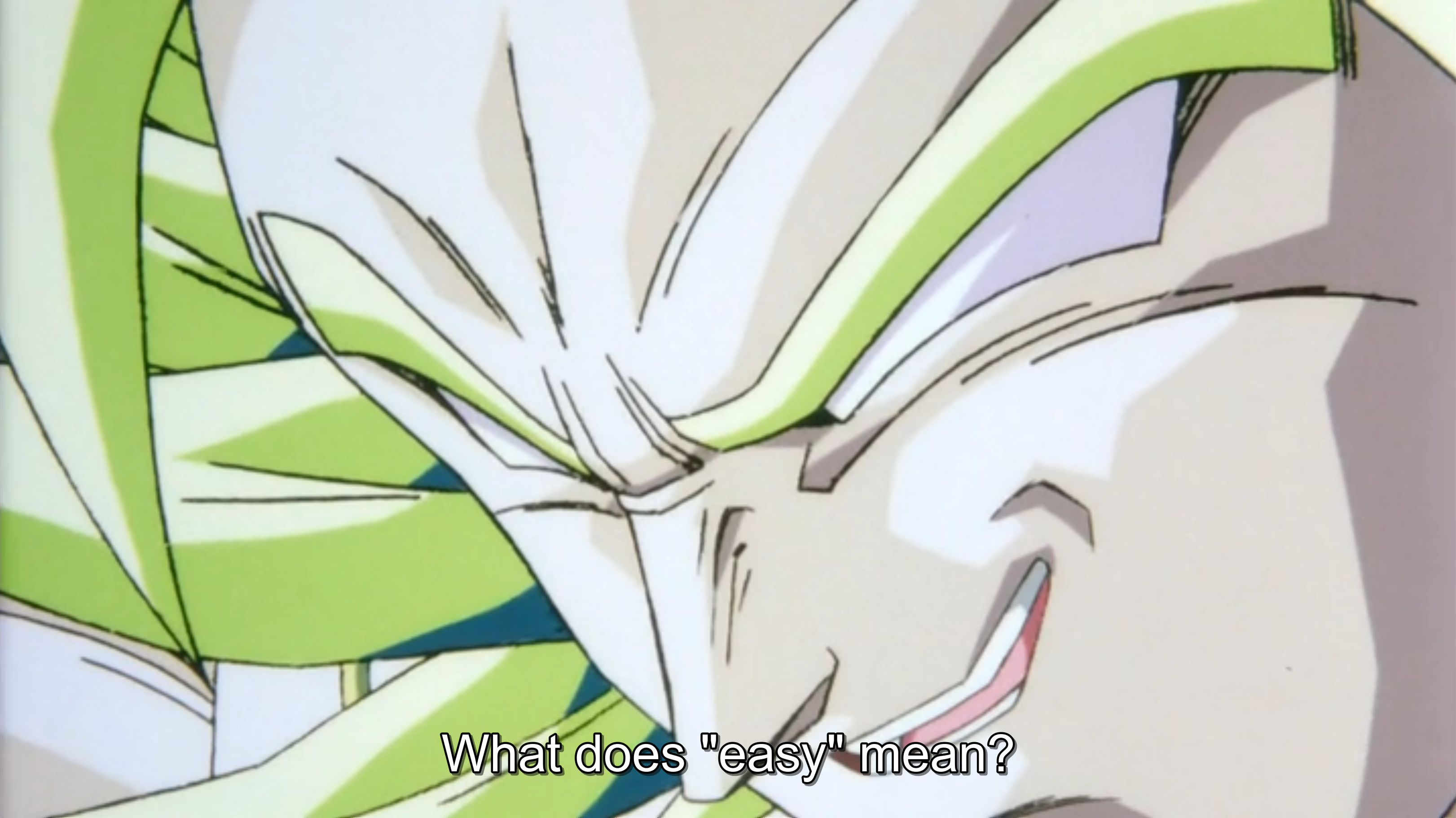
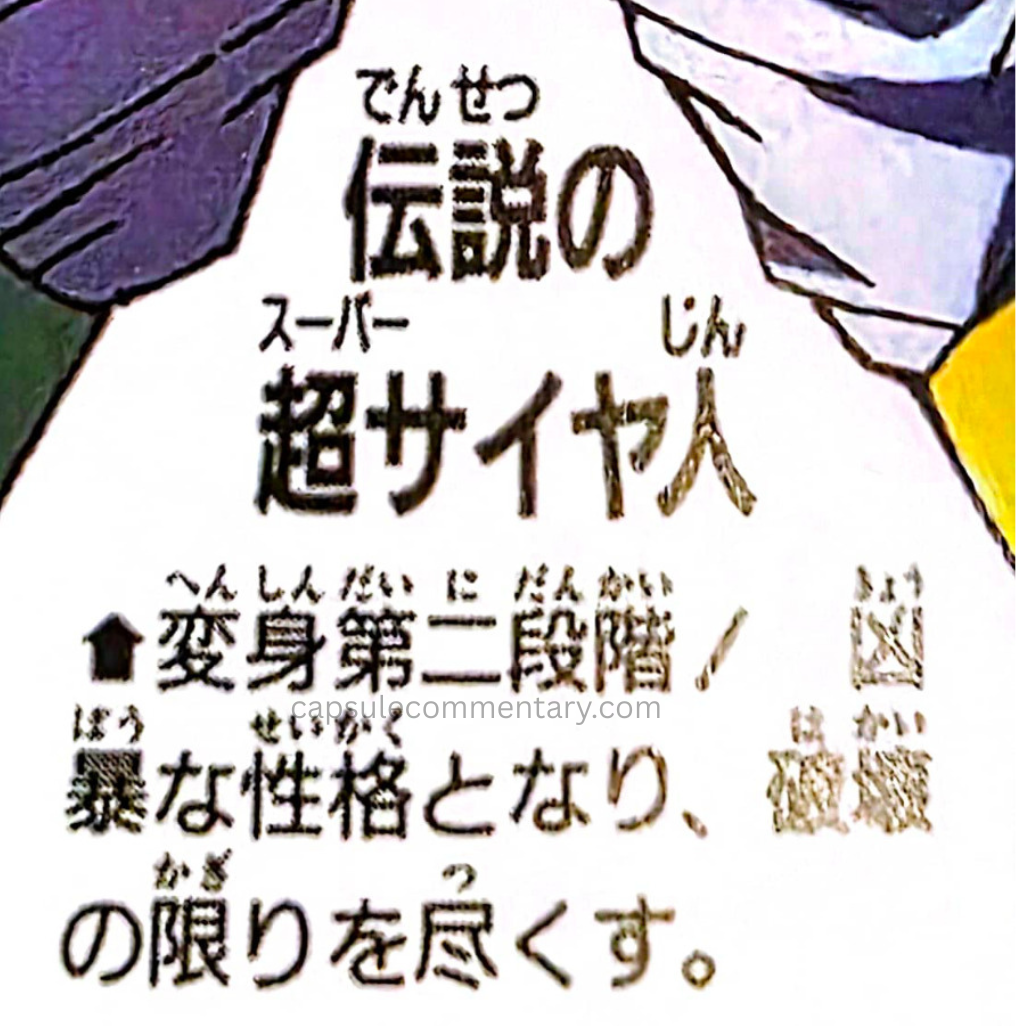
The film itself reinforces the notion that Broly was using his full power, too. Goku asks Broly to “take it easy,” to which Broly responds, “What does ‘easy’ mean?” Chōzenshū 3 page 117 (Daizenshū 6 page 109) also confirms this, writing that Broly “unleashes destruction to the fullest.” The fight itself also lasts for several hours. This is evidenced by Paragus’s monologues on Comet Gumori getting closer and closer, until the Dragon Team escapes New Planet Vegeta at the last second before impact. During the fight, Broly also expresses disbelief when he cannot kill Goku, which further underscores he was fully exerting himself. After all, why would Broly get frustrated Goku isn’t dying if he could simply power up more and finish the job?
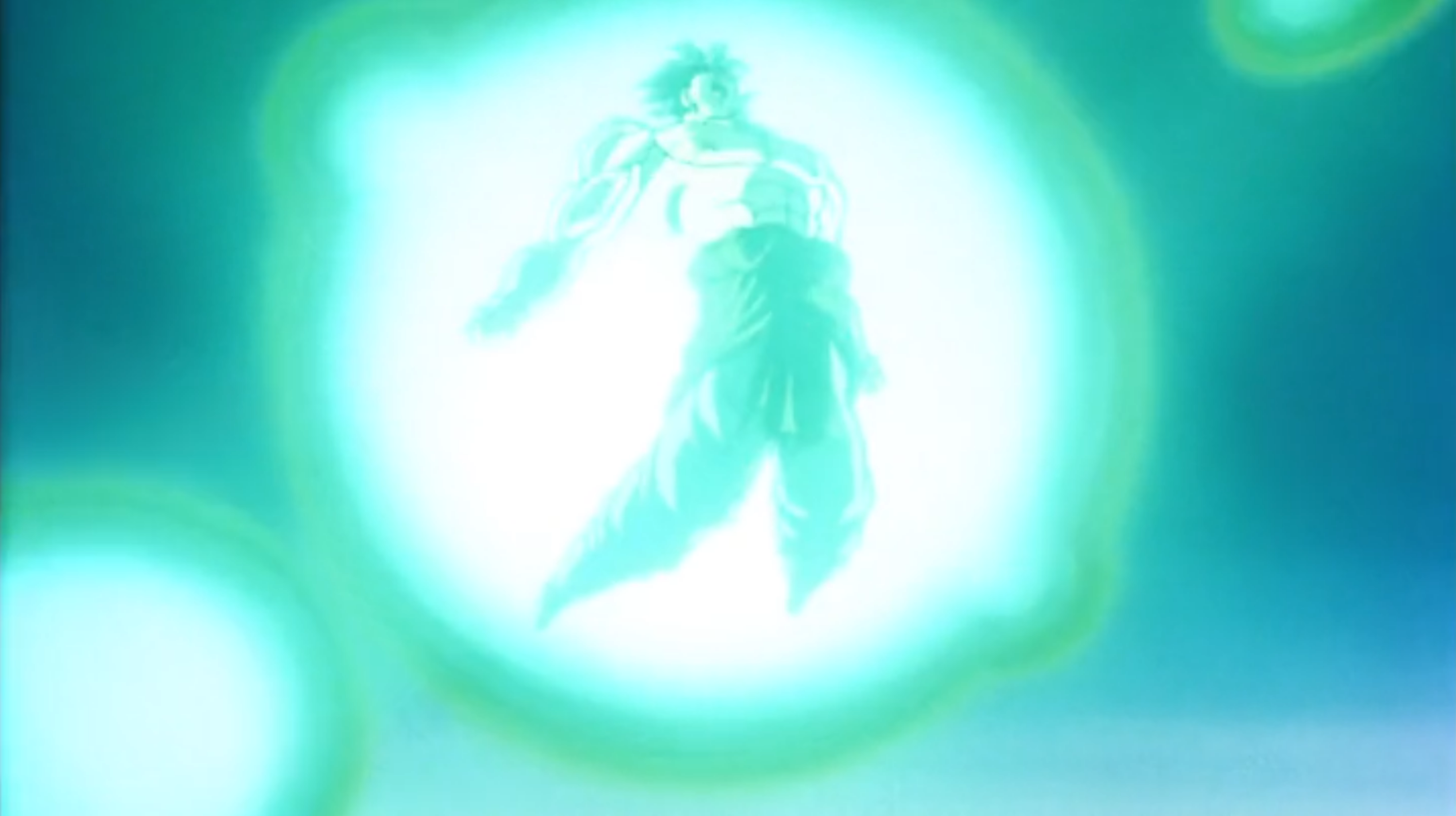
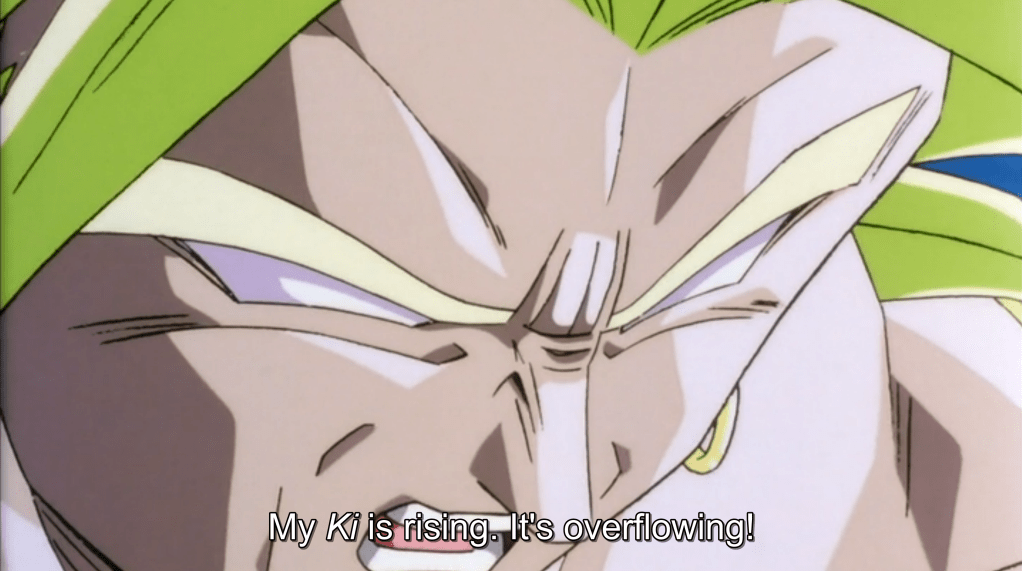
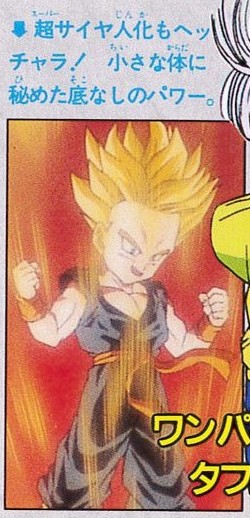
The official comic adaptation of the movie on page 6 says that Broly has “bottomless power,” but the Movie 10 comic on page 11 says the same thing about Trunks: “Boundless power is hidden within his small frame.” These statements from the comic adaptations are thus clearly hyperbolic and not meant to be taken literally. Proof of Broly not having bottomless power comes when Broly says that his ki is rising and overflowing. He needs to expend that extra ki through dozens of green ki blasts. These ki blasts are underwhelming in their destruction, only destroying parts of forests and some buildings. Nonetheless, it demonstrates that there is an upper limit of ki that his body can endure. In fact, this scene was likely only added to the movie to explain why Broly explodes at the end of Movie 8, and the concept of an upper limit to his ki is completely abandoned in Movies 10 and 11.
To be clear about this: Broly is unable to kill Goku over the course of several hours, even though he is actively trying to kill him with his full power (albeit in a sadistic, torturous way). Therefore, the fan theory that Broly’s power or ki can rise infinitely is unfounded; if it were true, he would have been able to kill Goku and would not have needed to expend his overflowing ki. Broly’s performance in Movie 8 is similar to how Super Android 13 in Dragon Ball Z: Super Android 13! effortlessly tanked Goku’s attacks without showing any signs of damage, yet still failed to finish him off.
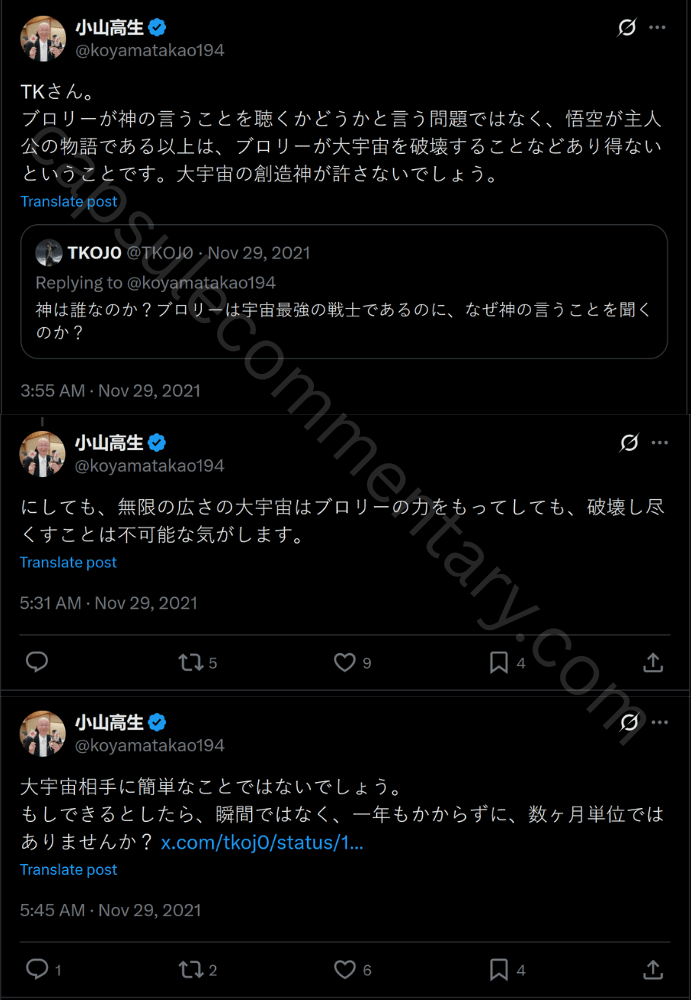
Several characters state that Broly will go on to destroy the universe if left unchecked, but Koyama has clarified at least 3 times on Twitter that this is not possible: here, here, and here. He has even stated it’s not possible for Broly to destroy “multiple galaxies.” Some fans point to this tweet by Koyama where he writes, “It wouldn’t be easy to deal with the entire universe, would it? If it could be done, it wouldn’t be instant, but rather than taking a year, wouldn’t it take a few months?” as proof that Broly can destroy the universe. However, these fans are ignoring that Koyama is responding to a very specific hypothetical question: “If Broly existed in a world without Goku or anyone to stop him, how long would it take him to destroy the entire universe? A few seconds? A day? A year?” To be clear: Koyama stated TWICE that Broly cannot destroy the Dragon Ball universe. When asked after that if Broly could destroy some hypothetical non-Dragon Ball universe, Koyama said yes.
As we see in the movie itself with Planet Shamo, Chōzenshū 3 page 117 (Daizenshū 6 page 109) says Broly “possesses super power capable of destroying a planet with a single blow.” The insert for the standalone DVD of Movie 8 reads: “At birth he possessed a battle power of 10,000, and after growing up he harbors strength great enough to destroy a planet with a single blow.” The descriptions of Broly’s rampage in the Cosmology section of this article also echoed this. So the only thing that’s ever confirmed about his strength is that he can destroy a planet. And as for the changing colors when Broly transforms, Koyama wrote on Twitter: “I see it as a symbolic scene illustrating Broly’s superhuman strength and power by changing the surrounding atmosphere. I don’t think dimensions are involved.”
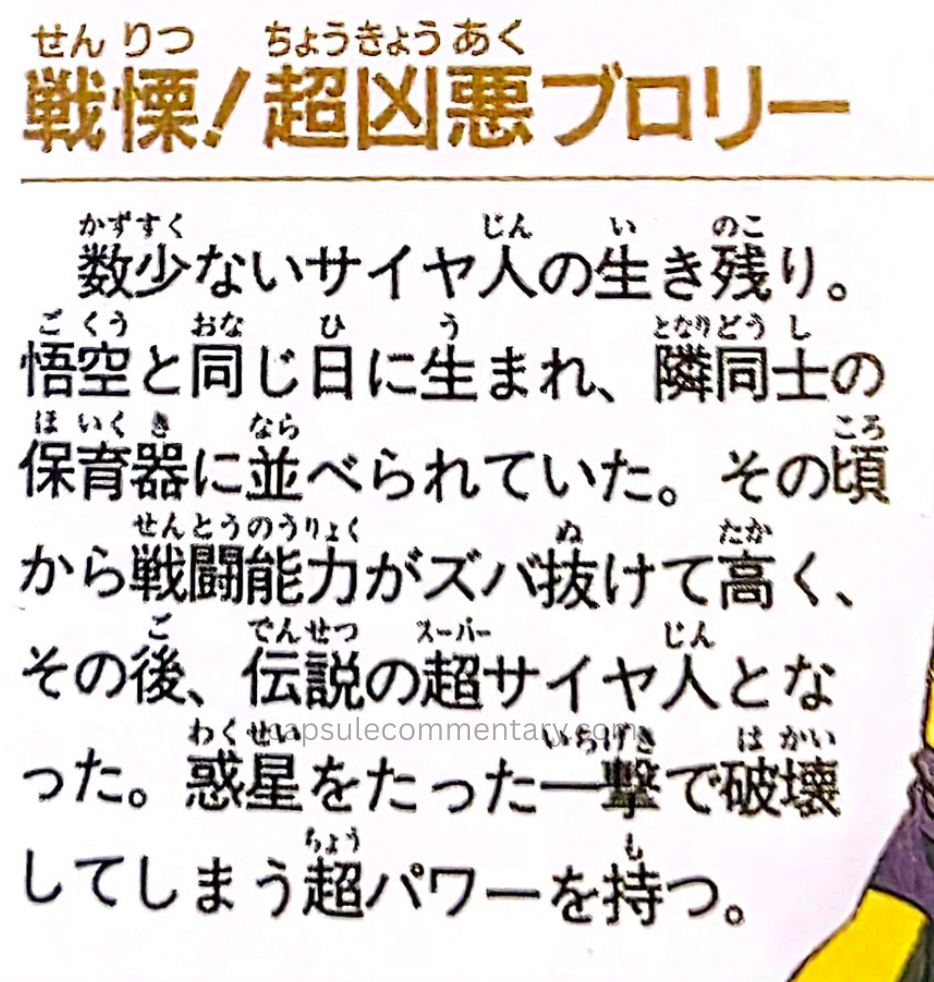

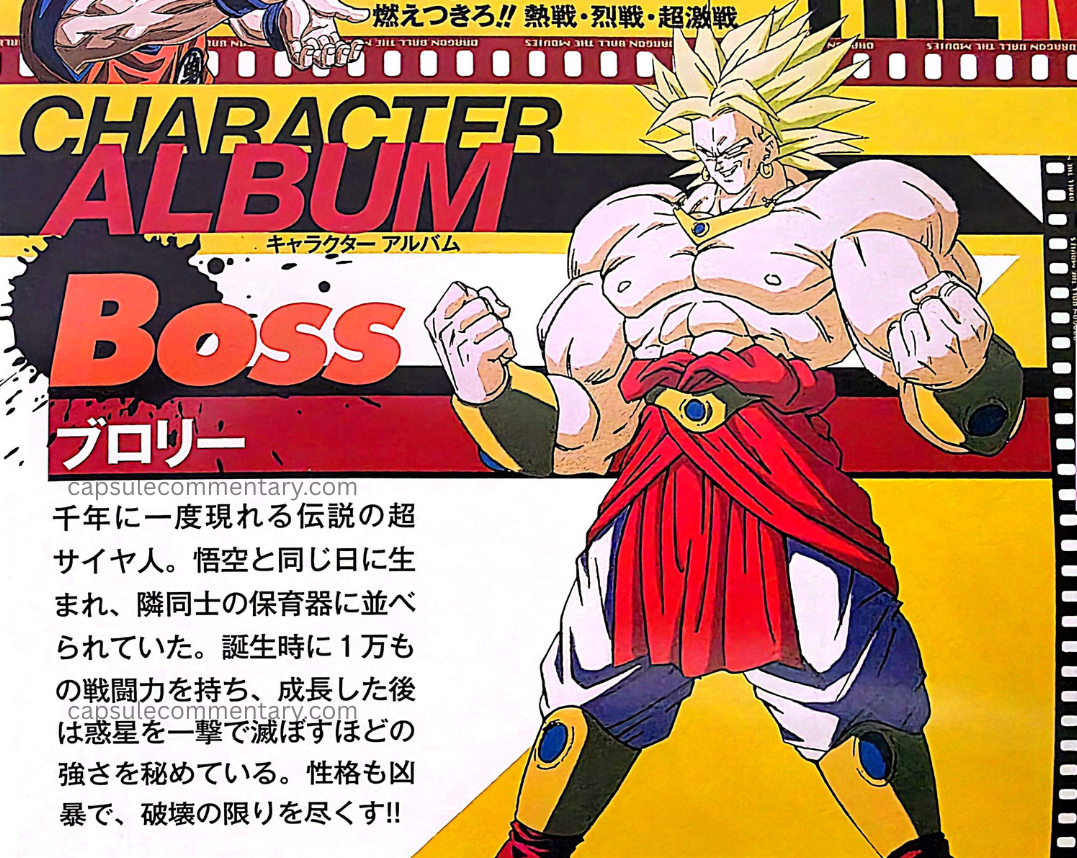
To summarize Broly in Movie 8’s strength: it’s somewhere between Super Saiyan Grade 4 Goku and Perfect Cell. He was able to easily defeat both Super Saiyan Grade 2 Vegeta and Super Saiyan Grade 4 Goku, but was ultimately defeated by a heavily injured group of 5 warriors combining their powers, which puts him beneath Perfect Cell. Perfect Cell was able to create Cell Juniors that fought evenly with stronger versions of Vegeta and Future Trunks, and was himself stronger than a stronger-than-Goku Super Saiyan Grade 4 Gohan. Super Saiyan 2 was required to defeat him. Additionally, it is implausible that Perfect Cell at full power would be unable to kill Goku, especially after several hours of actively trying.

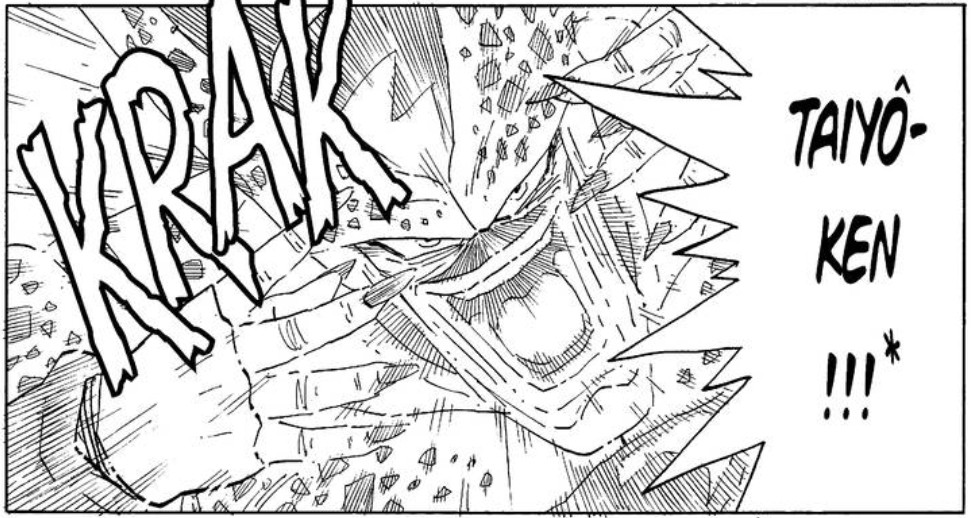
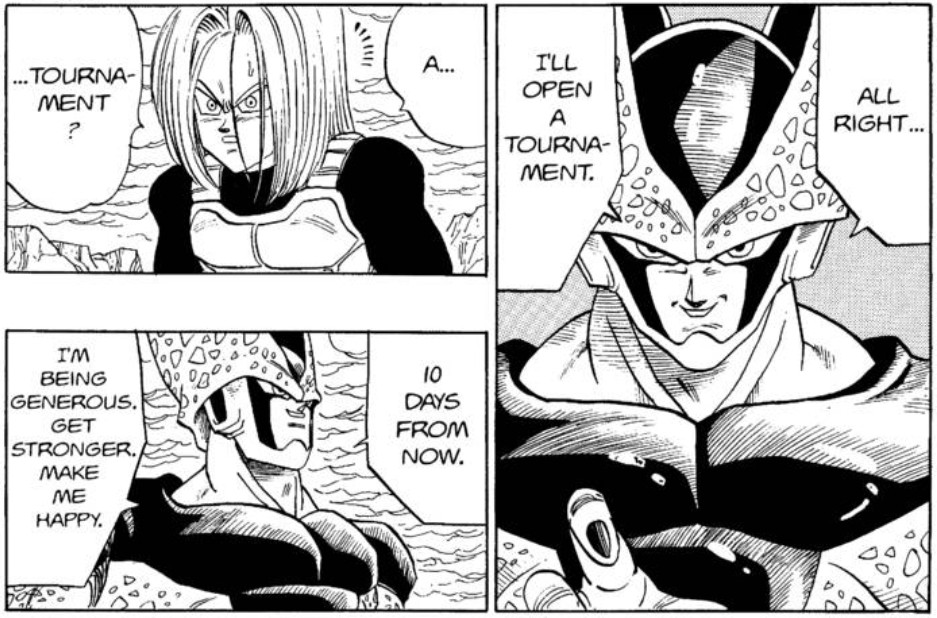
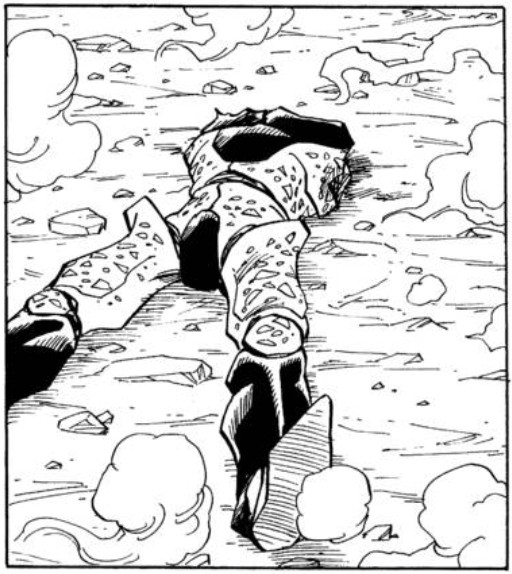
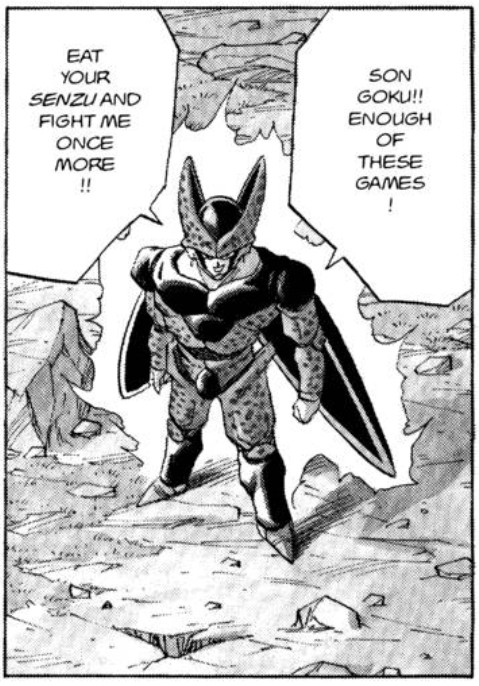
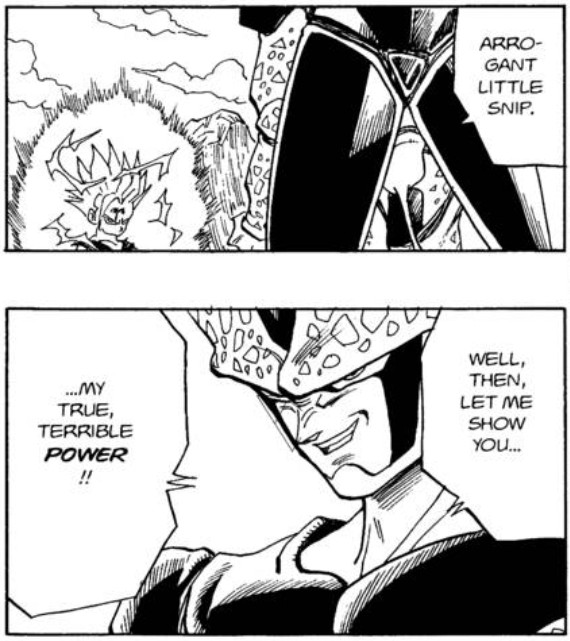
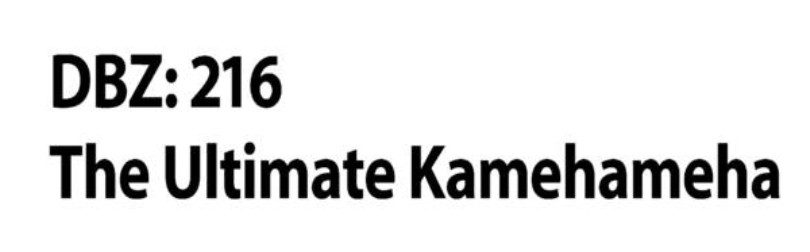
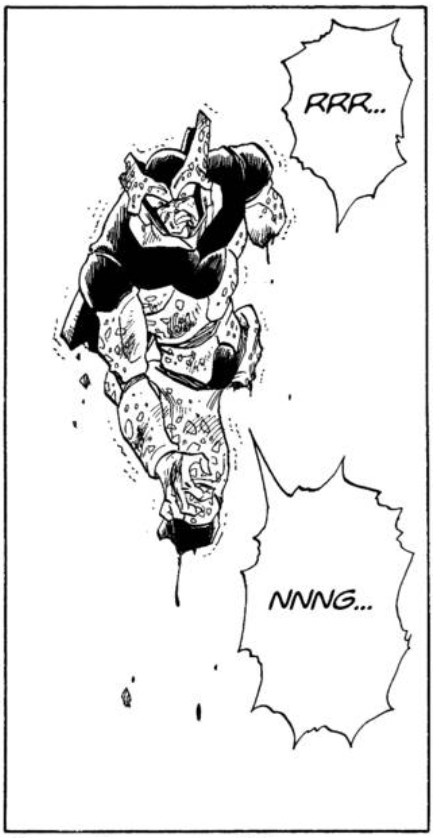

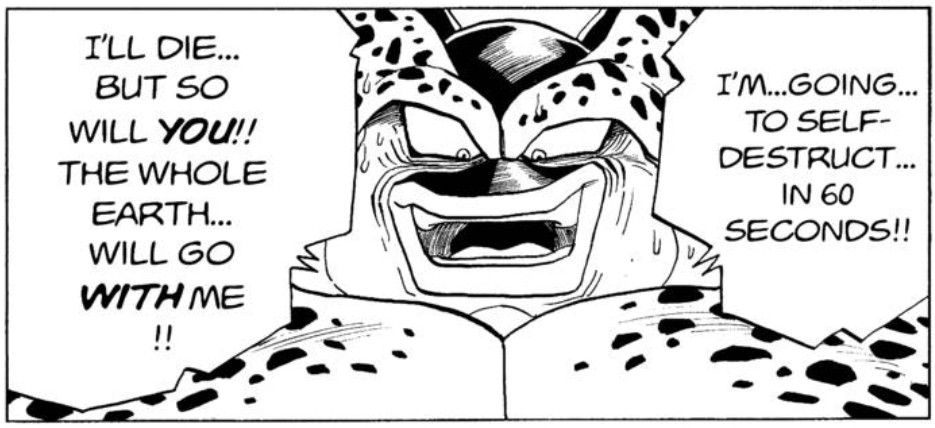
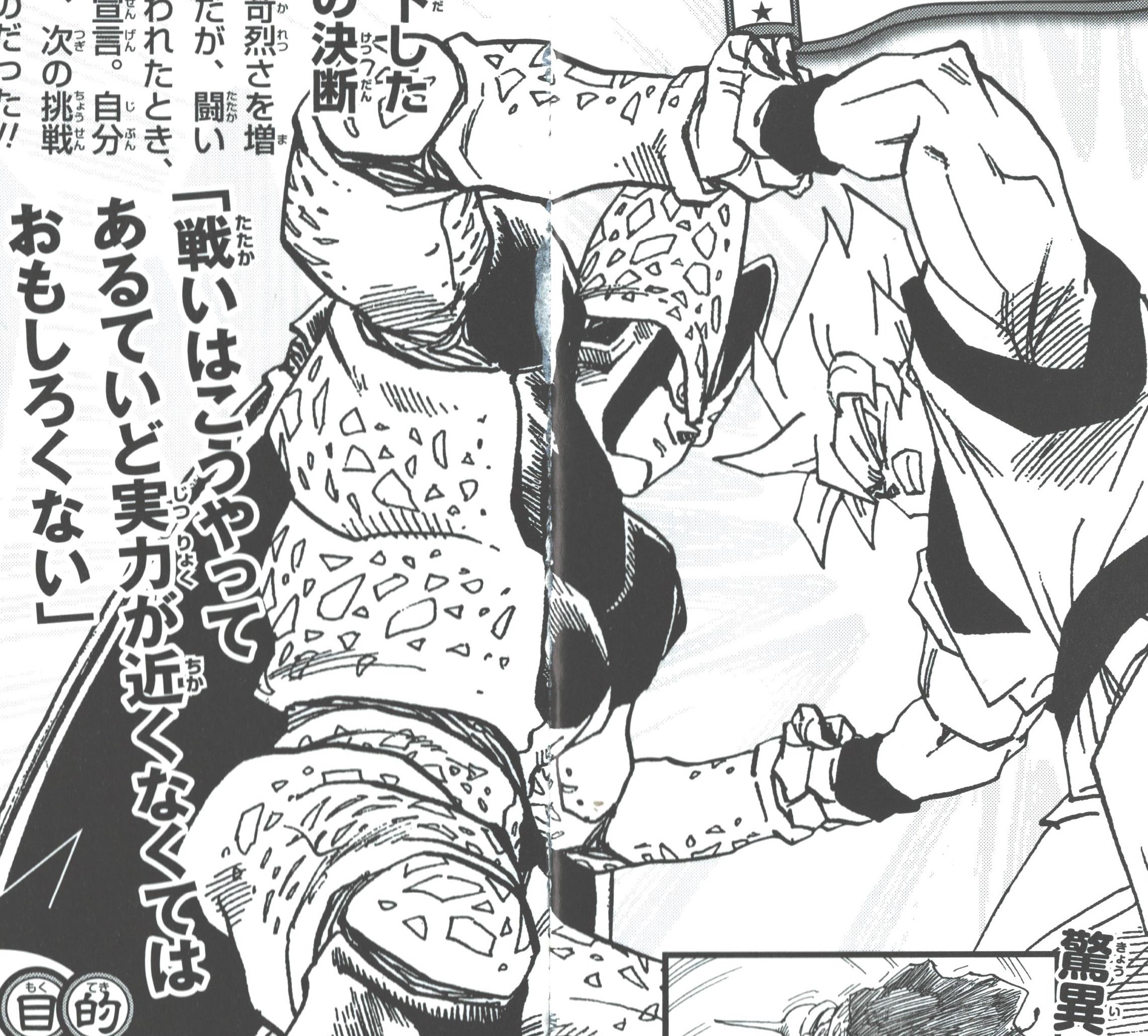
Some fans may point to Broly no-selling Goku’s Kamehameha while Perfect Cell’s upper half was destroyed by it as proof of Broly being at least stronger than Perfect Cell. But, this comparison ignores context. Broly was fighting Goku at full power, while Cell was deliberately matching Goku’s strength for the fun of it. Cell is partially composed of Goku and Vegeta’s cells, and so he inherited that Saiyan desire to test himself against strong opponents. The entire purpose of the Cell Games, after all, was to give the Dragon Team a chance to get stronger and give him a good fight. It wasn’t until after Super Saiyan 2 Gohan destroyed the Cell Juniors that Cell revealed his full strength. We also know for a fact that Cell was holding back his full power against Goku because of his condition following Super Saiyan 2 Gohan’s first Kamehameha, which is called the “Ultimate Kamehameha” or 「究極のかめはめ波」 per the title of the chapter. Cell survived that blast with his head, torso, right arm, and right thigh in-tact. Since Gohan’s attack was clearly stronger than Goku’s, this is indicative of Perfect Cell’s actual durability.
Moreover, Cell’s behavior also proves he was never actually threatened by Goku. Because he also inherited Freeza’s cells, Cell will do anything to survive, even if it means blowing up the planet. When Imperfect Cell was confronted by Piccolo, Future Trunks, and Kuririn, he used Taiyōken (Solar Flare) to run away. When Semi-Perfect Cell was utterly defeated by Super Vegeta, he manipulated him into letting him absorb #18 and again used Taiyōken against Future Trunks. And when he was losing to Super Saiyan 2 Gohan, he tried to destroy the Earth. Cell at no point during his fight with Goku ever showed this kind of desperation; he even twice encouraged Goku to eat a Senzu bean so that they could continue the fight. Thus it’s clear that Goku’s two Kamehamehas (against Broly and against Cell) cannot just be taken at face value (pun intended). Cell withstood the attack of a much greater foe.
![V-Jump July 2004 page 22. "Broly -Another Legend- A Saiyan who survived the explosion of Planet Vegeta. He is skilled at bold, forceful attacks that make use of his power, and his battle power is said to surpass Cell’s complete [Perfect] form!!"](https://capsulecommentary.com/wp-content/uploads/2025/07/464.png)
Besides Koyama, the single statement anywhere that suggests Broly might be above Perfect Cell comes from page 22 of V-Jump July 2004, promoting Dragon Ball Z: Budokai 3. It reads: “He is skilled at bold, forceful attacks that make use of his power, and his battle power is said to surpass Cell’s complete [Perfect] form!!” However, this uses hearsay and is not definitive by writing 「と言われている」 or “It is said.” This sort of ambiguous language can be found often in Dragon Ball content. For example, in Dragon Ball Z DVD Box 2: Dragon Book 2 on page 37, it writes of Dai Kaiō: “He is said to be the strongest in the Afterlife.” It’s also indeterminate if this statement on Broly is referring to Broly’s in-game stats or to Broly from the movies, as this appears on a page promoting Budokai 3 and references his “bold, forceful attacks that make use of his power.”
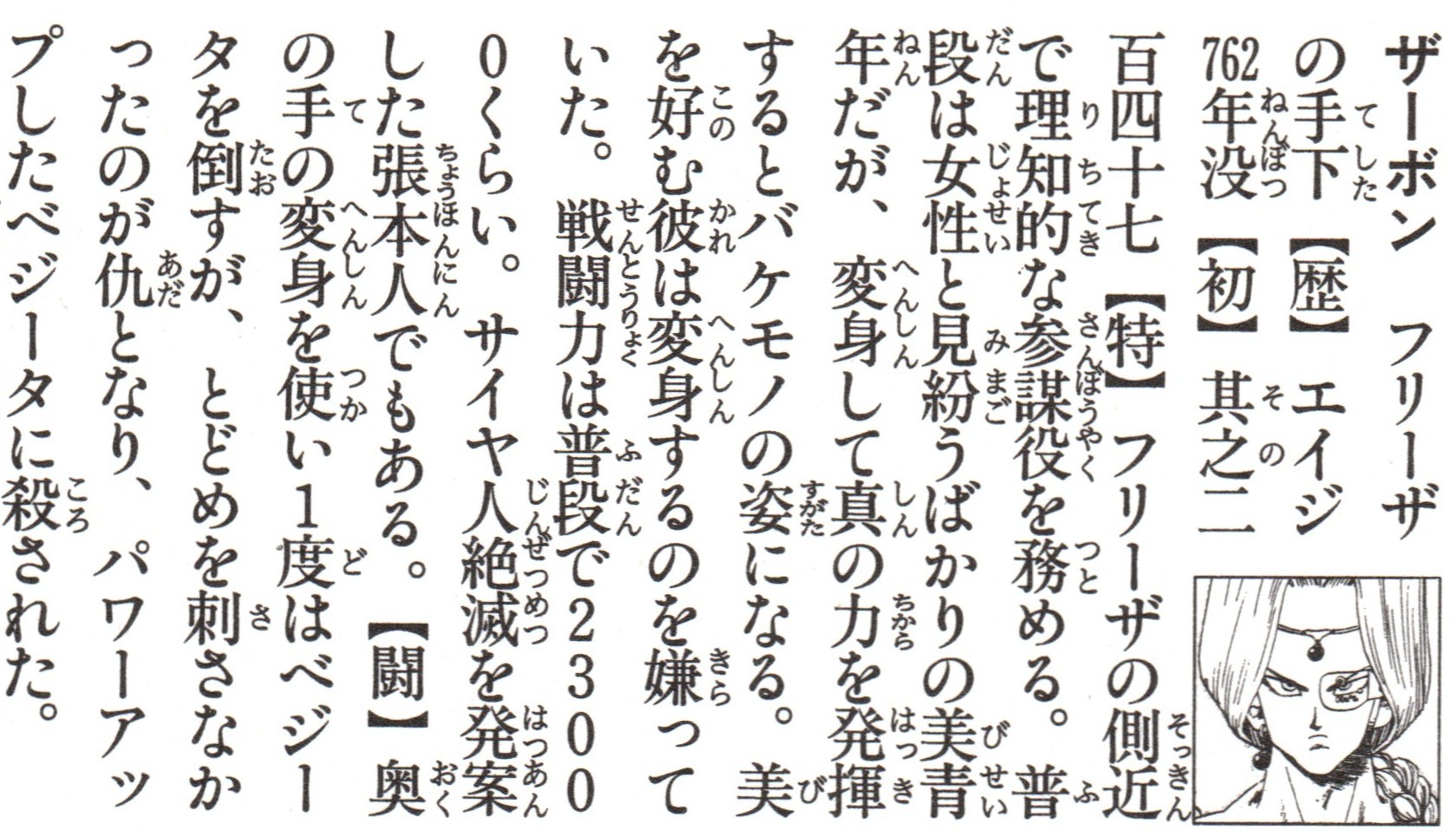
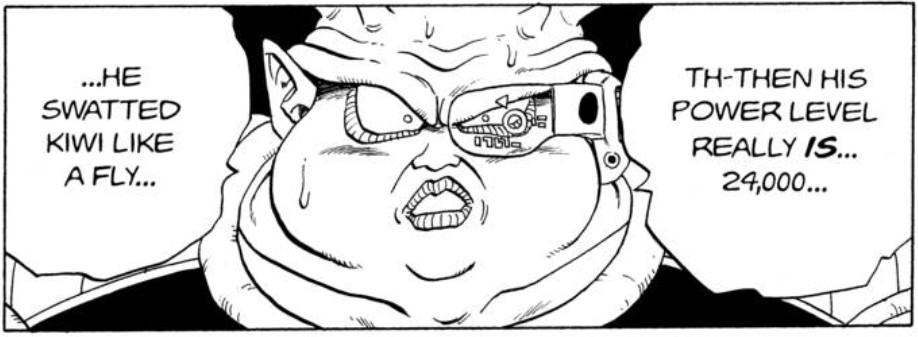
Some of you reading this might find the implication that Broly may not have been that much stronger than Super Saiyan Grade 4 Goku hard to believe. In Dragon Ball, even the tiniest percent differences in battle power lead to completely one-sided fights. For example: early in the Namek Saga, Vegeta had a battle power of 24,000 and Zarbon’s base form was 23,000 (a 4.3% difference). Zarbon could not land even a single hit on Vegeta until he transformed. Similarly, Nappa had a battle power of 4,000 (this number is stated on page 31 of Chōzenshū 4 and page 244 of Dragon Ball Full Color: Saiyan Arc Vol. 2) and was able to defeat 5 opponents: Piccolo (3,500), Gohan (2,800 with Masenko), Tenshinhan (1,830), Kuririn (1,770), and Chiaotzu (610). Despite being outnumbered, the percent difference of 13.3% over Piccolo was so great that three fighters died fighting Nappa. In fact, they all would have died had Goku not arrived. These small differences making a huge difference helps explain how 5 critically wounded warriors pooling their power could defeat a stronger enemy. This is not that different from real life, either. Boxing at the Olympics is a good example of this. The percent difference in weight between Men’s middleweight and light heavyweight is only 7.7%, and between Women’s featherweight and lightweight, it’s only 5.1%. “Weight classes exist for a reason,” as the old adage goes. Therefore, it is entirely possible that Broly was as low as 15% stronger than Goku.
Dragon Ball Z: Broly — Second Coming

Dragon Ball Z: Broly — Second Coming
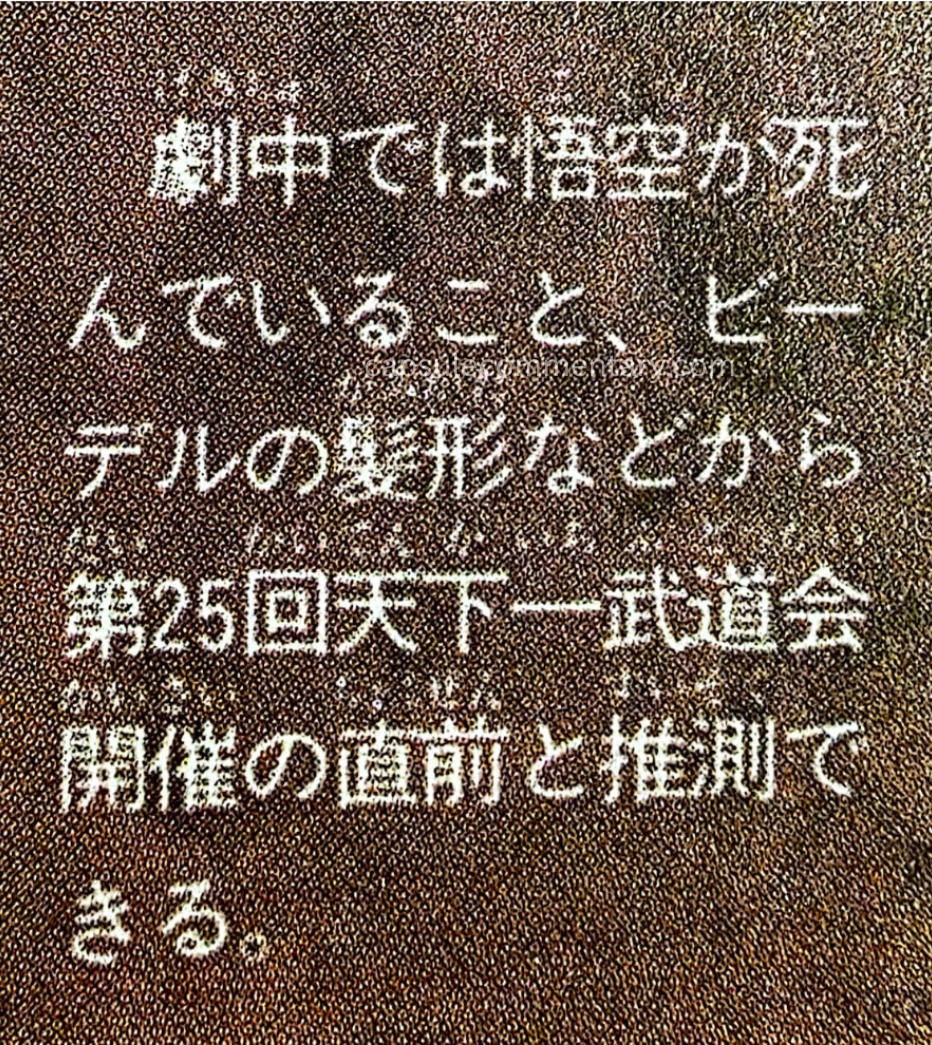
Now let’s establish when exactly Dragon Ball Z: Broly — Second Coming (Movie 10) takes place. Chōzenshū 3 page 130 (Daizenshū 6 page 124) states: “Since Goku is dead during the movie, and based on Videl’s hairstyle, it can be inferred that this takes place just before the 25th Tenka’ichi Budōkai.” Page 40 of Dragon Book: Dragon Box: The Movies also uses Videl’s hairstyle to identify when this film takes place. One key hint they did not mention is that Videl can fly during the movie. Videl cut her hair at the very end of chapter 428, but couldn’t fly until chapter 429. Thus Movie 10 must take place in either chapter 429 or at the very beginning of chapter 430 before everyone goes to the 25th Tenka’ichi Budōkai. That means this movie also takes place well after chapter 423 where, on page 4, Vegeta comments on Gohan having gotten weaker since fighting Cell. Importantly as well, Gohan doesn’t start wearing the clothing he does in this movie until chapter 426, which also confirms it was after Vegeta’s comment. The placement of this movie is also before Goku showed a hint of Super Saiyan 2 in chapter 451 when he killed Yakon. In Spring 1994 Toei Anime Fair (DBZ Movie 10)‘s pamphlet on page 4, it refers to Gohan as “one of the strongest warriors on Earth,” and not the strongest (because that’s Vegeta). Although, the official comic adaptation of the movie does say Gohan is “Earth’s strongest warrior.”
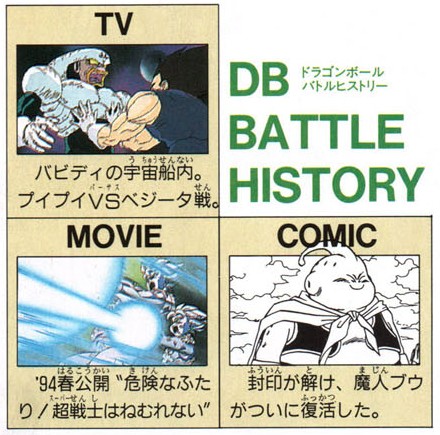

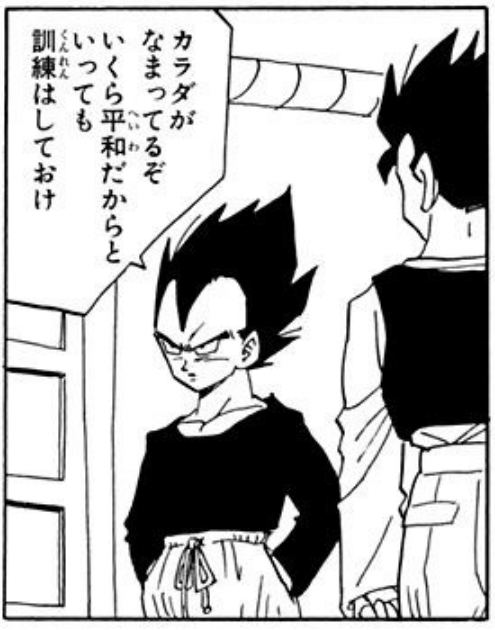
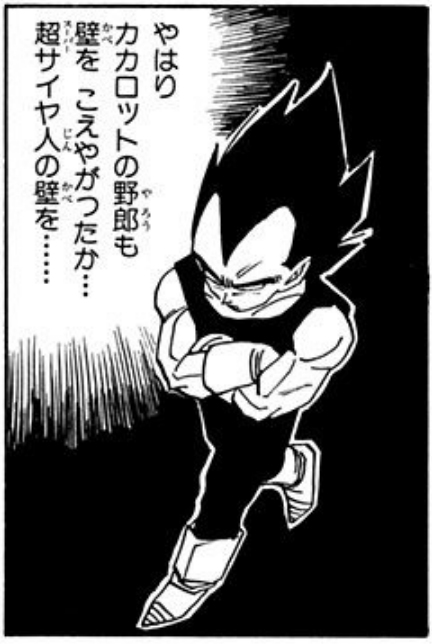
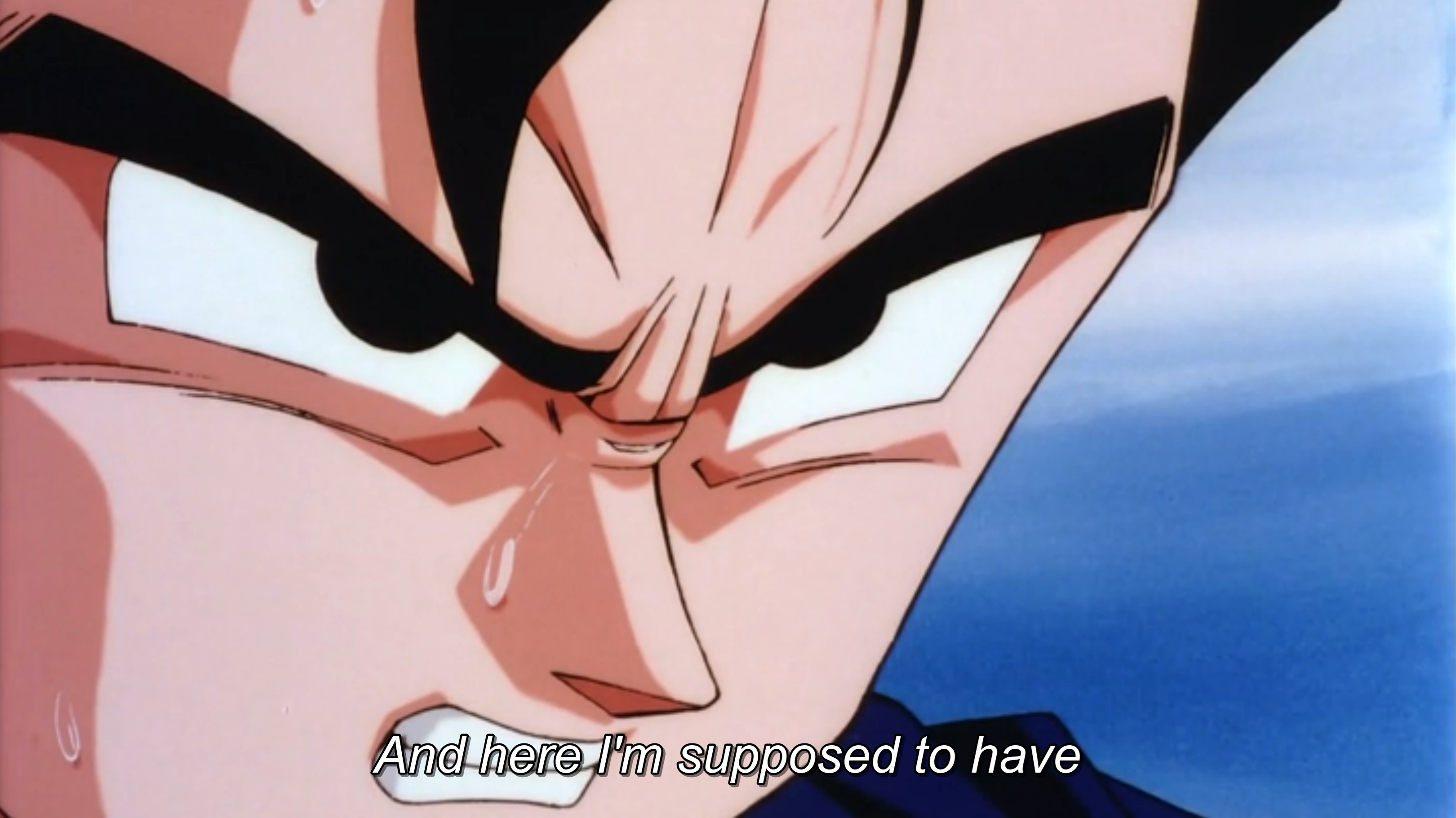
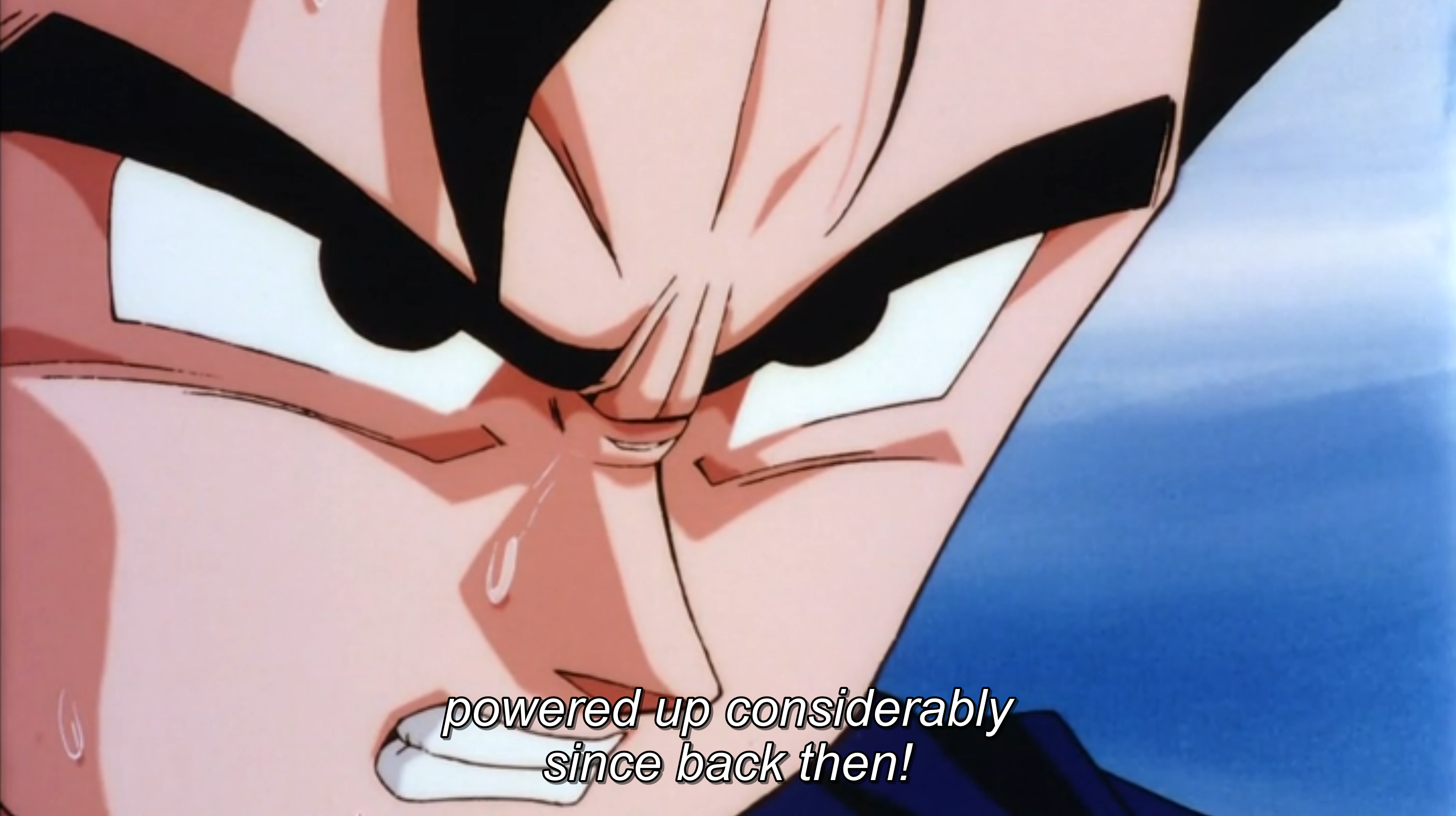
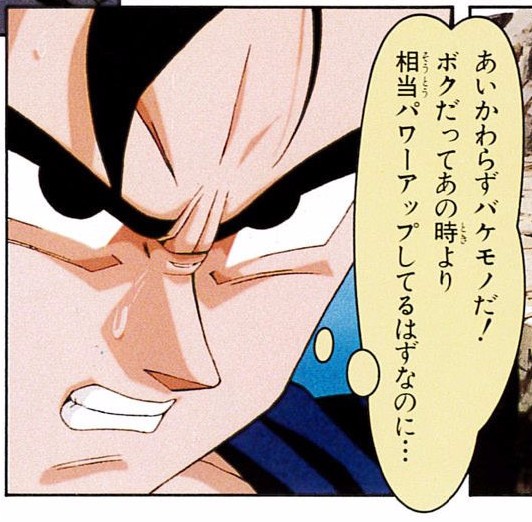
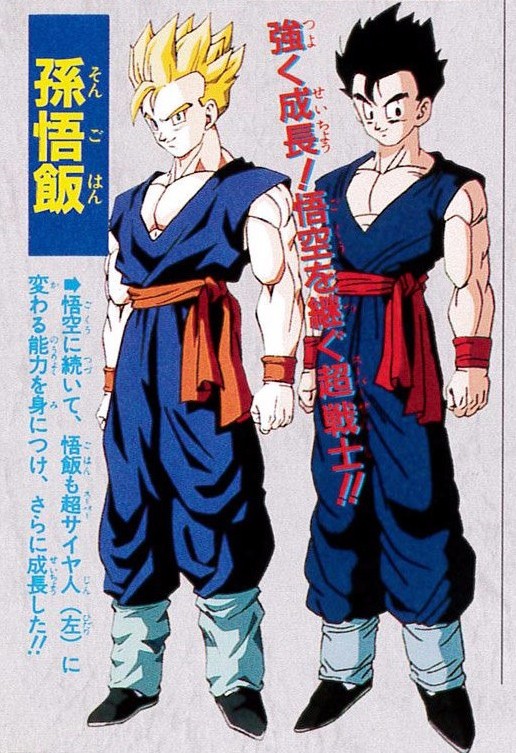
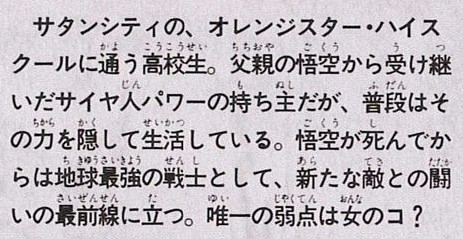
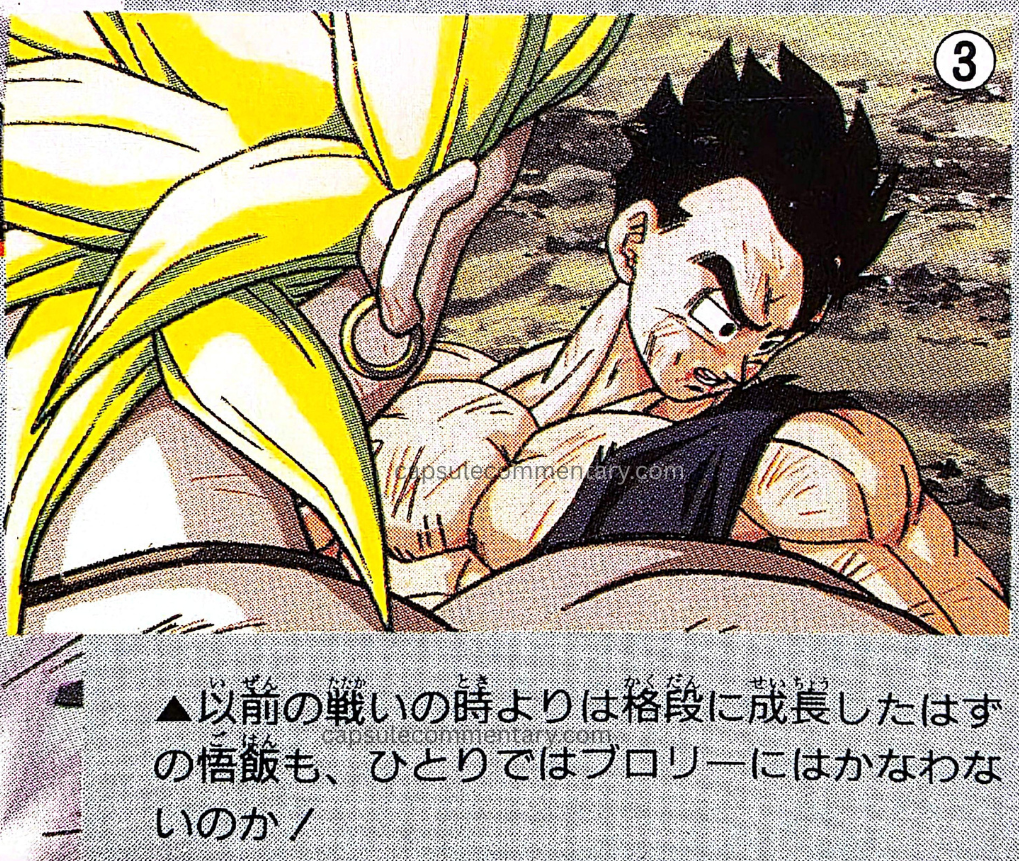
During the movie, Gohan thinks to himself, “[Broly’s] as bad a monster as ever! And here I’m supposed to have powered up considerably since back then!” Some fans misunderstand “back then” to mean that Gohan never stopped training after defeating Cell. However, as he is currently fighting Broly and the previous sentence directly references him, “back then” clearly refers to Movie 8, not to his fight with Cell. Page 9 of Summer 1994 Toei Anime Fair (DBZ Movie 11)‘s pamphlet confirms this, writing: “Even Gohan, who should have grown tremendously stronger since the previous battle, still can’t defeat Broly on his own?!” Dragon Ball Z Movie 10 Anime Comic page 10 also vaguely confirms Gohan is stronger since first becoming a Super Saiyan. It’s important here to remember that the first Broly movie took place before the production team learned, or was allowed to reveal by Toriyama and Shueisha, that Super Saiyan 1 Gohan was stronger than Super Saiyan 1 Goku. This means that Movie 10 Gohan is stronger than Movie 8 Gohan, but weaker than Gohan during the Cell Games.

One or two of you might be wondering why I’m not using the tweets shown above this paragraph in this article, and the short and simple answer is because they’re fake. I do not use any fake sources in my Deep Dives. The tweet with the green background comes from this YouTube video. Thankfully, the person who created this particular fake tweet knows very little about how Koyama writes—otherwise it could have been more convincing. For one, in English, Koyama has never once referred to Toriyama as “Toriyama-Teacher.” He refers to him as “Mr. Toriyama,” “Toriyama-sensei,” “Toriyama,” or by his full name. He does this in Japanese, as well. Secondly, in English, he has never referred to the character mentioned as anything other than “Gohan”—never “Son Gohan,” and certainly not “Son-Gohan” as the fake tweet shows. As of August 15, 2025, he’s never even tweeted “Son Gohan” or “Gohan” even once in Japanese. Thirdly, both fake tweets conveniently omit the date, because if they had one, anyone could easily verify they’re fake. In fact, a search for any of the words in either of these fake tweets show that they never existed. For the sake of argument though, let’s assume these tweets are real, but that Koyama deleted them. If Koyama deleted the tweets, that means he doesn’t want people to quote him saying these things. This would almost certainly be in the scenario that these tweets are factually wrong. If they were both real and factual, he would have no reason to delete them. I always do my due diligence before using a source, and that’s partially why my Deep Dives take so long to create and update. I will never share a fake source with you.
The key thing that needs to be understood for Broly’s strength in Movie 10 is if Gohan was using Super Saiyan 1 or 2. As mentioned in the previous section, most official materials tend to not make a distinction between Super Saiyan 1, the Super Saiyan grades, and Super Saiyan 2. They bunch them all together as either just “Super Saiyan” or with a sentence to the effect of “[Character] surpassed Super Saiyan.” There are many instances of confirmed cases of Super Saiyan 2 being called “Super Saiyan,” for example. Again, it’s technically correct to refer to all forms of Super Saiyan as just “Super Saiyan,” though.
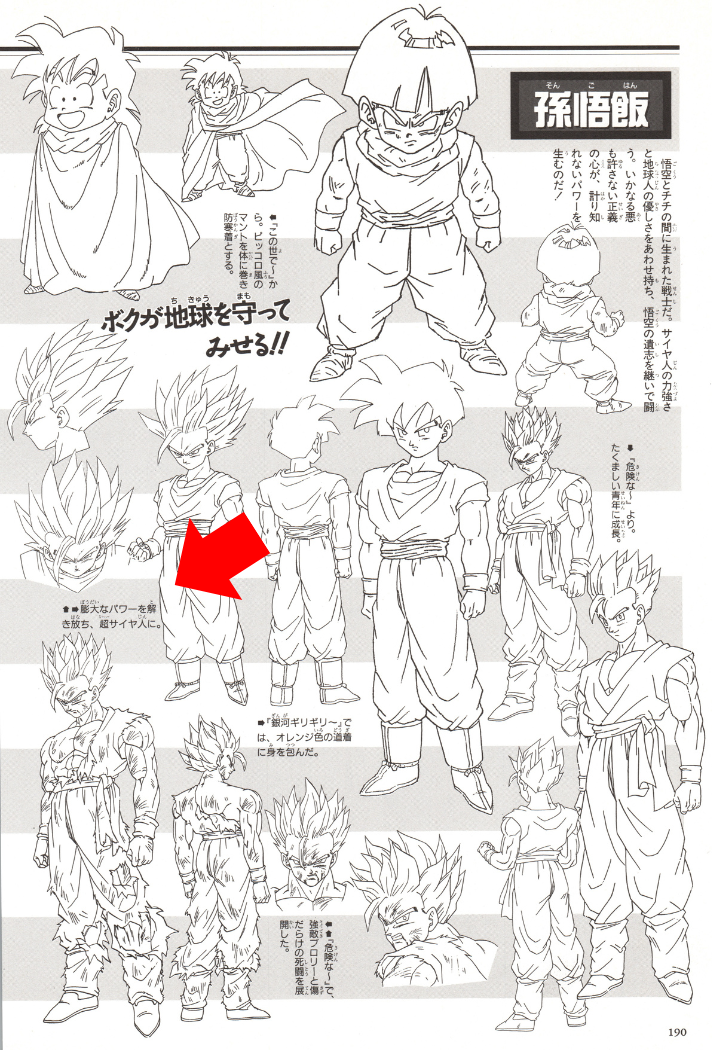
I’ve seen a few prominent members of the fandom lie about what the scan above this paragraph says. This image is from page 190 of Daizenshū 6. Those fans obstruct the text box I’ve added an arrow pointing to and claim it says that Gohan was Super Saiyan 2. First of all, that text box has arrows pointing to images of Gohan in Movie 9. It does not have an arrow pointing down towards Gohan in Movie 10. Secondly, it only reads “Super Saiyan,” and not “Super Saiyan 2.” Even if you don’t understand Japanese, you can verify this yourself because Super Saiyan 2 is always written with the numeral “2.” Third of all, it doesn’t even say anything about surpassing Super Saiyan. In fact, nothing on this page does. I will now show you every mention of “Super Saiyan 2” or “Grade 5” in the guidebooks:
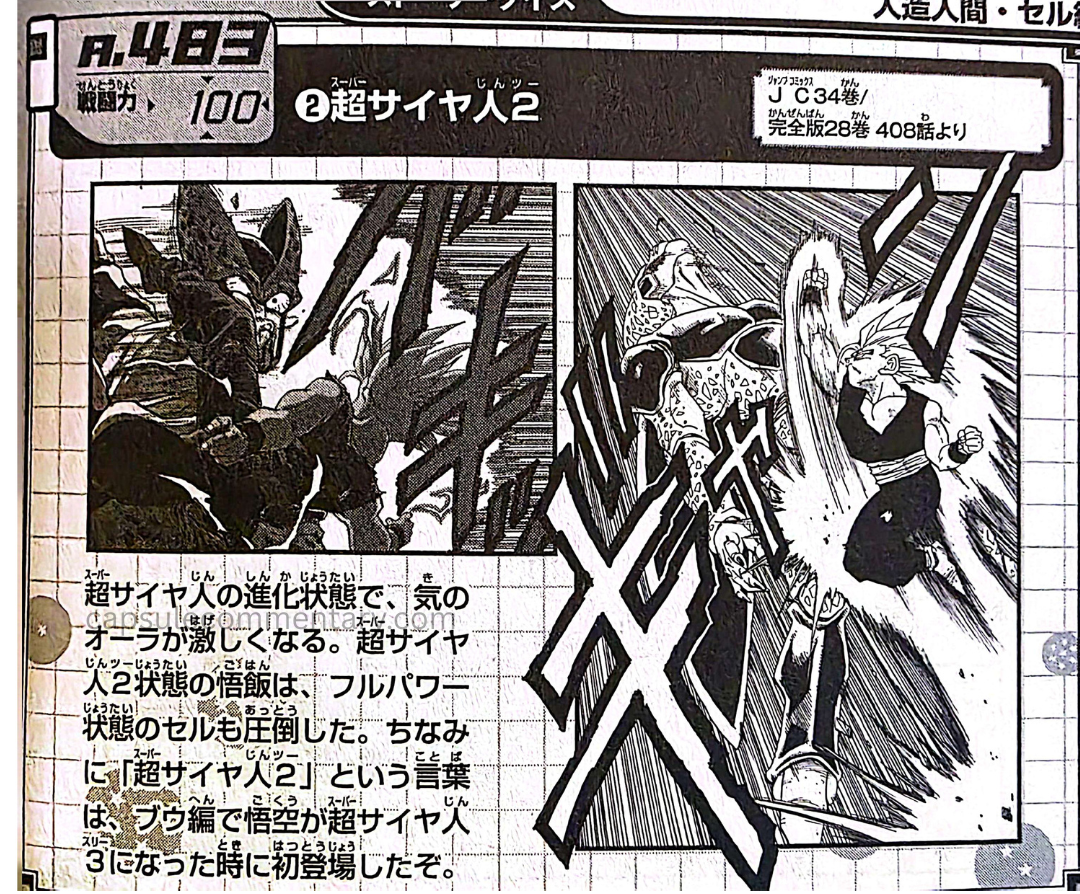
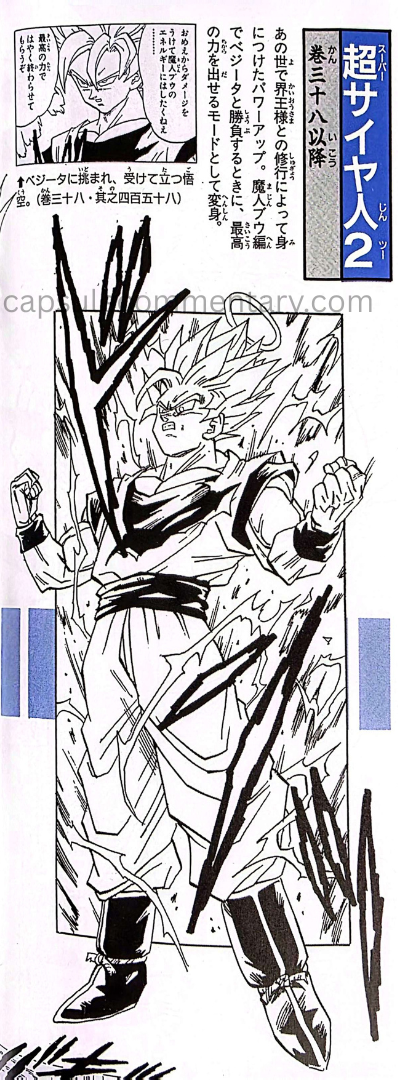
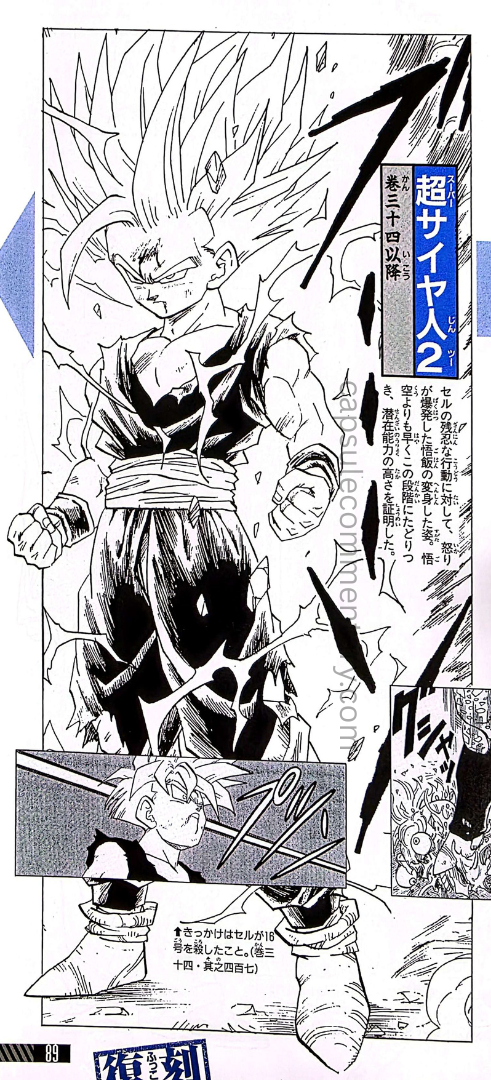
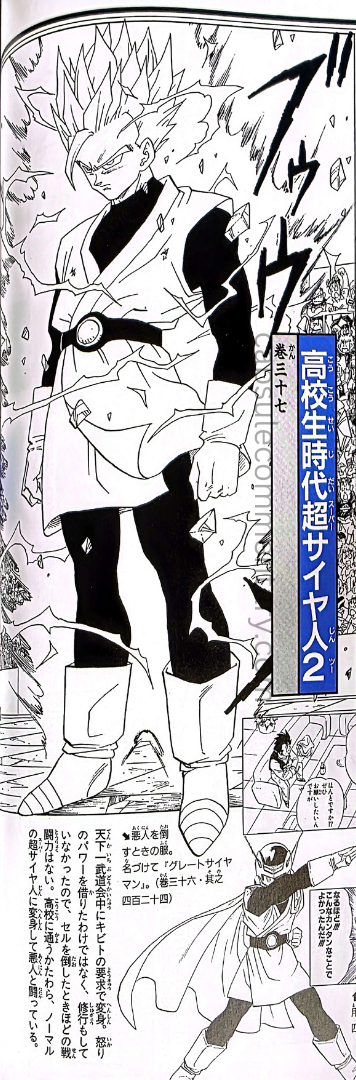
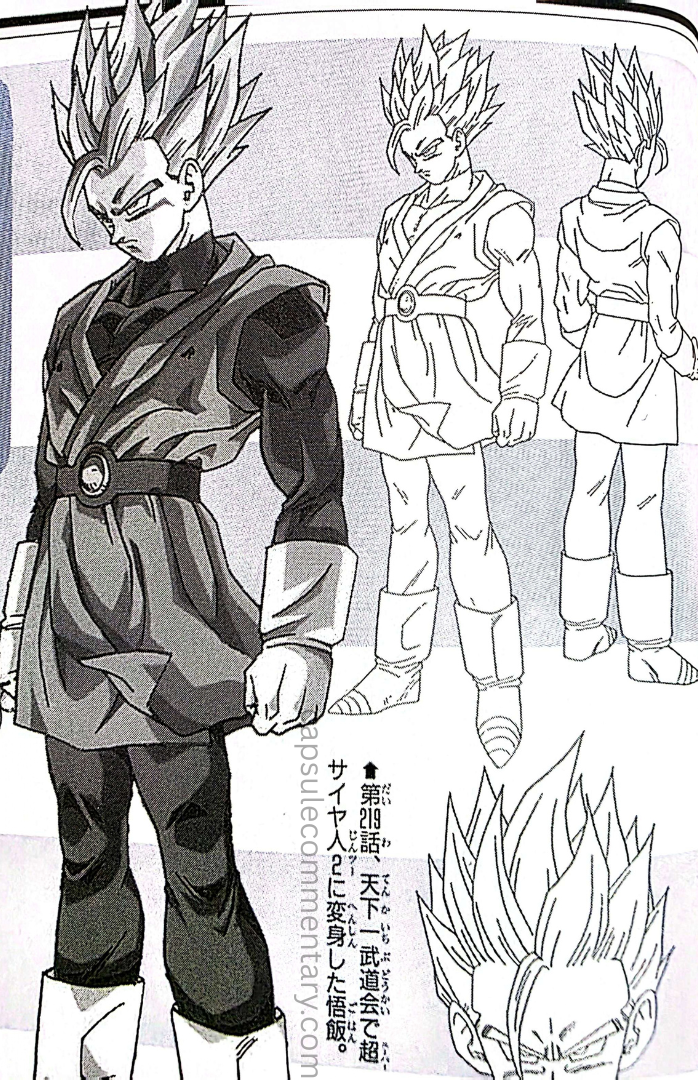
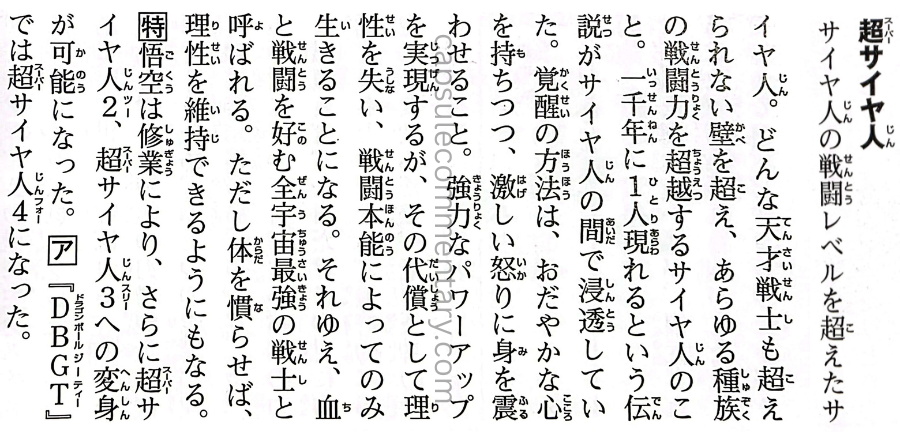
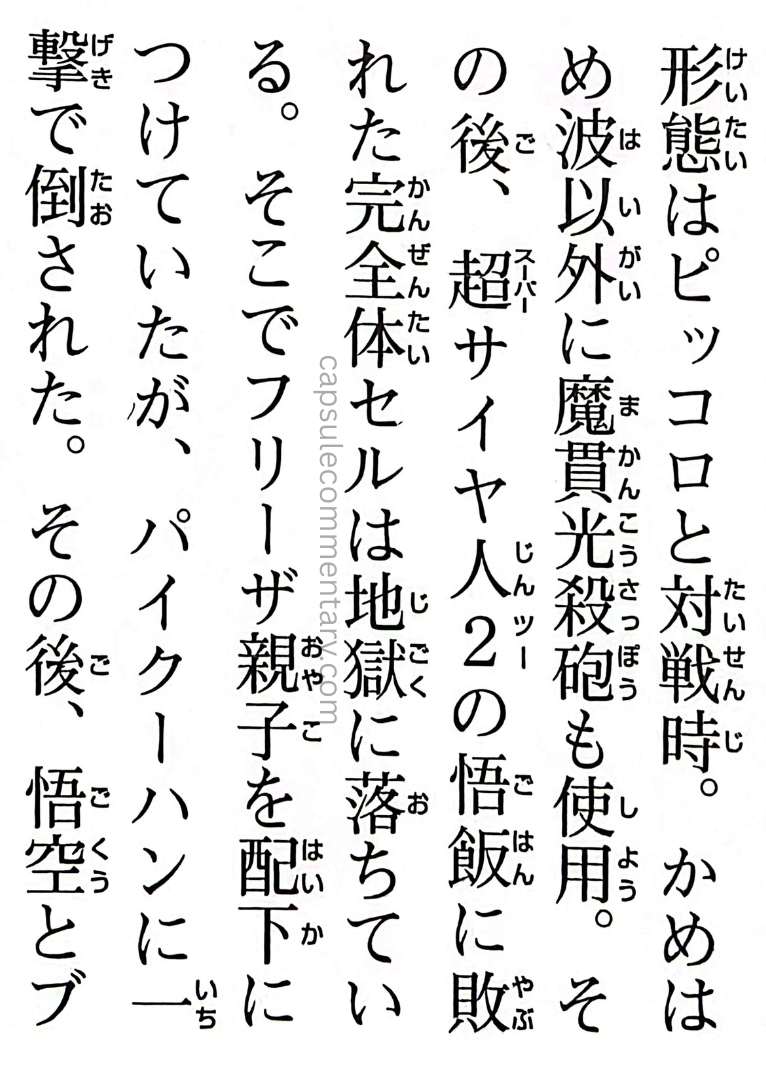
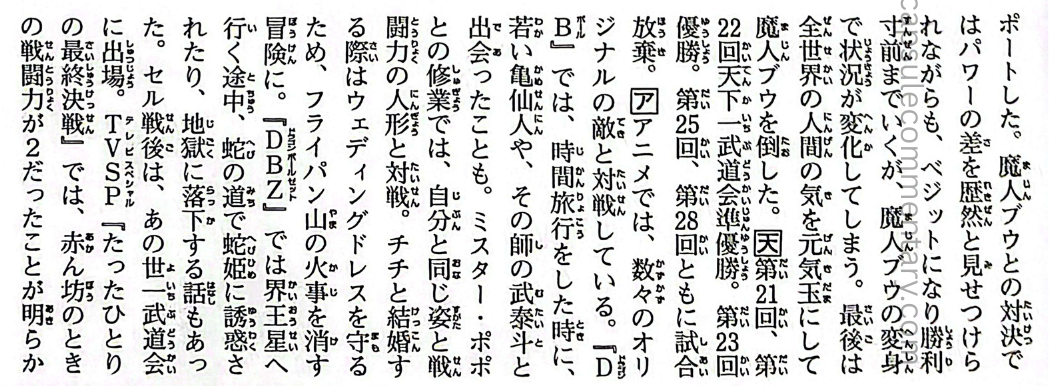

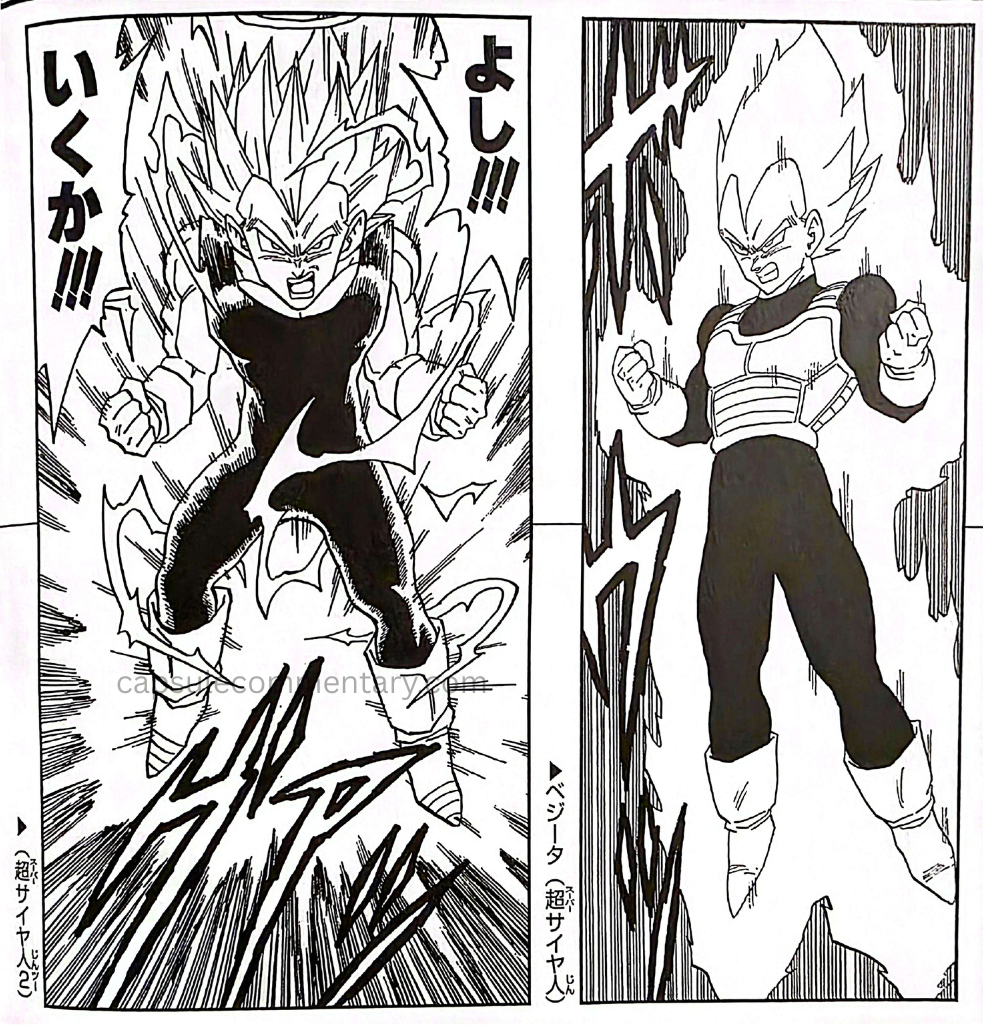
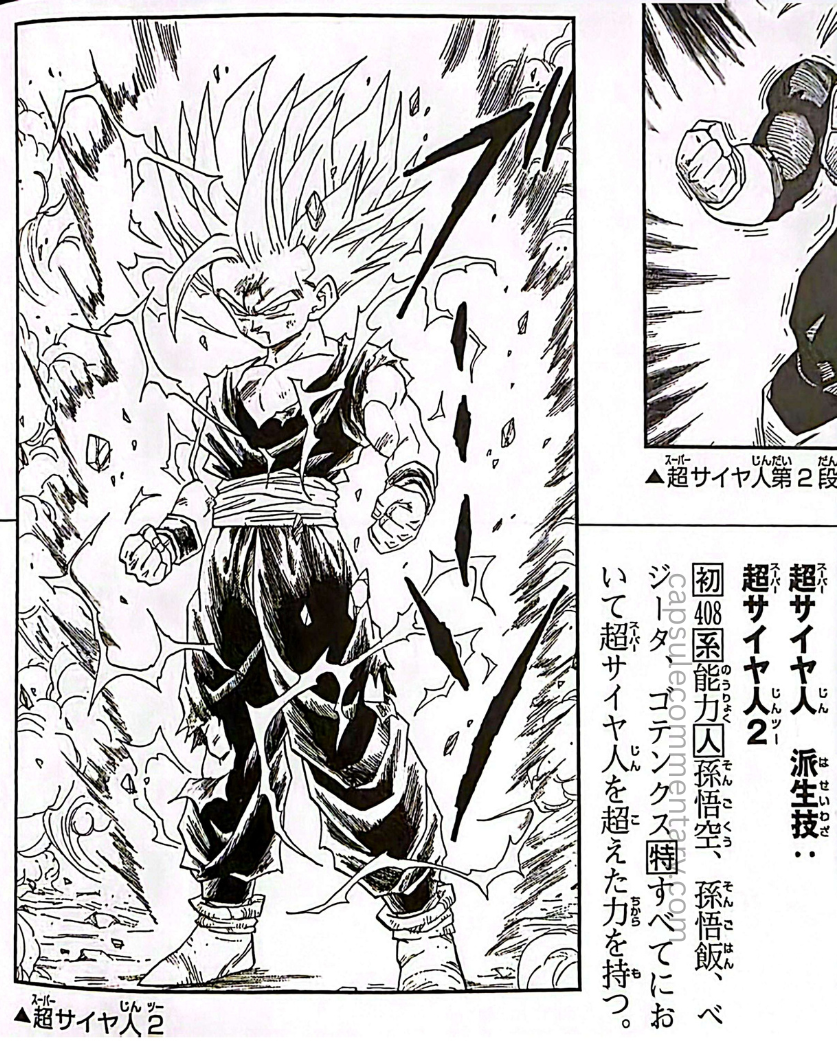
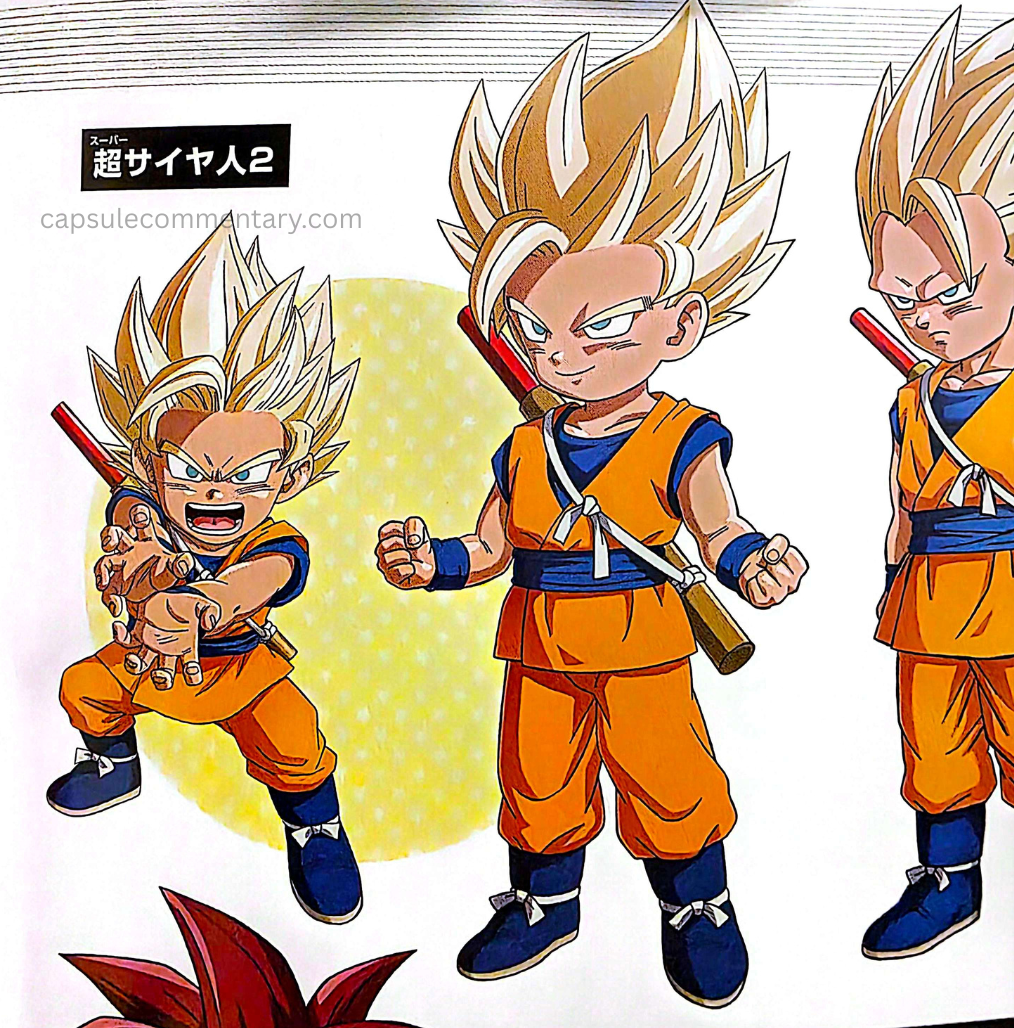
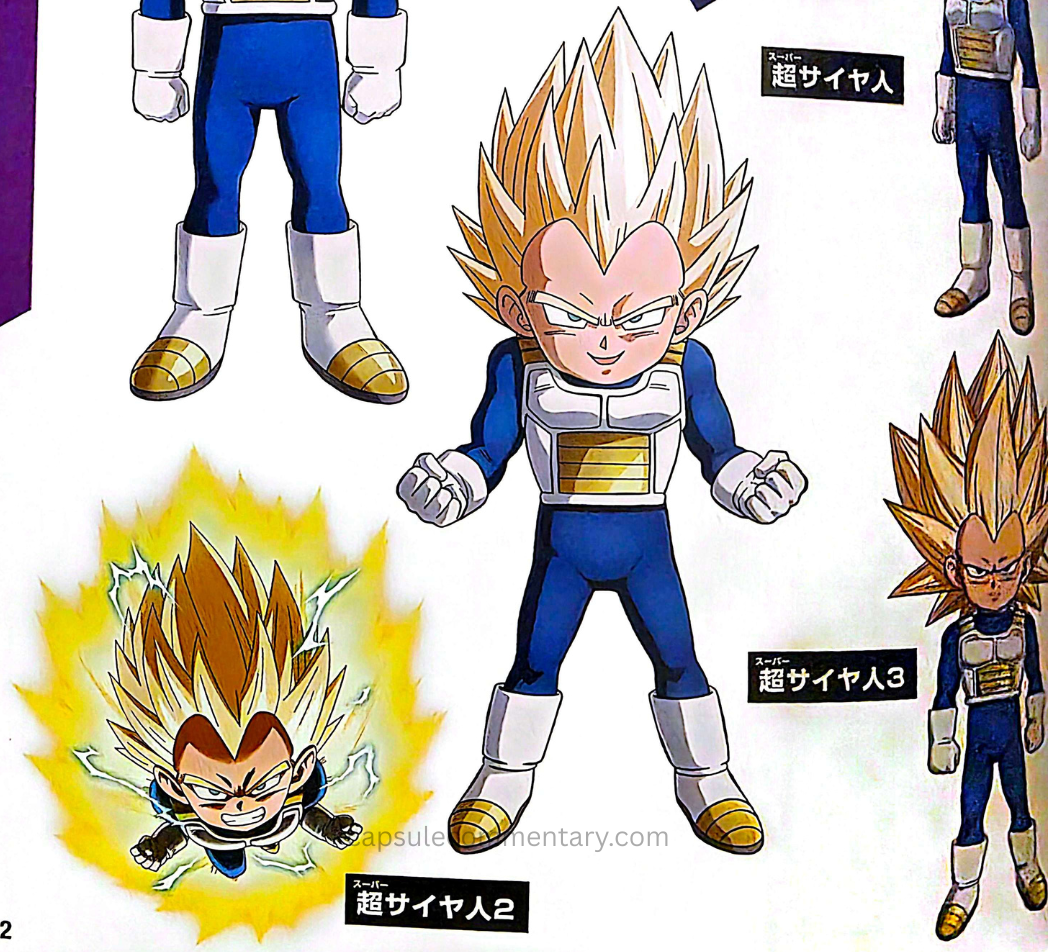
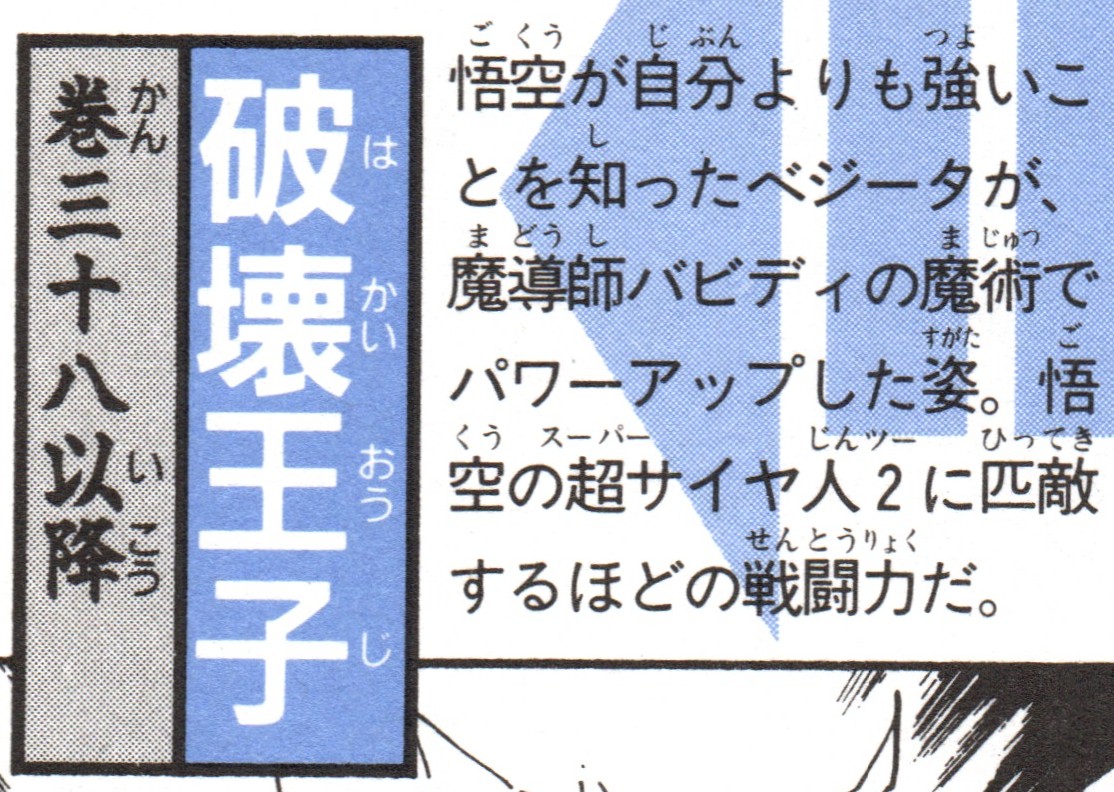
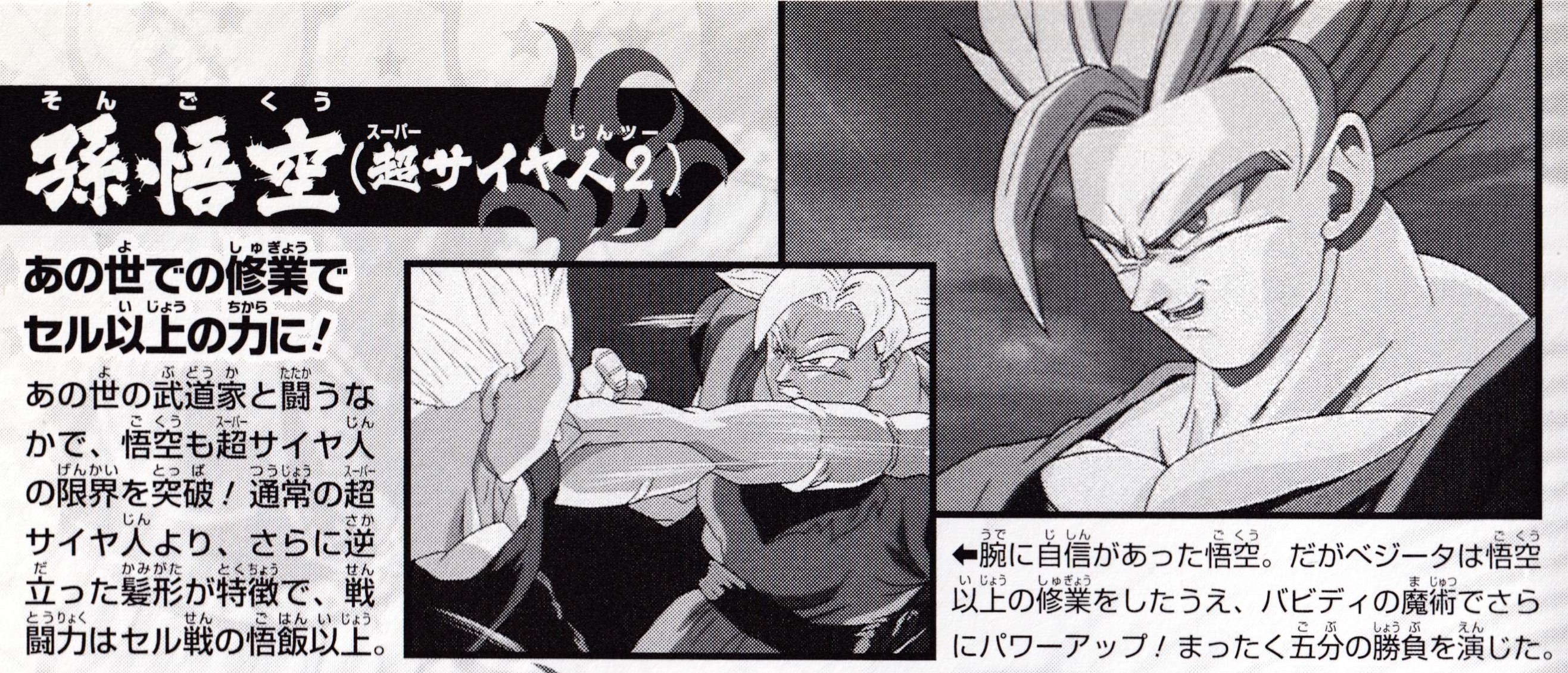
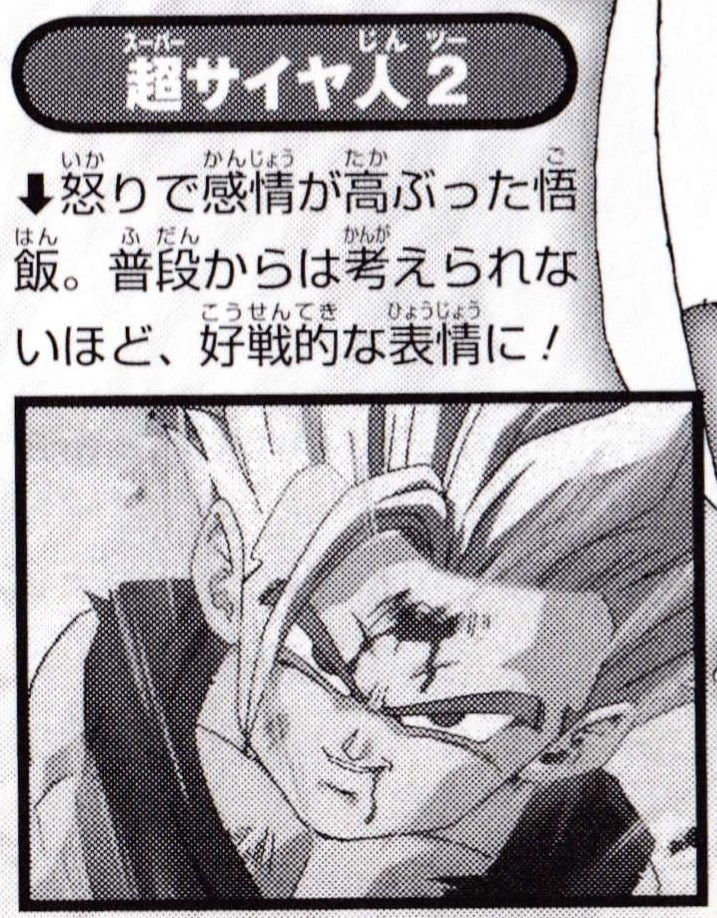

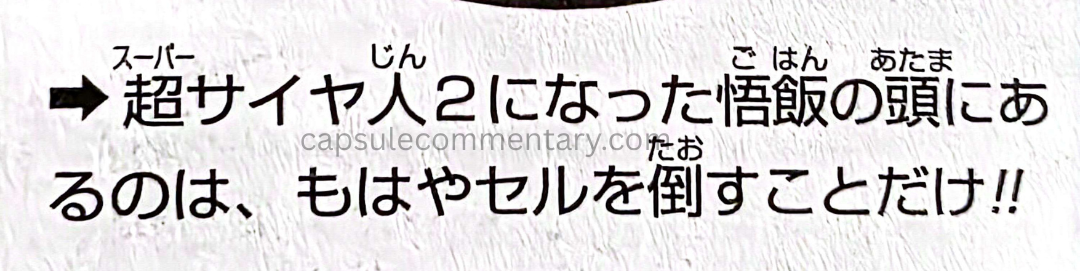
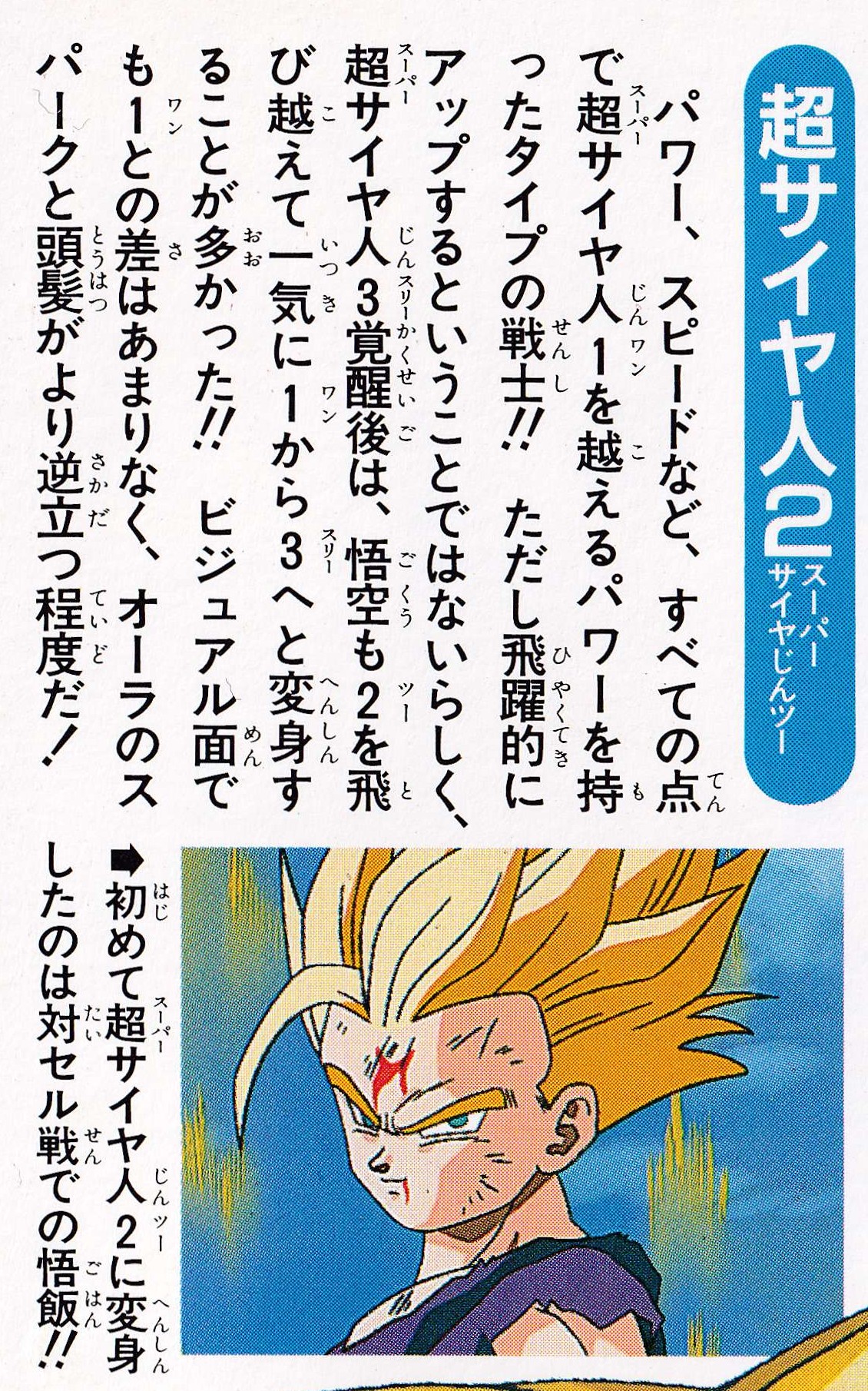
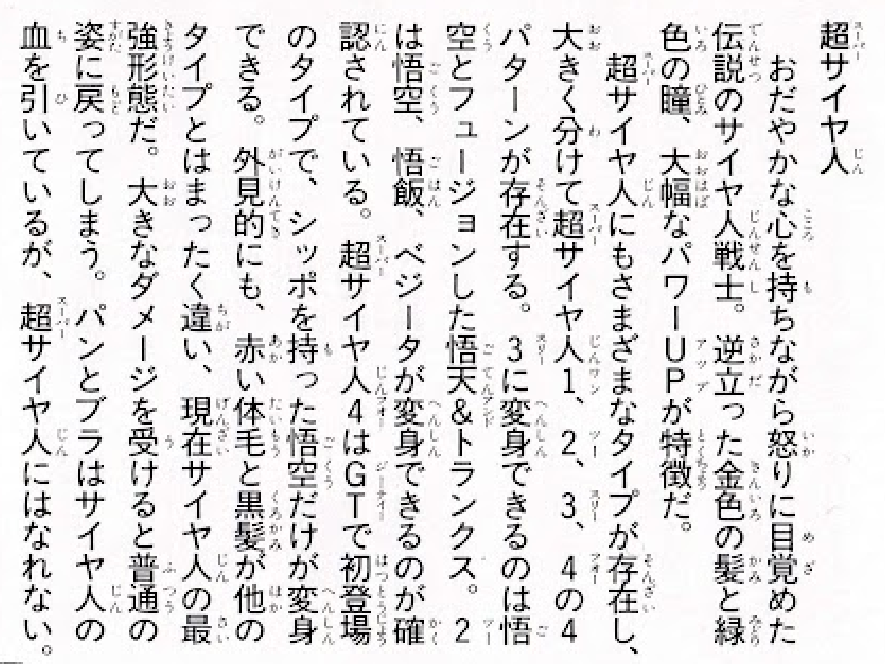
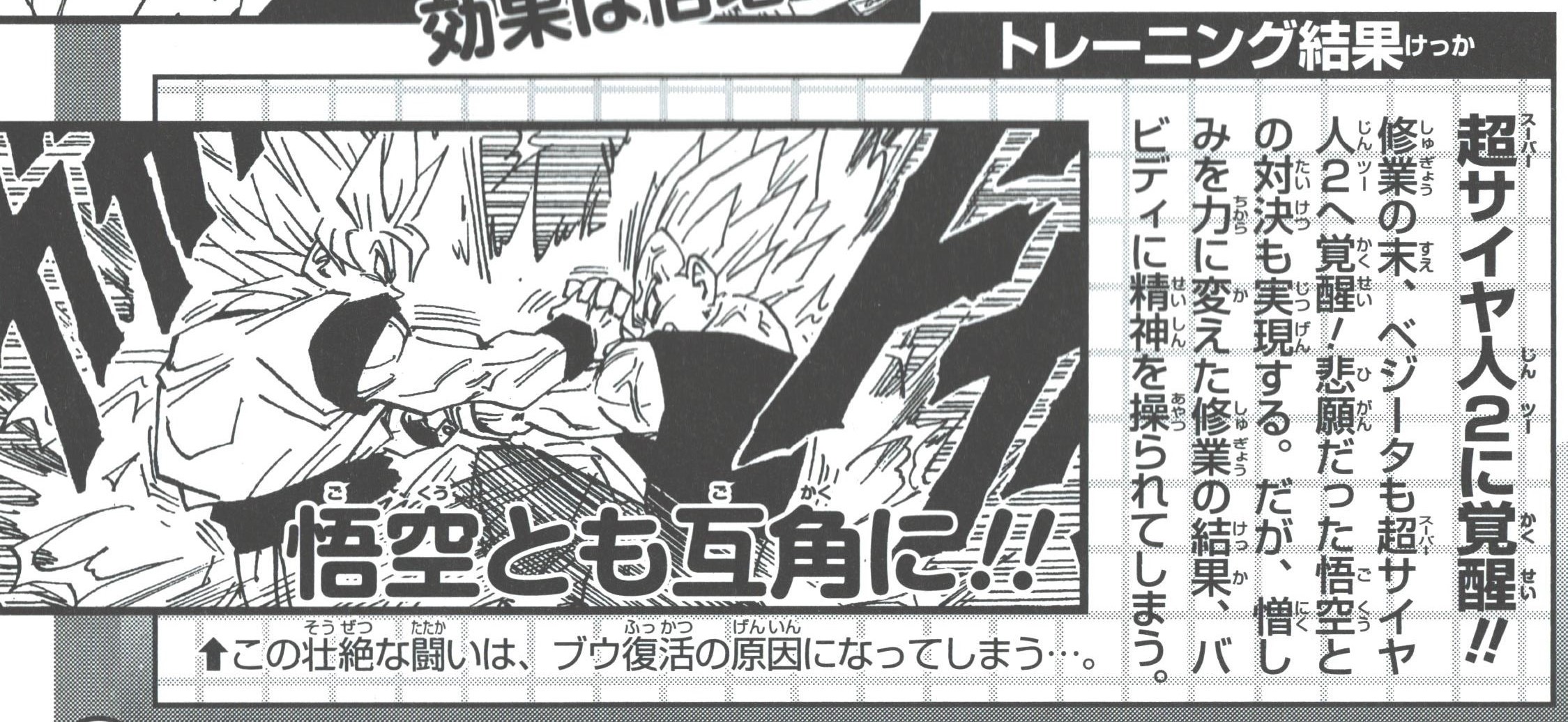
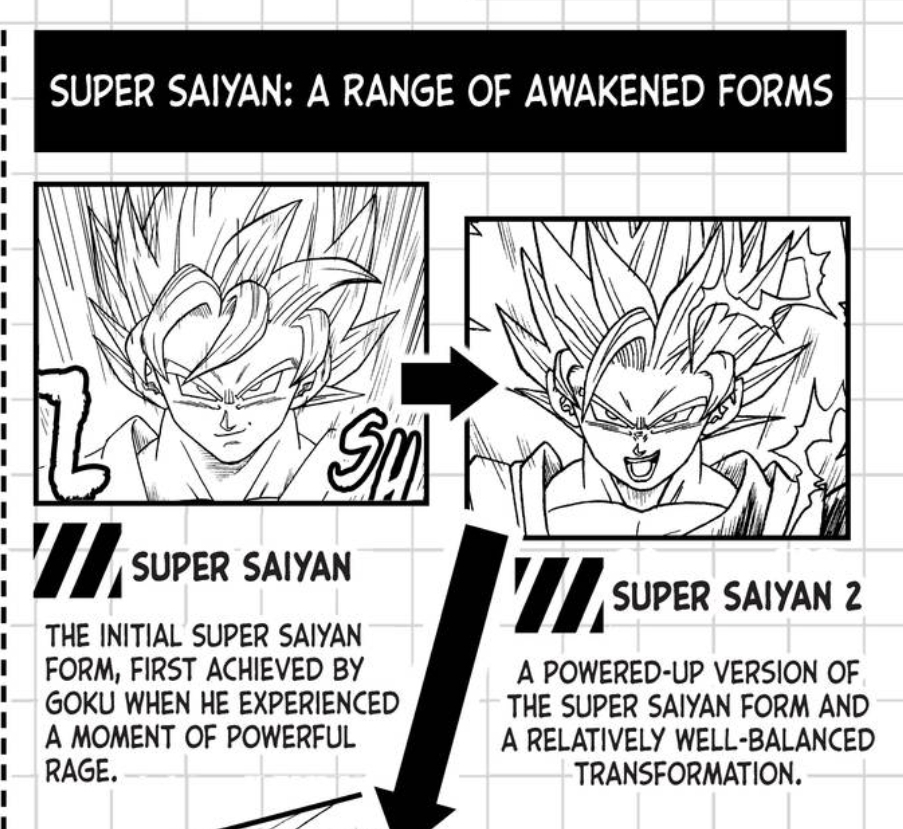


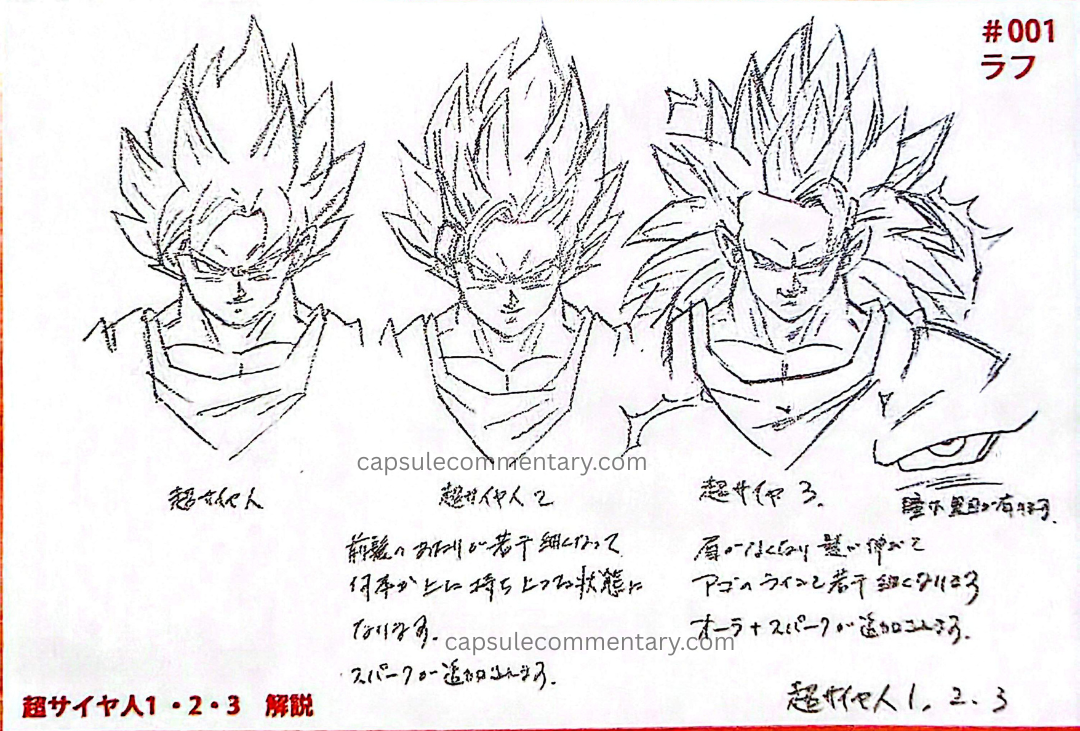

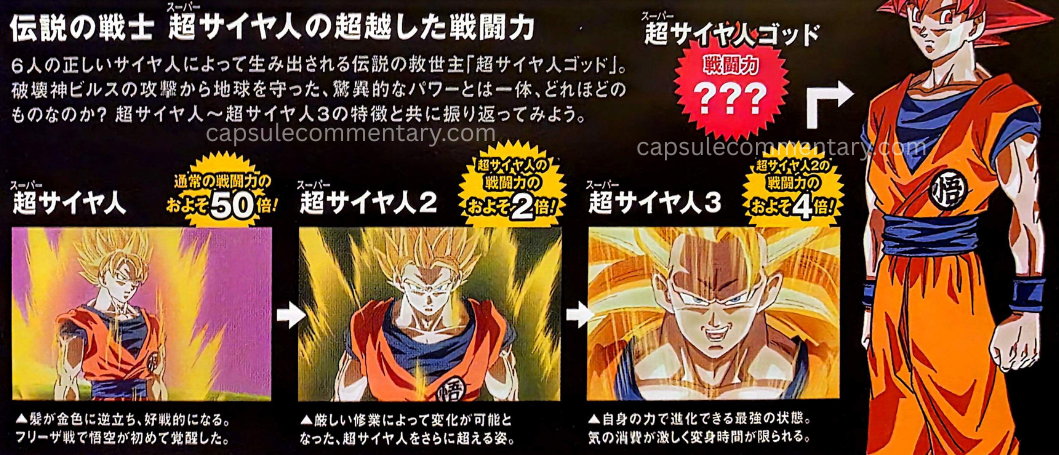
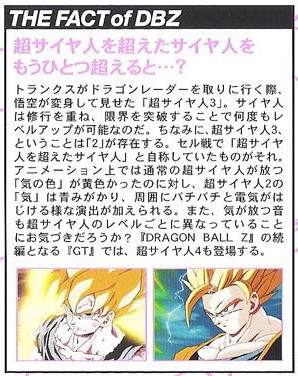
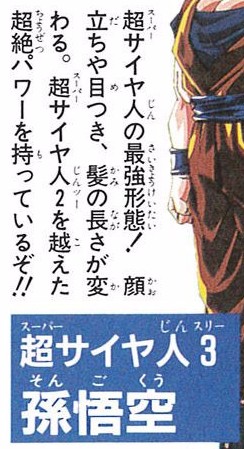
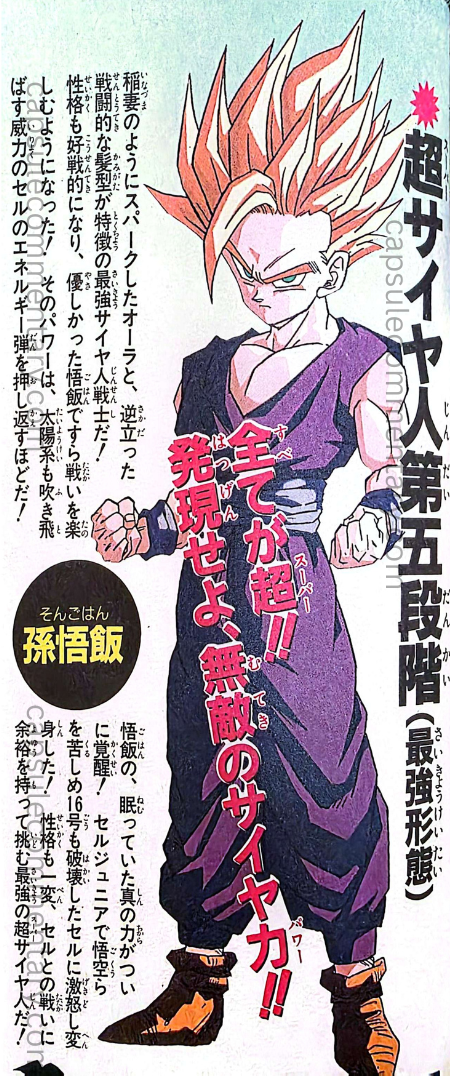
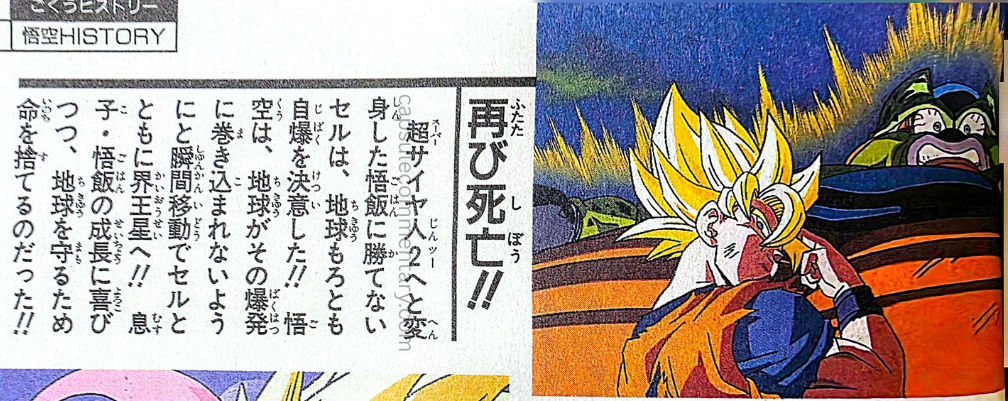
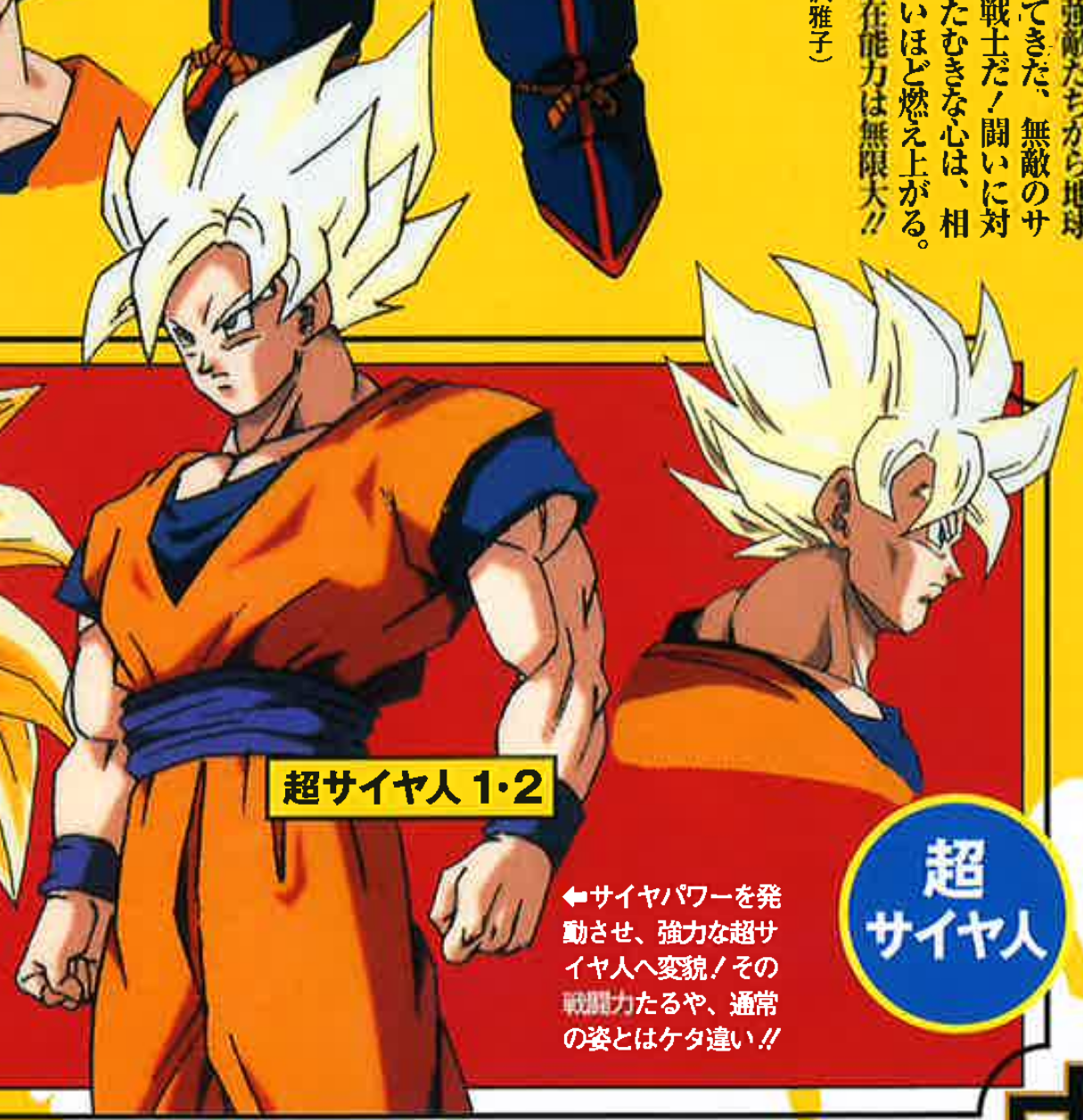
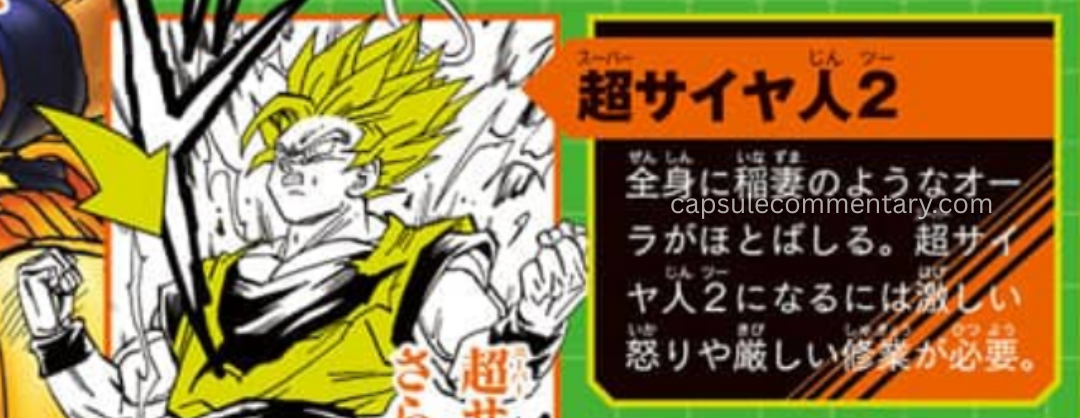

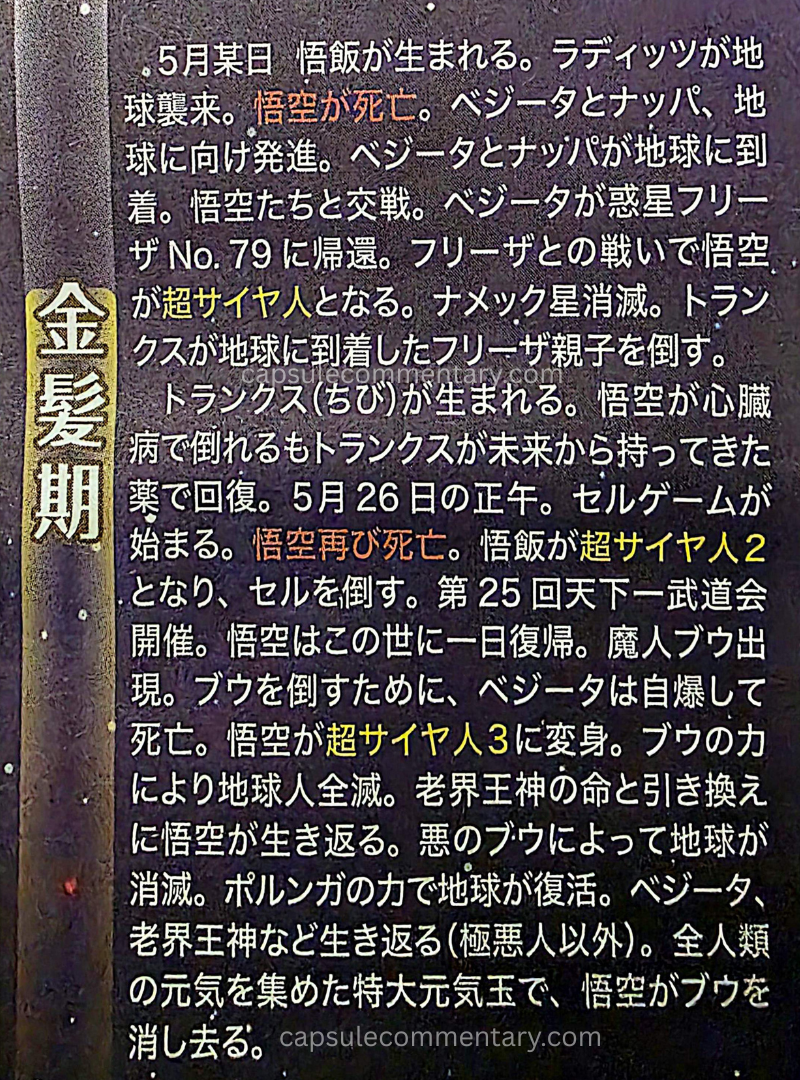
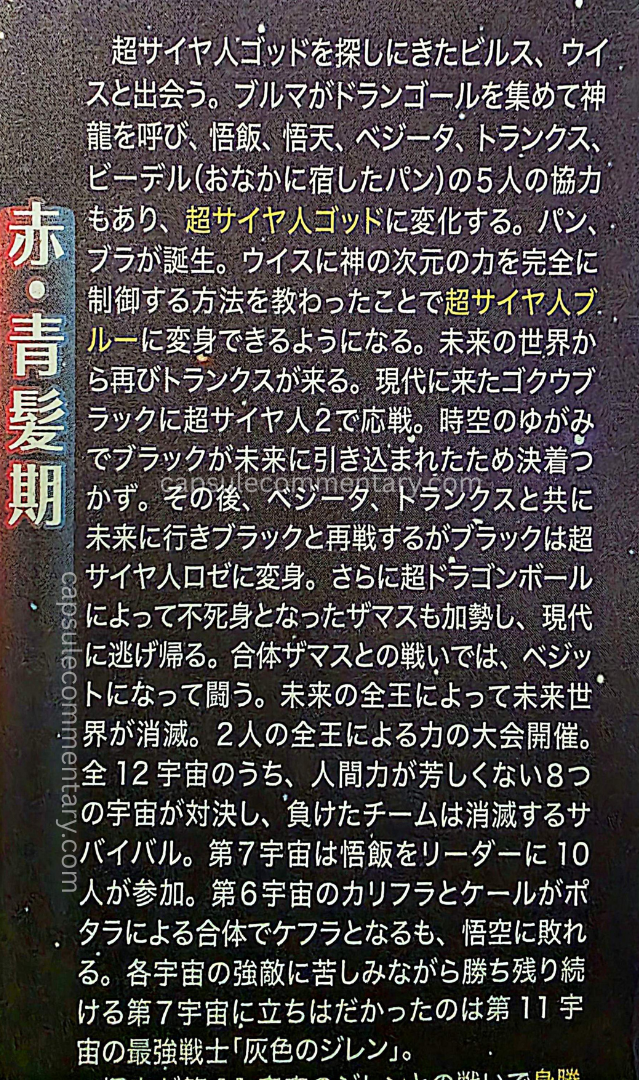
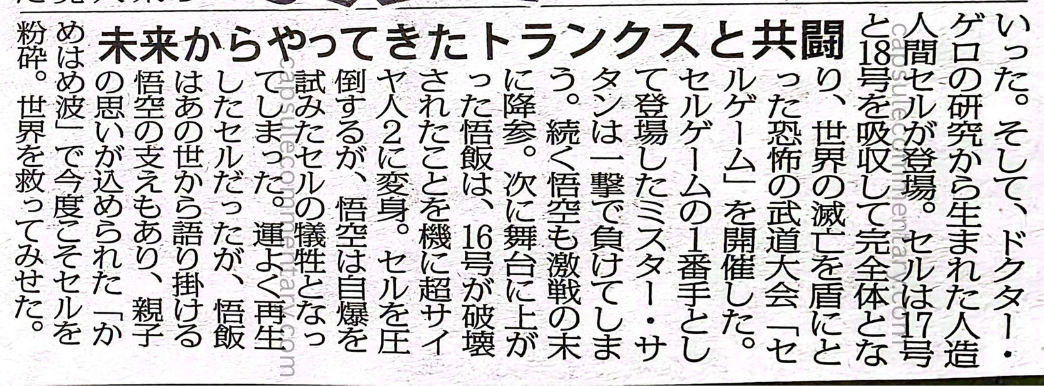
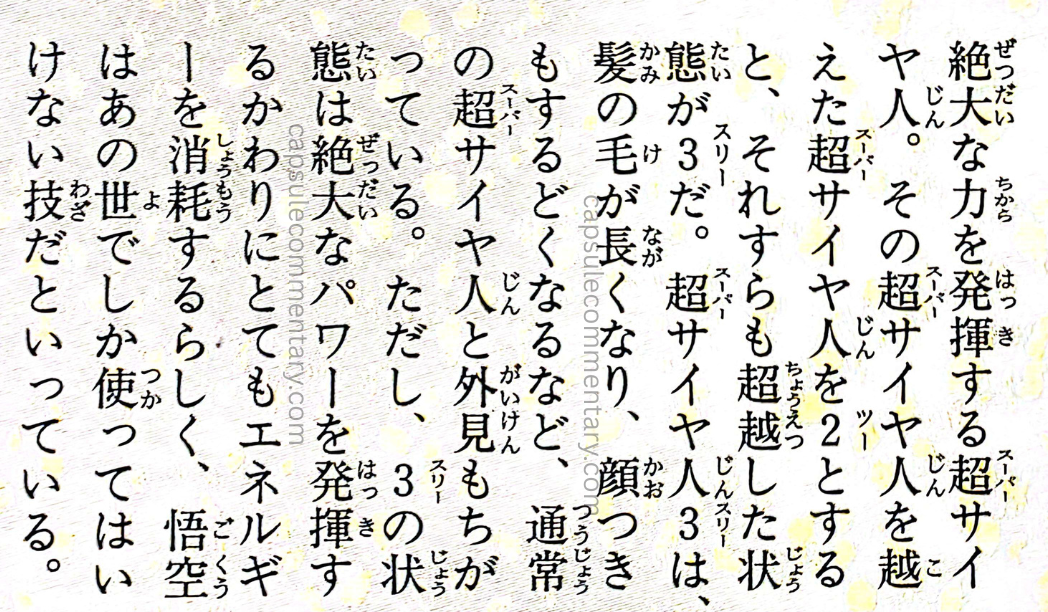
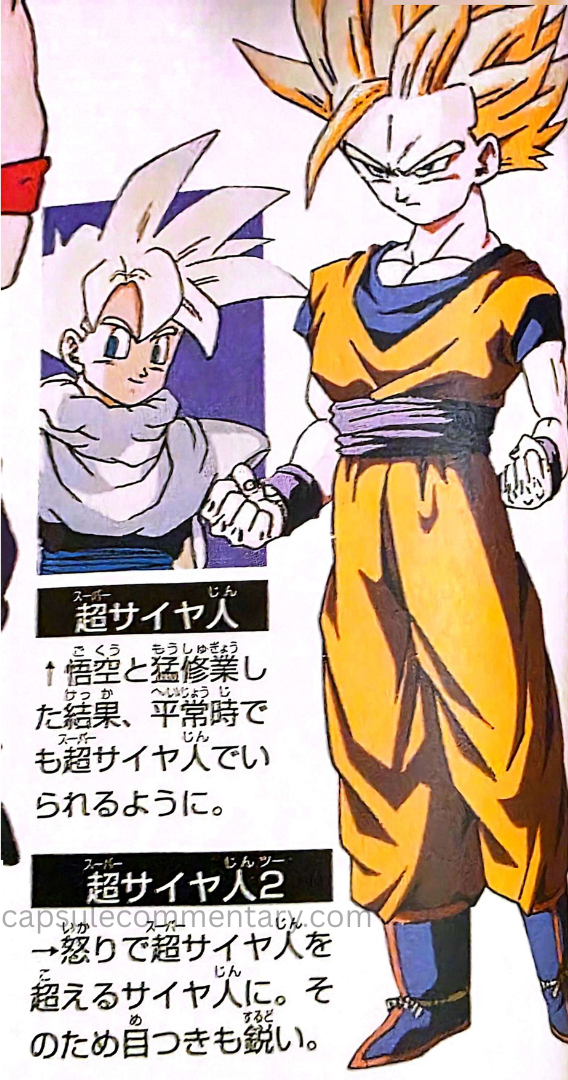
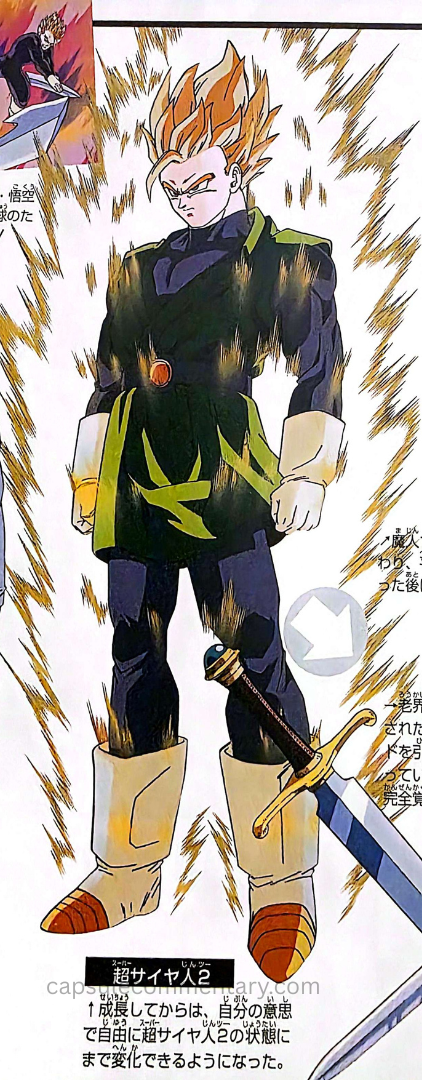
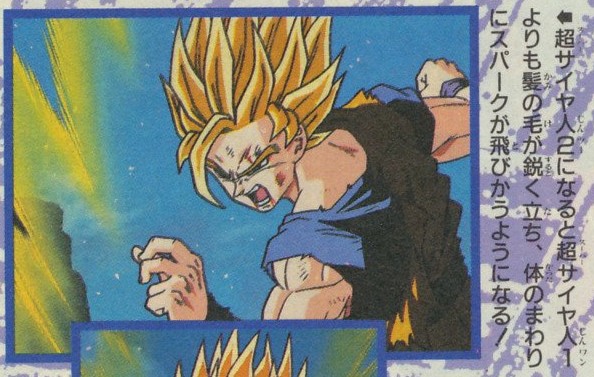
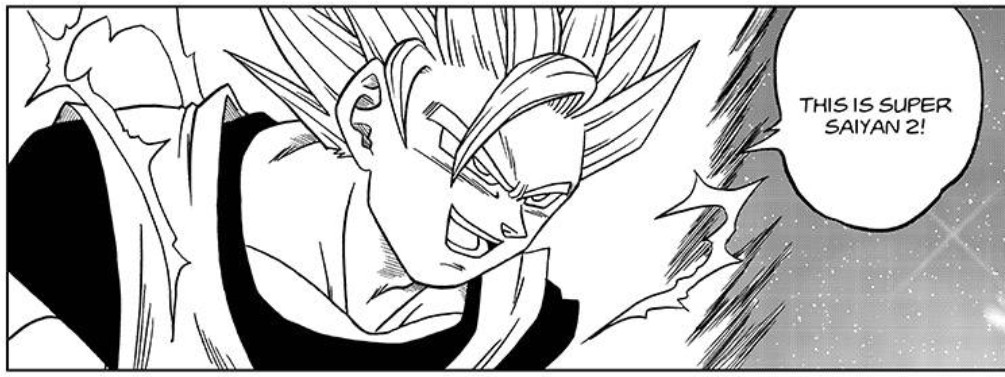
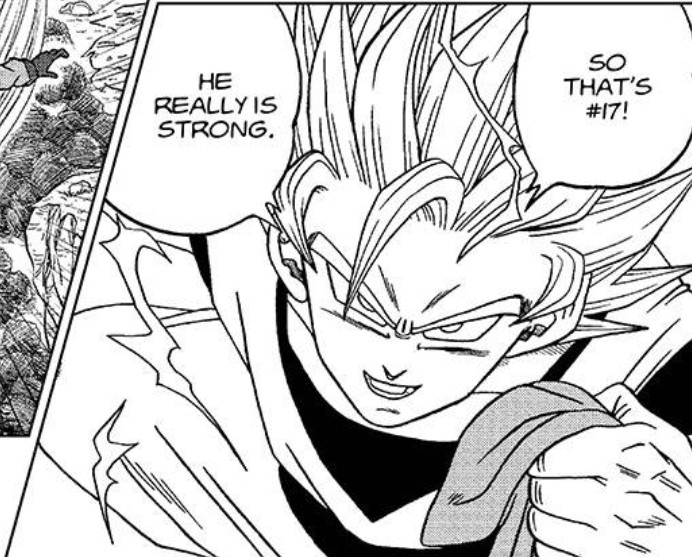
Yes, that’s really all of them. If I happened to miss one, please let me know. I also threw in some examples from Jump magazines. As some users of Super Saiyan 1 and 2 have little to no physical differences between the two forms, the aura is the key identifier. The way that Toriyama drew the auras of Super Saiyan 1 and Super Saiyan 2 is starkly different. Super Saiyan 1’s aura resembles a fire with flames licking up, while the aura for Super Saiyan 2 is intense and spiky with sparks of electricity bursting around the user.
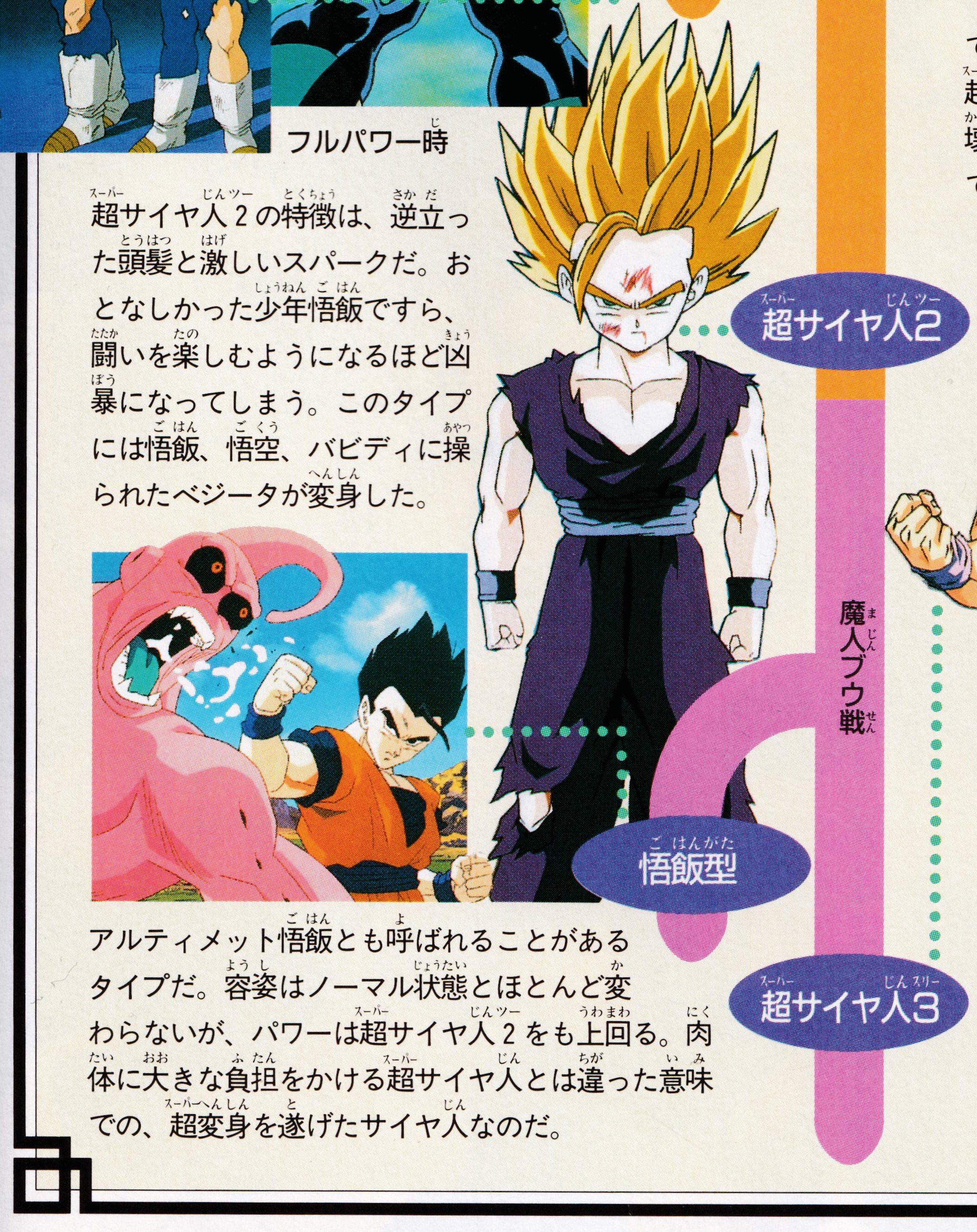
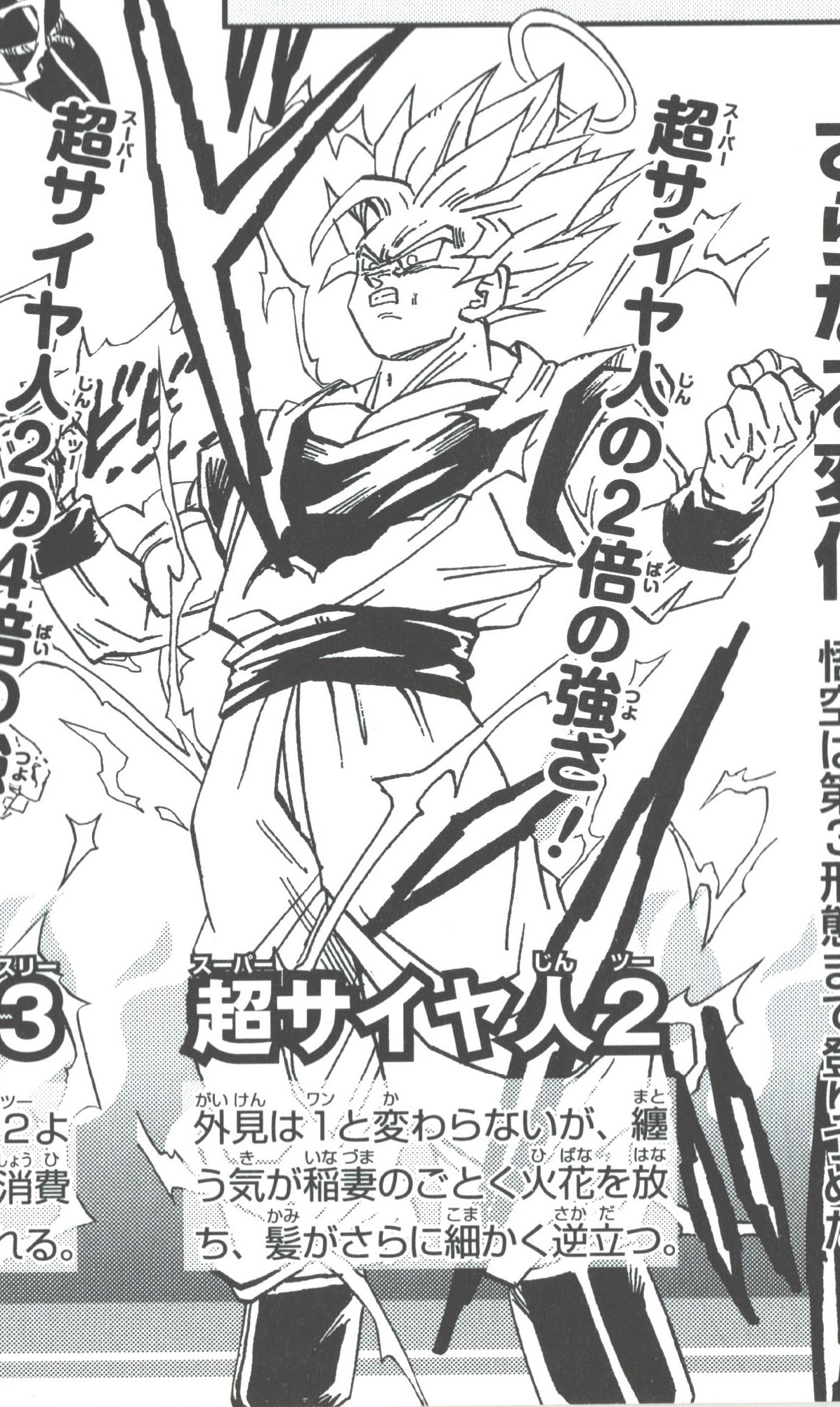
- Dragon Ball: Daizenshū 10 page 92 states: “The distinguishing features of Super Saiyan 2 are its upright hair and intense sparks of electricity.”
- Dragon Ball GT: Perfect File 1 page 64 states: “Visually, there isn’t much difference from 1 either—just some sparks in the aura and hair that stands up even more.”
- Dragon Ball Official Site states Super Saiyan 2 is “a form that transcends Super Saiyan, with an aura that surges around the entire body like lightning.”
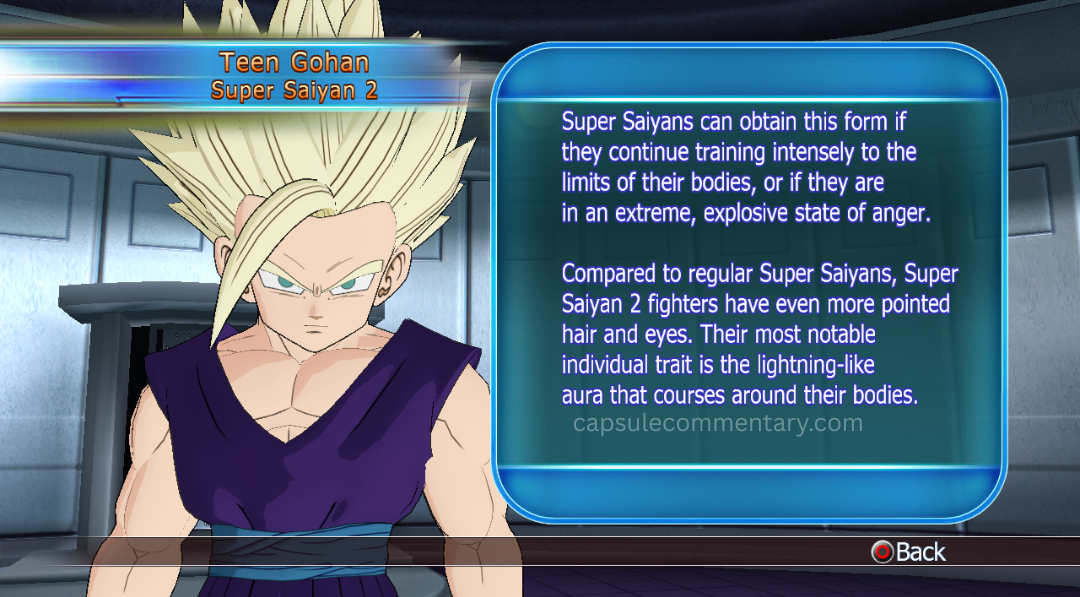
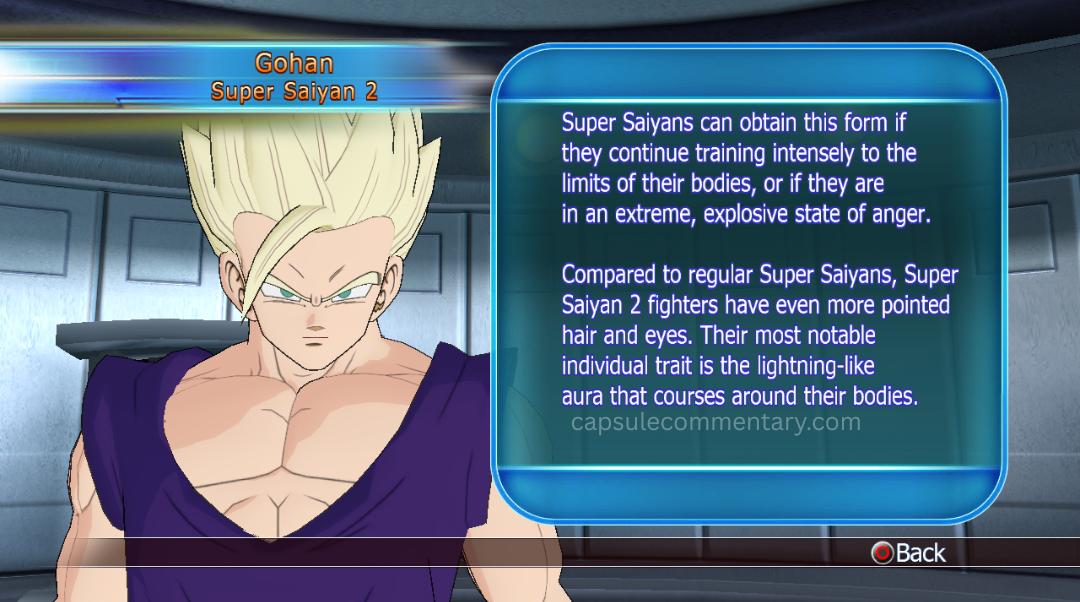
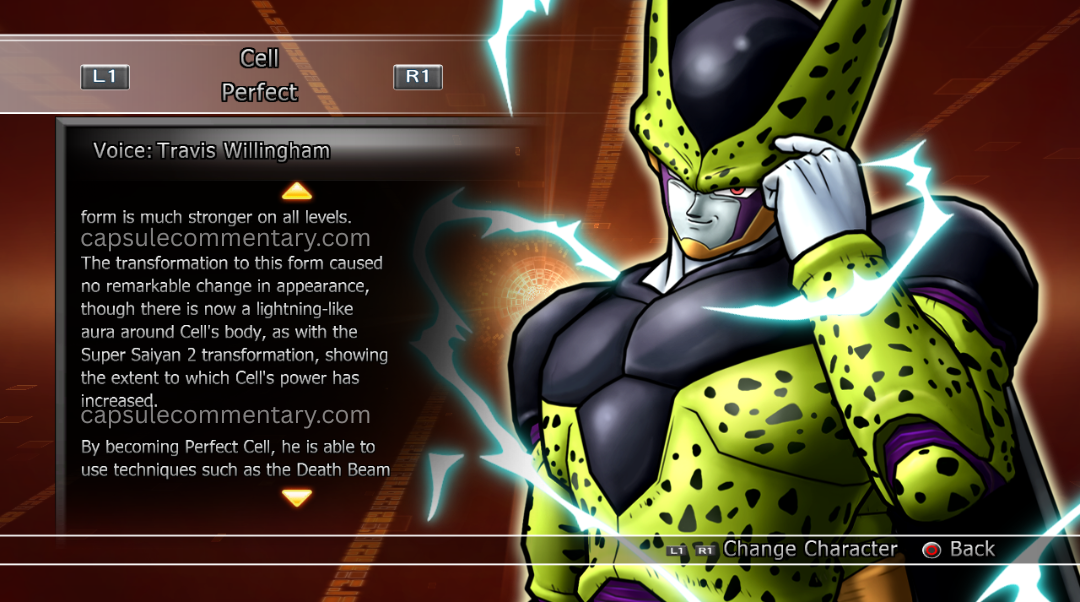
- The character descriptions for Super Saiyan 2 Goku, Super Saiyan 2 Teen Gohan, Super Saiyan 2 Gohan, and Super Saiyan 2 Vegeta in Dragon Ball: Raging Blast read: “Compared to regular Super Saiyans, Super Saiyan 2 fighters have even more pointed hair and eyes. Their most notable individual trait is the lightning-like aura that courses around their bodies.“ The character description for Majin Vegeta reads: “An aura of lightning surrounds Vegeta in this form, suggesting that his powers are close to Super Saiyan 2.” For Super Perfect Cell, it states: “The transformation to this form caused no remarkable change in appearance, though there is now a lightning-like aura around Cell’s body, as with the Super Saiyan 2 transformation, showing the extent to which Cell’s power has increased.”
- The character descriptions for Super Saiyan 2 Goku, Super Saiyan 2 Vegeta, Majin Vegeta, and Super Perfect Cell in Dragon Ball: Raging Blast 2 repeat the descriptions used in Raging Blast. The description for Super Saiyan 2 Teen Gohan reads: “In addition to the special traits of a Super Saiyan, the Super Saiyan 2 is covered in a lightning-type aura, and is even more powerful in battle.”
- Dragon Ball: Super Exciting Guide: Story Volume page 62 states: “Super Saiyan 2: Its appearance isn’t different from Super Saiyan 1, but the aura sparks like lightning, and the hair stands up even more finely.”
- Dragon Ball Super: Super Start Guide page 32 states: “Super Saiyan 2: The hair becomes slightly thinner and more defined, and sparks are added.”
- Dragon Ball Super TV Series Complete Box Special Booklet 1 page 30 repeats the information from Dragon Ball Super: Super Start Guide page 32.
- In Dragon Ball Z: Budokai Tenkaichi‘s Character Illustrations for Super Saiyan 2 Goku, Super Saiyan 2 Vegeta, and Super Saiyan 2 Teen Gohan, it reads: “During the Super Saiyan 2 transformation, in addition to the increased length of the hair and sharpening of the features, the air around the body surges with a lightning-like aura.” For Majin Vegeta, it states: “In this form, Vegeta’s strength may be equivalent to that of a Super Saiyan 2. One indication of this is the lightning-like aura surrounding his body, a key characteristic of the Super Saiyan 2 transformation.“ For Super Perfect Cell, it reads: “Cell’s appearance has changed little in this new form, but as a testament to his new power, his body is now surrounded by a lightning-like aura, similar to that of a Super Saiyan 2.”
- In Dragon Ball Z: Budokai Tenkaichi 2‘s Character Illustration for Super Saiyan 2 Teen Gohan, it reads: “In this form, Gohan’s power rises beyond normal Super Saiyan levels, and his body is surrounded by a lightning-like aura.” For Majin Vegeta, it writes: “In this form, his body is surrounded by a lightning-like aura, and his power level is comparable to Super Saiyan 2.”
- In Dragon Ball Z: Budokai Tenkaichi 3‘s Character Illustration for Super Saiyan 2 Goku, it reads: “At a glance, this form is not that much different from the Super Saiyan’s, but the gold aura he emits from his entire body is now lightning.” For Super Saiyan 2 Teen Gohan, it states: “In addition to the characteristic Super Saiyan changes in appearance, he emits a lightning-like aura from his entire body and his strength greatly increases.” For Majin Vegeta, it writes: “It is thought that this form has the same level of strength as a Super Saiyan 2 because, like a Super Saiyan 2, he has a lightning-like aura surrounding his body.”
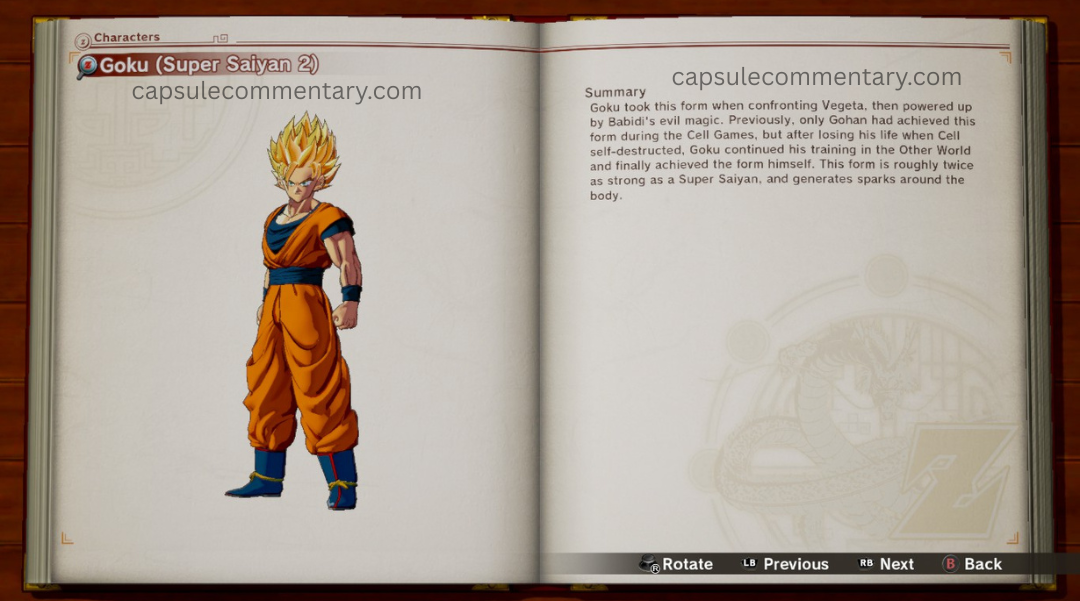
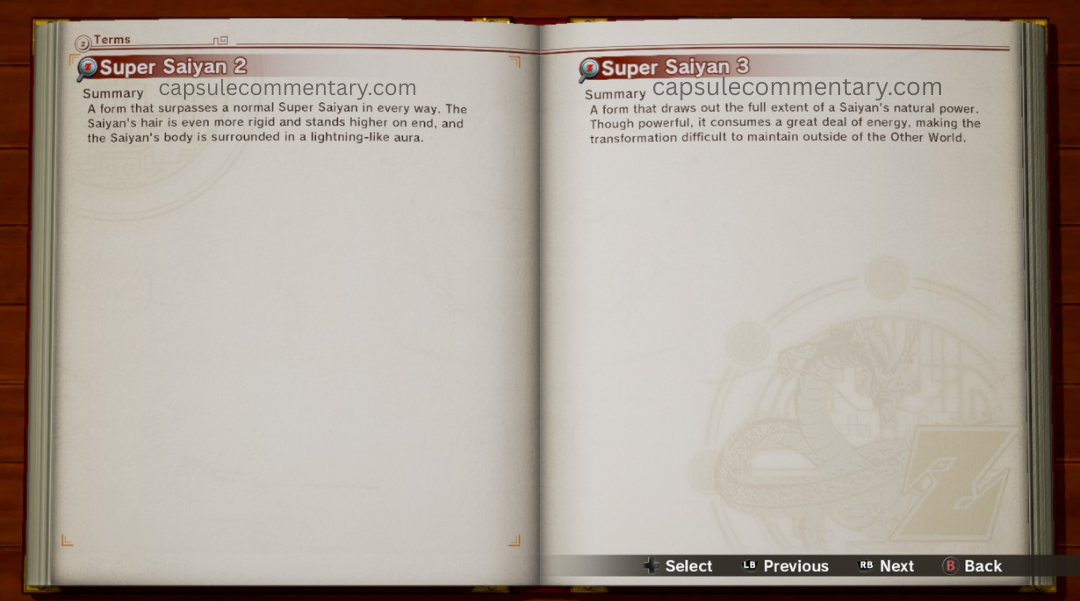
- Dragon Ball Z: Kakarot‘s Z-Encyclopedia entry on Super Saiyan 2 Goku states: “This form is roughly twice as strong as a Super Saiyan, and generates sparks around the body.” The entry on Super Saiyan 2 (in general) states: “The Saiyan’s hair is even more rigid and stands higher on end, and the Saiyan’s body is surrounded in a lightning-like aura.”
- Dragon Ball Z Shueisha Jump Remix Vol. 3 page 287 describes Super Saiyan 2 as being “marked by an aura sparking like lightning and spiky, aggressive hair!”
- Dragon Ball Z Vol. 42’s Fact File #42 states: “In the animation, whereas a normal Super Saiyan’s aura was yellow, Super Saiyan 2 is depicted with a bluish tint and crackling lightning effects around it.”
- V-Jump November 1995 page 179 states: “When one becomes Super Saiyan 2, the hair stands up more sharply than in Super Saiyan 1, and sparks fly around the body.”
- Saikyō Jump June 2022 page 20 describes Super Saiyan 2 as: “A lightning-like aura bursts from the whole body. To become Super Saiyan 2, intense anger or severe training is necessary.”
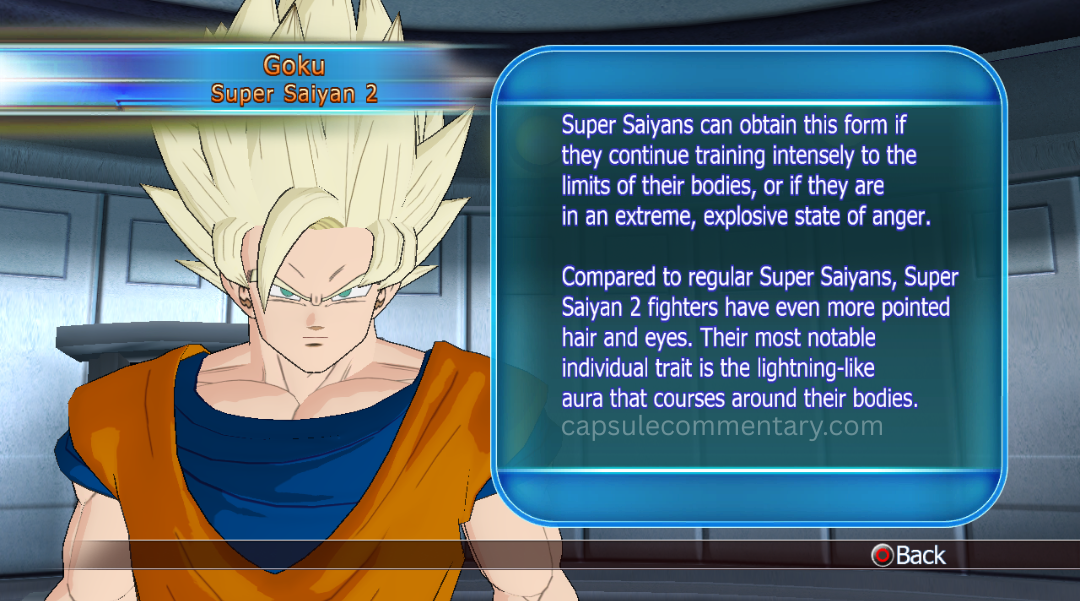
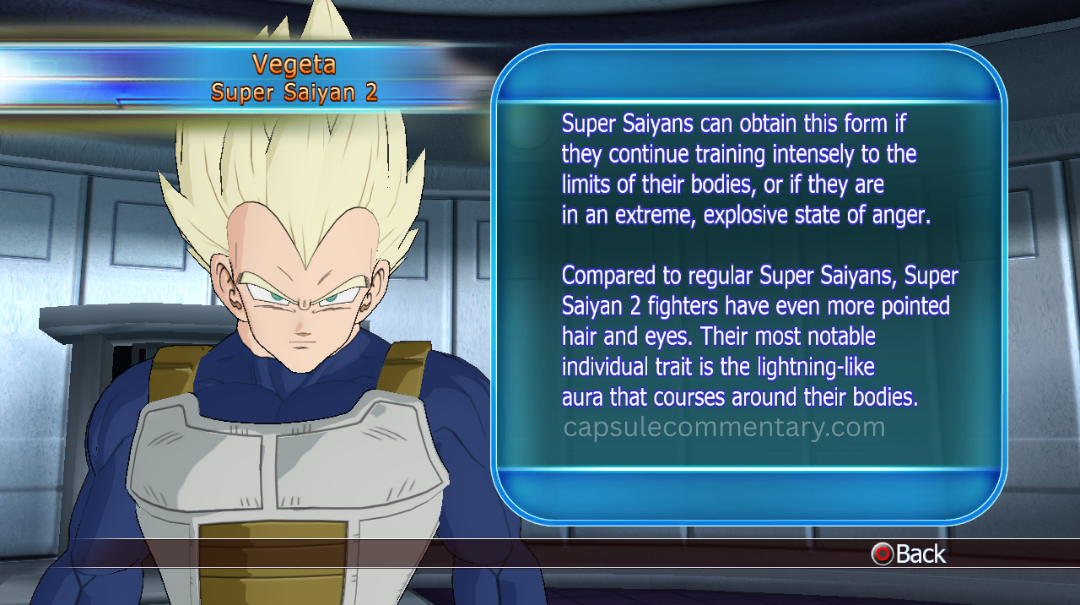
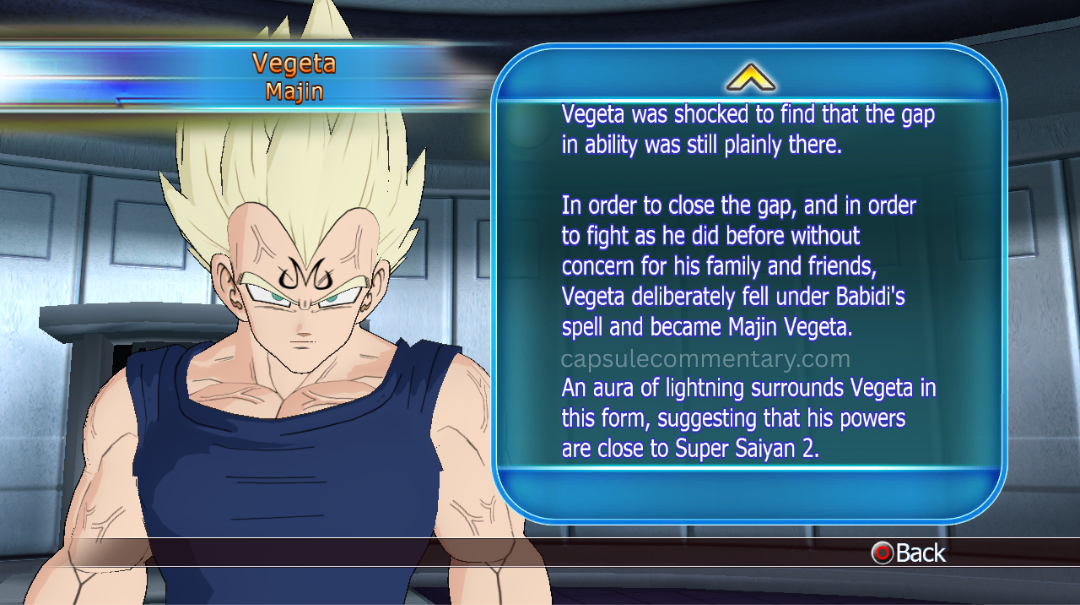
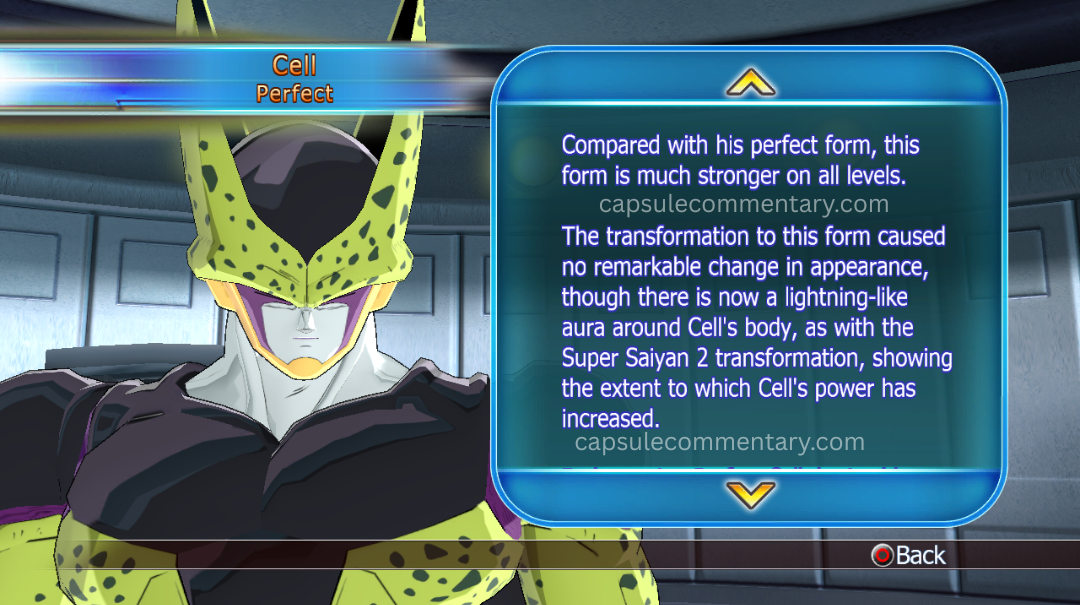
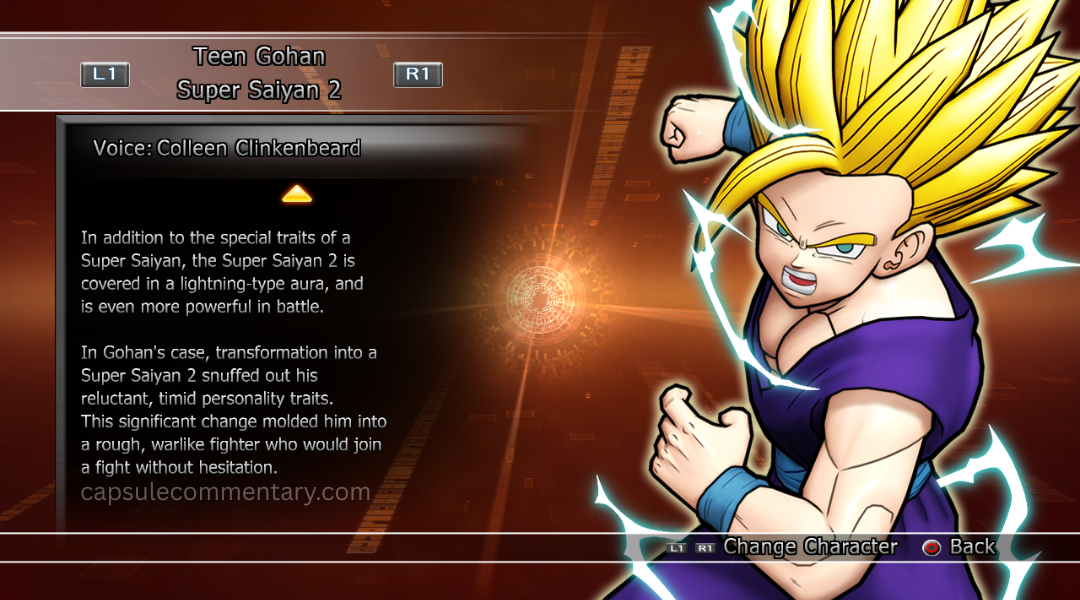
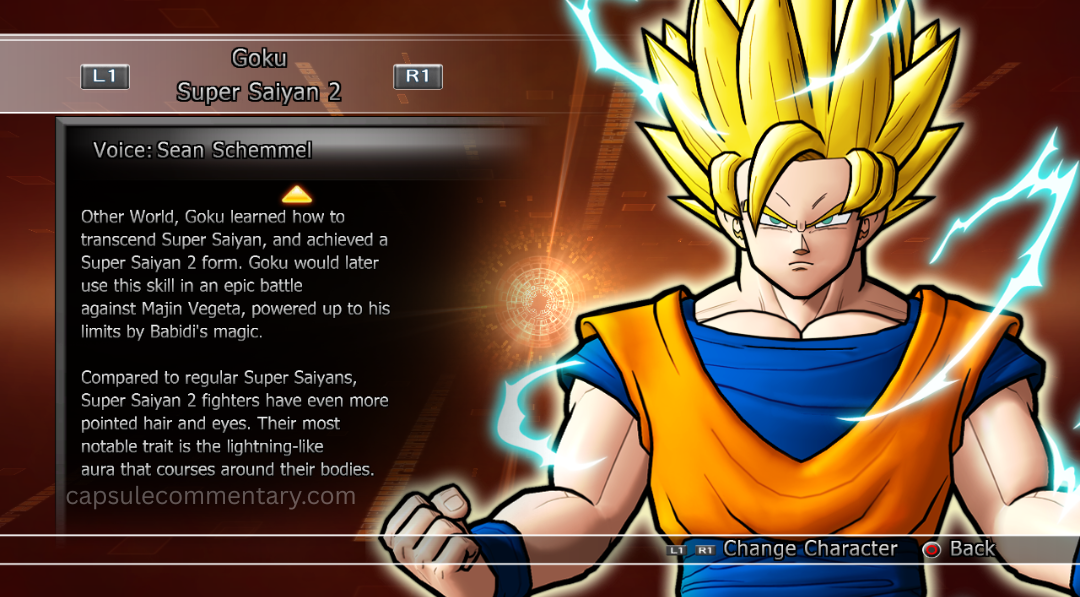
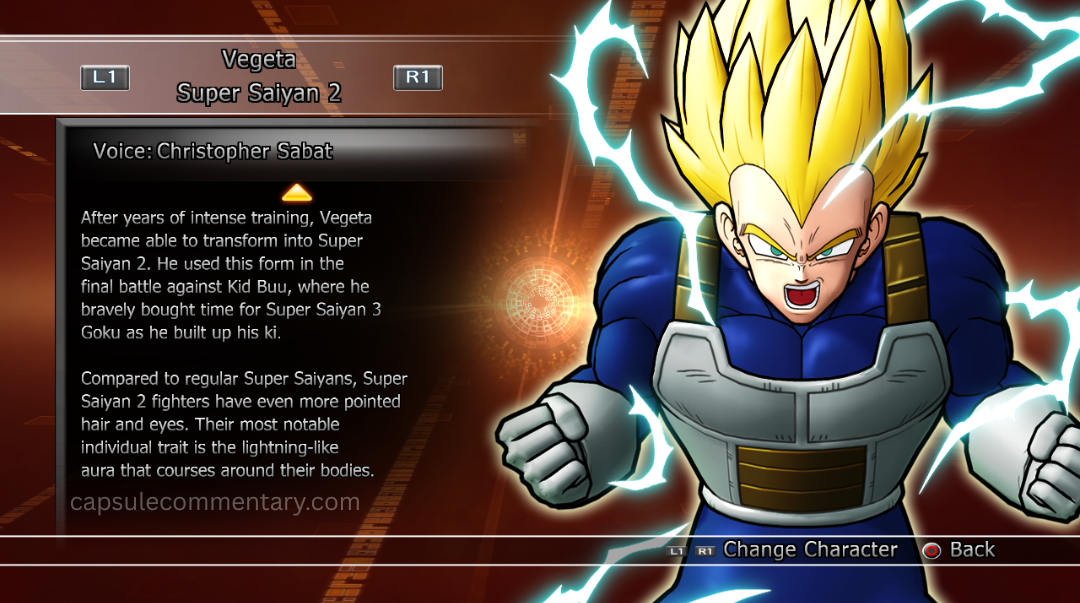
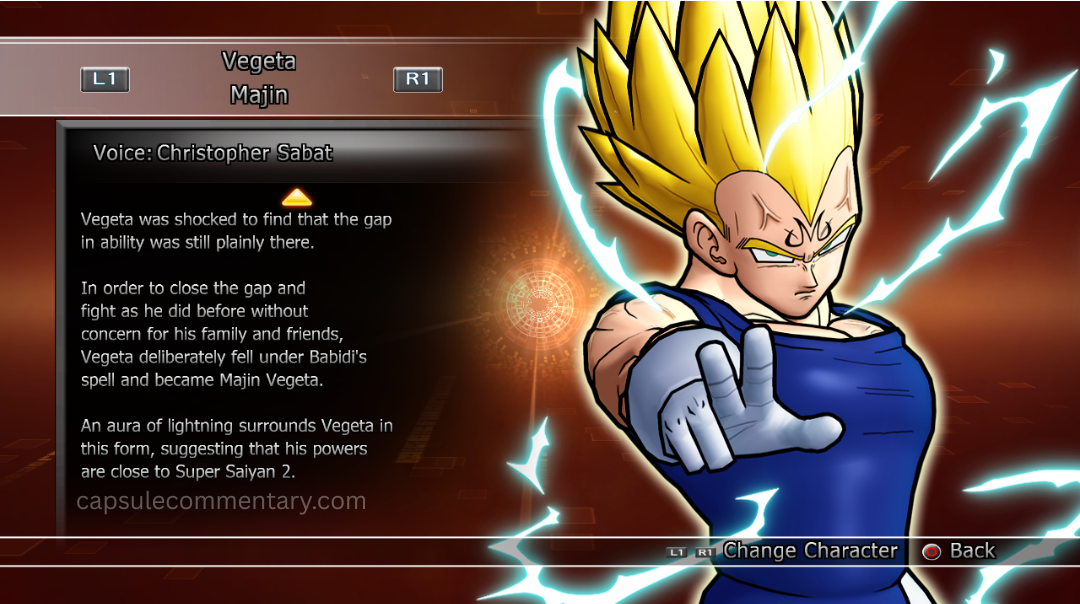
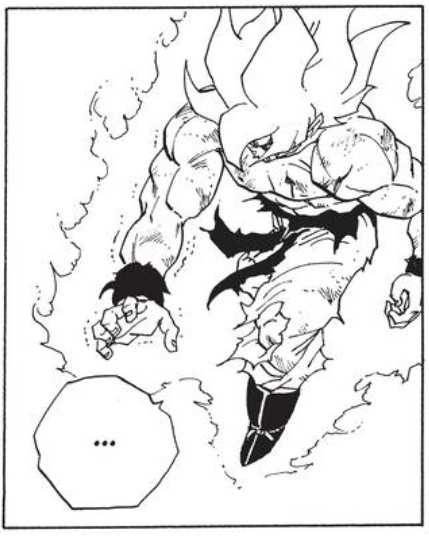
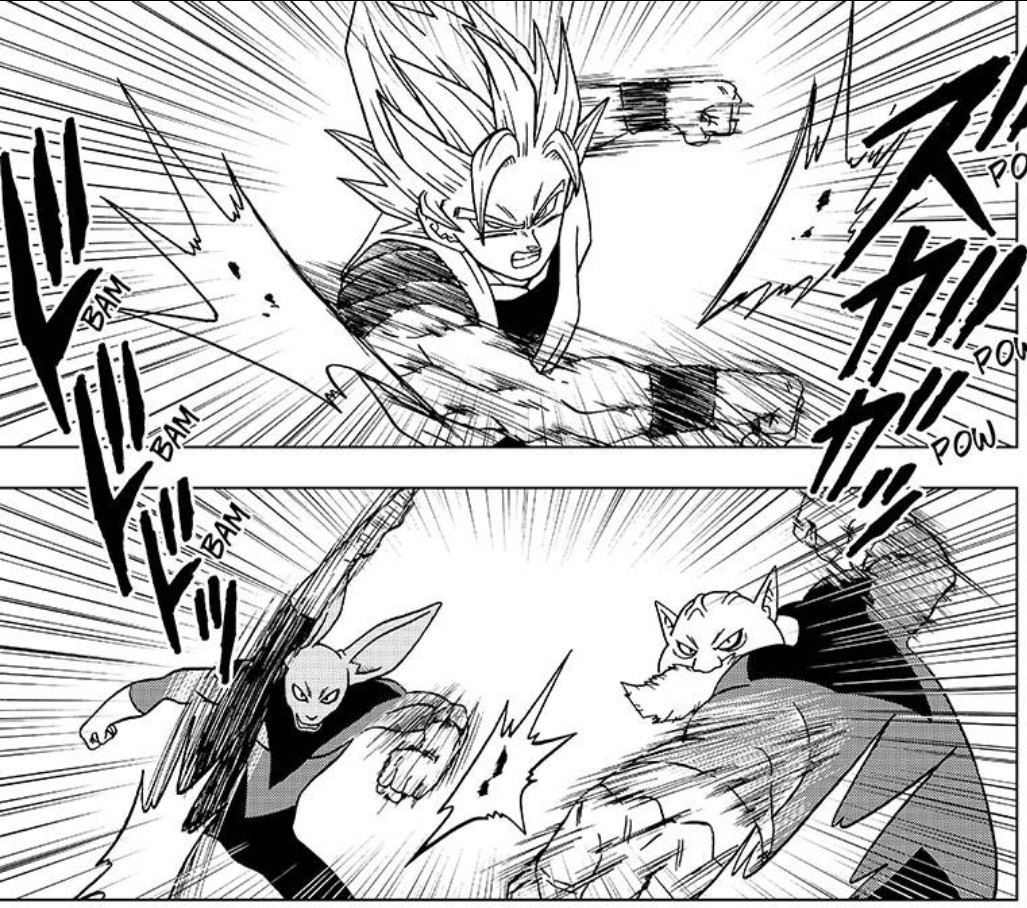
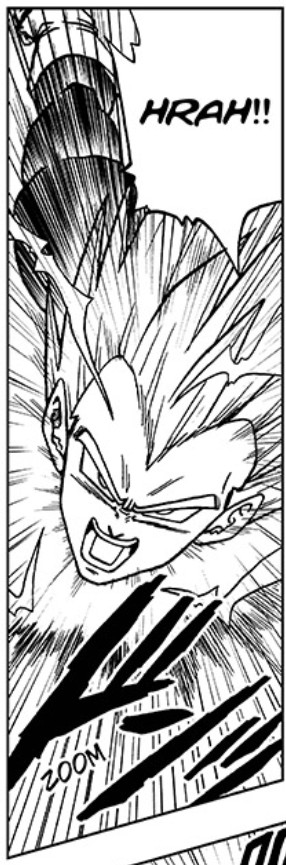
Grades 2 and 3 have similarly shaped auras as Super Saiyan 2, but are always drawn without sparks. Toriyama’s art style changes significantly over time, but the auras of these two forms (Super Saiyans 1 and 2) stayed consistent throughout Dragon Ball (and Dragon Ball Super). This does not mean that every instance of a spiky aura or an aura with sparks indicates Super Saiyan 2. The key is to observe how the aura appears for the majority of the time the character is in that scene. First, let’s look at how Toriyama depicted the auras of characters using Super Saiyan 1:
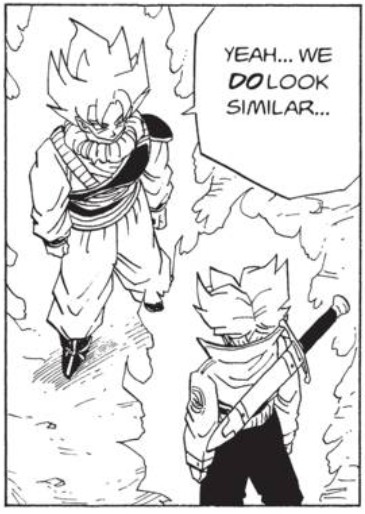
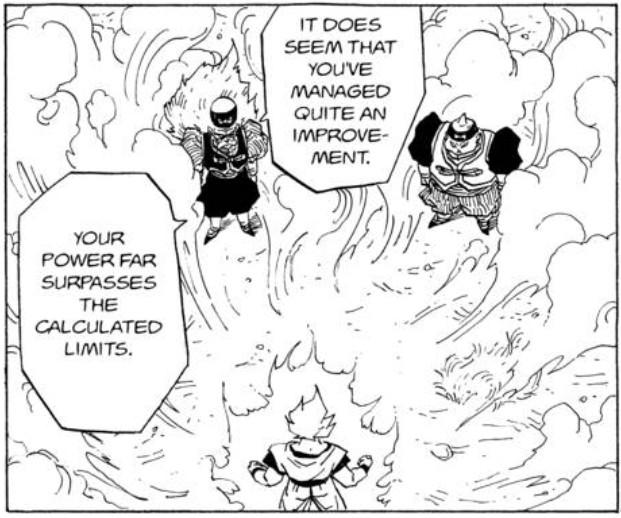
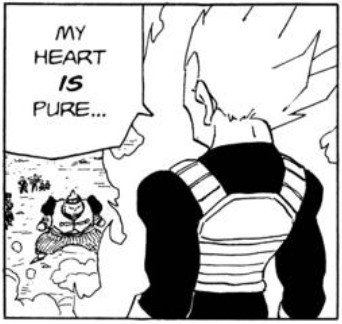
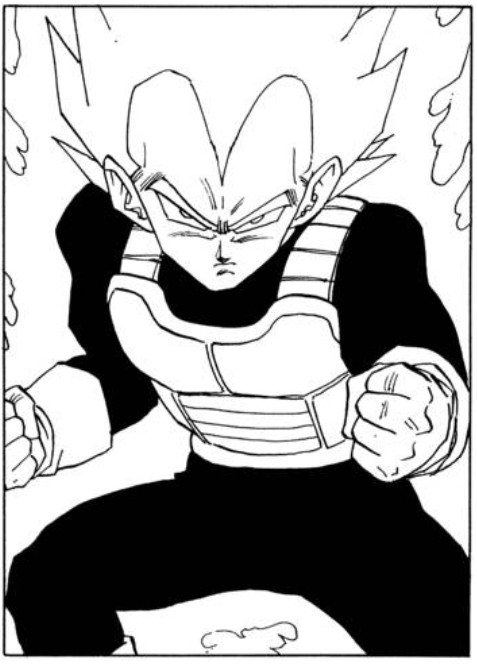
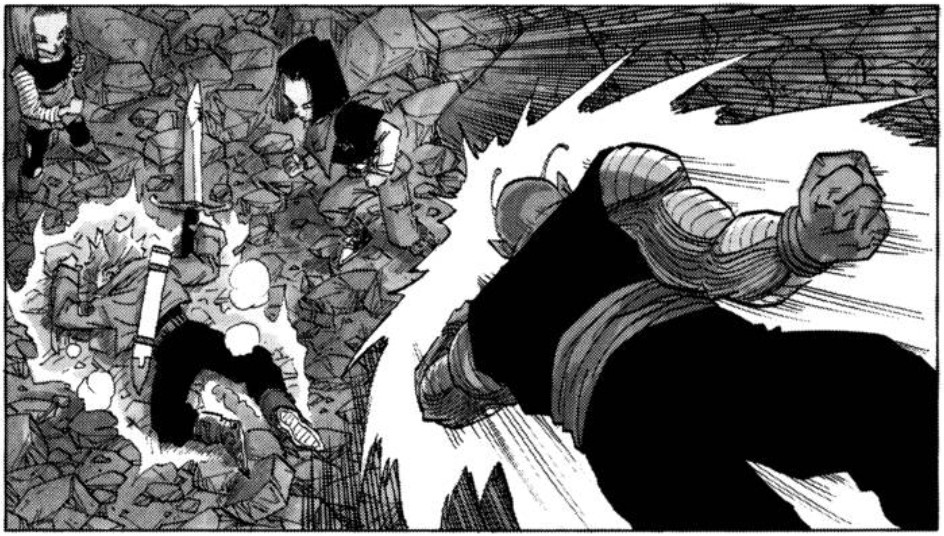
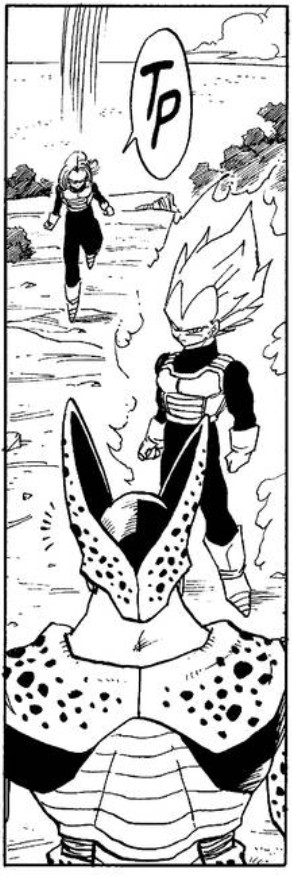
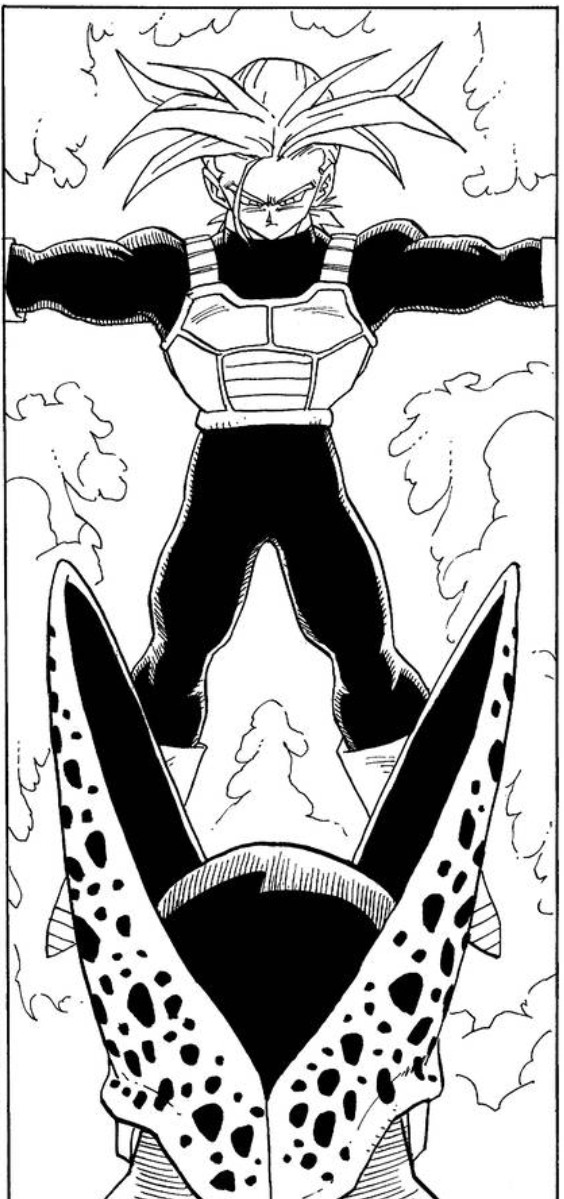
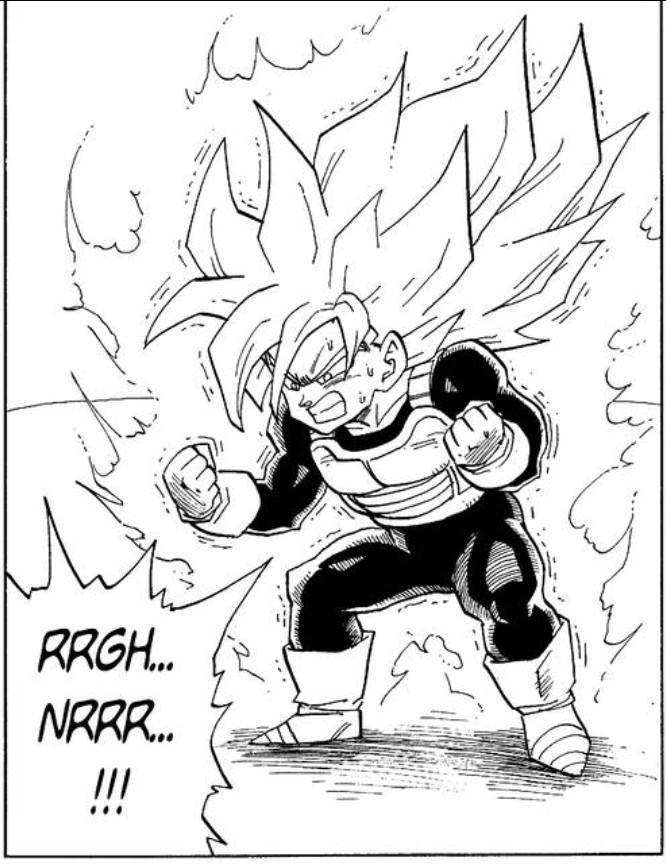
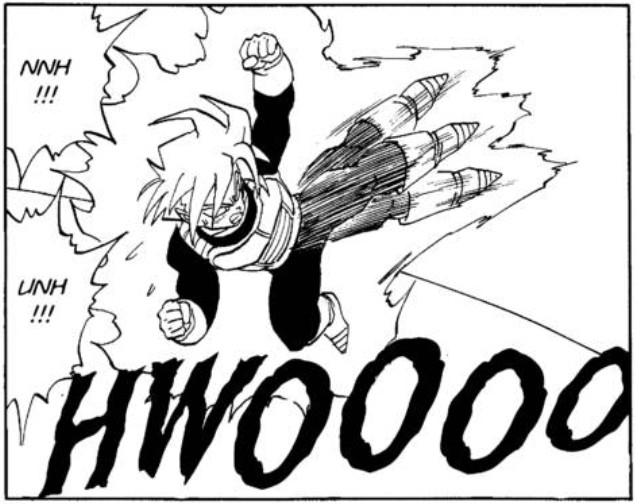
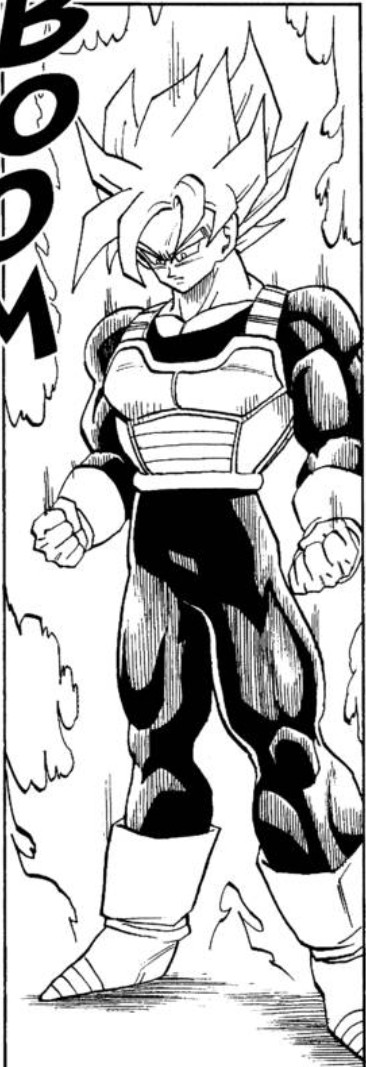
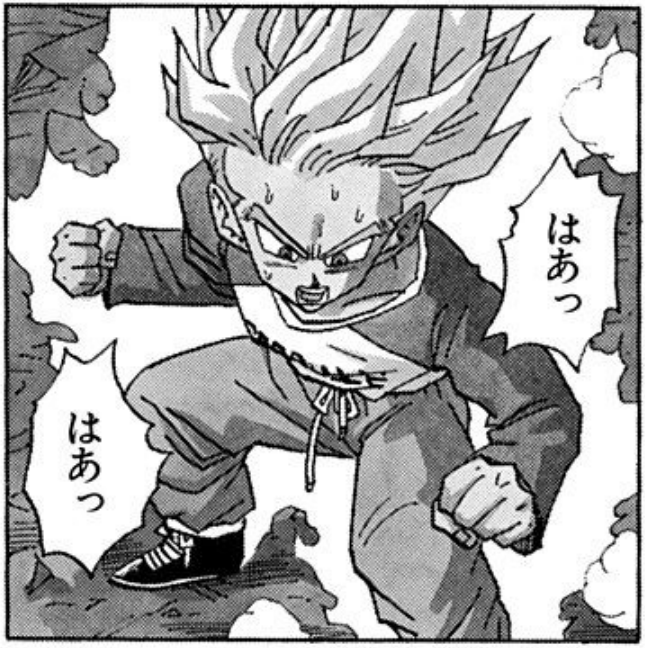
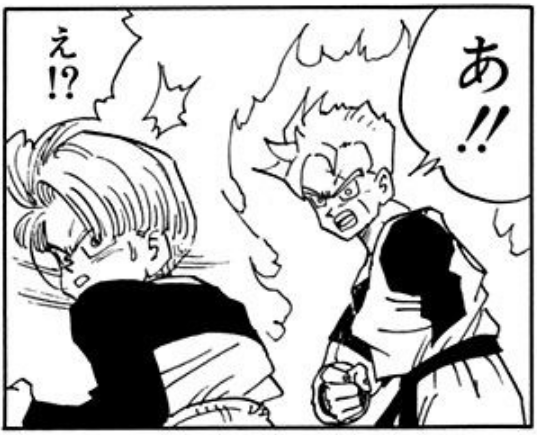
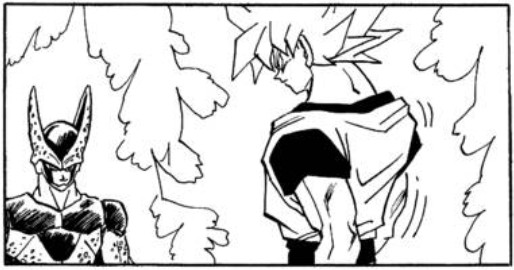
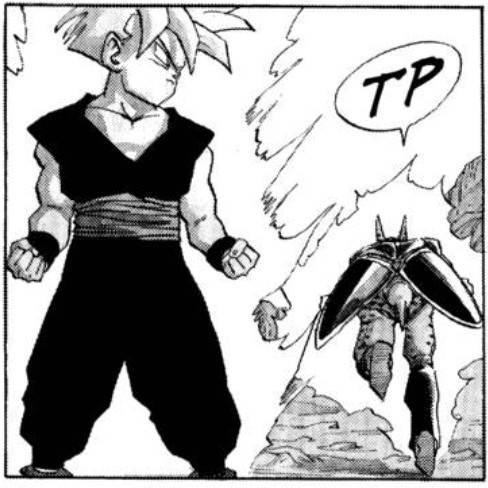
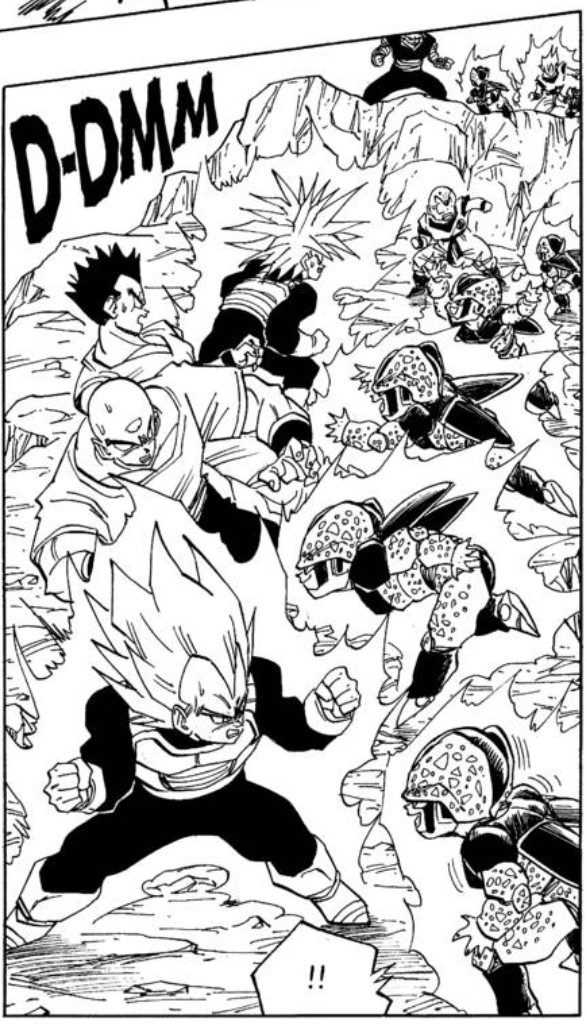

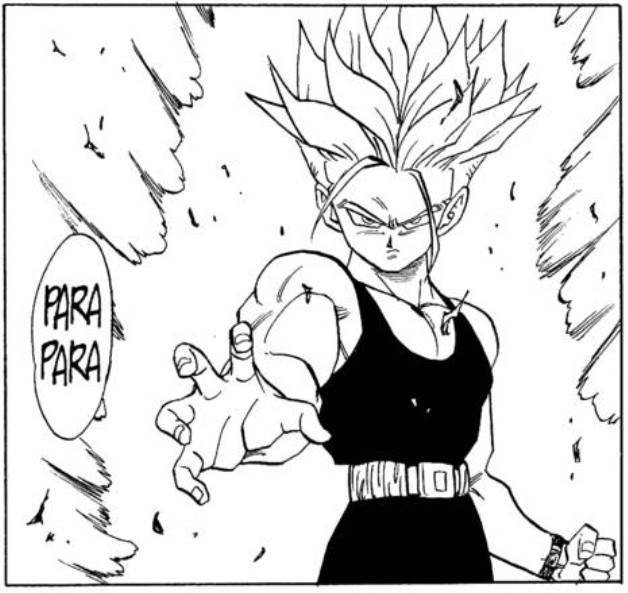
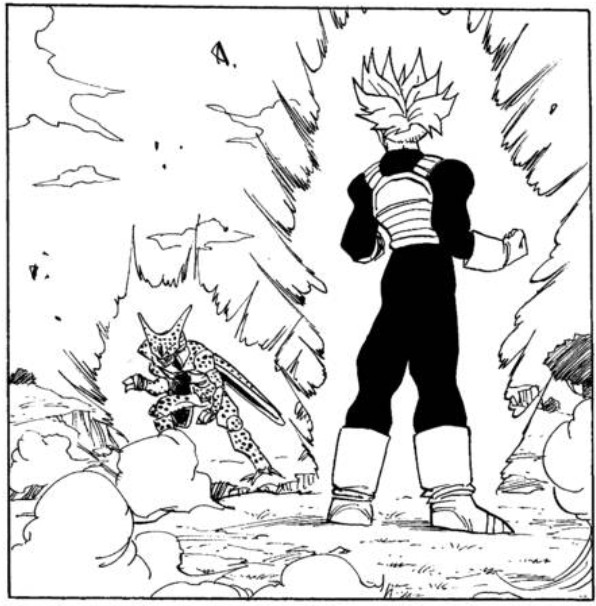
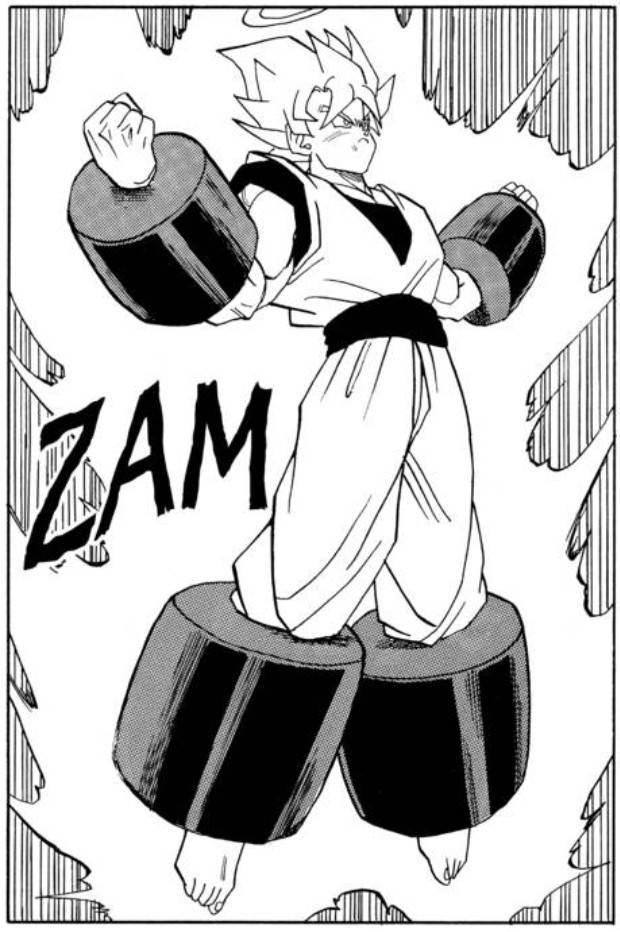
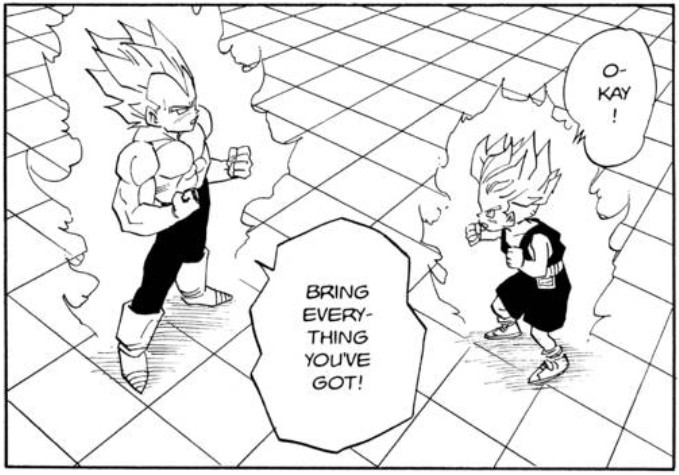
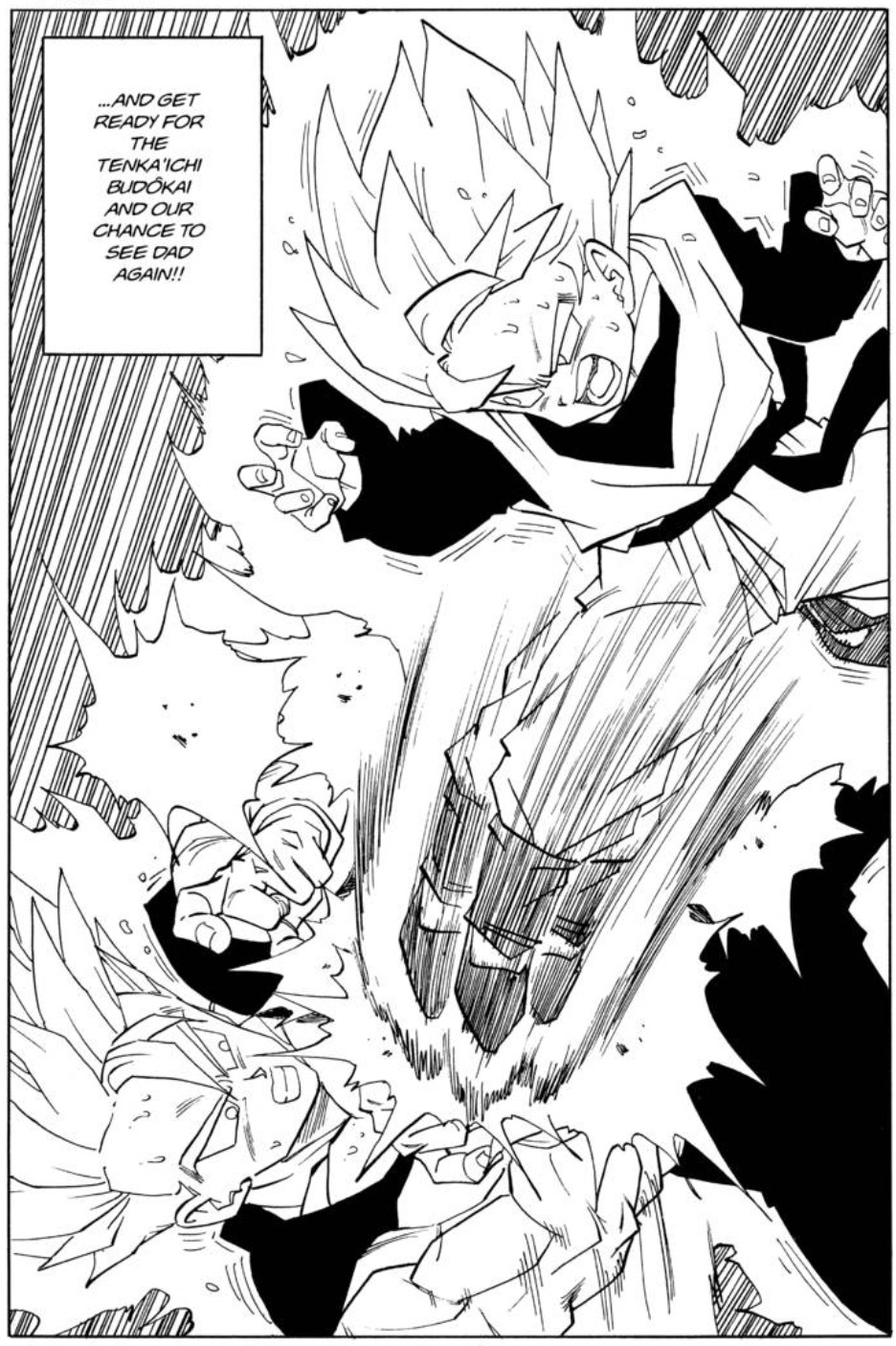
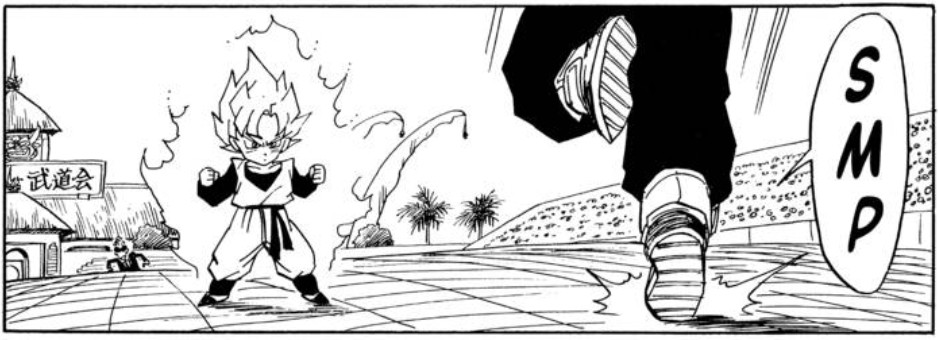
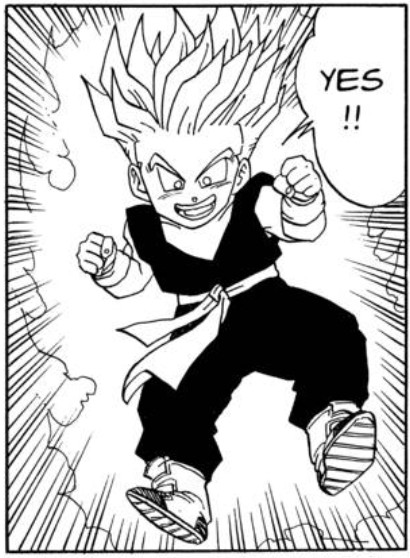
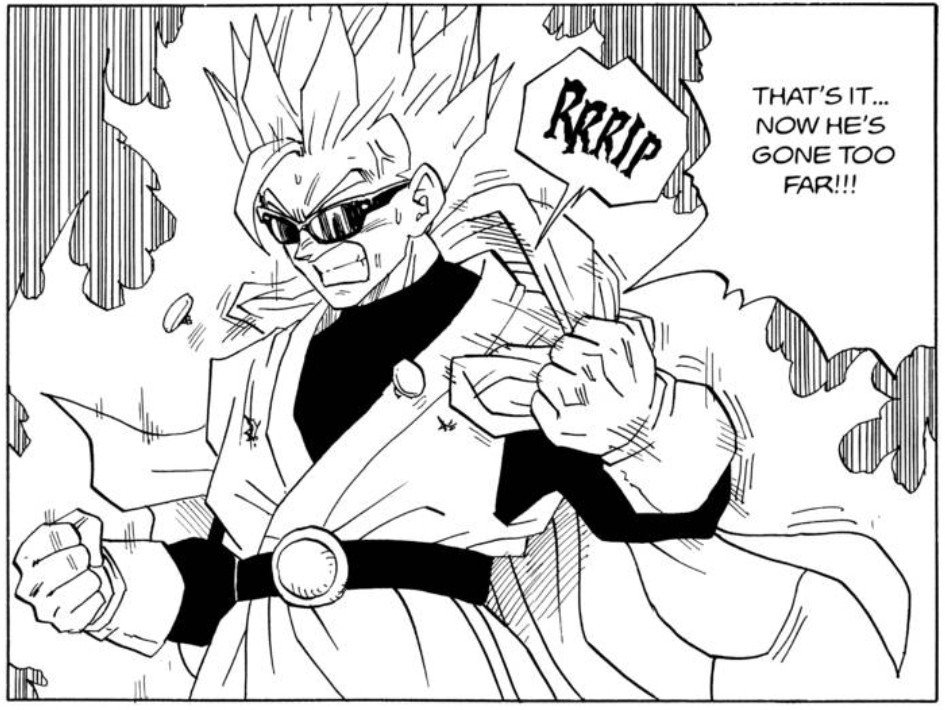
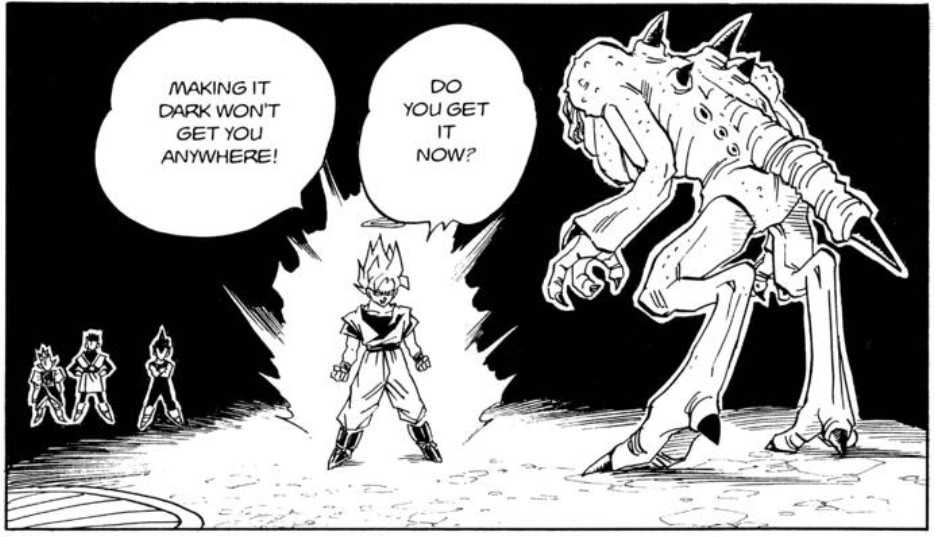
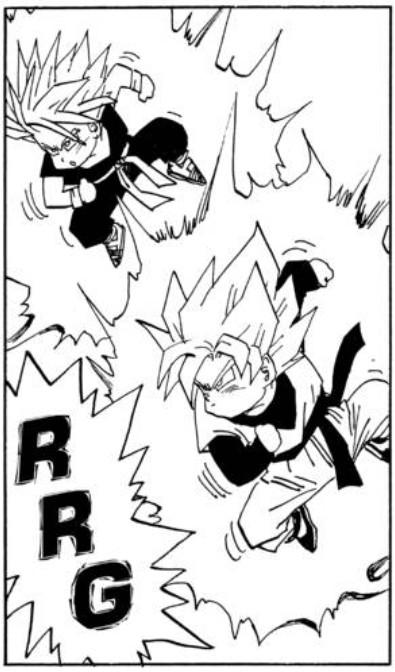
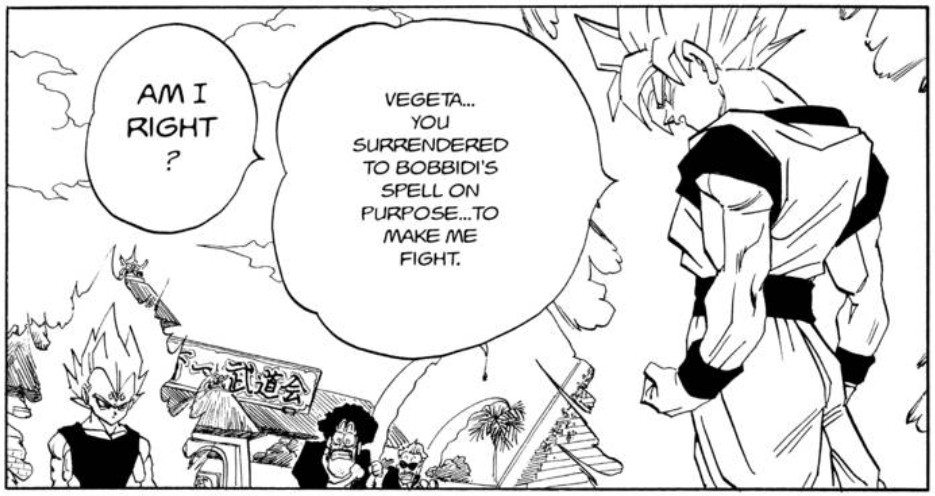
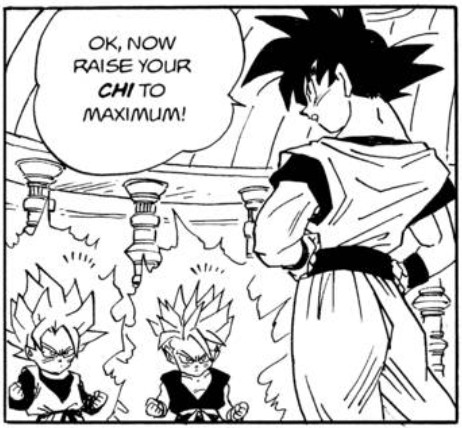
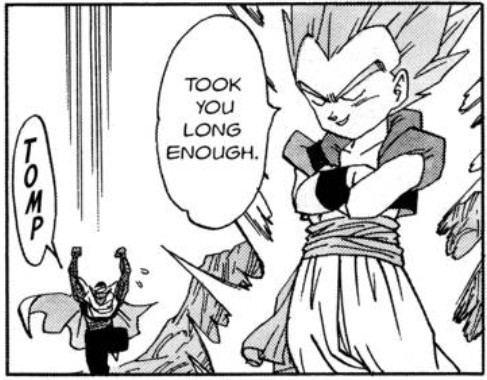
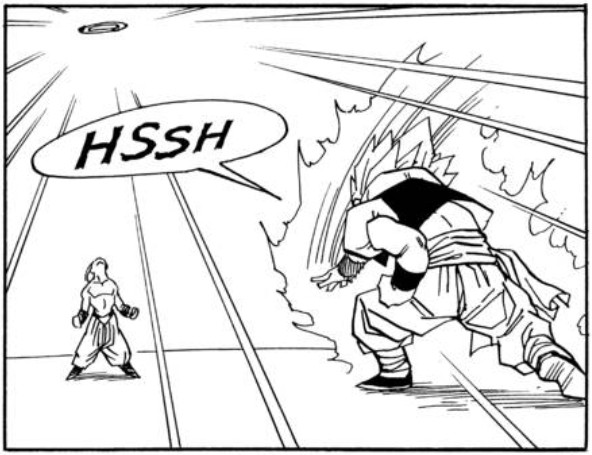
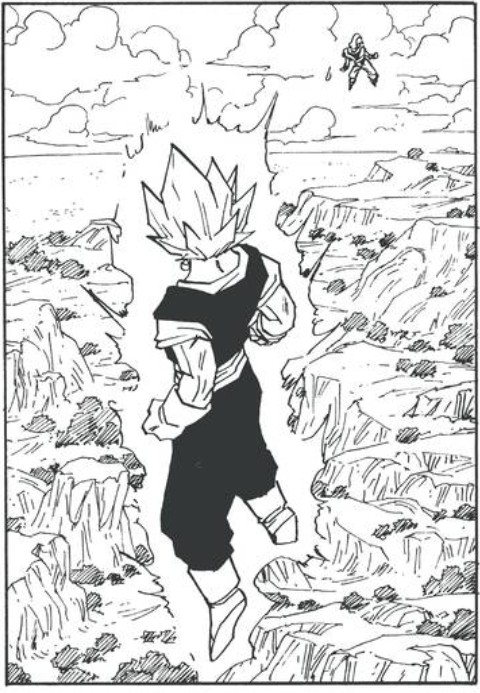
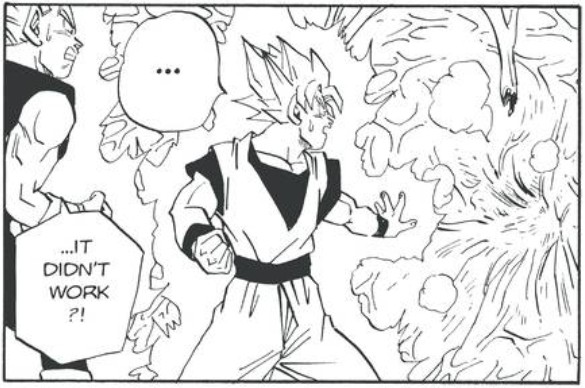
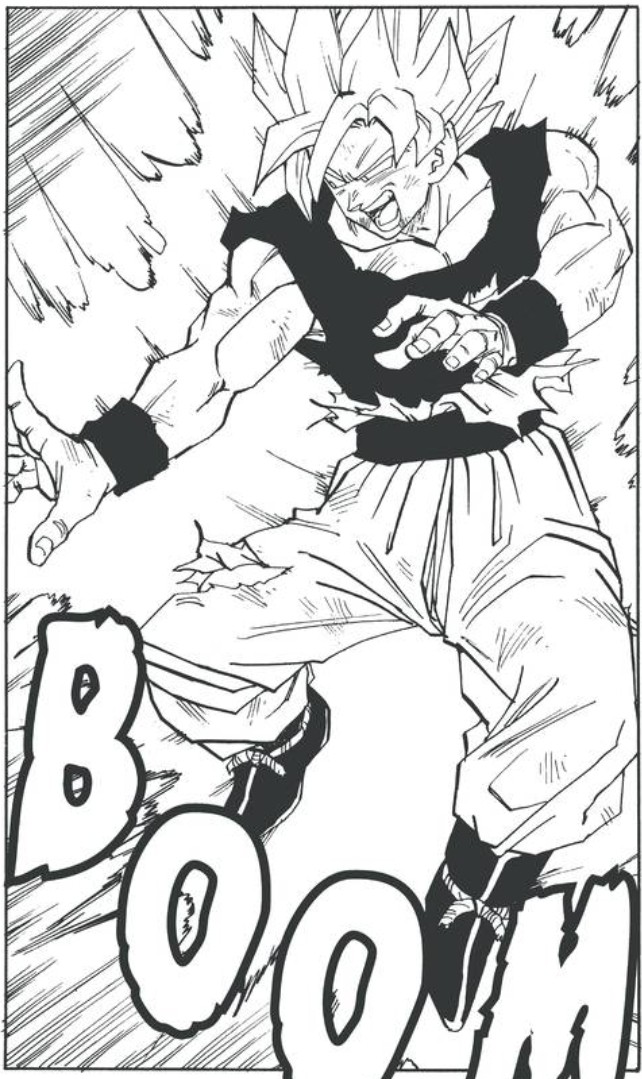
Now, here is how Toriyama drew the auras of characters using Super Saiyan 2:
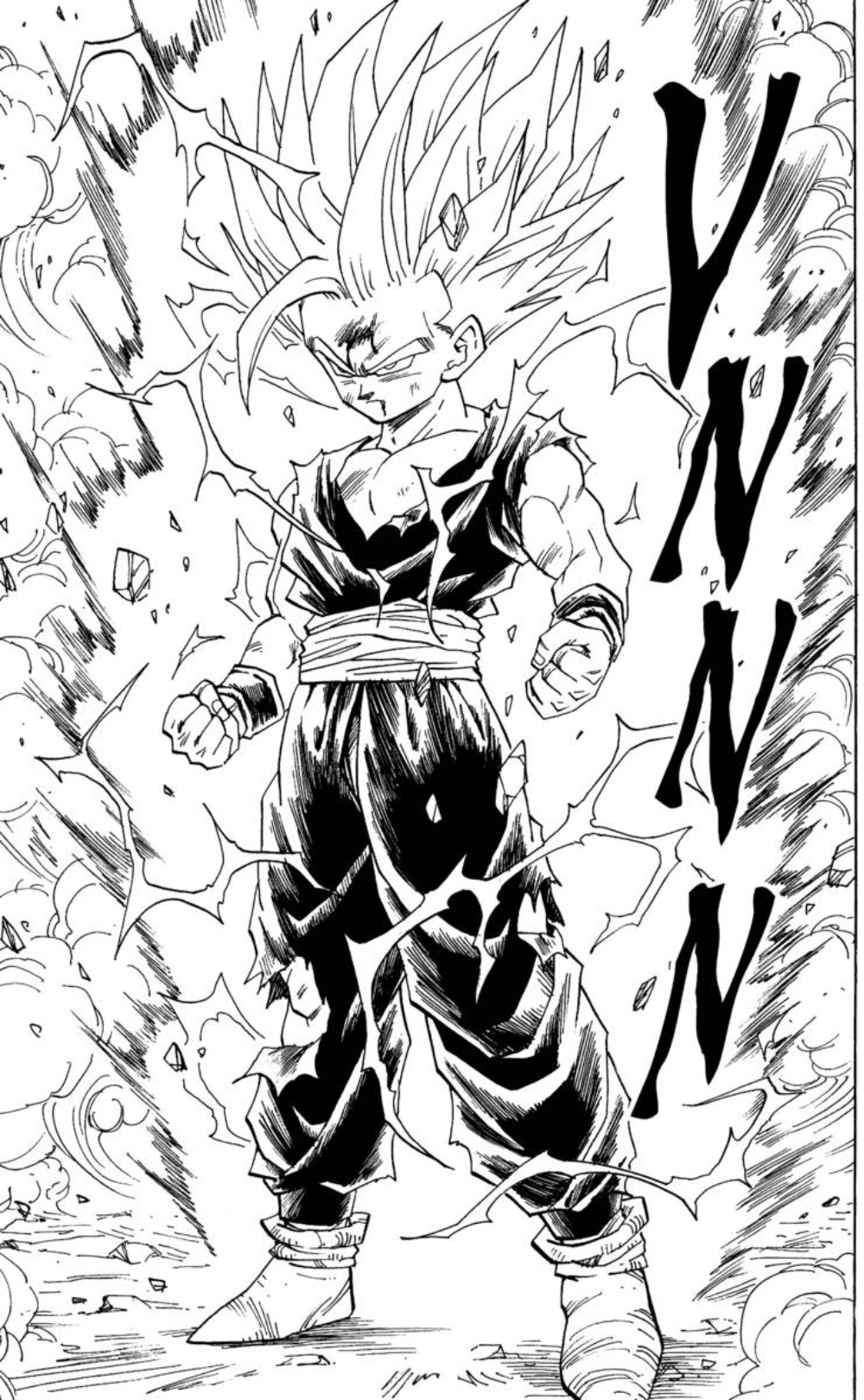
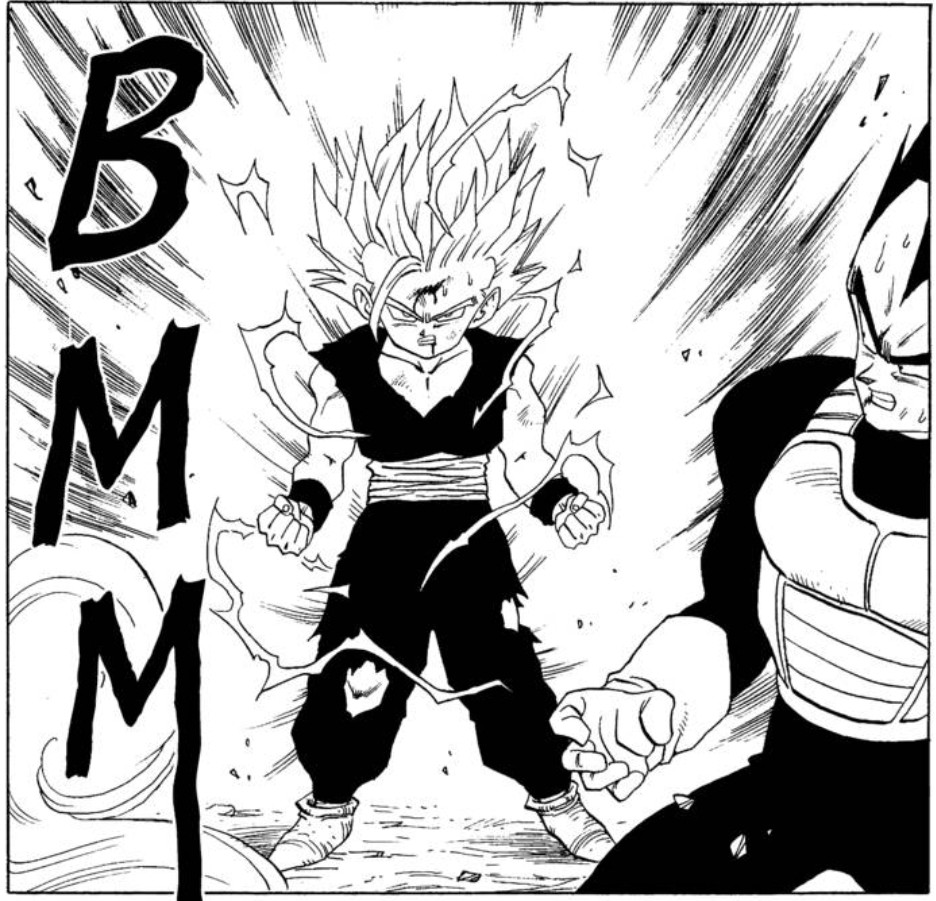
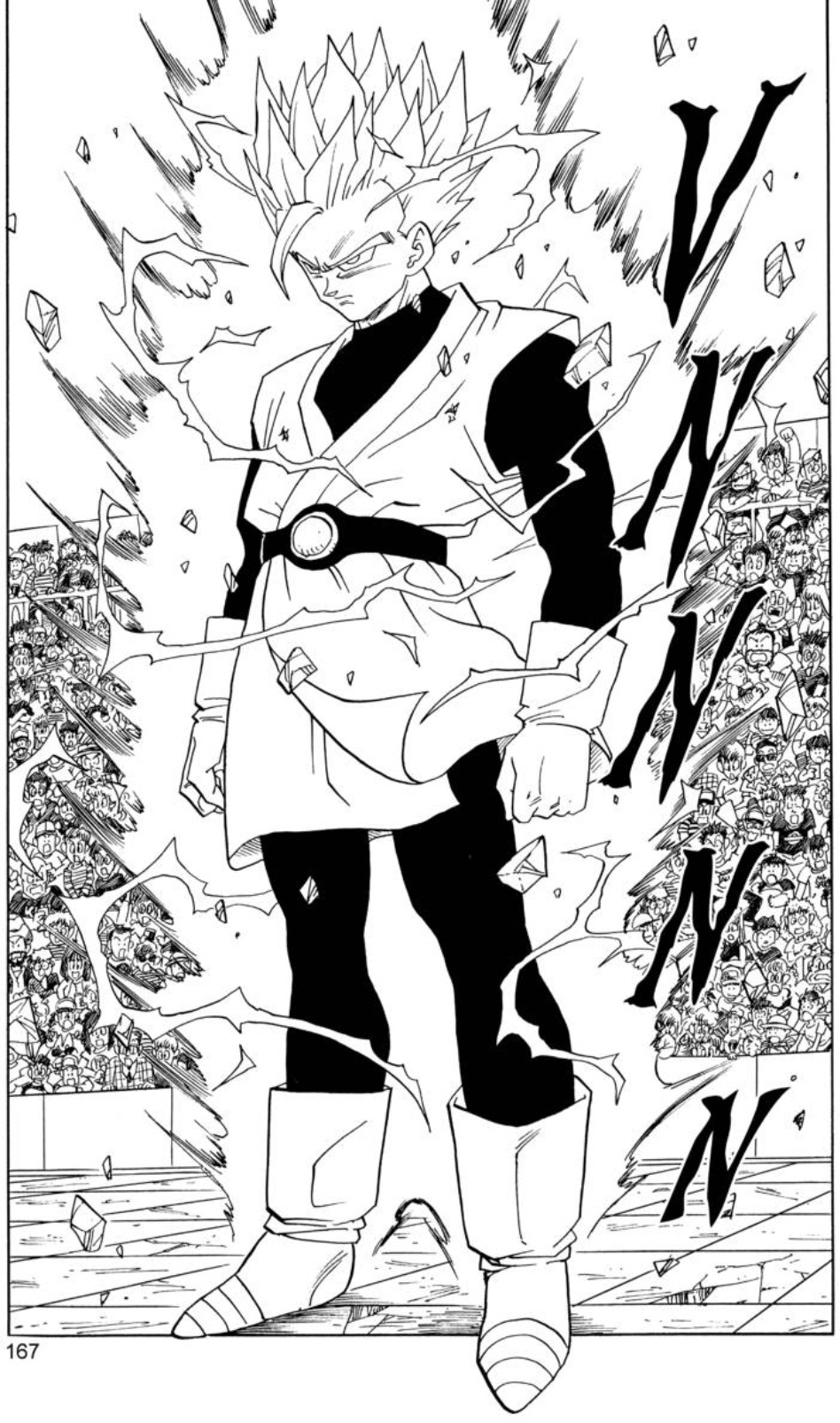
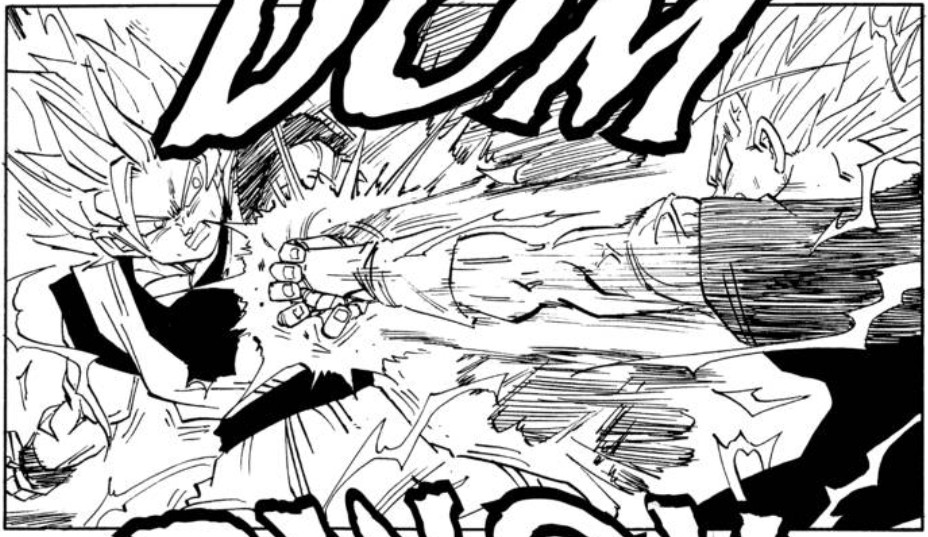
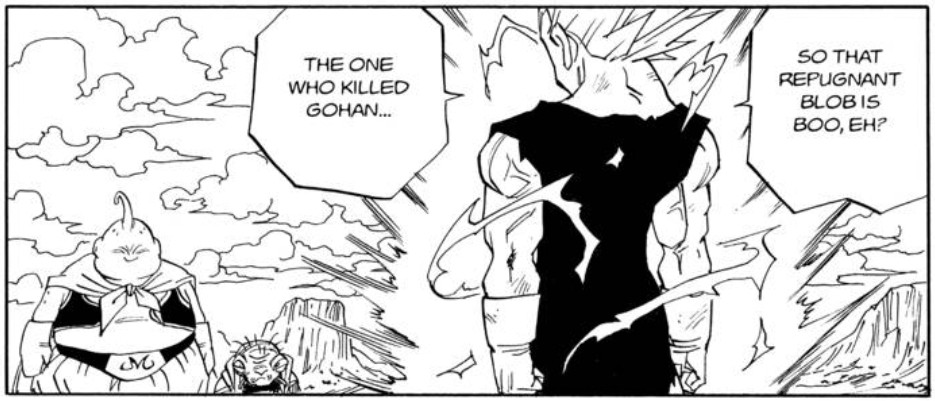
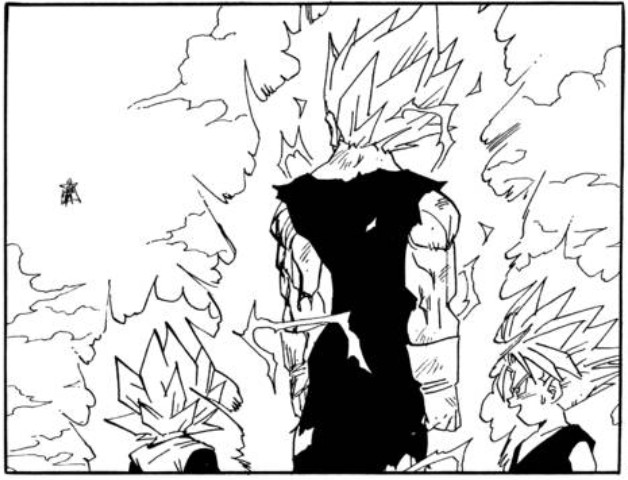
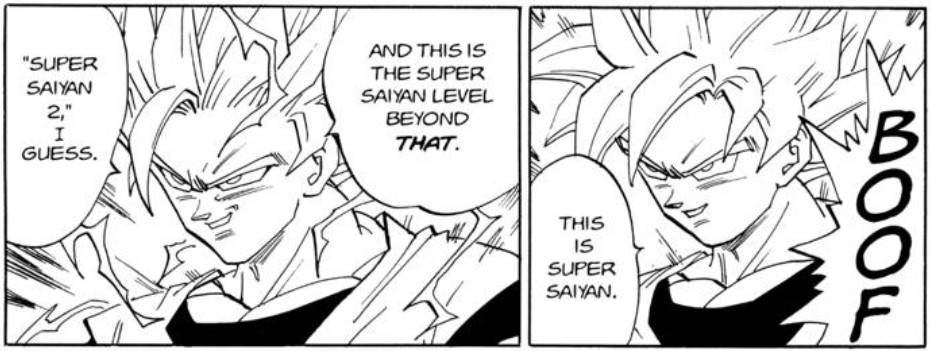

And here is how Toyotarō depicts Super Saiyan 2. Take note of chapter 35 here, as it is the single example of a Super Saiyan 2 user not having sparks surrounding them.
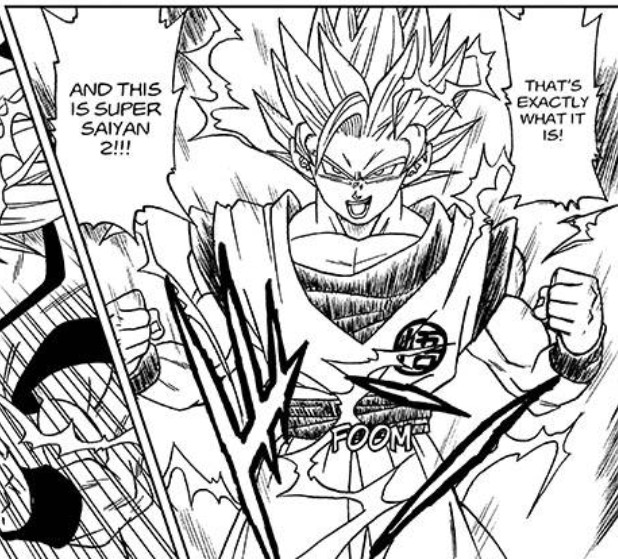
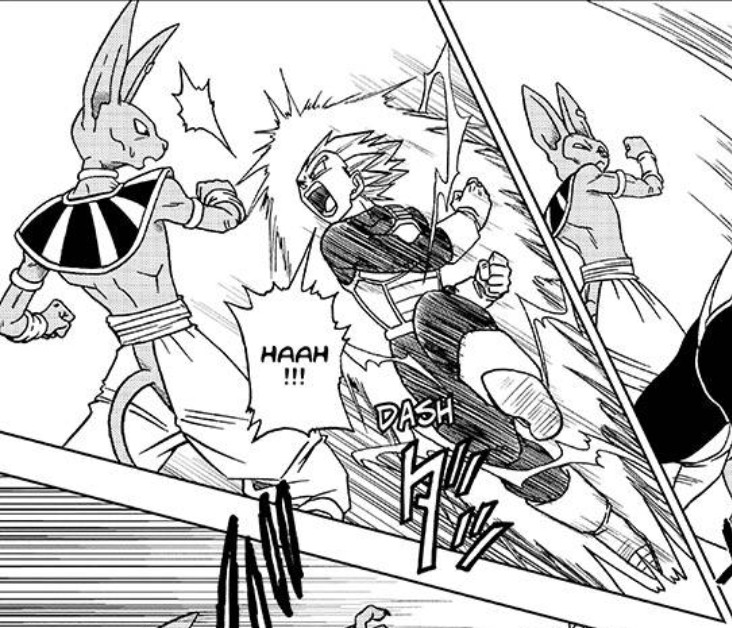
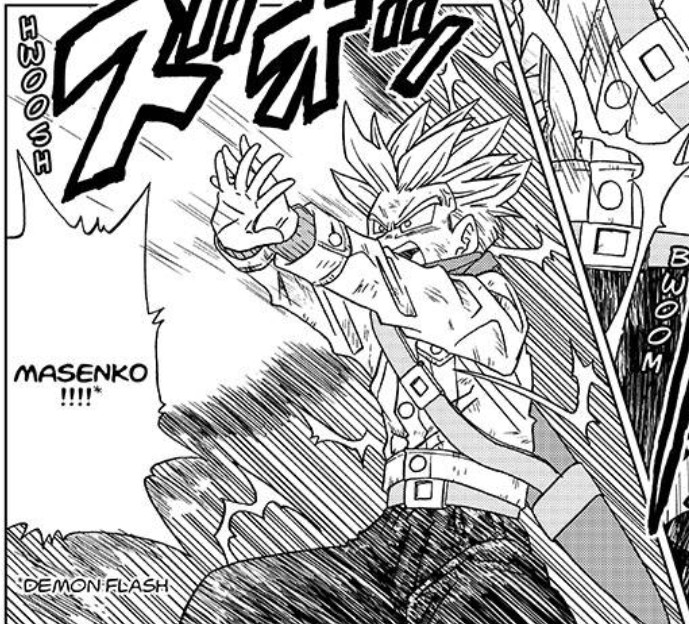
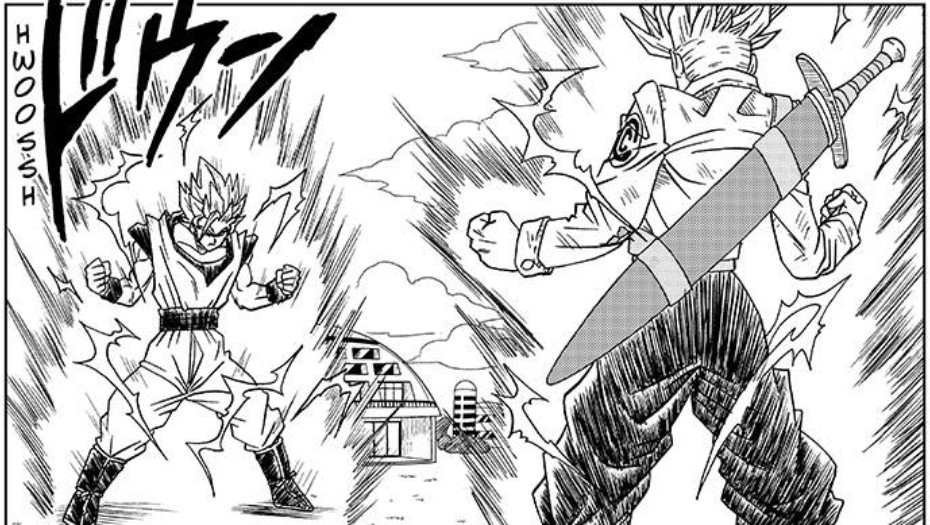
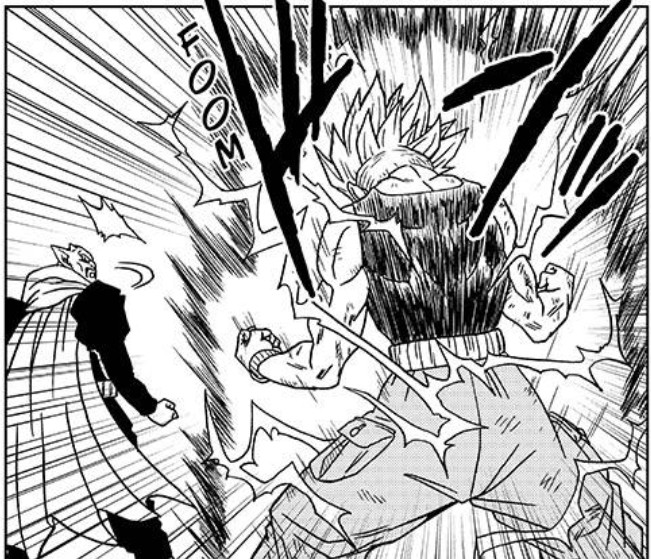

You may have noticed that I excluded certain pictures of Gohan, one of Vegito, some of Goku Black from Dragon Ball Super chapters 19 and 20, Neko Majin, Dragon Ball: Yo! Son Goku and His Friends Return!!, and Dragon Ball: Episode of Bardock. As for Gohan, there is a debate over whether he was using Super Saiyan 1 or 2 against Dabura, against Fat Buu, and while pulling out the Z Sword. This particular debate likely originates from the Chōzenshū and Daizenshū entry on Dabura, which states that he “fought evenly with Super Saiyan 2 Gohan.” However, this ignores the entry on Dabura’s sword, which says it was “used against Gohan after he transformed into a Super Saiyan.” There is only one confirmed instance of Gohan using Super Saiyan 2 during the Buu Saga, and that was in front of Kibito during the 25th Tenka’ichi Budōkai where he says, “Super Saiyan… Shall I go even beyond that wall and become an even greater Super Saiyan?” Gohan does not say “Super Saiyan 2” here because it wasn’t officially named until Goku names it in chapter 474 in front of Fat Buu and Babidi. A justification some fans use for arguing why Gohan was using Super Saiyan 2 against Dabura, etc. is that Gohan used it in front of Kibito and very little time passes (in universe) before he faces Dabura, so he should be able to tap into it again.
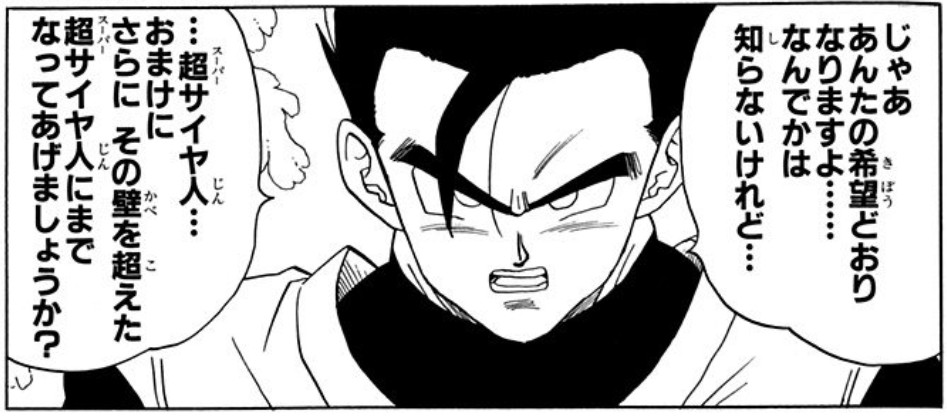

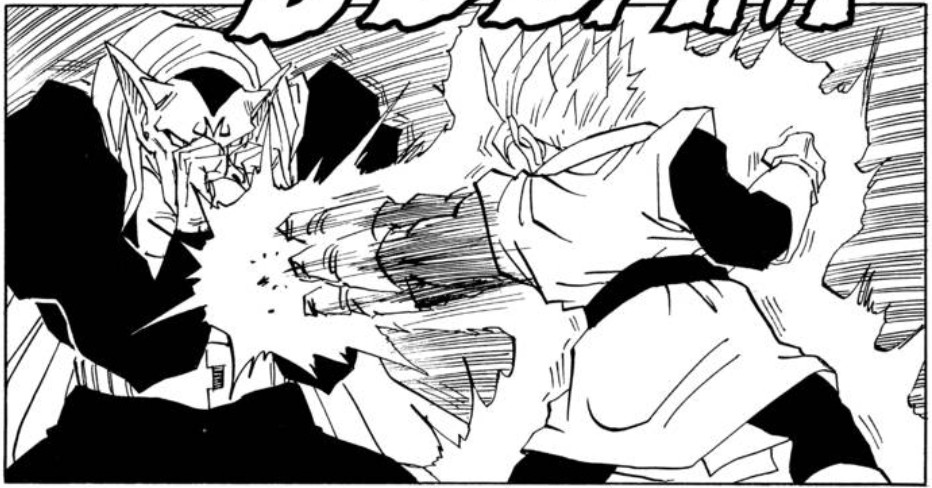
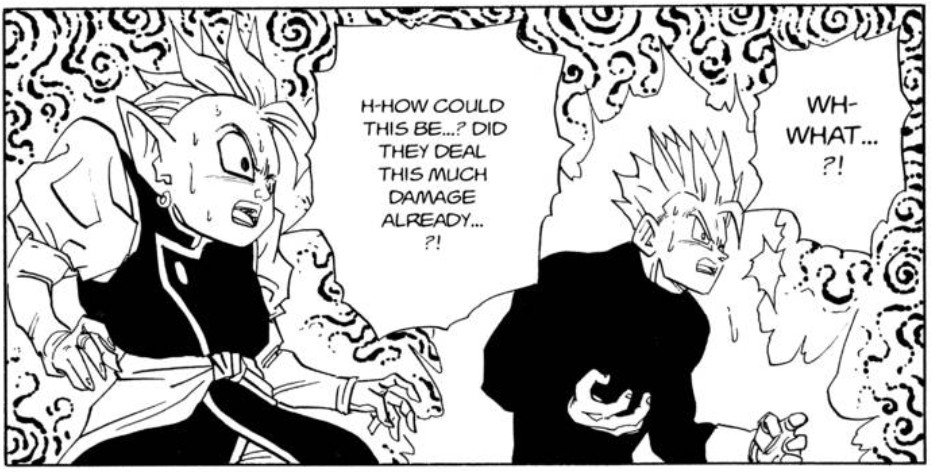


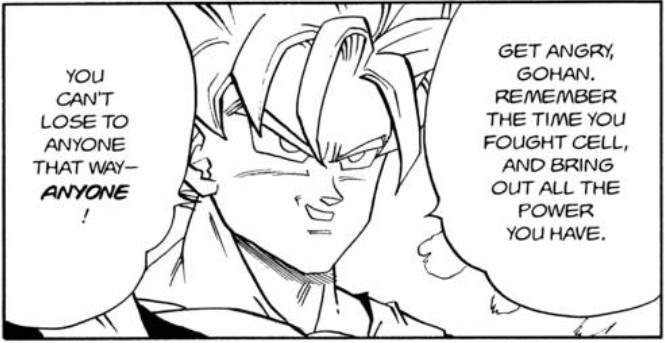
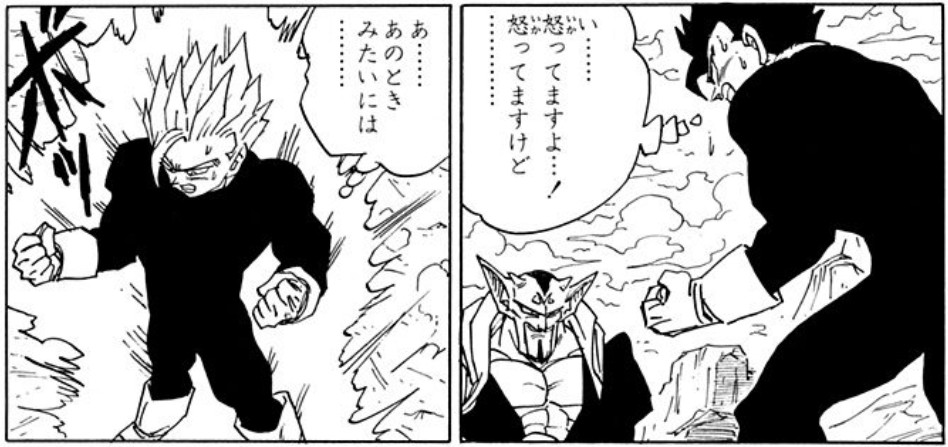
While it is solid reasoning that Gohan should have been able to tap into Super Saiyan 2 again after Kibito, the fact of the matter is this: (1) the Buu Saga does not follow solid reasoning, (2) the shape of the aura and the presence of electrical sparks are the defining features of Super Saiyan 2, and (3) the narrative actually supports Gohan not being able to become Super Saiyan 2. When Goku is leaving to fight Majin Vegeta, he tells Gohan, “Get angry, Gohan. Remember the time you fought Cell, and bring out all the power you have.” Gohan then thinks to himself, “I am angry…! I am angry, but… B-but not like that time [against Cell]…” So why then was Gohan able to turn Super Saiyan 2 in front of Kibito? The two most logical answers are (1) that he had just watched his girlfriend, Videl, get beaten bloody by Spopovich minutes before transforming into Super Saiyan 2 and he still had that anger inside of him, and (2) that Toriyama changed his mind after the Kibito incident about what forms Gohan should be able to access. To summarize a bit here: the Dabura entry in the Chōzenshū (and Daizenshū) is wrong.

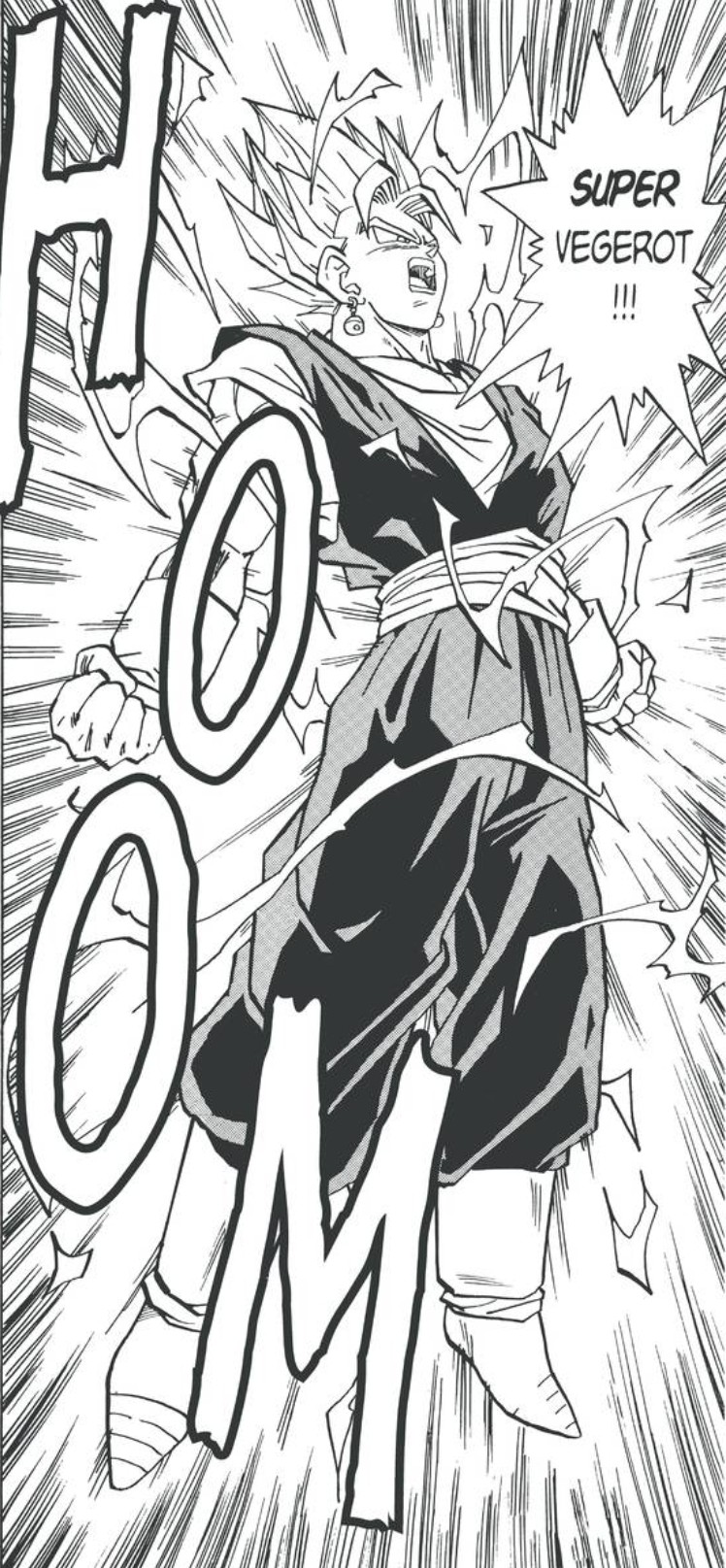
As for why I included Vegito, Goku Black, Goku in Neko Majin, Goku in Yo! Son Goku and His Friends Return!!, and Bardock in Episode of Bardock in the other paragraph, it’s because the people who argue that Gohan was Super Saiyan 2 point to them as proof that the sparks of electricity in the aura don’t matter. The previous two sets of pictures, which include Vegito, demonstrate that a single panel of a huge surge of energy when transforming does not disprove the overall trend of sparks = Super Saiyan 2, though. Additionally, there are 10 other panels of Vegito with an aura and none of them have sparks.
Toriyama wrote of Goku Black: “He can transform into a Super Saiyan like Goku, or into a slightly different-colored Super Saiyan than Goku.” Goku Black is as much a Saiyan as Captain Ginyu inside of Goku was a Saiyan which, according to page 18 of Sports Nippon: Dragon Ball Super: Broly, means they were not Saiyans at all. His transformations do not perfectly match Goku’s, either, because they are variant transformations like Broly’s. Goku Black’s Super Saiyan form adds thick dark lines around his eyes and sparks to the aura, and his Super Saiyan Blue form makes his hair pink rather than blue. These are differences caused by a Kaiōshin occupying a Saiyan’s body. A Kaiōshin naturally has access to god ki at all times. So yes, he can transform into a Super Saiyan like Goku, but it’s a transformation with some differences likely due to the interaction of Zamasu’s god ki and Goku’s normal ki.
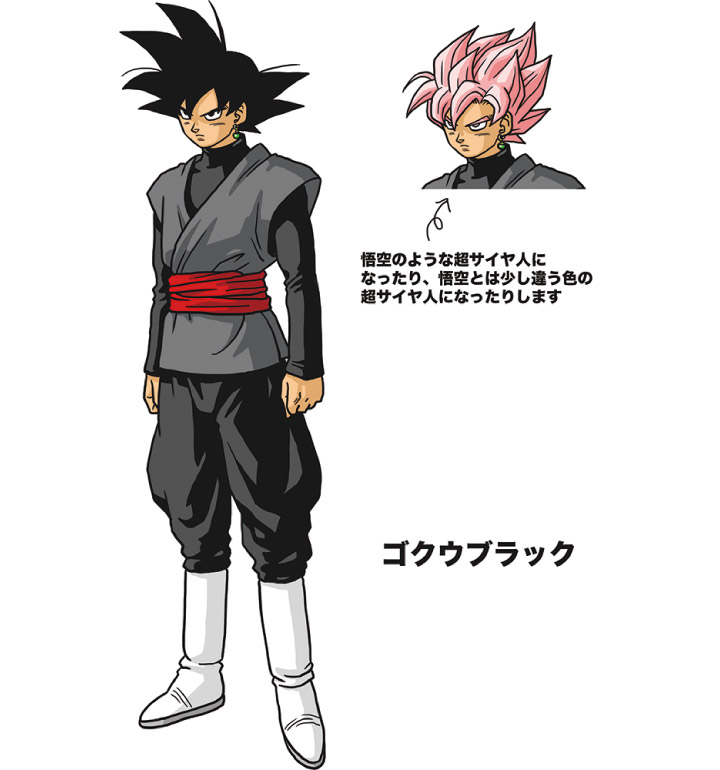
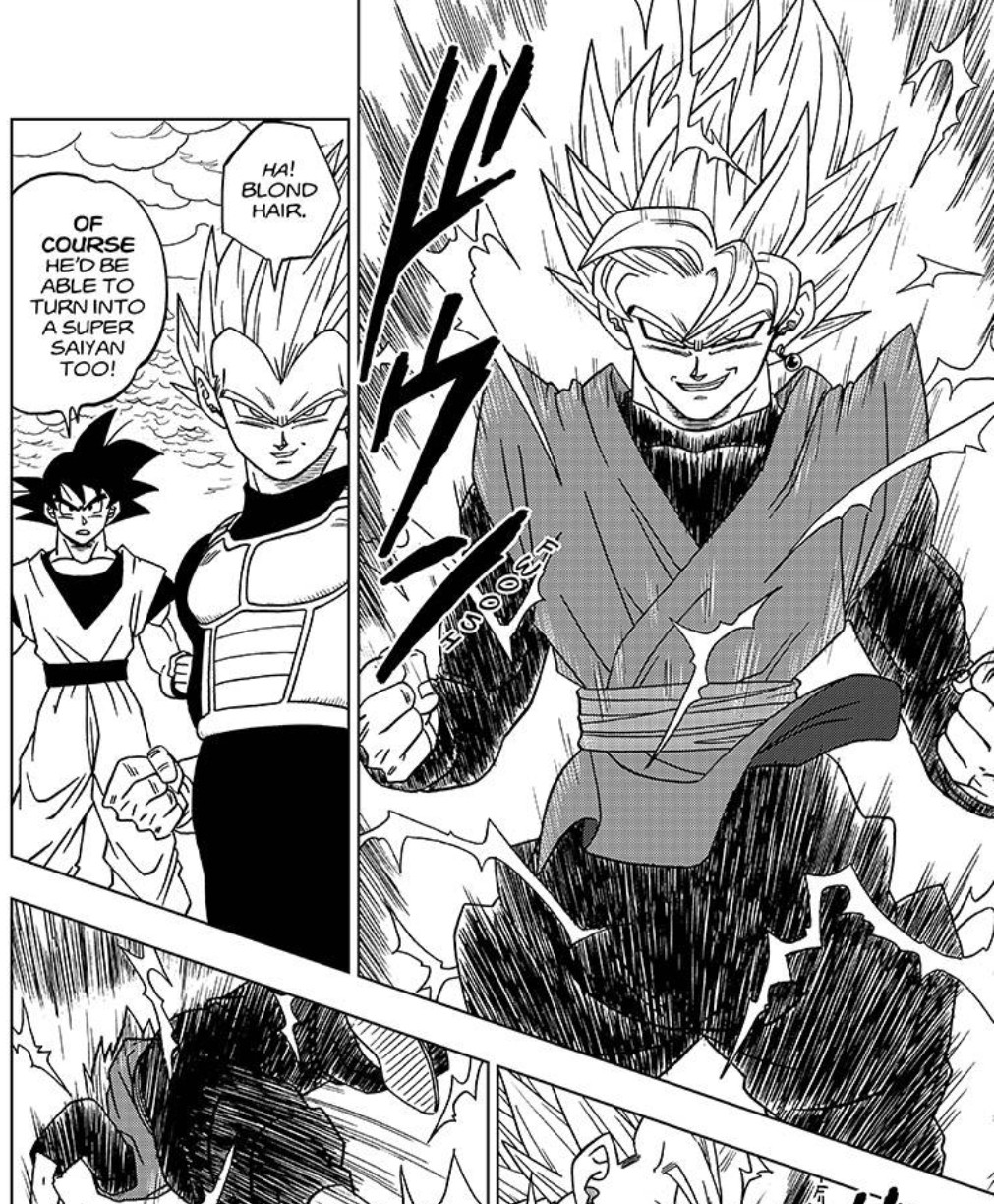
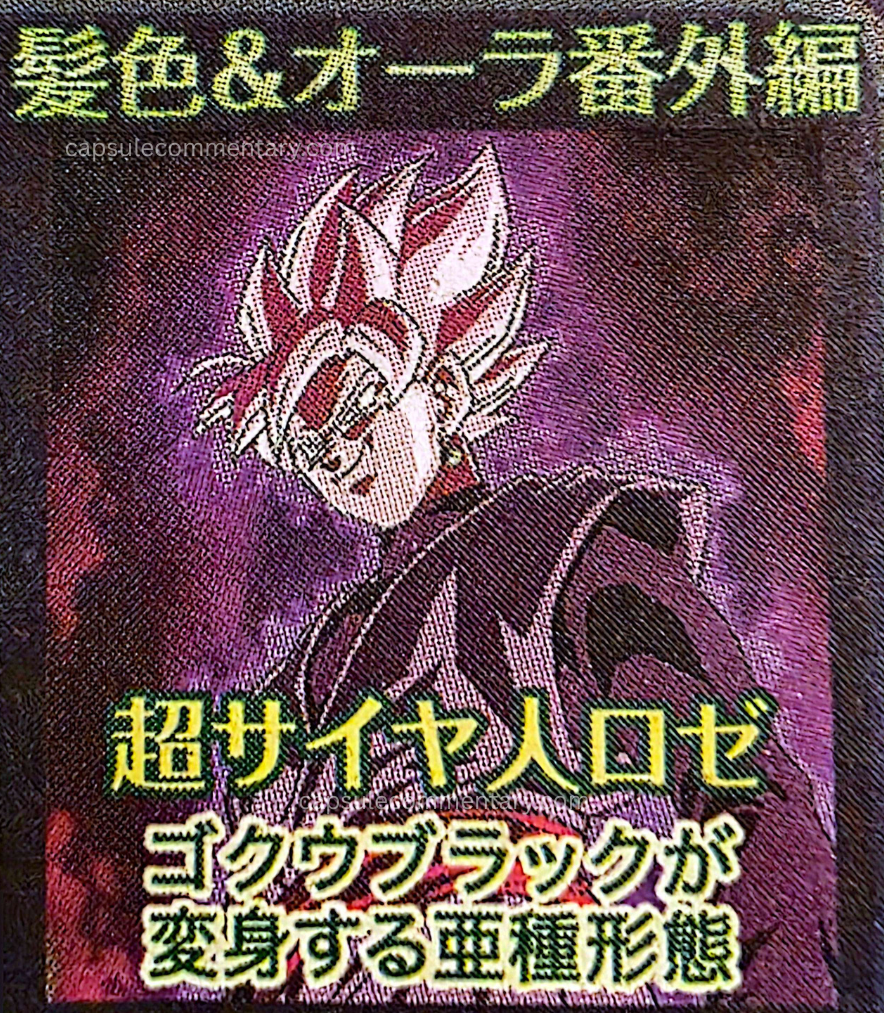
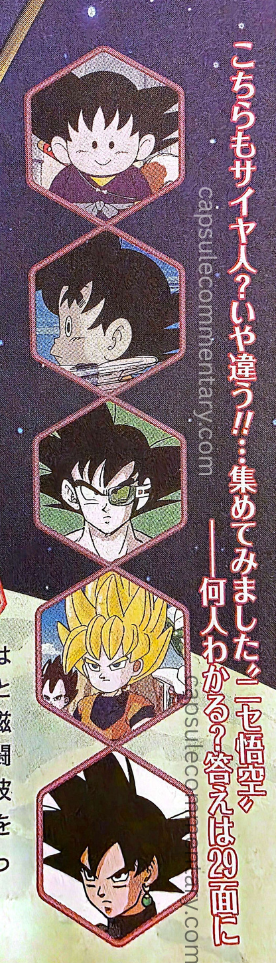
For Neko Majin, first and foremost, Neko Majin is not canon. It’s a gag manga that is separate from Dragon Ball. It therefore doesn’t have to follow the established rules or continuity of Dragon Ball. Page 32 of Chōzenshū 4 even explains that it takes place in a “parallel world” from Dragon Ball. Here are some examples of how it contradicts Dragon Ball:

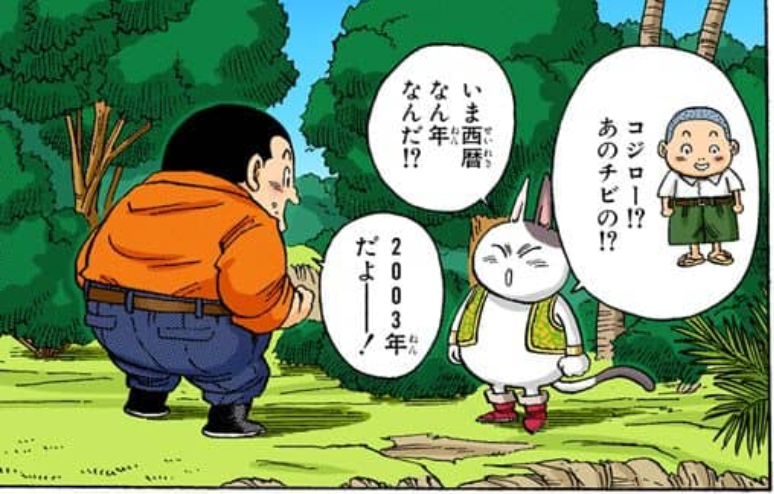
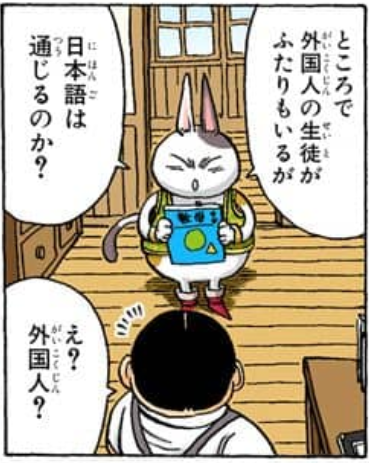
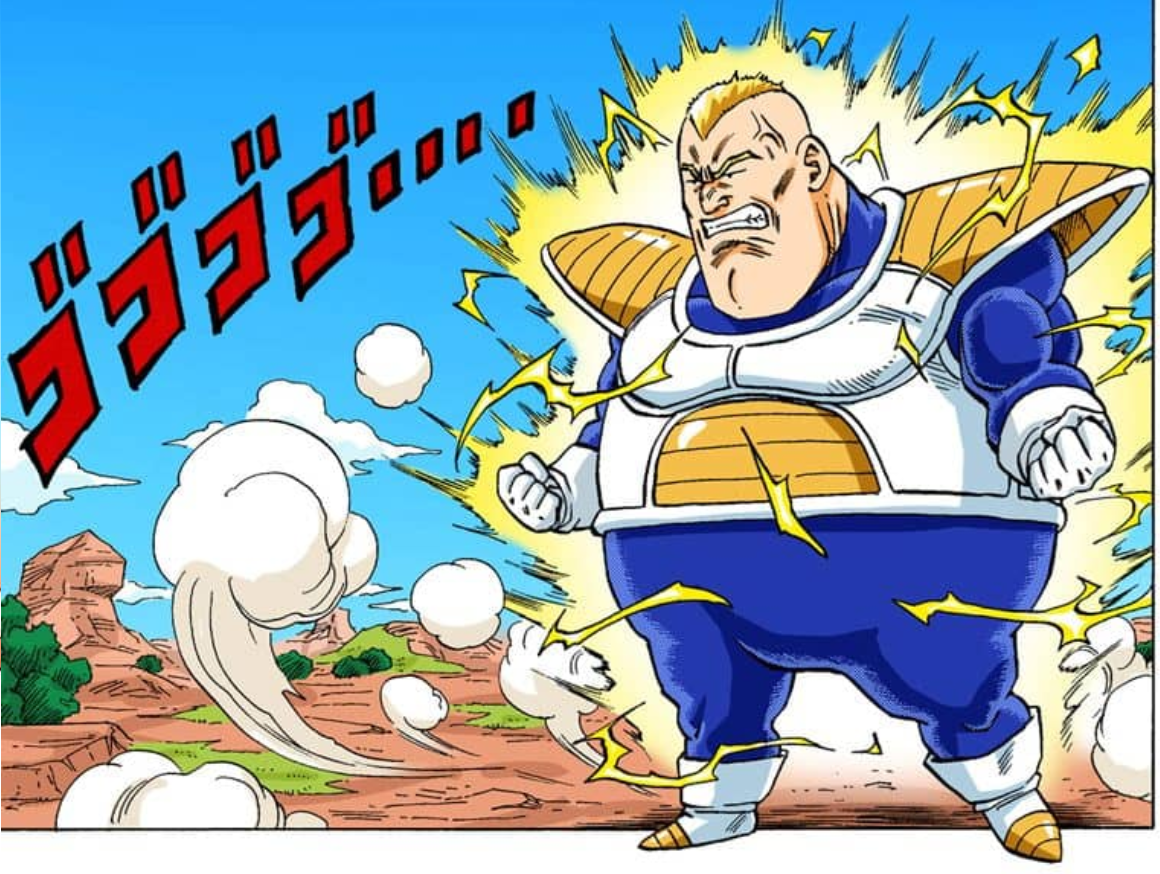
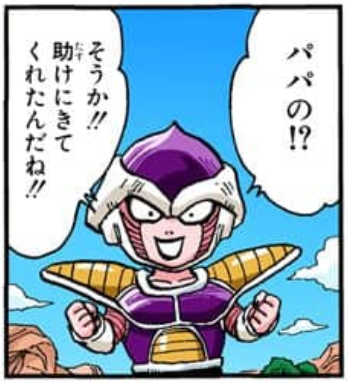
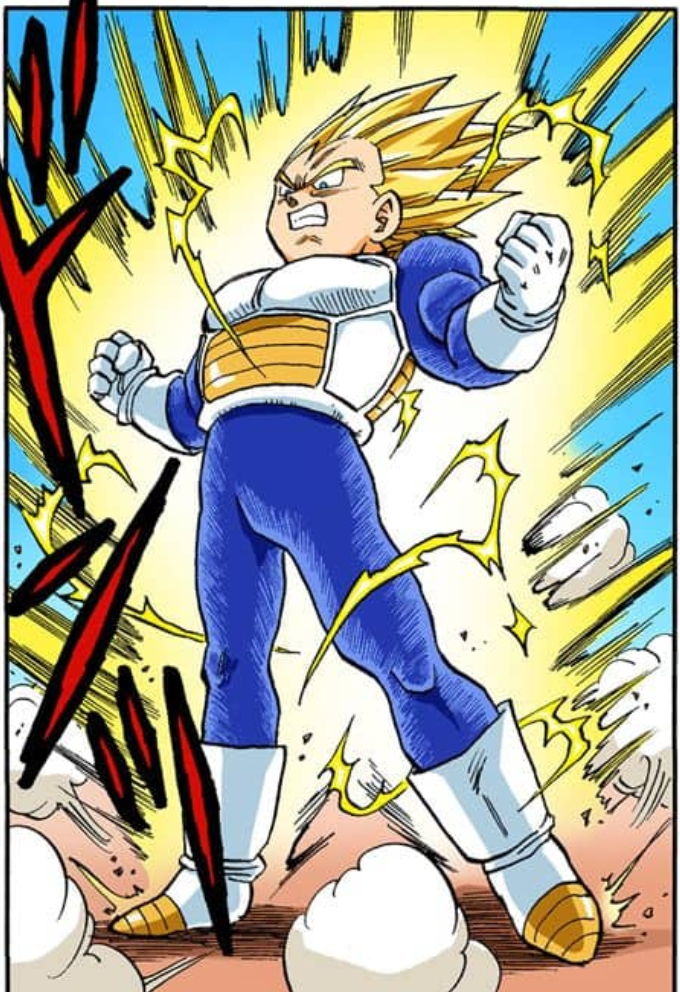
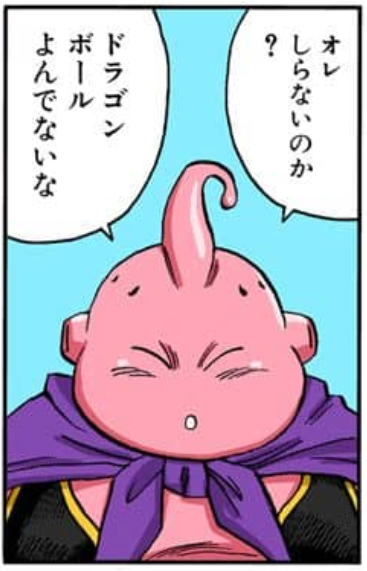

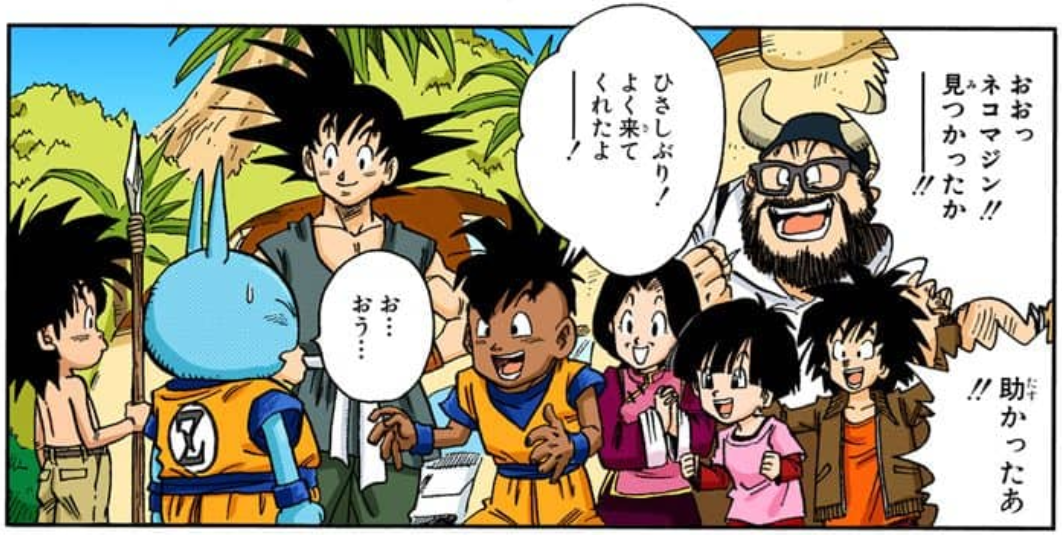
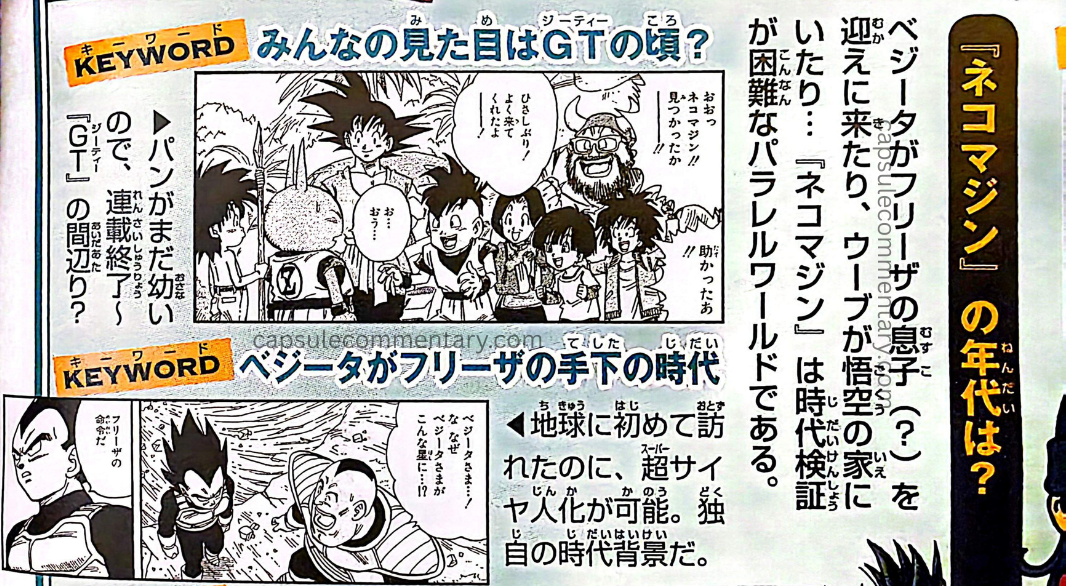
- The events of Neko Majin take place in the year 2003 instead of a Dragon Ball-esque year like “Age 785.”
- Neko Majin uses real world currencies like the yen and dollar instead of zeni. It also references real world countries, like Japan, which do not exist in Dragon Ball.
- Vegeta is still working for Freeza and wearing an outfit he didn’t wear until after he left Freeza’s service. At the same time, Good Buu exists and references the Dragon Ball manga, and Goku had apparently been training Uub for some time.
- Freeza has a son, Kureeza, who Vegeta knows in Neko Majin and who is never mentioned in Dragon Ball.
- Both Onio and Vegeta can transform into Super Saiyans while still working under Freeza—even though Freeza famously tried to exterminate the Saiyans to prevent this exact situation.
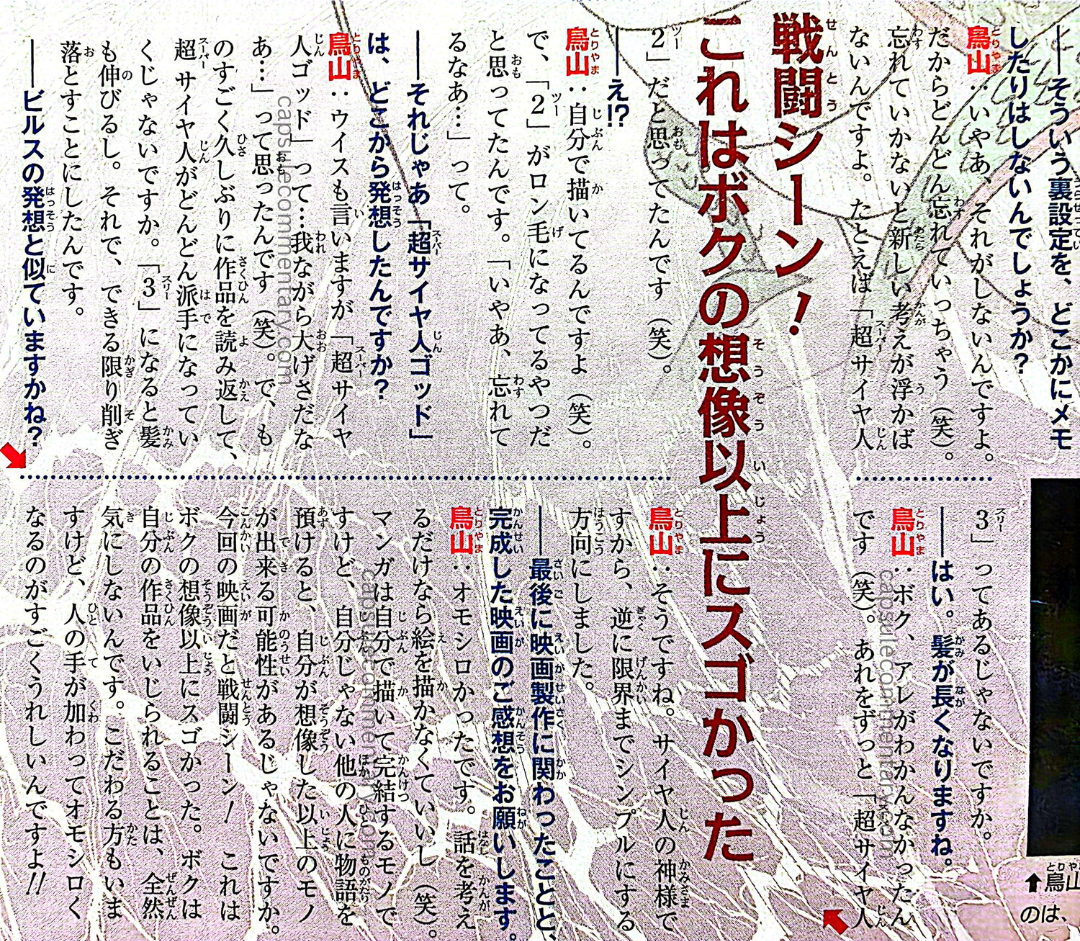
At some point between Toriyama’s work on the Daizenshū (mid-1995 to early 1996) and the production of Battle of Gods (around 2012), Toriyama realized he forgot what Super Saiyan 2 was. He admitted to this on page 35 of V-Jump May 2013 while promoting Battle of Gods. He seems to have been briefly reminded of Super Saiyan 2 while working on the Super Exciting Guides around 2008, but likely forgot it again soon afterward. This forgetfulness of Super Saiyan 2 is probably why the x2 multiplier given for it, as seen on page 62 of Dragon Ball: Super Exciting Guide: Story Volume, doesn’t make sense under close examination.
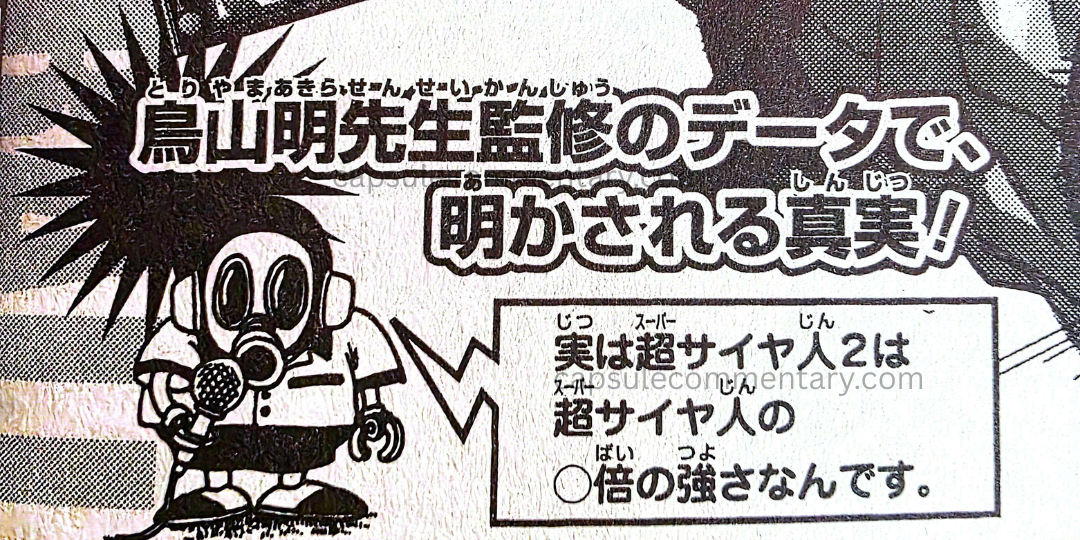
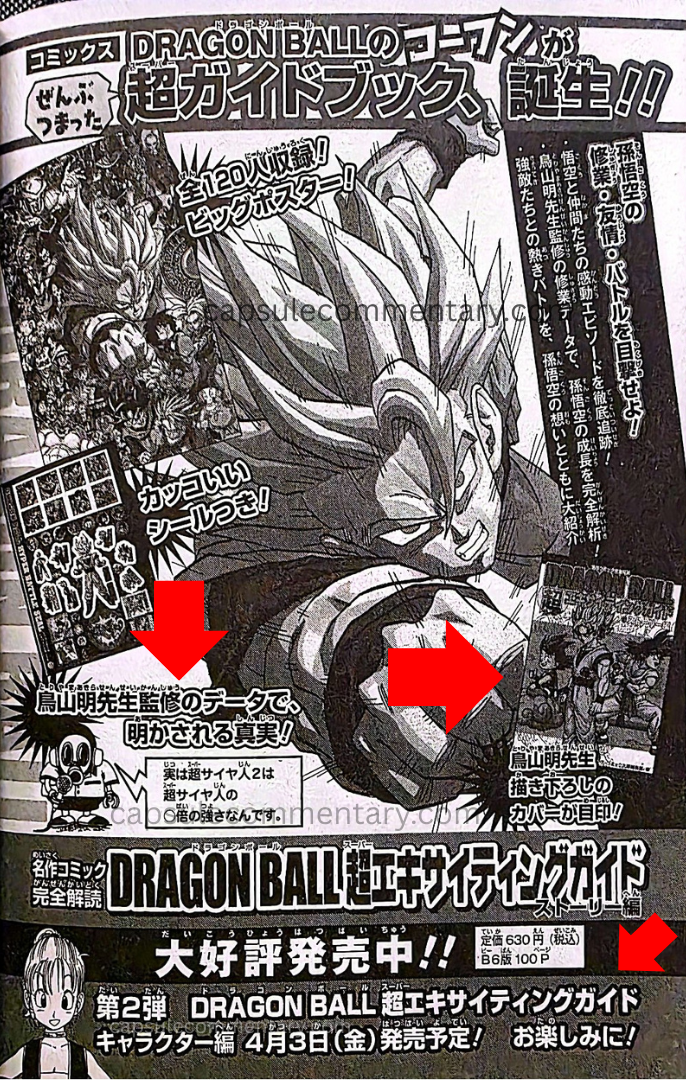
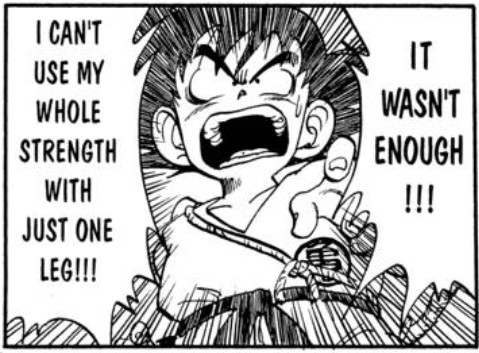
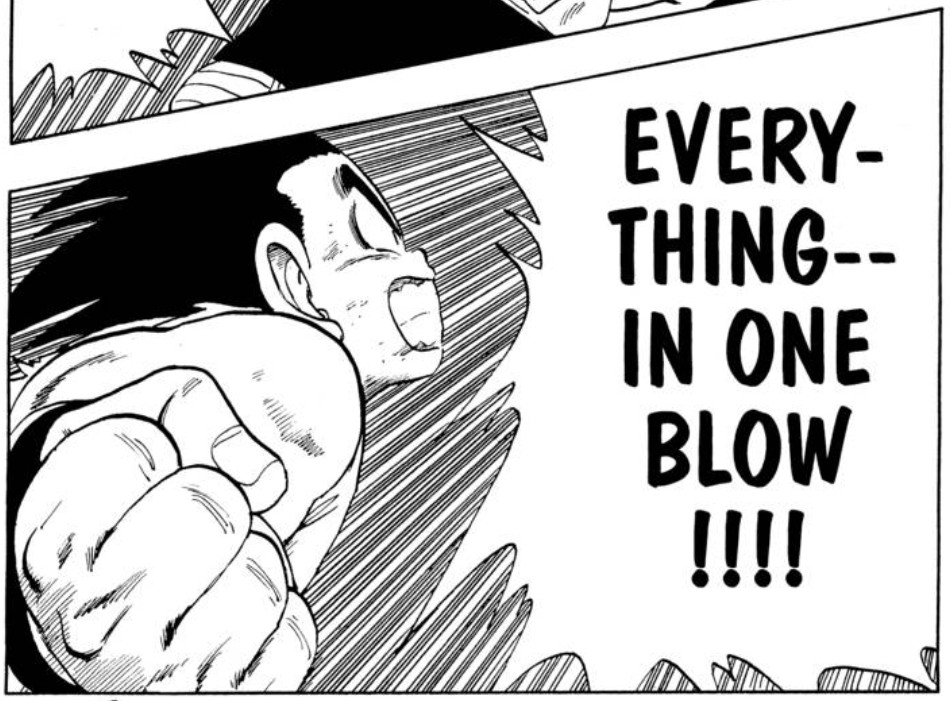
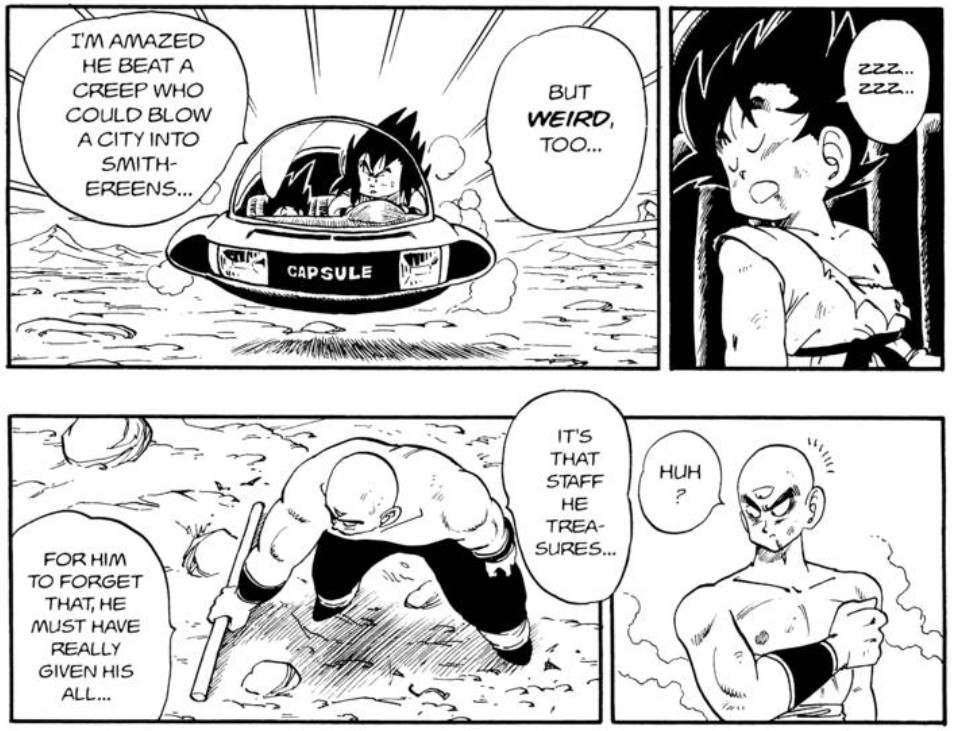
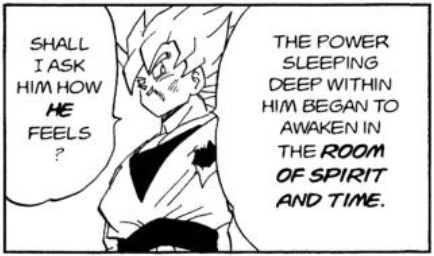
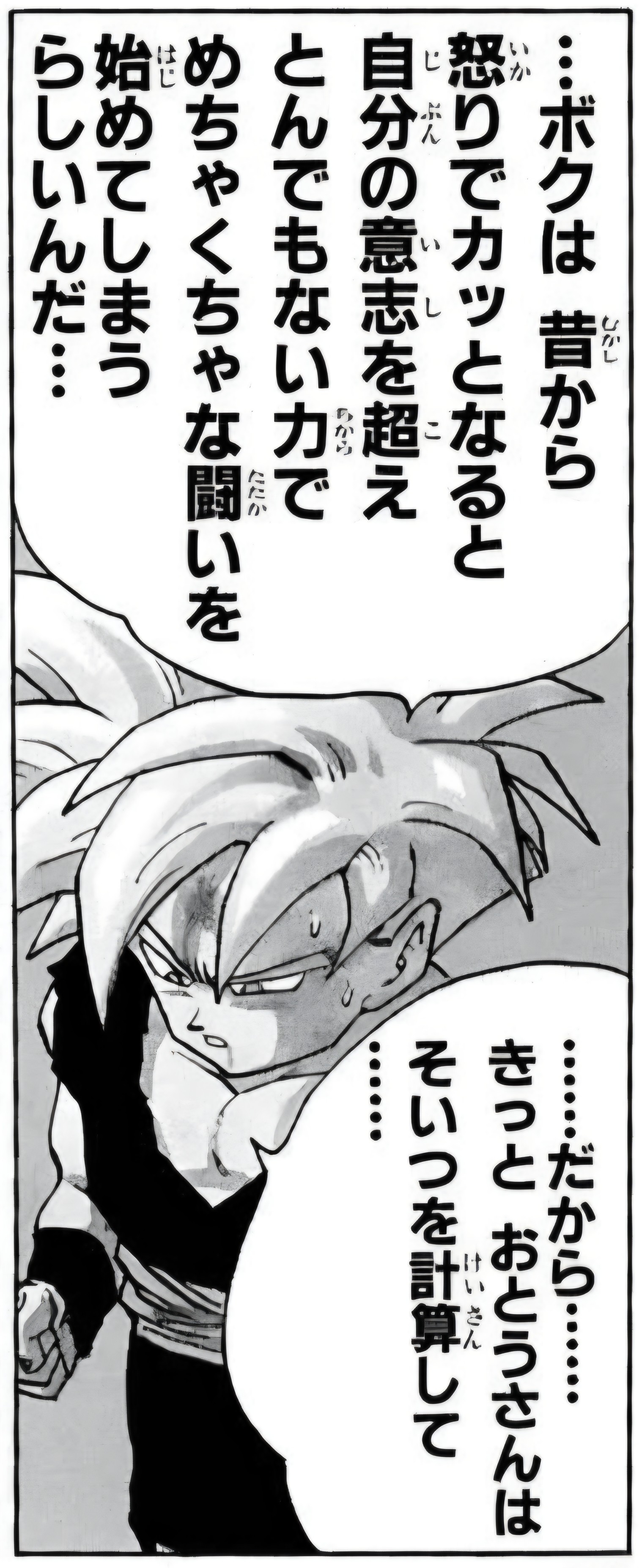
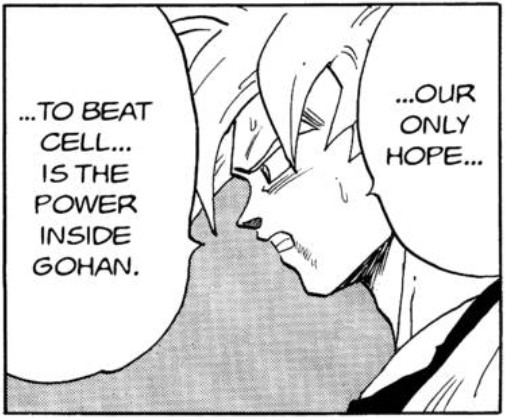
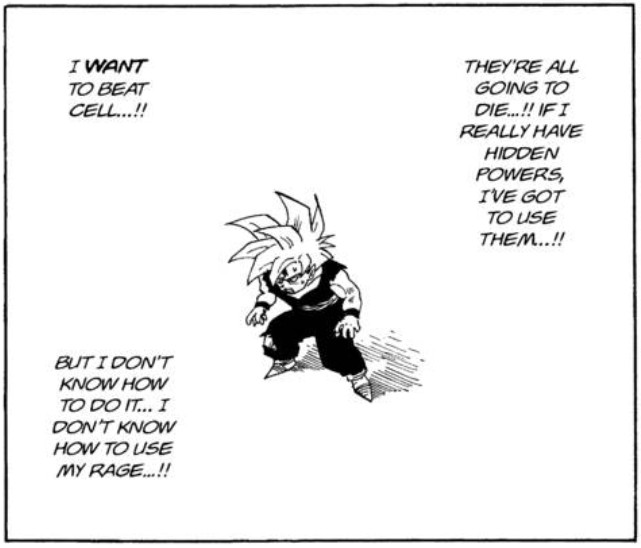
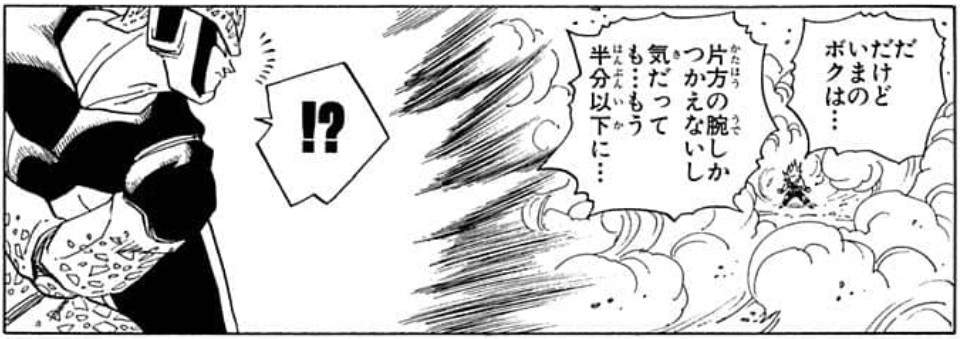
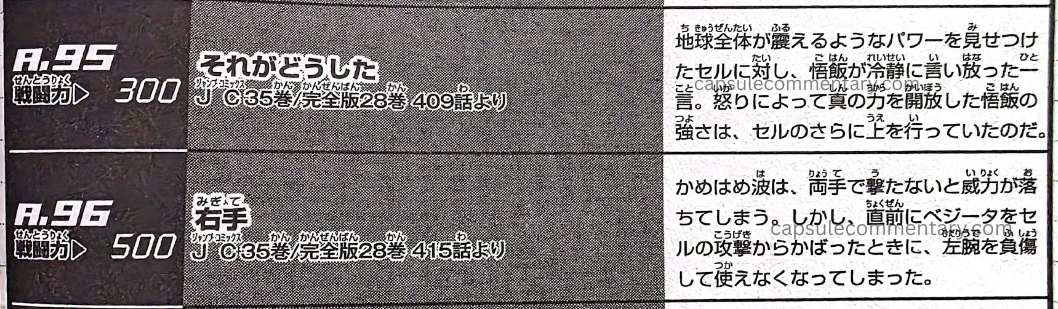
A x2 multiplier for Super Saiyan 2 doesn’t match the events of the Cell Games. Super Saiyan 1 Gohan was demonstrably weaker than Perfect Cell, yet an injured Super Saiyan 2 Gohan, who self-proclaimed he was at less than 50% power, was still able to kill (a distracted) Super Perfect Cell by expending his remaining ki in one massive push. Some fans argue that Goku giving Gohan a pep talk restored his ki to 100% somehow. Nothing within the manga suggests Gohan’s power was restored here, i.e., that Goku’s morale boost brought him back to 100% power. Gohan remained injured during the beam struggle and immediately collapsed after winning, showing that he simply burned through the ki he had left (<50%) rather than using a full potential 100%. He couldn’t even sit up by himself after he won. In fact, Gohan’s fight against Cell mirrors Goku’s fight against Piccolo Daimaō in many ways. After Piccolo Daimaō injures one of Goku’s legs, Goku similarly comments that he can no longer exert his full strength. At the end of the fight, he pours everything he has left into his final attack, and upon winning, he passes out in Yajirobe’s car.
![Dragon Ball chapter 415 page 10. "N-no...!! Just like I thought… he can’t win…!! Gohan’s ki is… w-weaker… [than Cell]"](https://capsulecommentary.com/wp-content/uploads/2026/02/1000048102.jpg)

Other fans like to argue that Super Saiyan 1 Gohan was holding back against Perfect Cell. These fans believe Super Saiyan 1 Gohan was holding back against Perfect Cell and must have been roughly in the range of Super Perfect Cell by working backward from the x2 multiplier. Essentially: if Super Saiyan 2 Gohan could defeat Super Perfect Cell at <50% power and Super Saiyan 2 is a x2 power-up, then an uninjured Super Saiyan 1 Gohan could have defeated Super Perfect Cell since <50% and x2 cancel out. This rationale relies entirely on the Super Exciting Guide multiplier created retroactively by Toriyama, who admitted in an interview conducted in V-Jump 5 years later that he had forgotten what Super Saiyan 2 even was. It also ignores that Cell needed to be distracted by Vegeta for Gohan to kill him and that Piccolo confirmed the injured Gohan was weaker than Cell twice. Chōzenshū 1, Chōzenshū 2, and Dragon Ball Forever also confirm that Gohan only surpassed Cell once he became Super Saiyan 2. Chōzenshū 1 (Daizenshū 2) even suggests Goku contributed to the Kamehameha that killed Cell, and that Super Perfect Cell was stronger than Gohan even without the arm injury. I personally have not seen any fans argue this, but one could also work backwards from Dabura to try and debate Gohan’s power. Perhaps I will research the power dynamics surrounding Dabura and Cell (and therefore Broly) eventually, as one of my patrons on Patreon also wants me to. However, this section is already deviating too far off-topic as it is.

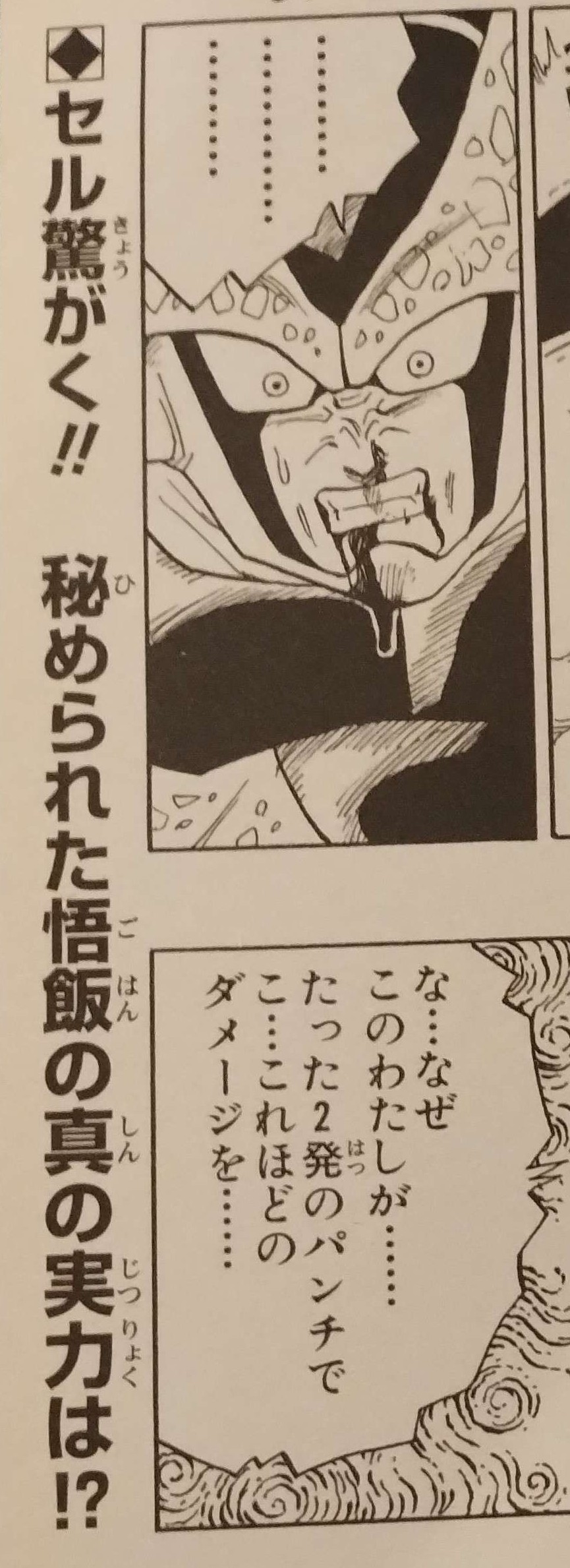

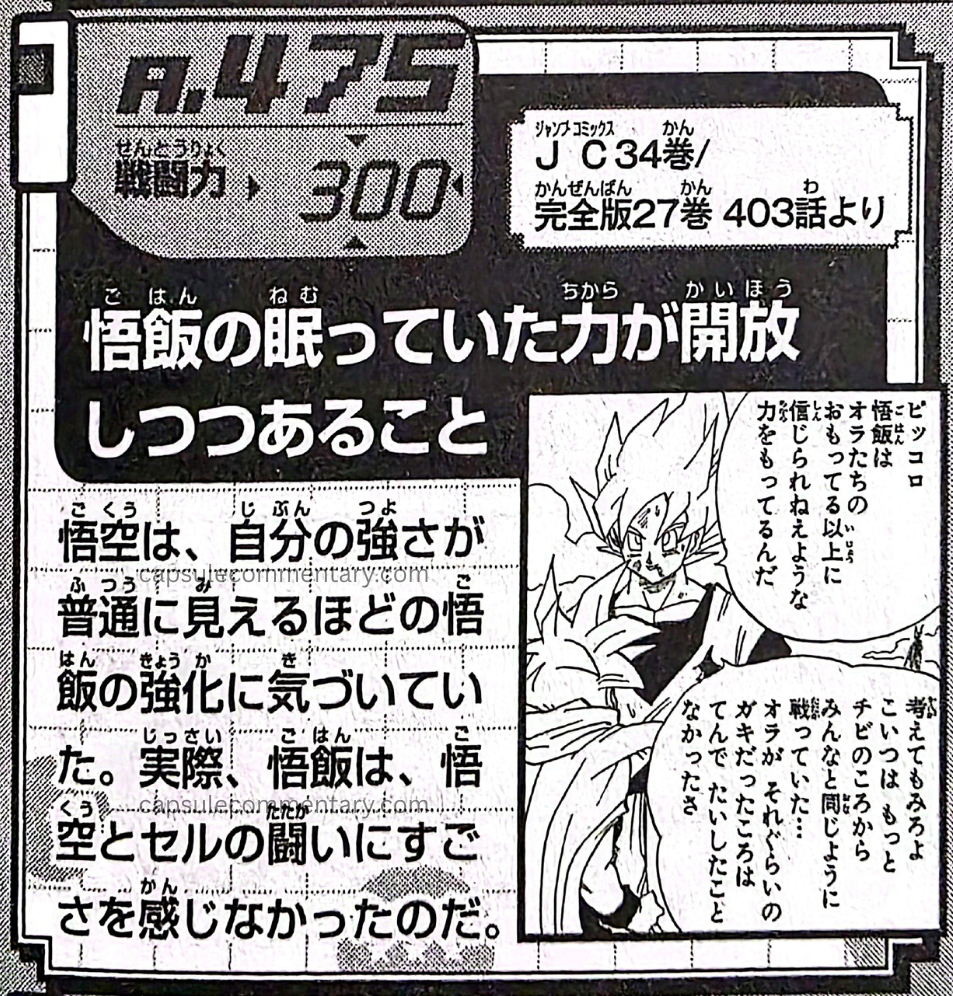
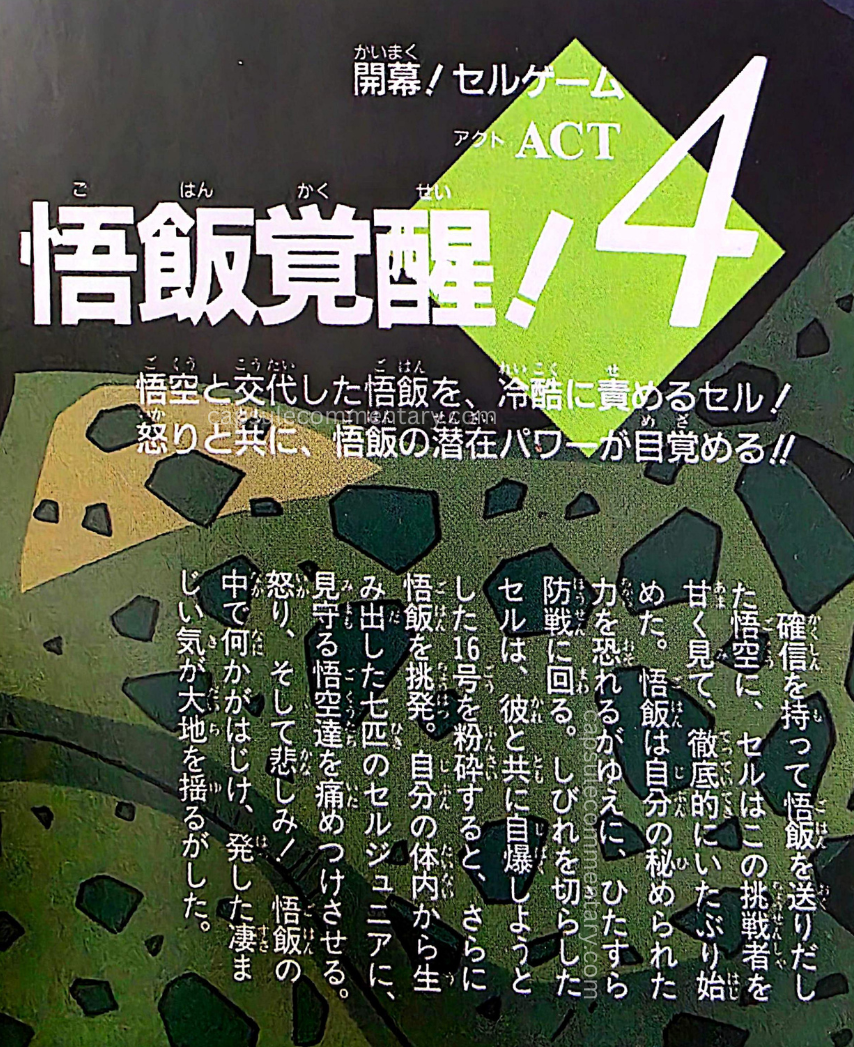
Goku’s entire gambit during the Cell Games was that Gohan would unlock Super Saiyan 2 (before it was officially named as such) by adding his rage boost on top of Super Saiyan 1, and be able to defeat Cell because of that. If Super Saiyan 1 Gohan was already as strong as the fans who work backwards from the x2 multiplier make him out to be, there would have been no need for #16, Goku, and Future Trunks to die, no reason for Gohan to watch helplessly as the Cell Juniors tortured his friends, and no need for the transformation at all, frankly. In fact, the entire encounter between Cell and Super Saiyan 1 Gohan was both of them waiting for the explosive power of Super Saiyan 2 to emerge from Gohan, i.e., Gohan’s true power. Super Saiyan 1 is never once presented as being adequate enough to win. Because of this, it seems much more likely that Toriyama confused Super Saiyan 2 with Super Saiyan Grade 2 when he gave the x2 multiplier. After all, Grades 1, 2, 3, and 4 cannot all be the same x50 multiplier when we know each is progressively and significantly stronger than the last.



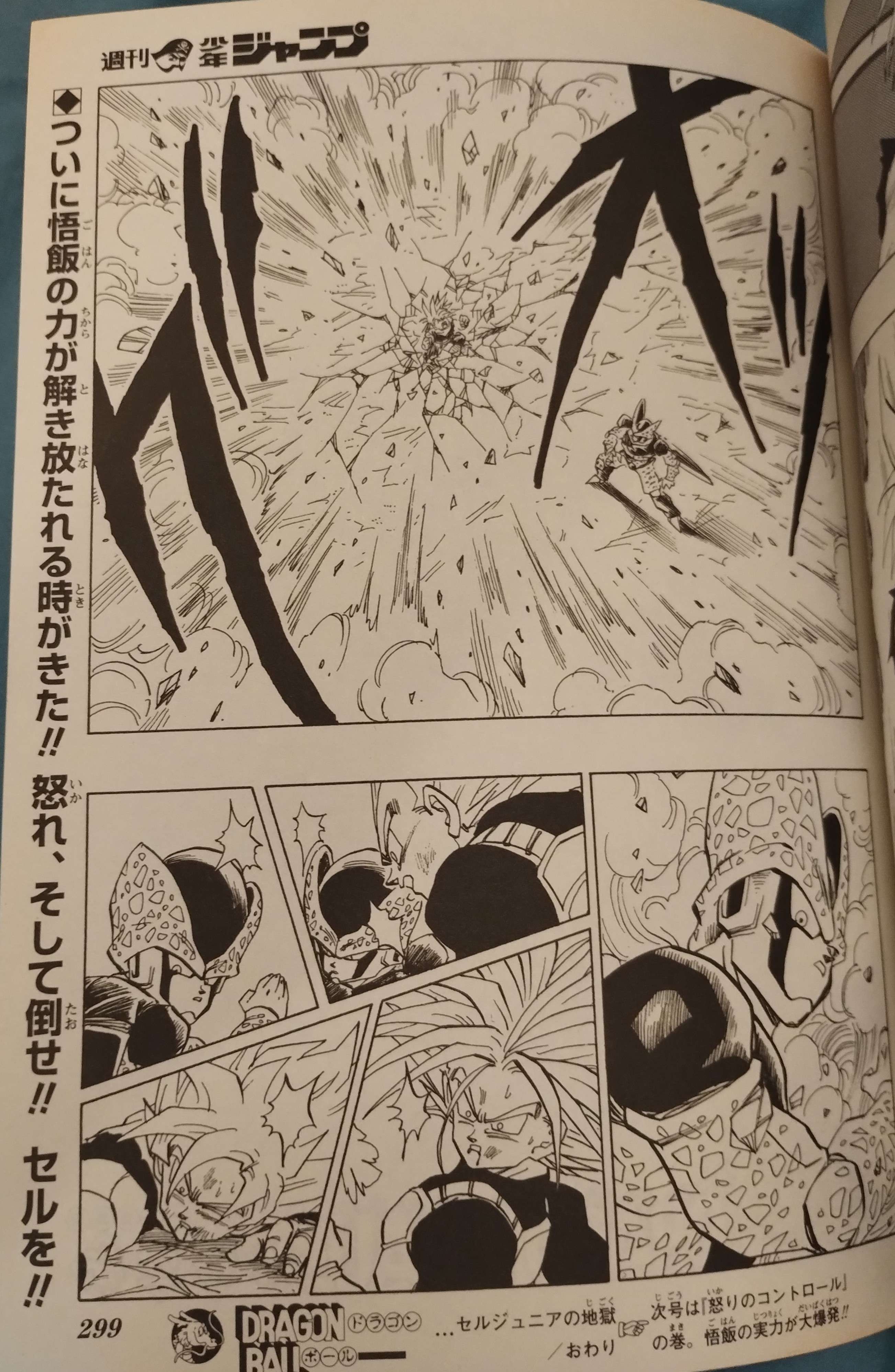

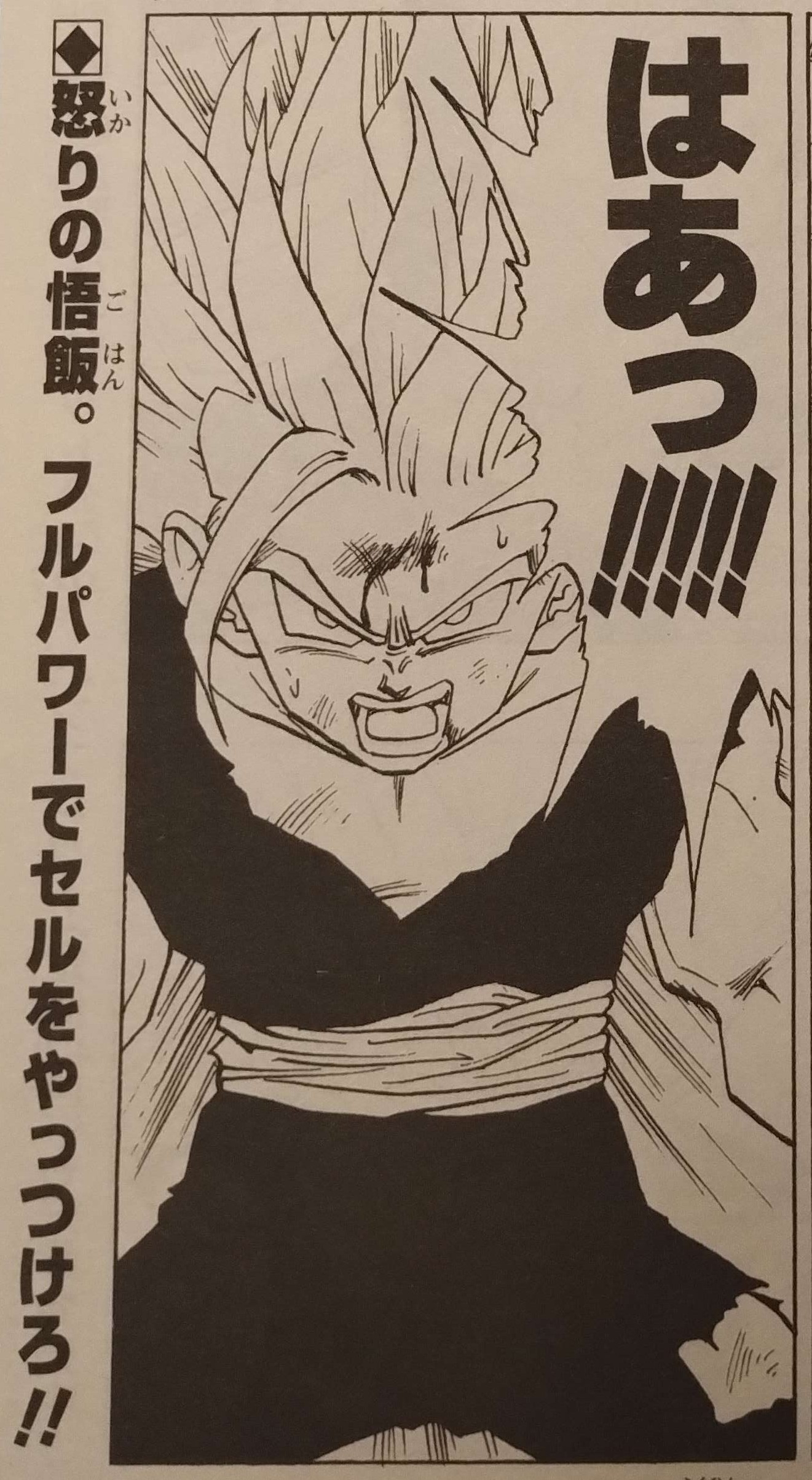
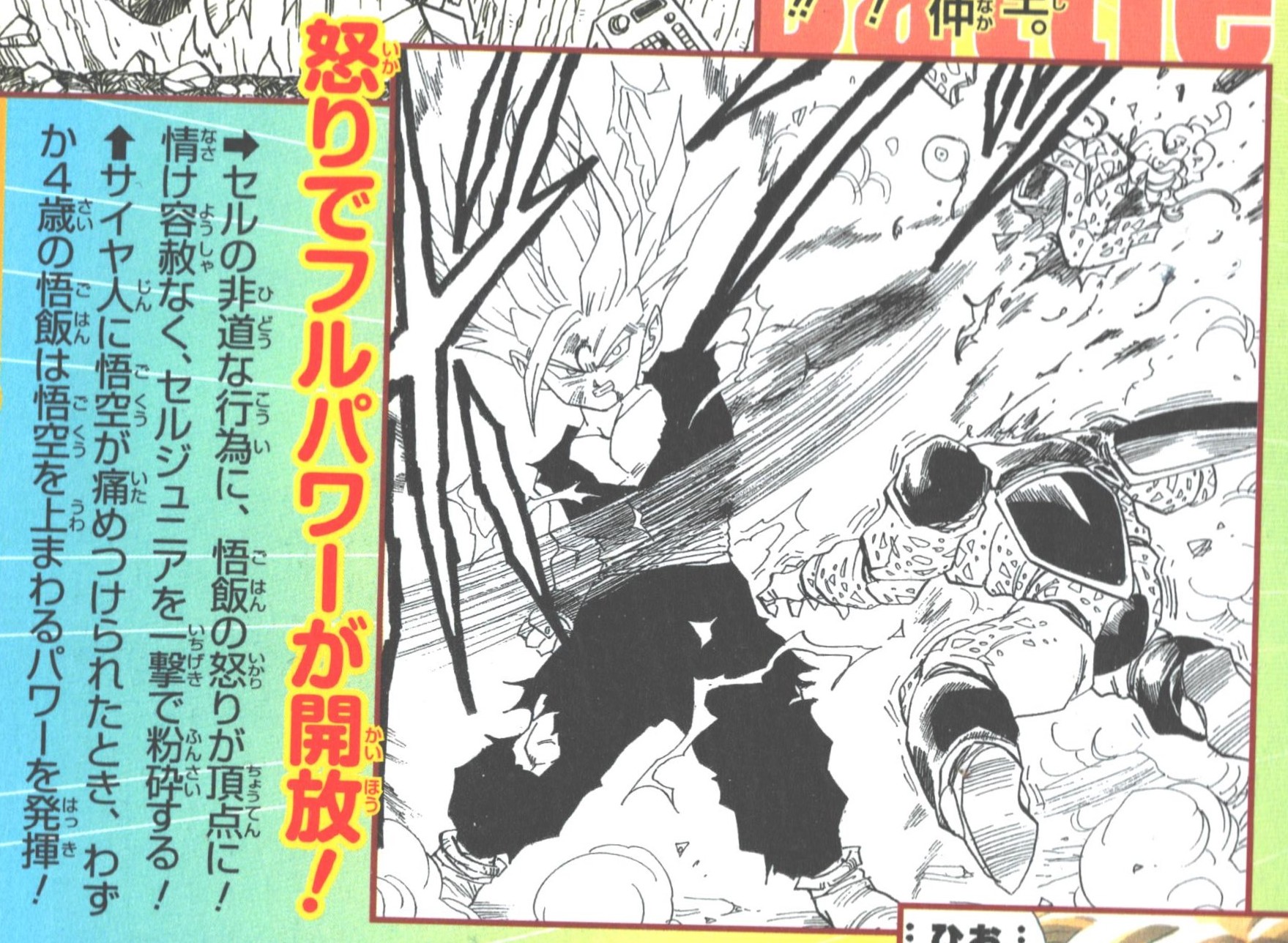
More to the point now, when Episode of Bardock, Neko Majin, and Yo! Son Goku and His Friends Return!! (hereafter abbreviated as “YSG”) were being created, it was during the time period when Toriyama had forgotten what Super Saiyan 2 was. The timeline looks like this:
- 1993: Movie 8 is released.
- 1994: Movies 10 and 11 are released.
- 1995 – 1996: Dragon Ball (the manga) and Dragon Ball Z (the anime) end. Toriyama contributes to the Daizenshū to some degree.
- 2001: Onio becomes some level of Super Saiyan with sparks in his aura in Neko Majin.
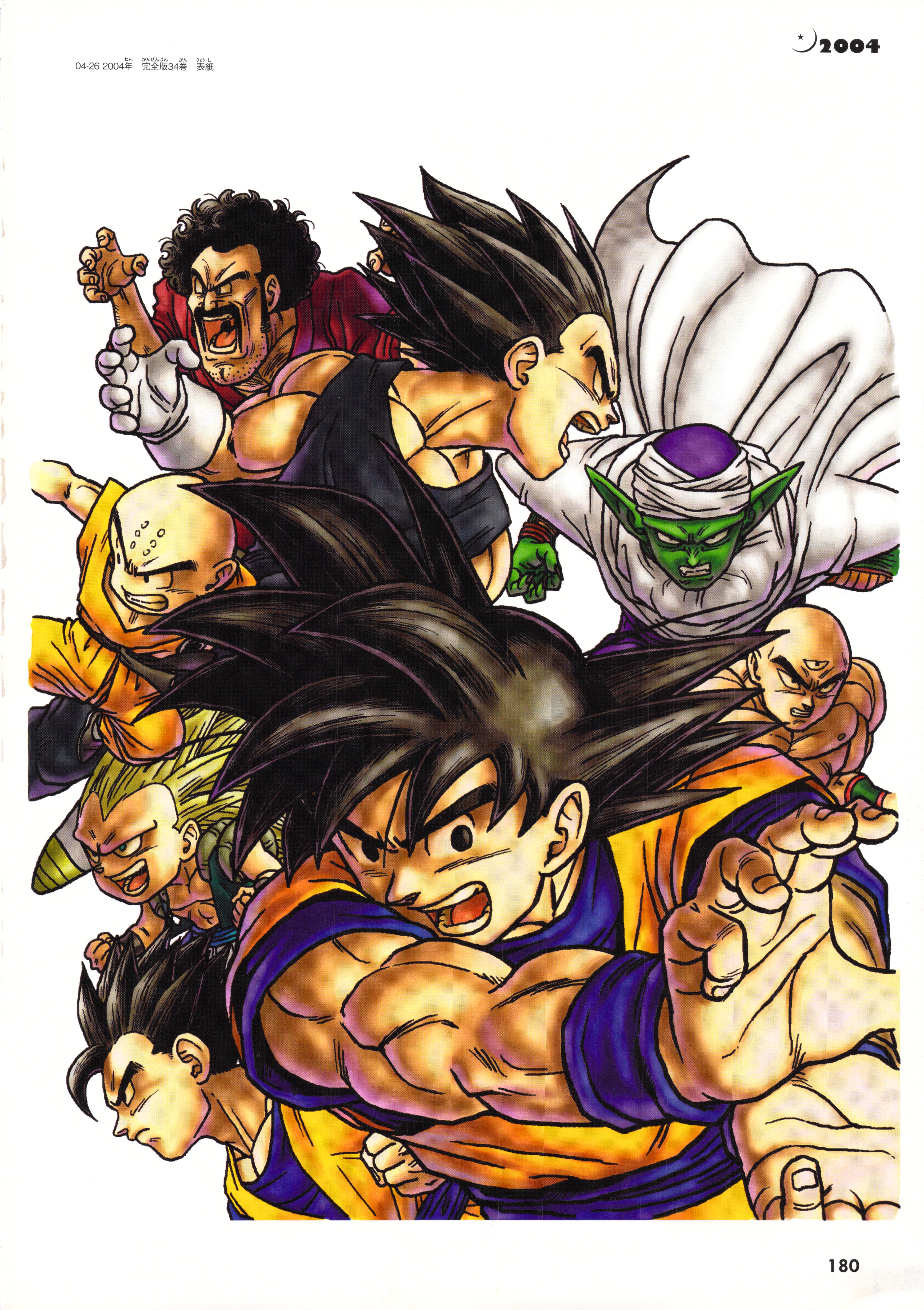
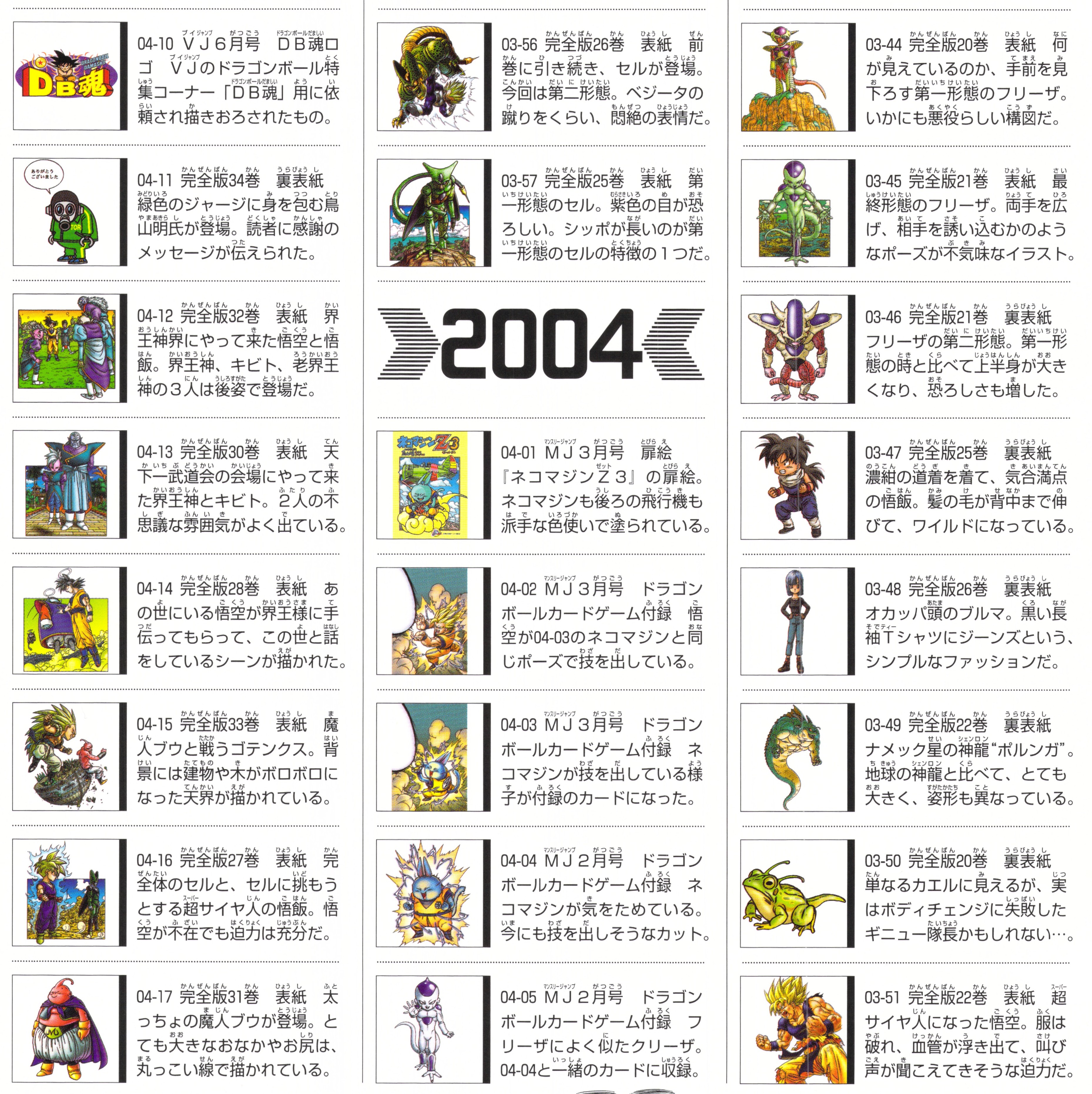
- 2002 to 2004: The Kanzenban are released. Toriyama redraws the ending to Dragon Ball and draws new cover art that only features Super Saiyan Grade 1, Super Saiyan Grade 2, Super Saiyan Grade 4, and Super Saiyan 3.
- 2003: Toriyama draws cover art for the July 2003 issue of V-Jump featuring Super Saiyan 1 Goku with sparks in his aura.
- 2004: Vegeta becomes some level of Super Saiyan with sparks in his aura in Neko Majin. Toriyama draws Goku in some level of Super Saiyan with sparks in his aura for the March 2004 issue of Monthly Shōnen Jump (not Weekly).
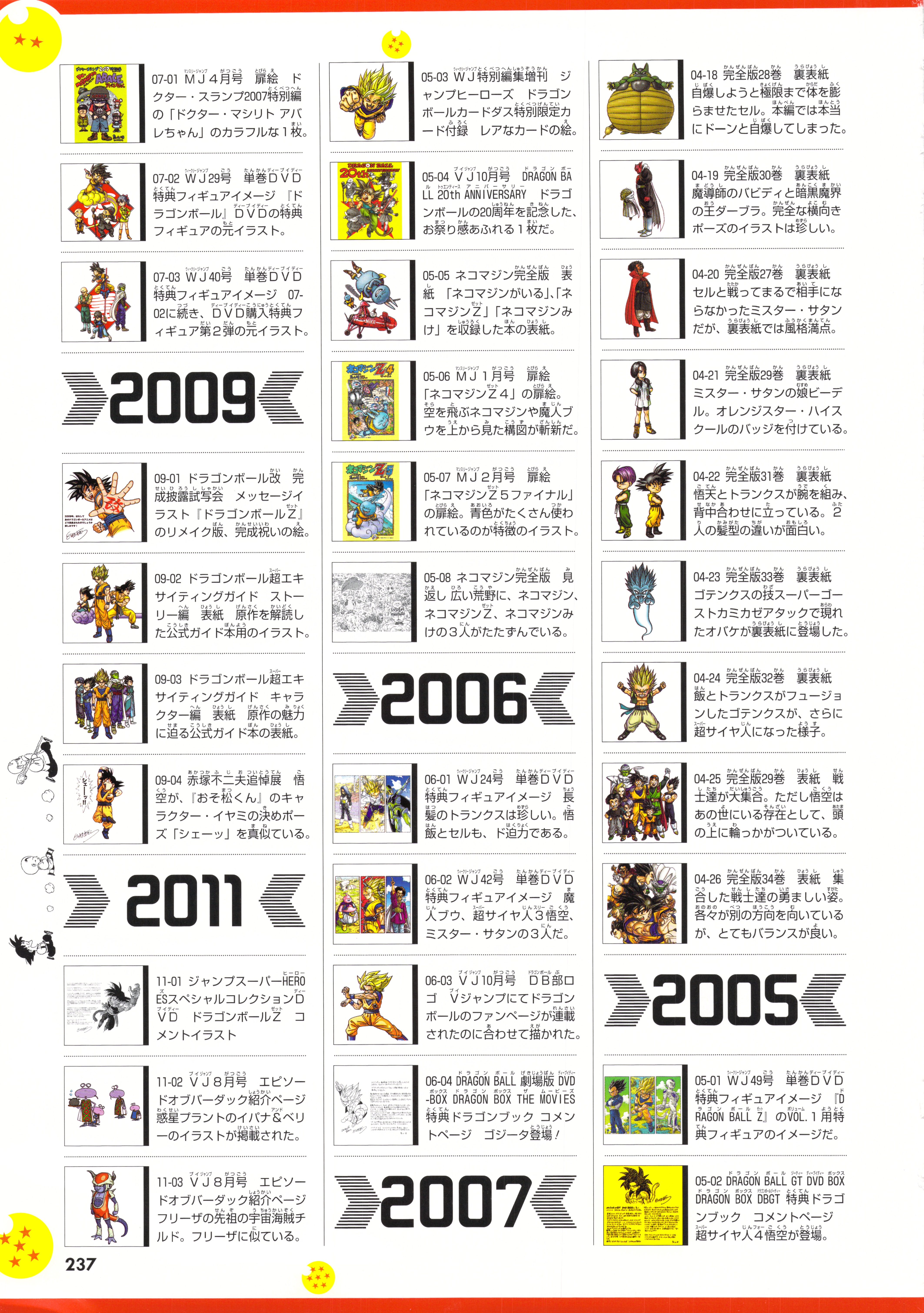
- 2005: Goku becomes Super Saiyan 1 with sparks in his aura in Neko Majin. Toriyama draws Super Saiyan 1 Goku on Namek and Super Saiyan 2 Goku in blank space for two issues of Weekly Shōnen Jump.
- 2006: Toriyama draws Super Saiyan 2 Teen Gohan in an issue of Weekly Shōnen Jump.
- ~2007 to 2010: Toriyama helps create Dragon Ball Online, which does not feature Super Saiyan 2.
- ~2008 to 2009: Toriyama helps create the Super Exciting Guides, where the x2 multiplier originates.
- 2008: The OVA of YSG is released, where Goku turns Super Saiyan in the opening and he and Vegeta both transform into Super Saiyans near the end of the OVA. At the beginning of the film, Goku very briefly powers up to a Super Saiyan state with sparks surrounding him, but he never finishes this transformation. It’s at least plausible he was showing off a hint of Super Saiyan 2 or 3 to Tarble. Notably, Gregory, an anime-only character, appears in this OVA.
- 2009: Ōishi, working with Toriyama, adapts YSG into a manga. Super Saiyan Goku has sparks in his aura in 2 panels, while Super Saiyan Gotenks doesn’t have any. Notably, Gregory, an anime-only character, appears in the manga version as well.
- 2010 to 2013: Ōishi, working with Toriyama again, begins Dragon Ball SD. However, throughout the beginning of this series, she often depicted Super Saiyan auras incorrectly, such as by only putting sparks in the aura of Super Saiyan 3 once.
- 2011: Ōishi, working with Toriyama again, creates Episode of Bardock. Bardock becomes a Super Saiyan, but never has sparks in his aura. The OVA adaptation, also released in 2011, adds sparks to his aura when he first transforms. They disappear for the last 3 and a half minutes when he defeats Chilled and walks off into the distance.
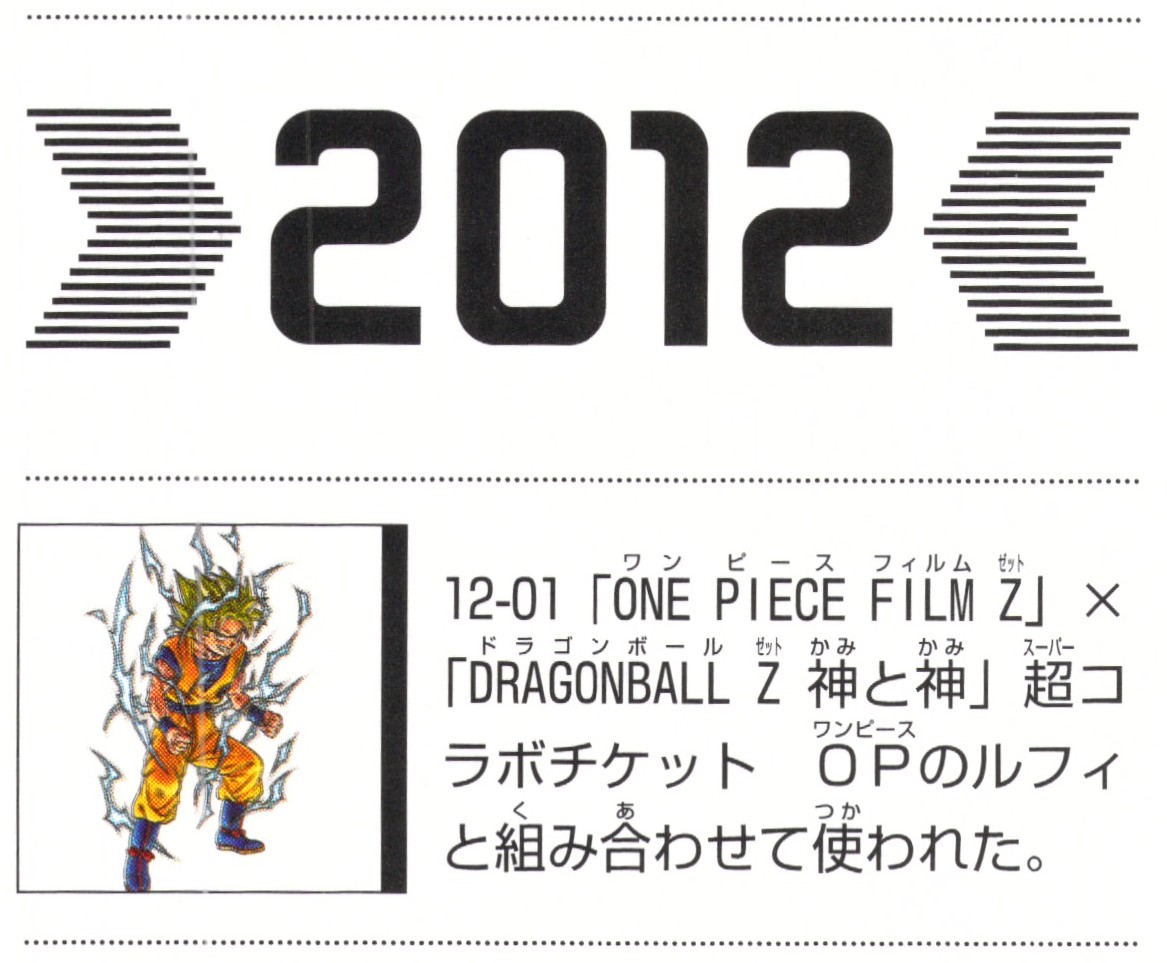
- ~2012: Toriyama draws Super Saiyan 1 Goku with sparks surrounding him for the “ONE PIECE FILM Z” × “Dragon Ball Z: Battle of Gods” super collaboration ticket. Battle of Gods is in production. Toriyama re-reads Dragon Ball for the movie and realizes he had completely forgotten about Super Saiyan 2.
- 2013: Toriyama gives an interview in V-Jump admitting he forgot Super Saiyan 2. Chōzenshū 4 is released and confirms Neko Majin is not canon. Toriyama starts and finishes the Jaco the Galactic Patrolman manga.
- 2014: On page 6 of Dragon Ball SD chapter 24, Ōishi fixes how Super Saiyan 1 Goku was drawn with sparks in his aura in Neko Majin by removing the aura altogether. Dragon Ball Minus is included at the end of the Jaco the Galactic Patrolman tankōbon as a bonus chapter.
- 2015 onward: Toyotarō, working with Toriyama, creates the Dragon Ball Super manga. Clear distinctions between Super Saiyans 1 and 2 are followed.
- ~2022 to 2024: Toriyama helps create Dragon Ball Daima. Clear distinctions between Super Saiyans 1 and 2 are followed.
- 2023 onward: From this point onward, Ōishi has depicted every Super Saiyan aura in Dragon Ball SD correctly (as of Saikyō Jump March 2026). She even makes a panel demonstrating that Super Saiyan 1 Goku’s appearance changes over time. The only exception is Super Saiyan Blue, which she never adds the blue chunks in the aura to.
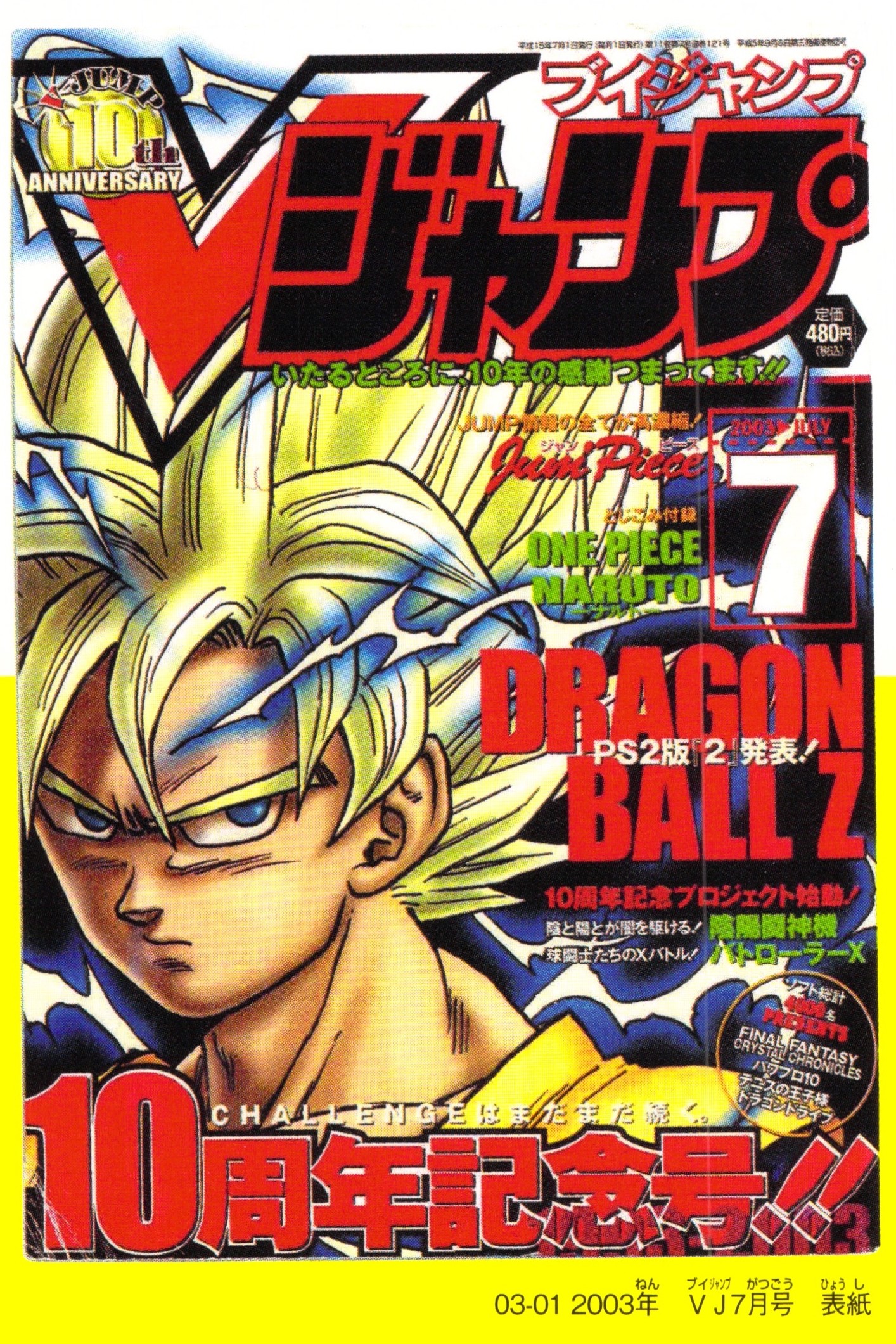
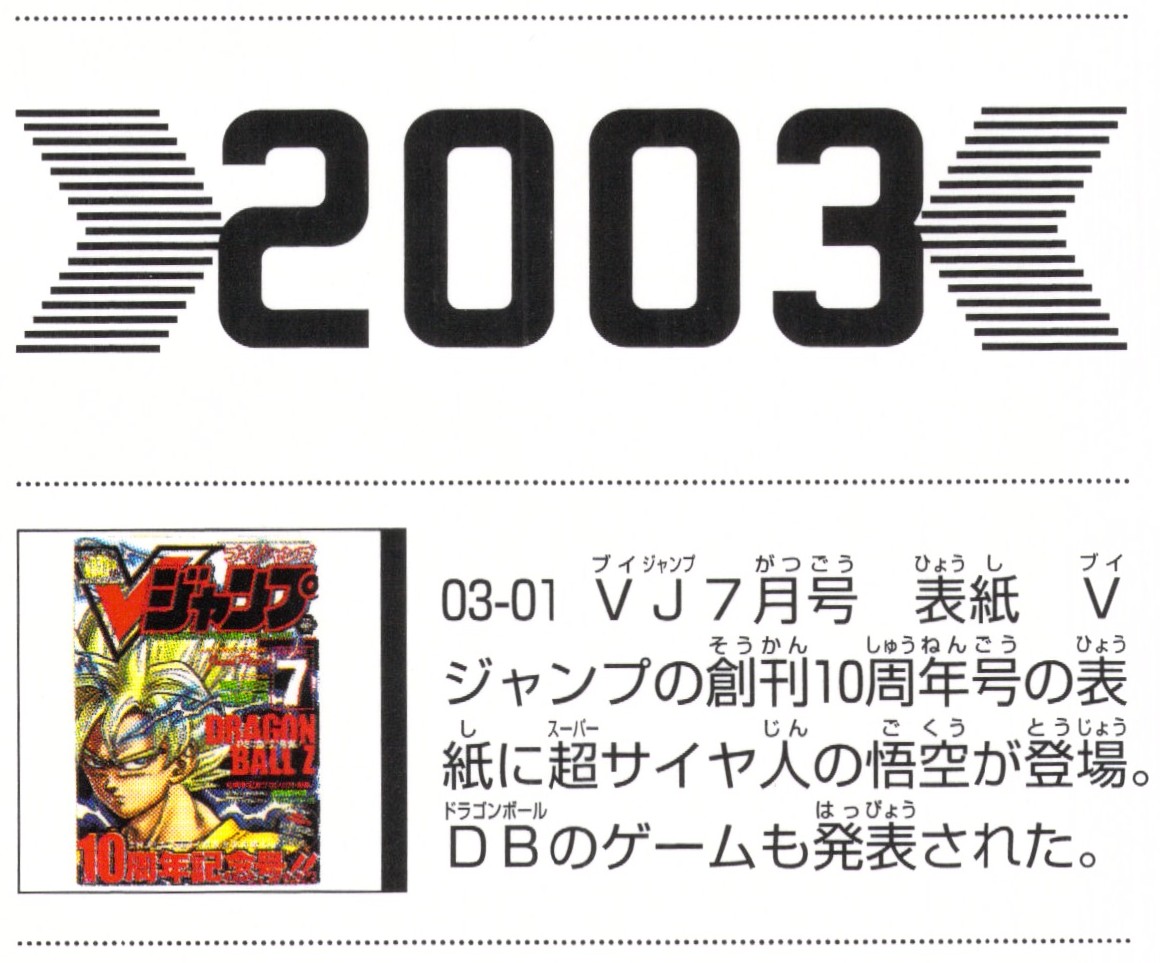
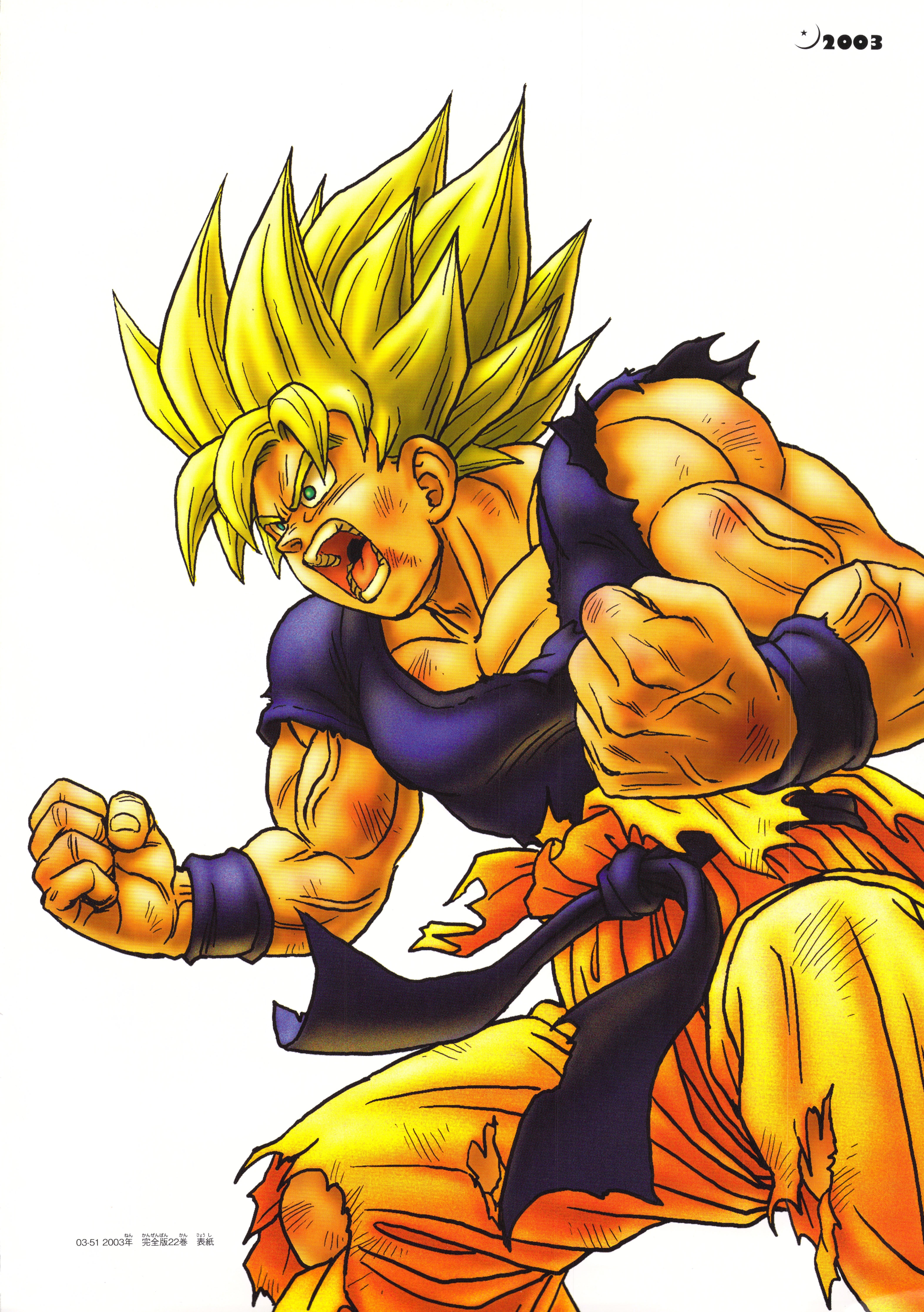
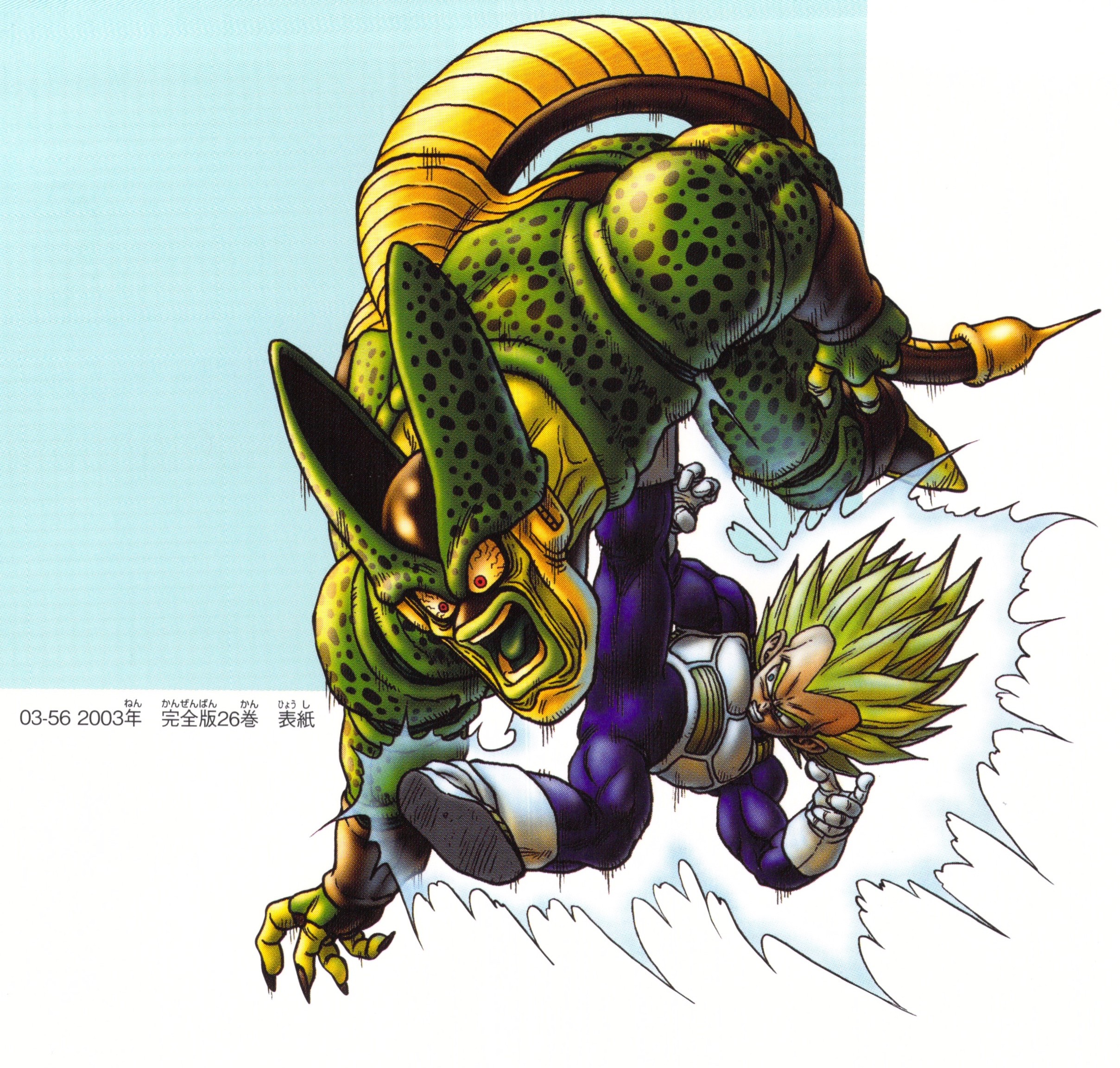
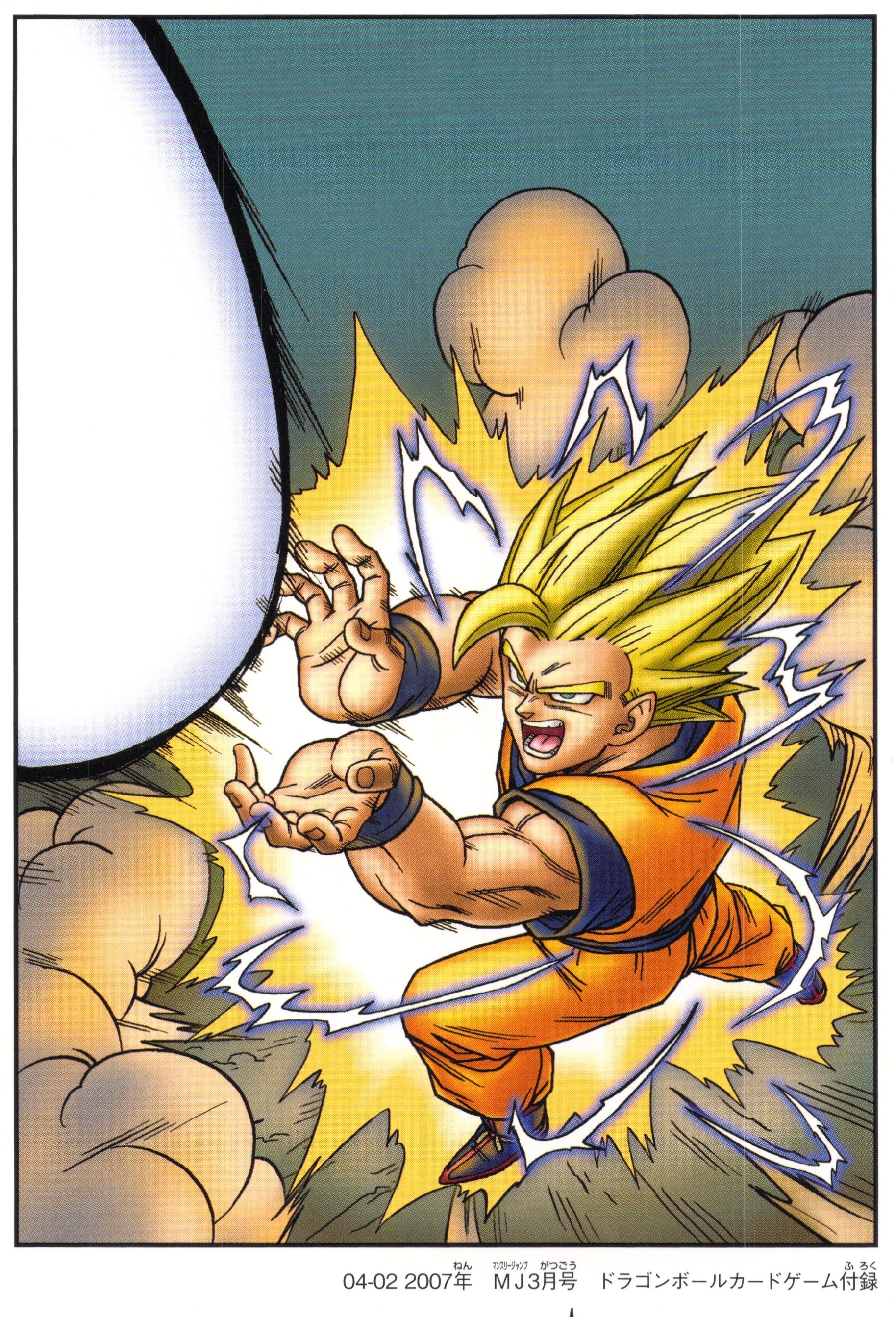
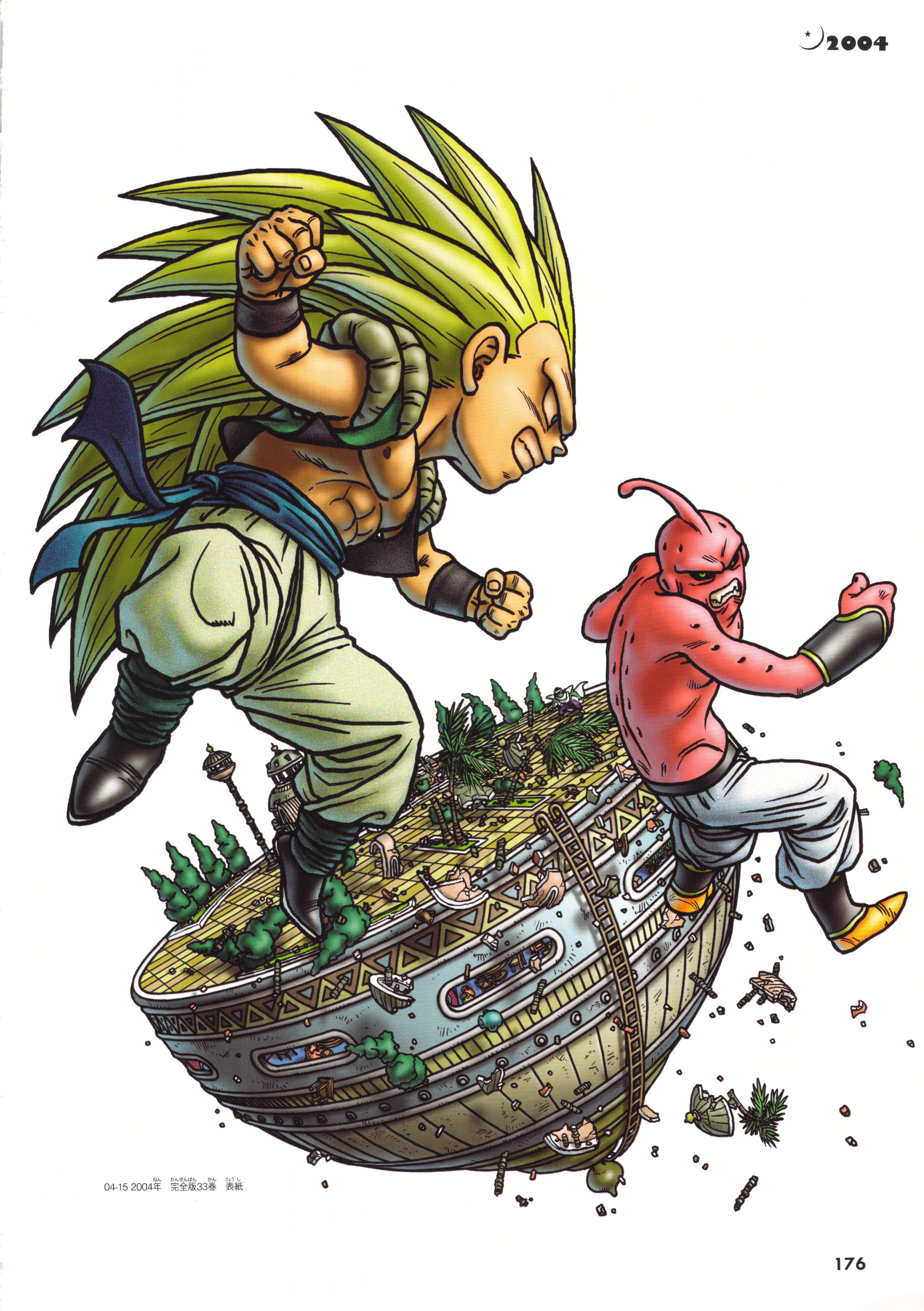
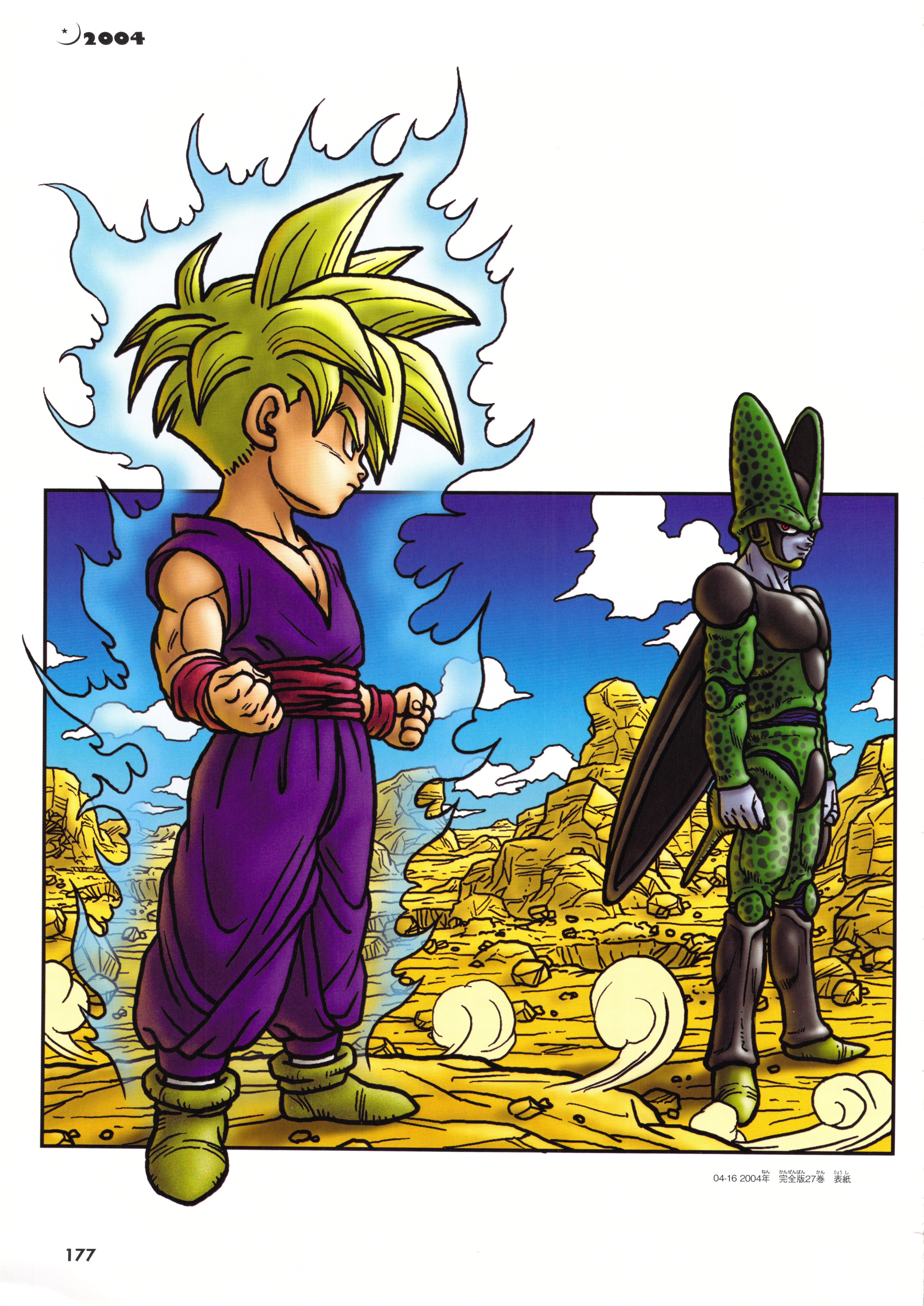
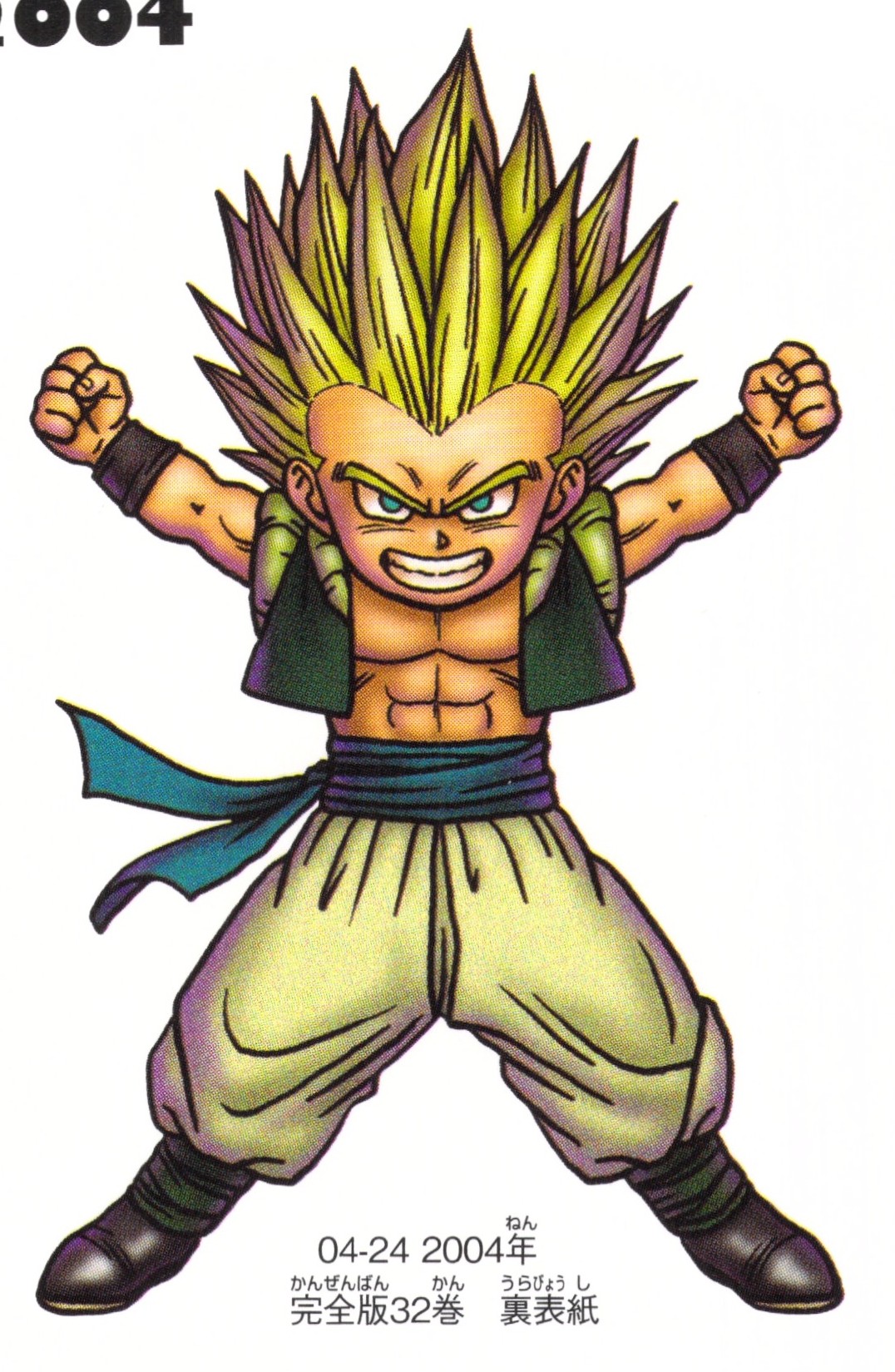
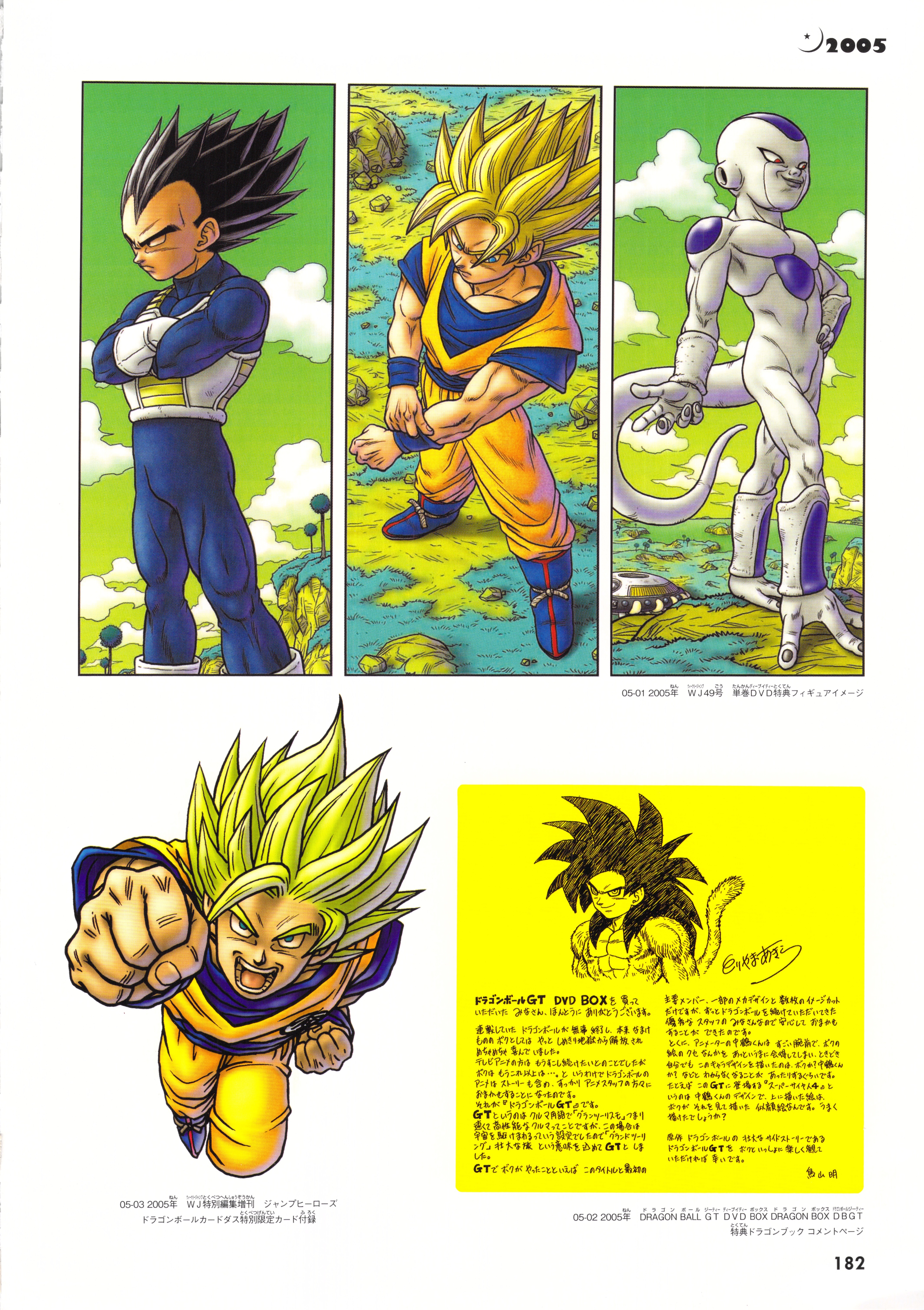
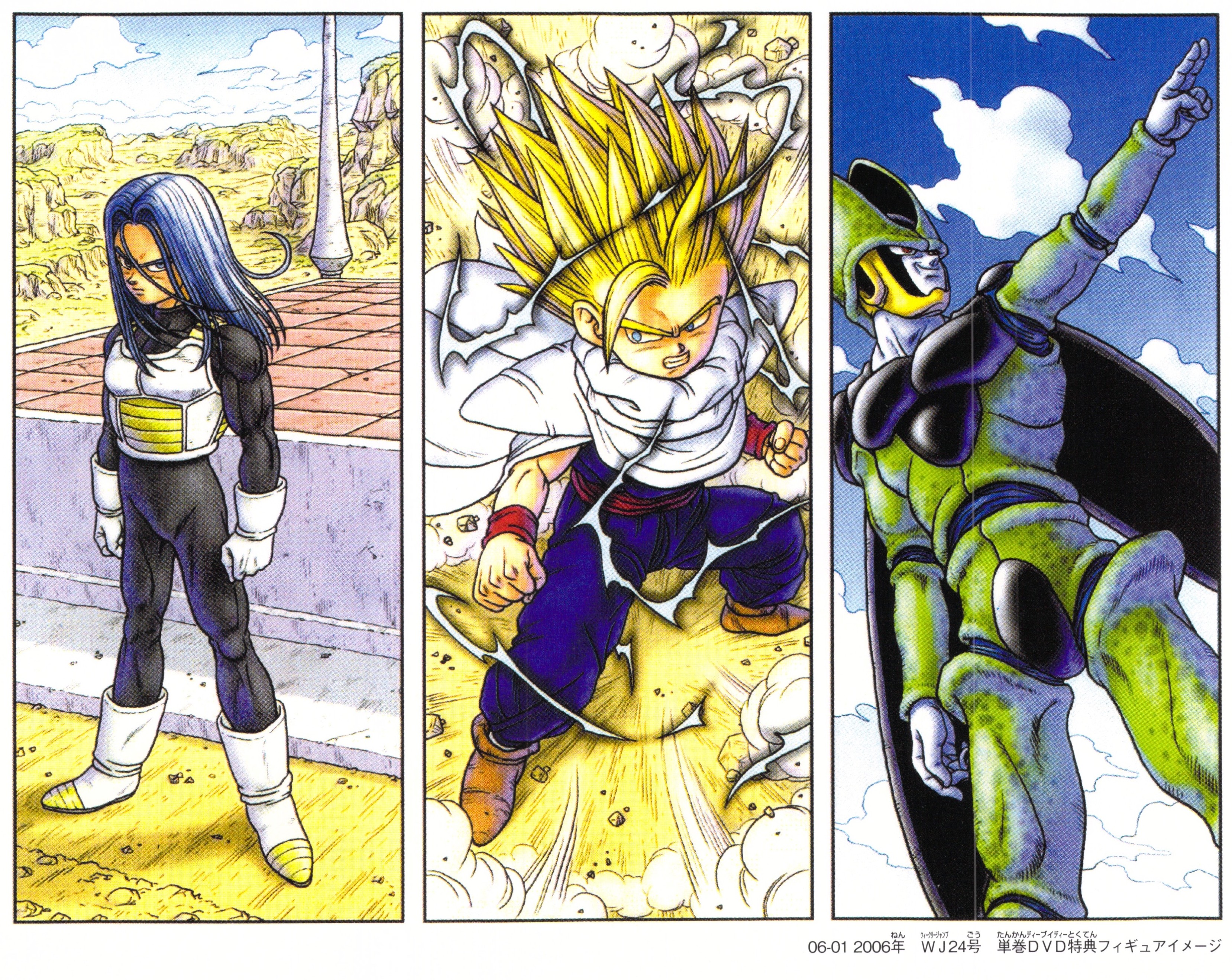
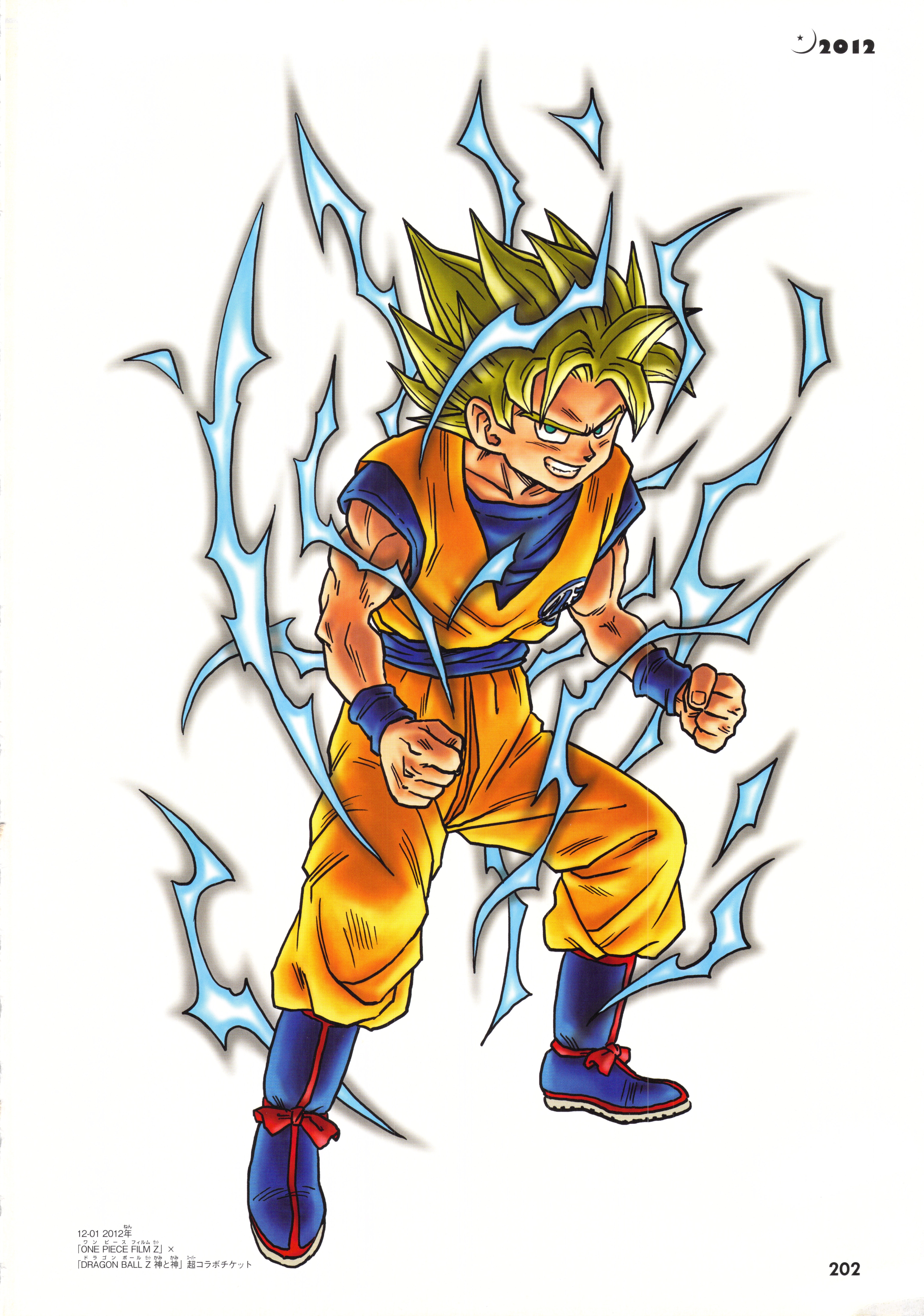
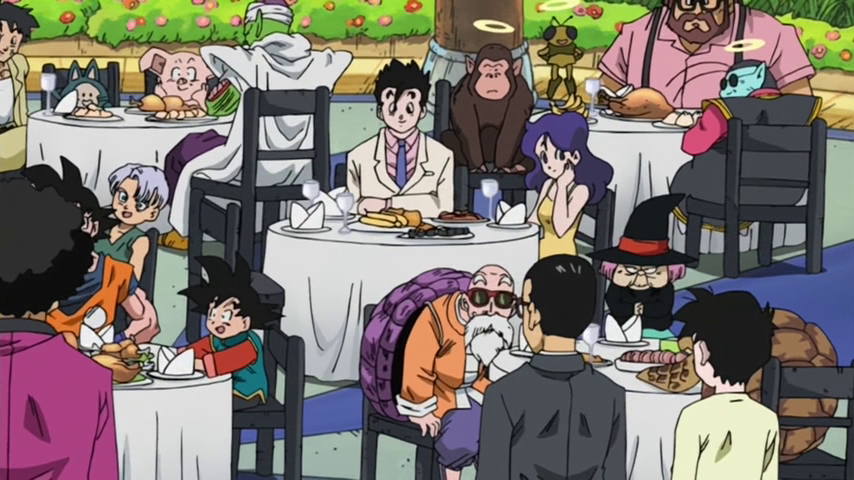
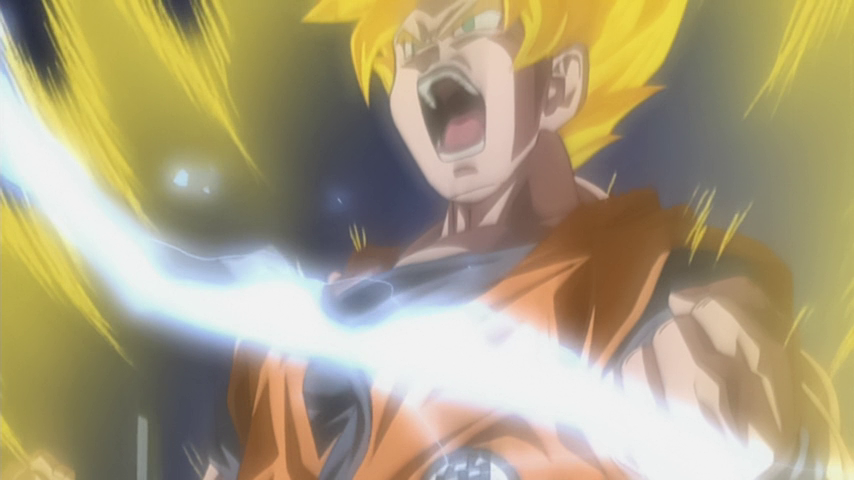
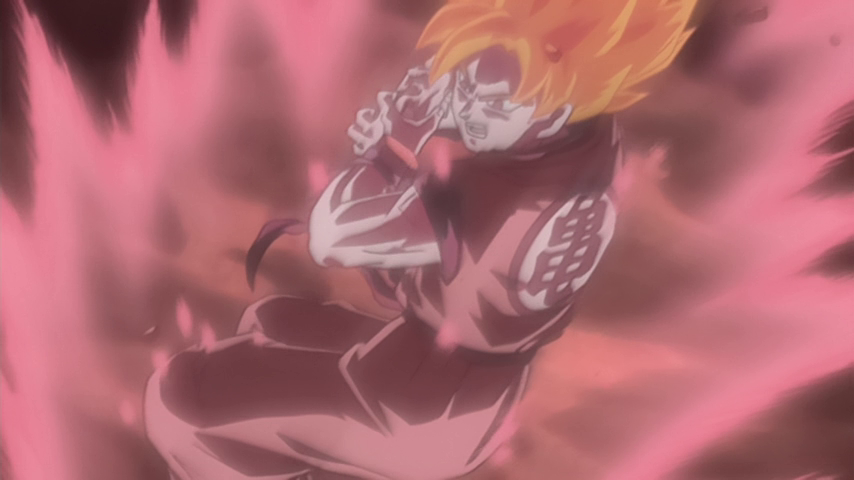
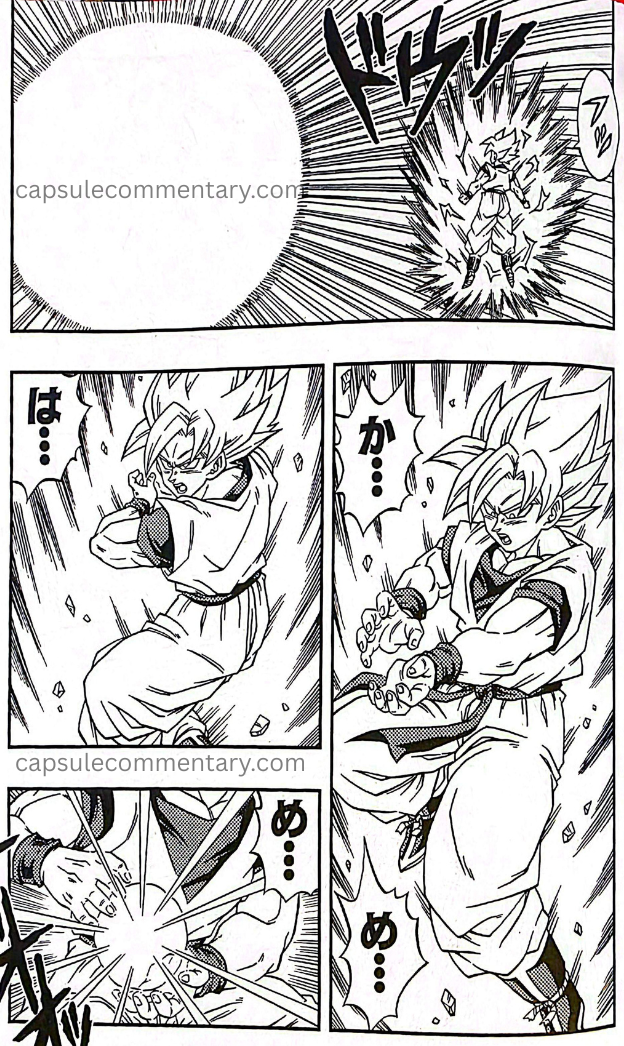
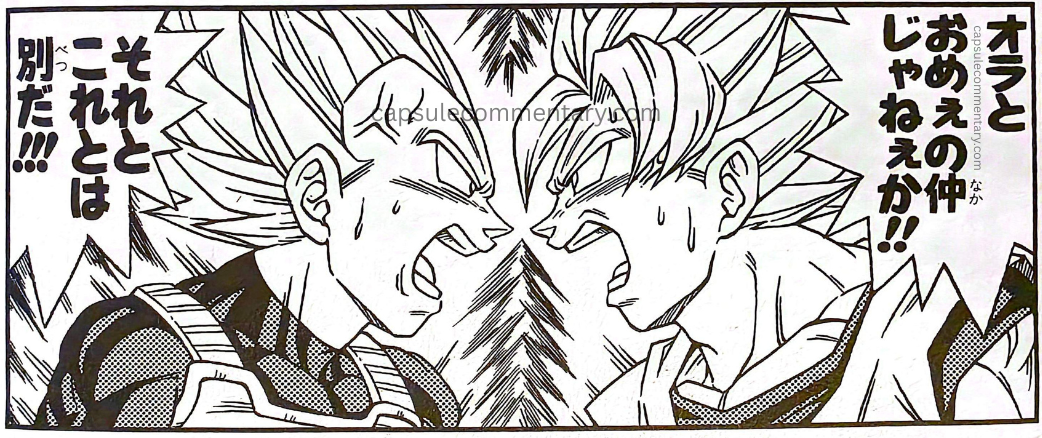
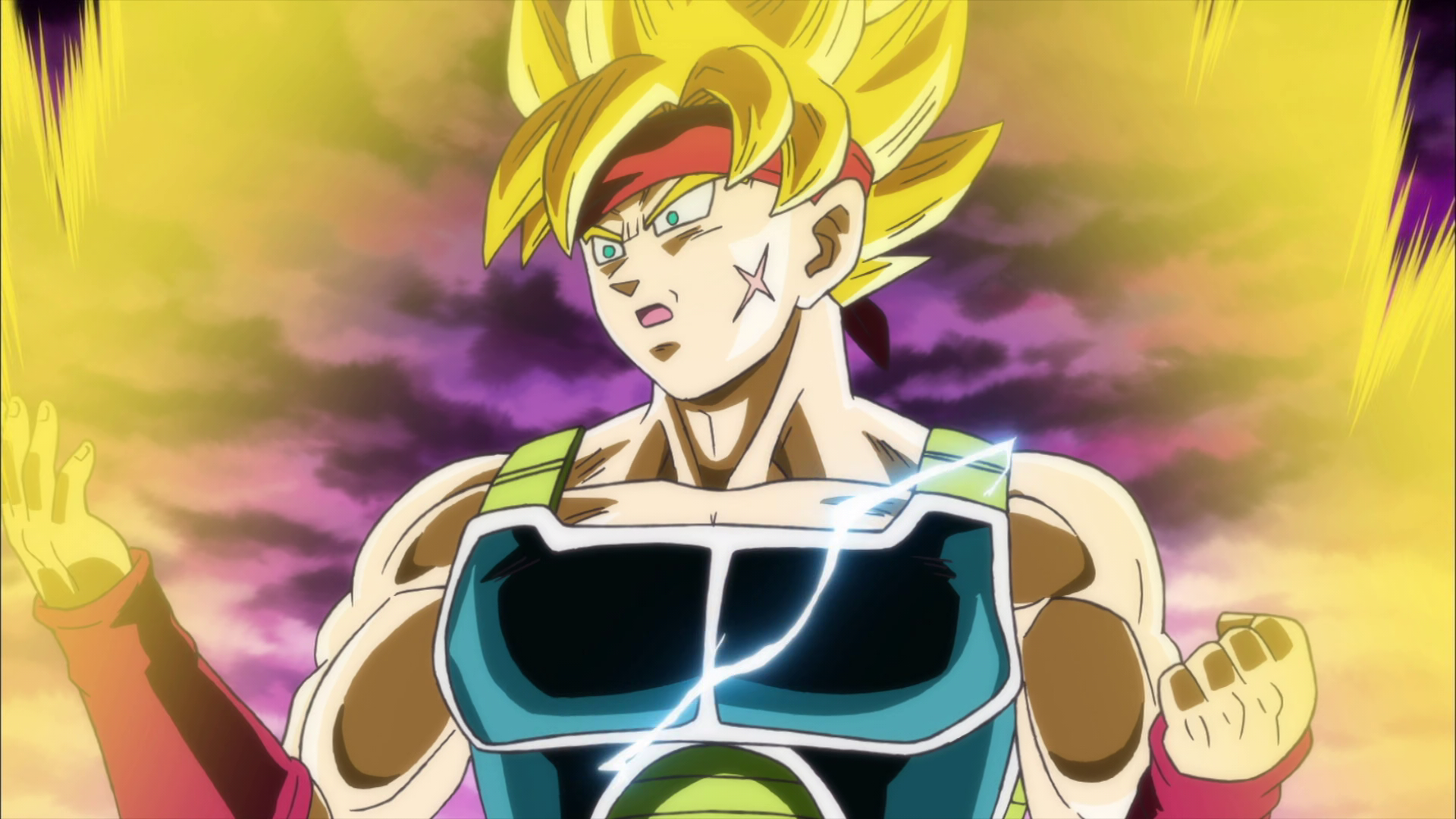
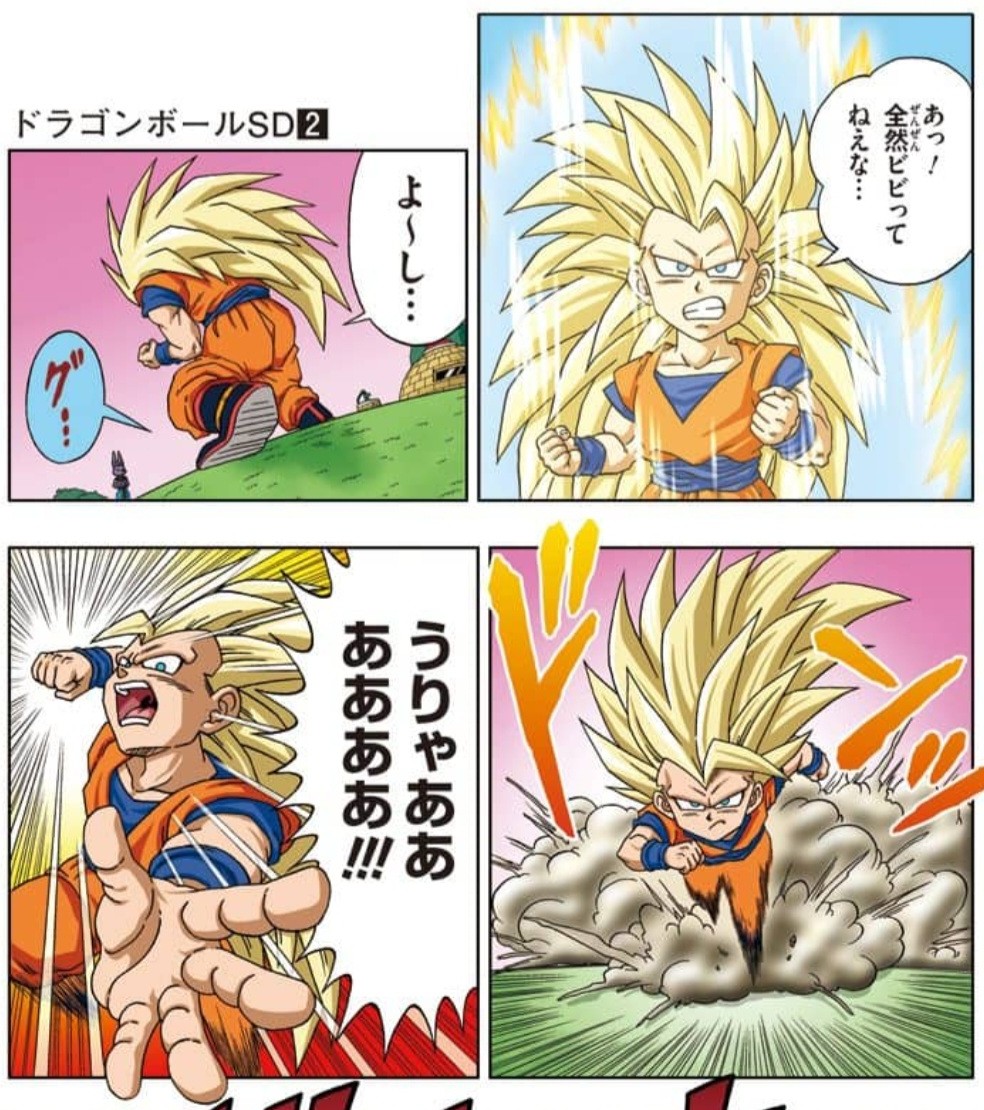
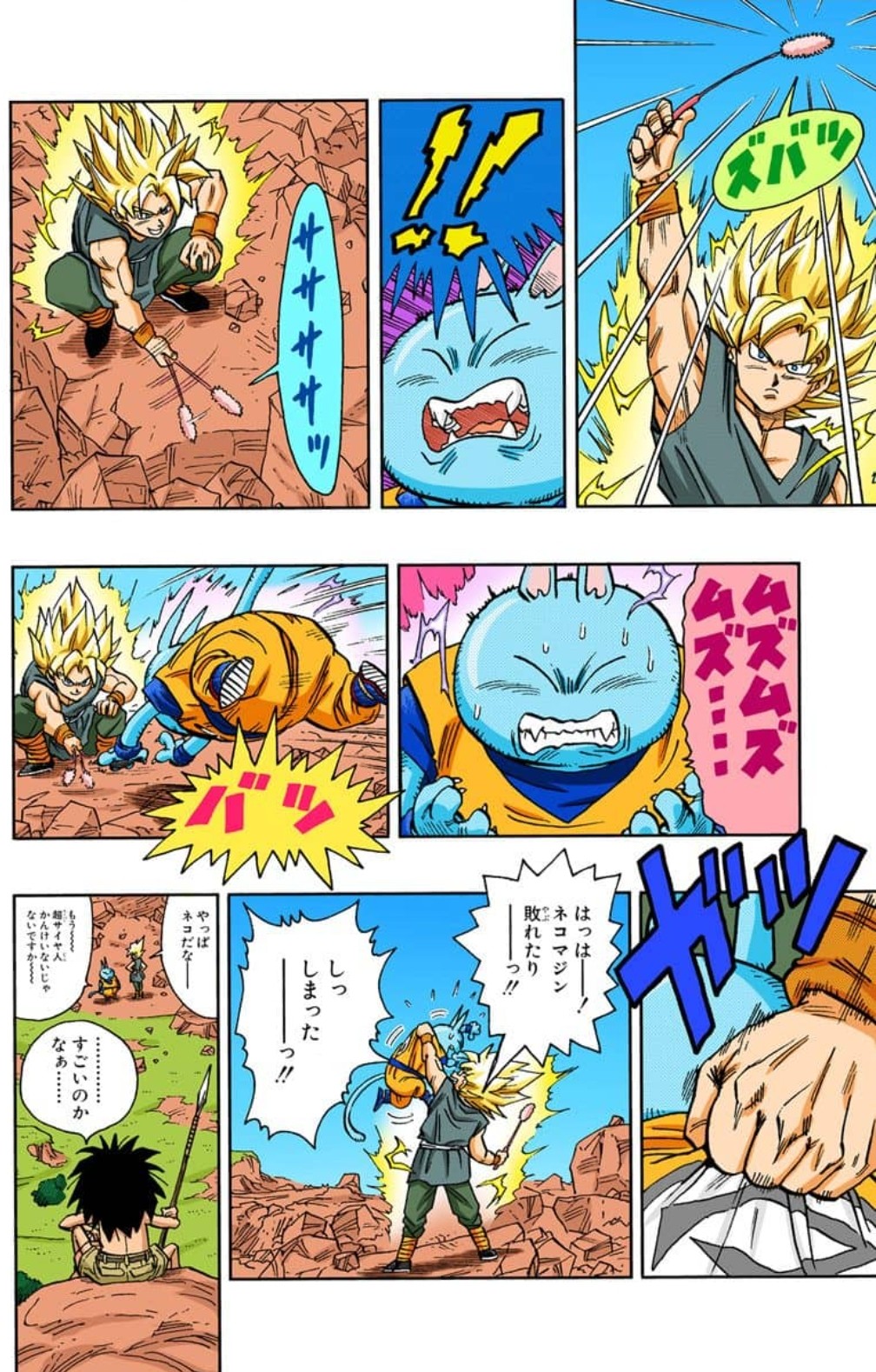
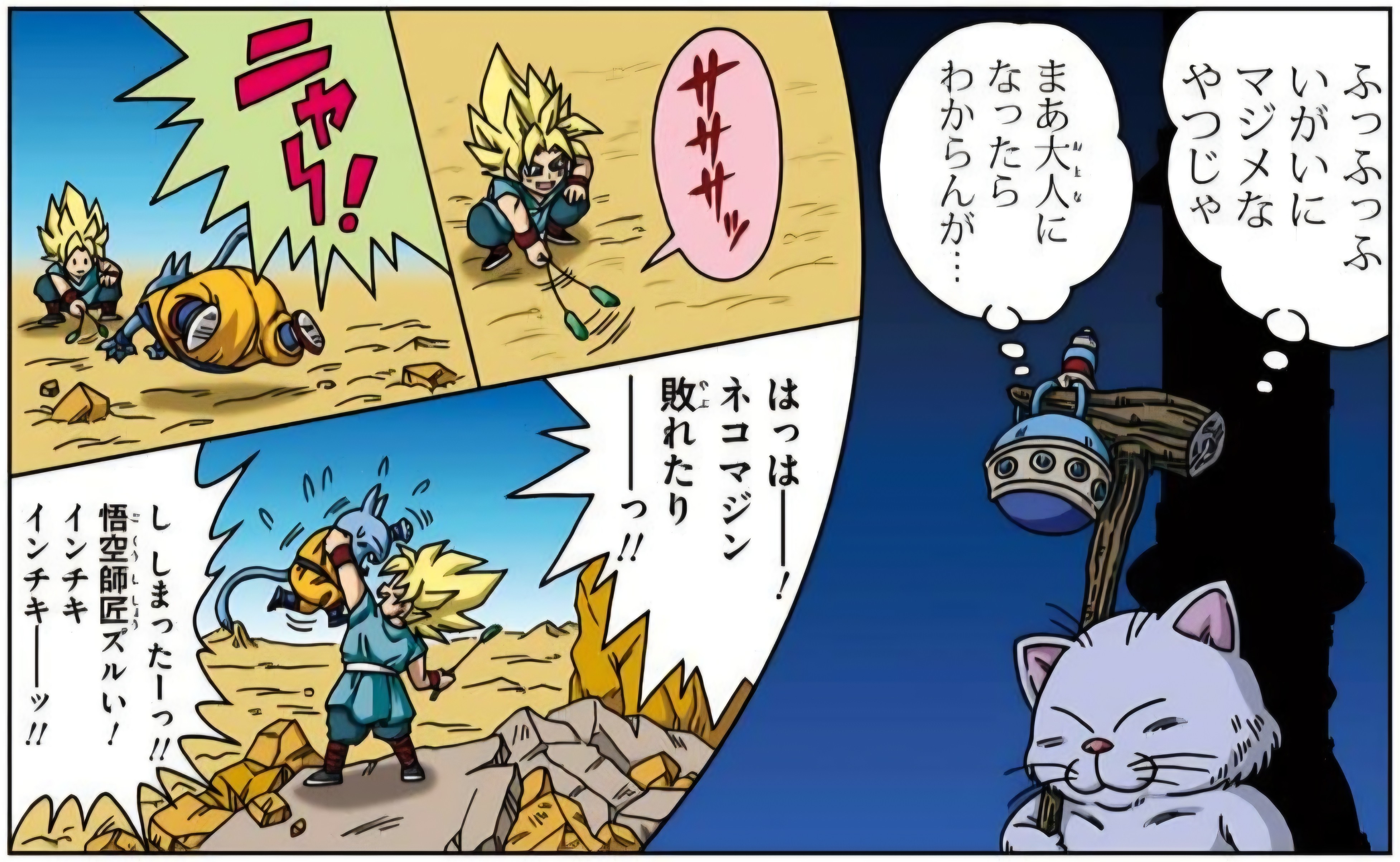
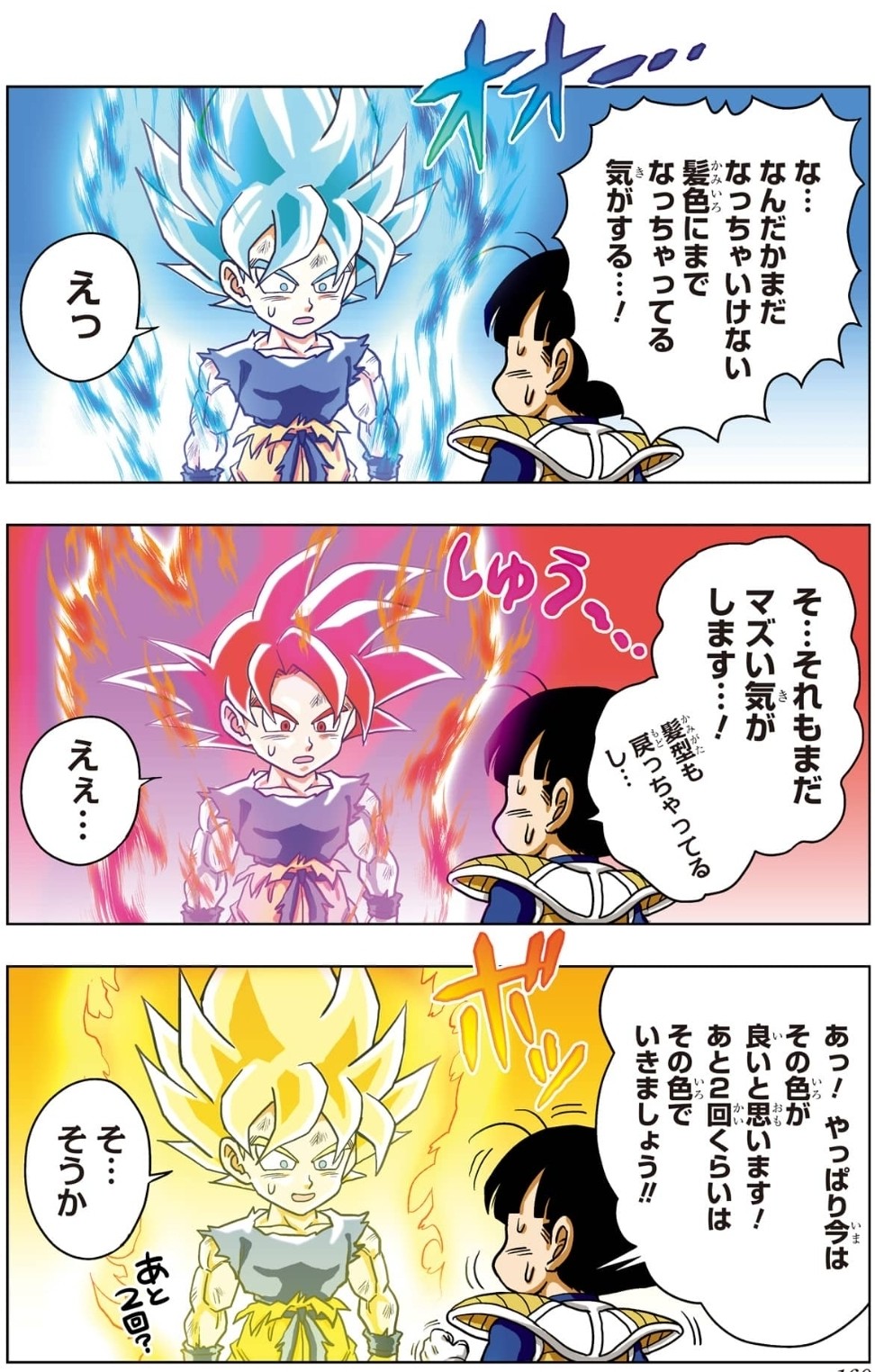
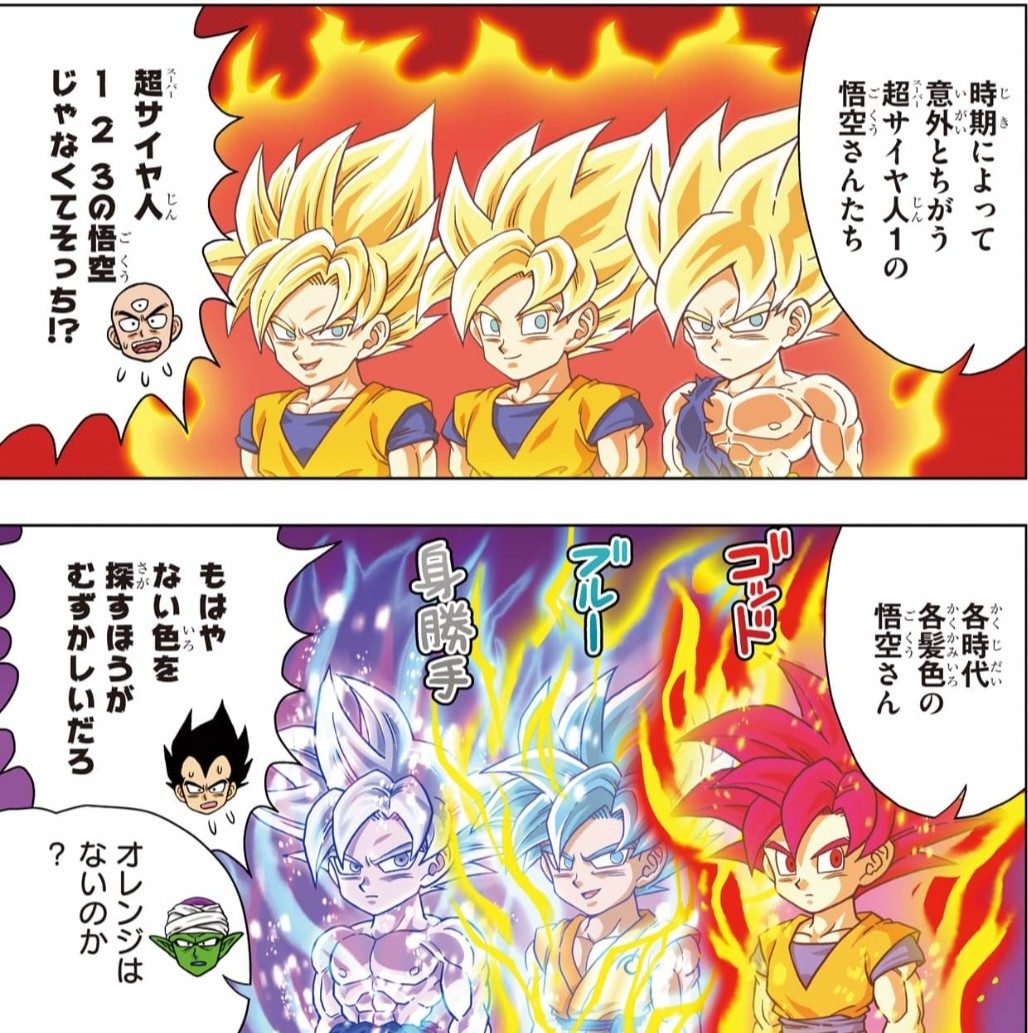
Therefore, at some point between 1996 and likely 2001 or 2003, Toriyama forgot about Super Saiyan 2. Instead, he treated the aspects of it (sparks in the aura) as something Super Saiyans just sometimes have, and not as what they actually are: the defining feature of Super Saiyan 2. The examples that blur the lines between Super Saiyans 1 and 2 as well as the Super Saiyan 2 multiplier were created during the era where he forgot Super Saiyan 2. Battle of Gods serves as the reset point. Toriyama re-read the manga and became more heavily involved with Dragon Ball projects. And from Battle of Gods onward, there were clear distinctions between the two forms again.
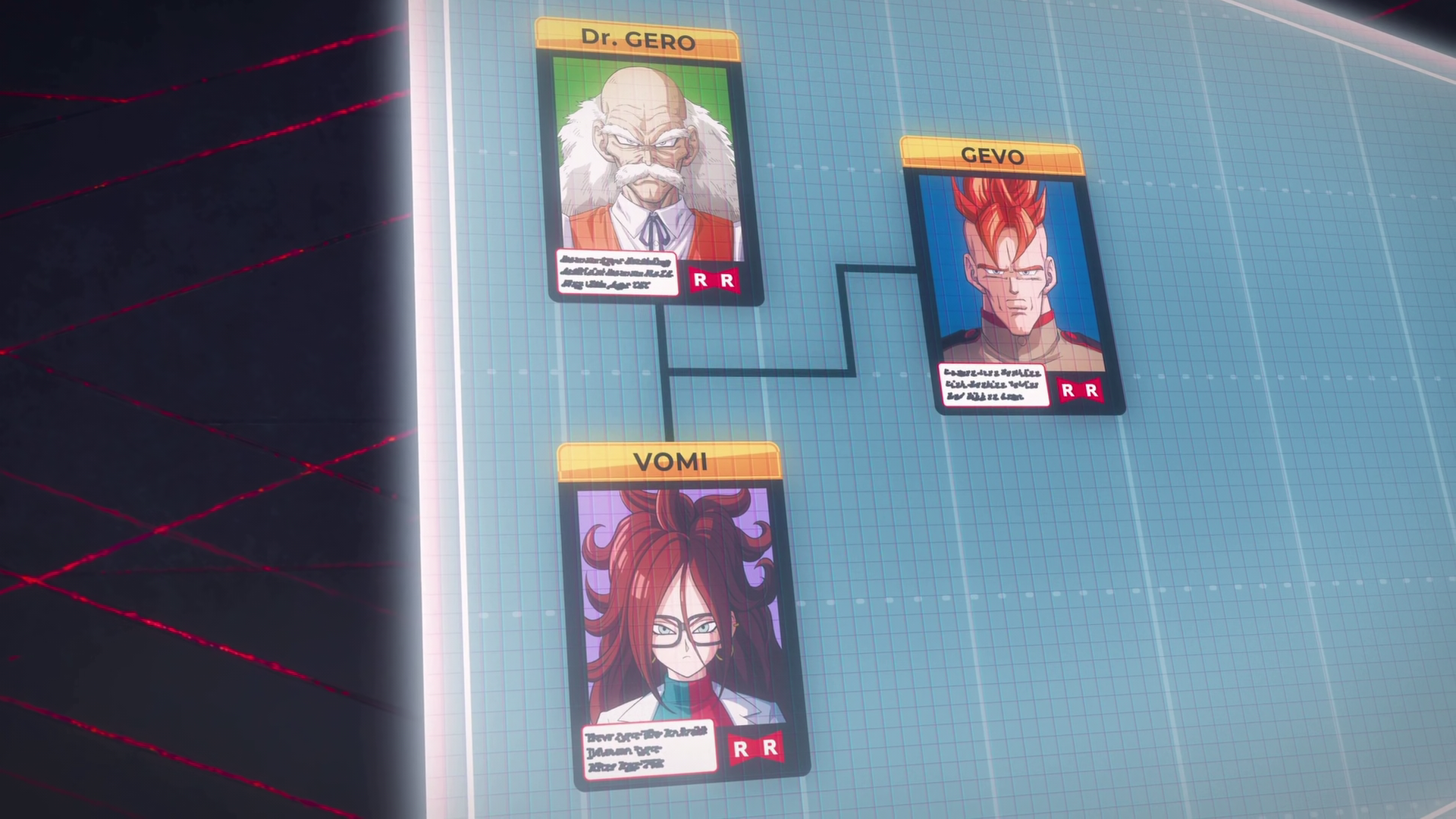
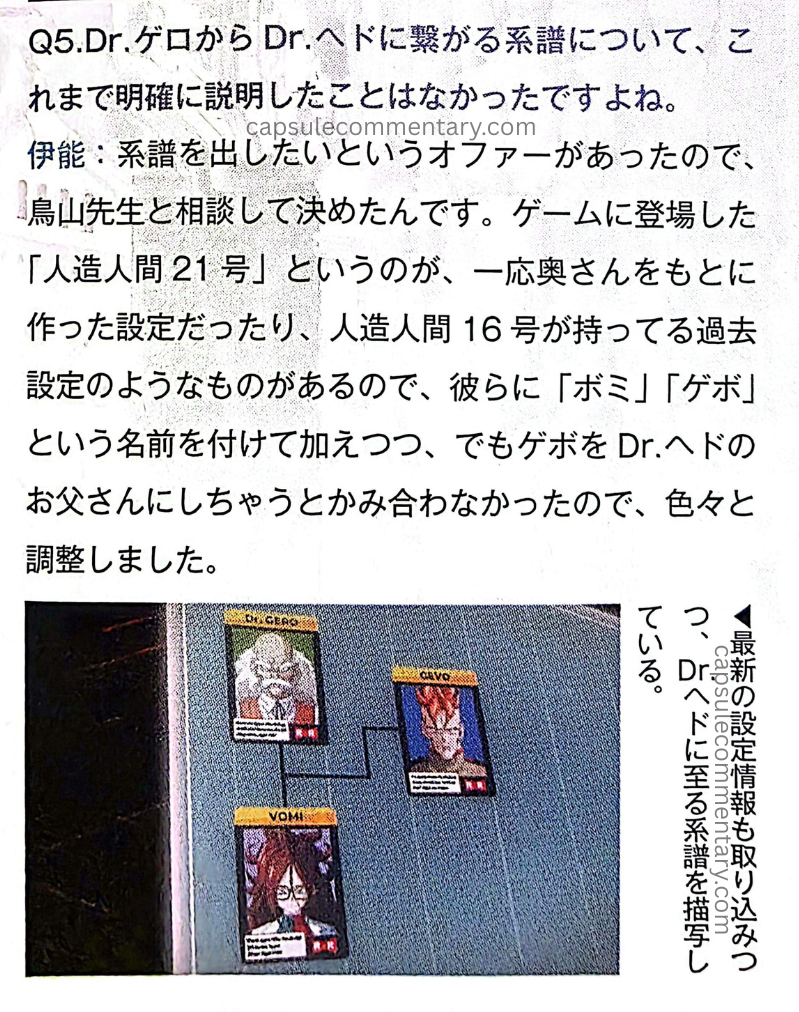
As an aside, it is possible for aspects of works to be canon without the entirety of it being canon. For example: #21 comes from a non-canon video game called Dragon Ball FighterZ, but she herself is later canonized in Dragon Ball Super: Super Hero as “Vomi.” At the same time, Tarble comes from YSG, and at least the concept of his character is confirmed to exist in Dragon Ball Super: Broly. This doesn’t necessarily make all of YSG canon, though. As of right now, the two things that make YSG potentially non-canon are Kibitoshin (whose fusion should have been undone in Daima) and Gregory (who has never appeared in a canon work before). As for Episode of Bardock, this was a retcon of Dragon Ball Z: Bardock – The Father of Goku, and now it in turn has been retconned by Dragon Ball Minus and Dragon Ball Super: Broly. So the contradictory Super Saiyan aura in Episode of Bardock is not canon, and the one in YSG is debatable.
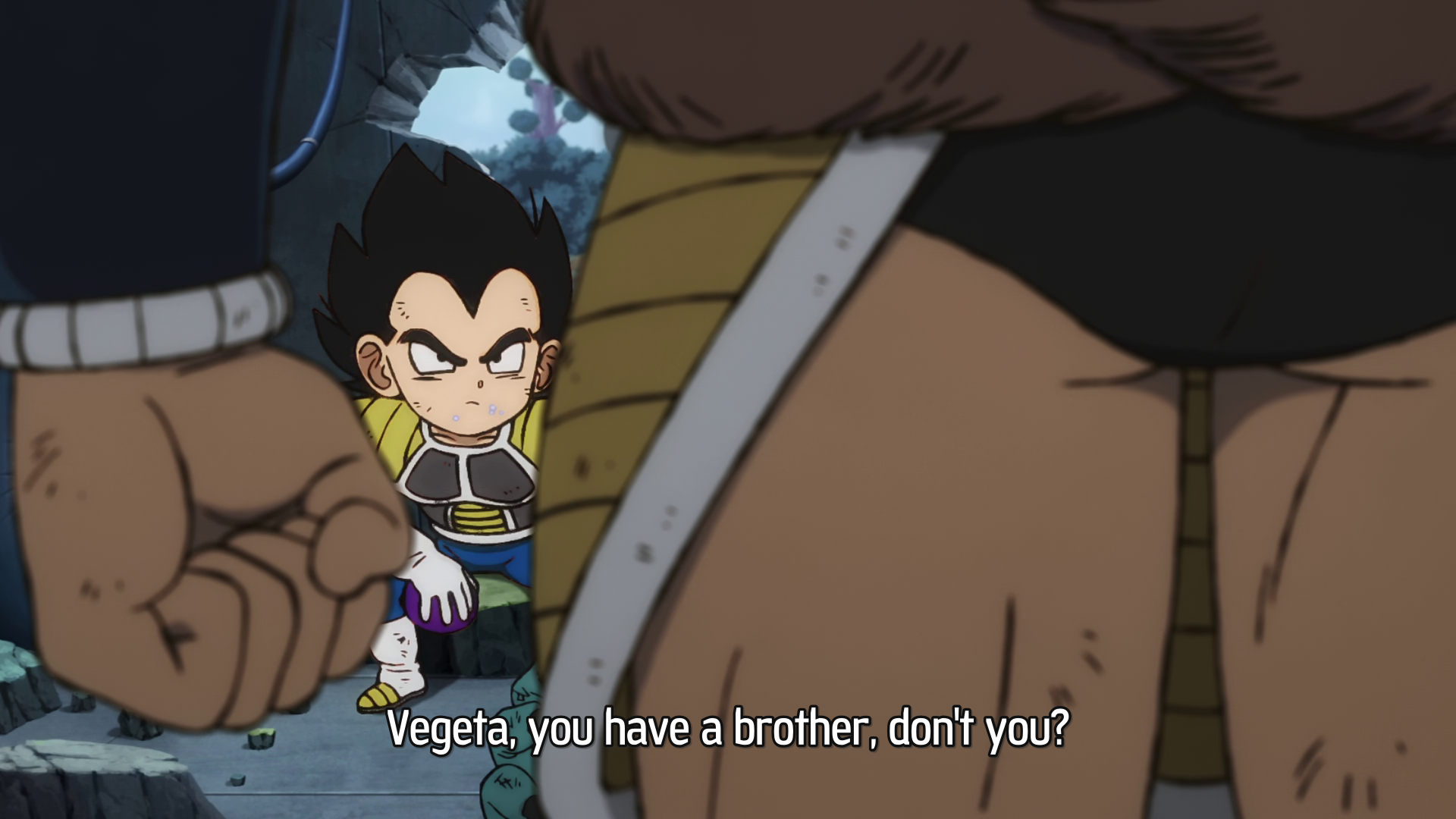
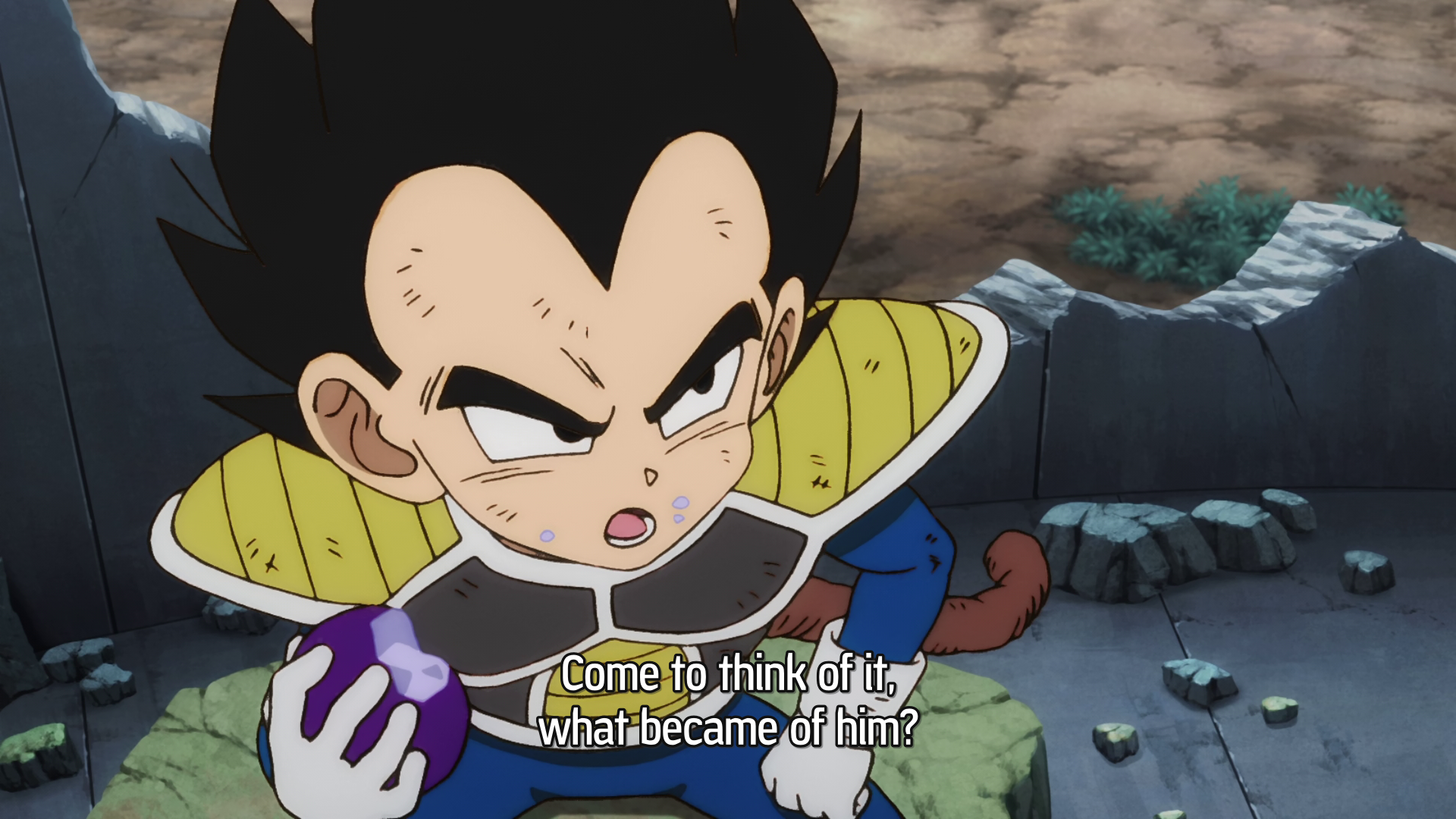
Moving onto how Super Saiyan 2 is animated: just like in Movie 8, Tadayoshi Yamamuro was the animation supervisor for this movie, Dragon Ball Z: Broly — Second Coming. He also worked on episodes 185, 229, 232, and 245, which all show Gohan in some form of Super Saiyan or another character as Super Saiyan 2. Ken Tokushige also worked on this film and on episode 231. Both of them also worked on Movie 9, Dragon Ball Z: Bojack Unbound. Below are screenshots from the episodes and movie they worked on that demonstrate that the animators of Movie 10 consistently showed Super Saiyan 2 with sparks of electricity in its aura.
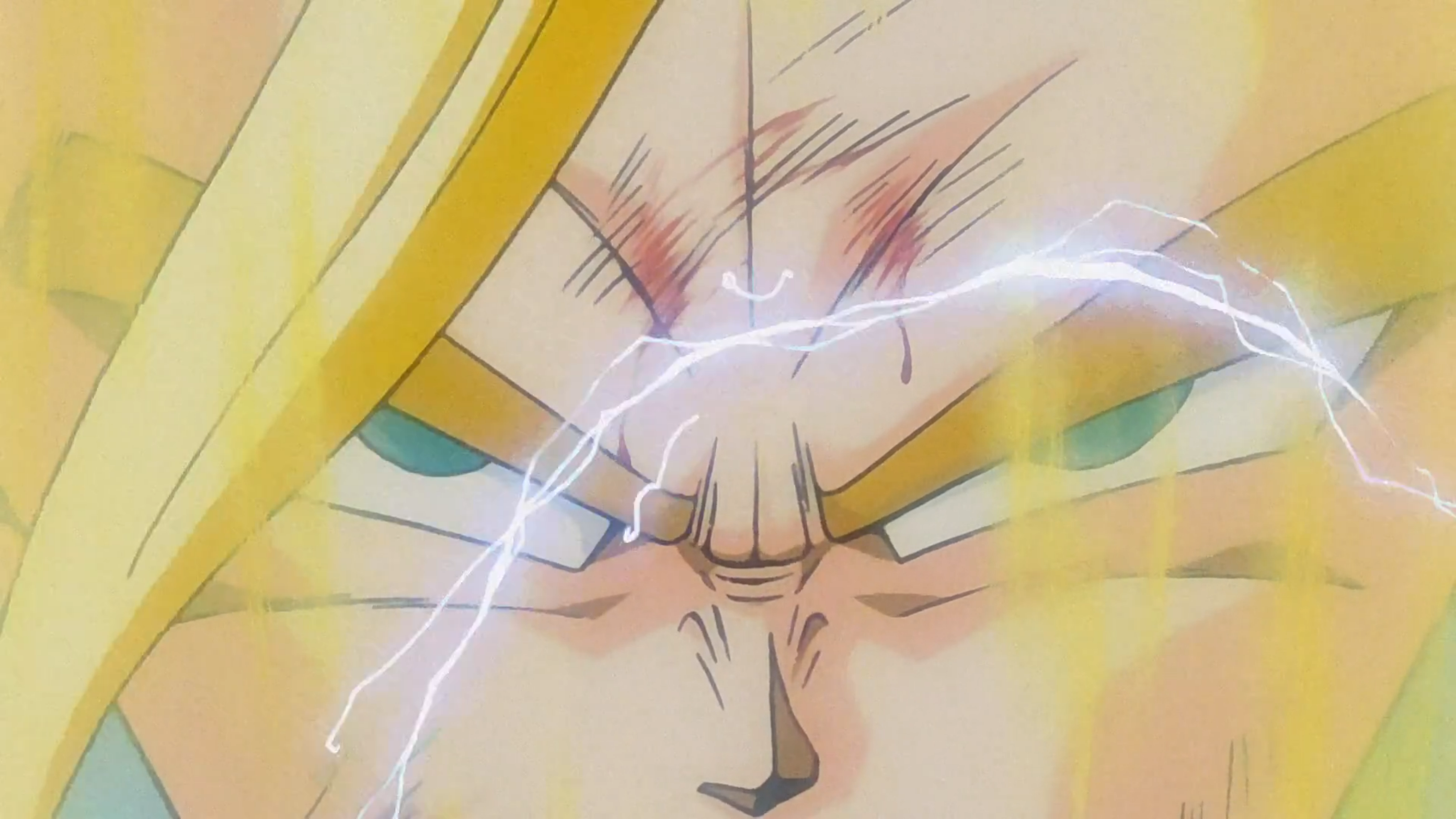
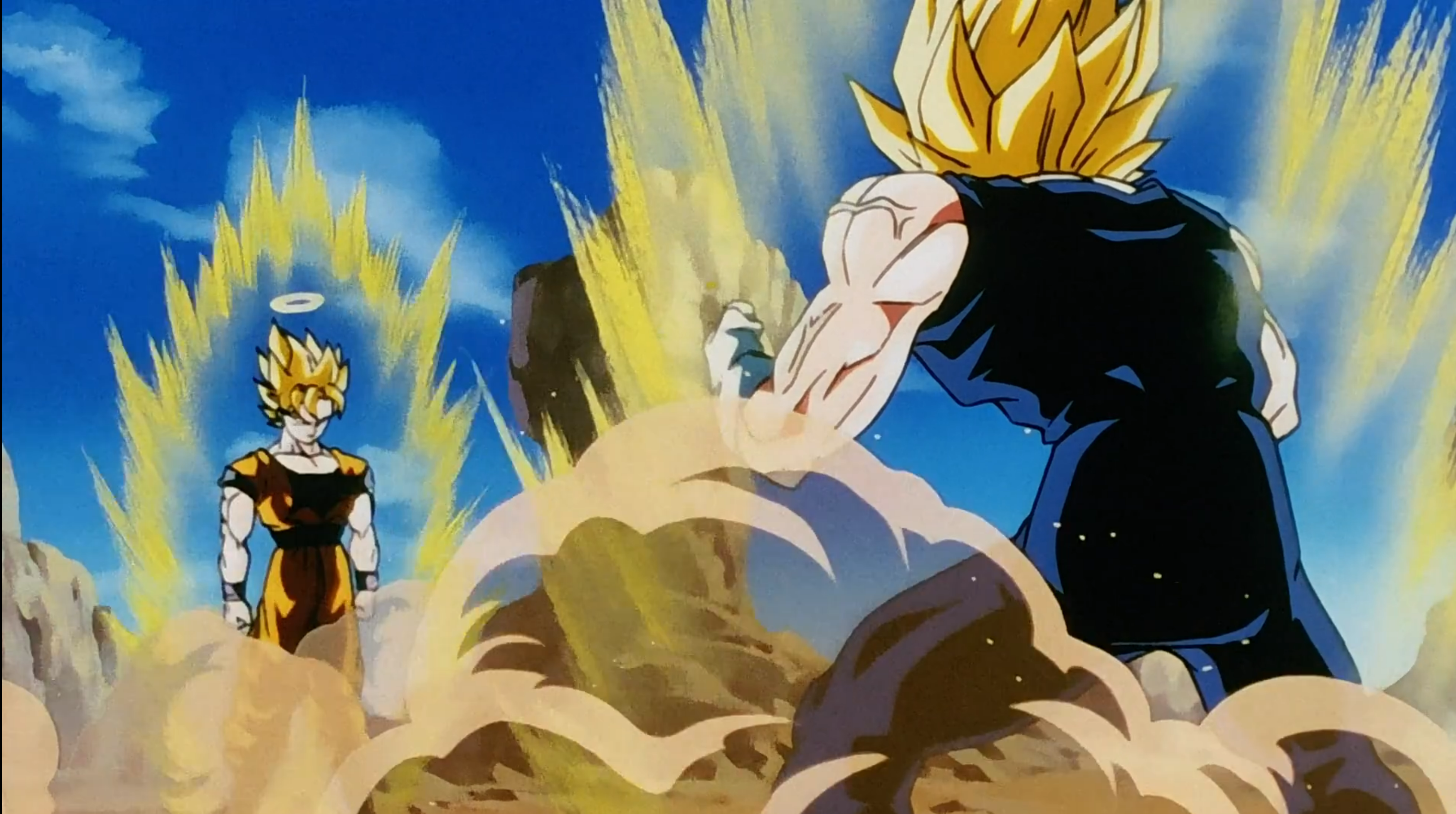
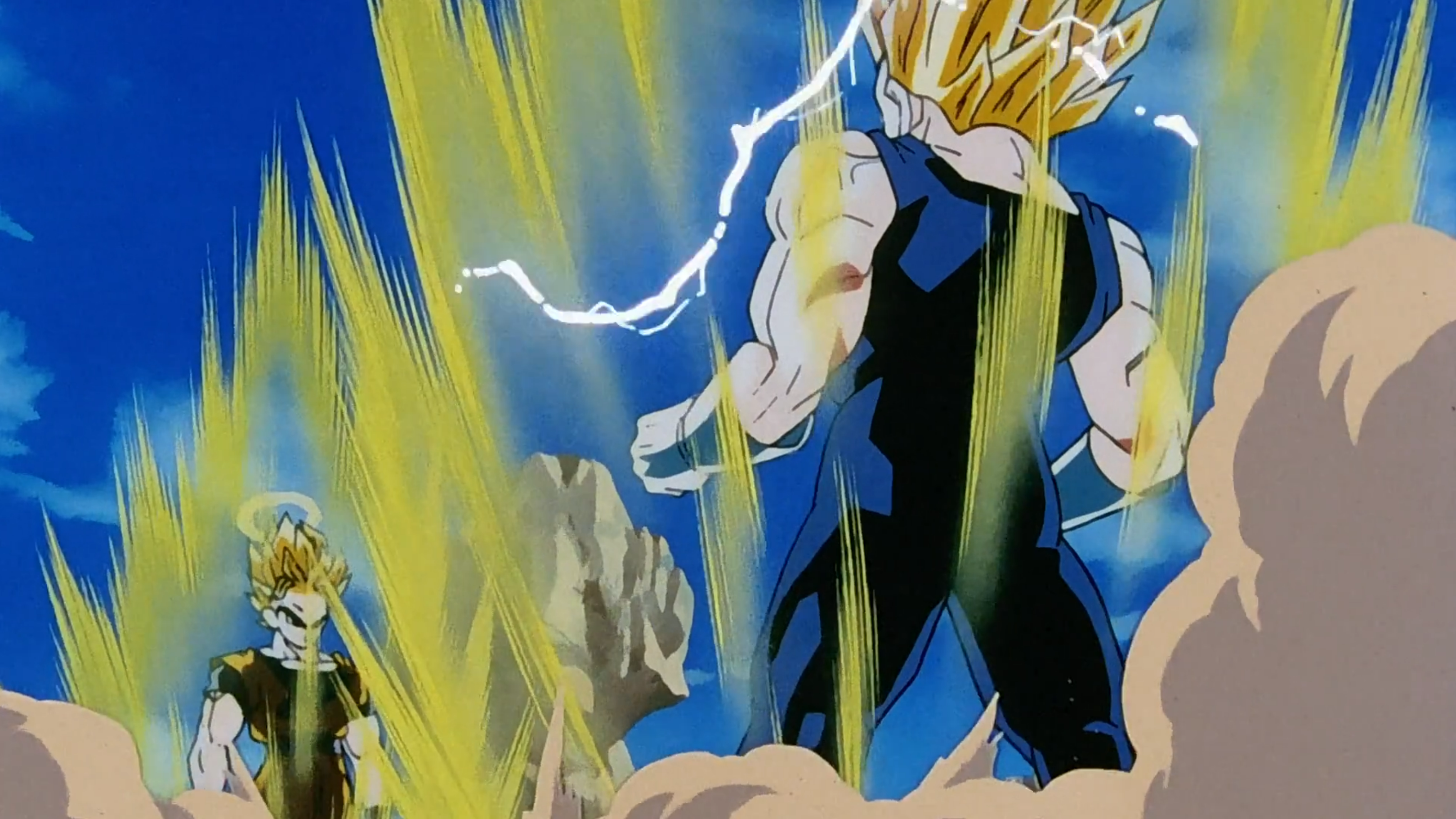
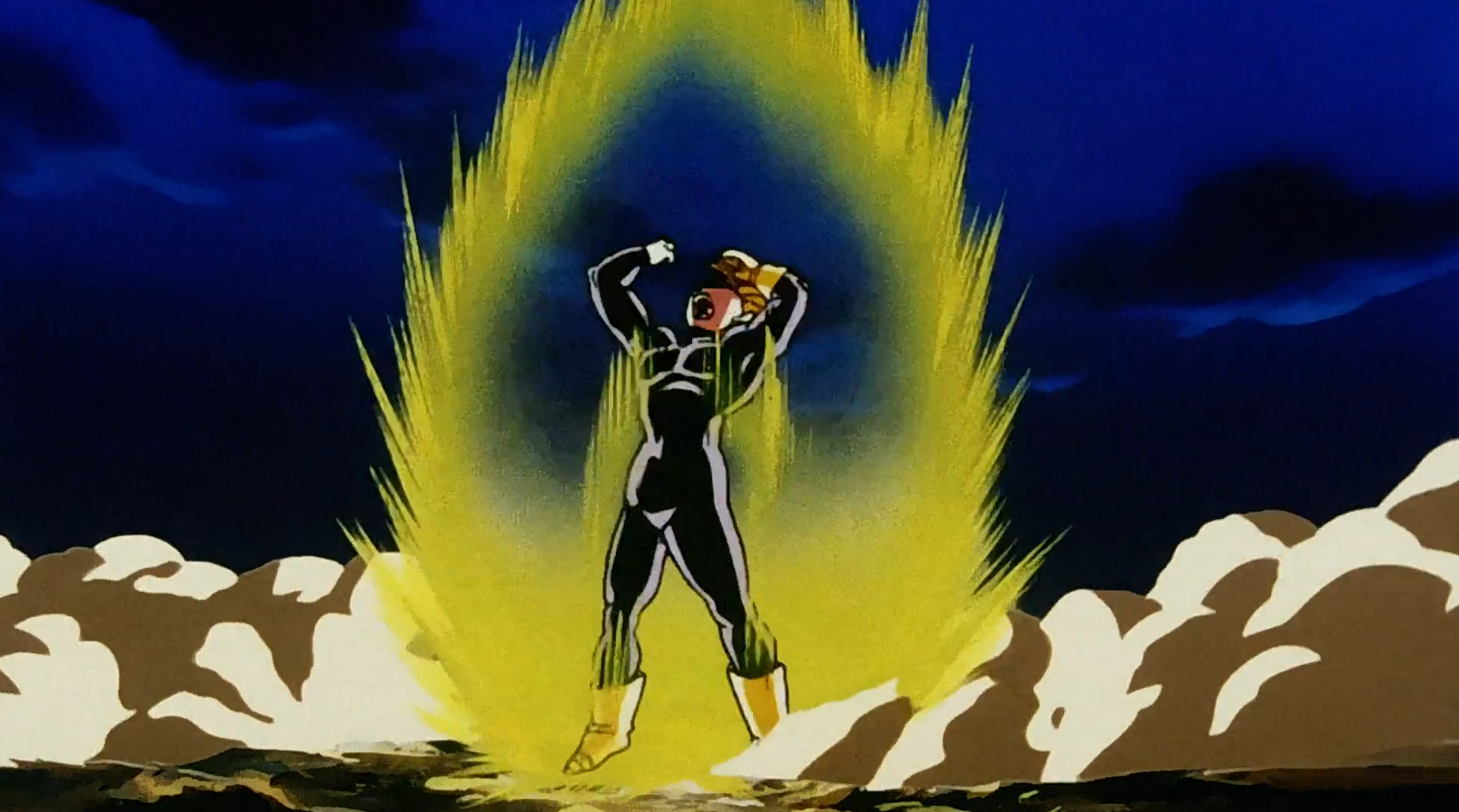
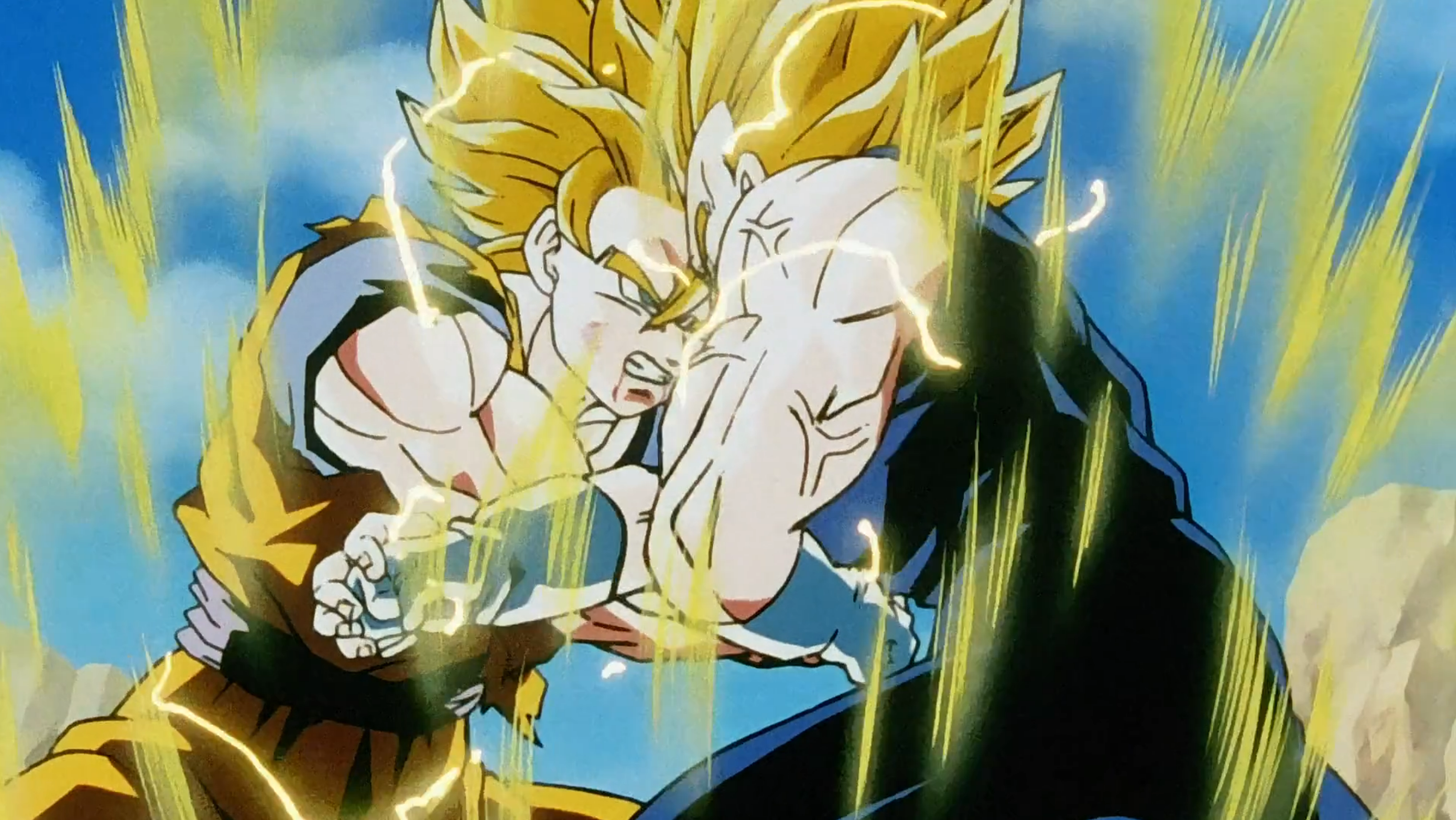
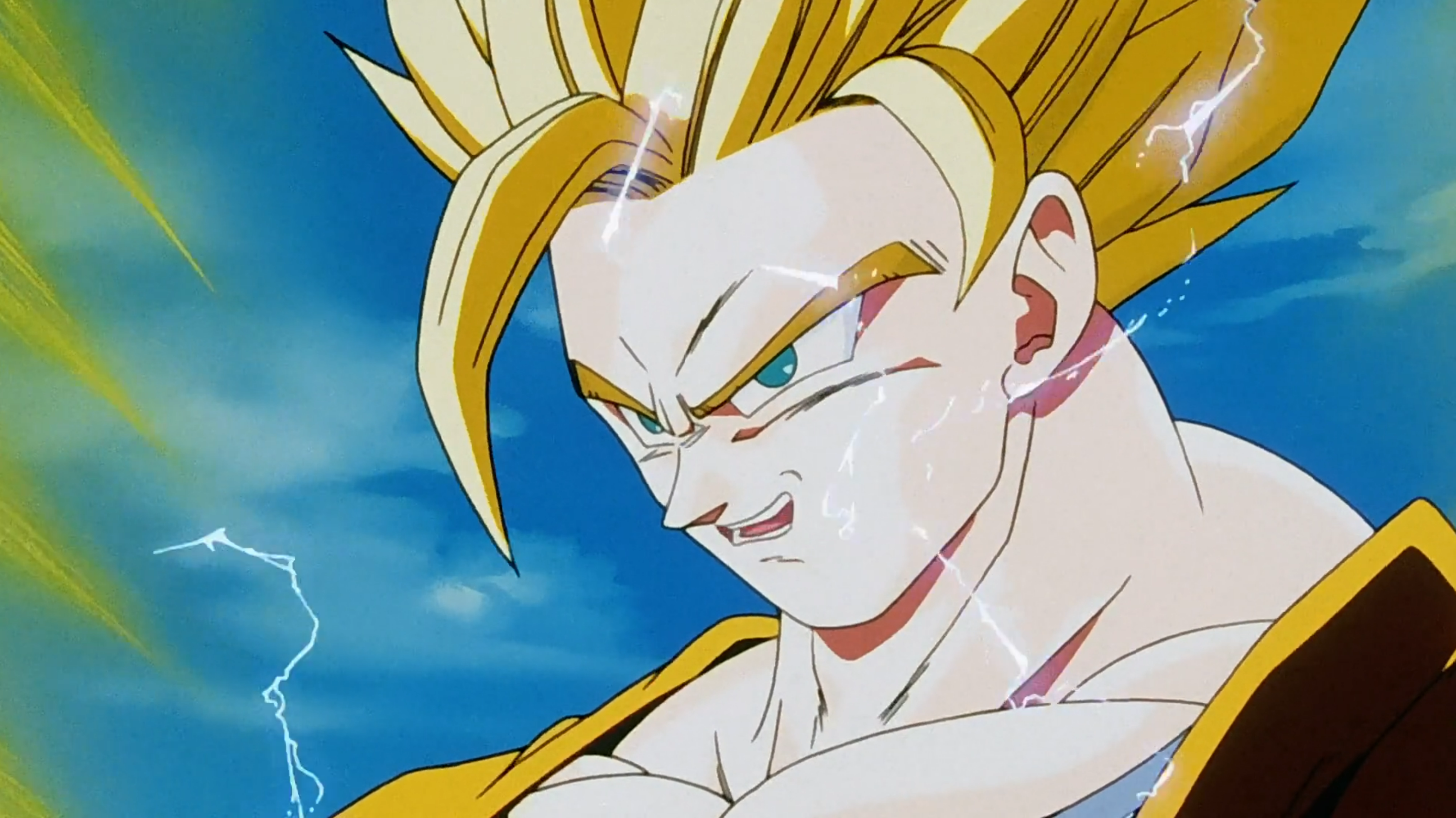
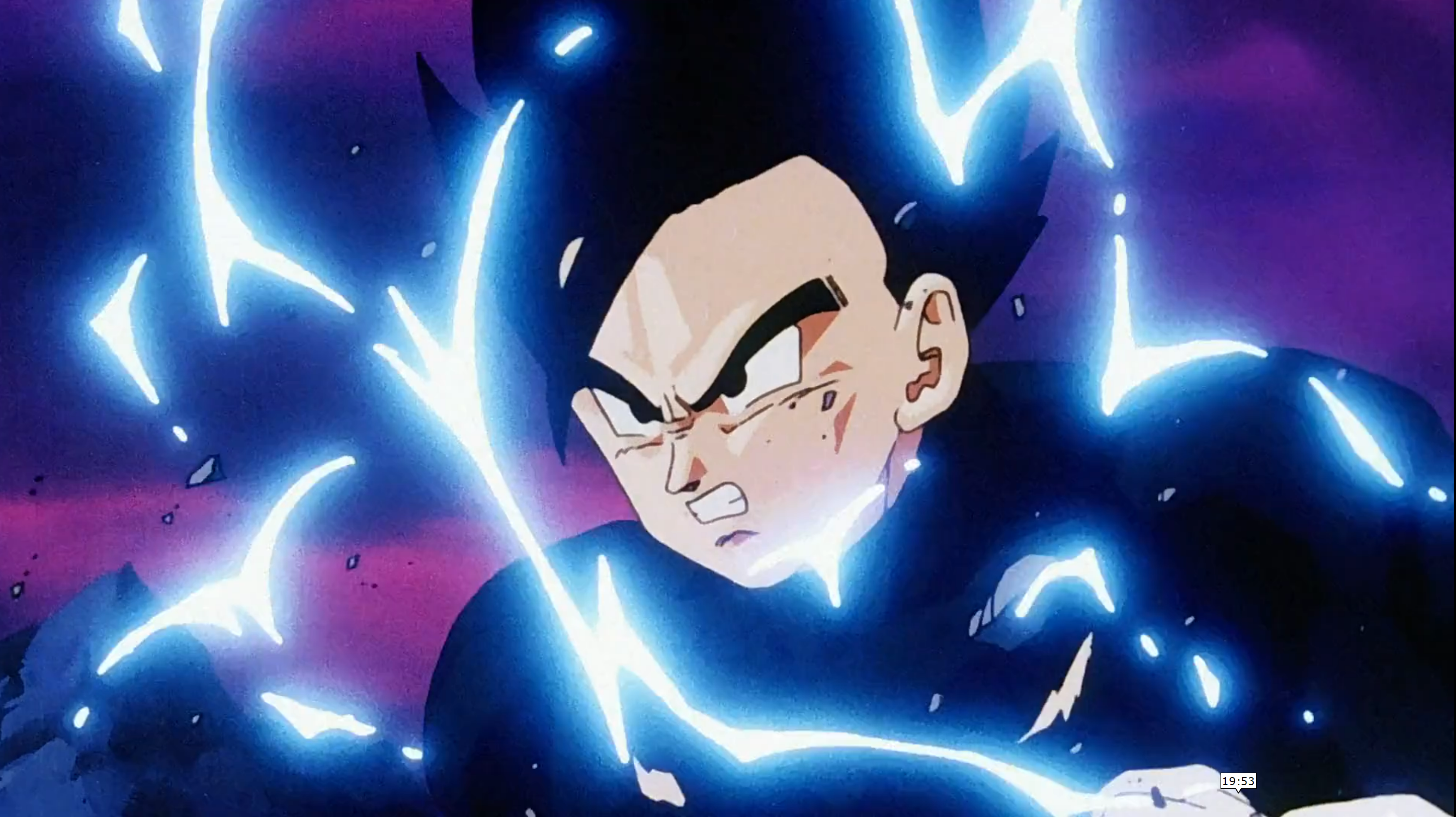
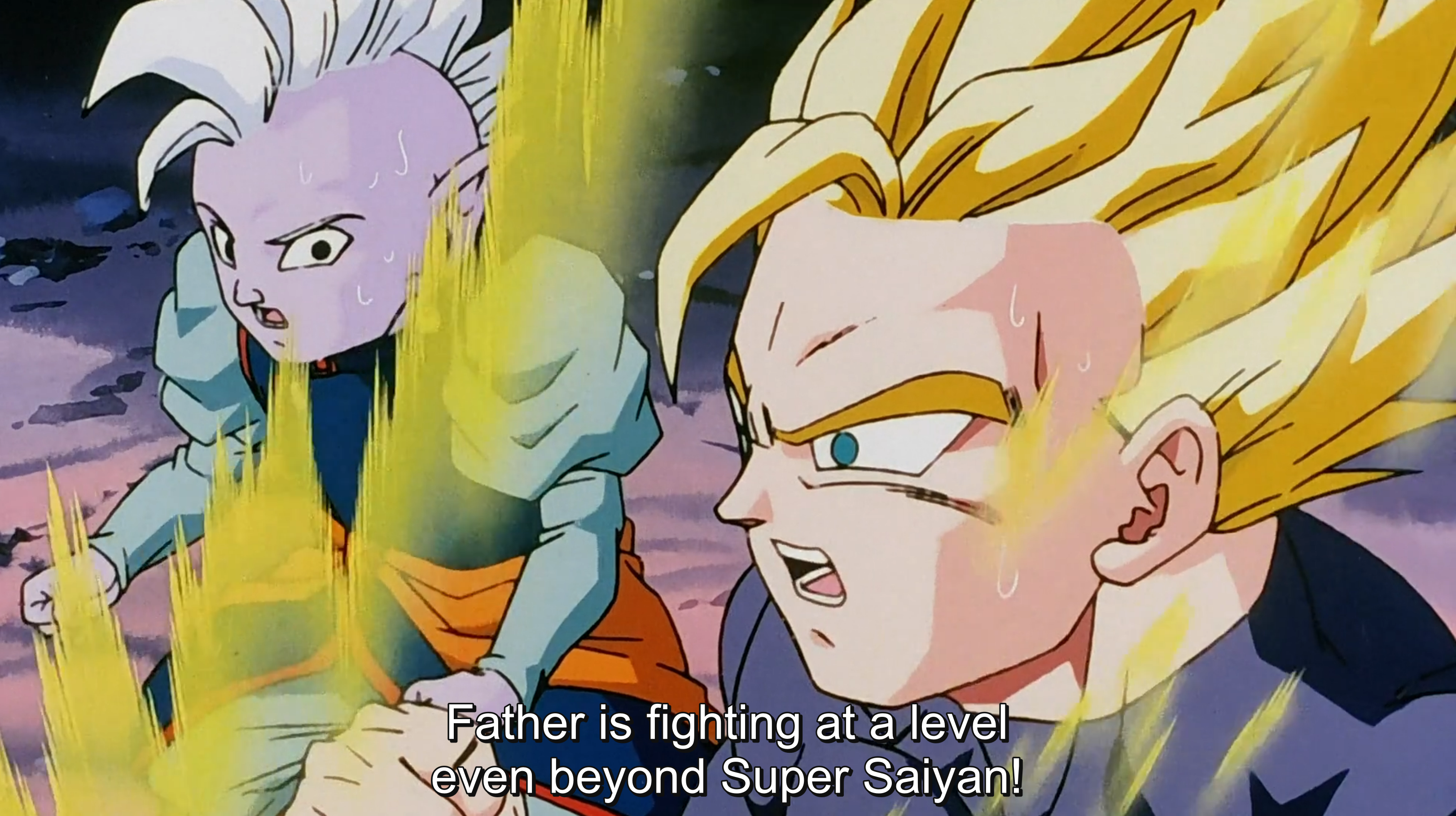
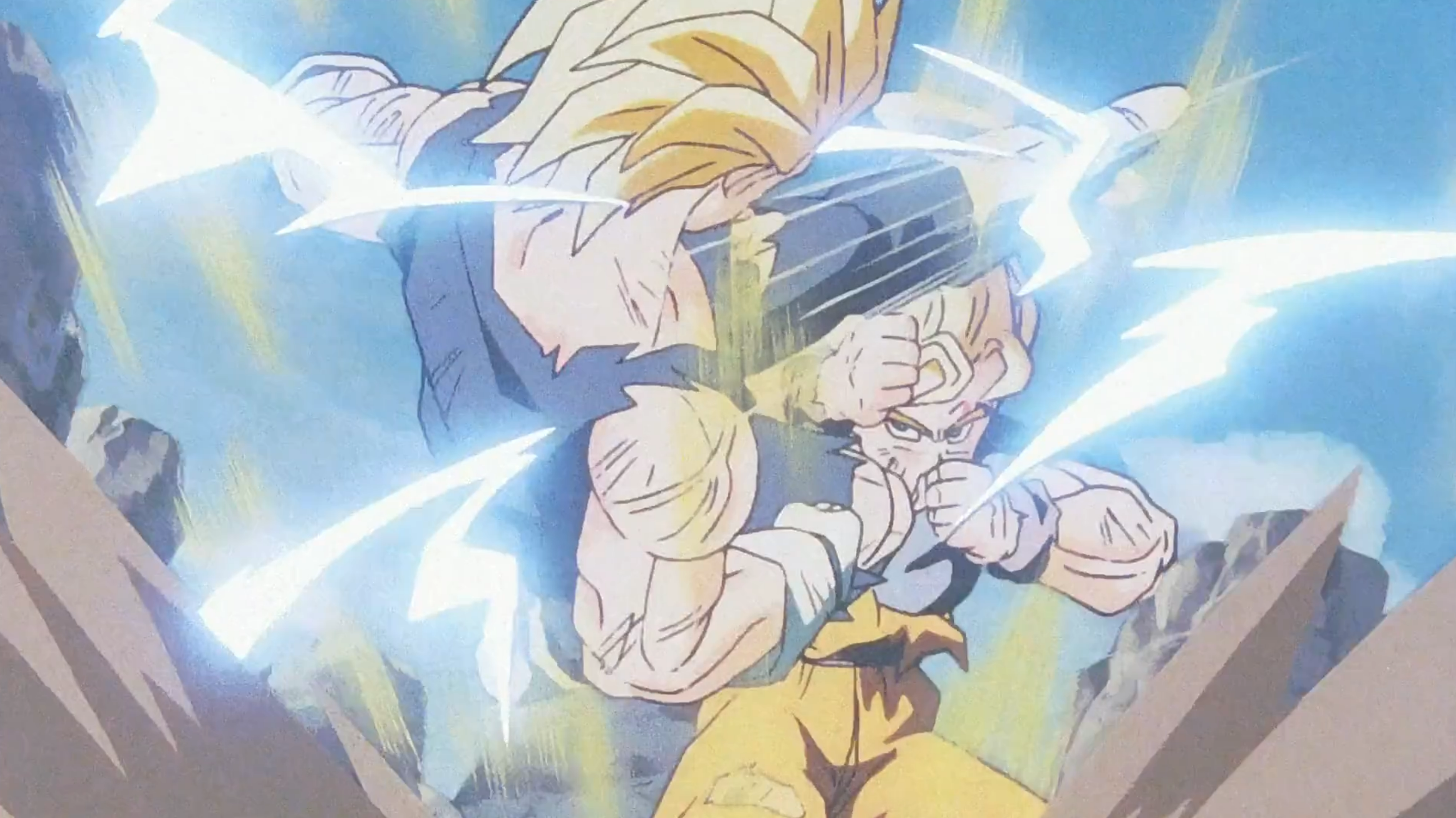
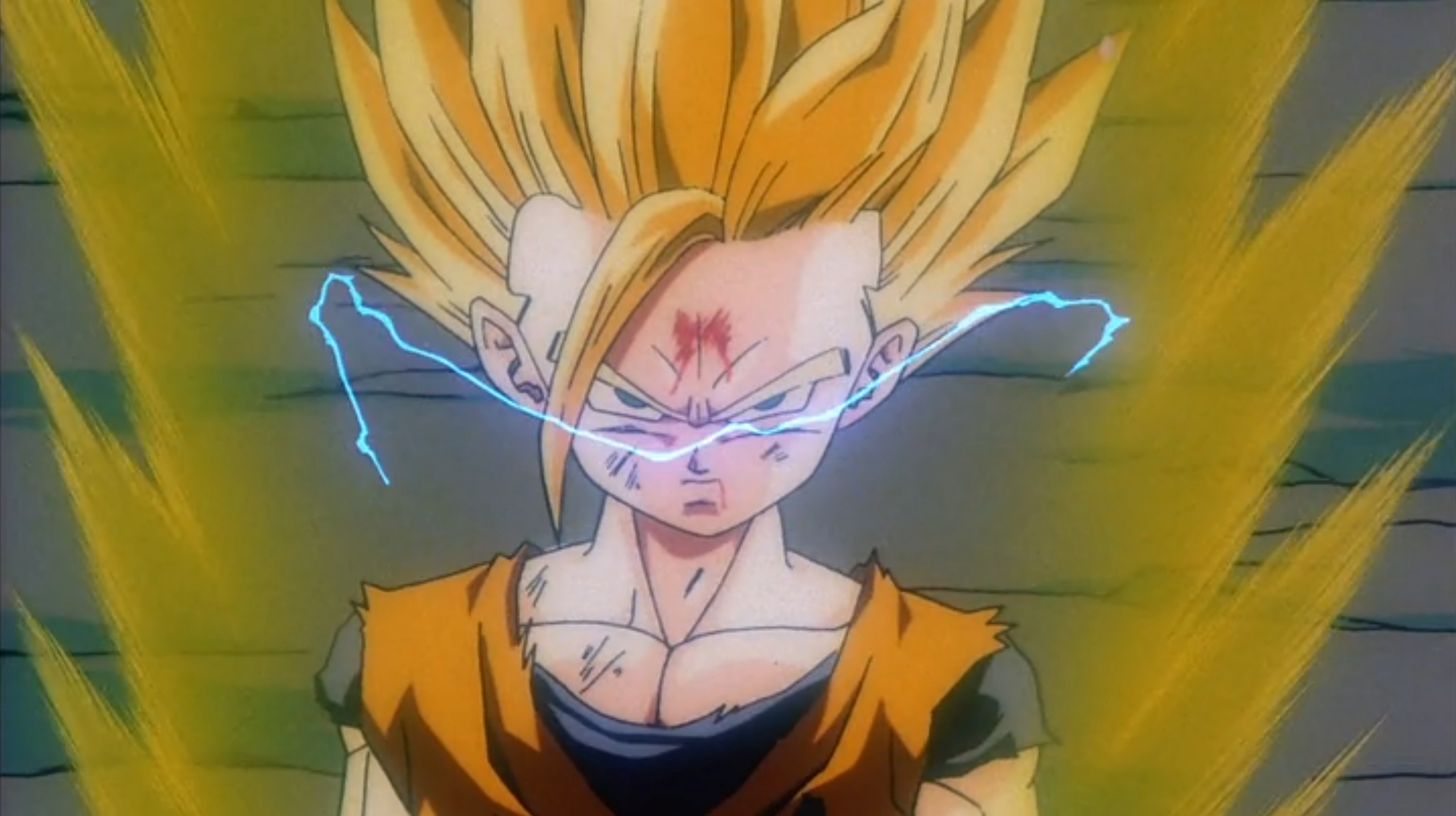
Now let’s take a look at episodes 217, 219, 226, 227, 233, 243, and 281, which were done by other animators.
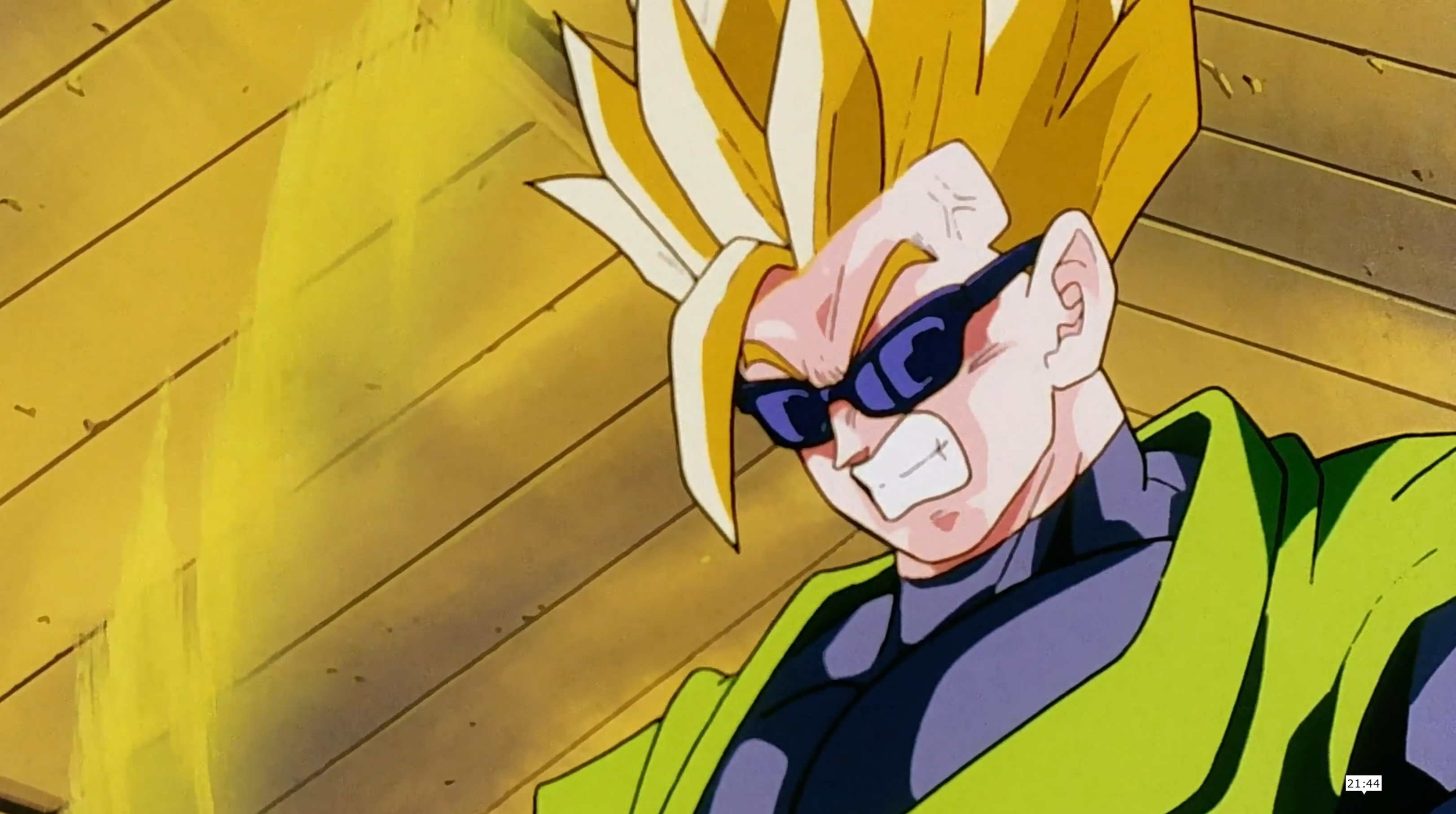
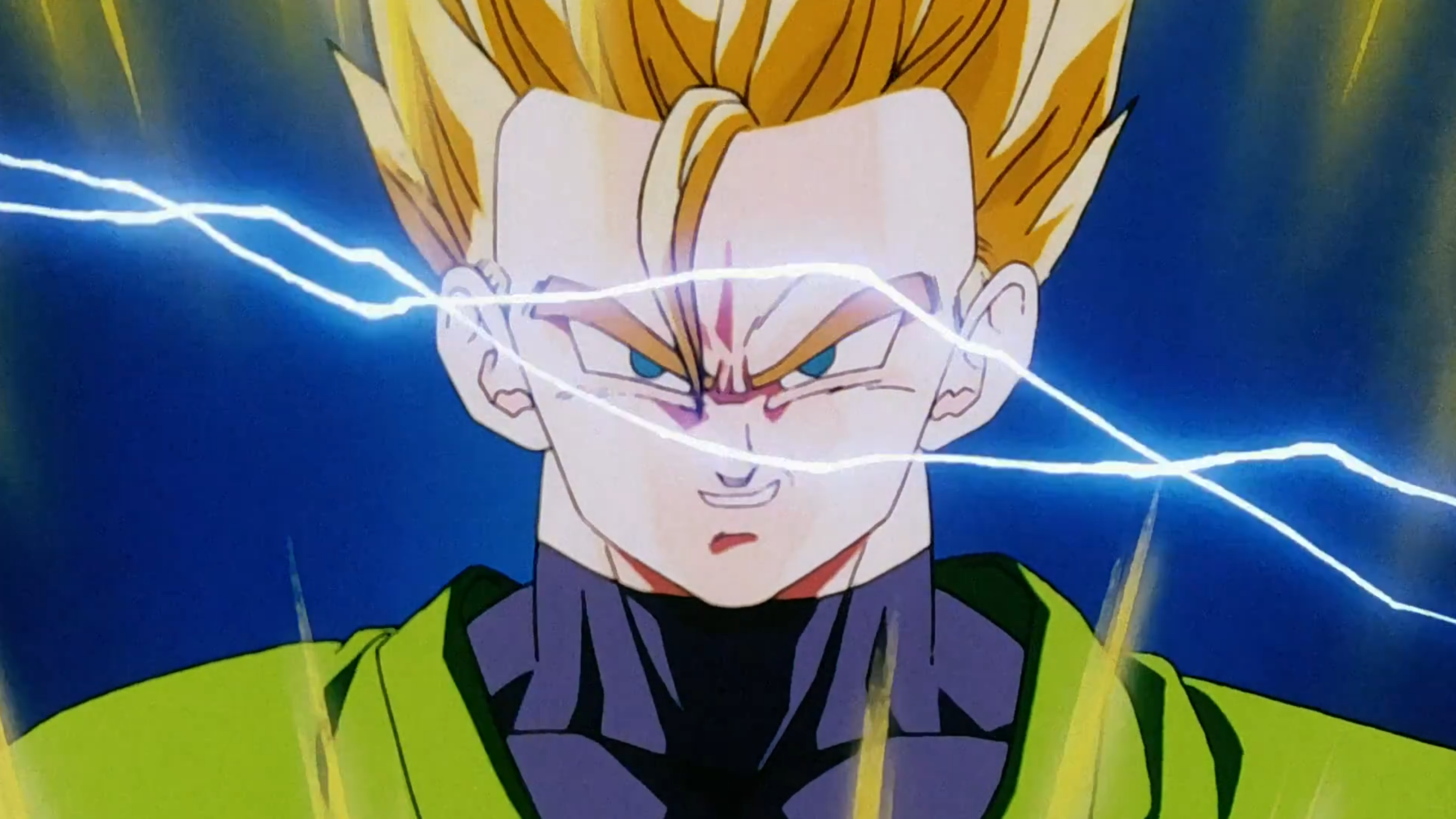
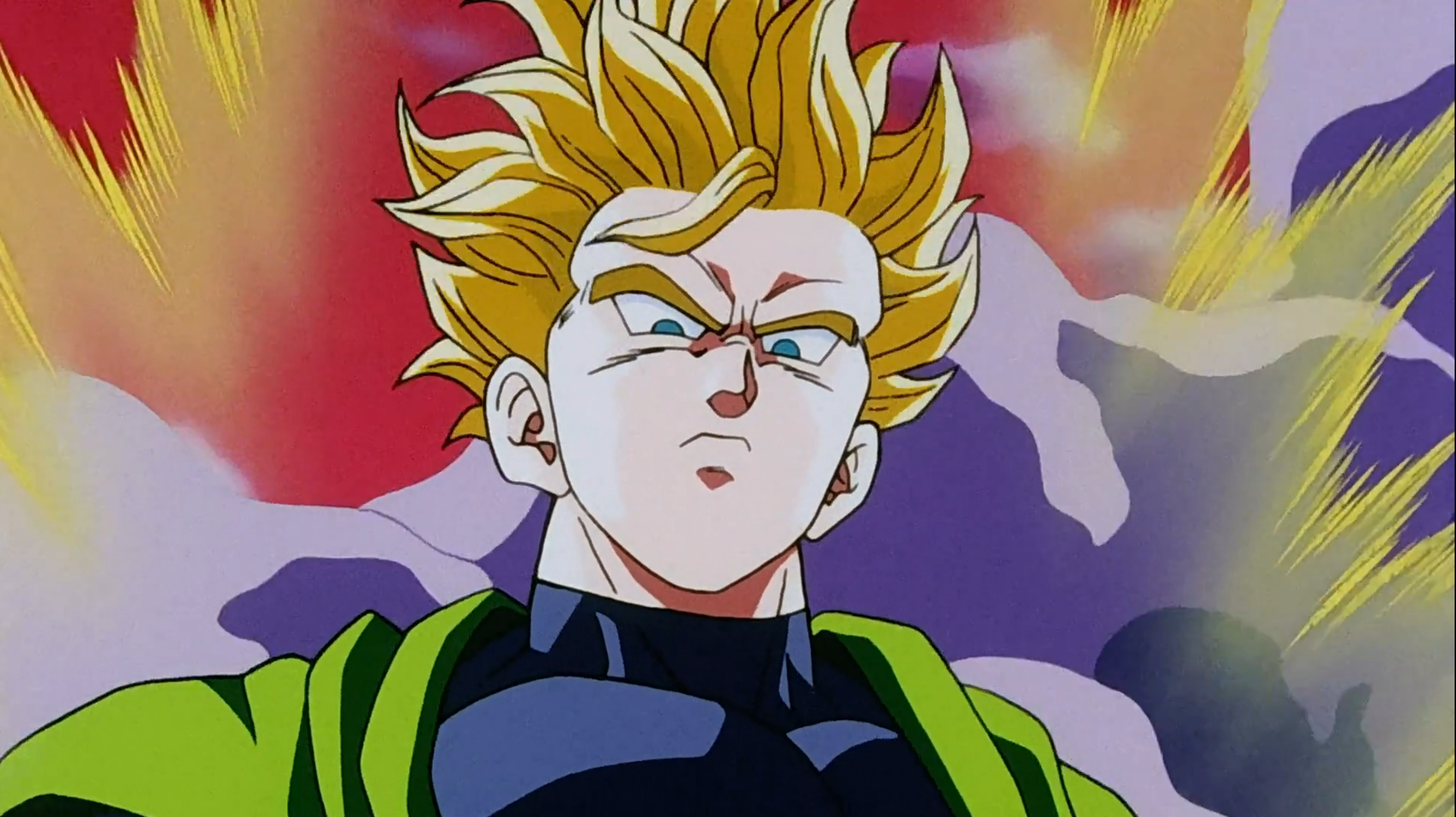
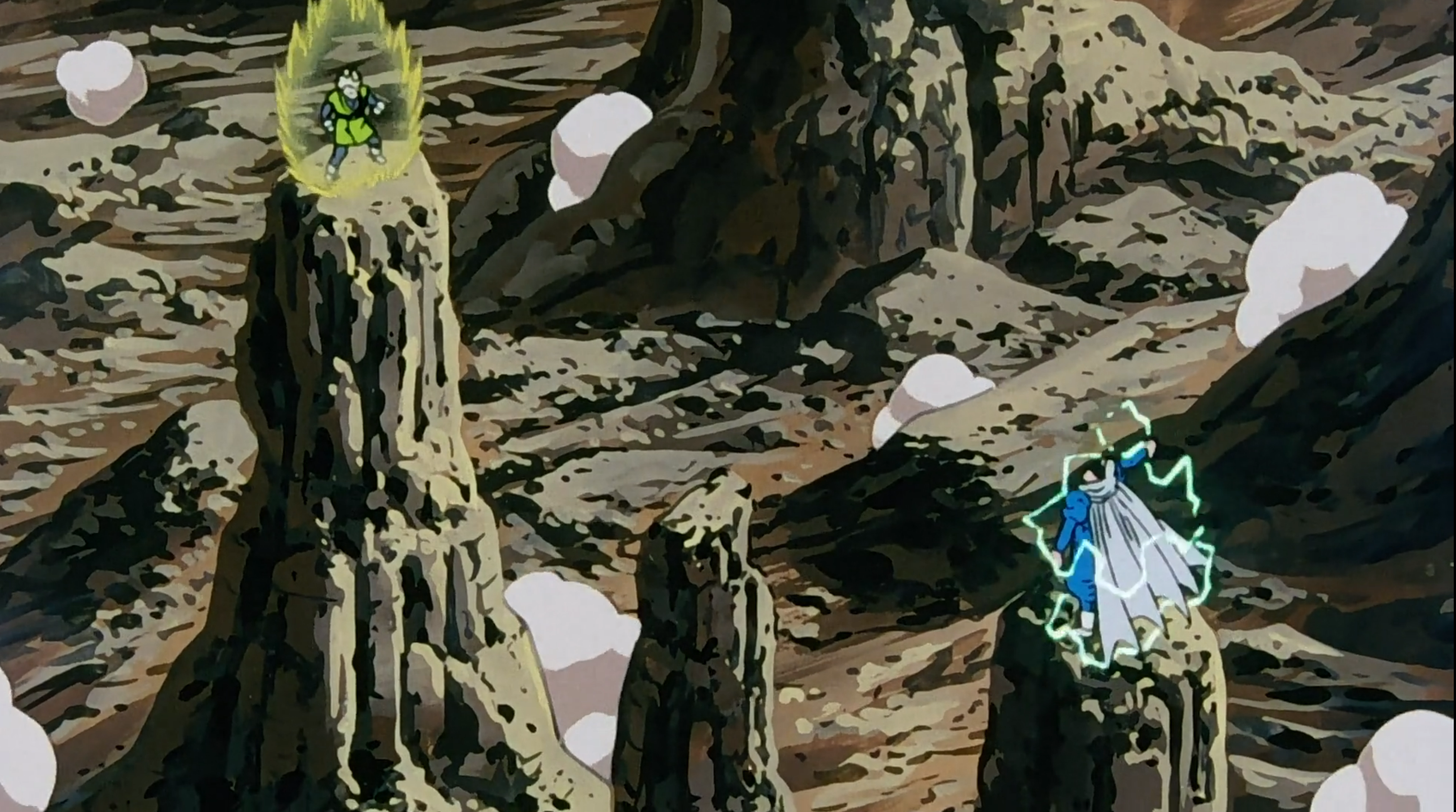
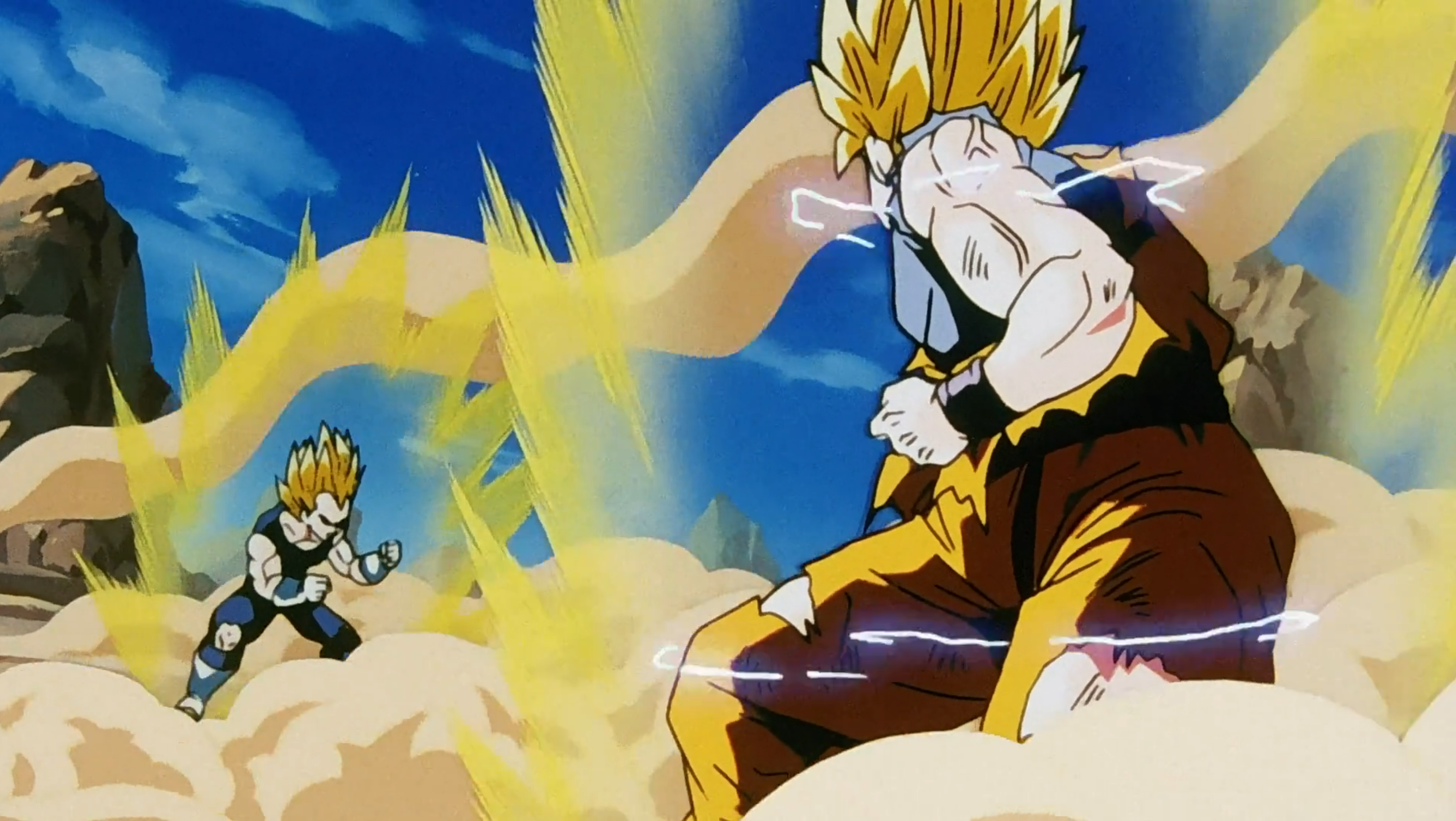
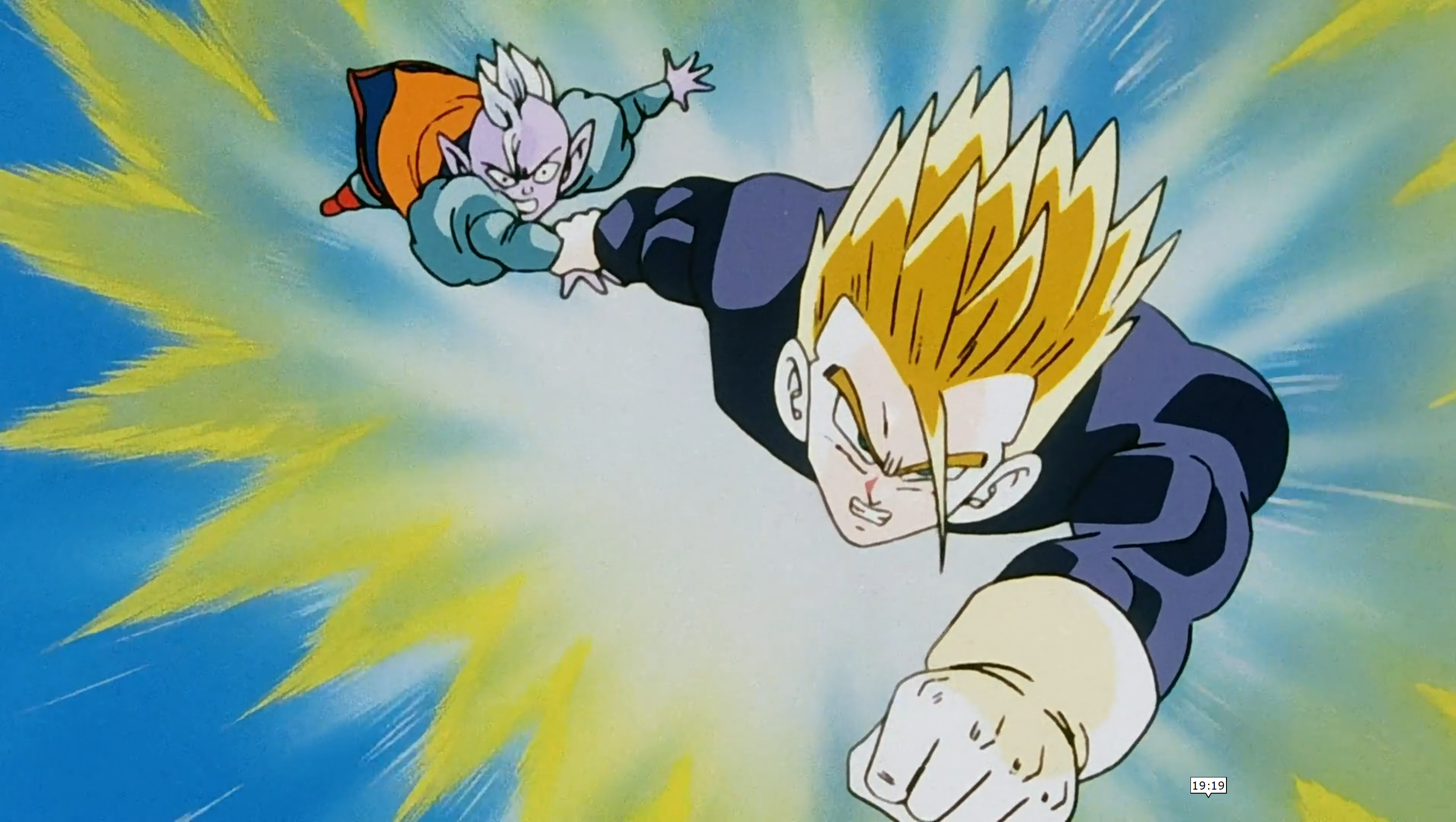
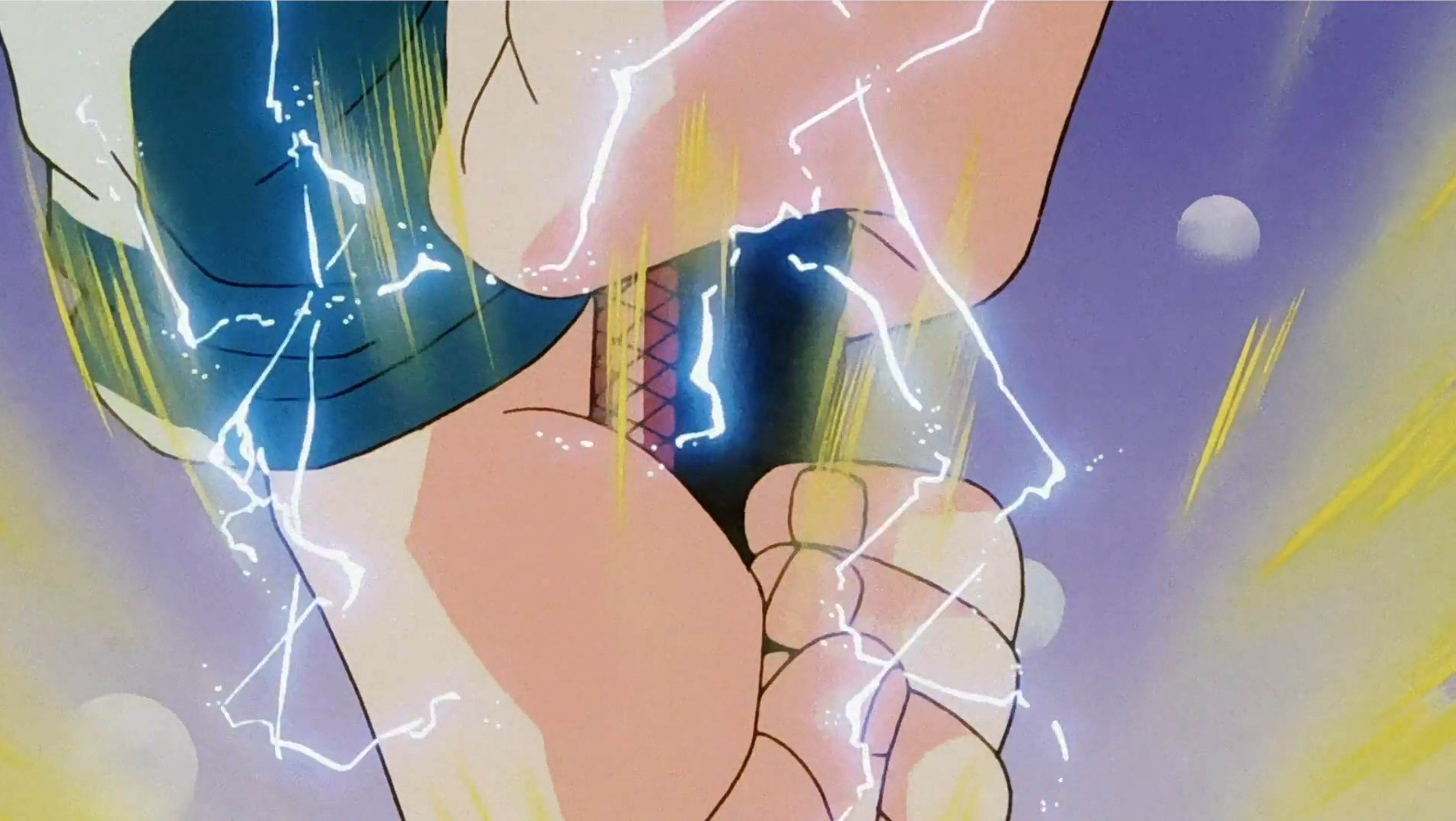
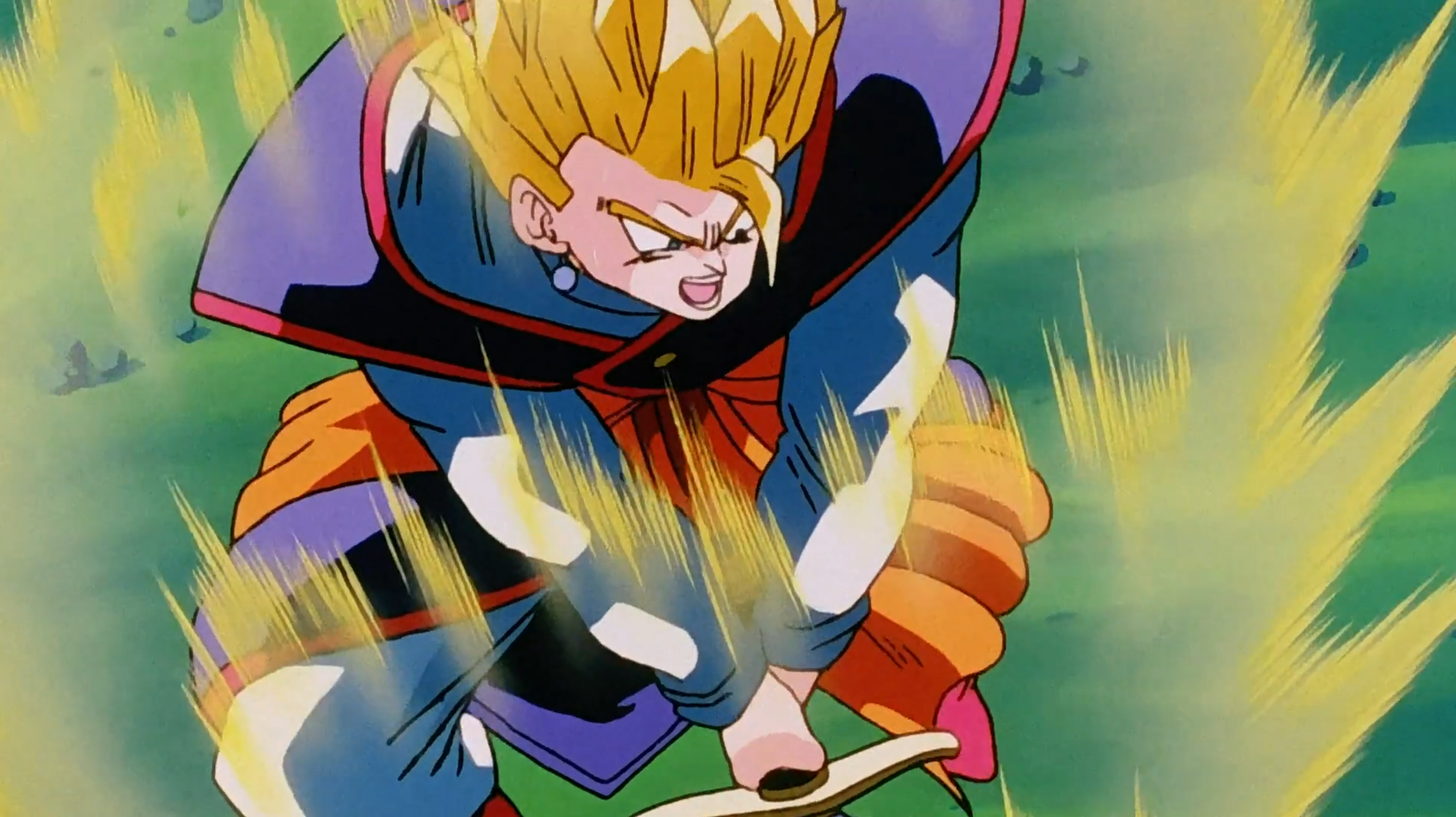
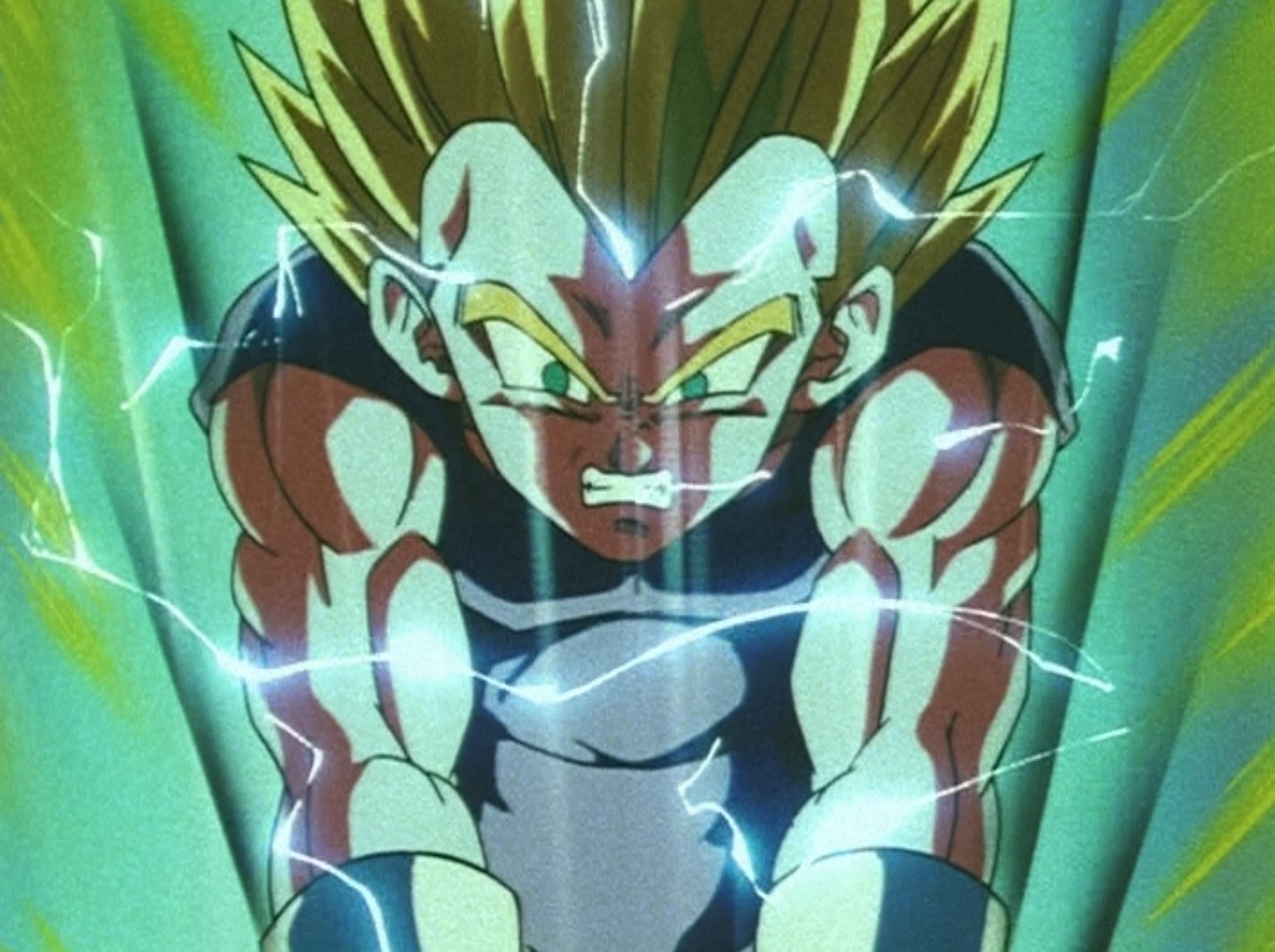
The three examples I’ve found where Toei legitimately made animation errors are Goku at the end of Dragon Ball Z episode 198, Goku in Dragon Ball Z: Wrath of the Dragon, and Bardock in Dragon Ball Z: Episode of Bardock. In episode 198, Goku had not yet unlocked Super Saiyan 2, but his aura briefly has sparks in it. Goku and Teen Gohan are the only 2 characters in Dragon Ball Z that have different hairstyles between their Super Saiyan 1 and 2 forms. In Wrath of the Dragon, Goku’s hairstyle is clearly that of Super Saiyan 2, but his aura doesn’t have any sparks. On pages 29 and 30 of Jump Anime Collection 3: Dragon Ball Z Movie 13, the form Goku is using is identified as just “Super Saiyan.” In Dragon Ball Z: Ultimate Tenkaichi, the fight between Goku and Hirudegarn depicts him as Super Saiyan 2 with sparks in his aura. In the movie, Goku’s Super Saiyan 3 form doesn’t have any sparks, while Gotenks’s does. Episode of Bardock is based on the manga by Ōishi and Toriyama, which does not have sparks in Bardock’s aura and it adds them when Bardock first becomes a Super Saiyan.
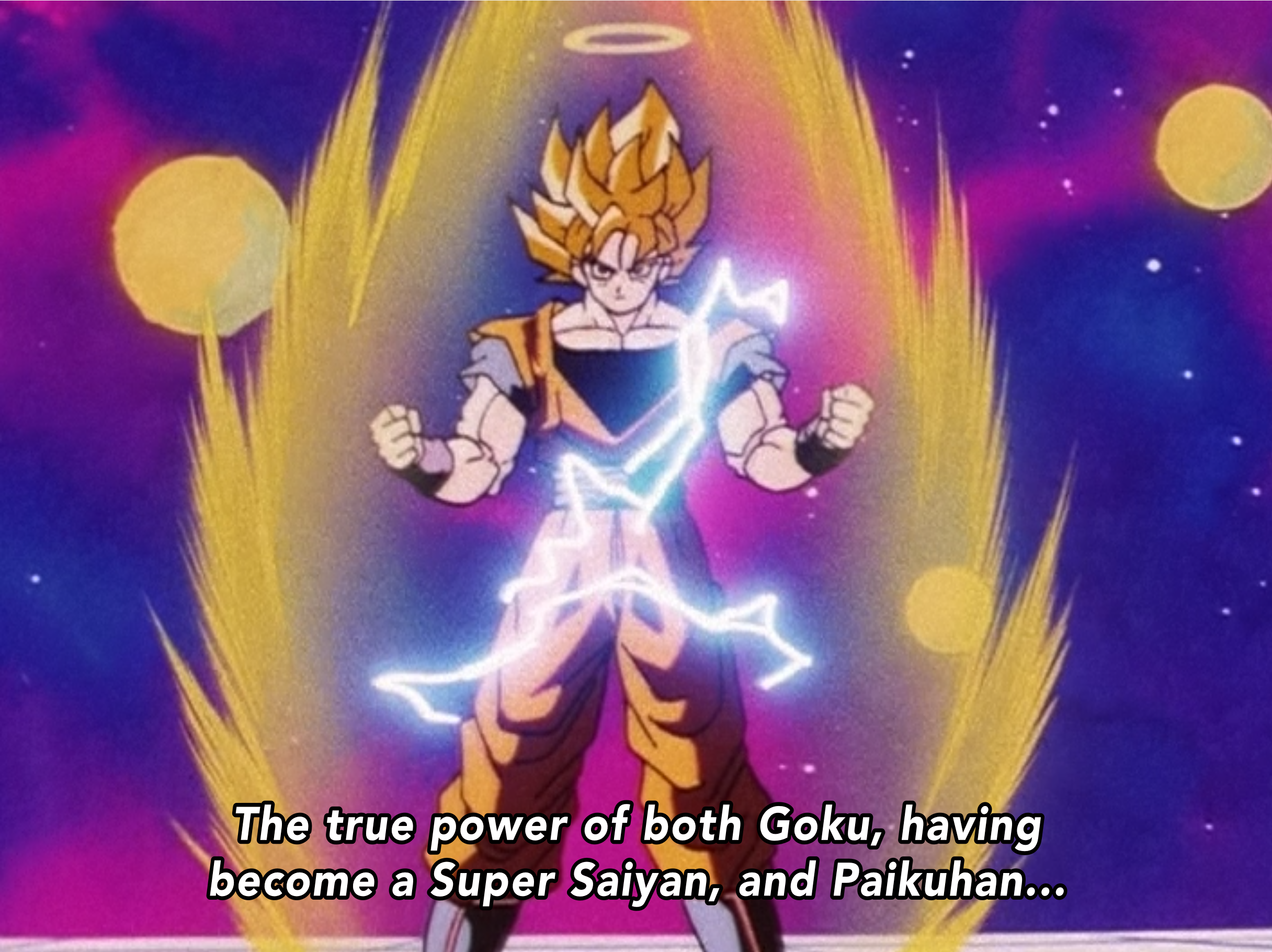
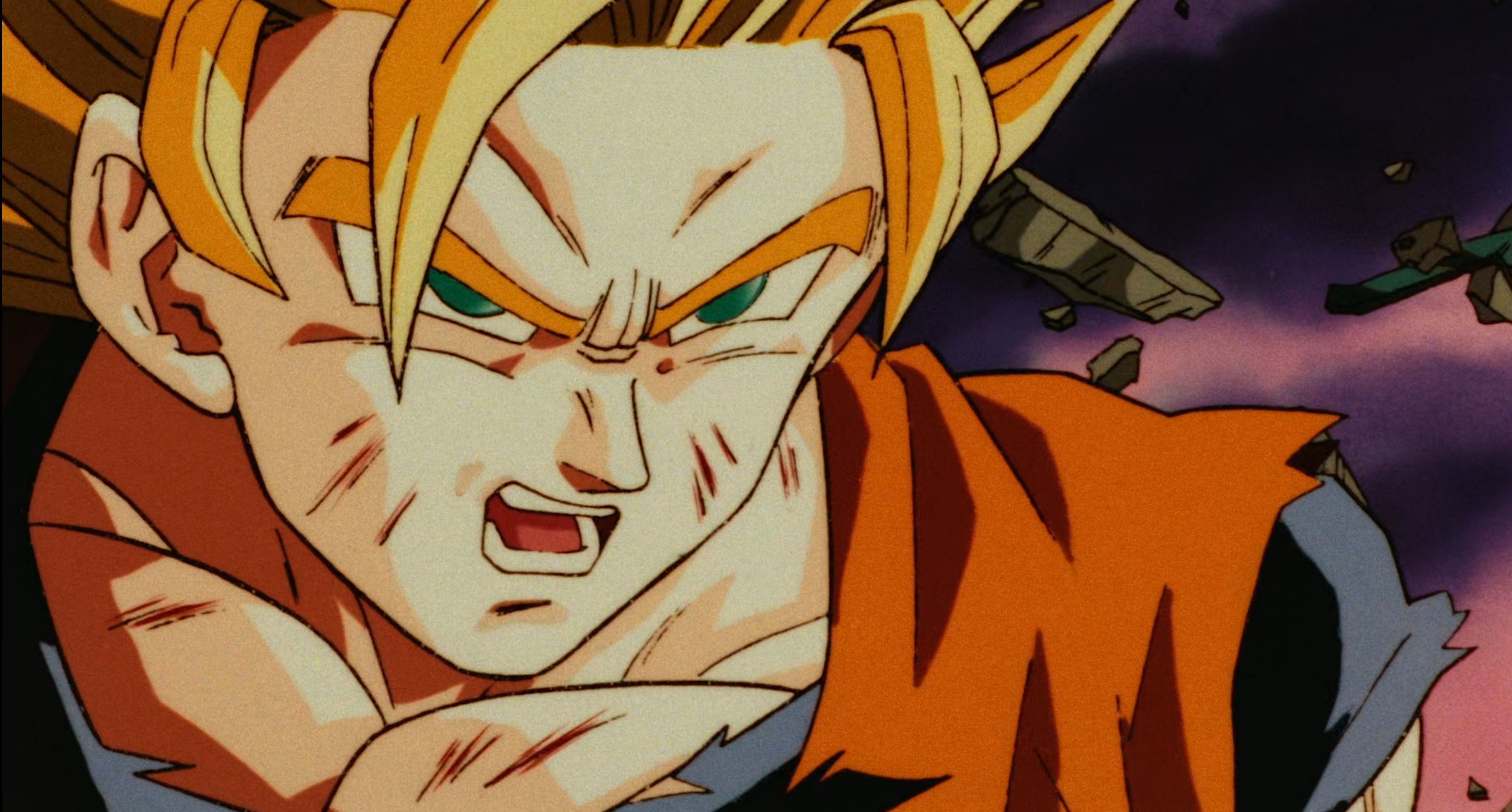
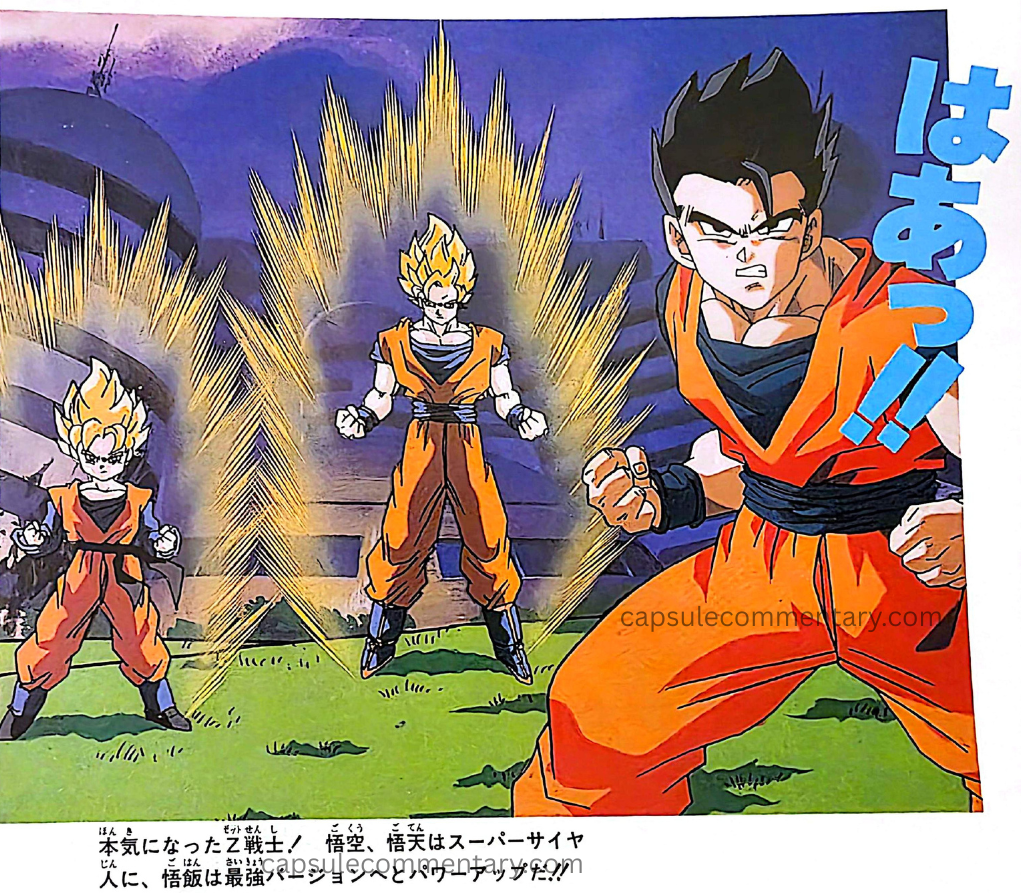
As Gohan’s form is, to my knowledge, the most hotly contested topic within discussions of Broly’s strength, I extended my research on this to see how this form of Gohan is labeled in Dragon Ball games (and in other sources when I found anything relevant). They are in unanimous agreement.
- On page 270 of Chōzenshū 4, it shows a toy of this Gohan and identifies it as “Super Son Gohan,” while another toy is identified as “Super 2 Son Goku.”
- On page 54 of Daizenshū 9, it shows card #400 from the Carddass game which is Gohan wearing the same clothes as in Movie 10, with a single bang of hair, and identifies this form as “the Super Saiyan of courage.” On page 61, the first form of card #507 (before he becomes Ultimate Gohan) shows Gohan wearing the Kaiōshin uniform and is identified as “Super Saiyan.”
- In Dragon Ball Legends, the two Super Saiyan Gohan units from Movie 10 are only identified as Super Saiyan 1: here and here.
- In Dragon Ball: Raging Blast, Super Saiyan 1 Gohan does not have sparks and Super Saiyan 2 Gohan does. The character description for Super Saiyan 2 Gohan describes how he used it in front of Kibito at the tournament and then writes: “Gohan never transformed into Super Saiyan 2 form [sic] again after that experience, though the reason for this remains a mystery.”
- In Dragon Ball: Raging Blast 2, Super Saiyan 1 Gohan does not have sparks and Super Saiyan 2 Gohan does. The character description for Super Saiyan 2 Gohan in Raging Blast is repeated in this game.
- In Dragon Ball: Sparking Zero, Super Saiyan 1 Gohan does not have sparks and Super Saiyan 2 Gohan does.
- In Dragon Ball Super Divers, card SDV6-027 depicts Gohan as he looks in Movie 10 and identifies him as simply “Super Saiyan” despite clarifying when a character is Super Saiyan 2 on other cards.
- In Dragon Ball Xenoverse 2, Super Saiyan 1 Gohan does not have sparks and Super Saiyan 2 Gohan does.
- In Dragon Ball Z: Budokai 2, Super Saiyan 1 Gohan does not have sparks and Super Saiyan 2 Gohan does.
- In Dragon Ball Z: Budokai 3, Super Saiyan 1 Gohan does not have sparks and Super Saiyan 2 Gohan does.
- In Dragon Ball Z: Budokai Tenkaichi, Super Saiyan 1 Gohan does not have sparks and Super Saiyan 2 Gohan does. Also, the Character Illustration for Super Saiyan 2 Gohan describes how he used it in front of Kibito at the tournament and then writes: “This was the one and only time Gohan ever took this form. The reasons for this are not known. Could it be that his lack of training made this form too difficult?”
- In Dragon Ball Z: Budokai Tenkaichi 2, Super Saiyan 1 Gohan does not have sparks and Super Saiyan 2 Gohan does.
- In Dragon Ball Z: Budokai Tenkaichi 3, Super Saiyan 1 Gohan does not have sparks and Super Saiyan 2 Gohan does. Additionally, in the Meteor Bible (the official game guide) on page 234, it even has the exact battle against Broly that’s in the film and Gohan is only labeled as “Super Saiyan.” In the Character Illustration for Super Saiyan 2 Gohan, it describes how he used it in front of Kibito and then writes: “Afterwards, he never performed this transformation again. The reasons why are unknown.”
- In Dragon Ball Z Dokkan Battle, there are four Gohan cards that use scenes from Movie 10 and all of them are identified as Super Saiyan 1: here, here, here, and here. There is another card with Gohan wearing the same clothing (but with sparks around him) identified as Super Saiyan 2.
- In Dragon Ball Z: Infinite World, Super Saiyan 1 Gohan does not have sparks and Super Saiyan 2 Gohan does.
- In Dragon Ball Z: Kakarot, Super Saiyan 1 Gohan does not have sparks and Super Saiyan 2 Gohan does. In the Card Warriors section of the game, Gohan is identified as Super Saiyan 1 in three contexts: while fighting Dabura, while wielding the Z Sword, and while wearing the same outfit he wore in Movie 10. When fighting Dabura in the story as Gohan, the game makes the player start the fight with Super Saiyan 1. He also uses Super Saiyan 1 when he attacks Majin Buu’s shell and pulls out the Z Sword.
- In Dragon Ball Z: Shin Budokai, Super Saiyan 1 Gohan does not have sparks and Super Saiyan 2 Gohan does.
- In Dragon Ball Z: Shin Budokai – Another Road, Super Saiyan 1 Gohan does not have sparks and Super Saiyan 2 Gohan does.
- In Dragon Ball Z: Tenkaichi Tag Team, Super Saiyan 1 Gohan does not have sparks and Super Saiyan 2 Gohan does.
- The card of Gohan wearing the Kaiōshin clothing in Itajaga Dragon Ball Vol. 6 is only labeled “Super Saiyan” despite other cards clarifying when a form is Super Saiyan 2.
- In Saikyō Jump September 2022 on pages 154 and 155, there is a 2-page spread for toys and the Kamehameha at the end of Movie 10 is featured prominently. Every single form is properly and correctly labeled here: Super Janemba instead of Janemba, Metal Cooler instead of Cooler, etc. Gohan is labeled as being “Super Saiyan.”
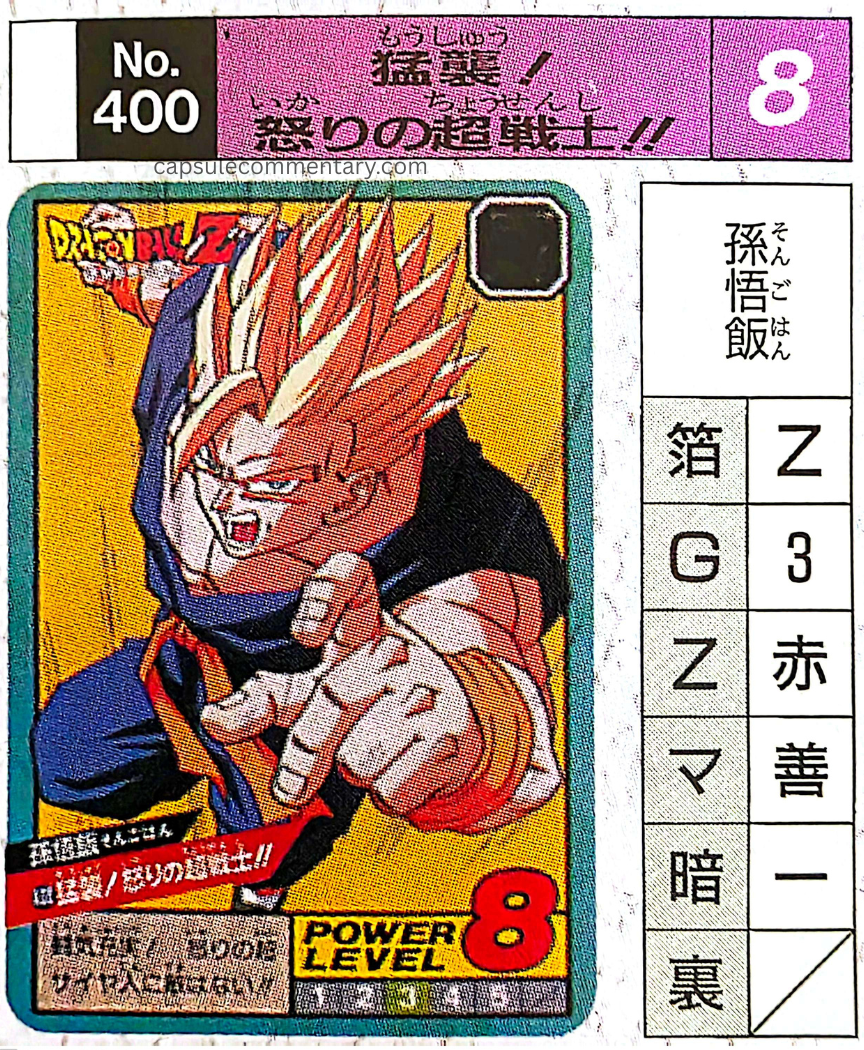
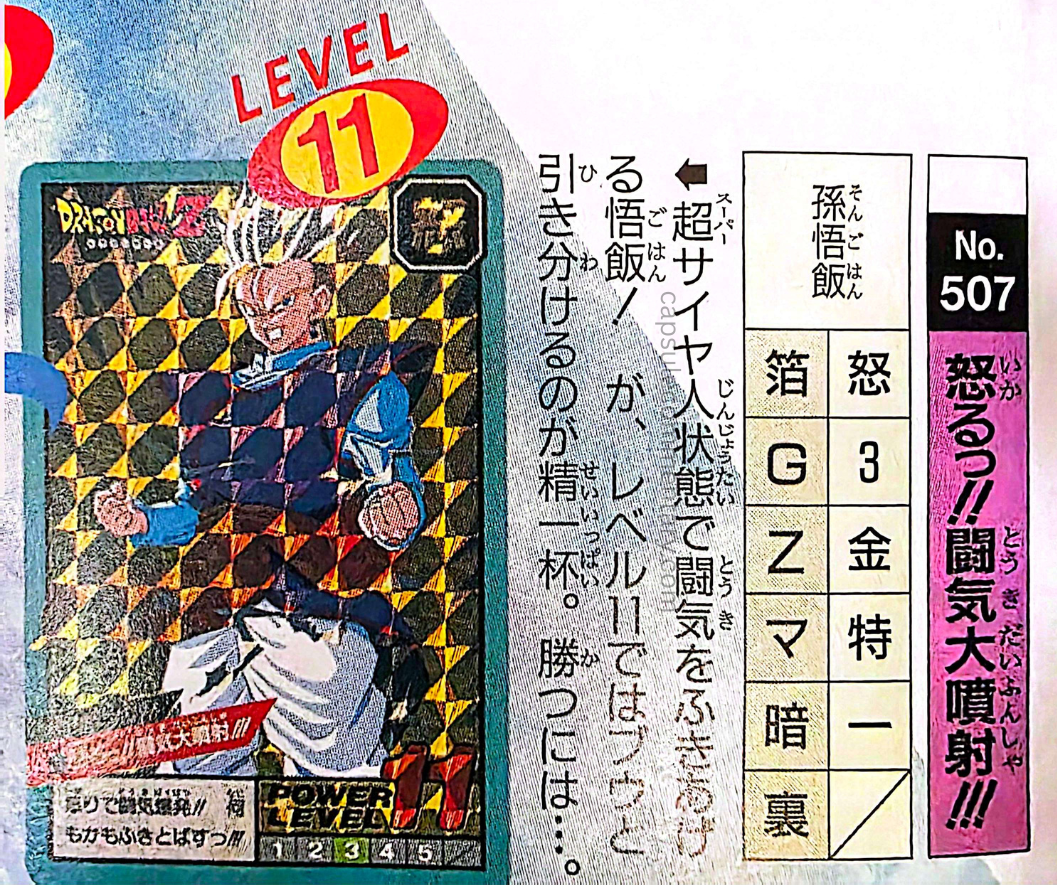
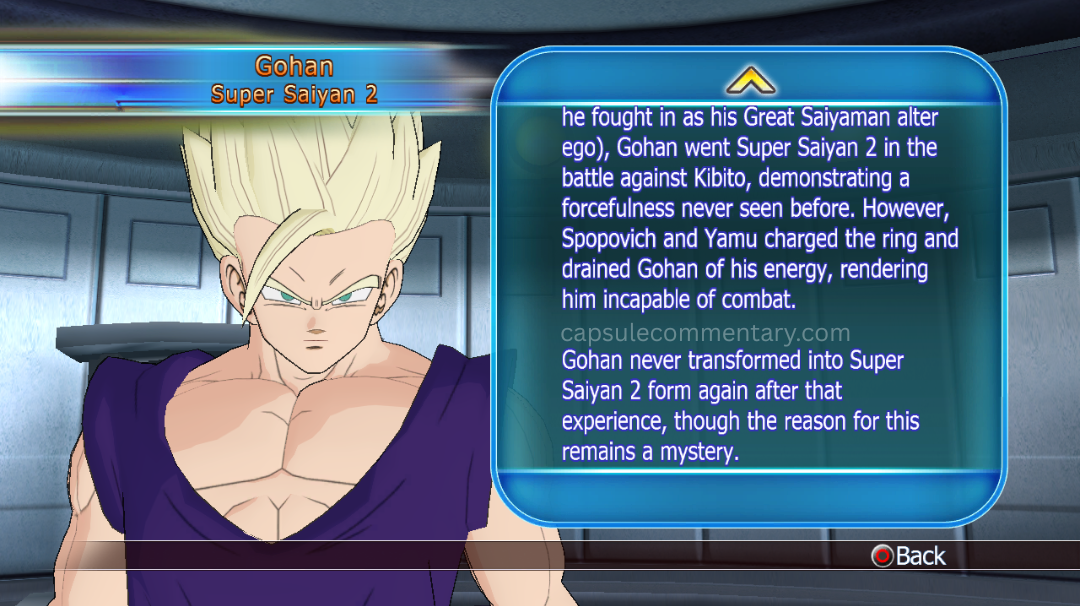
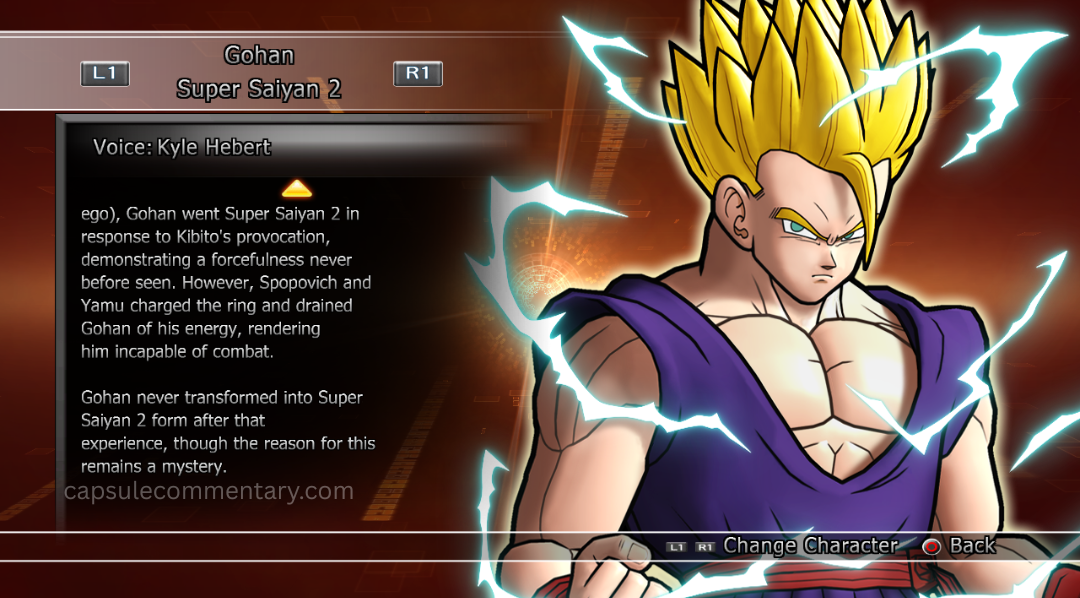
![Dragon Ball: Sparking Meteor [Budokai Tenkaichi 3]: Meteor Bible page 234](https://capsulecommentary.com/wp-content/uploads/2025/07/473.png)
One counter-argument is that when Adult Gohan is Super Saiyan 1, he has two bangs of hair, but when he’s Super Saiyan 2, he only has one. Dragon Ball: Raging Blast, Dragon Ball: Raging Blast 2, and Dragon Ball: Sparking Zero follow this design for Gohan. However, the battle between Dabura and Gohan in Raging Blast 2, and the battles between Fat Buu and Gohan and Movie 10 Broly and Gohan in Raging Blast 1 all have Gohan in his Super Saiyan 1 form.5 At the same time, other games do not follow the hair bang distinction, such as all three Ultimate Mission games, Dragon Ball Z: Battle of Z, and Dragon Ball: Budokai Tenkaichi 3. Dragon Ball Z: Kakarot follows this hair design, but still had Gohan use Super Saiyan 1 against Dabura, while attacking Majin Buu’s shell, and while pulling out the Z Sword. For the sake of argument, let’s assume this hair theory is correct. In the movie poster for Movie 10 and during the final Kamehameha, Gohan has two bangs of hair. So, in the highly unlikely chance that Gohan is Super Saiyan 2 during Movie 10, we’re still forced to conclude that the final Kamehameha of Movie 10 was done by Super Saiyan 1 characters.

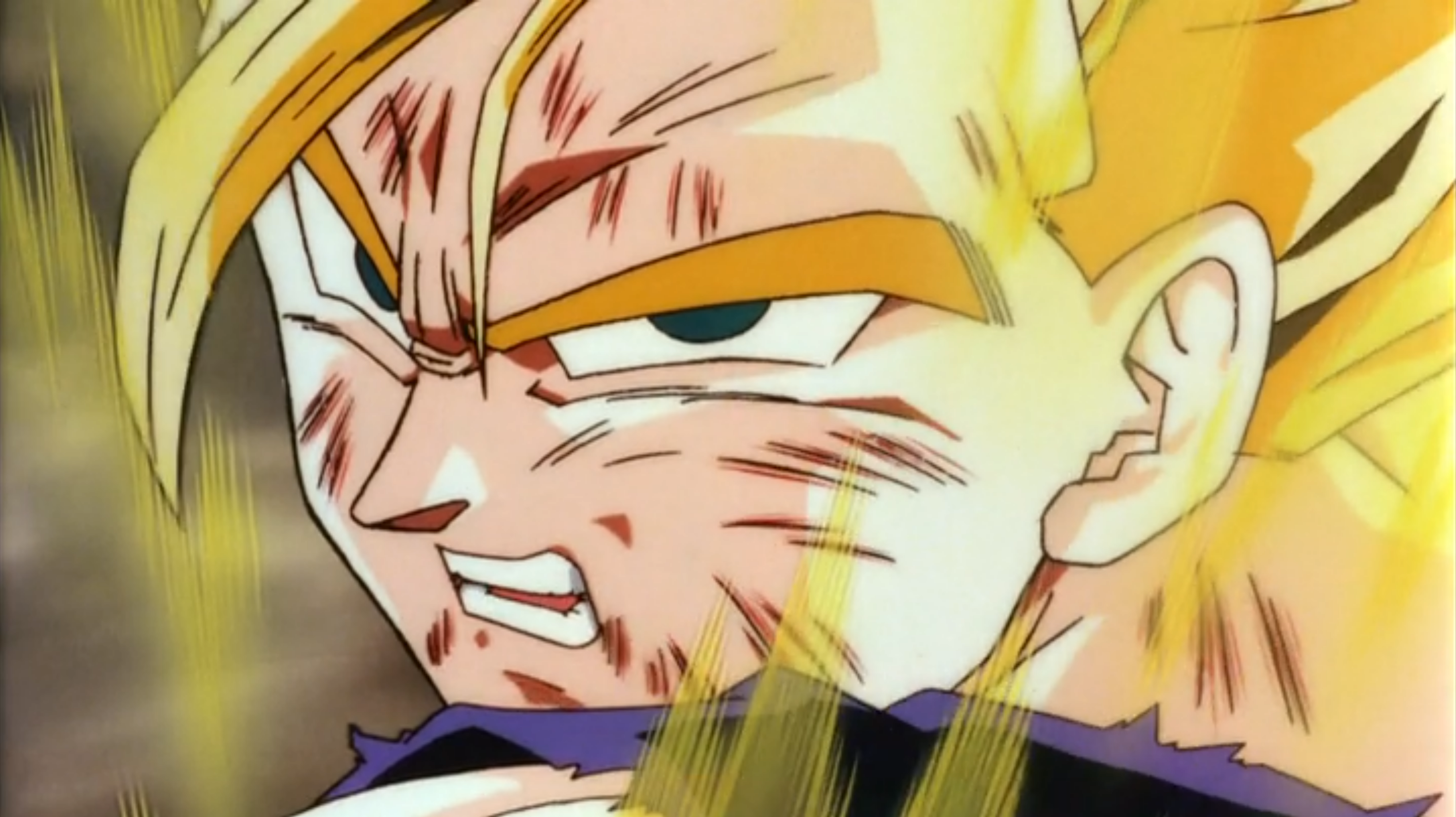
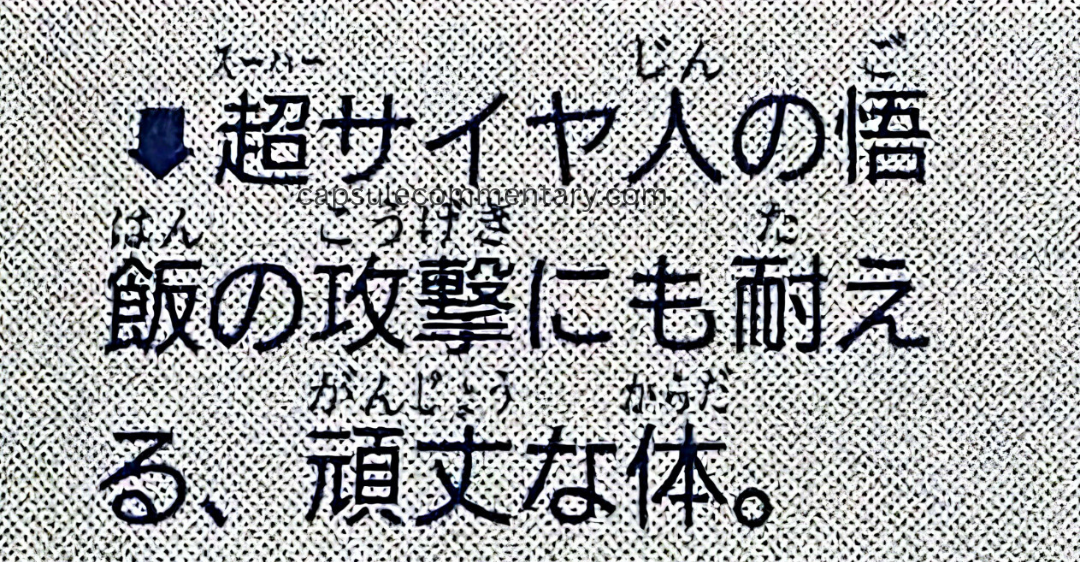
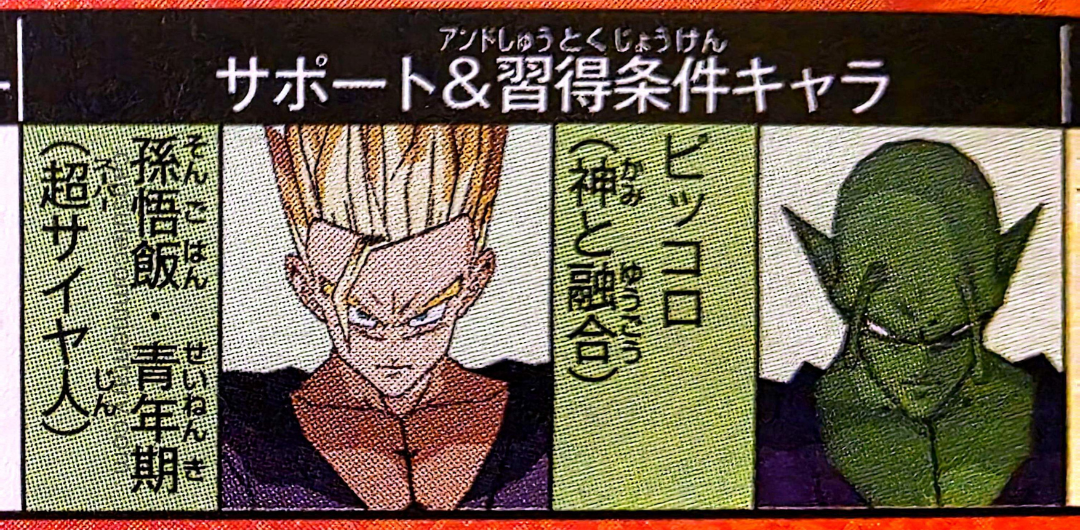
![Dragon Ball: Sparking Meteor [Budokai Tenkaichi 3]: Meteor Bible pages 34 and 35](https://capsulecommentary.com/wp-content/uploads/2025/07/472.png)
And more importantly, Toriyama himself did not even follow this notion of 2 bangs indicating Super Saiyan 1, and 1 bang indicating Super Saiyan 2. Excluding the chapters that fans debate over (Dabura, Fat Buu, and the Z Sword), there are 12 panels of Super Saiyan 1 Gohan with only 1 bang of hair. Super Saiyan 1 Gohan having two bangs of hair primarily comes from chapter 427, when he is training with Goten. Thus, the number of bangs he has is simply not a distinguishing feature between the forms. This is why observing the sparks of electricity in the aura is so important. Furthermore, in the Dragon Ball Super manga and the Resurrection ‘F’ manga, each appearance of Super Saiyan 1 Gohan has only 1 bang. I’m only including one panel per fight from the relevant Super and Resurrection ‘F’ chapters because there would otherwise be too many panels. I’m also including some examples from the Dragon Ball Super: Super Hero pamphlets and the Blu-Ray Box Set’s booklet.
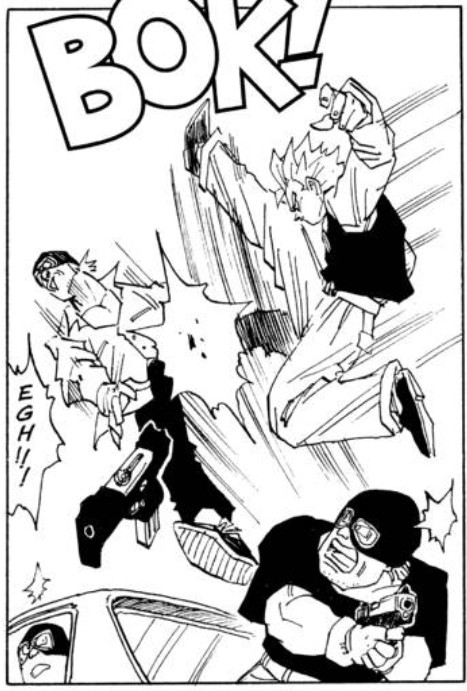
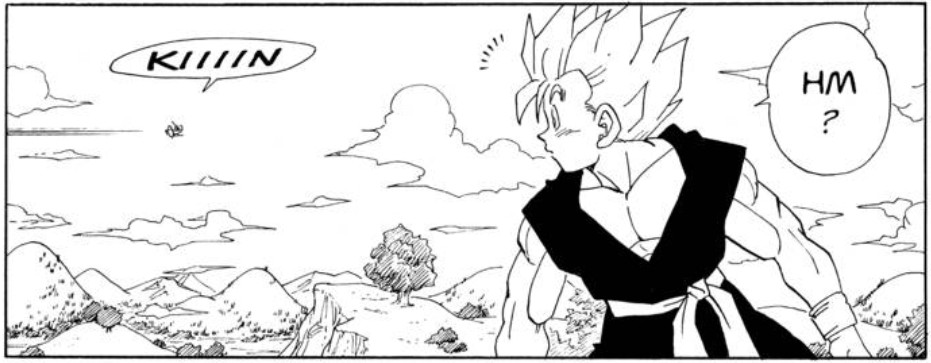
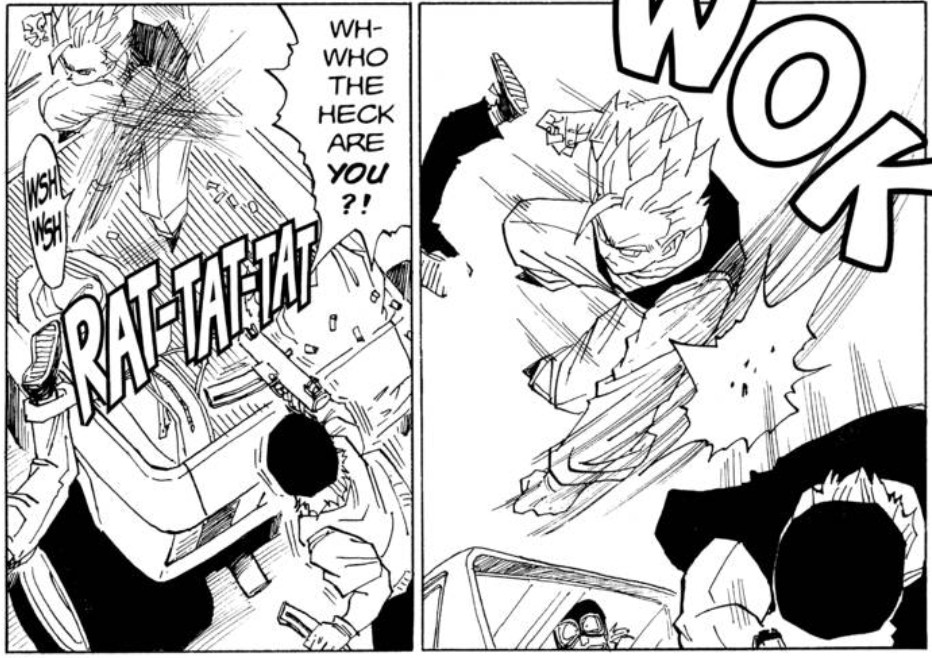
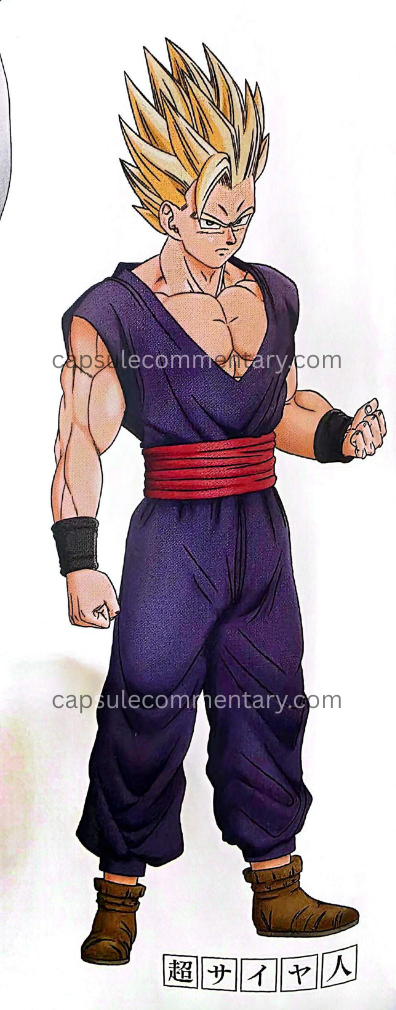
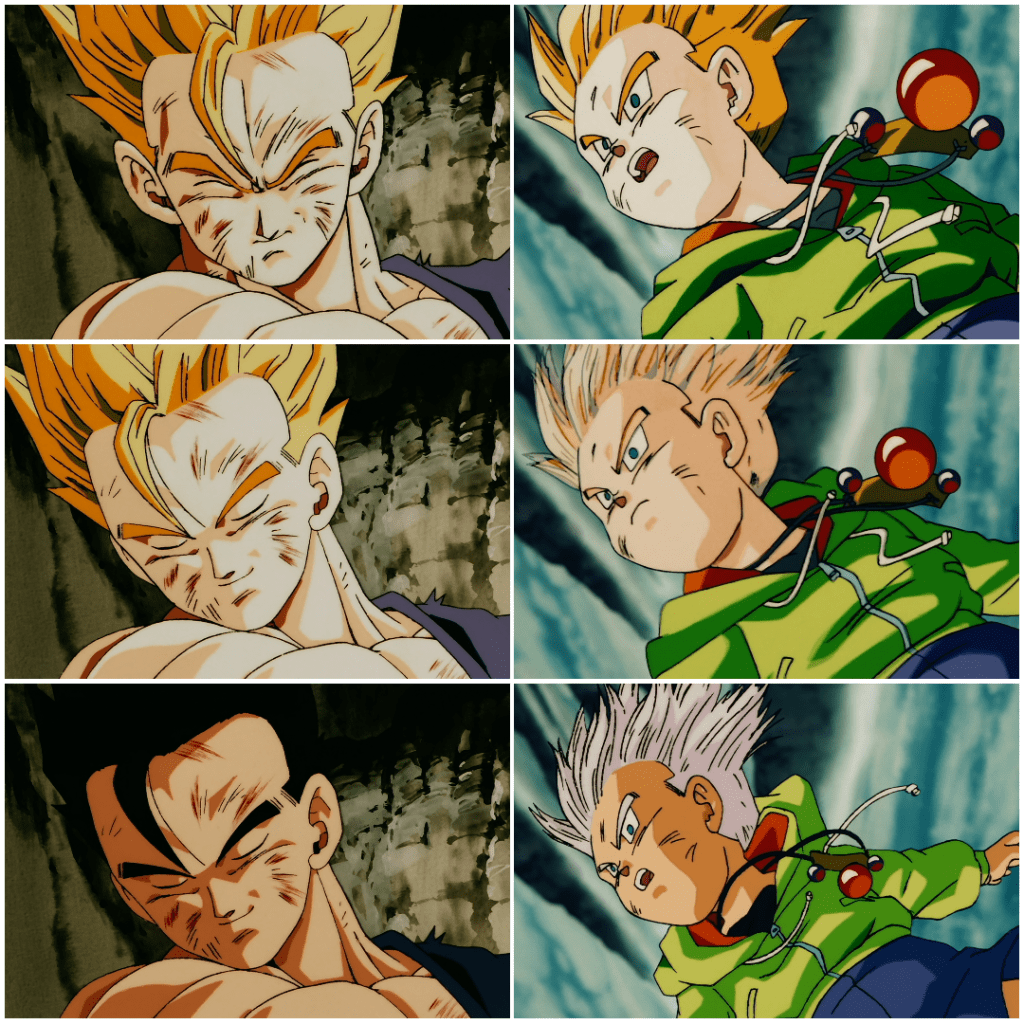
After Gohan believes Broly has been consumed by magma in Movie 10, he powers down to his base form. Some fans argue this scene shows him going from Super Saiyan 2 to Super Saiyan 1 to base, and use it as evidence that he was Super Saiyan 2 because he goes from one bang to two bangs. The problem with this is that Dragon Ball characters have never needed to power down through each transformation when powering down to base. For example: Super Saiyan 3 Goku doesn’t revert to Super Saiyan 2 and then Super Saiyan 1 before returning to base—he just drops straight to base. We also see this with Gohan himself. After he defeats Cell in both the anime and in chapter 416 of the manga, he powers down straight from Super Saiyan 2 to his base form. There’s no intermediate Super Saiyan 1 step involved. The same style of animation is used with Trunks in this same movie; while fighting Broly, he powers down from Super Saiyan 1 to base. Trunks clearly isn’t Super Saiyan 2, so those in-between frames don’t represent another form. It’s simply the process of powering down being animated. So if this scene is taken as proof of Gohan being Super Saiyan 2, then by that same logic, this is proof that Trunks was also Super Saiyan 2 during this movie, which obviously is not true.
In 2022 on Twitter, user @Majin_Asura asked Koyama in a since-deleted tweet, “Hello, and thank you for your hard work. When Gohan fought Broly on Earth, was he Super Saiyan 2?” Koyama replied, “In terms of power, it was equivalent to Super Saiyan 2.” In other words, Koyama was saying that Gohan was not Super Saiyan 2, but was essentially as strong as that form. This does not mean that Movie 10 Gohan is as strong as Cell Games Gohan. Instead, it puts him on par with his 25th Tenka’ichi Budōkai appearance, where he becomes Super Saiyan 2 in front of Kibito and is, for all intents and purposes, defeated by Kaiōshin, Spopovich, and Yamū—a far cry from Teen Gohan.
In a 2024 French interview, Yamauchi was asked whether Gohan was Super Saiyan 1 or Super Saiyan 2 in Movie 10 because of his lack of aura sparks.6 Although he didn’t give a direct answer to this question, he seemed to imply that Gohan was Super Saiyan 2 by explaining they didn’t add sparks to his aura to make it look “scarier.” This is noteworthy because if this was translated accurately, it would be the first known production-side comment suggesting Gohan was actually Super Saiyan 2. However, there are two major issues with this clip. First, the full Japanese audio is unavailable. I’ve even asked the YouTuber in a small Discord channel to upload the full interview and he ignored me. The clip itself is heavily edited (likely for time), so we can’t hear how the question was presented to Yamauchi in Japanese nor how he actually answered it. From what we are shown, Gohan is not even mentioned in his answer, nevermind Super Saiyans 1 or 2. Second, the word “scary” is one that Yamauchi and Koyama have historically applied to Broly, not Gohan. In Issue 6 of Shenron Times, he said, “With Koyama-san’s script and Yamamuro-san’s character design, Broly has this kind of shadowy, ominous feeling. Just standing there quietly, he comes across as eerie. During production, I wasn’t sure if that scariness would really come through. But when Koyama-san said, ‘He’s scary,’ I felt relieved (laughs).” Similarly, Koyama has repeatedly described Broly as “scary,” even explaining on Twitter that he “intentionally kept Broly’s dialogue to a minimum because it made him scarier.” Broly’s design philosophy thus seems to follow the principle of “less is more.” He doesn’t need to speak much because his fists do the talking, and he doesn’t need sparks in his aura because he overwhelms his opponents regardless. Therefore it seems highly plausible that the question was misunderstood, and that Yamauchi was describing why he didn’t add sparks to Broly’s aura.
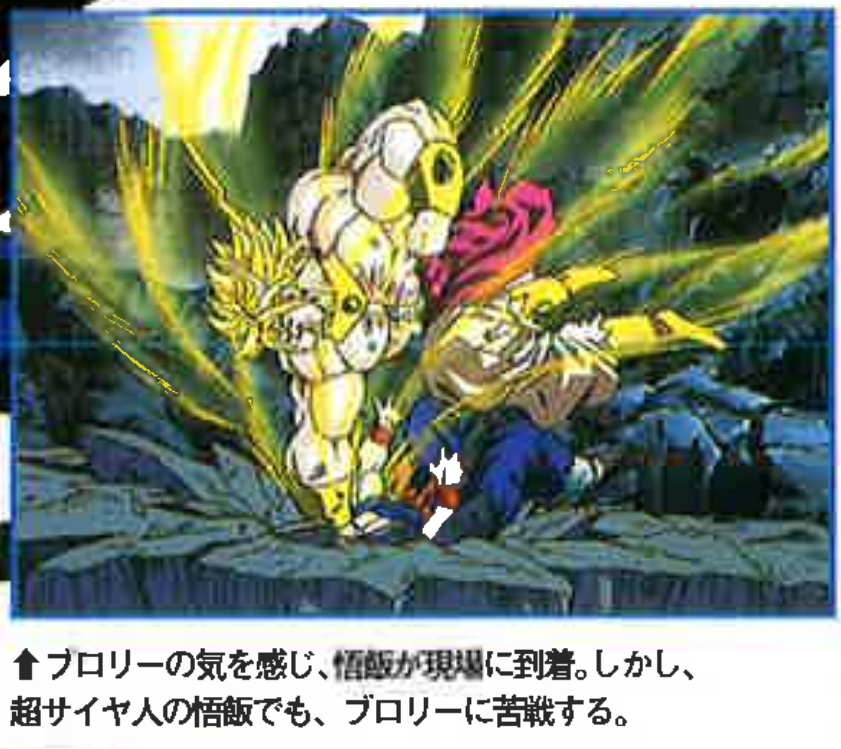
Chōzenshū 3 page 282 (Daizenshū 6 page 206) describes Broly in Movie 10 as having “a durable body that can withstand attacks even from Super Saiyan Gohan.” Chōzenshū 1 page 86 (Daizenshū 2 page 112) shows Super Saiyan 2 Goku as appearing in Volume 38 onward, page 89 (Daizenshū 2 page 115) shows Super Saiyan 2 Teen Gohan as appearing in Volume 34 onward, and page 90 (Daizenshū 2 page 116) shows Super Saiyan 2 Adult Gohan as only appearing in Volume 37. Volume 37 ends with chapter 445, which is 10 chapters before Gohan fights Dabura. On Gohan’s profile page in the official comic adaptation of the movie (page 10), it reads: “Following Goku, Gohan also gained the ability to transform into a Super Saiyan (left), and grew even stronger,” with no mention of Super Saiyan 2. Toei’s website for the Dragon Box collection writes of Movie 10: “In response to Gohan becoming a Super Saiyan, Broly also transformed into the final stage of Super Saiyan.”7 In the Dragon Book that came with Dragon Box The Movies on page 41, it states, “However, even as a Super Saiyan, Gohan struggles against Broly.” On page 134 of Dragon Ball 30th Anniversary: Super History Book, it states, “The Legendary Super Saiyan Broly is revived, and he and Super Saiyan Gohan engage in a deadly battle!!” Finally, Dragon Ball Official Site describes the fight between Gohan and Broly in Movie 10 as: “Even Super Saiyan Gohan is no match for Broly’s overwhelming power.” There’s simply no realistic way that the animators of Movie 10, the Dragon Ball Z anime staff, and Toriyama himself all consistently forgot to add sparks of electricity to Adult Gohan’s Super Saiyan 2 aura for years—while at the same time consistently remembering to include them for every other Super Saiyan 2 appearance, including Teen Gohan’s and even in the very same chapters and episodes where Adult Gohan’s aura lacked them. To summarize this part on Gohan: in Movie 10 and after chapter 444, Gohan was only using Super Saiyan 1.
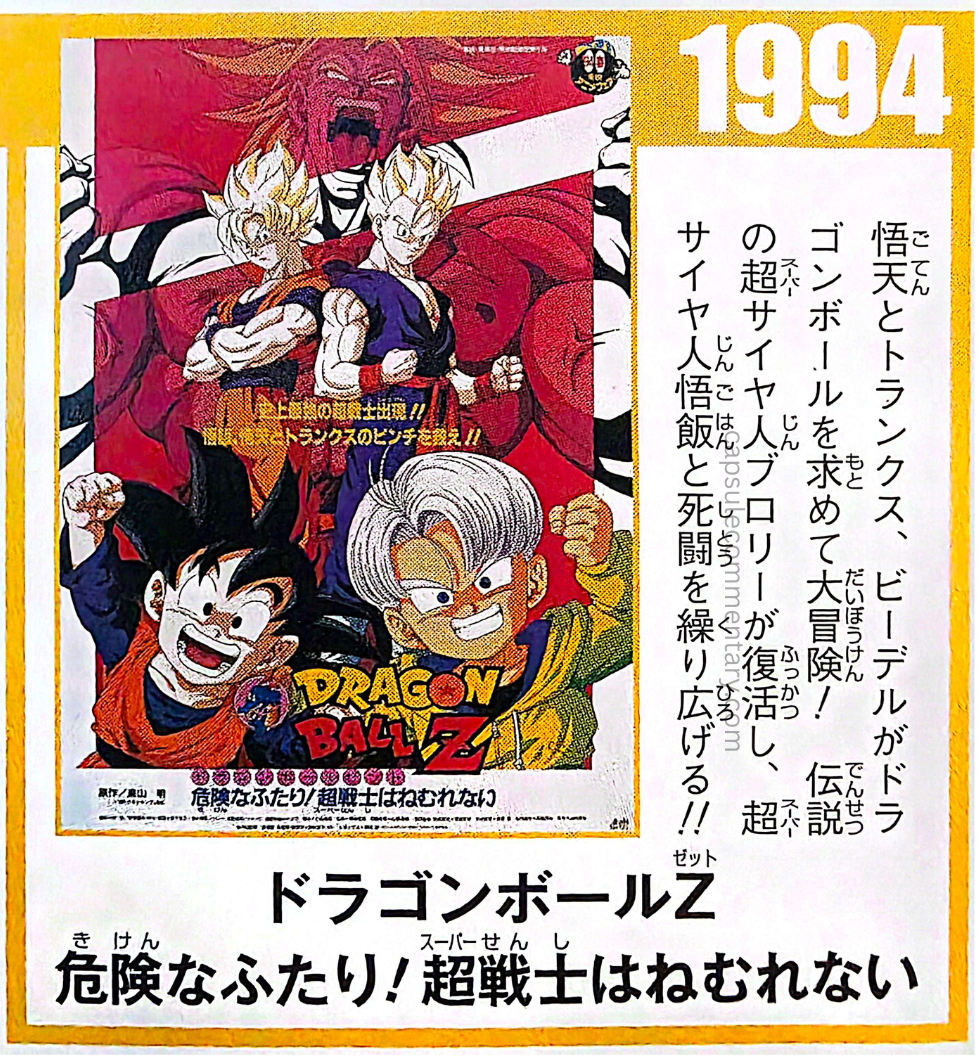
However, I think it’s likely that Toei wanted to depict Gohan using Super Saiyan 2, but that they weren’t allowed to by Toriyama. Koyama alluded to this on Twitter: “If there were any planned setting changes in the manga, there was a rule that we couldn’t depict them in the movies ahead of the manga.” He also said this in an interview for the Dragon Box collection: “As for the content, there was a restriction that we couldn’t go beyond the setting of the TV anime at the time of the movie’s planning. For example, if we wanted to do ‘Fusion,’ but the TV anime or original manga hadn’t done it yet, then it wasn’t allowed. That’s why I was always very conscious of where the TV anime was in its progression. So, if the TV anime happened to be doing the Freeza arc when we were planning, then we’d say something like ‘Let’s introduce Freeza’s brother!’ That’s how ideas came about.” Super Saiyan 2 Gohan (as a high schooler) had not yet been revealed in the manga at the time of this movie’s production.
Still unconvinced? Okay then, take this short quiz. I’m going to show you 10 pictures of Buu Saga Vegeta as drawn by the same animator as Movie 10. You just have to guess if Vegeta is Super Saiyan 1 or Super Saiyan 2. Easy, right? You have a 50/50 chance on every single question, so you should at least score 50%.
CLICK HERE TO TAKE THE SUPER SAIYAN QUIZ
The next thing that needs to be understood is if Goku was actually present during the Kamehameha at the end of the movie. An image of Goku was definitely present, as even Broly reacts to his presence. The movie itself and many guidebooks purposefully try to make Goku’s presence an unknown. For example: Chōzenshū 3 page 137 (Daizenshū 6 page 131) states definitively that Goku joined the fight but then asks, “Was it really Goku or just an illusion?” You can click the pictures below for more examples of this. By analyzing the frames of the Kamehameha before and after Goku joins it, we can see that it grows much larger at the base after he joins. This is before Goku encourages Gohan and Goten to give it their all, as well. Therefore, this shows Goku’s direct contribution to the Kamehameha. Additionally, the Dragon Balls disperse after they finally kill Broly, highlighting that Goku arrived to help in at least some capacity. Thus it can be concluded that this Kamehameha was done by 3 Super Saiyan 1 characters: Goku, Gohan, and Goten.

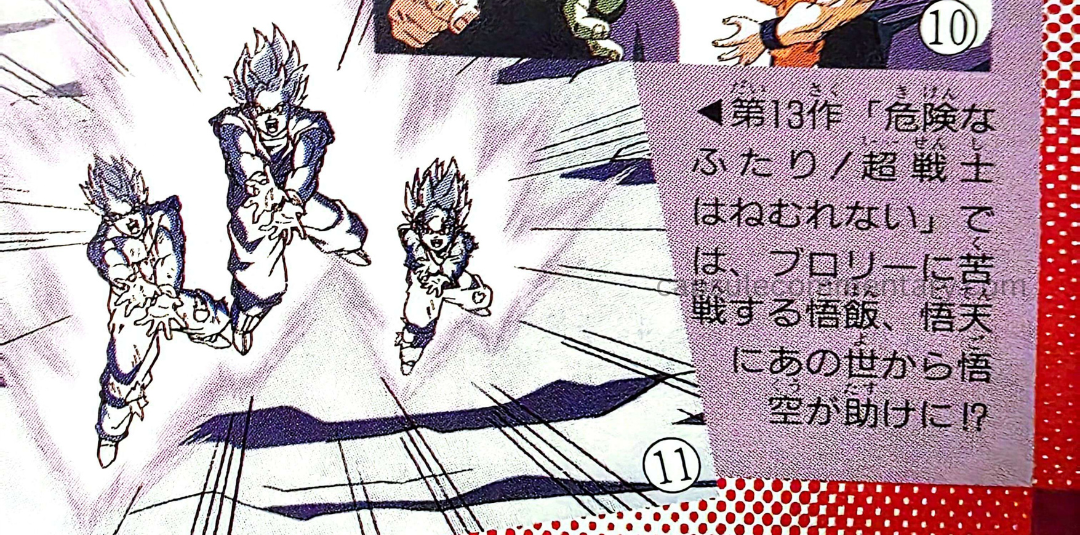
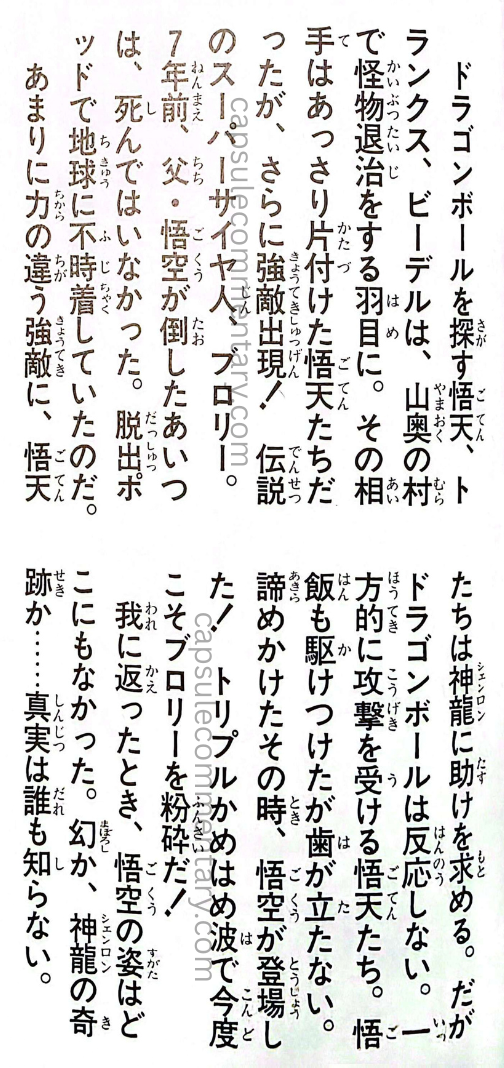
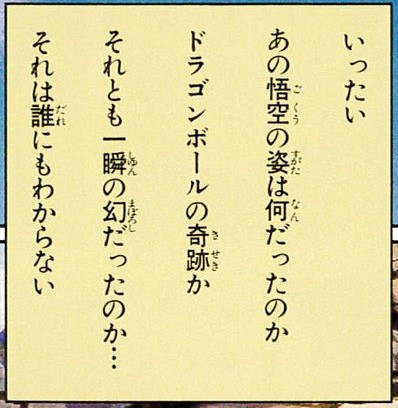

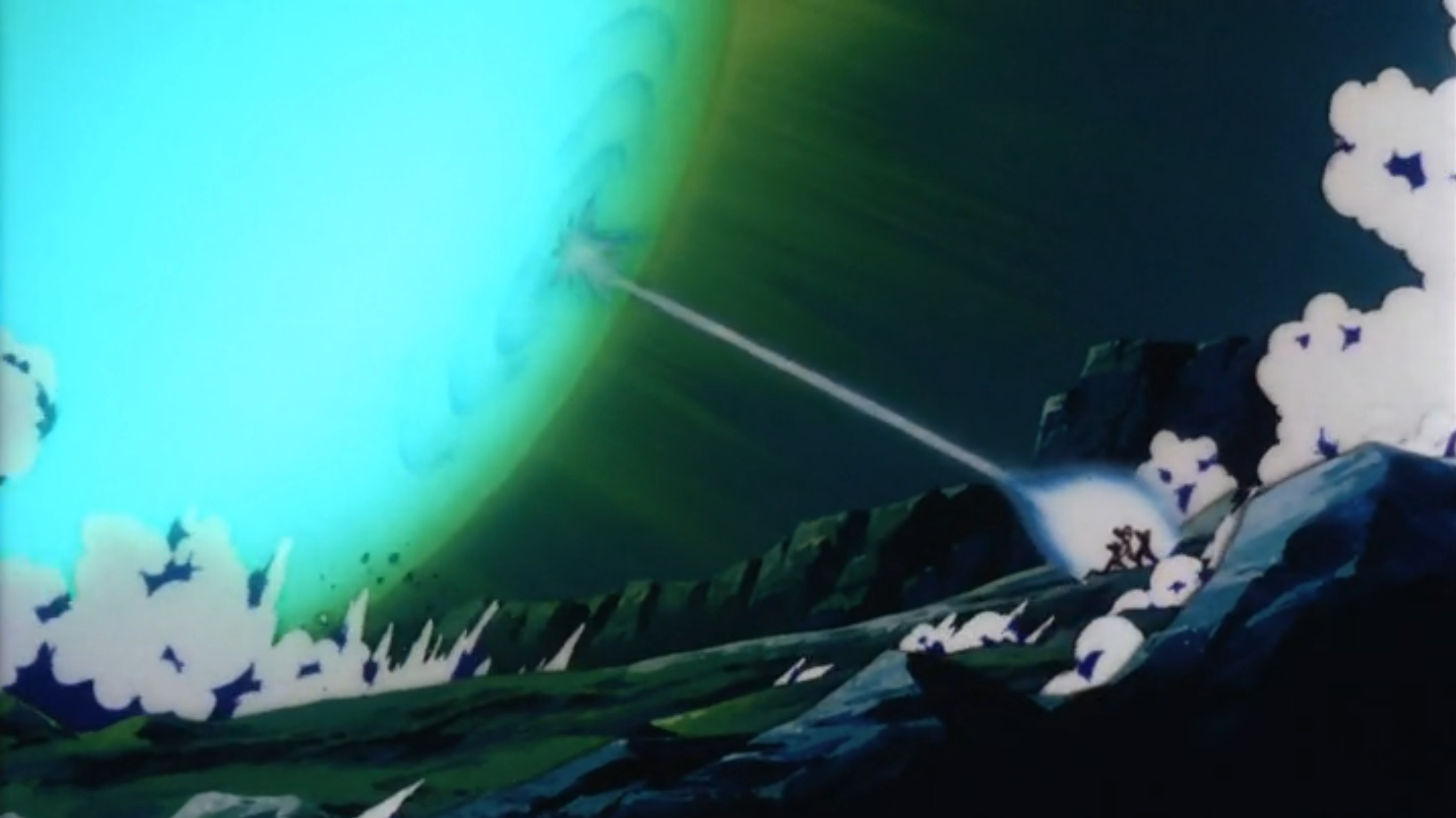
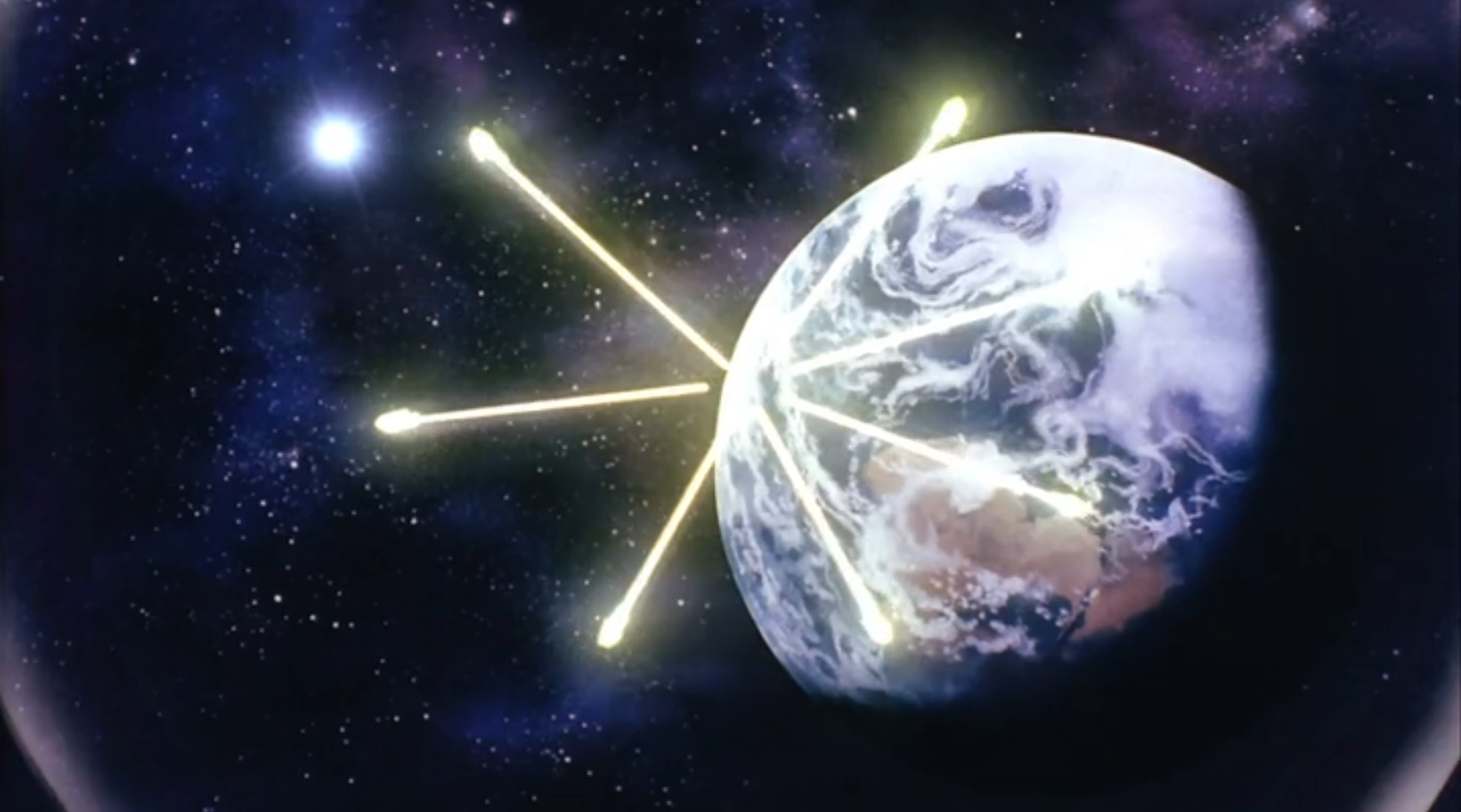
Due to the nature of Broly being a Saiyan, he received a Saiyan Power boost that powered him up after the events of Movie 8.
- Koyama has also confirmed this at least twice on Twitter, writing: “It’s certain that Broly powered up further during his first revival, but did the movie explain that he became stronger in the Bio-Broly revival? If it did, then that would be correct,” and “Since a trait of Saiyans is that their power increases when they survive near-death experiences, Broly was probably even stronger in the second film.”
- The Dragon Ball Super: Broly pamphlet also confirmed this, writing, “Having become even stronger and more violent, Broly now faces off against a grown-up Gohan,” and also commented on his muscles, writing, “The revived Broly is even more muscular than in the previous film! His increased muscle mass makes his strength visually apparent.”8
- On page 5 of the booklet that came with the Dragon Ball The Movies Volume 5 Blu-Ray, it reads: “Also, true to the Saiyan trait of battle power increasing sharply through super-recovery from the brink of death, the Broly who awakened again on Earth possessed super power surpassing that of before!”
- The back cover of the standalone DVD for Movie 10 says to “pay attention to the powered-up Broly as well.”
- V-Jump April 1994 also confirmed his power-up.
As for the abnormal weather in the film, this isn’t explained in the movie itself nor in any guidebook. Koyama wrote on this: “My memory isn’t entirely clear on this. If Broly had some involvement with the abnormal weather, then there must have been a proper reason created for it, and in that case, I believe it would’ve been explained. Otherwise, Producer Morishita wouldn’t have approved the final script.” V-Jump April 1994 says it was caused by Broly, but as to what this really entails is ultimately all speculation, and not really important for understanding his strength anyway.
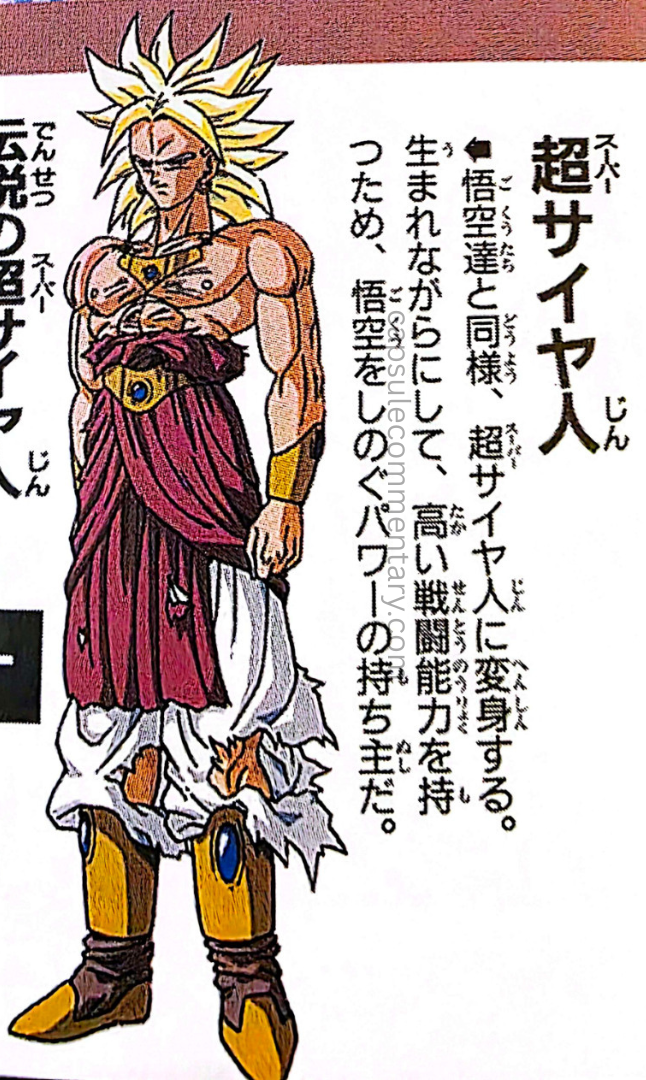
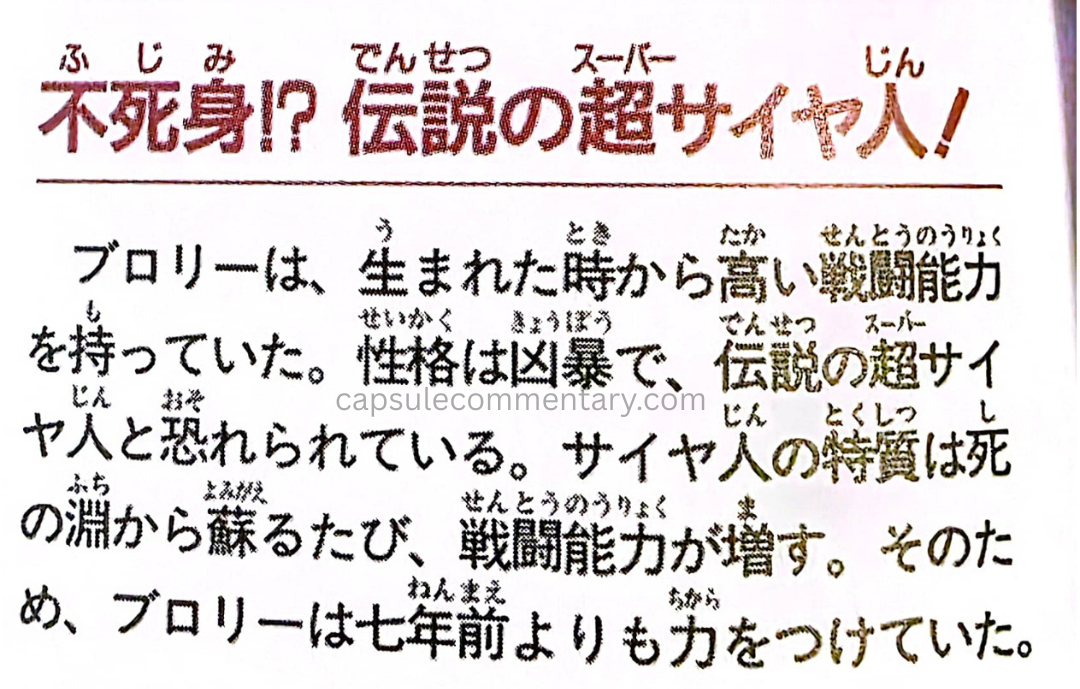
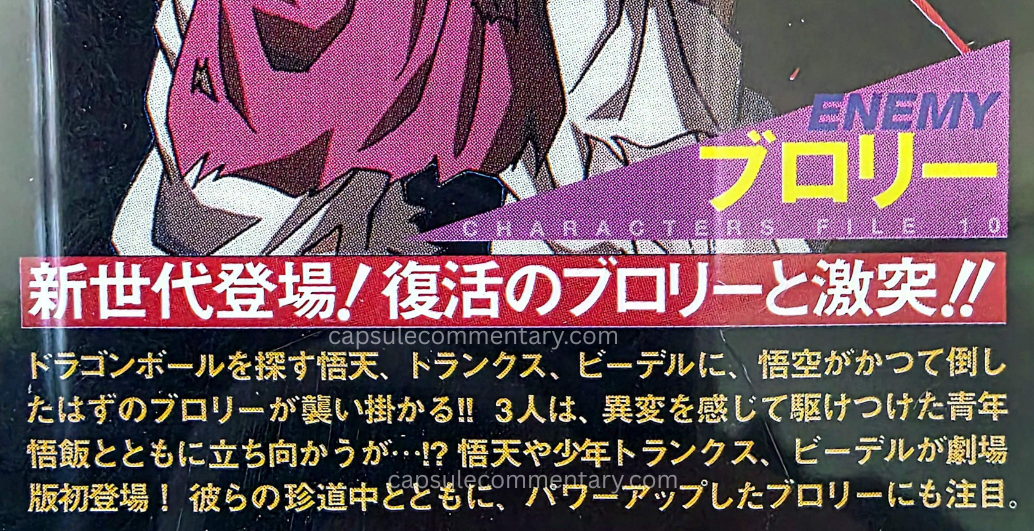
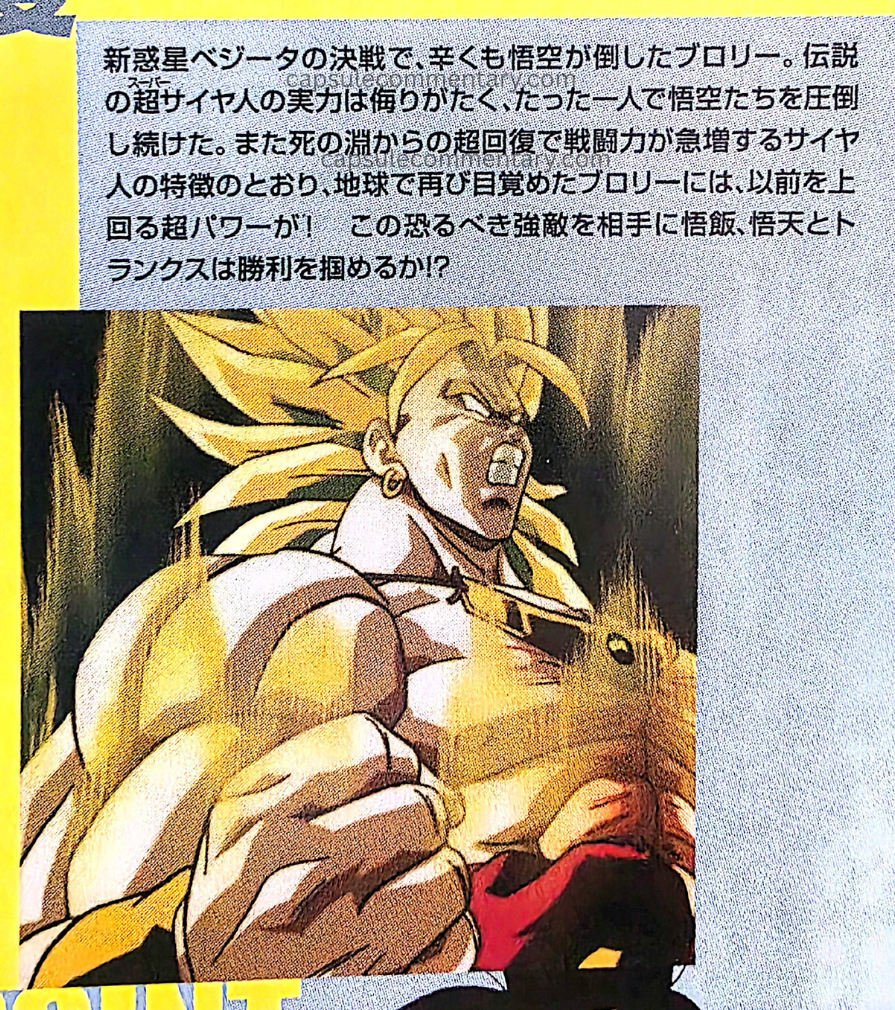

As for how strong Broly himself is in this movie, it seems that he didn’t actually improve too much from his first appearance. If supplementary materials and Koyama’s tweets didn’t tell us that he had grown stronger, his performance in this movie would suggest that he had actually become weaker—such as by not even being able to kill Videl, whom he should be hundreds of millions of times stronger than. Chōzenshū 3 page 131 (Daizenshū 6 page 125) next to a picture of Super Saiyan Broly reads, “Born with high combat ability, [Broly] possesses power that surpasses Goku’s.” This would seem to imply that Super Saiyan Broly, and not just Legendary Super Saiyan Broly, is stronger than Goku. However, because the first clause of the sentence has nothing to do with him being a Super Saiyan, it seems more like a general statement about his power rather than something specific to this form and this movie.
Broly was in a beam clash against a Cell Saga–level Goku, a Gohan who may have been roughly equal to that, and a Goten weaker than both of them. Keep in mind that no matter how you interpret Gohan’s strength here, it is undeniable that he is weaker than he was during the Cell Games as Movie 10 takes place after Vegeta already commented on this. It’s therefore implausible that Perfect Cell would lose the beam clash that killed Broly, and highly improbable that Super Perfect Cell would. One might think the Triple Kamehameha would be enough to defeat Perfect Cell because Goku’s Kamehameha destroyed Perfect Cell’s upper half, but Perfect Cell didn’t reveal his full power until after Gohan went Super Saiyan 2. When he fought Goku, he was matching Goku’s strength because it was fun to him. Later, when Perfect Cell launched his Kamehameha at the Earth, everyone besides Super Saiyan 2 Gohan just accepted they were going to die. The same could hardly be said for Broly.
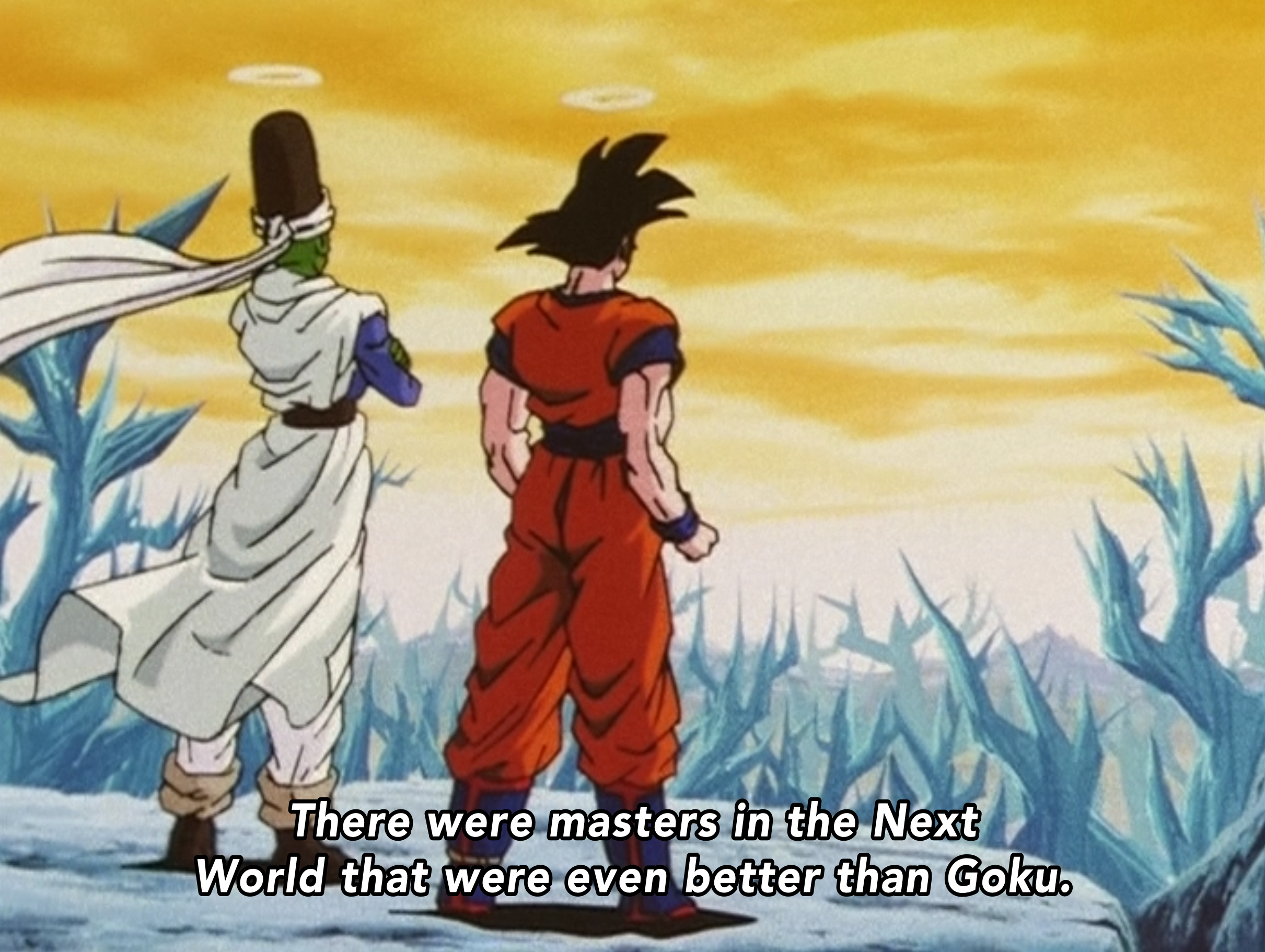
In Dragon Ball Z episode 195, Dai Kaiō asks Paikuhan to take care of Cell, Freeza, and the others causing havoc in Hell. Goku ends up accompanying him. Paikuhan, with his weighted clothing on, easily defeats Super Perfect Cell with just two hits. He also apparently hit Cell so hard that Cell suffered memory loss of the event because in episode 280, while Cell is watching Goku fight Kid Buu, he expresses surprise that there could be fighters greater than him. Daizenshū 5 page 141 affirms Cell’s power when Paikuhan defeated him, writing: “Even after being cast into Hell, Cell’s strength remained unchanged…”
The narrator at the end of episode 195 states that Paikuhan was stronger than Goku at that time: “There were masters in the Next World that were even better than Goku.” After Goku advances to the finals of the Anoyo’ichi Budōkai, Paikuhan remarks to himself, “That kid definitely has a lot more power than when we first met. Don’t tell me he’s advanced this much in this short a time…” Even though Goku powered up to some degree during the Anoyo’ichi Budōkai, he still needed to use Super Kaiō-ken to battle with Paikuhan. Theoretically, Super Kaiō-ken should be equal to Super Saiyan 2, as it is also Super Saiyan 1 with a x2 multiplier (if we assume the x2 multiplier is correct). Even still, Goku never fully matched Paikuhan’s power. Before they were both disqualified, Goku only won by outmaneuvering him, not by overpowering him.
Then, at the end of Movie 11, Goku remarks that Kaiō requested he and Paikuhan together take out Broly, who is rampaging through Hell, just as Cell had earlier. On the surface, this framing would suggest that Broly is far stronger than Super Perfect Cell, as both of them were sent to take care of him instead of just Paikuhan. However, Goku being paired up with Paikuhan is reflective of a narrative trend and not a comment on power-scaling. In episode 195, Dai Kaiō originally only asked Paikuhan to handle Cell, with Goku just tagging along. In Movie 11, it becomes a joint request for Broly. And in Movie 12, Dai Kaiō again sends Goku and Paikuhan together—this time not to fight anyone, but to investigate the strange disturbance at Enma Daiō’s castle. Therefore, their partnership functions as a storytelling device and not as a power-scaling one.
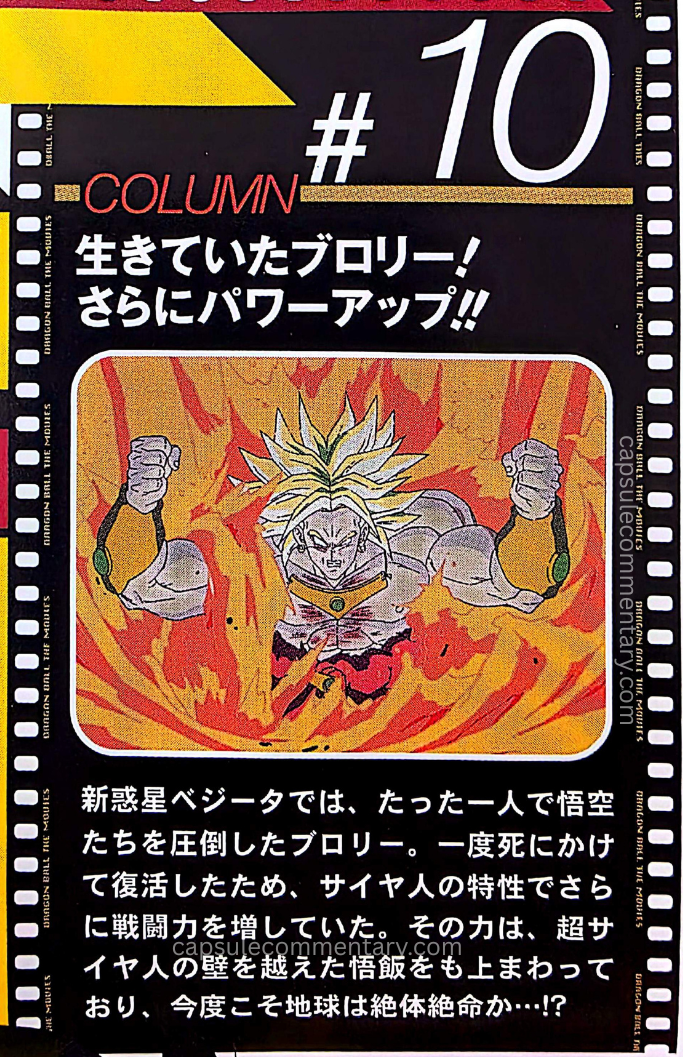
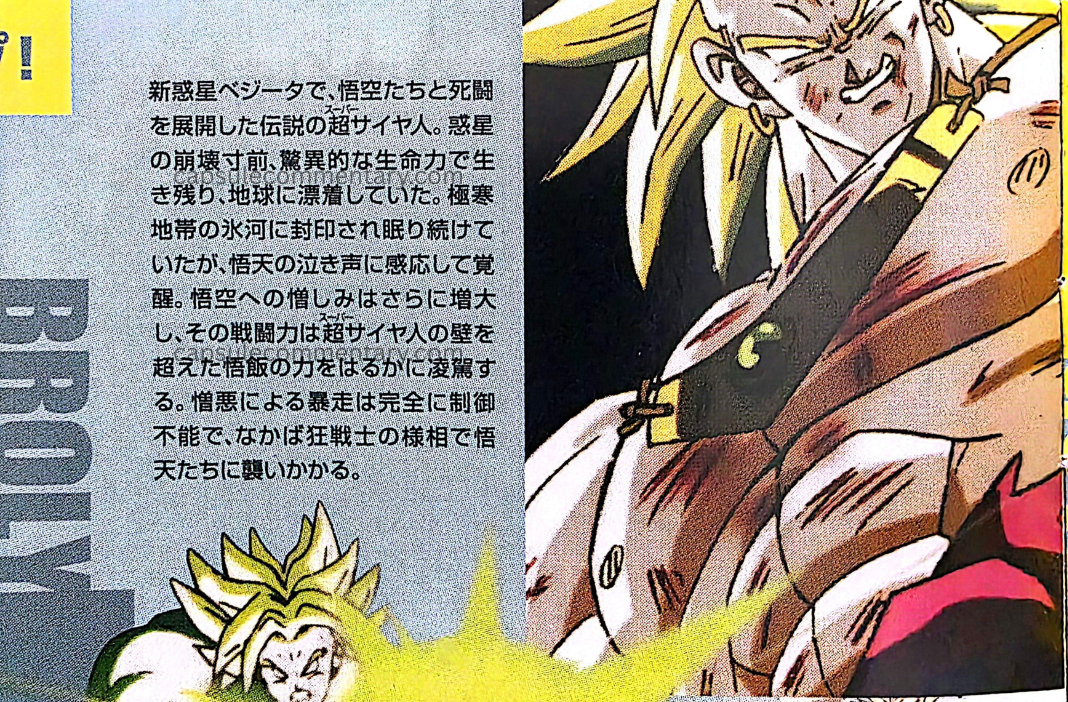
In the insert of the standalone Movie 10 DVD and on page 5 of the booklet in the Dragon Ball The Movies Volume 5 on Blu-Ray, it’s stated that Broly’s new power surpassed “Gohan, who had exceeded the wall of Super Saiyan.” Importantly, this is not a comment on which form Gohan is using in the movie itself. Super Saiyan 2 Gohan is just being used as a benchmark for Broly’s new strength. The movie supplements both use the exact same phrase in Japanese: 「超サイヤ人の壁を越えた悟飯」. Therefore, the key issue is determining what Toei means by 「超サイヤ人の壁」 or “the wall of Super Saiyan.”
Because these movie supplements both use the specific metaphor of “the wall of Super Saiyan,” this analysis will focus exclusively on Toei and anime-related materials where this exact expression is used. The goal here isn’t to catalog every statement describing a character as being stronger than Super Saiyan throughout every guidebook, but to determine how Toei uses this specific metaphor. Gohan has only achieved Grade 1, Grade 4, and Super Saiyan 2, and this movie takes place before Ultimate Gohan existed, so the form that is beyond “the wall of Super Saiyan” must be either Grade 4 or Super Saiyan 2.
- In Dragon Ball Kai episode 94, Goku thinks to himself, “[Gohan has] been beyond the wall of Super Saiyan ever since back then.” A flashback of Gohan briefly tapping into Super Saiyan 2 in the Room of Spirit and Time follows Goku saying this. In episode 113, while Gohan essentially says “the wall of Super Saiyan,” he doesn’t say it exactly. However, Kibito does and we see Gohan become Super Saiyan 2. Then in episode 117, Vegeta thinks to himself that Goku must have also surpassed the “wall of Super Saiyan” after training in the Afterlife.
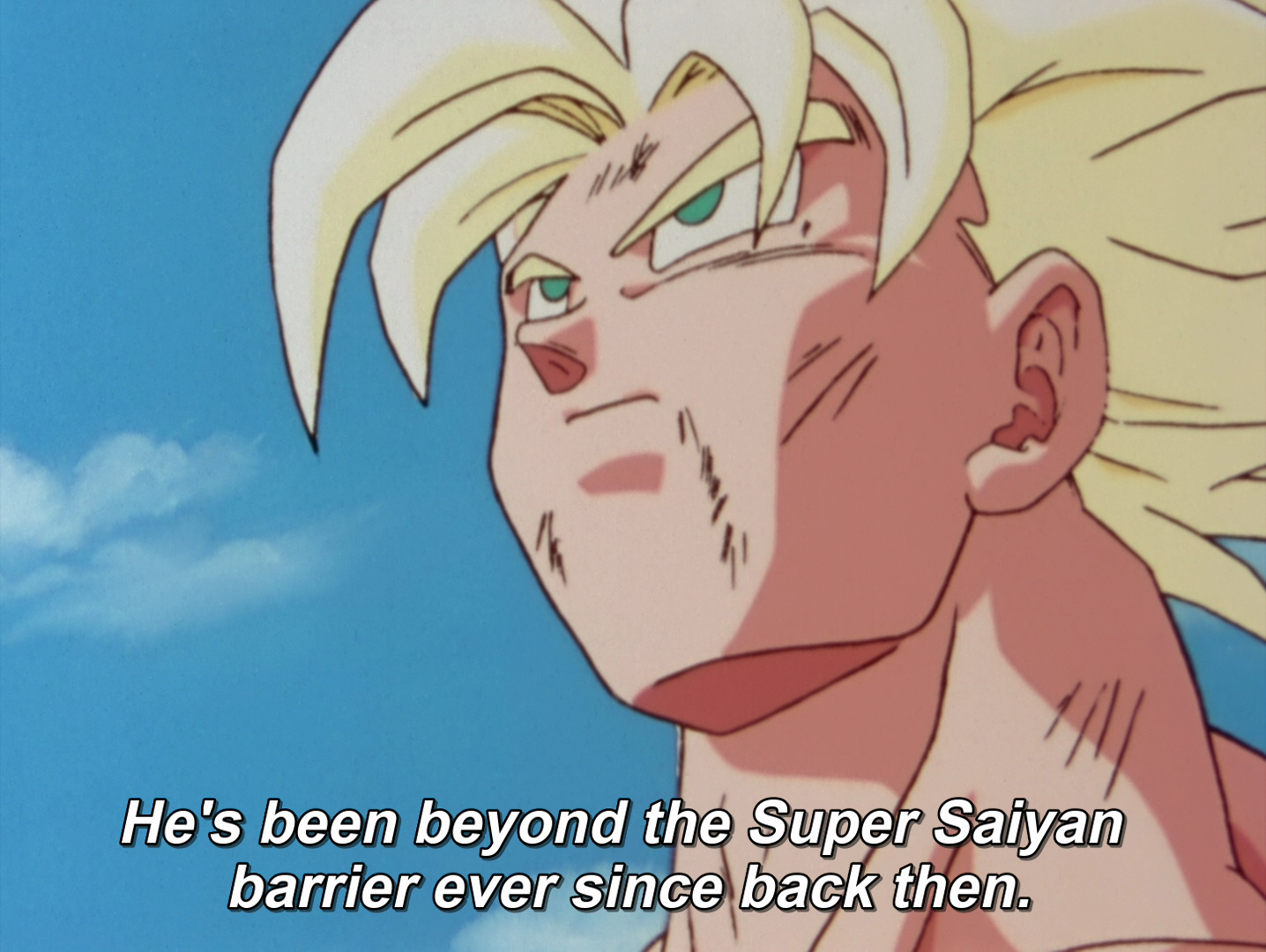
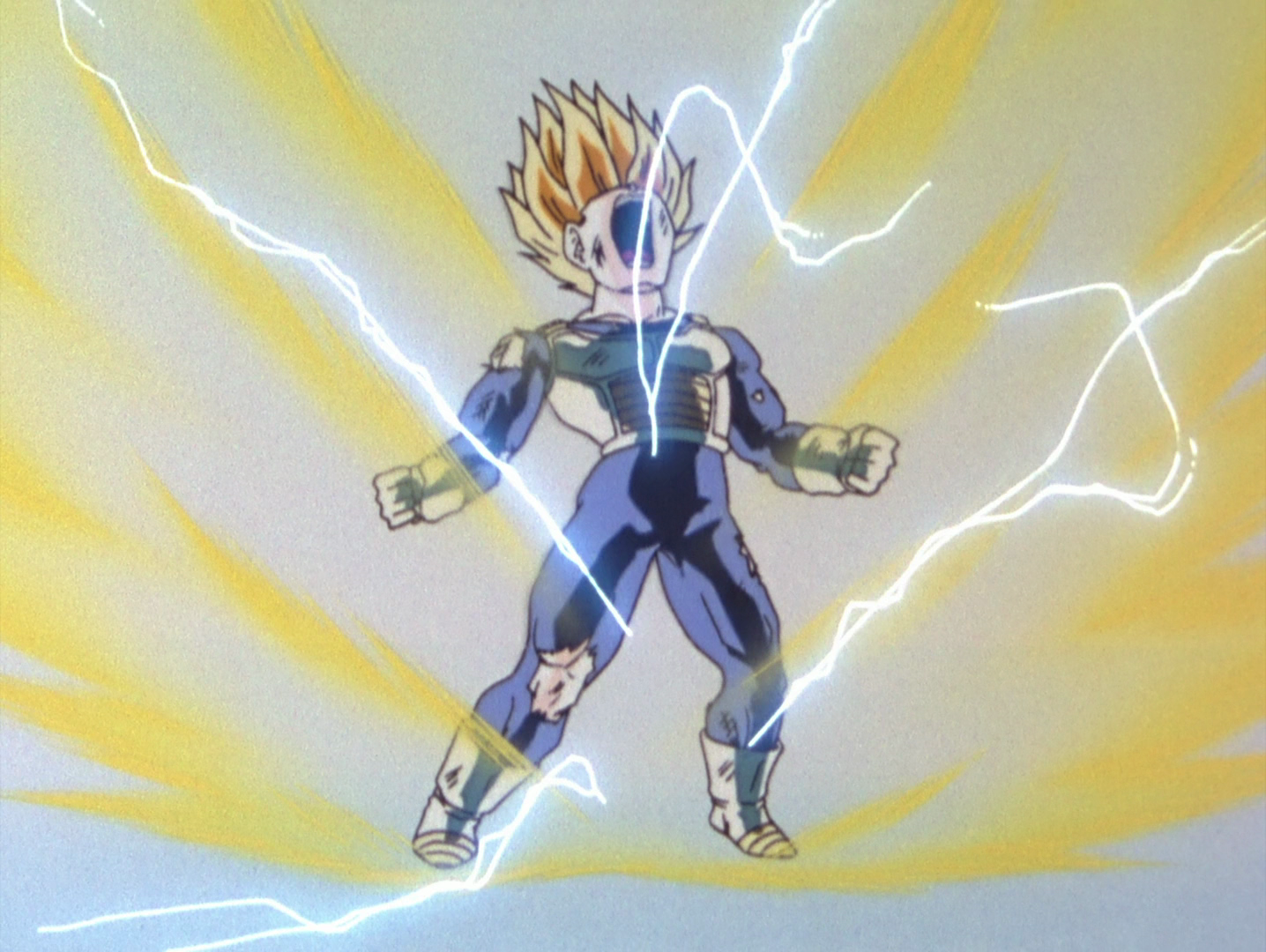
- On Toei’s website for Dragon Ball Kai, the episode description for episode 115 reads: “By Babidi’s sorcery, Vegeta, who had his latent ability released, possessed power that was completely equal to Goku, who had trained in the Other World and surpassed the wall of Super Saiyan!”
- In Dragon Ball Z episode 187, Goku thinks to himself, “Ever since that moment, [Gohan has] been beyond the wall of Super Saiyan.” A flashback of Gohan briefly tapping into Super Saiyan 2 in the Room of Spirit and Time follows Goku saying this. In episode 219, Gohan and Kibito also discuss “the wall of Super Saiyan” in reference to Super Saiyan 2. Finally, in episode 223, Vegeta thinks to himself that Goku must have also surpassed the “wall of Super Saiyan” after training in the Afterlife.
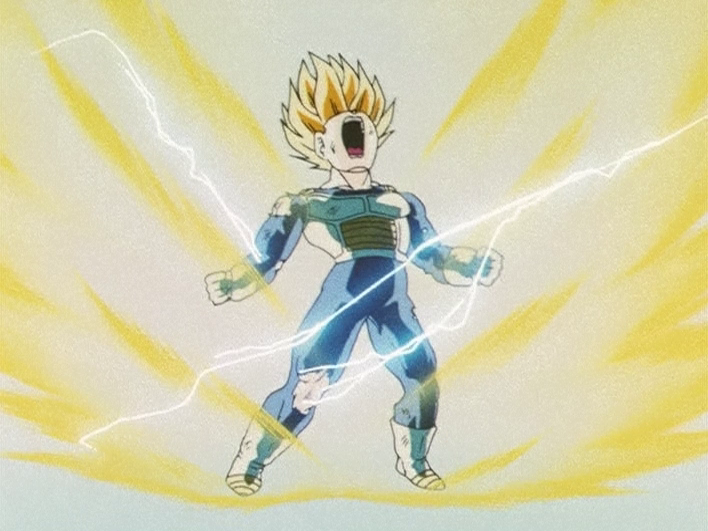
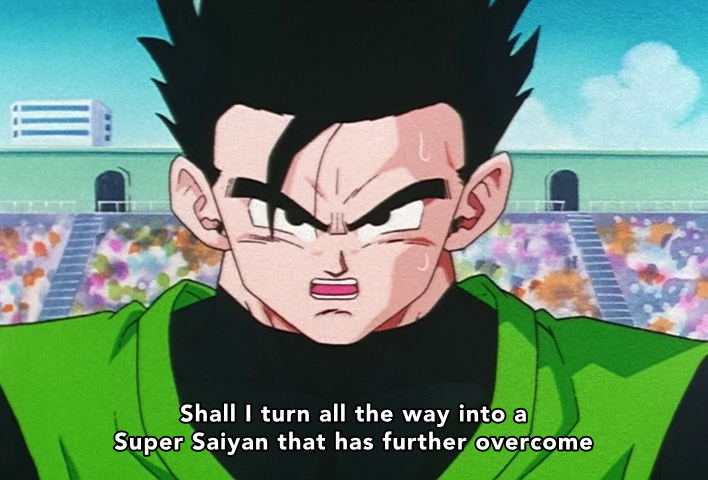
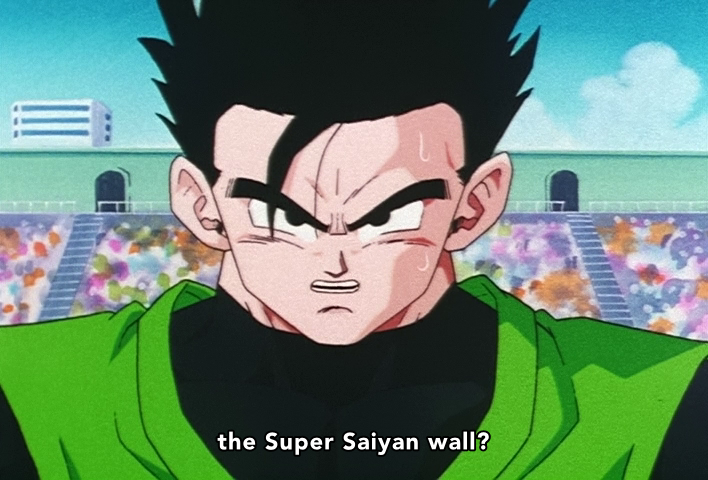
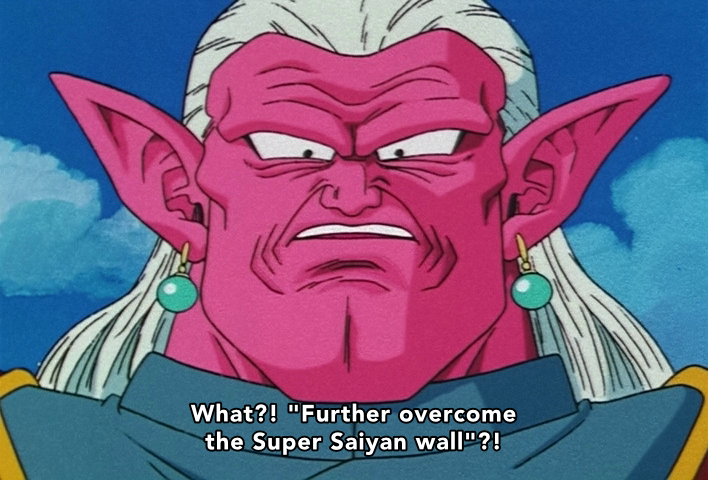
- Dragon Ball Z Anime Comics – Cell Games Arc, Volume 4, and Dragon Ball Z Anime Comics – Majin Buu Revival Arc, Volume 3 repeat the scenes from the Dragon Ball Z anime.
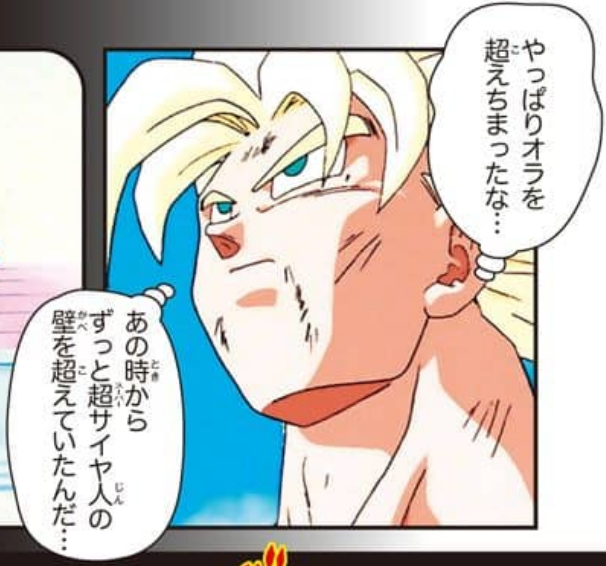
So we have our answer: Broly is stronger than Super Saiyan 2 Gohan. Looking into this may seem pointless, but the issue is that Toei frequently shares meaningless accolades. For example: Toei tells us that Broly can destroy a planet many times even though we already know he devastated an entire galaxy and we saw him destroy the Shamo homeworld in Movie 8. The Movie 10 standalone DVD and Dragon Ball The Movies Volume 4 on Blu-Ray are also among the sources that repeat Broly’s planet destroying strength. It would be more surprising if Broly couldn’t destroy a planet considering Vegeta was capable of doing that all the way back in the Saiyan Saga!
It makes more sense that the inserts for the Movie 10 standalone DVD and Dragon Ball The Movies Volume 4 on Blu-Ray are referring to Super Saiyan 2. The reasons for this being: (1) having these statements refer to Grade 4 would be a meaningless accolade when Broly in Movie 8 was already stronger than Grade 4, (2) the Grades are infrequently referred to again after Super Saiyan 2 appears, (3) Grade 4 is not presented as being a greater form than Grade 1 but rather a mastery of it, and (4) the audience remembers Super Saiyan 2 Teen Gohan as being the strongest from the Cell Games.
![Dragon Ball: Chōzenshū 1 page 155. "Cell’s fierce assault after achieving complete revival. Cell had not died. Regenerating back into his Perfect form and even gaining Instant Transmission, [Cell] had become the strongest being."](https://capsulecommentary.com/wp-content/uploads/2025/07/227.png)
Just as Movie 10 Broly has those two statements placing him above Gohan, Cell also has one, and which was published in more authoritative sources than movie inserts. Daizenshū 2 page 197 states: “Regenerating back into his Perfect form and even gaining Shunkan Idō (Instant Transmission), [Cell] had become the strongest being.” This statement means that Super Perfect Cell was above Super Saiyan 2 Teen Gohan even before his arm injury. This statement is also repeated on page 155 of Chōzenshū 1. While I do not necessarily agree that official statements such as these ones about Cell and Broly should be treated as definitive, if the less authoritative movie insert statements are considered applicable when scaling Broly, then this much more authoritative one scaling Cell must also be applicable.
When the two villains’ deaths are examined, it becomes clearer that Super Perfect Cell must have also been stronger than Broly, in addition to Gohan. When a stronger Gohan destroyed Cell, Gohan collapsed to the ground and couldn’t move, having expended all of his remaining ki. He could barely even keep his eyes open. When a weaker Gohan and Goten destroyed Broly (alongside Goku), they still had enough energy to run around and play. They therefore did not need to burn through their remaining ki to kill him. In addition, Vegeta fired a full force blast directly at Cell’s head, and we can see him panting heavily and shaking after firing it. Piccolo even offers to help Vegeta get home after this, meaning Vegeta also expended most of his remaining ki in his attack. In the anime, the rest of the Dragon Team also attacks Cell, which he completely tanks without issue. Meanwhile in Movie 10, a tiny ball of ki from Trunks was enough to intercept multiple ki blasts from Broly. Furthermore, Super Perfect Cell was able to kill Future Trunks without even trying and was able to break Super Saiyan 2 Teen Gohan’s arm, while Movie 10 Broly could not even kill Videl and could not even hold onto Super Saiyan 1 Gohan.
To summarize this section: even though Movie 10 Broly did not fight Super Saiyan 2 Gohan and Paikuhan being teamed up with Goku is not reflective of power-scaling, Movie 10 Broly is somewhere between Super Saiyan 2 Gohan from the Cell Games and Super Perfect Cell.
Dragon Ball Z: Bio-Broly
Dragon Ball Z: Bio-Broly
Now let’s establish when exactly Dragon Ball Z: Bio-Broly (Movie 11) takes place. Chōzenshū 3 page 138 (Daizenshū 6 page 132) states: “In the movie, #18 pressures Mr. Satan to hand over the prize money, which suggests it takes place after the Tenka’ichi Budōkai had ended. However, around this time, the Super Warriors should be extremely busy with the Majin Buu battle… It’s a story unique to the movie version.” Page 42 of Dragon Book: Dragon Box: The Movies states: “#18 visits Mr. Satan to collect the prize money. Her appearance in this work likely follows the TV series’ 25th Tenka’ichi Budōkai episode. Thus, in terms of the timeline, this story is thought to take place between the end of the Tenka’ichi Budōkai and the appearance of Majin Buu.” This movie is less clear than the other two on which chapter it takes place during. On page 10 of chapter 454, #18 tells Mr. Satan that she’ll come by tomorrow to take her tournament winnings, and Movie 11 opens with her doing that. However, by the time “tomorrow” comes in the Buu Saga, the boys had already mastered Fusion and Goku was alive again—both of which are incongruent with the film. Therefore, this movie takes place sometime between chapter 454 when #18 makes the deal with Mr. Satan and chapter 471 when the boys start to learn the Fusion Dance. It’s closer to chapter 454 (if not exactly 454), since movies took several months to produce. Basing the movie on chapter 471 would have given the production staff only a month and a half to make it.
This means that Goten and Trunks not only did not learn fusion yet, but also did not yet train in the Room of Spirit and Time. Between Movie 10 and this movie, the only significant events for the boys were fighting one another and fighting #18 as Mighty Mask during the 25th Tenka’ichi Budōkai. Even though the boys shouldn’t have gotten that much stronger since Movie 10, their performance in Movie 11 suggests they’re both individually stronger than #18. #18 hits Bio-Broly 6 times and he doesn’t even flinch. Bio-Broly then hits her once and incapacitates her. #18 does later join the fight again and Bio-Broly physically reacts to her hit, but he again hits her only once and she needs to be rescued by Kuririn. Goten and Trunks, as Super Saiyans, withstand much more damage than #18, and Bio-Broly physically reacts to being hit by both their group attacks and their individual attacks.

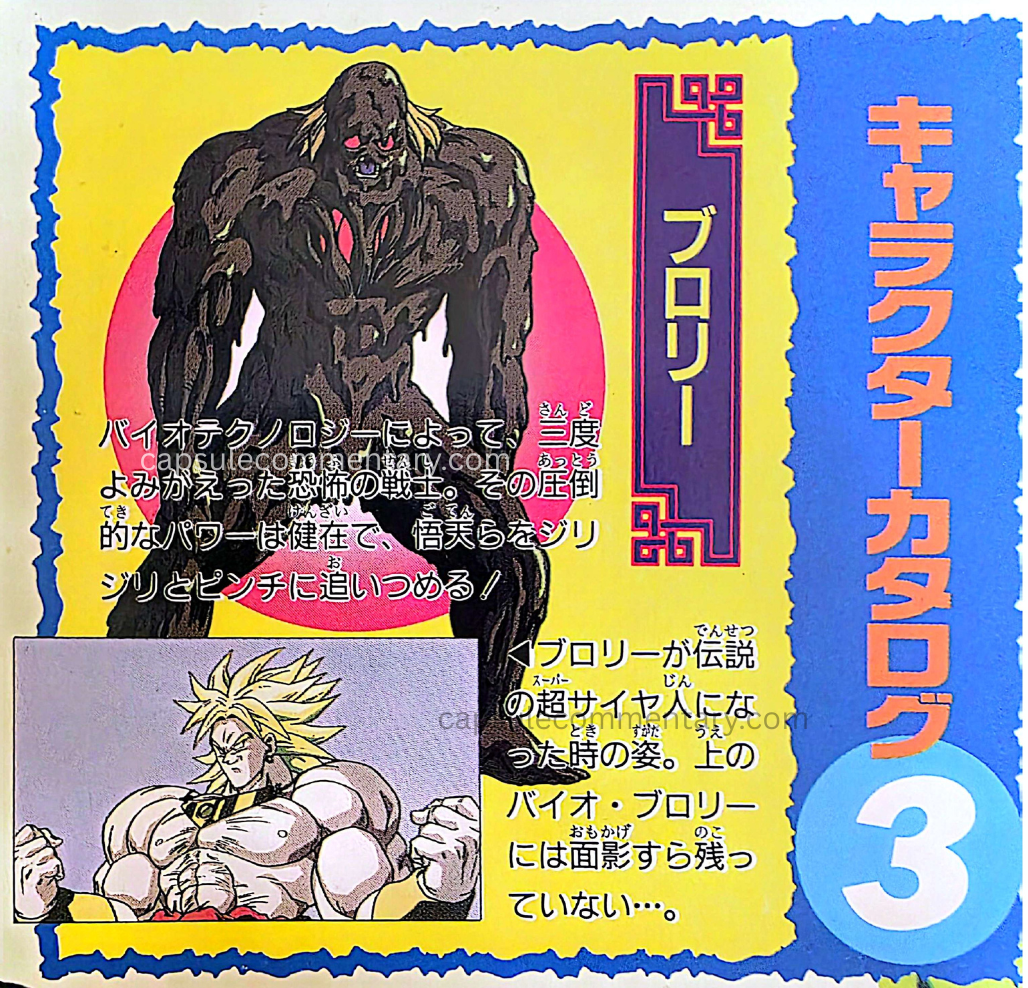
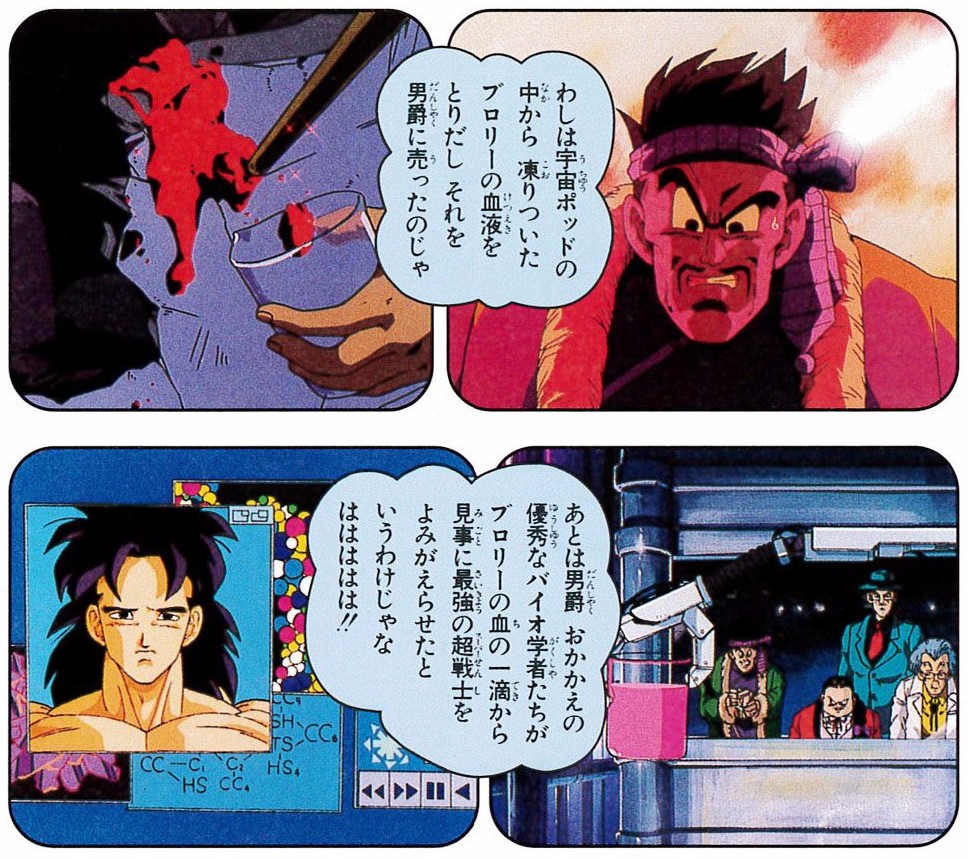
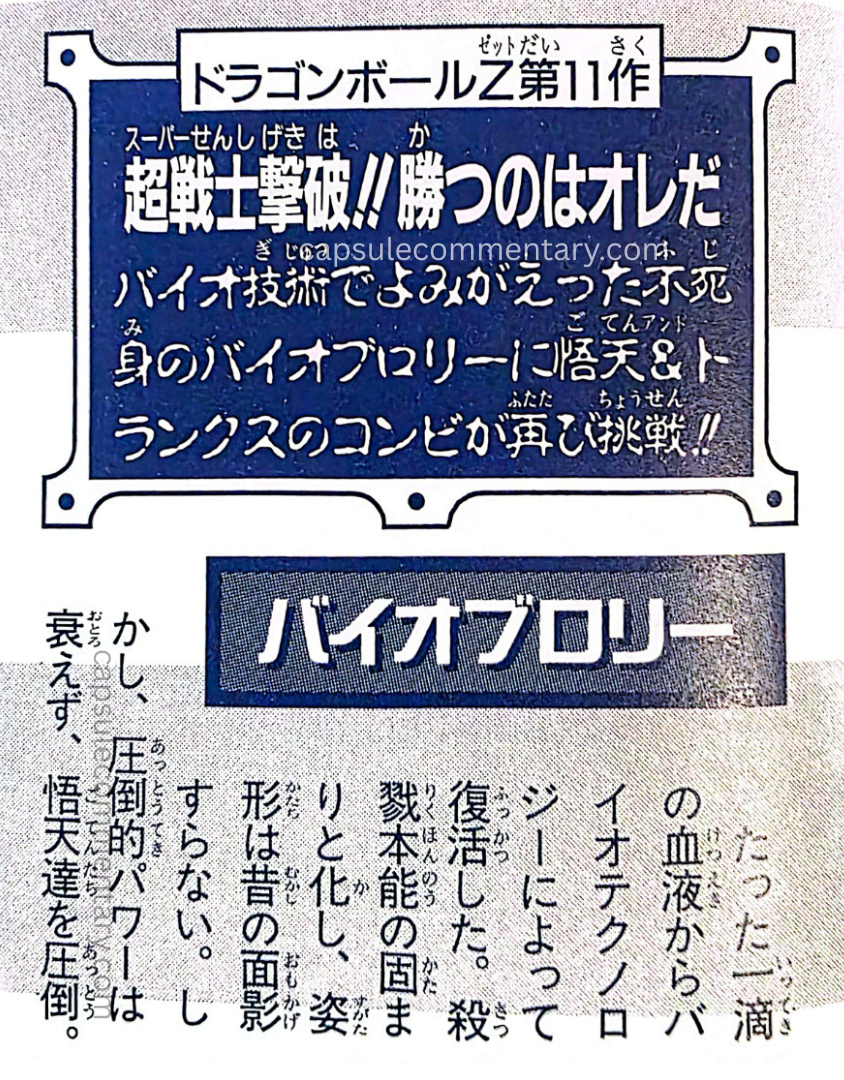
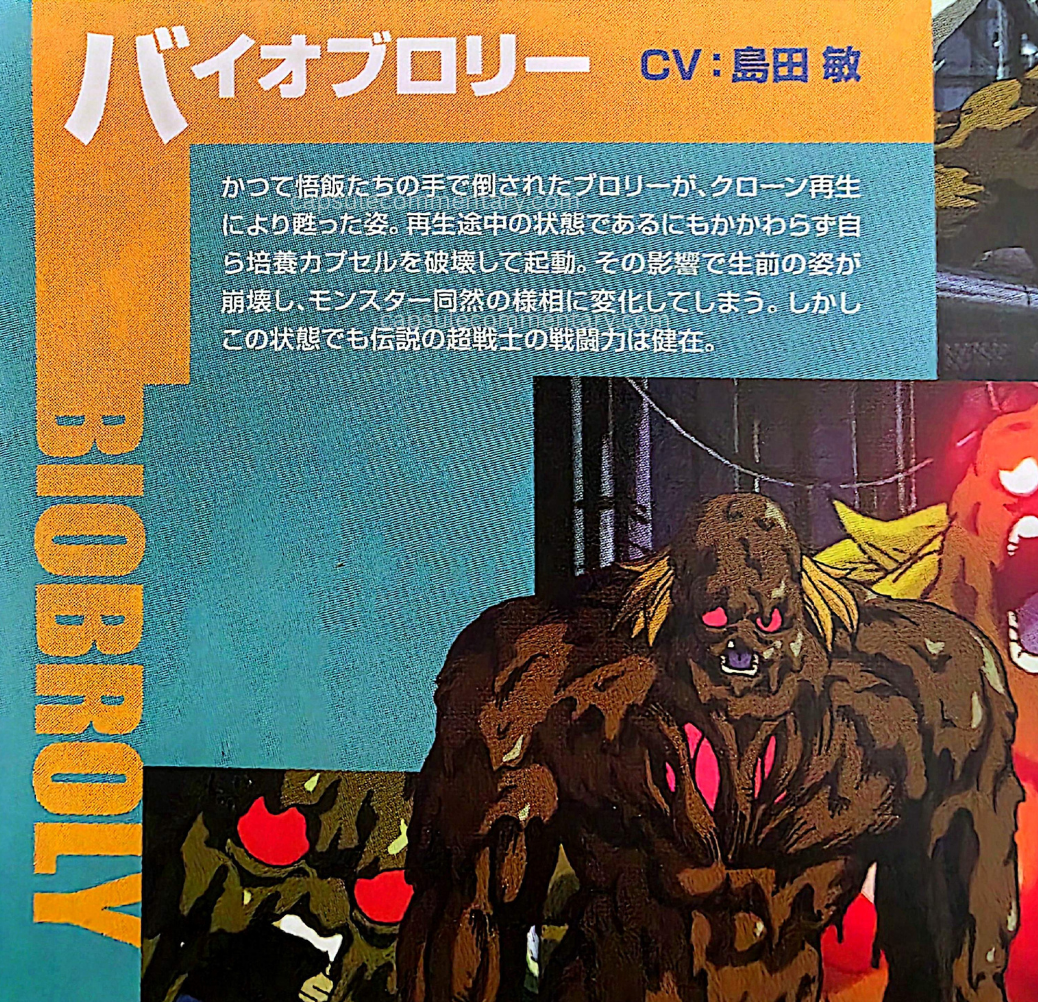
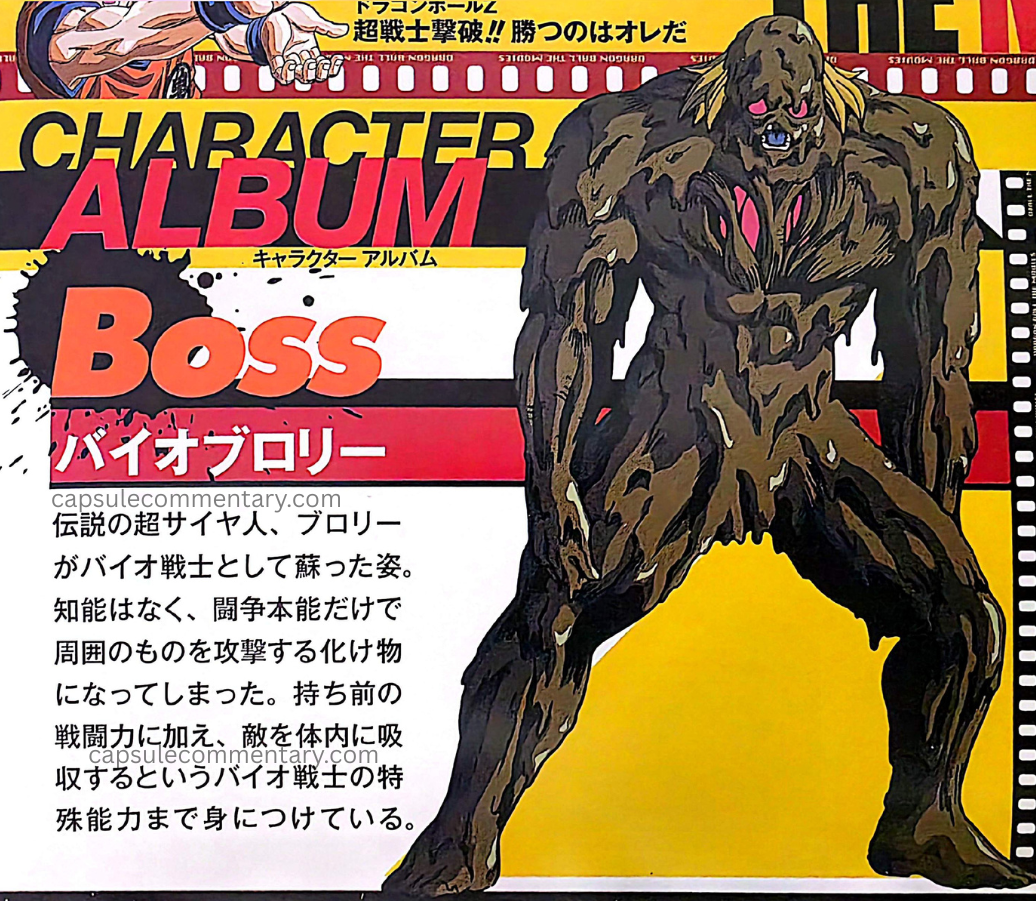
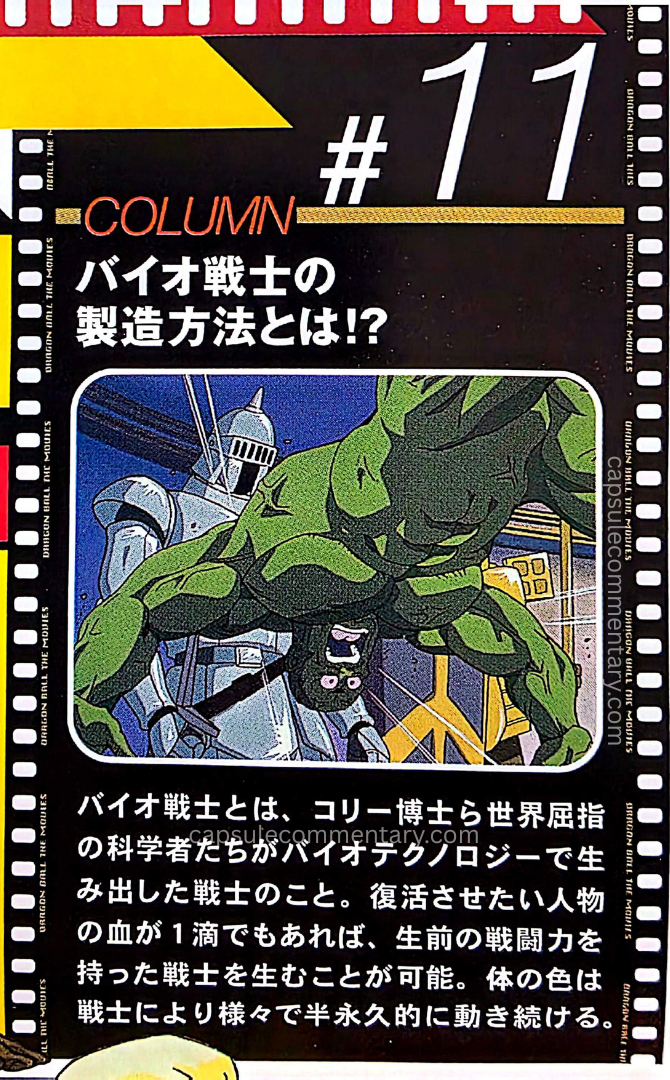
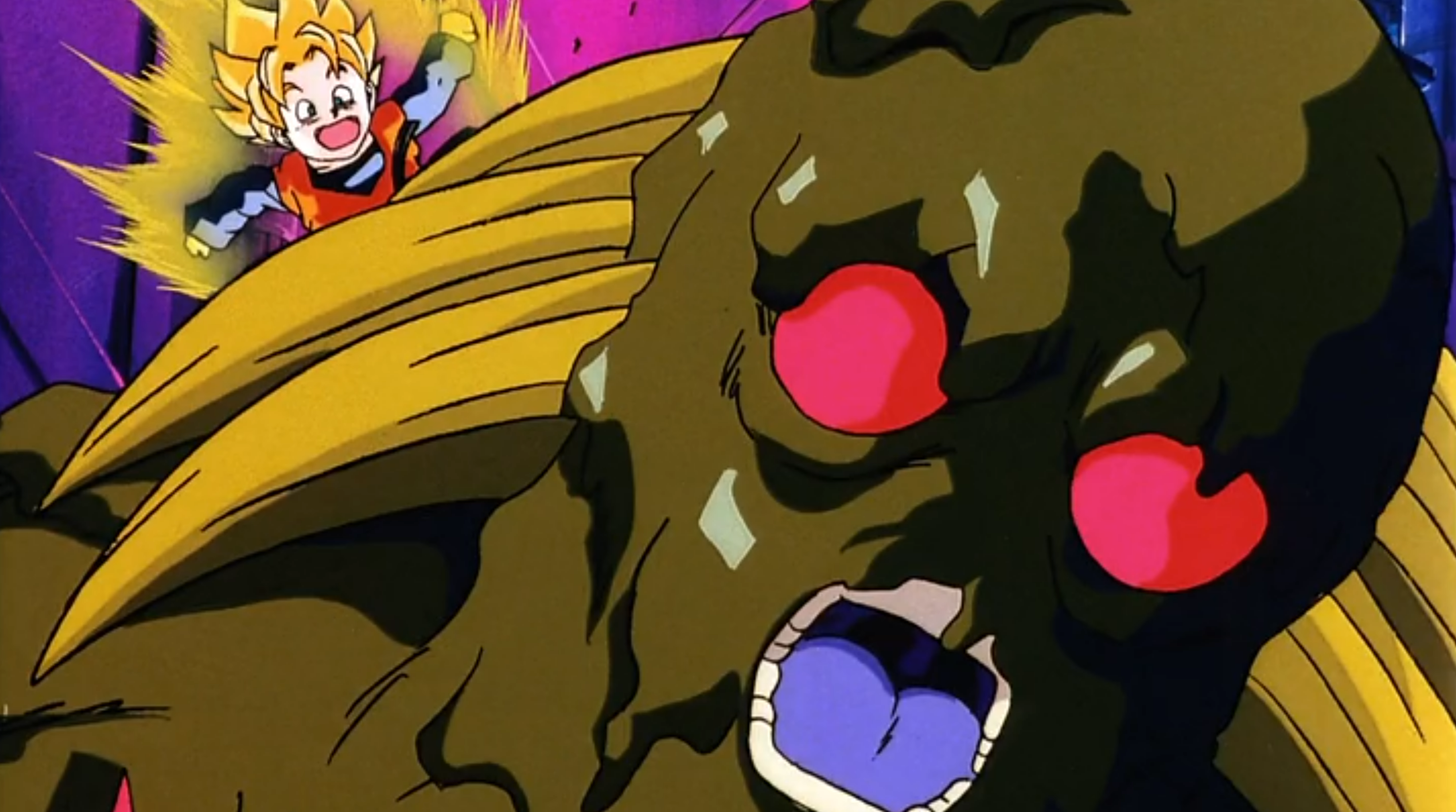
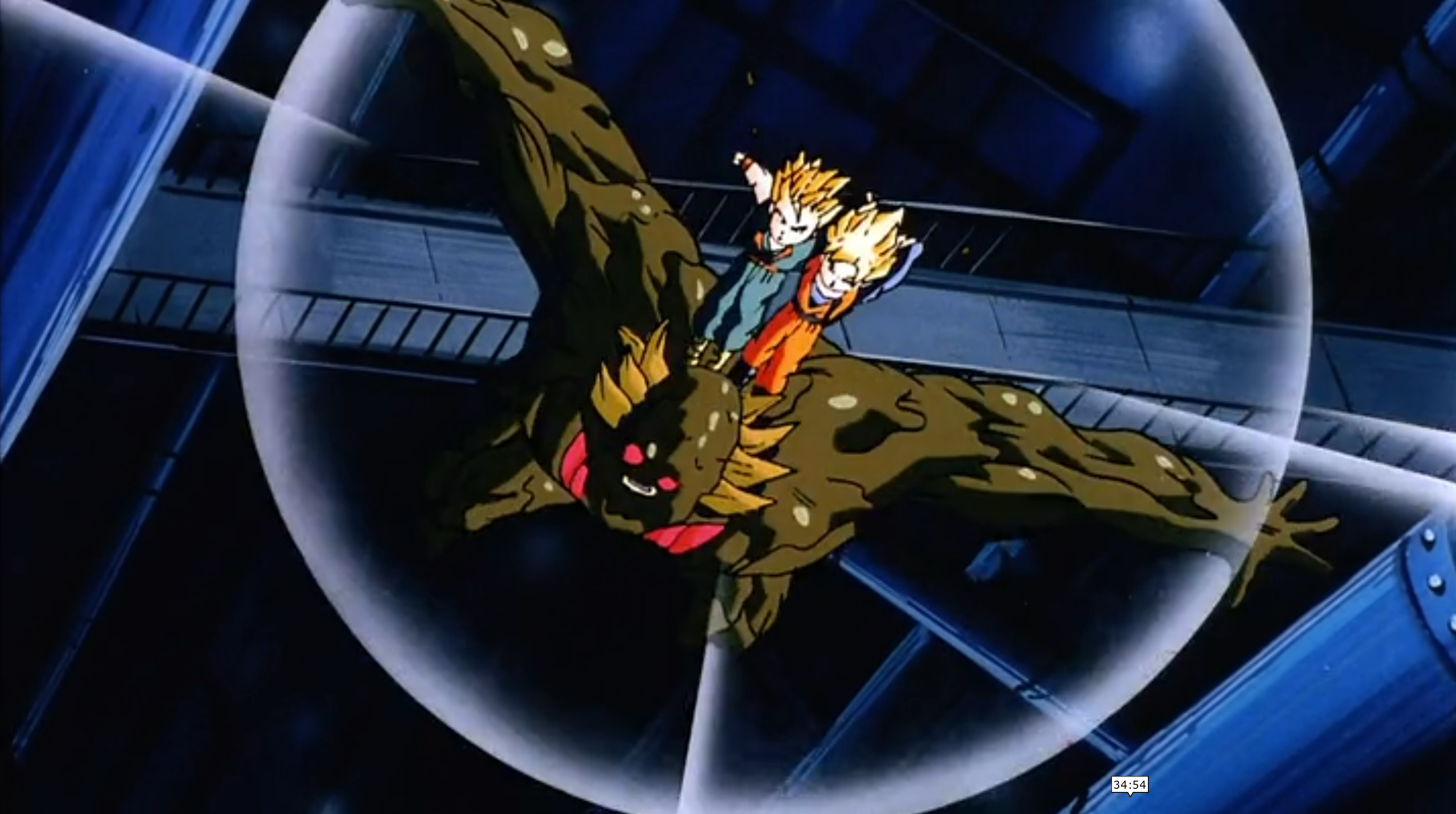
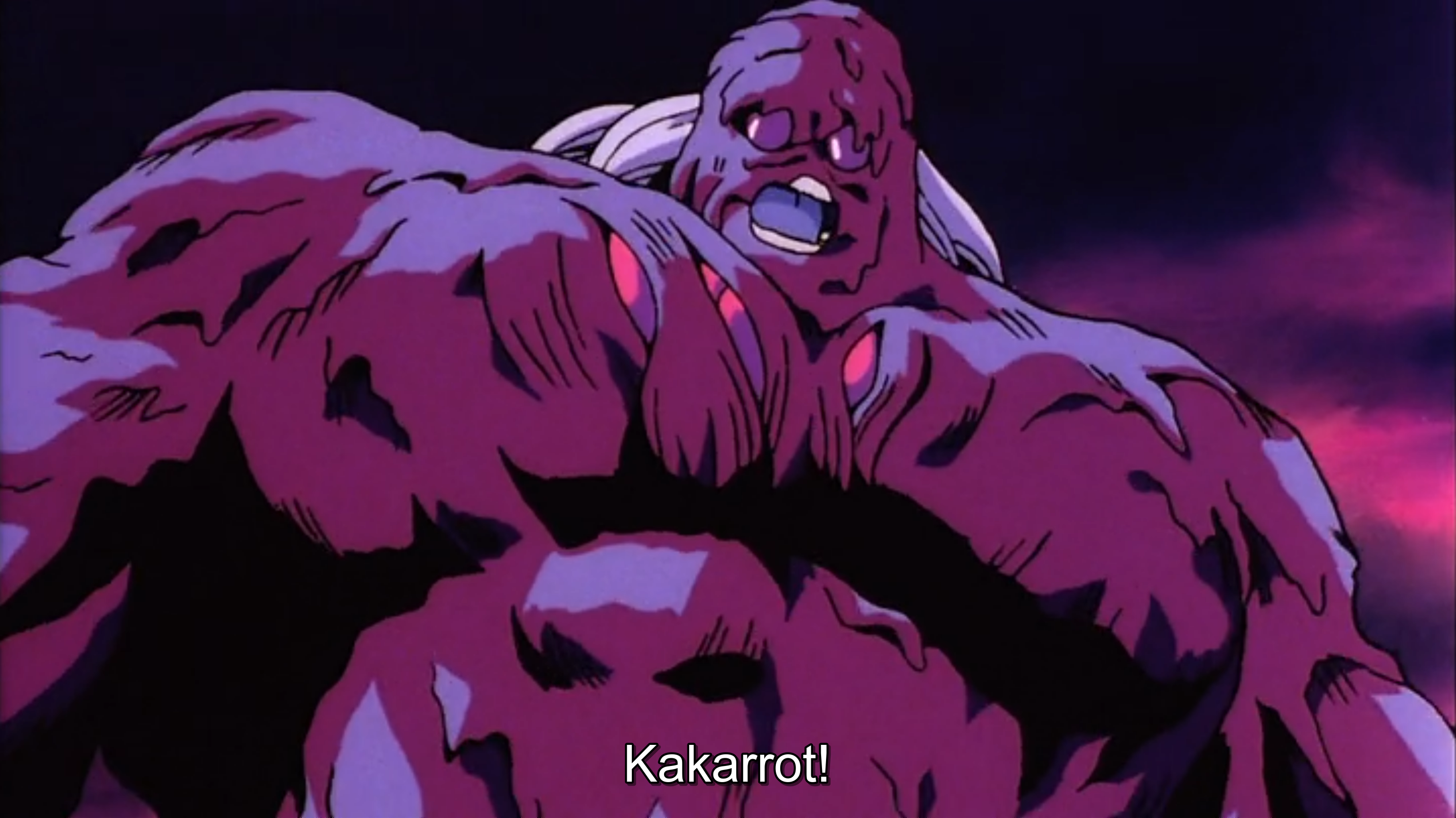
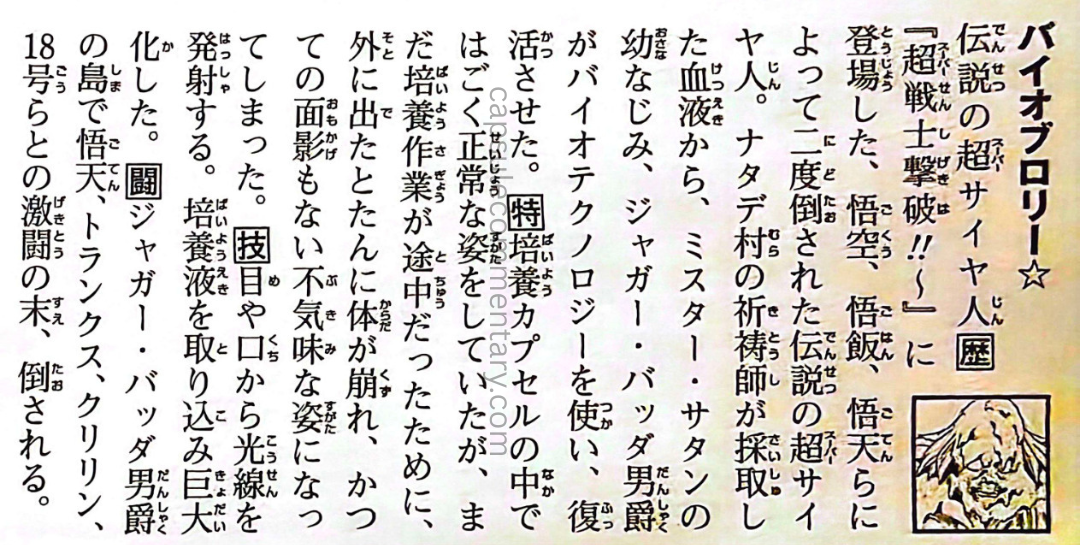
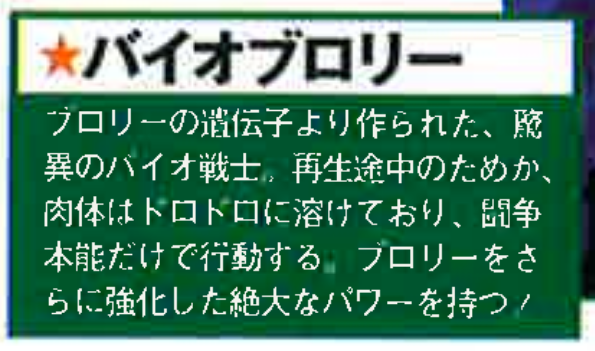
Bio-Broly is a bio-warrior created by Dr. Collie and his associates on behalf of Baron Jaguar. He is technically not Broly, but rather a clone created from Broly’s hardened blood that came from the wounds Goku dealt him at the end of Movie 8. Because he left his incubation capsule early, he became a gel-like monster that barely resembled Broly.
- Chōzenshū 3 page 283 (Daizenshū 6 page 207) states that Bio-Broly is just as strong as Broly.
- Bio-Broly is described as being “even more monstrous” than Broly by the official website.
- The Dragon Ball Super: Broly pamphlet writes of Bio-Broly, “With his second revival, Broly powers up even further! Because the staff believed that ‘the strongest being couldn’t possibly die just once,’ Broly was made to grow stronger each time he appeared, ultimately leading to him showing up three times.”
- Page 2 of the booklet in Dragon Ball The Movies Volume 6 on Blu-Ray states: “However, even in this state, the battle power of the legendary super warrior remains intact.”
- Page 15 of the official comic adaptation calls him an “even more terrifying monster” when compared to Broly.
- The insert for the standalone DVD of Movie 11 reads: “If there is even a single drop of blood from the person one wishes to revive, it is possible to produce a warrior possessing the battle power they had while alive,” and “In addition to his natural battle power, he has even acquired the Bio-Warrior’s special ability of absorbing enemies into his body.”
- Dragon Book The Movies page 35 states that Bio-Broly “possesses an immense power that further strengthens Broly!”9
An argument could be made that since Bio-Broly was made from wounds technically sustained from Movie 8 that Bio-Broly therefore should start out as being equal to Movie 8 Broly and not Movie 10 Broly, but this isn’t true. Page 2 of the booklet in Dragon Ball The Movies Volume 6 on Blu-Ray states that Bio-Broly is “the form of Broly, once defeated by Gohan and the others, revived through clone regeneration.” Placing Gohan as the lead means he is based on Movie 10 Broly. Also, Movie 10 Broly was stripped of his personality and reduced to only yelling “Kakarot,” which happens to be the only word Bio-Broly says during the entire film.
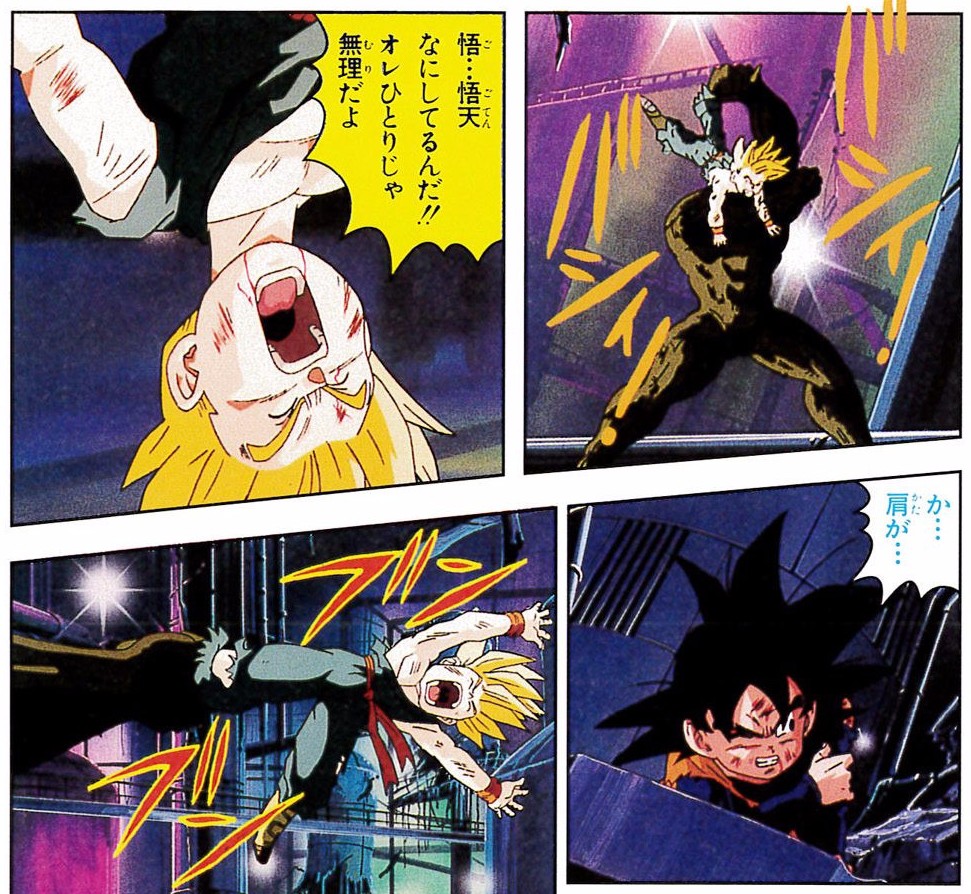
While Goten is distracted with trying to save Mr. Satan, Bio-Broly injures his shoulder with a mouth beam. Goten’s shoulder injury is a key part of understanding the power dynamics of the film because it’s implied that Goten and Trunks would have been able to beat him if that injury hadn’t occurred. In fact, Goten brings up his injury several times during the film and so do guidebooks. There would be no need to highlight his injury so often if this wasn’t the case. Since an uninjured Goten, alongside Trunks, could defeat a character at least equal to Movie 10 Broly, this places them both individually above Movie 10 Goku and Gohan.
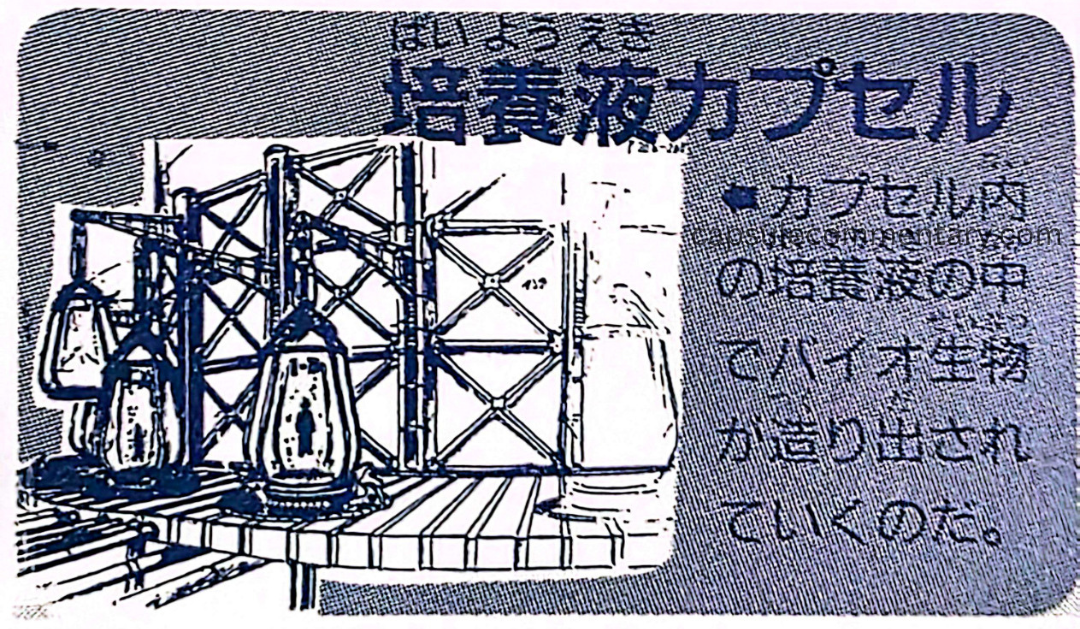
Because of Goten’s shoulder injury, Trunks attempts to outsmart Bio-Broly by destroying him with the culture fluid. This backfires, naturally, as all Dragon Ball villains need to be defeated with brawn. According to Dr. Collie, the culture fluid “feeds on any living cells or genetic material.” Page 2 of the booklet that comes with Dragon Ball The Movie Volume 6 on Blu-Ray explains: “However, if the culture solution is exposed to air, it has the danger of decomposing and absorbing all living things and continuing to proliferate infinitely.” Therefore, through absorbing Broly’s cells, the culture fluid gained incredible power. Chōzenshū 4 page 165 (Daizenshū 7 page 152) explains that Bio-Broly powered up after combining with the culture fluid. However, the culture fluid is weak to seawater because it ate a Devil Fruit. Just kidding. Its weakness to seawater is never explained. It’s also never explictly stated how much stronger Culture Fluid Bio-Broly is compared to Bio-Broly, but the implication is that he is much stronger. However, having such a devastating weakness to the most readily available resource on the entire planet makes it hard to scale him. In fact, he’s defeated pretty much immediately because of this weakness. To summarize Bio-Broly’s strength: it starts as being equal to or greater than Movie 10 Broly and then becomes some unknown amount stronger than that after he is absorbed by the culture fluid.
Movie Scaling
I’d like to take this opportunity to briefly debunk the idea of “movie scaling” here as each of the last three sections started with an explanation of where that movie fits within the manga. Some fans believe that the movies scale differently from the manga. The fact of the matter is that the movies are directly tied to events in the manga, with each movie entry in the Daizenshū and Chōzenshū starting with a timeline placement for them.
- Koyama explained this on Twitter, writing: “As for the setting and continuity [of the movies], we based things on the developments in the manga at the time of writing. If there were any planned setting changes in the manga, there was a rule that we couldn’t depict them in the movies ahead of the manga. There wasn’t enough time to fully flesh out every detail of the enemy characters’ settings, so we wrote them in line with the broad, commonly accepted continuity (as of when the TV episodes aired).” Koyama also explained this in an interview for the Dragon Box collection: “As for the content, there was a restriction that we couldn’t go beyond the setting of the TV anime at the time of the movie’s planning. For example, if we wanted to do ‘fusion,’ but the TV anime or original manga hadn’t done it yet, then it wasn’t allowed. That’s why I was always very conscious of where the TV anime was in its progression. So, if the TV anime happened to be doing the Freeza arc when we were planning, then we’d say something like ‘Let’s introduce Freeza’s brother!’ That’s how ideas came about.”
- On Toei’s website for the Dragon Box collection, it states: “Additionally, the 13 works from Dragon Ball Z [Movie 1] up through Dragon Fist Explosion!! If Goku Won’t Do It, Who Will? [Movie 13] were each produced as special episodes meant to connect with the flow of the TV series, featuring overwhelming enemies who appear one after another.” And in the notes section for Movie 1, it states: “This is the first theatrical Dragon Ball Z film, featuring Goku as an adult with his son Gohan. Up through the previous movies, the Dragon Ball films used the same characters as the original story but were created as parallel worlds to the TV series. However, starting with this film, the movies became original episodes that also connect to the television continuity.”
That’s why Dragon Ball Z: Lord Slug, known in Japan as “Dragon Ball Z: Super Saiyan Son Goku” was not allowed to depict an actual Super Saiyan Son Goku despite it being the name of the film. The description for Pseudo Super Saiyan on page 312 of Chōzenshū 4 also alludes to this: “Since the concept of Super Saiyan had not yet appeared in the original story, it was depicted in this manner.” Please read the conclusion of my Deep Dive on Majin Buu to understand why these strict rules on Toei were put in place. To summarize: this means that the movies’ scaling matches the manga chapters they were created during.
![Toei's website for the Dragon Box collection: "Additionally, the 13 works from Dragon Ball Z [Movie 1] up through Dragon Fist Explosion!! If Goku Won’t Do It, Who Will? [Movie 13] were each produced as special episodes meant to connect with the flow of the TV series, featuring overwhelming enemies who appear one after another."](https://capsulecommentary.com/wp-content/uploads/2025/07/website.png)
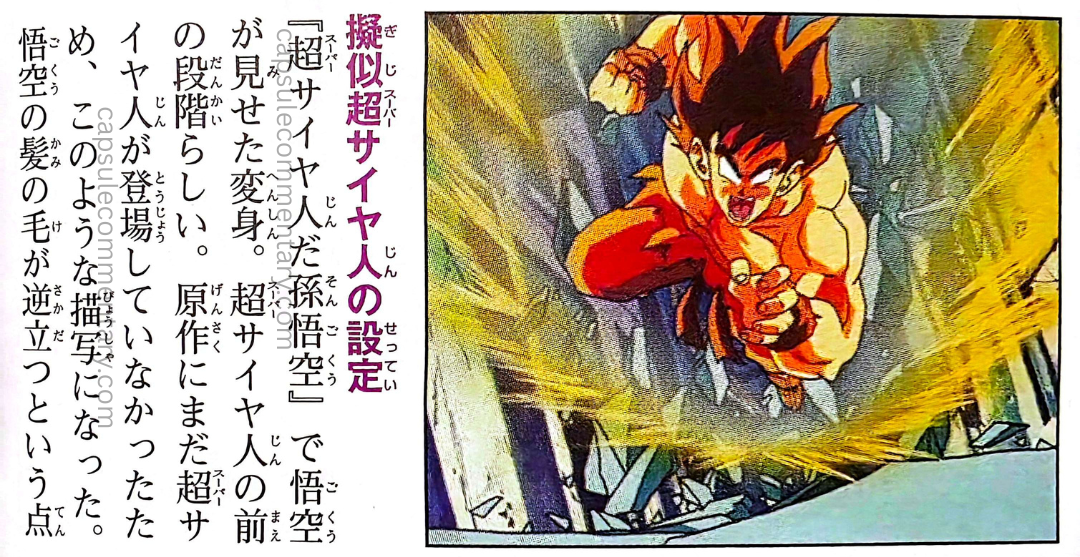
Let’s go through each non-Broly movie that fans often cite as evidence for so-called “movie scaling.”
- Fan Claim: In Dead Zone, Gohan is able to resist the Dead Zone, which makes him stronger than his manga counterpart.
Fact Check: Dead Zone takes place during chapter 203, near the end of the fight with Raditz. It is essentially a retelling of the encounter with Raditz, after all—Goku and Piccolo unexpectedly team up against a greater foe to rescue Gohan and then Gohan reveals his immense power. Page 44 of Daizenshū 6 and page 20 of Dragon Book: Dragon Box: The Movies even suggest it takes place before Raditz arrives. Goku and Piccolo remove their weighted clothing in chapter 199 and are unable to land even a single hit on Raditz until the Makankōsappō grazes Raditz’s shoulder in chapter 202. When Goku and Piccolo remove their weighted clothing to fight Garlic Jr. in Dead Zone, not only do they hit him, but they do so well that Garlic Jr. can’t even land a single blow on either of them and is forced to unleash the Dead Zone simply because he has no other means of winning. Garlic Jr. is therefore a demonstrably weaker foe than Raditz. Gohan being able to injure Raditz in such a way that it’s highlighted for nearly 3 entire pages of the manga, and surviving a hit from Raditz while he has a battle power of literally 1 are both significantly greater feats of strength and durability than being able to resist the Dead Zone.
- Fan Claim: In the Tree of Might, Turles and his Crusher Corps are all stronger than Saiyan Saga characters despite being Saiyan Saga characters themselves.
Fact Check: This one is partially true, but the Tree of Might was made well after the Dragon Team arrived on Namek, around when the Ginyu Force had arrived in the manga. If Turles and the Crusher Corps are stronger than Saiyan Saga characters, then that would be consistent with how strong characters were at that point in the manga.
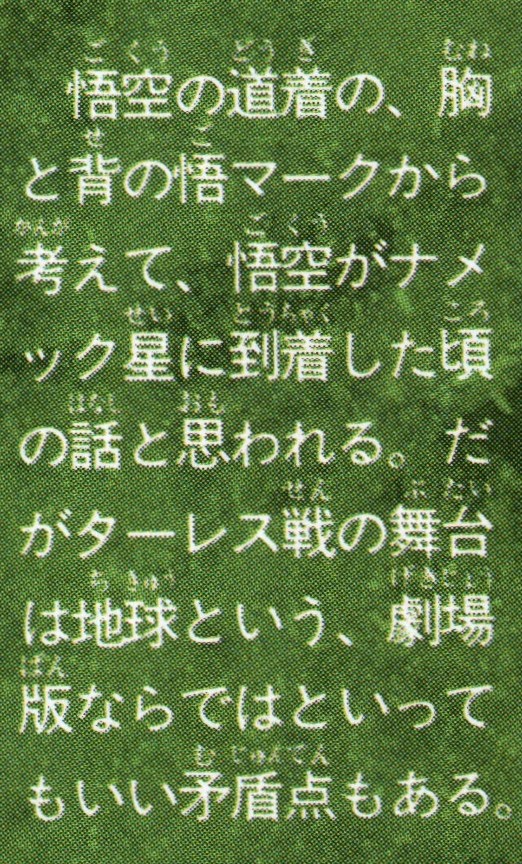
- Fan Claim: In Lord Slug, Goku is stronger than himself on Namek because he can use a x100 Kaiō-ken, and Slug is also stronger than Freeza.
Fact Check: This claim mostly stems from Kaiō stating his guess that Slug might be stronger than Freeza and even a Super Saiyan. On a foldout page in Weekly Shōnen Jump 1991 Issue 1210, it states, “Roar!! Kaiō-ken times one hundred!!! The limit that can be endured!!” Similarly, at the end of the second trailer, Goku yells, “Kaiō-ken x100!” However this line was changed by the time of the film’s release wherein Goku simply yells, “Kaiō-ken!”
For the sake of argument, let’s assume the x100 multiplier is accurate and wasn’t scrubbed from the movie. First, the film Lord Slug was released when Goku threw the Genki-dama at Freeza on Namek. In his interview for the Dragon Box release (see the image at the start of this section), Koyama said that it usually took about three months just to finish the script of a movie. Of course, a lot more work must be done following the completion of the script. All of this is to say that the script was therefore written before Freeza’s final form was revealed and before Goku jumped from a battle power of 90,000 to 3,000,000. Page 26 of Dragon Book: Dragon Box: The Movies even states: “In this movie, Goku is enveloped in a golden aura, but this does not appear to be a complete Super Saiyan transformation; rather, it seems to be a temporary state. From this, it is thought that this story takes place before Goku’s battle with Freeza on Planet Namek, and after his fight with Vegeta.” A x100 multiplier on a battle power of 90,000 brings Goku to 9,000,000. This is stronger than his later base form, but is nowhere close to being stronger than Goku using Kaiō-ken x20 or becoming a Super Saiyan during his fight with Freeza. Perhaps it would place Movie 4 Goku on par with Third Form Freeza. The supposed x100 Kaiō-ken is also due to Piccolo giving all of his energy to Goku, and is not something he can draw upon by himself. When he uses it, the film makes it overtly clear that it is their combined power and that it’s extremely time-limited, as Goku resorts to the Genki-dama shortly thereafter.
I suppose an argument could be made that if Movie 4 takes place while Goku is healing, then the x100 multiplier would be applied to whatever Goku’s current battle power was at that exact moment and not necessarily to 90,000. But at that point, the discussion would devolve into pure speculation. We have no idea what the rate of healing is inside of the healing tanks nor how long it takes for the Saiyan Power boost to kick in. In real life, healing is uneven and happens in phases, with some days being better than others. Obviously, Dragon Ball doesn’t mirror real life, and there’s a significant degree of magic involved here. So, we simply don’t and can’t know what stage of recovery Goku is at in any given point in the healing tank besides something like “nearly healed” towards the end. Even then, what would “nearly healed” mean in terms of battle power? 2,999,999? 2,500,000? 2,000,000? It’s also not even possible to measure it on a chapter-by-chapter basis (i.e., it takes place 13 chapters into his healing, therefore…) because different chapters pass time faster than others. The point I’m making is that it is better to work with the confirmed battle powers: 90,000 entering the tank and 3,000,000 leaving the tank. Everything else is disputable.
As for comparing Slug to Freeza, Slug at full power was destroyed by the aforementioned Genki-dama, which only drew upon a single star for its genki. Freeza at half-strength survived a Genki-dama that drew on the genki of perhaps an entire solar system; Goku calls upon nearby “stars,” but this could also be understood as planets or celestial bodies. Also, when Freeza starts using 50% of his strength, Kaiō is shocked by this. This means that his estimation on Slug’s power compared to Freeza’s (which he admitted might be wrong) was based on outdated information, such as Freeza’s second form or third form. Freeza also did not reveal his full strength in the manga until a month after Lord Slug premiered.

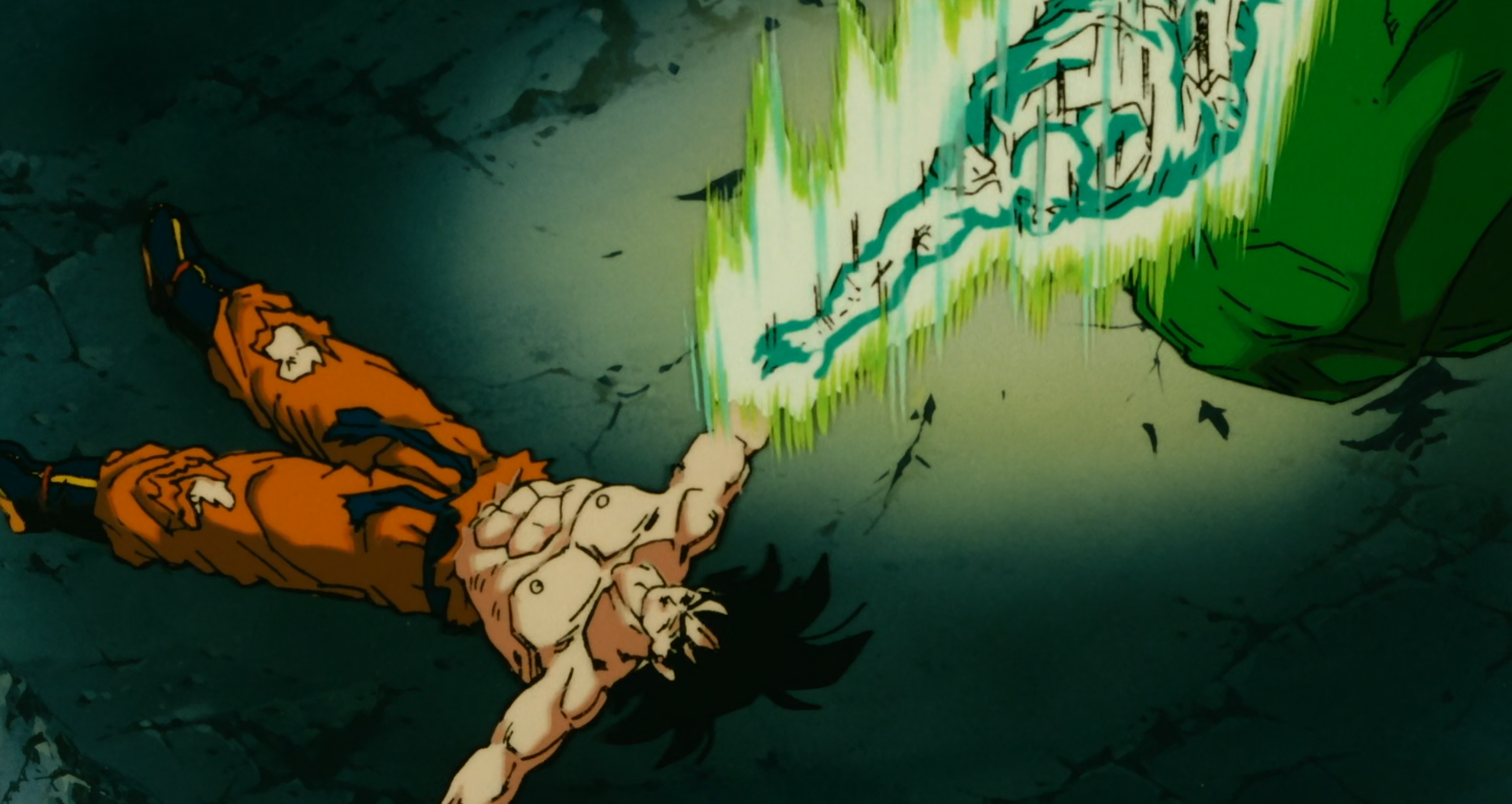
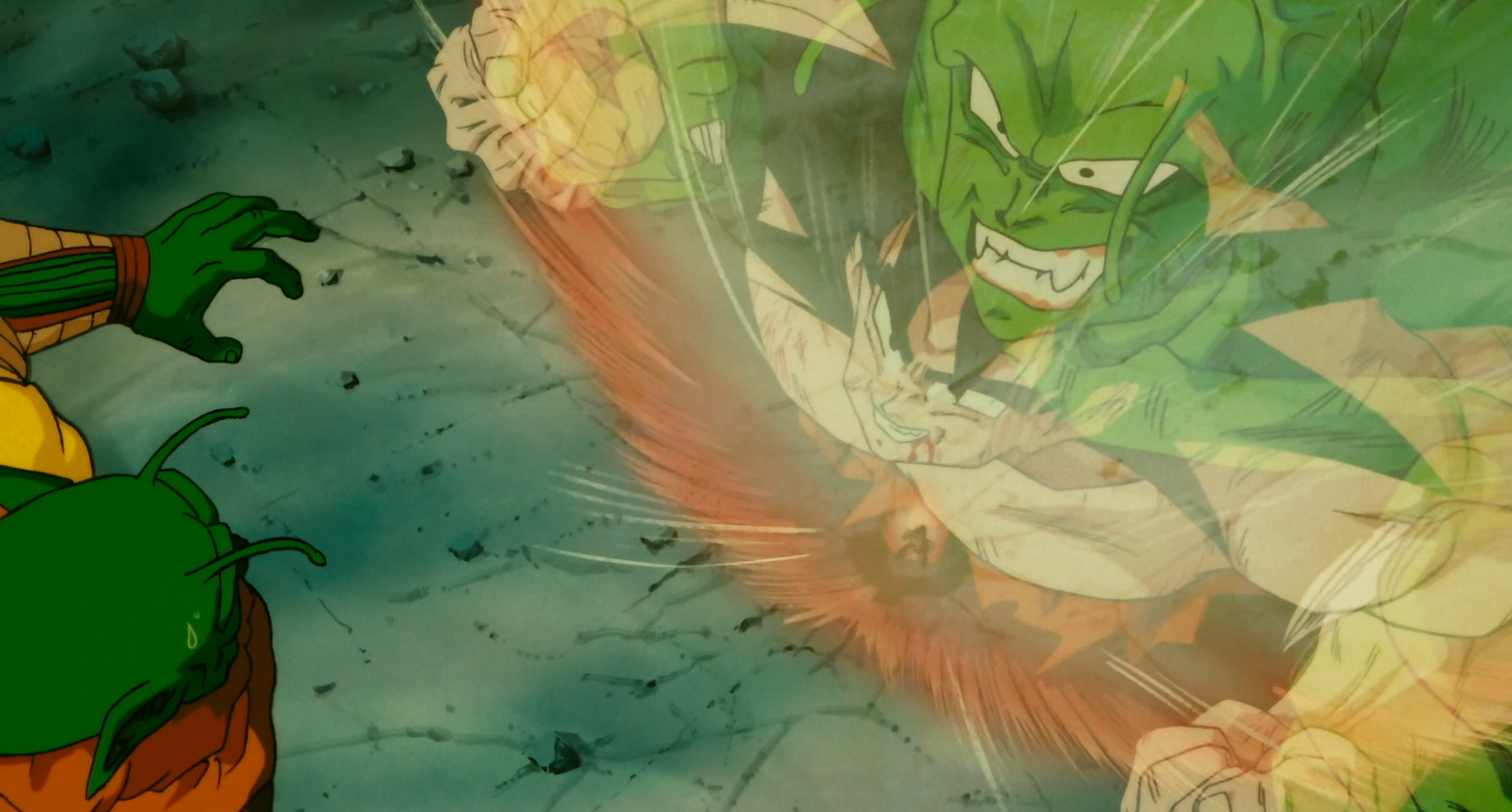
- Fan Claim: In Cooler’s Revenge, Goku in his base form is able to fight well against Fourth Form Cooler, which means that Goku is stronger than he was on Namek.
Fact Check: This is true, but not for the reason some think. Cooler’s Revenge takes place after Goku defeated Freeza, which is the entire premise of the film. So of course Goku was stronger than he was on Namek. When Goku and Future Trunks spar, we get to see just how much stronger he had become.
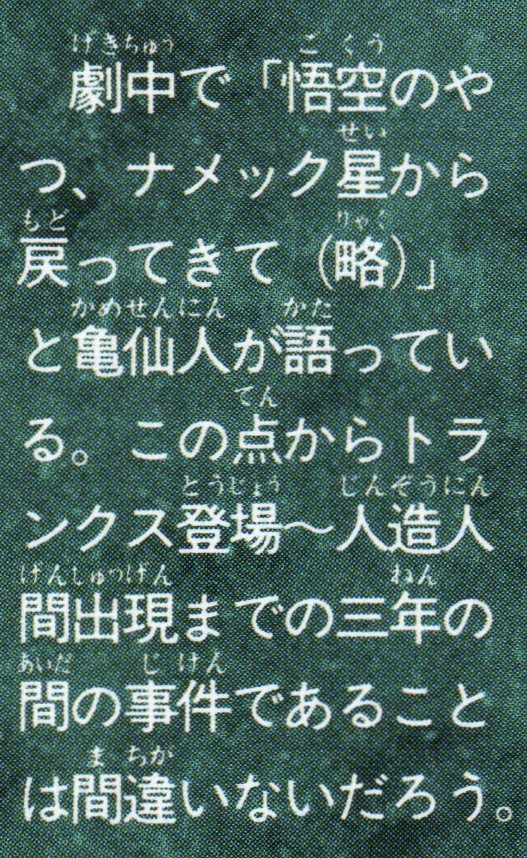
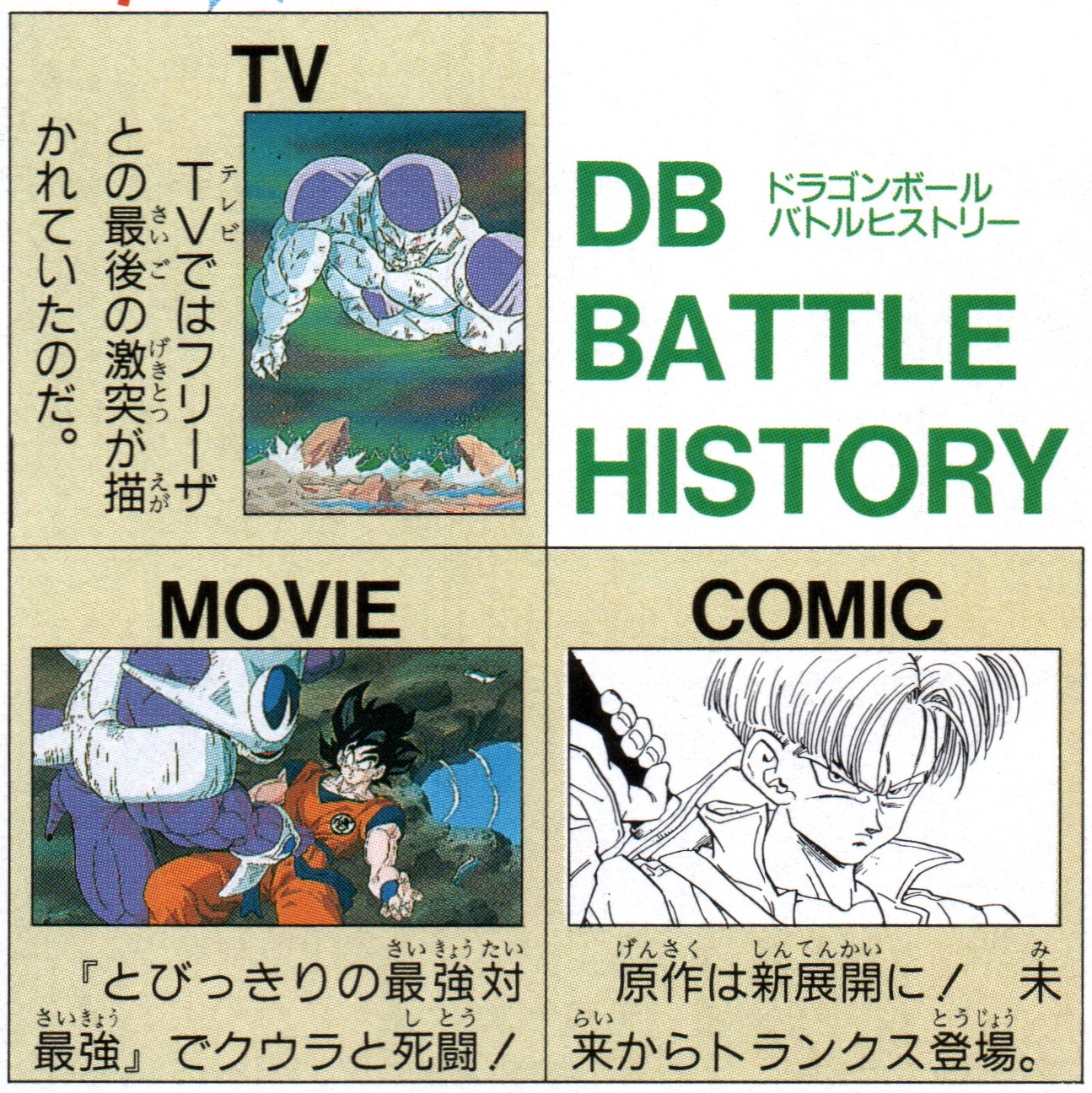
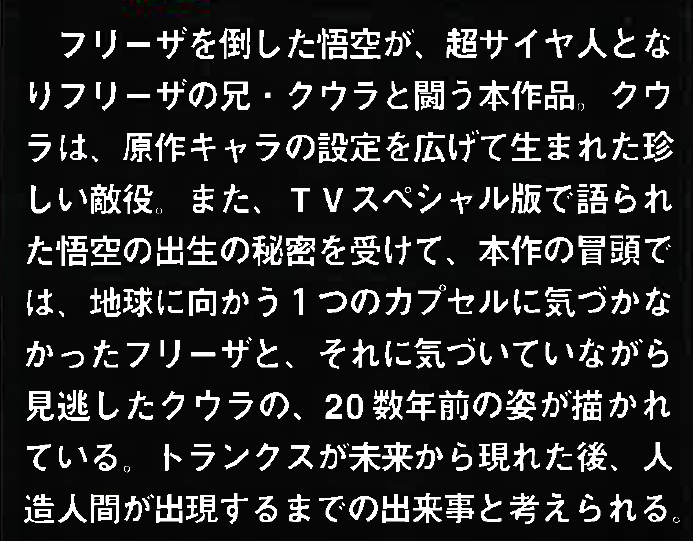
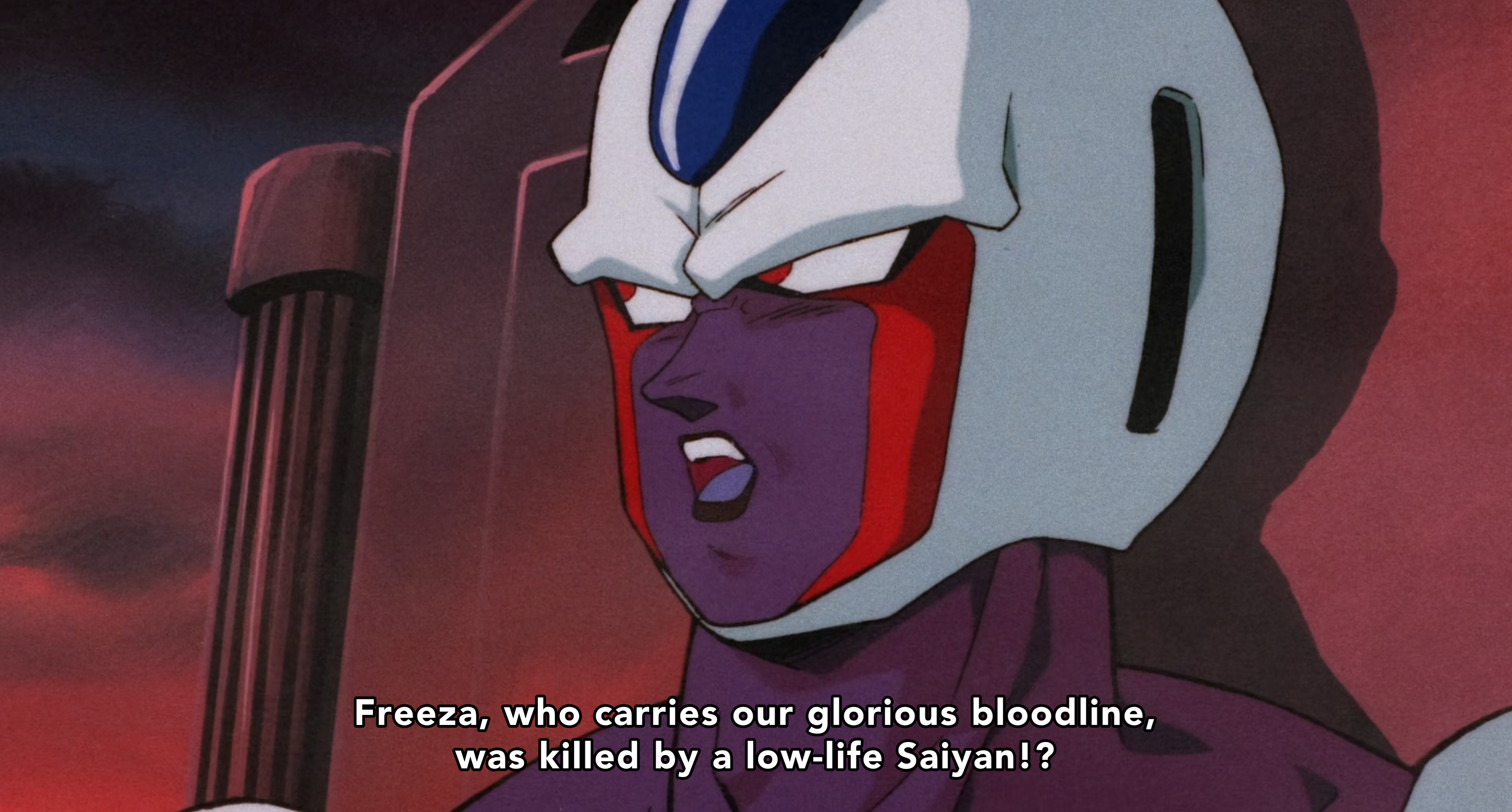
- Fan Claim: In the Return of Cooler, Metal Cooler is able to drag base form Goku out of his Shunkan Idō (Instant Transmission), which no other villain has been able to do. This makes Metal Cooler an interdimensional threat.
Fact Check: In the Return of Cooler, Metal Cooler is also able to use Shunkan Idō and this movie, along with Movie 8, treats using Shunkan Idō as entering a sort of subspace wherein the users move quickly to another point in the real world. Metal Cooler is able to pull base form Goku out of that Shunkan Idō subspace because he himself is also using the technique and is inside of it. He’s not reaching through different dimensions or anything of the sort. Later in the fight, Super Saiyan Goku returns the favor to Metal Cooler and tackles him inside of that subspace before he can attack Super Saiyan Vegeta. In Battle of Gods, even Beerus is caught off-guard by Shunkan Idō, and Metal Cooler is absolutely not stronger nor faster than Beerus. Therefore, the Shunkan Idō used in Movie 6 (and 8) is demonstrably inferior to other uses of it.
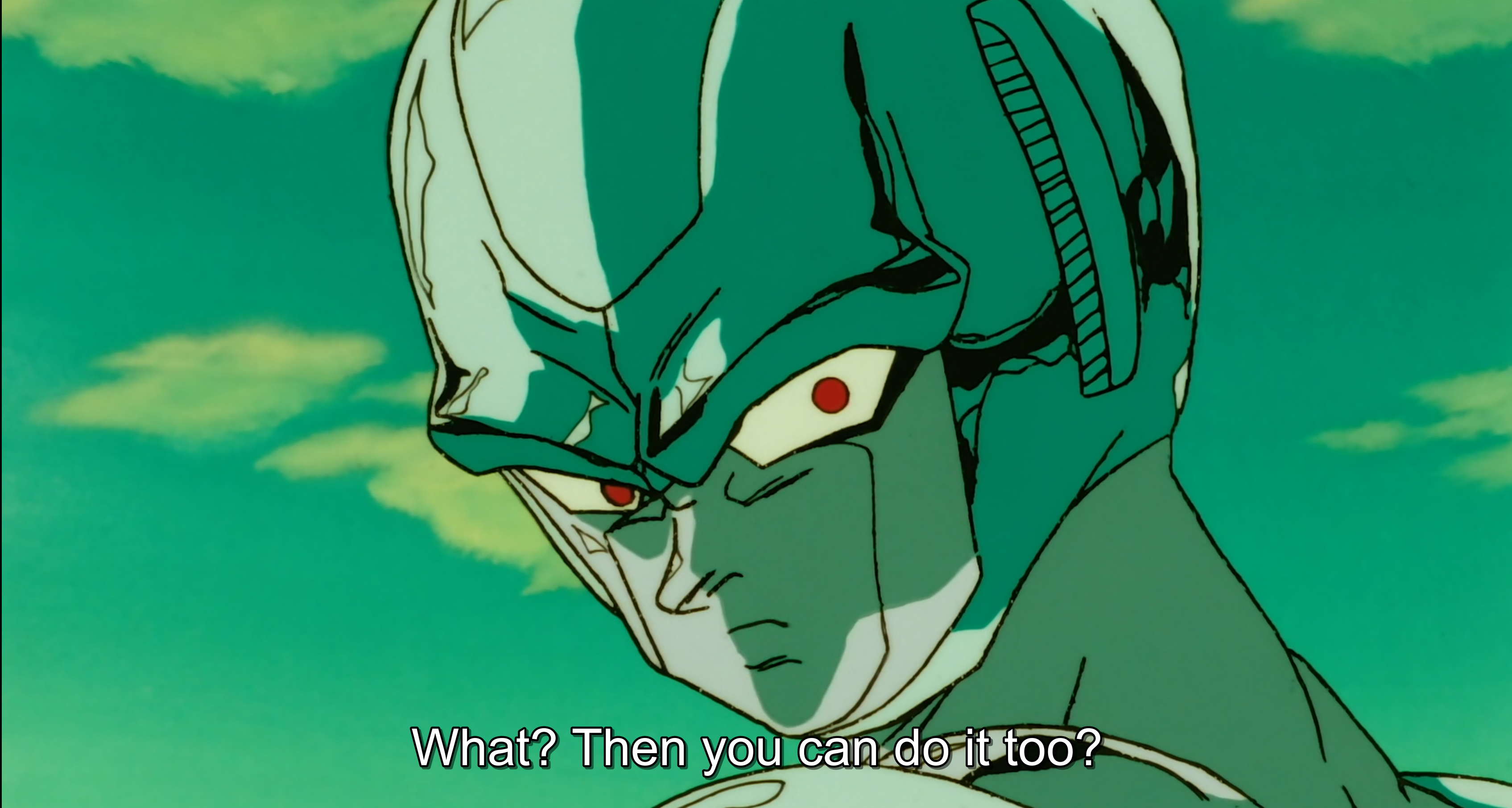

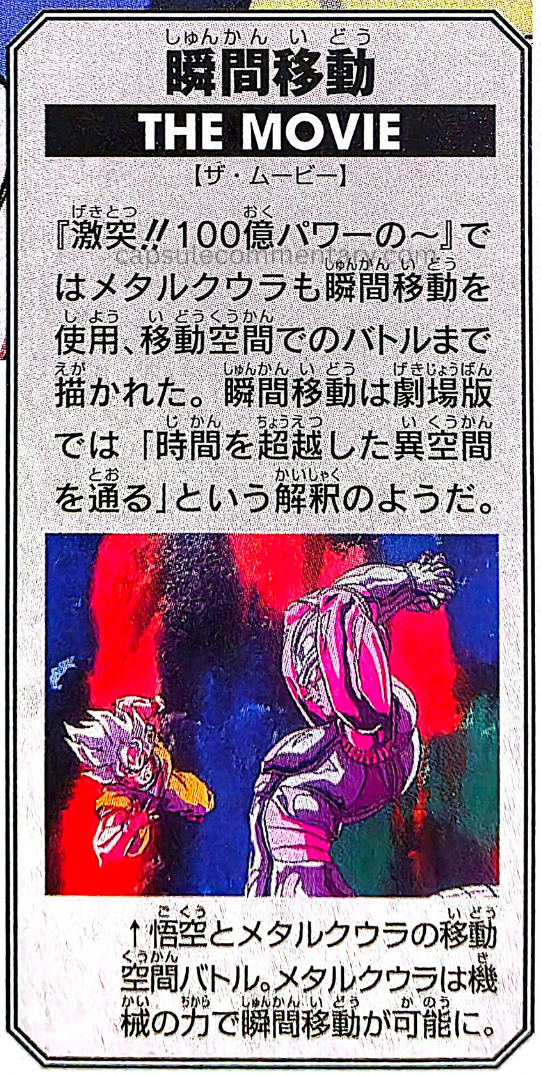
- Fan Claim: In Fusion Reborn, Super Saiyan 3 Goku powering up can be felt all the way on Dai Kaiō’s planet, which makes him stronger than his manga counterpart.
Fact Check: When Goku first unveiled Super Saiyan 3 in the manga, it was felt outside of the bounds of the universe (the sphere containing the Afterlife and the living world), all the way in the holy realm of the Kaiōshin. Feeling his power in the Afterlife while he’s also in the Afterlife is therefore perfectly reasonable. In fact, only Super Gogeta was felt outside of the Afterlife and even then, it was only by Goten and Trunks — not even Gohan felt Gogeta’s ki. Page 56 of Jump Anime Library 1: Dragon Ball Z Movie 12 even confirms that the boys only felt Gogeta’s presence for a brief instant. Goku’s Super Saiyan 3 transformation in the manga therefore has a better display of power than even Super Gogeta.

- Fan Claim: In Wrath of the Dragon, Super Saiyan 3 Goku is stronger than Ultimate Gohan and Super Saiyan 3 Gotenks, so it must have different scaling.
Fact Check: Wrath of the Dragon takes place after Kid Buu was defeated, and Super Saiyan 3 Goku had been stronger than both Gohan and Gotenks since at least the start of the Kid Buu fight. Goku remaining stronger than Gohan and Gotenks in the immediate aftermath of Kid Buu’s defeat is entirely expected. Please read my Deep Dive on Kid Buu vs. Buuhan if you don’t understand why Goku was stronger than Gohan and Gotenks. Excluding Battle of Gods and Resurrection ‘F’, this is the only Dragon Ball Z movie where it’s possible that the characters are markedly stronger than they are before the End of Z. This is because it takes place during the 10-year time skip where Daima, YSG, and Super occur.

- Fan Claim: I enjoyed Dragon Ball Evolution.
Fact Check: No, you didn’t.
On page 31 of the Dragon Ball Z: Battle of Gods Official Movie Guide, while briefly describing previous Dragon Ball films, it states, “All 17 Dragon Ball theatrical films released so far are introduced at once. Even more powerful enemies than in the TV series appear one after another!!” Some fans like to point to this as proof that movie scaling must exist because these enemies are “stronger.” The major issue with this statement is its broad, sweeping claim which falls apart when placed under any amount of scrutiny. Is King Gurumes from Curse of the Blood Rubies stronger than Freeza? Is Garlic Jr. in Dead Zone stronger than Garlic Jr. in the Garlic Jr. Saga? Is Dr. Willow in The World’s Strongest stronger than Majin Buu? All of these must be true for the statement to be correct. The statement is too vague to be useful and too broad to be accurate. If it instead wrote something like, “Even more powerful enemies than their TV counterparts appear one after another,” for example, then this could be admissible.

To conclude this section, none of this is to argue for the canoncity of these films, but rather to demonstrate that the power-scaling of them is consistent with the events of the manga at the times of their production. The entire idea of “movie scaling” is a misconception based on misunderstanding the manga’s scaling and how the movies were produced.
Conclusion
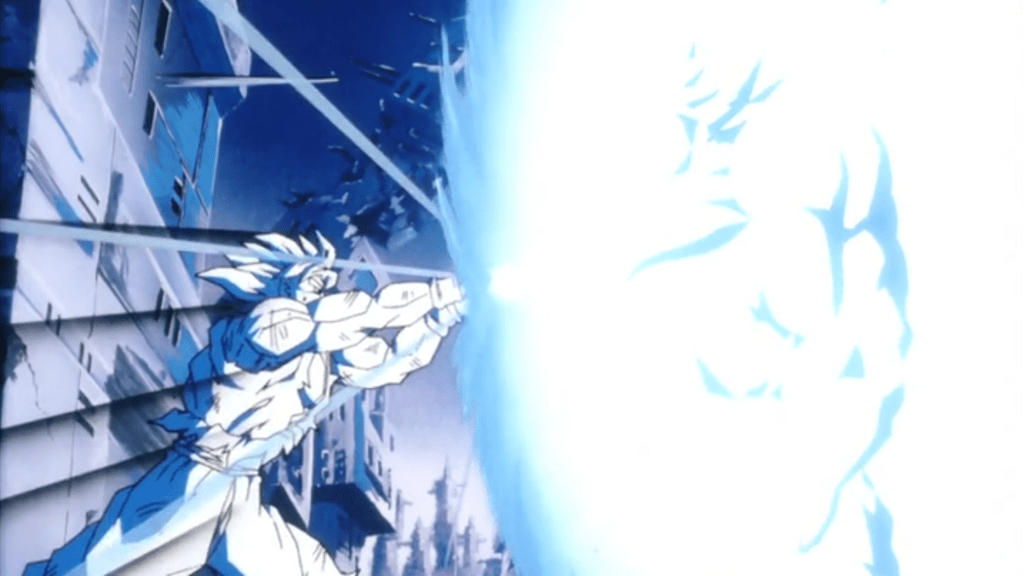
Conclusion
Broly starts out as a serious threat in Dragon Ball Z: Broly — The Legendary Super Saiyan, but in each subsequent film, his personality and menace are reduced, until he’s little more than comic relief being embarrassed by Goten and Trunks. Tatsuya Nagamine, the director of Dragon Ball Super: Broly, even said as much on page 25 of the Dragon Ball Super: Broly premium pamphlet: “However, while the older version of Broly didn’t really have his personality explored in much detail….” What started as an interesting concept of a truly evil Saiyan who can fully utilize Super Saiyan Grade 3 eventually turned into a caricature of a villain being pissed on and mooned by Trunks. Alongside the erasure of everything that made Broly interesting, his performances in each subsequent film gets worse each time. If it were not for official statements and tweets contradicting this, viewers would more likely come to the conclusion that Broly actually gets weaker in each succeeding film.
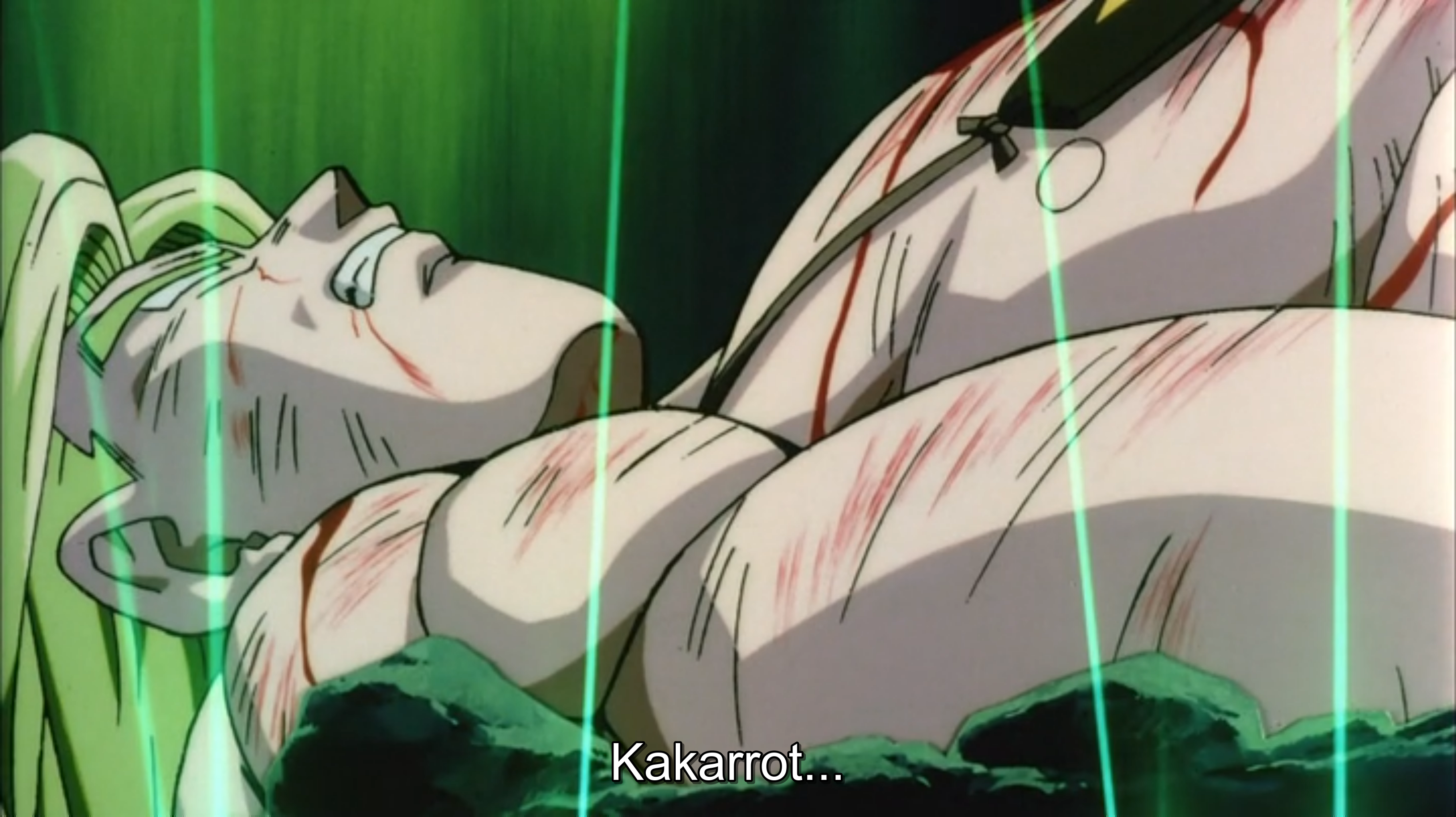
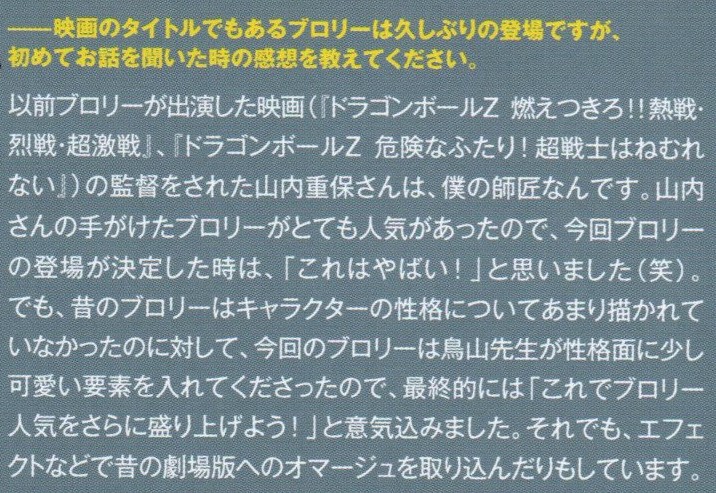
As it stands though, Broly does increase in strength in each succeeding film, including Dragon Ball Super: Broly, as well. In Dragon Ball Z: Broly — The Legendary Super Saiyan, Broly is somewhere between Super Saiyan Grade 4 Goku and Perfect Cell in strength. In Dragon Ball Z: Broly — Second Coming, he is somewhere between Super Saiyan 2 Teen Gohan and Super Perfect Cell. Finally in Dragon Ball Z: Bio-Broly, Bio-Broly starts out as being equal to or greater than Movie 10 Broly and then becomes some unknown amount stronger than that after he is absorbed by the culture fluid.
In Movie 8, Broly fought weaker versions of Gohan, Piccolo, Future Trunks, and Vegeta than were present during the Cell Games. By Broly’s own admission, he was fighting the Dragon Team at full power during Movie 8 and expressed frustration at not being able to kill Goku even after hours of trying. In Movie 10, he again fought a weaker version of Gohan than who was present during the Cell Games and with weaker allies than who were present in Movie 8 (Goten and Trunks). We can assume that Goku’s representation was accurate in Movies 8 and 10. Movie 10 Broly is weaker than Bio-Broly, who could have been defeated by Goten and Trunks if not for Goten’s shoulder injury. Broly was unable to kill any of the Dragon Team in all 3 of his movie appearances, including Videl and Kuririn—both of whom should be millions of times weaker than him. Perfect Cell, on the other hand, defeated a far stronger Dragon Team, and when he decided to kill #16—likely about as strong as Movie 8 Piccolo—he did so instantly and effortlessly, rather than needing hours to finish the job. When Perfect Cell was ready to launch a Kamehameha to destroy the Earth, the stronger versions of the Dragon Team saw it was impossible to stop this attack and accepted their deaths, whereas when Broly was in a similar situation in Movie 10, the Dragon Team viewed that beam clash as something they could potentially win, and, in fact, they did win it. It took a significantly stronger version of Gohan than who appears in Movie 10 to defeat Perfect Cell. In summary, Perfect Cell is demonstrably stronger than Movie 8 Broly.
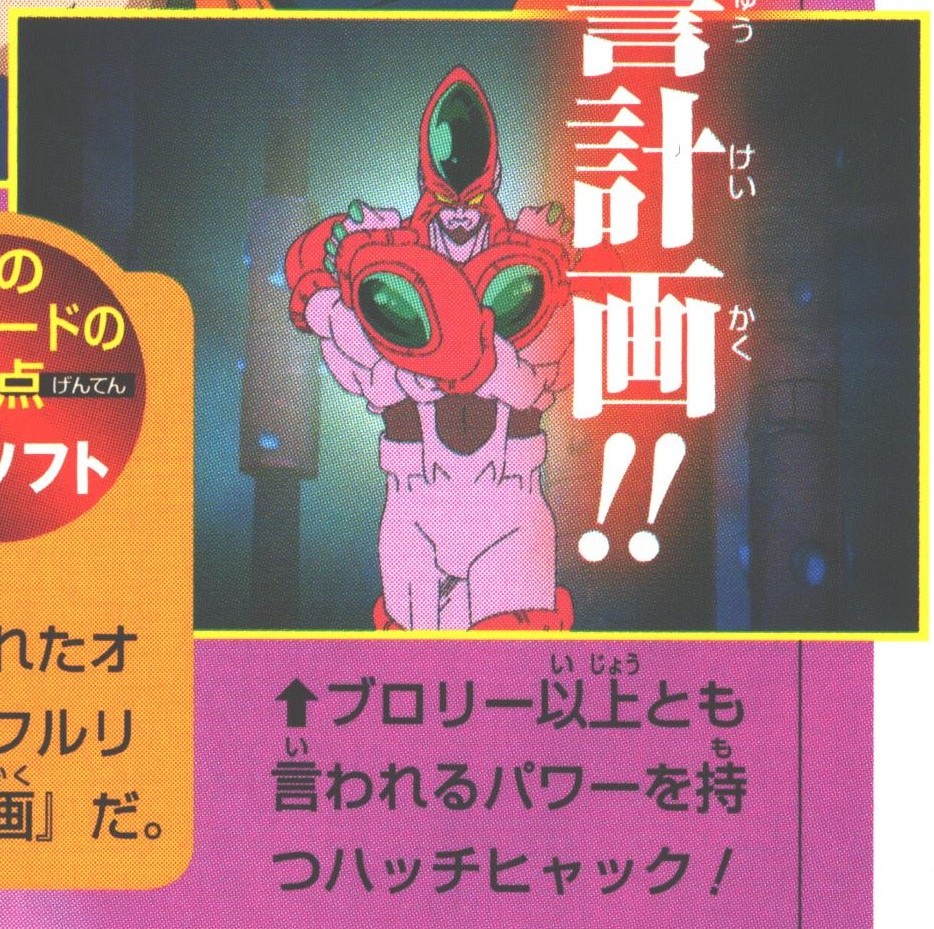
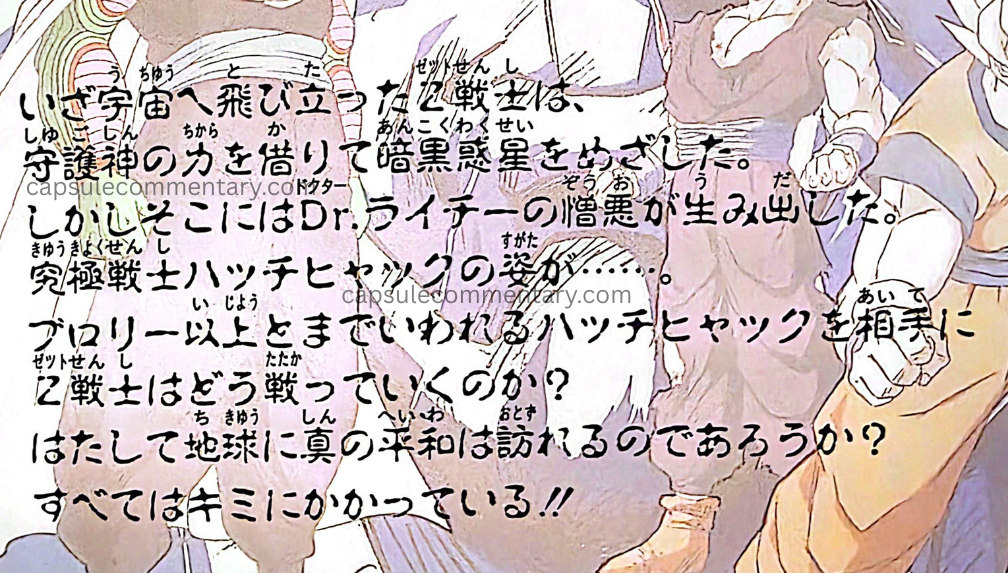
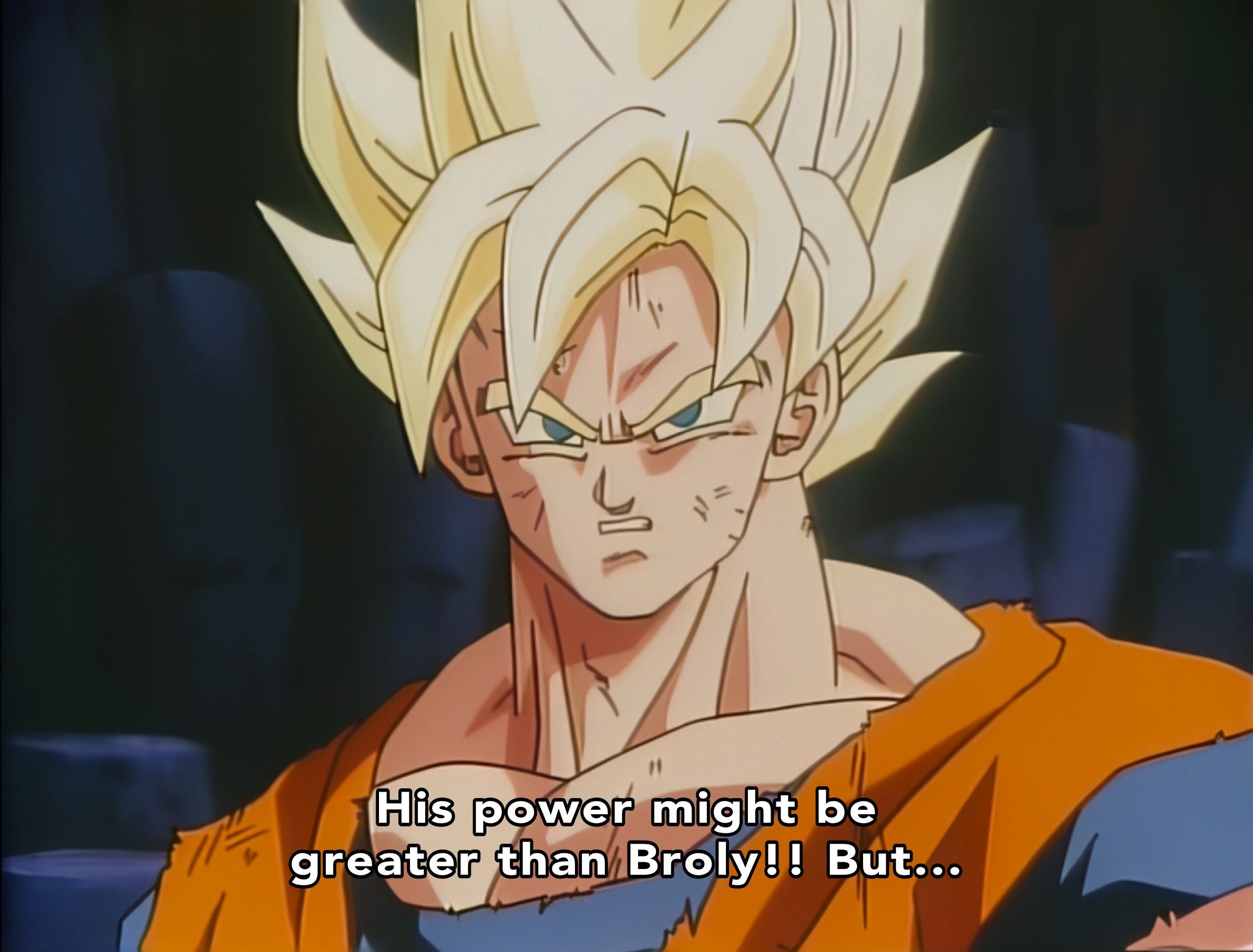
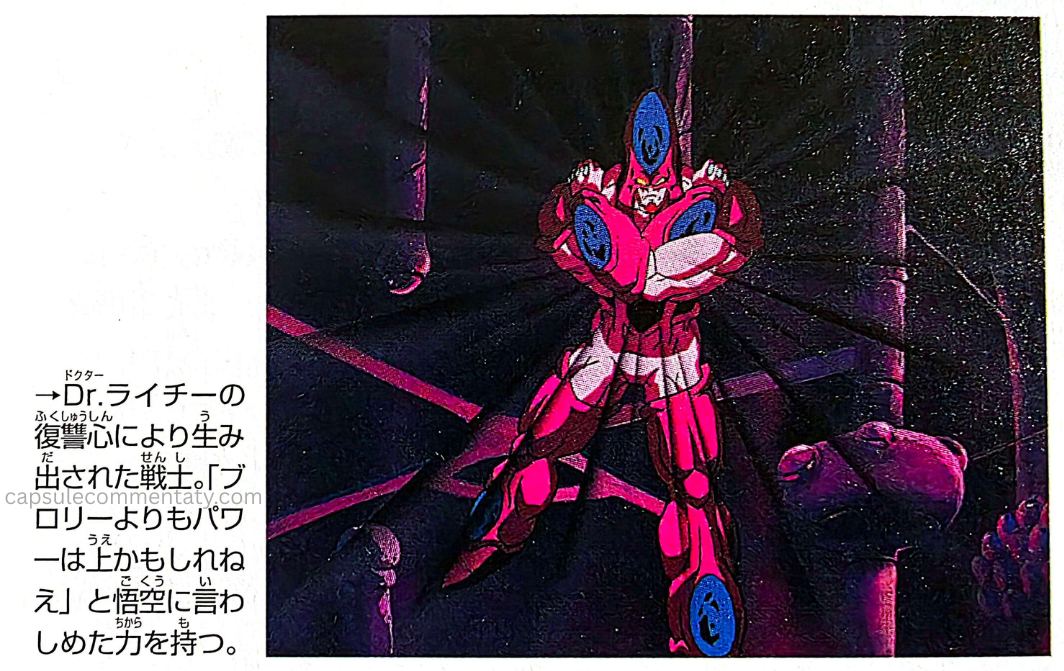
Furthermore, in Dragon Ball Z Side Story: Plan to Eradicate the Saiyans (which features one of the best songs in the series), the remake of that OVA packaged with Dragon Ball: Raging Blast 2 (Dragon Ball: Plan to Eradicate the Super Saiyans), and on page 6 of Dragon Ball Z: Plan to Eradicate the Saiyans – Space Chapter‘s manual for the Playdia, Goku and the narration suggest that Hatchiyack is stronger than Broly. The battle against Hatchiyack likely takes place during chapter 396 due to Piccolo’s comment on Mr. Satan’s stupidity in both the video game and the first OVA. The reason for this is because Piccolo does not know who Mr. Satan is until chapter 395, and he makes a similar remark after Cell bats him away on page 13 of chapter 396. Goku’s comparison to Broly is repeated on page 33 of both TV Anime Guide: Dragon Ball Z Son Goku Densetsu and Dragon Ball Z Battle of God Official Movie Guide. These statements are not conclusive in and of themselves, but they are repeated so often that they’re almost certainly true.
However, while those other examples were not entirely conclusive, the Playdia version of the game has Goku say, “This guy is on a completely different level from everyone we’ve fought so far… he’s a monster,” which places him definitively above Movie 8 Broly. The Playdia version also has different paths the player can take. In one path, Hatchiyack becomes huge like Piccolo during the 23rd Tenka’ichi Budōkai, and he becomes stronger but slower. In another path, Hatchiyack transforms into a form I’ll refer to as “Super Hatchiyack,” and with which he completely dominates everyone. In that path, Goku creates a universal Genki-dama with a little bit of energy from everyone, similar to the Genki-dama which was used against Kid Buu (except the canon Genki-dama brought everyone to their absolute limits). Goku also comments on how he can use the Genki-dama because he’s using Grade 4.
On Twitter, Koyama wrote, “I don’t have the data that quantifies the fighting power of all the characters that appear in Dragon Ball at the same time, so I can’t conclude. If you answer only by feeling, I think the power of the cell [sic] and the hatch hyack [sic] is about the same.” All of this information taken together means that base Hatchiyack is stronger Movie 8 Broly and that he’s about the same as Perfect Cell, which again means that Perfect Cell again is stronger than Movie 8 Broly. Giant form and Super Hatchiyack are some unknown amount stronger than his base form, similar to how Culture Fluid Bio-Broly is some unknown amount stronger than regular Bio-Broly. However, something we can deduce from the game, based on the Dragon Team’s performance, is: Hatchiyack < Giant Hatchiyack < Super Hatchiyack.
The Famicom game’s box, cartridge, manual, OST, and official guide all prominently feature Super Saiyan 2 Gohan. This was false advertising on the part of Bandai and Shueisha because a picture of Super Saiyan 2 Gohan only appears during special attack animations (while Gohan’s sprite is still Super Saiyan 1) in the Famicom version of the game and doesn’t appear at all in the accompanying OVAs nor the Playdia versions of the game. The reason they did this is because, by the time the game was released, the anime had started the Other World filler arc and Bojack Unbound had already been in theaters for a month. Even though fans therefore likely expected Super Saiyan 2 Gohan to appear in the game, it was likely too far into development for Toei to reanimate the OVAs and for Koyama to rewrite the story to accomodate Super Saiyan 2 Gohan. Making the game’s sprites accomodate Super Saiyan 2 Gohan would have been simple enough since it was only a matter of changing a handful of sprites, though. Despite the false advertising, the game’s story takes place around chapter 396. Therefore, Hatchiyack is only said to be stronger than Movie 8 Broly and not Movie 10 Broly.
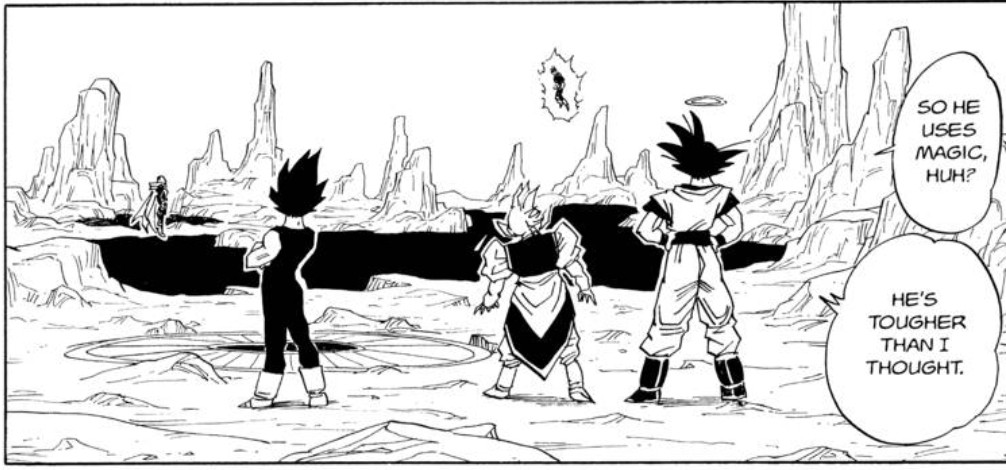
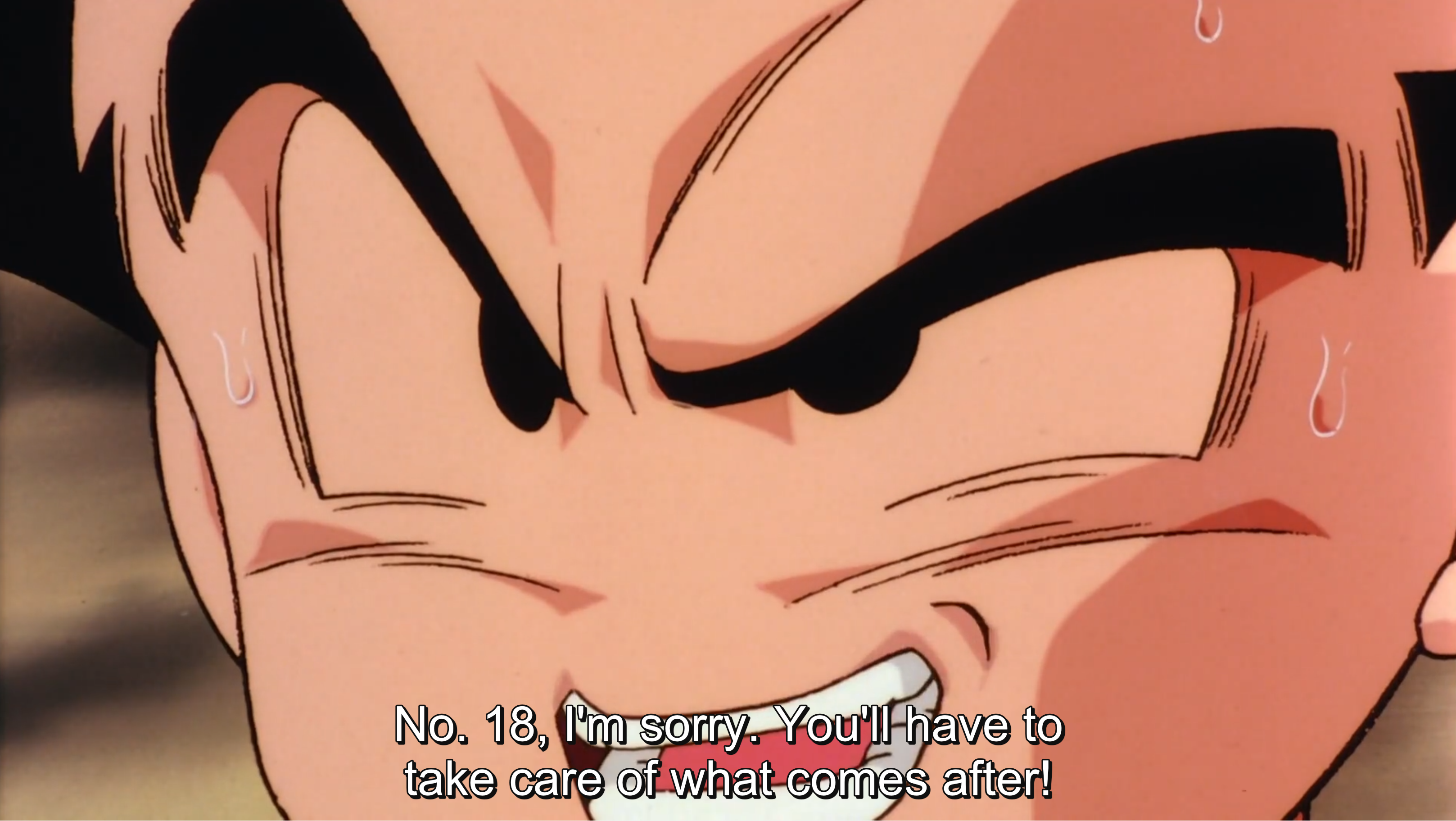
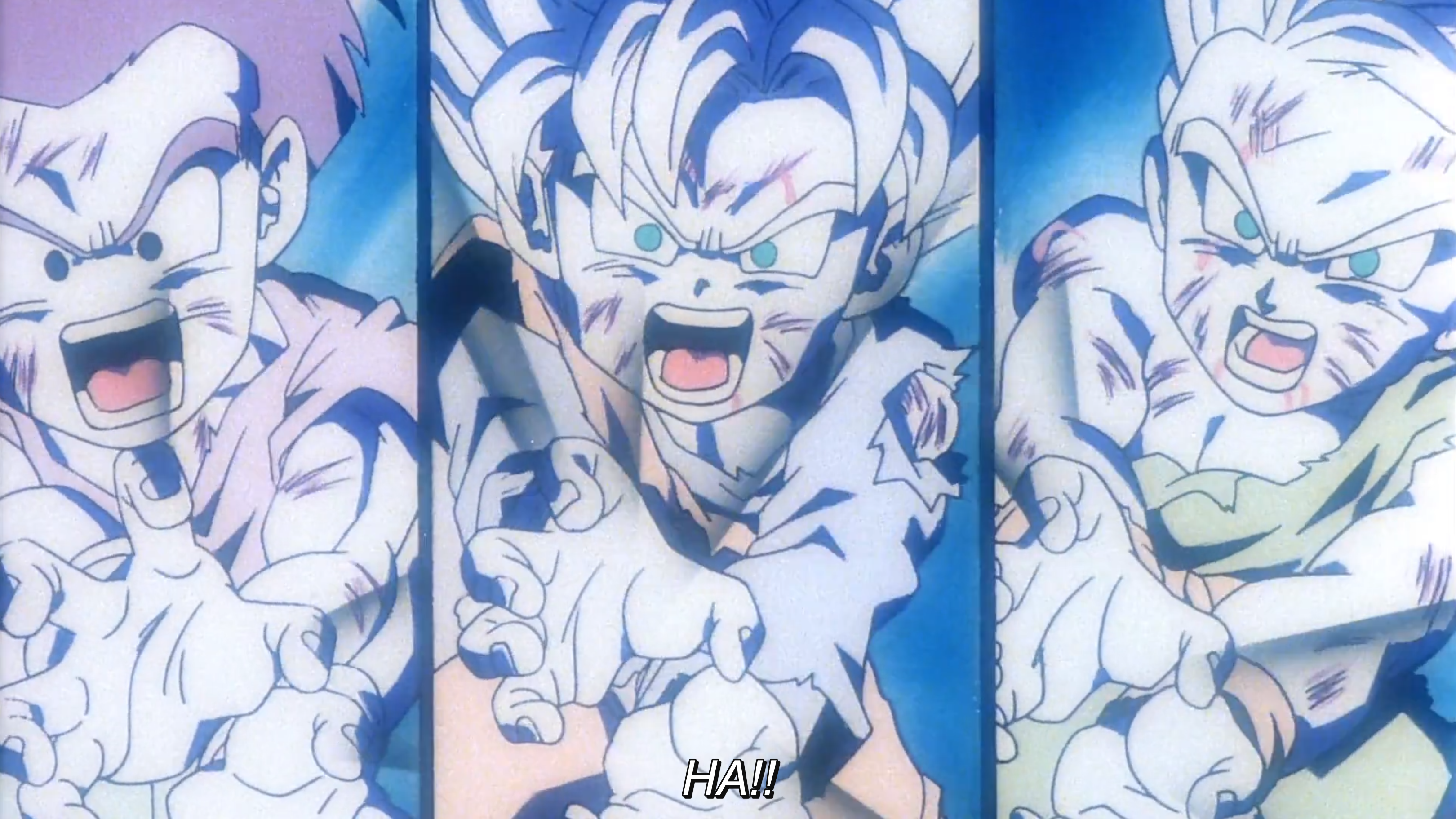
In addition to what has been already stated with regards to Cell vs. Broly, in Dragon Ball chapter 447 on page 5, Goku tells Kuririn to leave before the battle with Babidi’s forces starts. Kuririn is more than happy to do so. In chapter 450 on page 5, Goku estimates Dabura’s strength as being equal to Cell’s, which the Chōzenshū also confirms. Goku does re-evaluate this estimate in chapter 455 after seeing Dabura use magic, though. Importantly, Kuririn has firsthand experience fighting Cell after #18 was absorbed. In Movie 8, Kuririn was also there on New Planet Vegeta as the fight against Broly was happening. In Movies 10 and 11, Kuririn actually goes out of his way to engage with Broly and rescues Gohan in Movie 10 and #18 in Movie 11. In other words, Kuririn knew he was completely outclassed by an opponent as strong as Cell and tried to run away from the battlefield. Contrastingly, he repeatedly chose to face off against Broly and was able to contribute meaningfully in the fights against him (especially against Bio-Broly). This very strongly suggests that Kuririn did not perceive Broly as being on the same level as Cell. Kuririn would be correct in this instance because all of the evidence (outside of games) supports that.
Movie 11 creates the biggest power-scaling issue for fans who argue Broly is stronger than Cell. In Movie 11, it is heavily implied that Super Saiyan 1 Goten and Super Saiyan 1 Trunks could defeat Bio-Broly together. Their performance against Bio-Broly was, at the very least, better than Gohan’s performance in Movie 10. Multiple official statements confirm Bio-Broly as being equal to or even stronger than Broly. This movie takes place before Goten and Trunks learned Fusion and before they trained in the Room of Spirit and Time. While they’re stronger than what any other member of the Dragon Team was at their age, Goku was completely unmoved by their power when he asked them to power up all the way. Furthermore, Spopovich and Yamū didn’t even try to absorb the power of Goten and Trunks, even though they turned Super Saiyan 1 during their fight at the 25th Tenka’ichi Budōkai. They only went after Super Saiyan 2 Gohan. Barring one fight against #18 as Mighty Mask, these are the same boys who fought Bio-Broly in Movie 11. This means they were both individually weaker than a Super Saiyan 2 Gohan who did not train for the past 7 years. Therefore, if one wants to believe Movie 10 Broly completely surpassed a “Super Saiyan 2 Gohan who kept training for 7 years,” one must also accept that these two essentially untrained Super Saiyan 1 children could defeat that same Gohan with even less effort than Broly—a conclusion that doesn’t hold up under any scrutiny. To be fair, Movie 11 is such a universally panned movie that it’s easy to understand why many fans don’t remember it well enough to realize how directly it contradicts the “Broly > Cell” argument.
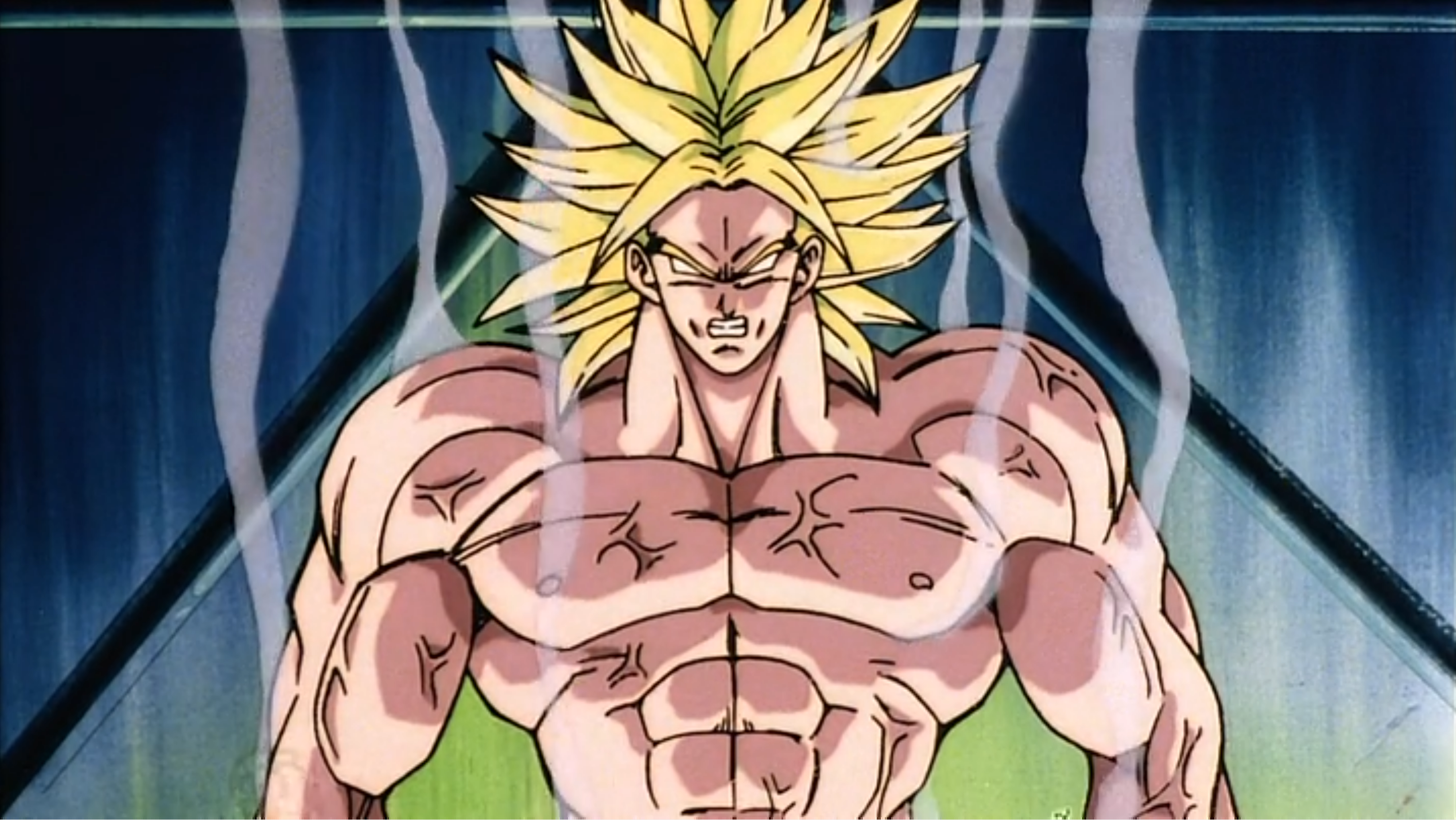
The misunderstandings about Broly’s strength come from several factors: (1) fans taking the destruction of the Southern Galaxy literally while ignoring that the rest of the movie takes place there, (2) fans misinterpreting Gohan’s comment in Movie 10 as proof he never stopped training after Cell, (3) confusion over Super Saiyan 2, (4) Broly’s portrayal in games as a superboss, and (5) Koyama’s opinion on Broly’s power ranking in Dragon Ball Z. As a reminder, he wrote on Twitter: “In my own interpretation of the Dragon Ball world (up to Z), Broly is the strongest warrior. I’m not involved with the characters that came after Z, so I don’t know about them.” And he said in an interview for Dragon Box The Movies: “Because [Broly is] the strongest (laughs). There’s simply no one stronger than Broly in the world — including the TV anime. After all, even the Prince of Saiyans, Vegeta, was terrified of him (laughs).”
The issue with many of Koyama’s opinions is that, despite being the creator of Broly, he is not the creator of Dragon Ball, and he also gives inconsistent power-scaling answers. His opinions ultimately matter significantly less than Toriyama’s and Shueisha’s, who are in agreement about Vegito being the strongest character in Dragon Ball Z, or Kid Buu if you exclude characters utilizing the potara. Koyama also openly admits he is NOT a reliable source on Dragon Ball. He has tweeted over 100 times telling fans to ask their questions to the “original author” or “the original author’s side,” i.e., Akira Toriyama and Shueisha. Ask yourself this question seriously: do you really believe that Super Saiyan 1 Goku, Super Saiyan 1 Gohan, and Super Saiyan 1 Goten before the start of the 25th Tenka’ichi Budōkai could defeat Super Vegito the same way Broly was defeated by them in Movie 10?
However, when it comes to understanding anime production, Koyama’s insights are invaluable. Koyama is not alone with hyperbolic statements on Broly, either. Toei’s website for the Dragon Box collection says of Broly in Movie 8, “It would not be an exaggeration to call him Goku’s strongest movie enemy, and that is only natural, since the ‘Legendary Super Saiyan’—said in the original story to appear once every thousand years—is none other than Broly.” This same website then contradicts this statement by listing Hirudegarn as being the second strongest only after Janemba. If you are wondering about the reliability of this website, consider that it lists Videl’s Marilyn Monroe-esque skirt as one of the three notable highlights of Movie 10: 「ナタデ村の民族衣装(?)を着て飛び回るビーデルが、スカートの下のタイツをあられもなく見せてくれるカットの数々も、パンチラではないのにドキドキものだ?」 Please read my Deep Dive on Janemba for more about Toei’s statements on this website.
Some fans try to also use the knowledge that we have now to upscale characters in the movies in ways that were never intended. For example: Goku technically should be able to access Super Saiyan 3 during the time of Movie 10. Koyama rebuts this idea: “As for the setting and continuity, we based things on the developments in the manga at the time of writing. If there were any planned setting changes in the manga, there was a rule that we couldn’t depict them in the movies ahead of the manga. There wasn’t enough time to fully flesh out every detail of the enemy characters’ settings, so we wrote them in line with the broad, commonly accepted continuity (as of when the TV episodes aired).”
Some readers may interpret this article as an attempt to downplay Broly. It may feel that way because much of it was dedicated to debunking misconceptions and outright falsehoods that have haunted Dragon Ball fan communities for decades. In truth though, this article simply scaled Broly accurately. That’s it. So, no, Broly did not destroy the Southern Galaxy. No, Broly does not have unlimited ki. No, Broly did not defeat Super Saiyan 2 Gohan. And no, Broly is not stronger than Vegito. Acknowledging these myths as false does not make Broly any less memorable or iconic. To conclude, Broly and Bio-Broly are ultimately Cell Games-level threats below Super Perfect Cell in strength, while Culture Fluid Bio-Broly is some unknown amount stronger than Broly.
Did I miss something? Was something new released? Let me know in the comments!
If you liked this Deep Dive, please consider supporting me on Ko-fi or Patreon. Your support would help free up my time so that I can focus on this website. Subscribers on Patreon get to chat with me, vote on future Deep Dives, get sneak peeks at upcoming content, get to see every update I make to the website, and more. Thank you!
- It’s not a multiverse in the sense of infinite parallel worlds, as there is a specific number of universes. ↩︎
- The name “Gumori” is a pun. The “Halley” in Halley’s Comet in Japanese is 「ハレー」, which sounds like 「晴れ」 or “sunny.” So they chose Gumori 「グモリー」 because it sounds like 「曇り」or “cloudy.” ↩︎
- Falemners to Ωblivion for letting me know about this tweet. ↩︎
- Thanks to my patron on Patreon, MrPerfectCell, for pointing me in the right direction to find these tweets. ↩︎
- Hvala to Jovan for having me recheck these games. ↩︎
- Merci to Kashalot for sharing this interview with me. ↩︎
- Thanks to my patron on Patreon, MrPerfectCell, for sharing this website with me. ↩︎
- Thanks to my patron on Patreon, MrPerfectCell, for sharing this link with me. ↩︎
- Thanks to my patron on Patreon, MrPerfectCell, for sharing this book with me. ↩︎
- Thanks to RedReaper in the comments of this article for pointing me in the right direction to find this scan. ↩︎


Leave a reply to Kid Buuhan Cancel reply