
Kid Buu vs. Buuhan: The Ultimate Deep Dive into Dragon Ball’s Most Controversial Debate
Who is stronger – Kid Buu or Buuhan? This is one of the most heated debates in the Dragon Ball Z fandom. While some fans argue that Buuhan is more powerful and Kid Buu is more dangerous, others believe Kid Buu is simply more powerful. This article brings you the most comprehensive, evidence-based deep dive ever created on this topic. Utilizing rare guidebook scans and direct quotes from Akira Toriyama, this definitive analysis is unlike any other. Whether you’re a longtime fan or just curious, this guide will help you understand which Buu is truly the strongest.
If this is your first time reading this article, please read it from top-to-bottom. Some things may not make sense if you do not read the entire article or skip around. This article is VERY LONG, but if you want to truly understand Majin Buu, then it is worth your time. Also, you can click on every picture for more information about them. If you click on a picture while using a mobile phone, click the circled i in the bottom right corner for more information on that picture. If you are using a slow Internet connection, it may take some time for all of the pictures to load, but I assure you they are there. This article is best viewed on a desktop, but works perfectly fine on mobile phones. This article contains hundreds of scans. While you may personally feel that some of these scans are irrelevant, others may not. I’ve included everything so that the readers can make their own determinations. This article was written to address ALL interpretations on the Kid Buu vs. Buuhan debate, and not just a single reader’s perspective. For returning readers, please feel free to use the Table of Contents. Please see the About section of this website for the list of Dragon Ball guidebooks I own. This article is a living document that is updated to reflect new discoveries, so it may look different if you read this again in the future. This article was originally published on October 8, 2024, and it was last updated on March 30th, 2026.
If you like my content, please consider supporting me on Ko-fi or Patreon. Your support would help free up my time so that I can focus on this website. Subscribers on Patreon get to chat with me, vote on future Deep Dives, get sneak peeks at upcoming content, get to see every update I make to the website, and more. Thank you!
Table of Contents
- Understanding Majin Buu
- Understanding Toriyama
- Goku Is Number One!
- …But Even Goku Was Outmatched
- Kid Buu vs. Buuhan in Other Media
- The Suspension of Disbelief
Understanding Majin Buu
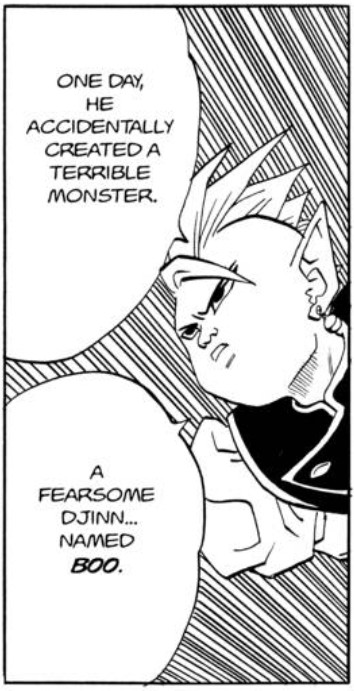
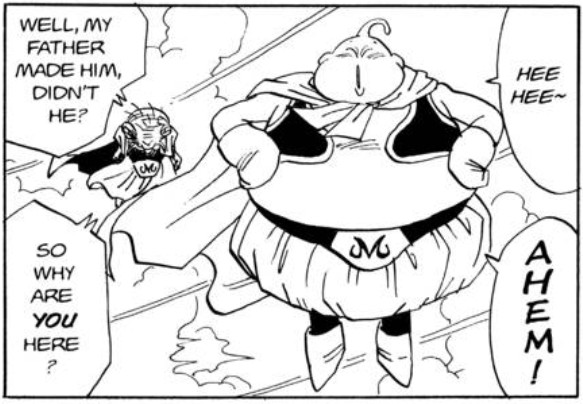
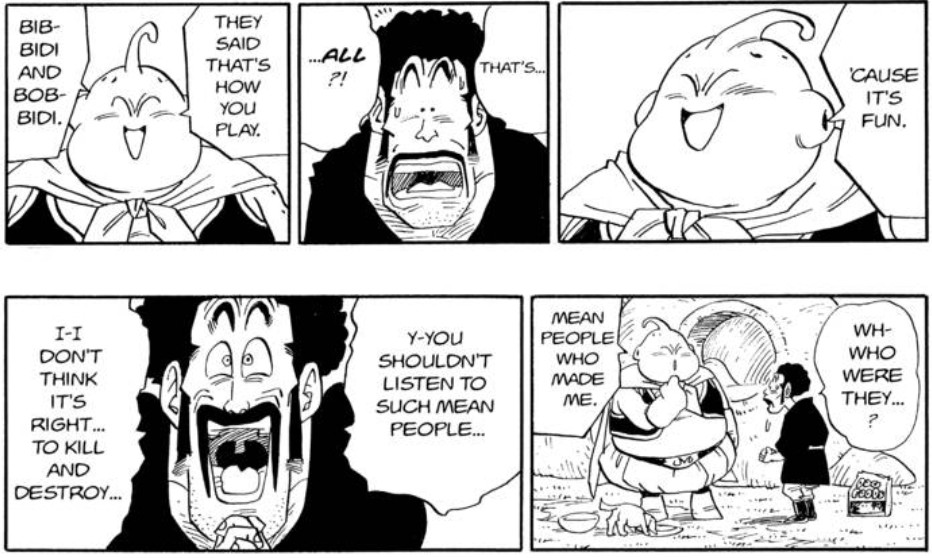
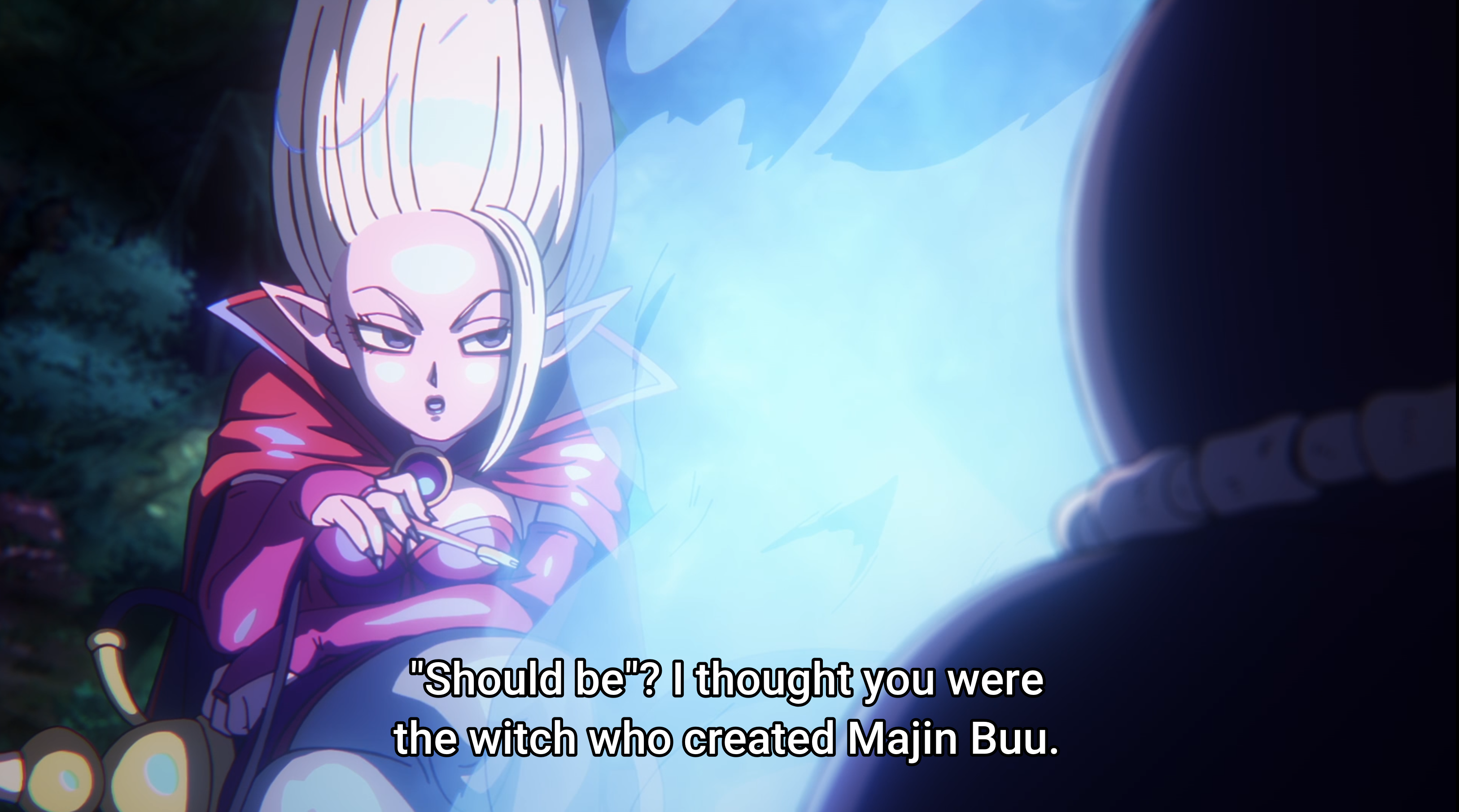
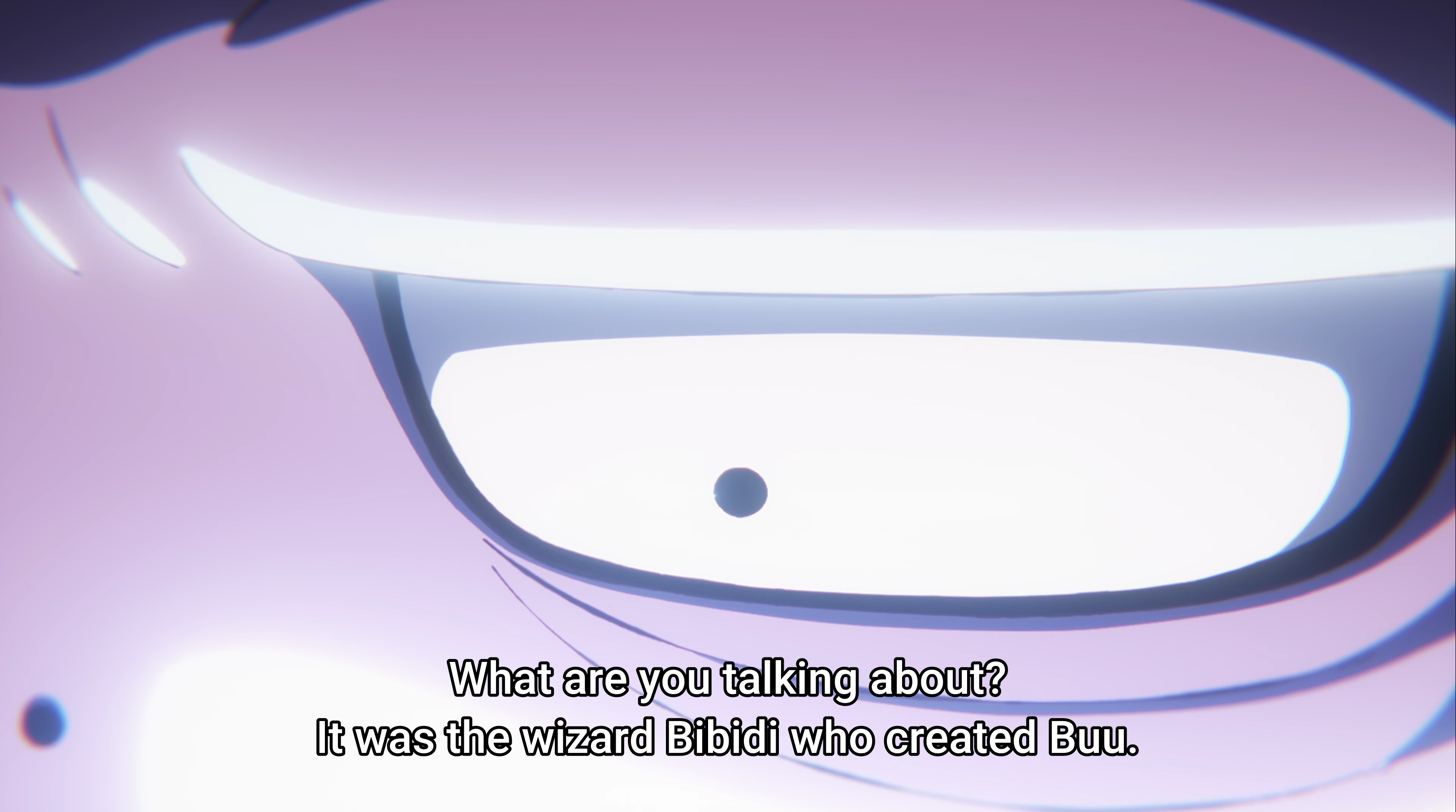
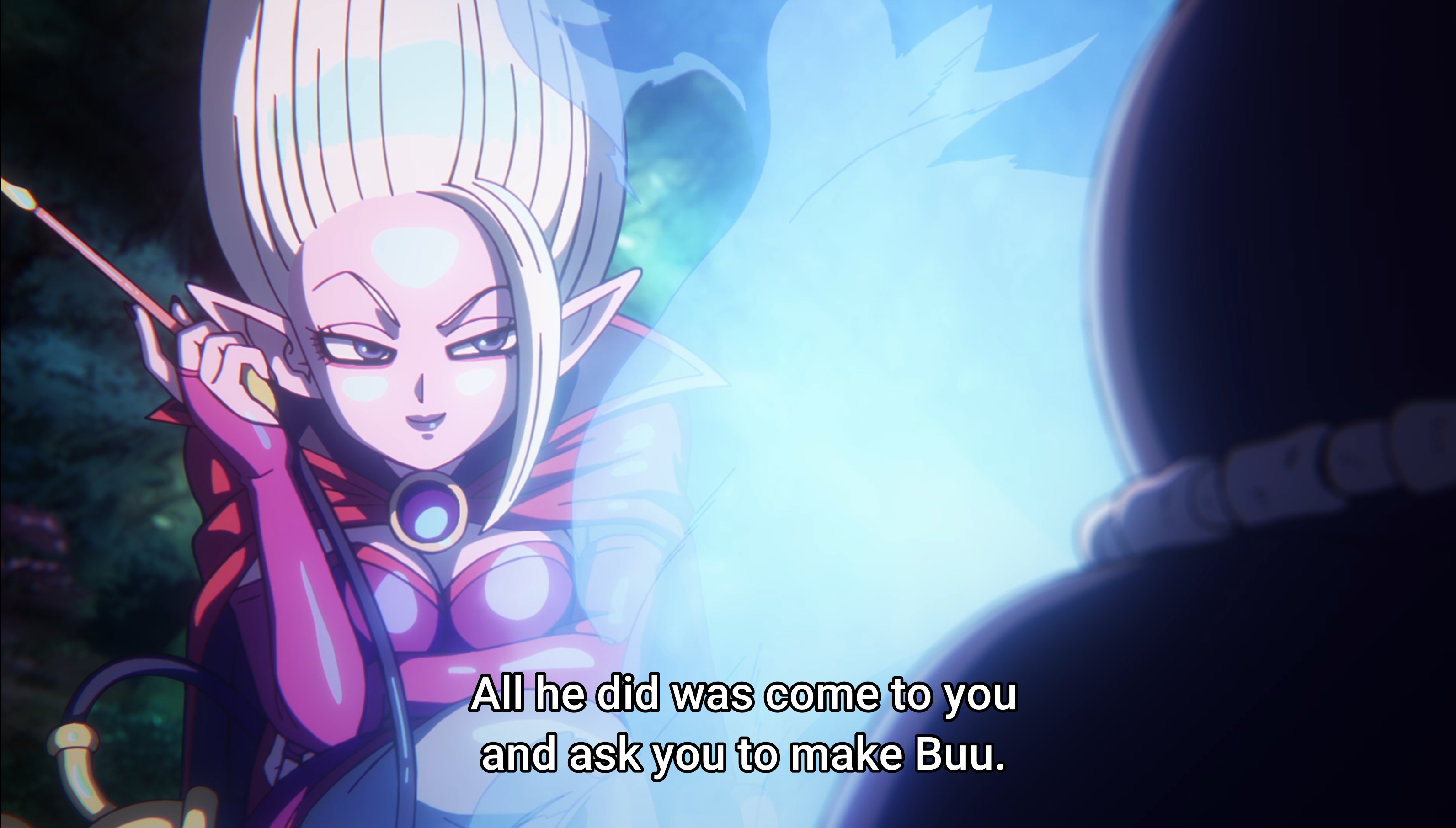
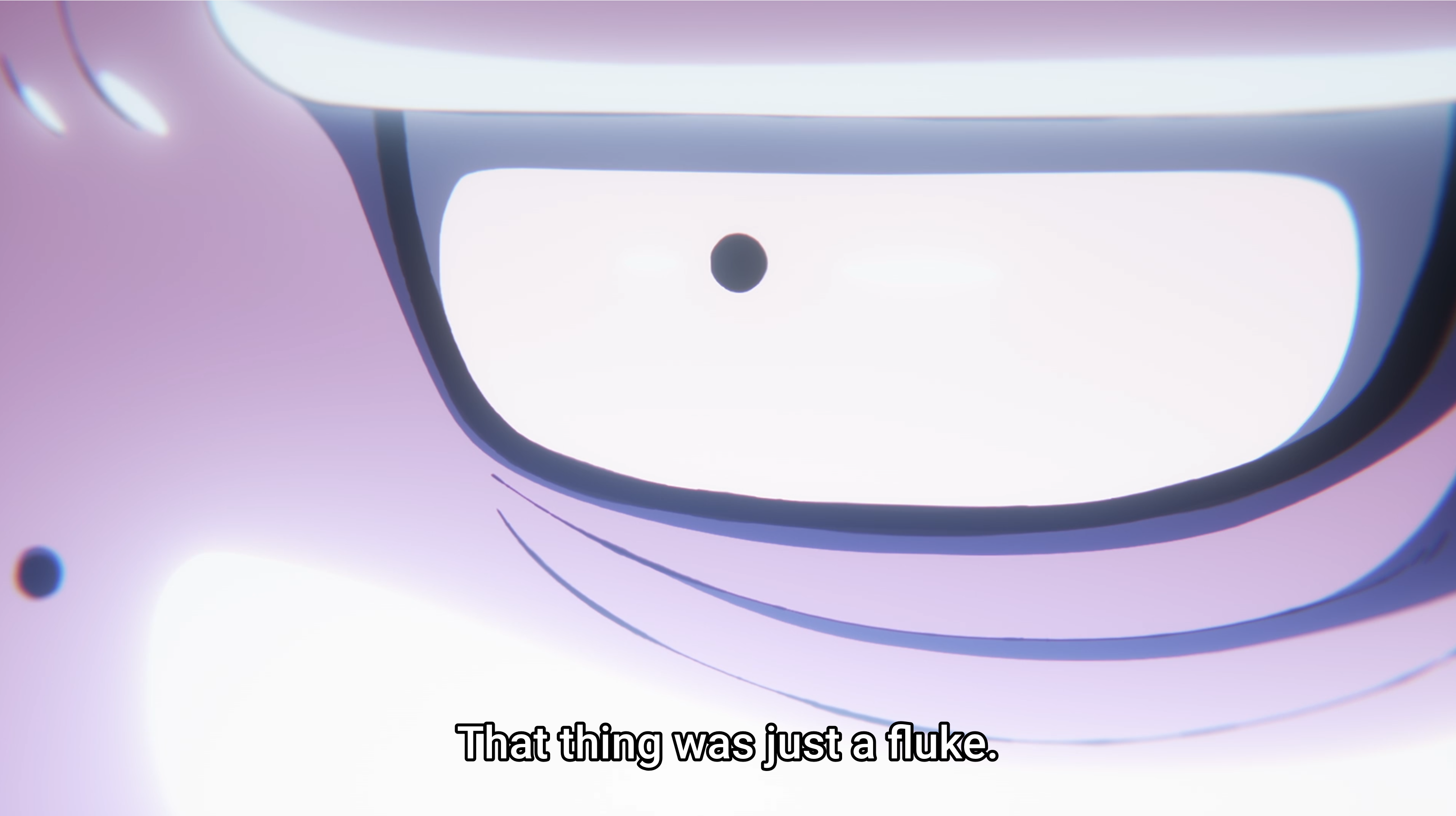
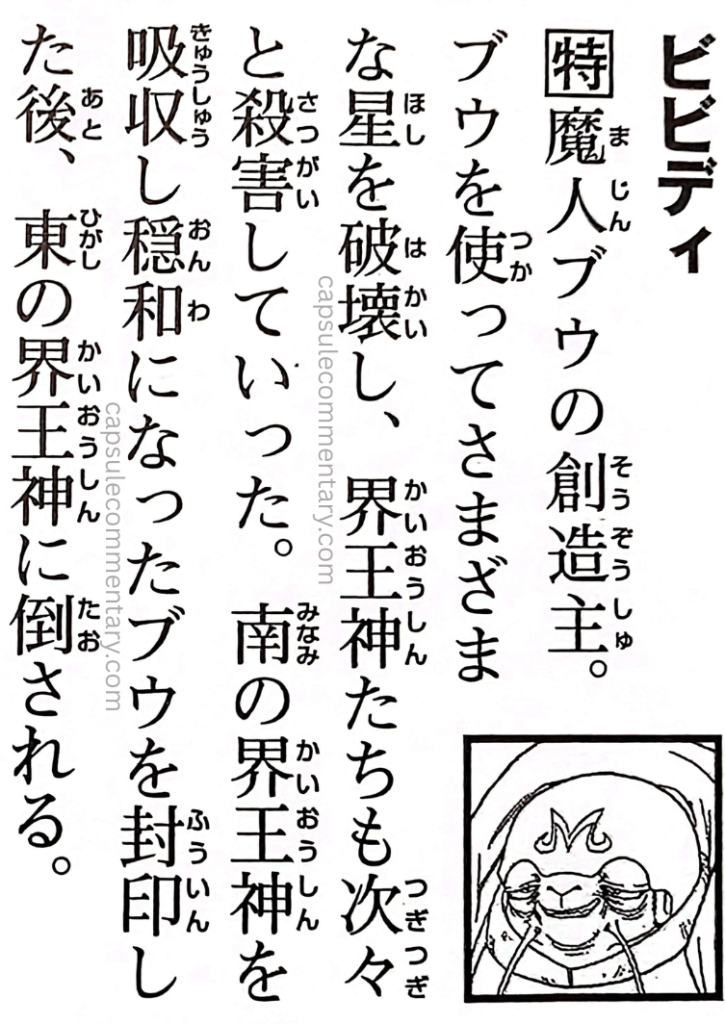
There are three versions of Majin Buu’s origin story. On page 13 of chapter 445 of the manga, Kaiōshin tells the Dragon Team that Bibidi created Majin Buu. Then, in an interview on page 13 of Saikyō Jump June 2014, Toriyama stated: “In the manga, Kaiōshin says that ‘Bibidi created him,’ but in reality, Buu was not created by Bibidi, and has existed since ancient times. He repeatedly went on great rampages and long periods of dormancy. While repeating this many times, he took in elements of human evil, and steadily became more violent. Bibidi merely knew a method by which Buu could be awakened from that long dormancy. The current Buu [Good Buu] is a form with the evil Buu removed.” To add more details to what Toriyama said: Kaiōshin is not the only one who says Bibidi created Majin Buu in the manga; Babidi and Majin Buu himself also affirm this. Majin Buu says that Babidi also made him, though. Finally, in episode 8 of Dragon Ball Daima, his origin was retconned again. Dr. Arinsu approaches Marba to create a Majin for her and they discuss Majin Buu’s origin. Marba pretends to not be Majin Buu’s creator, but eventually admits to it, calling him a “fluke.” As of now, Marba creating Majin Buu on Bibidi’s behalf is the correct origin story. Retcons like this are important to understanding Majin Buu.
![Saikyō Jump June 2014 page 13. Toriyama: "In the manga, Kaiōshin says that 'Bibidi created him,' but in reality, Buu was not created by Bibidi, and has existed since ancient times. He repeatedly went on great rampages and long periods of dormancy. While repeating this many times, he took in elements of human evil, and steadily became more violent. Bibidi merely knew a method by which Buu could be awakened from that long dormancy. The current Buu [Good Buu] is a form with the evil Buu removed."](https://capsulecommentary.com/wp-content/uploads/2025/02/482.png)

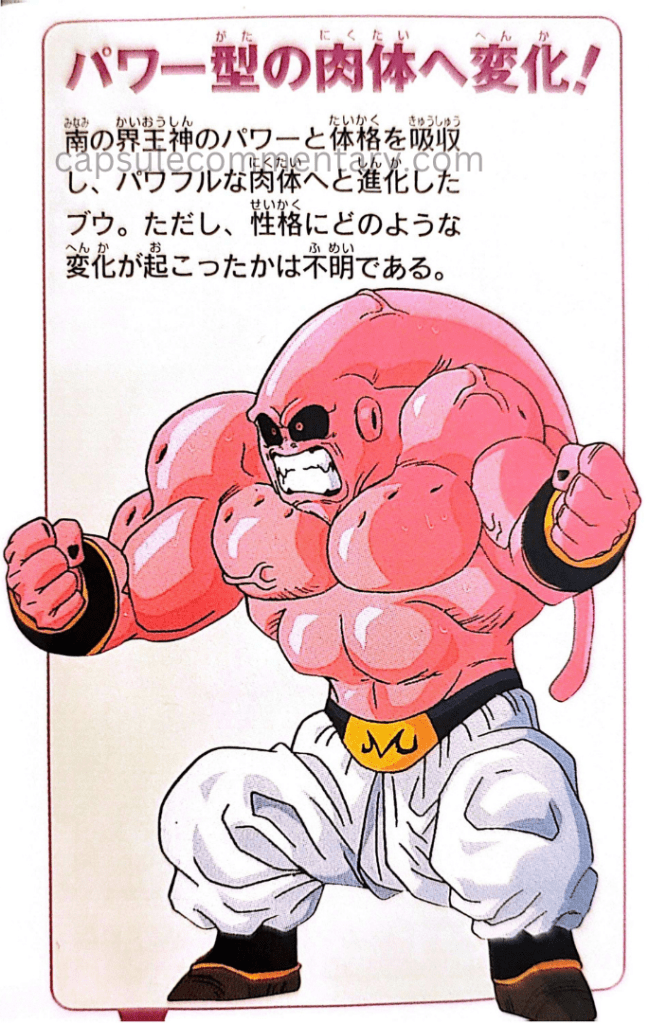
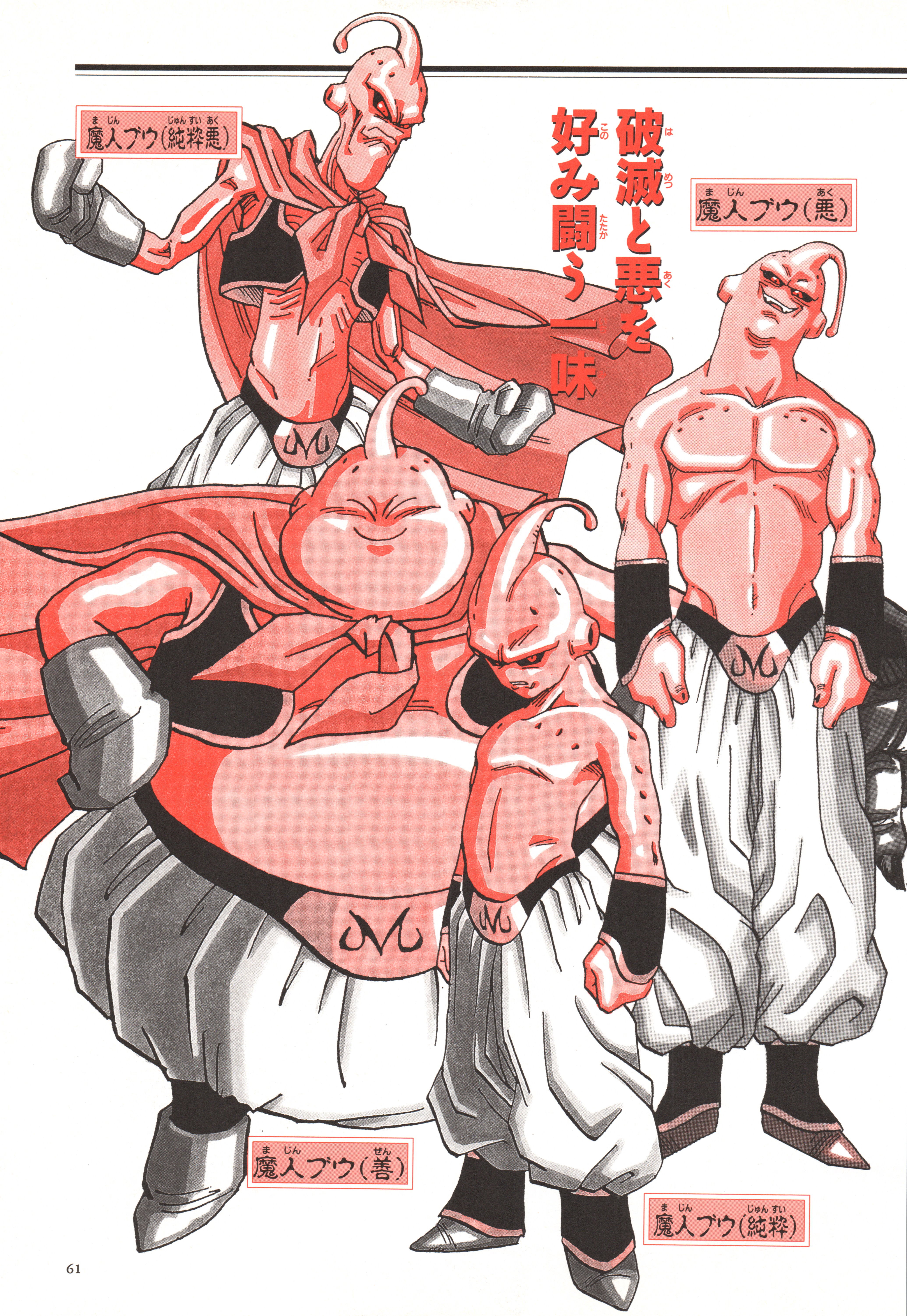
Secondly, all of the forms of Majin Buu are referred to collectively as Majin Buu (Majin Boo) or Buu (Boo) within the Dragon Ball franchise. Kid Buu, Buuhan, etc. are monikers made by fans and other media to help us distinguish between the forms of Majin Buu. So when a character in the manga is referring to “Majin Buu,” we need to look for more context to see which Majin Buu they’re referring to. Often this context is immediately given with the picture accompanying it. In Japanese, Buuccolo is often referred to as Majin Buu (Piccolo Absorbed), Buuhan as Majin Buu (Gohan Absorbed), Buutenks as Majin Buu (Gotenks Absorbed) or Super Bupinks, Evil Buu as Majin Buu (Pure Evil), Fat Buu as Majin Buu (Innocent) or simply as Majin Buu, Good Buu as Majin Buu (Good) or Mr. Buu, Kid Buu as Majin Buu (Pure), and Super Buu as Majin Buu (Evil). The official website for Dragon Ball Super mistakenly refers to Good Buu as “Pure Buu,” and Kid Buu as “Evil Buu.” Referring to Evil Buu as “Pure Evil Buu” can be confusing because both Super Buu and Kid Buu have been referred to as pure evil across different sources, and for example, Kid Buu is both pure and evil. There is another form that is sometimes referred to as “Buff Buu” or “Ultra Buu” within the fandom, but which I will refer to as the Southern Kaiōshin Buu since there is no standardized name for him. If we go by recent card games though, he is not considered a form separate from Kid Buu, and if we go by the Budokai Tenkaichi series, he’s Super Buu. Also, it is worth noting that there is no meaningful distinction between Fat Buu and Good Buu within the manga. For example: during Good Buu’s fight with Kid Buu, he is referred to as “Fat Buu.”


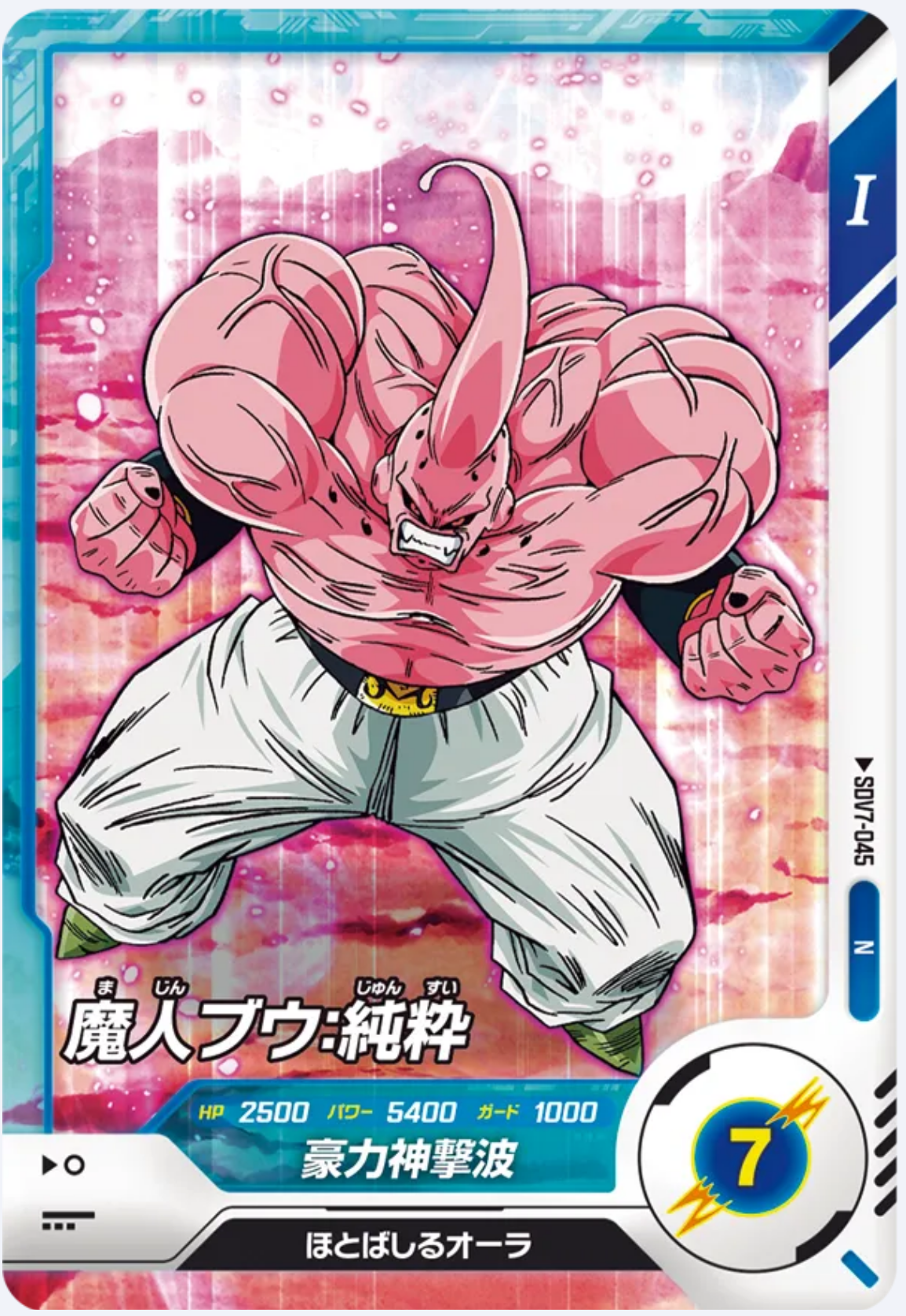
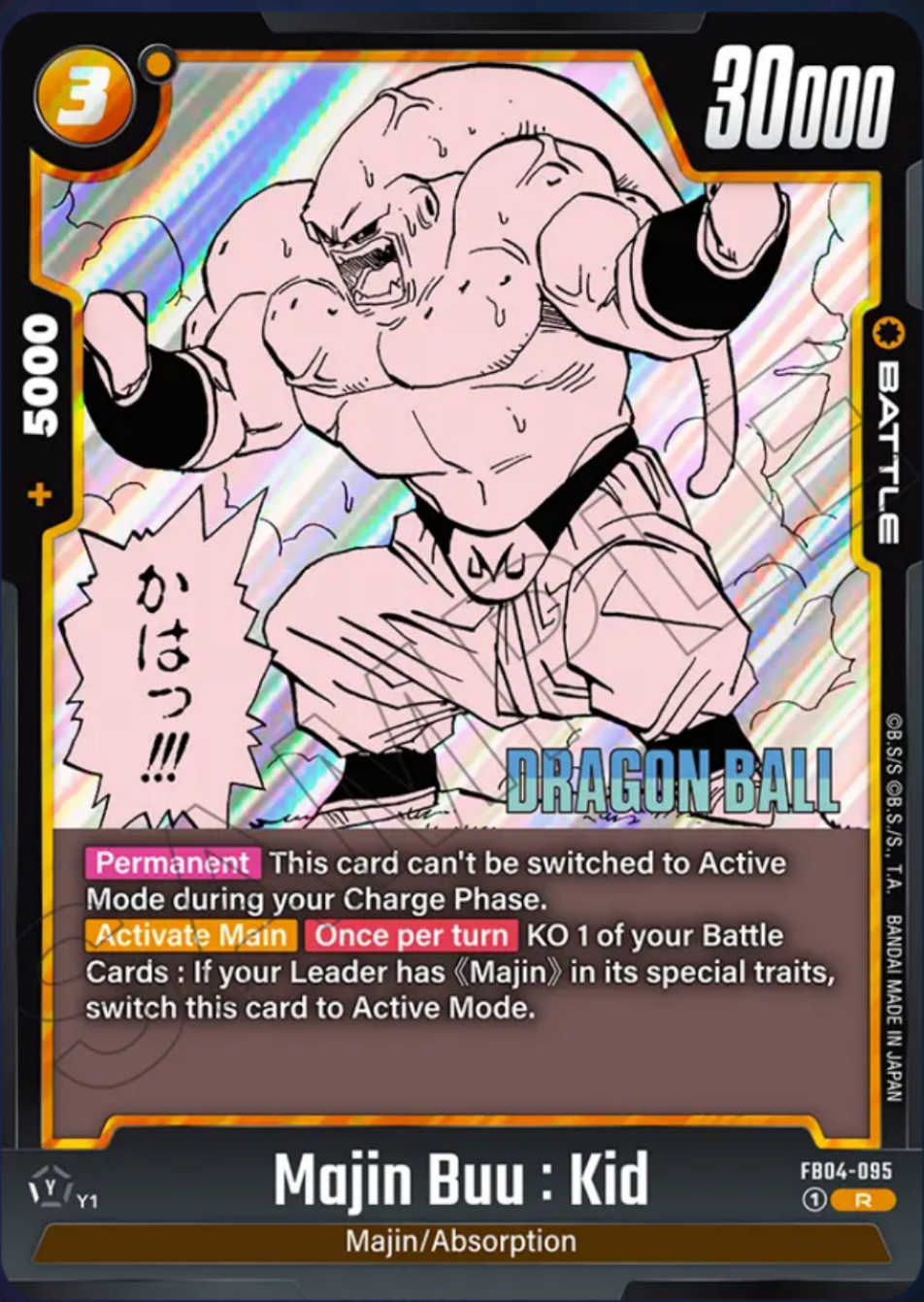
In the above panel from Dragon Ball Super, we can see that Merus is talking about “Good Boo” and “Evil Boo” with pictures of Good Buu and Kid Buu. From the provided context, we can understand that “Evil Boo” must mean Kid Buu, and not the form commonly known in the English-speaking fandom as Evil Buu. It’s also important to note that both Super Buu and Good Buu recognize Kid Buu as an entity distinct from themselves. So it’s true that Kid Buu, for example, is simultaneously both Majin Buu and Evil Buu while also not being them. In the Dragon Ball New Book section of Weekly Shōnen Jump 1995 Issue 35 on page 237, Goku explains there are 3 Buus: 「その時、ちょうどブウが凶悪ブウから分離したふたりのブウが闘ってるスキに、」and in English, this means: “At that time, while the two Buus who had separated from the evil Buu were fighting…” To be clear: Goku is saying there were 2 Buus (Kid Buu and Good Buu) that separated from a third Buu (Super Buu). It’s a bit different from what one may expect from dissociative identity disorder because the different alters have distinct bodies, too. This is why context is so important for this debate.
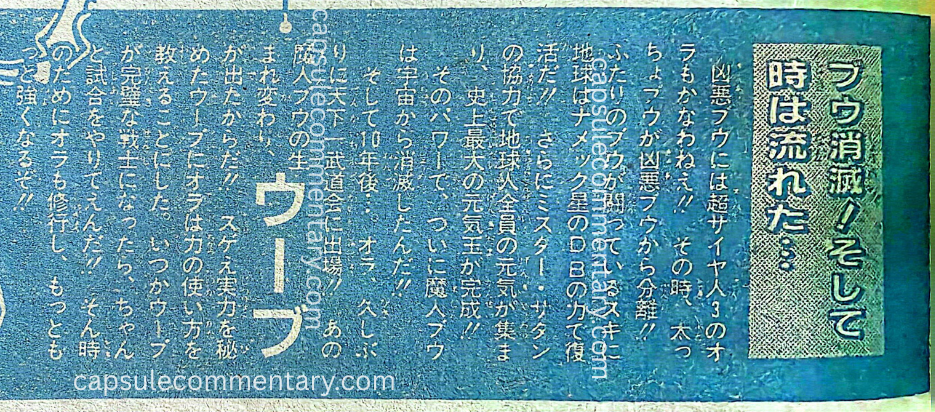
In the previous paragraph, I mentioned “Dragon Ball New Book,” which most fans have likely never heard of. Immediately following the end of Dragon Ball, the next 10 issues of Weekly Shōnen Jump had a section called Dragon Ball New Book. Each issue covered 1 year of Dragon Ball‘s 10-year run as narrated by Goku himself. It also highlighted certain scenes and characters important to those specific years. Any scans in this article from Weekly Shōnen Jump 1995 Issues 26 to 35 are from Dragon Ball New Book. Dragon Ball New Book was functionally a prototype for the Dragon Ball Daizenshū series of guidebooks, and arguably even more authoritative than them considering they are narrated by Goku.
Thirdly, we should look at how Majin Buu’s absorption ability affects his power. It’s clear that absorbing the heroes (Piccolo, Goten, Trunks, and Gohan) makes Majin Buu increase in power. However, there is a misconception that his absorptions are as good as fusion, which is not true. There is a second misconception that after Gotenks wears off inside of Super Buu, that Piccolo is weakening Super Buu, which I will address below. We can assume that Goku and Vegeta are both weaker than Super Buu immediately before and after fusing into Vegito due to Goku’s insistence on fusion while inside of Super Buu. As for the reason why, I will explain this soon. However, Super Buu after absorbing Piccolo, Goten, Trunks, and Gohan is vastly weaker than Goku and Vegeta fused together as Vegito. Majin Buu’s absorption, while a more reliable method, is thus a much inferior way to increase one’s power when compared to fusion.
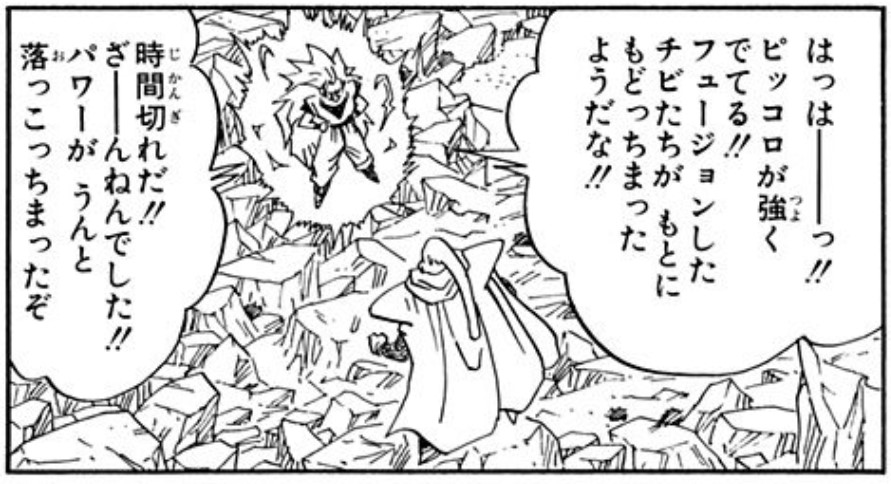
In this panel, Goku says to Buuccolo, 「はっはーっ!ピッコロが強くでてる!!フュージョンしたチブたちがもとにもどっちまったようだな!!時間切だ!!ざーんねんでした!!パワーがうんと落っこちまったぞ。」 In English, this translates to: “Ha ha! Piccolo’s taking the lead!! Looks like the fused kids you absorbed have gone back to normal!! Time’s up! Too bad!! Your power’s dropped big time!” Super Buu always takes the appearance of the strongest warrior he has absorbed. So when he absorbs Gotenks, he looks like Gotenks. And when he absorbs Gohan, he looks like Gohan. In this panel, what’s happening is that Goku is indirectly complimenting Piccolo on being stronger than the separated pair of Goten and Trunks, as Super Buu now looks like Piccolo. The power drop has nothing to do with Piccolo weakening him and everything to do with the Gotenks fusion being undone.
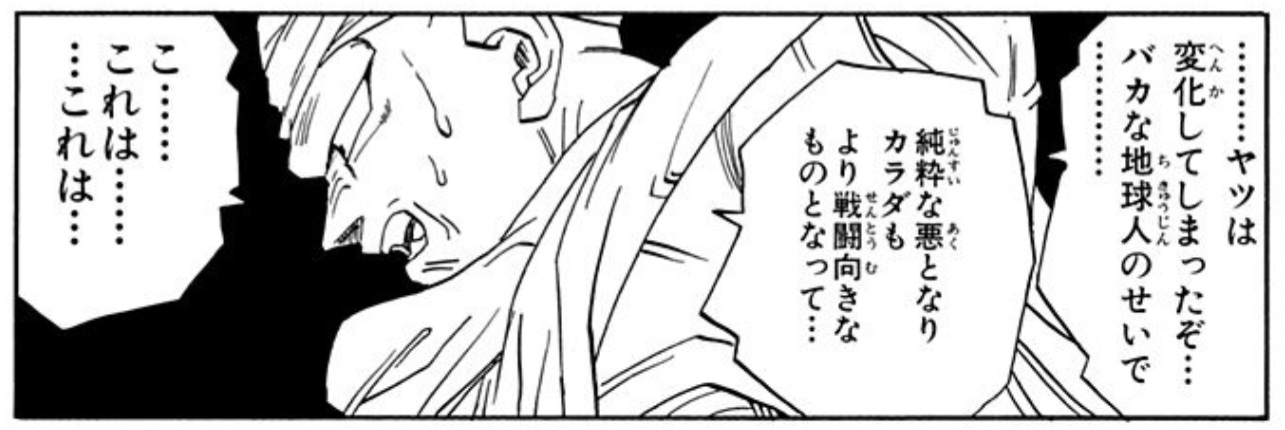
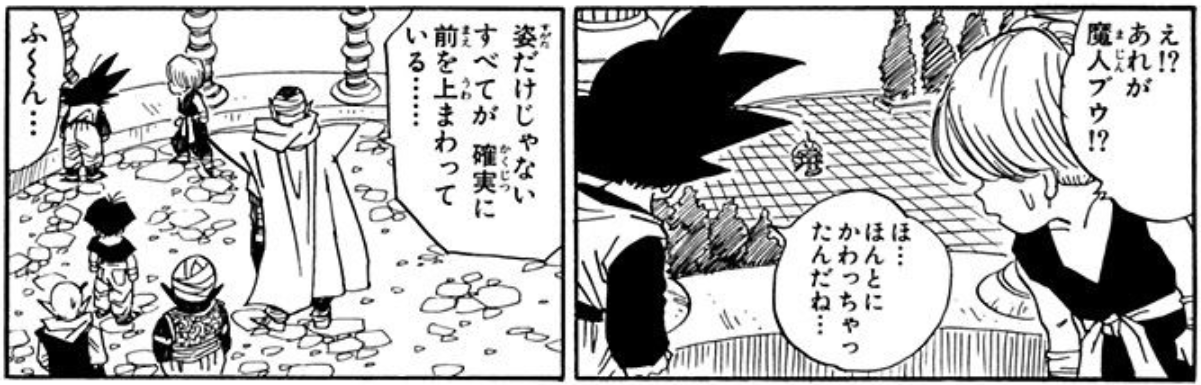
It should be noted here that Super Buu is not necessarily more powerful than Fat Buu, but rather has a body more suitable for combat. However, we can reasonably infer this means Super Buu is either able to use his power more efficiently than Fat Buu, or is able to tap into more of it. The official English translation for what Piccolo says to Goten and Trunks after they see Super Buu for the first time is: “In every way, he is more powerful still.” However, this goes beyond what he actually says in the original Japanese. What he actually says is 「姿だけじゃないすべてが確実に 前を上まわっている…」 In English, this means: “It’s not just his appearance… Everything has definitely surpassed what it was before…” Strength would naturally be included among “everything,” though. Two chapters earlier, Piccolo says: “He has become pure evil, and his body has become more oriented toward combat…” or in Japanese: 「戦闘向き」. Piccolo very specifically comments on Super Buu’s body here, and makes no mention of Super Buu being “more powerful” than Fat Buu here either. Rather, a good analogy for what Piccolo is saying would be to imagine two identical computers. Both computers have the same total processing power and identical hardware specs, but Super Buu’s computer is very well optimized while Fat Buu’s computer is poorly optimized. The result is that even though their theoretical limits are the same (i.e., strength), the optimized computer will appear overwhelmingly superior in practice. However, most, if not all, Dragon Ball media operate on the premise of Super Buu simply being stronger than Fat Buu without all of this nuance.
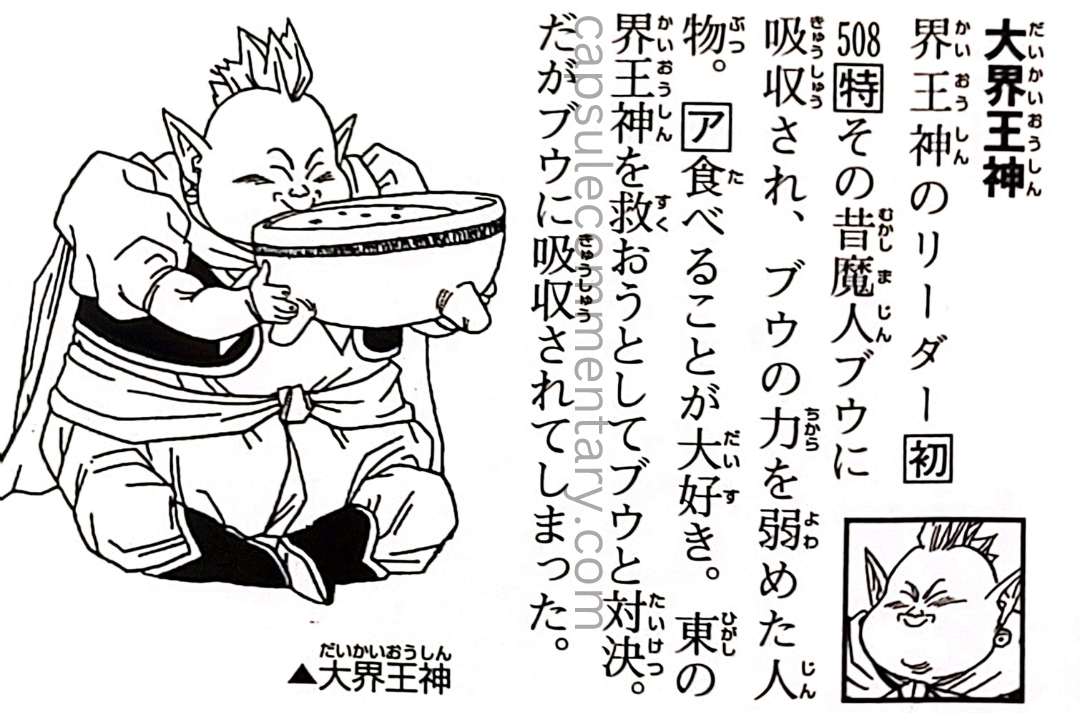
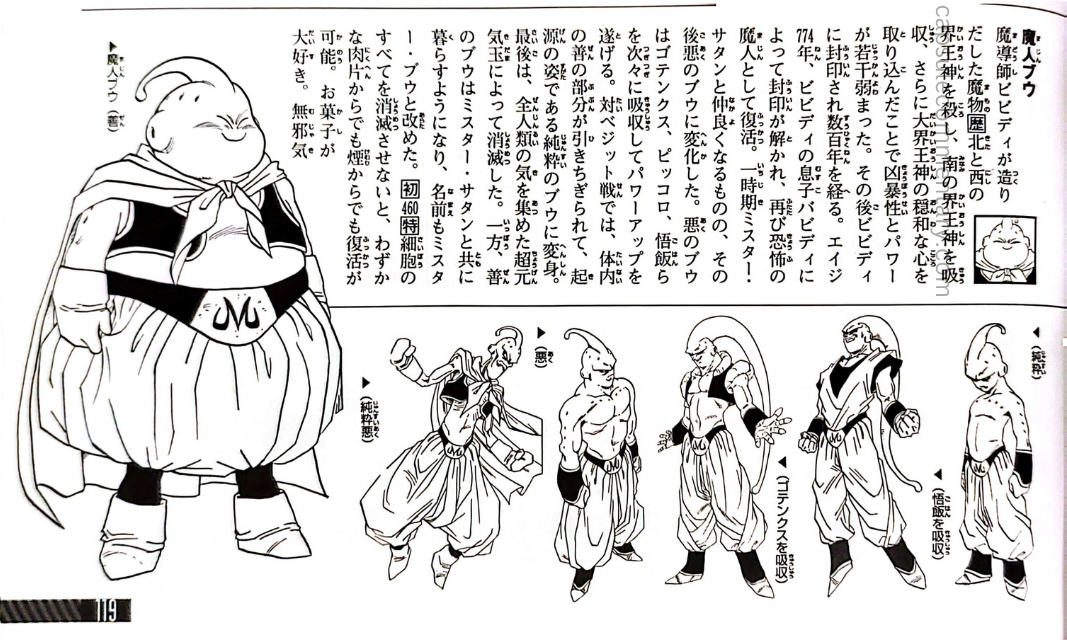
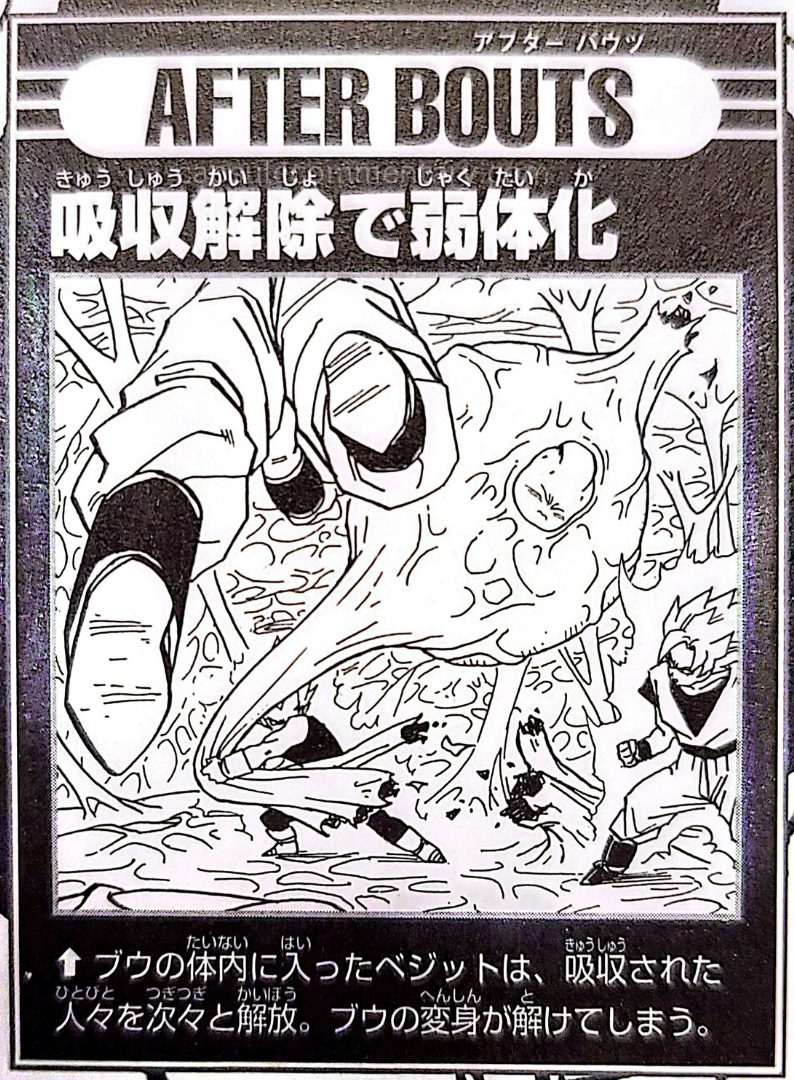
However, absorbing at least one Glind (or Kaiōshin or Shin-jin (Kaiō and Kaiōshin)) actually reduced Majin Buu’s power. Kibitoshin explains this to Elder Kaiōshin after Kid Buu is revealed. This is also confirmed on page 91 of Chōzenshū 4 (Daizenshū 7 page 84) in the description of Dai Kaiōshin and on page 119 of Chōzenshū 4 (Daizenshū 7 page 110) in the description of Majin Buu. Le Manga de Légende Issue 48 page 13 also confirms this power reduction. It is worth noting here that Dragon Ball: Forever seems to imply on page 35 that removing Good Buu decreased Majin Buu’s power, rather than increasing it. This is due to them using the image of Vegeta disconnecting Good Buu rather than another character. Of course, we know this is not true due to the overwhelming evidence against that idea. We learn in Dragon Ball Super chapters 49 and 66 that this power reduction must be quite significant as Dai Kaiōshin defeated Moro in the distant past and Goku uses his remaining post-sealing power via Uub to defeat Moro in the present. Using the ki donated from the entire Dragon Team (which was roughly the size of Vegeta’s torso), Goku was able to have a brief flash of Ultra Instinct Sign, but reverted to Super Saiyan Blue quickly. However, the Dai Kaiōshin’s god ki inside of Uub massively dwarfed Vegeta in size. This energy not only fully powered Ultra Instinct, but allowed Goku to defeat Moro. Importantly, Uub being incredibly powerful is NOT a retcon from Dragon Ball Super, either. In Weekly Shōnen Jump 1995 Issue 35 on page 236, it writes of Uub: “He hides a level of latent power that surpasses even Goku!!”
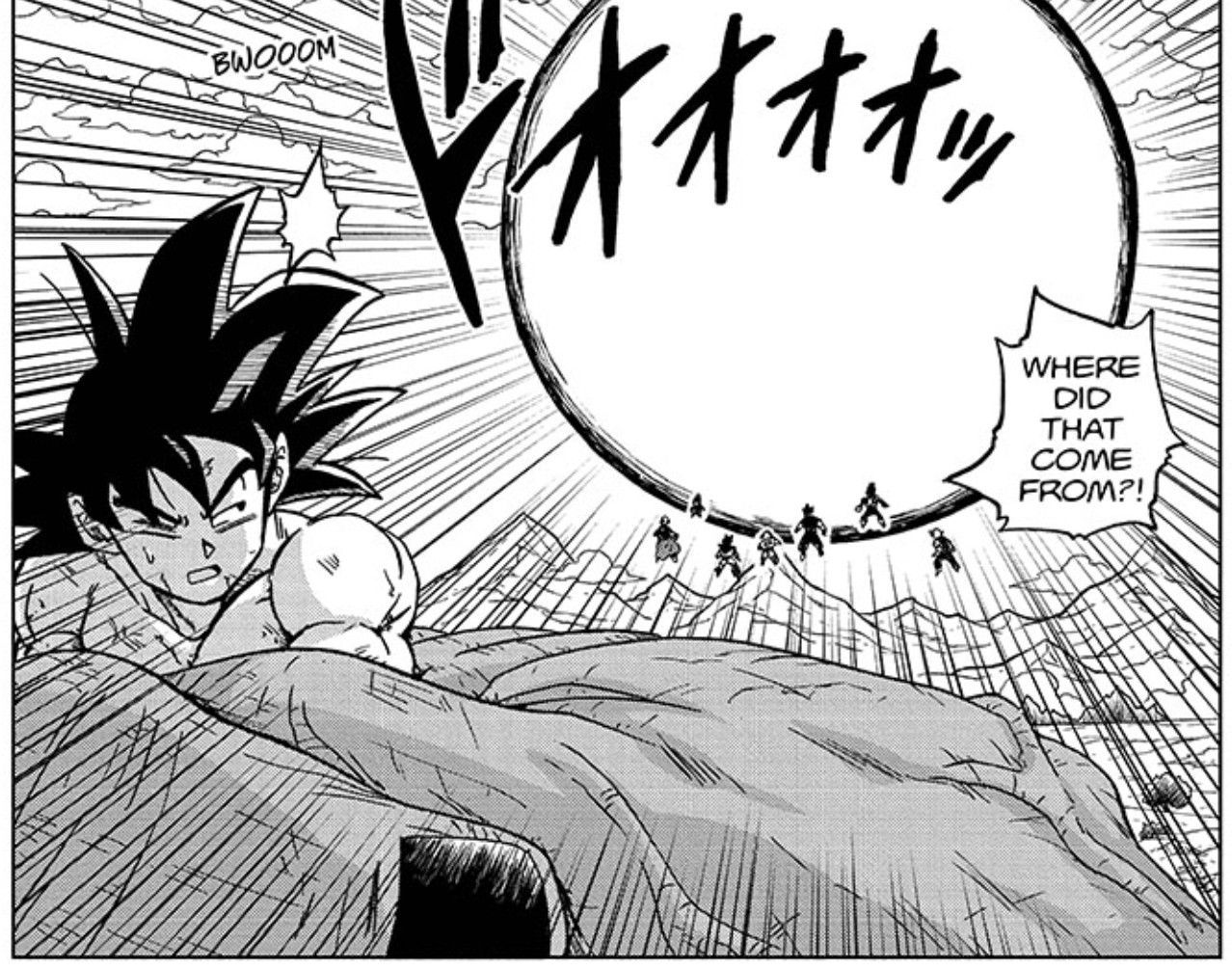
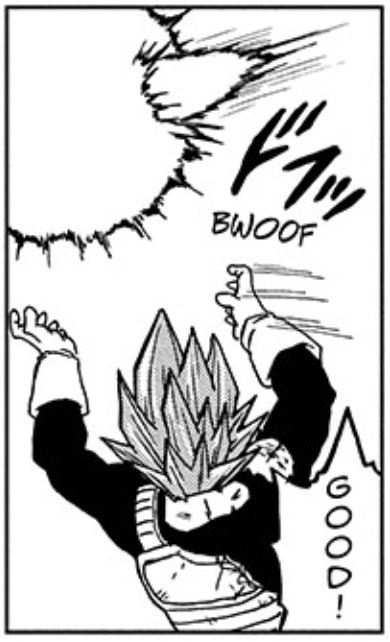
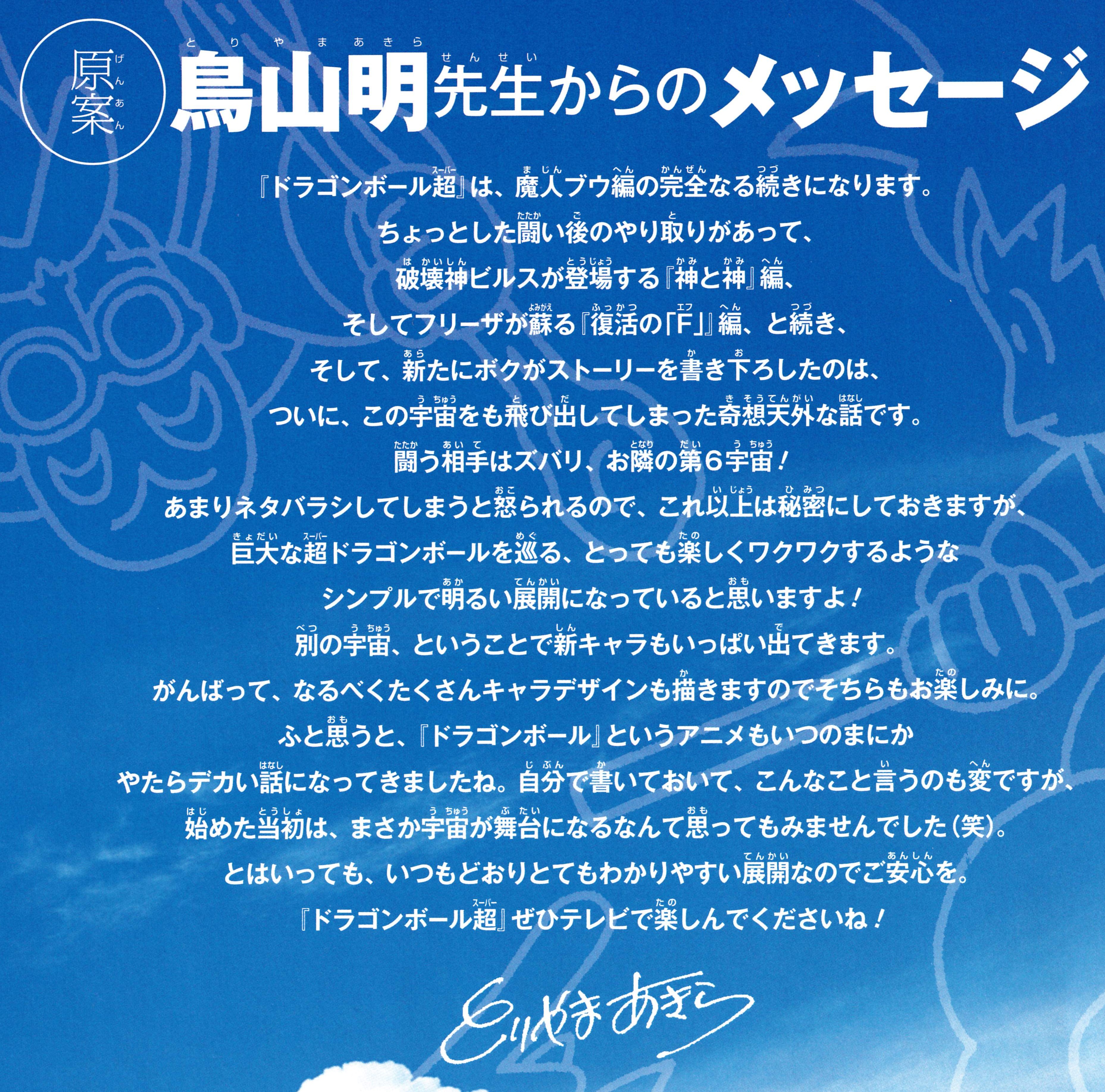
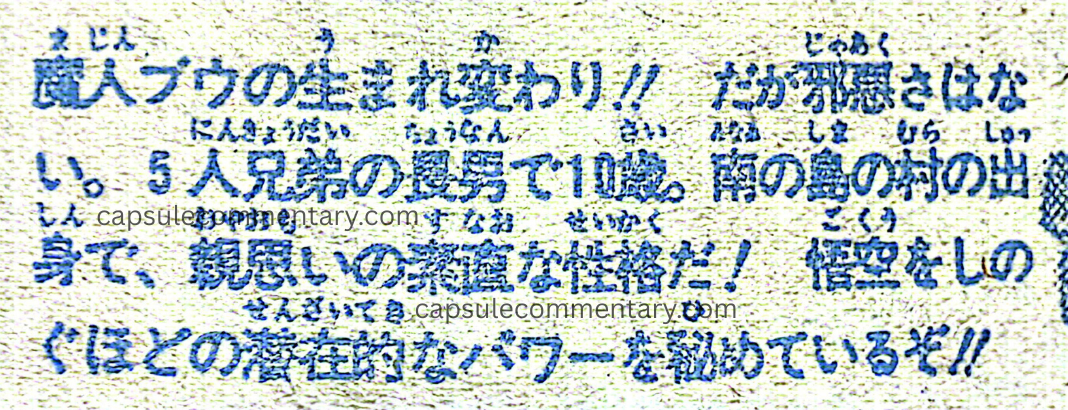
It’s also important to remember that the Eastern Kaiōshin (the sole survivor of Kid Buu’s rampage, otherwise referred to simply as Kaiōshin, Shin, or Nahare) is self-admittedly the weakest of the 5 Kaiōshin, so we have no reason to disbelieve that Dragon Ball Super gave an accurate representation of Dai Kaiōshin’s power. Thus, we can understand that the Dai Kaiōshin was extremely powerful, and that the power reduction Majin Buu suffered by absorbing him was quite significant, even to the point of being comparable to Ultra Instinct. I know some fans dislike the use of Dragon Ball Super and Daima in this debate (despite both Super and Daima being canon) and insist upon only using the original manga, so rest assured that this article mostly focuses on that.
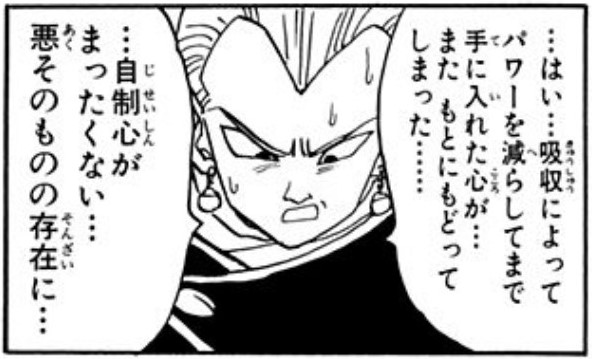
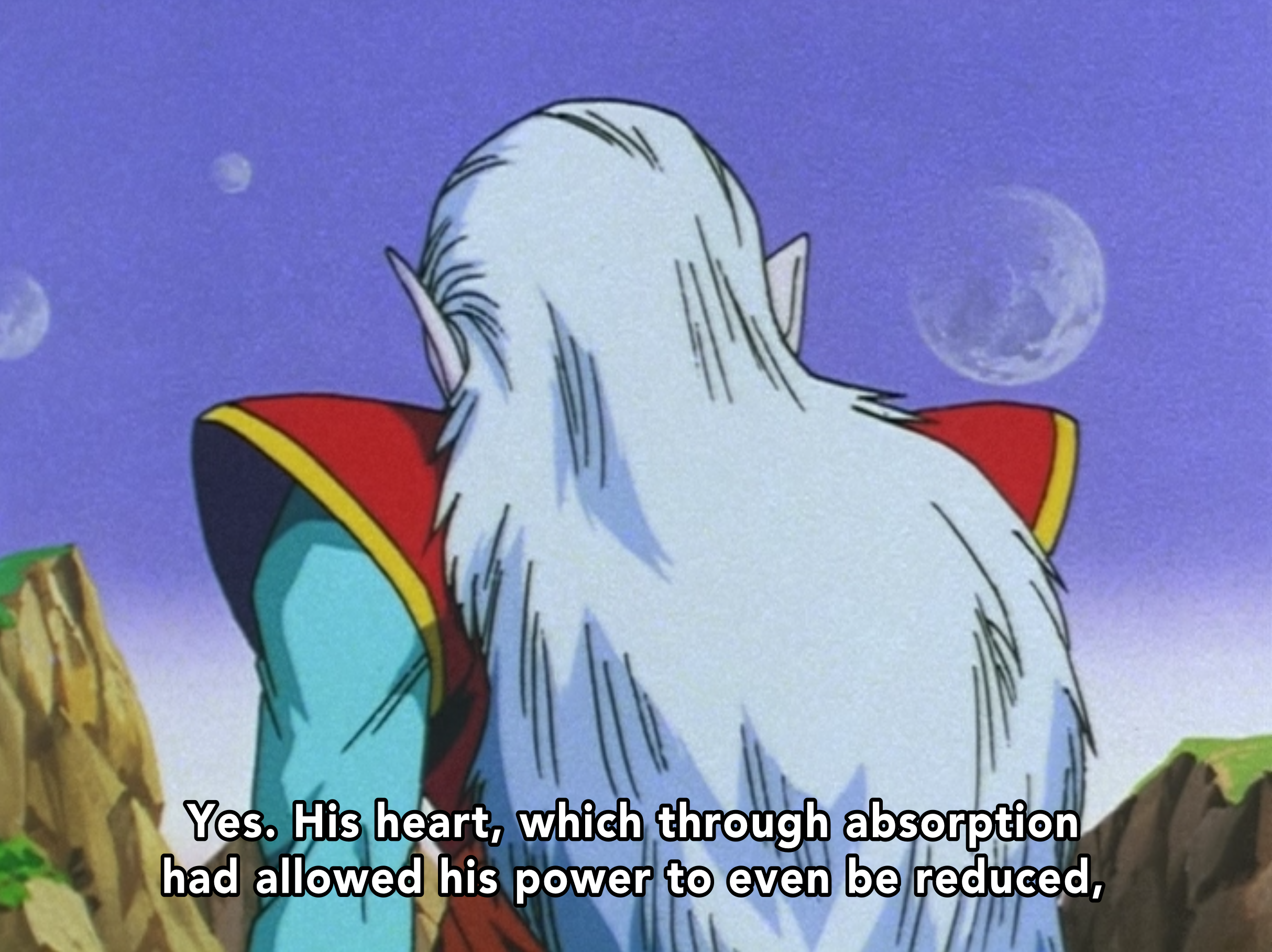
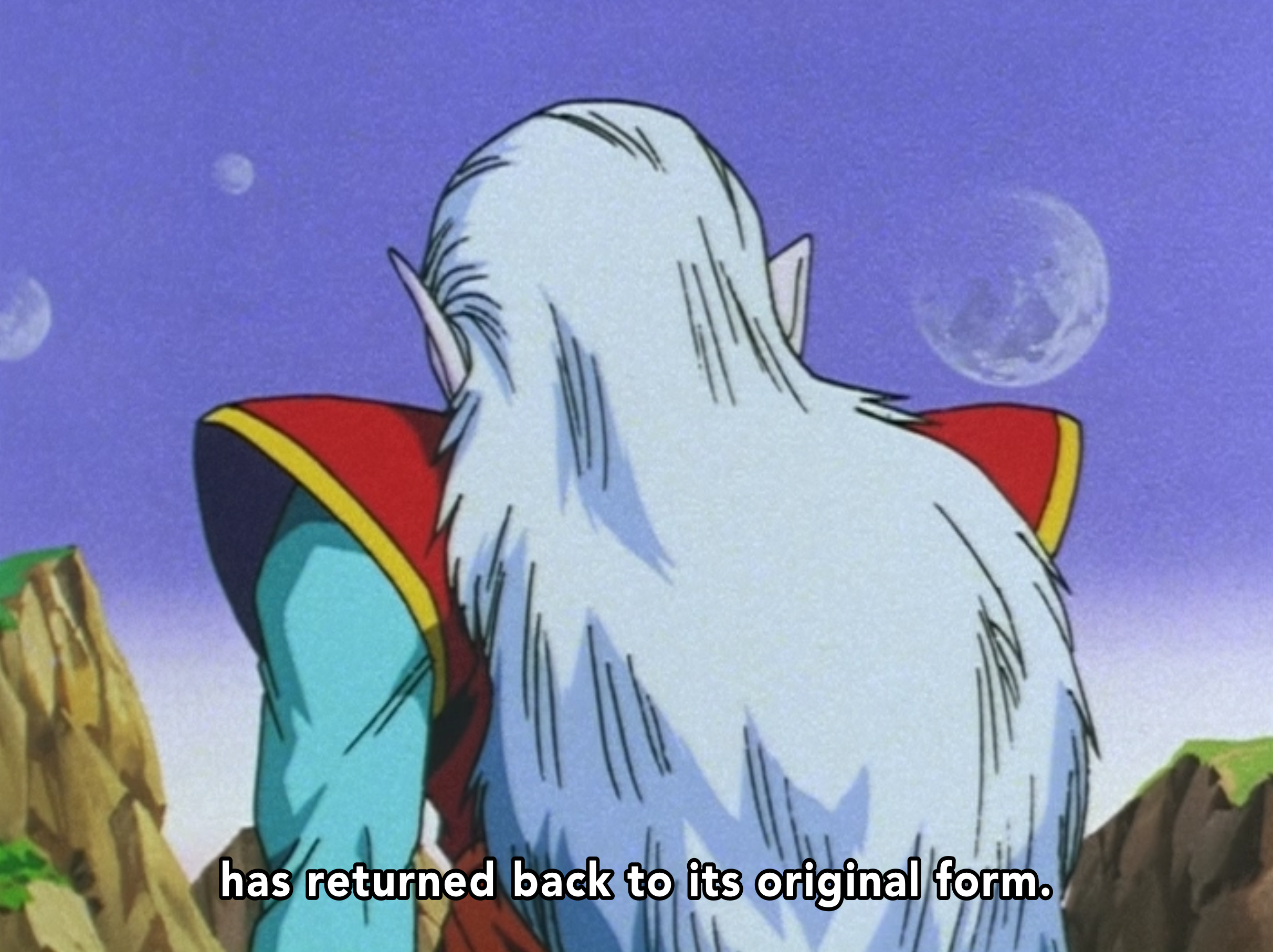
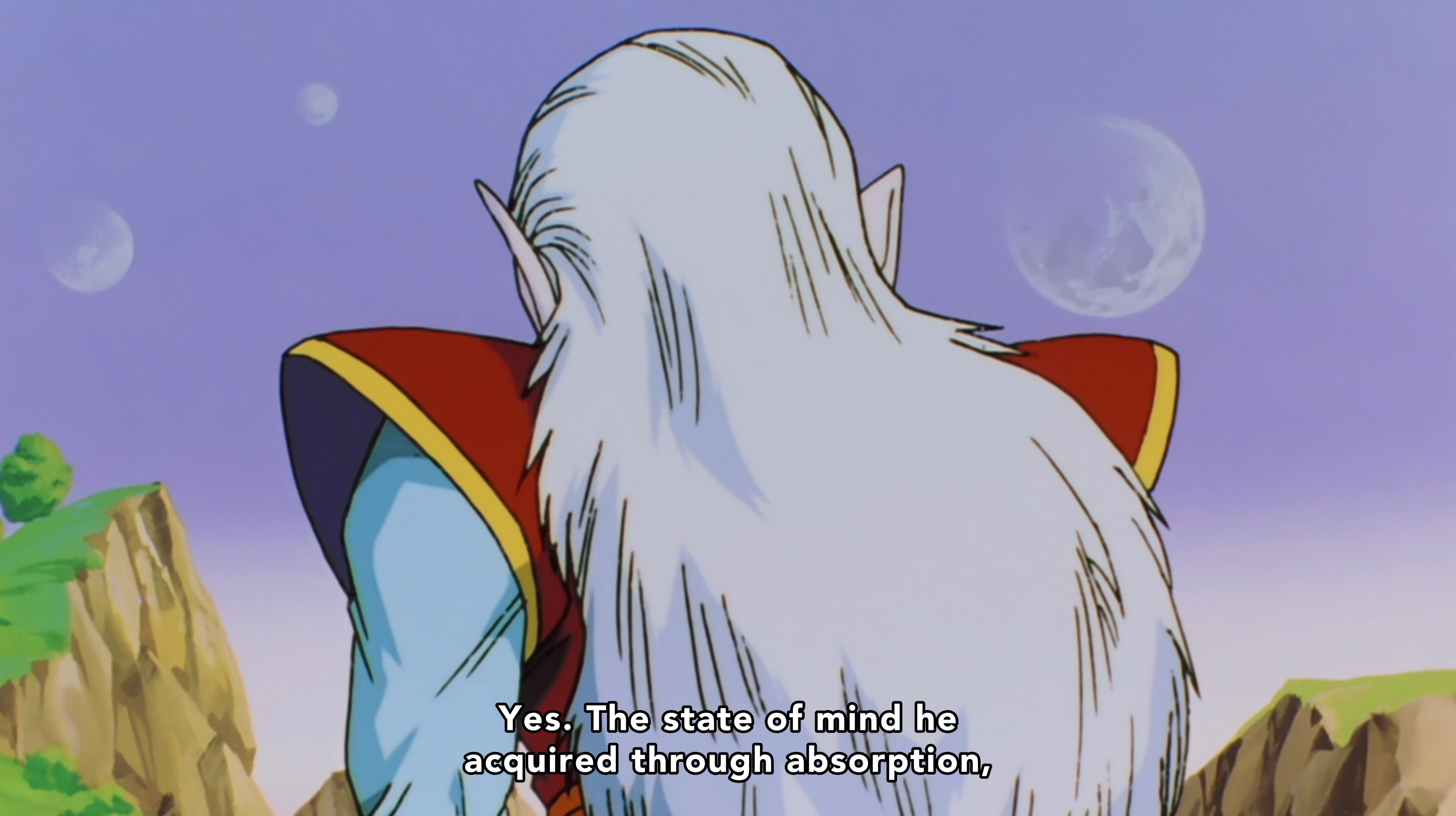
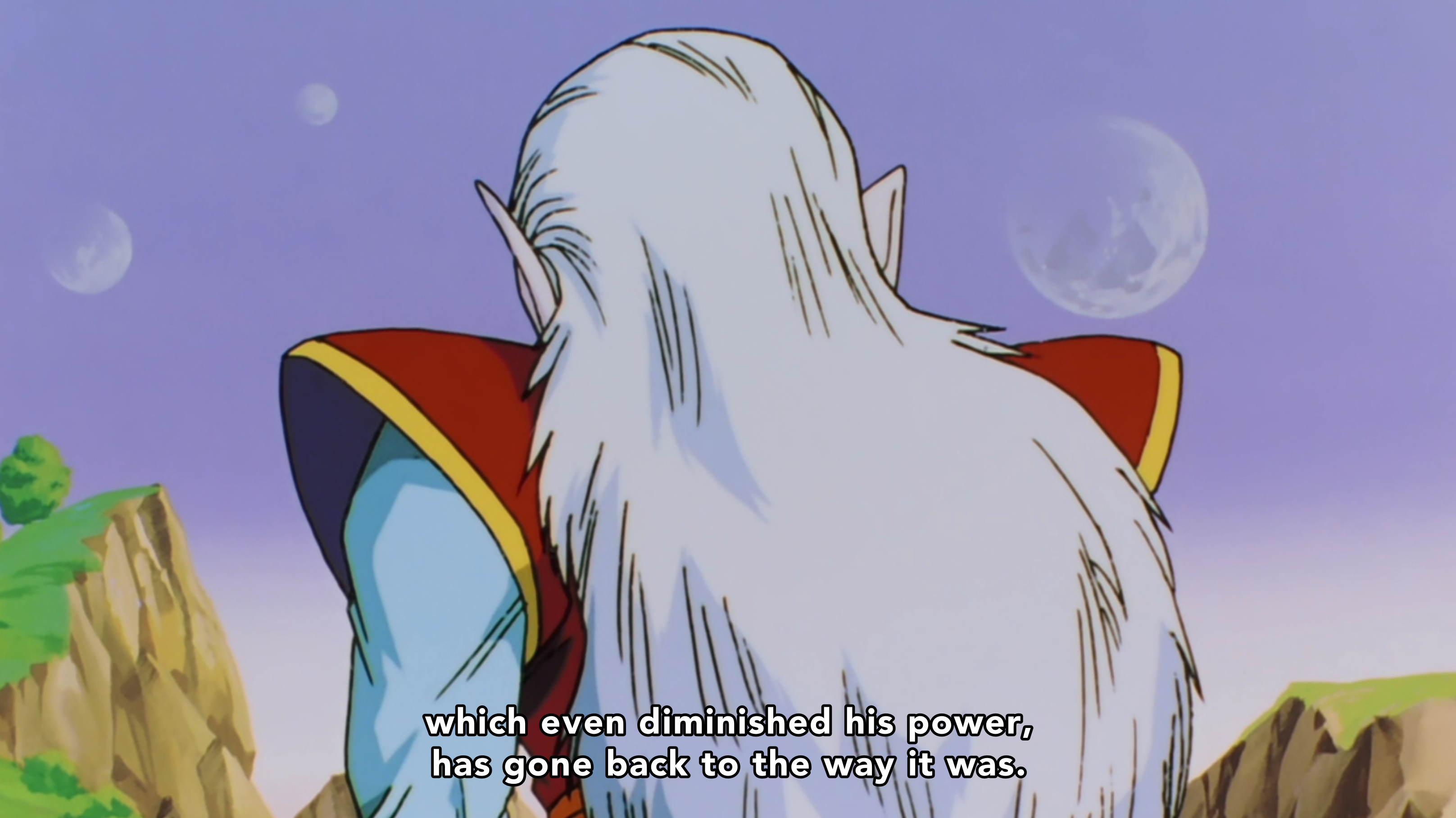

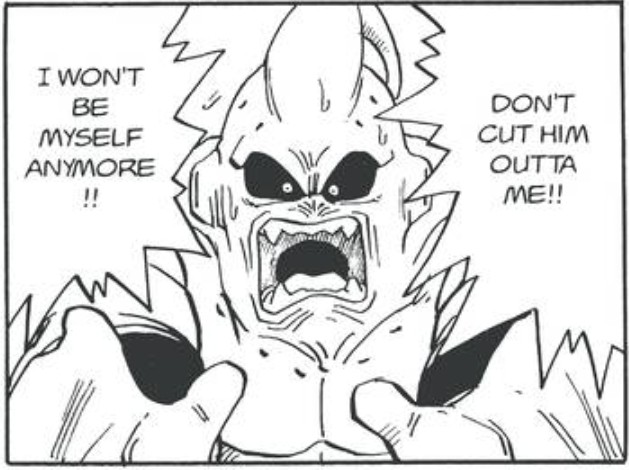
In this panel, Kibitoshin is explaining to Elder Kaiōshin that Majin Buu’s power was reduced by absorbing a Kaiōshin. He says: 「・・・はい・・・吸収によってパワーを減らしてまで手に入れた心が・・・またもとにもどってしまった・・・ ・・・自制心がまったくない・・・悪そのものの存在に・・・」 In English, this is: “…Yes… the heart he obtained, even going so far as to reduce his power through absorption… has returned to its original state… …He has absolutely no self-control… He’s become an existence of pure evil…” This is the part that many English-speaking fans misunderstand because the official English translation is more ambiguous: “Yes… He’s lost the soul he’s gained… This Boo… is evil incarnate…” You would be forgiven if you understood this just as meaning Majin Buu’s only become wilder or simply more evil now. However, there is still a huge misunderstanding that stems from this even when it is translated accurately. In English, it is common for us to pluralize our nouns (e.g., apples, bananas, etc.).
However, this isn’t always true for other languages (e.g., Japanese, Korean, etc.). Those languages depend on the context of the sentence or paragraph they exist in. For example: 「本」 in Japanese can mean both book (singular) or books (plural). If I tell a friend, I read a 「本」over the weekend, they would understand this to be singular. And if I tell them the library had 「本」, they would understand this to be plural. To learn more about plural nouns in Japanese, you can click here.
This is also true for the word in question: 「吸収」or “absorption” in English. Thus, more context is needed to understand if this is singular or plural. Thankfully, we have this context. When transforming into the Southern Kaiōshin Buu from Super Buu, Goku tells us that Majin Buu’s ki rises in chapter 507. Kibitoshin also tells us that Majin Buu absorbed two different Kaiōshin (there is no English “s” to pluralize Kaiōshin either) on the same page as the panel in question. This panel (and page) are a brief exposition explaining who Kid Buu is and why he exists. Therefore with this context, we can understand that “absorption,” 「吸収」, is plural in English since Kibitoshin is explaining how the Kaiōshin absorptions weakened Majin Buu, and we already saw Majin Buu get stronger by expelling one of those absorptions.
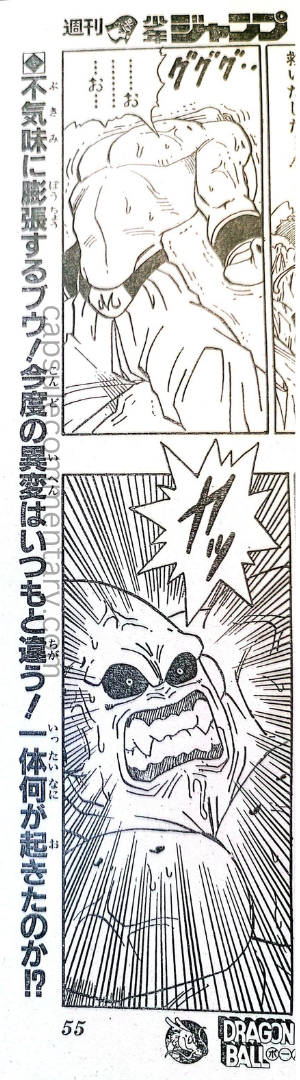
The official English translation creates a new sentence for Elder Kaiōshin on this page when he says, “So the souls he ate tamed him…,” thus demonstrating that Viz’s translators also understood Majin Buu’s weakening via Kaiōshin absorptions to be plural. Furthermore, on page 55 of Weekly Shōnen Jump 1995 Issue 12, the vertical text within the manga itself tells us that Super Buu’s transformation into the Southern Kaiōshin Buu (and therefore Kid Buu) is “different from usual.” This is important because many fans assume Majin Buu’s transformations all follow the same rules, but this explains to us that the transformations leading to Kid Buu are different from normal.
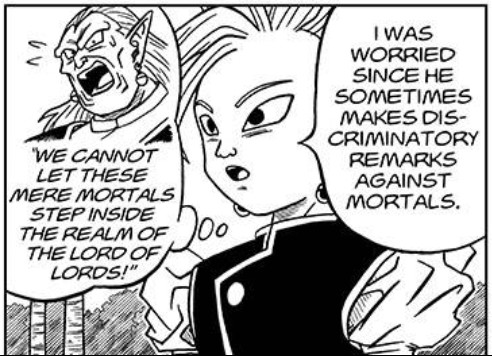
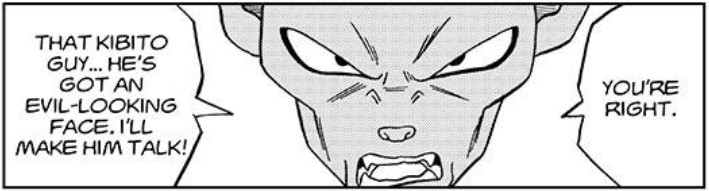
Dabura also indirectly confirms that the Glind weaken Majin Buu when he explains that they cannot use the ki from Kaiōshin (“the Lord”) and Kibito to resurrect Majin Buu. They can only use the ki of regular, good people (normal ki). A simple way to think about this is to think of spicy food. If you keep adding more and more capsaicin, it will become spicier and spicier. But if you add milk instead, it actually becomes less spicy (because capsaicin is fat-soluble). Absorbing normal characters is like adding more capsaicin and absorbing a Glind is like adding milk in this scenario. Some fans believe that it was purely the Dai Kaiōshin who weakened Majin Buu due to his gentle heart. There are two issues with this: (1) the description for Bibidi on page 110 of Chōzenshū 4 states that absorbing the Southern Kaioshin also made Majin Buu more docile, and (2) neither Kaiōshin nor Kibito (especially Kibito) are particularly gentle. If a gentle heart was the only thing that dampened Majin Buu’s power, then there should have been no issue with harvesting ki from Kaiōshin and Kibito. In fact, Babidi probably would have preferred that due to the mental anguish it would cause Kaiōshin knowing his ki contributed to Majin Buu’s resurrection.
Whether this ki exception extends to other Shin-jin (the gods), such as Kaiō, is unknown. In the guidebooks, Shin-jin are born from one of two types of fruit dropped by the Kaiju tree: an ordinary fruit or a golden fruit. Kibito and Kaiōshin were born from golden fruits, while Kaiō was born from an ordinary fruit. Episode 6 of Dragon Ball Daima expanded upon this to explain that there are 5 Glind Trees they are born from, of which either the Kaiju is presumably one of them or has been retconned into being the 5 trees. Episode 10 revealed that all of these trees died, and so the Glind will eventually die out.

It is worth noting that in the Character Showcase for the Southern Kaiōshin on Dragon Ball Official Site, they write (possibly via machine translation1), “Having absorbed South Supreme Kai, Majin Buu was able to transform into a bigger, more powerful form.” The original Japanese does not say “more powerful,” and instead says “strong,” but simply by mentioning strength at all, it implies it to be stronger than the previous form. Additionally, statements on page 185 of TV Anime Guide: Dragon Ball Z Son Goku Densetsu (while it focuses on the physical attributes of the Southern Kaiōshin Buu with statements like “power-type body” and “powerful body”) could also be interpreted as increasing the overall strength of Majin Buu. Dragon Ball Heroes: Ultimate Mission 2 states: “The Buu who absorbed the Southern Kaiōshin became even stronger.” However, all of these sources use the Dragon Ball Z anime as their source2, and we will see later in this article the anime’s multiple statements that directly contradict this. But to state it simply for now: they are wrong. Importantly, there is not a single reference to this form of Majin Buu being “the strongest” in any official material ever produced. And just to add on more about the Southern Kaiōshin, we know that Majin Buu looks like the most powerful character he’s absorbed at any given time. When we first meet Majin Buu as Fat Buu, he had only absorbed two characters: the Southern Kaiōshin and Dai Kaiōshin, and yet he resembles Dai Kaiōshin. This must mean that Dai Kaiōshin is stronger than the Southern Kaiōshin. So when Kaiōshin explained the Southern Kaiōshin was the strongest among them, this must have excluded the Dai Kaiōshin due to him being of a higher rank.
We also know that Majin Buu does not necessarily look like who he’s absorbed in sequential order, as he absorbed Piccolo and Gotenks at the exact same time, but resembles Gotenks instead of looking like a combination of the two. Goku also confirms this, as mentioned previously in this section with the translation of what Goku says to Buuccolo. However, it does seem like there’s an exception for absorbing himself, as Super Buu (who was originally a sort of gray color as Evil Buu) maintains the bright pink color of Fat Buu, instead of becoming peach-skinned or green like the heroes he absorbed. While most sources depict Evil Buu as gray, in very rare circumstances, he is depicted as pink.
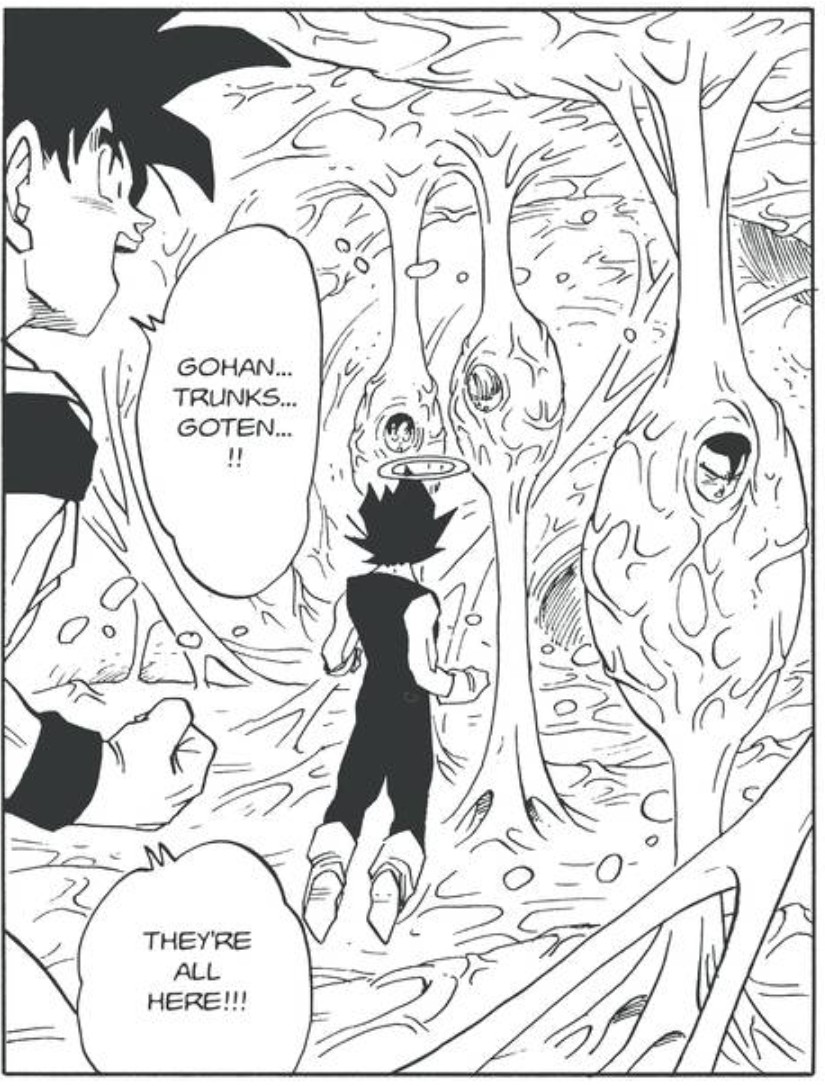
When Majin Buu transforms between his different forms, we know from Goku and Vegeta’s brief time inside of him (chapters 506 and 507) that he does this by connecting and disconnecting others from those spherical pods inside of him. We also know that Good Buu still has Dai Kaiōshin inside of him due to him physically resembling Dai Kaiōshin still. But where is the Southern Kaiōshin? As we know, Good Buu was disconnected from within Super Buu, causing the transformation to the Southern Kaiōshin Buu and then finally, Kid Buu. The most likely answer is that the Southern Kaiōshin was still in a pod within Kid Buu, who then purposefully disconnected the Southern Kaiōshin himself. If all Glind, and not just Dai Kaiōshin, weaken Majin Buu, it would make sense for him to disconnect the Southern Kaiōshin. Some fans believe that, because the two Kaiōshin were absorbed by Buu for so long, that they essentially became a part of his being, rather than being stored within pods like the Dragon Team members that were inside Buu.
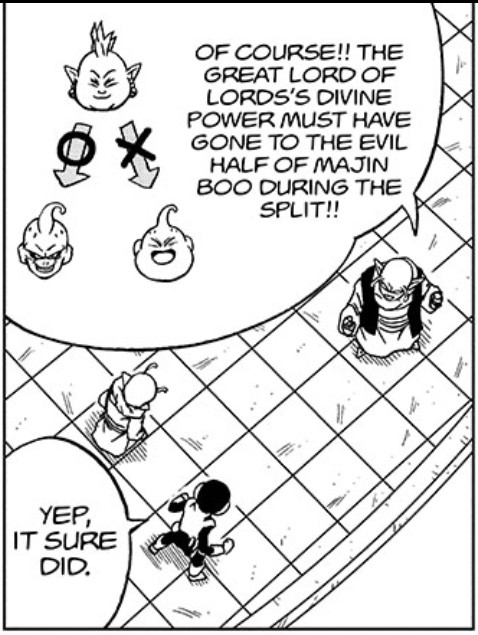
With regards to ki again, the Dragon Ball Super manga creates more confusion in this area than it alleviates. By process of elimination, the ki of the Kaiōshin is presumably god ki as we know it cannot be normal ki (good ki, essentially) or evil ki. If it were normal ki like what Goku and Gohan have, then there would be no issue in harnessing their power. If it were evil ki, then Babidi could have harvested his minions’ (Dabura, Pui Pui, etc.) ki for Majin Buu’s resurrection. Merus (on page 21 of Dragon Ball Super chapter 49) and Dende explain that Good Buu inherited Dai Kaiōshin’s physical characteristics while Kid Buu inherited his god ki. Dragon Ball Super itself, along with the official website, also makes it clear that this is something that was specific to Kid Buu and not the other forms of evil Buu. So the questions this presents are: 1) Did Kid Buu use this god ki while fighting Goku, Vegeta, and Good Buu? and 2) If god ki is what weakens Kid Buu, does this mean that Kid Buu was weakened while fighting Goku, Vegeta, and Good Buu? These questions are outside the scope of this article as they rely exclusively upon speculation, but they are interesting to think about.
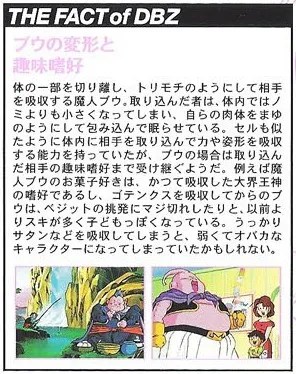
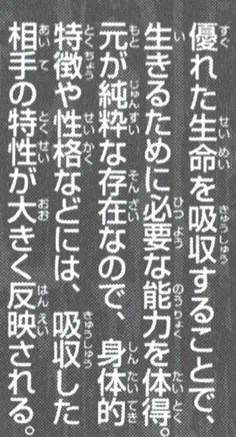
Fourthly, we should consider how absorptions affect Majin Buu’s personality.3 As explained by Kibitoshin, absorbing Dai Kaiōshin pacified Majin Buu enough that he could be controlled by Bibidi, Babidi’s father (although Toriyama did say once that Babidi is a doppelgänger of Bibidi). We also see how absorbing arrogant fighters like Gotenks and Gohan, or intelligent ones like Piccolo, affects his personality. The following panel of Buutenks has caused some disbelief among fans that it was translated accurately — specifically the “past, present, and future” part — but, in fact, it was translated accurately. I have included the Japanese and English side-by-side to show this. The issue is that it’s used in power-scaling discussions and so a more literal translation becomes necessary.

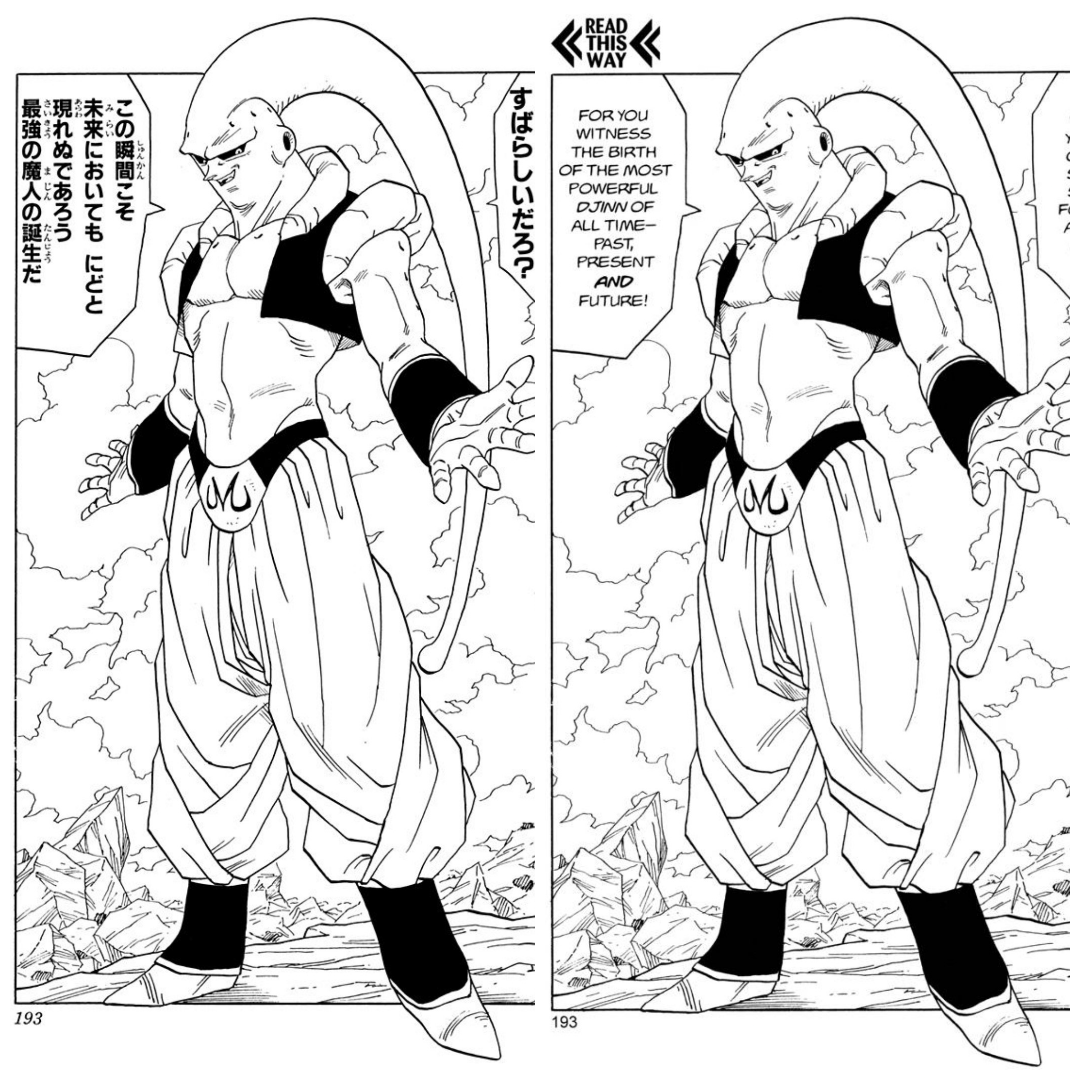
While what Buutenks says in both languages conveys the same idea, the Japanese version more accurately translates to: “This very moment marks the birth of the strongest Majin, one that likely shall never appear again, even in the future.” The full text in Japanese is 「この瞬間こそ未来においても二度と現れぬであろう最強の魔人の誕生だ」. The key part of the sentence in Japanese is this part at the start: 「この瞬間こそ未来においても」 which translates to “Precisely at this moment — even in the future.“ He does not actually comment on the past, like in the official English translation, which is something many fans point to in this debate. Most translations of this speech bubble — including even highly trusted ones, and one I commissioned — omit「であろう」 in their translations. This phrase leaves open the possibility that a stronger Majin may, albeit unlikely, appear in the future. It’s doubtful Buutenks actually believes that, but that’s what’s implicit in the grammar.
It’s also important to recognize that in Japanese grammar, the “future” part of this statement is not a separate statement that can be neatly removed while keeping the rest of the sentence intact. The phrase meaning “even in the future” is part of a single relative clause modifying “the strongest Majin.” This means that Buutenks is making a single unified claim about what sort of “strongest Majin” he is: one whose supremacy covers the present and extends into the future. If any portion of the time frame given is wrong (present and/or future) — for example, if a stronger Majin appears later, such as Buuhan — the entire statement becomes invalid. You cannot surgically remove the “future” part and keep the “present” part without altering the original sentence.
While Buutenks’s statement is certainly dramatic, it’s ultimately noncommittal.「であろう」shows that it’s a prediction, not an absolute. He doesn’t say a stronger Buu “will never appear,” but that it’s unlikely. And in fact his prediction is immediately proven wrong when Buuhan appears. This statement was likely influenced by absorbing Gotenks and gaining his notoriously cocky personality. The weight of Buutenks’s claim is comparable to Vegeta’s claim in chapter 231 on page 2 that he’s “the strongest in the universe” even though he should be fully aware of Freeza’s existence. Similarly, we see Buuhan frequently disregard the strength of fusion and Vegito, until Vegito humiliates him. Super Buu’s (as Buutenks and Buuhan) repeated need to declare himself “the strongest Majin“ — rather than simply “the strongest being” — is his implicit admission that there are beings stronger than him.4 This is demonstrative of Super Buu’s inferiority complex, with his words acting as self-validation. Contrastingly, Kid Buu is either incapable of making such statements or has no need to; his actions speak for themselves.
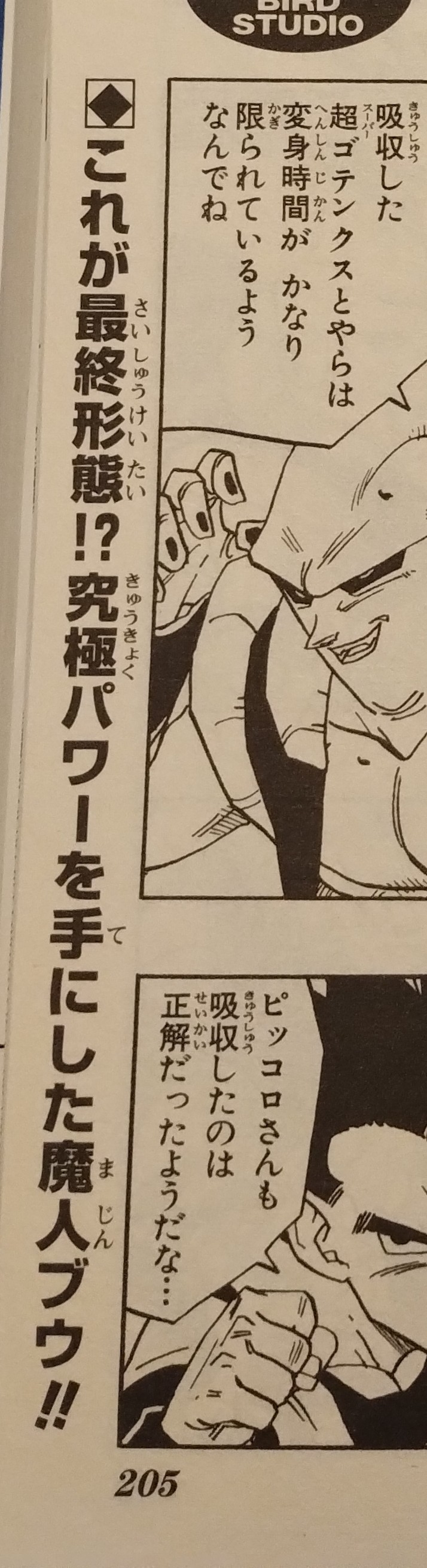
The side text at the start of chapter 500 also writes of Buutenks: “This is the final form!? Majin Buu has obtained ultimate power!!” This is clearly incorrect as three other forms of Majin Buu appear after Buutenks: Buuhan, the Southern Kaiōshin Buu, and Kid Buu. As with other such comments and statements declaring one form to be the strongest, they were made before other, stronger forms were revealed to the readers (and likely before Toriyama had even imagined them).


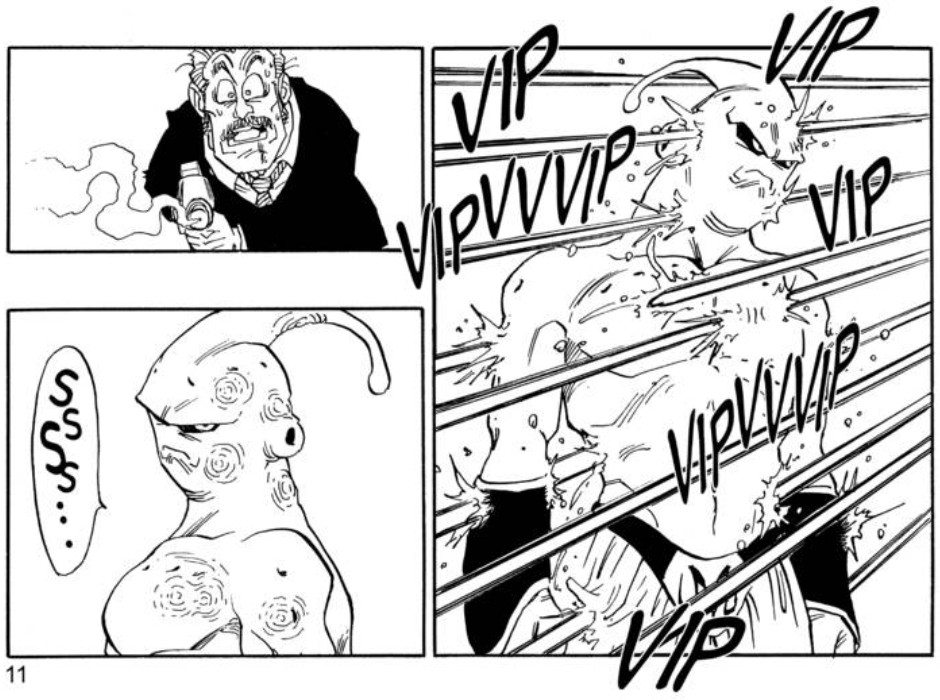
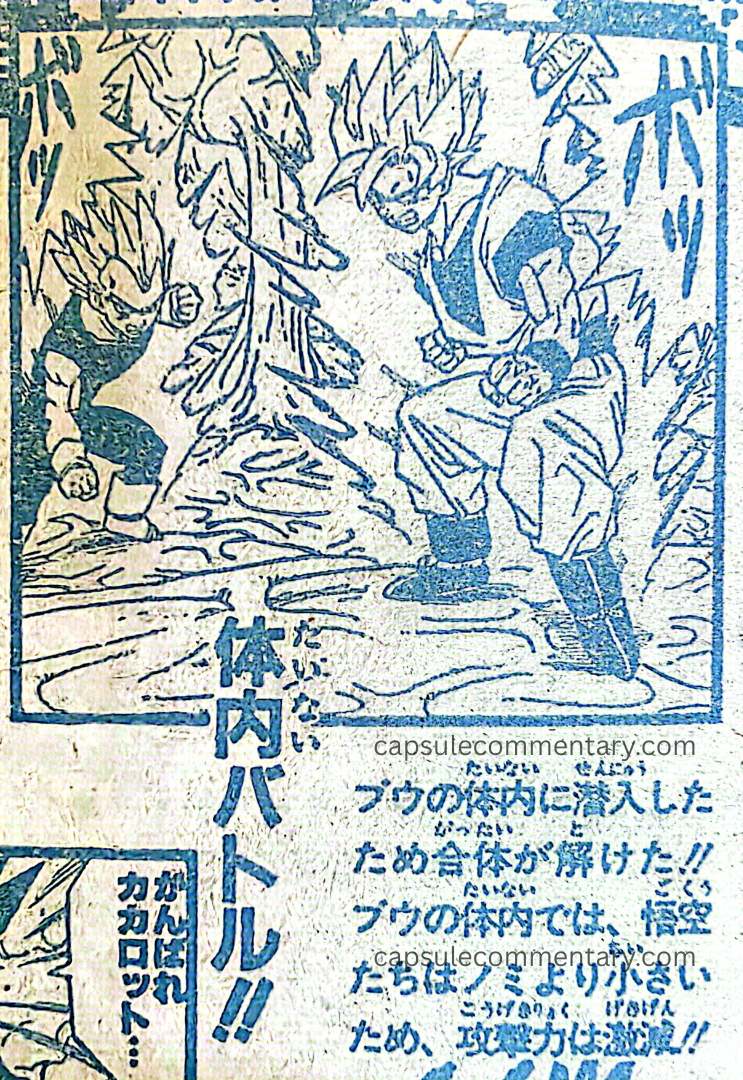
Fifthly, Goku and Vegeta were significantly weakened while inside of Super Buu due to their shrunken sizes and the “bad air” inside of him. The idea of air quality affecting one’s abilities is seen again in episode 3 of Dragon Ball Daima. In Chōzenshū 2 on page 335 (Daizenshū 10 page 19), it explains that Goku and Vegeta were only able to access <1% of their power. This number is accurate. On page 4 of chapter 486, machine gunfire is shown to pierce through Super Buu’s head and body without issue. Therefore Super Saiyan 1 Goku should, at the very least, be able to match the machine gun. However, Super Buu comments that Goku’s attack was barely noticeable due to his flea-like size, and we can also see that it barely dented the lining inside of Super Buu’s head. In English, he compares it to being bitten by a flea, but in Japanese, he says that Goku and Vegeta have a physical size smaller than a flea:「いまのおまえたちノミよりもっともっとちいさいんだぞ」The official website for Dragon Ball Kai also confirms that they are unable to harm Super Buu because of their tiny size.5 Page 237 of Weekly Shōnen Jump 1995 Issue 35 confirms this, as well: “Inside Buu’s body, Goku and the others became smaller than fleas, and their attack power greatly decreased!!”
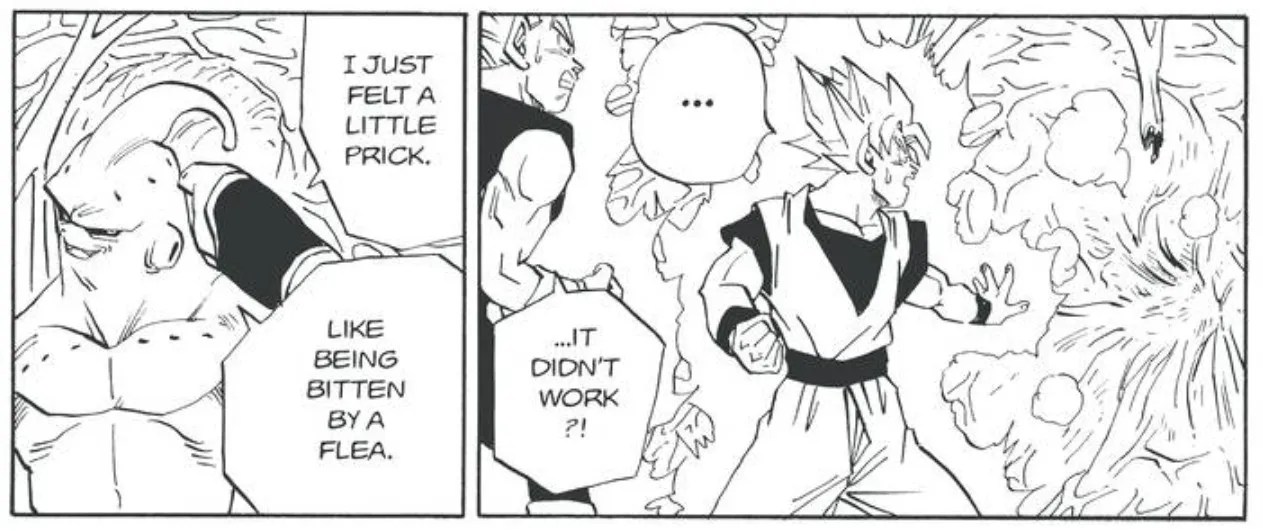

Goku’s dialogue inside of Super Buu suggests that he was aware they were weakened, even if he didn’t understand exactly how dramatic of a power decrease it actually was until later. So when challenged by Super Buu, he expected to at least be able to blow a hole in him. He says to Super Buu, “W-what are you grinning about… Do you think I can’t open it?” Super Buu responds: “It’s impossible.” Then, Goku says, “Don’t underestimate me,” before trying to blast a hole in Super Buu’s head. At that moment, Goku and Vegeta realize exactly how weak they’ve become. Because Goku was at less than one-hundredth of his strength, multiplying his power by 8 (the boost from Super Saiyan 1 to 3) wouldn’t change anything.
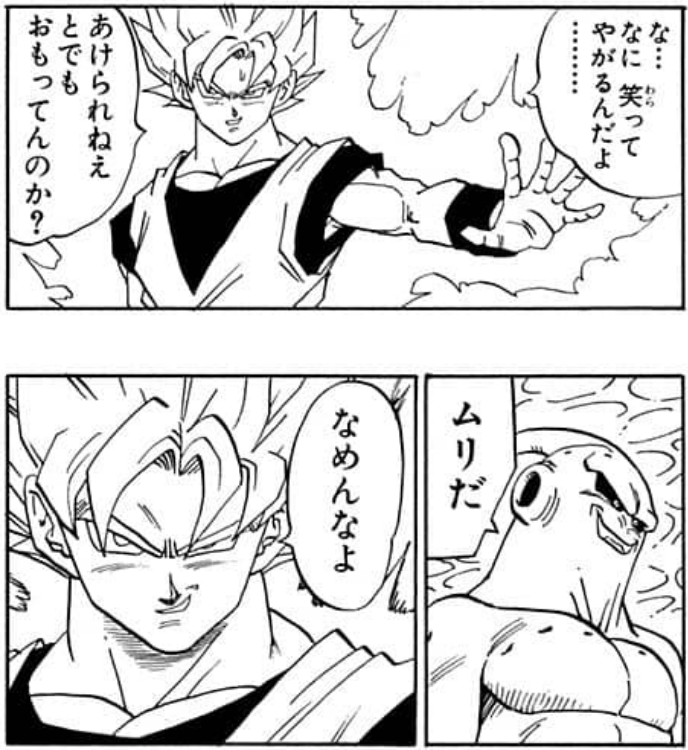
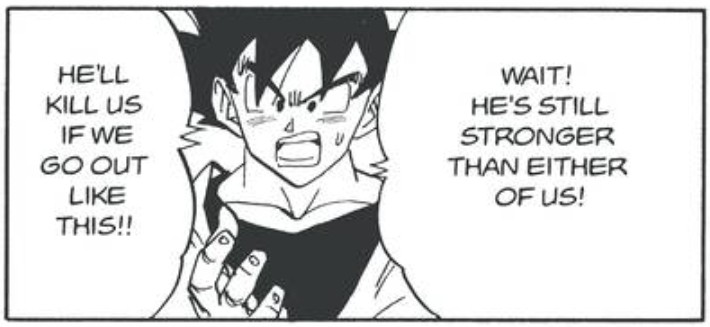
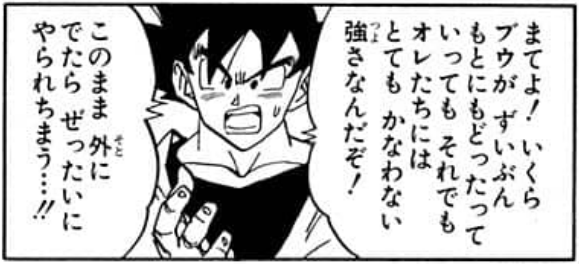
Goku is very insistent upon fusing while inside of Super Buu; he even suggests the Fusion Dance. This is because Vegito was able to keep his strength even while transformed into a coffee candy. Presumably Vegito also kept his strength while he had the barrier for that brief moment inside Buu, too. Goku and Vegeta had no guarantee that they would be able to rescue their allies, no guarantee they could escape Buu’s body, and no guarantee they would regain their strength once they escaped. So when Goku says, “He’ll kill us if we go out like this,” he is referring to how weak they are inside of Super Buu. He says “outside” in Japanese here, 「外に」, so it’s even clearer what he means. This does NOT mean that Super Buu is stronger than either of them. It means Goku and Vegeta were so significantly weakened in that moment that they couldn’t even match the damage output of normal bullets.
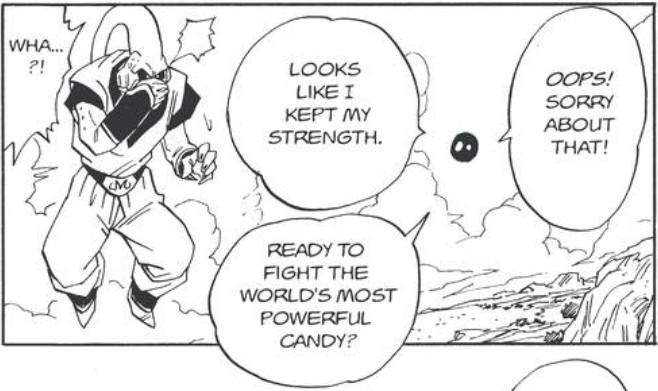
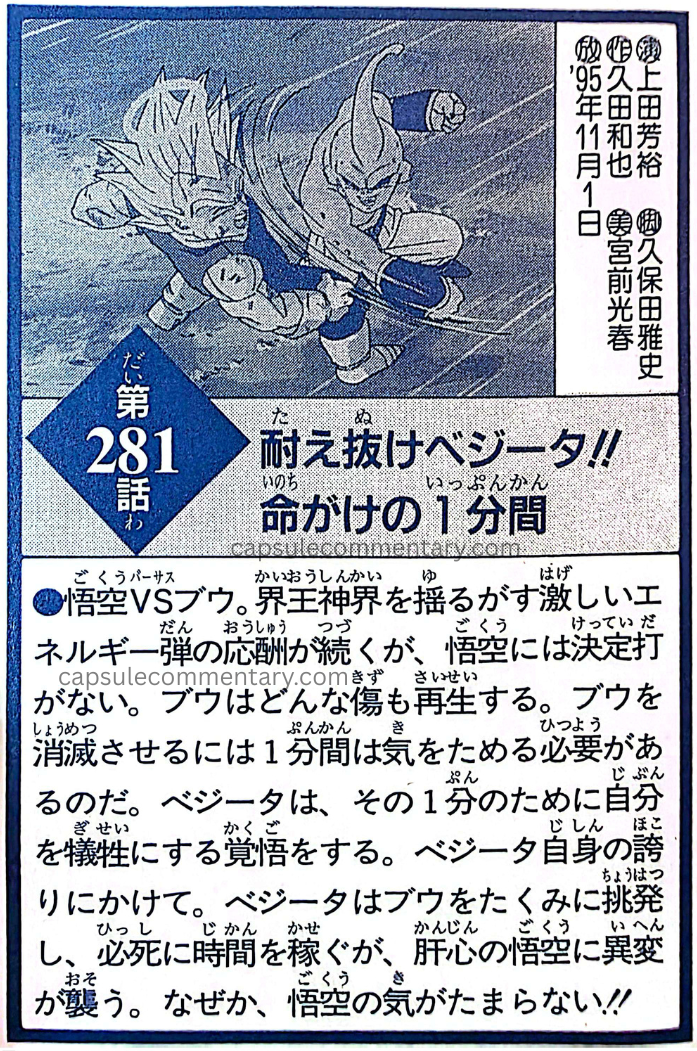
Sixthly, we need to understand how to damage Majin Buu. As Vegeta remarks in the fight against Kid Buu, only another version of Majin Buu can actually damage him. This is also confirmed on page 341 of Chōzenshū 3 (Daizenshū 10 page 118) in the episode description for episode 281 where it states, “Buu regenerates from any wound.” Gohan also remarks on this in chapter 463 on page 5. In the fight between Vegito and Buuhan, we also see that Majin Buu cannot recover his detached body parts if they are vaporized. However, his regenerative ability is quite efficient, so he would likely recover before a piece-by-piece destruction could be done successfully. Therefore, the only way to defeat Majin Buu would be to attack him as another form of Majin Buu, or to kill him outright with an overwhelmingly powerful ki attack like the Genki-dama.

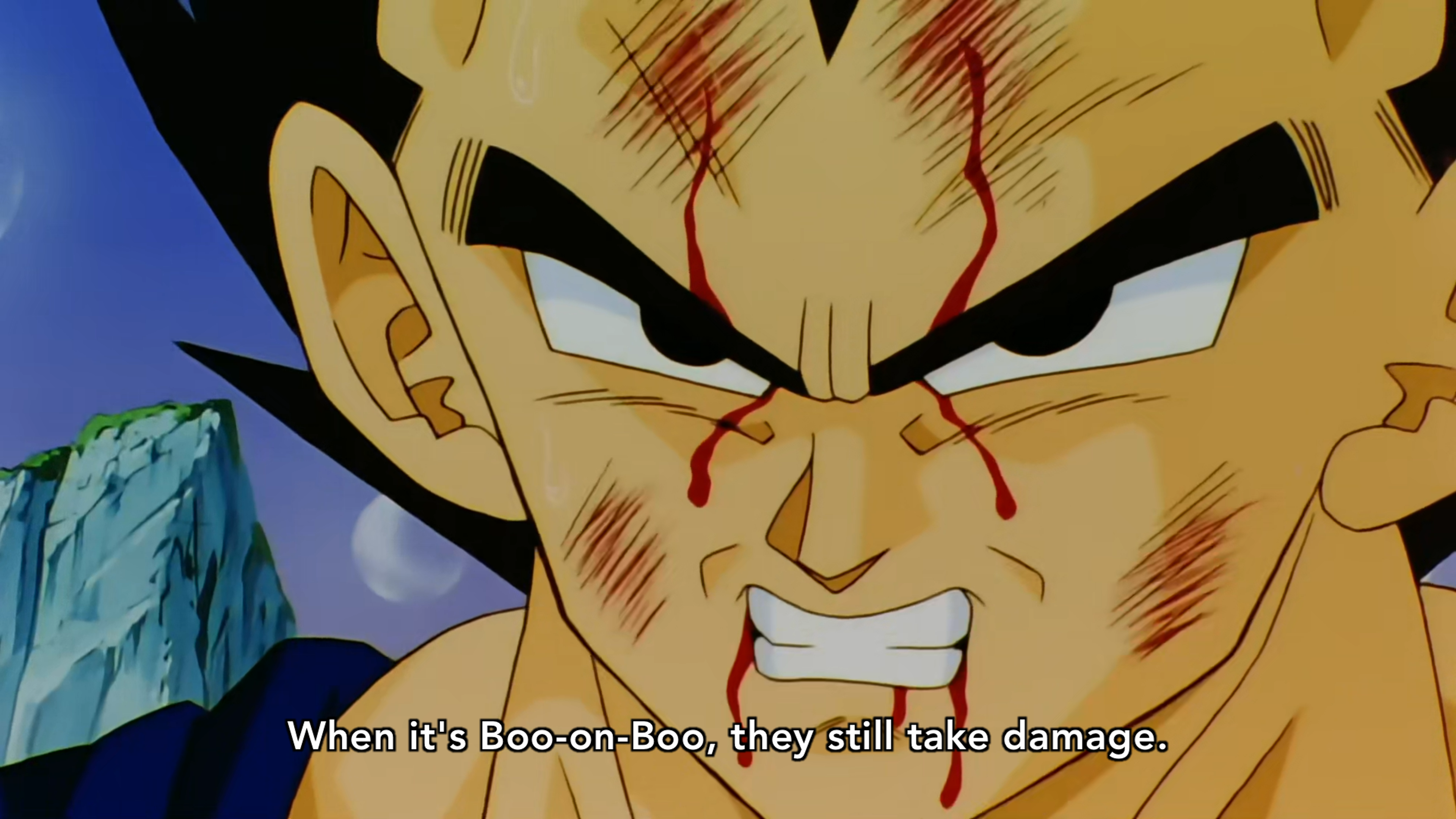
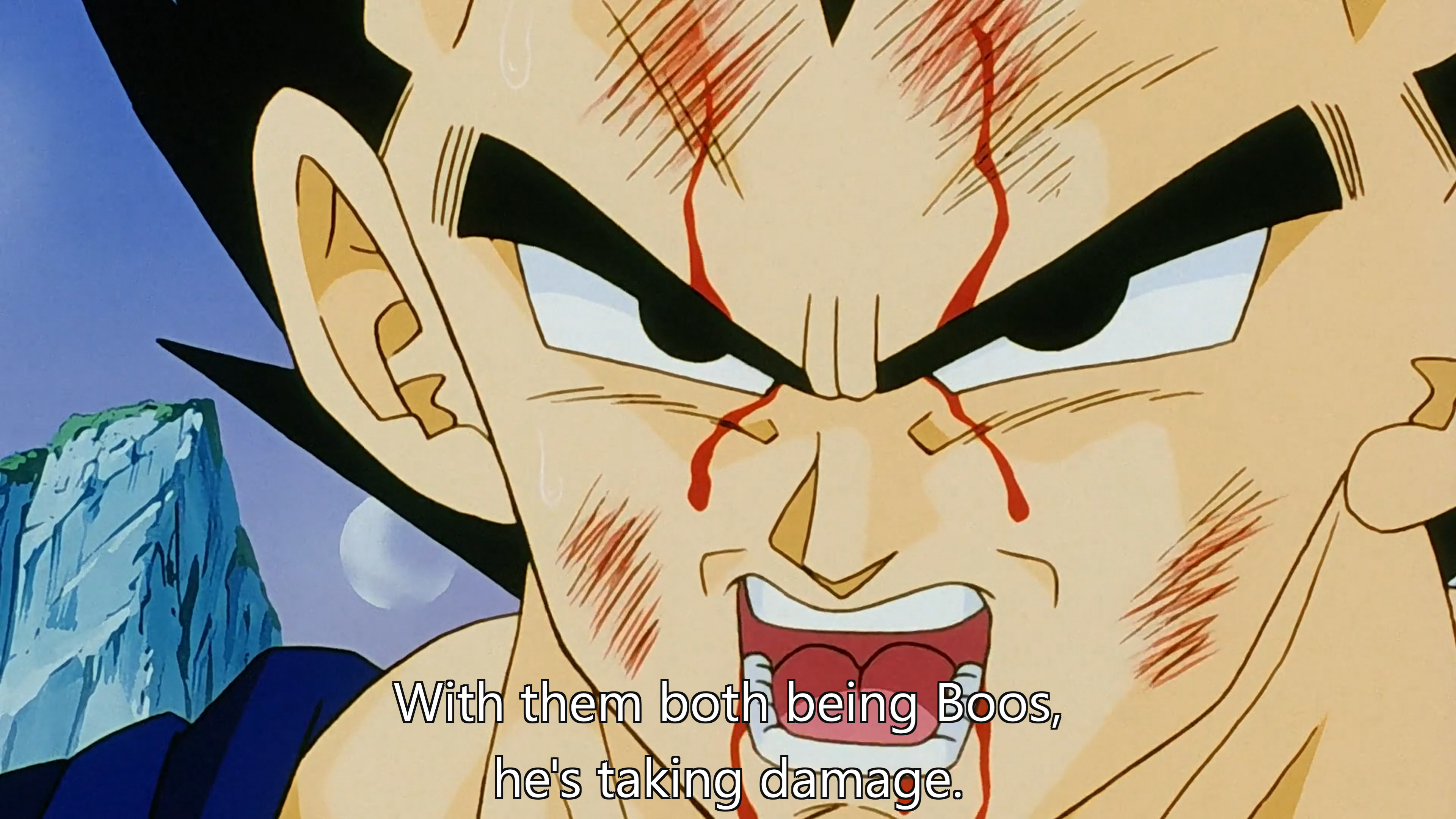
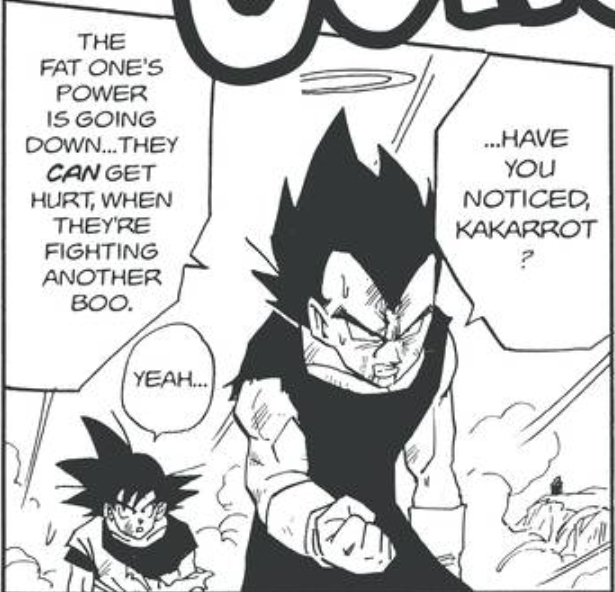
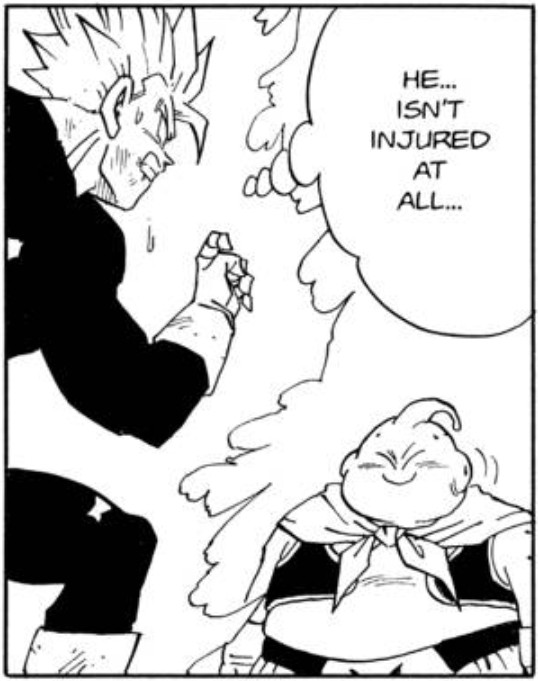
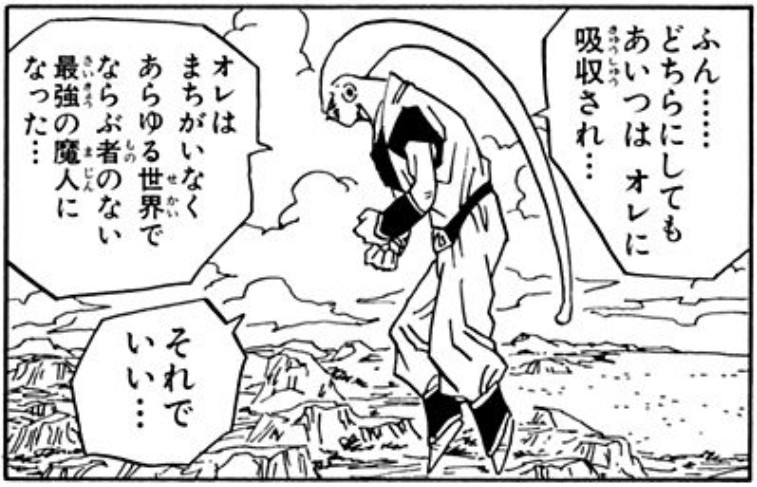
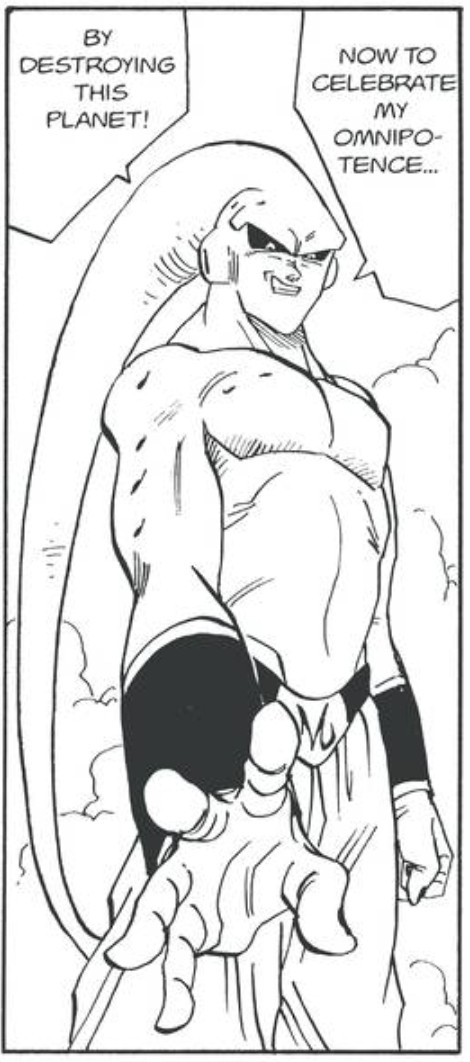
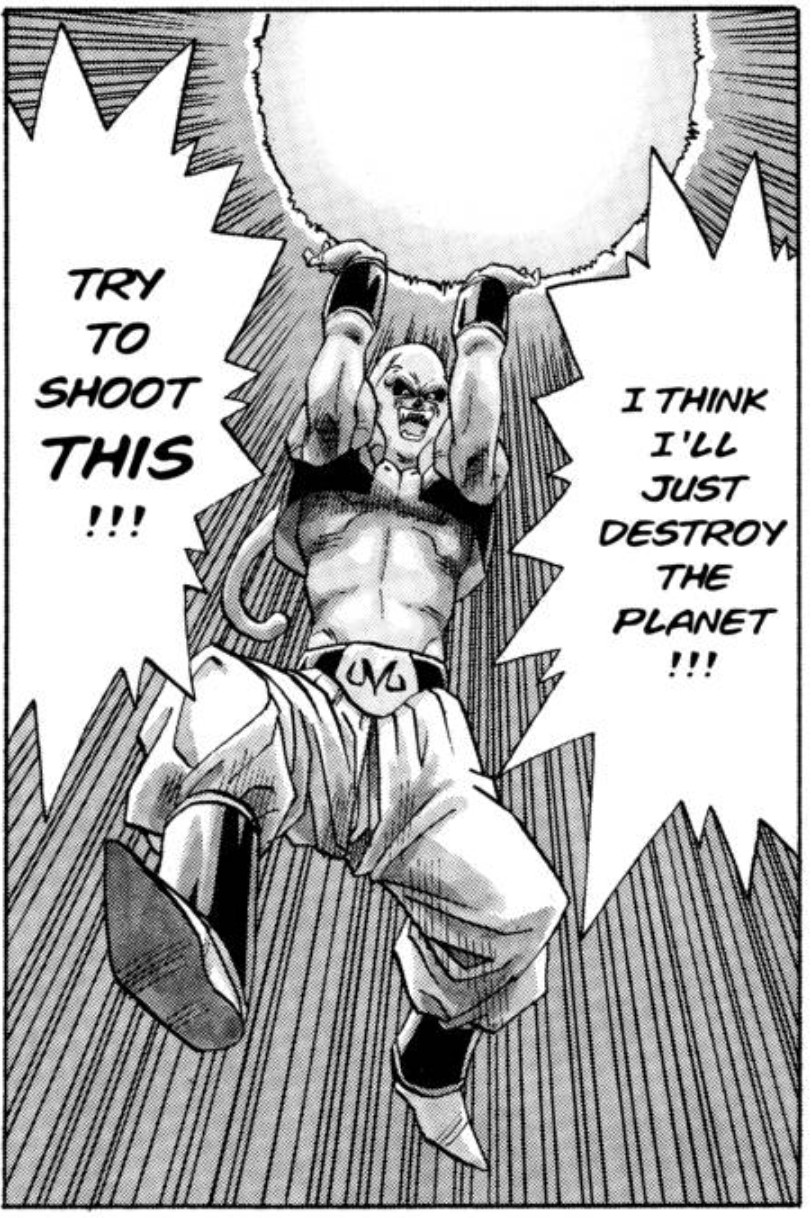
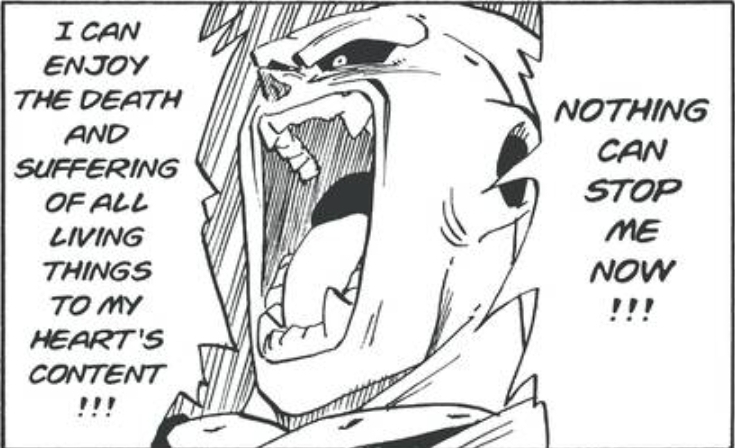
Lastly, both Buuhan and Kid Buu are dangerous. After Buuhan naively believes he absorbed Vegito, he declares he will enjoy “the death and suffering” of every living thing in the universe and then prepares to destroy the Earth. In the manga and Dragon Ball Kai, Kid Buu does not say a single sentence; and in the original anime, he says about two lines which are basically just, “Die!” Despite this, we can infer Kid Buu shares this goal because Buutenks and Buuhan both attempted to destroy the Earth (chapter 501 page 12 and chapter 506 page 10) before being stopped and Kid Buu’s first action after screaming was to finish that job. So saying one is more or less dangerous than the other when the entire universe is at immediate risk of destruction is not a compelling argument and a meaningless distinction.
Understanding Toriyama
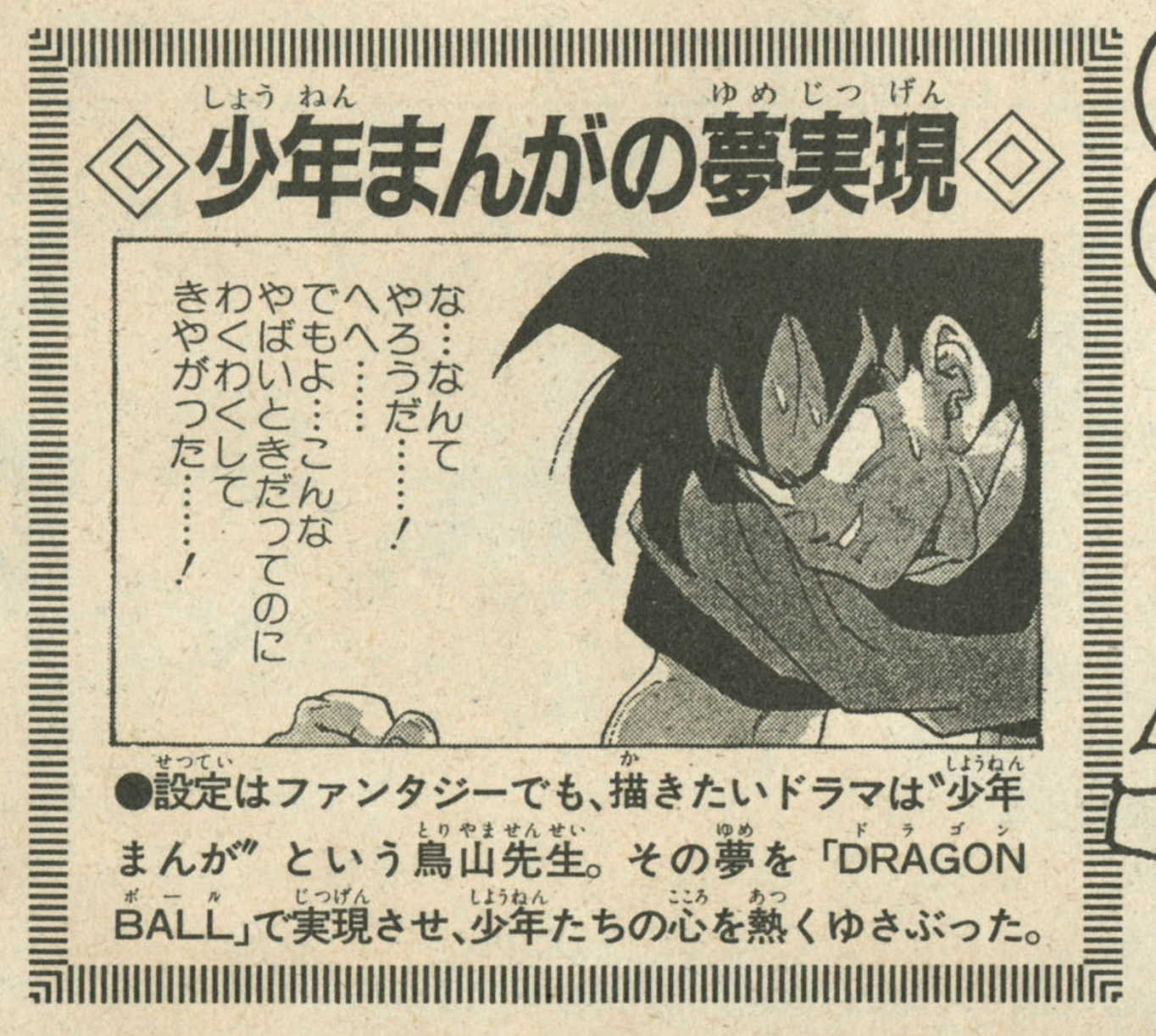
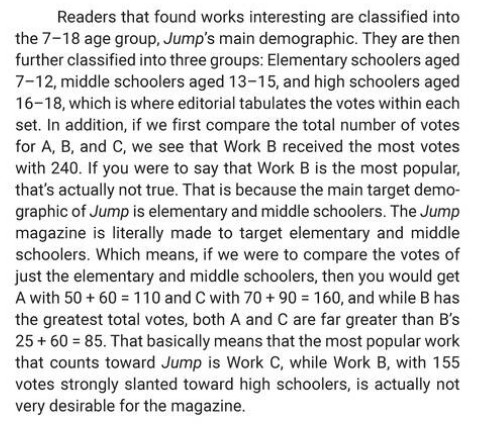
![Dragon Ball Full Color: Freeza Arc Vol. 5 page 244. Toriyama: Back when [Dragon Ball] was serialized (Note 7), it ran in a boys’ magazine, so I consistently drew it with elementary and middle schoolers in mind. Whenever things seemed like they might get too complicated, I would revise them and try to make it easier to understand. That’s something I’ve always kept in mind, even for this new movie [Battle of Gods].](https://capsulecommentary.com/wp-content/uploads/2025/02/124.png)
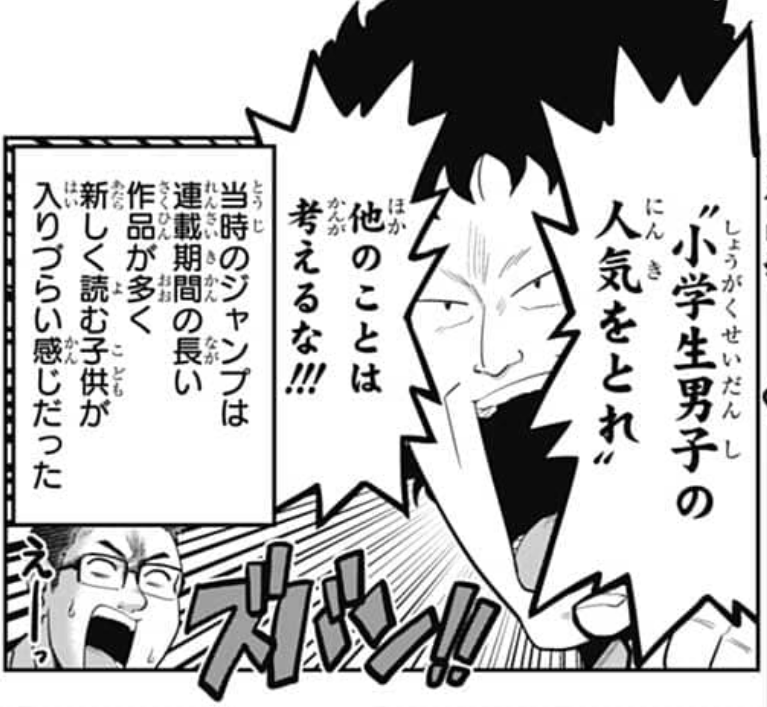

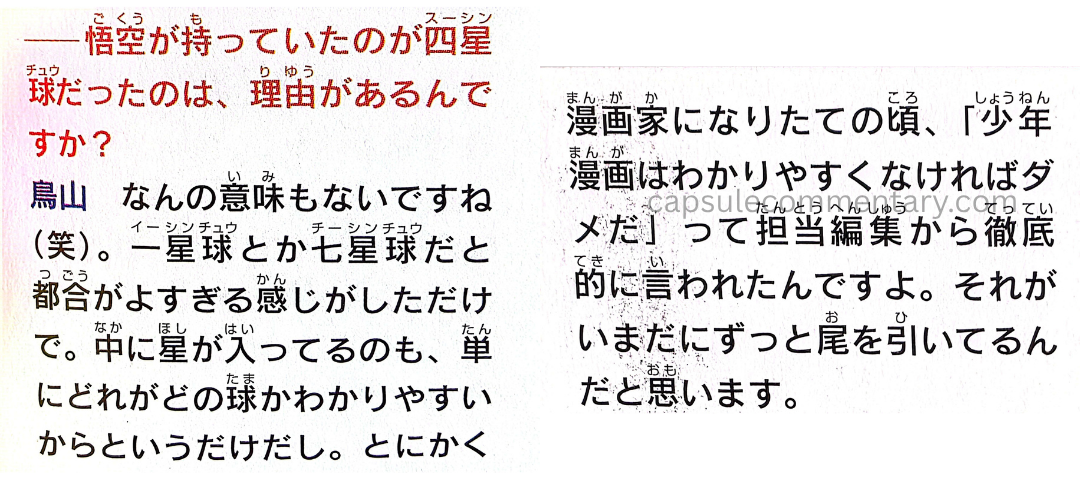
![V-Jump May 2013 page 35. Interviewer: "For example, what were some of your focus points in [Battle of Gods]'s story?" Toriyama: "Let’s see... It hasn't changed from when I was drawing Dragon Ball. At the time, since it was serialized in a boys’ magazine, the readers were boys, so I was really focused on making sure it didn't get too complicated."](https://capsulecommentary.com/wp-content/uploads/2025/02/153.png)
Understanding Akira Toriyama as a mangaka is important to this debate, as his intent and words are factors that must be considered. In this section, we will examine many quotes by Toriyama himself related to how he writes and also take a look at his other works to analyze trends. The first thing we need to understand is that Toriyama admits to writing simple plots in several interviews as his target audience was Japanese grade-school boys. Torishima, Toriyama’s first editor, also confirmed this at Japan Expo 2025 (and pretty much every single time he discusses manga creation).
— Akira Toriyama on page 22 of TeLePAL (1986 Issue 3)
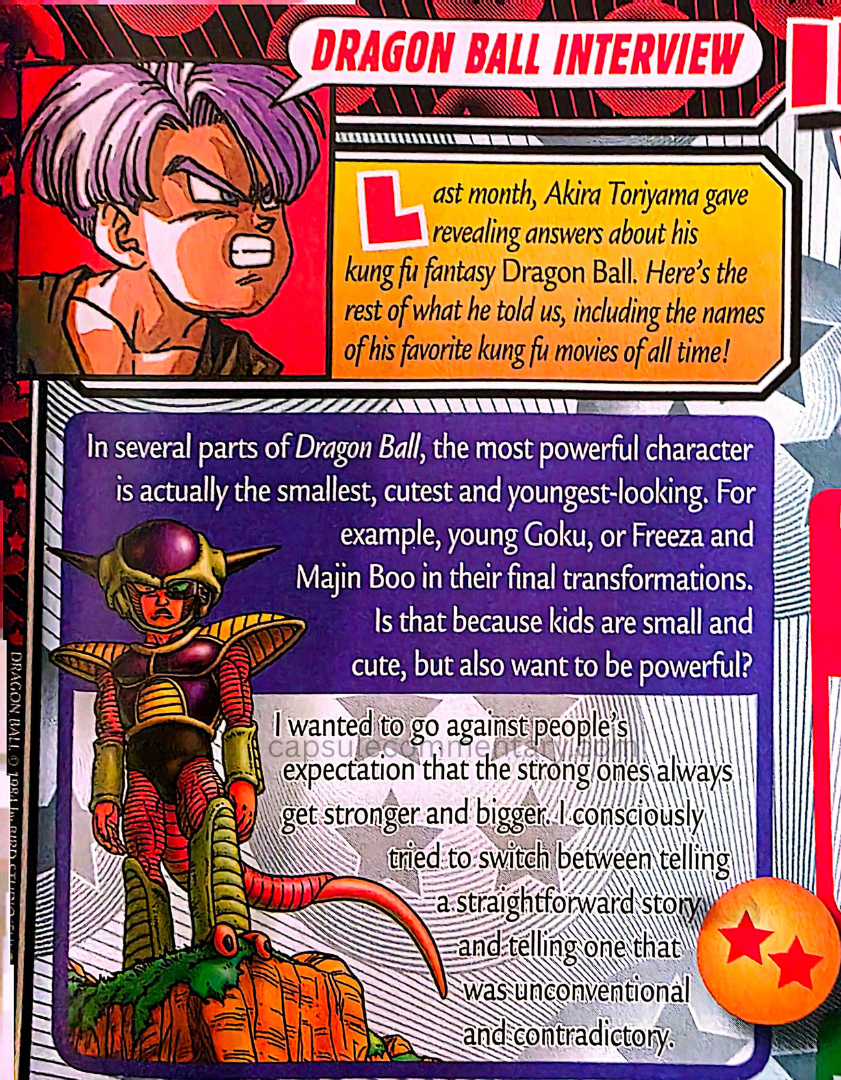
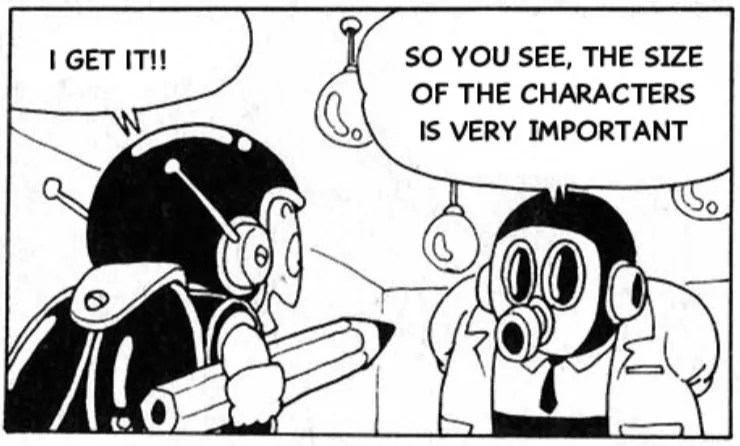
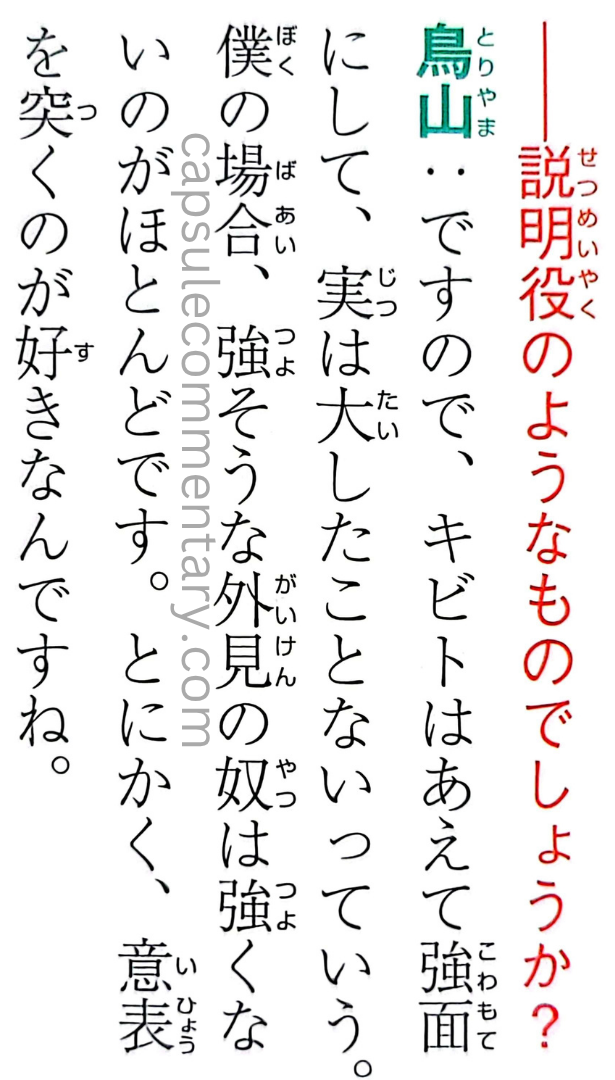
The second thing we need to understand about Toriyama is how he depicts opponents of varying size. Most of the time, the smaller opponent is the stronger one, or the character’s final or most-used form is smaller than their other iterations. Of course, there are exceptions to this, such as Goku being able to defeat Freeza once he became the legendary Super Saiyan. However, Toriyama acknowledges this trope several times in interviews (see pictures below), including in Le Manga de Légende Issue 18 on page 4. In volume 8 of Dragon Ball Super, Toriyama describes this process of trying to create a strong character as making them look “weirder and weirder.”6
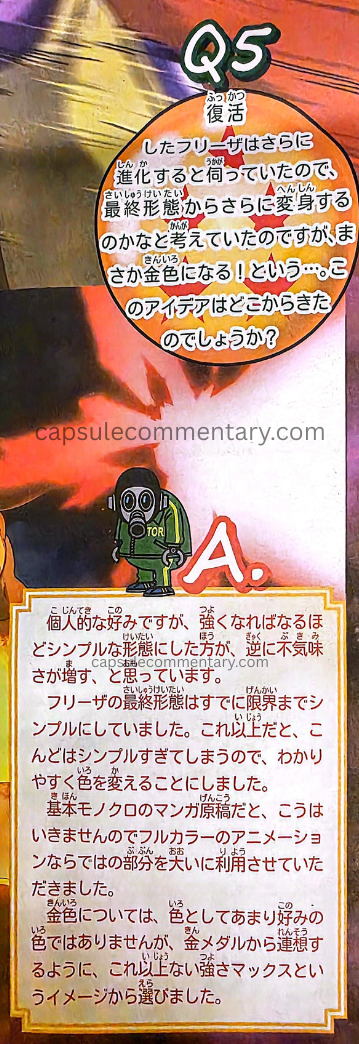
Jump Gold Selection 5: Dragon Ball Z Anime Special Vol. 2 page 34 comments on this with Freeza, writing: “But his final form becomes shockingly small again. However, that little body contains the highest battle power!! His body size and battle power are inversely linked, meaning the smaller he gets, the stronger he becomes!”7 On page 8 of Dragon Ball Z: Battle of Gods Special Booklet, it states: “Akira Toriyama says, ‘I prefer characters who don’t look strong at first glance, but actually are.’ By keeping the design simple, he says he brought out an unknowable kind of scariness.”
Torishima, Toriyama’s first editor even describes this exact scenario of small vs. large on page 40 of Dr. Mashirito’s Ultimate Manga Techniques: “…That is because there are stereotypes when it comes to height and everyone assumes big, tall men are strong.This is the reason why they will almost always be the one to block the protagonist’s way in battle-action manga. Conversely, you make the protagonist shorter in order to make them seem weaker — both are common patterns.” And on page 28 of Sports Nippon: Dragon Ball Z: Resurrection ‘F’, he states: “When Freeza first appeared, I thought, ‘Ah!’, because when something is extremely strong, you’d expect it to have an extremely imposing form, right? But Toriyama is contrarian, so he goes the opposite way. Something small appears, and this is incredibly strong—’Huh? No way,’—that’s the kind of feeling, you know.”
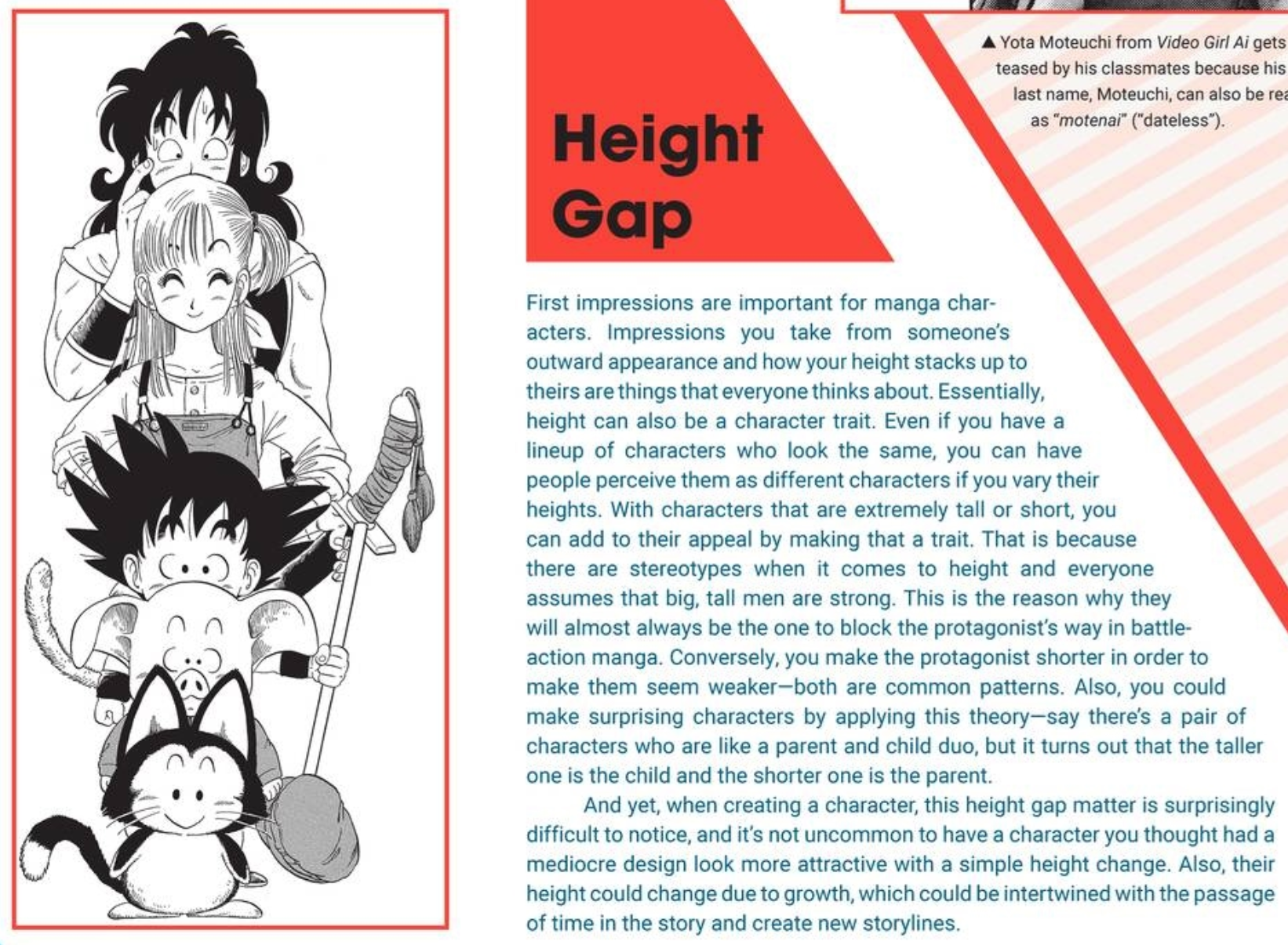
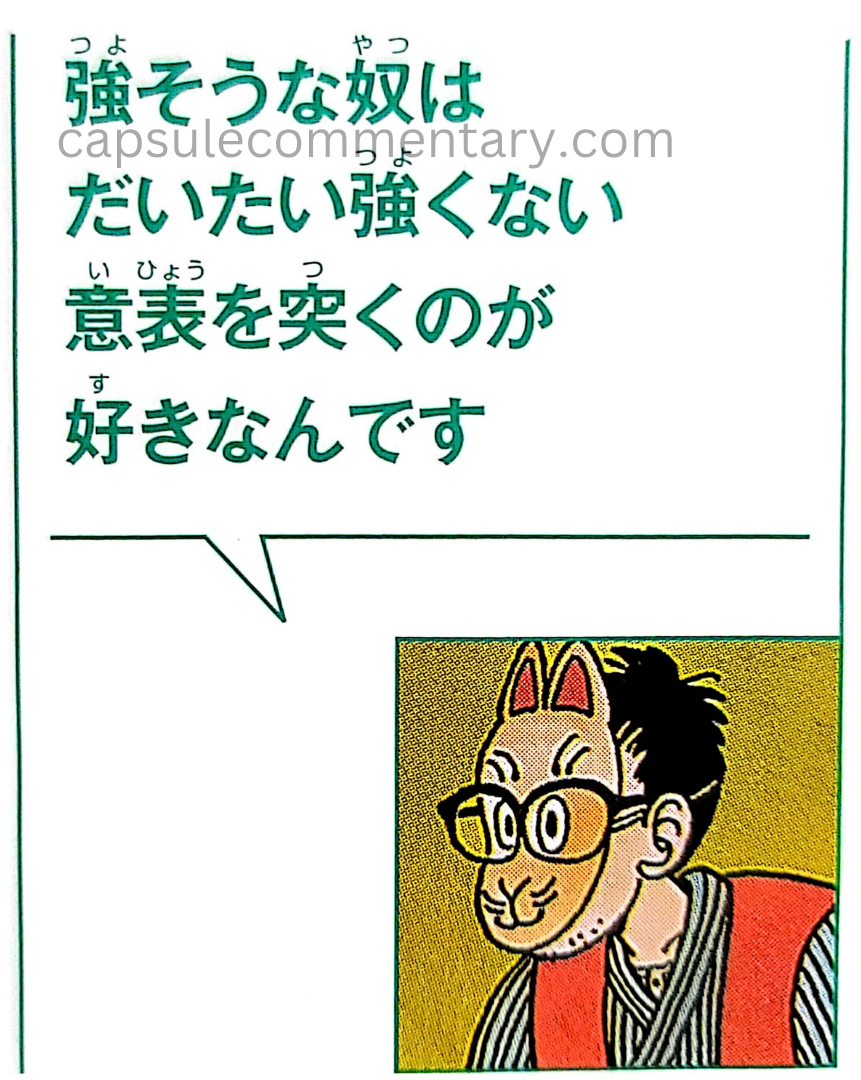
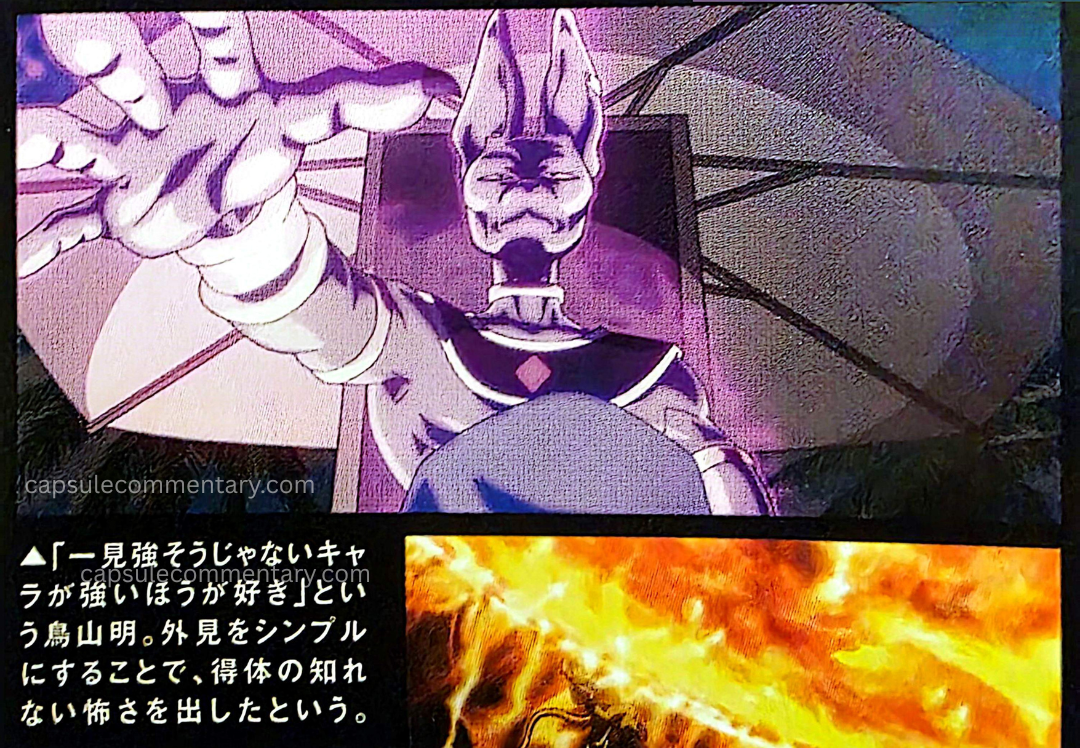

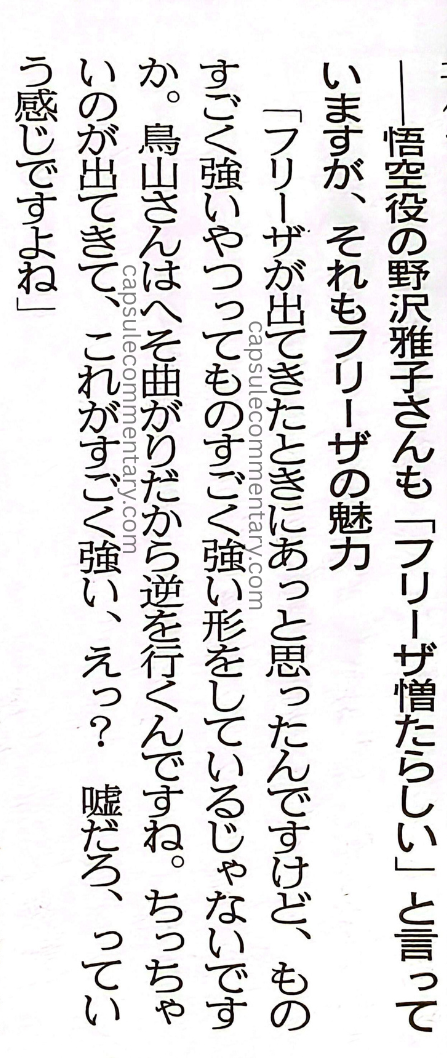
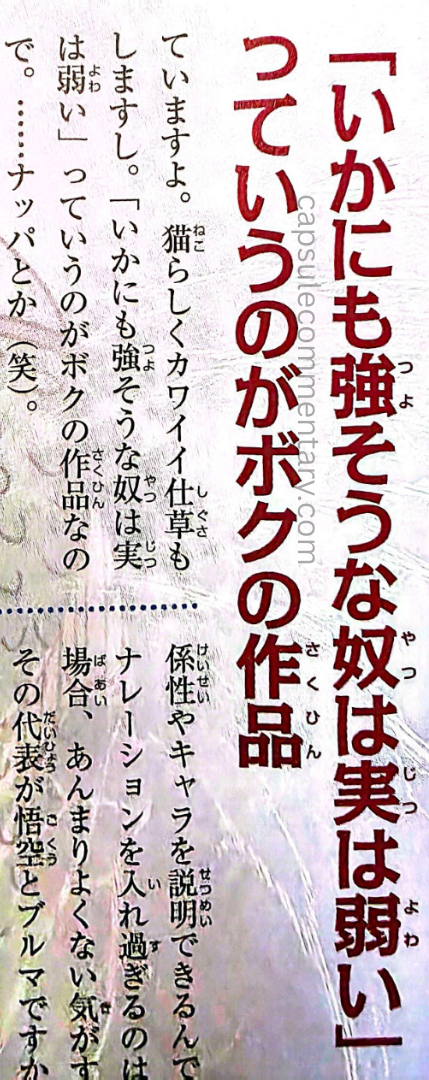
This aspect of Toriyama’s writing is liable to be misinterpreted, so it’s worth expanding on this further. Toriyama depicting smaller characters as being stronger is not applicable to absolutely every single character in every single situation. Chiaotzu is not stronger than Tenshinhan, and Goku as a kid is not stronger than Goku as an adult. However, these examples don’t discredit the trope. On pages 176 to 200 of Chōzenshū 1 (Daizenshū 2 pages 218 to 242), there are 187 fights listed as occurring throughout Dragon Ball. 58.29% of the fights listed in Chōzenshū 1 (Daizenshū 2) are won by the smaller character. The other 41.71% are fights where the taller character wins (e.g., Perfect Cell vs. Goku), fights where it’s impossible to tell the difference between their heights (e.g., Webley vs. Pyontat), and ties (e.g., the fight against Vegeta in the Saiyan Saga).
This list of fights is notably incomplete even following what I gathered to be its criteria for inclusion: hunting animals for food (e.g., Gohan killing and eating the dinosaur), simply killing or defeating another character (e.g., Piccolo chopping Babidi in half), grouping one person vs. many enemies into a single fight (e.g., Goku vs. the Red Ribbon Army), and at least a single panel of some part of the fight must exist (e.g., the Dragon Team defeating unnamed characters during the preliminaries of the Tenka’ichi Budōkai), while excluding training (e.g., Kaiō defeating Goku in chapter 211) and destroying large areas at once (e.g., Nappa destroying East City). So some fights that wouldn’t be included, even though we know they happened, are: Kuririn vs. Tambourine (chapter 134) and the Future Dragon Team vs. the Androids (chapter 335). The fights that I believe would fit the Chōzenshū 1/Daizenshū 2 criteria for inclusion are: Yamcha vs. Carrot Mob (chapter 17), General Blue vs. the Red Ribbon Army (chapter 85), Tao Pai Pai vs. Upa (chapter 90), Draculaman vs. the five unnamed warriors – which would technically be five separate fights (chapter 98), Yamcha vs. unnamed contestant 1 (chapter 115), Kuririn vs. unnamed contestant 2 (chapter 115), Goku vs. unnamed contestant 3 (chapter 115), Jackie Chun vs. unnamed contestant 4 (chapter 115), Mutaito vs. Piccolo Daimaō (chapter 135), Piccolo Daimaō vs. Chiaotzu (chapter 147), Piccolo Daimaō vs. Shenron (chapter 148), Kami vs. Goku (chapter 164), Kuririn vs. unnamed contestant 5 (chapter 167), Yamcha vs. unnamed contestant 6 (chapter 167), Tenshinhan vs. unnamed contestant 7 (chapter 167), Piccolo vs. unnamed contestant 8 (chapter 168), Goku vs. unnamed contestant 9 (chapter 168), Tenshinhan vs. unnamed contestant 10 (chapter 168), Kuririn vs. unnamed contestant 11 (chapter 168), Yamcha vs. unnamed contestant 12 (chapter 168)…
…Piccolo vs. unnamed contestant 13 (chapter 168), Chi-Chi vs. unnamed contestant 14 (chapter 168), Vegeta vs. Namekians (chapter 259), Freeza vs. Bardock (chapter 307), Goku vs. Trunks (chapter 334), #17 vs. Trunks, Piccolo, and Tenshinhan (chapter 354), #18 vs. the police (chapter 359), Semi-Perfect Cell vs. #16 (chapter 373), Semi-Perfect Cell vs. Tenshinhan (chapter 374), Vegeta vs. Future Trunks (chapter 381), Perfect Cell vs. the army (chapter 392), #17 and #18 vs. Future Trunks (chapter 397.5), Perfect Cell vs. #16 (chapter 406), Cell Junior 1 vs. Kuririn (chapter 407), Cell Junior 2 vs. Yamcha (chapter 407), Cell Junior 3 vs. Tenshinhan (chapter 407), Cell Junior 4 vs. Goku (chapter 407), Cell Junior 5 vs. Trunks (chapter 407), Cell Junior 6 vs. Vegeta (chapter 407), Cell Junior 7 vs. Piccolo (chapter 408), Gohan vs. 7 Cell Juniors (chapter 408), Super Perfect Cell vs. Future Trunks (chapter 413), Babidi vs. Spopovich (chapter 447), Pui Pui vs. Yamu (chapter 447), Dabura vs. Kibito, Piccolo, and Kuririn (chapter 448), #18 vs. Jewel (chapter 452)*, Trunks vs. Killa (chapter 452)*, #18 vs. Trunks and Goten (chapter 453)*, Fat Buu vs. Babidi (chapter 475), Fat Buu vs. Gotenks (chapter 480), Super Buu vs. Chi-Chi (chapter 488), Super Buu vs. the Dragon Team (chapter 493), Buutenks vs. Gohan (chapter 500), Buutenks vs. Tenshinhan and Goku (chapter 502), and the Southern Kaiōshin Buu vs. Dai Kaiōshin (chapter 508). I bolded the ones where the demonstrably smaller character wins or is winning the fight and left unbolded every other fight. So extending their idea of what constitutes a fight makes the ratio move ever so slightly more in favor of smaller characters winning. I am not saying I agree that these are all necessarily fights, but rather that I think these also meet the unnamed criteria for inclusion in the Chōzenshū 1 /Daizenshū 2 list. Also, if we extend this trope to Toriyama’s other works (especially Dr. Slump), this trope becomes even more apparent.
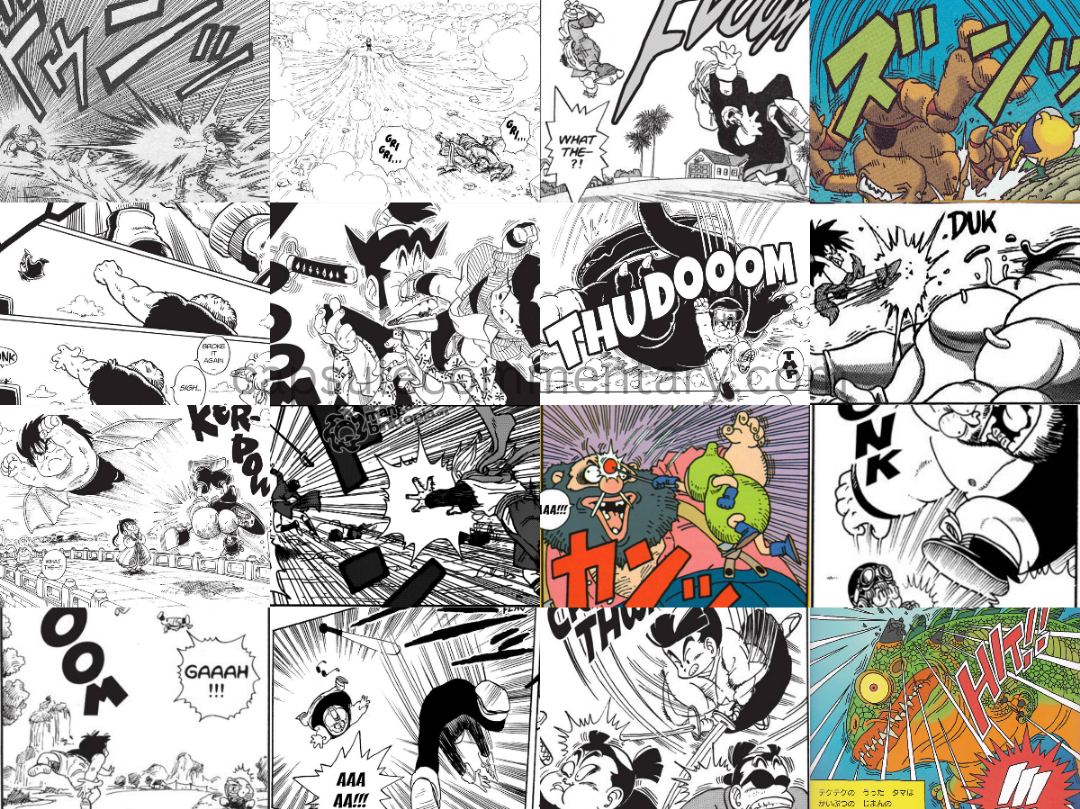
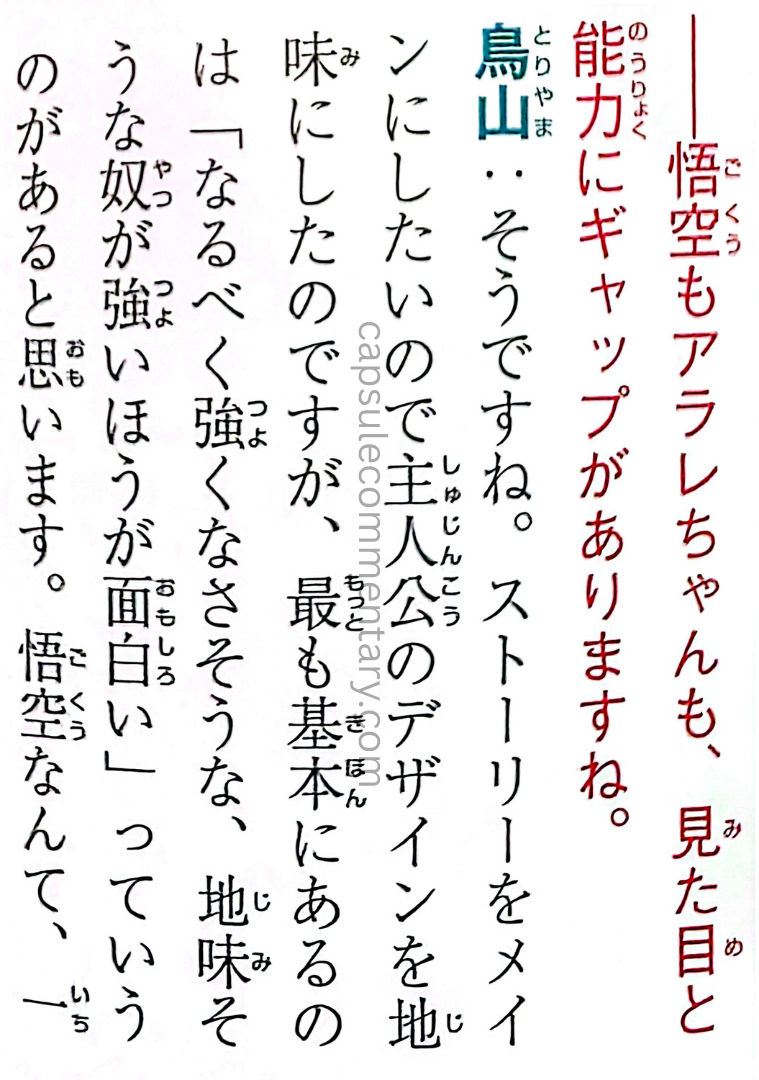
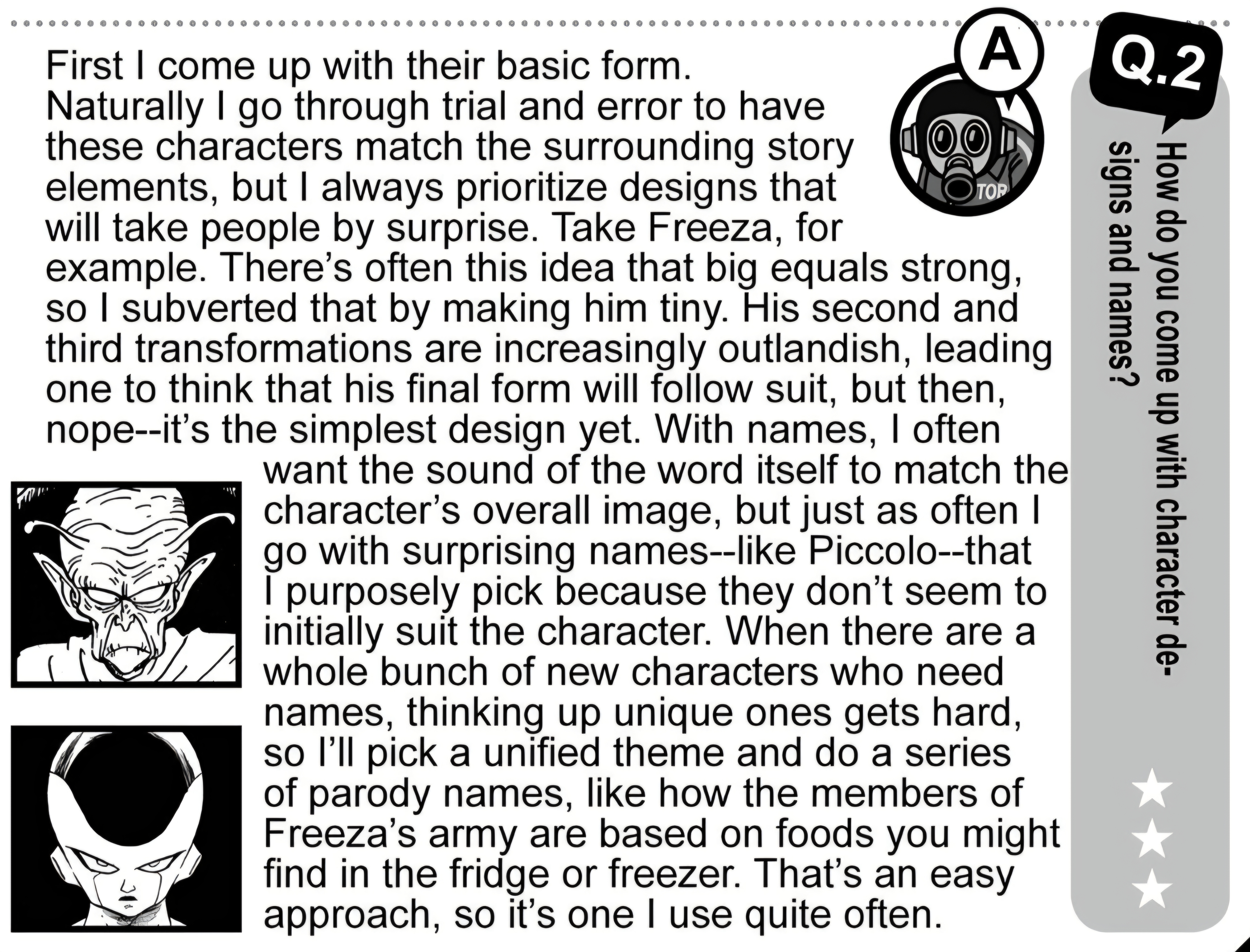
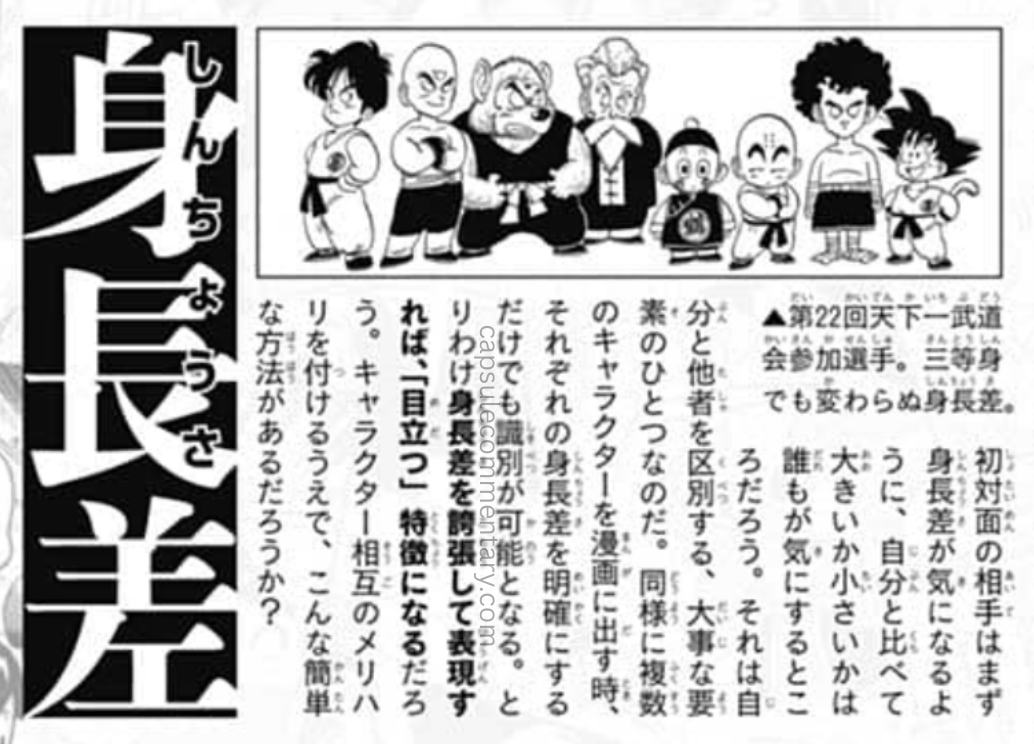
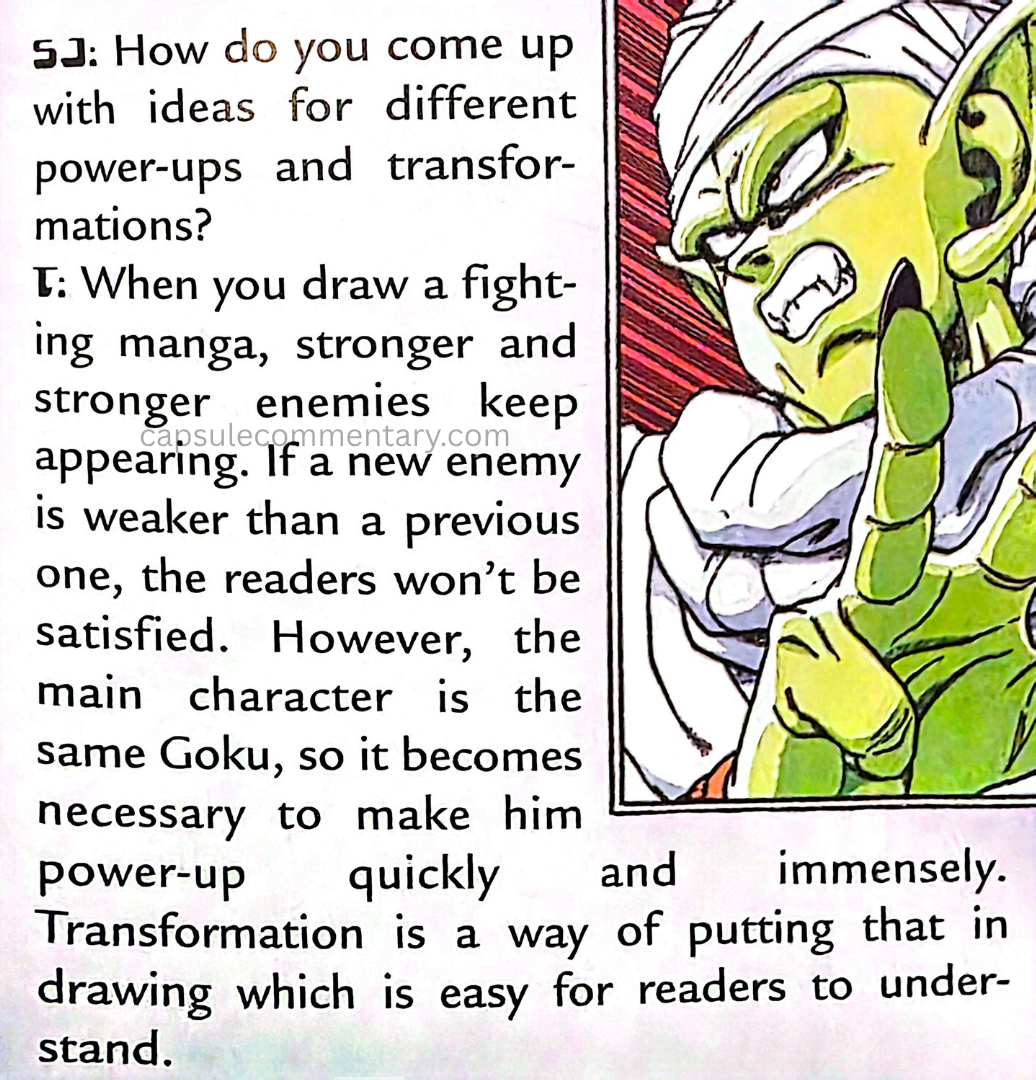
The third thing we must consider with Toriyama is simply the nature of writing shōnen manga. The readers always want the next enemy or their transformation to be stronger than the last, and they may feel dissatisfied if the mangaka doesn’t follow this formula. Toriyama often complained of this in interviews as he struggled to depict increasingly dangerous foes.
Nozawa (the Japanese voice actor of Goku): “Every time it’s ‘the strongest,’ ‘the strongest.’”
Toriyama: “Right. You can’t really go backwards with that. You can’t have something like, ‘This time’s enemy is weaker than the last one.’” — Excerpt from an interview featuring Akira Toriyama and Masako Nozawa at the Akira Toriyama: The World of Dragon Ball exhibit
I’d like to also briefly touch on the function of manga editors here before moving on. Manga editors are not purely just editors of a manga. As Torishima explained:“A manga editor is different from a regular editor — they must wear three hats: director, manager, and producer.” While Toriyama naturally did the heavy lifting in Dragon Ball‘s serialization, Dragon Ball was still a collaborative work between him and his editors. If Toriyama had his way, the series would have been cancelled on the 10th chapter. This is because every serialized manga in Weekly Shōnen Jump is given 10 chapters to succeed. But this is also why one-shots exist — to allow mangaka to test the waters for interest and figure out what to improve. Technically, Toriyama was given a greater grace period than 10 chapters because Dragon Ball followed the success of Dr. Slump, but 10 chapters is the standard. If a manga’s ratings are really poor around the 4th chapter, its mangaka is given the remaining 6 or so chapters to end the story. In fact, Toriyama’s plan was to originally end the manga after the first wish (around chapter 22). Torishima is the one who pushed him to continue it, and they decided on Goku’s desire to get stronger to be his character’s motivation. So when you see this article referring to Toriyama’s editors (Torishima, Kondō, and Takeda), keep in mind that these are people who are, for all intents and purposes, the co-authors of Dragon Ball, and who understood Toriyama better than anyone (except maybe his wife, Katō).

*These three fights are bundled together in the Battle Royale described in Battle 164, but the manga depicts them as separate fights.
**Pictured in order from left to right: Kajika ch. 12 pg. 20, Sand Land ch. 13 pg. 6, Go! Go! Ackman ch. 11 pg. 4, Delicious Island’s Mr. U pg. 17, Mad Matic pg. 43, Karamaru and the Perfect Day pg. 18, The Adventure of Tongpoo pg. 42, Tokimecha pg. 42, Dragon Boy ch. 2 pg. 18, Kintoki pg. 20, Hyowtam pg. 7, Dr. Slump ch. 203 pg. 10, Little Mamejiro pg. 16, Alien x Peke ch. 2 pg. 14, Young Master Ken’nosuke pg. 15, and Toccio the Angel pg. 43.
Goku Is Number One!
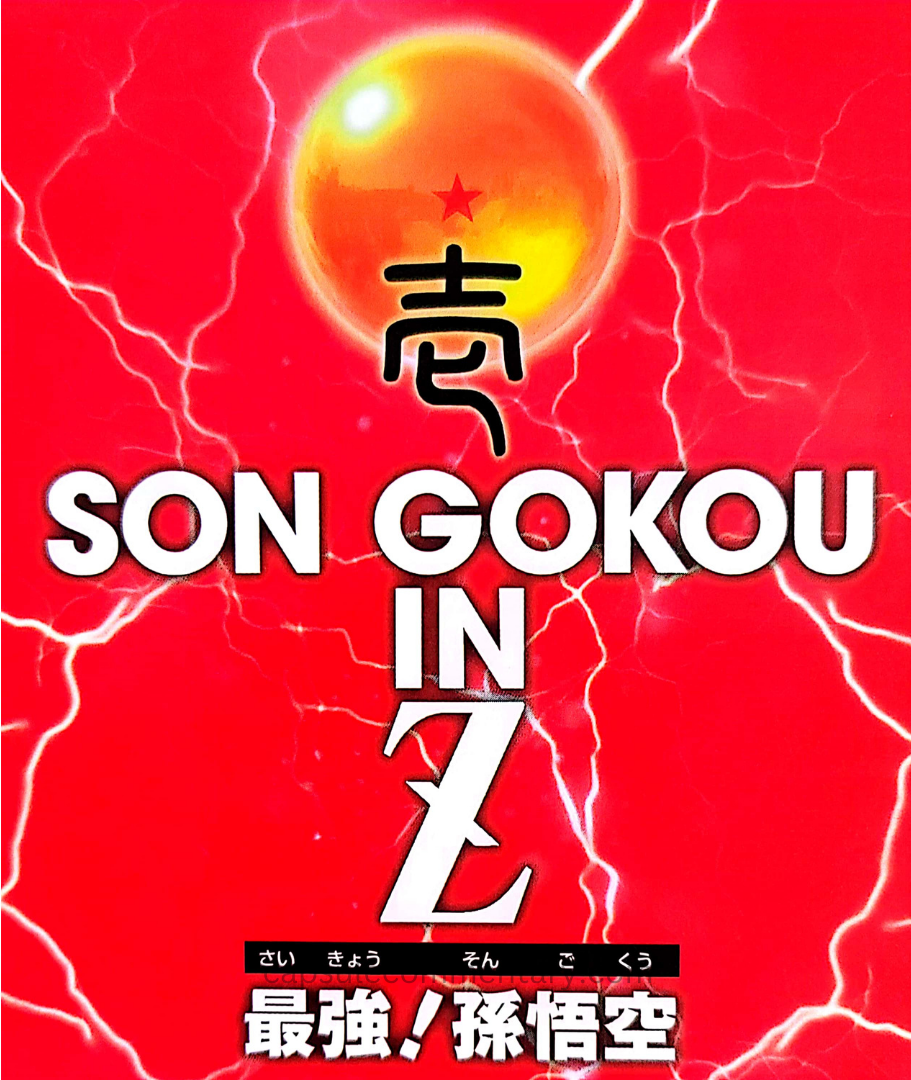
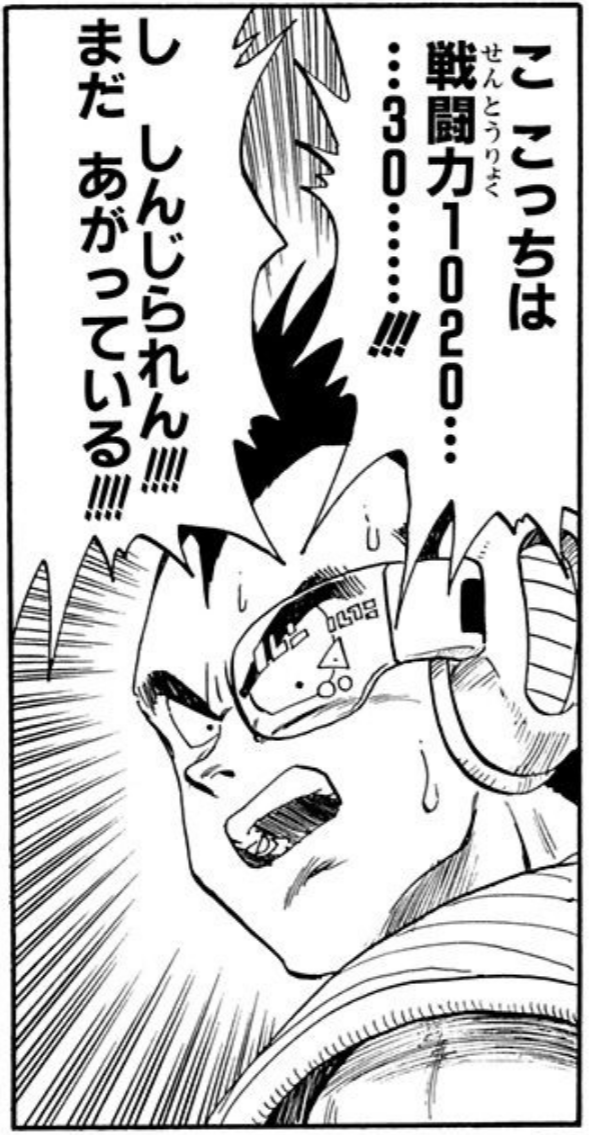
Goku believes that he can defeat Kid Buu if he is able to charge his Super Saiyan 3 form to its maximum potential, similar to how Piccolo kills Raditz in chapter 204. Piccolo was able to triple to nearly quadruple his battle power (power level) by staying in place and concentrating on the Makankōsappō. Piccolo was in no way capable of killing Raditz on his own. He needed someone to distract Raditz while he charged up an attack to kill him. Goku staying in place to charge his ki must be understood in this context. With the infamous 5 minutes on Namek and Cell’s 10 seconds to explode in mind, it must also be understood that charging one’s ki for an entire minute is a VERY LONG time in a Dragon Ball fight. Similar to Piccolo against Raditz, Goku required both Vegeta and Good Buu to distract Kid Buu while he charged up. While Goku has been overconfident and lost fights previously (such as his first fight against Tao Pai Pai or his fight with #19), we can trust Goku’s opinion here for two reasons. The first is that he experienced fighting Kid Buu before making that assessment, and the second is that he knew exactly how much energy the Genki-dama would need to destroy Kid Buu. In those fights that he was overconfident and lost, he was overconfident prior to fighting his opponent. As a caveat to the Genki-dama, he did underestimate how much energy he personally would need to push it, and required the Dragon Balls to restore his energy in order to win.
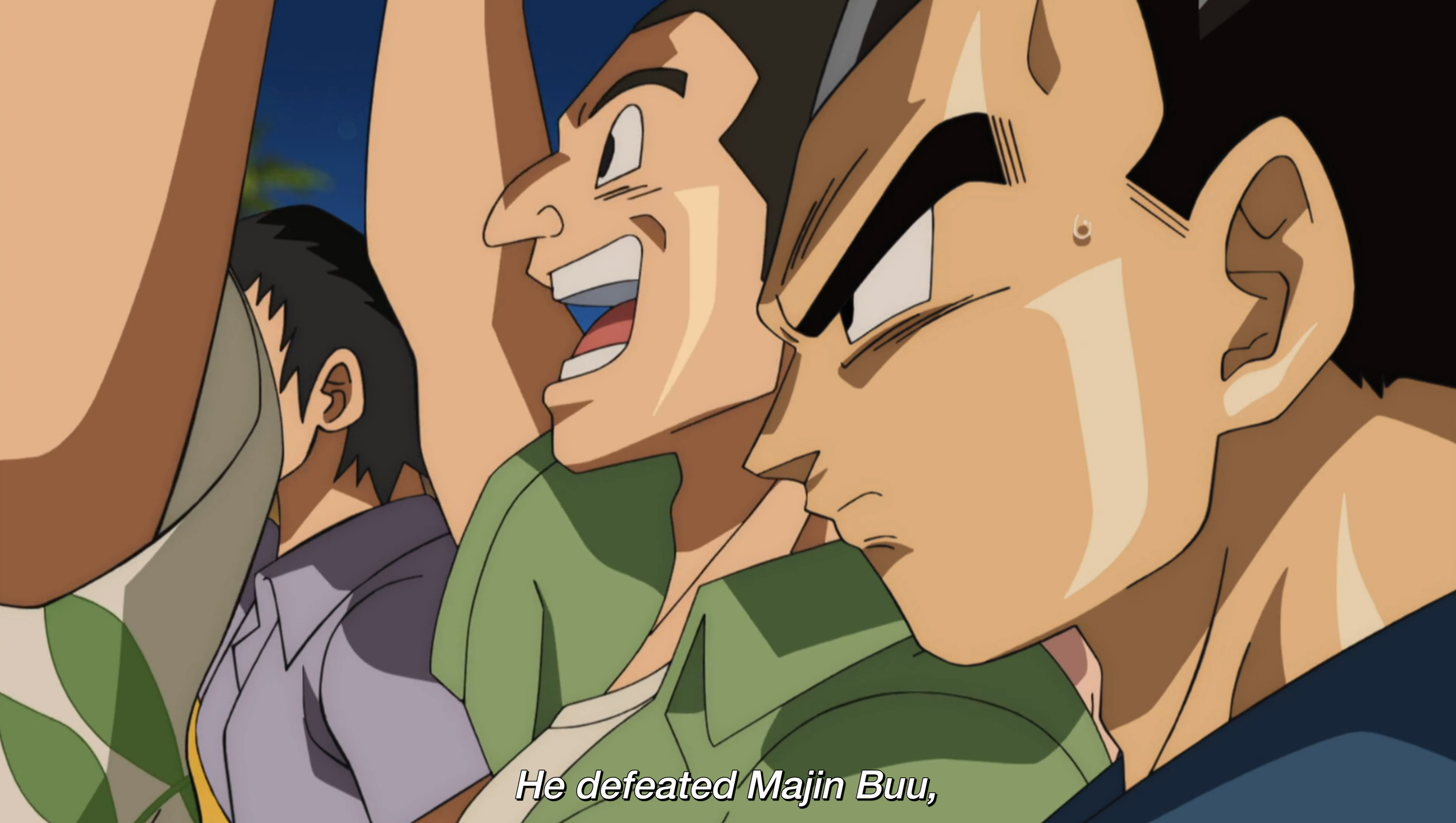
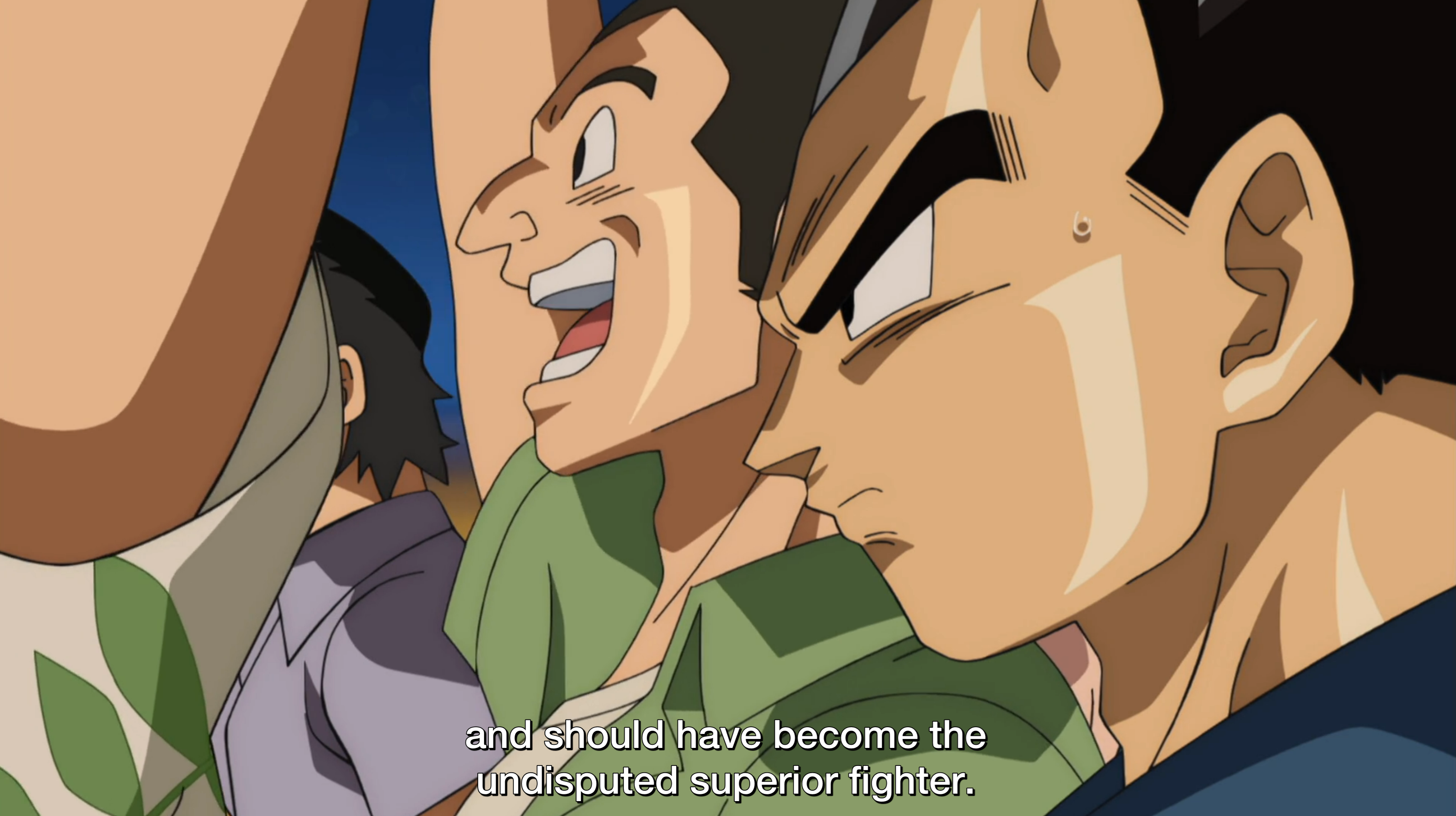
Interviewer: Back then, wasn’t the plan to make Gohan the main character?
Toriyama: That’s right! I thought, “Goku’s getting older, maybe it’s time to hand things off to the younger generation.”
Toyotarō: Goku even says that in the Buu arc, doesn’t he?
From Dragon Ball Super Vol. 1 Release Commemoration – Free Talk with Tori and Toyo
Goku is (very reasonably) considered weaker than Gohan at this point in Dragon Ball by many fans, but this is actually not true. The anime, in particular, depicts Goku as being hundreds of times stronger than Ultimate Gohan. By chapter 500, we can see Toriyama had become dissatisfied with Gohan as the protagonist. Gohan is losing to Buutenks after having only a single chapter to show off his new power, and at the same time, Goku is being formally reintroduced into the story as the main protagonist. 3 months later in real life when chapter 510 was released, Goku is named “Number One” by Vegeta (Vegeta says “Number One” in English in the Japanese manga).
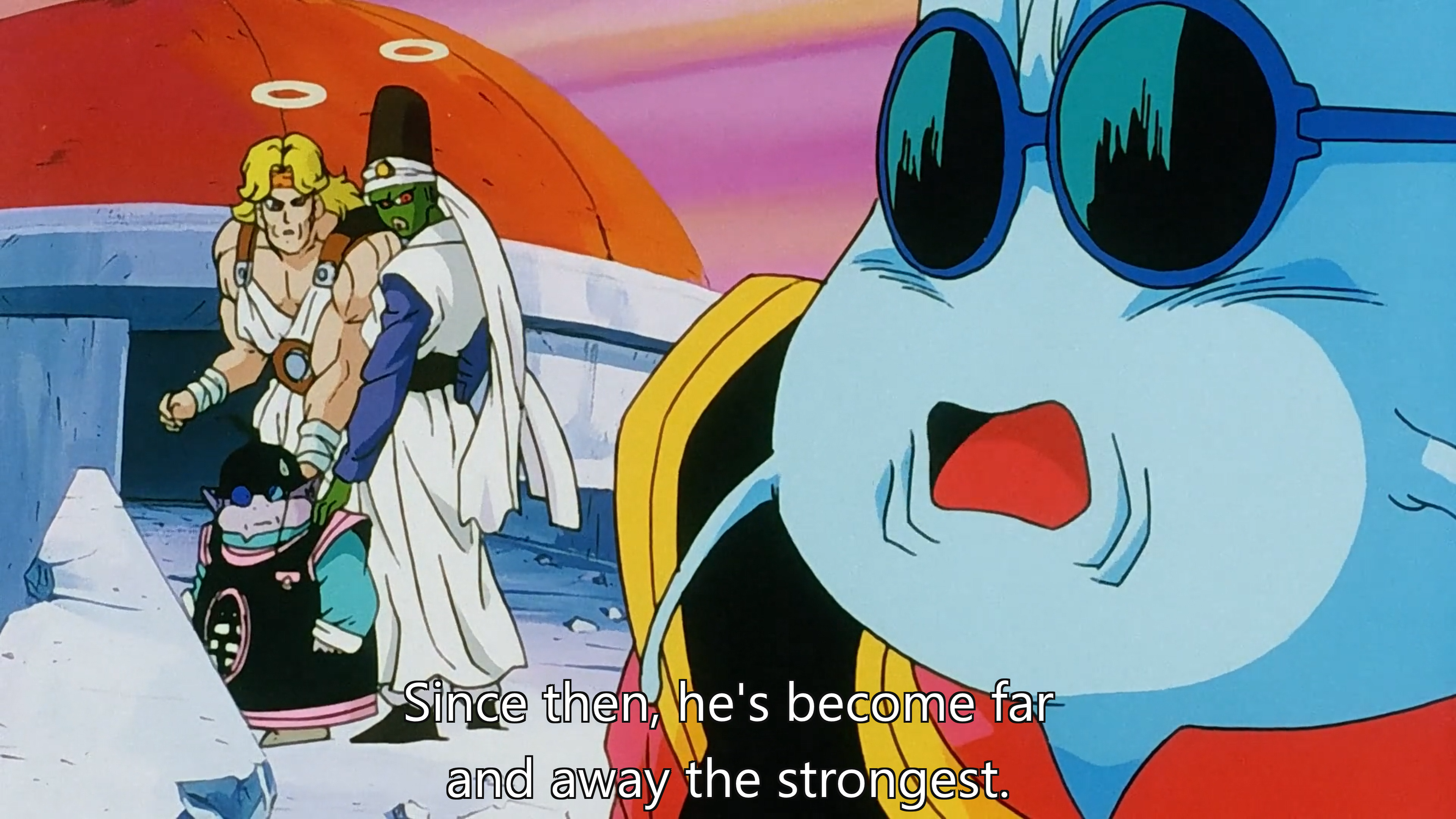

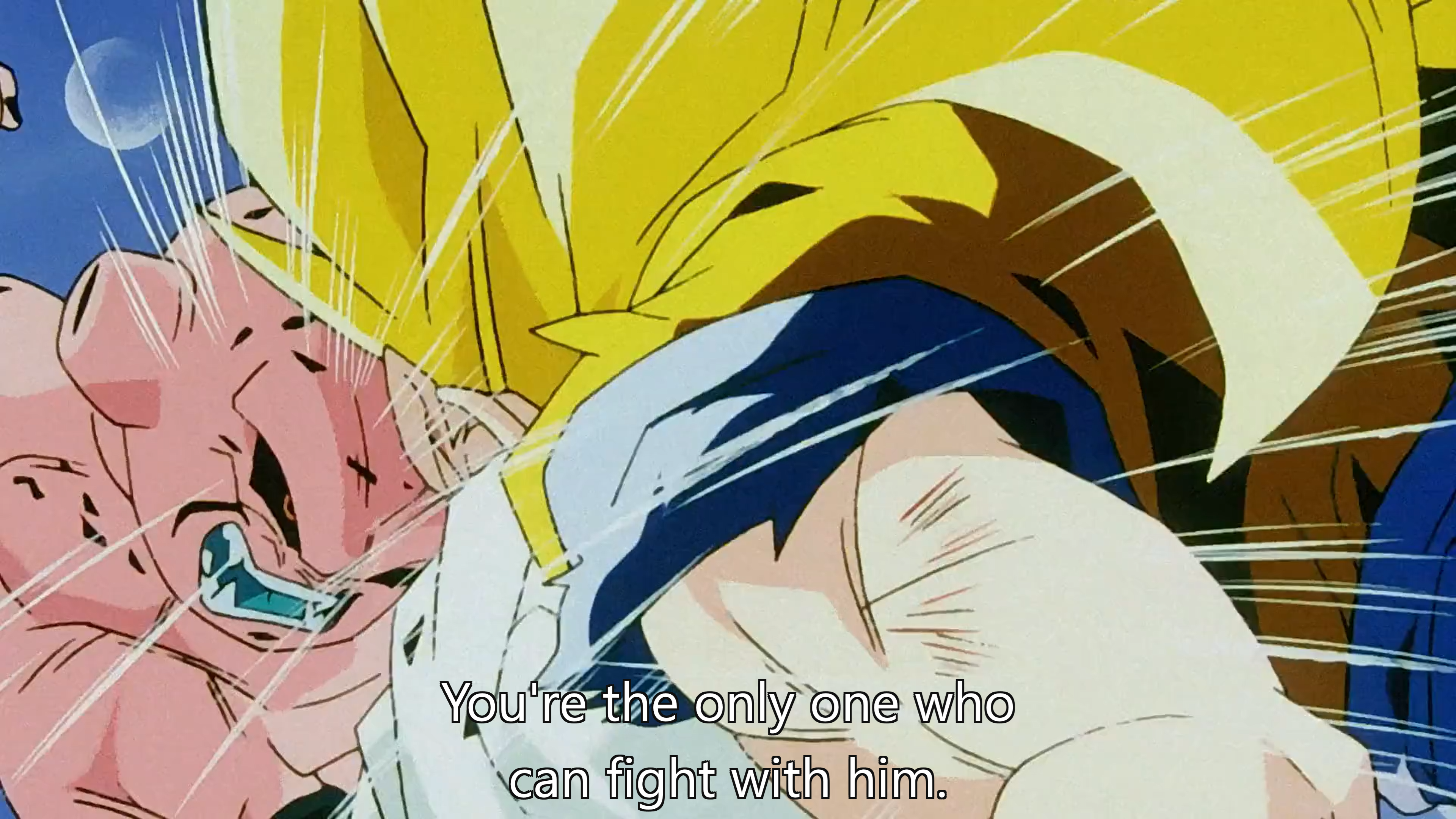

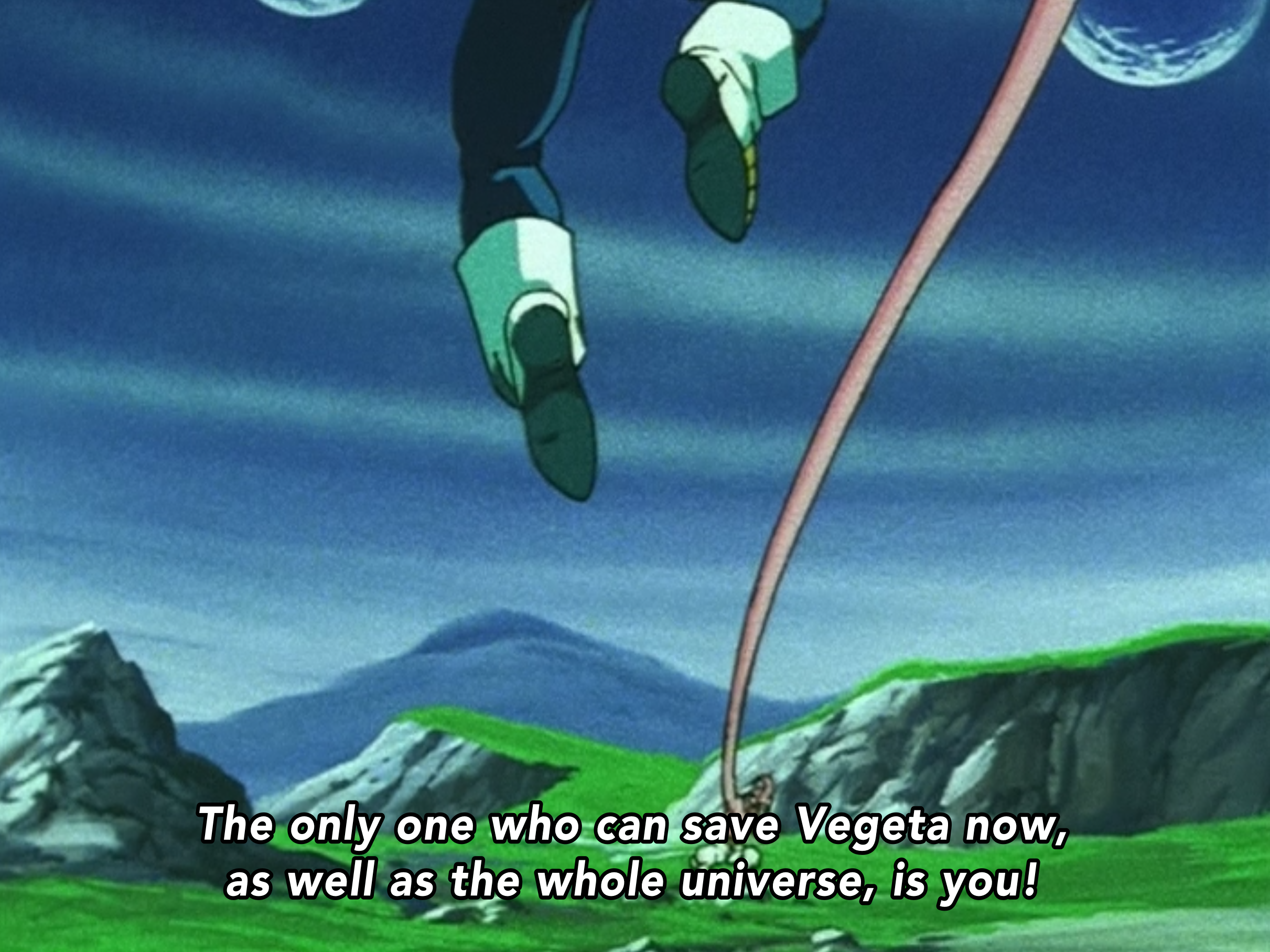
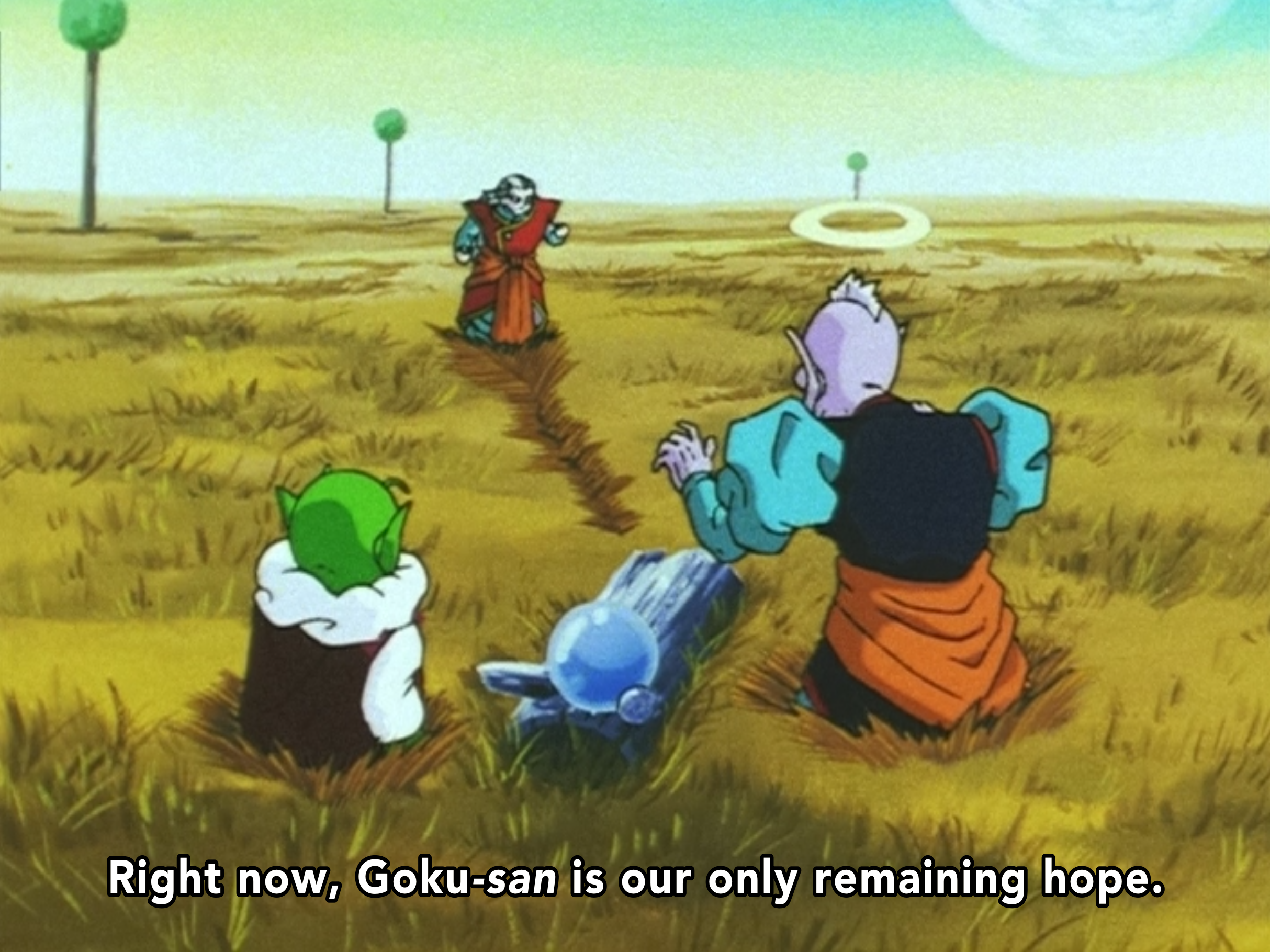
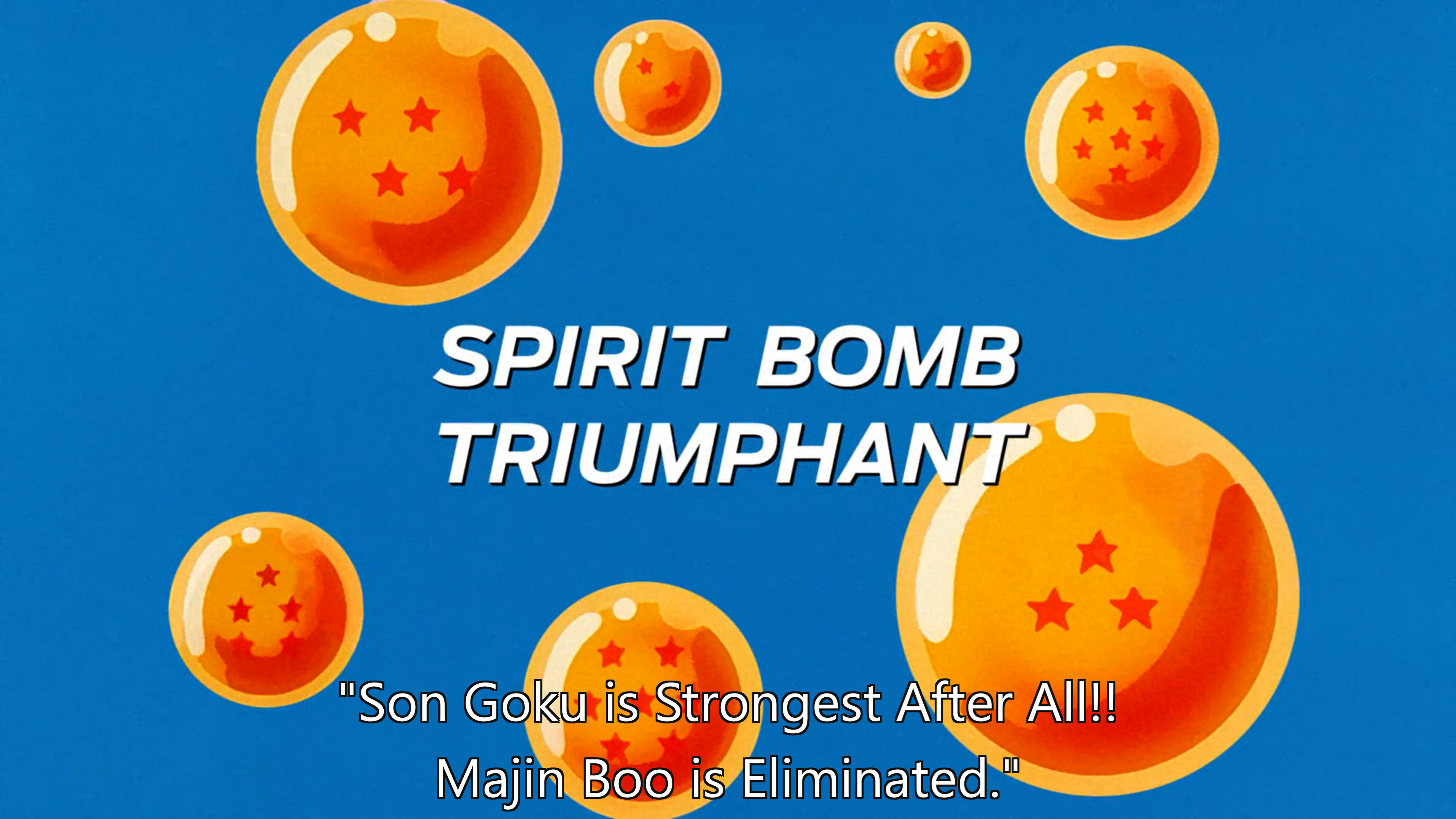
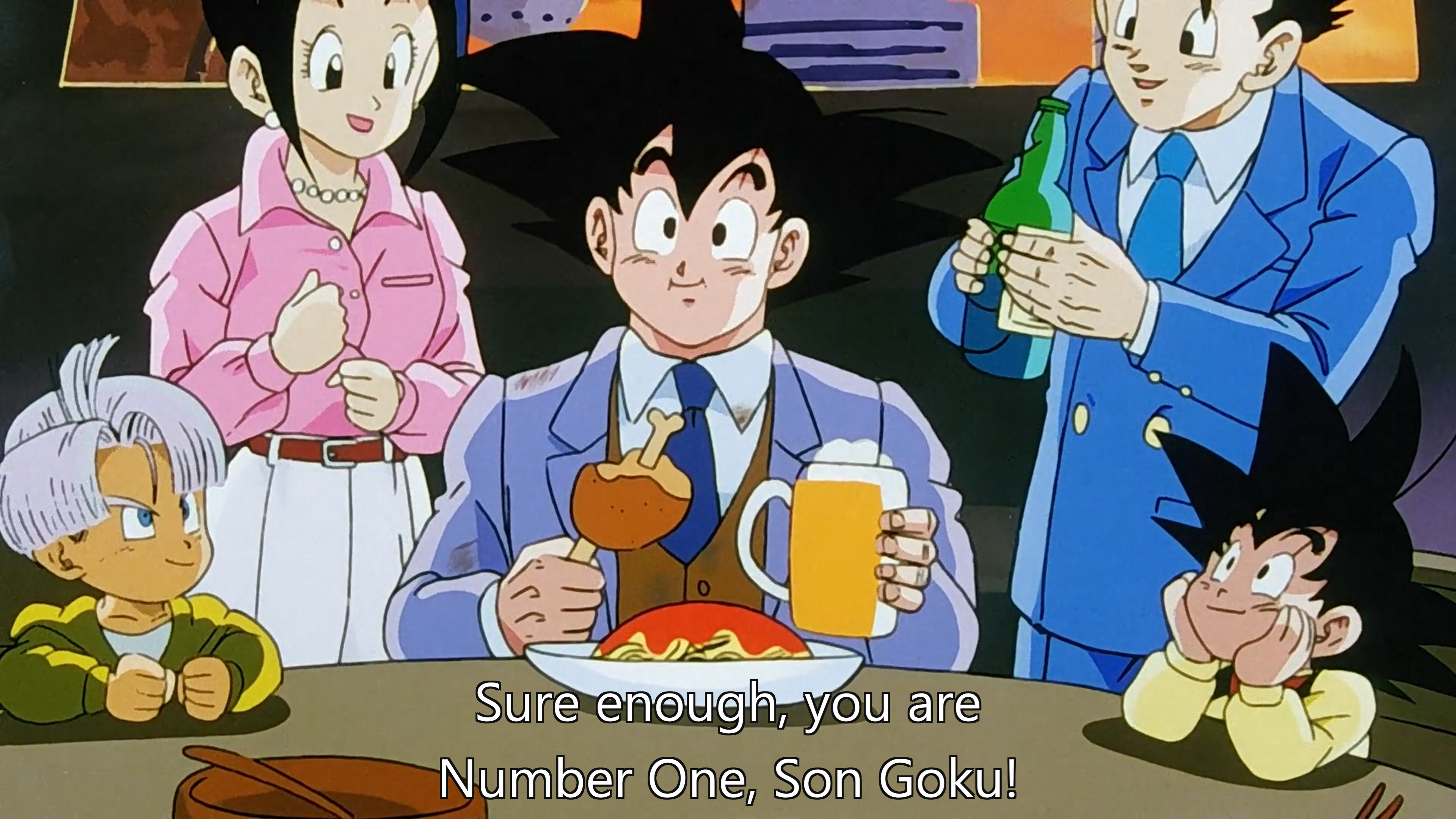
“The final chapter of Dragon Ball Z, the Majin Buu arc (which aired from 1993 to 1996), left Goku having reached such incredible strength that it felt like, ‘What could possibly make him stronger now?’ So I think that’s why Toriyama-sensei created a new enemy—the God of Destruction, Beerus—as someone who surpasses even Freeza, Cell, and Buu.”
— Masahiro Hosoda, director of Battle of Gods, in OKStars Interview, Vol. 246: Anime Director
Dragon Ball very frequently breaks the rule of “show; don’t tell,” by having characters tell the readers how strong someone is or how amazing some attack was. So when the Narrator, Kaiō, Kibitoshin, and Vegeta all tell us Goku is the best in one form or another, we have no reason to disbelieve them.


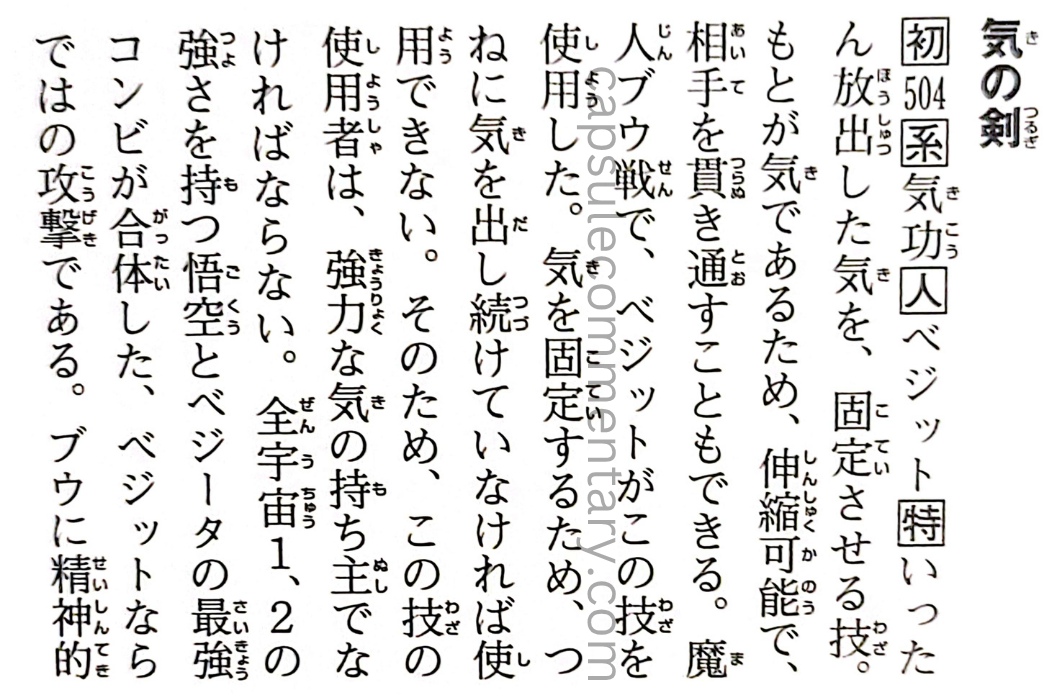
- In the booklet given out at the Akira Toriyama – World of Dragon Ball exhibit in 2013, on page 30, it calls Goku “the universe’s strongest warrior.”8
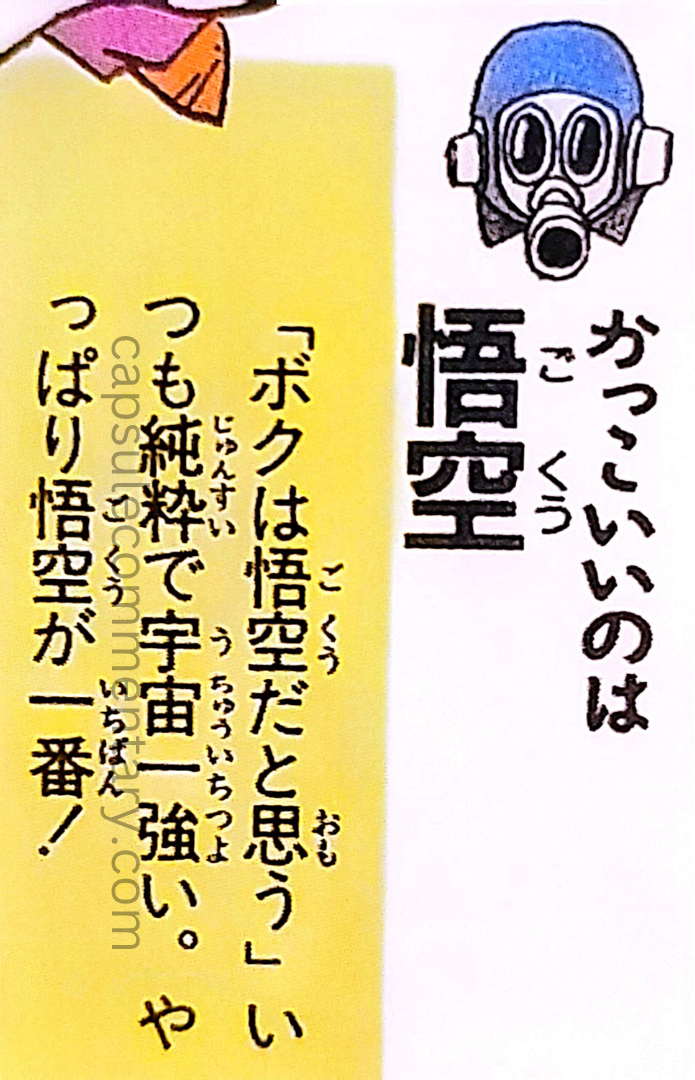
- While the Dragon Ball 590 Quiz Book was made to promote Dragon Ball Z: Resurrection ‘F,’ the quiz section dedicated to Goku is entirely based on the manga.9 On page 30, it describes Goku as “the strongest warrior.”
- Shueisha confirms Goku is the strongest on page 229 of Chōzenshū 1 (Daizenshū 4 page 39) where, building off of Toriyama’s opinion of Goku, they write, “Always of a kind-hearted nature and the strongest person in the universe. Indeed, Goku is number one!”
- Chōzenshū 3 page 264 (Daizenshū 6 page 188) calls Goku “the strongest hero.”
- Chōzenshū 4 page 145 (Daizenshū 7 page 134), in the description for the Ki Sword used by Vegito, it states, “For this reason, it is an attack that only those with overwhelming strength, like Vegito — formed from the fusion of Goku and Vegeta, the two strongest fighters in the universe — can use against Buu.”On page 149, in the description for the Genki-dama, it states, “The strongest guy in this world is Super Saiyan Son Goku.”
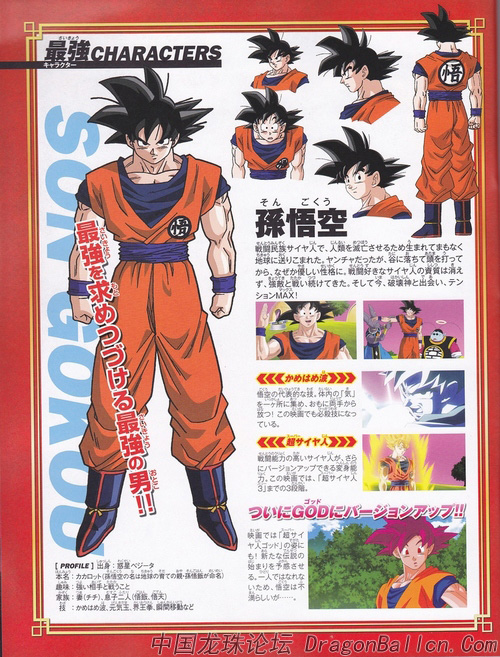
- In Dragon Ball Daima (which takes place approximately one year after the Buu Saga), the narrator says at the beginning of the first episode, “This man, Son Goku, may appear gentle, but is the most powerful warrior…,”10 and in episode 6, Kaiōshin says that he thinks Goku is the strongest in the universe.11 The introductory sequence explaining Dragon Ball and Goku to the viewers was only added to the show after Toriyama suggested it.
- Page 8 of the Dragon Book that came with the Dragon Ball GT DVDs states that Goku is the “strongest fighter.”
- In the Q&A section of Dragon Ball GT: Perfect File 1 on page 40, they write: “Goku is the strongest warrior!! But because he had become too strong, it became difficult to create new enemies on Earth.”
- Page 8 of Dragon Ball GT: Perfect File 2 describes Goku as the strongest in the universe a few times.
- In Dragon Ball Super episode 2, Vegeta thinks to himself that Goku had become the undisputed strongest upon defeating Kid Buu. Then in episode 7, Gohan is defeated easily by Beerus. In episode 8, Vegeta fights Beerus after Beerus slaps Bulma. Beerus remarks that Vegeta was more entertaining than Goku, and doesn’t even mention Gohan. Finally, in episode 9, Goku is chosen to become the Super Saiyan God instead of Gohan.
- Dragon Ball: Super Exciting Guide: Character Volume page 33 states: “Using the Kaiōshin’s treasured earrings, the Potara, the two strongest people in this world—Goku and Vegeta—fuse!!”
- Dragon Ball: Super Exciting Guide: Story Volume page 59 states that Goku’s power (as Super Saiyan 3) “became the greatest in the universe” and the radar chart seems to suggest that its ki breaks some type of universal boundary, and on page 62, it describes Goku as the “strongest warrior in the universe.” (Pictures are later in this section.)
- On page 4 of the manga version of Dragon Ball: Yo! Son Goku and His Friends Return!!, it states that Goku is the “strongest warrior.”
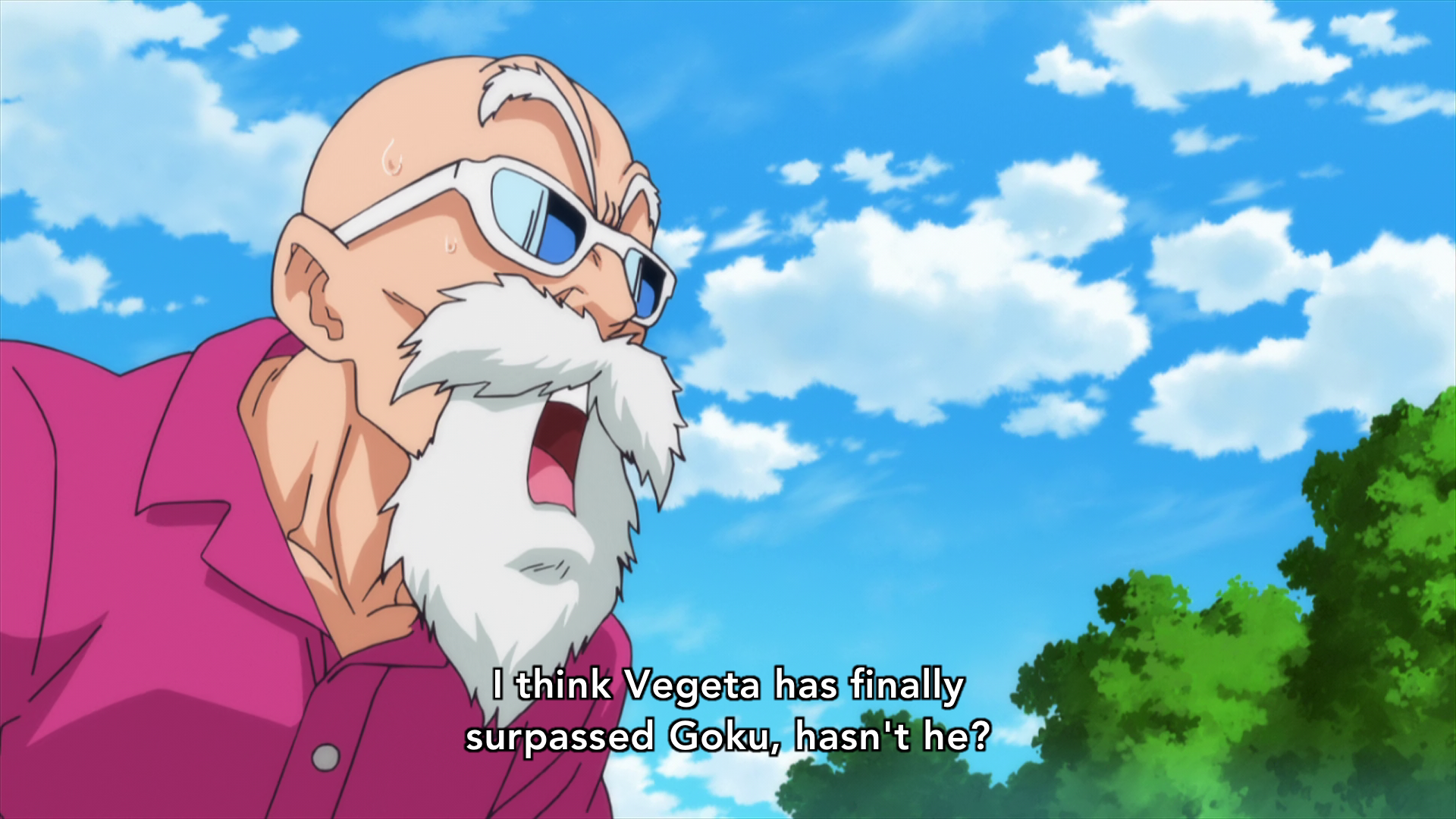
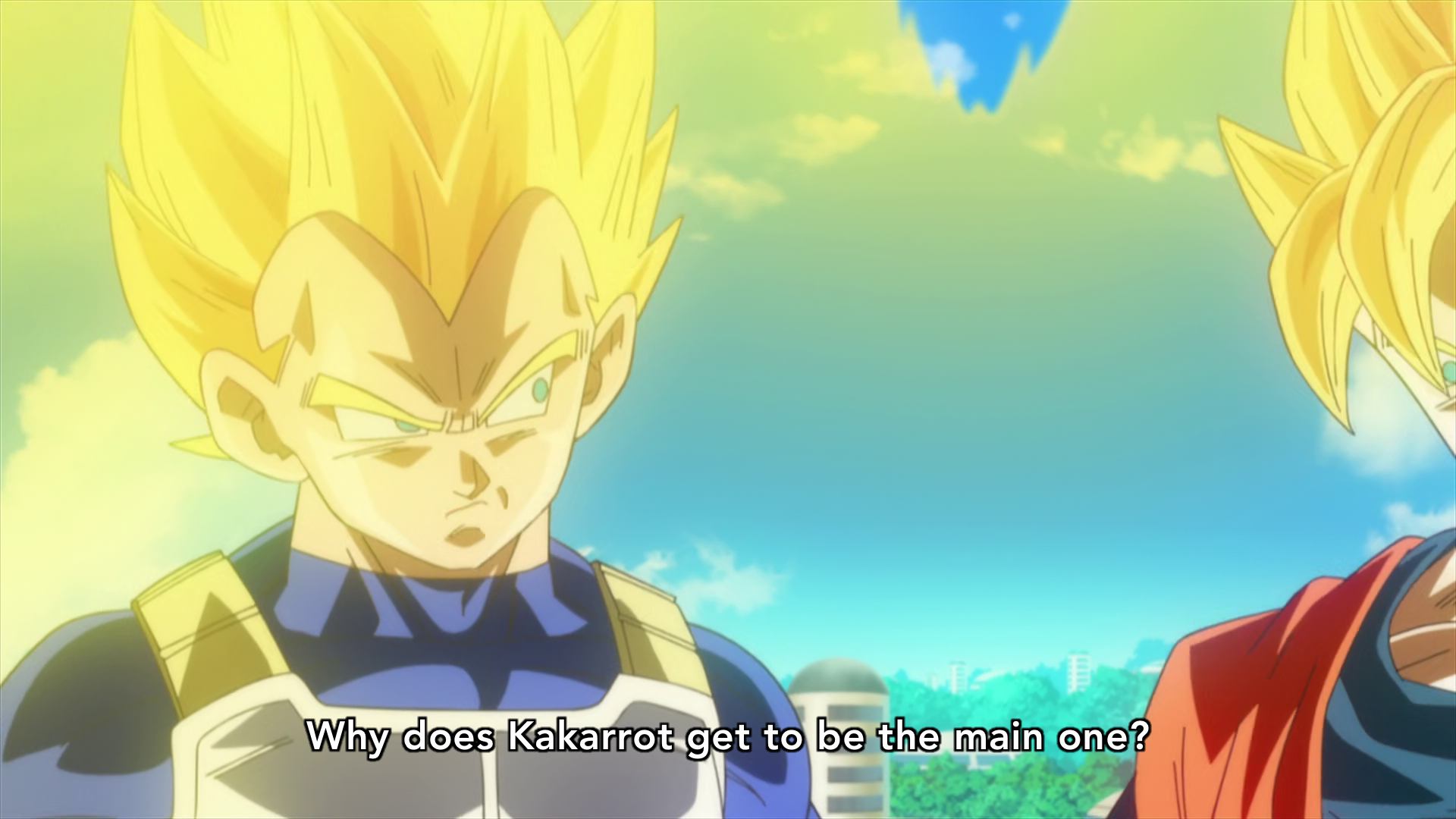
- In Dragon Ball Z: Battle of Gods, it’s made clear on two occasions that Goku must have been the strongest. The first is after Gohan is easily defeated by Beerus and then Beerus slaps Bulma. Kame Sennin comments that Vegeta surpassed Goku here. If Gohan were the benchmark of strength, he would have said Gohan. The second is that Goku was selected to become the Super Saiyan God and not Gohan.
- The Dragon Ball Z: Battle of Gods booklet refers to Goku as the “strongest man.”
- The Dragon Ball Z: Battle of Gods: Official Movie Guide refers to Goku as the “ultimate/strongest Saiyan warrior.”12
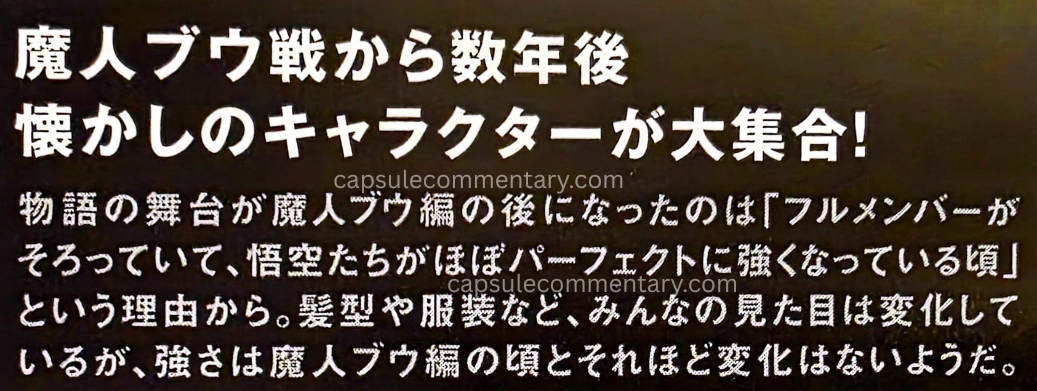
- Page 8 of the Dragon Ball Z: Battle of Gods Special Booklet, it states: “Several years after the battle with Majin Buu, familiar characters all gather together! The reason the story is set after the Majin Buu arc is that it’s a time when ‘the core members are all together, and Goku and the others have become almost perfectly strong.’ Their hairstyles and clothing (and thus their appearances) have changed, but their strength doesn’t seem to have changed all that much compared to the time of the Majin Buu arc.” If their strengths didn’t change much and Goku is presented as far-and-away stronger than Gohan, then this is a confirmation that he was stronger than him during the Buu Saga.
- Dragon Ball Z Movie 12 Jump Anime Comic says that Vegito is composed of the strongest fighters in the universe, literally writing “Strongest + Strongest.”13
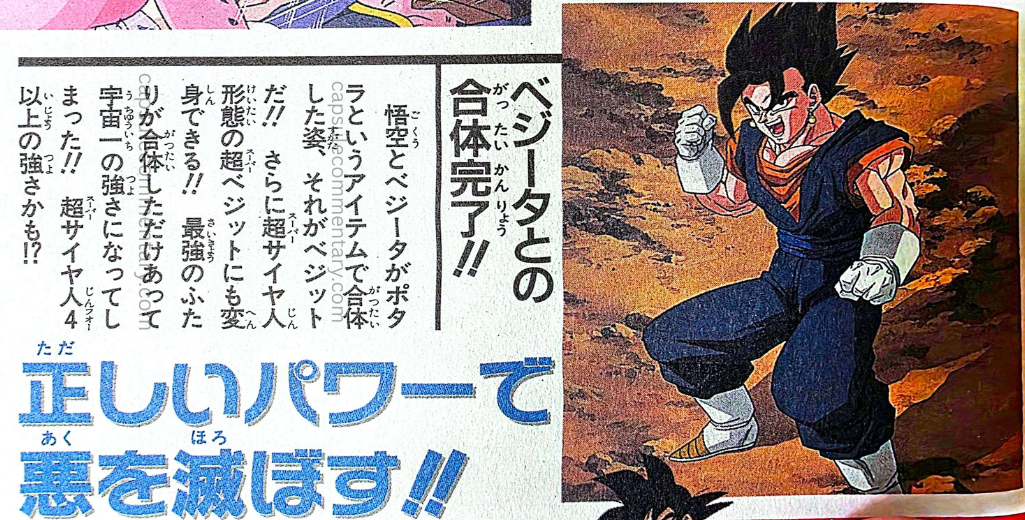
- Dragon Ball Z Shueisha Jump Remix Vol. 8 page 149 states about Vegito: “Fusion with Vegeta complete!! Goku and Vegeta fused using an item called the Potara, and that form is Vegito!! He can also transform into the Super Saiyan form Super Vegito!! Since the two strongest fused, he became the strongest in the universe!! He might be stronger than Super Saiyan 4!? He simply eradicates evil with righteous power!!”
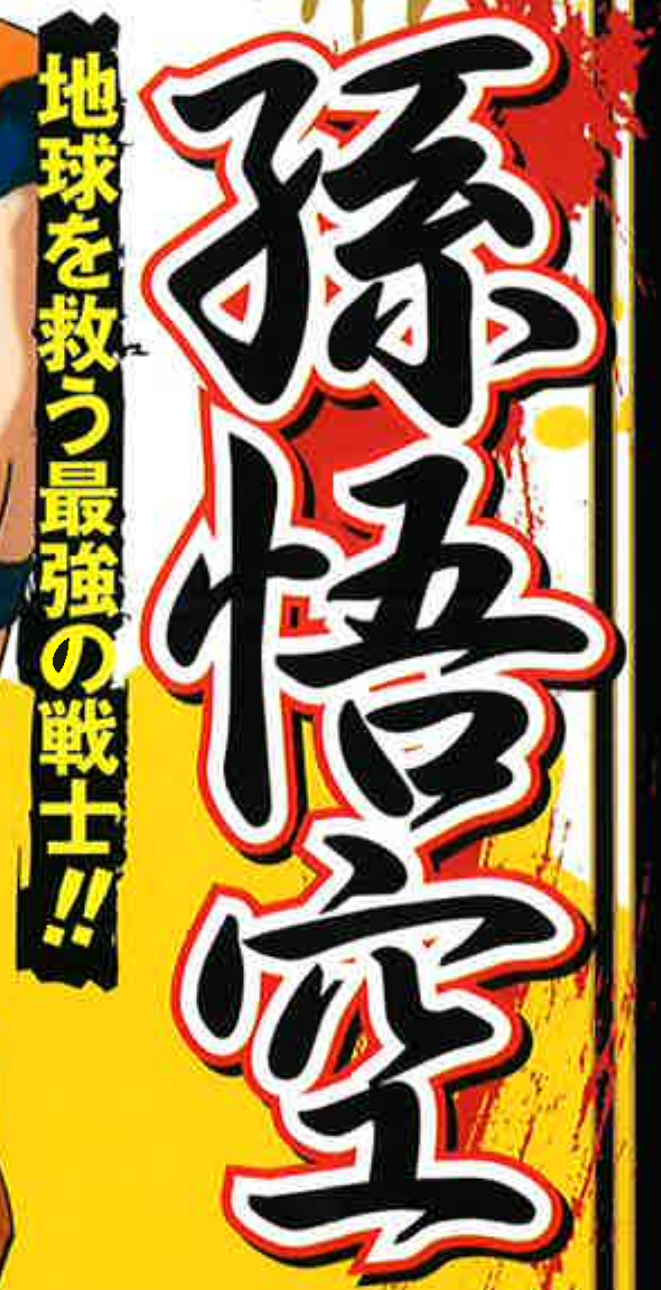
- In Dragon Box The Movies’ Dragon Book on page 6, it writes of Goku: “The strongest warrior who saves the Earth!!”14
- Jump Anime Collection 3: Dragon Ball Z Movie 13 page 42 writes of Goku: “The strongest Saiyan raised on Earth, and the father of Goten and Gohan. Every time he’s faced a powerful enemy, Goku has powered up.” Next, on page 58, it states Goku is “the strongest warrior who returned from the Afterlife.” And lastly, on page 60: “[The Dragon Fist] is something that only Goku, who stands in a realm that Gohan and Goten still cannot yet reach, possesses!”
- Le Manga de Légende Issue 49 on page 14 refers to Goku and Vegeta as being the “strongest duo” in all of space, with regards to Vegito (before stating they are two of the top five strongest). Le Manga de Légende calls Goku the “strongest hero” in Issue 4 on page 4. In Issue 48 on page 4, Toriyama says that he always kept Goku “a step ahead of the other Saiyans.”
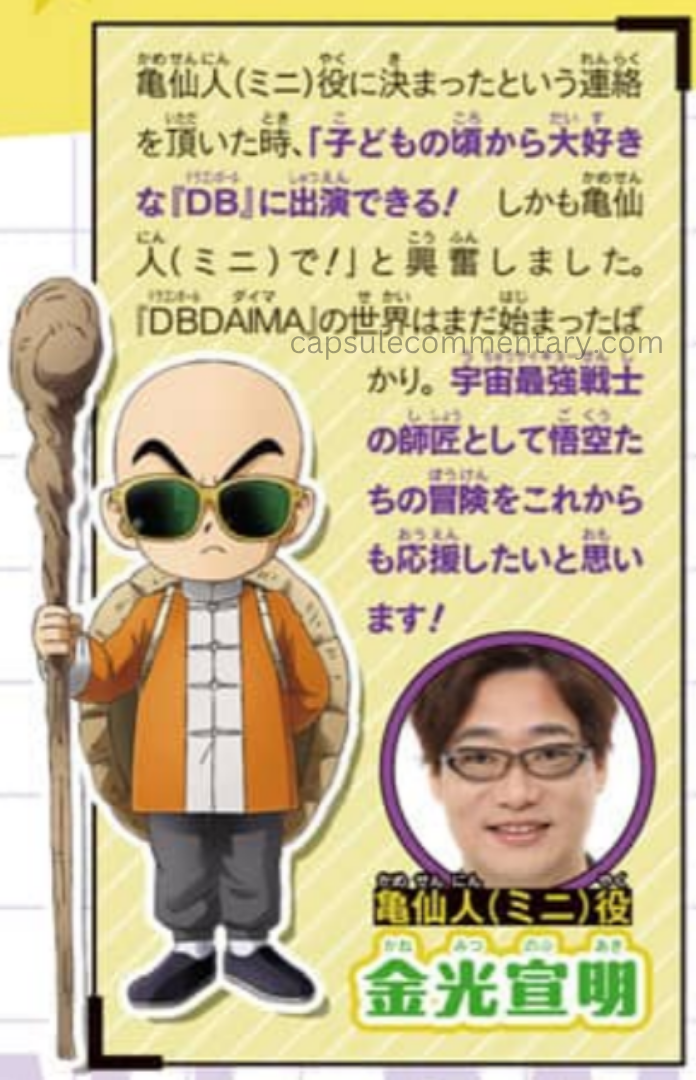
- The voice actor for Kame-Sennin (Mini) in Dragon Ball Daima, Nobuaki Kanemitsu, said in an interview on page 208 in the January 2025 issue of Saikyō Jump: “As the mentor of the universe’s strongest warriors, I want to continue supporting Goku and the others on their adventures!”
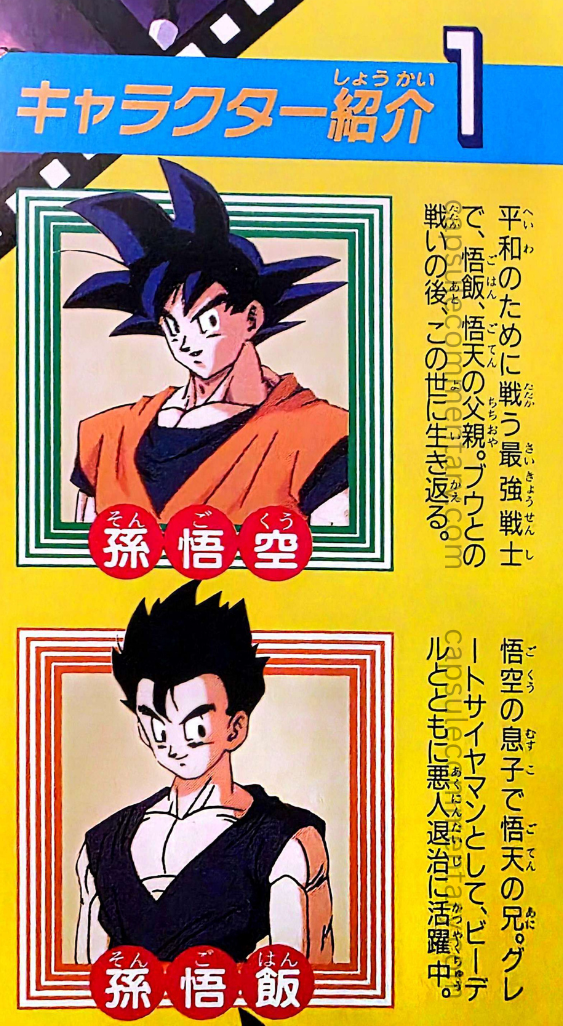
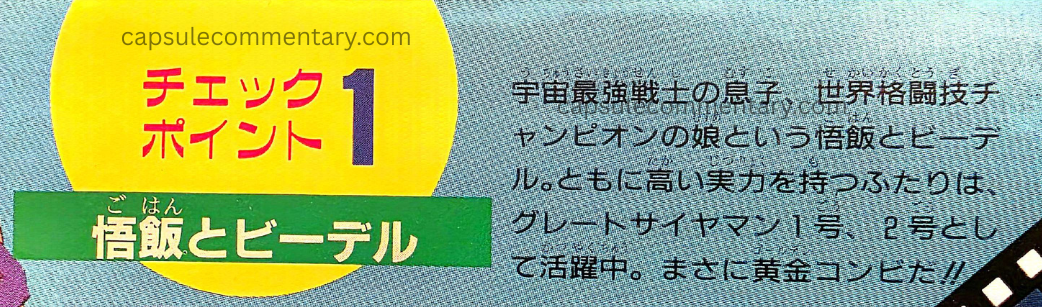
- Summer 1995 Toei Anime Fair (DBZ Movie 13)‘s pamphlet on page 2 introduces the characters of Movie 13. Movie 13 takes place in the immediate aftermath of Kid Buu’s defeat. For Goku it writes: “The strongest warrior who fights for peace, and father of Gohan and Goten. After the battle with Buu, he comes back to life in this world.” For Gohan, it writes: “Goku’s son and Goten’s older brother. As the Great Saiyaman, he fights crime alongside Videl.” On page 3, it writes of Gohan and Videl: “The son of the strongest warrior in the universe, and the daughter of the world martial arts champion.”
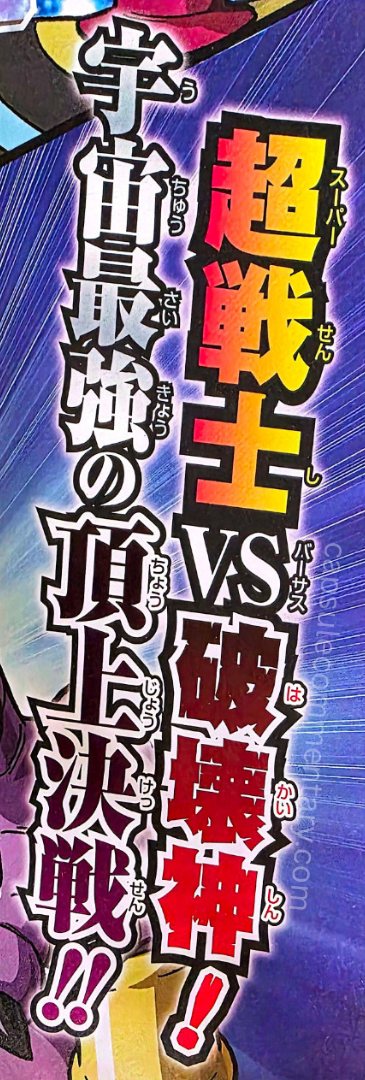
- In describing Battle of Gods on page 348 of May 2013’s issue of V-Jump, they write of Goku and Beerus, “Super Warrior VS God of Destruction! The Ultimate Showdown of the Universe’s Strongest!!”
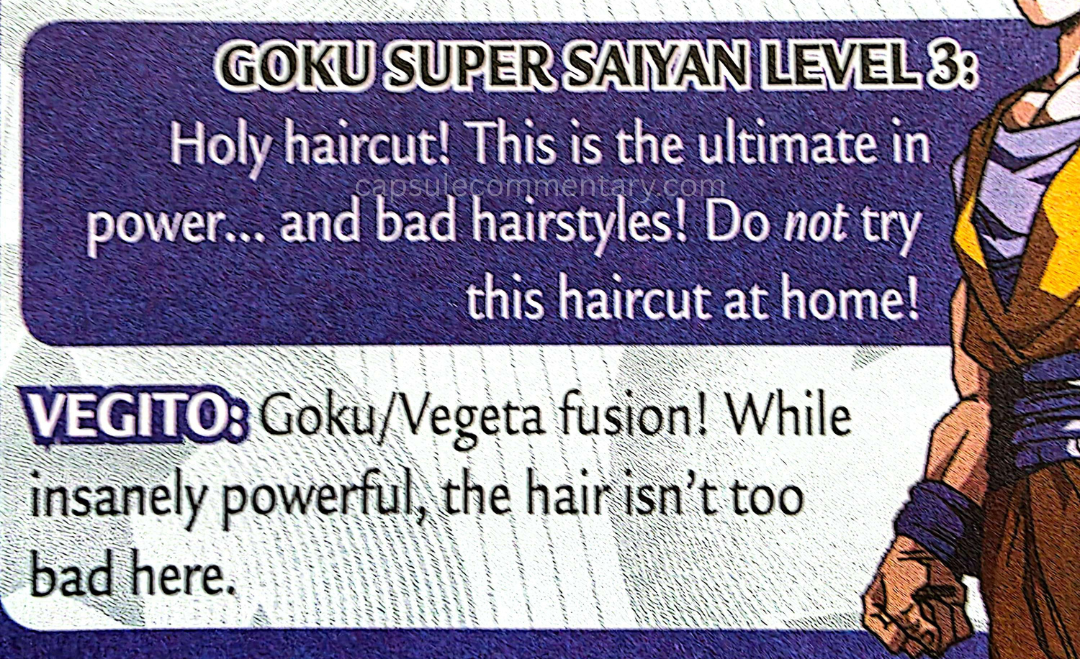
- Page 328 of Shonen Jump: Fifth Anniversary Collector’s Edition has a full page spread making light-hearted jokes about hair designs in Dragon Ball. It mentions Vegito, which means Ultimate Gohan was considered when they wrote, “This is the ultimate in power…” for Super Saiyan 3 Goku. (I fully understand this one in particular is not exactly hard evidence. I am simply including everything.)
- Goku is explicitly called the strongest in TV Anime Guide: Dragon Ball Z Son Goku Densetsu on pages 5 (the red image at the beginning of this section), 14, and 18.
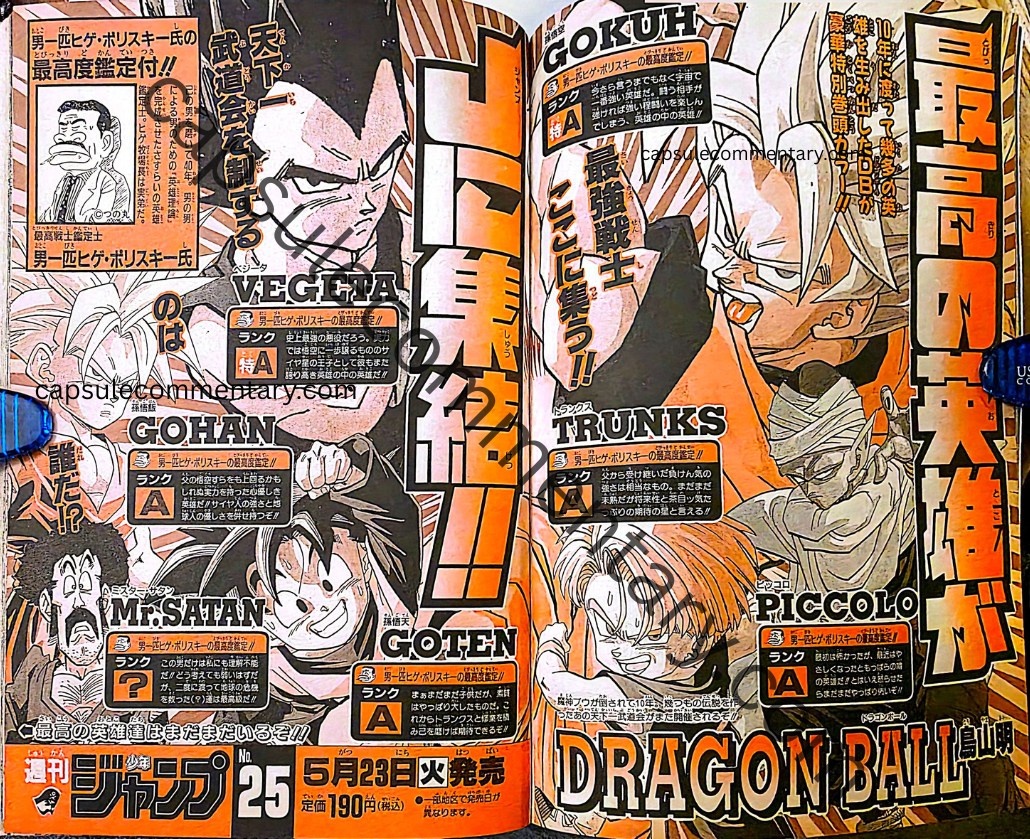
- In Weekly Shōnen Jump 1995 Issue 24 on page 46 (where Dragon Ball chapter 518 was published), a caricature of Weekly Shōnen Jump‘s Editor-in-chief Horie Nobuhiko drawn by Tsunomaru (of Midori no Makibaō fame) wrote of Goku: “It goes without saying at this point, he is the strongest hero in the universe.” For Gohan, on page 47, he wrote: “A kind-hearted hero who possesses power that may even surpass his father, Goku!!” These statements are made in a “preview” for the final chapter of Dragon Ball and are summaries of the characters, not something specific to the final chapter or the End of Z. There are two reasons we know this. The first is that the text for Goten refers to him in the present tense as “still very much a child.” During the End of Z, Goten is an adult, or at the very least, a high schooler. The second reason is that it uses images from different points in the manga to represent the characters listed. For example, the images of Gohan and Goku come from Cell Saga-era illustrations.
So Toriyama was quite generous with the power boost he gifted Goku, just like Shenron was quite generous with his power boost to Piccolo in Dragon Ball Super: Super Hero. Please read my Deep Dive on Broly if you don’t understand why statements related to Movie 13 are here.
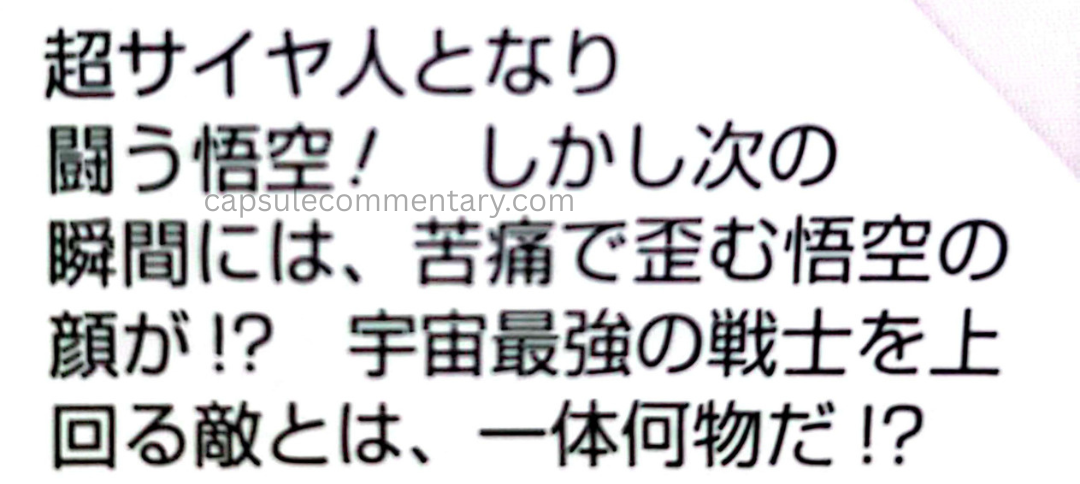
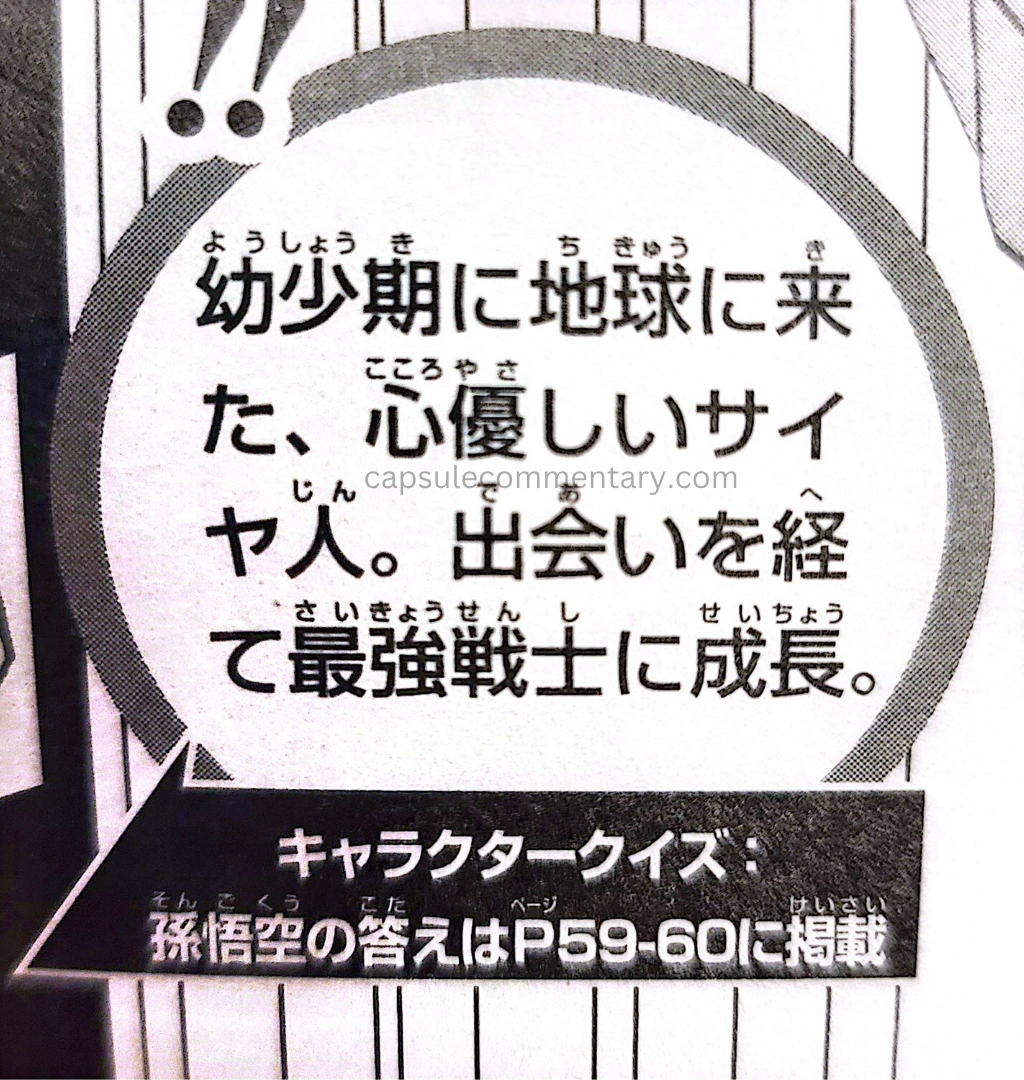
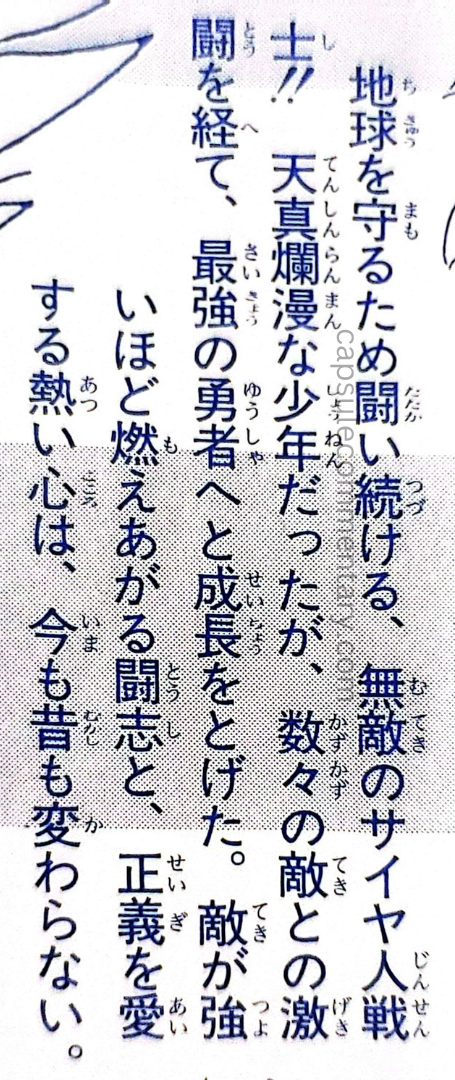
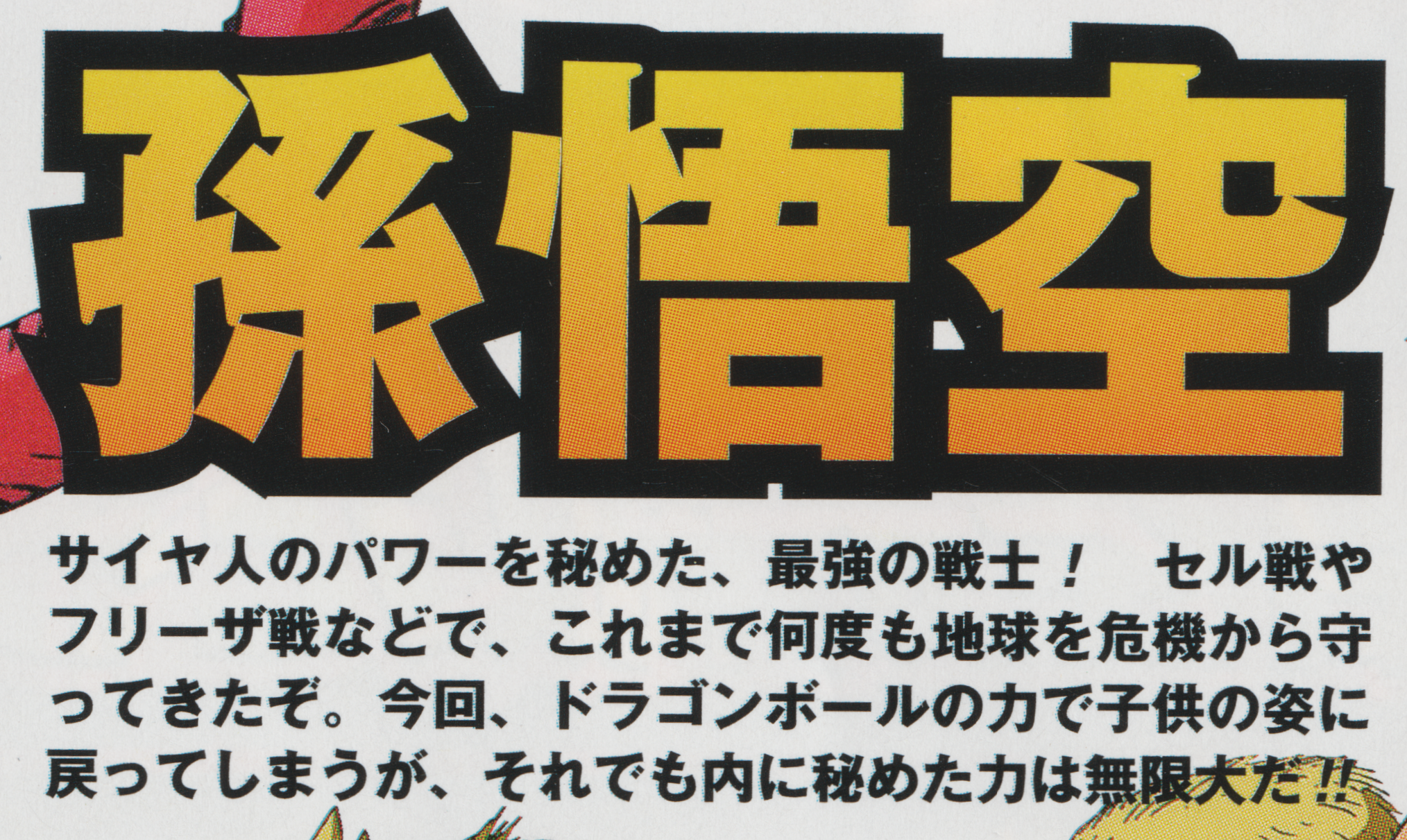
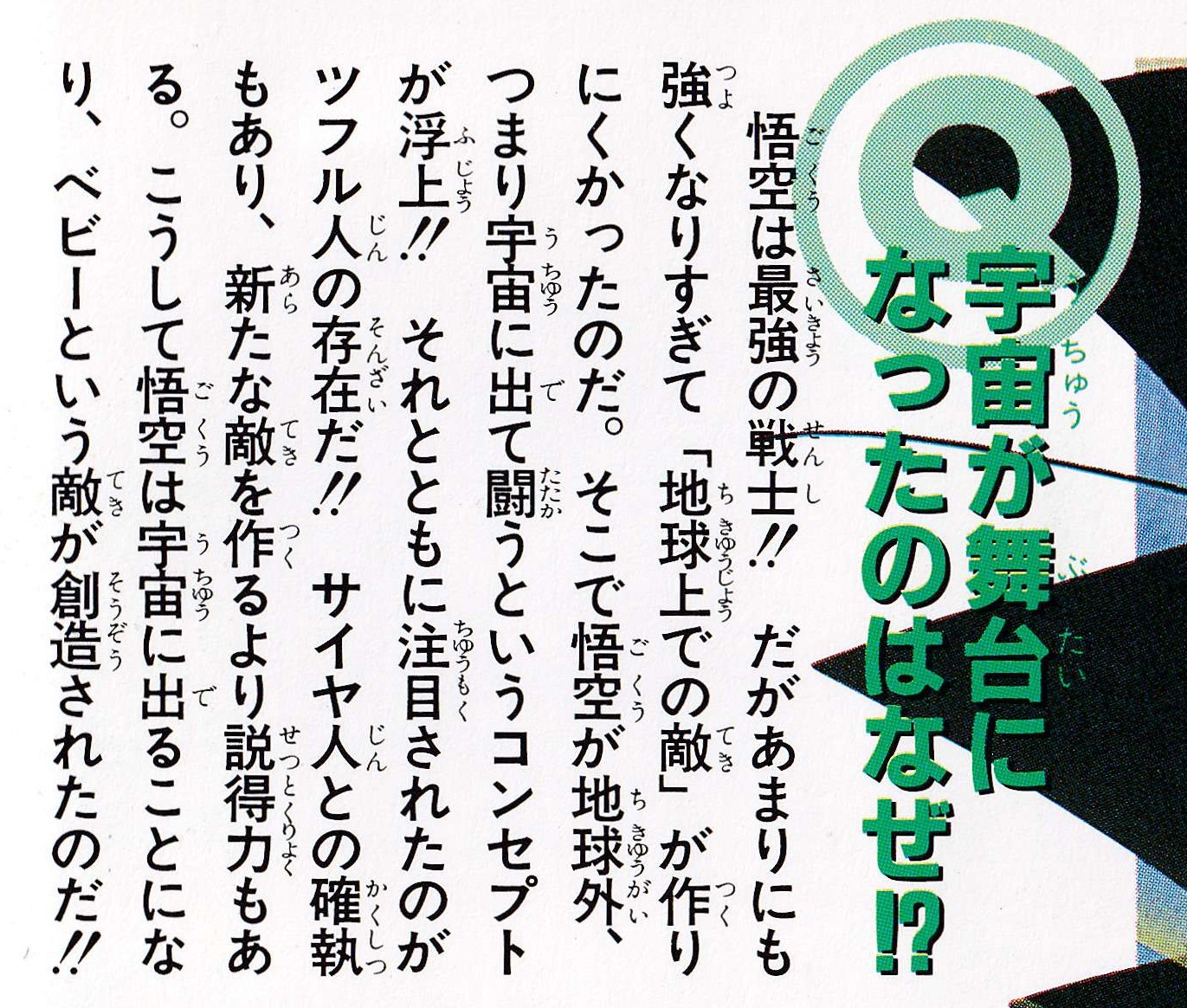
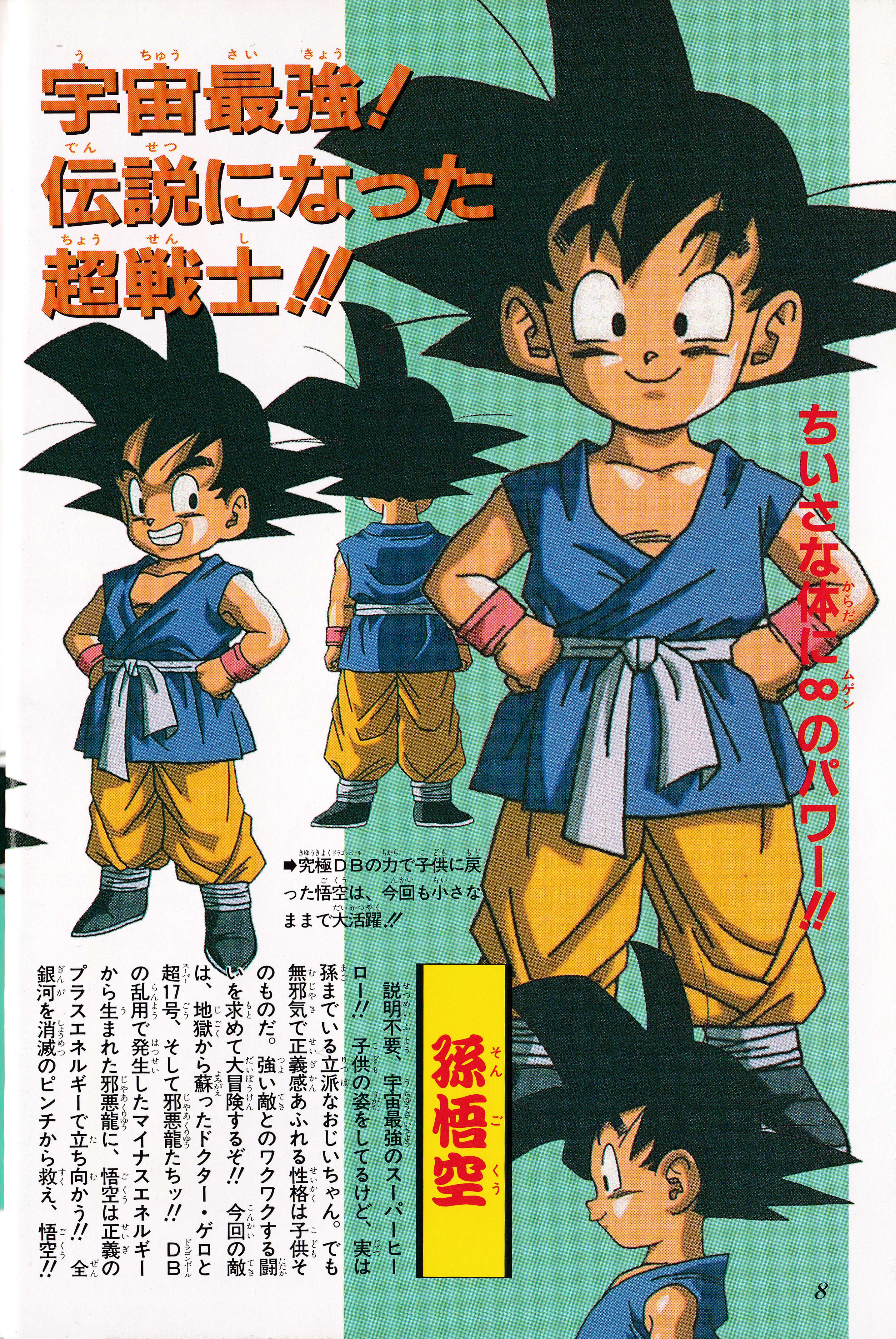

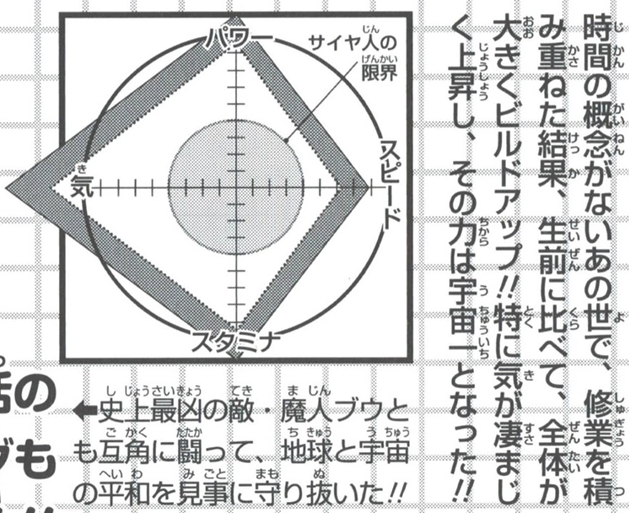
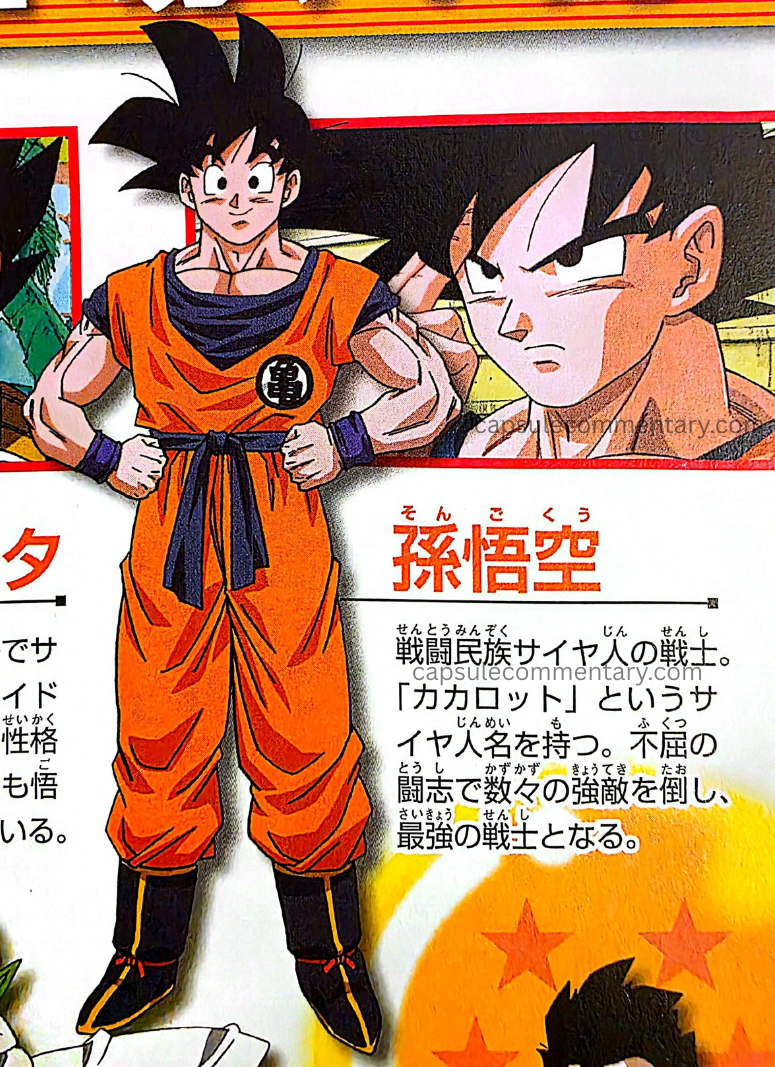

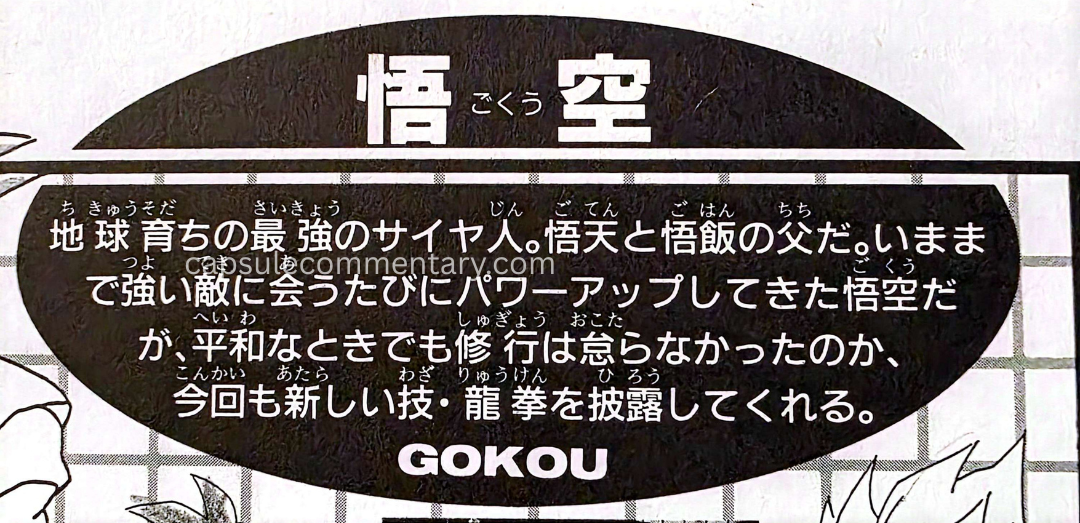
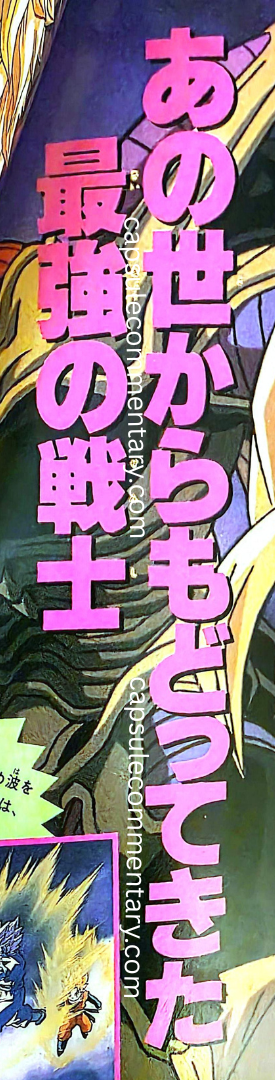
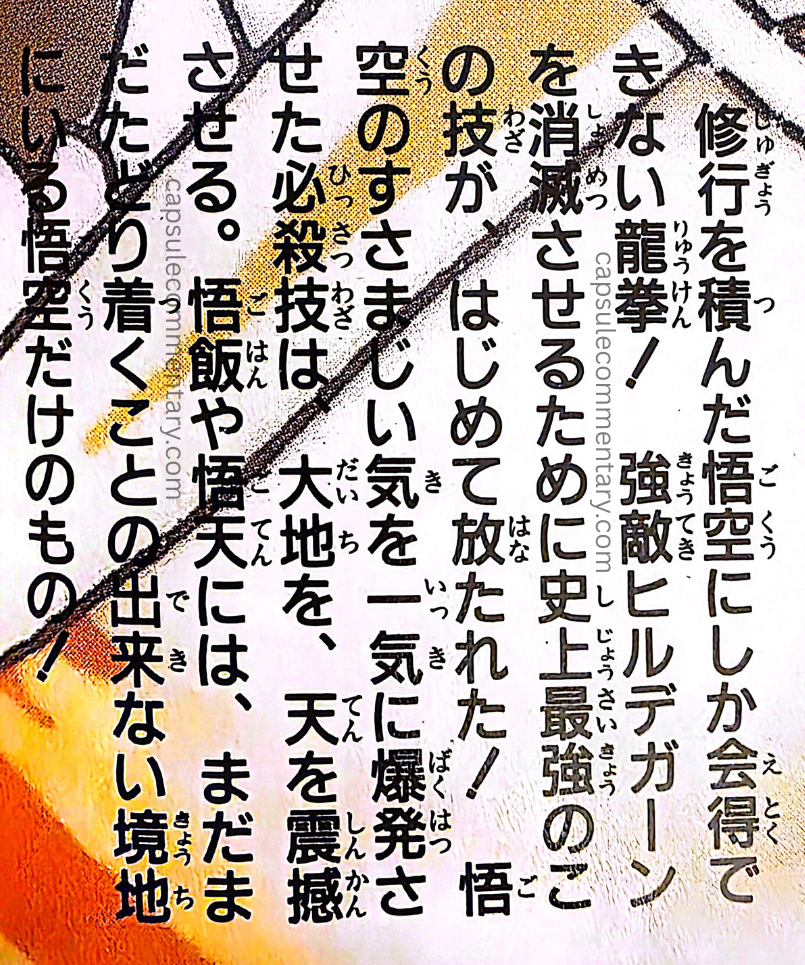


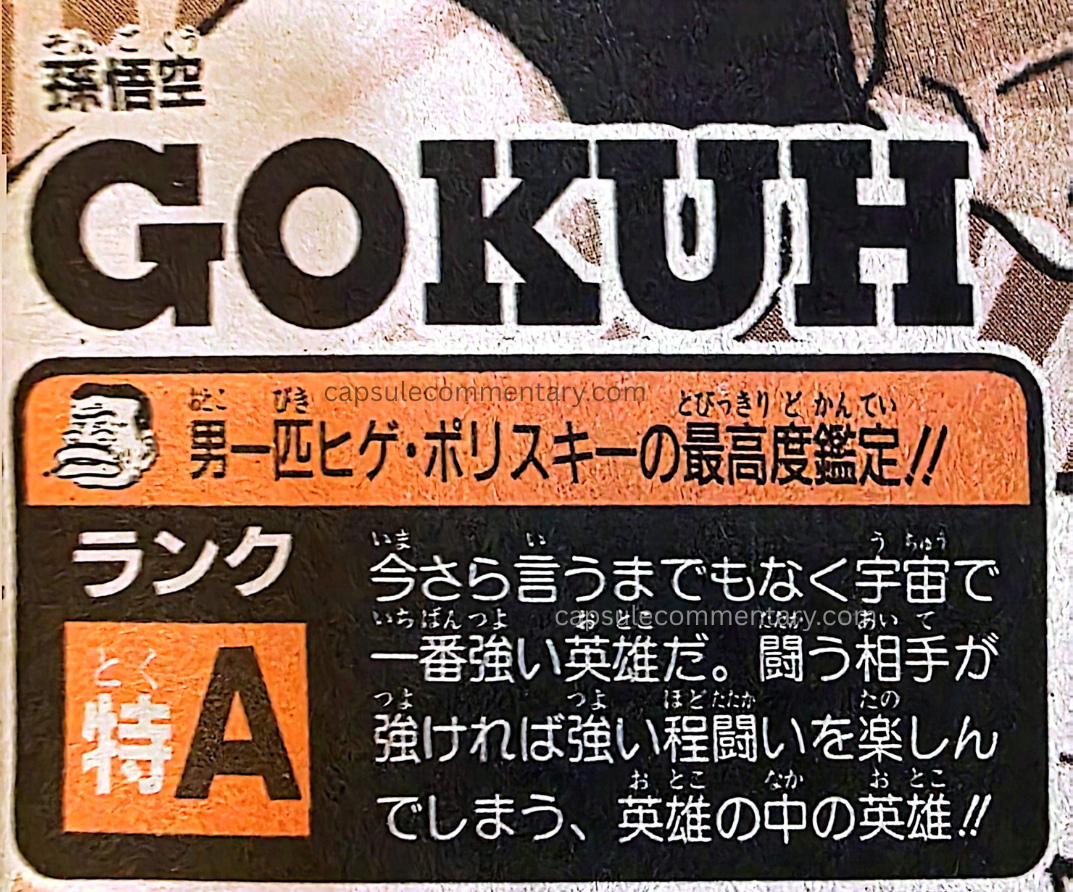
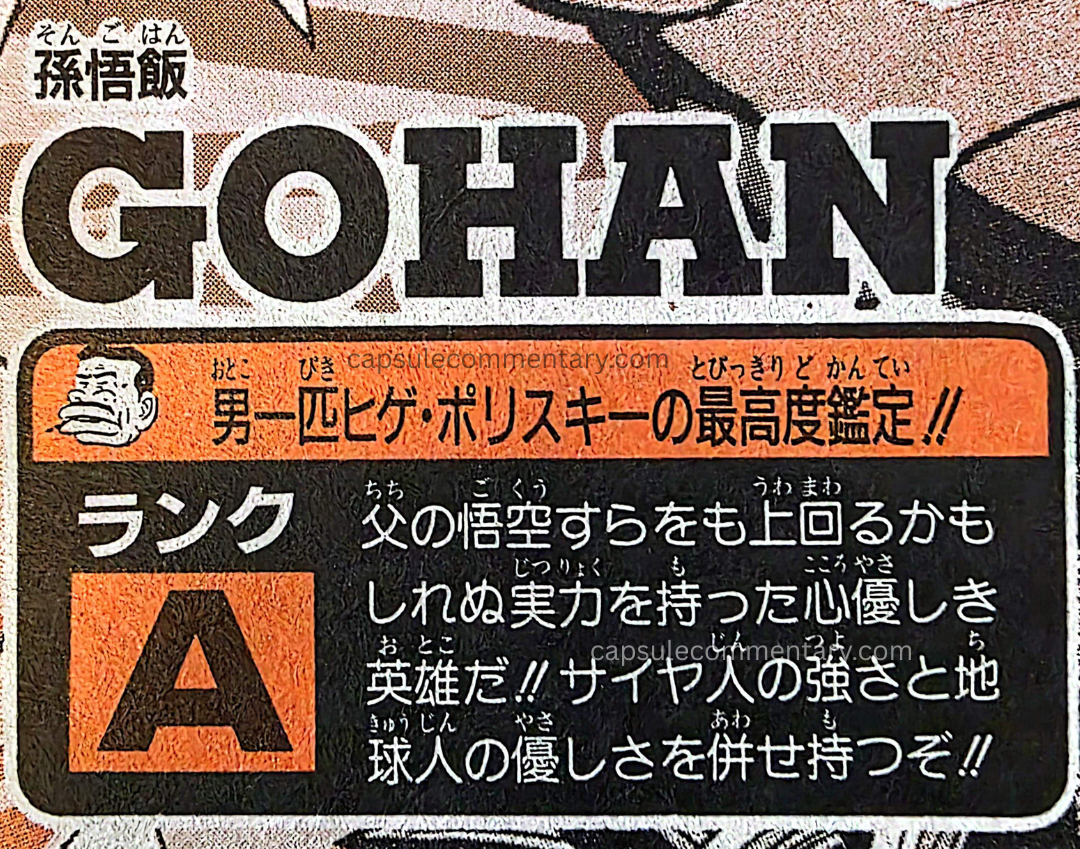
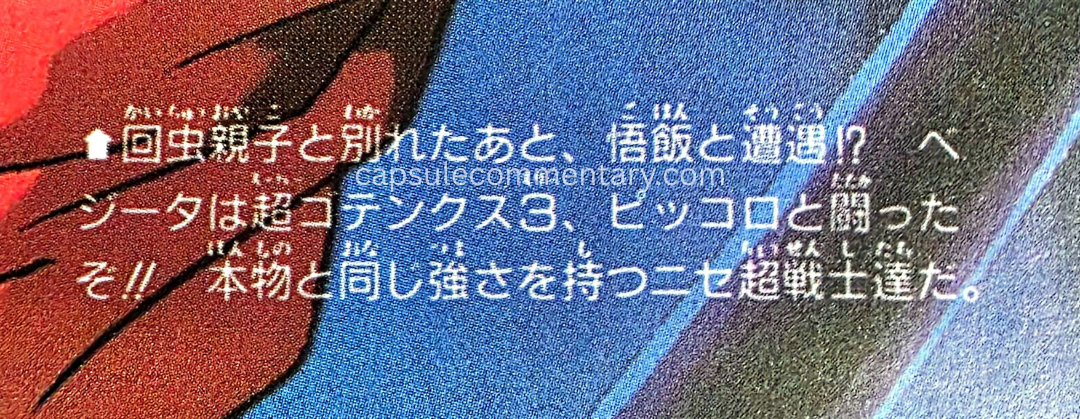
There is one more statement in Goku’s favor that deserves its own explanation due to the controversy surrounding it. On page 82 of the February 2019 issue of V-Jump, while introducing Majin Buu to readers of V-Jump, Buuhan is described as being on par with Super Saiyan 3 Goku. While briefly describing Buuhan, they write: 「隙をついて悟飯を吸収。超サイヤ人3の悟空と互角の強さを手に入れる。服装も道着風にチェンジしている。」 In English, this translates to: “[Buu] took advantage of an opening to absorb Gohan. He gained strength equal to Super Saiyan 3 Goku. His outfit also changed to resemble a martial artist’s gi.” The middle, bolded sentence is the source of the debate. Some believe it means that Ultimate Gohan was equal to Super Saiyan 3 Goku, and others believe it means Buuhan was equal to Super Saiyan 3 Goku. However, Buuhan being equal to Super Saiyan 3 Goku is the only reading of it that is supported by both grammar and context.
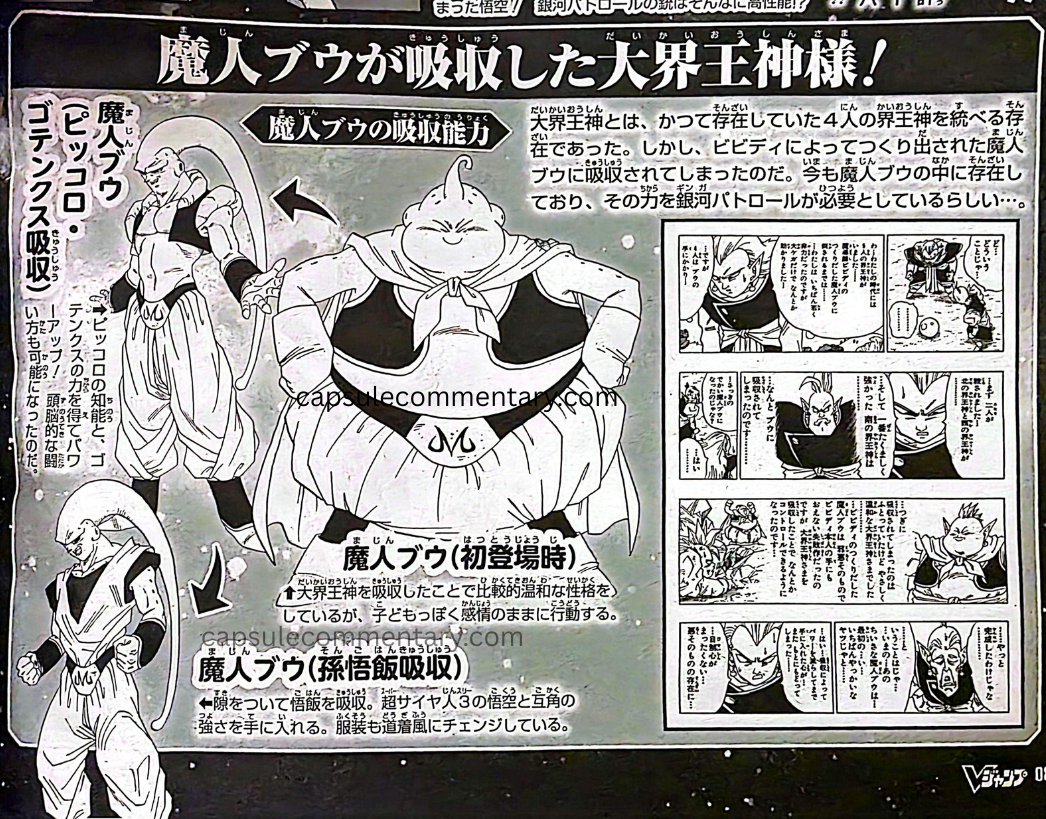
There are many reasons why this is the case. Firstly, why would readers need Goku as a reference point to understand Gohan’s strength? It doesn’t make sense for Buuhan’s short, three-sentence description to divert focus away from Buu in order to scale Gohan to Goku. Secondly, Buu is the subject of these sentences, not Gohan. Paraphrased: “Buu absorbs Gohan. He gains power equal to Goku. His clothes change.” Thirdly, the grammar and syntax do not support the reading that Gohan = Goku. The particle 「と」 in this sentence is used to mark a comparison. The only comparison stated here is between Majin Buu (after absorbing Gohan) and Super Saiyan 3 Goku. If they wanted to write that Gohan was equal to Goku, it would look more like this: 「悟飯は超サイヤ人3の悟空と互角で、その力を吸収した。」or in English: “Gohan was equal to Super Saiyan 3 Goku, and [Buu] absorbed that power.” For these reasons, the text is unequivocally stating that Buuhan became equal to Goku.
Some fans find this difficult to reconcile with their ideas on Buu Saga power-scaling. However, both grammatically and contextually, this line describes Buuhan as becoming equal to Super Saiyan 3 Goku. If this statement was created within a sea of “Gohan > Goku” statements, it could easily be discarded as an outlier. However, most statements clearly place Goku above Gohan. The utility of this statement is in informing readers exactly how high above Gohan he was. Now to continue…
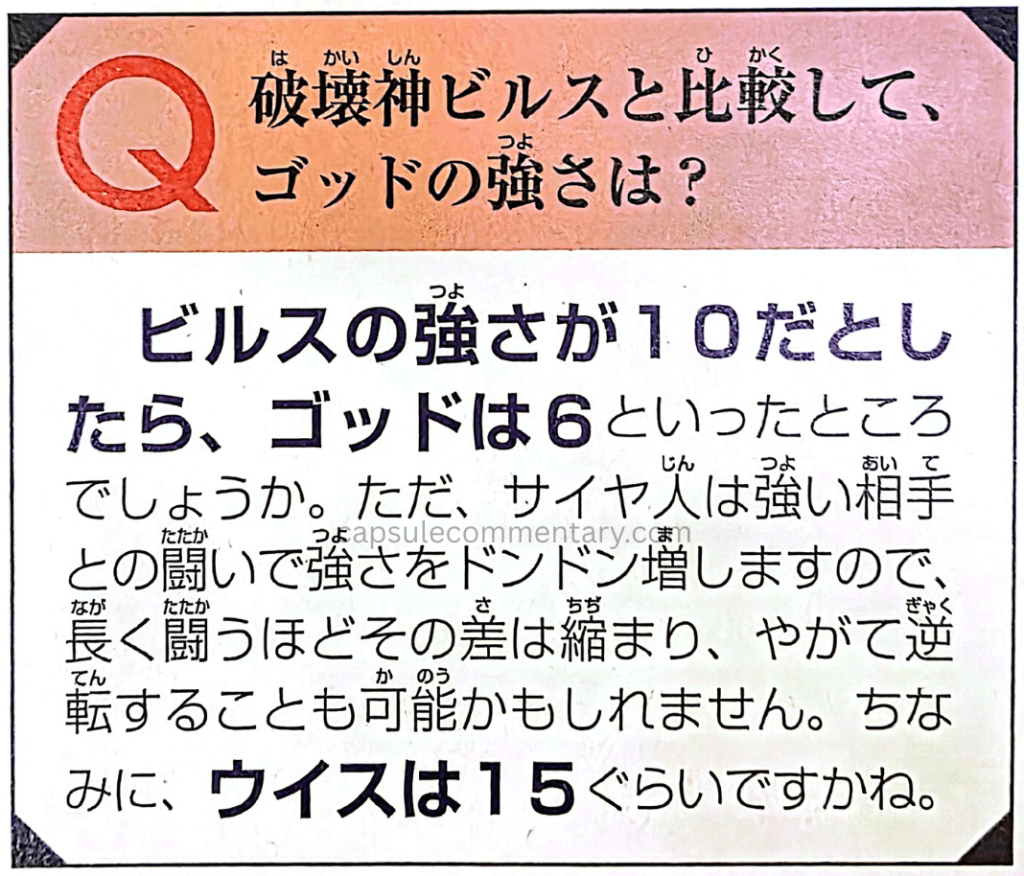
Toriyama: “If Beerus’s strength is a 10, then [Super Saiyan] God would be around a 6. However, Saiyans increase their power in battles with strong opponents, so the gap may shrink the longer they fight—perhaps even reversing eventually. By the way, Whis would be around a 15.“
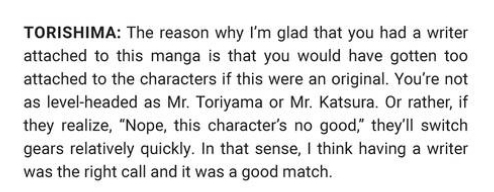
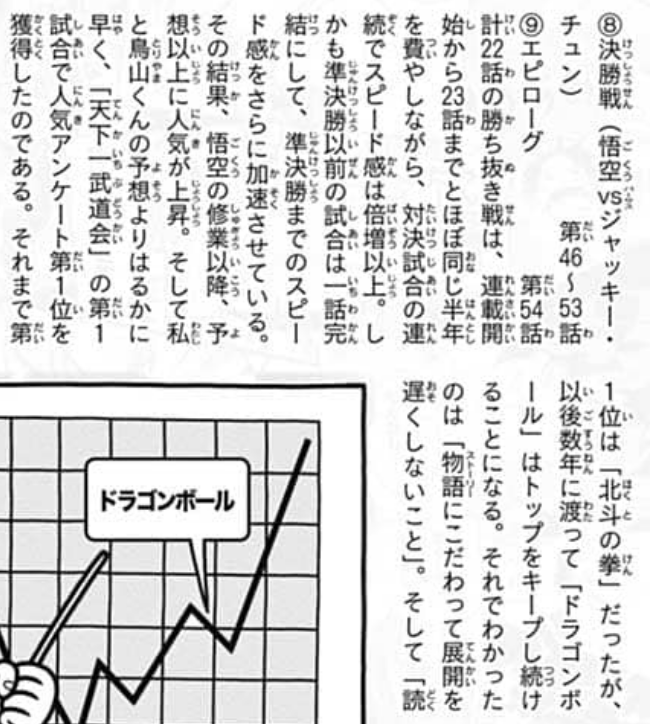
Dragon Ball was consistently the highest rated manga of Weekly Shōnen Jump from November 1986 until the end of its run, and importantly, this didn’t change when Gohan was introduced as the strongest/main character. Torishima identified Dragon Ball‘s first place status as beginning with the first round of the 21st Tenka’ichi Budōkai. Of course, we can’t know if there was editorial pressure on Toriyama or not, but based on interviews, it seems like it was just Toriyama’s personal opinion that Goku should be the strongest/main character again. Torishima touches upon this in his interview with Koji Inada on page 174 of Dr. Mashirito’s Ultimate Manga Techniques: “You’re not as level-headed as Mr. Toriyama or Mr. Katsura. Or rather, if they realize, ‘Nope, this character’s no good,’ they’ll switch gears relatively quickly.”
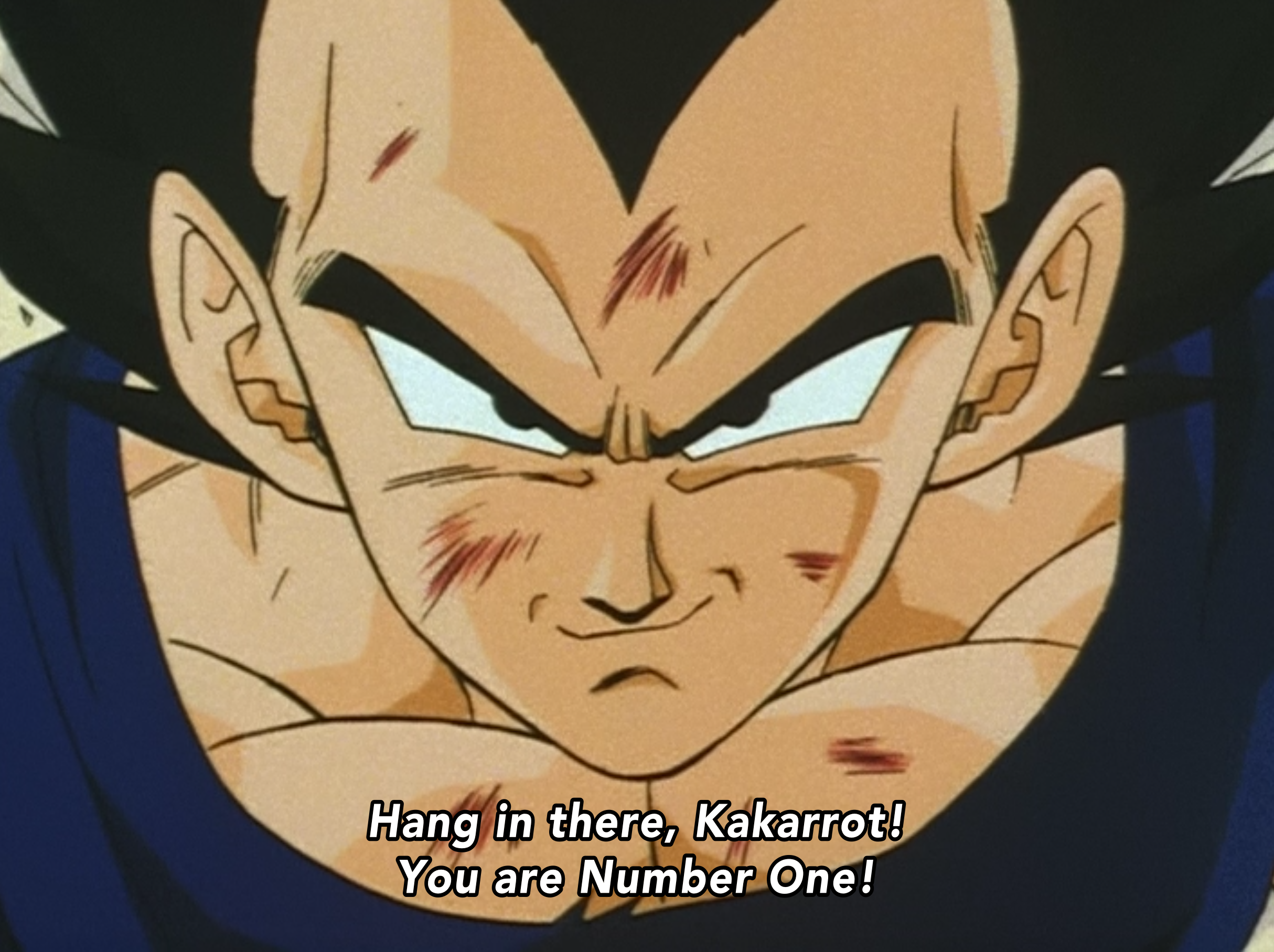
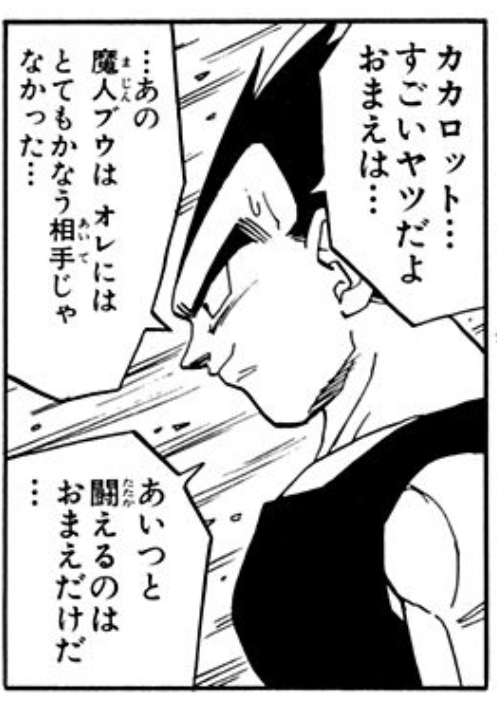
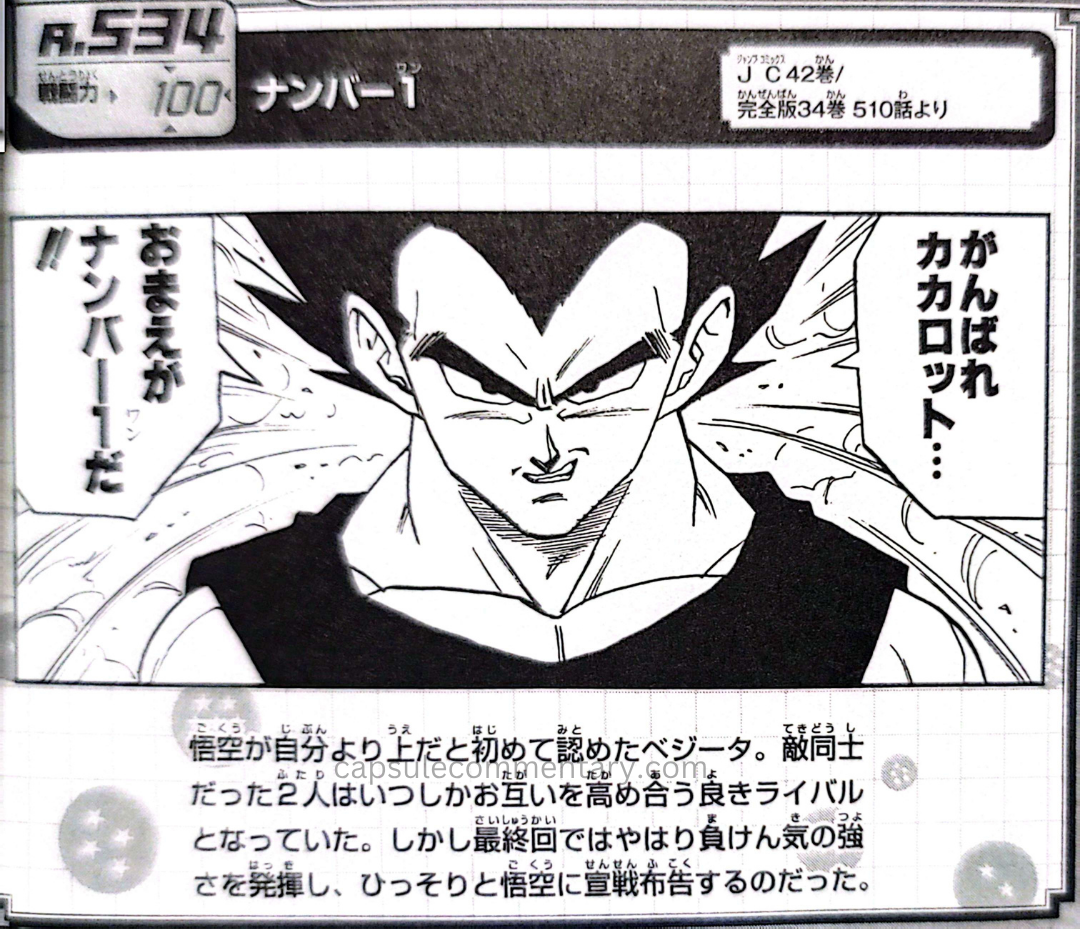
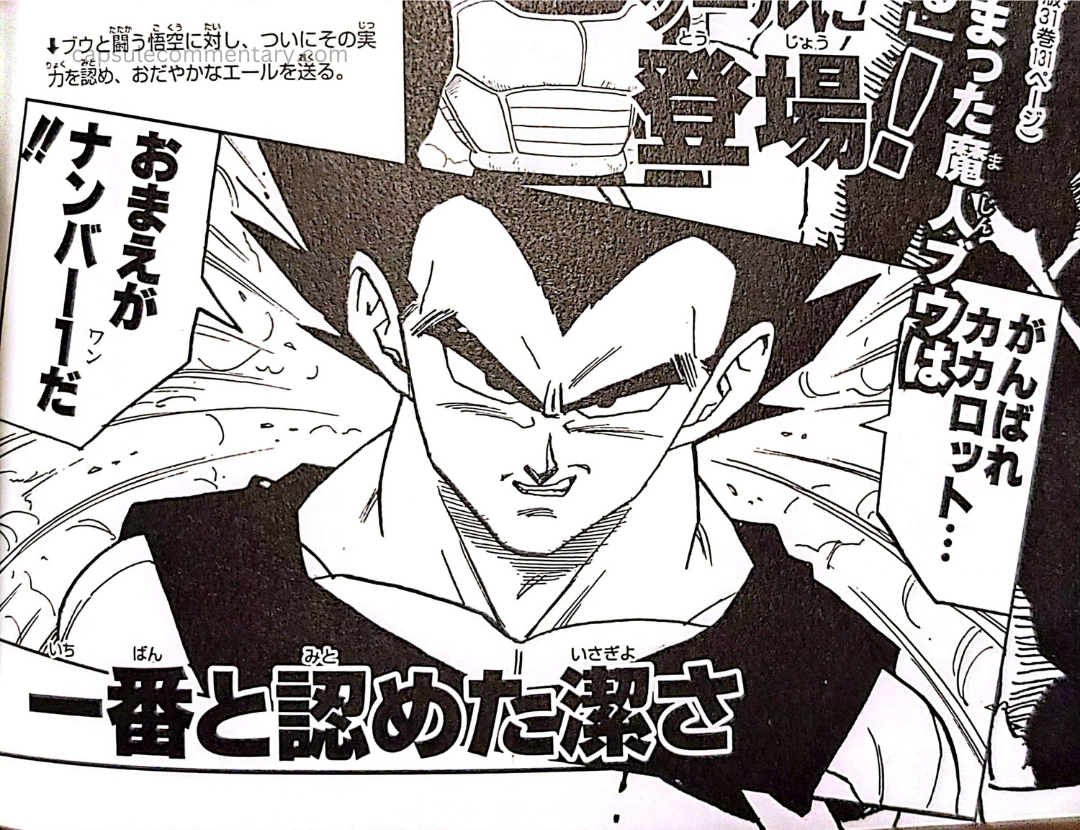
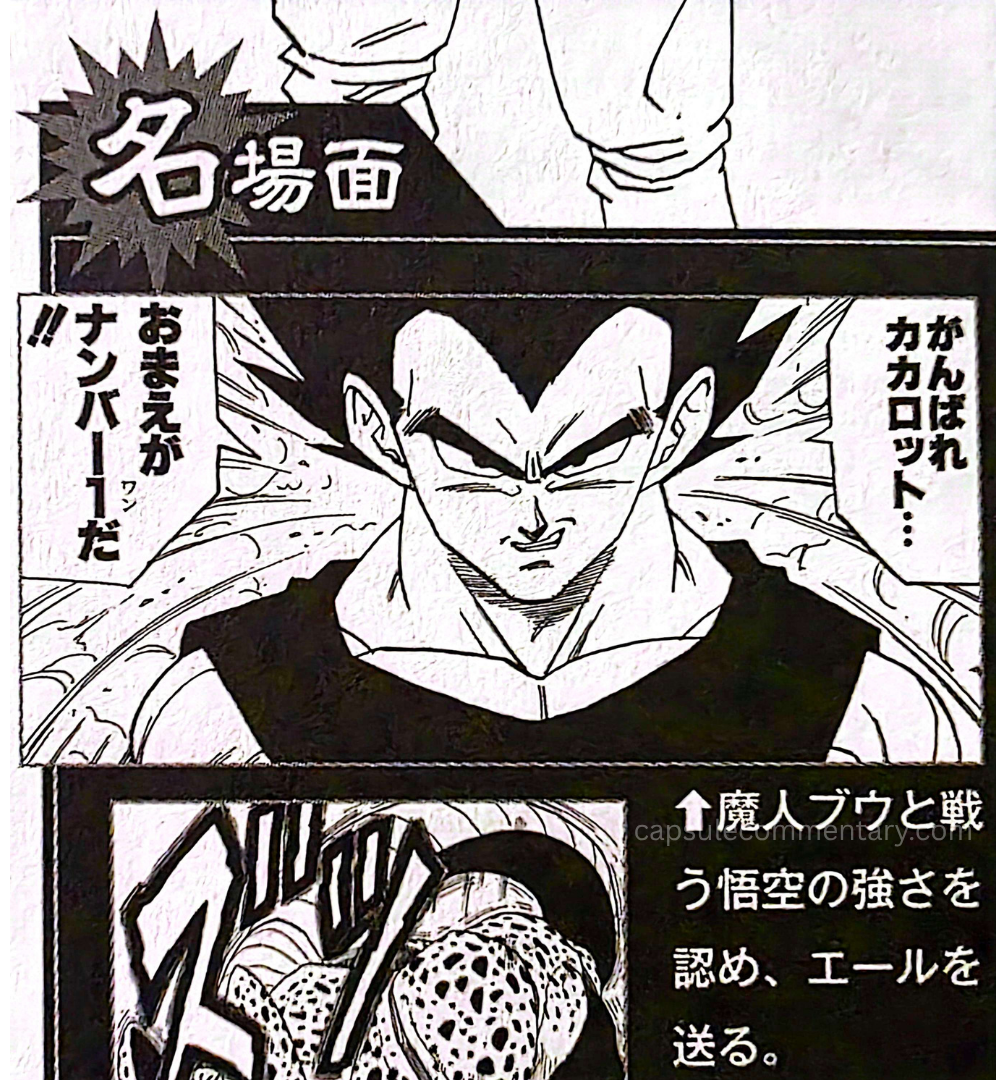
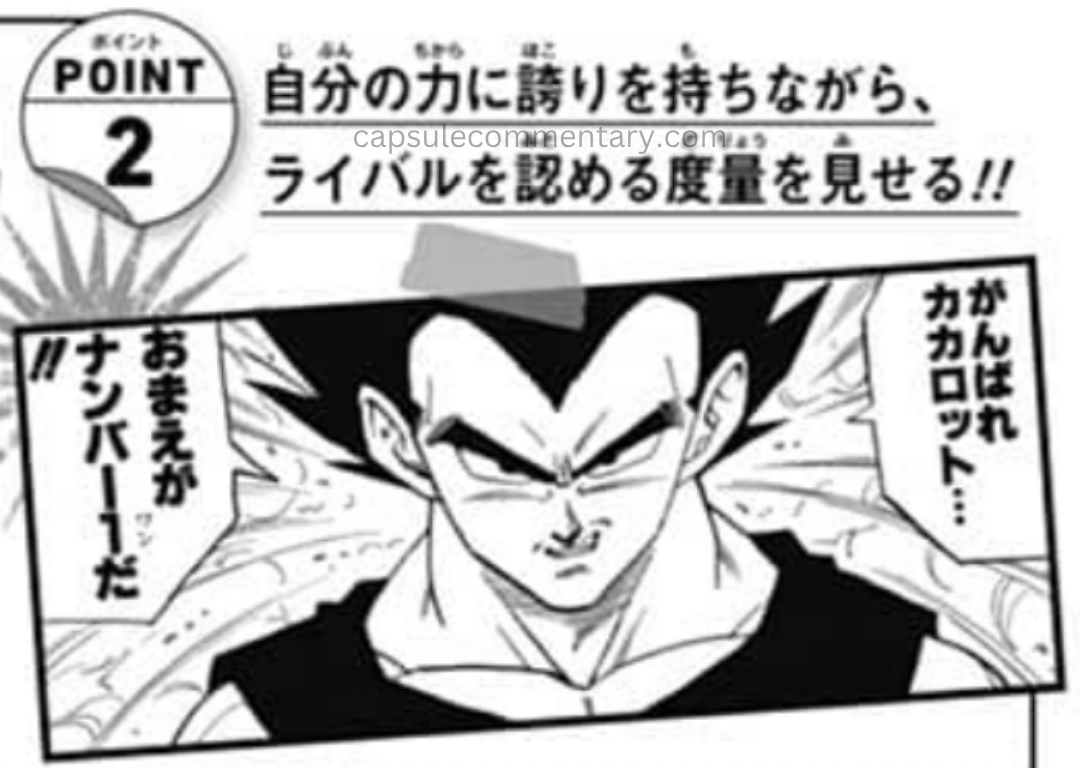
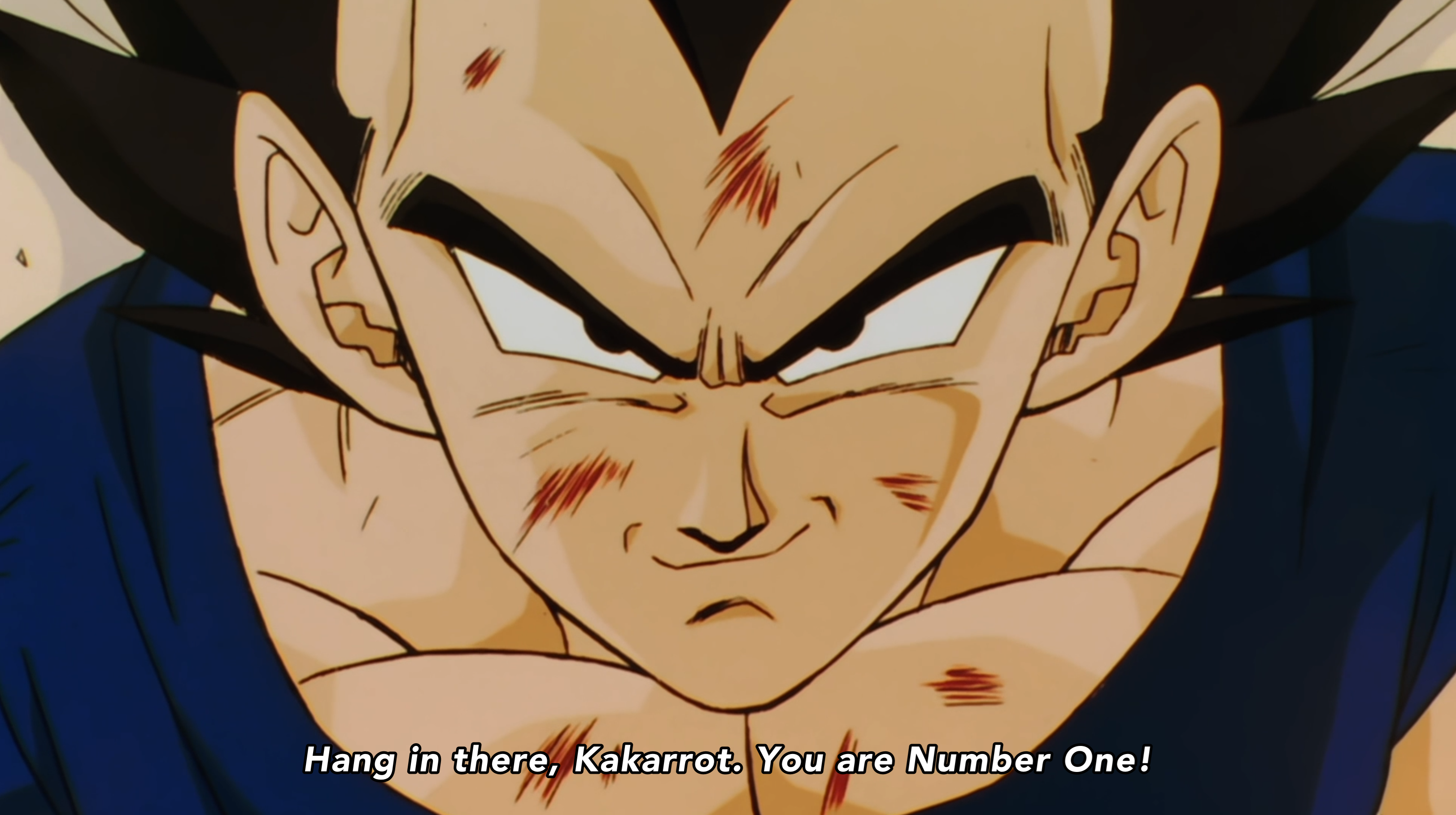
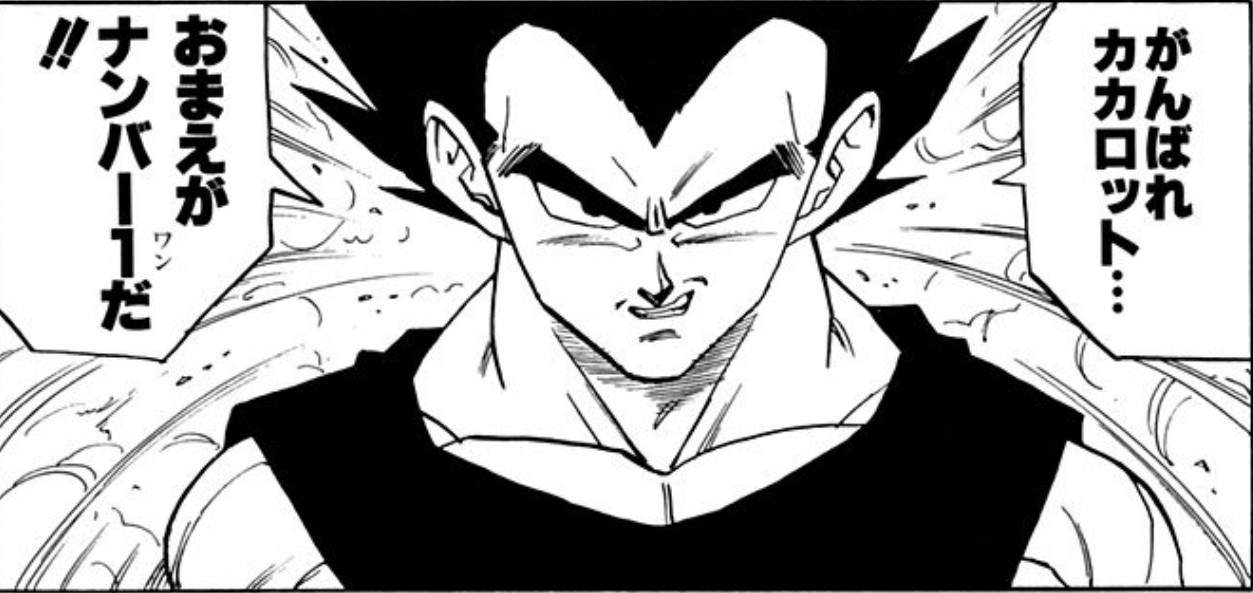
In chapter 510, Vegeta gives an inner monologue over two pages where he reflects upon his and Goku’s different motivations for fighting. Vegeta finally realizes that Goku’s selflessness and his desire for self-improvement are what put him above Vegeta. Before being retconned later, this was also the end to their rivalry, as Vegeta accepted Goku’s placement as the strongest with humility. Immediately after this reflection, Vegeta concedes to Goku: “You are Number One!!” In context, this is Vegeta humbly acknowledging why Goku is the strongest instead of himself. Here are examples of “number one” being used as a synonym for “the strongest:”
- Page 16 of Akira Toriyama: The World of Dragon Ball reads “In the midst of a deadly battle with Majin Buu, the proud Vegeta finally acknowledged Goku’s strength—a valuable and memorable scene.”
- Dragon Ball 590 Quiz Book on page 180, states, “Vegeta, for the first time, acknowledged that Goku was above him.”
- Shueisha confirms Goku as the strongest on page 229 of Chōzenshū 1 (Daizenshū 4 page 39) where, building off of Toriyama’s opinion of Goku, they write, “Always of a kind-hearted nature and the strongest person in the universe. Indeed, Goku is number one!”
- Dragon Ball: Forever helps clarify that “number one” is referring to strength specifically (and not, for example, Goku’s personality) on pages 61 and 63. Page 61 reads, “[Vegeta] finally acknowledges [Goku’s] strength,” and page 63 reads, “Even though he acknowledges Goku as number one, he dreams of surpassing him one day…”15 Vegeta has never once desired to surpass someone’s “personality,” so this is clearly in reference to Goku’s strength.
- Page 130 of Dragon Ball Fortune states that “[Vegeta] acknowleges Goku’s strength as he fights Majin Buu, and sends him encouragement.”
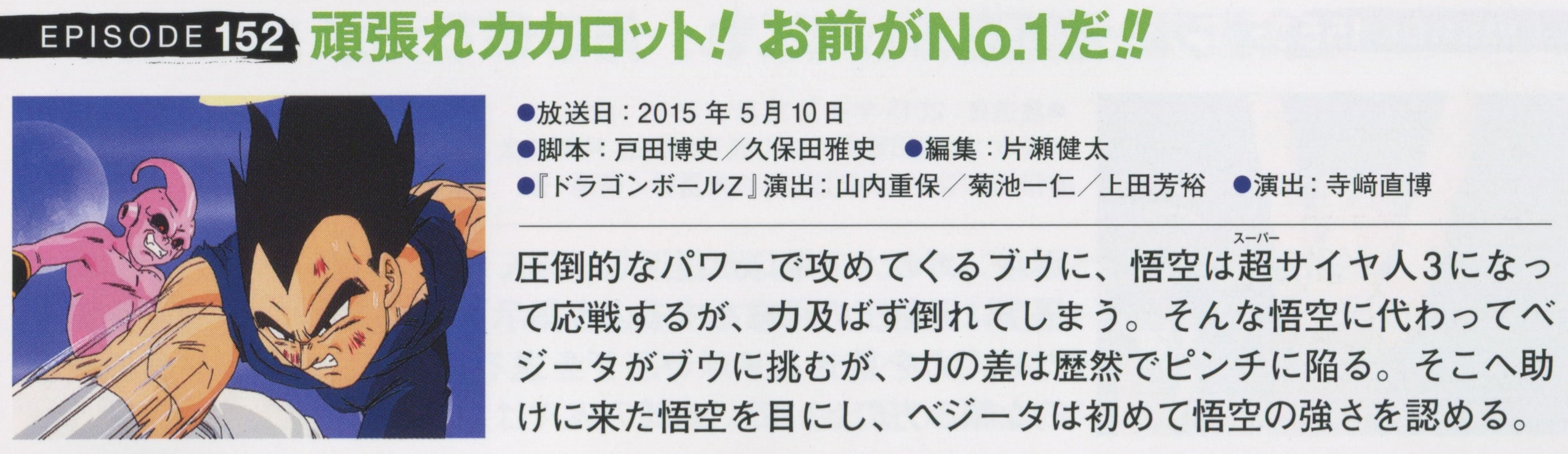
- The episode summary for episode 152 of Dragon Ball Kai on Toei’s website states: “‘In order to absolutely never lose, Goku continues to push his limits as he fights’ — this way of being is completely different from Vegeta’s. ‘Kakarot… you’re No.1!!’ Vegeta acknowledges Goku’s strength and mutters to himself. The final battle, with the future at stake, continues…!”
- The Dragon Book of Dragon Ball Kai – Majin Buu Arc – Box 5 also states that Vegeta acknowledges Goku’s strength.16
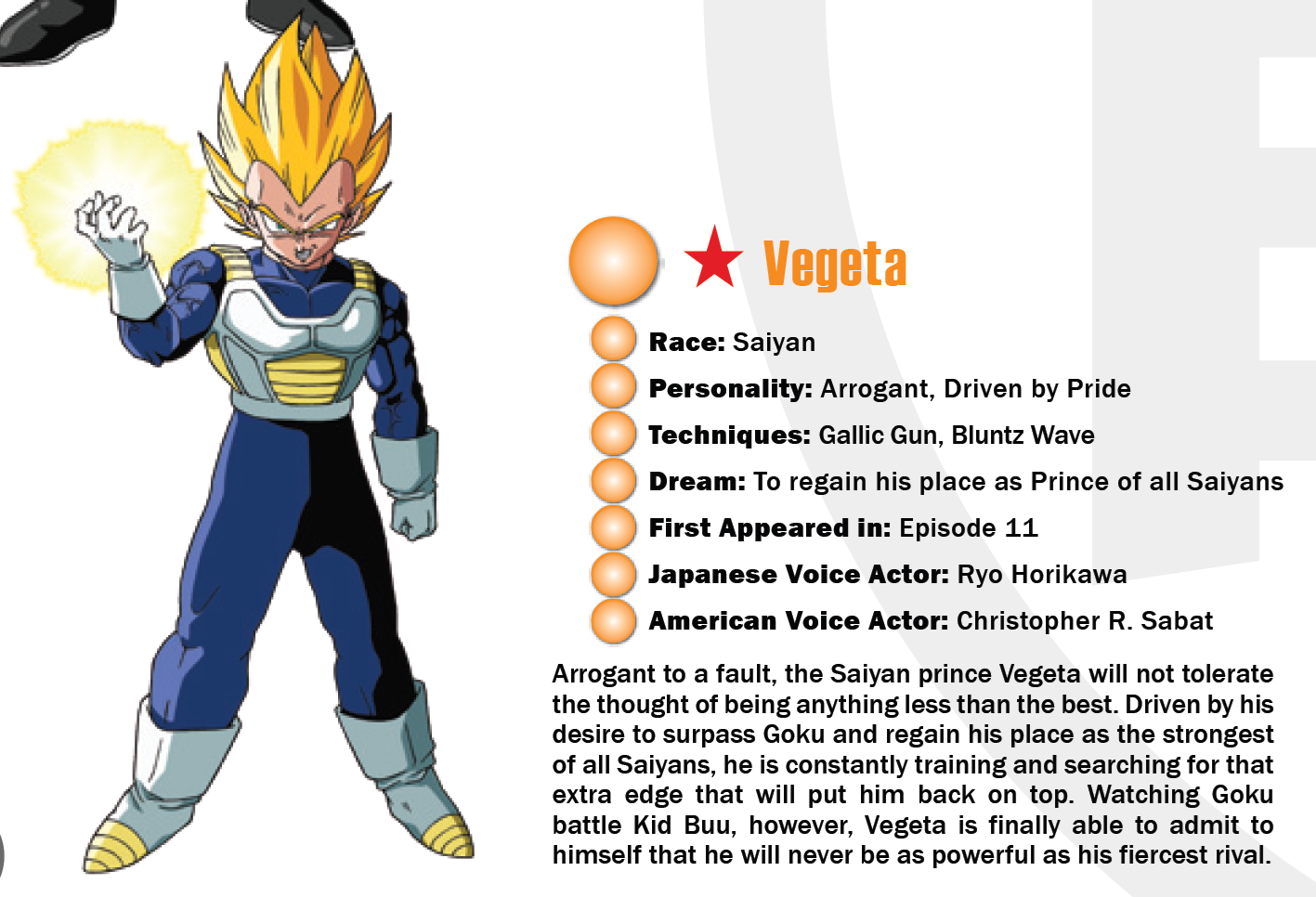
- Page 4 of Funimation’s Dragon Ball Z: Season 9 booklet states: “Watching Goku battle Kid Buu, however, Vegeta is finally able to admit to himself that he will never be as powerful as his fiercest rival.”
- Page 127 of the March 2023 issue of Saikyō Jump also clarifies that “number one” is about strength.
- Takao Koyama has also said on Twitter that Goku is the strongest and that Vegeta referring to him as “number one” means Goku is the strongest.17
- Weekly Shōnen Jump 1995 Issue 15 page 73 confirms that “Number One” means “the strongest” when it says that Goku and Vegeta are deciding who the strongest is.
- In Weekly Shōnen Jump 50th Anniversary Dragon Ball Best Scenes Top 10 on page 141, above the picture of Vegeta, it reads, “Watching Goku fight Buu, Vegeta acknowledges that Goku is above him. This episode marks the conclusion of their rivalry.”18
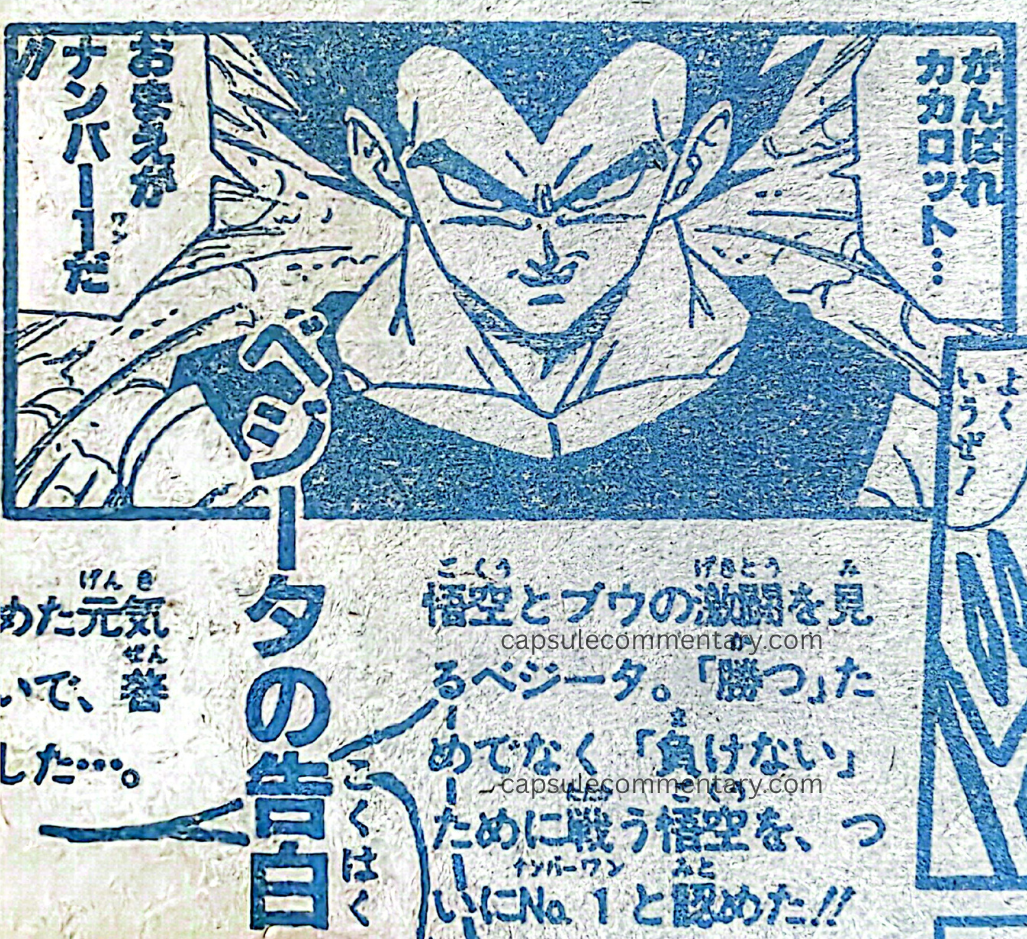
To be clear, this doesn’t invalidate the interpretation of “number one” referring to Goku’s spirit as a martial artist. In fact, the truth is that both interpretations are simultaneously correct. I am simply highlighting that it also refers to Goku as being the strongest in a literal sense because this is ultimately an article on power-scaling. Just to add a reference to the other interpretation, on page 237 of Weekly Shōnen Jump 1995 Issue 35, it writes of this scene: “Vegeta watches the fierce battle between Goku and Buu. Seeing Goku fight not to ‘win’ but to ‘not lose,’ he finally acknowledged him as No.1!!”

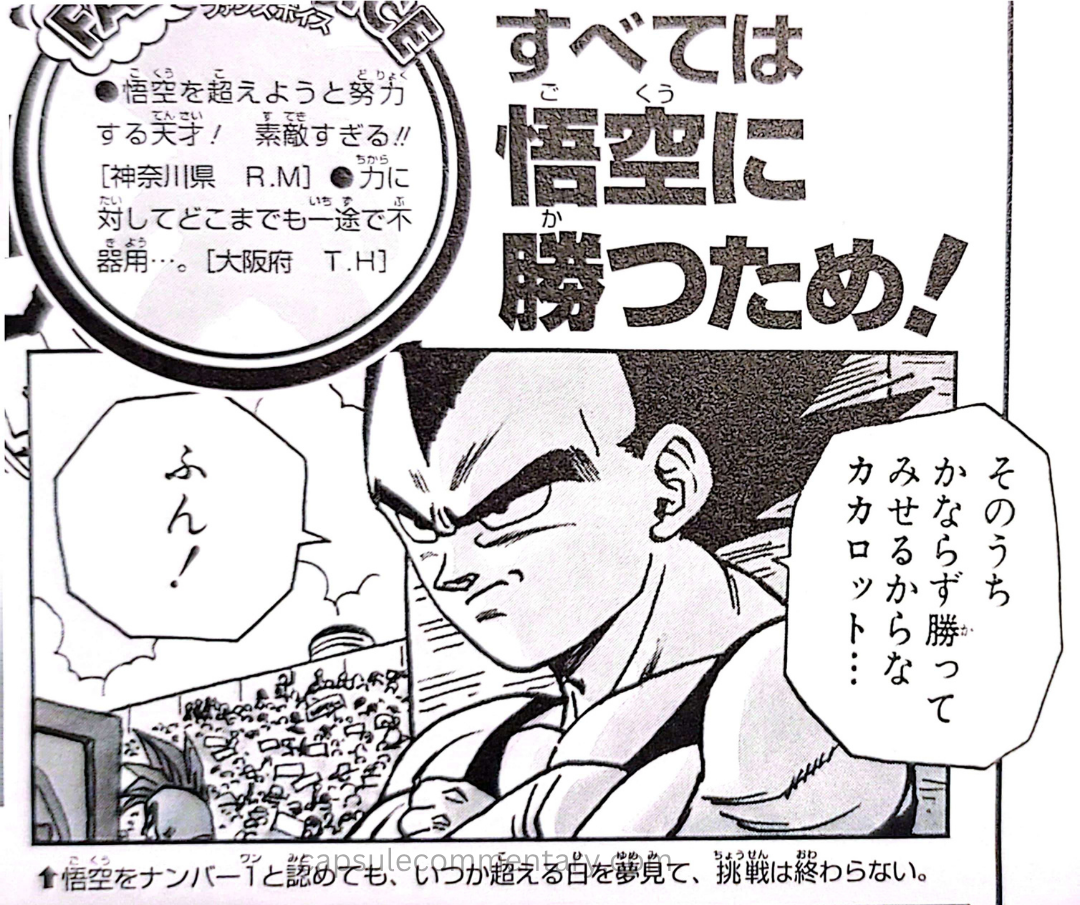

While Gohan was not really training for his power-up, it occupied the same narrative space as Goku training on his way to Namek, and took place over the course of about 6 months in real life. It’s implied within the context of the story that Ultimate Gohan is likely the strongest in the universe at that moment, as well. Contrastingly, Goku’s power-up when he faced Kid Buu is not fully explained. On page 10 of chapter 503, Vegeta yells at Goku for not using Super Saiyan 3 during their duel. This means he was watching Super Saiyan 3 in battle. He’s also shown he can gauge the potential of Super Saiyan 3 well, as he is the one who suggests Goku could beat Kid Buu if he charged up enough. However, when Vegeta sees Goku use Super Saiyan 3 against Kid Buu in chapter 510, he comments on how Goku is even stronger than he thought (as well as Kid Buu). This means that either Goku’s power did not change and he was really holding back against Fat Buu (as implied by Goku in chapter 509), or he grew significantly stronger between fighting Fat Buu and Kid Buu (as implied by Vegeta). In Dragon Ball, even when power-ups are frankly lame, such as Goku drinking the Chōshinsui (Ultra Divine Water) to defeat Piccolo Daimaō, they are at least explained within the story.
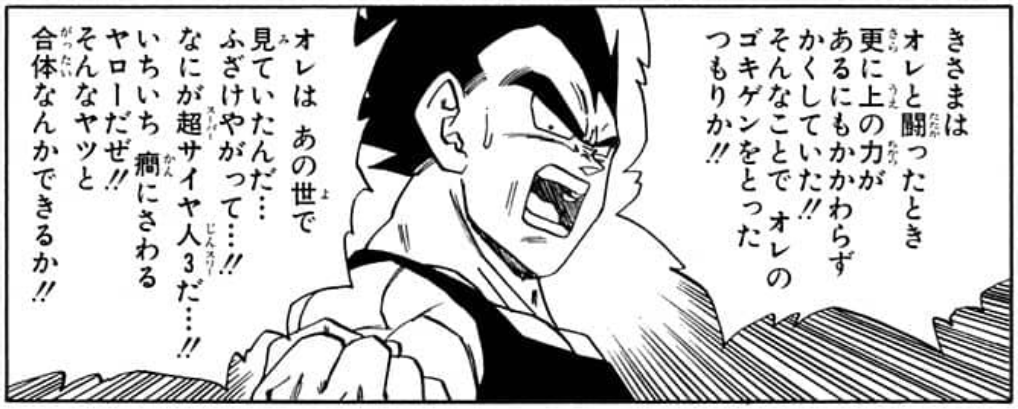
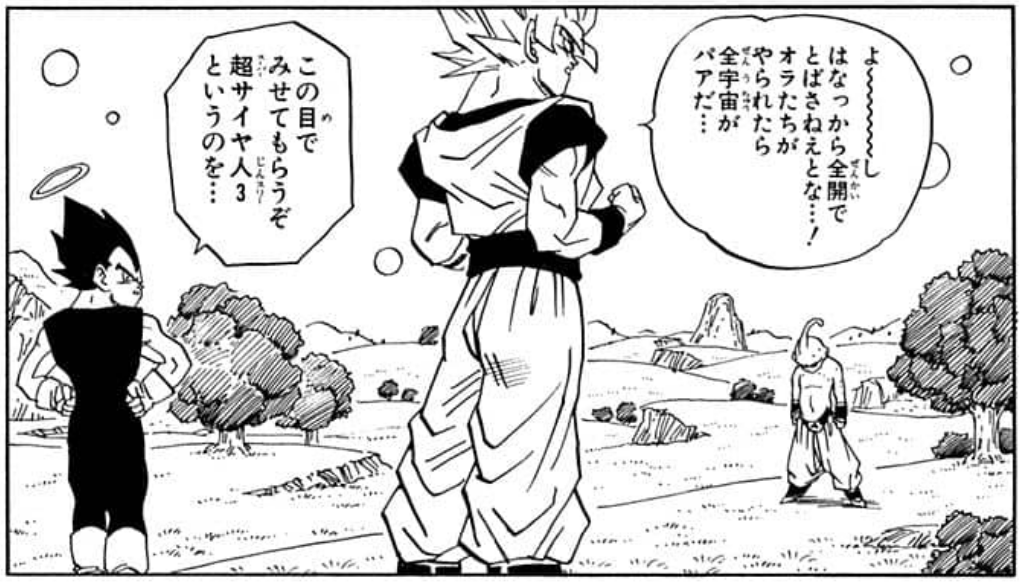
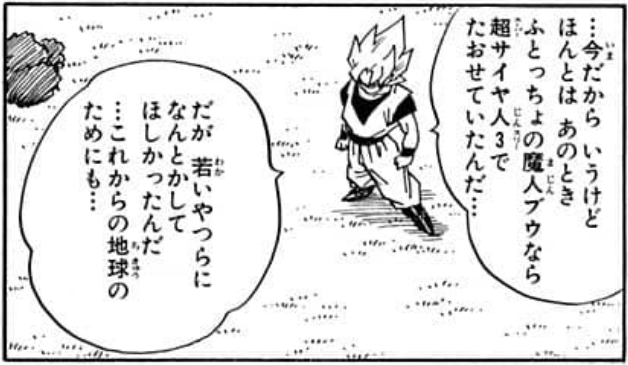
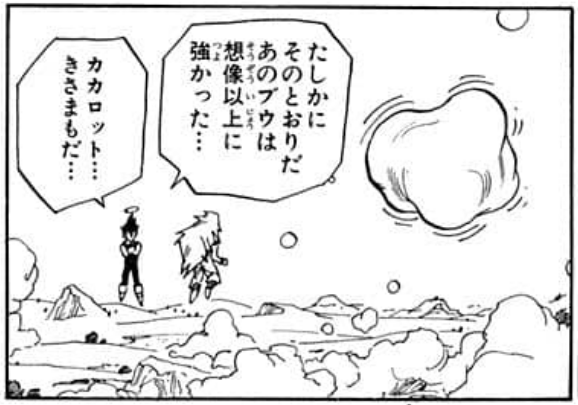
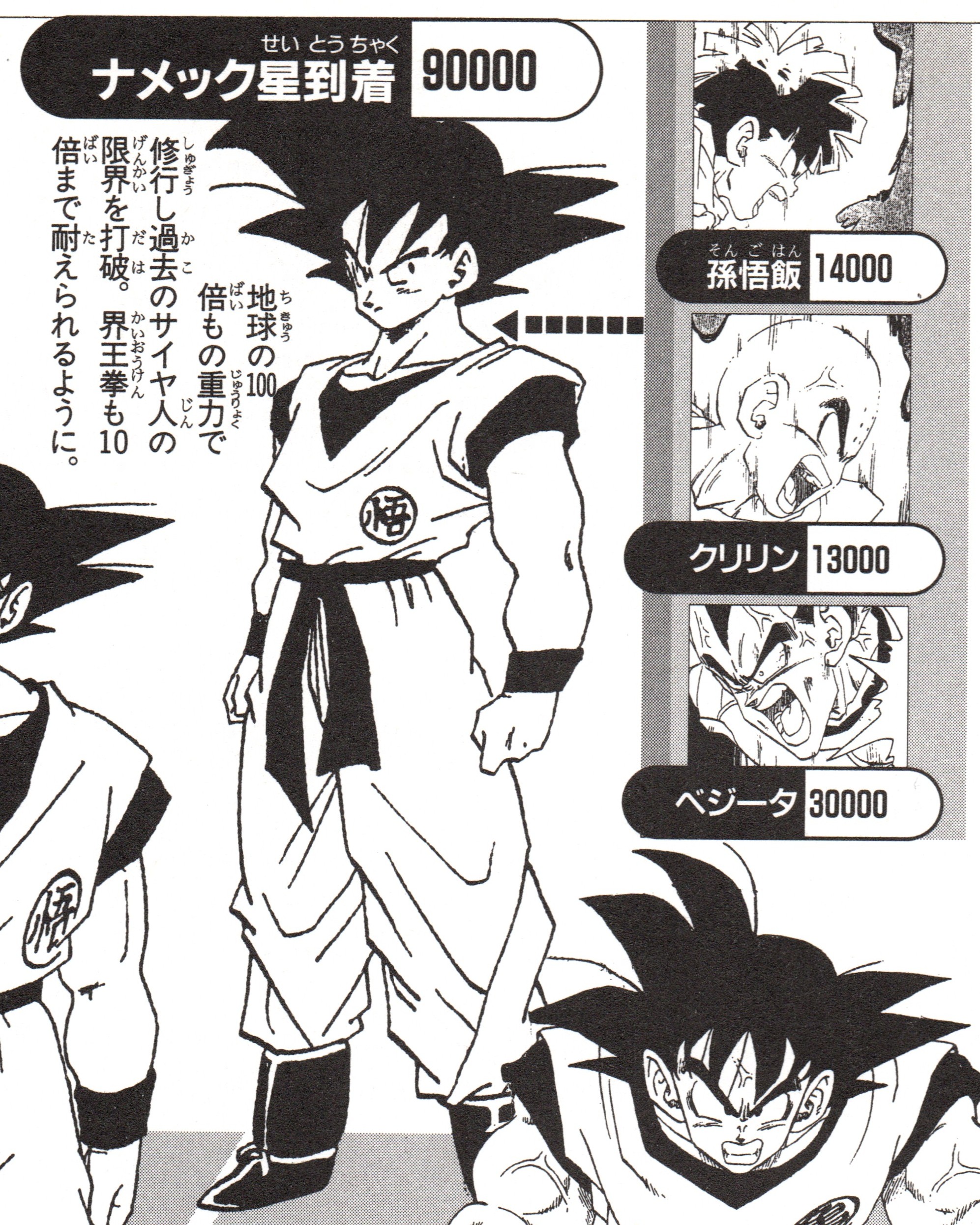
There are two situations that are equivalent to this, the first is Vegeta in the Freeza Saga19 and the second is Broly in Dragon Ball Super: Broly. By equivalent, I mean that there is no training, no new transformation, no time skip, no removal of restraints, etc. to justify why this character has gotten stronger so quickly, the character is a Saiyan, and they were written by Toriyama. In chapter 279, Goku arrives on Namek and gives Vegeta a Senzu bean, healing him after his life-or-death fight with Recoome. Vegeta’s battle power before being healed was 30,000, and Goku’s was 90,000 (Jeice measures Vegeta’s power in chapter 275, and Captain Ginyu measures Goku’s Kaiō-ken at 180,000 in chapter 285). Vegeta was shocked by Goku’s strength, even thinking he might be the legendary Super Saiyan, which confirms that Vegeta was still below 90,000 even after the Senzu bean. Vegeta didn’t fight anyone until chapter 289, where he very easily defeats Jeice and Captain Ginyu in Goku’s body. Following that, he takes a nap and doesn’t fight again until chapter 295, against First Form Freeza — where he holds his own against Freeza and even goads him into transforming. This means Vegeta went from a battle power somewhere between 30,000 to 90,000 to one somewhere around 530,000 by essentially doing a light exercise and taking a nap. The first issue of V-Jump pegs Vegeta’s post-nap battle power as being 250,000.20 In Dragon Ball Super: Broly, prior to fighting Vegeta, Broly only had combat experience against someone with a battle power of 4,200. However, in just 4 minutes of the movie’s run-time, Broly, while still wearing his collar and in his base form, went from being weaker than base Vegeta to necessitating Super Saiyan God. Battle powers are unknown after the Freeza Saga (ignoring kiri in the Buu Saga), but we can assume Broly must have grown at least a thousand times stronger without transforming. Exactly like with the Goku vs. Kid Buu battle, we again have to rely upon Vegeta’s commentary during his fight with Broly to understand the other character’s growth.
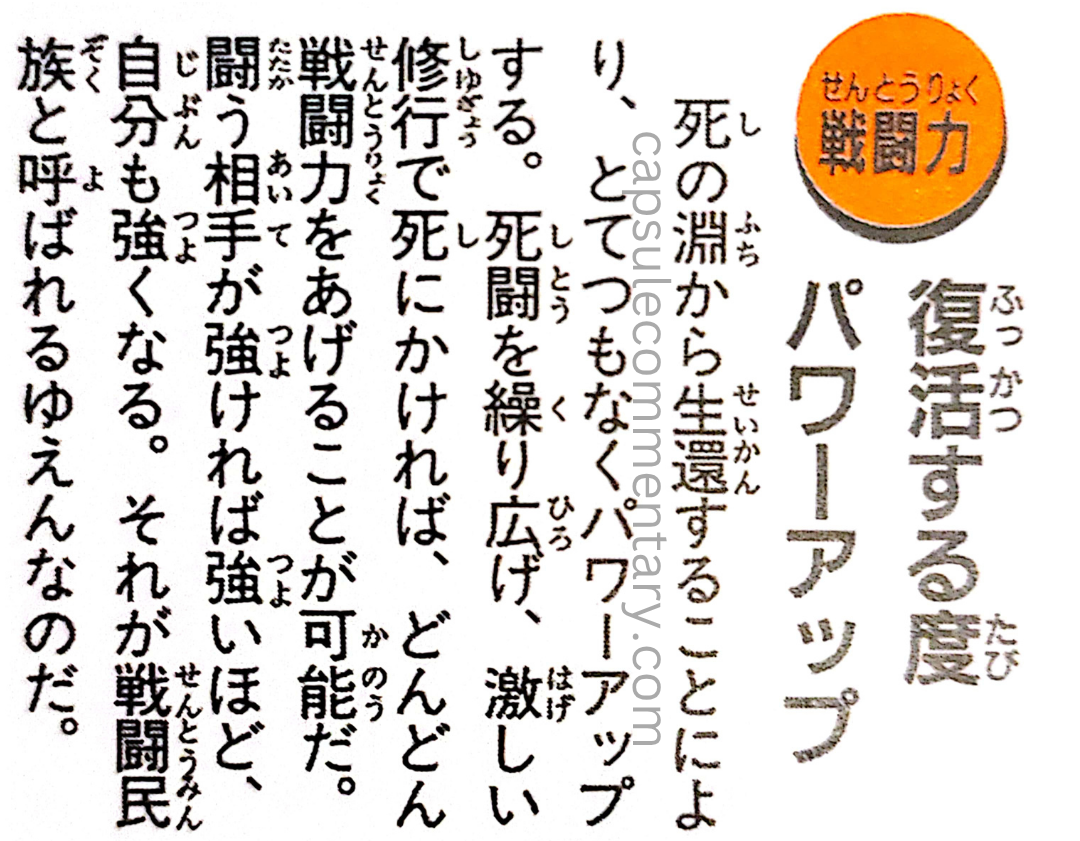
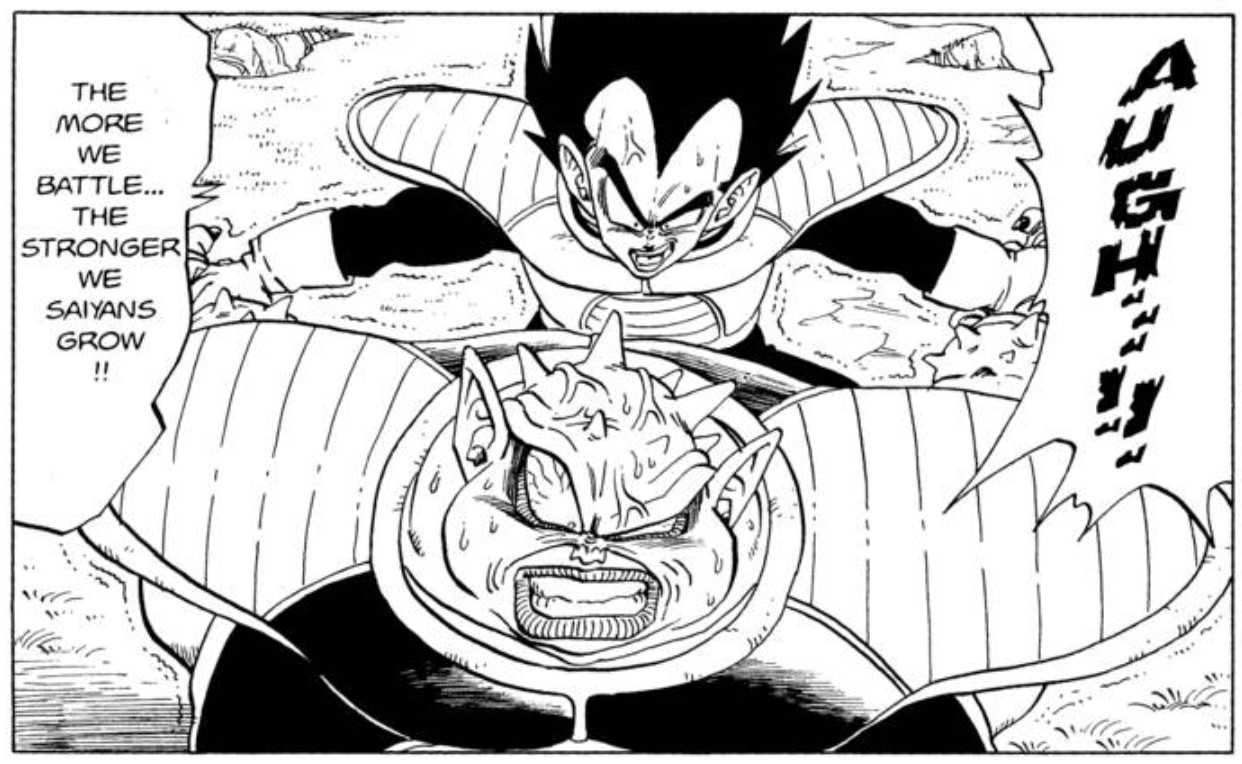
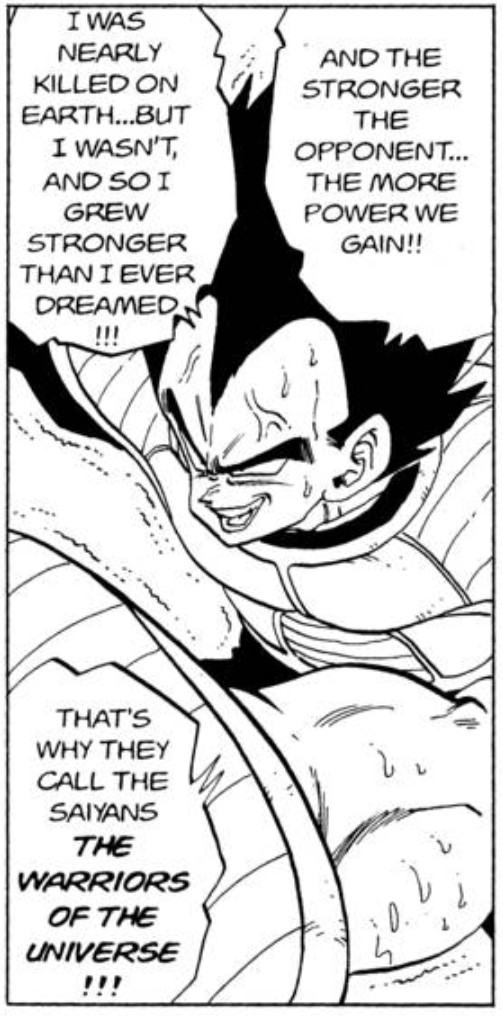
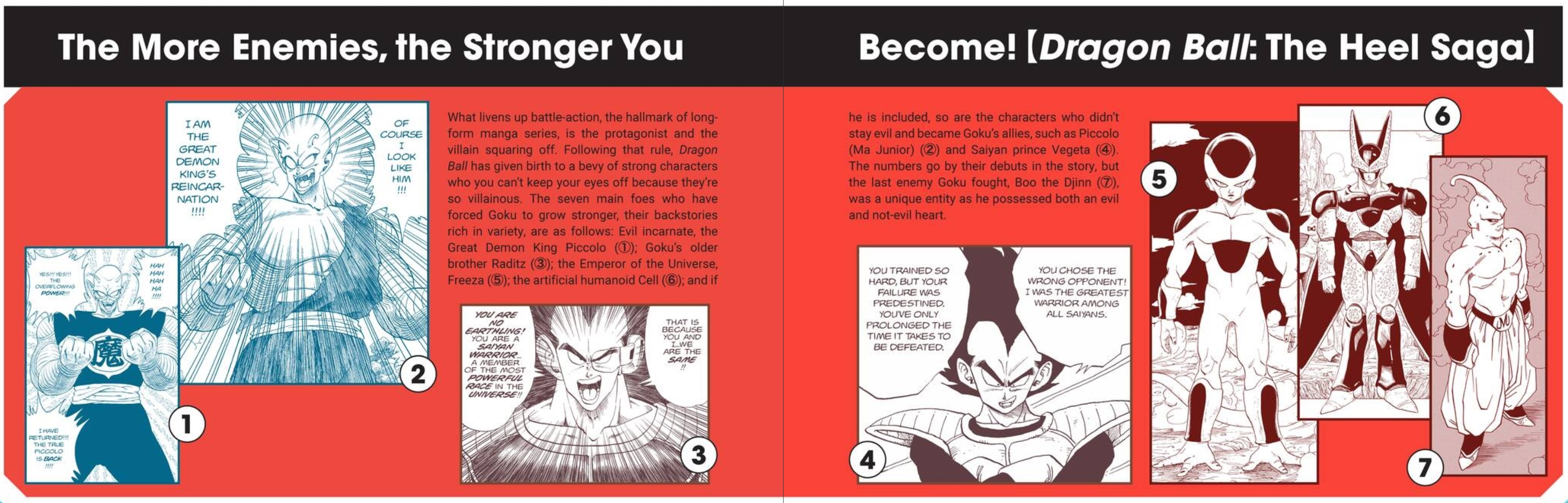
When we look at it from this perspective, it’s not unreasonable that Goku, the main character of the series, surpassed Gohan. If Broly and Vegeta can get stronger from napping or fighting briefly, why can’t Goku? Additionally, in Chōzenshū 1 on page 233 (Daizenshū 4 page 43), while explaining Saiyan physiology, it states that, “The stronger the opponent you fight, the stronger you become.” Vegeta explains this to Dodoria right before he kills him in chapter 257 on page 10, which is what the guidebook is likely citing. Of course, Saiyans increase in power from surviving a near-death experience, but these 2 sources establish that they also increase in power just through fighting. So it seems as though that through fighting Kid Buu, Goku increased quite a great deal in power. It’s also important to note that Daizenshū 4 was published only four months after Dragon Ball had ended, and chapter 257 was released in 1990. This means that Saiyans increasing in power throughout a fight wasn’t a new concept that Toriyama introduced in Dragon Ball Z: Battle of Gods, as some fans believe. Furthermore, on pages 36 and 37 of Dr. Mashirito’s Ultimate Manga Techniques, Torishima llsts Majin Buu as one of “the seven main foes who have forced Goku to grow stronger.”
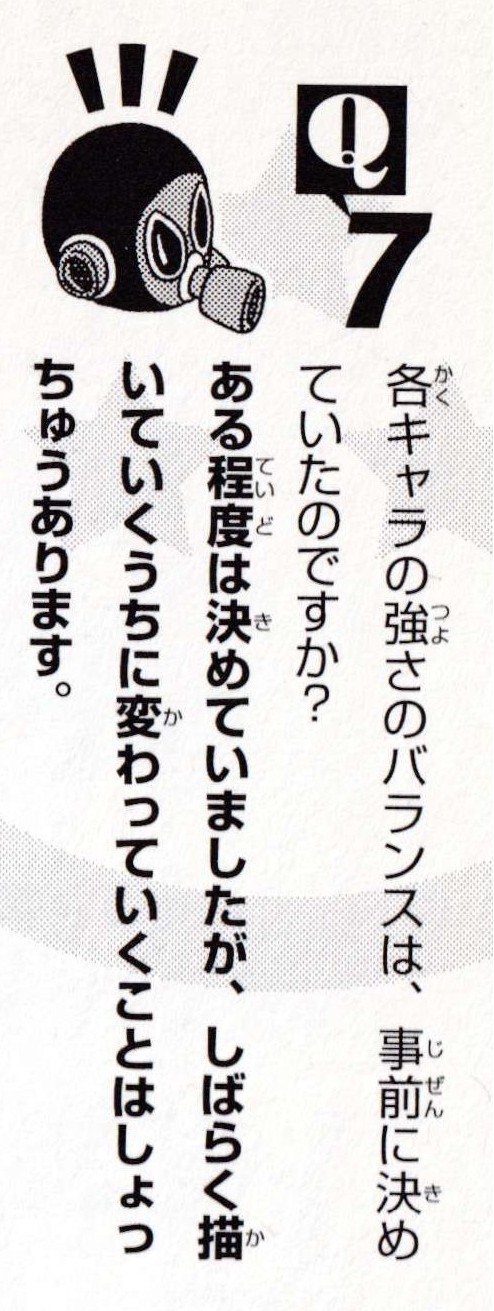
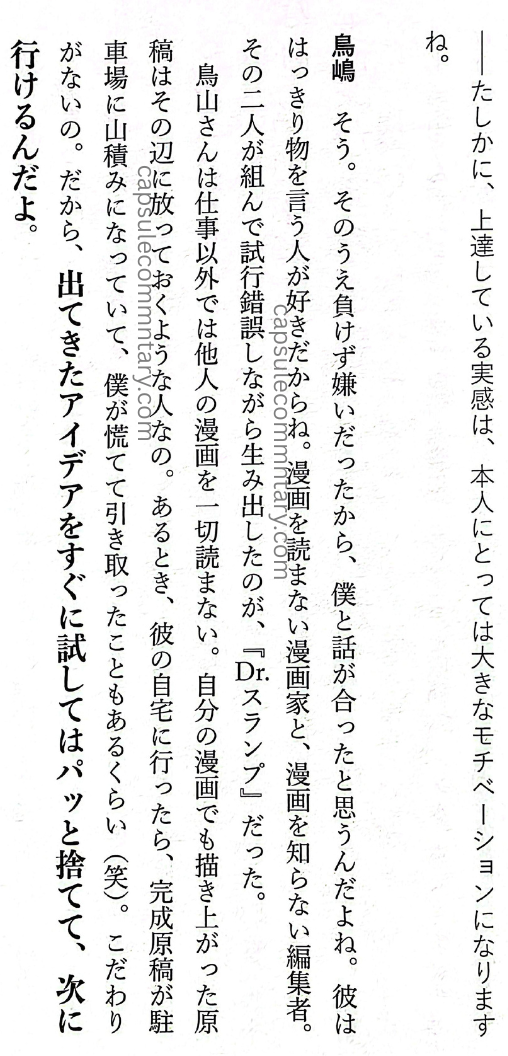
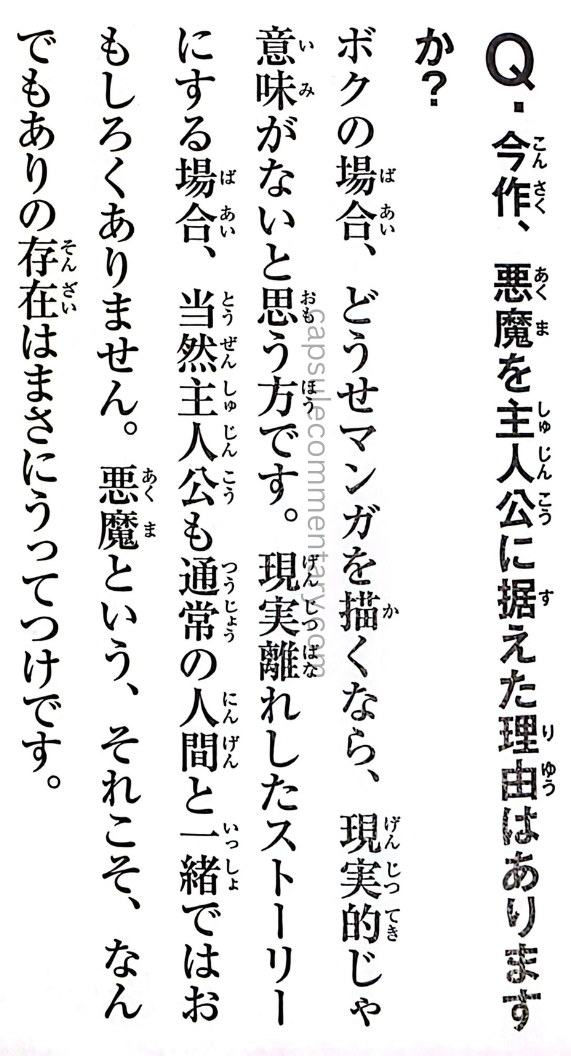
During his interview for Dragon Ball: Extreme Battle Collection: Round 02, we can also see that Toriyama cared little for logical consistency with power-scaling, saying: “I had decided [the characters’ balance of power] to some extent, but as I kept drawing, it would often end up changing.” In his interview for the Sand Land Kanzenban, when asked why the main character is a demon, he said, “In my case, I figure if I’m going to draw a manga anyway, there’s no point in making it realistic.” And on page 29 of Rejected: The ‘Unpopular’ Work Techniques of the Legendary Editor-in-chief of Weekly Shōnen Jump, Torishima said of Toriyama, “He doesn’t obsess. So when an idea comes out, he immediately tries it and if it doesn’t work, he just tosses it aside and moves on to the next one.” This is why it’s possible for Goku to be weaker than Super Buu in chapter 506, and then just as strong as Buuhan in chapter 510; Toriyama did not care about making his comics realistic or having static power dynamics. I expand upon inconsistencies and contrivances in the Suspension of Disbelief section.
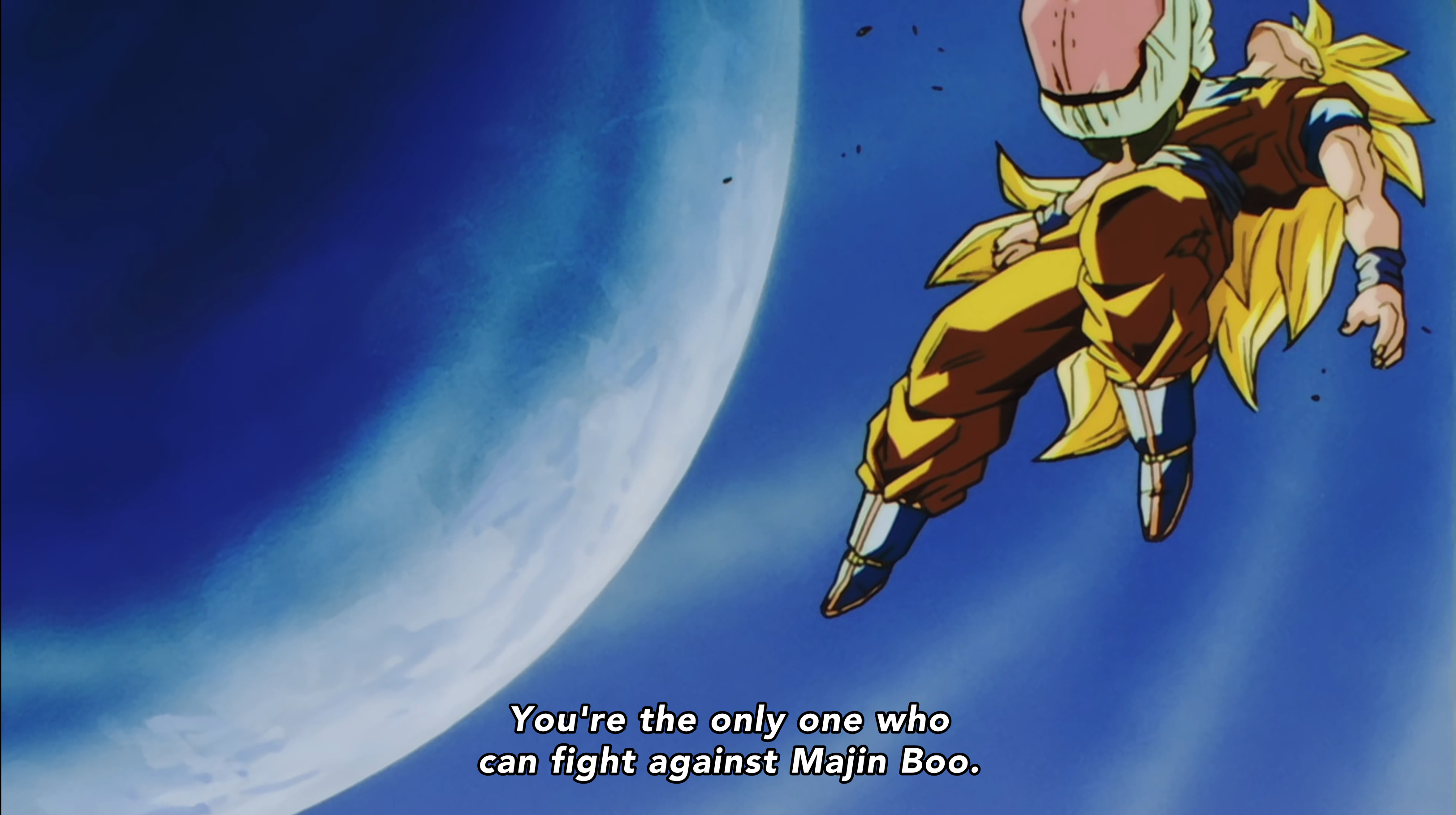
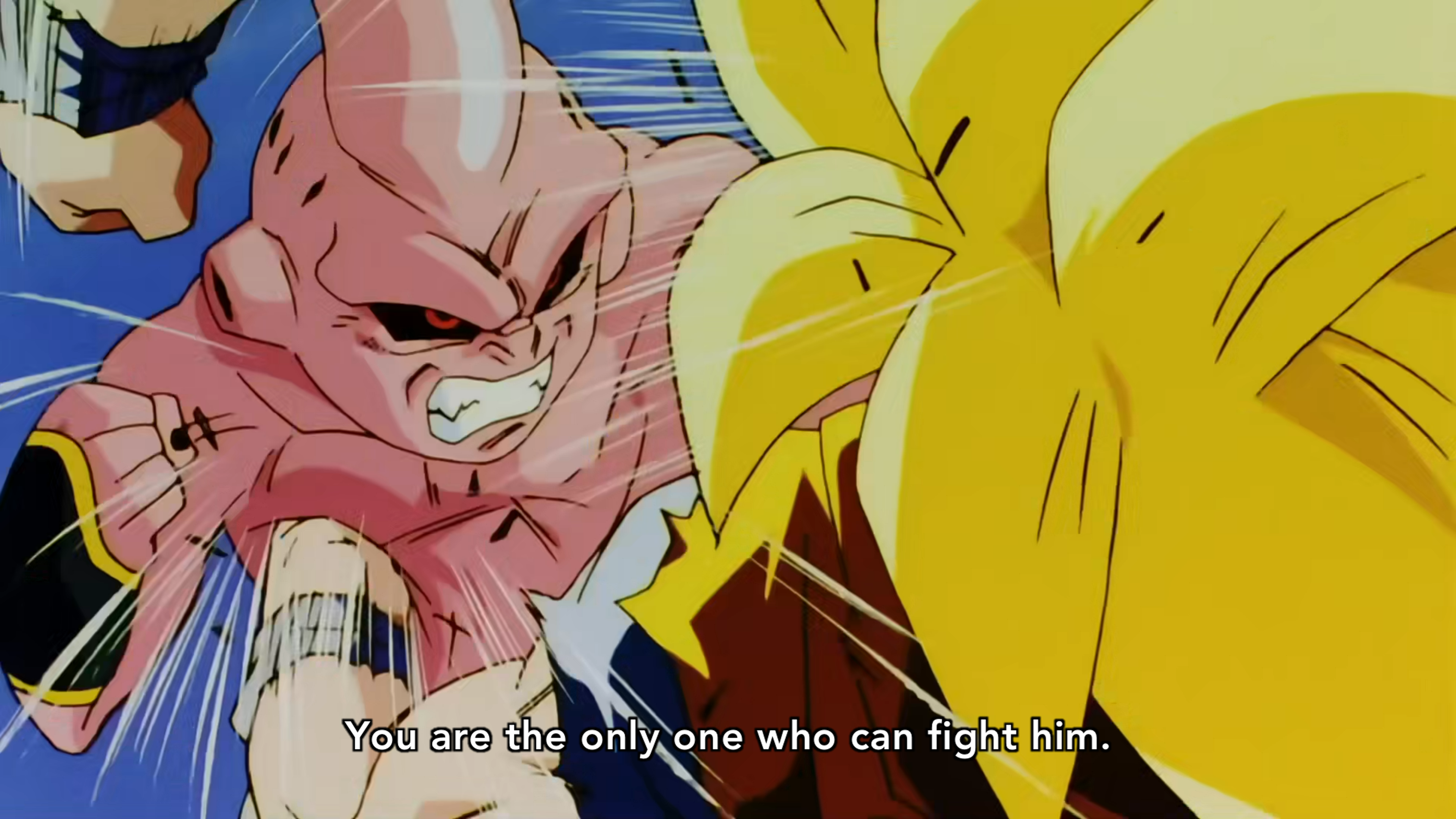
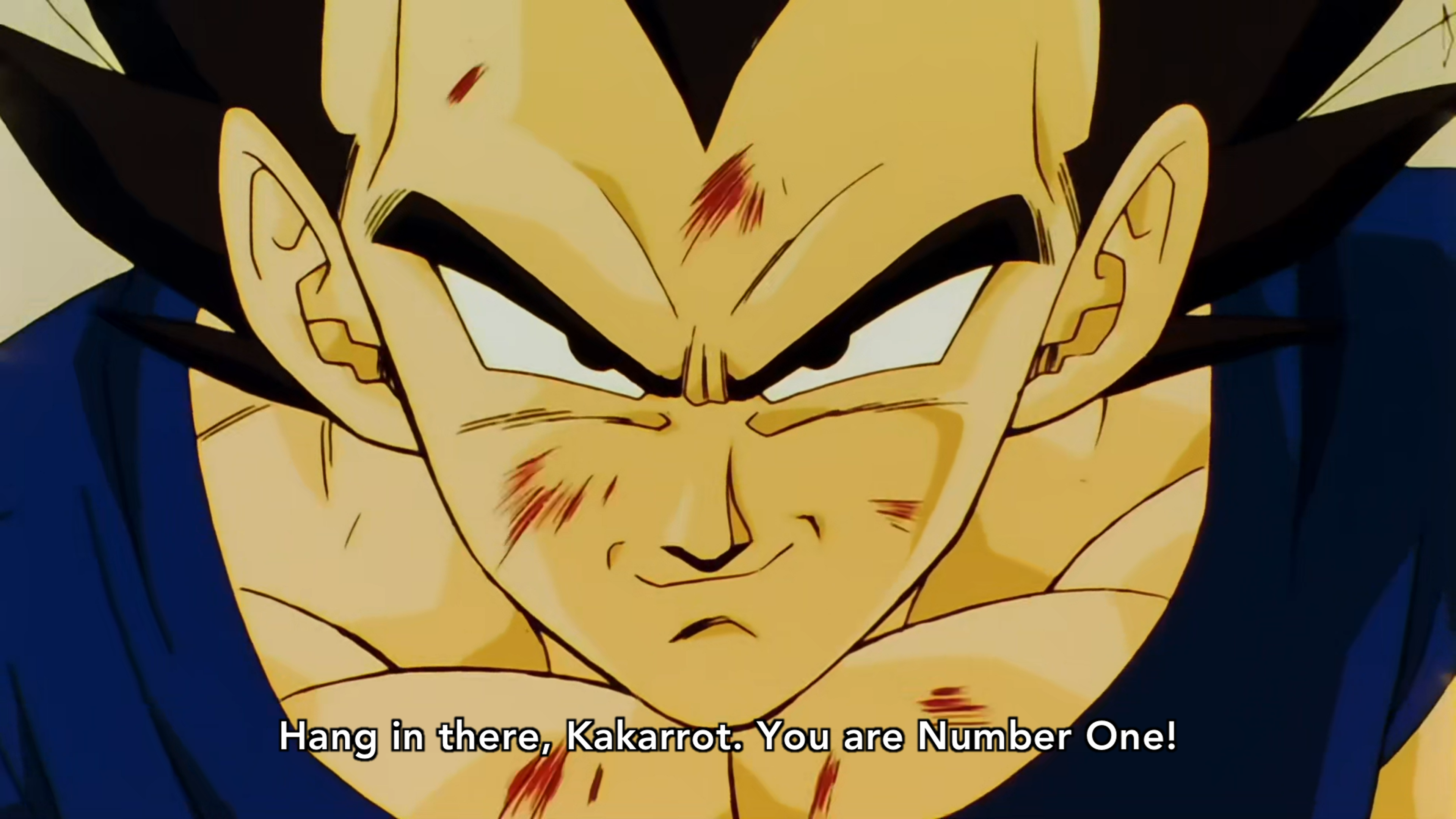
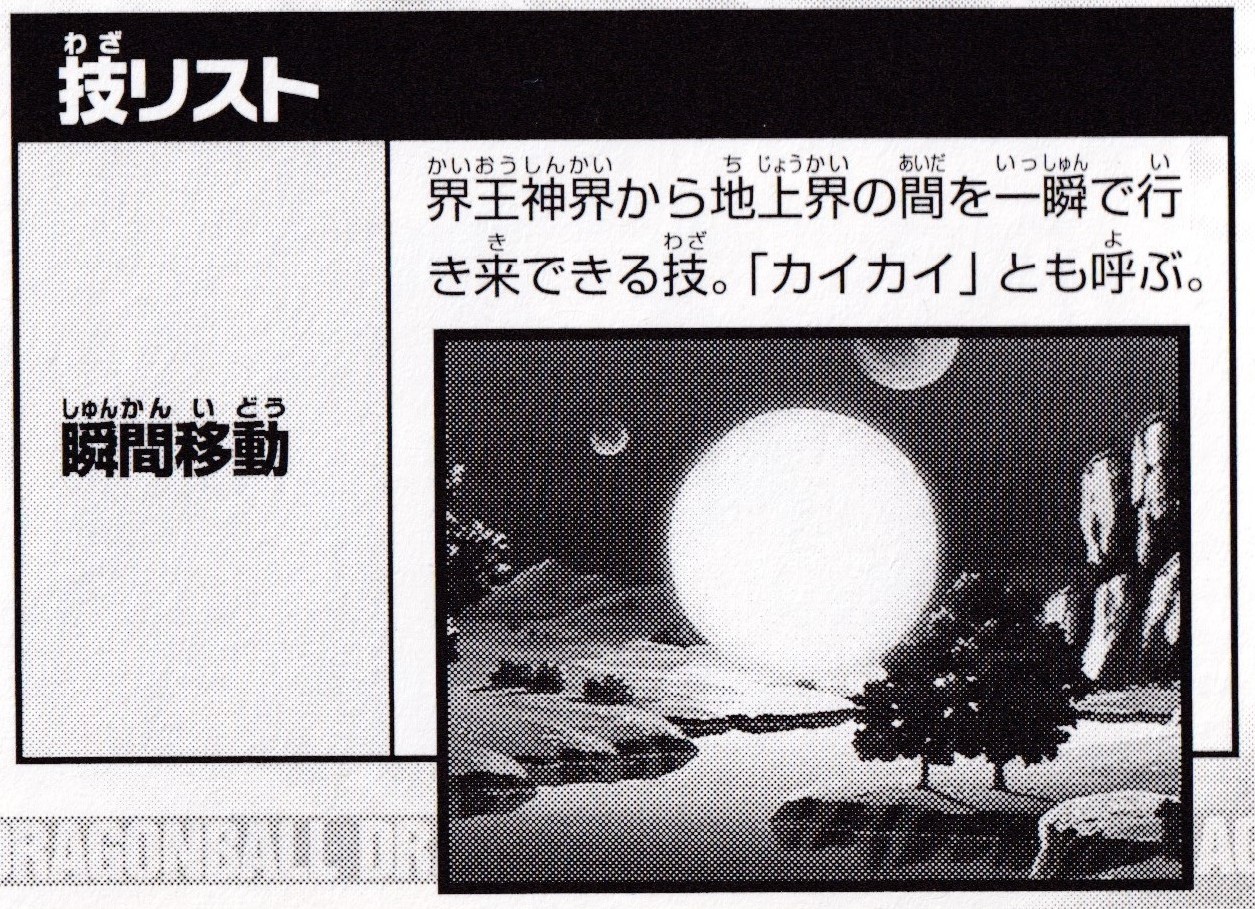
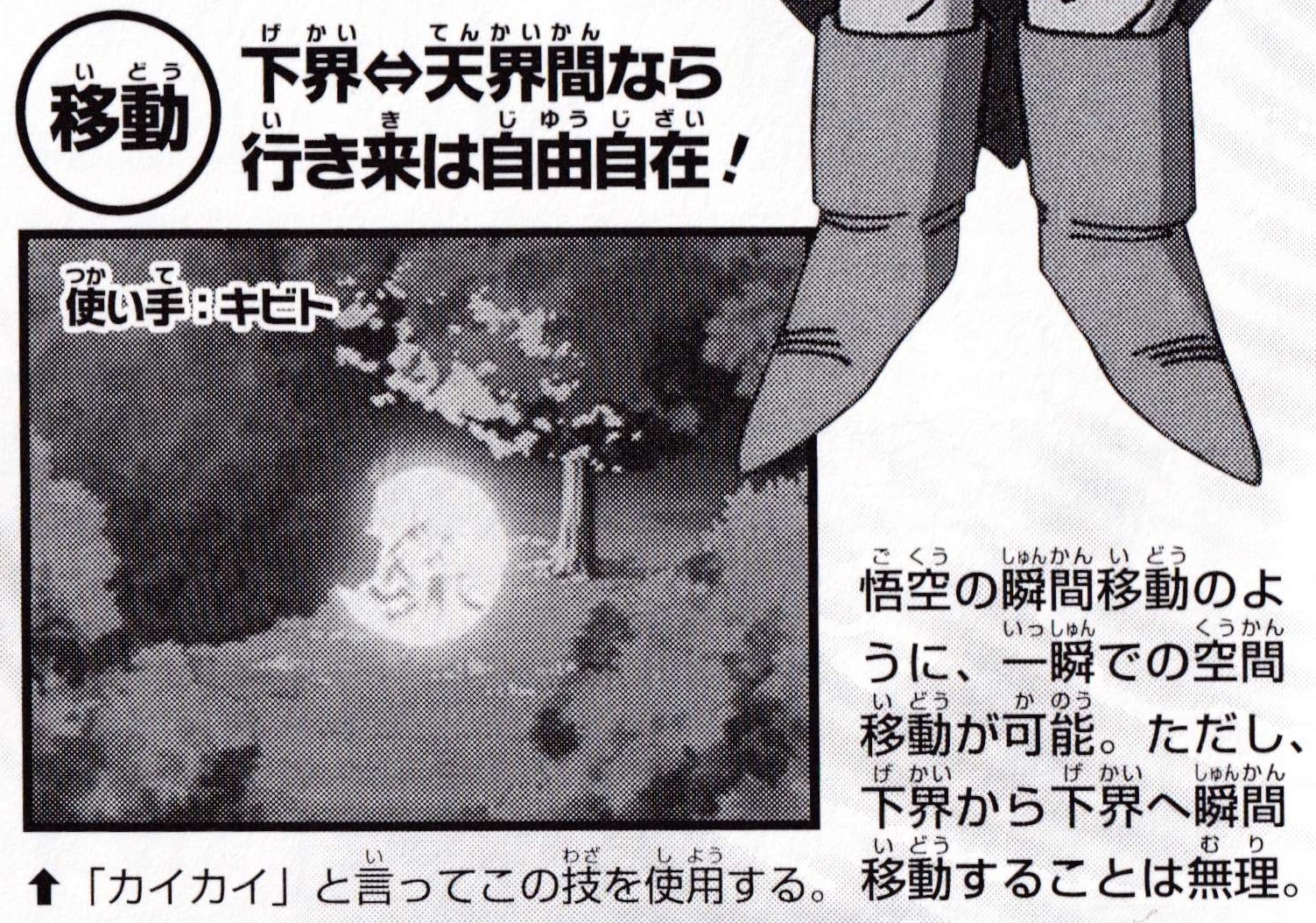
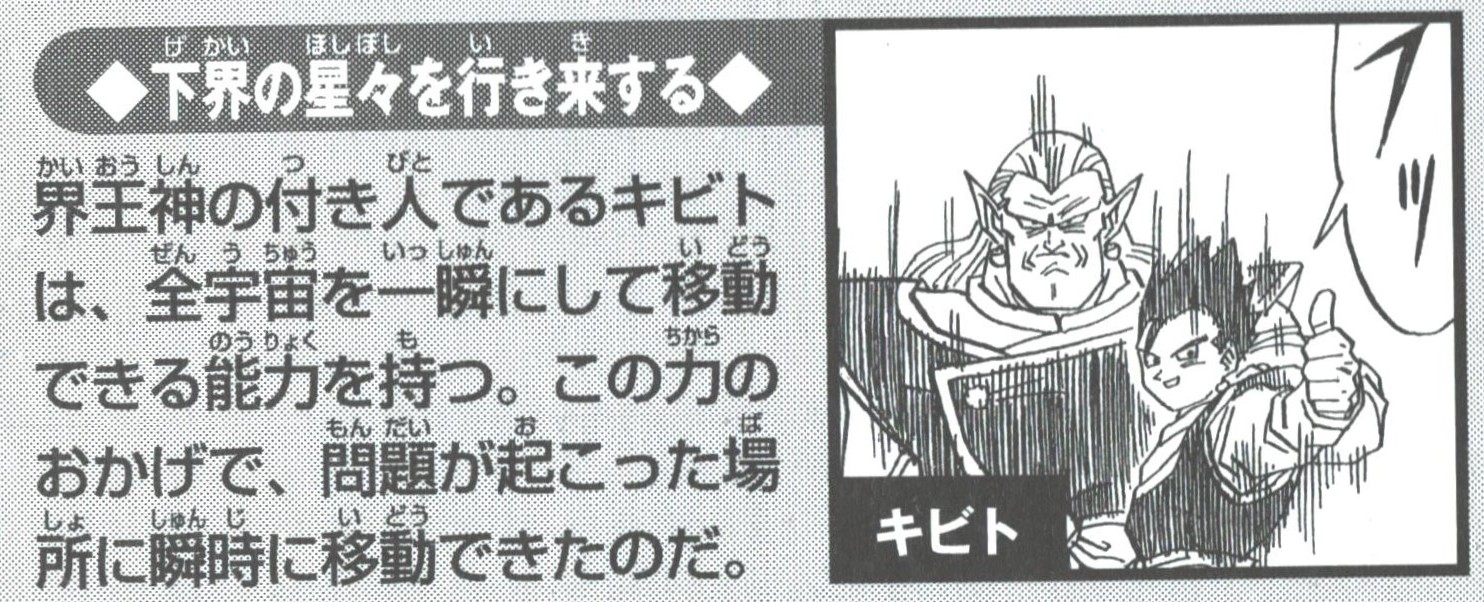
Vegeta is dead from the beginning of the fight against Buuhan to the end of the fight with Kid Buu. So he knows from personal experience that good, dead people can maintain their bodies and fight. He also knows that Kibitoshin can teleport to anywhere in the universe instantly and that the Dragon Balls can teleport people to different locations. Page 245 of Chōzenshū 1 (Daizenshū 4 page 55), pages 69 (Daizenshū 7 page 63) and 139 (Daizenshū 7 page 129) of Chōzenshū 4, pages 75, 87, and 92 of Dragon Ball: Extreme Battle Collection: Round 0221, and page 67 of Dragon Ball: Super Exciting Guide: Character Volume all confirm this about Kibito’s teleporting ability, Kai Kai. We also know that Enma Daiō was closely monitoring Majin Buu as he had Vegeta on standby since at least when Fat Buu split into Good and Evil Buu, and released him after Buutenks appeared. We can’t see the condition of Enma Daiō’s waiting line in the manga when Vegeta is released, but the anime depicts it as empty. So not only was Enma Daiō closely monitoring the fight, but he also had plenty of time to give Gohan, Trunks, and Goten a body. However, Vegeta does not consider having Kibitoshin or Porunga bring Gohan and Gotenks to the battle against Kid Buu. This means that after having fought both Buuhan (as Vegito) and Kid Buu, Vegeta believes that he, Goku, Fat Buu, Gohan and Gotenks combined are not strong enough to beat Kid Buu. If reviving Gohan and Gotenks had been a realistic means to achieve victory, Vegeta would have pursued that. It wasn’t and this is why he goes forward with the Genki-dama plan. This is confirmed on page 122 of Chōzenshū 1 (Daizenshū 2 page 148) where it states, “The only one who can fight Buu is Goku.”
While Vegeta does state that the Earthlings need to take responsibility for their own planet, this shouldn’t be mistaken as the sole reason for relying on the Genki-dama. The fight with Kid Buu makes it clear that Goku couldn’t defeat him alone, and Vegeta even risked his existence to buy time for the Genki-dama to form. The Genki-dama wasn’t some symbolic gesture to Earthlings. It was the only trump card they had left to kill Kid Buu. Also, this line of argumentation doesn’t hold up under any amount of scrutiny. Let’s just assume Gohan and Gotenks were stronger than Kid Buu, for the sake of argument. The Genki-dama had never worked before. The entire universe was at stake. Why would Vegeta not just go for the easy victory and summon Gohan and Gotenks? Why would he suddenly make a grand symbolic gesture to the people of Earth with a technique that had a 0% success rate at that point in the story? It requires twisting and jumping through hoops for this narrative to work, whereas the simple and easy-to-understand (Toriyama’s writing style) option was to rely on the Genki-dama simply because it was the only chance they had at victory, despite how unlikely it was to work.
Additionally, bringing Gohan and Gotenks there creates new problems. The first is that if they were brought there before the Genki-dama begins via Kibitoshin’s teleportation or the Dragon Balls, this means the Genki-dama would have considerably less ki to drawn upon for its creation, and may not be powerful enough to kill Kid Buu. This is because they would be forced to expend their ki while fighting Kid Buu. If they are brought there after the Genki-dama begins, this means that the third wish would have been used to bring them there, thus ensuring Kid Buu’s victory as Goku would not have the energy to push the Genki-dama.
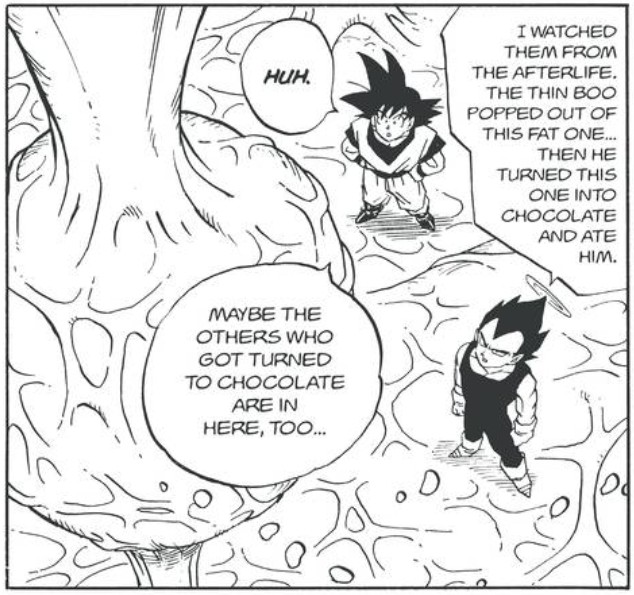
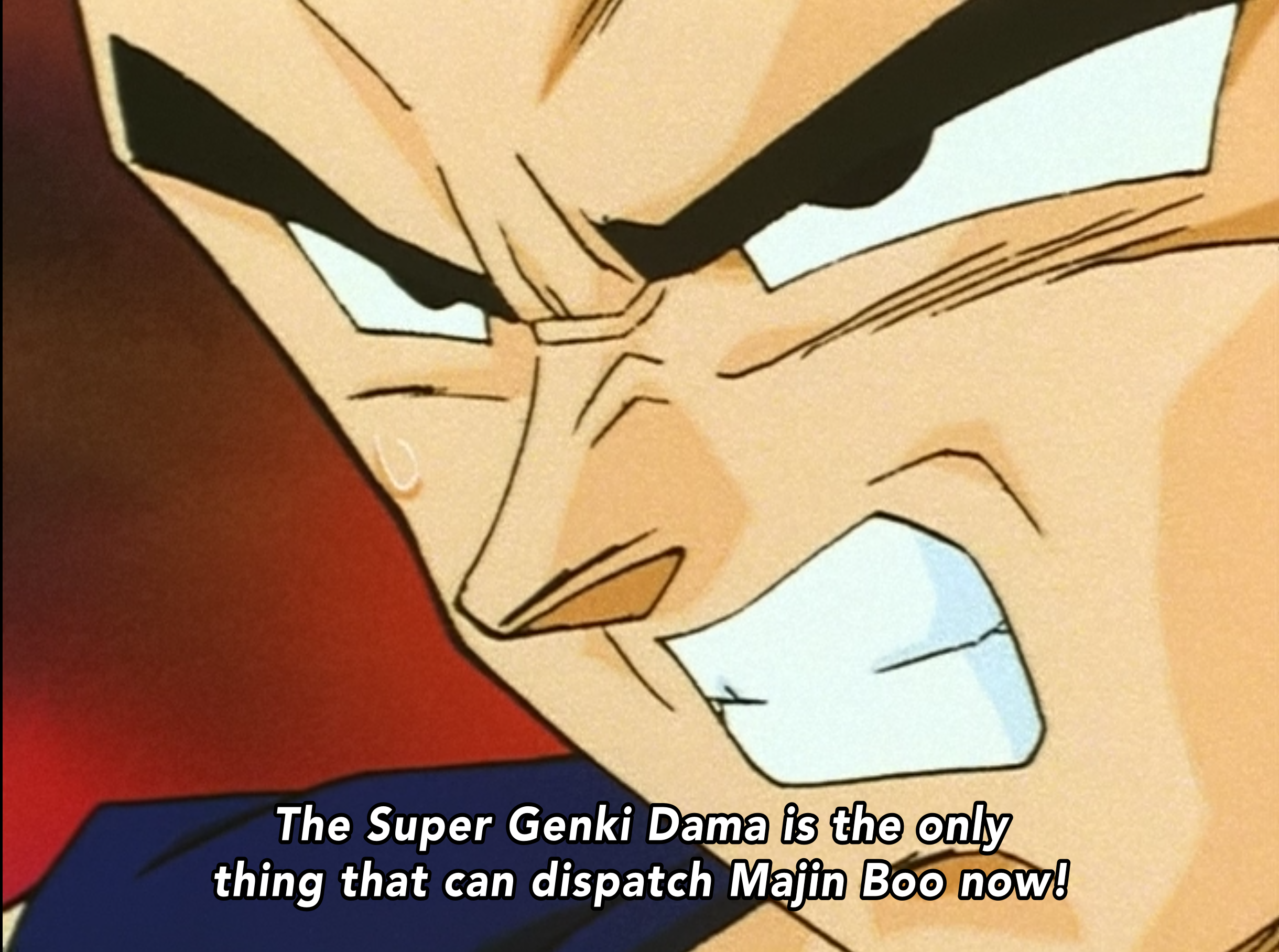
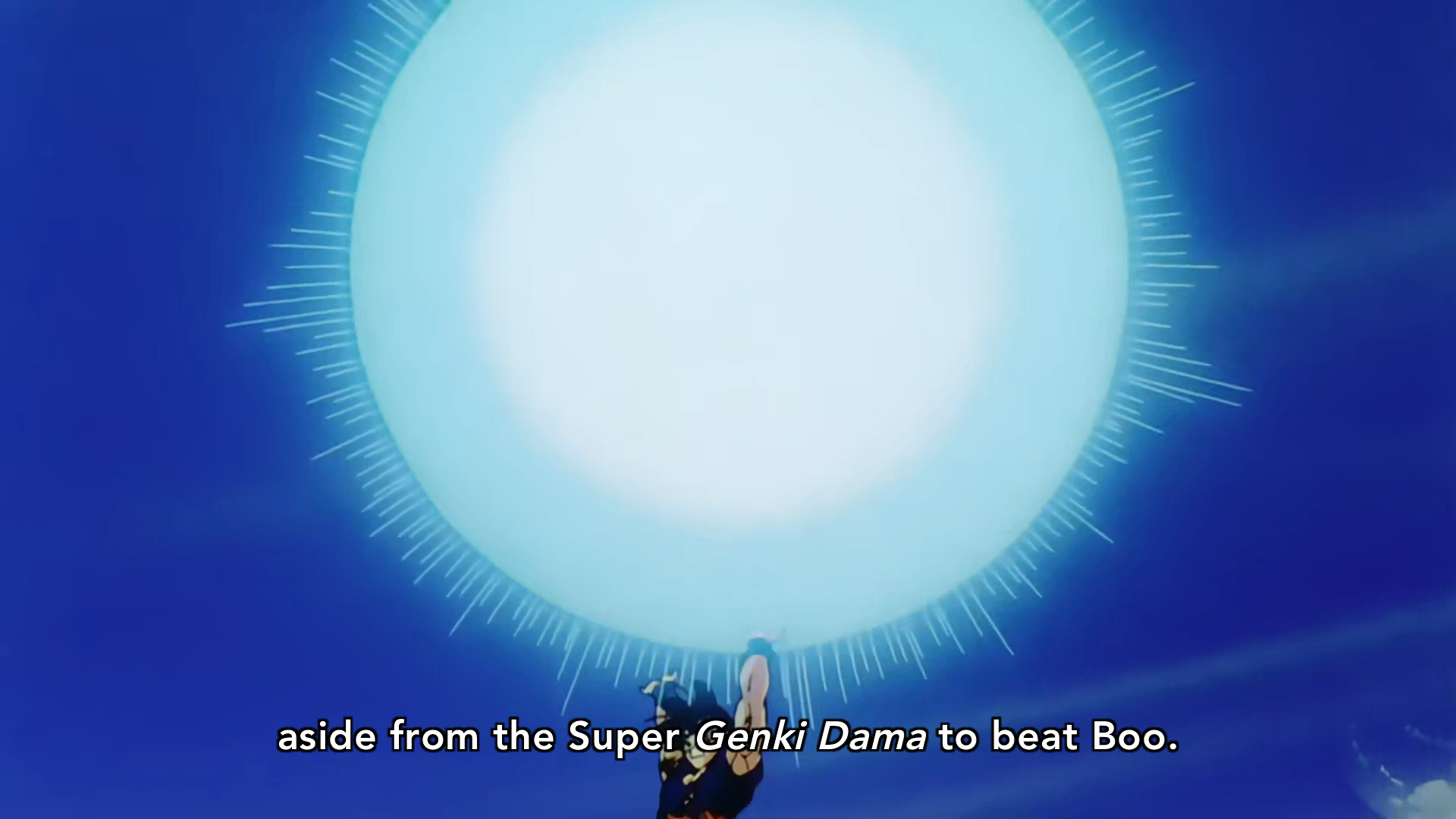
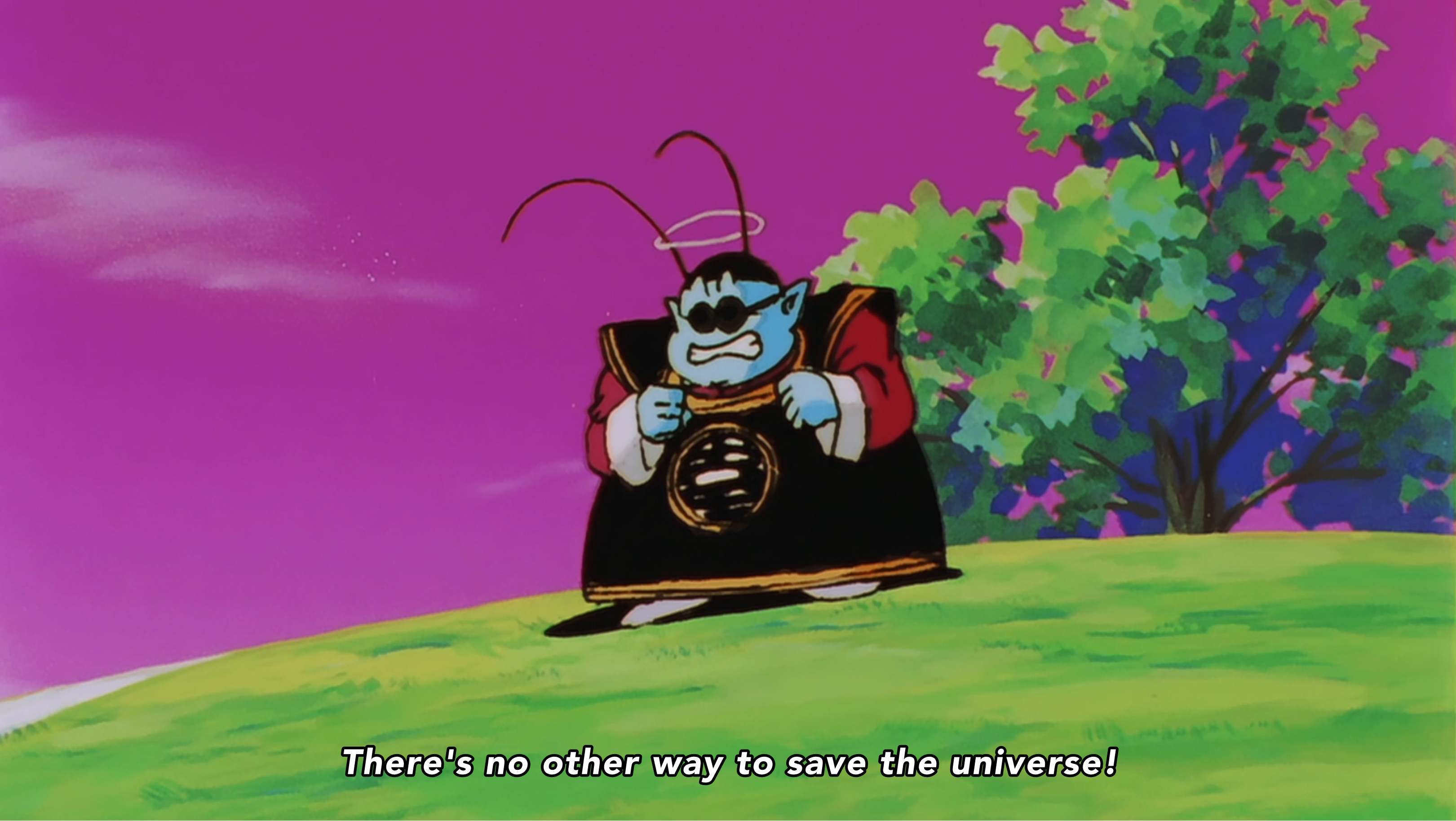

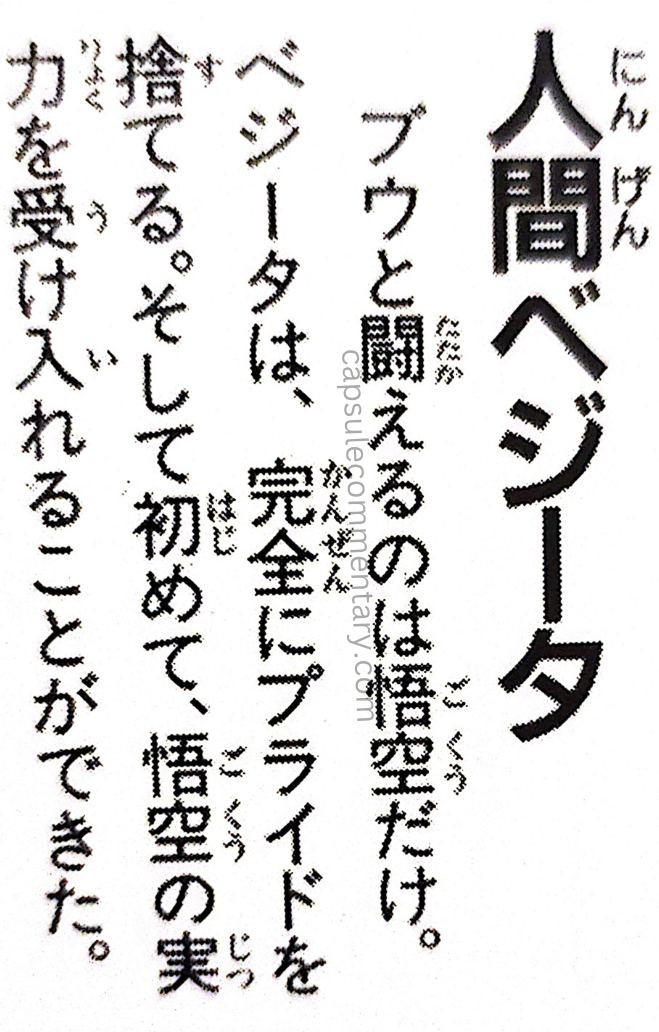
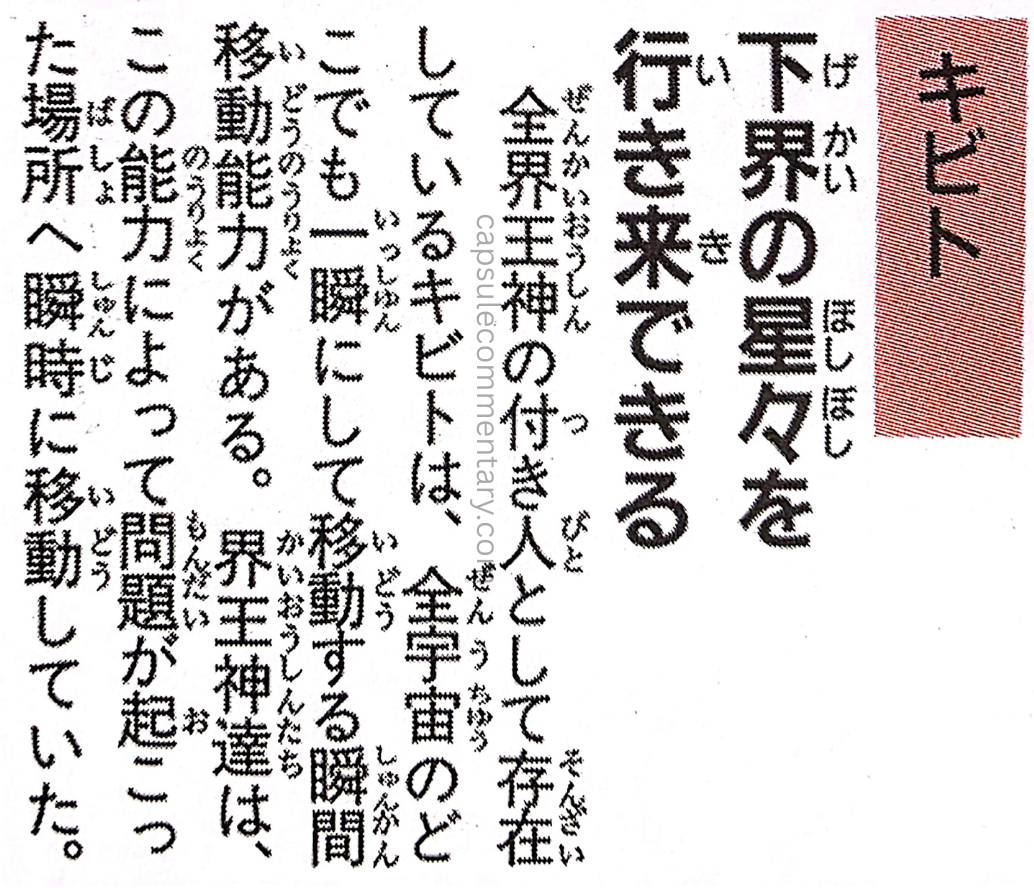
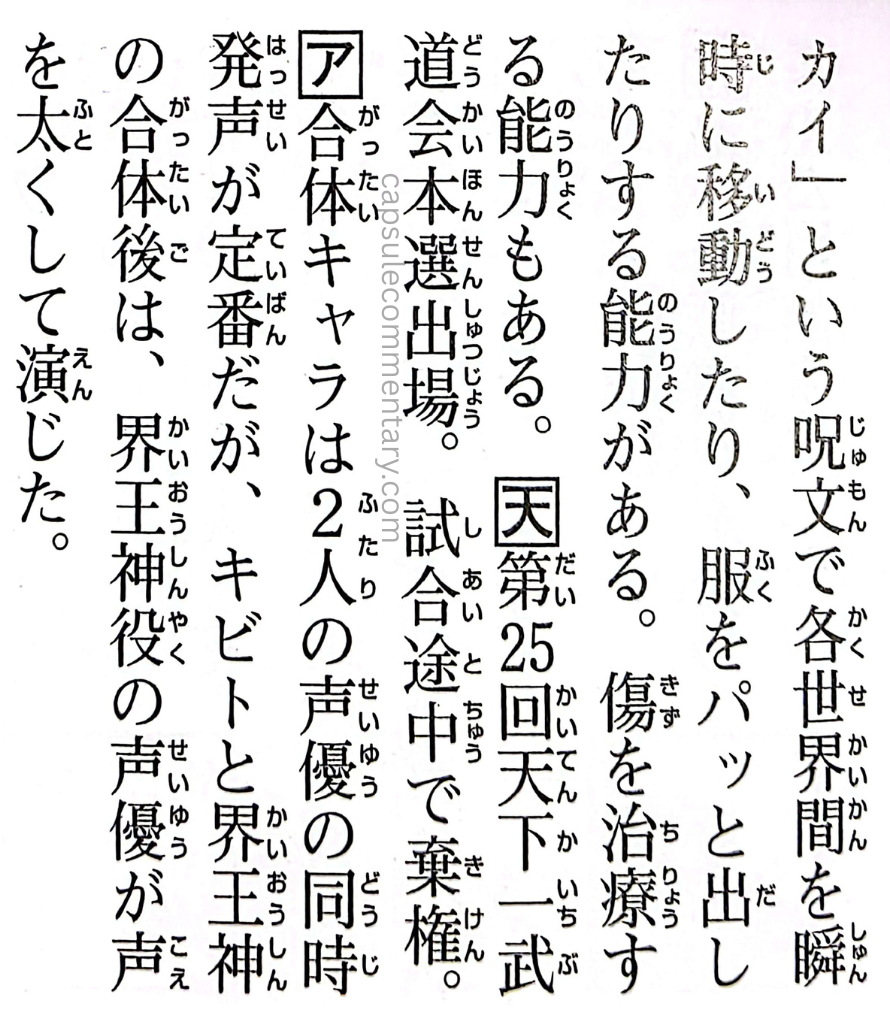

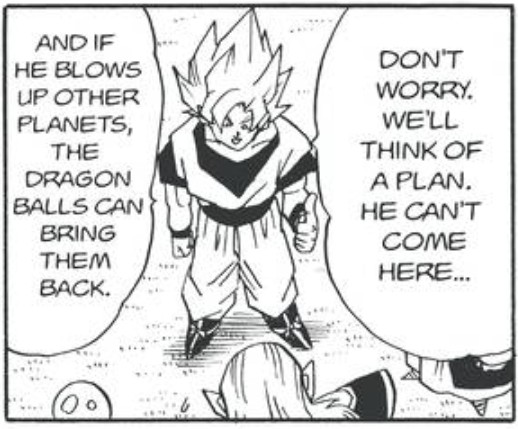

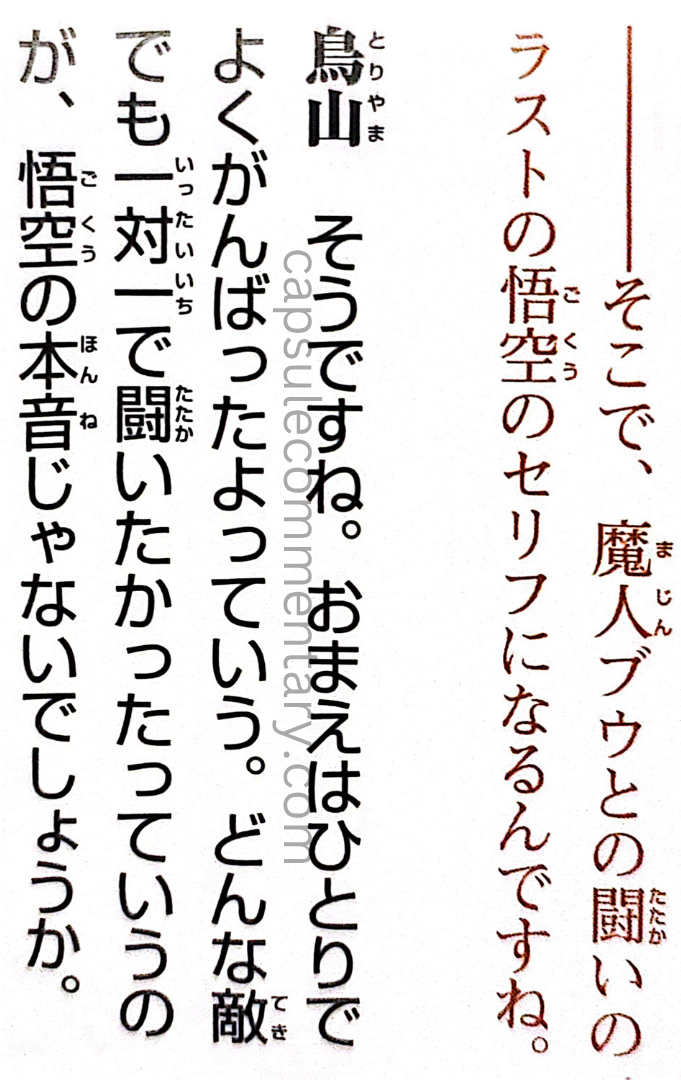
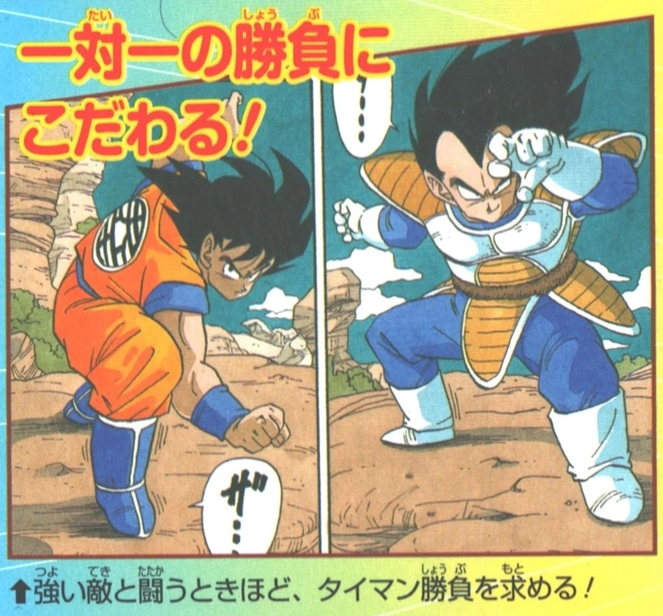
Goku and Vegeta believe they will have time to think of a plan to defeat Kid Buu without the Potara. They don’t believe that Kid Buu can reach them on the Kaiōshin’s planet. So when Kid Buu suddenly arrives on page 8 of chapter 509, that’s why everyone is so shocked. Page 36 of Dragon Ball: Forever confirms this by describing Kid Buu’s appearance there as a “sudden attack.” It’s likely that they still intended to eventually fight Kid Buu 1-on-1, but they just didn’t intend to do it right now. The intention to have a 1-on-1 fight at some point is confirmed by Toriyama in the interview at the end of Chōzenshū 1 on page 345 (Daizenshū 2 page 265), “Goku was always fighting alone, and no matter how strong the enemy was, he always wanted to fight them one-on-one. That is how I always envisioned Goku’s true nature.” This quote is actually one of the key parts of the interview, as the left side of that same page reads, “No matter the opponent, I want to fight one-on-one… That is Goku’s true nature as a character.” Page 7 of Dragon Ball: Super Exciting Guide: Character Volume also confirms this, stating, “The stronger the opponent, the more they seek a fair fight to prove who’s the best!” The plot of the Dragon Ball Z anime and Dragon Ball Kai are quite different following this scene, so I’ve opted to only use the manga. I will elaborate on the Potara more in the following section.
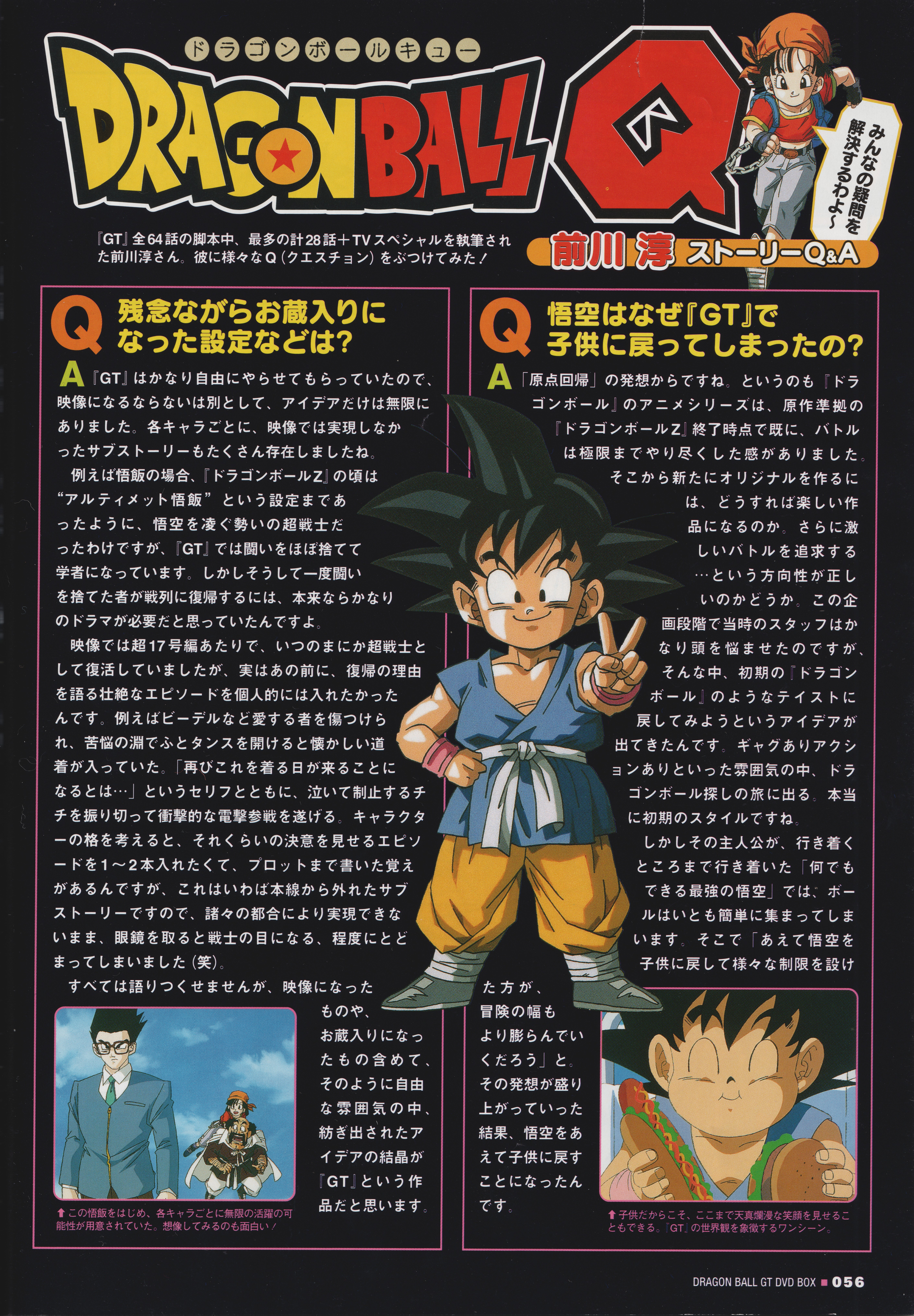
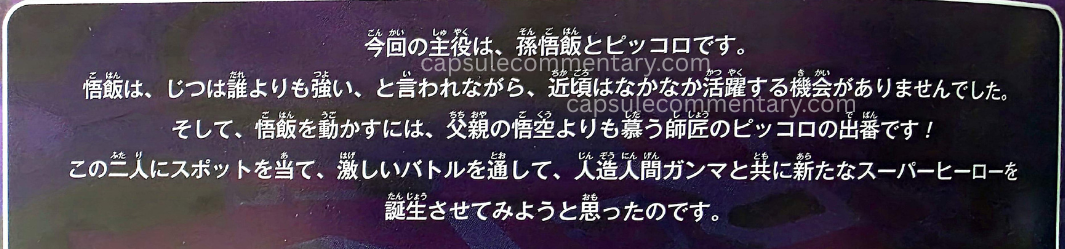
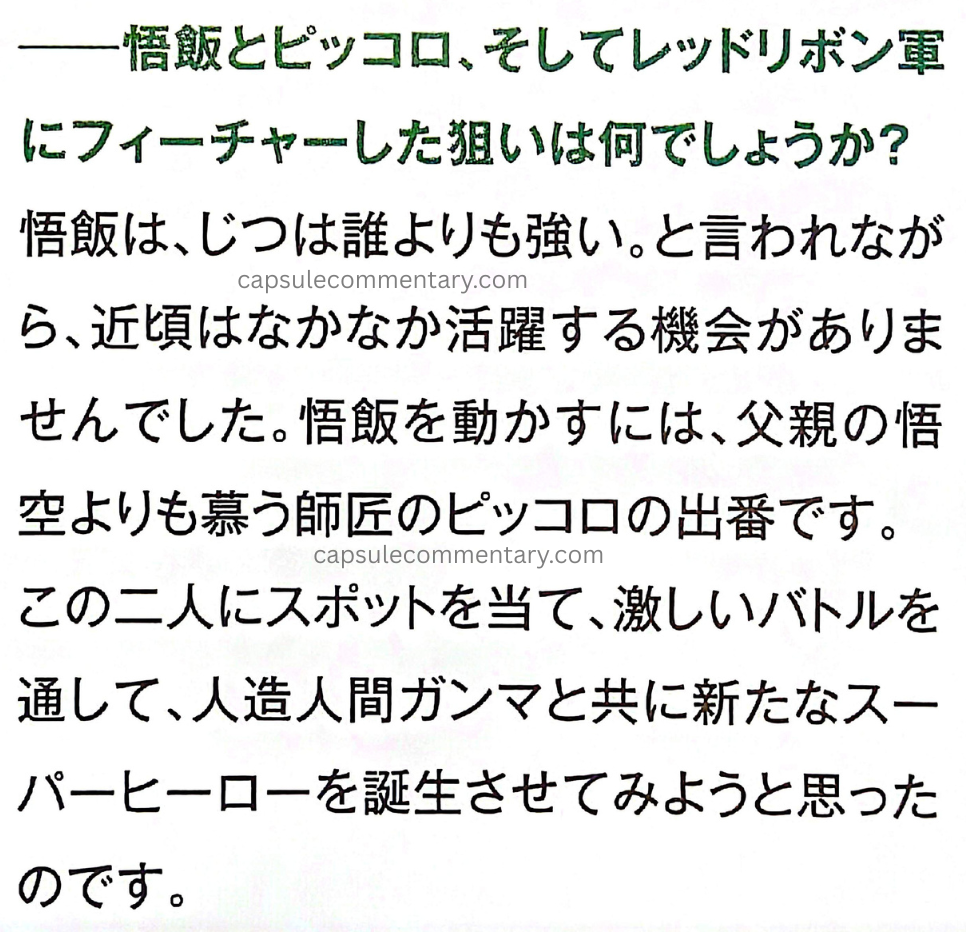
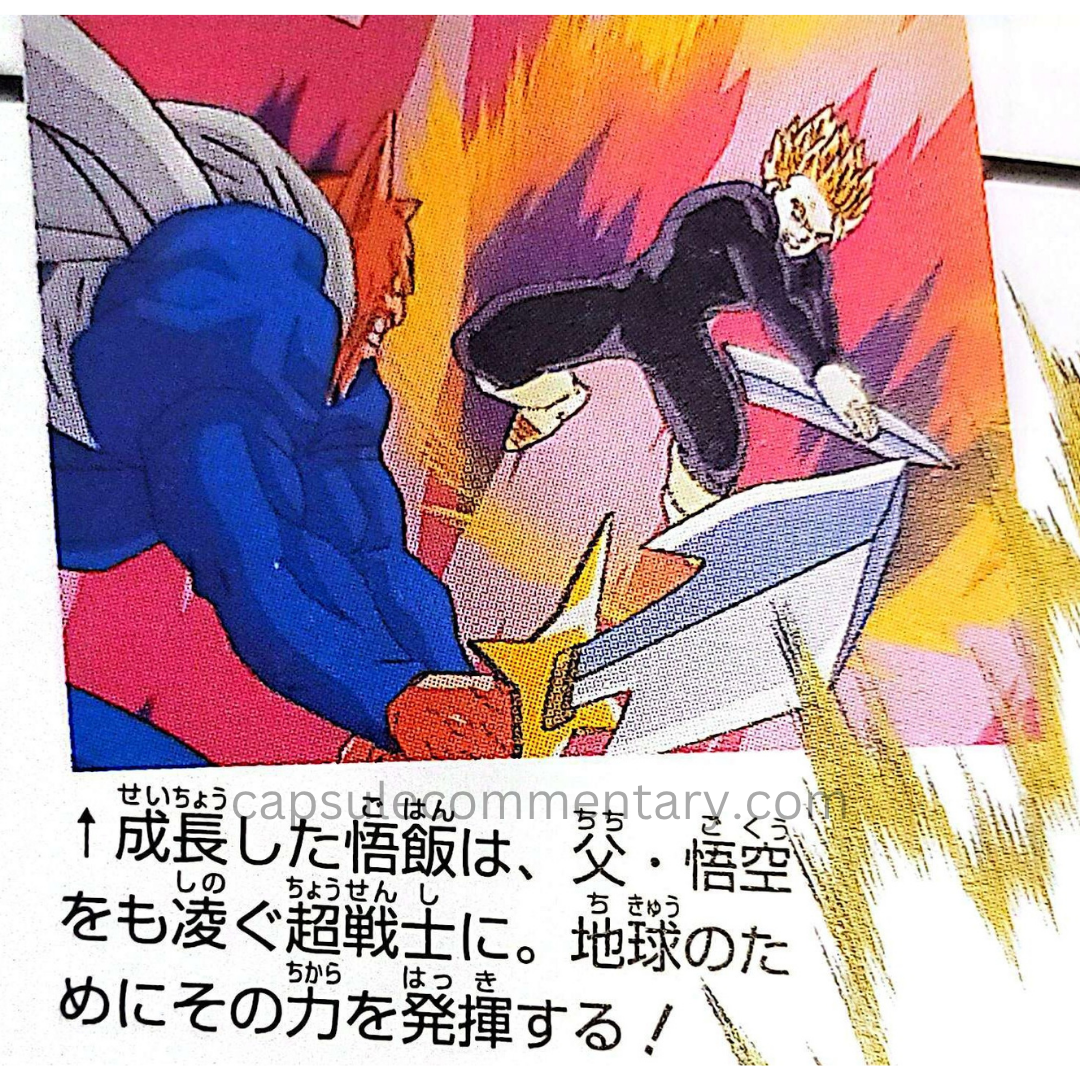
For one final point before moving on: of the hundreds of sources I have looked into, there are appproximately 5 references to Gohan being “the strongest” or “stronger than Goku” during the Buu Saga, and one of those occurs on page 37 of TV Anime Guide: Dragon Ball Z Son Goku Densetsu in a caption describing a picture of Gohan fighting Dabura. It reads: “Gohan, who has grown, becomes an even greater Super Saiyan than his father, Goku. He unleashes his power for the sake of the Earth!” Another is on page 91 of Chōzenshū 1 (Daizenshū 2 page 117) describing Gohan as “the strongest warrior” in volume 41 and as a father in volume 42. Volume 41 ends with Gohan being absorbed in chapter 502. There was never any doubt that Gohan was stronger than Goku BEFORE the fight with Kid Buu. On page 13 of chapter 499, Buutenks explains to Gohan that even though Gohan is stronger than Gotenks, he absorbed the latter so that he would have a stronger opponent to fight. We can extend Majin Buu’s rationale to why he chose to absorb Gohan over Goku in chapter 502. As for Gohan being the strongest at any point during the Buu Saga, please see below for the few that exist (including two from Dragon Ball Super: Super Hero). On page 56 of the Dragon Ball GT DVD Box Set Dragon Book, Atsushi Maekawa (one of the scriptwriters for Dragon Ball Z and GT) says, “For example, Gohan had the ‘Ultimate Gohan’ setting in Dragon Ball Z, where he became a super warrior stronger than Goku, but in GT, he’s fully walked the path of a scholar and hardly fights at all.” But in that same interview, he also says, “But with a ‘mightiest Goku who can do anything,’ gathering the Dragon Balls would be way too easy.”
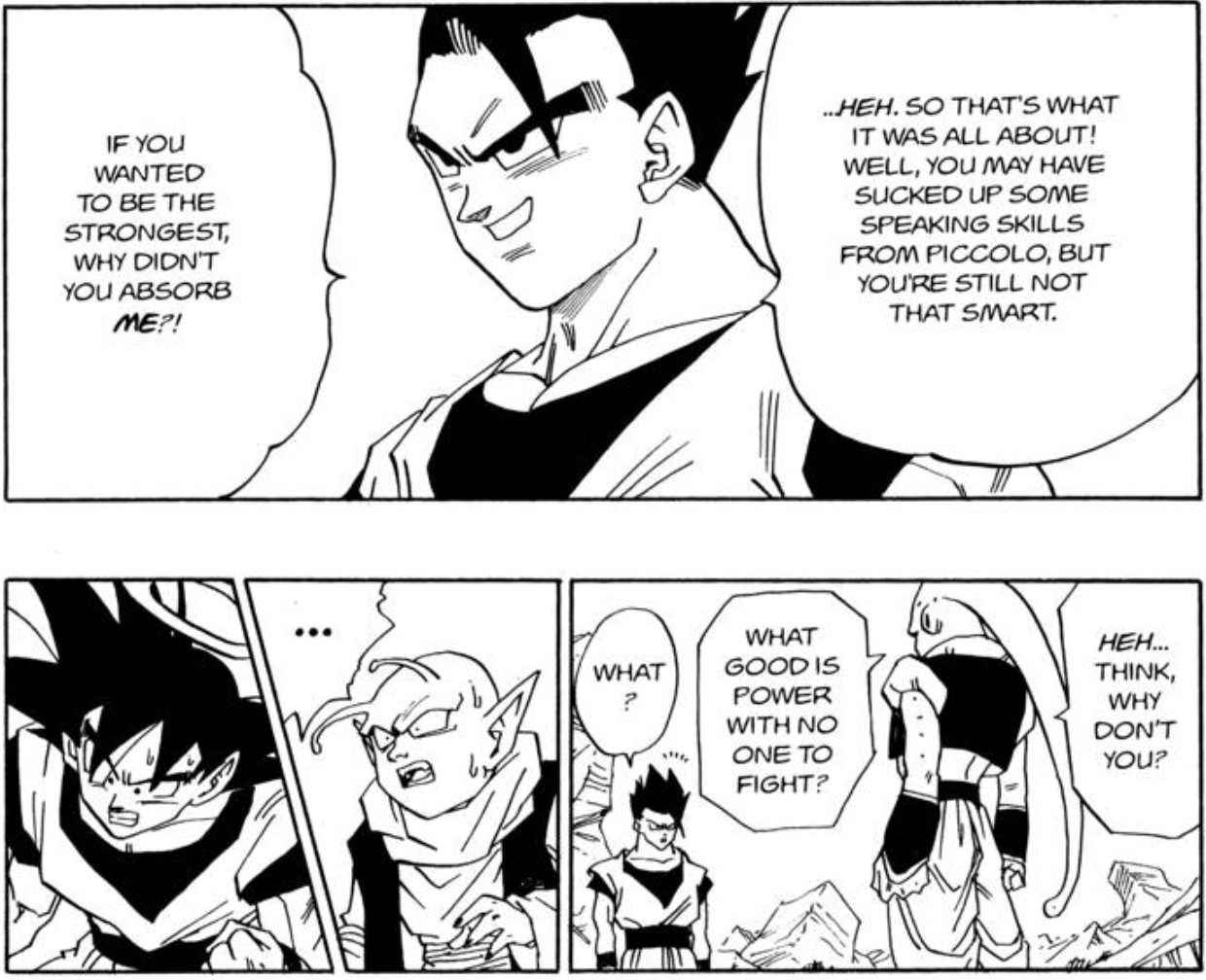
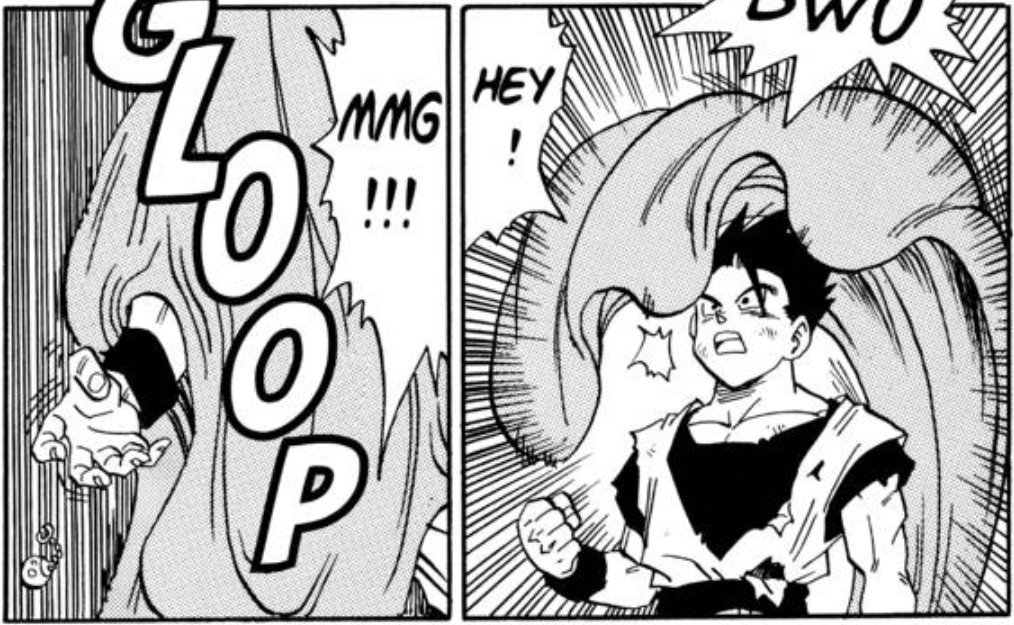

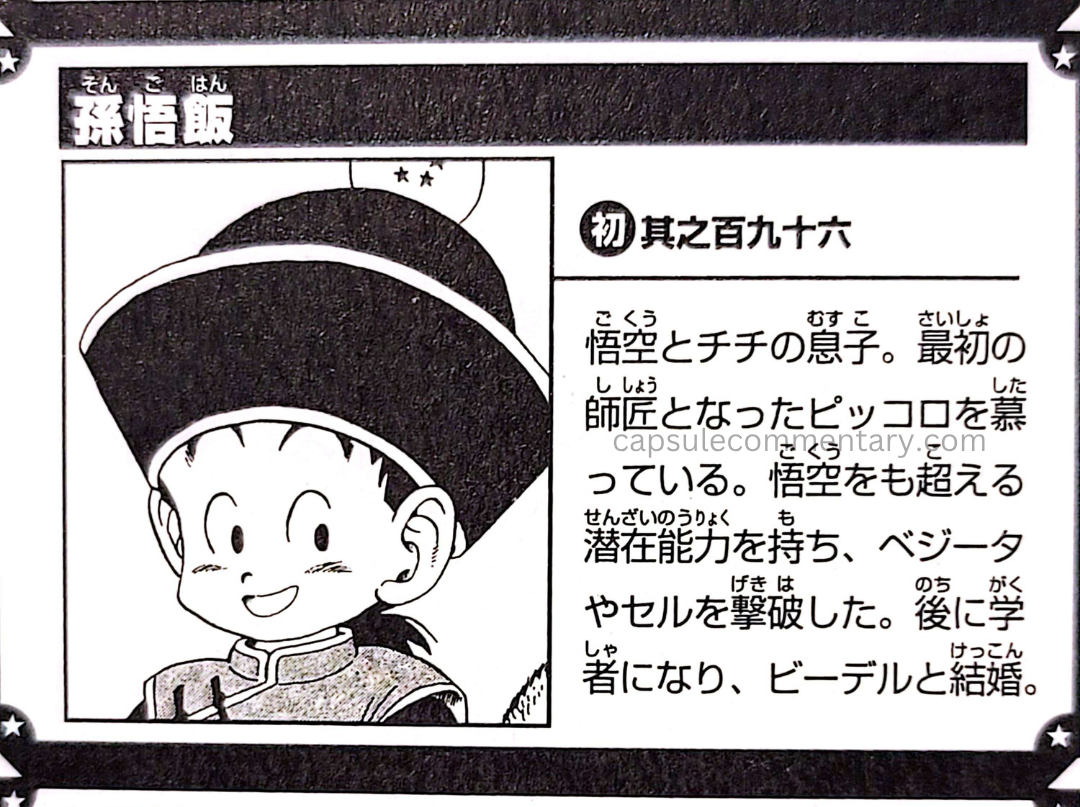
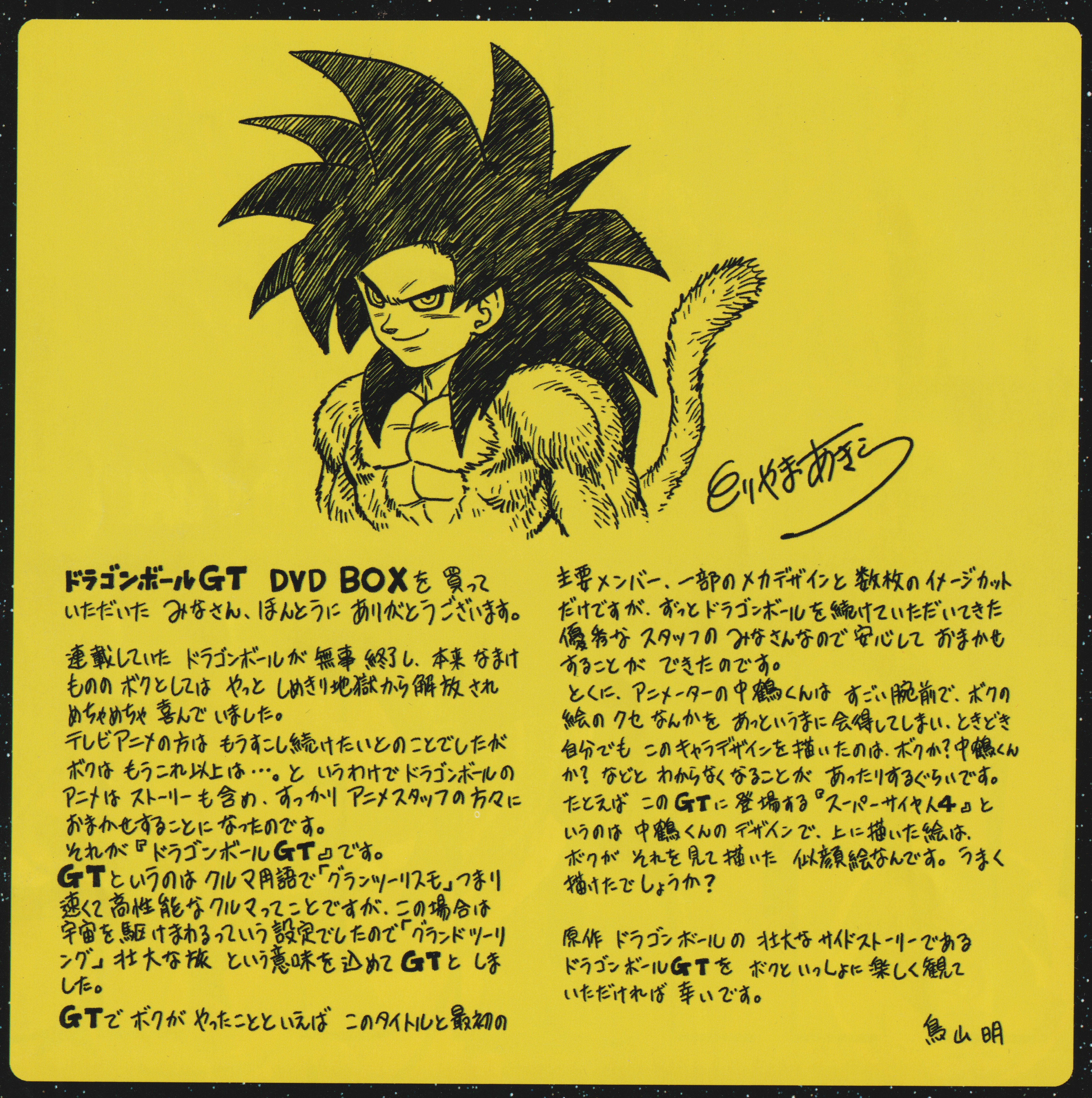
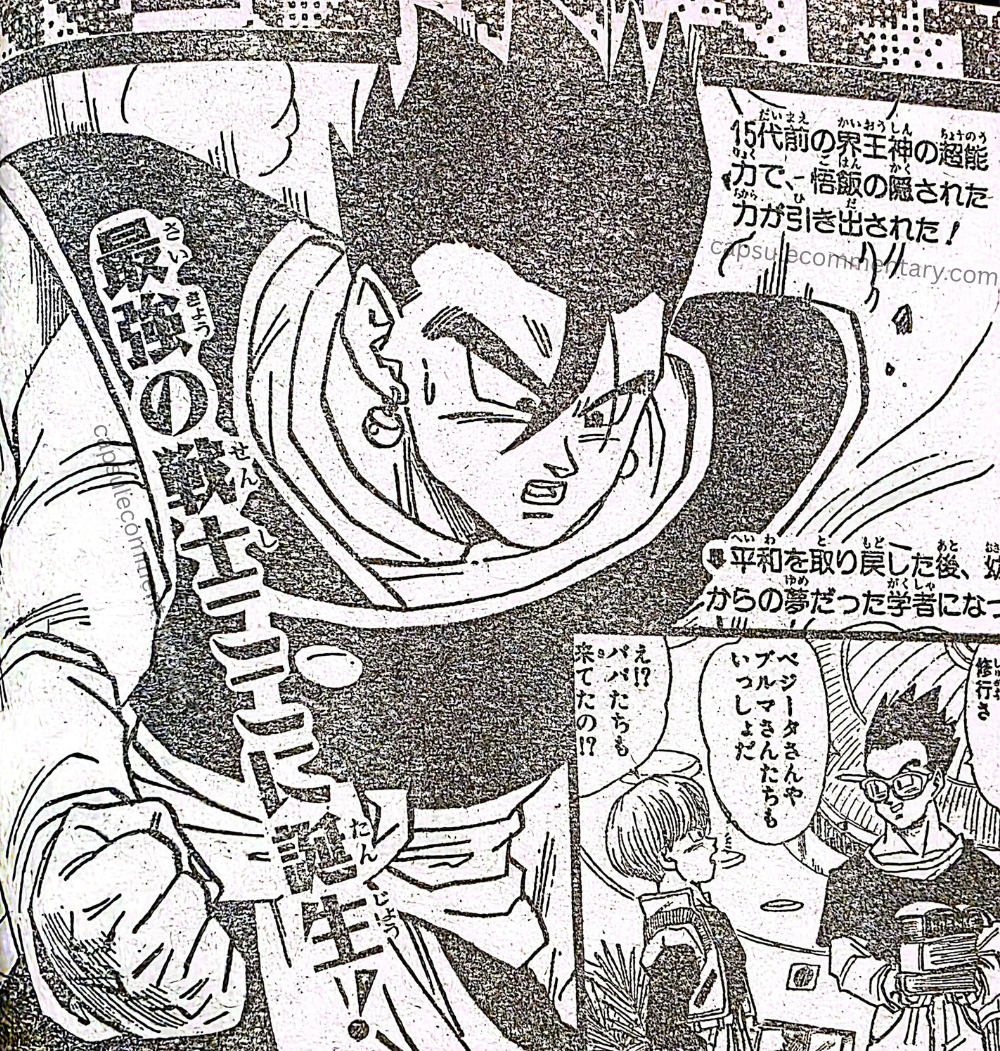
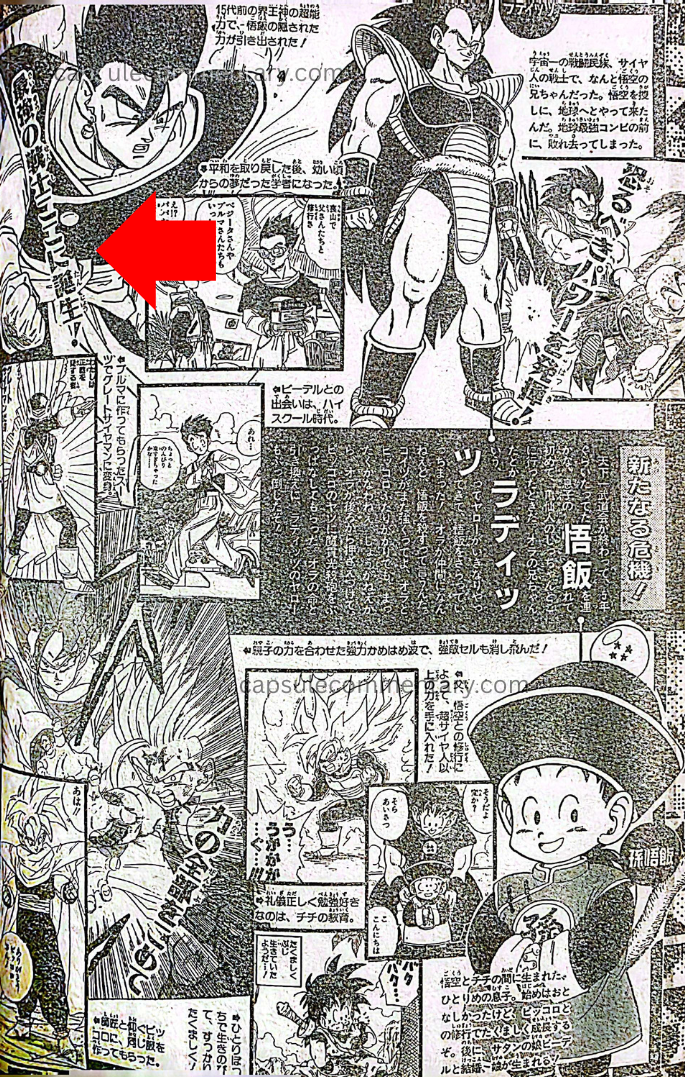
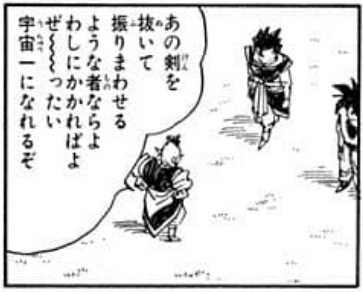
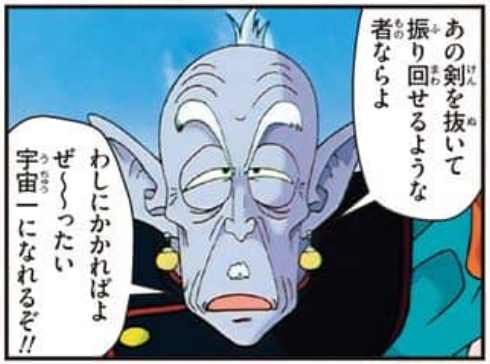
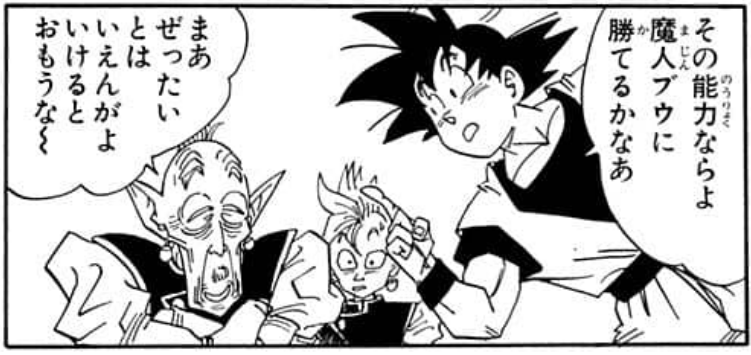
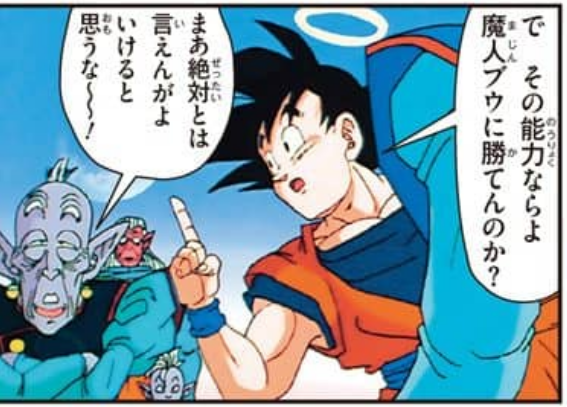
Ultimately, the reason that many fans believe Gohan is the strongest is due to what Elder Kaiōshin says to him. In the manga, he says, 「あの剣を抜いて振りまわせるような者ならよわしにかかればよぜ〜ったい宇宙一になれるぞ」 And in the anime, he says fundamentally the same thing: 「あの剣を抜いて振り回せるような者ならよわしにかかればよぜ〜ったい宇宙一になれるぞ」 In English, these both mean, “If you’re the kind of person who can pull out that sword and swing it around — then if you leave it to me, you can absolutely become number one in the universe!” This is another reference to “number one” meaning “the strongest,” by the way. However, there are two issues with this statement. The first is that he doesn’t actually guarantee Gohan will become the strongest, he only says that he “can” become that. The second issue is that it’s said while Fat Buu (not Super Buu) was the current enemy and earlier, when Goku asks if it could allow them to beat Majin Buu, Elder Kaiōshin responds: 「まあぜったいとはいぇんがよいけるとおもうな〜」 Again, he says fundamentally the same thing in the anime: 「まあ絶対とは言えんがよいけると思うな〜」 In English, these both mean: “Well… I can’t say ‘definitely,’ but I think you can manage it.” So not only does he not guarantee that Gohan will become the strongest, but he doesn’t even guarantee that Gohan would be able to defeat Fat Buu. One of the reasons fans misunderstand this is because the official English translation creates a modal change in Elder Kaiōshin’s dialogue, changing it from “can become” to “will become,” essentially.
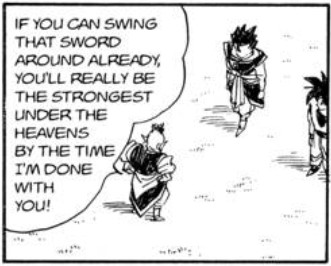
There are plenty of references to Gohan’s potential to be stronger than Goku, such as on page 100 of Dragon Ball: Forever. But, as there are no references to Gohan being stronger than Goku during or after the Kid Buu fight in the guidebooks, manga, Dragon Ball Z and Dragon Ball Kai, I do not find the argument “Gohan was stronger than Goku” to be a compelling one. Goku himself also infers this to be true in chapter 517. The fact is that the Genki-dama plan specifically brought up the question of having both Gohan and Gotenks join the fight to make it a 5-vs-1 and this notion was rejected. Weekly Shōnen Jump 1995 Issue 21–22 page 123 states that “Goku decided it,” meaning that Goku and the Genki-dama were deciding factor in defeating Kid Buu, and on page 111 calls the Genki-dama “the last hope of the entire universe.” Weekly Shōnen Jump 1995 Issue 18 page 456 even states the Genki-dama is “the greatest strength in the universe.” So Gohan and Gotenks’s contributions in a fight against Kid Buu would still not have brought about victory. Goku was simply the only one in the universe capable of killing Kid Buu.
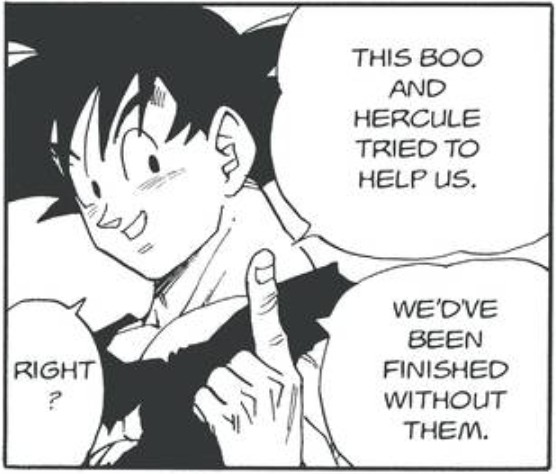
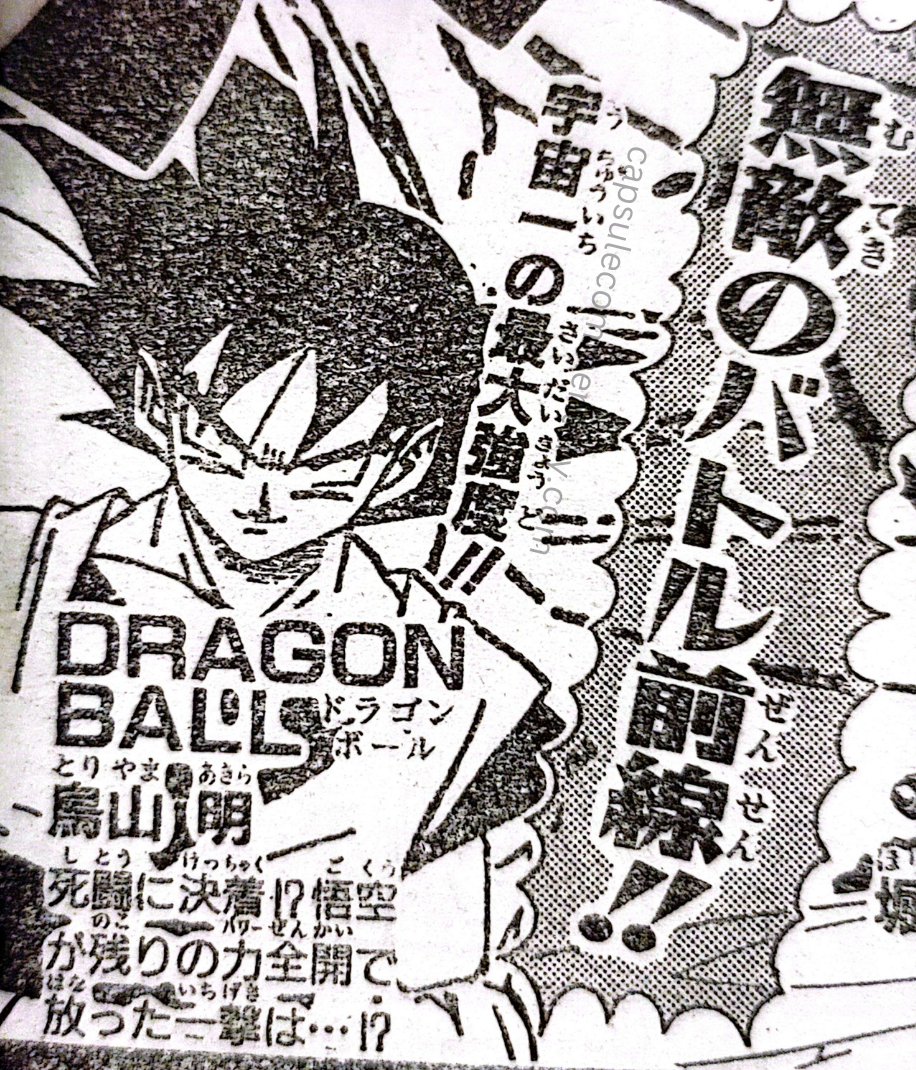

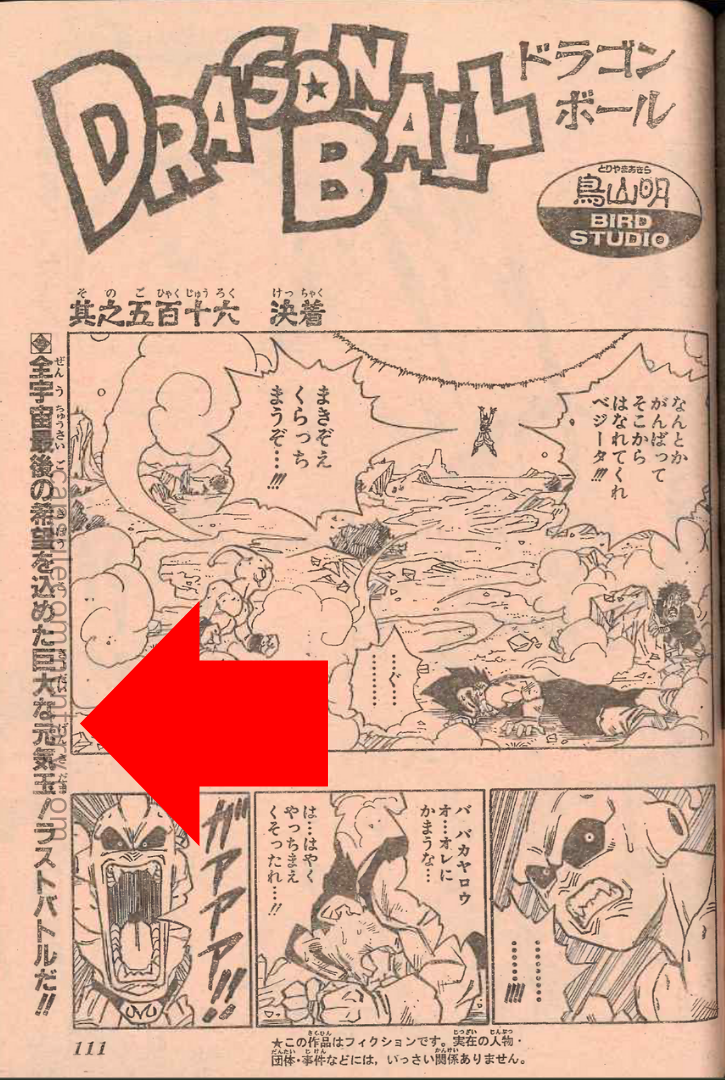

To summarize, the unambiguous evidence for Goku being stronger than Gohan comes from: Akira Toriyama, Akira Toriyama – The World of Dragon Ball exhibit, Dragon Ball 590 Quiz Book, Dragon Ball: Chōzenshū 1, Dragon Ball: Chōzenshū 2, Dragon Ball: Chōzenshū 3, Dragon Ball: Chōzenshū 4, Dragon Ball Daima, Dragon Ball: Daizenshū 2, Dragon Ball: Daizenshū 4, Dragon Ball: Daizenshū 6, Dragon Ball: Daizenshū 7, Dragon Ball: Daizenshū 10, Dragon Ball: Forever, both Dragon Ball GT: Perfect Files, Dragon Ball Kai, Dragon Ball Super (anime), Dragon Ball: Super Exciting Guide: Character Volume, Dragon Ball: Super Exciting Guide: Story Volume, Dragon Ball Z, Dragon Ball Z Anime Kids Comic (Spanish), Dragon Ball Z: Battle of Gods, Dragon Ball Z Movie 12 Jump Anime Comic, Dragon Ball Z Shueisha Jump Remix, Jump Anime Collection 3: Dragon Ball Z Movie 13, Le Manga de Légende, Masahiro Hosoda, Saikyō Jump, Summer 1995 Toei Anime Fair (DBZ Movie 13) pamphlet, Takao Koyama, TV Anime Guide: Dragon Ball Z Son Goku Densetsu, V-Jump, and Weekly Shōnen Jump. This is also not an exhaustive list, as opposed to the lists later in this article.
Toriyama himself confirmed that Goku at the end of the Buu Saga was the strongest at least six times: through Vegeta’s monologue during the Goku vs. Kid Buu fight, twice in Battle of Gods (which he wrote), multiple times in Dragon Ball Daima with narration he personally suggested the producers include, in both Super Exciting Guides (which he personally supervised), and in Le Manga de Légende.
…But Even Goku Was Outmatched
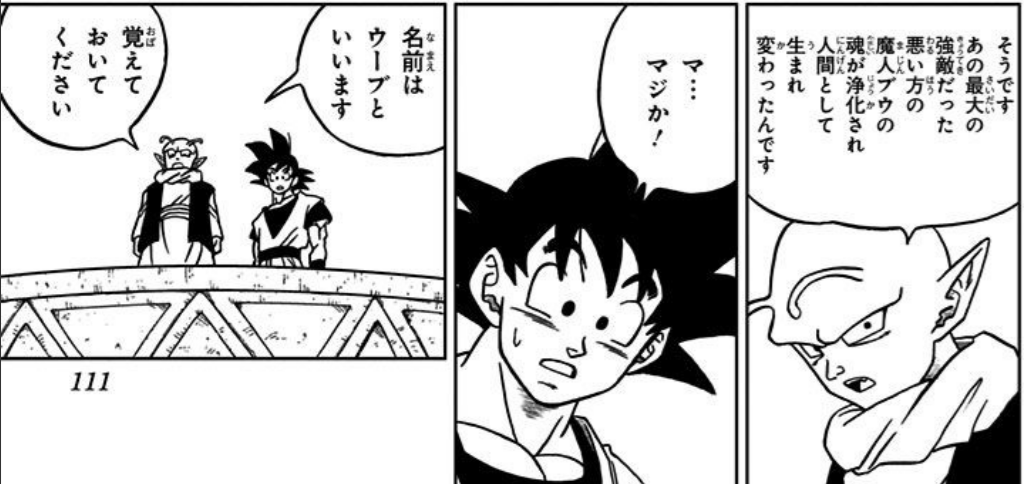
Dragon Ball Super chapter 31 page 13. Dende, talking to Goku about Uub, says, “Yes, the soul of the evil part of Majin Buu, who was once our most formidable enemy, was purified and reincarnated as a human.”22 The bolded part in Japanese is 「最大の強敵」, which literally translates to “the greatest formidable enemy” or “the greatest powerful enemy.” The component parts of 「強敵」 are 「強」 for “strong” and 「敵」 for “enemy.” Toyotarō explained in an interview with Dragon Ball Super’s editor, Victory Uchida, that this chapter is the first time he felt really praised by Toriyama for his work, which confirms that Toriyama also approved of this dialogue on Kid Buu and Uub. Beyond just this chapter, everything in Super needed to be approved by Toriyama. The timing of this quote by Dende suggests Kid Buu is stronger or “more formidable” than even Fused Zamasu.
Super Buu is simple to understand: absorbing powerful fighters makes him more powerful (Evil Buu < Super Buu < Buuccolo < Buutenks < Buuhan). The one that people misunderstand is Kid Buu and so this section will be focused on him. As established in the previous section, Kid Buu was fighting the strongest member of the Dragon Team at that point in the story. So now it’s time to look at how powerful Kid Buu actually is. In the Dragon Ball Z anime, Dragon Ball Kai, the Dragon Ball Super manga, and the Dragon Ball Super anime, it is either directly or indirectly stated that Kid Buu is the strongest form of Majin Buu. One of these indirect statements comes from Super Buu himself (as Buuhan, thinking he absorbed Vegito) on page 3 of chapter 506, where it takes him absorbing Goten, Trunks, Piccolo, Gohan, and Vegito for him to finally have the confidence to say he is the strongest Majin.
Toriyama also had more influence over “filler” than some fans realize, so it’s at least probable these statements in the anime and Kai were approved by him, seeing as he reconfirms their validity in the Super manga. Toriyama’s second editor, Yū Kondō, stated in his interview for Dragon Ball 30th Anniversay: Super History Book, that he personally checked the anime scripts, forced rewrites when necessary, and would also check the Carddass battle power values while he was Toriyama’s editor. In that same book on page 182, Nobuyuki Tanaka, producer of early Dragon Ball games for the Famicom console, stated: “As for [naming] the techniques, we would either have Toriyama-sensei decide on them, or he would give us a reply to something we proposed from our side. Back then, around 2 a.m. on Wednesday nights, when it was about time for sensei’s manuscript to be finished, I would get a call from the person in charge [Torishima] and go to the Jump editorial department. Then, while waiting, a fax would arrive from sensei, on which the techniques and their names were drawn.” On page 589 of the February 2022 issue of Saikyō Jump, Yasuo Miyakawa, the president and CEO of Bandai Namco Entertainment, recounted a story of how Torishima helped them create Dragon Ball Z: Super Butōden 2. It would therefore be libelous to suggest that Takeda, Toriyama’s third and final editor of Dragon Ball, did not also perform these same duties as Torishima and Kondō.
Torishima, Toriyama’s first editor, even changed the entire staff of the Dragon Ball anime for Z when they weren’t able to adapt the manga faithfully! Koyama alluded to the strict rules placed upon the Dragon Ball Z staff on Twitter: “Scriptwriters are not permitted to make revisions that would conflict with the original work’s setting,” meaning that the anime was fundamentally not allowed to change Toriyama’s established power dynamics.
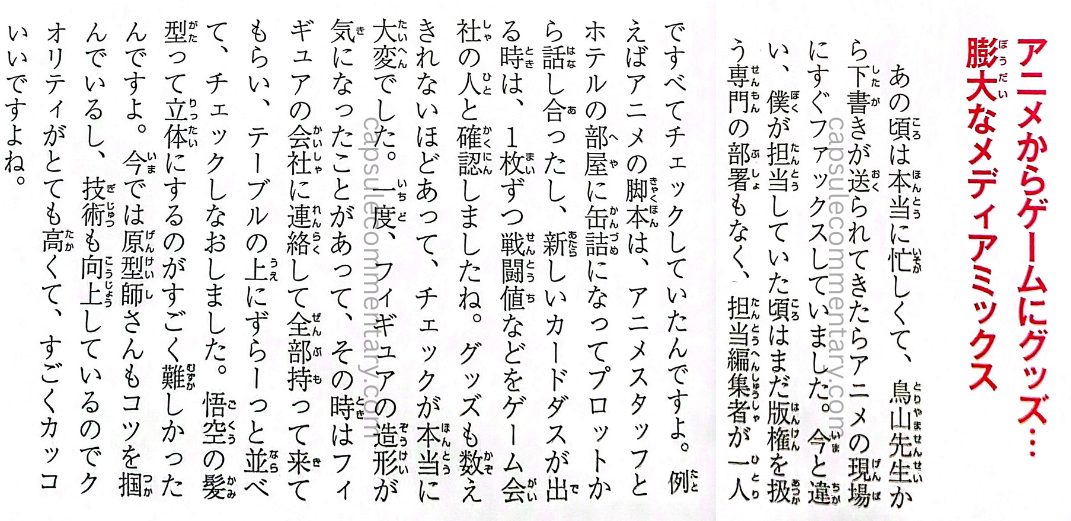
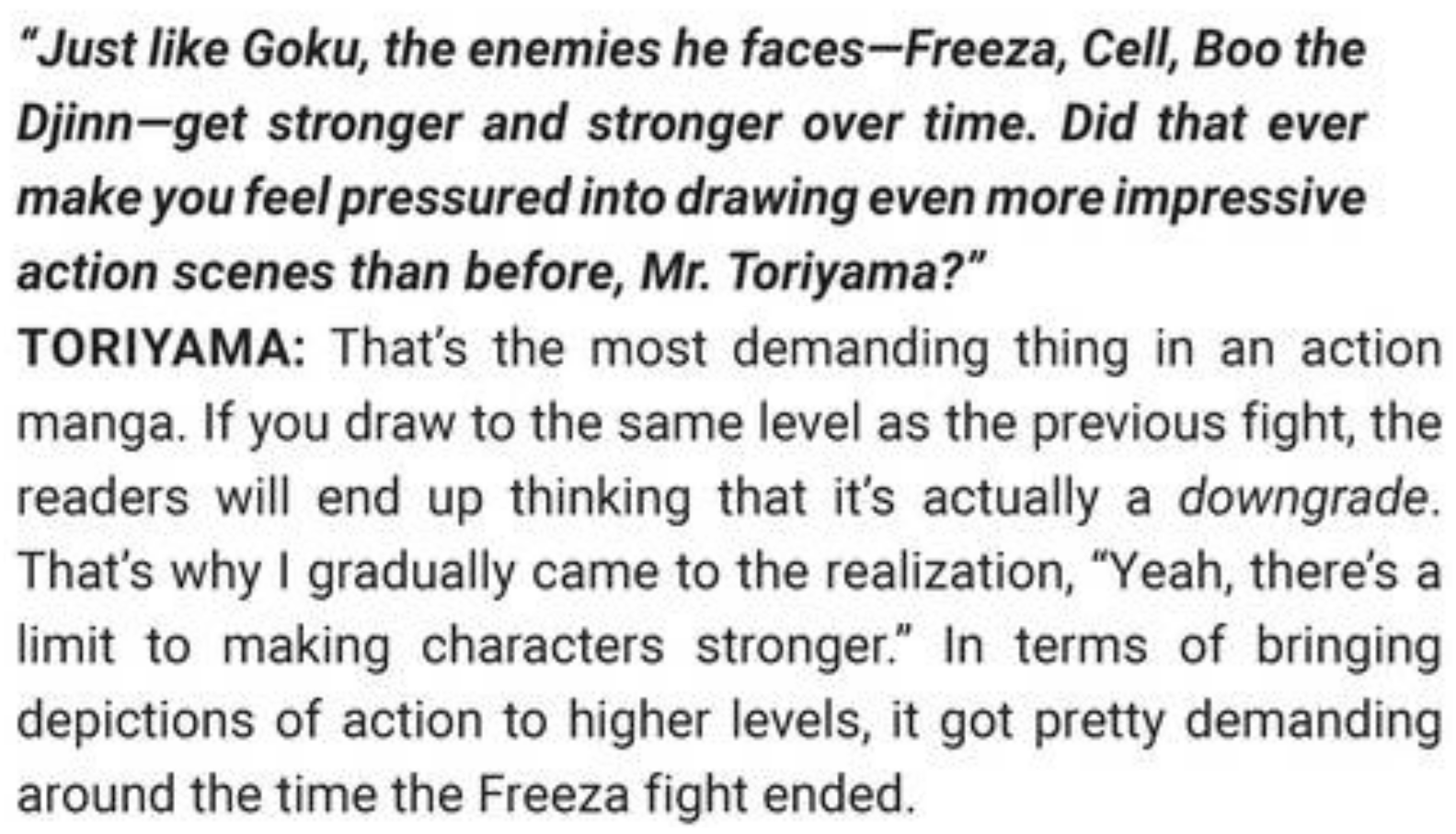

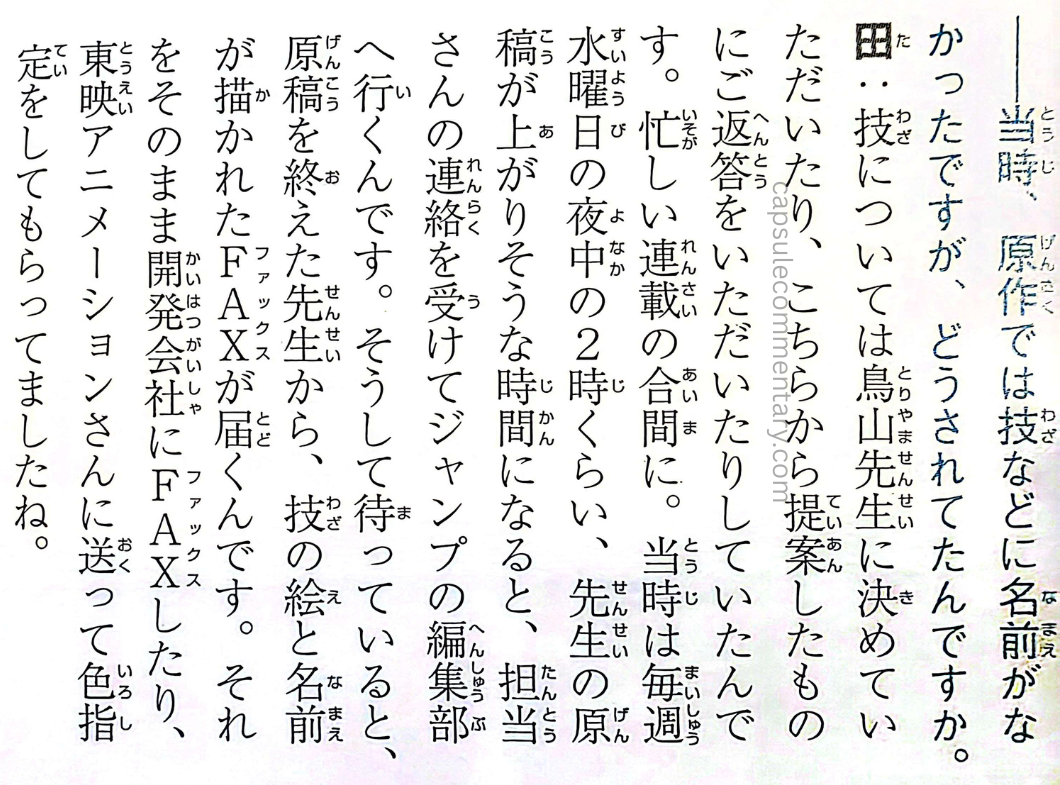
The original release of the manga actually does comment on Kid Buu being the strongest form of Buu, and several times at that. Page 87 of Weekly Shōnen Jump 1995 Issue 15 states, “Beyond the limit, even further beyond!! The gong of battle resounds!!,” thus confirming that both Goku and Majin Buu are now fighting at strengths far beyond what they were previously capable of. Weekly Shōnen Jump 1995 Issue 13 page 45 says of Kid Buu: “The terror of Buu, who has become a God of Destruction!!” (not in the sense of a job title, as that didn’t exist until 2013), and Weekly Shōnen Jump 1995 Issue 18 page 97 calls Kid Buu the “source of all evil.” Weekly Shōnen Jump 1995 Issue 21–22 very heavily implies that the Buu that was just defeated by Goku was the “strongest Buu” on page 483. We will also see in the following section that there is a general agreement on Kid Buu being the strongest form across every official Dragon Ball source that has ever commented on their strengths. As Dragon Ball very heavily leans into “tell; don’t show,” these statements in and of themselves should have prevented this debate from ever even starting in the first place, as we’ve no reason to disbelieve them. And yet here we are, 30 years later…
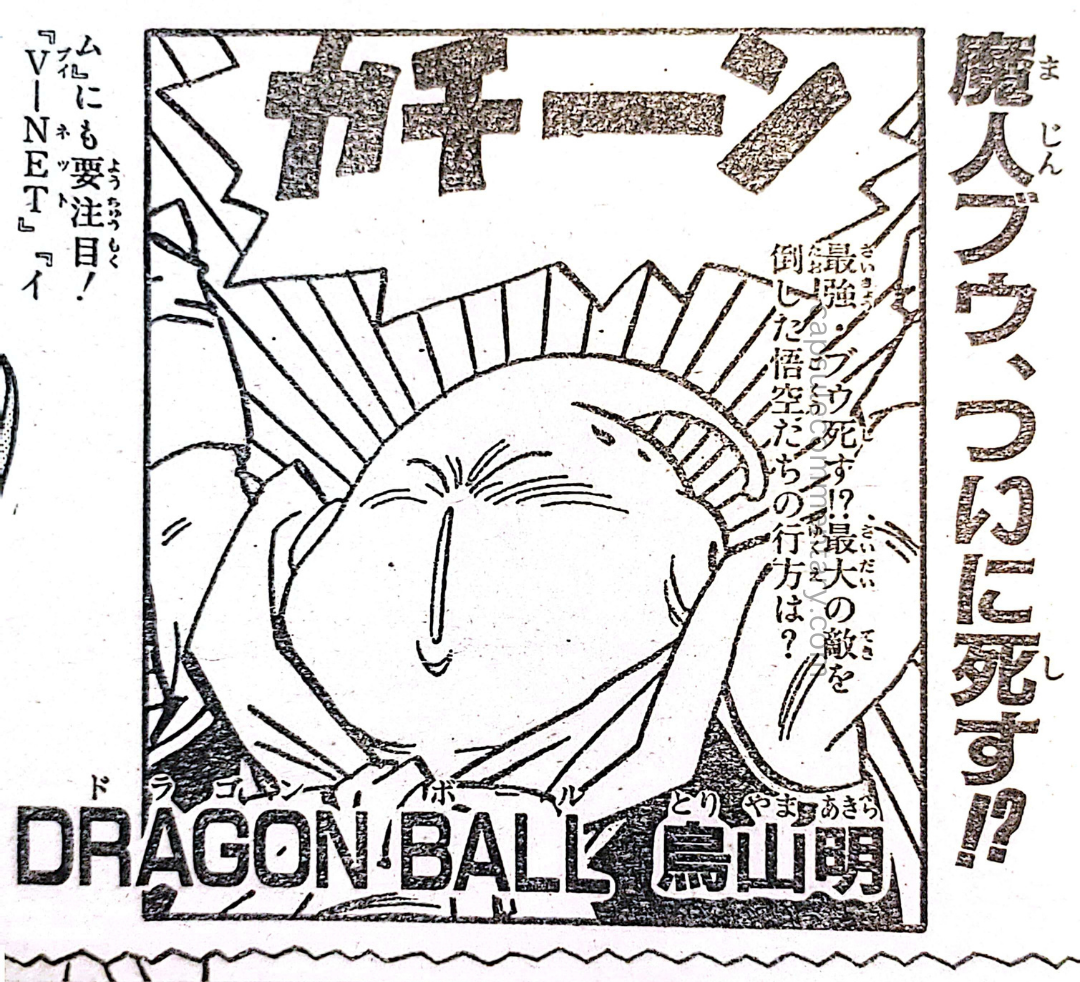
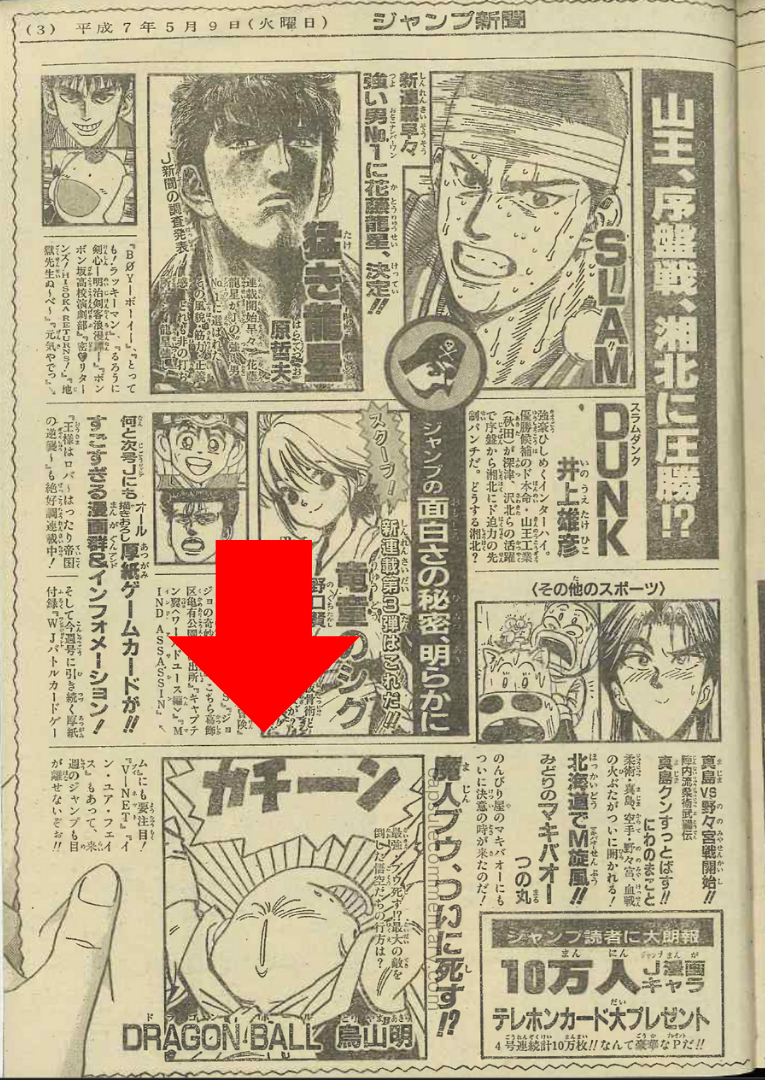
The large text on the right of the image reads, “Majin Buu finally dies?!” The small text over the picture of Fat Buu reads, “Buu, the strongest, dies?! What lies ahead for Goku and his allies after defeating their greatest enemy?” The image of Fat Buu comes from Dragon Ball chapter 461 page 9 and is him responding to an insult from Dabura. This picture I’m sharing is from the issue of Weekly Shōnen Jump in which Dragon Ball chapter 516, the chapter in which Kid Buu is defeated, was first published. If taken completely out of context, “the strongest Buu” could be interpreted as meaning Majin Buu as a whole was the strongest, rather than this specific form. This stems from Shueisha writing 「最強・ブウ」 instead of 「最強のブウ」. The difference here being the middle dot, nakaguro 「中黒」, versus the attributive case particle no 「の」. The use of the nakaguro turns “the strongest” into a title for Buu, while the attributive case particle would have definitively meant that this form of Buu was the strongest. However, we know that this is still absolutely referring to Kid Buu for 3 reasons.
(1) Kid Buu is the one who just died.
(2) Majin Buu as a whole is not dead, as Good Buu is alive. The picture of Fat Buu simultaneously serves to remind the readers that Majin Buu has existed in many forms and that not every Majin Buu is dead.
(3) Placing the two sentences together (“Majin Buu finally dies?!” + “Buu, the strongest, dies?!”) logically means the Majin Buu who just died is the strongest.
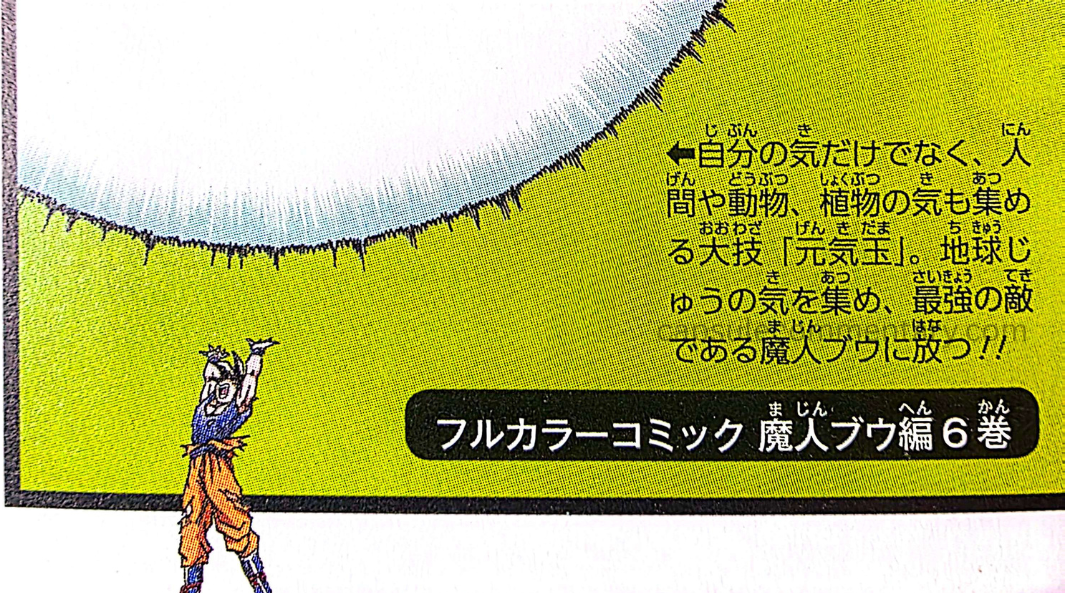
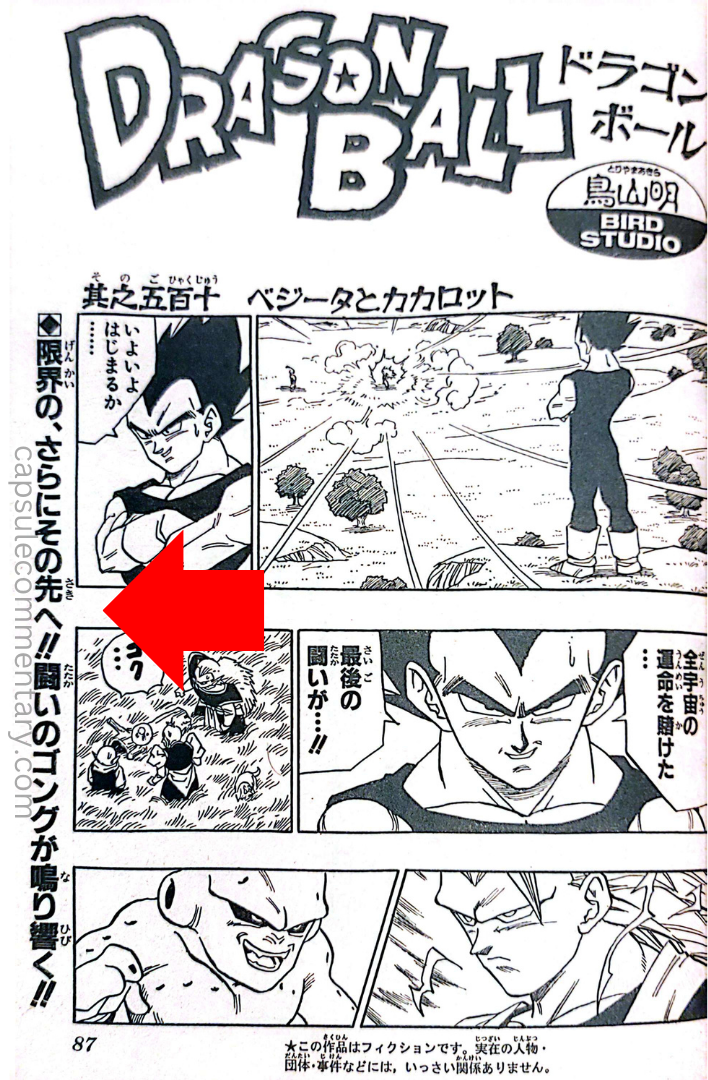
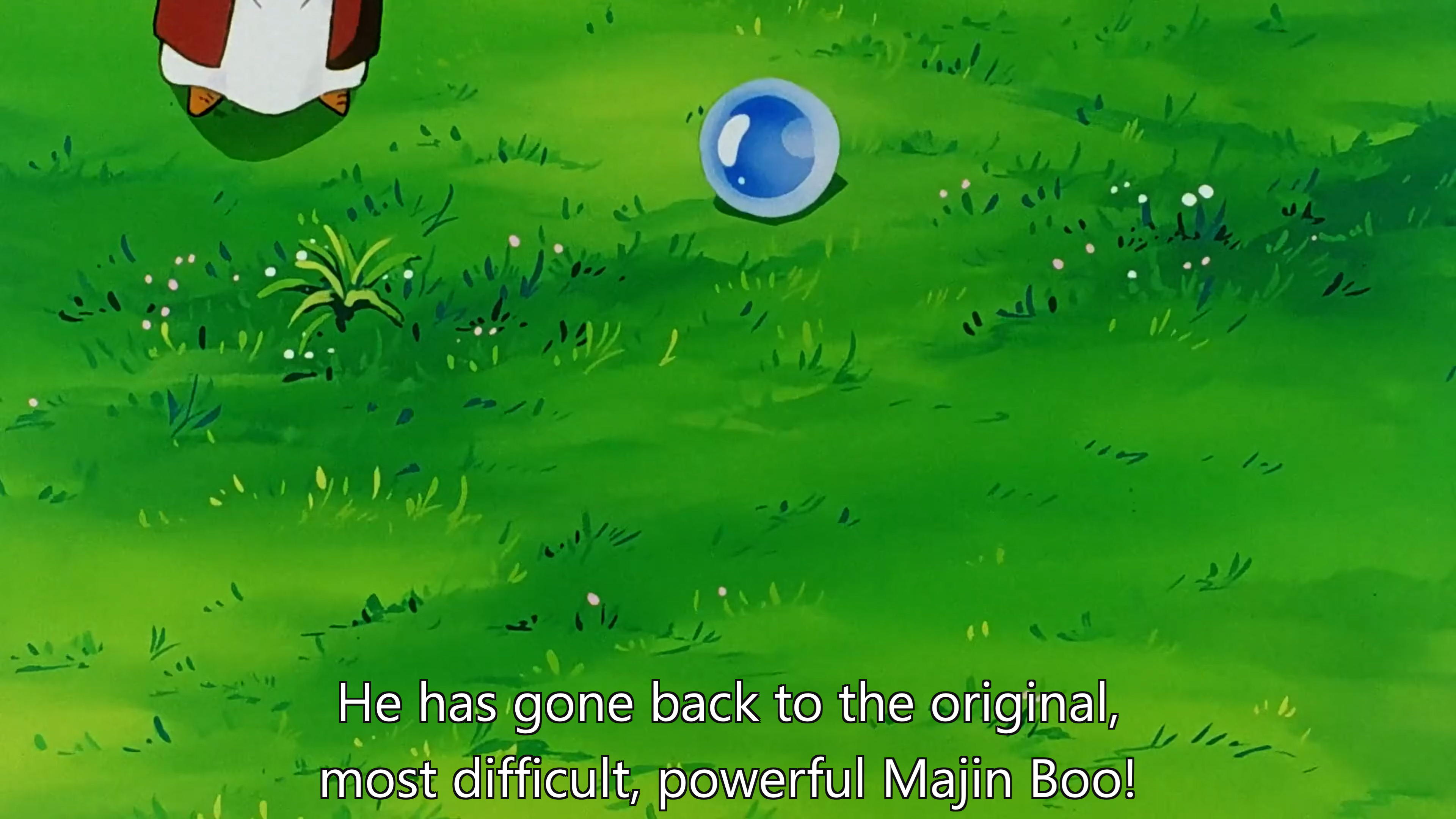
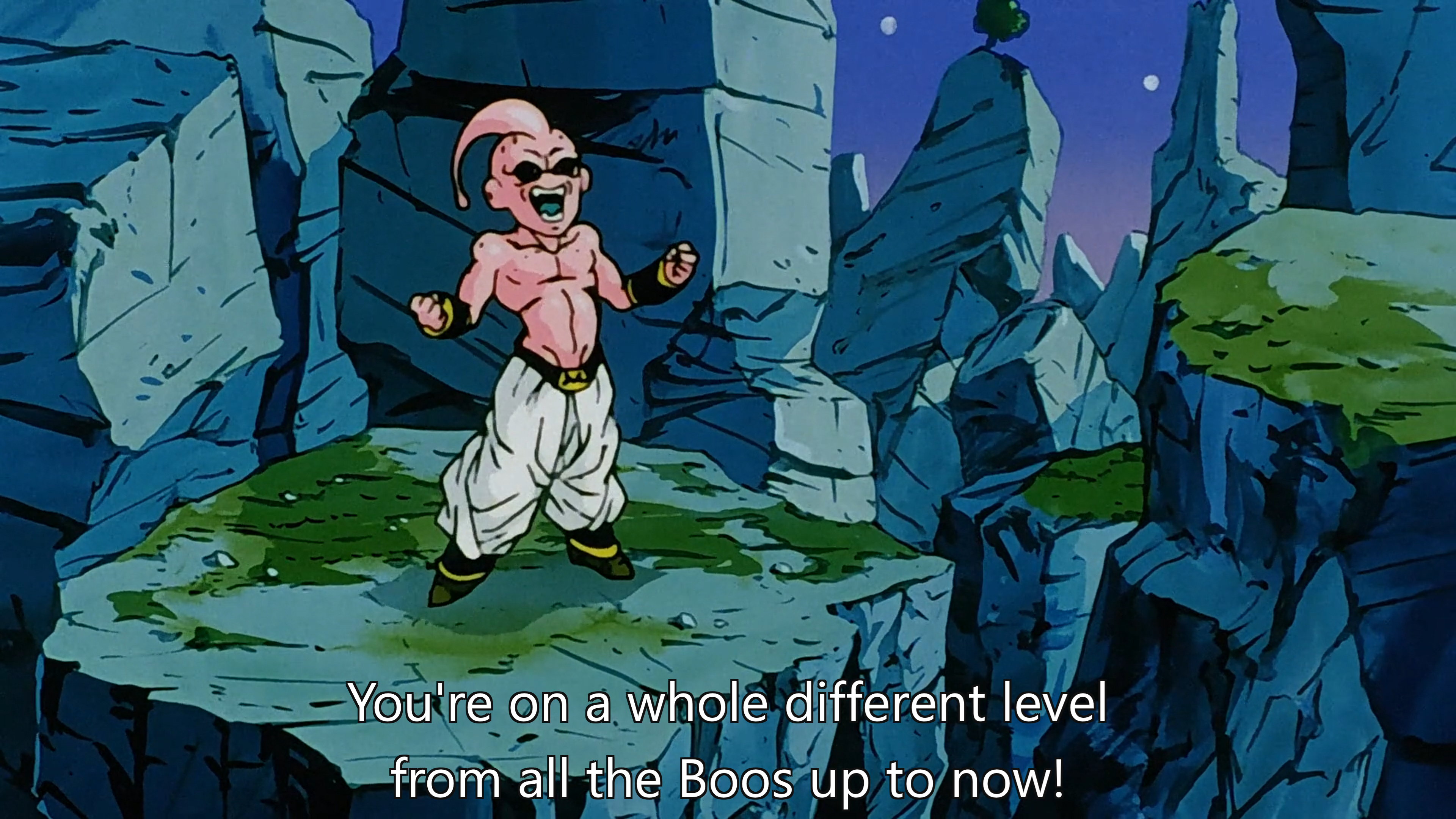
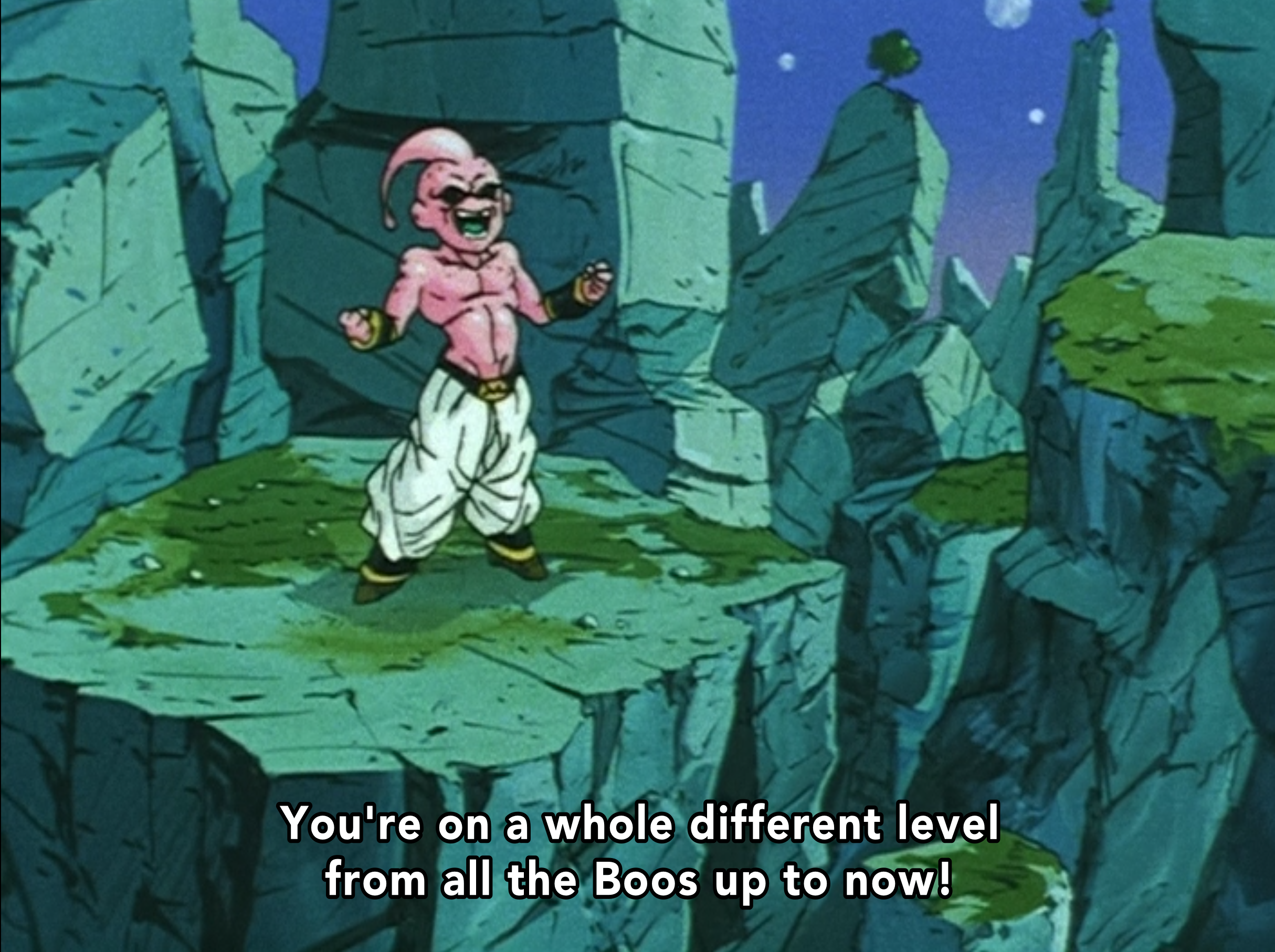
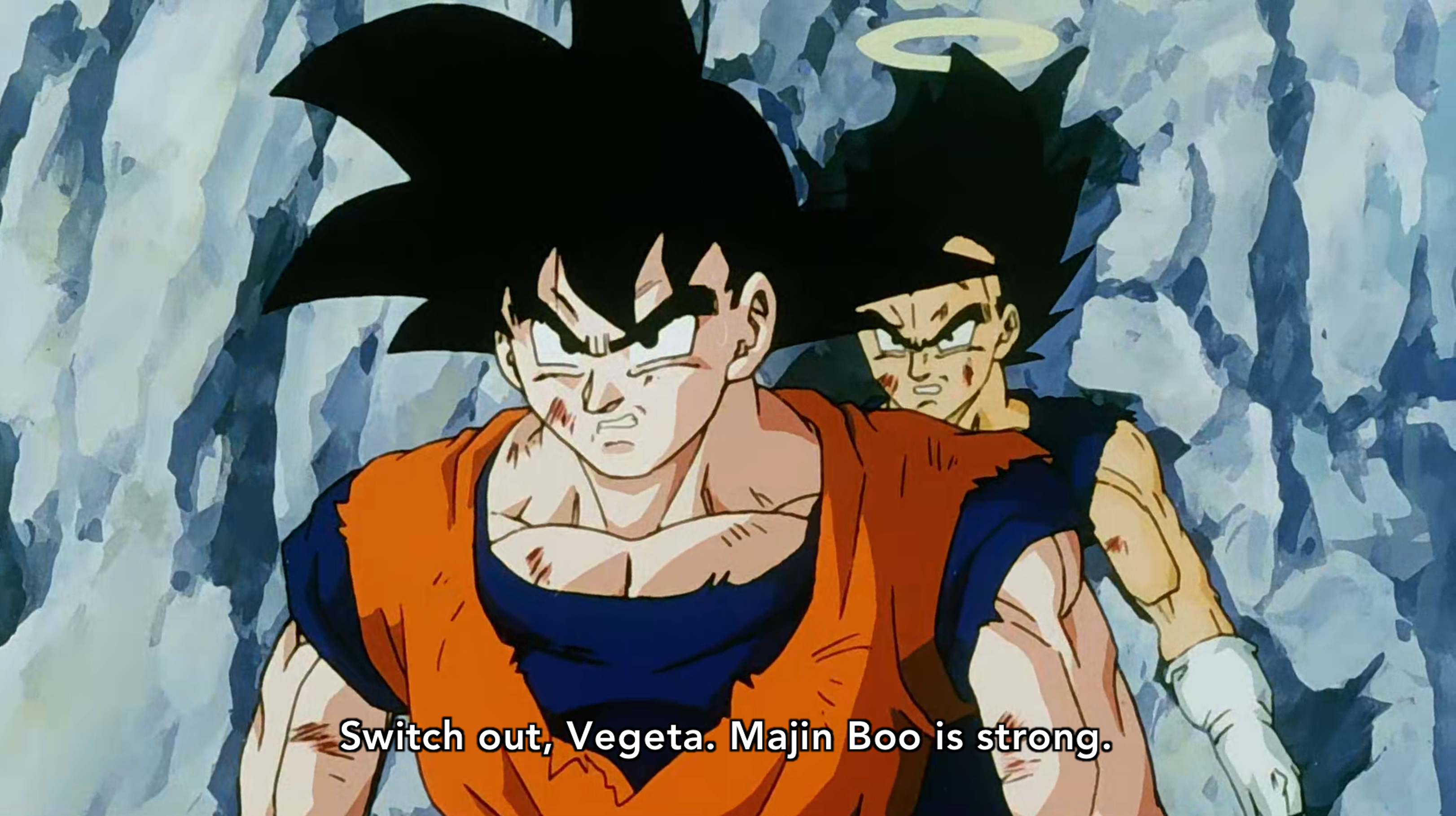
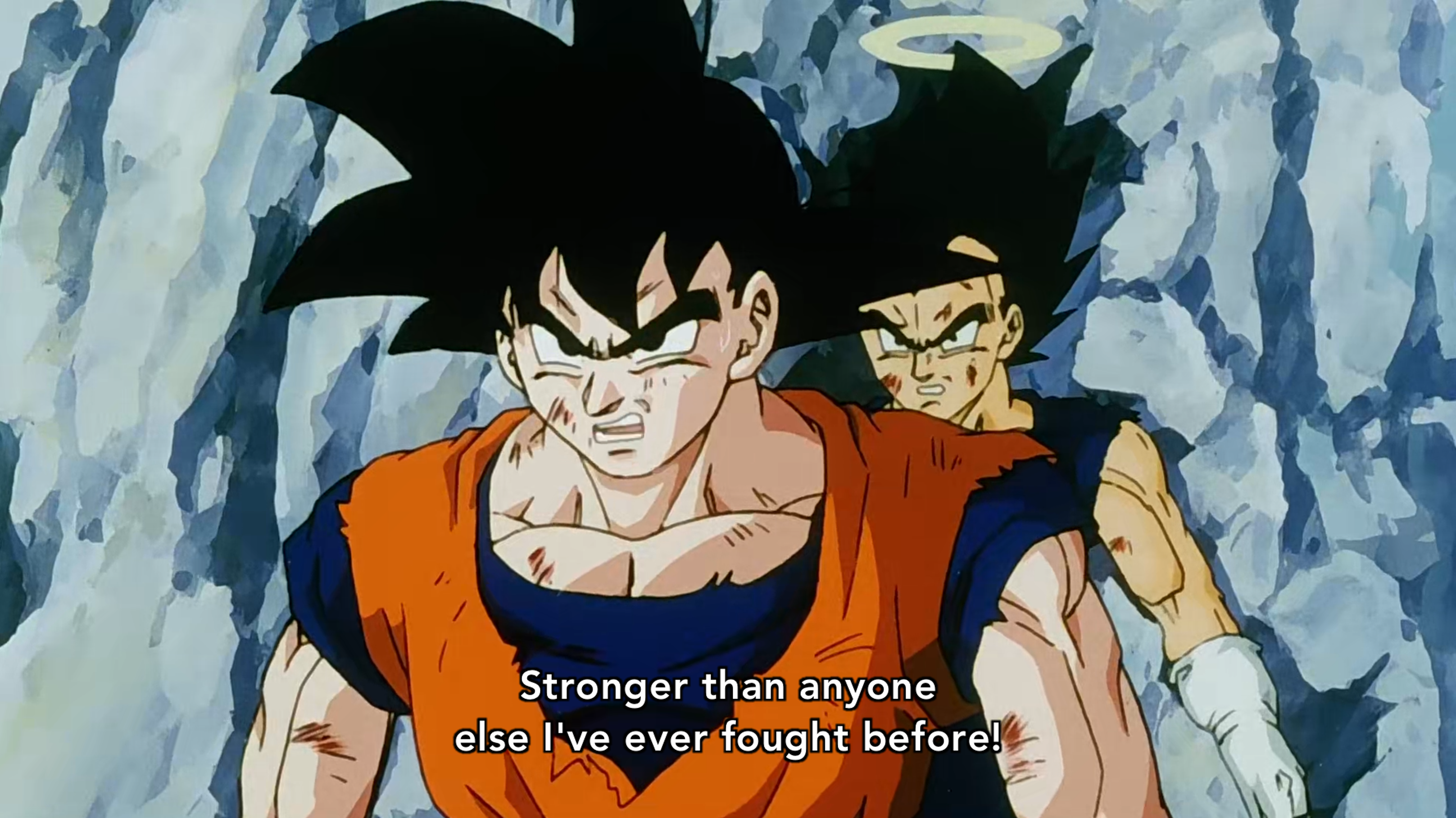

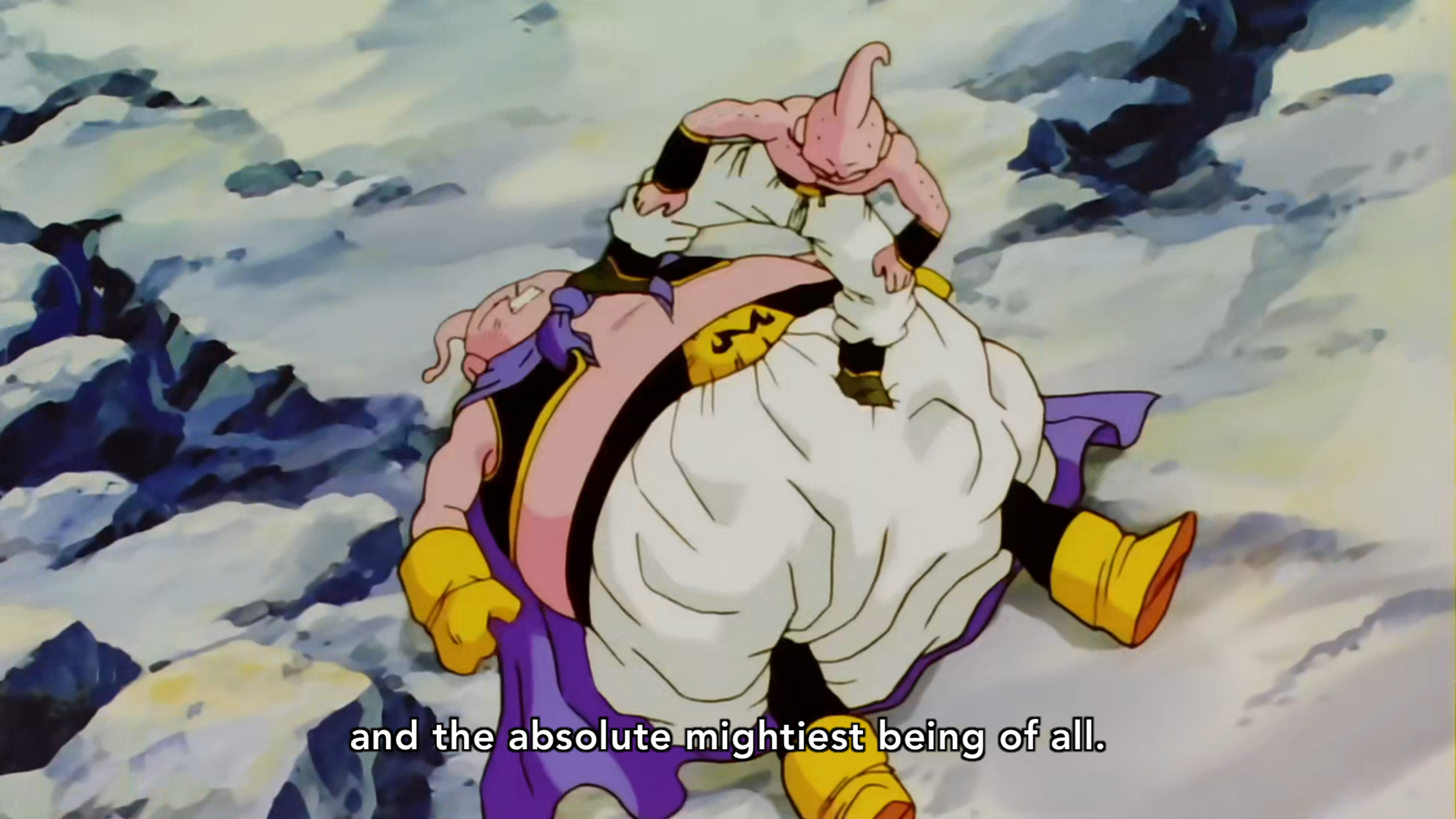
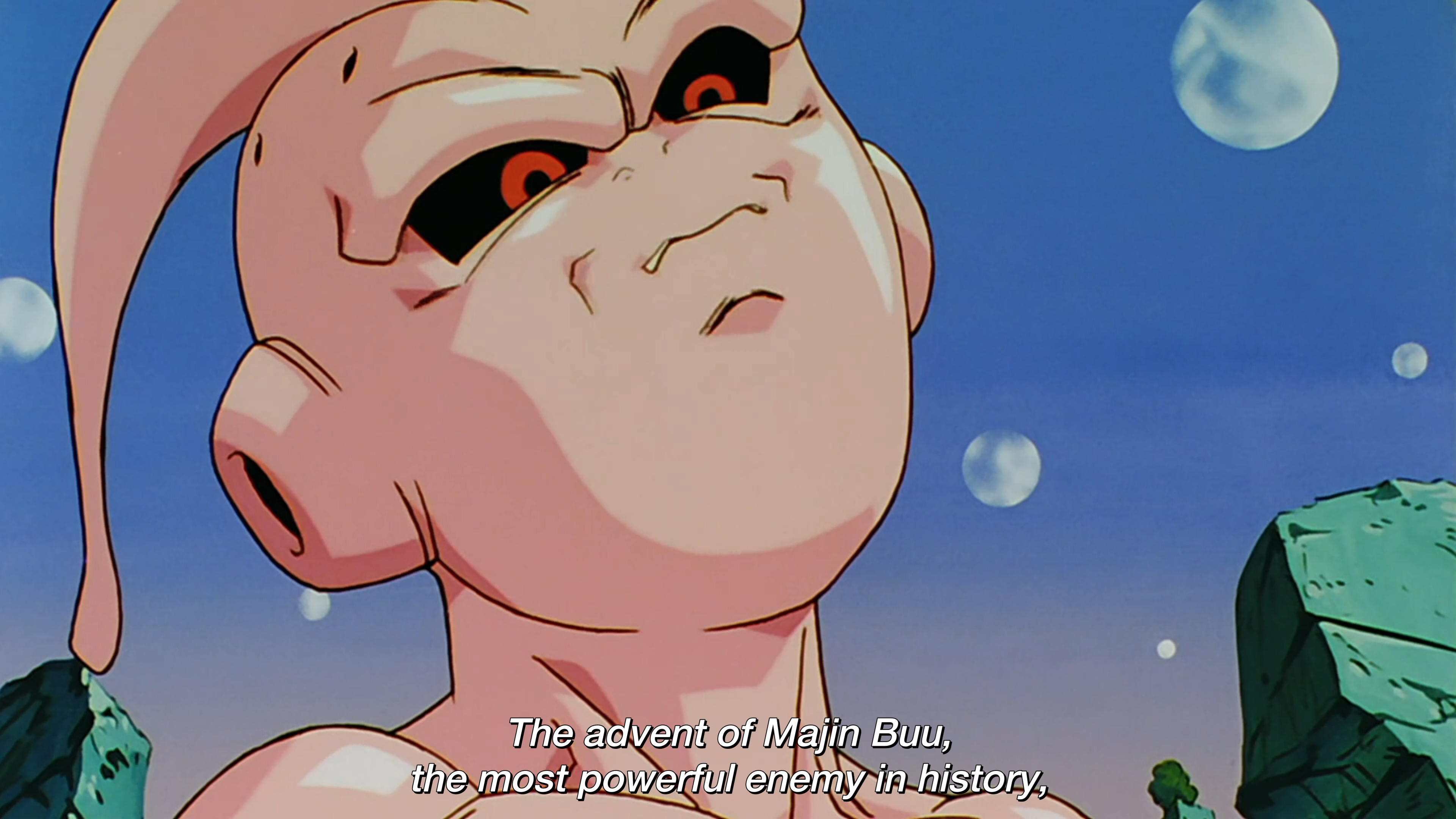
At the time when Goku fought Fat Buu and leading up to it, he was quite insistent that he couldn’t defeat him, even if he used all of his strength. Piccolo seems to think that Goku could have won, but Piccolo also thought base form Gotenks could beat Super Buu. Shueisha and Toriyama titled chapter 474, where Goku fought Fat Buu, “The limit!! Super Saiyan 3.” This is specifically referring to Super Saiyan 3 as being “the limit” or the power ceiling in Dragon Ball at that moment of time. As shown on page 87 of Weekly Shōnen Jump 1995 Issue 15, the supplementary text read, “Beyond the limit, even further beyond!! The gong of battle resounds!!” Unlike the first comment on “the limit,” this is not specific to Super Saiyan 3. The next sentence refers to the battle itself. Thus, we can understand that these two fighters are both way beyond their previous limits and have created a new power ceiling. This power ceiling necessarily includes Buuhan as this fight takes place chronologically after Buuhan’s appearance. However, it does not include Vegito. The reason being that Kid Buu, specifically, has never fought anyone before in the manga. So for him, it’s referring to Majin Buu as a whole. The readers have seen Buu fight many times and also get progressively stronger. However, Goku is never once referred to as “Vegito.” Goku also confirms after his fight that Vegito would be able to win. Thus, this is telling us that Goku is stronger than ever before, and so is Buu.
Interviewer: “Did you decide the balance of each character’s strength in advance?”
Dragon Ball: Extreme Battle Collection: Round 02 page 90
Toriyama: “I had decided it to some extent, but as I kept drawing, it would often end up changing.”
As Toriyama wrote by discovery, it’s likely that he hadn’t thought of Super Saiyan 3 yet when he first had Goku state he would lose to Fat Buu. So when Goku definitively states he could have defeated Fat Buu on page 11 of chapter 509, this is both a retcon and a power boost to Goku. Page 87 of Weekly Shōnen Jump 1995 Issue 15 then confirms this power boost to not only him but to his opponent, as well. Just to emphasize this, this is text within the original version of the manga that confirms both Goku and Kid Buu are the strongest. In addition to that, two more official releases of the manga, the Full Color edition and the Sōshūhen, both reconfirm that Kid Buu is indeed the strongest form of Majin Buu. The Sōshūhen reprinted the pages of Weekly Shōnen Jump 1995 Issue 15, and in on page 223 of Dragon Ball Full Color Piccolo Daimao Volume 2, it shows a picture of Goku with the Genki-dama and reads: “Gathering the ki from all over the Earth, it is launched at the strongest enemy, Majin Buu!!” The Genki-dama was used to destroy Kid Buu and not any other form. This means that THREE official releases of the manga, including the original release, all confirm that Kid Buu is the strongest, while ZERO releases of the manga confirm that Buuhan is.
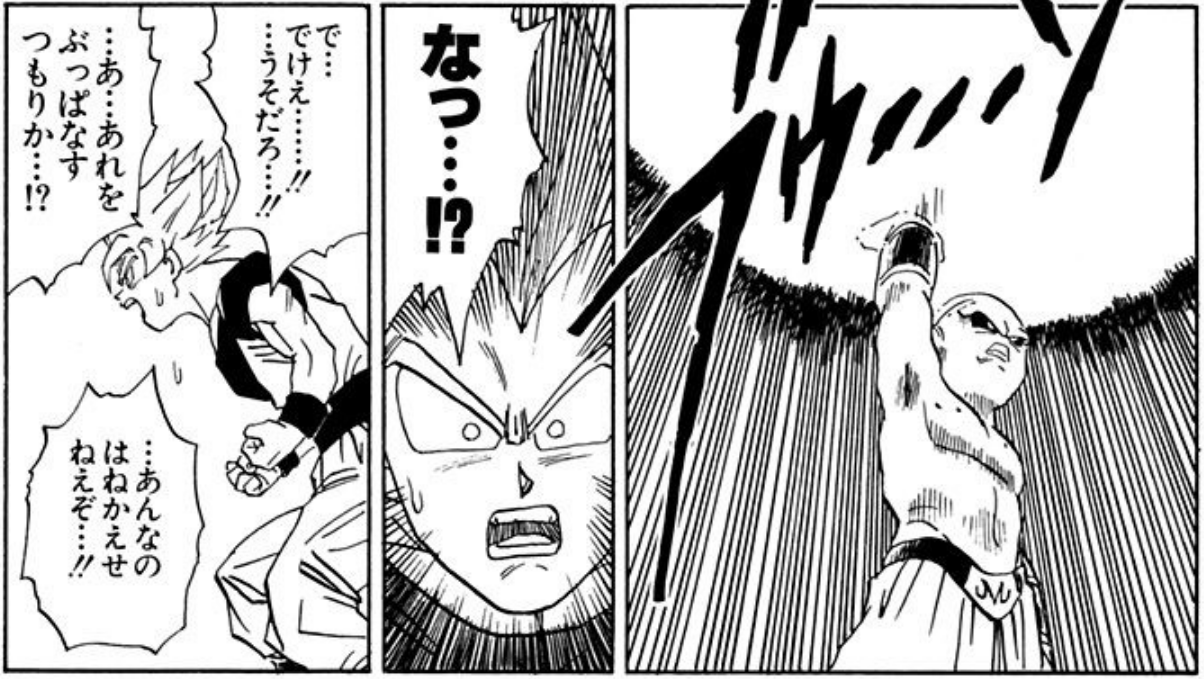
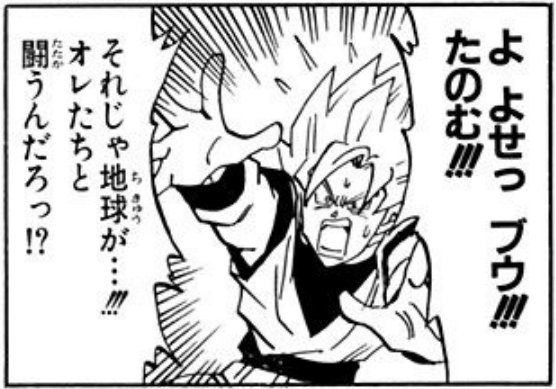
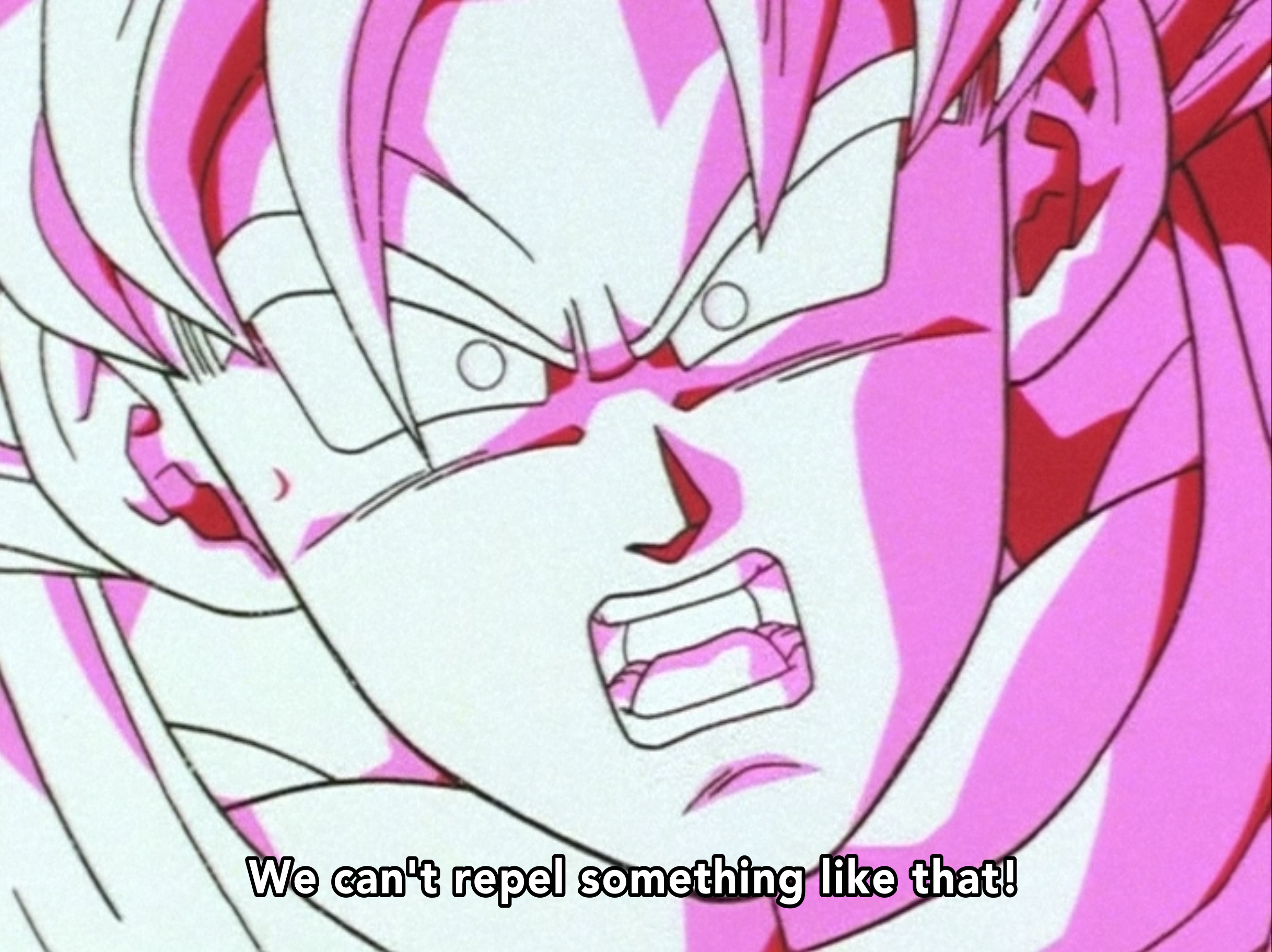
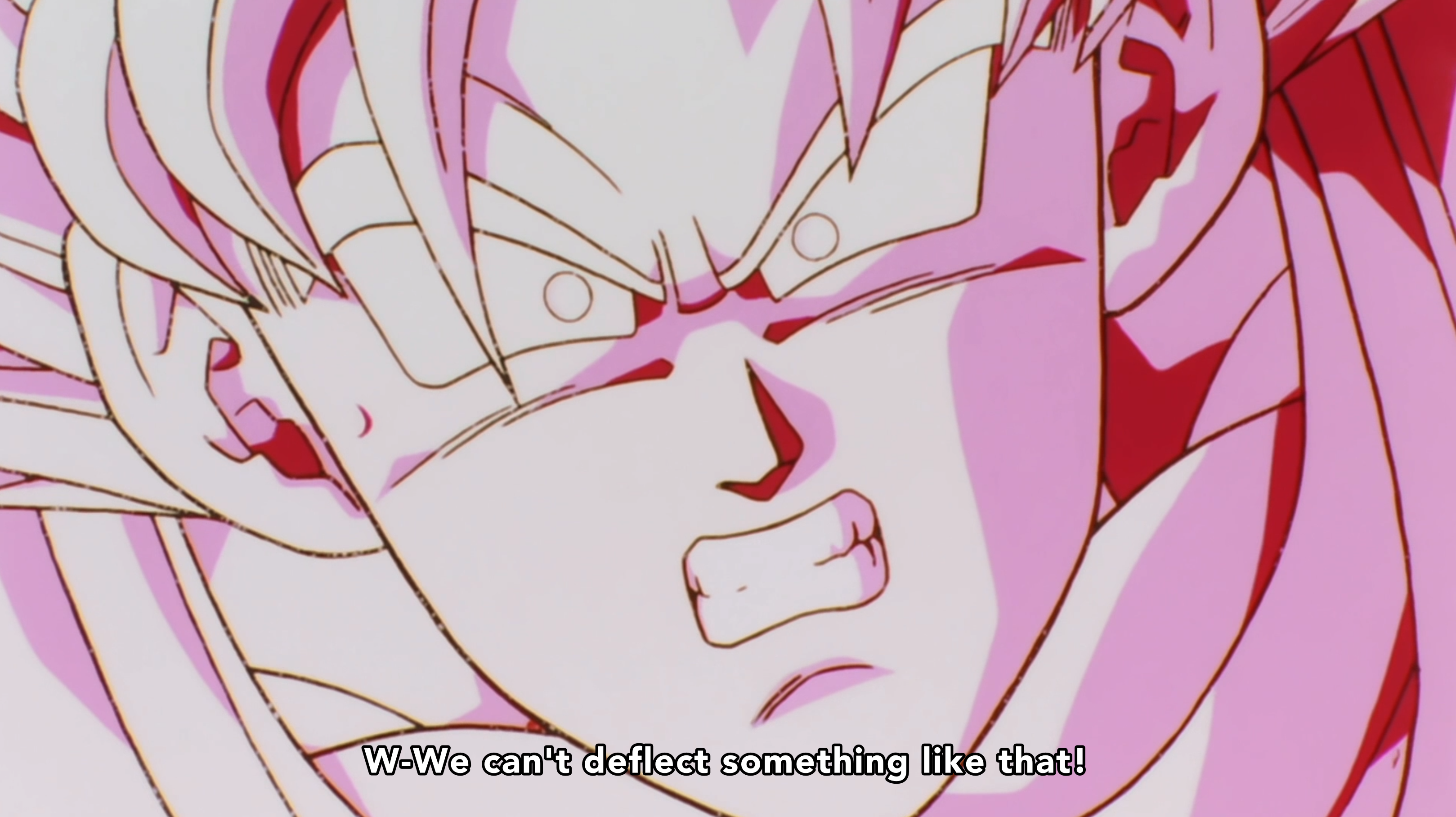
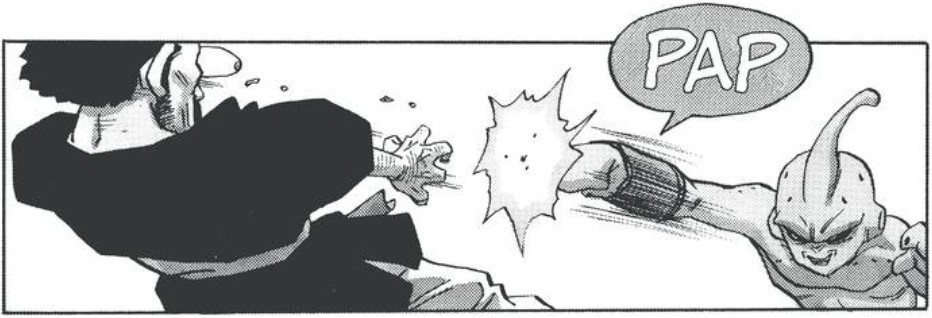
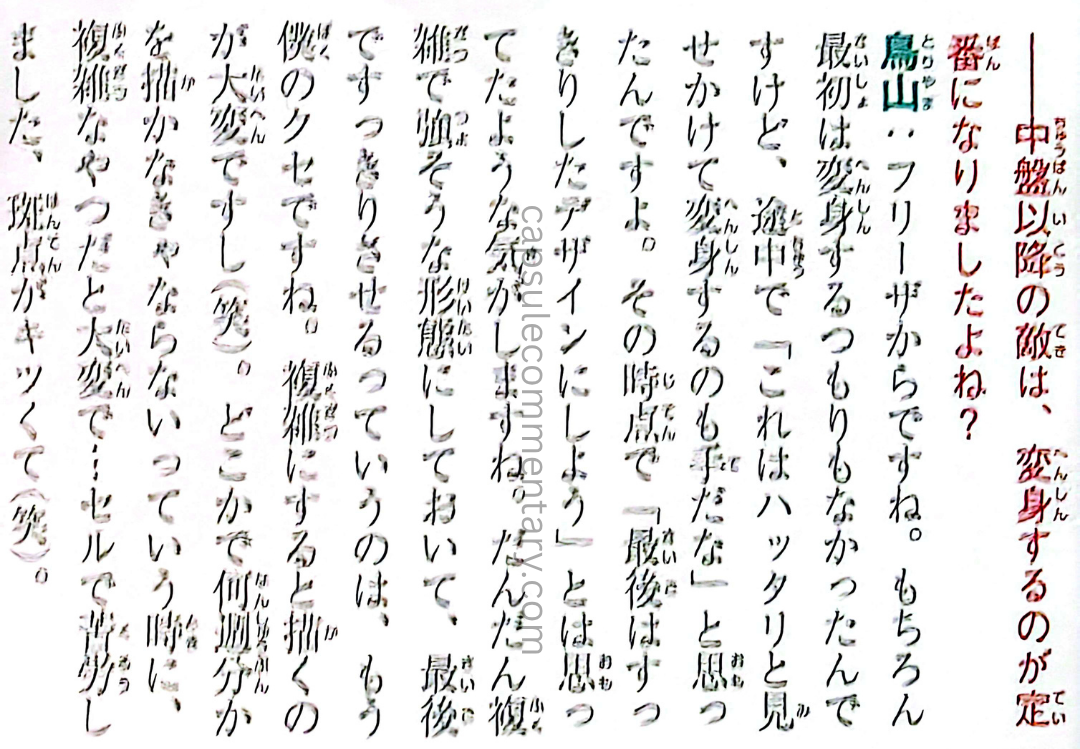
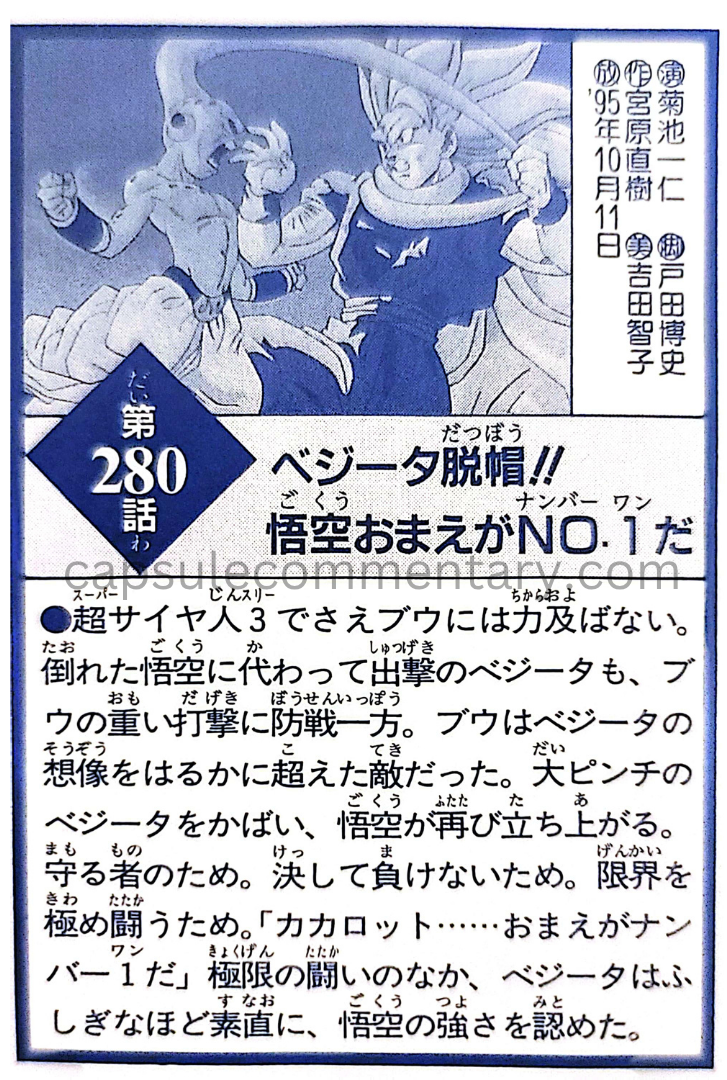

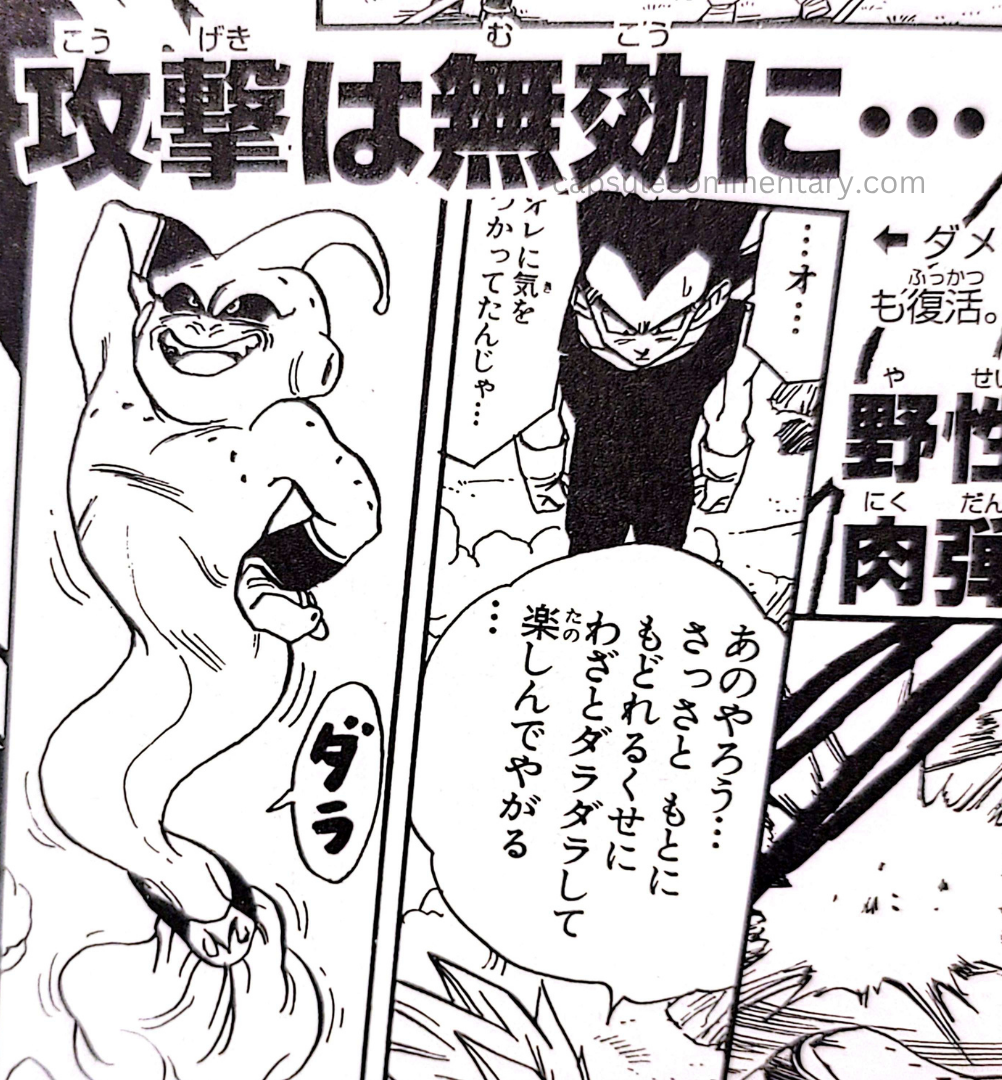
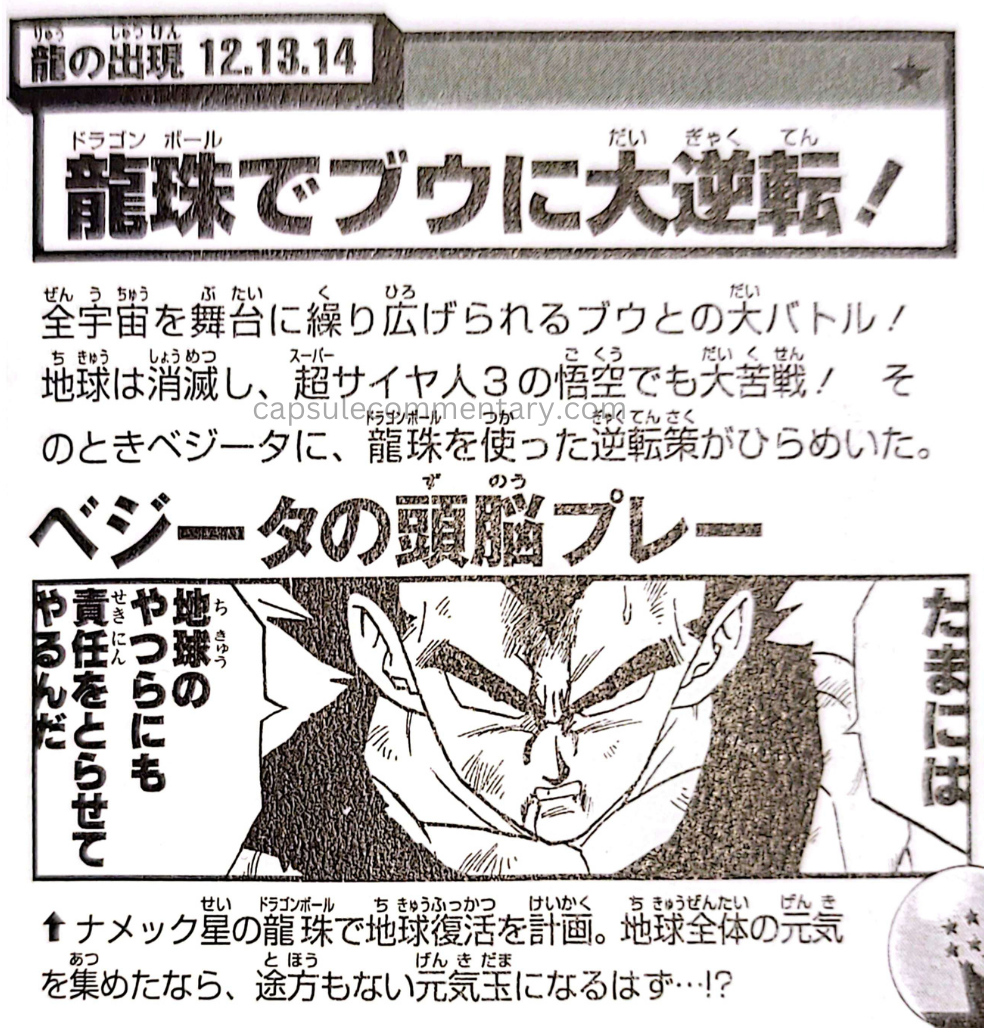

One of the primary misconceptions about the fight between Kid Buu and Goku is that many fans believe Goku actually did well against him or that he held his own, despite Goku himself wishing he didn’t destroy the Potara and recognizing that Kid Buu was “dragging [his regenerations] out” and “enjoying himself” (in Japanese). In episode 1 of Dragon Ball Super, Goku even admits, “Majin Buu was terribly strong, right? I couldn’t defeat him on my own.” We know Goku is telling the truth about Kid Buu holding back his strength in order to have fun for the simple fact that Mr. Satan did not die after being hit by Kid Buu. Furthermore, in chapter 508, just five pages after he and Vegeta underestimated Kid Buu, Goku even went so far as to beg him not to destroy the Earth — a clear sign that he lacked the power to stop the attack himself. This attack was fired directly at Goku and Vegeta, so they could have entered a beam struggle if they wanted. They opted to run away. To go into this further:
- In Chōzenshū 1 on page 158 (Daizenshū 2 page 200), it writes, “Not even full power Goku can defeat [Kid Buu].”
- In Chōzenshū 2 on page 338 (Daizenshū 10 page 22), it states, “Goku could not stop Buu on his own. He needed the help of everyone around him. This was the gathered energy of the people!!” On page 336 (Daizenshū 10 page 20), it states “Buu surpasses [Goku] in both power and speed!!”
- In the episode description of episode 280 on page 341 of Chōzenshū 3 (Daizenshū 10 page 118), it states, “Not even Goku’s Super Saiyan 3 form can match Buu’s power.”
- On page 63 of Dragon Ball: Extreme Battle Collection: Round 02, it states: “With support from his allies, [Goku] unleashes his full power!! Goku unleashes the full power of Super Saiyan 3 to face Buu, who has become pure evil! With support from Vegeta and the others, he gathers his energy — but the transformation is undone!!”
- On page 36 of Dragon Ball: Forever, it states about Goku and Vegeta’s attacks on Kid Buu: “The attacks are ineffective… Even after repeatedly being damaged, it keeps regenerating. Is there any way to stop it?” On page 113: “With Earth destroyed and even Super Saiyan 3 Goku struggling, Vegeta devises a plan to turn the tables using the Dragon Balls.” And again on page 113: “Goku, who was on the verge of losing consciousness, is restored to full power by the Dragon Balls, and finishes off Buu with the strongest Genki-dama!“
- The official website for Dragon Ball Kai describes Goku and Vegeta as being unable to fight Buu 1-on-1 in the episode 151 summary, and the episode 152 summary says that Goku using Super Saiyan 3 was still surpassed by Buu.
- Dragon Ball Official Site describes Good Buu as Goku and Vegeta’s “savior” for joining the fight. In describing the last Tankōbon, on both Shueisha’s website and Dragon Ball Official Site, they state, “However, even with the power of Super Saiyan 3, Goku is unable to defeat Buu.”
- On page 51 of the Dragon Ball Super Start Guide, Osamu Nozaki, the producer at Fuji TV, stated, “If Satan hadn’t called out [for help], they wouldn’t have been able to defeat Buu.”
- Takao Koyama on Twitter also confirmed that Kid Buu was stronger than Goku, writing, “At the time [Kid Buu] appears in the story, he would be the strongest. But in Dragon Ball, stronger beings keep appearing one after another.”
- In the episode description for episode 280 of Dragon Ball Z on Toei’s website, it states, “Goku transformed into Super Saiyan 3 and fought, but he was still no match for Majin Buu (Pure).”23
- January 1996’s issue of V-Jump states: “Even Super Saiyan 3 Goku can barely hold his own against Buu.”
- In Weekly Shōnen Jump 1995 Issue 16 on page 442, it states, “Buu’s attacks have no blind spots!! Does Goku have a way to turn the tide from this overwhelming disadvantage!?”
- In Weekly Shōnen Jump 1995 Issue 35 on pages 236 and 237, Goku — yes, Goku — explains the events from Buuhan all the way to Uub. During the Kid Buu fight, he explains: “Even Super Saiyan 3 me couldn’t match Evil Buu!!”
- In Weekly Shōnen Jump 50th Anniversary Dragon Ball Best Scenes Top 10 on page 192, in describing the Genki-dama (which Goku used to kill Kid Buu), it states: “It’s Goku’s trump card in battles he can’t win alone.”24
However, page 40 of Dragon Ball: Super Exciting Guide: Story Volume does say that Goku and Kid Buu are evenly matched and that Kid Buu’s regeneration is what gives him the upper hand, page 41 of Dragon Ball: Extreme Battle Collection: Round 02 describes them as fighting on equal footing, and page 36 of Dragon Ball: Forever describes them as evenly matched, as well. So the people who think Goku did well aren’t claiming this entirely without evidence, even if they are disregarding Goku’s own opinion on the battle. On page 84 of the Dragon Book in the Japanese Dragon Ball Z DVD Box 2, it states: “Buu displays strength acknowledged even by Goku as a Super Saiyan 3. However, facing Buu who regenerates repeatedly, Goku ends up exhausting his ki,” which doesn’t work towards either interpretation, but I thought it worth mentioning.
“The final enemy of Dragon Ball‘s weekly serialization is Majin Buu. He’s round! He’s tough! And he’s persistent! The intense, nonstop battles were so exhausting that even I, the one drawing the manga, got fed up. Now that I’ve become an old man, I could never draw something like that again. The silly daily life of Gohan in the first half and the fierce back-and-forth in the second. Pay attention to both fighters constantly getting stronger and changing — and to the final Genki-dama.“ – Akira Toriyama, V-Jump May 2014
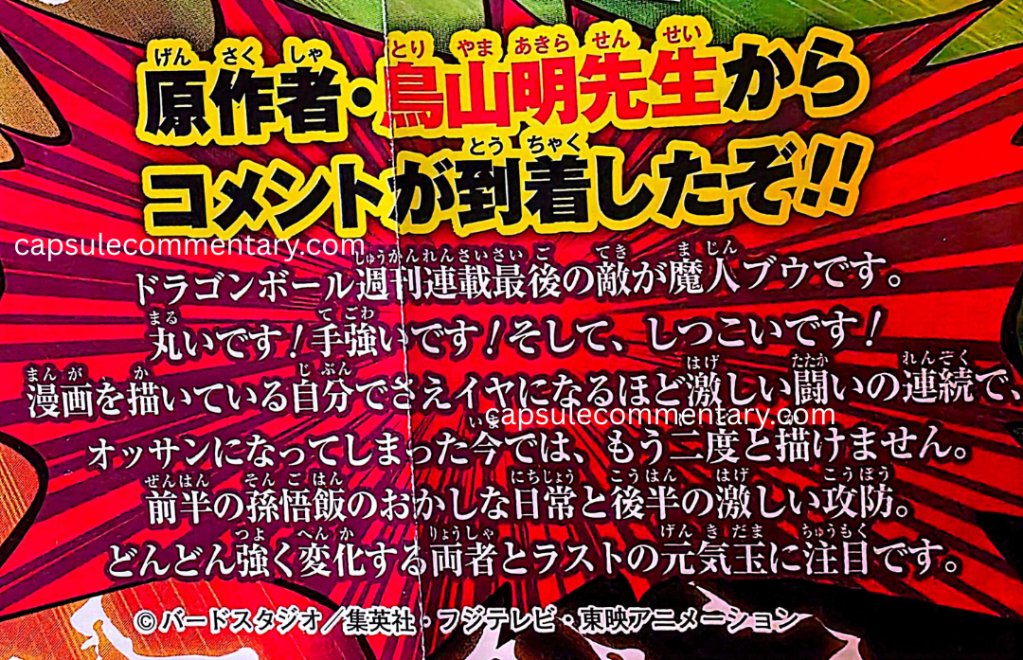
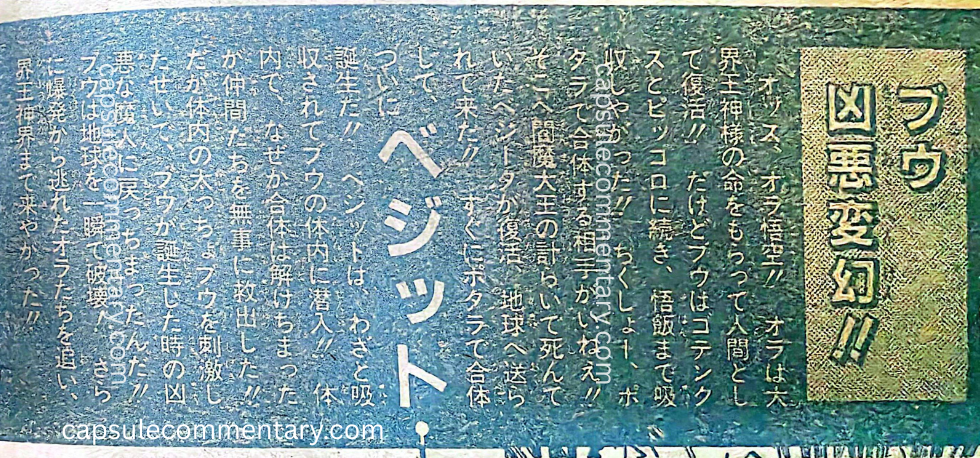
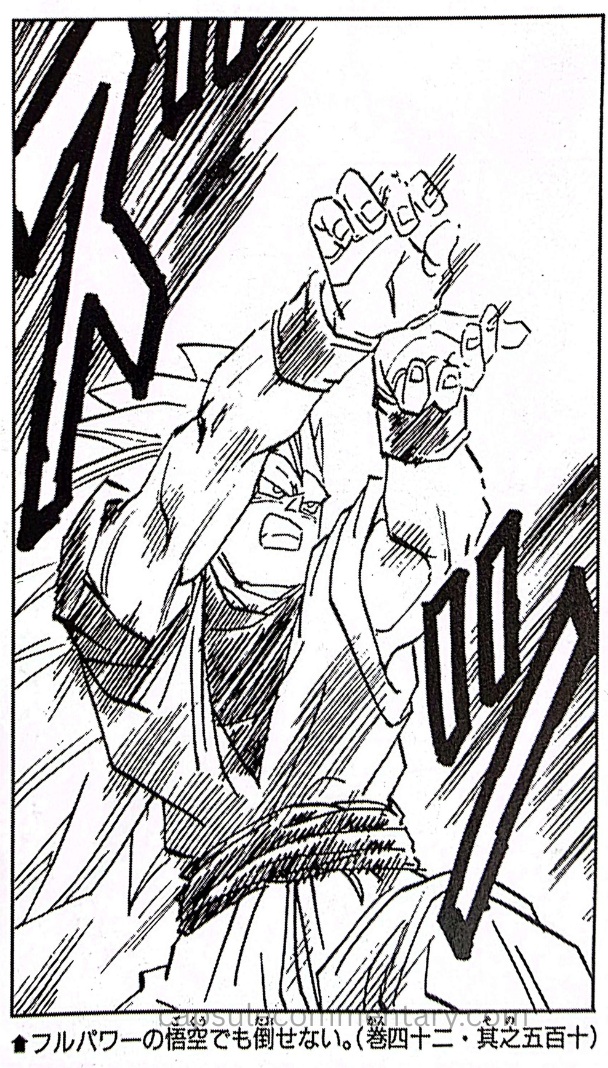
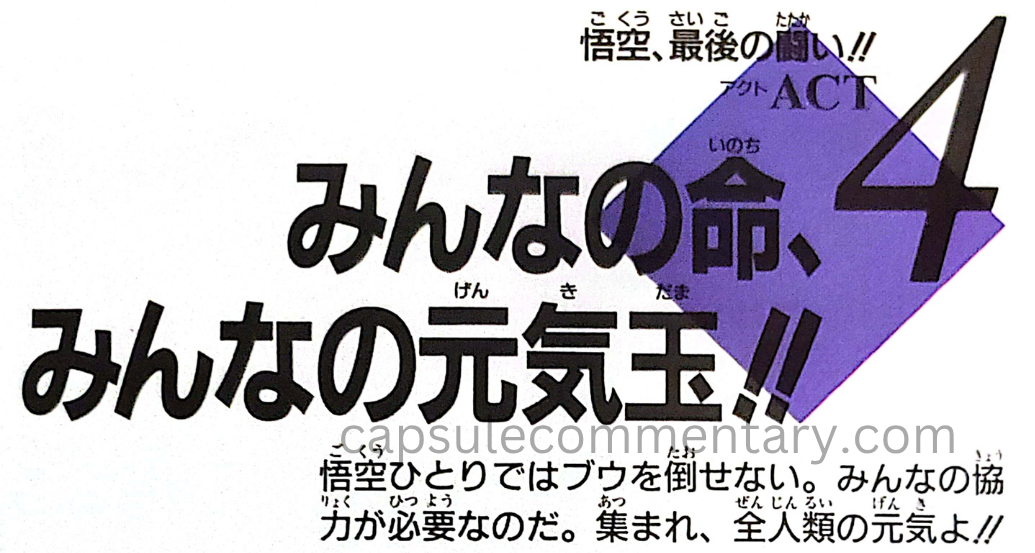
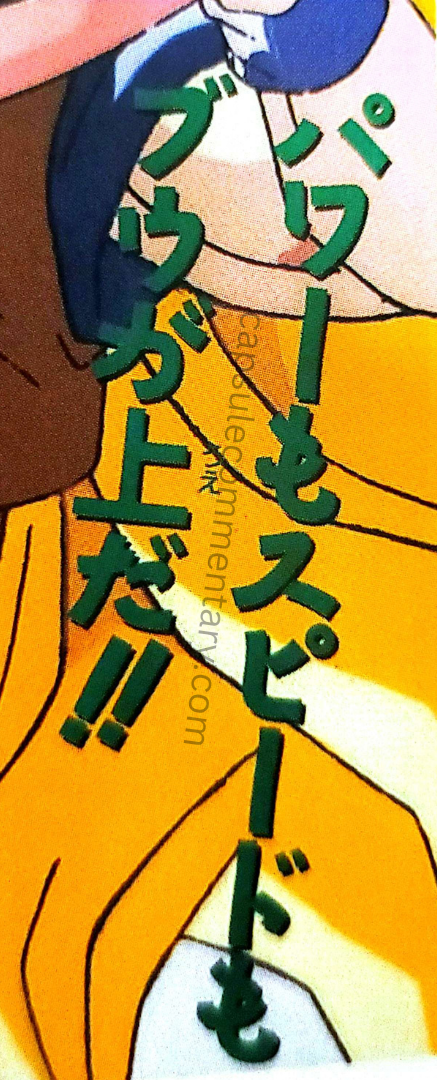
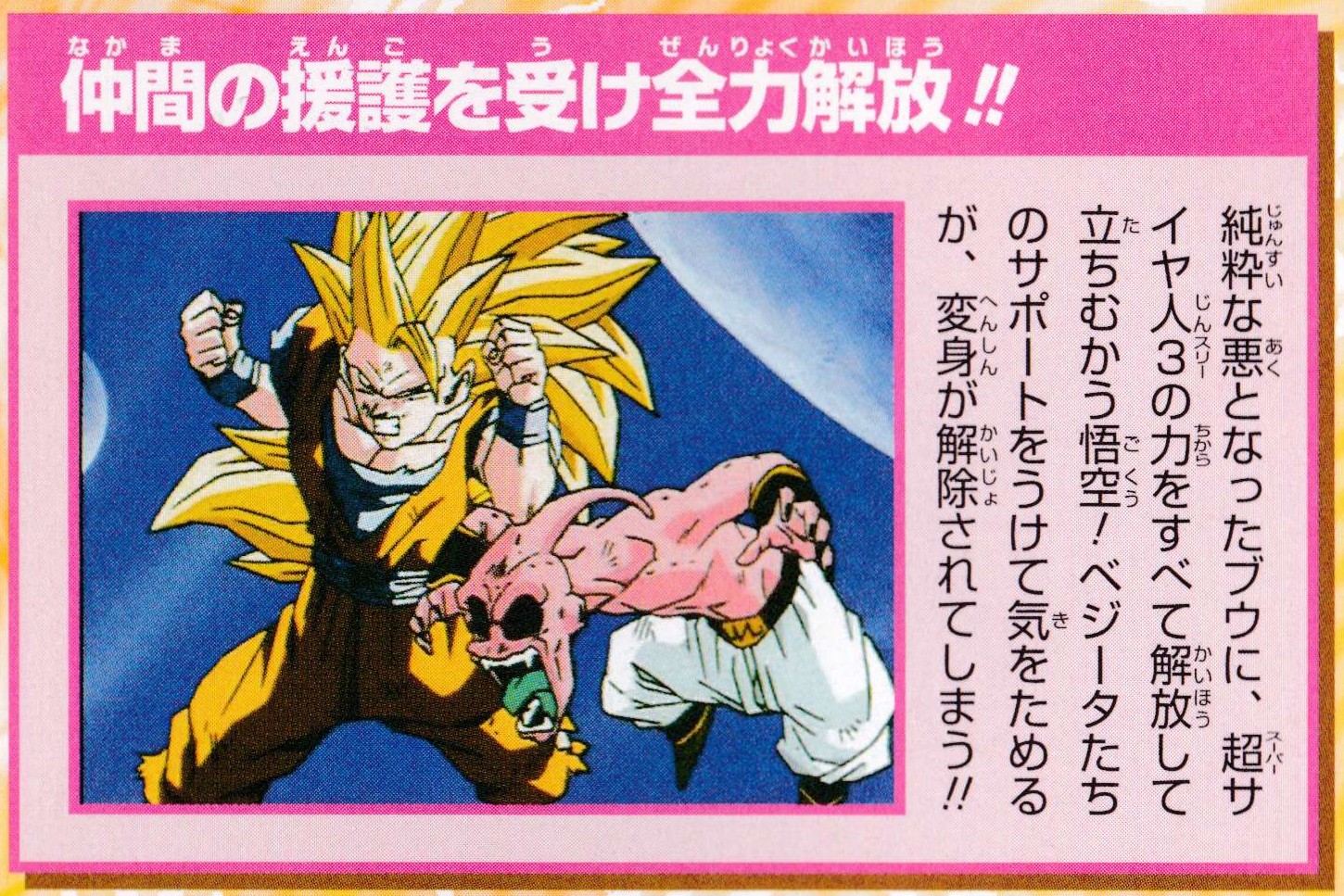
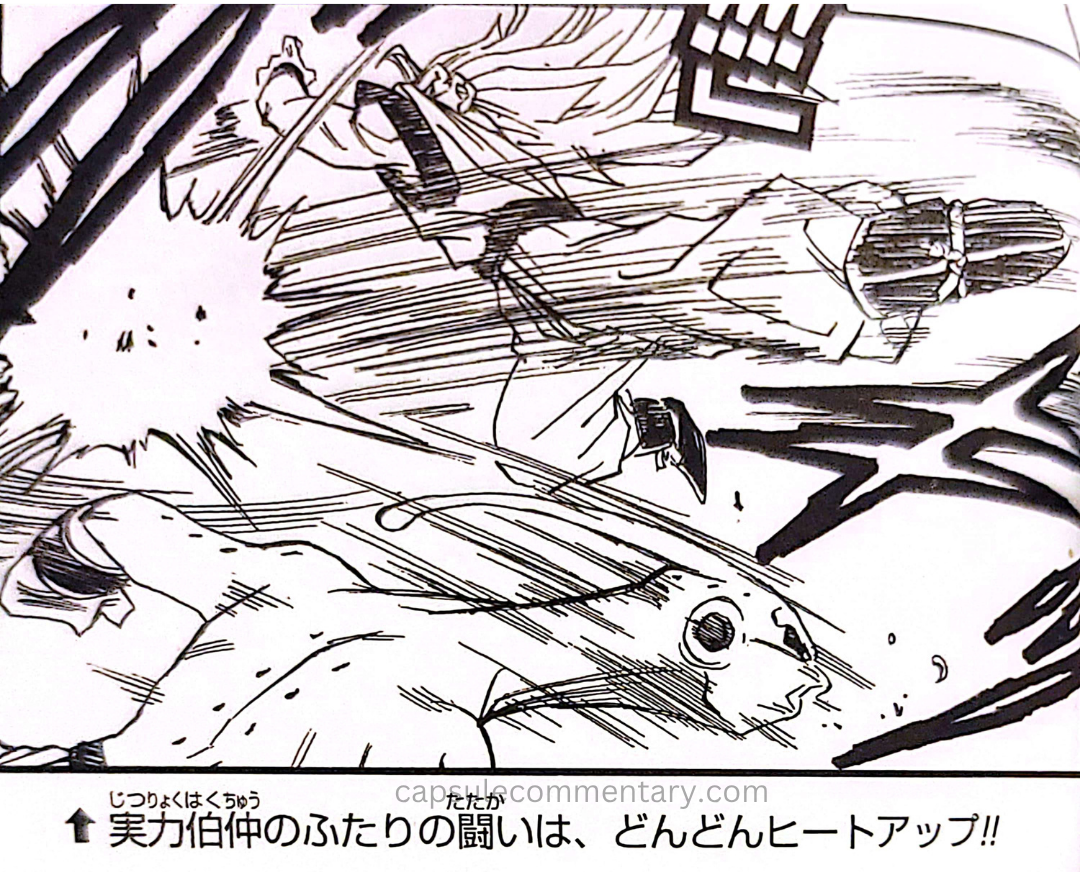
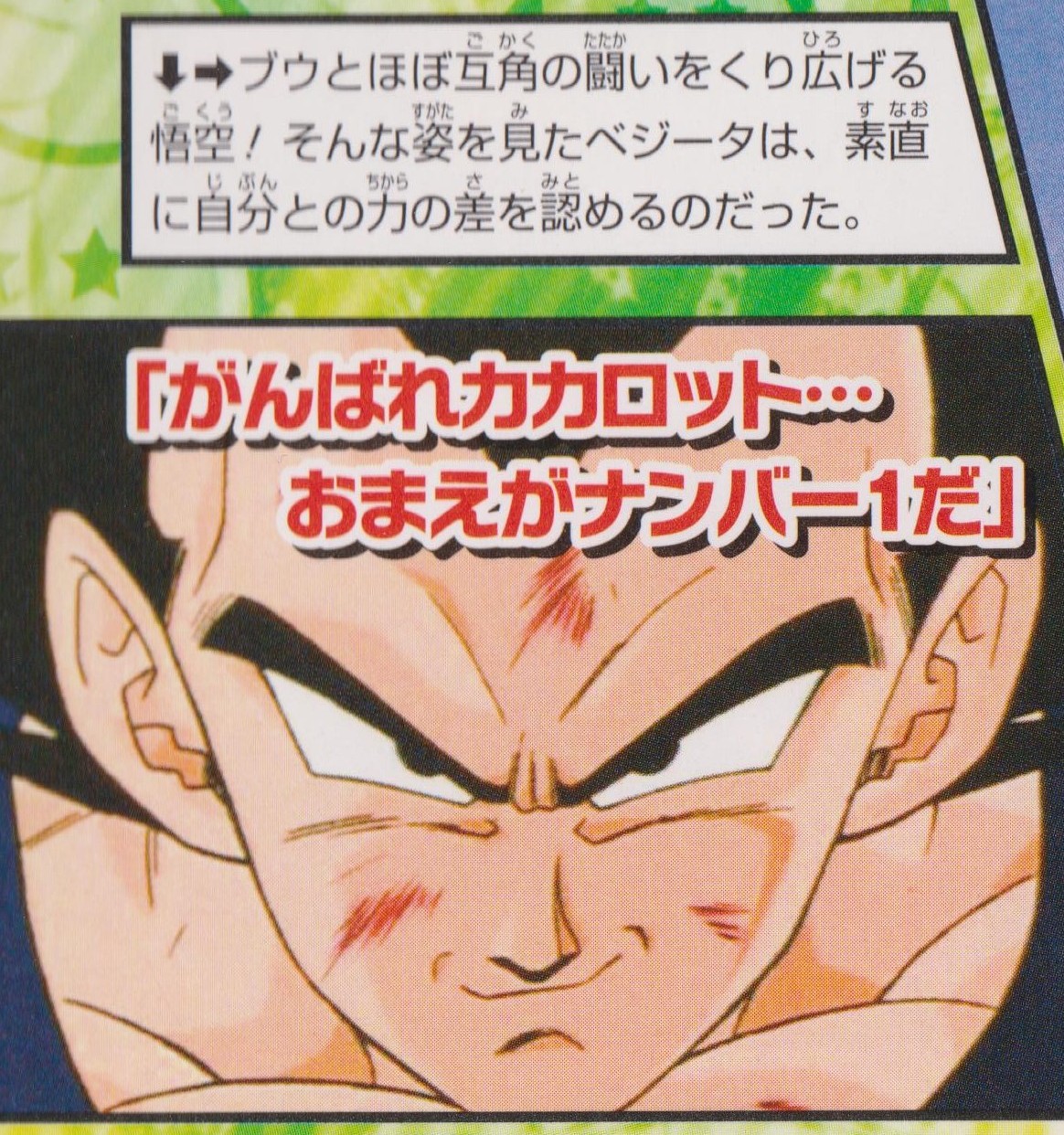

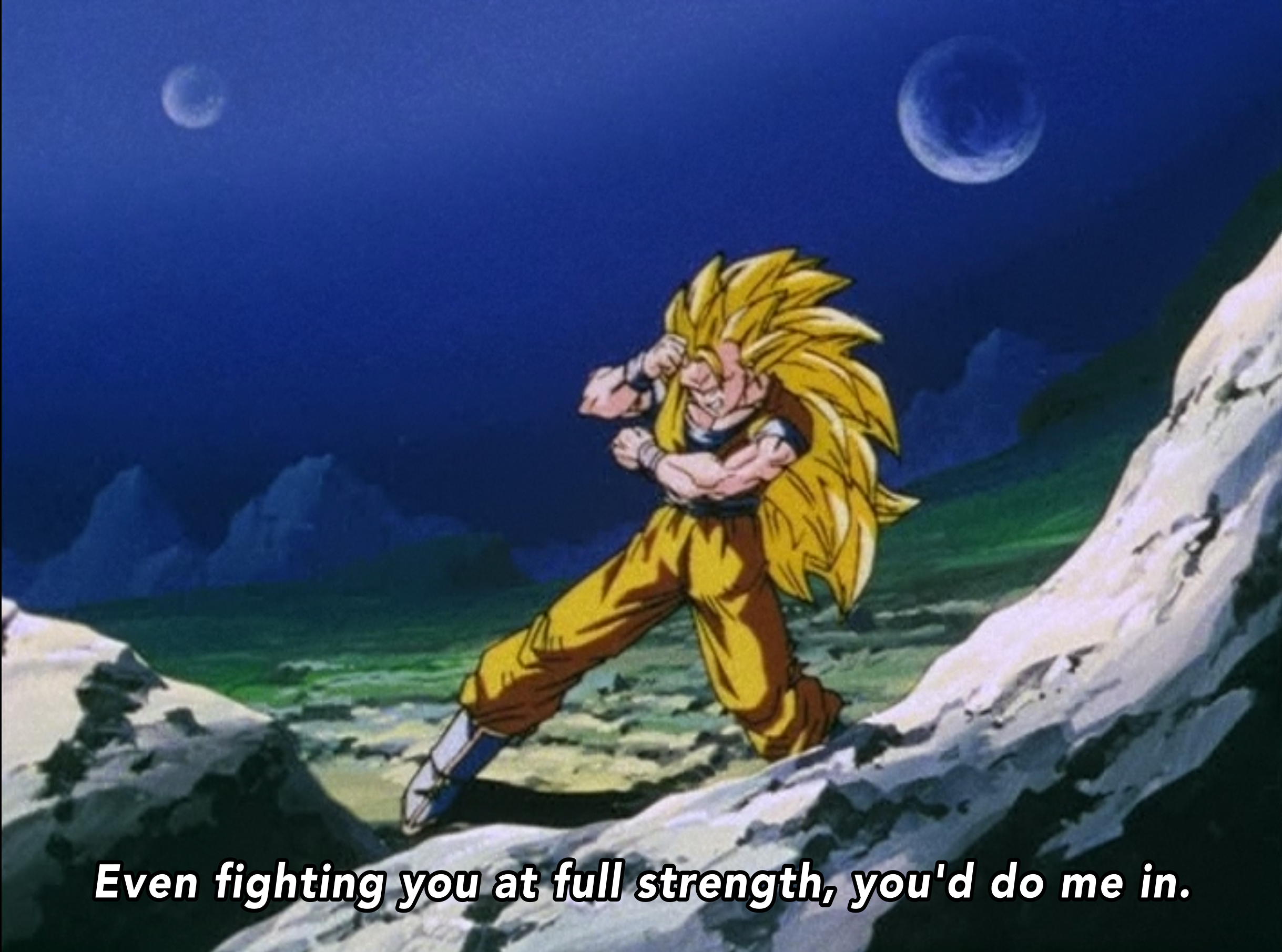
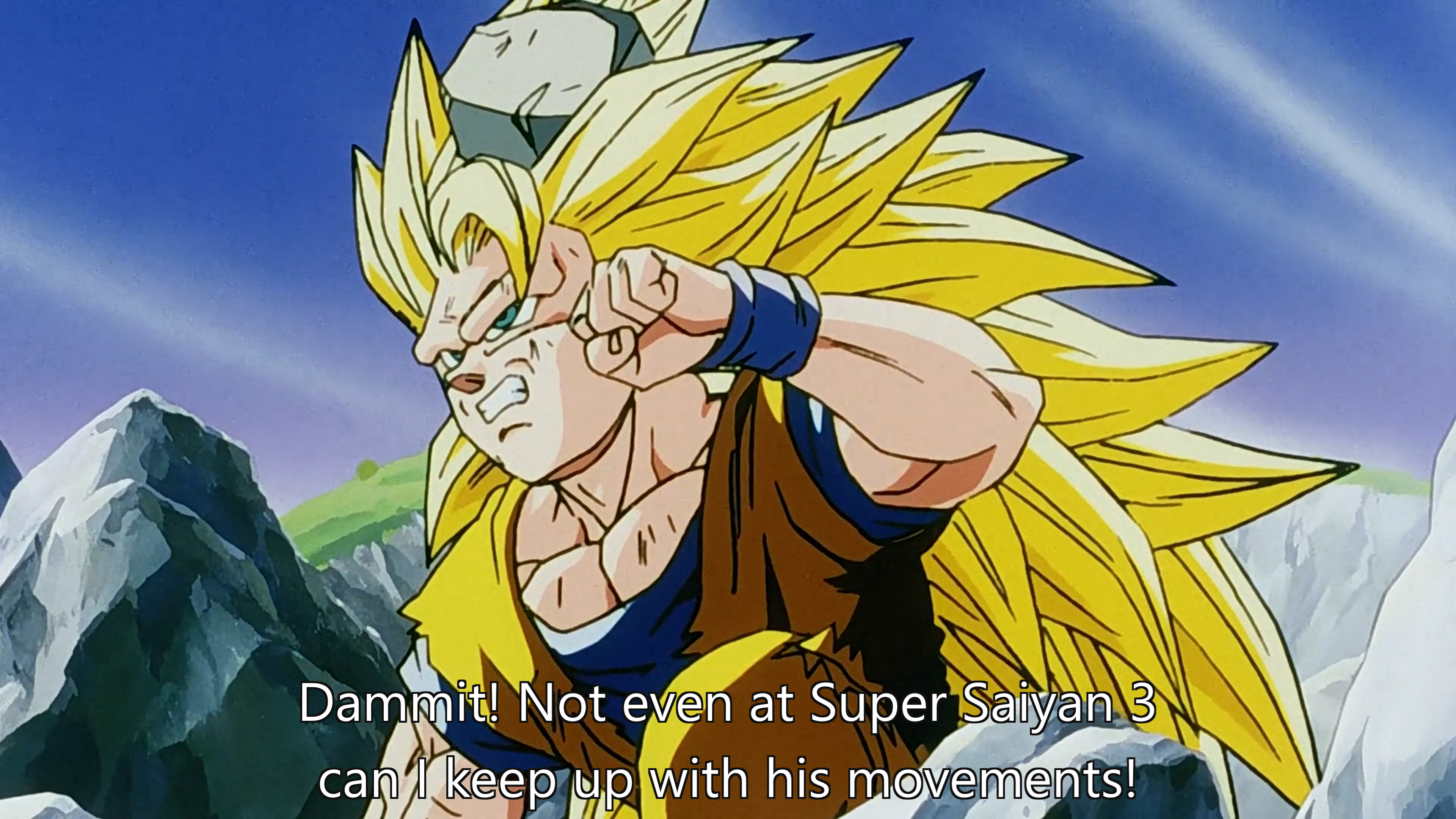
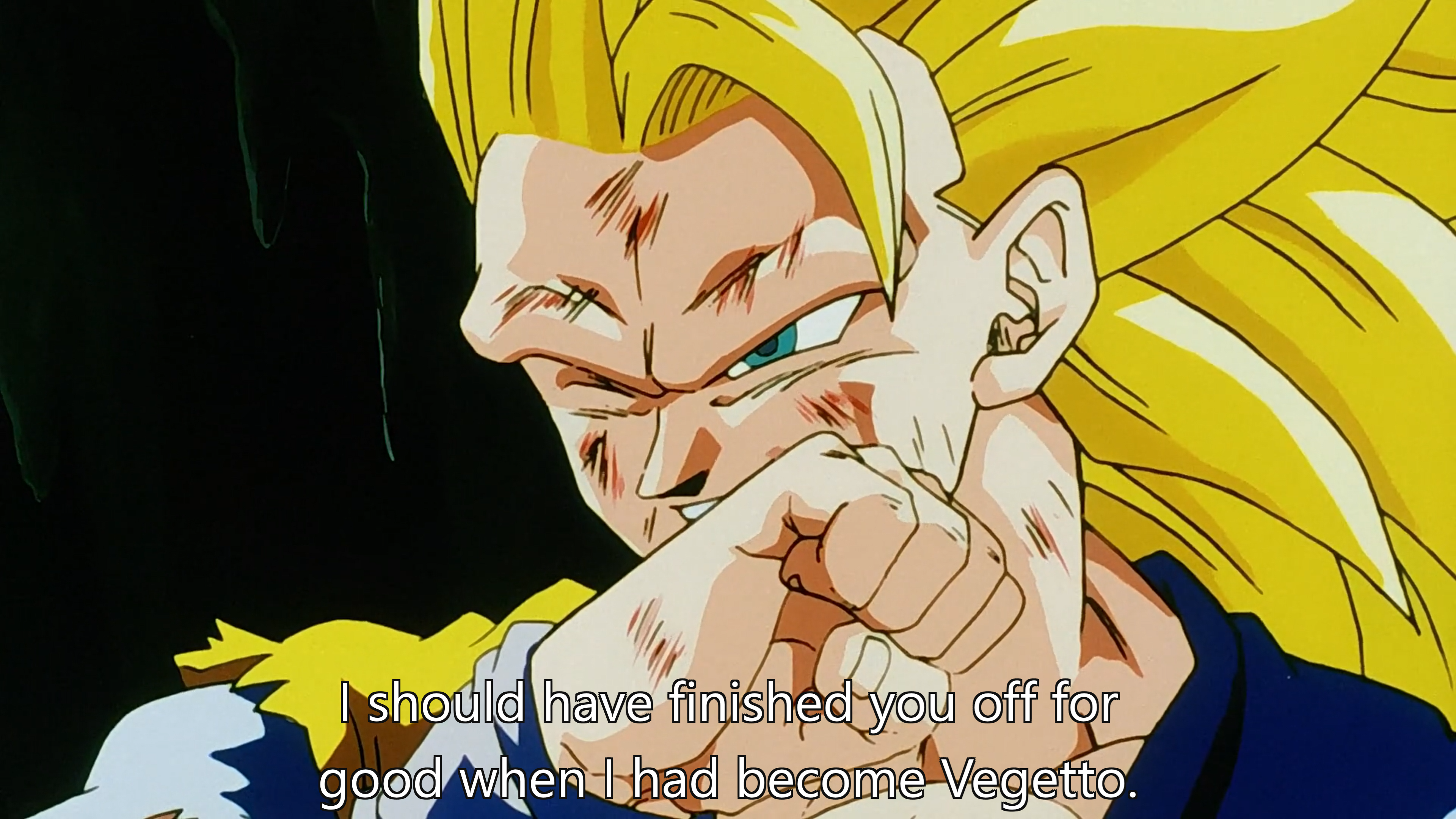
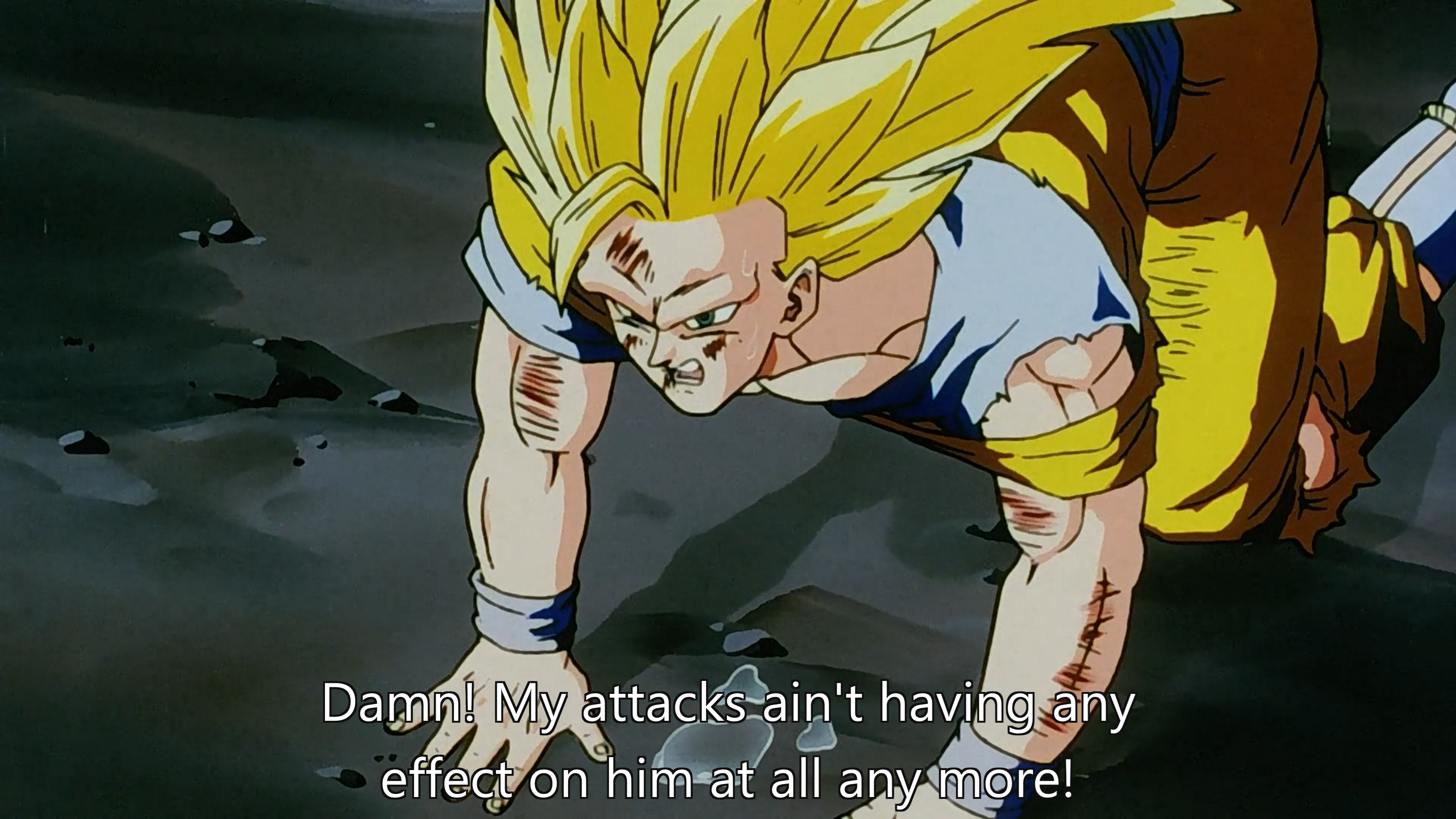

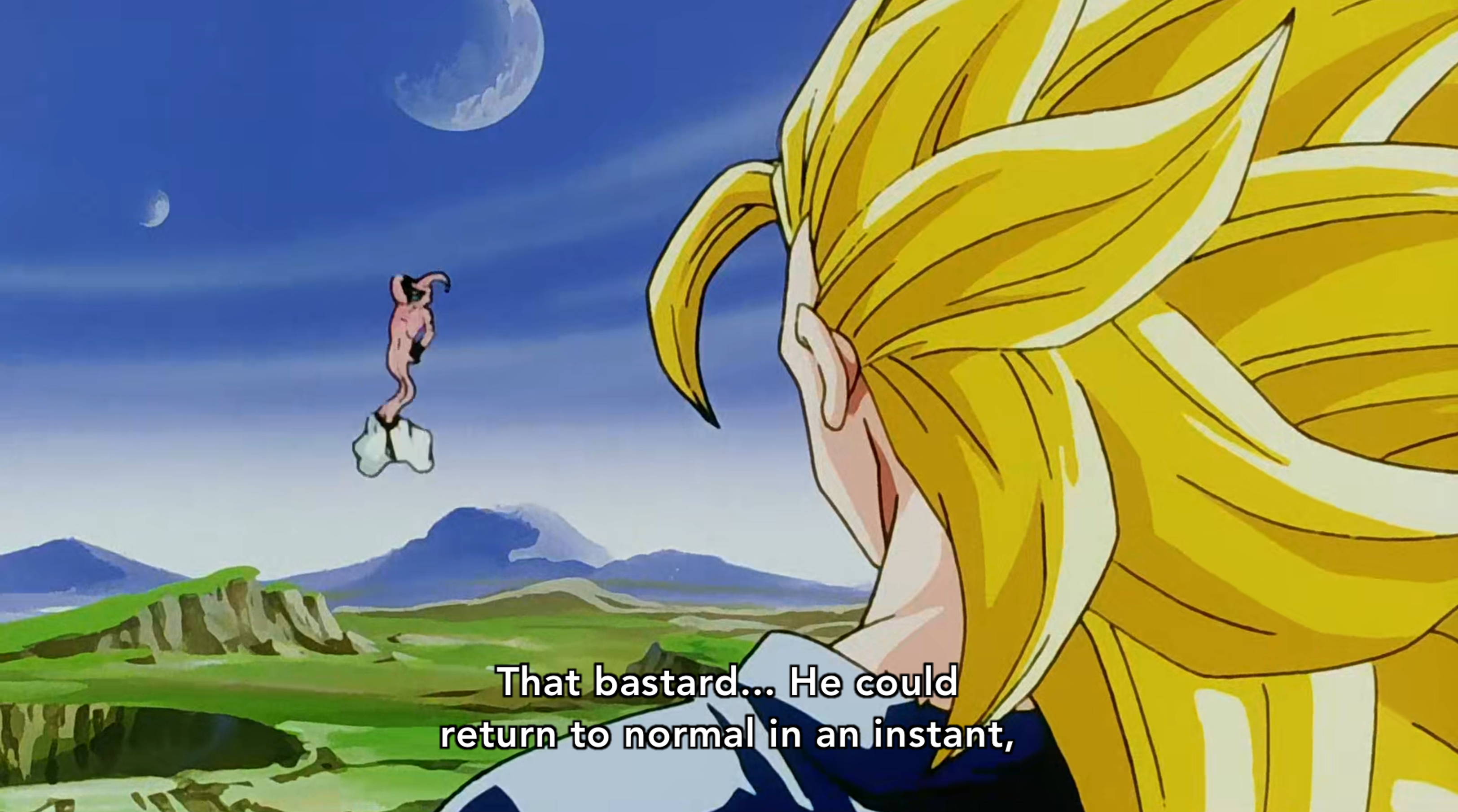
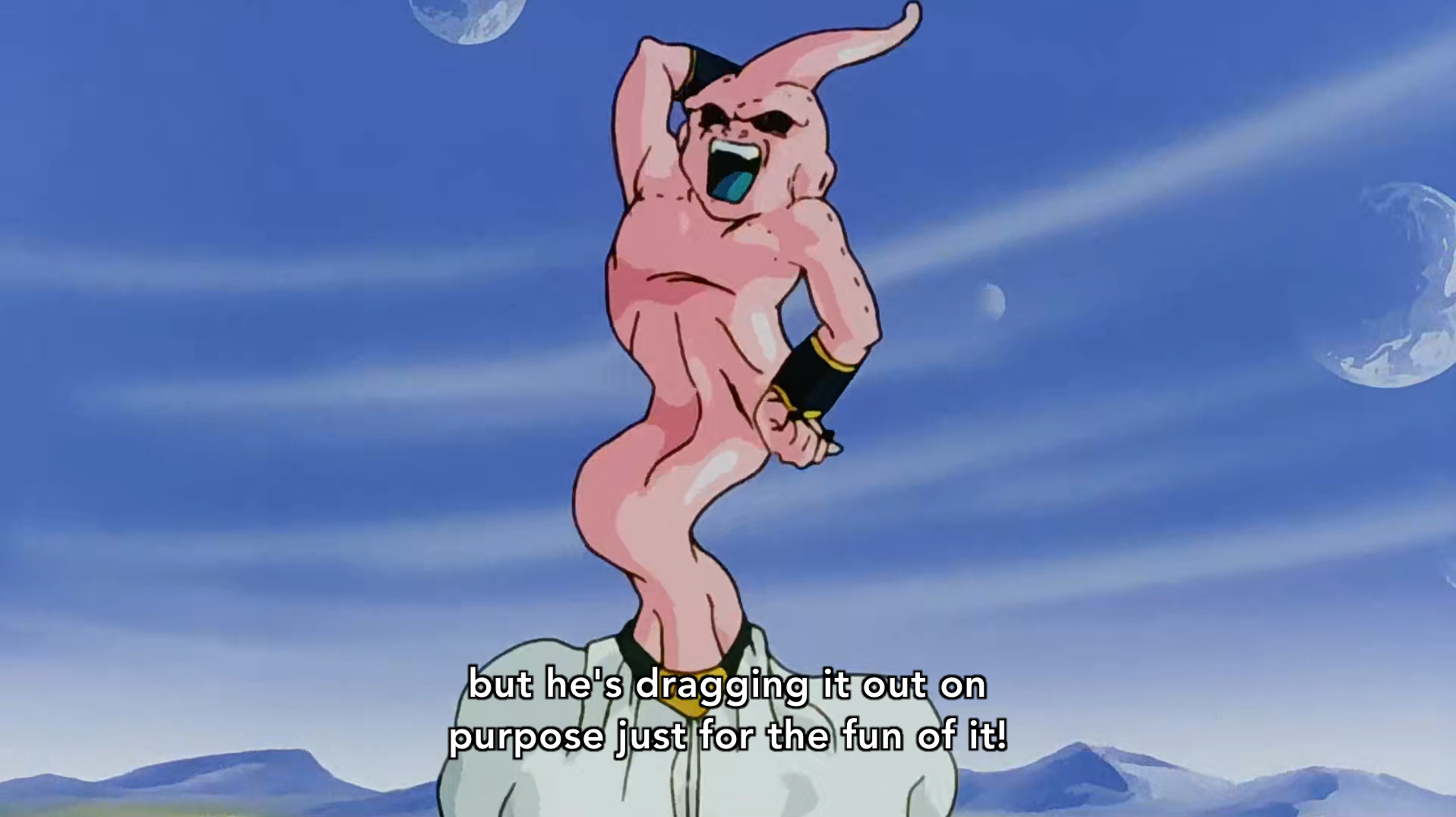
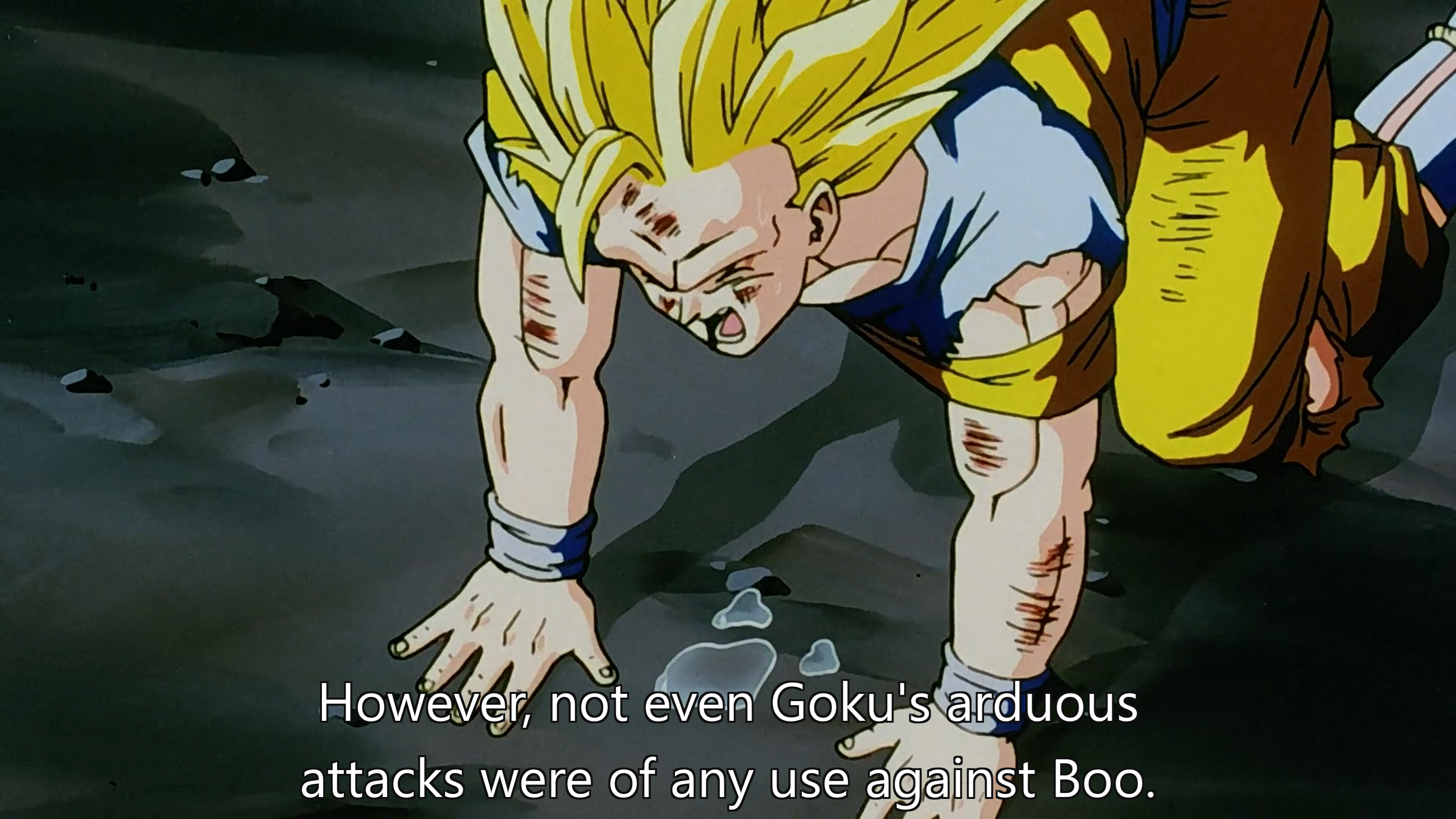
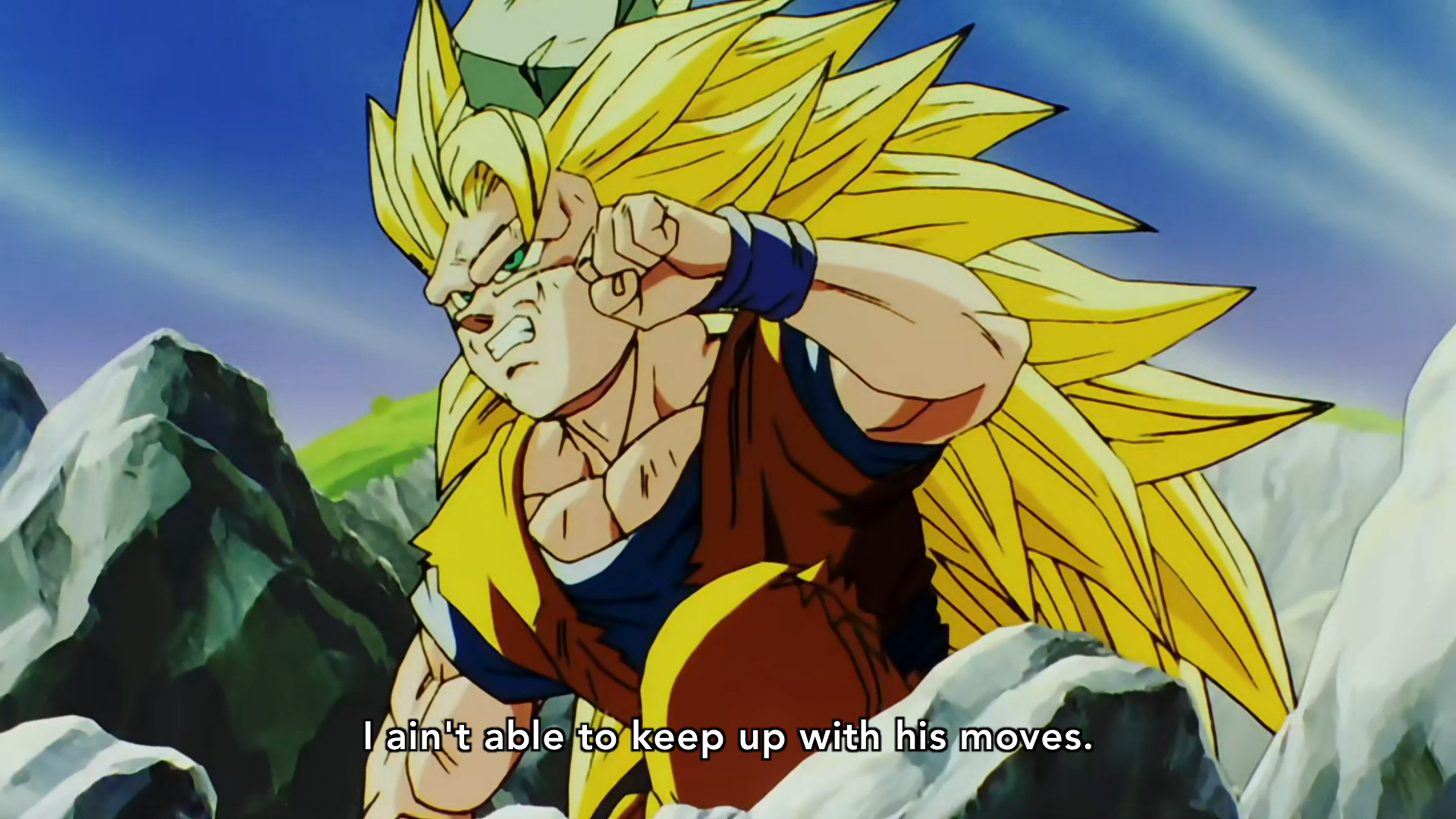
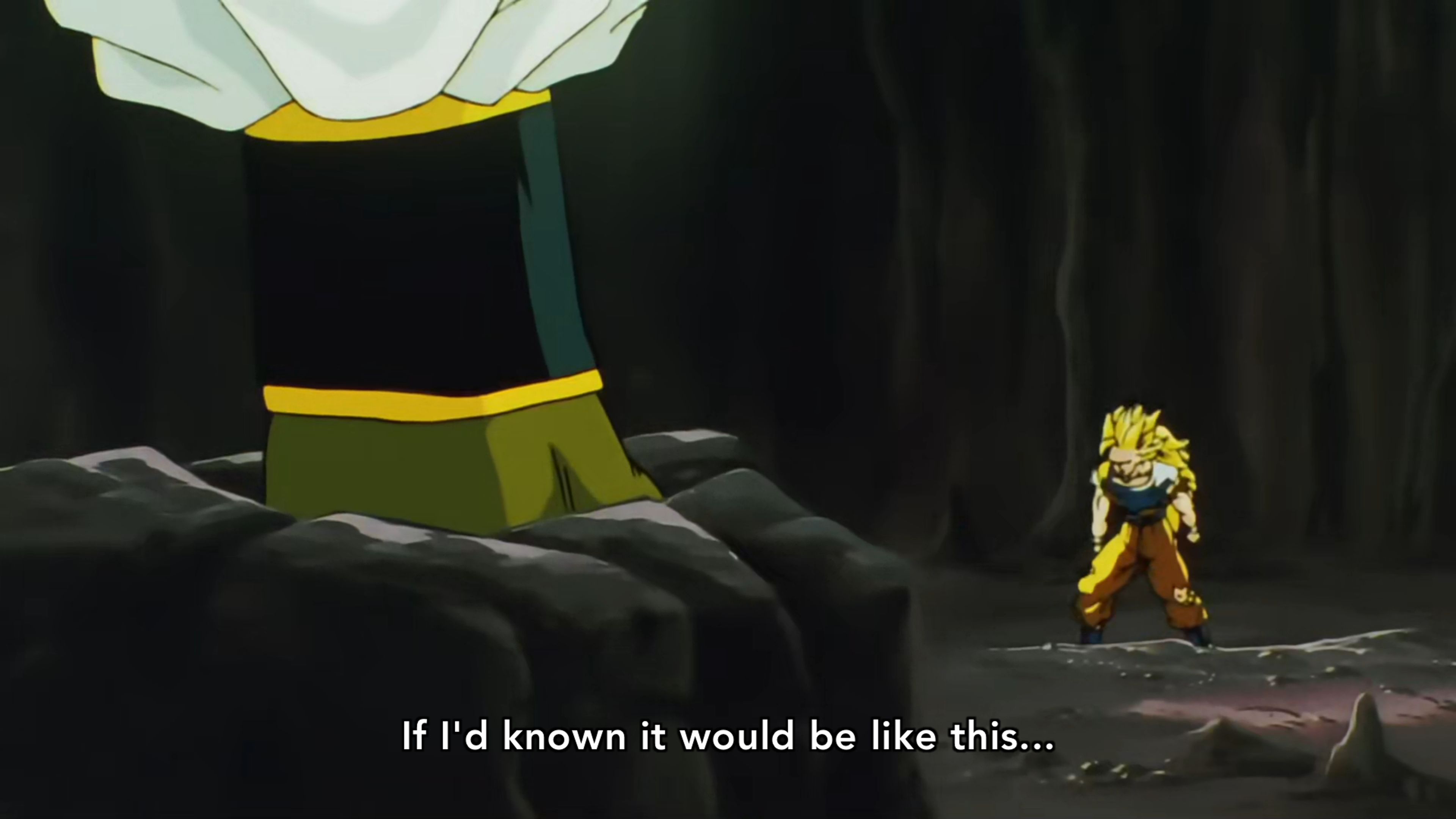
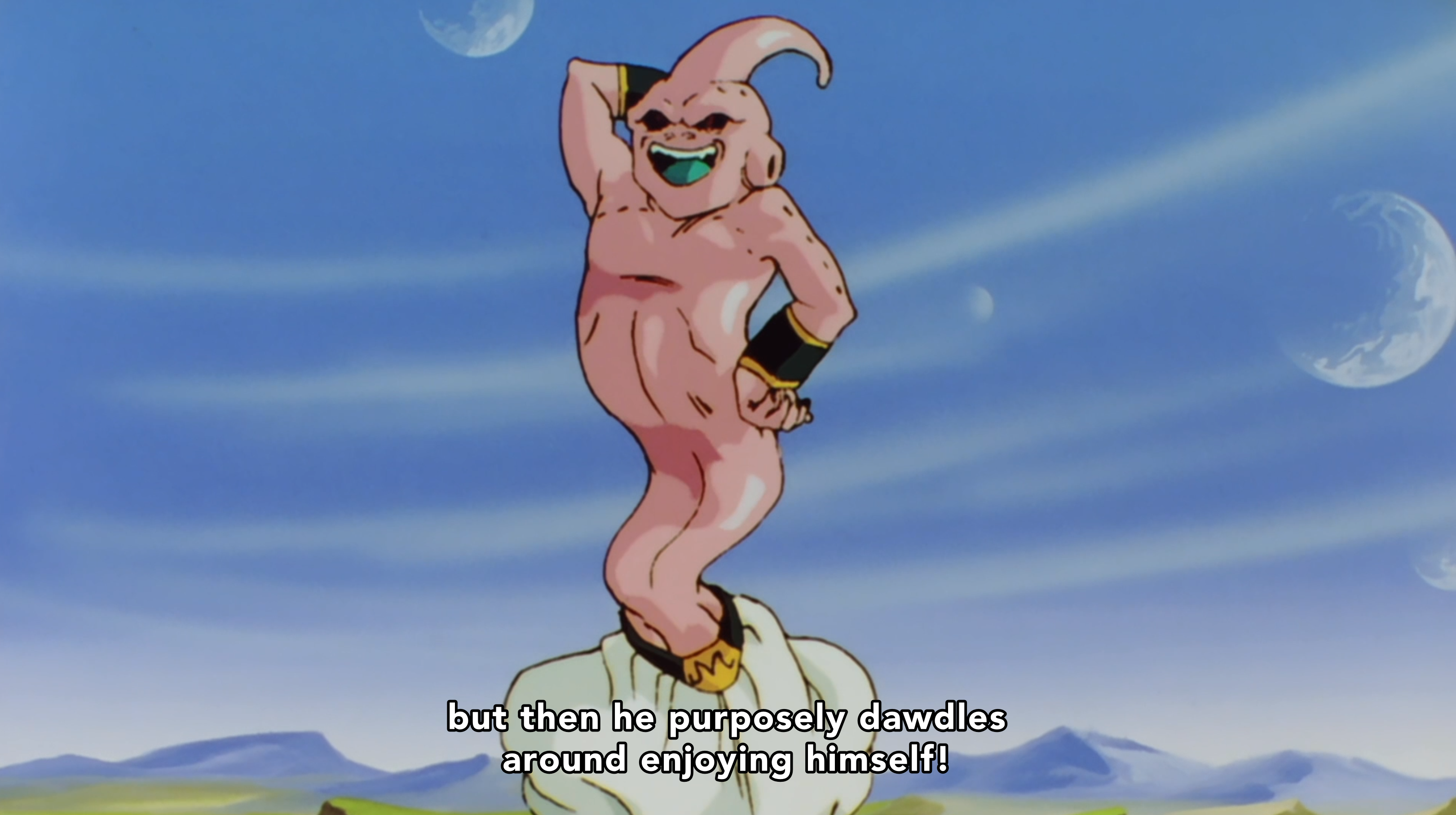
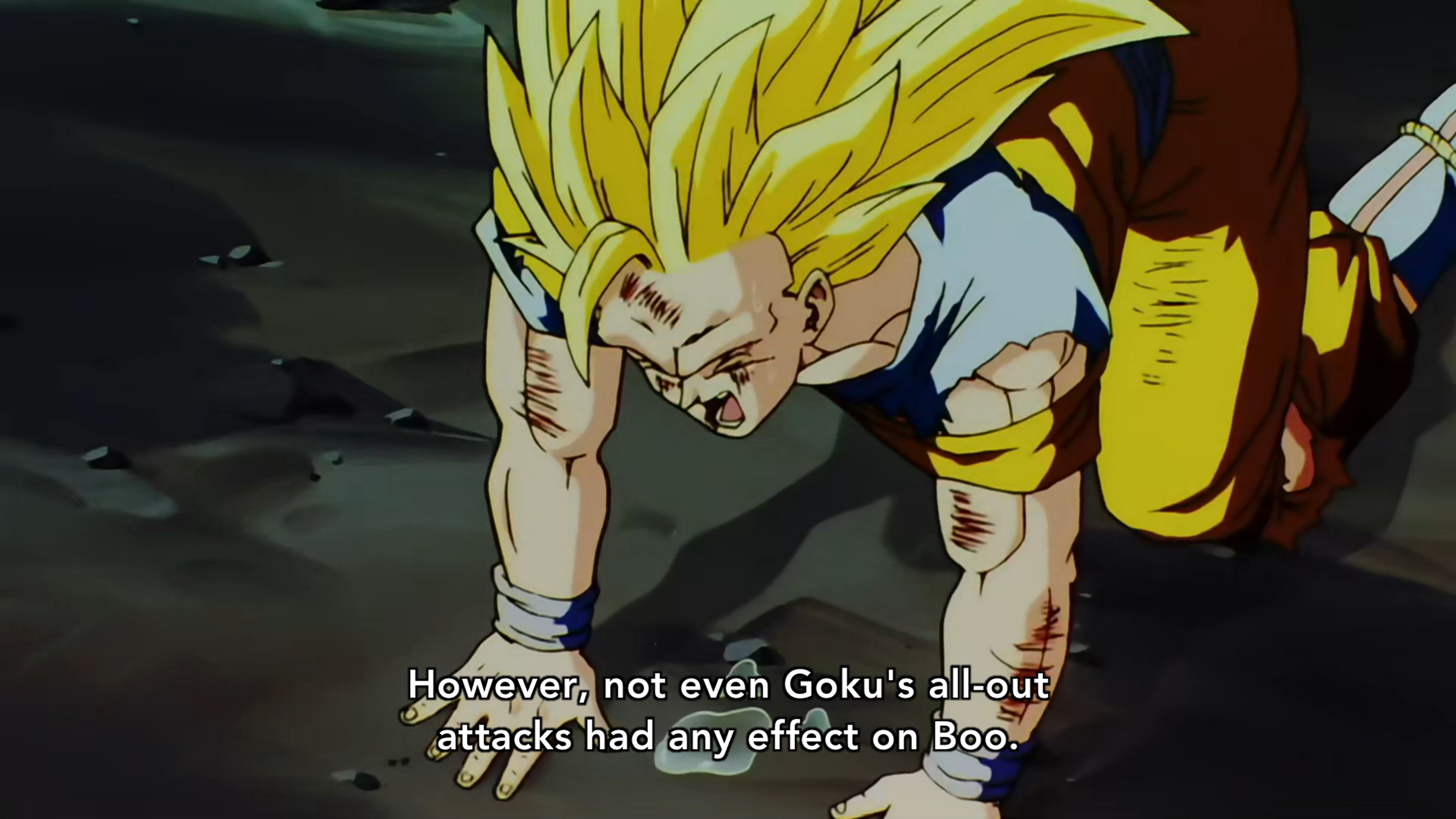

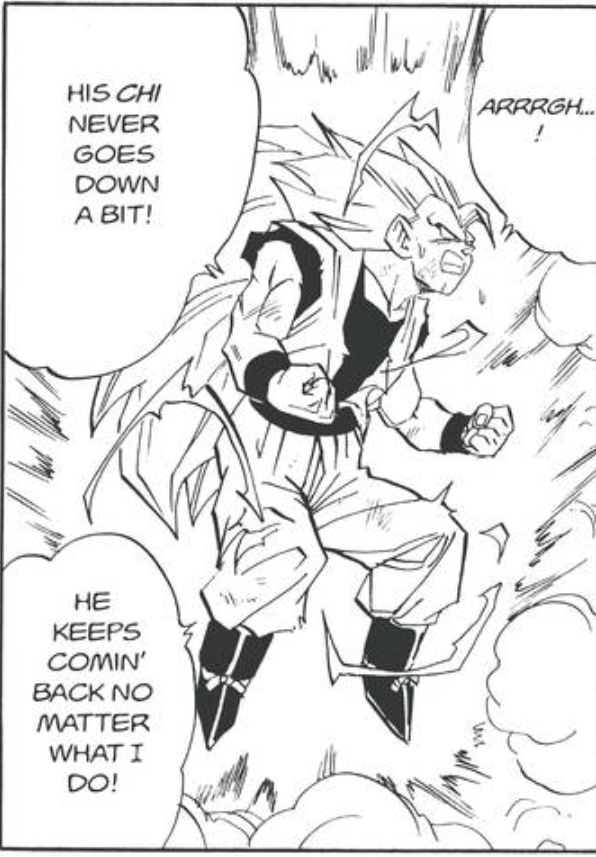
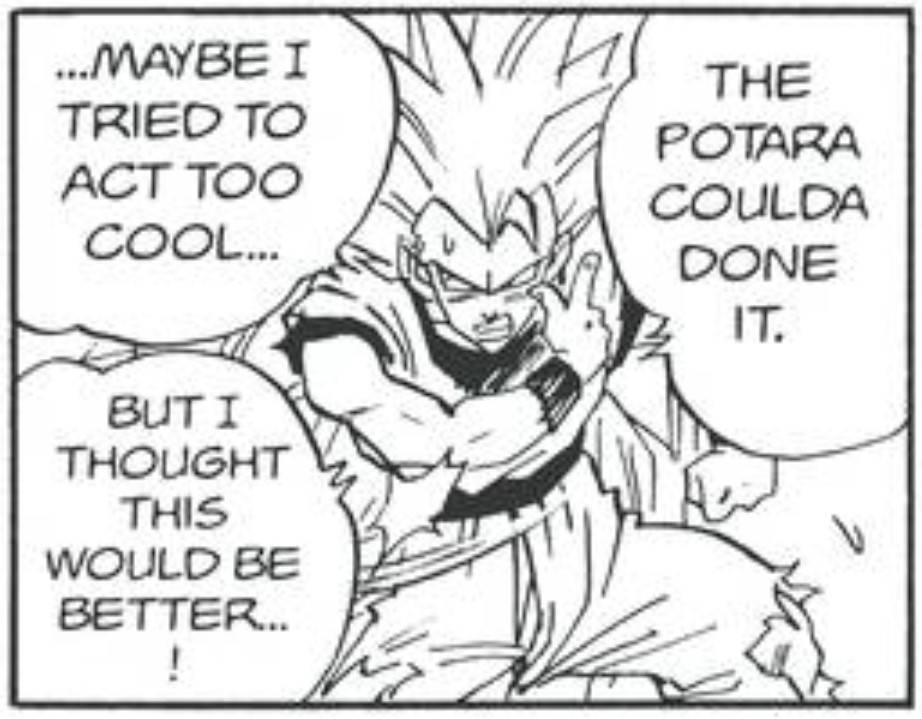
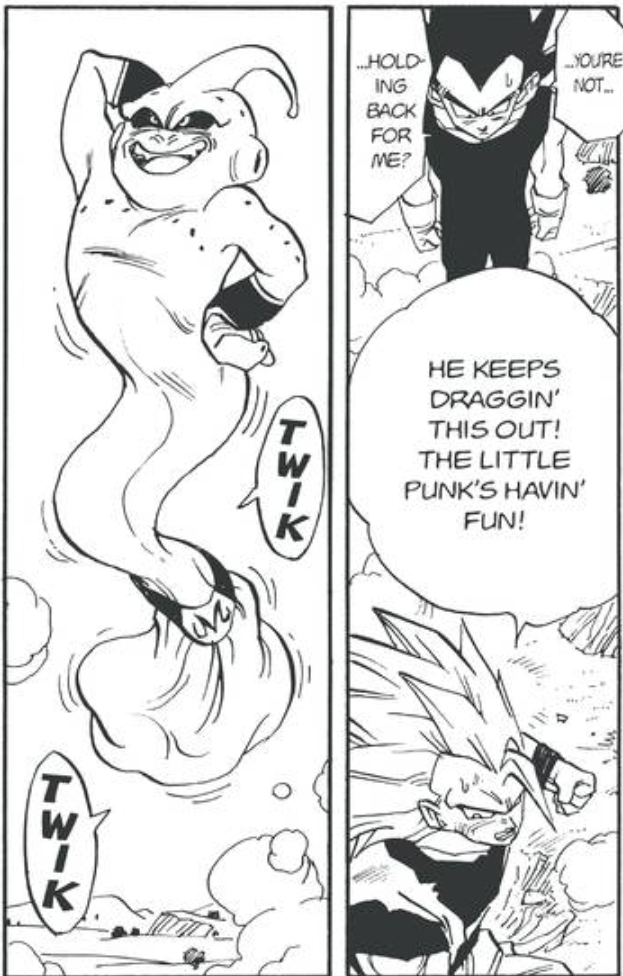
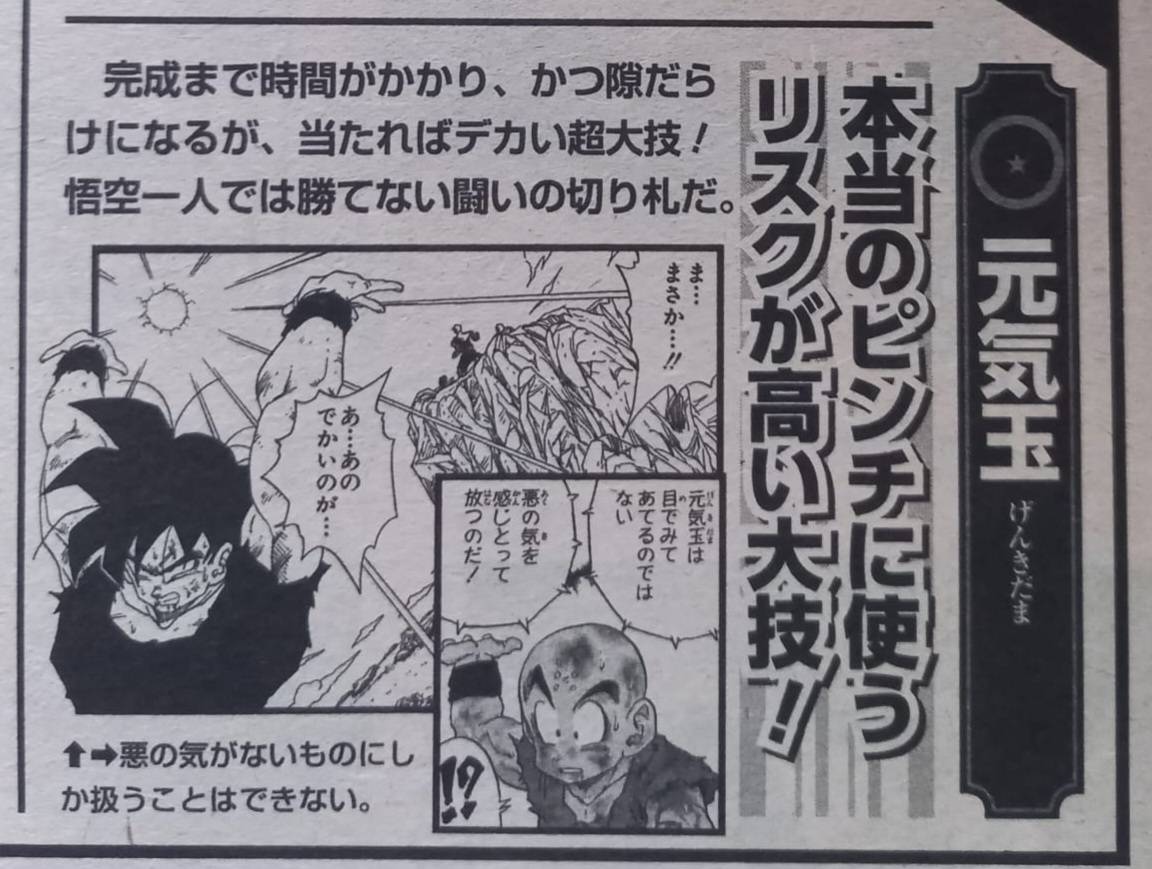
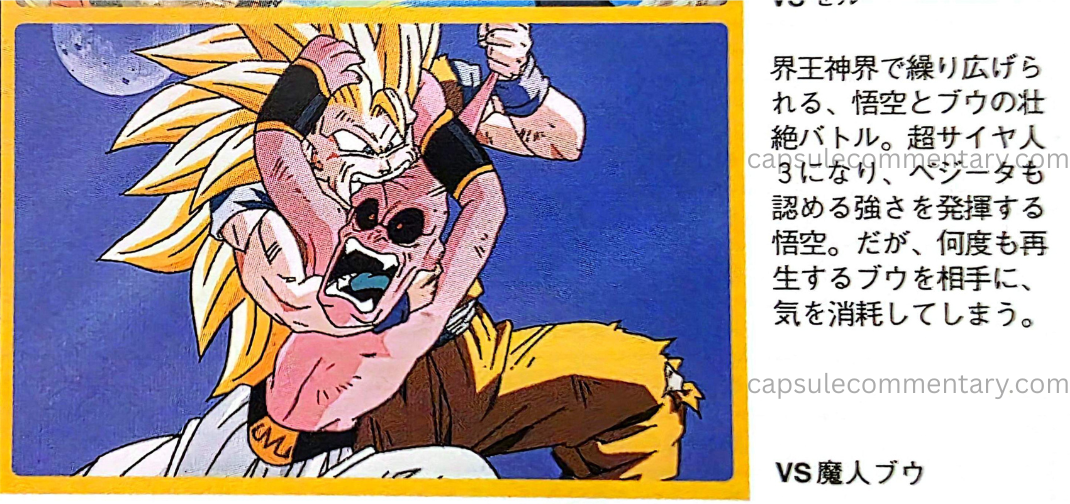
One issue is that the fans who think Goku did well often point to the “damage” that Goku deals to Kid Buu throughout their fight as evidence of him doing well. As explained in the first section, simply hitting Buu is not good enough. A character needs to either be a version of Buu himself to deal lasting damage, or to kill Buu with an overwhelmingly powerful ki attack. The “damage” Goku dealt to Kid Buu was immediately undone by his regeneration. It’s impossible to outlast a perpetual motion machine, after all. Majin Vegeta was able to blast a hole through Fat Buu, and machine gunfire was able to pierce entirely through Super Buu’s body. Does this mean Super Buu was relatively equal to a random human with a gun or that Majin Vegeta was relatively equal to Fat Buu? Of course not. Neither of these opponents were an actual threat to Buu, and they weren’t anywhere near as strong as him. Majin Buu simply doesn’t put any effort into defense because his biology renders it unnecessary. If he didn’t have such incredible regenerative powers, he would naturally put more stock into defense. It’s like how Cell and Piccolo are both willing to lose a limb, but losing a limb was a massive detriment to Future Gohan. A fish is willing to swim underwater much longer than an elephant; the characters’ biology matters.
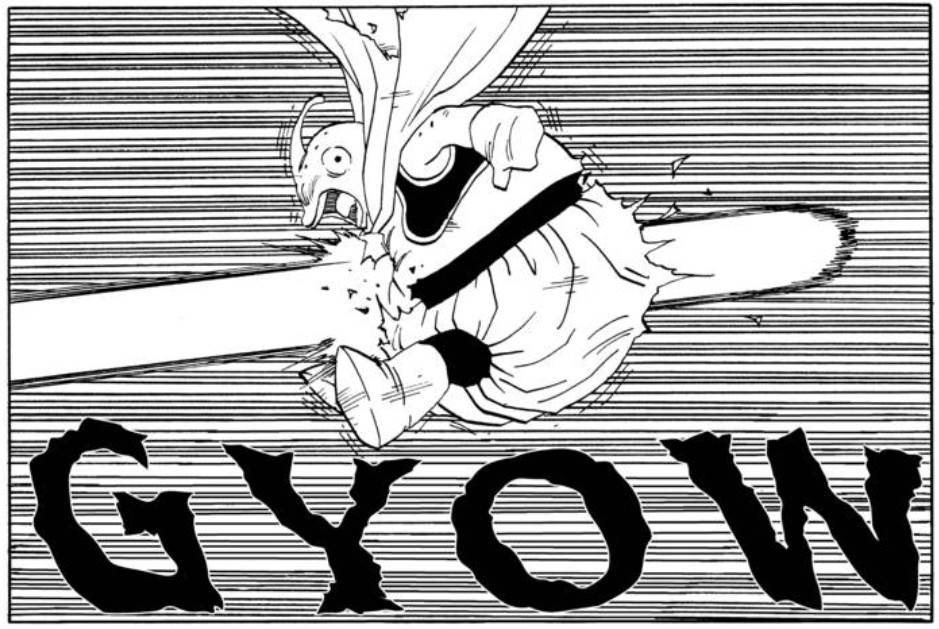
On page 5 of chapter 508 when Kibitoshin is explaining Kid Buu to Elder Kaiōshin, Elder Kaiōshin remarks that Kid Buu is “the most troublesome one.” Some fans use this to argue that Kid Buu was more dangerous than Buuhan, but not necessarily stronger than him. However, this same phrase was used by Goku Black (another Kaiōshin) on page 16 of Dragon Ball Super chapter 16 to describe Beerus. Therefore, separating “most troublesome” from strength doesn’t work. If Beerus were the “most troublesome” in the sense that he was most likely to interfere with or stop Goku Black’s plans, then that would mean he was an especially proactive God of Destruction, and not the lazy one we know. Kaiōshin and Kibito even refer to how lazy he is on page 34 of Super chapter 16. The fact that Universe 7 had to compete in the Tournament of Power also demonstrates that Beerus is, in fact, not that diligent about his job. The most troublesome GoDs in this respect would be those of Universes 1, 5, 8, and 12 because they actually do their jobs. It’s only when Beerus learns that his own life is at risk that he takes any action to stop Zamasu. Despite his job performance, in the Zen Exhibition Match, all of the other GoDs team up against Beerus at the start, and he handles them quite well. At the end of the match, the only two left standing are Beerus and Quitela. So even though Beerus is lazy, it’s clear he is at the very least one of the Top 2 Strongest GoDs, and most likely he’s number one. Therefore, the phrase “most troublesome” being used to describe Beerus clearly includes his rank as one of the Top 2 Strongest GoDs, which undermines the claim that Elder Kaiōshin was not also describing how strong Kid Buu is.
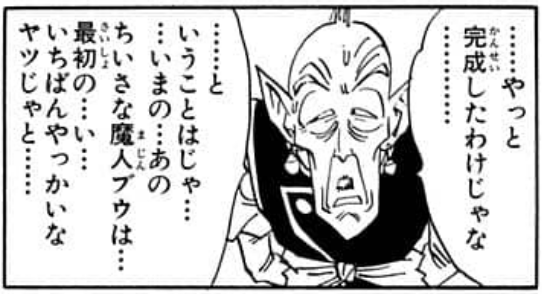
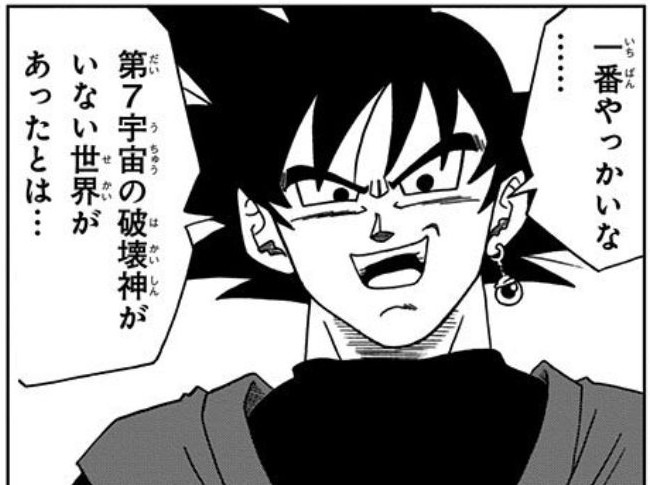
Staying on the subject of Elder Kaiōshin, in chapter 501, he explains that Goku and Gohan probably won’t be able to beat Buutenks and introduces the concept of Potara Fusion as the solution to this. Some fans point to this as evidence that Kid Buu must be weaker than even Buutenks, nevermind Buuhan. However, Elder Kaiōshin also says Fusion is necessary for Kid Buu in chapter 509, and with far less composure. In fact, he almost goes insane that Goku and Vegeta won’t at least try the Fusion Dance or even team up.
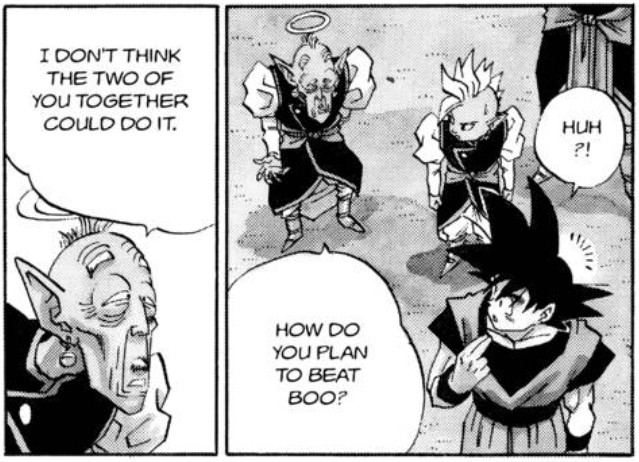
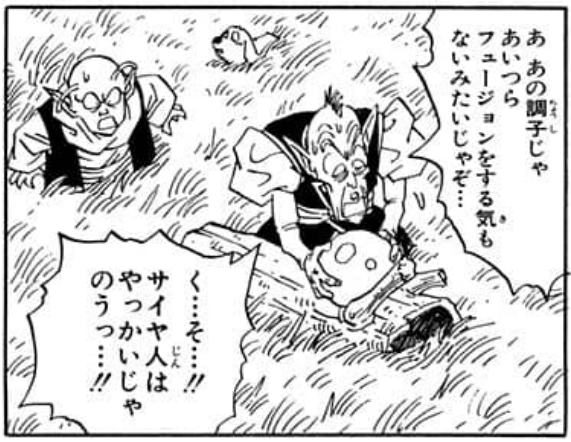
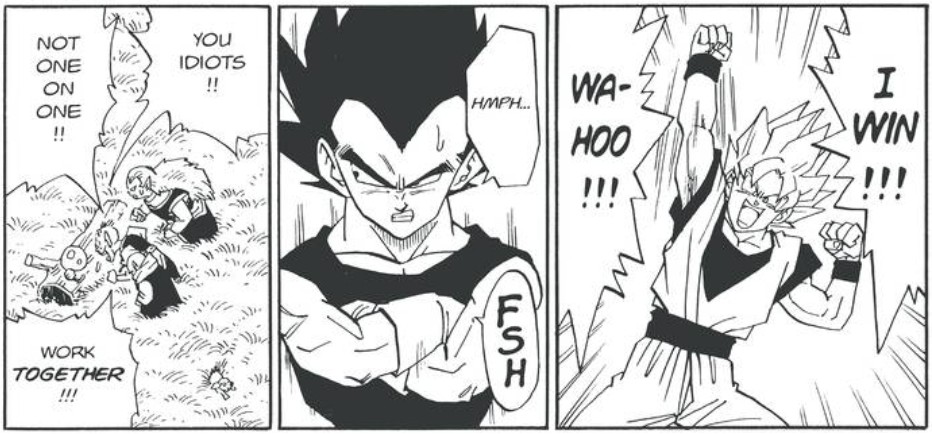
As mentioned in the previous section, another misconception is regarding the Potara. While inside Super Buu, Goku is upset that the Potara were destroyed because he believes Super Buu can still defeat him and Vegeta. As explained in the first section, this is because, while Goku and Vegeta were massively weakened, Vegito could preserve his strength while shrunken. Then he and Vegeta destroy the next set of Potara when presented with them. As discussed in the previous section, in the manga, no one knew that Kid Buu would be able to find them. In fact, one of the only stated reasons ever given for why Goku destroyed the Potara is that he believed Kid Buu wouldn’t be able to track them down. This is quite the departure from both animated versions of this scene wherein Goku and Vegeta purposefully make Kid Buu aware of where they are. In those animated versions, the argument could be made that they were confident they could fight Kid Buu 1-on-1 and win, as they purposefully attracted him. The animated versions are also quite clear that Kid Buu is the strongest form and state this multiple times throughout multiple episodes though. But this argument cannot be made for the manga and their shocked expressions at Kid Buu’s arrival are a confirmation of this. As these two contradict, we must default to the manga. However, in all 3 versions, Goku regrets destroying the Potara after fighting Kid Buu. So we know that Goku, who is as strong as Buuhan, is much weaker than Kid Buu, and that Vegito is still much more powerful than any form of Majin Buu.
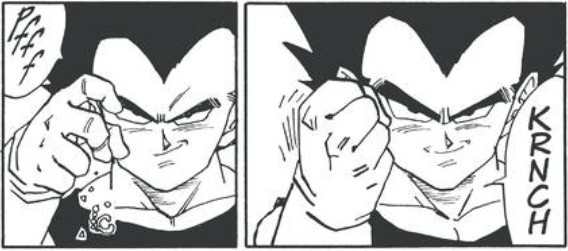
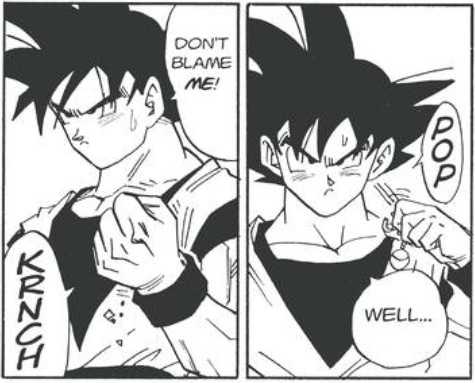
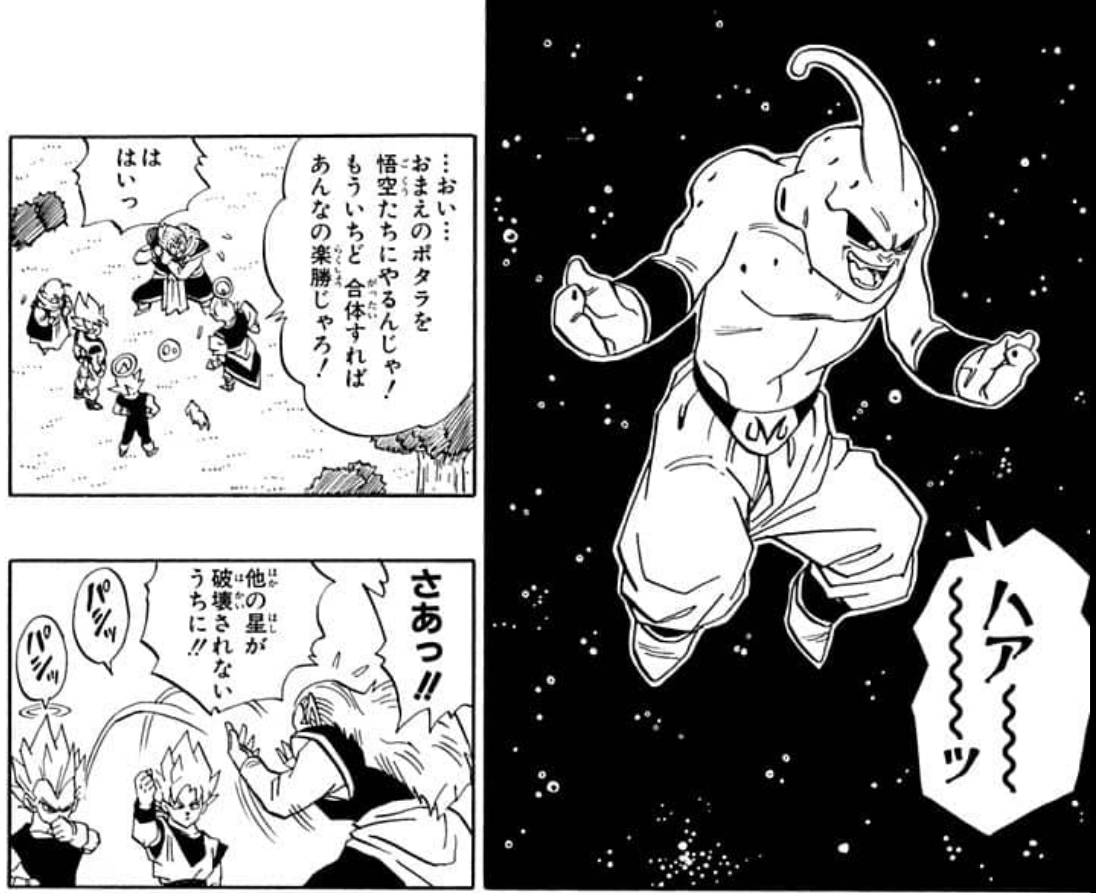
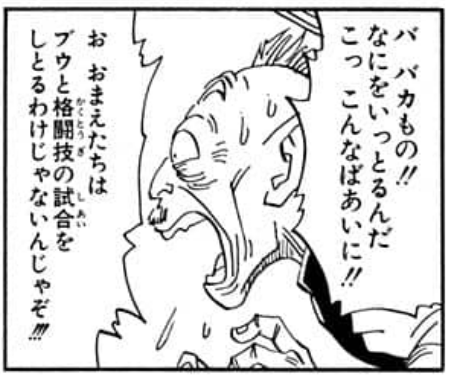
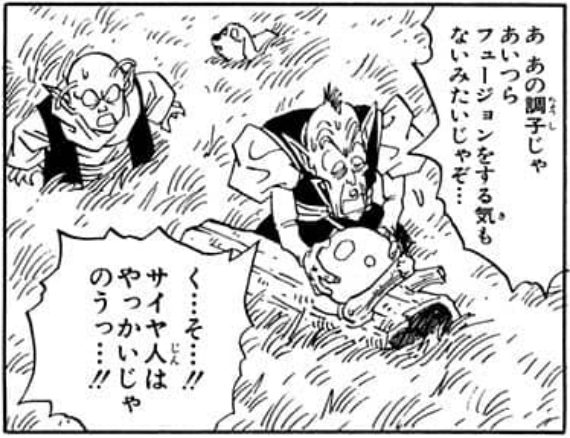
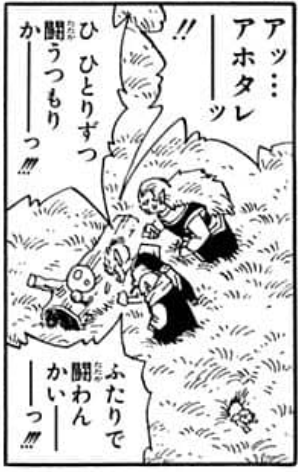
Moreover, it’s worth pointing out that the first time the Potara were destroyed was before Kid Buu was even introduced. Buuhan still existed at that point. Goku does protest Vegeta’s decision to destroy them, but quickly destroys his, as well. If the argument is that they feared Buuhan and only became confident once Kid Buu appeared, why didn’t they preserve the earrings inside Buuhan, who is supposedly a much stronger foe? It makes even less sense to destroy them inside of Majin Buu because they had no guarantee they would find their allies, no guarantee of what condition they would be found in, and no guarantee they could even escape. The simplest explanation is that they were acting like Saiyans—prideful, impulsive, and overconfident—and not like the calculating tacticians some fans presume them to be.
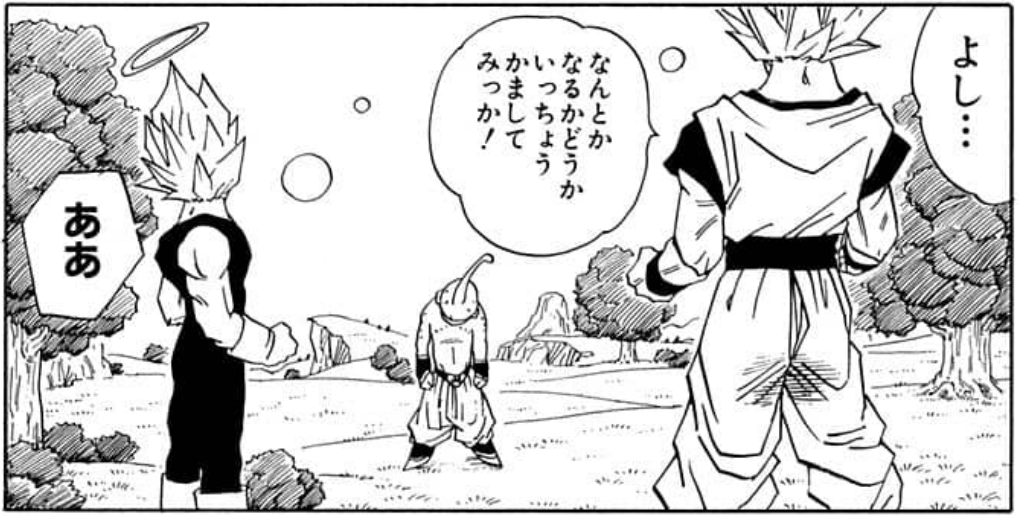
Also, any importantly, Goku wasn’t as confident as some fans make him out be. On page 10 of chapter 509, before fighting Kid Buu, he says: “Alright… I don’t know if this will work out, but I’ll give it a try!” All of this is consistent with both Goku and Vegeta’s many miscalculations in combat and the many times they overestimated their own strength and needed to be rescued. (See the last paragraph in this section.) The popular “Goku feared Buuhan/Super Buu but not Kid Buu” argument rests on the flawed assumption that Goku and Vegeta behave rationally rather than emotionally, and that’s very rarely ever been the case. It also relies on ignoring what Goku himself says before the fight.
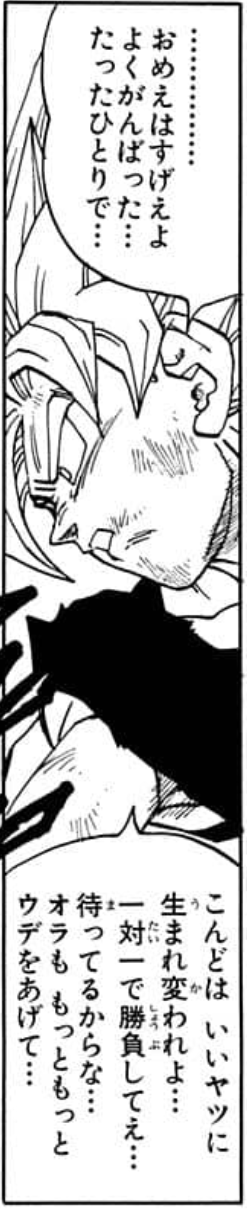

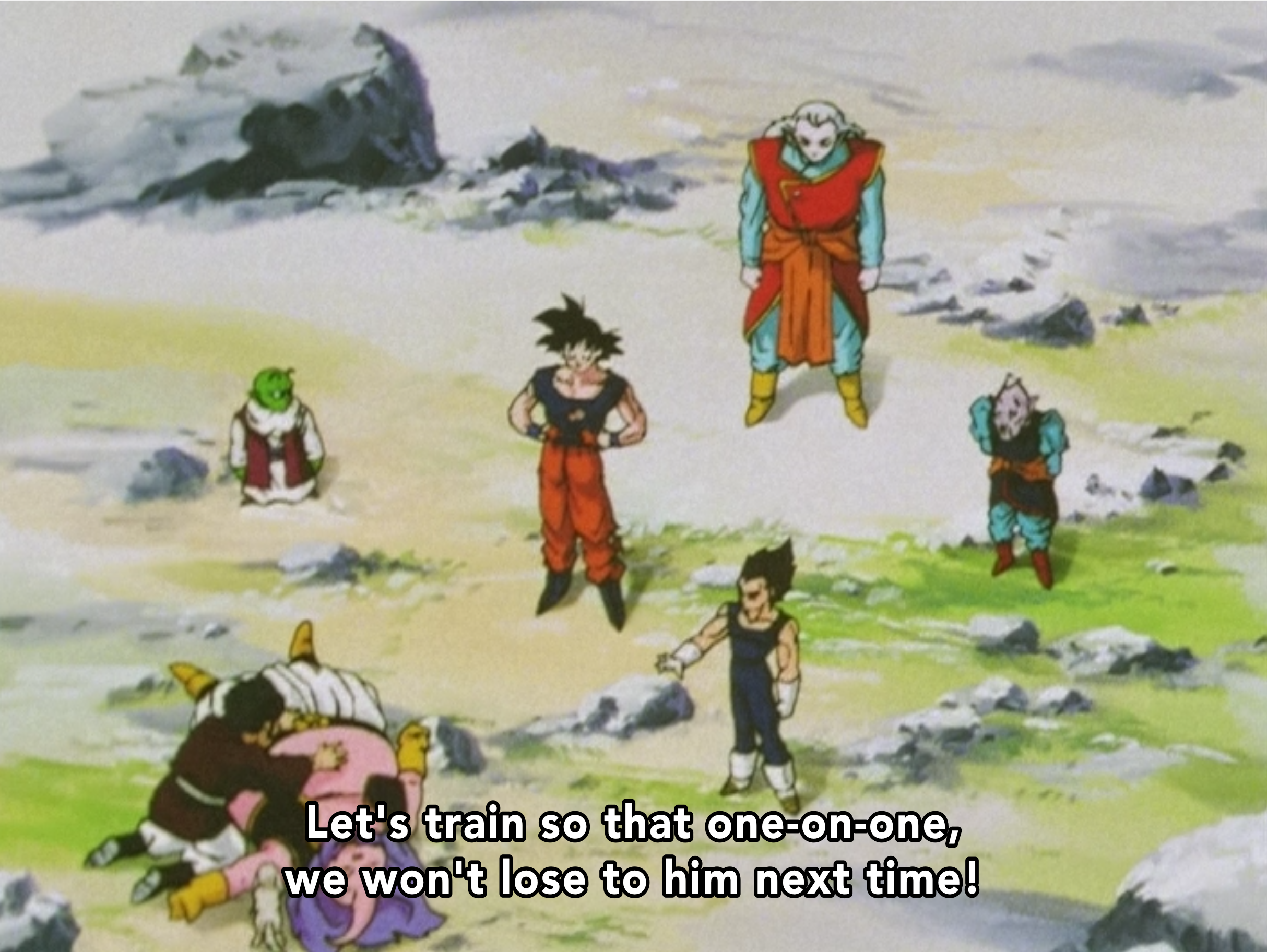
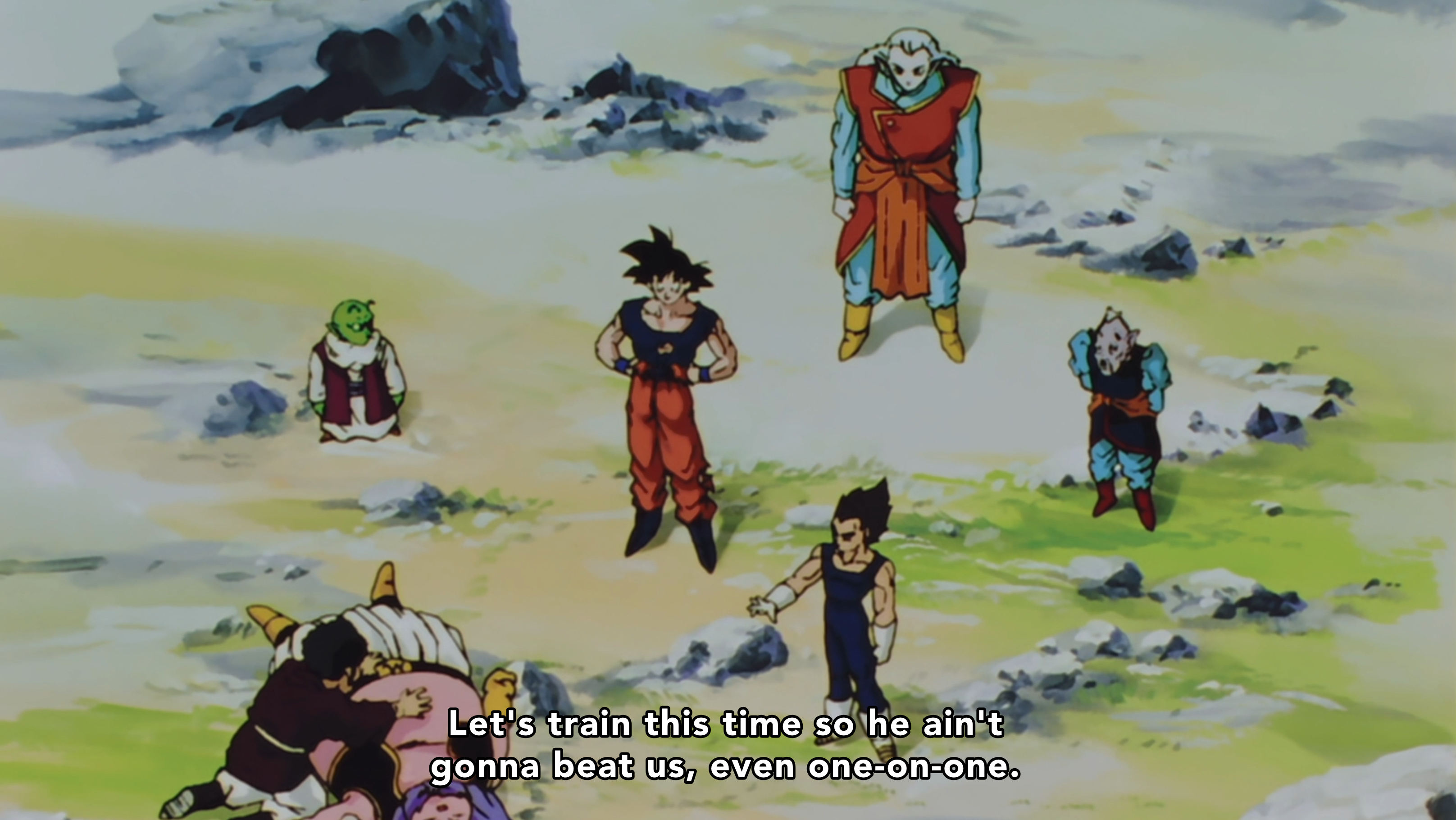
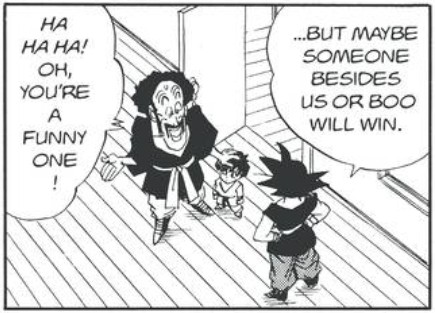

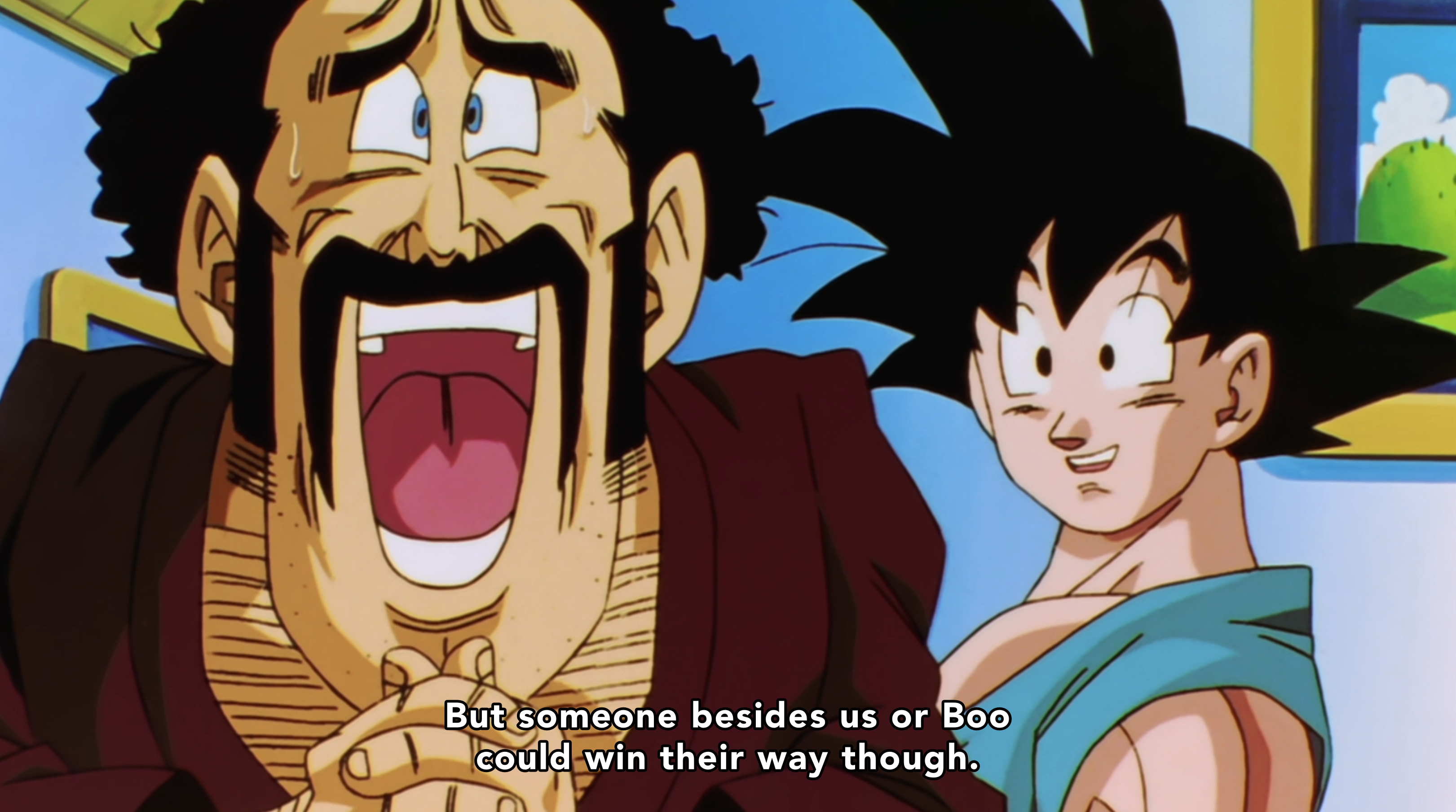
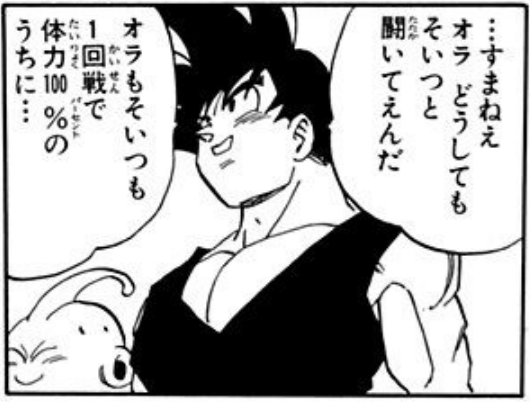
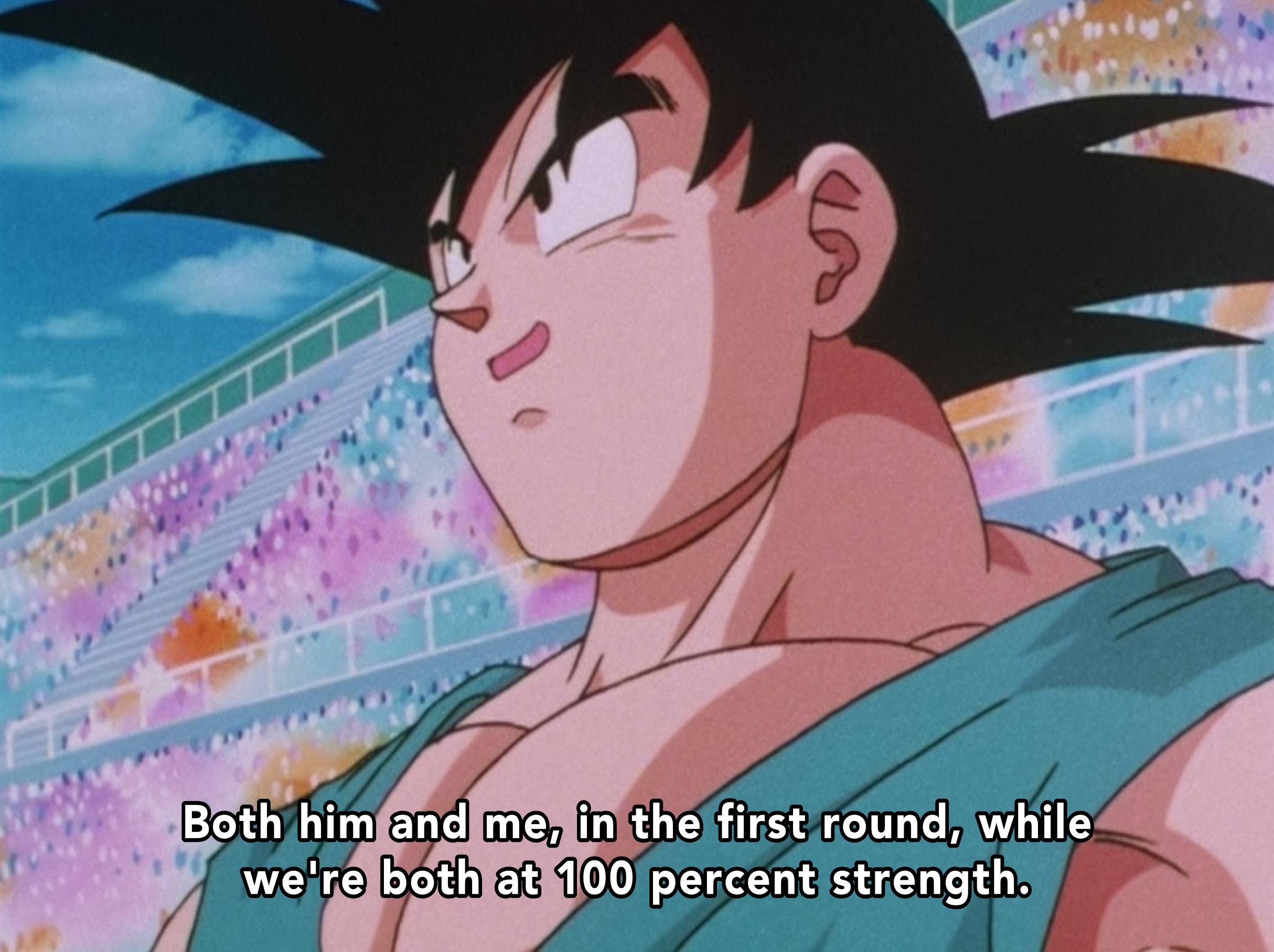
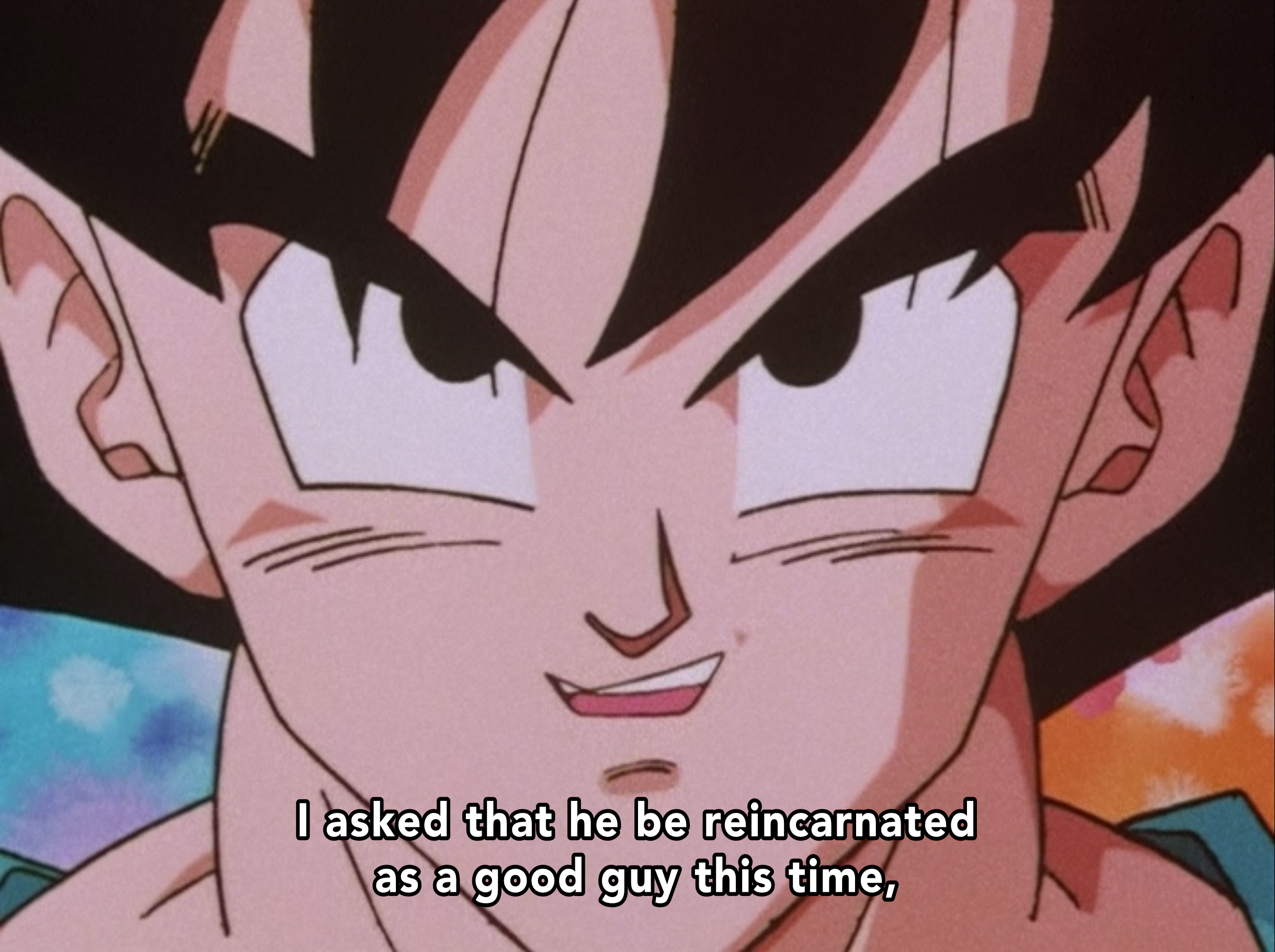
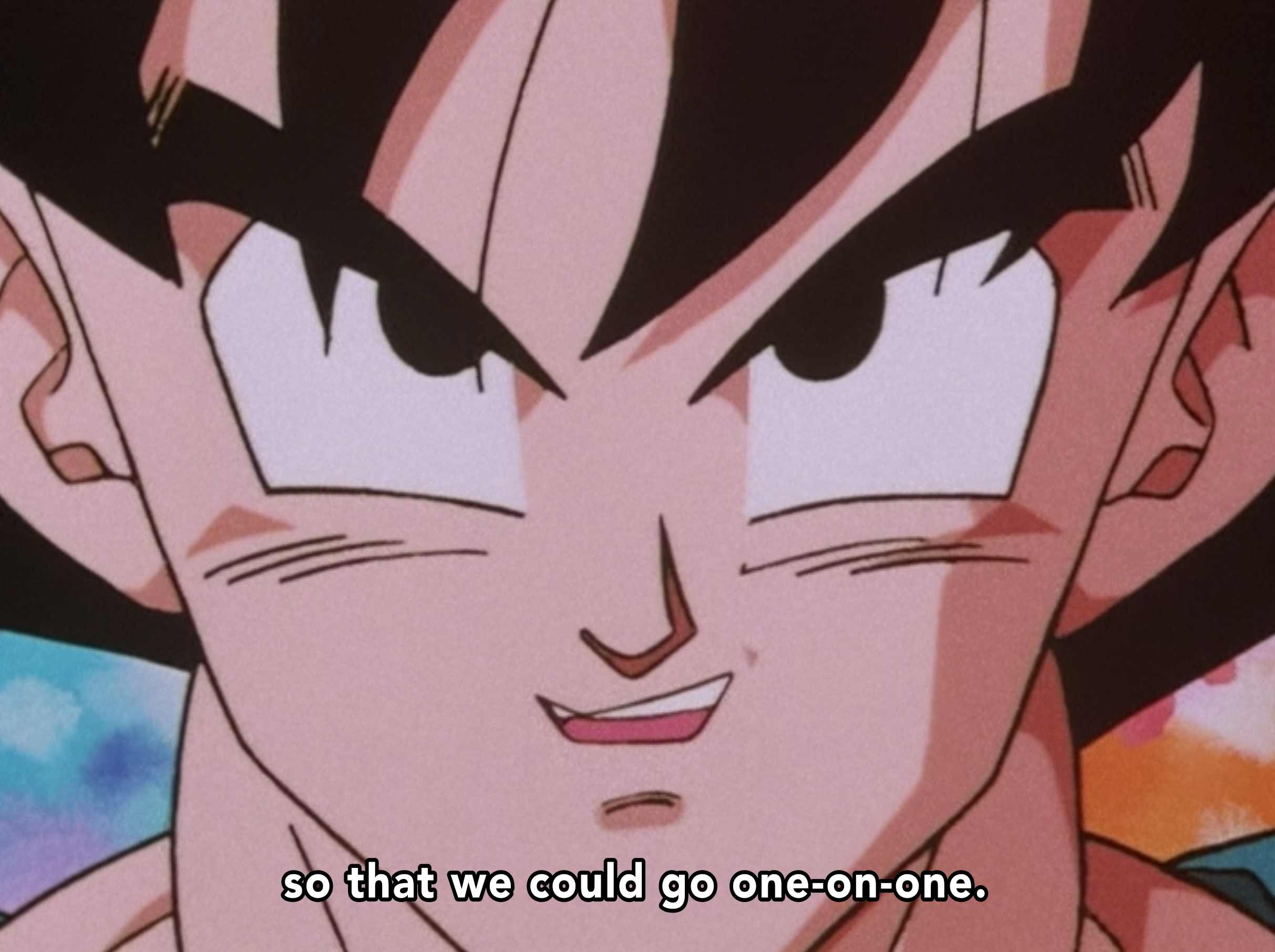

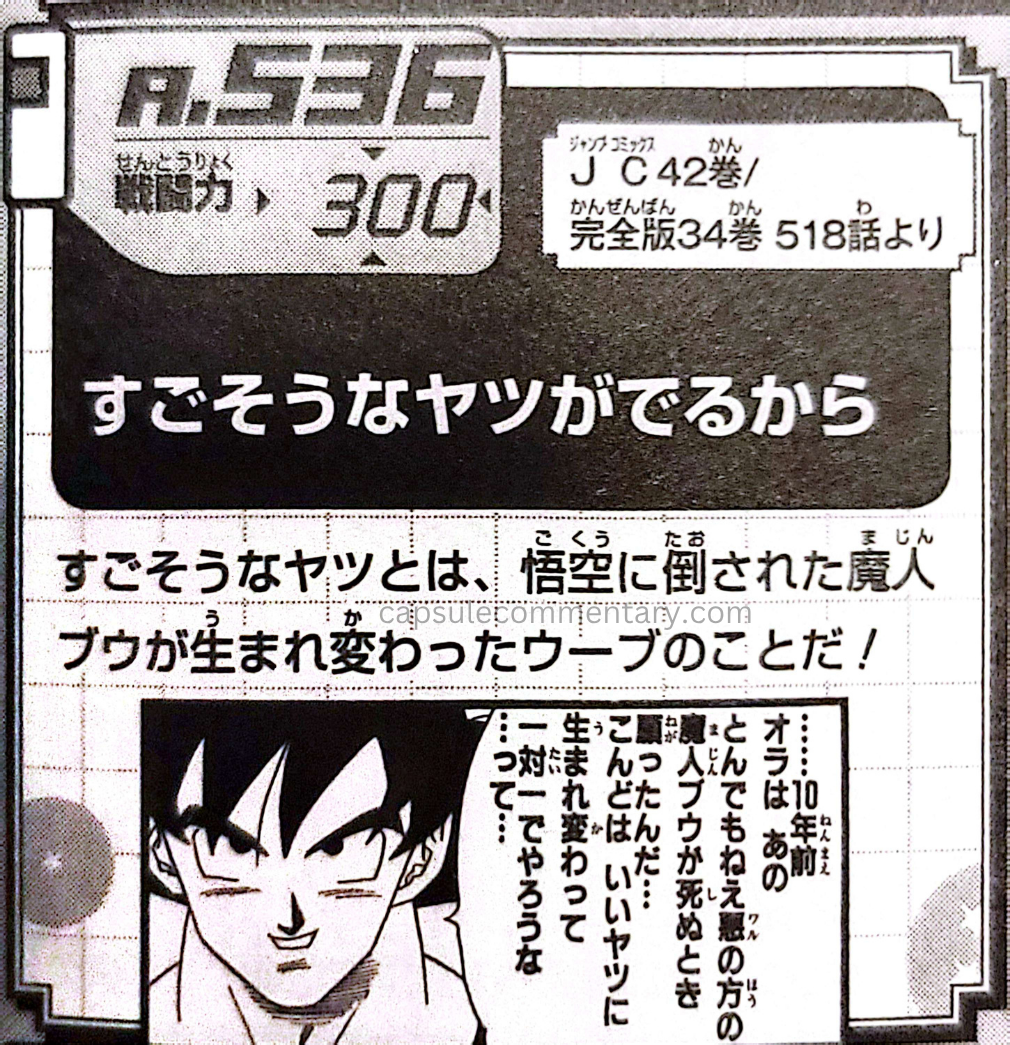

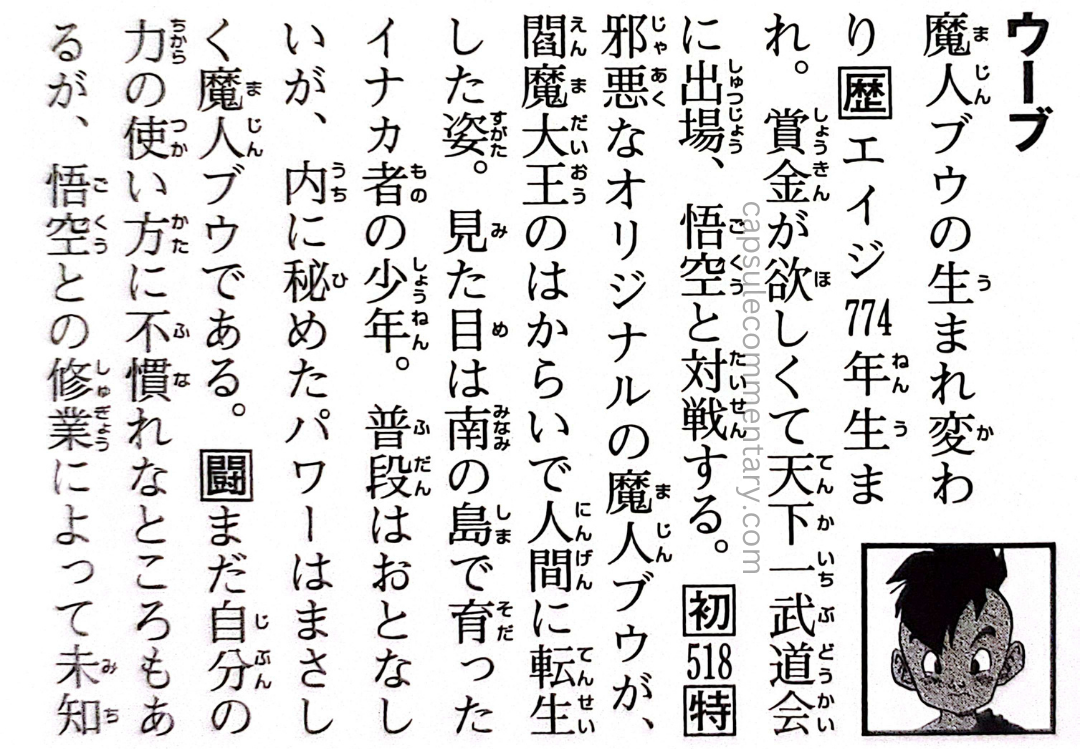
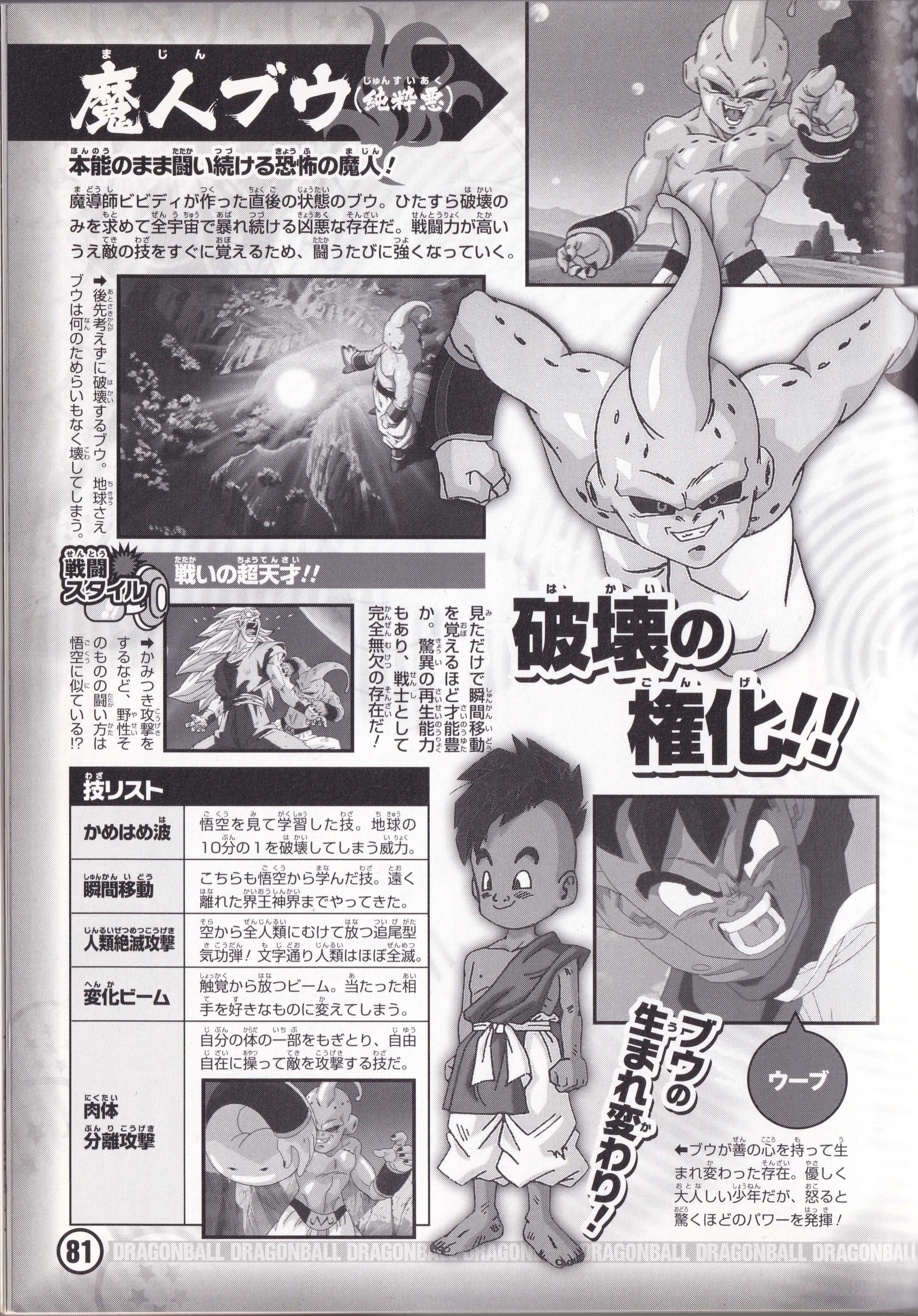
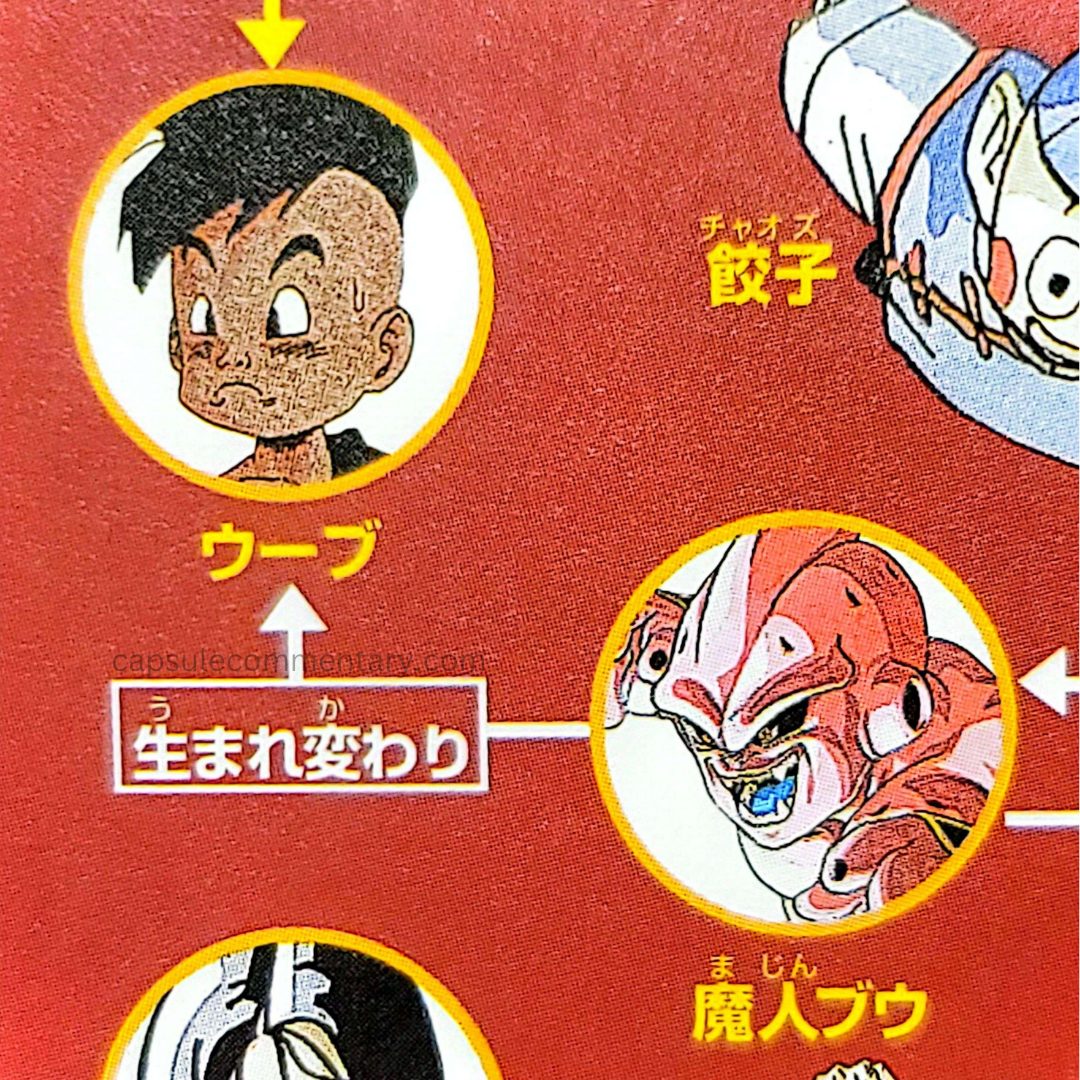
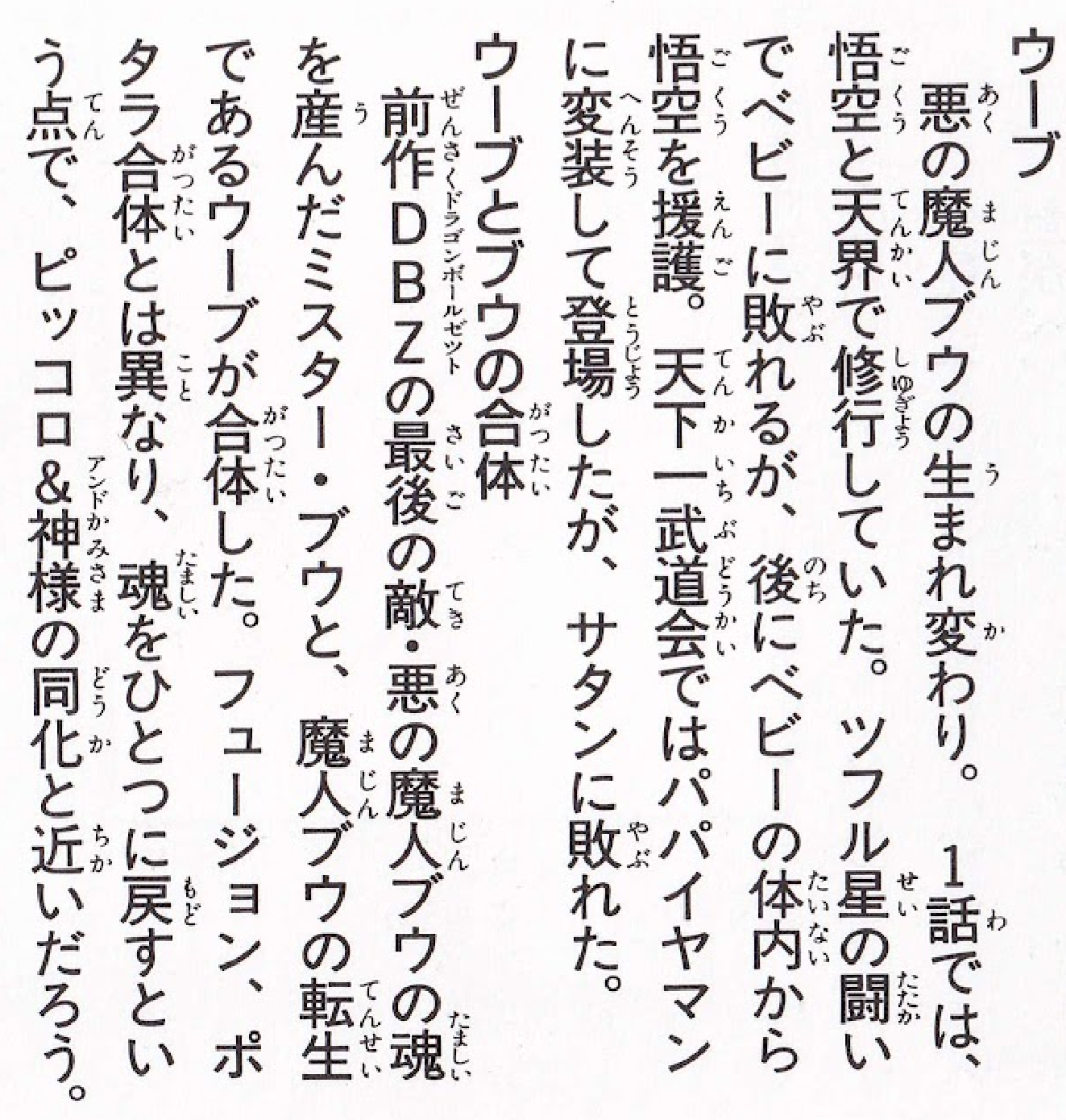
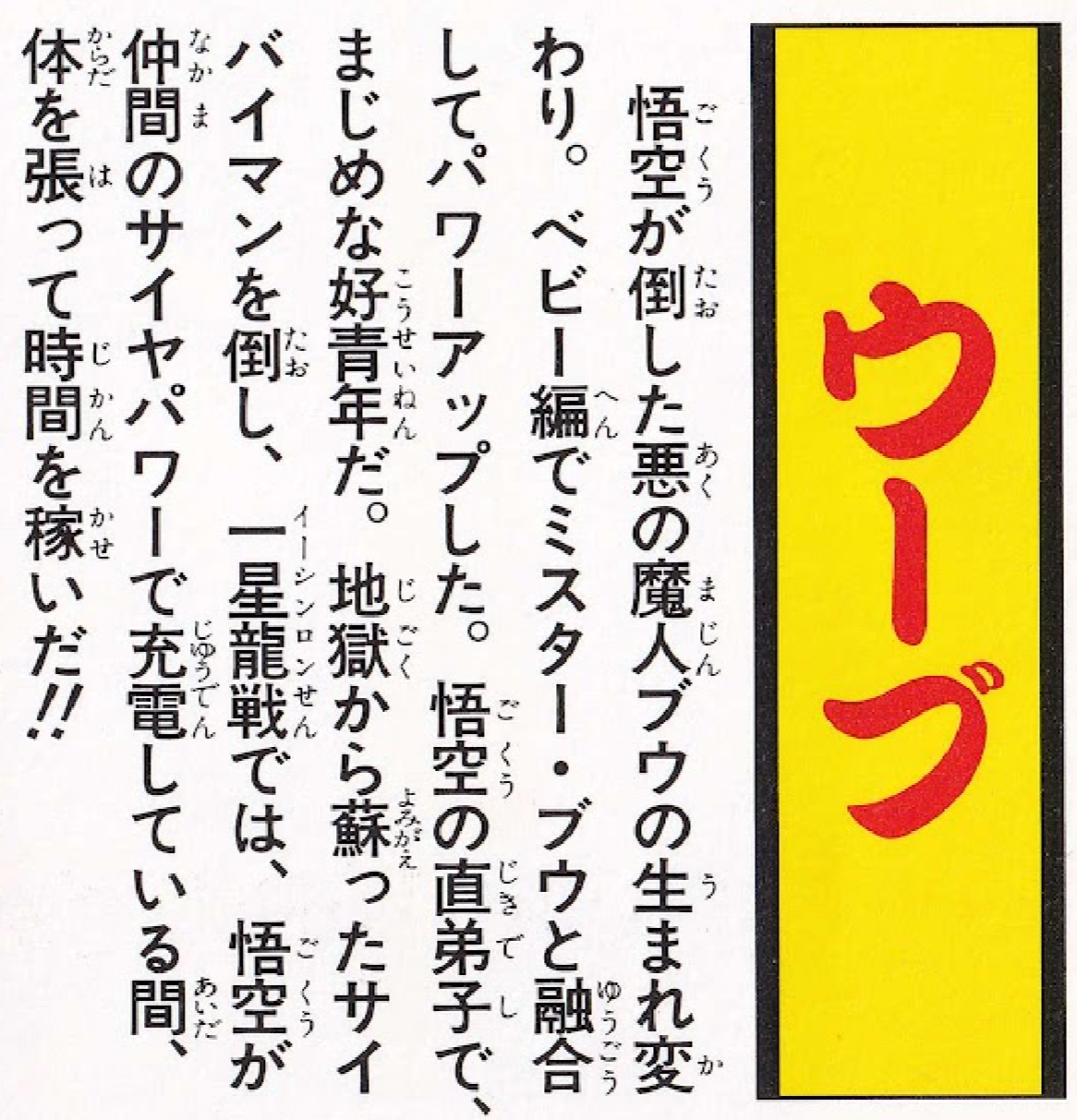
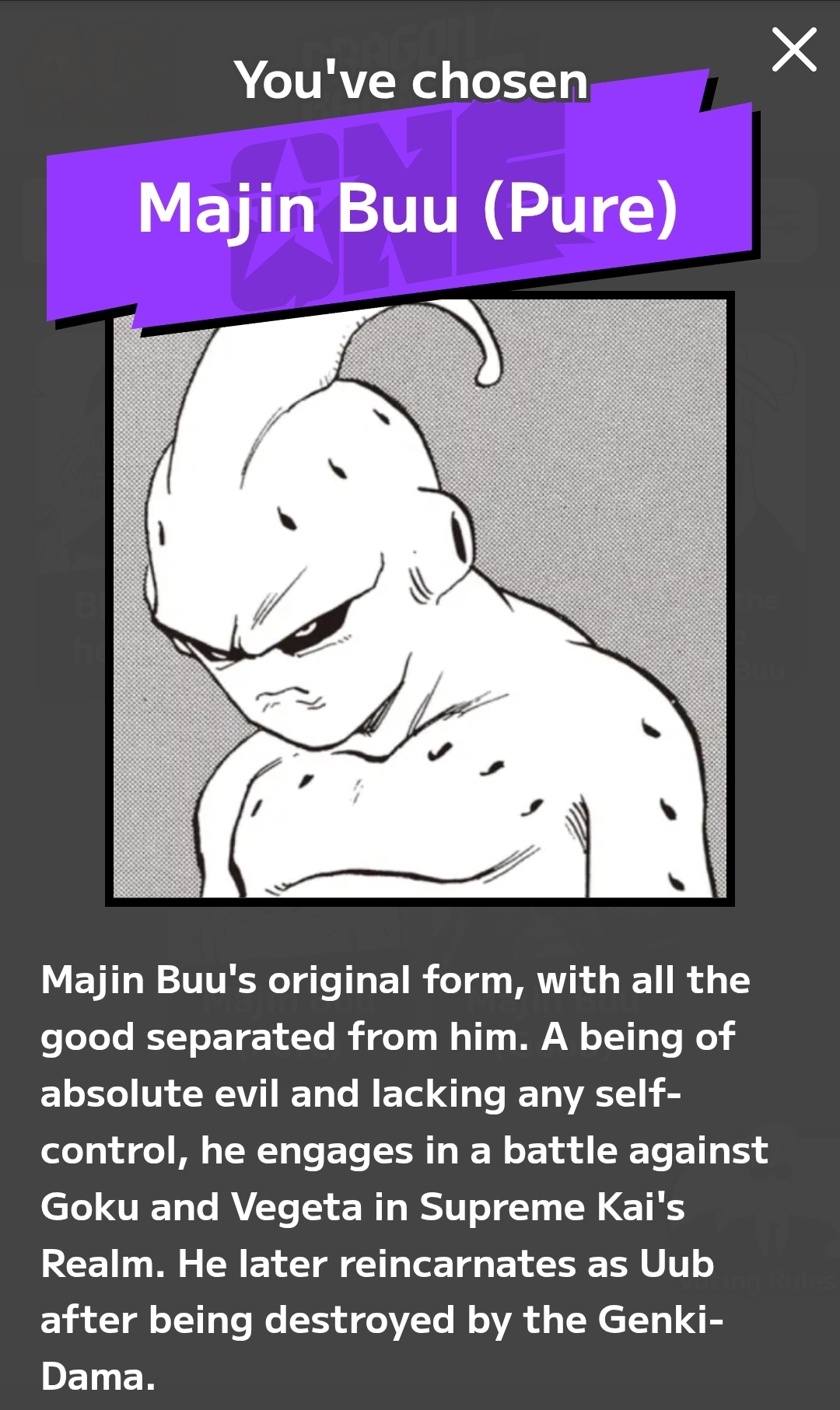
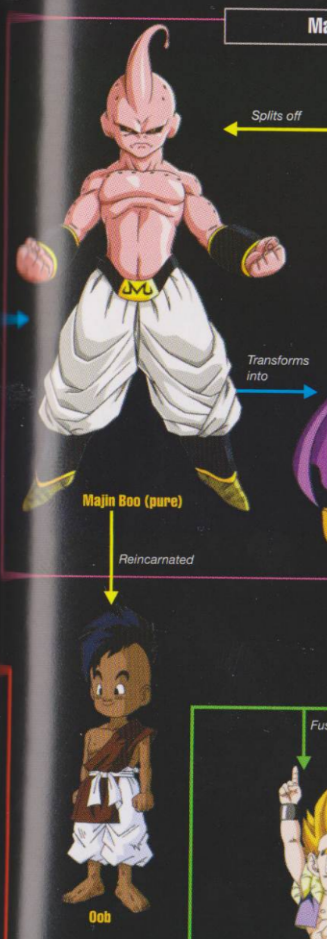
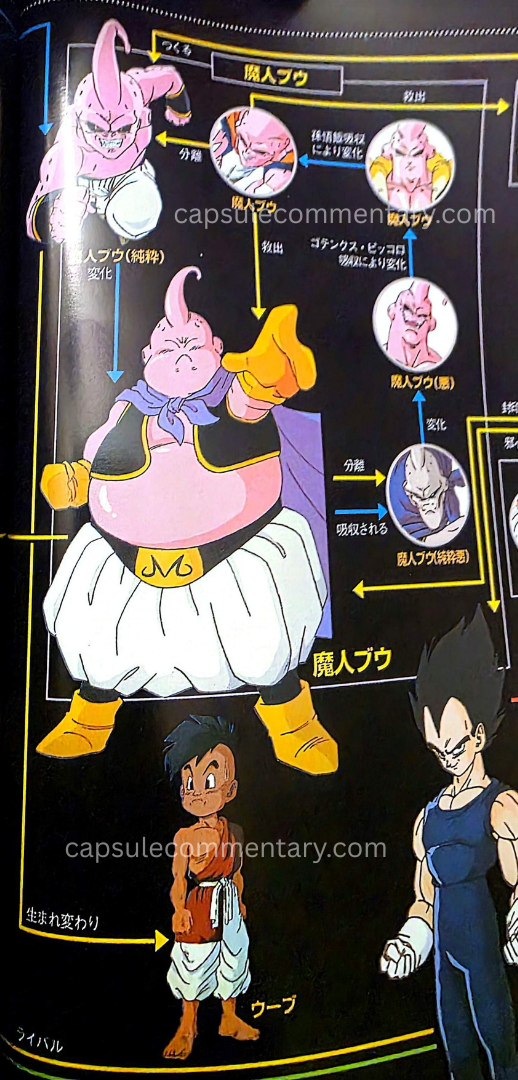
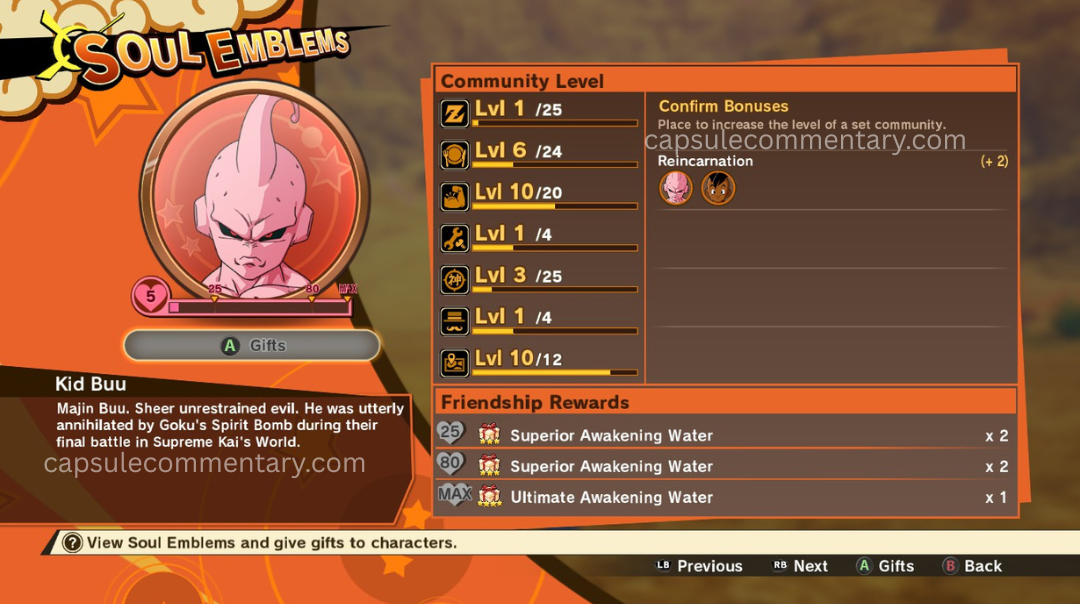
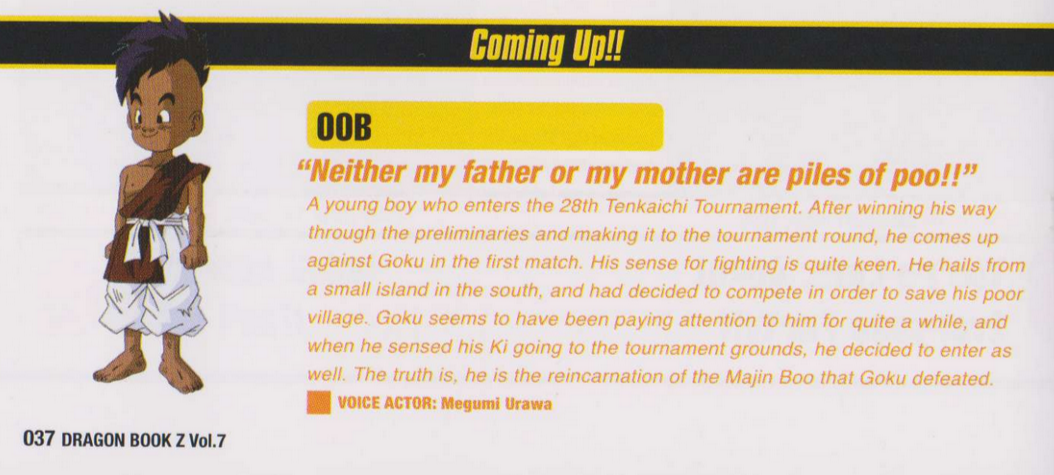
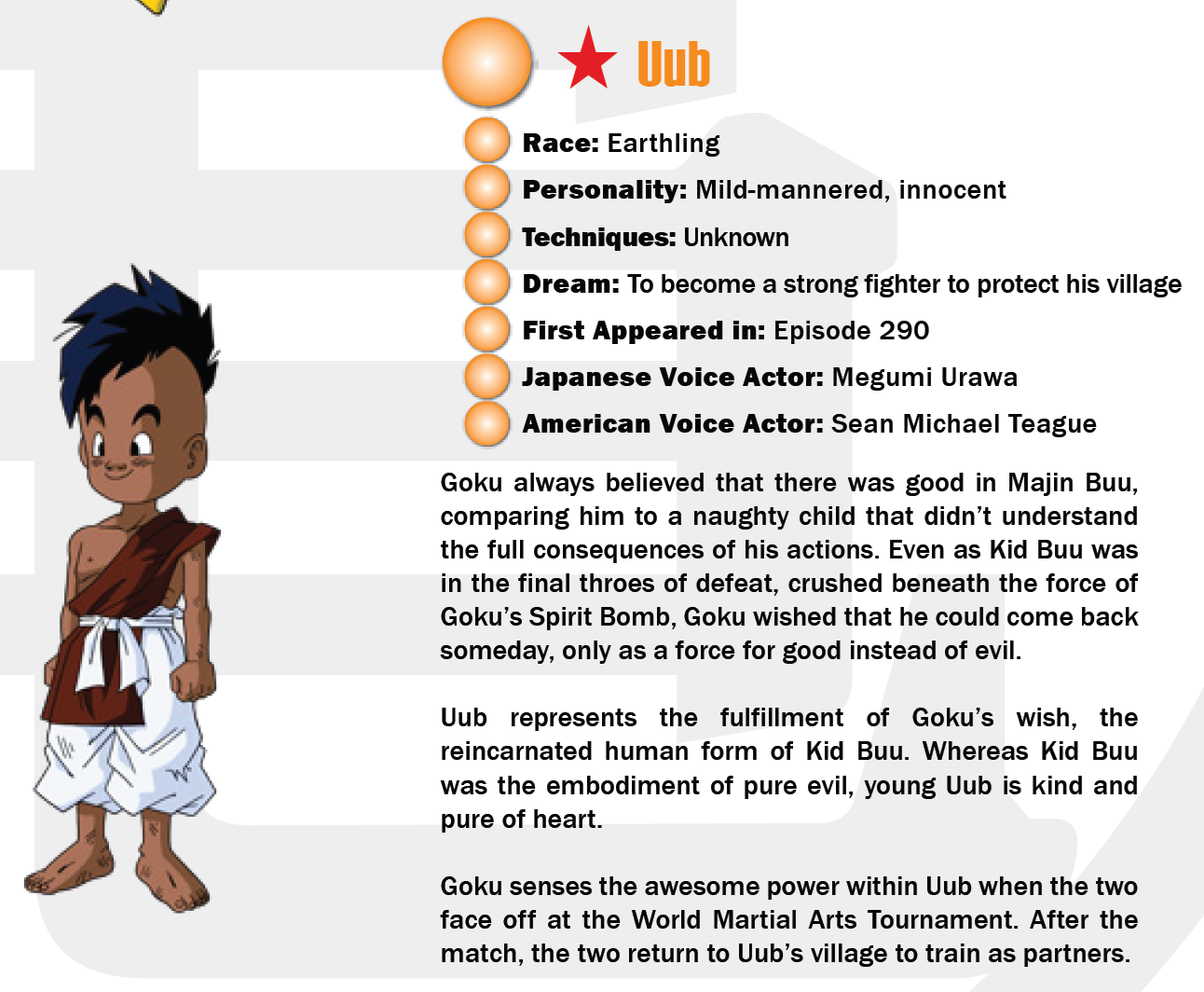
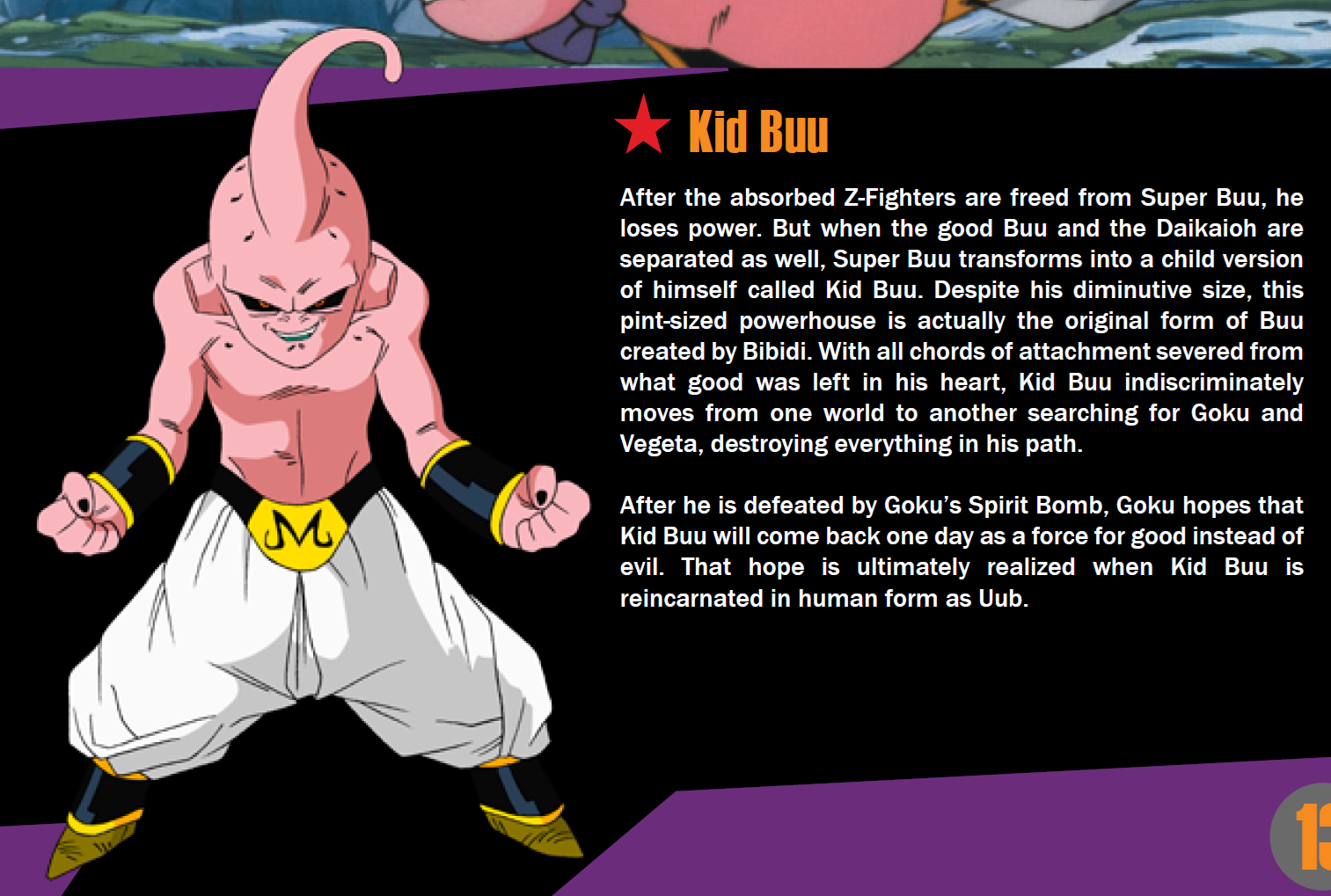
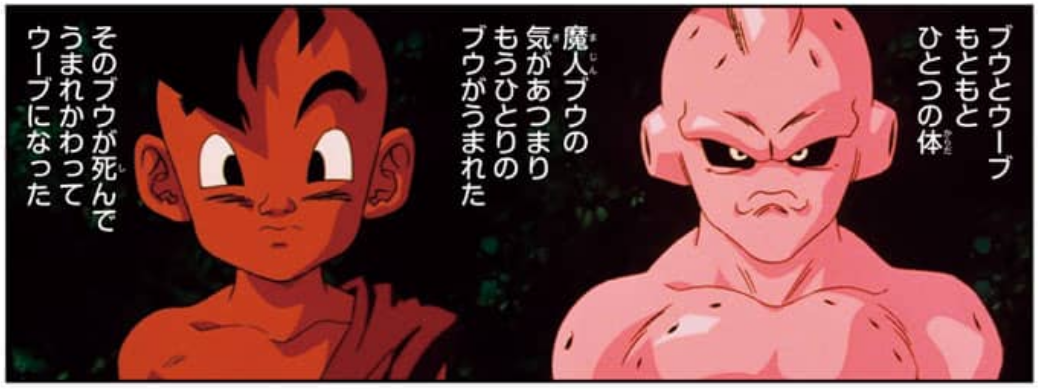

Dragon Ball Daima and Super have actually made Kid Buu even stronger than he was in Dragon Ball alone. Both of these canon series are midquels that take place during the 10-year time gap between Kid Buu’s death and Goku facing Uub (the reincarnation of Kid Buu: 1, 2, 3, and 425) at the 28th Tenka’ichi Budōkai. There is a small debate over whether Uub is a reincarnation of Kid Buu specifically or the evil part of Buu as a whole. Alongside the images above this paragraph, Le Manga de Légende Issue 50 also demonstrates that Uub is specifically the reincarnation of Kid Buu on page 17. In total, this means that approximately 20 different sources say Uub is specifically Kid Buu’s reincarnation.
In chapter 516 on page 11, Goku says to Kid Buu, “…You were amazing. You really fought hard… all by yourself… Next time, be reborn as a good guy… I want to fight you one-on-one… I’ll be waiting… and I’ll get even stronger too…” In chapter 517 on page 6 when Goku is convincing Vegeta not to kill Good Buu due to his fear of Kid Buu being reborn, he says, “…And besides, if by any chance something happens again, we can fight again. Next time for sure, I’ll train so that even in a one-on-one fight, I won’t lose.” In chapter 518 on page 11, Goku expresses his desire to fight Uub in the first round when they’re both still at “100% strength,“ or “full of energy” in the official English translation. This means that even with all of the purposeful training Goku undergoes for 10 years (including his training with Whis) combined with all of the new transformations he achieves (Super Saiyan 4, Super Saiyan God, Super Saiyan Blue, Ultra Instinct, etc.), he still believes he’ll need to go all-out against a reincarnation of Kid Buu in order to win. In episode 20 of Dragon Ball Daima, Goku goes as far to suggest this was his entire reason for even achieving Super Saiyan 4 in the first place.26
Of course, there are some wonky retcon things happening here because this would also mean that Buu Saga Super Vegito is stronger than Ultra Instinct Goku, which almost certainly isn’t true. However, the Dragon Ball Super manga seems to be doubling down on the eventual match between Goku and Uub as being Goku’s long-term goal, with its depictions of Uub as being immensely more powerful than even Super Saiyan Blue Vegeta. Furthermore, if we just look at the original manga itself, after the major villain of an arc is defeated, they are only really ever mentioned again in order to scale the strength of the next villain. For example: Dabura was compared to Cell in strength. However, all of the mentions of Kid Buu after his death buck this trend and only keep hyping him up even further. The narrative intent here is clear: Goku was so far beneath Kid Buu that he thinks he needs to train for another 10 years straight just to have a good match with him.
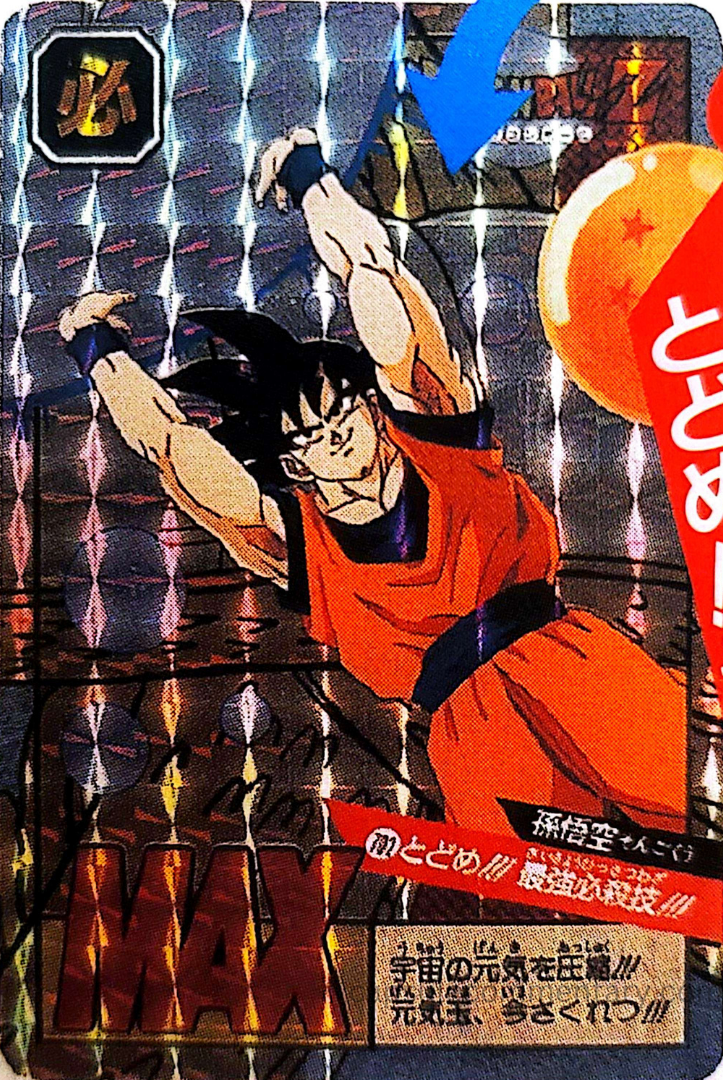
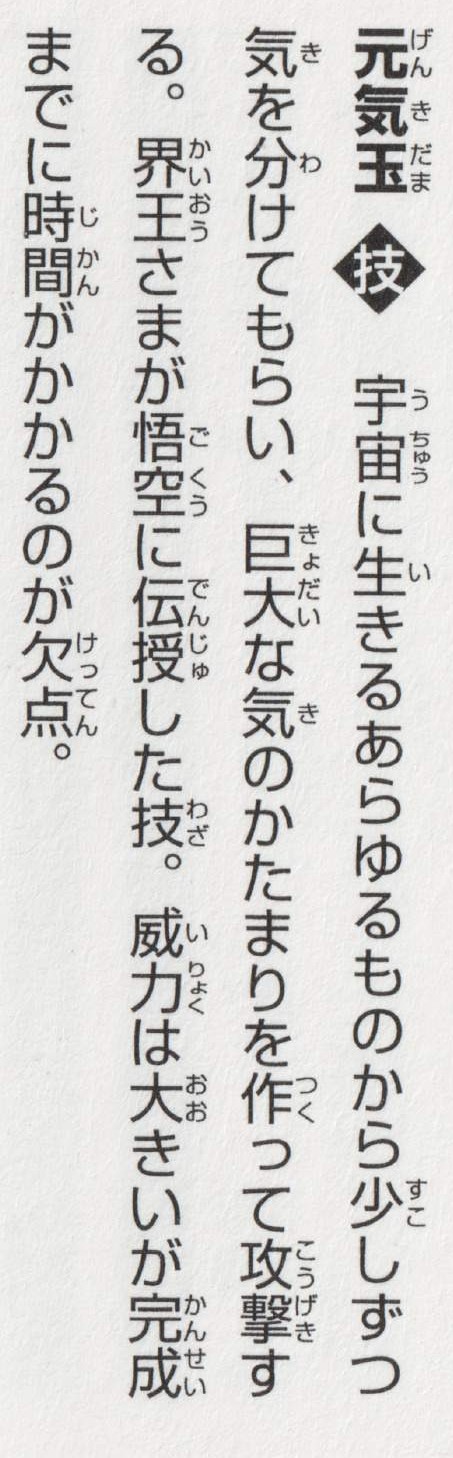
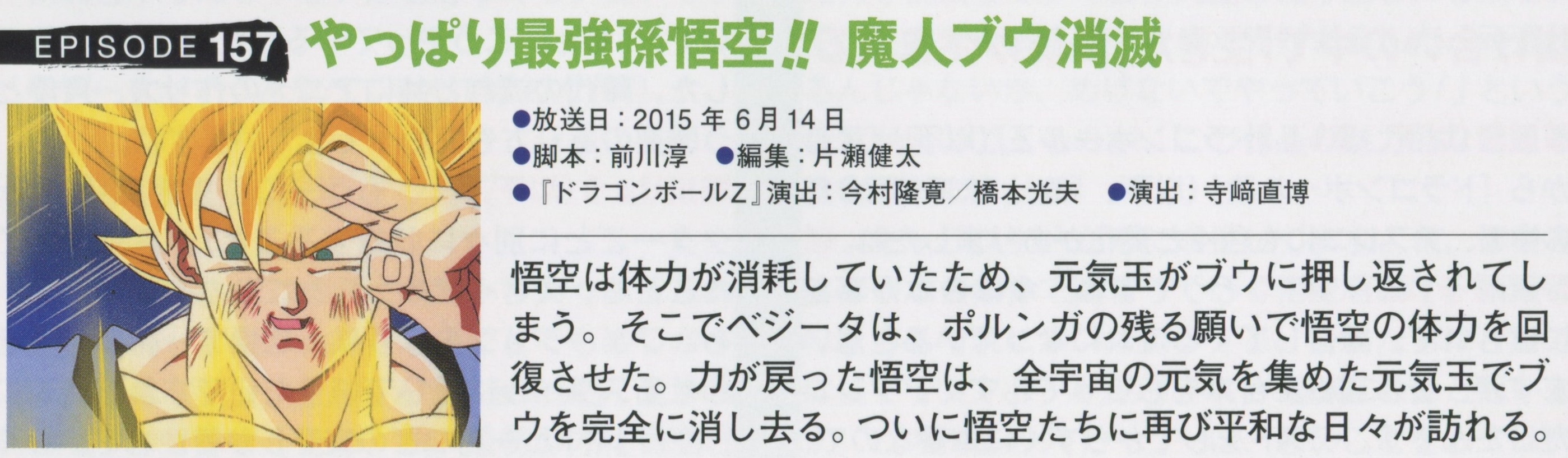

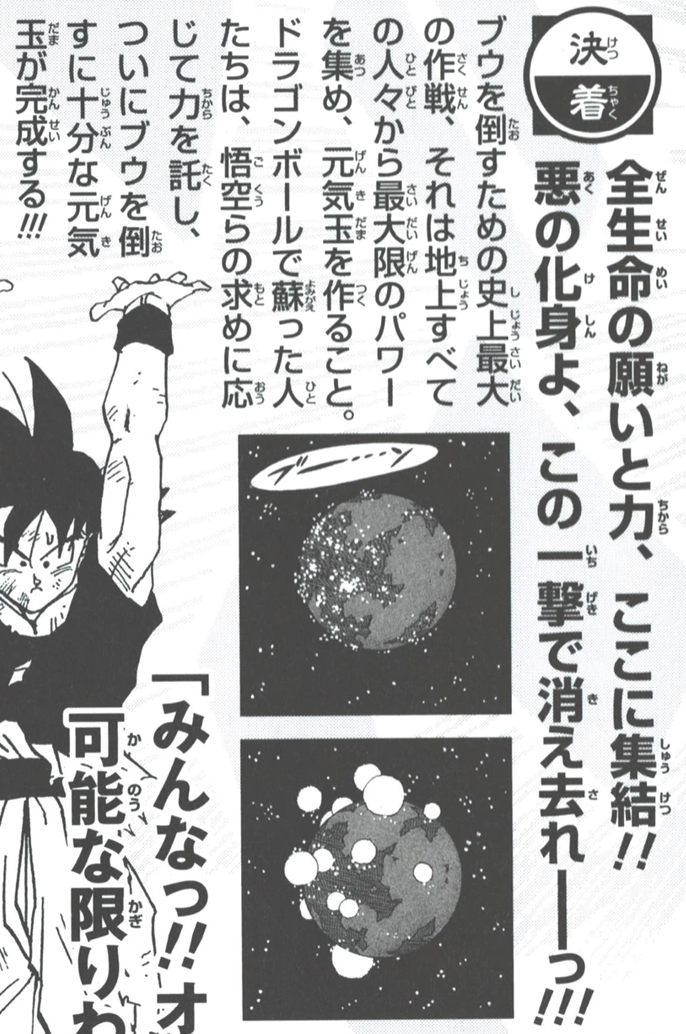
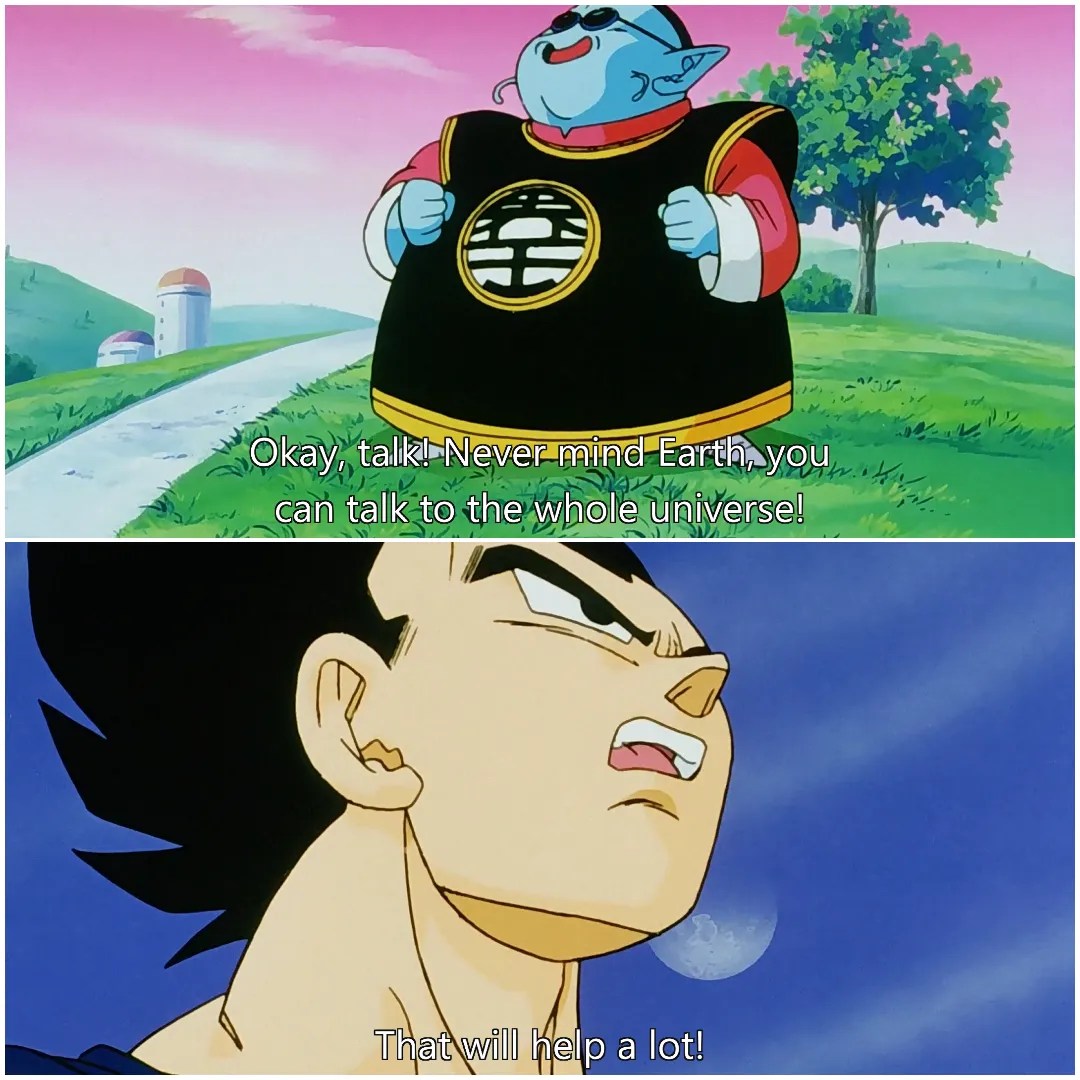
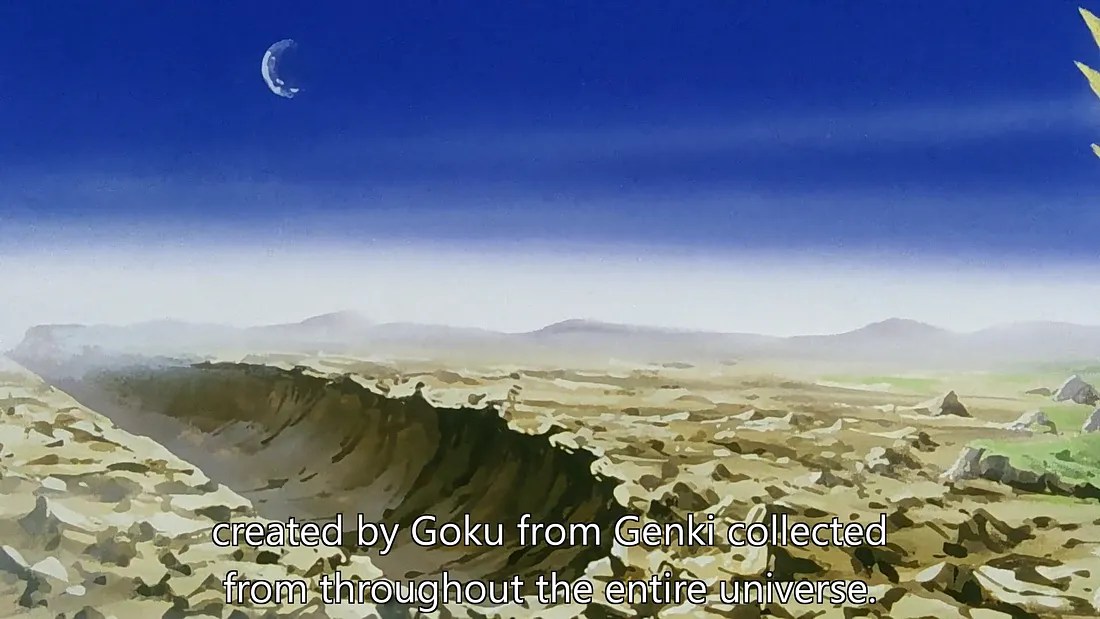
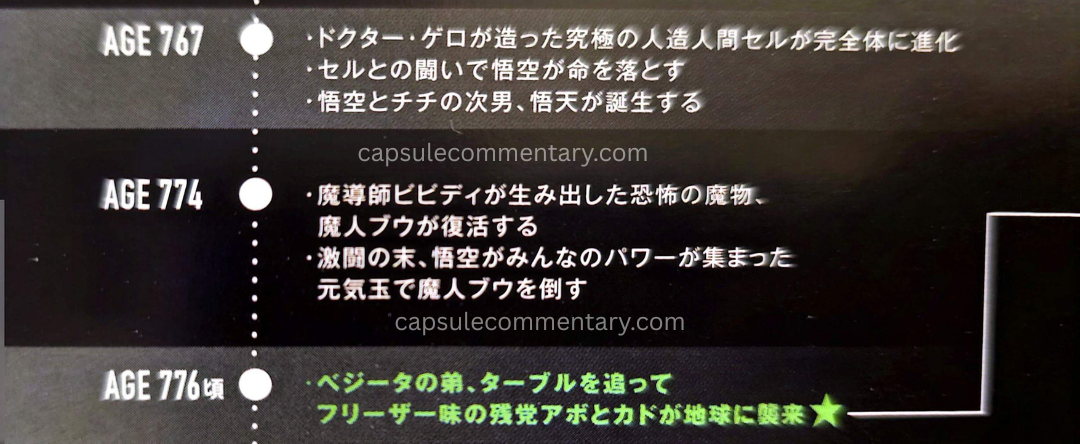
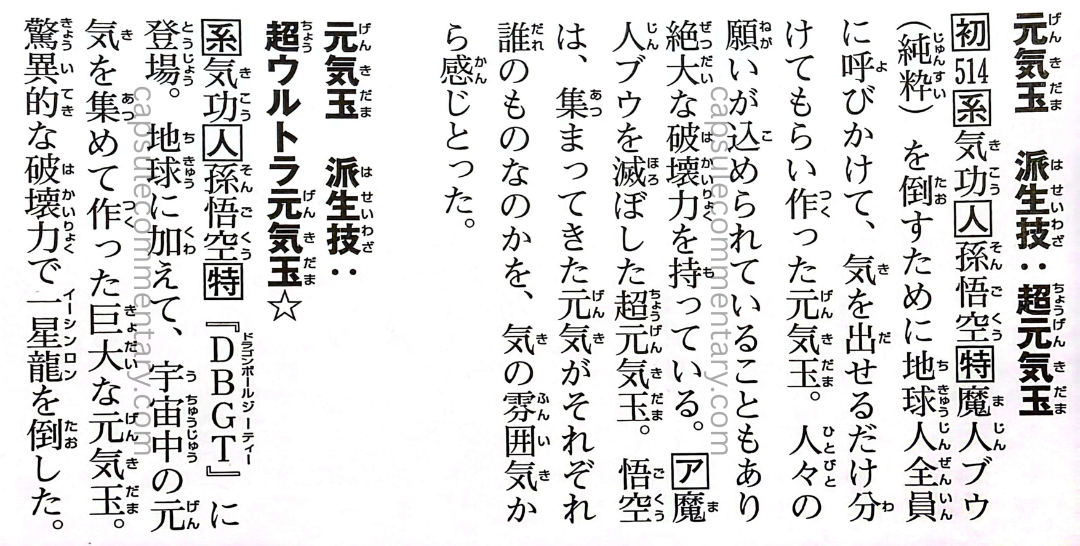
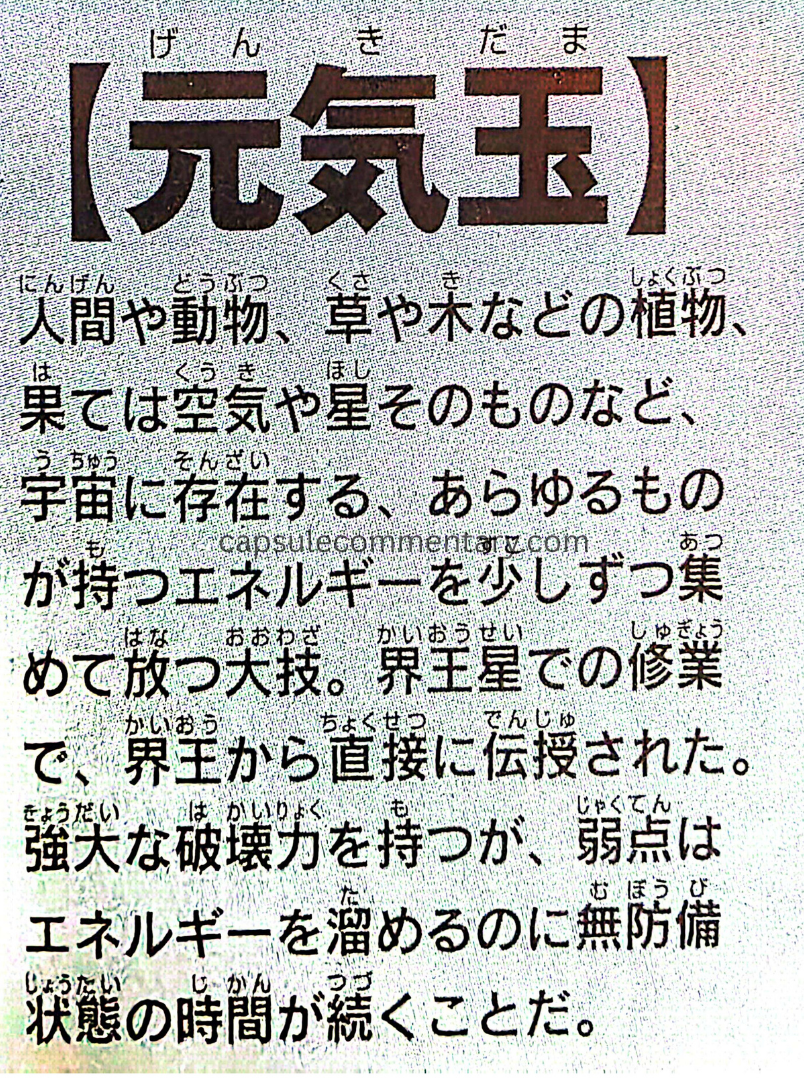
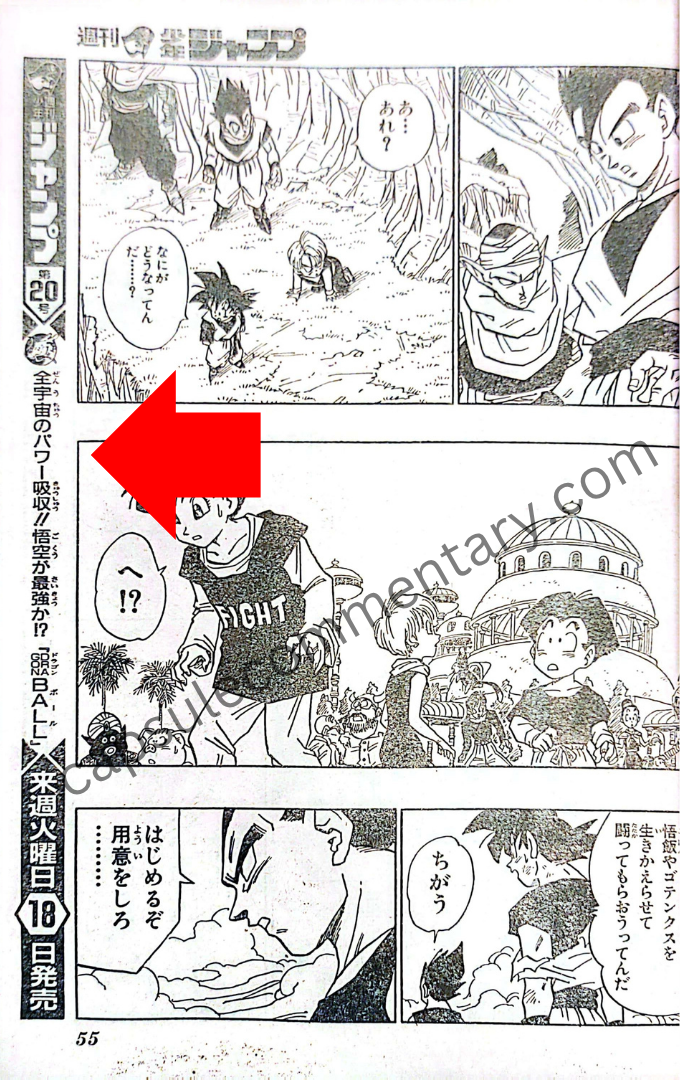
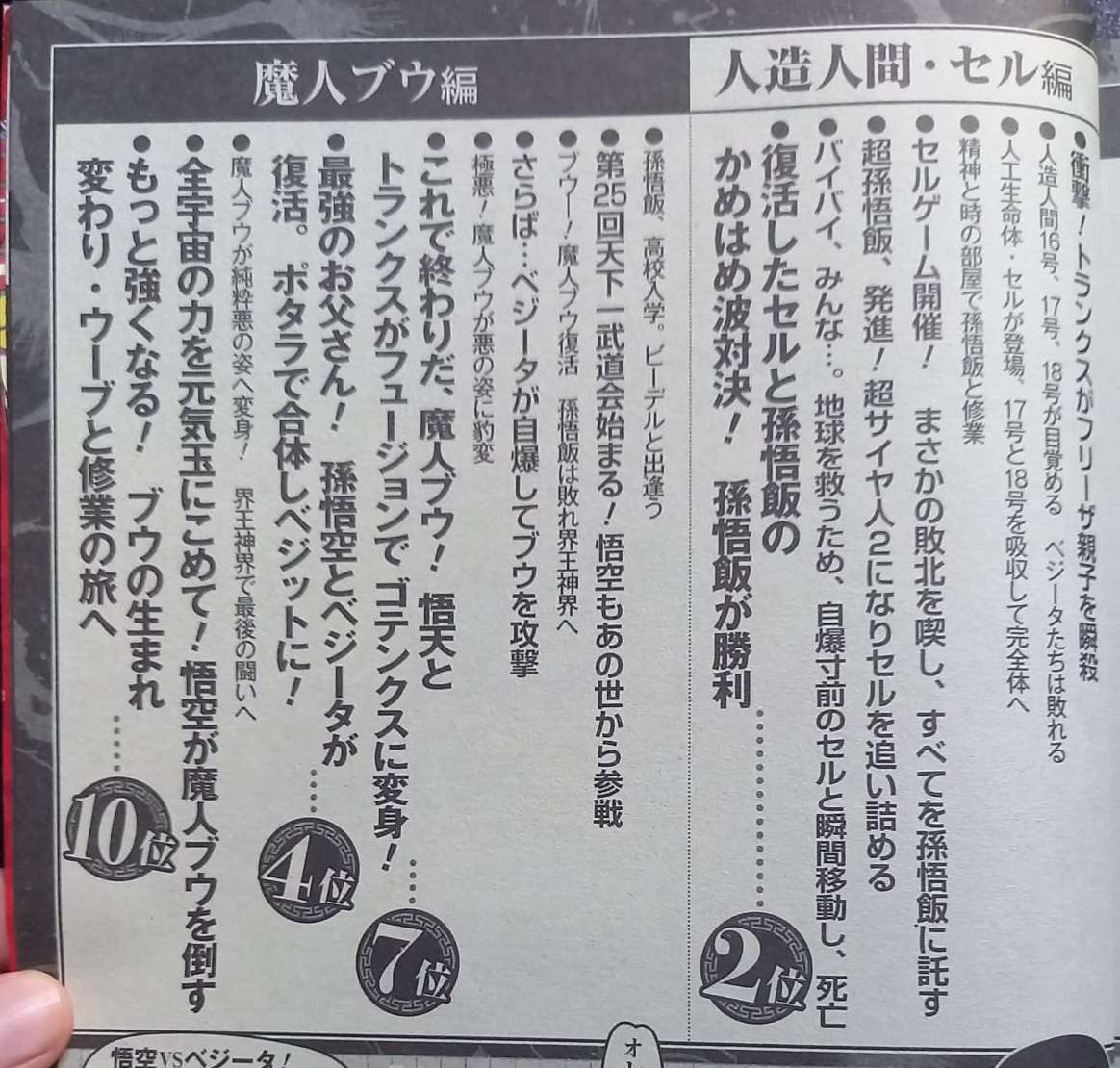
The Genki-dama used to destroy Kid Buu once-and-for-all at the end of Dragon Ball uses ki from everyone in the living world and the Afterlife. Viewers of the original anime and Kai, and readers of the Dragon Ball Super manga know this, but in the official English translation of the manga, Vegeta actually rejects the proposal of using the entire universe. Dragon Ball: Daizenshū 9 page 76, Dragon Ball: Super Exciting Guide: Character Volume page 7, Dragon Ball: Super Exciting Guide: Story Volume pages 15 and 41, the official website, Dragon Ball Kai – Majin Buu Arc – Box 5’s Dragon Book page 4, Weekly Shōnen Jump 1995 Issue 19 pages 46, 55, and 446, and Weekly Shōnen Jump 50th Anniversary Dragon Ball Best Scenes Top 10 page 39527 all confirm this Genki-dama uses ki from the entire universe. Page 91 of Dragon Ball: Extreme Battle Collection: Round 01 when describing the Genki-dama in general writes: “[Goku] gathers a small amount of energy from all living things in the universe to create a massive energy sphere and attacks with it.” Page 40 of Dragon Ball: Extreme Battle Collection: Round 02, asks of the Genki-dama, “Can peace be won by uniting the power of the entire universe!?” Page 15 of TV Anime Guide: Dragon Ball Z Son Goku Densetsu writes of the Genki-dama in general: “A super technique that gathers bit by bit the energy held by all things that exist in the universe—humans, animals, plants such as grass and trees, even the air and the stars themselves—and then releases it.”
There are even some suggestions that this Genki-dama actually enhanced Goku’s power as well, such as on pages 46 and 55 of Weekly Shōnen Jump 1995 Issue 19. While not direct confirmations that the Genki-dama is universal, Weekly Shōnen Jump 1995 Issue 18 page 456 calls the Genki-dama the “greatest strength in the universe”, and Dragon Ball Z: Battle of Gods Special Booklet page 18 states the Genki-Dama was “formed from everyone’s gathered power.” I should note there are plenty of sources that specify the ki came from the Earth and not necessarily the universe at large, but those sources tend to omit the fact that some of the ki donated to it demonstrably came from New Namek and the Afterlife. One example of this is in Chōzenshū 4 on page 149, where they distinguish between the Genki-dama at the end of Z and at the end of GT by stating the one that killed Kid Buu used the Earth and the one that killed Īshinron (Syn Shenron) used the universe.

Dragon Ball chapter 514 page 9.
Kaiō says: 「地球どころか宇宙じゅうに話ができるぞ!」 「地球」 means “the world” and 「宇宙じゅう」 means “the universe.” Kaiō is explaining to Goku and Vegeta that they can speak with everyone in the universe and not just the people of Earth. Page 66 of Dragon Ball: Super Exciting Guide: Character Volume also confirms that Kaiō is capable of speaking with the entire universe. However, in the last panel, Vegeta addresses 「世界の人間ども」, and 「世界」 could refer to the universe or to the Earth. 「世界」 actually has a wide range of definitions from the human condition to the entries universe. It depends on the context in which it’s used.
While 「世界」 alone would be difficult to translate due to its ambiguity, we can safely assume that regardless of who Vegeta is directly addressing, the entire universe is listening.
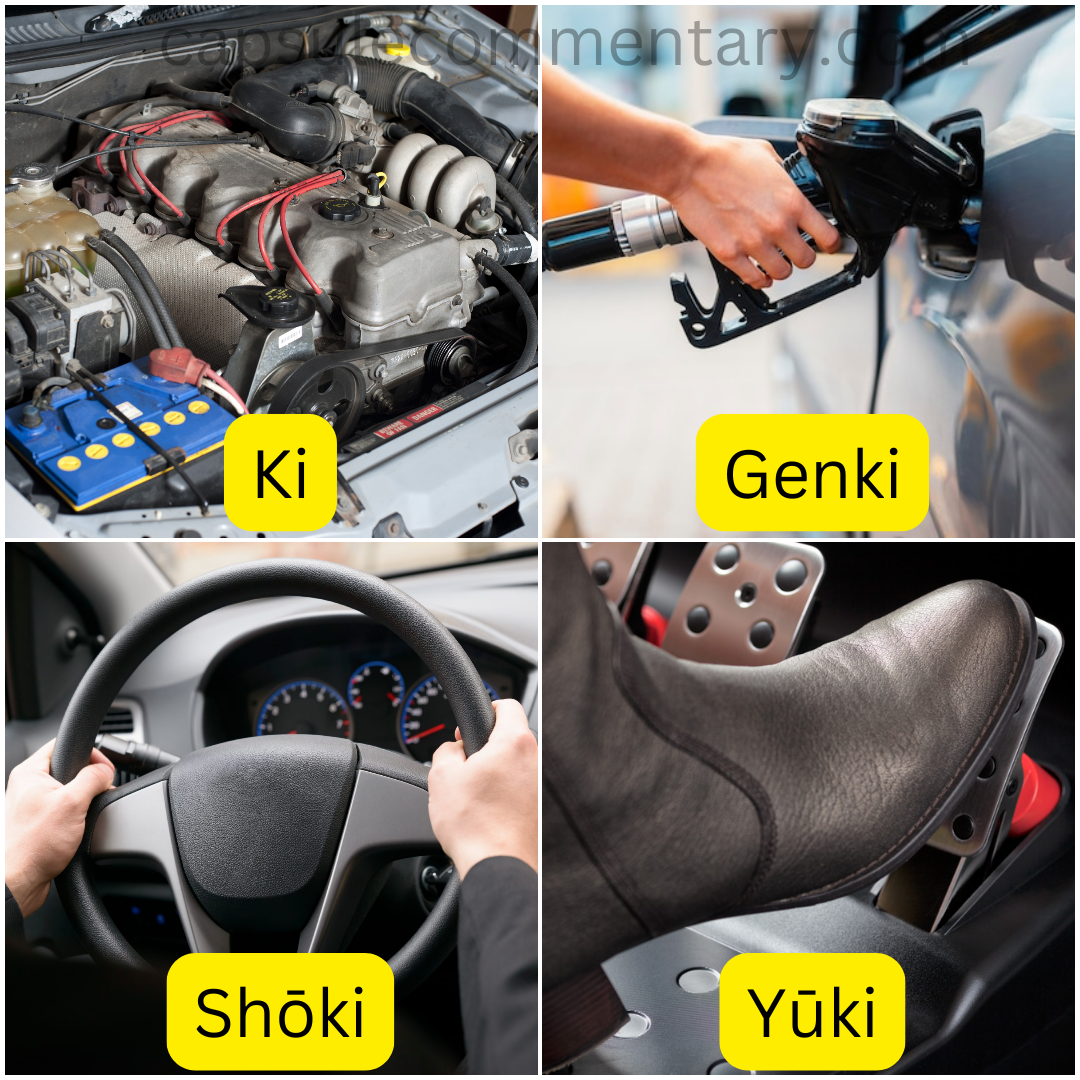

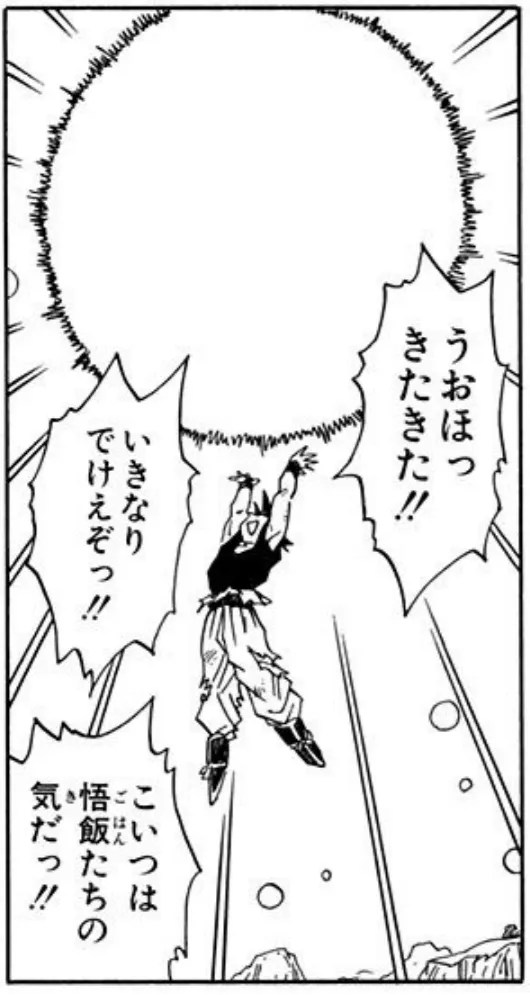
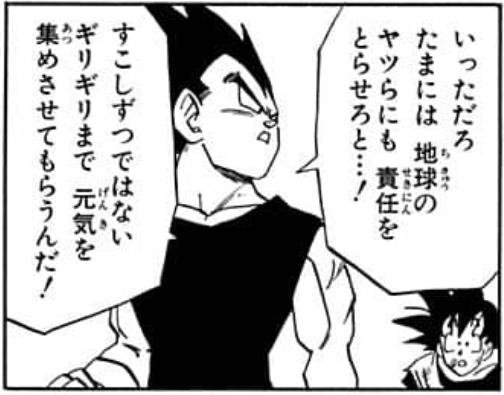
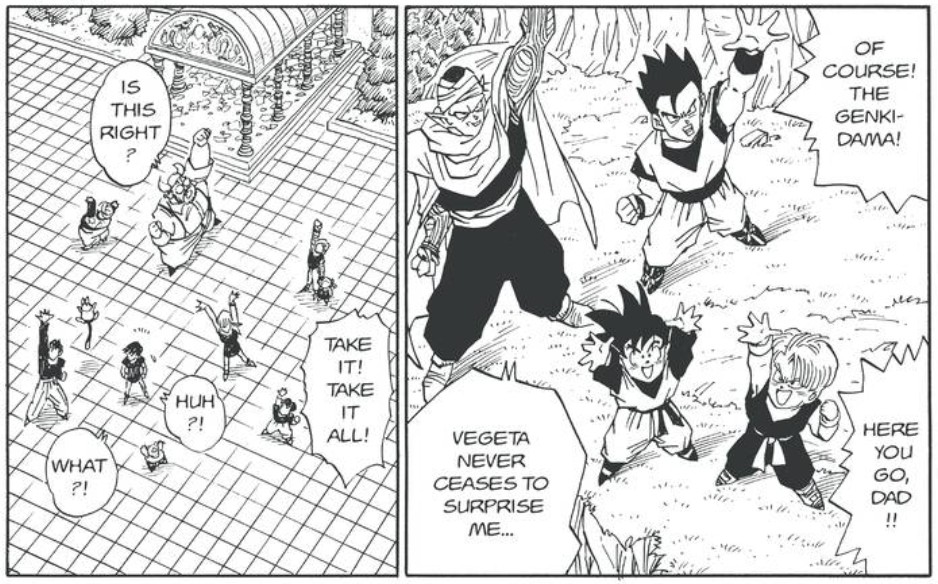
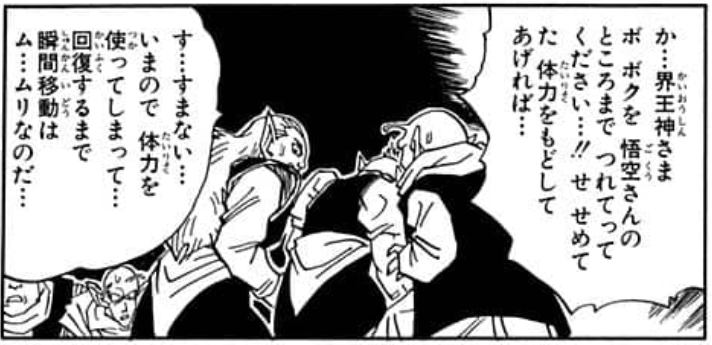
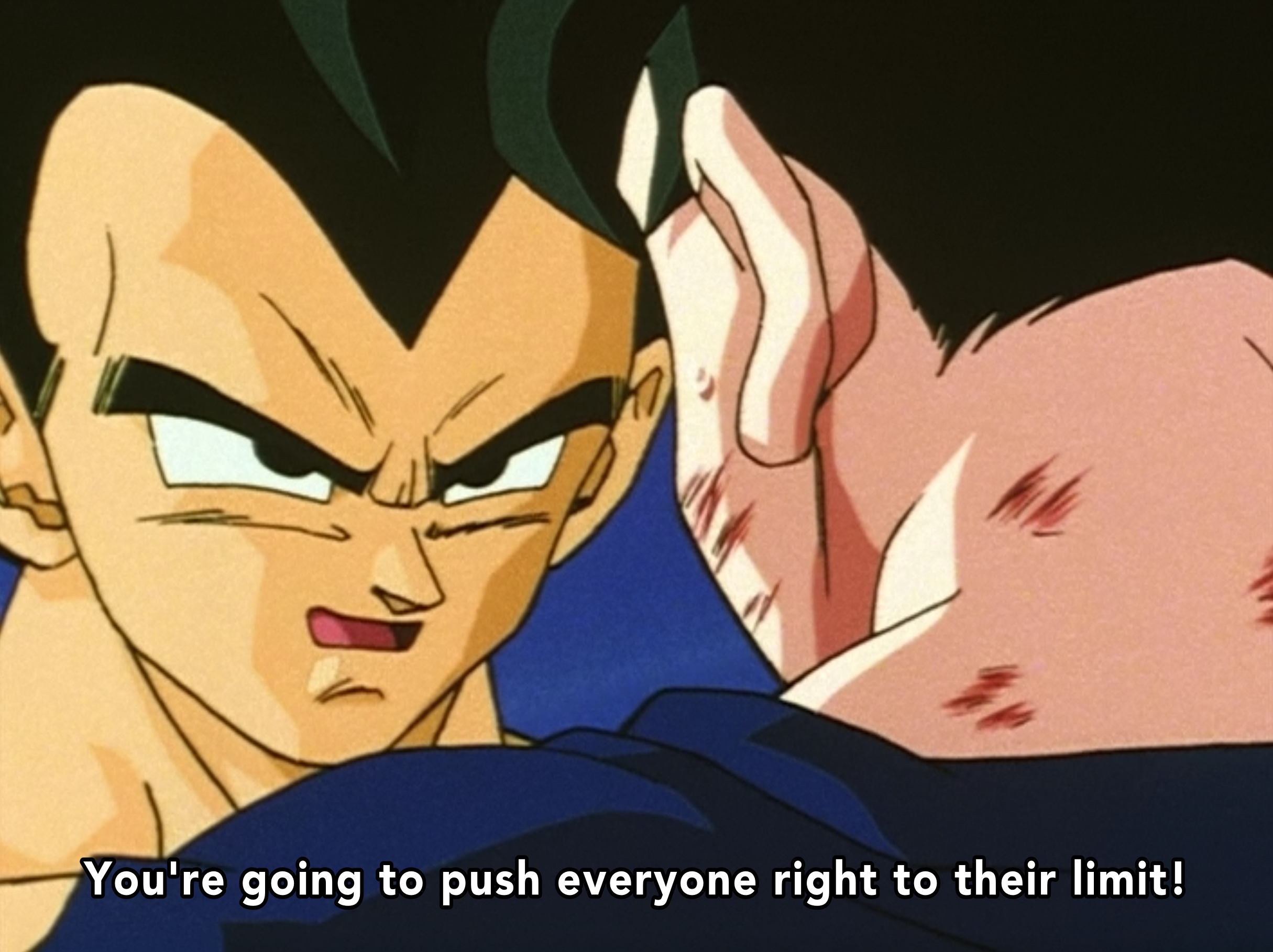

Before moving onto the last point of this section, let’s address the nature of ki. Ki 「気」 encompasses multiple aspects, which include genki 「元気」 or “vitality,” shōki 「正気」 or “mental clarity,” and yūki 「勇気」 or “courage.” Dragon Ball: Super Exciting Guide: Character Volume page 72 never states these are the ONLY components of ki, nor does it suggest that they are equal in importance. They are simply listed as some examples of the components of ki.
A very easy way to understand ki is to imagine a car. Ki represents the engine of the car, which converts everything into movement, just as ki is the life energy that drives the characters in Dragon Ball. Genki is the fuel of the car, representing the vitality consumed to move. Shōki is the steering system, representing the mental clarity needed to direct ki properly. Yūki is the accelerator, representing the user’s willpower and bravery to unleash their ki.
While there is a technical distinction between ki and genki, every single use of the Genki-dama blurred these lines, making the distinction functionally irrelevant. For the Genki-dama against Kid Buu specifically, both Goku and Dende referred to it as using “ki,” for example, in chapters 514 and 516. And when Kaiō first explains the Genki-dama to Goku in chapter 212, he says: “The Genki-dama takes from humans and animals, from the atmosphere of all things, just a tiny amount at a time of every kind of energy, gathers it together, and then releases it as an attack… but you could even make the Sun, which possesses enormous energy, your ally…” Kaiō literally says 「エネルギー」 or “energy” here. Chōzenshū 4 page 47 (Daizenshū 7 page 44) defines “energy” like this: “Energy. It refers to ki. The total, composite power and energy possessed by a person. This is how the Kaiōshin expressed the concept of ki. For more details, see the entry for ‘Ki’ on page 49.” Therefore, both narratively and definitionally, there is NO functional distinction between ki and genki in the context of the Genki-dama.
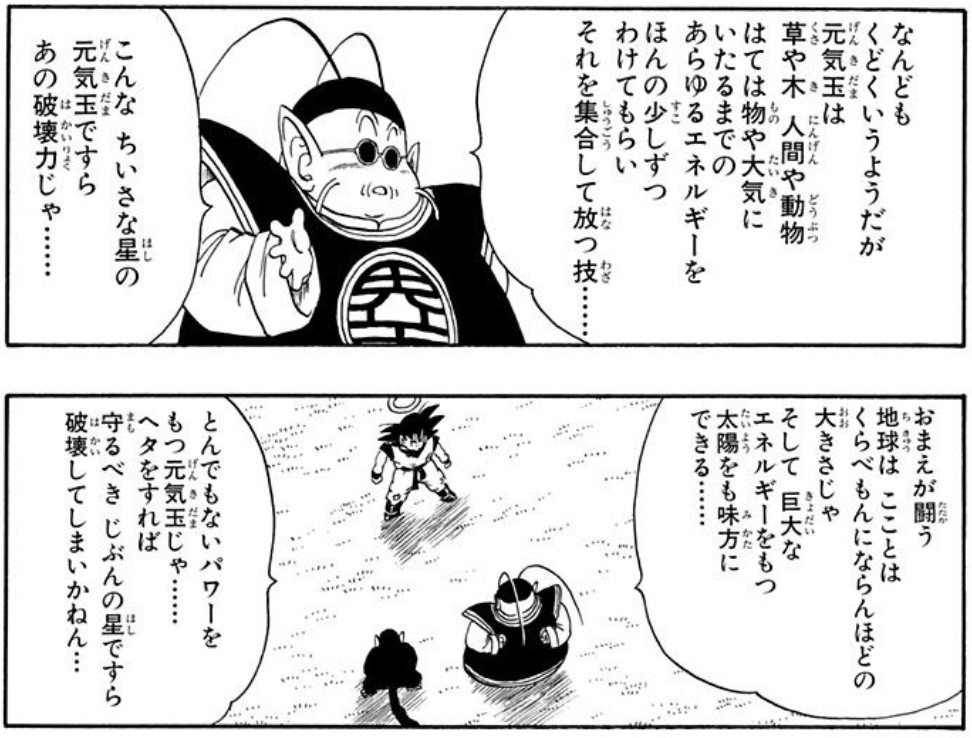
When Gohan and the rest of the universe donated their genki to the Genki-dama against Kid Buu, it is emphasized (by Vegeta, Kuririn, and Kibitoshin) that this donation means giving energy to the very limit of what can be spared without dying (Kibitoshin refers to his donation as “stamina”). This makes it clear that Gohan, for example, is not giving some fraction of his ki reserve, but rather nearly all of it. Furthermore, the vast majority of beings in the Dragon Ball world are not trained ki users. While everyone naturally has genki, shōki, and yūki, most people cannot consciously use ki to increase their power or use it for advanced ki techniques, like flight. They are therefore unable to really utilize shōki and yūki. It’s also questionable how necessary shōki actually is for ki usage and therefore how much it can serve as a limiting factor in the argument that genki somehow DOESN’T represent all ki. This is because there are many examples of a character losing their mental clarity and actually getting stronger instead of weaker, such as early Gohan and Broly. Losing one’s shōki is even sort of the original basis for achieving Super Saiyan and Super Saiyan 2 — succumbing to overwhelming rage. Goku says as much to Gohan when he first transformed into a Super Saiyan on Namek. However, by mastering the Super Saiyan form with Grade 4, Goku and Gohan were seemingly able to add shōki to the transformation. Therefore, losing shōki can increase one’s power to a certain extent, but mastering the cause of that loss and transforming it into an increase of shōki allows the users to reach new heights.
Quantifying these components might look like this: the base battle power of character is represented by genki (for example, Goku had a battle power of 3 million on Namek), yūki represents the multipliers that change the battle power (for example, the Super Saiyan transformation is a x50 multiplier), and shōki represents mastery over oneself (for example, Super Saiyan Grade 4). Thus the order of importance, in battle, seems to be: genki > yūki > shōki. Note that this is not confirmed, but it’s my guess based on what is shown throughout the series.
Because every depiction of the Genki-dama — including the explanation of it by its creator — consistently blurs the distinction between ki and genki, and because it is explicitly stated that the Genki-dama used against Kid Buu drew as much genki as each contributor could physically spare, the genki donated can be understood as representative of all of their ki rather than some fraction of it. Multiple characters confirmed they were giving nearly all of their ki or stamina to this Genki-dama, up to the very limit that could be giiven without dying. The anime makes this clear by adding a conversation about how anyone donating more would die. Therefore, the genki donated to this specific Genki-dama can be understood as representing ALL of the donator’s ki. This is important because the fans who argue that Gohan could have defeated Kid Buu rely on minimizing his genki contribution as being unrepresentative of his total ki, but this is not supported by the manga.
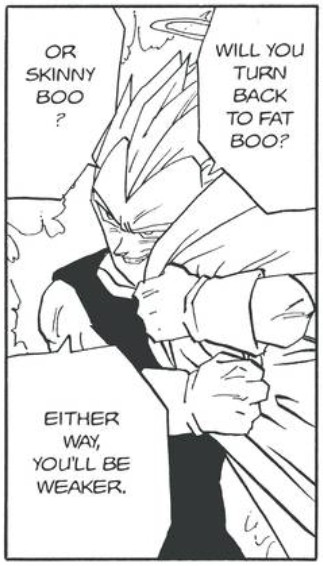
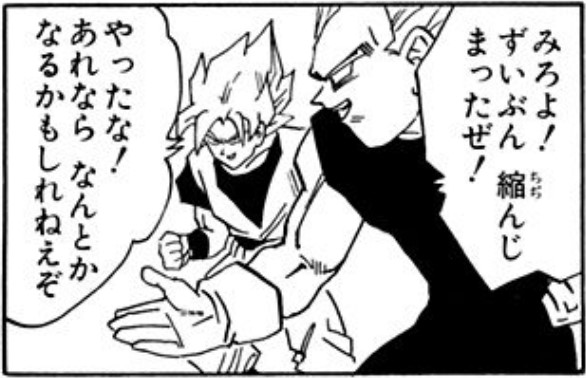
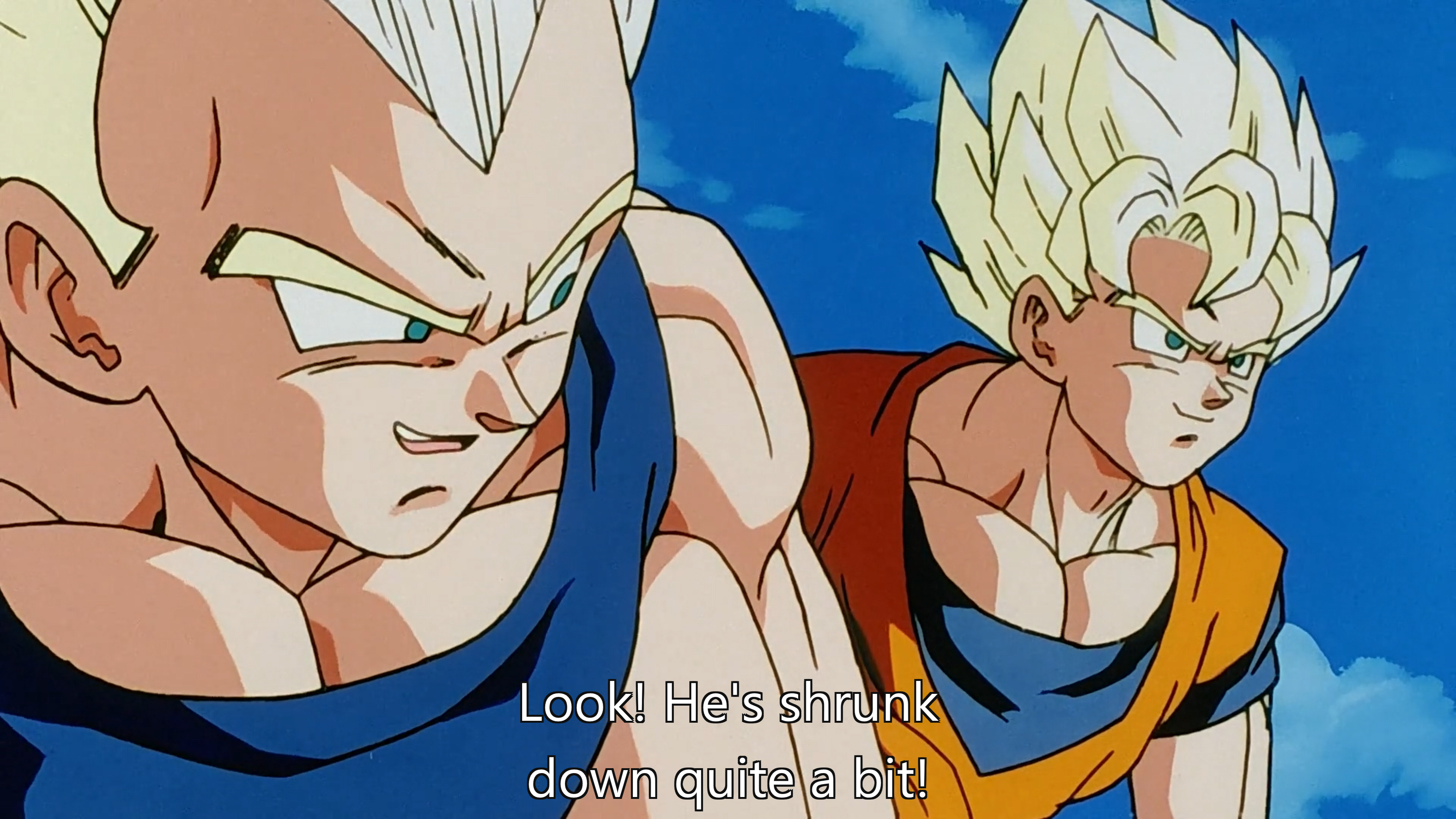
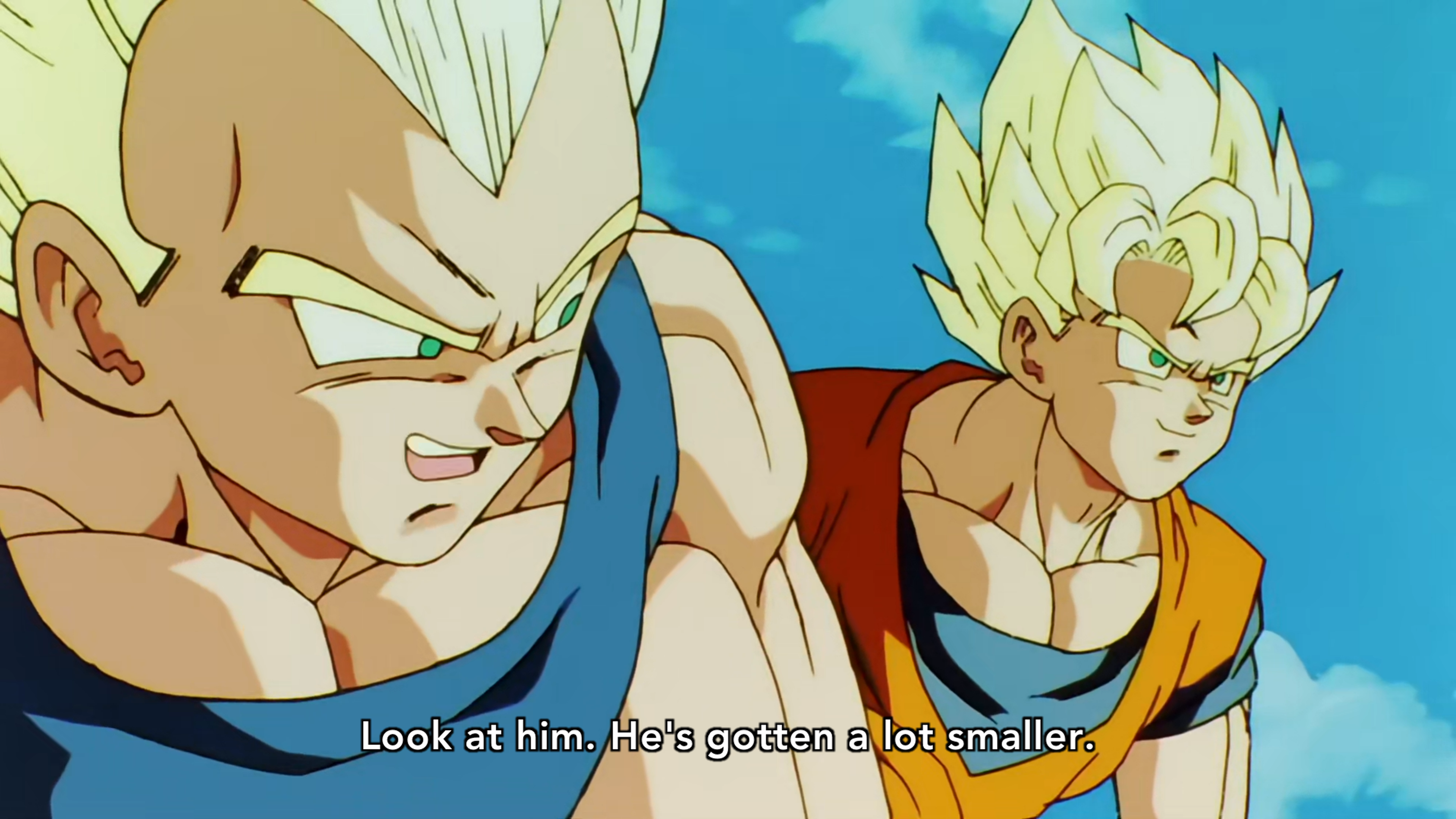
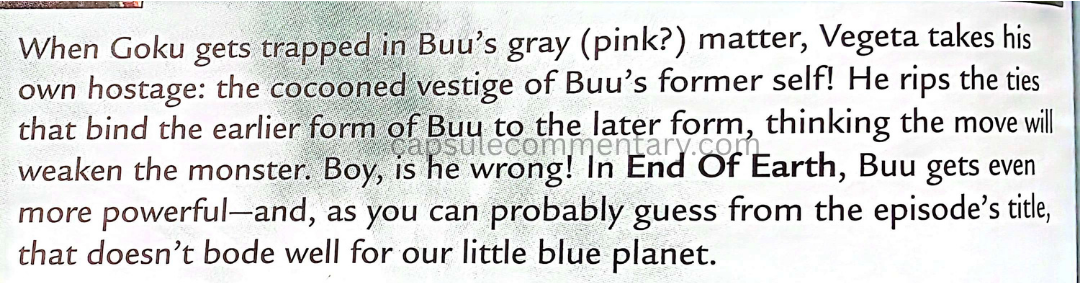
The final misconception that needs to be addressed is why Vegeta and Goku initially underestimated Kid Buu. We know that Majin Buu’s ki raised while transforming from Super Buu into the Southern Kaiōshin Buu. And importantly, no one ever comments on Majin Buu’s ki decreasing after this — remember: “tell, don’t show.” This is because the huge, muscular Southern Kaiōshin Buu is a red herring intentionally designed to mislead the readers and the characters. And it was an incredibly successful red herring at that, hence the purpose of this article. It’s important to remember Toriyama’s many quotes on defying expectations here. Thus, the only reason Vegeta and Goku underestimate Kid Buu is because of his small, unassuming physical appearance. It’s also important to remember Toriyama’s many quotes on character sizes here.
In chapter 507 when Vegeta is threatening to remove Good Buu from inside of Super Buu, he says, in English:“Will you turn back to Fat Boo? Or Skinny Boo? Either way, you’ll be weaker.” This is an accurate translation from what he says in Japanese. This moment foreshadows what is about to happen because everything Vegeta says here is wrong.28 Majin Buu doesn’t become Fat Buu/Good Buu nor Evil Buu. He transforms into a completely new form (from the reader’s and Vegeta’s perspective). And he doesn’t get weaker, either. They specifically comment on his ki rising, after all.
Even after the sensing of ki becomes well-established in Dragon Ball, the members of the Dragon Team (excluding intelligent ones like Piccolo and Future Trunks) frequently dismiss or underestimate their opponents based solely on their physical appearances. This is also echoed with Gohan as he is shocked by Majin Buu’s ki on page 10 of chapter 460, but then dismisses him due to his size in the very next chapter on page 2. Piccolo even directly comments on everyone frequently dismissing strong opponents based on their appearances in Dragon Ball Super chapter 7 on page 13.29 Goku has also shown that he frequently overestimates his own strength and needs to be saved by his friends: vs. Piccolo Daimaō in chapter 144 (Yajirobe saves him), vs. Vegeta in chapter 235 on (Gohan, Kuririn, and Yajirobe save him), vs. Freeza in chapter 315 on (Gohan, Kuririn, and Piccolo save him), vs. #19 in chapter 342 (Vegeta saves him), and vs. Kid Buu in chapter 511 on (Fat Buu, Mr. Satan, and Vegeta save him). Goku and especially Vegeta underestimating Kid Buu based solely on his small size is par for the course in Dragon Ball.
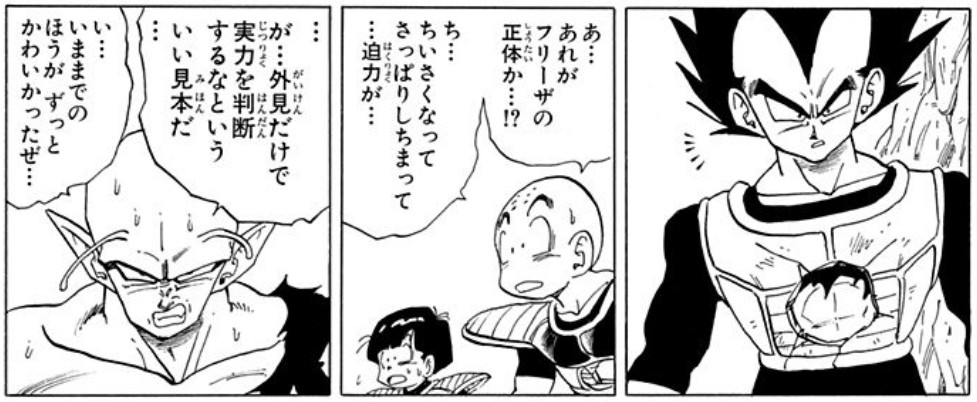
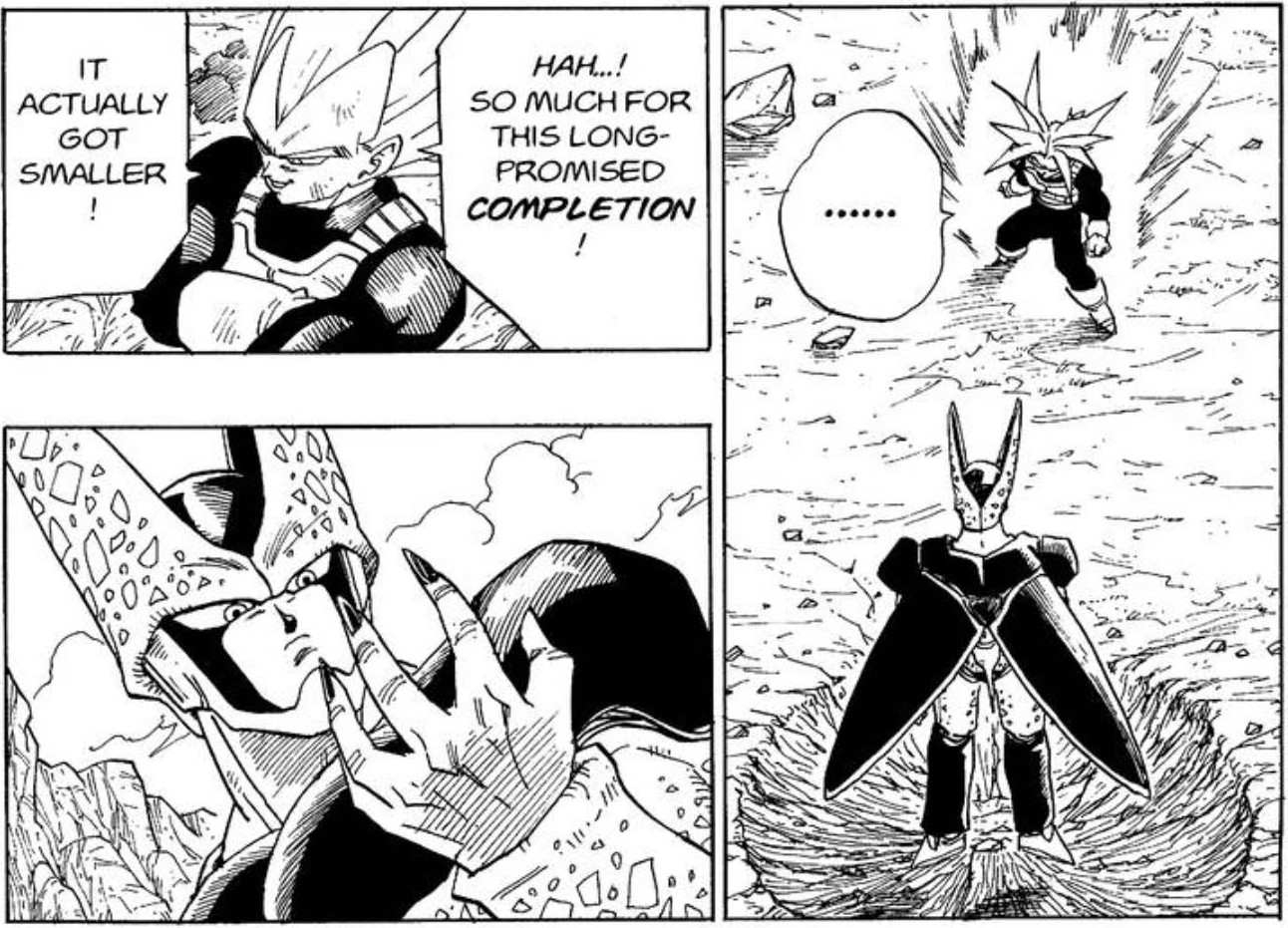
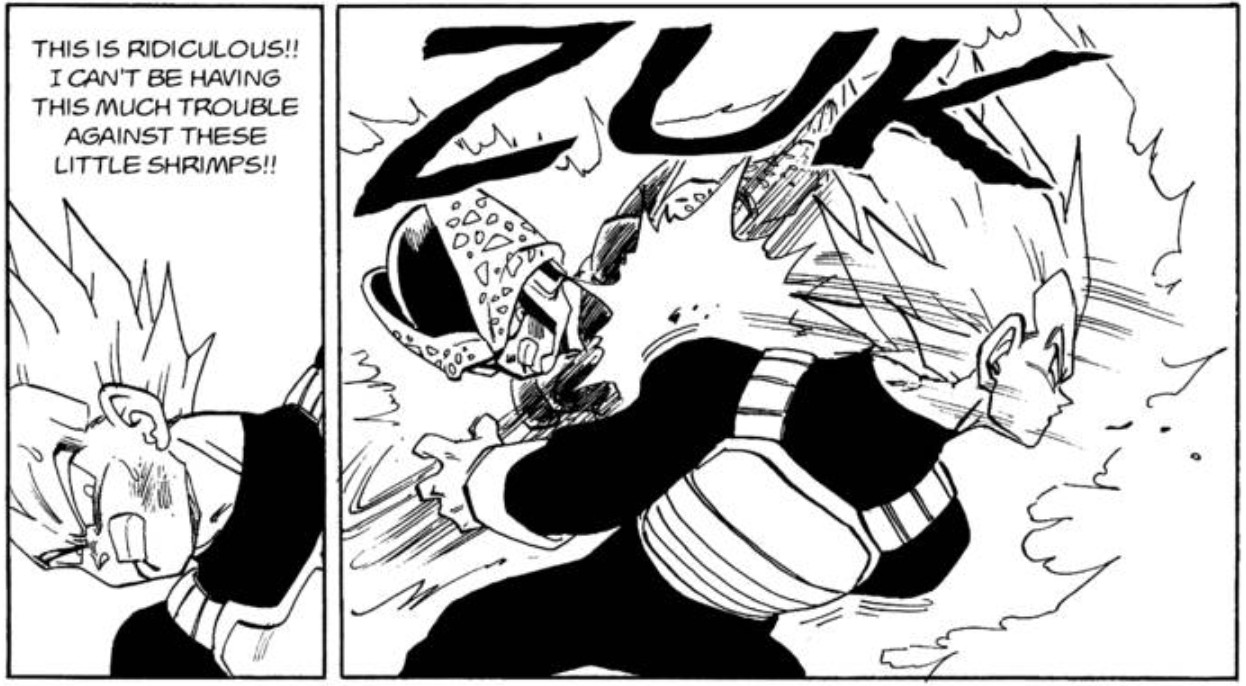
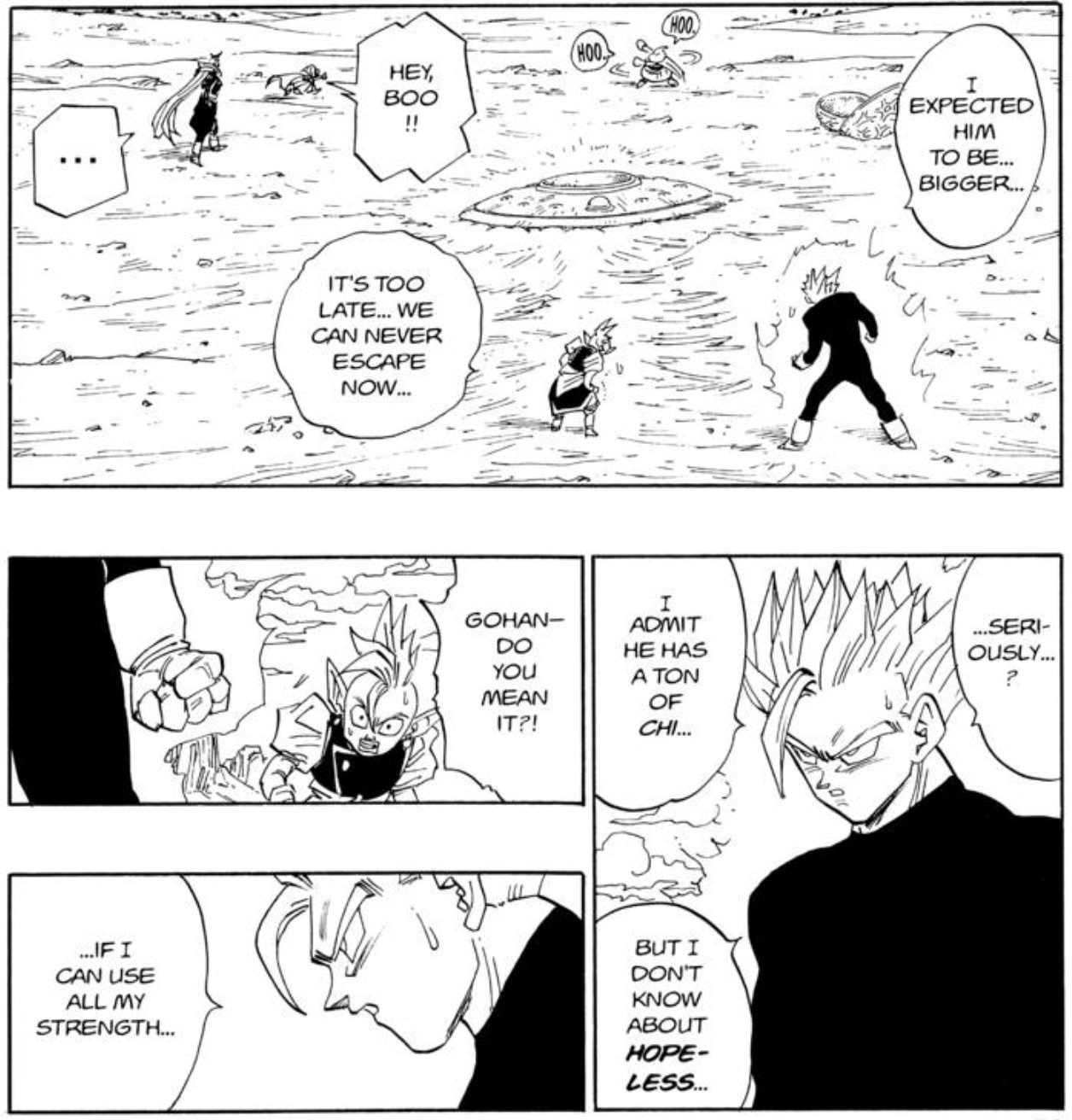
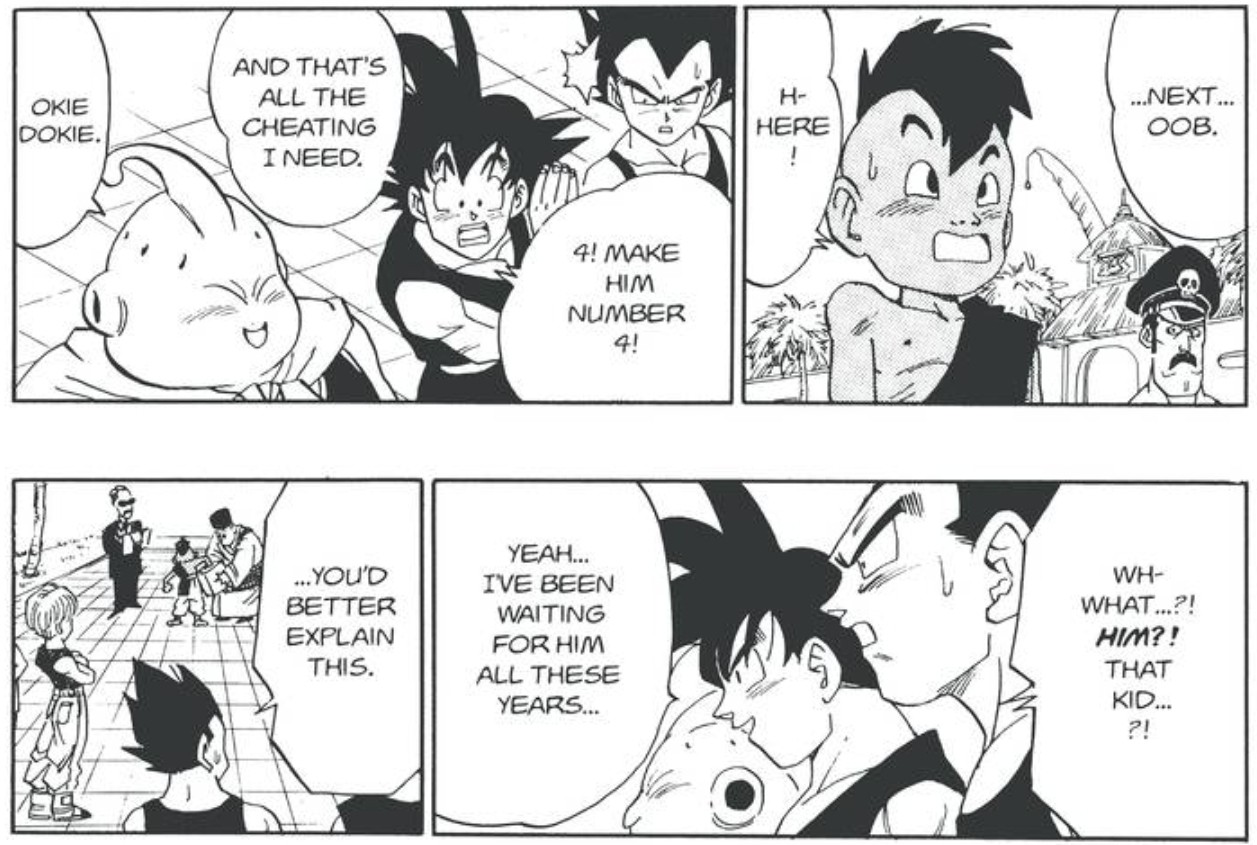


Kid Buu vs. Buuhan in Other Media
Now, let’s look at how Kid Buu and Buuhan are portrayed outside of the Tankōbon and Kanzenban releases of the manga. How do the people involved with actually producing official Dragon Ball media view this debate? Please keep in mind that while some sources can be considered authoritative in this debate — such as Weekly Shōnen Jump — others, like Dragon Ball Kai: Ultimate Butōden, cannot.30 The sources here are not necessarily to be understood as conclusive individually, but rather are used to illustrate a trend, and the tallying of them is not weighted.
I think the Majin Buu who absorbed Ultimate Gohan is the strongest. — Takao Koyama on Twitter responding to a fan question, November 27, 2021
Please note that these are my personal opinions and have not been approved by Toriyama-sensei. — Takao Koyama after a year of further questions from fans and media coverage, November 5, 2022
So Kid Buu is the strongest Buu? —@Kenji_Toon, November 6, 2022
I think so. — Takao Koyama, November 6, 202231
As some of the media listed below regularly produce new content, the numbers for live service and card games, like Dragon Ball Z: Dokkan Battle, may be inaccurate. If something is out-of-date, please let me know. Additionally, some of these have new Kid Buu variations (such as in the Super Dragon Ball Heroes manga and Dragon Ball Xenoverse 2), but I am not considering these as the debate is between the original versions of Buuhan and Kid Buu.
In the rare circumstances where there is no power, strength, or attack stat available in the games listed here, I will look at how many experience points Kid Buu and Buuhan give, as more difficult enemies give more EXP (barring weaker characters designed to be farmed). I will also be ignoring games where the two of them are seemingly equal, such as in Dragon Ball Z for Kinect and Dragon Ball: Awakening. However, if a guidebook gives support for both of them, I will include that. Chōzenshū 4, and Daizenshū 1, 3, 4, 6, 7, and 9 are not included in this section because they don’t use any superlatives to describe either form of Majin Buu.
Reliable sources are marked with an asterisk (*). Sources marked with a plus sign (+) may refer to Majin Buu as a whole rather than to a specific form, and which would affect the final tally if that is the case.
In the Chio Dragon Ball Z Card Game, the Buuhan card is considered level 2 of 4 and has a Ki Attack of 80. The Kid Buu card is level 3 of 4 and has a Ki Attack of 190.
Buuhan: 0, Kid Buu: 2 (including Koyama’s 2022 tweet from above).32
In Data Carddass Dragon Ball Z 1, there is 1 Buuhan card (154-I) and it has an attack of 2600. There is also 1 Kid Buu card (176-I) and it has an attack of 2800.
Buuhan: 0, Kid Buu: 3.
In Data Carddass Dragon Ball Z 2, there are 2 Kid Buu cards: 140-II with an attack of 2500, and PE-011-II with an attack of 2800. There is 1 Buuhan card: 149-II with an attack of 2300.
Buuhan: 0, Kid Buu: 4.
As previously shown in this article, in Dr. Mashirito’s Ultimate Manga Techniques on page 124, the interviewer asks Toriyama, “Just like Goku, the enemies he faces-Freeza, Cell, Boo the Djinn-get stronger and stronger over time. Did that ever make you feel pressured into drawing even more impressive action scenes than before, Mr. Toriyama?” In this same interview, Toriyama showed he is willing to clarify his answers, so the fact that he did not challenge the premise of this question (that Majin Buu kept getting stronger without exception) means that he accepted it. He even used the same language himself to describe Buu in V-Jump May 2014 on page 42.
Buuhan: 0, Kid Buu: 5.*
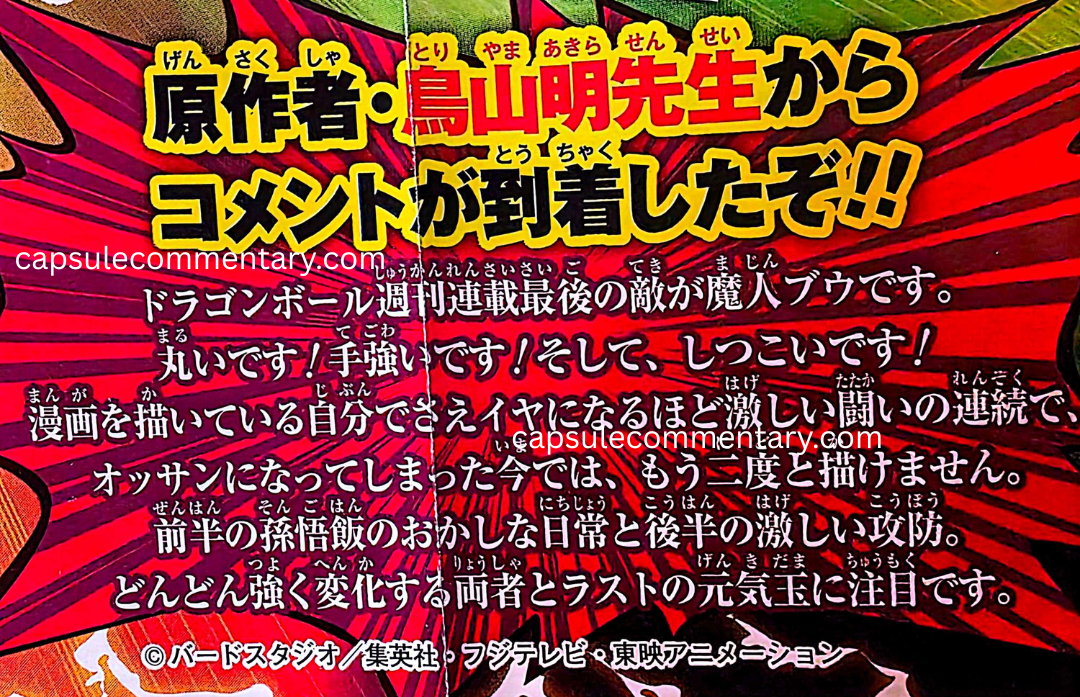
In Dragon Ball Card Game, there’s only one card that’s clearly Buuhan, which is D-397, and it has an attack power of 7500. The Kid Buu card with the highest attack power is D-545 with 6000. The average attack power of every Kid Buu card is 4500.
Buuhan: 1, Kid Buu: 5.
On card 293 of Dragon Ball Carddass, Kid Buu is described as the strongest Majin Buu. There are 6 Kid Buu cards: #293 with a DP of 3700, #298 with a DP of 3700, #317 with a DP of 3900, #320 with a DP of 3800, #329 with a DP of 3900, and #332 with a DP of 3800. His average DP is 3800. However, if players used a “Scouter,” all of his cards increase in DP by 100, and so his Scouter average is 3900. There are 3 Buuhan cards: #289 with a DP of 3500, #290 with a DP of 3500, and #291 with a DP of 3600. His average DP is 3533. However, only #289’s DP gets increased when using a Scouter and it’s by 150, so his Scouter average is 3583.33 As mentioned earlier in this article, Toriyama’s editors personally approved of the battle power values on these cards.
Buuhan: 1, Kid Buu: 6.*
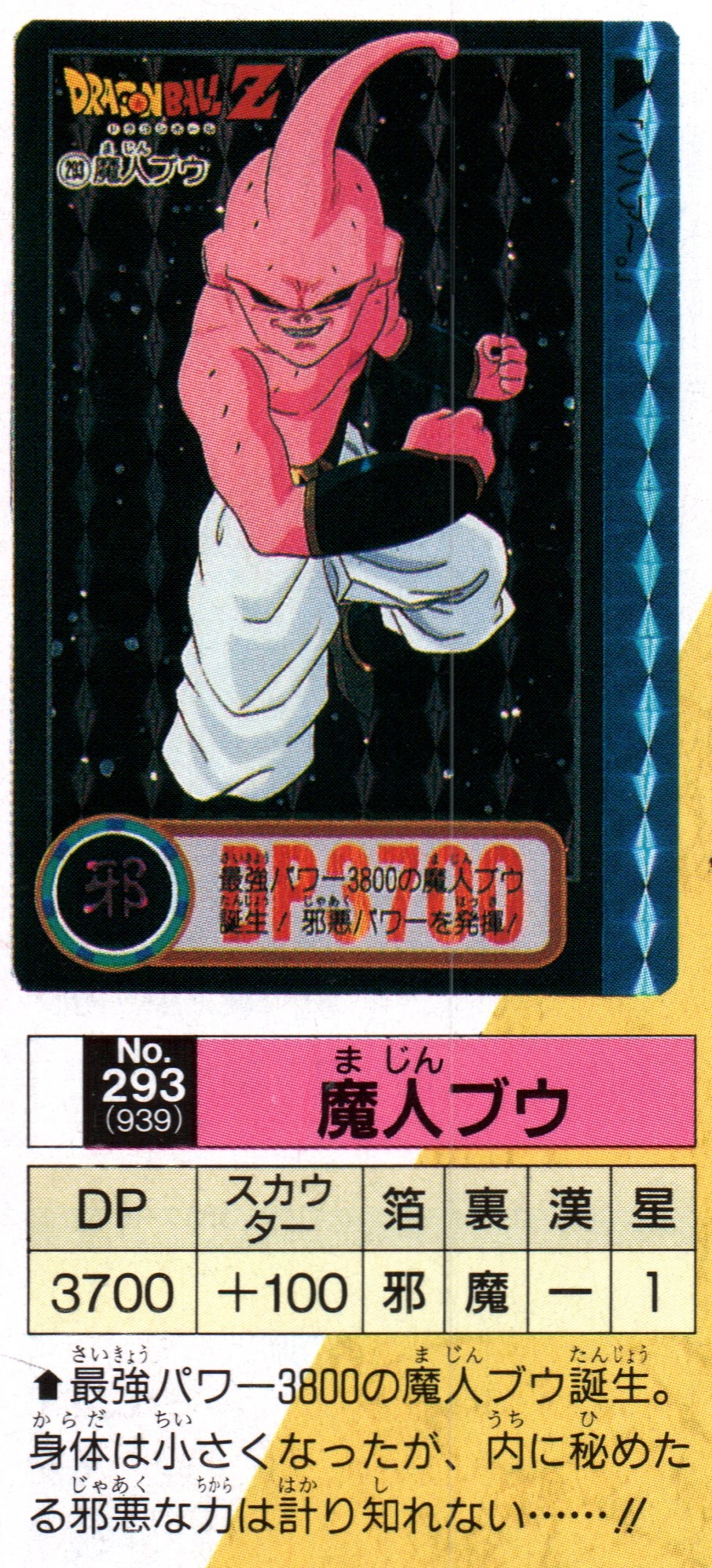
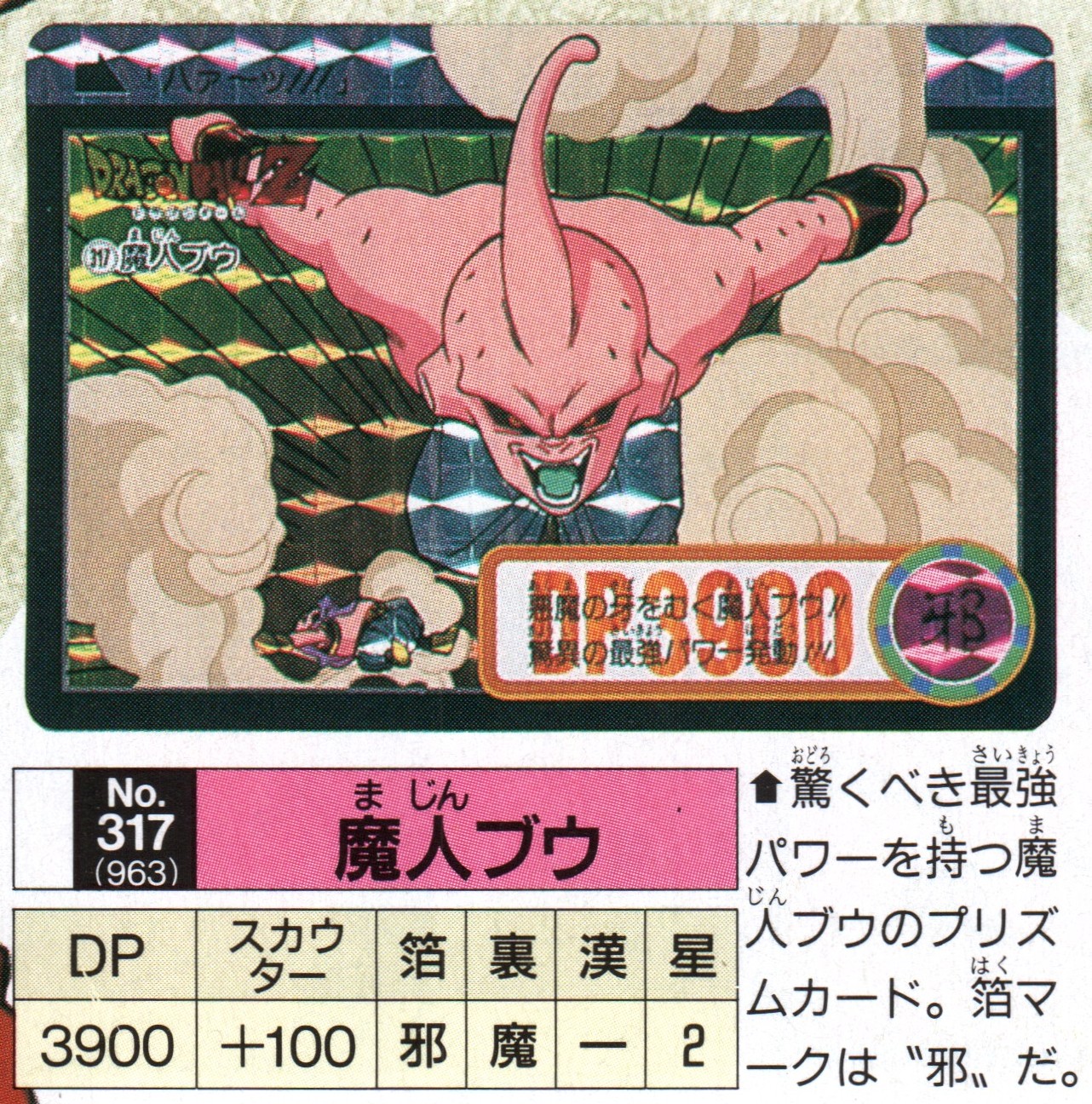
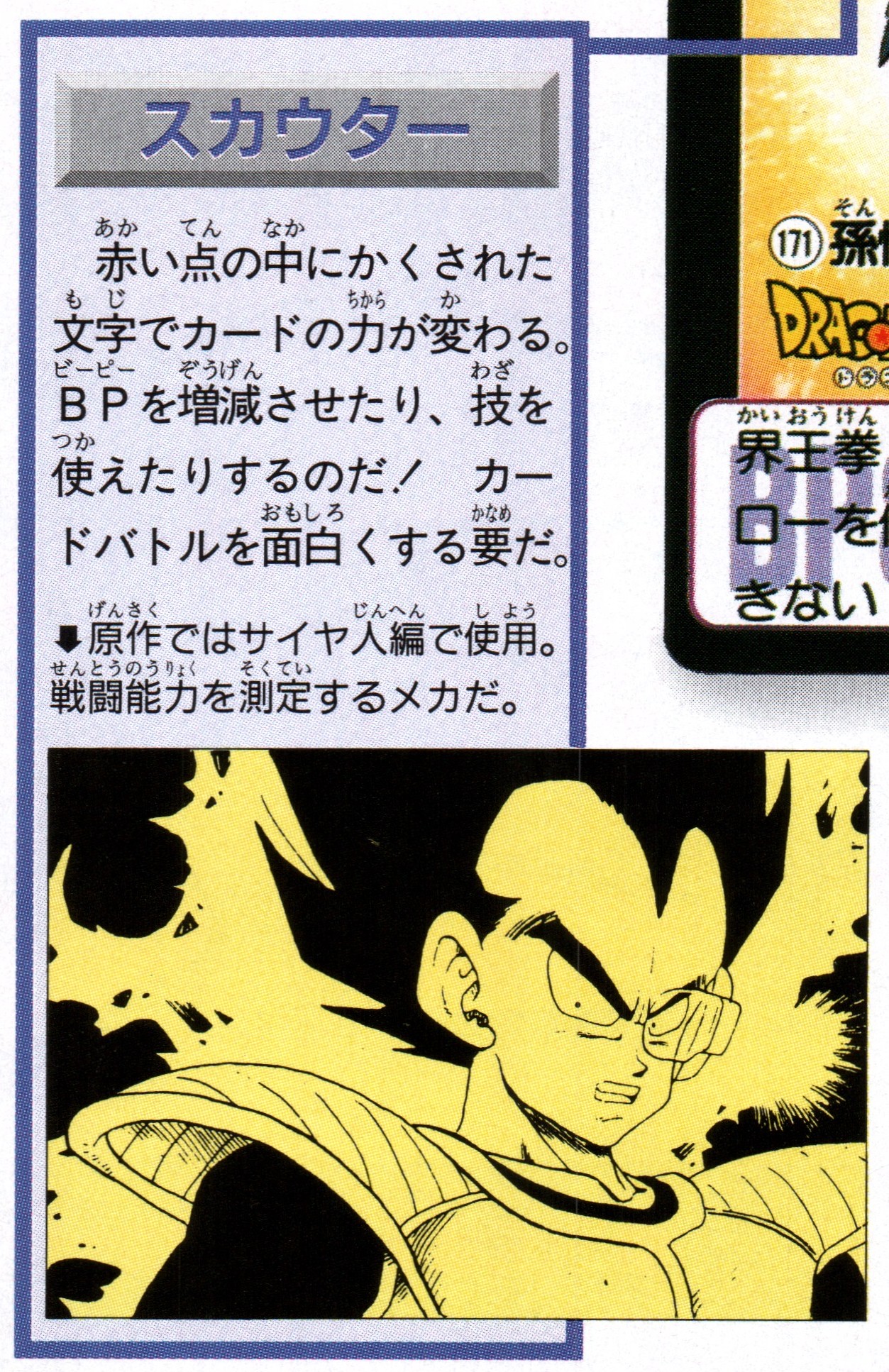
In Volume 3 of Dragon Ball Carddass Remix, there is 1 Kid Buu card: 23-293 with a BP of 3700. There is also 1 Buuhan card in Volume 5: 23-289 with a BP of 3500.
Buuhan: 1, Kid Buu: 7.
On page 233 of Dragon Ball Chōgashū: Super Art Collection (known as Dragon Ball: A Visual History in English), in the text next to a picture that contains Super Buu, it describes Majin Buu as “the greatest enemy.”34 In English, it refers to him as “the big bad.”
Buuhan: 2, Kid Buu: 7.+
One or two of you might be wondering why I’m not using this interview shown to the right of this paragraph for the Dragon Ball Chōgashū: Super Art Collection tally, and the short and simple answer is because it’s fake. I do not use any fake sources in my Deep Dives. This image is designed to look like a translated interview on Kanzenshuu. You can see their version of this interview here. Kanzenshuu also addresses this specific image here. I always do my due diligence before using a source. and that’s partially why my Deep Dives take months to create, or years if you consider the updates to them. To summarize: the only reason I am showing you this fake interview is to explain why I’m not using it or other fake sources.
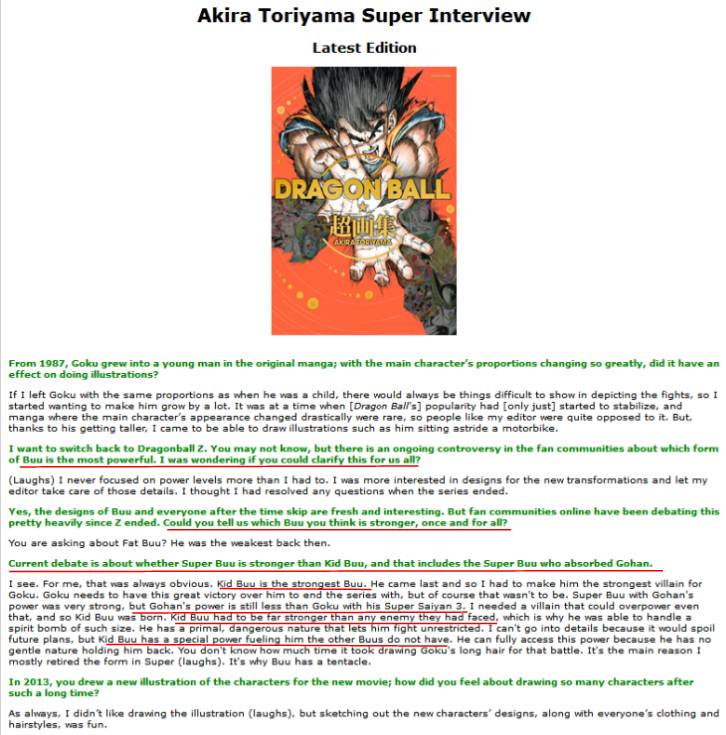
The Dragon Ball: Chōzenshū series of guidebooks are updated versions of the Daizenshū and were published in 2013. Nearly all of the pages of the Chōzenshū are copied-and-pasted from the Daizenshū, but they add some new information from Dragon Ball GT, Dragon Ball Z: Battle of Gods, and Neko Majin. In the 7th issue of Shenron Times, when the interviewer apologizes for interrupting Toriyama’s busy schedule, Toriyama replies, “I’m not busy at all. The work on Dragon Ball Daizenshū has already wrapped up, and I’m not working on anything at the moment. (laughs)” This doesn’t mean he was doing the heavy lifting of the project, but it does confirm his involvement with the Daizenshū books kept him busy. Many fans erroneously believe Toriyama had “very little involvement… if any at all.” Furthermore, Caramel Mama, the company that produced the manga-based Daizenshū volumes (1, 2, 4, and 7) was founded by and as of 2022 was still run by Tsuneo Matsumoto, one of the creators of the Akira Toriyama Preservation Society. The Akira Toriyama Preservation Society was Toriyama’s official fan club and they published Bird Land Press, which Toriyama himself sometimes contributed to. Kisōsha, the company that produced the anime-based Daizenshū volumes (3, 5, 6, and 10) was created by Tetsuo Otoku. After producing Jump Gold Selection 5: Dragon Ball Z Anime Special Vol. 2, a satisfied Torishima told Otoku to start his own company. So the notion that Caramel Mama and Kisōsha intentionally twisted Toriyama’s intent or ignored it altogether falls flat on its face.
Dragon Ball: Chōzenshū 1 on page 113 (Daizenshū 2 page 139), it reads, “Although he places his hopes on the next generation, the one who defeated the strongest-in-the-universe Buu was Goku, revived with the Elder Kaiōshins life.” On page 200 (Daizenshū 2 page 242), in the description of Battle 184 (Goku vs. Kid Buu), it states, “The universe’s strongest enemy was defeated, and peace was restored.” A counter-argument that was brought to me is that, for example with Battle 184, it is referring to “Majin Buu (Evil)” and Super Buu is actually included in that, i.e. all of the evil forms are treated as one. This is partially correct. However, this argument is wrong for two reasons. The first is that it ignores the contextual, visual clue that Battle 184 is specific to Kid Buu. For example, battles 125 and 126 are described as simply “vs. Freeza,” but we know Freeza is using different forms here based on the pictures. Similarly, battles 136, 138, 139, 140, 141, 142, 143, 144, 146, and 147 all just say “vs. Cell,” but we know from the pictures that these are different forms of Cell. Only Battle 148 makes the distinction with “Resurrected Cell.” As I explained at the start of this article, context is important. The other reason this argument is wrong is because when Japanese text refers to Kid Buu as “Evil Buu,” the localization team will sometimes translate this text as “Majin Buu (Pure)” or “Kid Buu” so that English-speaking audiences understand. As stated in the first section, English speakers often think of the lanky, gray Buu when we read “Evil Buu.” Dragon Ball Official Site provides at least two examples of this: the May 21, 2025 Toriyama Archives post (in both Japanese and English), and Uub’s Character Showcase, where he is described as the purified soul of the “pint-sized pink peril” in English and the “reincarnation of the evil Majin Buu” in Japanese.
Buuhan: 2, Kid Buu: 8.*
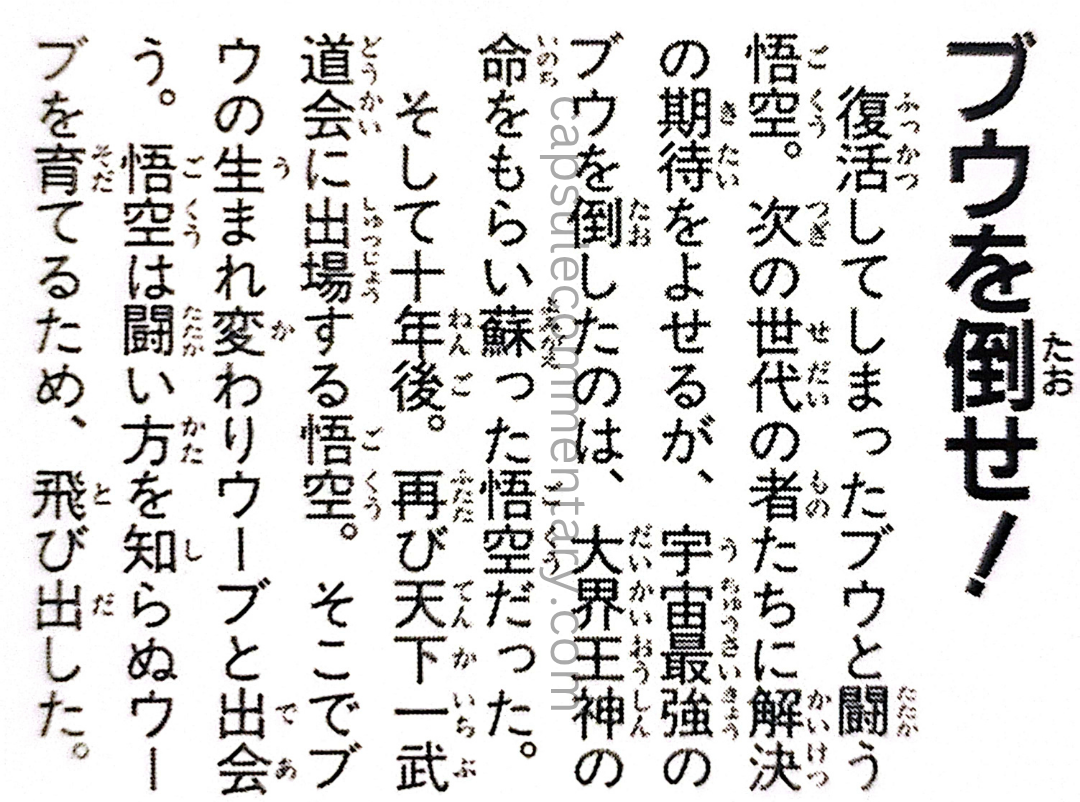
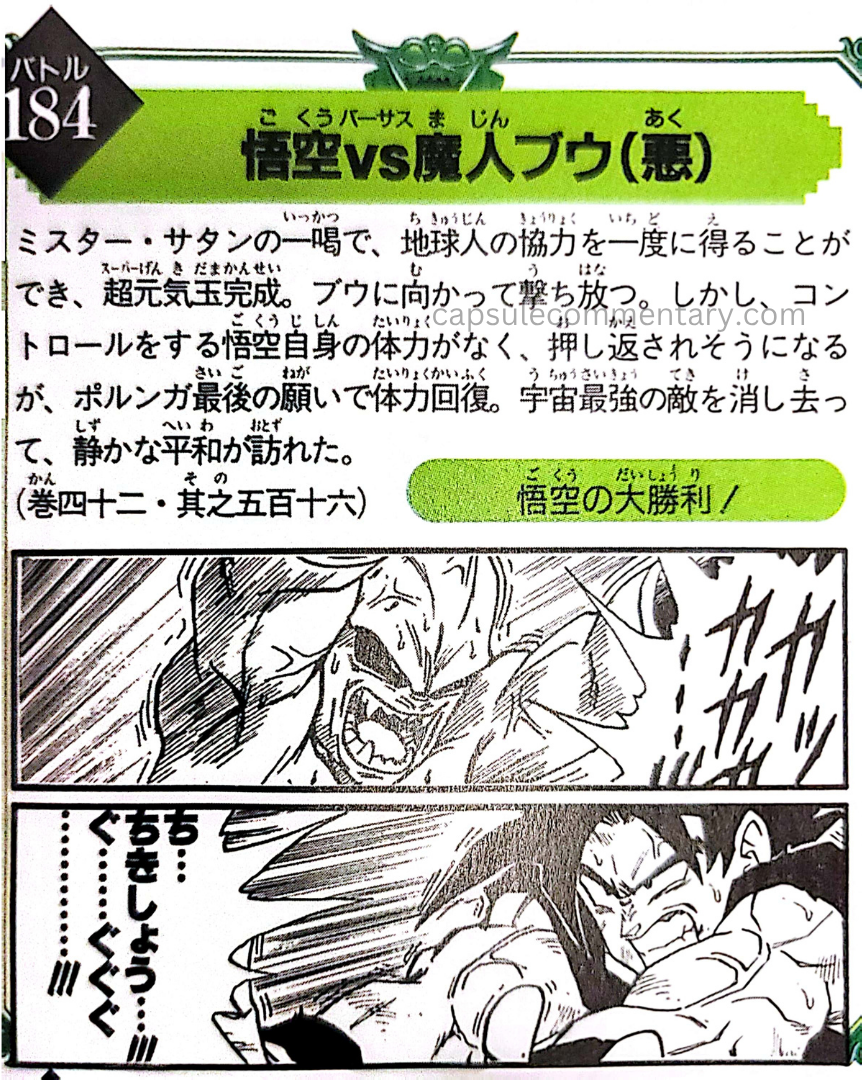
In Dragon Ball: Chōzenshū 2 on page 313 (Daizenshū 5 page 187), one of the sentences reads, “Buu, having absorbed Gohan after an interruption, evolves into his most powerful form.” However, on page 336 (Daizenshū 10 page 20), when describing the battle between Goku and Kid Buu, it states, “At last, the ultimate final battle of the strongest warriors has begun…!!” Then on page 346, it describes Kid Buu as the “ultimate” or “supreme” Buu.35 This guidebook is not definitive on which is stronger, so I will give both of them half a point.
Buuhan: 2.5, Kid Buu: 8.5.*
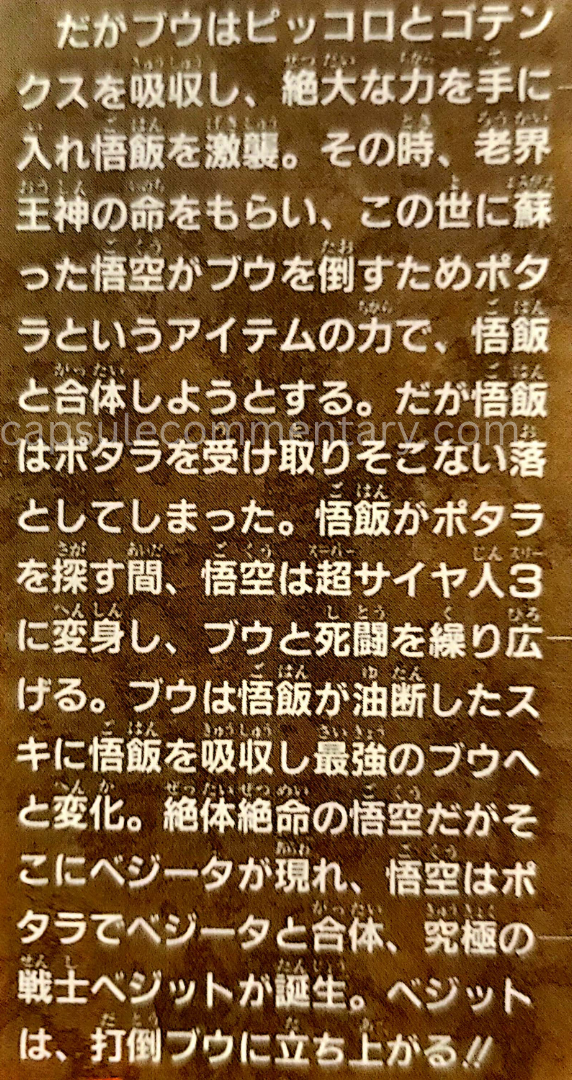
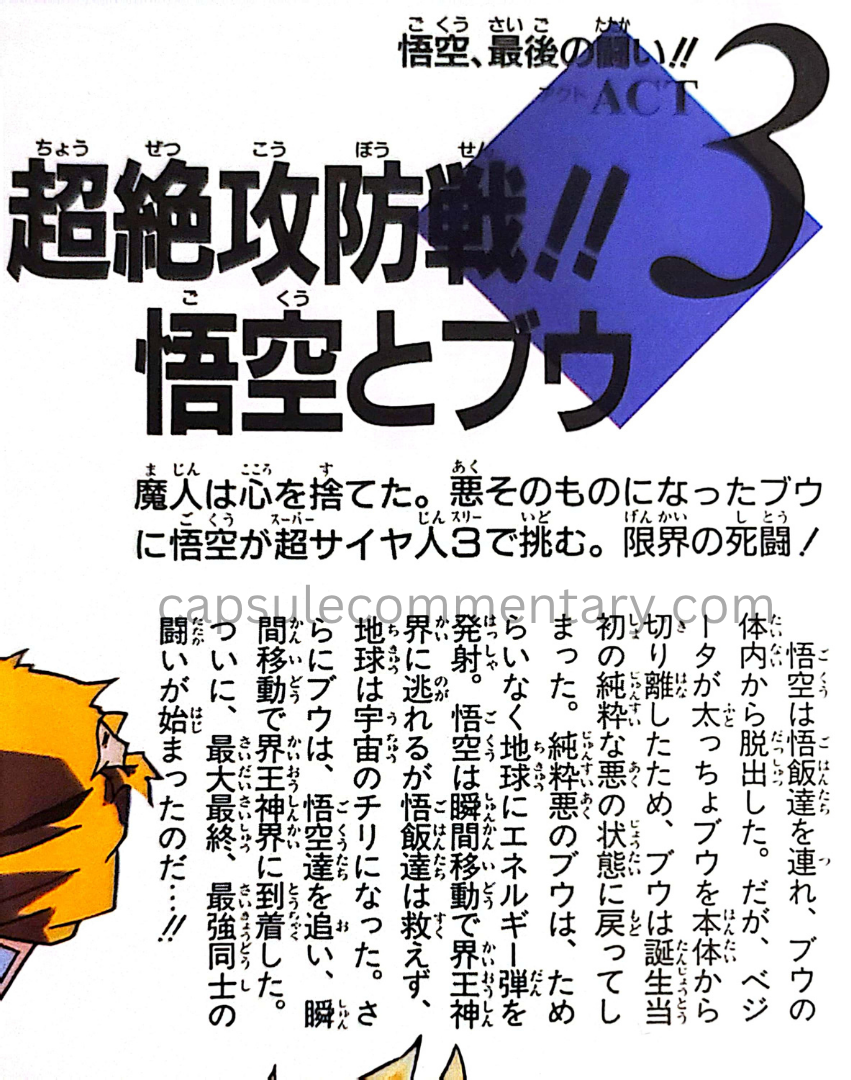

In Dragon Ball: Chōzenshū 3 on page 341 (Daizenshū 10 page 118), in the episode description for episode 278, it describes the fight between Goku and Kid Buu as “the strongest battle.”36 If you just translate this directly into English, it doesn’t really make sense. A more natural reading in English would be either “the ultimate battle” or “the battle of the strongest.” However, because they used “strongest,” this will count.
Buuhan: 2.5, Kid Buu: 9.5.*
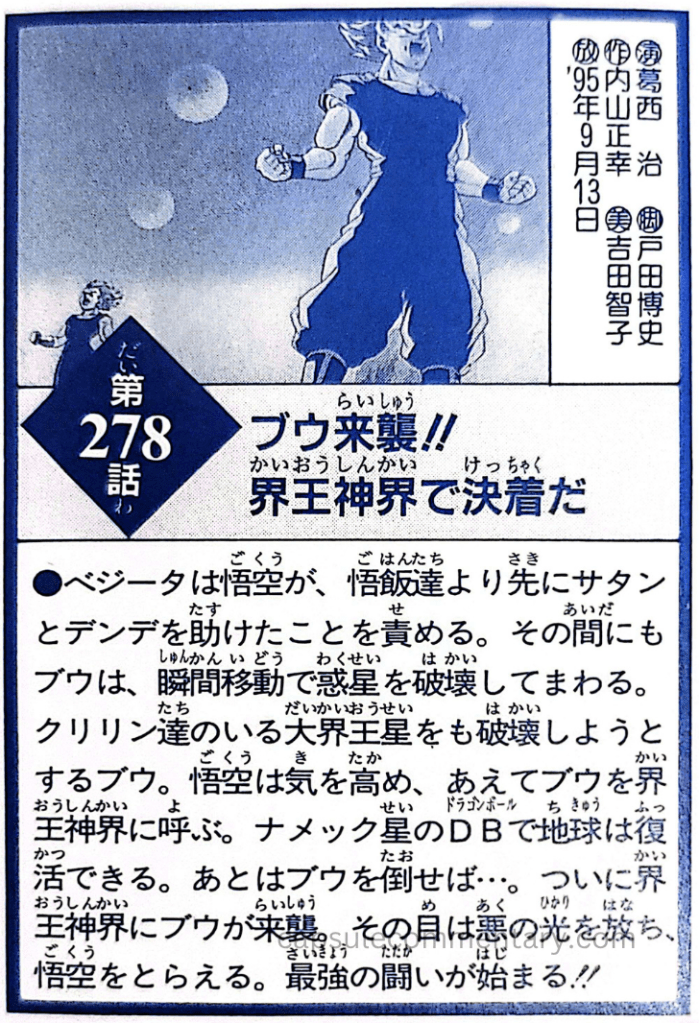
At the end of episode 20 of Dragon Ball Daima, as previously mentioned in this article, Goku says that he underwent special training after fighting Kid Buu in order to unlock his Super Saiyan 4 form. This follows well with his final message to Kid Buu and re-confirms that Super Saiyan 3 Goku was much weaker than Kid Buu as an entirely new level of Super Saiyan is a necessary step for fighting him. However, since Goku’s statement is potentially ambiguous, I won’t give it to either. It is worth mentioning though.
Buuhan: 2.5, Kid Buu: 9.5 (no change in tally).*+
On pages 139 and 242 of Dragon Ball: Daizenshū 2, as stated in the Chōzenshū 1 paragraph, it is stated that Kid Buu was “the most powerful being in the universe” and “the universe’s strongest enemy.”
Buuhan: 2.5, Kid Buu: 10.5.*
On page 187 of Dragon Ball: Daizenshū 5, as stated in the Chōzenshū 2 paragraph, which does not cover the Kid Buu Saga, it states that Buuhan is the “most powerful form.” Mentioning that this was written before Kid Buu existed in the anime is relevant, as it’s impossible to compare them yet. For example: it was easy to say Mark Spitz was the best swimmer of all time, until Michael Phelps arrived on the scene. Regardless, I will still count this for Buuhan.
Buuhan: 3.5, Kid Buu: 10.5.*
On pages 121 and 124 of Dragon Ball: Daizenshū 8, and ignoring the information that’s also available on the cards, Kid Buu is called “the strongest Majin Buu” twice and “the strongest enemy.” 37
Buuhan: 3.5, Kid Buu: 11.5.*
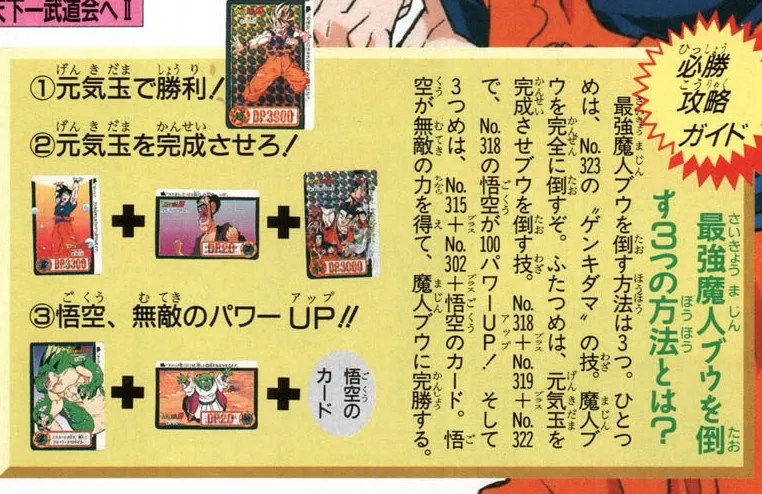
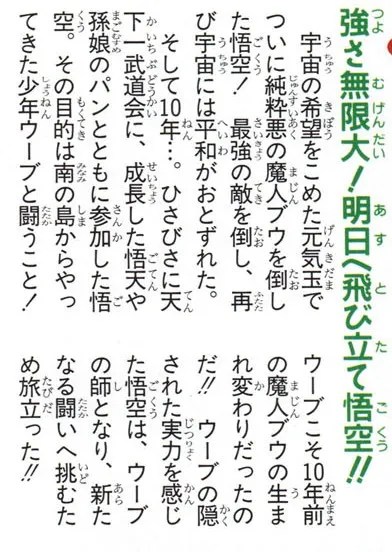
On page 20 of Dragon Ball: Daizenshū 10, as stated in the Chōzenshū 2 paragraph, it describes the fighting between Goku and Kid Buu as “the ultimate final battle of the strongest warriors.” Page 30 describes Kid Buu as the “ultimate” or “supreme” Buu. And as previously stated in the Chōzenshū 3 paragraph, it also says essentially the same thing there.
Buuhan: 3.5, Kid Buu: 12.5.*

Exactly like on page 87 of Weekly Shōnen Jump 1995 Issue 15, page 345 of Dragon Ball Sōshūhen — Super Goku Legend, Legend 18, which is a mix between the original serialized version of Dragon Ball and the Kanzenban, states, “Beyond the limit, even further beyond!!The gong of battle resounds!!” This is describing Goku and Majin Buu as now fighting at greater strengths than either has achieved before.
Buuhan: 3.5, Kid Buu: 13.5.*
Placeholder for Dragon Ball Discross Jinryoku God Max!! (Saikyō Jump May 2015 to November 2016). Please contact me if you have this.
When Super Saiyan Blue Goku faces the clone of Kid Buu in Dragon Ball FighterZ, he states that he will go “full power” against him. This re-confirms that Super Saiyan 3 Goku was much weaker than Kid Buu as a fully-powered form from Super is necessary to fight him. He says the same thing in Japanese. This is not a direct statement in favor of Kid Buu, but is worth mentioning. Is Buuhan Super Saiyan Blue-level as well? We may never know.
Buuhan: 3.5, Kid Buu: 13.5 (no change in the tally).
Dragon Ball: Forever actually calls both Buuhan and Kid Buu “the strongest.” On page 34 when describing Vegito’s attacks on Buuhan, it reads, “Keep the strongest Majin at bay!!!” However, on page 58 when describing Goku speaking to Kid Buu as he is destroyed with the Genki-dama, it reads, “The strongest enemy deserves the utmost respect!” And on page 140, it writes about Kid Buu, “Goku decides to fight without relying on the Potara. He confronts the powered-up Buu as a Super Saiyan 3!”
Buuhan: 4, Kid Buu: 14.*

As shown earlier, in Dragon Ball: Full Color: Piccolo Daimao Arc Vol. 2, on page 223, there is a part describing the Genki-dama used to defeat Kid Buu in Dragon Ball: Full Color: Majin Buu Arc Vol. 6. It reads: “Gathering the ki from all over the Earth, it is launched at the strongest enemy, Majin Buu!!” We know that Goku defeated Kid Buu with the Genki-dama, so this is referring to him. Also, keep in mind that this is an official release of the manga.
Buuhan: 4, Kid Buu: 15.*

Placeholder for Dragon Ball: Gekishin Squadra
In the July 1997 issue of V-Jump, while discussing Dragon Ball GT: Final Bout, Goku describes Kid Buu as “the strongest one,” “the ultimate combat lifeform,” and “definitely the strongest.” 38 In the September 1997 issue of V-Jump, it describes Kid Buu as “the strongest, most evil, and destructive Majin.”39 This is not Buuhan, but in the opening animation for the game, Super Buu transforms into Kid Buu in order to fight Ultimate Gohan.40 The booklet included with the game also describes Kid Buu as “the strongest and most evil Majin in Dragon Ball history.”41
Buuhan: 4, Kid Buu: 16.*

On page 38 of Dragon Ball GT: Perfect File 1, the Q&A section has a statement that reads, “But by the time of Z, Goku had already defeated the strongest enemy, Majin Buu. In other words, he had become too strong.” As we know, Goku defeated Kid Buu, but it’s possible this could be referring to Majin Buu as a whole.
Buuhan: 4, Kid Buu: 17.*+
Placeholder for Dragon Ball Heroes: Charisma Mission (Saikyō Jump December 2013, July 2014 to July 2016, January 2017 to November 2018, and January 2019). Please contact me if you have this.
In Dragon Ball Heroes: Ultimate Mission, it refers to Buuhan as “the strongest.” It also calls him the strongest in Dragon Ball Heroes: Ultimate Mission 2. It doesn’t seem like Dragon Ball Heroes: Ultimate Mission X makes a statement on this debate. In each of these games, there are Buuhan and Kid Buu cards that the players can obtain. Some cards can transform after certain conditions are met, but I will not be including those cards. In Ultimate Mission, there are 2 Buuhan cards the player can obtain: H6-46 (4600 power) and HG1-35 (3800 power). His average power is 4200. There are also 2 Kid Buu cards the player can obtain: H7-34 (4200 power) and HG1-36 (4000 power). His average power is 4100. The same two Buuhan cards are also the only two the player can obtain in Ultimate Mission 2. However, there are 4 Kid Buu cards in UM2: H7-34 (4200 power), HG1-36 (4000 power), GPB-32 (4000 power), and JPB-19 (4000 power). His average power is 4050. In Ultimate Mission X, there are 6 Buuhan cards the player can obtain: H6-46 (4600 power), HG1-35 (3800 power), HJ4-41 (4100 power), HJ5-41 (4300 power), JPBC5-12 (4800 power), and GDPB-12 (4000 power). His average power is 4267. There are 15 Kid Buu cards the player can obtain: H7-34 (4200 power), HG1-36 (4000 power), HJ5-43 (4000 power), HJ6-45 (3700 power), HJ8-29 (4000 power), HGD1-40 (4000 power), HGD2-45 (5000 power), GPB-32 (4000 power), JPB-19 (4000 power), JPBC3-12 (3700 power), HUM-25 (4500 power), JB2-05 (3500 power), HUM2-25 (4400 power), GDPBC2-11 (4000 power), and HUM3-23 (3000 power). His average power is 4000. I own the official game guides for these, and while they are dense with information, they leave out key identifying information. Therefore, I’ve decided to play through these games at some point. So in the future, this tally may change.
Buuhan: 6.5 (UM1, UM2, higher average in UMX), Kid Buu: 17.5 (highest power card in UMX).
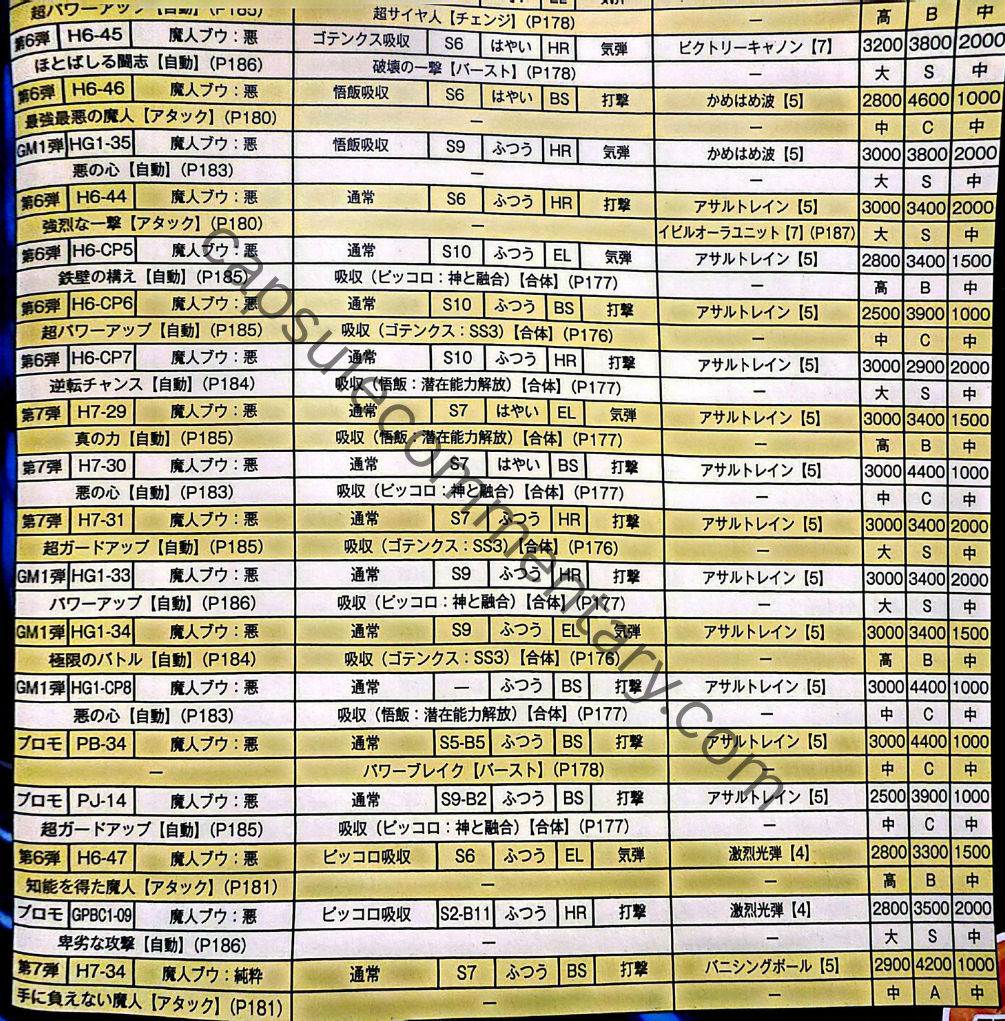

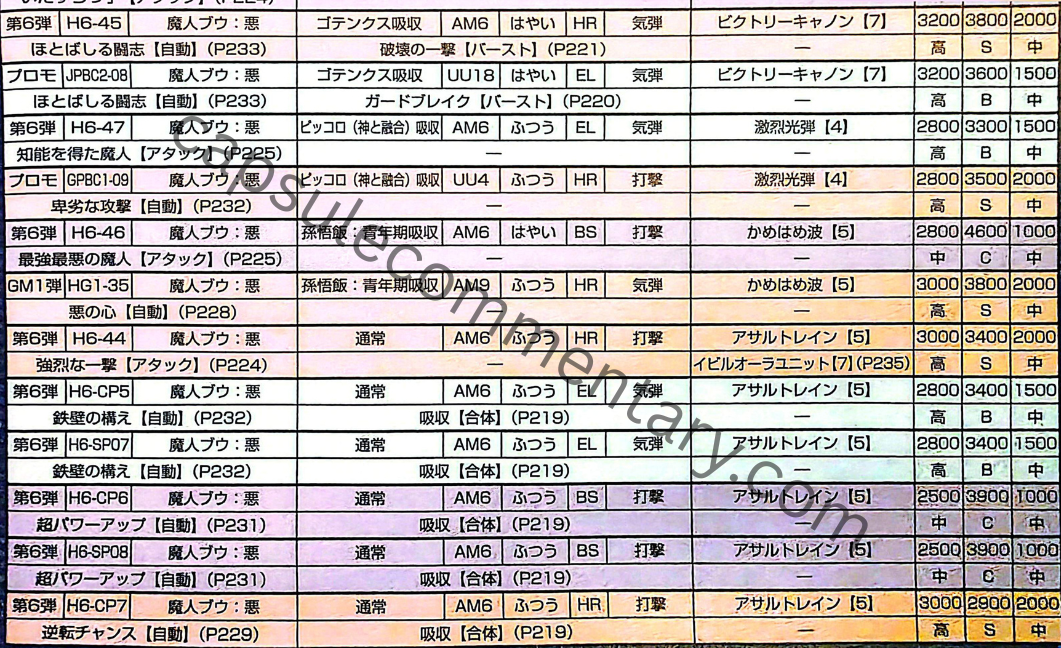
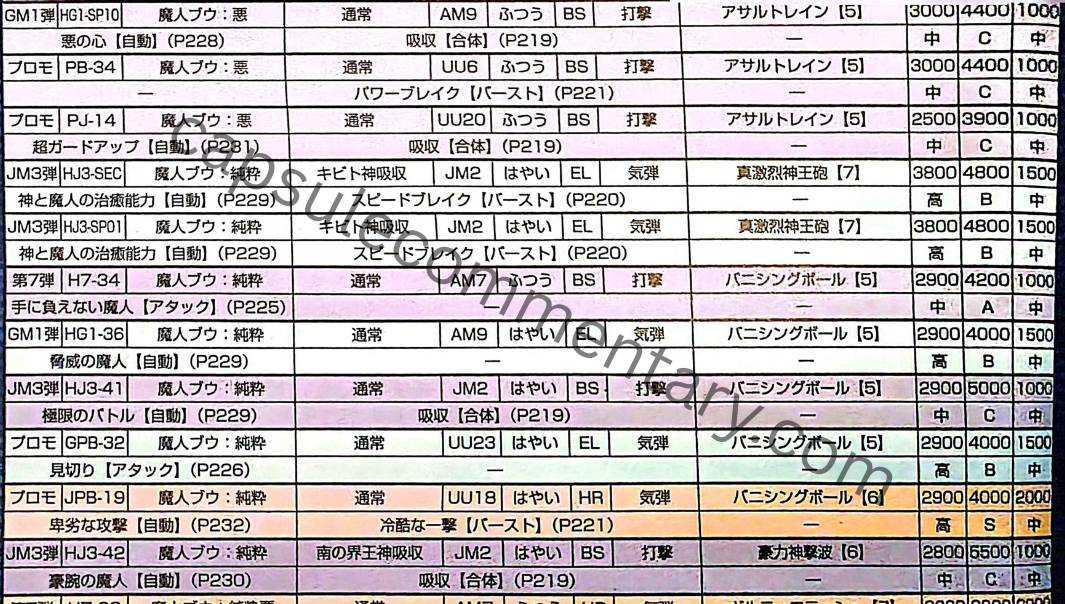
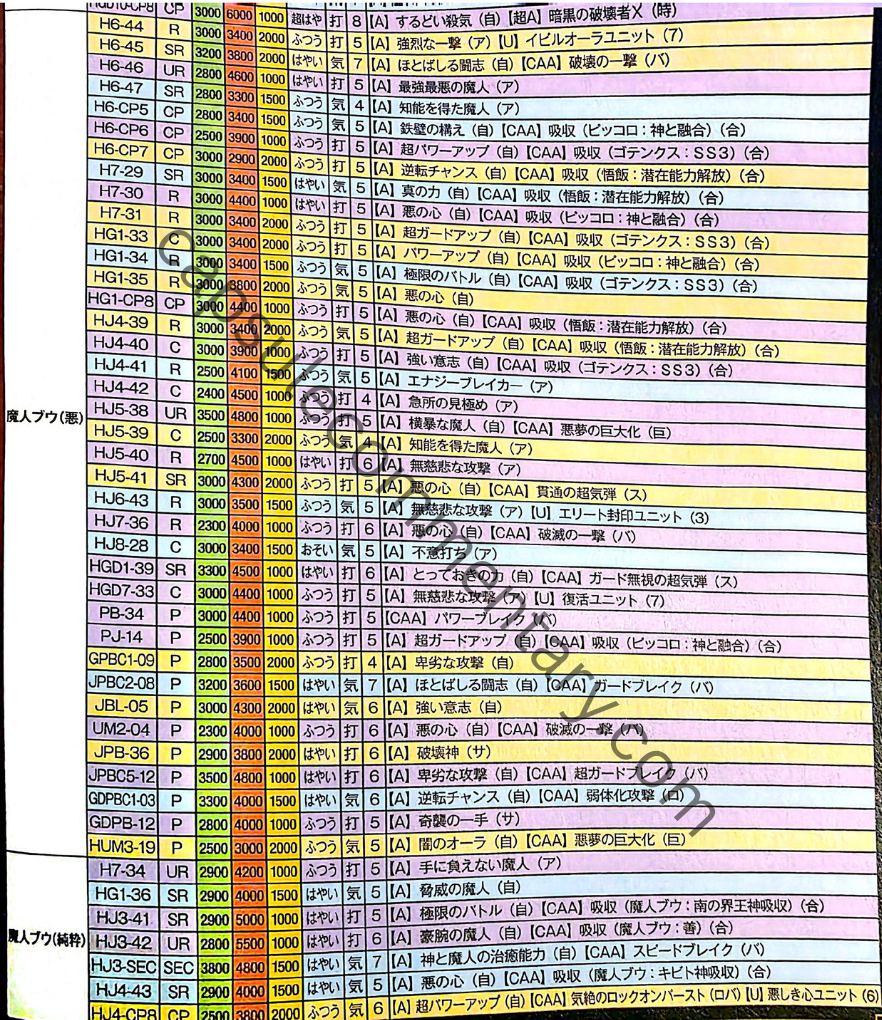
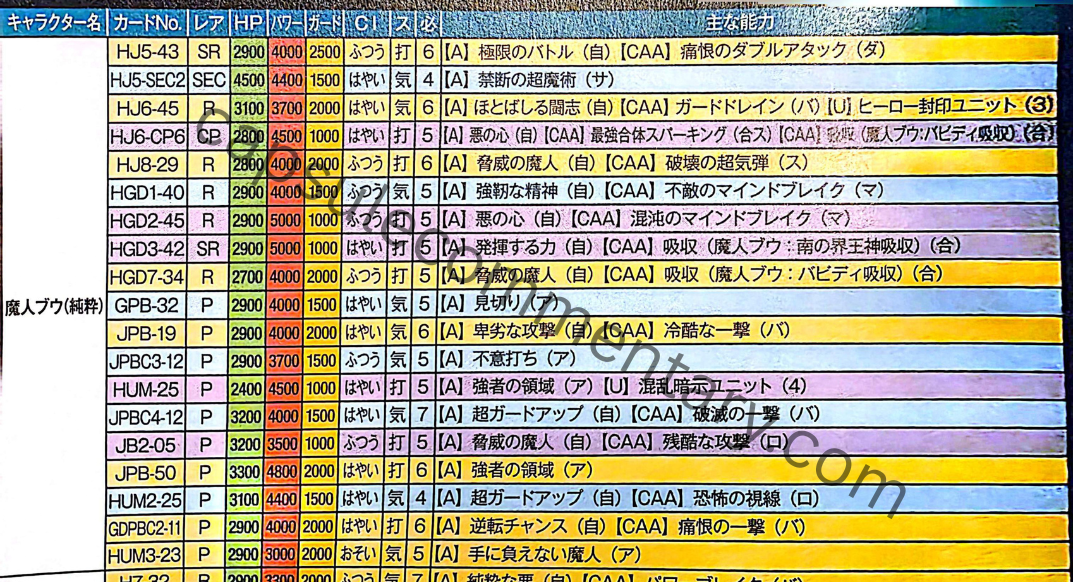
In Dragon Ball IC Carddass, there is only one Buuhan card, BT5–029, and it has a rating of 20,000. The Kid Buu card with the highest rating is BT5–022 with 15,000 and the other card (BT5-028) has a rating of 8000. The average rating for Kid Buu is 11,500.
Buuhan: 7.5, Kid Buu: 17.5.
In Dragon Ball: Jumbo Carddass, Kid Buu is called both the “ultimate form” and the “most powerful form,” while Buuhan is only called “one of Majin Buu’s most formidable forms.”42
Buuhan: 7.5, Kid Buu: 18.5.
As shown earlier in this article, in Dragon Ball Kai, multiple characters state that Kid Buu is the strongest Buu or Majin. Specifically, Kid Buu is stated to be the strongest in 4 episodes by 4 different characters: Kibitoshin in episode 158, Goku in episode 159, Vegeta in episode 160, and the narrator in episode 163.
Buuhan: 7.5, Kid Buu: 19.5.*
In Dragon Ball Kai Miracle Battle Carddass, there are 5 Kid Buu cards: DB05-Ω4 with a battle power of 10000, DB06-48 with a battle power of 9000, 10-85/85 with a battle power of 9000, 14-75/77 with a battle power of 7000, and the J-Heroes expansion card is 2-069/102 with a battle power of 8000. His average battle power is 8600. There are 2 Buuhan cards: DB05-39/86 with a battle power of 7000, and 17-28/54 with a battle power of 8000. His average battle power is 7500.
Buuhan: 7.5, Kid Buu: 20.5.
In Dragon Ball Kai: Ultimate Butōden, defeating Buuhan (depicted as Super Buu) in episode 7–3 gives 6000 points. Defeating Kid Buu in episode 6B-2 as Majin Vegeta gives 8800, episode 7–4 as Goku gives 8500, in 7–5 as Vegeta gives 15,000, and in the post-game 7–6 as Good Buu gives 6000. In Mr. Satan’s dream, 7B-3, Kid Buu actually defeats even Super Vegito. In the official guide for the game on page 71, it states Kid Buu is “the strongest Majin Buu, whose attack speed has also increased.”
Buuhan: 7.5, Kid Buu: 21.5.
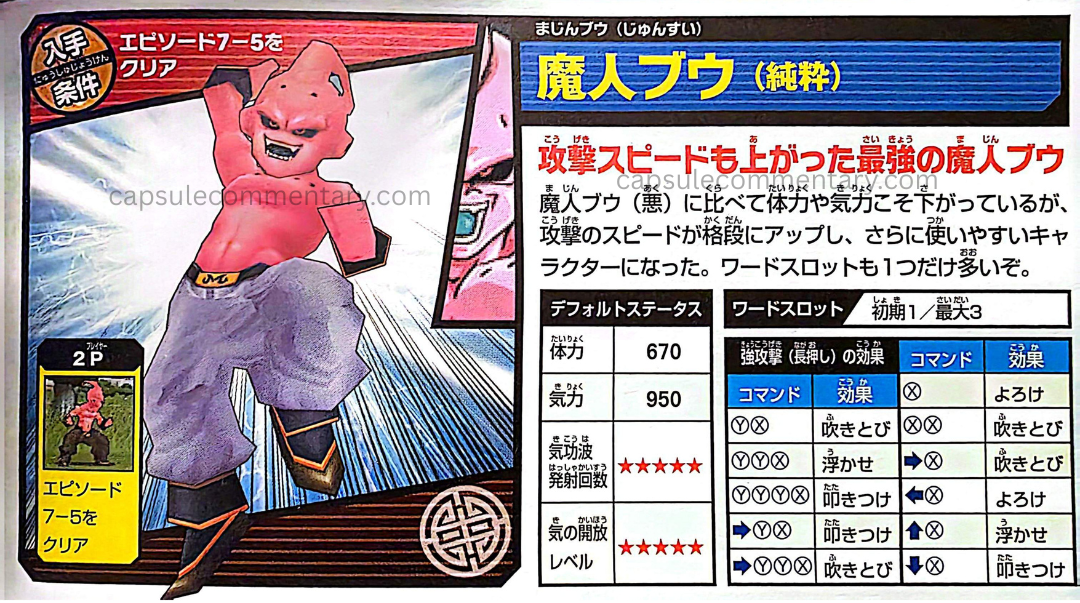
In Dragon Ball Lamincards, the strongest Kid Buu card is X11 with an attack of 170 and the average attack of all Kid Buu cards is 104.9. The strongest Buuhan cards are S113 and S114, both with an attack of 670, and the average attack of all Buuhan cards is 381.25. Notably, there are 3 Kid Buu cards (Series 10 #145, Series 11 #106, and Series 11 #127) and 1 Buuhan card (Series 10 #147) whose attacks were obscured, so it’s possible the current tally for this is wrong.
Buuhan: 8.5, Kid Buu: 21.5.
In Dragon Ball Legends, there are 3 Buuhan units and 4 Kid Buu units. With max boost panels unlocked and with Zenkai, their powers are: Sparking Green Buuhan – 1.36m, Sparking Purple Buuhan – 1.39m, Sparking Red Buuhan – 1.44m, Ultra Yellow Kid Buu – 1.19m, Sparking Blue Kid Buu – 1.47m, Sparking Green Kid Buu – 1.43m, and Sparking Red Kid Buu – 1.4m. The average power for Kid Buu is 1.3725m and for Buuhan it’s 1.397m. The official site describes the Kid Buu event like this: “Super intense battle!! The strongest and most evil Majin event begins!”43 The English version completely deletes the sentence about being “the strongest.” In Part 7 Book 4 and Book 6 of the Story Mode, Buuhan defeats Super Saiyan 3 Shallot, and in Book 4, he proclaims, “I am the strongest Majin there is and ever will be!” In Part 7 Book 7, Super Saiyan God Shallot defeats Buuhan. Then in Part 8 Book 3 and Book 4, Buuhan returns to challenge Super Saiyan God Shallot with the Dark Ki given to him by the Mastermind. Using Zahha’s magic, Super Saiyan God Shallot is able to defeat Dark Ki Buuhan. Super Saiyan God Shallot, while still using Zahha’s magic, tries to fight Dark Ki Kid Buu in Book 4 and Book 5, but needs to be rescued by Fat Buu, Piccolo, and Ultimate Gohan as Dark Ki Kid Buu makes him lose his Super Saiyan God form. While Ultimate Gohan, Shugesh, and Borgos distract Dark Ki Kid Buu in Book 5 and Book 6, Fat Buu heals Shallot, allowing Super Saiyan God Shallot to charge his ki and destroy Kid Buu. Despite Buuhan’s braggadocious speeches, the story ultimately depicts Kid Buu as being stronger than Buuhan as Super Saiyan God Shallot was able to defeat Dark Ki Buuhan without help and not Dark Ki Kid Buu. I checked up to Part 14 in the Story Mode. Even though the Buuhan units have a better average, the point will go fully to Kid Buu as his units have the higher max and the story depicts him as being stronger.
Buuhan: 8.5 (higher average), Kid Buu: 22.5 (higher max and the story).
Placeholder for Dragon Ball Official Site. There have been comments on Kid Buu being the strongest on this website in relation to other things on this list, like Dragon Ball Legends, but I am looking for something specific to this website, like the Character Showcase.
In Dragon Ball Online, which is the precursor to Dragon Ball Xenoverse, the Majin race powers up by purifying themselves and transforming into a “Pure Majin” that looks exactly like Kid Buu after getting to level 50 and making a wish to Shenron. Majins do not transform or evolve by absorbing other characters in this game, i.e. Super Buu’s path to getting stronger. Importantly, Akira Toriyama “fully supervised” Dragon Ball Online, so this is a direct confirmation from the man himself that Kid Buu is stronger. The Majin race also has a quest line where the player investigates a quartet of Berserk Majins (「제어불능마인」 in Korean and 「暴走魔人」 in Taiwanese Mandarin) that resemble Kid Buu. Page 191 of the Taiwanese guidebook even states that these Berserk Majins resemble Kid Buu or literally “the evil Majin from before.” I am currently playing through Dragon Ball Online now, so I will update this with more information if anything is applicable. If you would like to play Dragon Ball Online, click here.
Buuhan: 8.5, Kid Buu: 23.5.*

In Dragon Ball PP Cards, there is only one card that exclusively features Buuhan, which is 28-1255, and it has a power level of 89 million. The other potential Buuhan card is much weaker. There are 7 Kid Buu cards: 28-1269 with a power level of 100 million, 28-1244 with a power level of 5.5 million, 29-1297 with a power level of 830 million, 29-1302 with a power level of 960 million, 29-1312 with a power level of 880 million, 29-1316 with a power level of 610 million, and 29-1300 with a power level of 860 million. All of these are above Buuhan.
Buuhan: 8.5, Kid Buu: 24.5.
In Dragon Ball: Raging Blast, defeating Buuhan gives a victory bonus of 2000 and defeating Kid Buu gives a victory bonus of 2500. In Dragon Ball: Raging Blast 2, Kid Buu’s galaxy has a battle against Buuhan and it is only “Normal” difficulty, which would imply they are even. However, on the profile page of Buuhan in both Raging Blast and Raging Blast 2, it reads,“… it would not be an exaggeration to say that this is the strongest of the Majin.” I believe this overrides the victory bonuses and the difficulty as Kid Buu’s profile does not state this. The Japanese profiles also say the same things as the English ones. However, in the official game guide for Raging Blast 2, it lists Kid Buu as having an initial battle power of 19, while Buuhan has an initial battle power of 18.
Buuhan: 10 (RB1 + RB1 text), Kid Buu: 25 (RB2 stats).
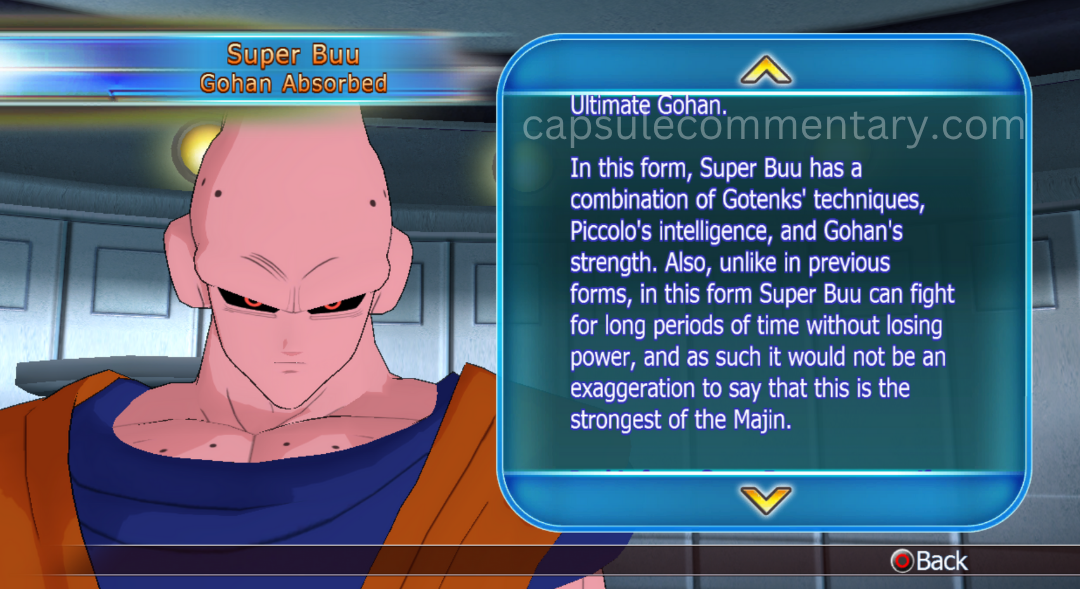
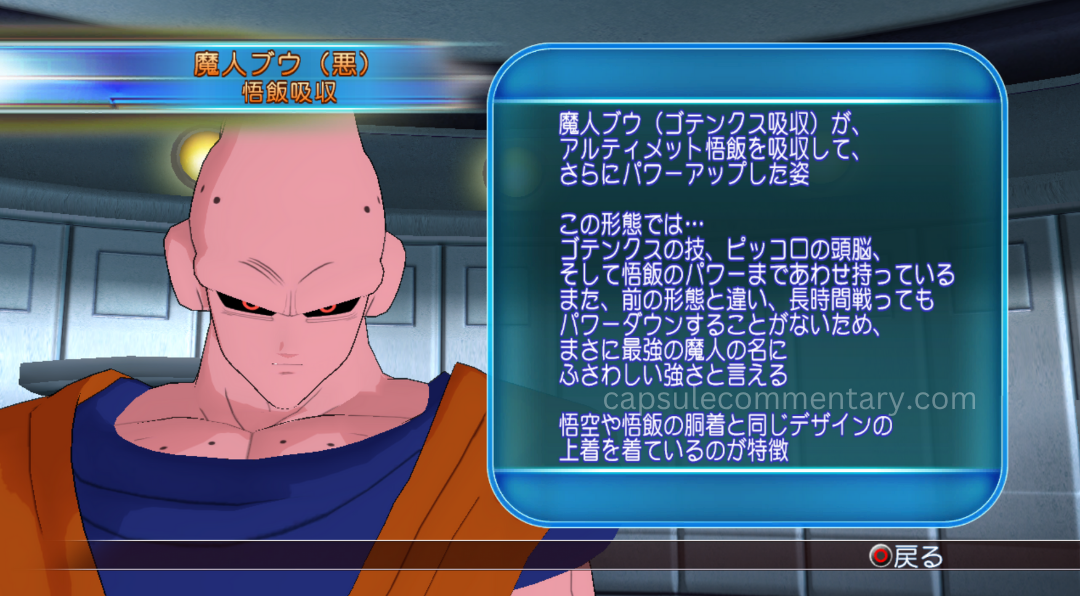
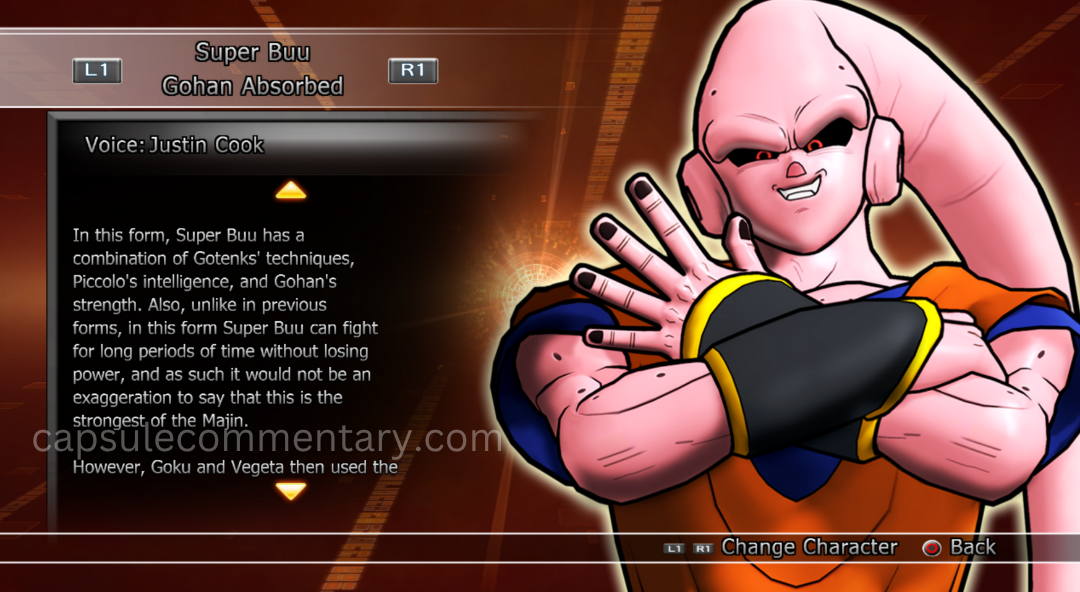
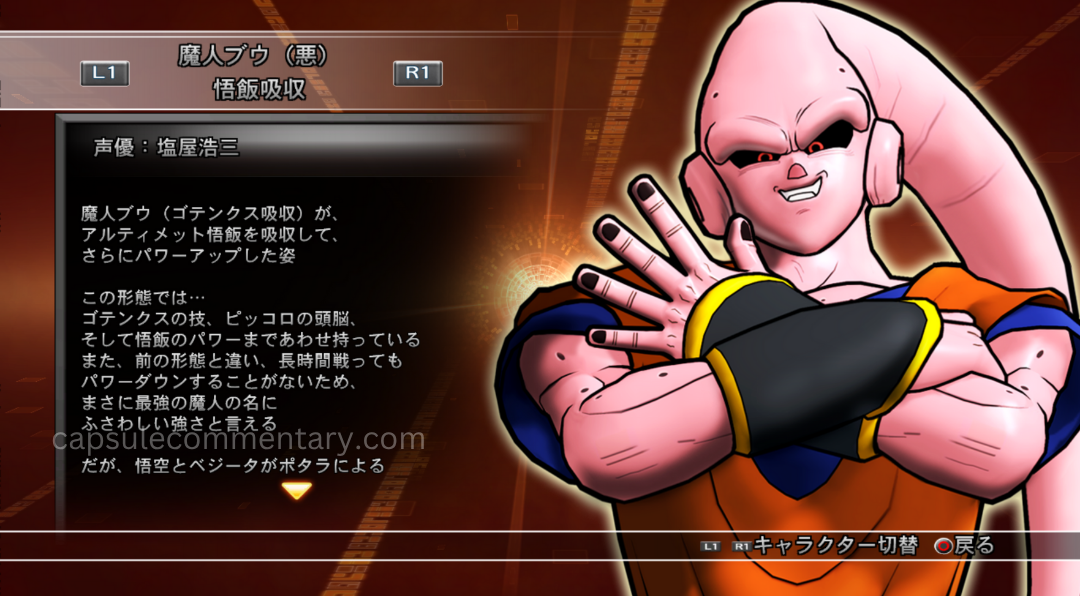
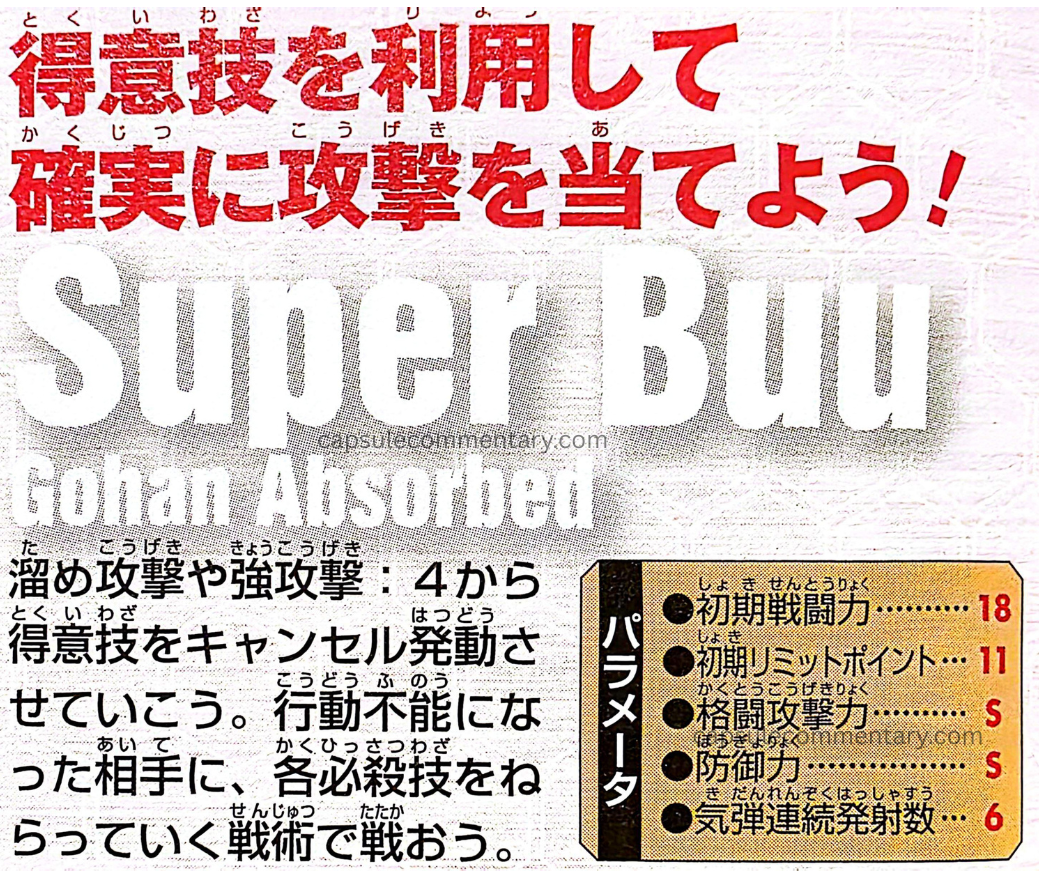
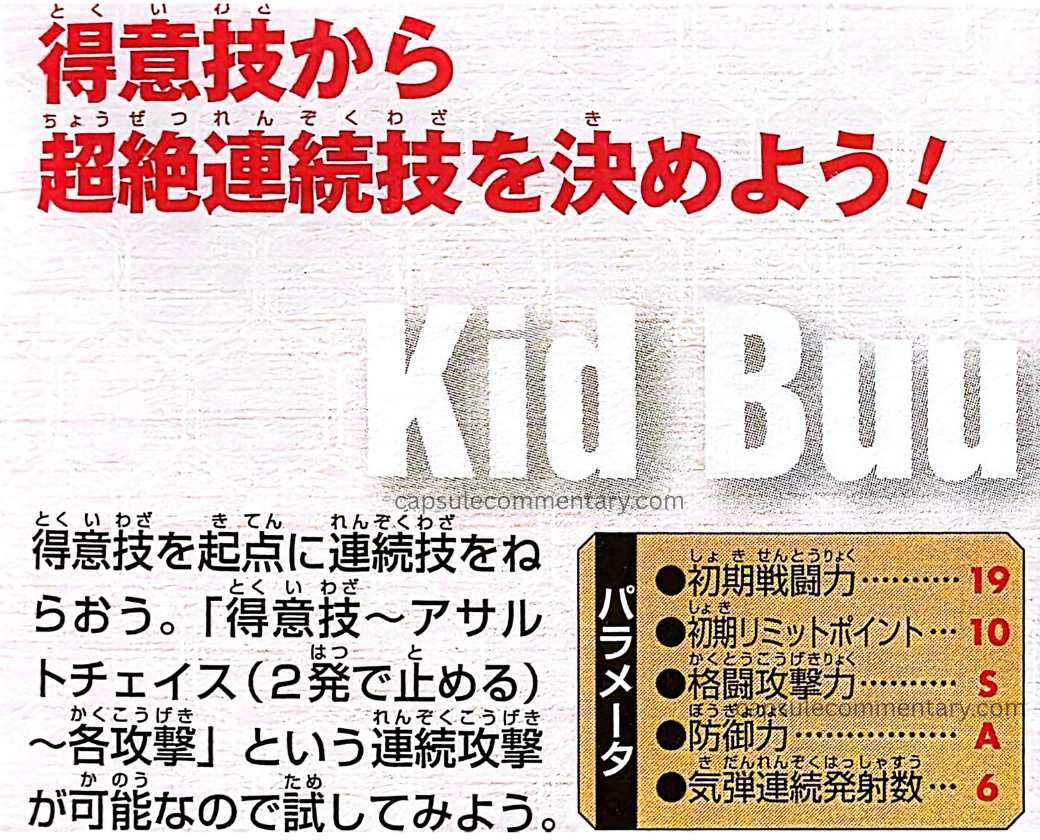
Placeholder for Dragon Ball RPG「ドラゴンボール RPG」, Super Dragon Ball RPG 「超ドラゴンボール RPG」, and Dragon Ball Wars 「ドラゴンボールウォーズ」. These 3 games were released on imode in 2008 and 2010, which required users to pay a monthly fee of about ¥315. As far as I’m aware, this was only compatible with certain DOCOMO phones and users would connect to the Dragon Ball game site first (which was possibly called i Dragon Ball「 iドラゴンボール」 and then play the games from there. These games are lost media, but please contact me if you have them.

Placeholder for Dragon Ball SD
In Goku’s Episode Battle of Dragon Ball: Sparking! Zero, Buuhan does not have any superlatives used to describe him. He simply puts Goku “between a rock and a hard place.” However, for Kid Buu, it states, “Having become the embodiment of pure destruction, he wreaks havoc upon Earth.” This is similar to the text in Japanese.Sparking! Zero is unique in that it tries to make a character’s strength relative to what it actually is. It doesn’t attempt to balance every character, like a traditional fighting game would (e.g., Dragon Ball FighterZ). Of course, this is not perfect (e.g., Legendary Super Saiyan Broly from Dragon Ball Z costs 9 DP while Uub from Dragon Ball GT only costs 4 DP). Kid Buu and Buuhan both cost 7 DP, and while Buuhan and Kid Buu have the same special attack strength, Kid Buu has a significantly higher attack stat than Buuhan, being more than 45 characters above Buuhan. Additionally, Bulma’s comment on Kid Buu in Japanese explicitly references his strength, while she never directly references his strength in English. In Japanese, she says, “He looks small, but it took a Genki-dama that gathered energy from all over the Earth to somehow defeat him… That’s how strong he was… It’s terrifying~~”
Buuhan: 10, Kid Buu: 26.
In Dragon Ball Staks, the Buuhan card, #116, has a power of 90,000 and the Kid Buu card, #120, has a power of 95,000.
Buuhan: 10, Kid Buu: 27.
In Dragon Ball Super (the anime), the Narrator tells us that Majin Buu was the most powerful enemy in history and shows Kid Buu while saying this. On page 1 of chapter 1 of Dragon Ball Super (the manga), the Narrator says the same thing and shows Kid Buu. On pages 4 to 6, we also see Goku image training agains the strongest forms of Freeza and Cell alongside Kid Buu, which heavily implies that to be his strongest form, as well. On page 13 of chapter 31, Dende, speaking about Uub with Goku, says that Uub was reincarnated from “the strongest enemy,” which is Kid Buu.
Buuhan: 10, Kid Buu 29 (anime and manga).*
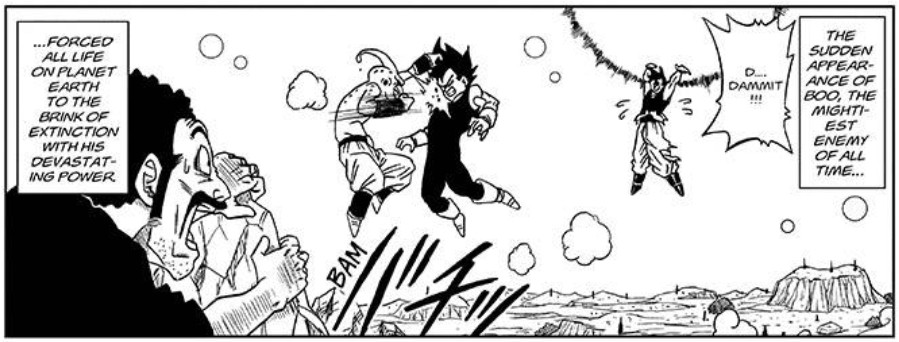
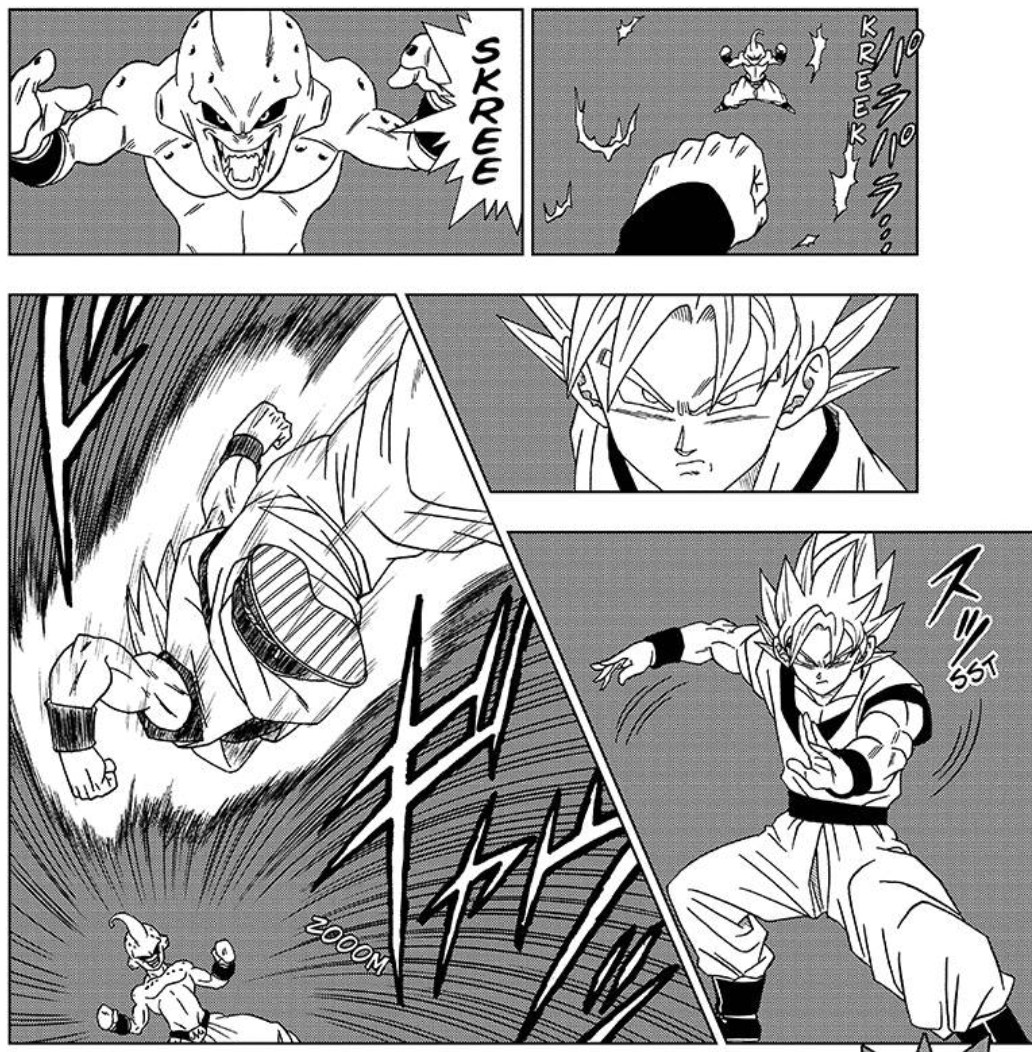
In Dragon Ball: Super Battle Carddass, there are 3 Buuhan cards: 13-551 with a power level of 12, 13-561 with a power level of 1, and 14-597 with a power level of 9. His average power level is 7.3. There are 4 Kid Buu cards: 14-595 with a power level of 11, 14-596 with a power level of 10, 14-599 with a power level of 7, and Volume 3 of the Premium Binder Set has a Kid Buu card with a MAX (13, essentially) power level. His average power level is 10.25.
Buuhan: 10, Kid Buu: 30.
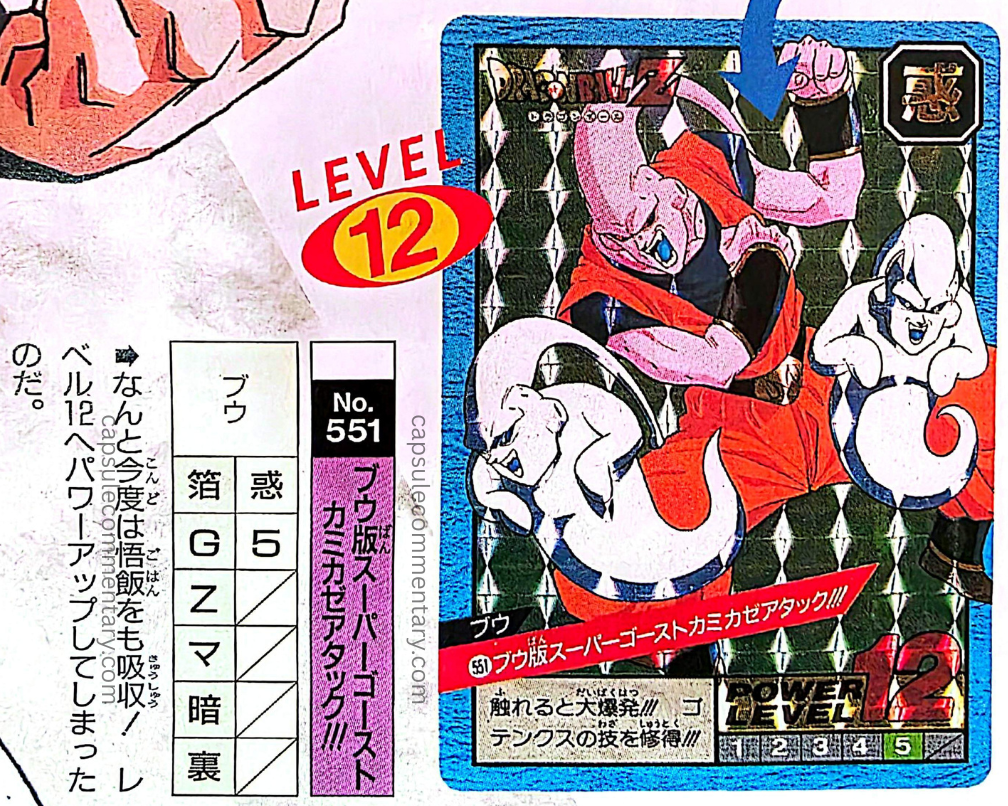
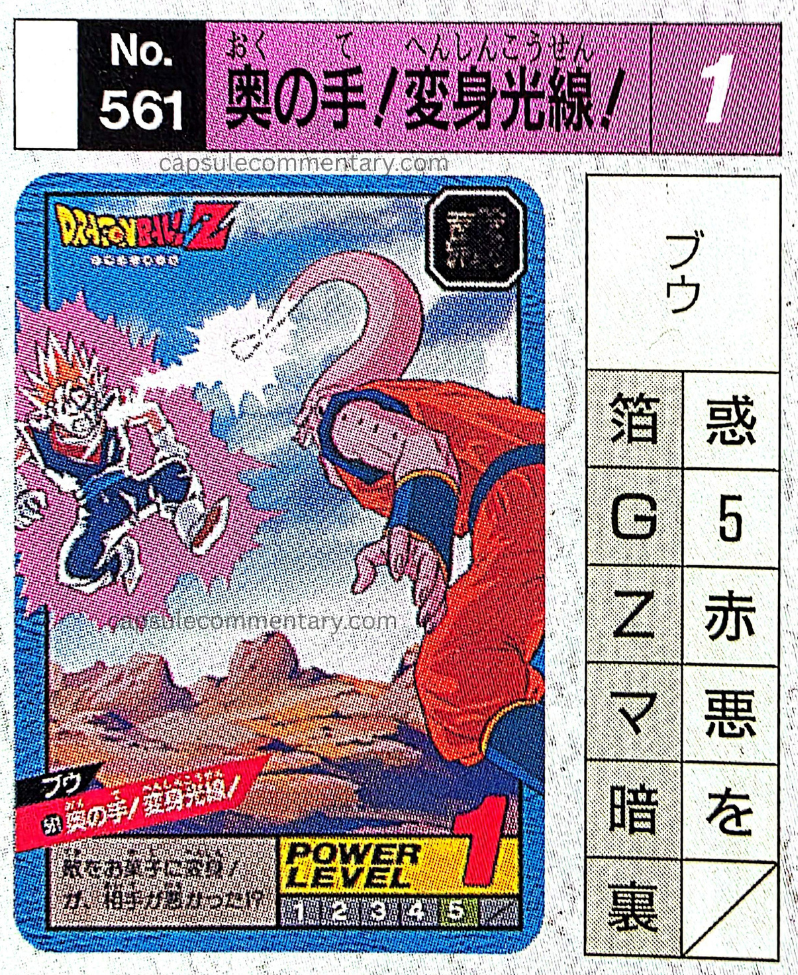
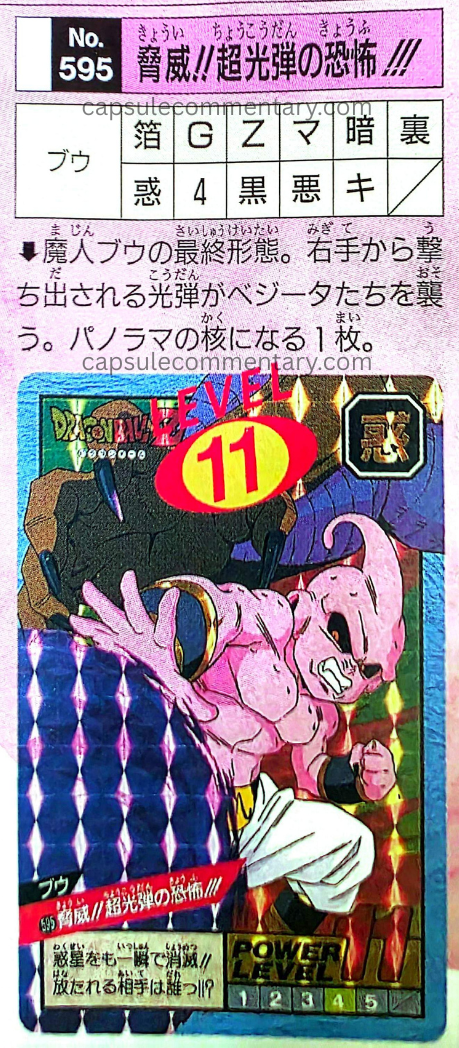
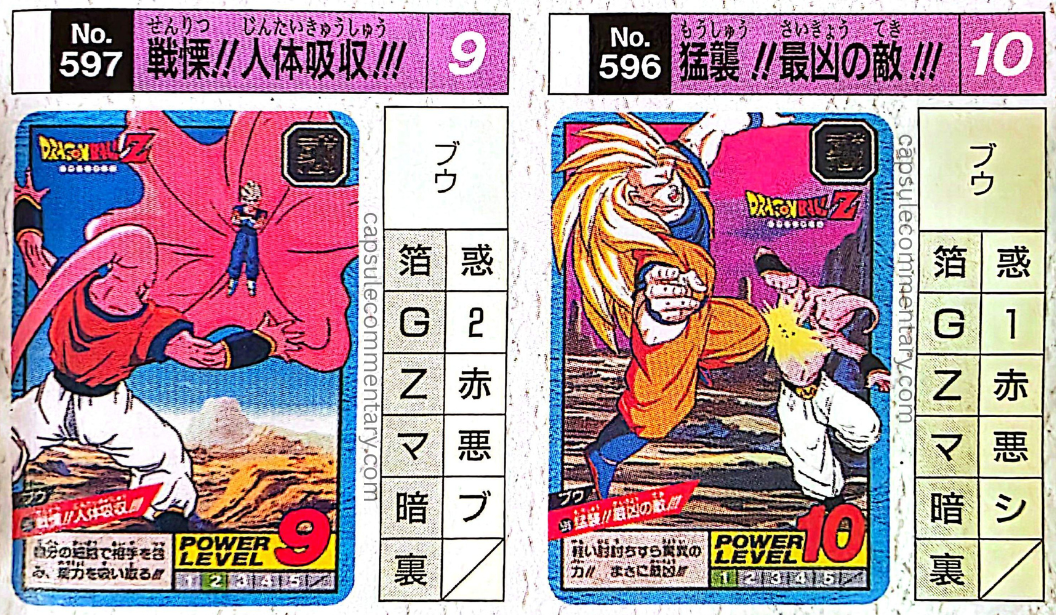
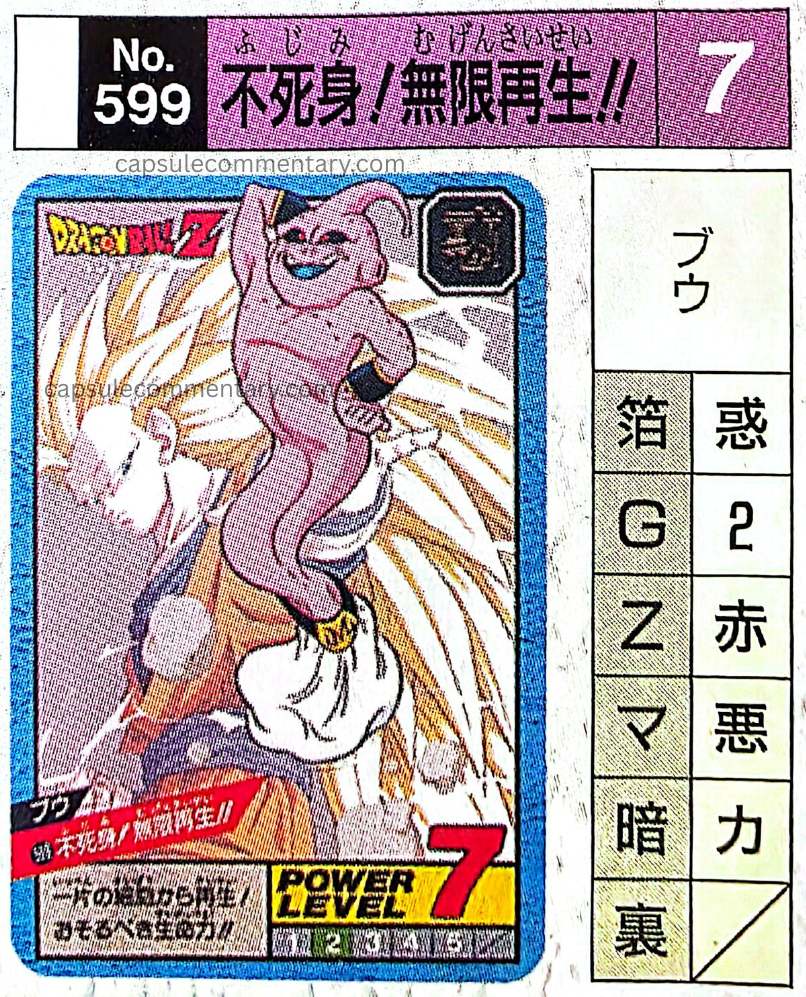
In Dragon Ball: Super Card Game, the Kid Buu with the highest attack is DB-751 with 4000 and the average attack is 2325. There is only one Buuhan card, DB-471, and it has an attack of 2600.
Buuhan: 10.5 (higher average), Kid Buu: 30.5 (higher max).
In Dragon Ball Super Card Game: Fusion World, there are 10 Kid Buu battle cards and 1 leader card: FB04-094 x3 with a power of 35000 each, FB04-095 with a power of 30000, FP-025 with a power of 30000, FS10-15 x2 with a power of 25000 each, SB01-029 (the leader card) with a power of 20000, SB01-038 x2 with a power of 25000, and SB01-039 with a power of 30000. The average power for Kid Buu is 28,636. There are 4 Buuhan battle cards: FB04-093 x2 with a power of 25000 each, and SB01-037 x2 with a power of 35000 each. Kid Buu has 3 cards at 35000 and Buuhan has 2. The average power for Buuhan is 30000.
Buuhan: 11 (higher average), Kid Buu: 31 (more cards at the highest).
In Dragon Ball Super: Card Game Masters, there are 2 Kid Buu cards at 5000 power (P-473 and P-473_PR), 12 cards at 15000 (BT3-031 (Back), BT3-048. BT6-028 (Back), BT9-070, BT14-062 (Back), BT20-088, BT25-062, EX21-05, EX21-05_PR, P-398, P-398_PR, and P-398_PR02), 4 cards at 20000 (BT9-077, BT25-038, BT27-016, and P-196), and 6 cards at 30000 (BT3-047, BT14-076, BT20-104, BT20-104_PR, BT20-104_SPR, and P-097). There is 1 Buuhan card at 10000 power (BT28-101), 2 cards at 15000 Power (BT25-063 and P-646), 3 cards at 20000 (BT14-077, BT25-039, and EX21-25), 5 cards at 25000 (BT6-041, BT6-041_SPR, BT9-078, BT20-106, and EX03-05), and 1 card at 30000 (BT2-025). The average power for Kid Buu is 18,750 and the average power for Buuhan is 21,250. The front of BT14–062 shows Evil Buu fighting Good Buu, and so you’d assume the back of the card would be Super Buu, but it’s actually Kid Buu for some reason. BT25–146 features all of the canon forms of Majin Buu with Kid Buu front and center and has 40,000 power, and BT12–153 features the non-canon Xeno Kid Buu and also has 40,000 power, but neither of these cards were considered. Previously I thought that BT6-043 depicted Kid Buu, but I found that same illustration used in card HGD7-33 of Super Dragon Ball Heroes Carddass and labeled as Super Buu. On the other hand, card MM4-SEC4 of SDBHC is very clearly Kid Buu while still being labeled “Super Buu.” This presents a potential issue with identifying BT6-043 since they sometimes mislabel characters. Regardless of which Buu it represents though, it doesn’t change the results. Buuhan has a higher average than Kid Buu with or without this card (as of January 2, 2026).
Buuhan: 11.5 (higher average), Kid Buu: 31.5 (more cards at the highest).
On pages 484 and 485 of the December 2025 issue of Saikyō Jump, it reveals the first of the Buuhan and Kid cards of Dragon Ball Super Divers. In this game, the 3 Kid Buu cards (SDV7-046, SDV7-IGPUR4, and SDVZV-007) all have a power of 5300. The 3 Buuhan cards (SDV7-044, SDV7-PUR5, and SDVTP-006) all have a power of 4900.
Buuhan: 11.5, Kid Buu: 32.5.
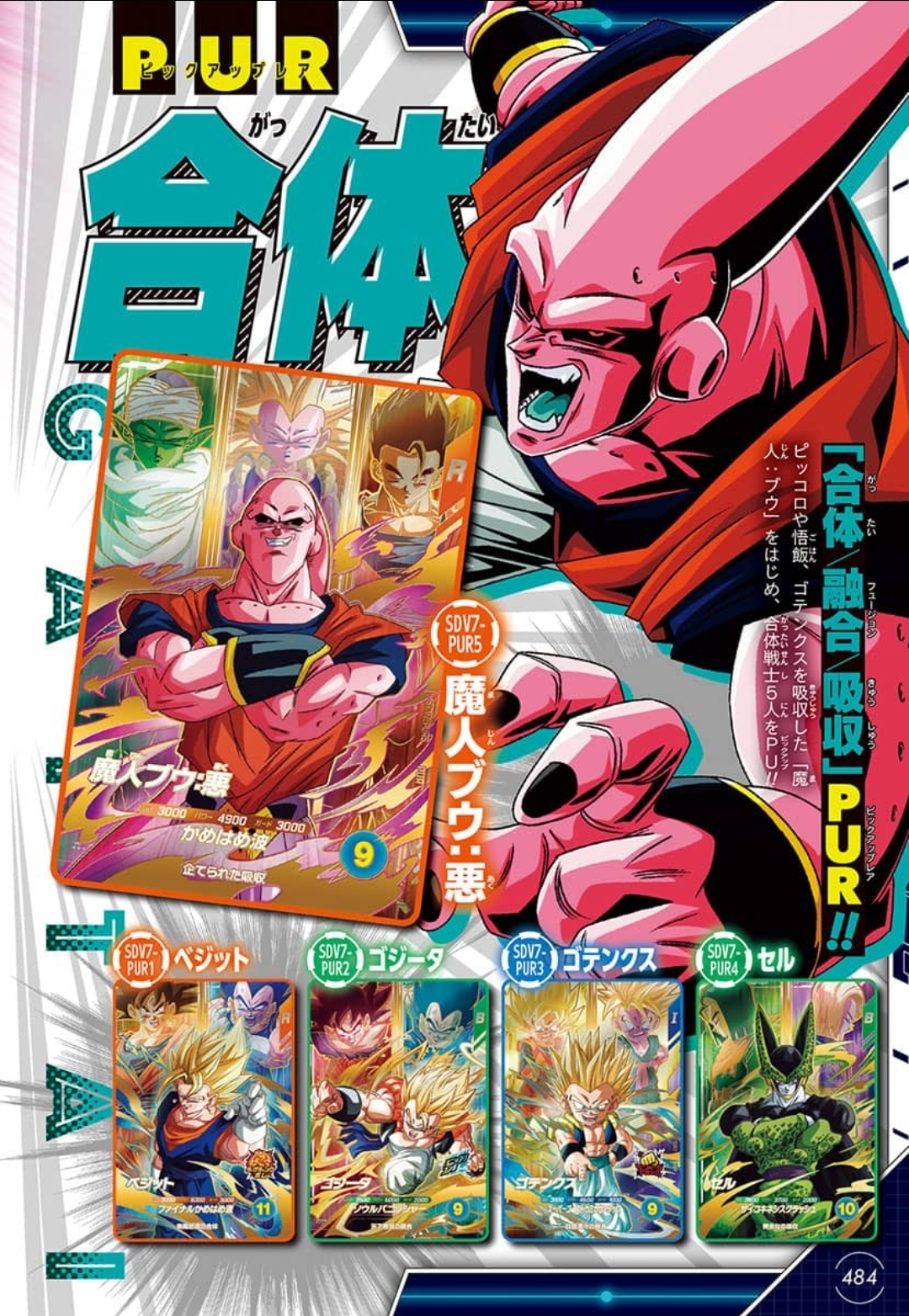
Placeholder for Dragon Ball Super Divers: Let’s Super Dive!!
On page 40 of Dragon Ball: Super Exciting Guide: Story Volume, Kid Buu is explicitly called “the strongest enemy” and no sort of superlatives are used to describe Buuhan. This is written on a 2-page spread (pages 40 and 41) specifically describing the fight against Kid Buu, as well. To be specific, page 40 describes the fight leading up to the Genki-dama, and page 41 describes the Genki-dama portion of the fight. The Super Exciting Guides were supervised by Toriyama, so this is an example of Toriyama directly stating Kid Buu is the strongest Buu outside of interviews. Because of this guidebook’s authoritative nature (having been supervised by Toriyama), some fans try to reimagine the text as referring to Majin Buu as a whole, rather than being specific to Kid Buu. However, this interpretation falls apart under scrutiny.
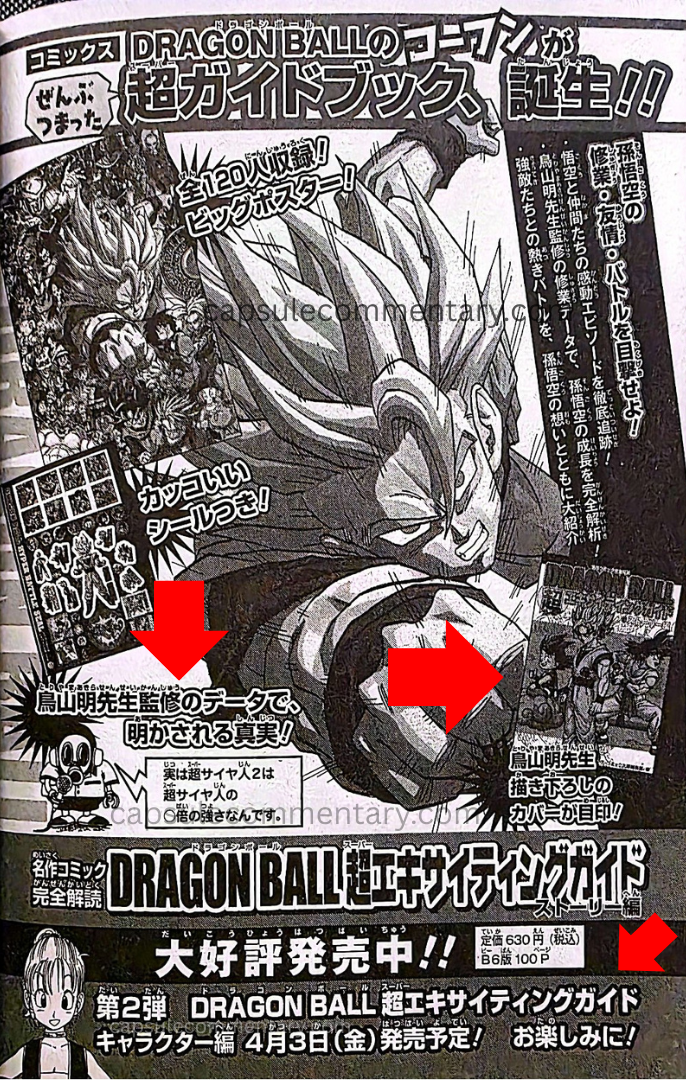
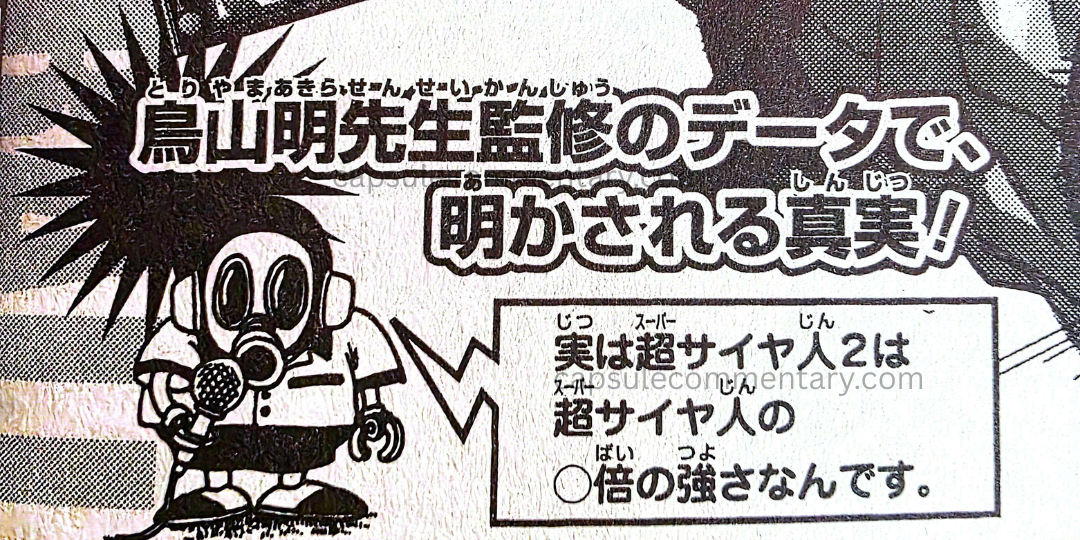
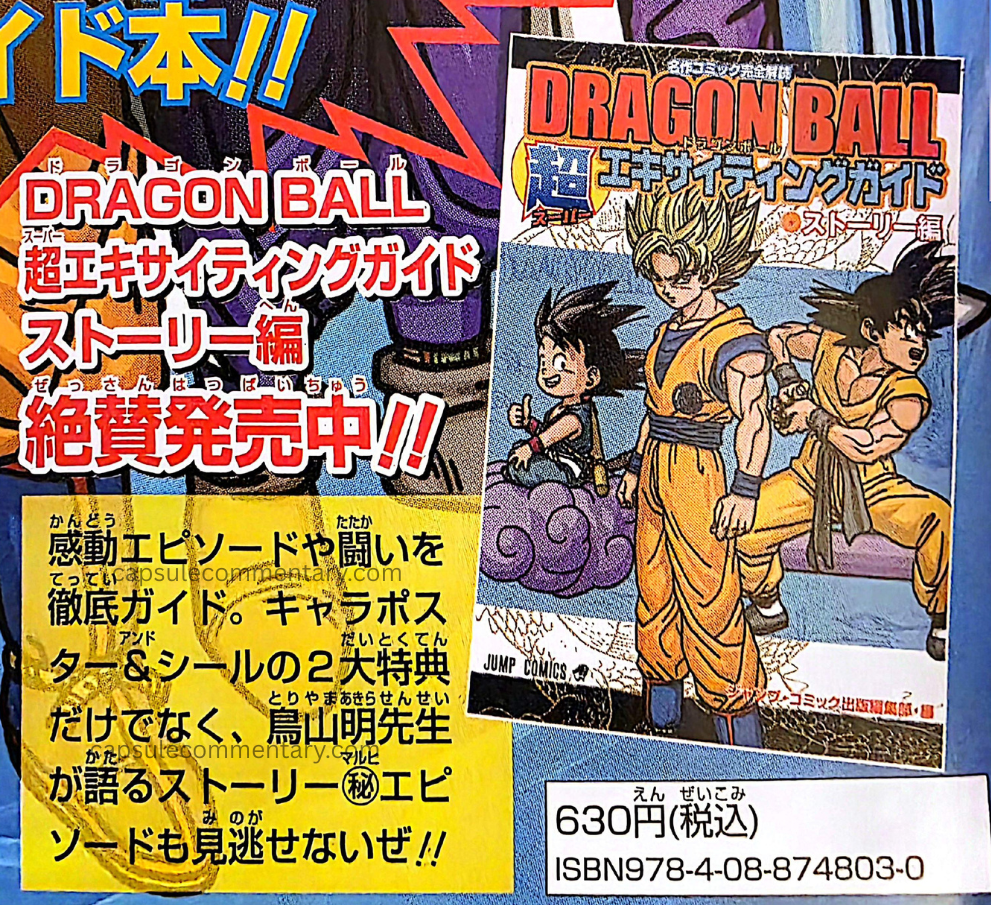
The first issue with this interpretation is that the picture caption does not say “Buu” or “Majin Buu.” It says “the strongest enemy.” There’s no room for equivocation when the language itself doesn’t equivocate. Secondly, the manga panel that the caption is attached to is from page 12 of chapter 509, and depicts Goku powering up to fight Kid Buu. Third, the entire 2-page spread this text appears on describes the battle against Kid Buu to readers both visually and textually. Nothing prior to nor following the fight against Kid Buu is displayed. Fourth, the accompanying text to the right of the captioned picture reinforces this comment is about Kid Buu by describing the scenario of the fight.
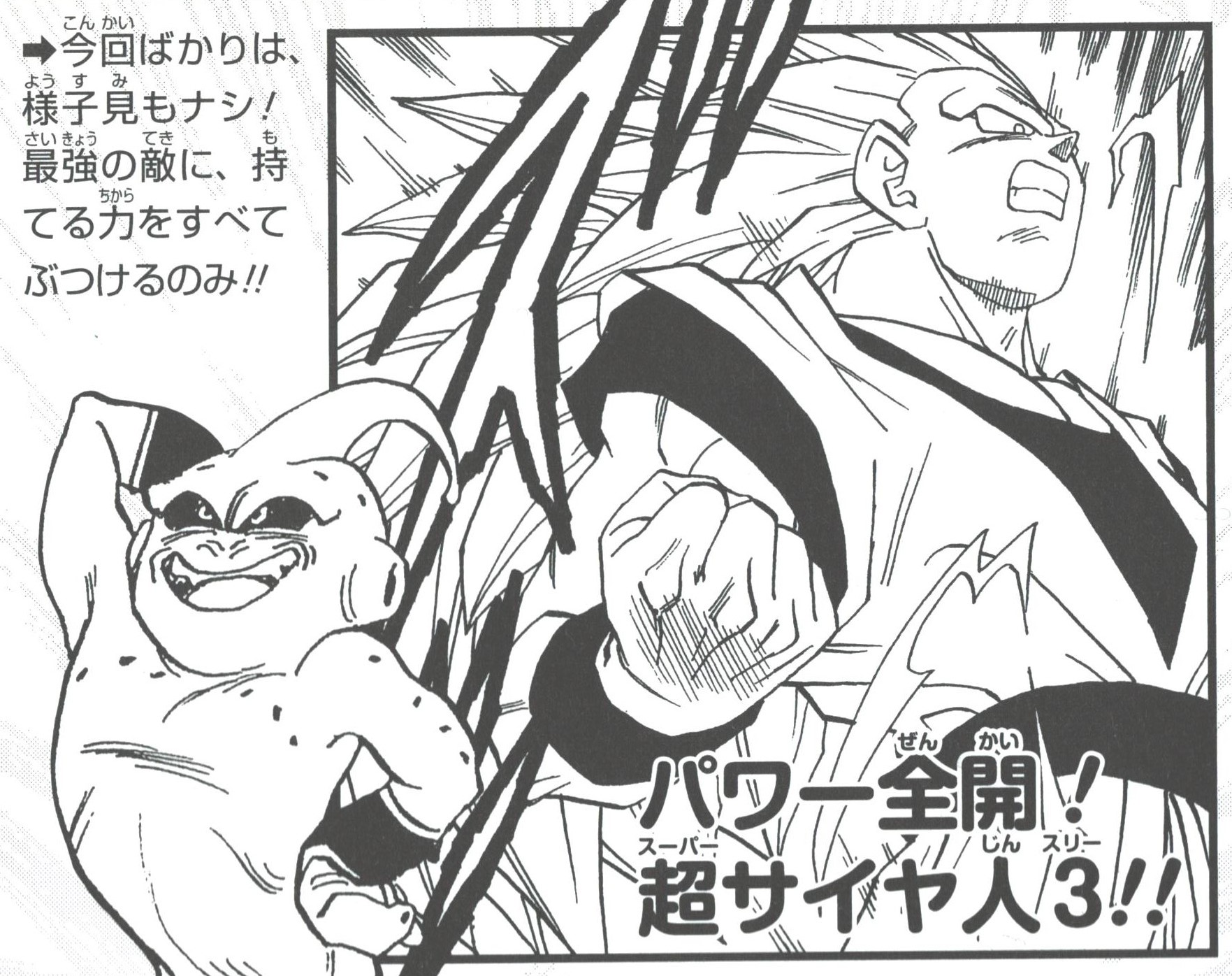

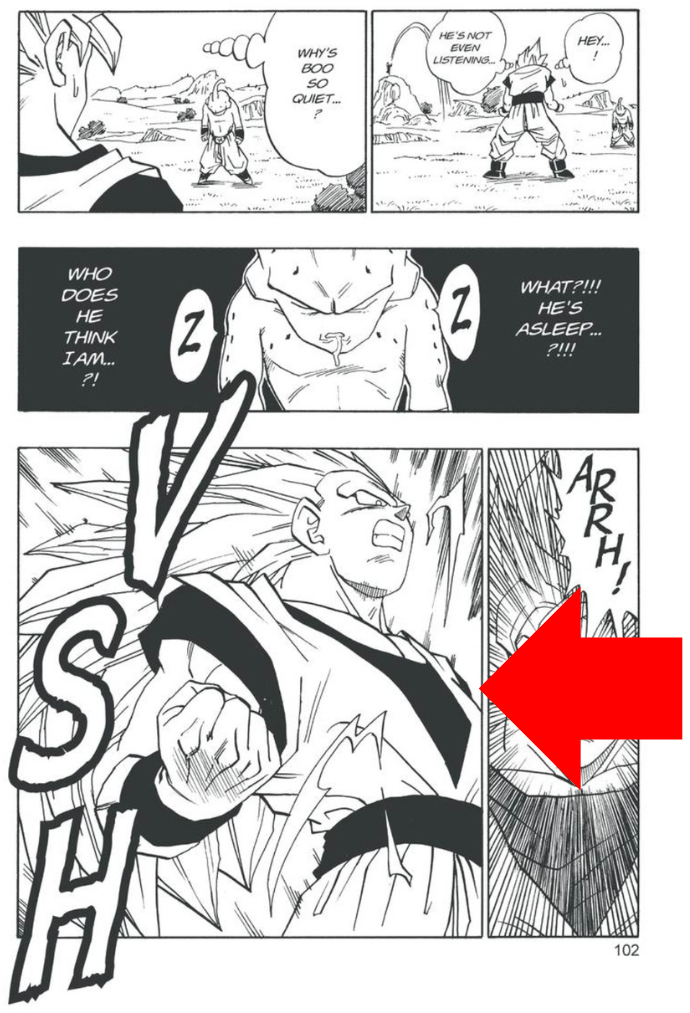
Contrastingly, the mention of Majin Buu being “the strongest enemy in history” on the previous 2-page spread actually does use it in a way that refers to Majin Buu as a whole. It writes, “The strongest enemy in history, Majin Buu, has utterly defeated every veteran warrior! Now, the only one left who can save the universe is Son Goku!!” This is directly beneath a caption labeling these events as referring to chapters 473 to 506. Chapter 473 is when Goku goes over to Fat Buu to distract him and is the chapter before Super Saiyan 3 is revealed. Chapter 506 is when Vegito splits apart into Goku and Vegeta while inside of Buuhan. So this “strongest enemy” usage demonstrably refers to Majin Buu as a whole, while the “strongest enemy” on page 40 demonstrably refers to Kid Buu.
Buuhan: 11.5, Kid Buu: 33.5.*
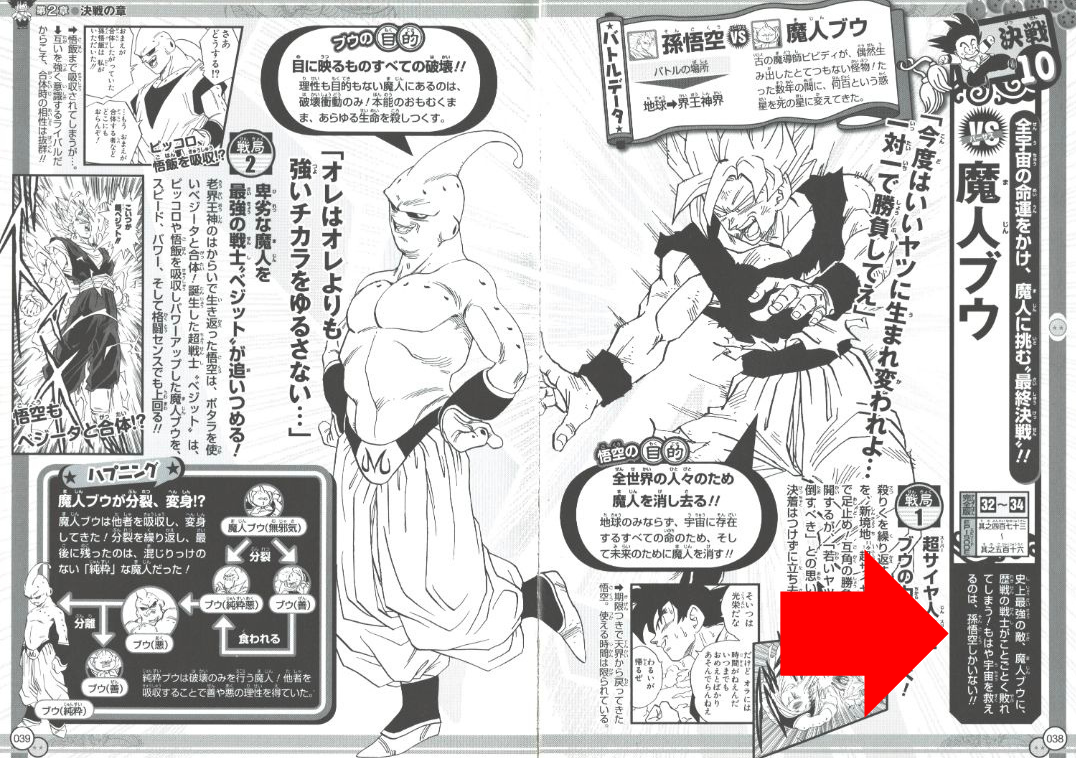

There is no Buuhan card in Dragon Ball: Super Scouter Battle, but I thought it worth mentioning that the Kid Buu card (DBS02_023) has a battle strength of 38200 and the Buutenks card (DBS02_021) has a battle strength of 23000. I’m mentioning this because many fans who think Buuhan is stronger than Kid Buu also think that Buutenks is stronger than him.
Buuhan: 11.5, Kid Buu: 33.5 (no change in the tally).
In Dragon Ball: Super Warrior Sticker Wafer Z, there is only one Buuhan sticker (W4-18) and it has a power level of 8100. The Kid Buu sticker with the highest power level is W12-20 with a power level of 7200, and the average of the Kid Buu stickers is 7150. The other Kid Buu sticker, for reference, is W4-20.
Buuhan: 12.5, Kid Buu: 33.5.
After playing two games of Dragon Ball: The Breakers, the editor of Dragon Ball Super, Victory Uchida, refers to Kid Buu as “Majin Buu at full power” (「本気の魔人ブウ」, literally “Serious Majin Buu”). As of Season 9, Dragon Ball: The Breakers has two Majin Buu raiders in it, both of which have the same first three stages: Spopovich, Fat Buu, and Super Buu. The original raider’s stage 4 is Kid Buu. The raider introduced in Season 9’s stage 4 is Buuhan. This would place them as both being above Super Buu and on equal footing. As far as I’m aware, there is no data available on how strong each character is. While both of them being stage 4 raiders would normally nullify this, we have to consider Victory Uchida’s words, so this goes to Kid Buu.
Buuhan: 12.5, Kid Buu: 34.5.
In Dragon Ball Xenoverse 2, Kid Buu and Buuhan appear in two Parallel Quests together, which are PQ 113 and PQ 148. In PQ 113, the player teams up with Buuhan to defeat the other forms of Buu, before Buuhan inevitably betrays the player (spoilers). Buuhan is level 85 and Kid Buu is level 84 in this PQ. In PQ 148, the player must defeat 6 weak copies of Level 98 Buuhan before they can fight a single, more difficult Level 99 Kid Buu. In the Hero Colosseum, there are 4 Buuhan figures: 311, 312, 679, and 680. The one with the highest attack is #311 with 5690 attack, and the average attack for Buuhan is 4185. There are 6 Kid Buu figures: 53, 54, 475, 476, EX83, and EX84. The one with the highest attack is #53 with 6200 attack, and the average attack for Kid Buu is 4220. Also, Kid Buu has three 7-star battles while Buuhan has 0 (his hardest is his one 6-star battle). Finally, the Awoken Skill for Majins, Purification, transforms them into Kid Buu. An Awoken Skill is a power-up move for characters, such as Kaiō-ken or Super Saiyan.
Buuhan: 12.5 (PQ 113), Kid Buu: 35.5 (Everything else).
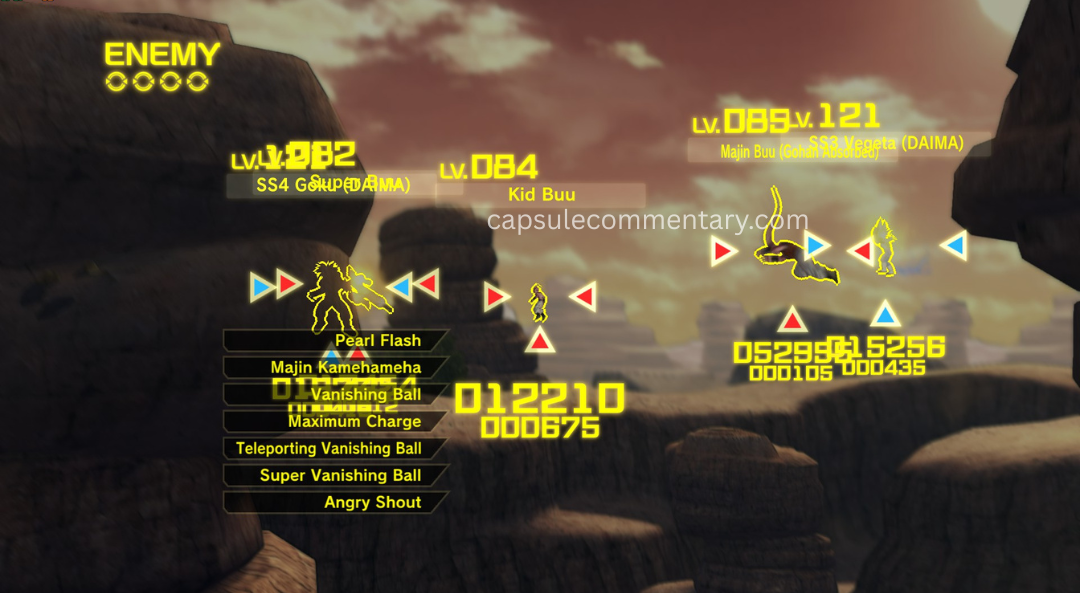
As shown earlier in this article, in Dragon Ball Z, multiple characters state that Kid Buu is the strongest Buu or Majin. Specifically, Kid Buu is stated to be the strongest in 5 episodes by 4 different characters: Kibitoshin in episode 278, Goku in episode 279, Goku and Vegeta in episode 280, the narrator in episode 284, and the narrator in episode 285. Also as previously mentioned, Toriyama’s editors needed to personally approve of the scripts, and his first editor replaced the entire anime staff when they weren’t able to adapt the manga faithfully.
Buuhan: 12.5, Kid Buu: 36.5.*
Placeholder for Dragon Ball Z Anime Kids Comic (in Japanese, not Spanish). Please contact me if you have issues 14 and 15 of the Majin Buu Saga. I am specifically seeking the Japanese versions because they are the originals and because (from my experience) Spanish translators of Dragon Ball media often take creative liberties that change the meaning of the text. In the meantime, page 25 of Book 14 of the Majin Buu Saga says that Buuhan (compared to prior forms of Majin Buu) is “stronger than ever.” Whereas Kibitoshin on page 3 of Book 15 says that Kid Buu is “pure evil.” They are not directly compared, but the text for Buuhan is a clearer statement on power rankings.
Buuhan: 13.5, Kid Buu: 36.5.
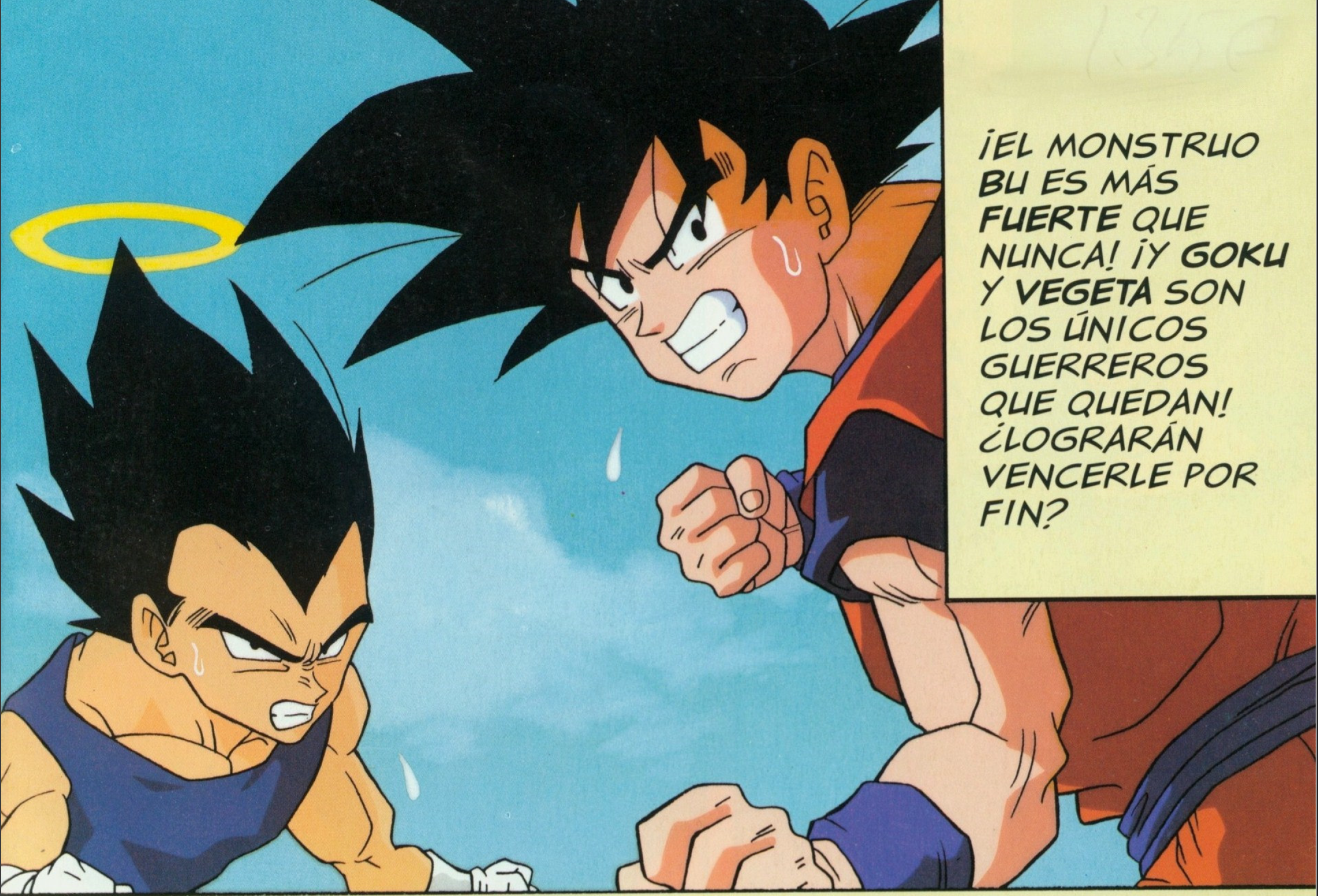
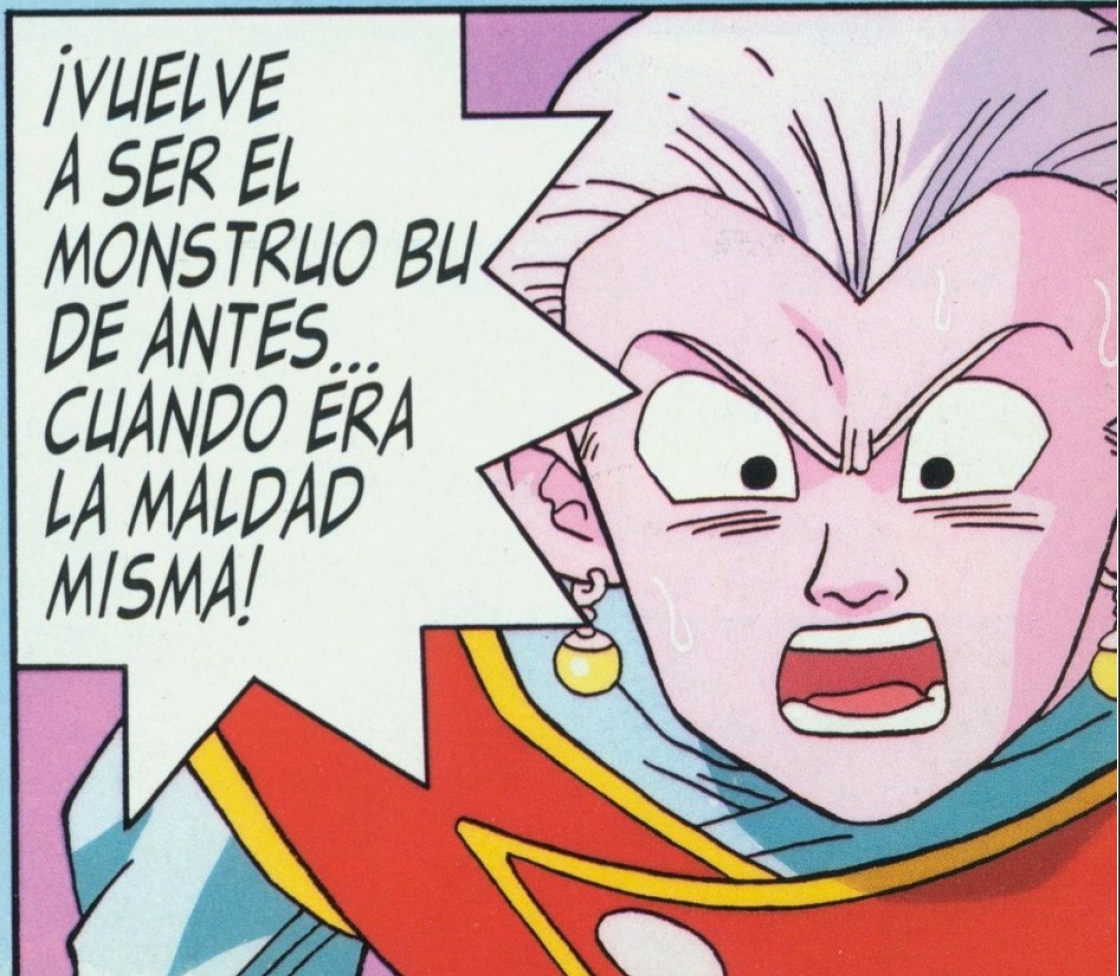
In Dragon Ball Z: Bakuretsu Impact, there is 1 Kid Buu card: 151-III with an attack power of 3600. There is also 1 Buuhan card: 193-III with an attack power of 3800.
Buuhan: 14.5, Kid Buu: 36.5.
In the text for mission 35 in Dragon Ball Z: Battle of Z, Kid Buu and whichever characters you bring to the fight are explicitly called the “strongest warriors.” The English translation changes strongest warriors to simply “forces.” In mission 39, Goku comments that Kid Buu has “unbelievable strength” and Vegeta comments that he has “monstrous strength.” While Vegeta still says that same phrase in the English version, Goku’s dialogue was changed to “Your power was unexpected!” In the character select, there are power levels listed for each character. Kid Buu has a power level of 880 (equal to Beerus, Whis, Super Saiyan God Goku, and even Super Saiyan 3 Goku), and Buuhan has a power level of 890.
Buuhan: 15 (power level), Kid Buu: 37 (game’s text).
In Dragon Ball Z: Battle Taikan Kamehameha — Omee to Fusion, the player fights Fat Buu, the Super Ghost Kamikaze Attack, and then Kid Buu. In the manga, only Buuhan ever uses the Super Ghost Kamikaze Attack, but in the anime, Buutenks also uses it. The difference is that Buutenks only uses a single one and Buuhan uses multiple. Buuhan’s ghosts also consistently have a jawline, but with Buutenks’s ghosts, it depends on the angle. As there are multiple ghosts in this and they all have a jawline, this is a fight against Buuhan, and not Buutenks. Between the Super Ghost Kamikaze Attack and Kid Buu, Goku says, “Tch…! His ki is increasing even more!” In Dragon Ball Z: Battle Taikan Kamehameha 2 — Ossu Omee Gokū Tenkaichi Budōkai, Vegeta says to Kid Buu, “If I defeat you, I’ll be number one in the universe! Now die!” This demonstrates that Kid Buu is the current number one in strength. In Dragon Ball Z: Scouter Battle Taikan Kamehameha — Ora to Omee to Scouter, every enemy is fought in their strongest forms throughout Z and GT. For example: Fourth Form Freeza, Perfect Cell, Metal Rilldo, Golden Ōzaru Baby, Super 17, and Omega Shenron 「超一星龍」. In the Buu Saga, you face Kid Buu as the strongest enemy.
Buuhan: 15, Kid Buu: 40 (3 games).
In Dragon Ball Z: Bucchigiri Match, the Kid Buu unit (451) is a Super Buu unit that evolves into Kid Buu and gets significantly stronger. He has a BP of 9600, the highest of any Majin Buu unit. The Buuhan unit (535) only has a BP of 8600. I am seeking more information on units 410, 601, and 602 to see if they are Kid Buu or Buuhan units, so it’s possible the tally here will change in the future.
Buuhan: 15, Kid Buu: 41.
In Dragon Ball Z: Budokai 2’s Dragon World, Super Buu absorbs Freeza, Cell, Gotenks, and Gohan (Freeza and Cell are not absorbed in the linked video, but it’s an event that can happen in Stage 7). The Gotenks fusion doesn’t wear off, either. When Buuhan transforms into Kid Buu, nothing is removed from him. When you fight Kid Buu as Piccolo, he says, “His… his power’s gotten even greater!” 44 In Dragon Ball Z: Budokai 3, when playing as Goku or Vegeta, Buuhan gives 9,248 experience points both times. When playing as Goku, Kid Buu gives 12,800, as Gohan he gives 11,552, and as Vegeta he gives 16,200. Curiously, this game refers to Uub as the reborn Super Buu during Goku’s story mode. On page 128 of the official Dragon Ball Z3 (Budokai 3) game guide, it says Kid Buu is “the strongest form of the Majin.” Page 160 of the same guide writes this on Vegito’s profile: “Although they separated inside Buu’s body, had they remained as Vegito, even Kid Buu might not have been able to stand against him!?”Surprisingly, they suggest that Vegito wouldn’t be a guaranteed victory against Kid Buu.
Buuhan: 15, Kid Buu: 43 (2 games).
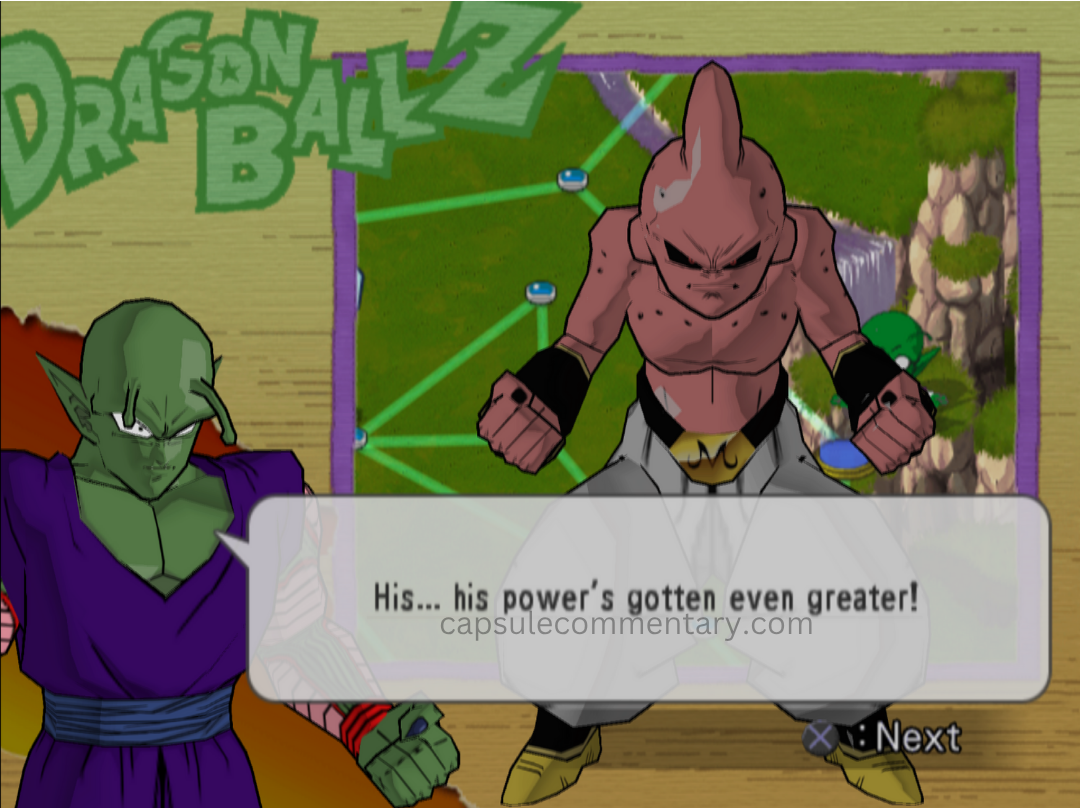
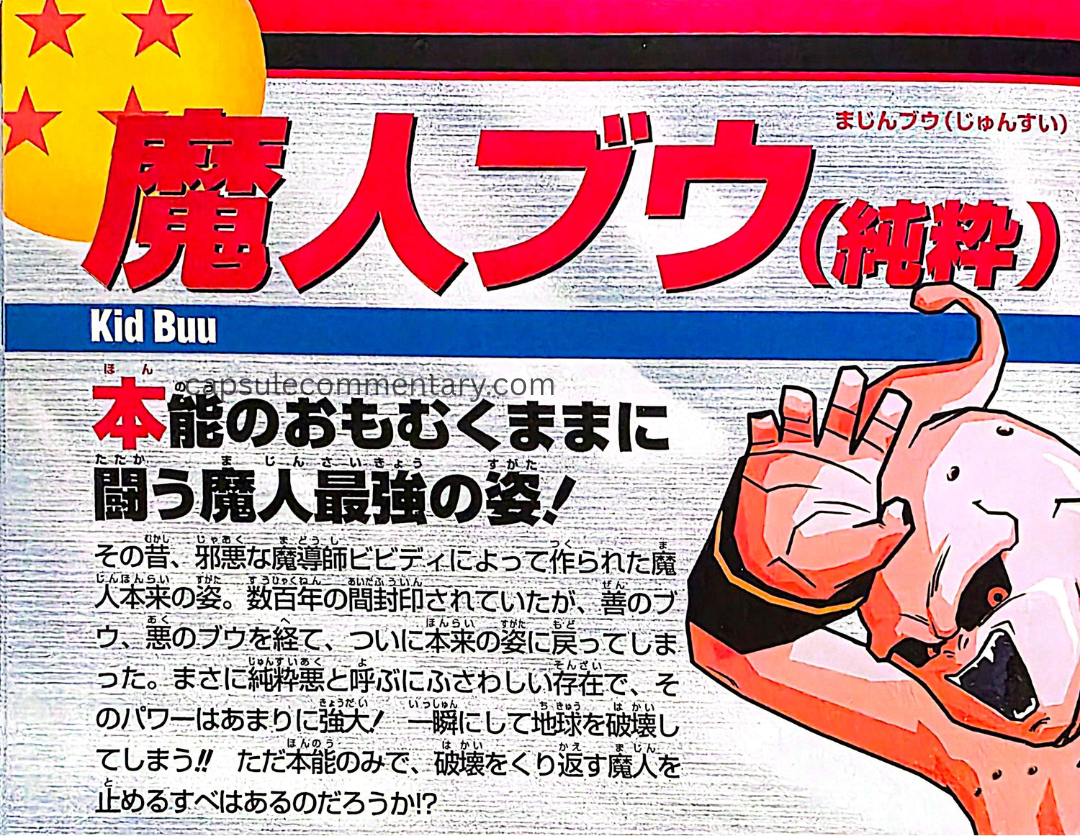
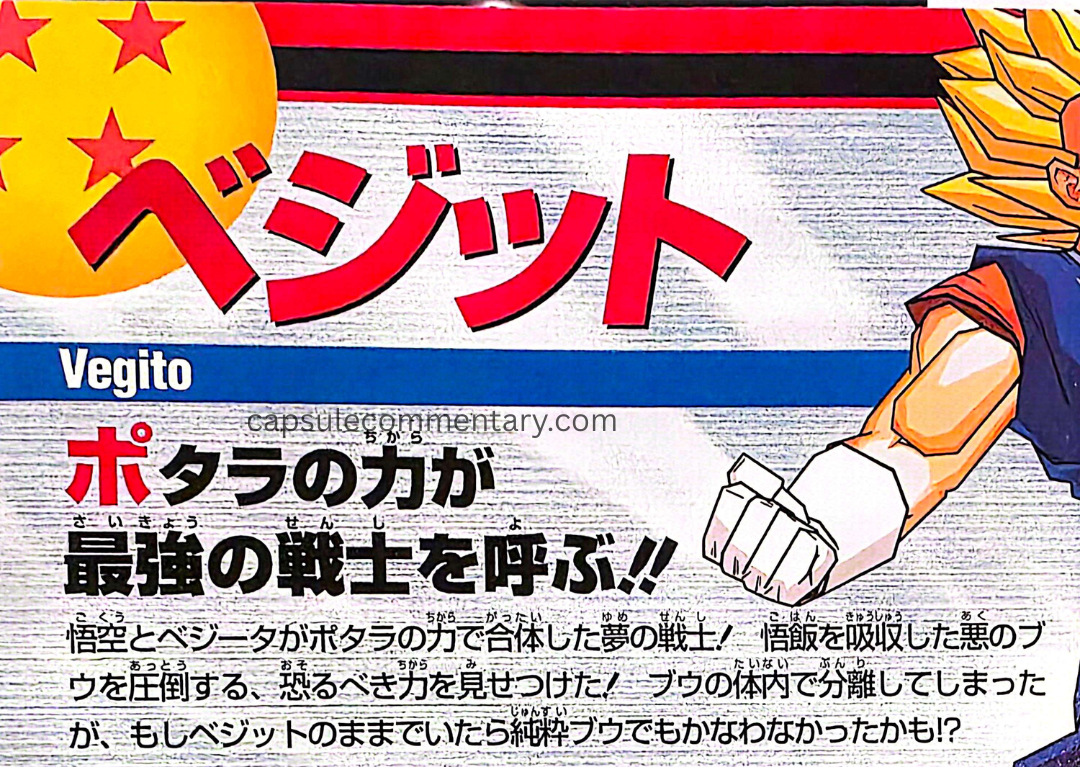
In Dragon Ball Z: Budokai Tenkaichi, in the Character Illustration for Buuhan, it reads, “As opposed to his previous form, there was no time limit in his current state, a fact which led him to proclaim this transformation the Mightiest Majin.” This is interesting because Buuhan never said this, Buutenks did. This is also not the game itself calling him that, he’s calling himself that. The Character Illustration for Super Buu in all 3 games also claims that Super Buu is the same form as the Southern Kaiōshin Buu, which is also not true. For Kid Buu, the Character Illustration reads, “Buu has an extremely high power level and a ferocity which not even Bibidi could control…” and for Fat Buu describing Kid Buu, it reads, “He possessed an extraordinarily high level of power.”Also, in the official Dragon Ball Z: Sparking! (Budokai Tenkaichi) game guide, it says of Buuhan: “The most dangerous Majin, having absorbed the strongest power,” and says of Kid Buu, “A symbol of destruction with no reason whatsoever!!” In the Ultimate Battle mode of the game, Kid Buu is ranked #24 and Buuhan #26. In the May 2005 issue of V-Jump, it says of Buuhan: “Having absorbed Gohan, Majin Buu became the ultimate life-form!!” In Dragon Ball Z: Budokai Tenkaichi 2, Kid Buu is a higher level and gives more experience points than Buuhan. The second and third games in the series also say that Buuhan is the form “after he’s absorbed both Gotenks and Gohan,” which is inaccurate, as the Gotenks fusion running out is the reason he absorbed Gohan in the first place. However, both the second and third games go on to say that Buuhan is known as the “Ultimate Buu.” In the official game guide, it says of Buuhan, “Surpassing Gotenks Absorbed [Buutenks], he is truly the strongest.” Their stats don’t particularly favor either character. In Dragon Ball Z: Budokai Tenkaichi 3, Buuhan gives 2000 Z Points upon defeat, Kid Buu gives 2500 after the first fight, and then Kid Buu gives 3000 after the second. For some reason, the English translation downplays the Japanese text for Kid Buu. In English, they write, “If left unchecked, Buu will not stop until all of existenceis destroyed.” And Chi-Chi goes on to call Kid Buu simply “strong.” But in the Japanese version, they write, “he is truly a being befitting the name of ‘Demon of Destruction’,” and Chi-Chi calls him“ridiculously strong.” In the English version of the second and third games, Goku says to Kid Buu that he is “the most powerful opponent [he’s] ever faced.” However, the Japanese versions of those games use Goku’s dialogue from the manga (not the anime), which does not say this.45 In the official game guide, on pages 132 and 133, it details the stats of both characters. While they are both in the same DP, Buuhan has a better blast stock, sparking duration, and rush ki blast rapid-fire count.
Buuhan: 18 (3 games), Kid Buu: 43.
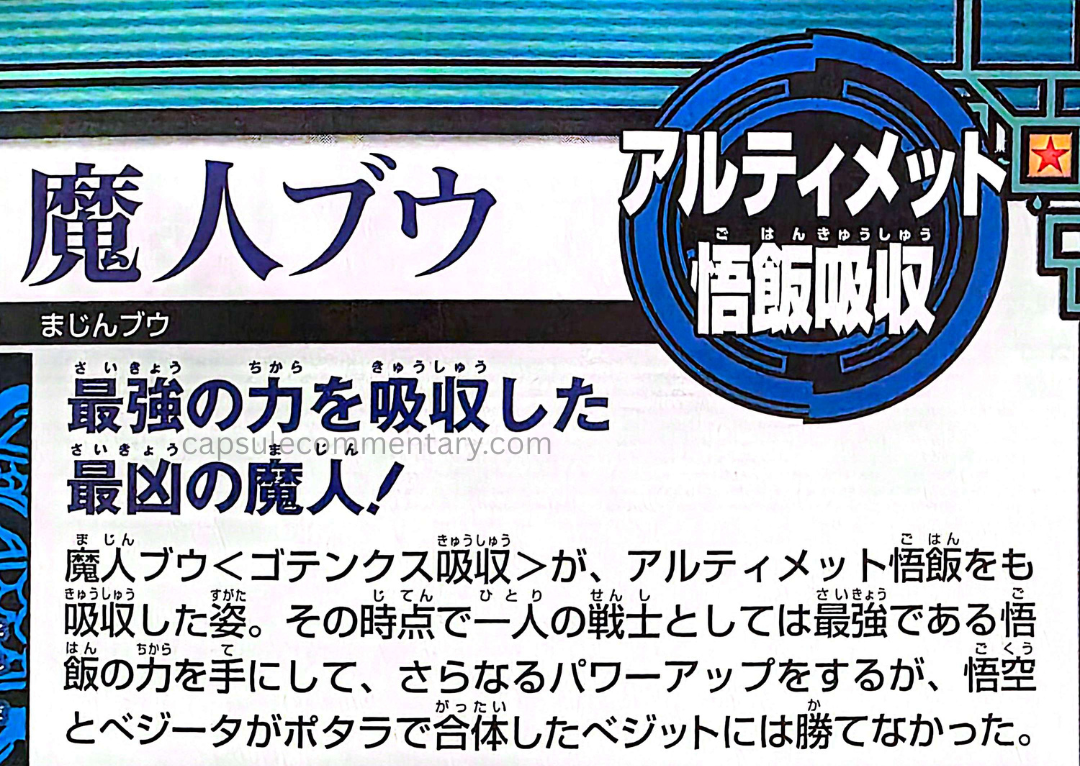
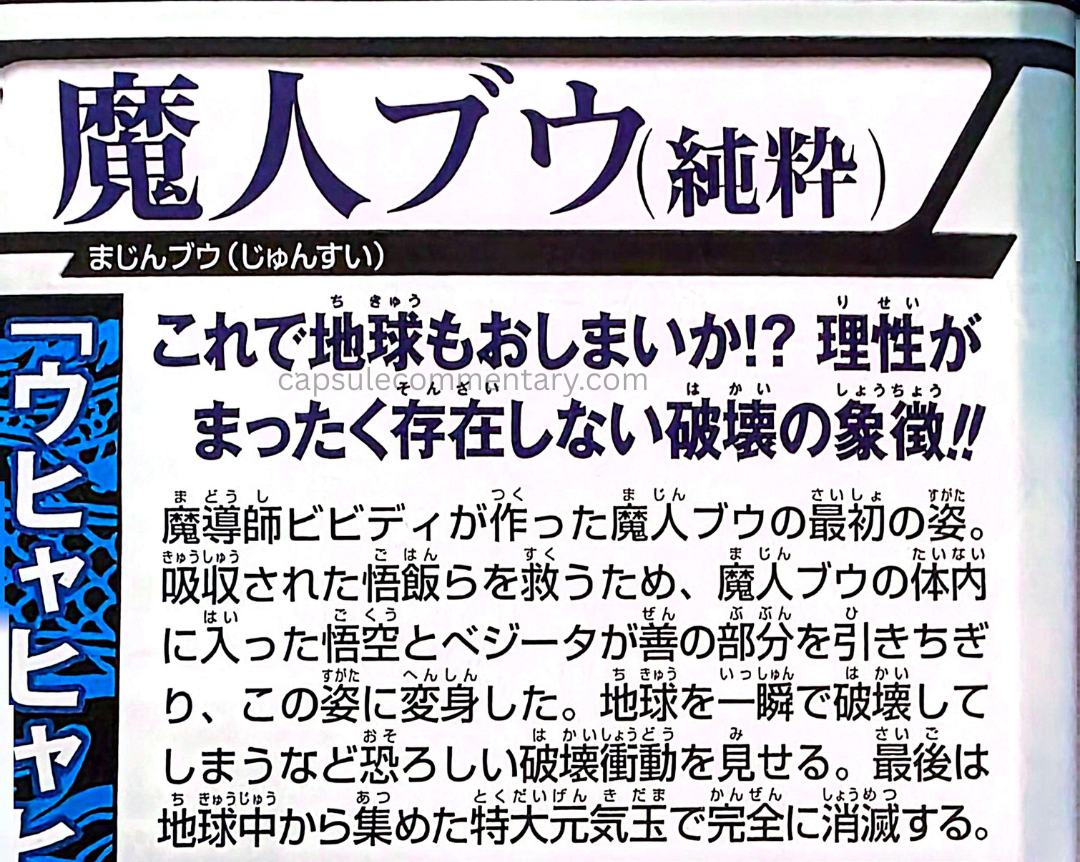
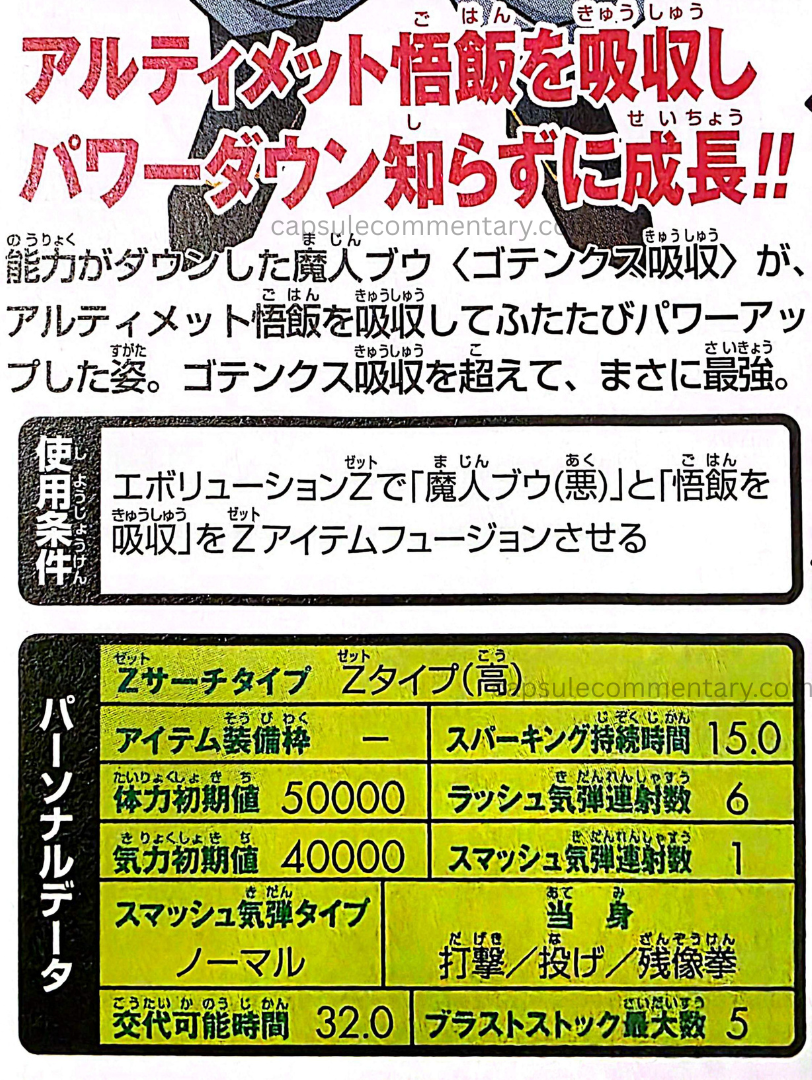
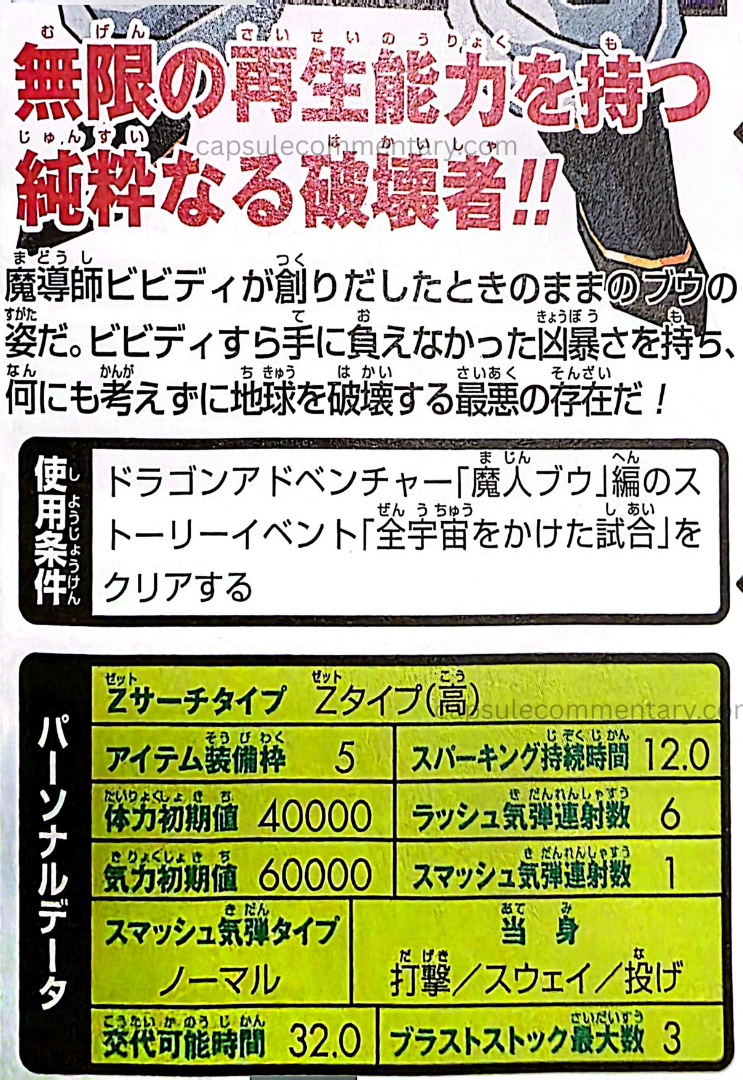
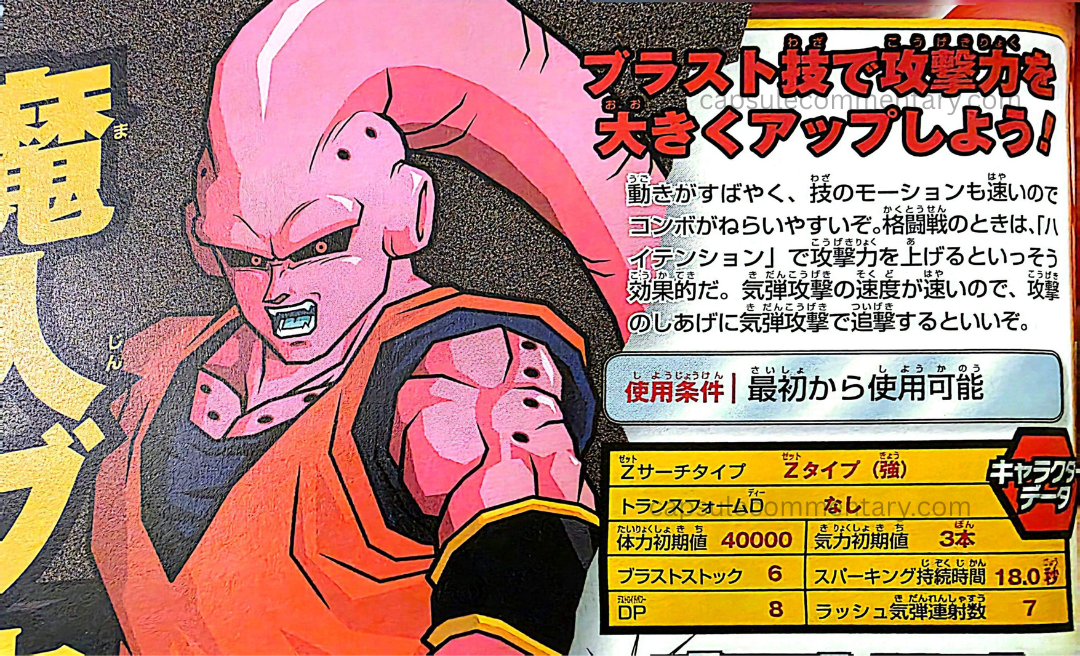
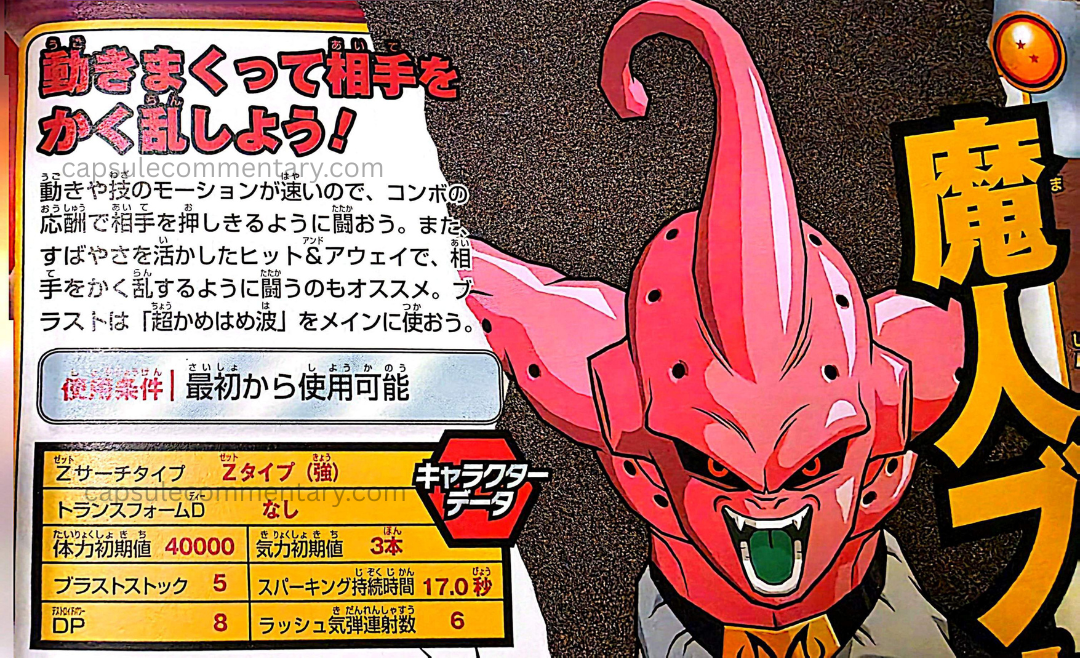
In Dragon Ball Z: Buu’s Fury, the Scouter reveals that Kid Buu has a strength of 66, power of 110, and endurance of 100. For Buuhan, these numbers are 60, 85, and 65. After Buu transforms into Kid Buu, Goku says to Vegeta, “This is bad, Vegeta… Real bad… Buu is more powerful now than ever before.”
Buuhan: 18, Kid Buu: 44.
In the Dragon Ball Z Collectible Card Game, Kid Buu (Level 5 Rare) has a max power level of 15,000,000 and Buuhan (Level 5 Rare) has a max power level of 11,700,000.
Buuhan: 18, Kid Buu: 45.
In Dragon Ball Z: X Keeperz (pronounced Cross Keepers), the Buuhan unit is one of the best in the game and is significantly stronger than the Kid Buu unit.
Buuhan: 19, Kid Buu: 45.
In Dragon Ball Z Dokkan Battle, there are 5 Buuhan units: Application of Skills and Intelligence with an attack of 16,498, Countdown to Despair with an attack of 16,876, Eradicator of Hope with an attack of 5,964, Invincible Absorption with an attack of 19,975, and Shocking Absorption Ability with an attack of 20,025. Buuhan’s average attack is 15,868. There are 5 Kid Buu units: Heartless Destruction with an attack of 16,064, Majin of Destruction with an attack of 19,389, Sluggish Battle Form with an attack of 11,204, Transcendent Majin with an attack of 18,673, and Uncontrollable Instinct with an attack of 14,922. Kid Buu’s average attack is 16,050. In Area 20 of Quest Mode, Kid Buu is the one who is freed from the Sealing Orb and not Fat Buu. Then, Kid Buu absorbs the Dai Kaiōshin to become Fat Buu and Goku comments on how he became stronger. Dokkan Battle‘s story was already nonsensical, but this demonstrates that they don’t even understand Majin Buu’s absorption mechanics. I checked Quest Mode up to Area 33-3.
Buuhan: 19.5 (higher max), Kid Buu: 45.5 (higher average).
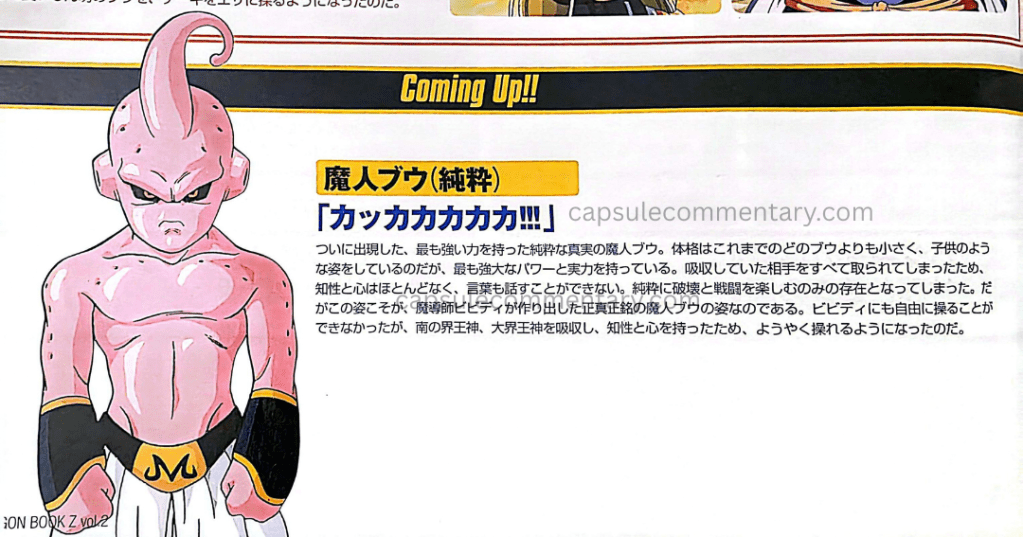
In the booklet included with Dragon Ball Z: Dragon Box Vol. 7 (English) on page 27, it describes Majin Boo (Pure) as thus: “The true, pure form of Boo, possessing the greatest of strength, that at last appears. His frame is smaller than any other version of Boo that came before, and while he may have the appearance of a child, he also has the greatest of powers and abilities.” In Dragon Book Z Vol. 2 (Japanese) on page 71, which came with Dragon Ball Z DVD Box 2, it has the same description for Kid Buu.
Buuhan: 19.5, Kid Buu: 47.5 (2 separate books).*
In Dragon Ball Z: Infinite World: Maximum Data Bible, on page 162, Super Buu and Buuhan are described as being 4 out 5 stars in Strength Level. On pages 163 and 226, both fights against Kid Buu label him as being a 5 out of 5 in Strength Level. In Fighters’ Road, mission 24 against Kid Buu has him at a strength of 4, mission 27 against Super Buu (and his forms) are at a strength of 5, mission 74 against Super Buu as a strength of 5 again, and mission 75 against Kid Buu at a strength of 5. Kid Buu has more missions with a strength level of 5 and has a higher average (4.75 vs. 4.67), so the point goes to him.
Buuhan: 19.5, Kid Buu: 48.5.
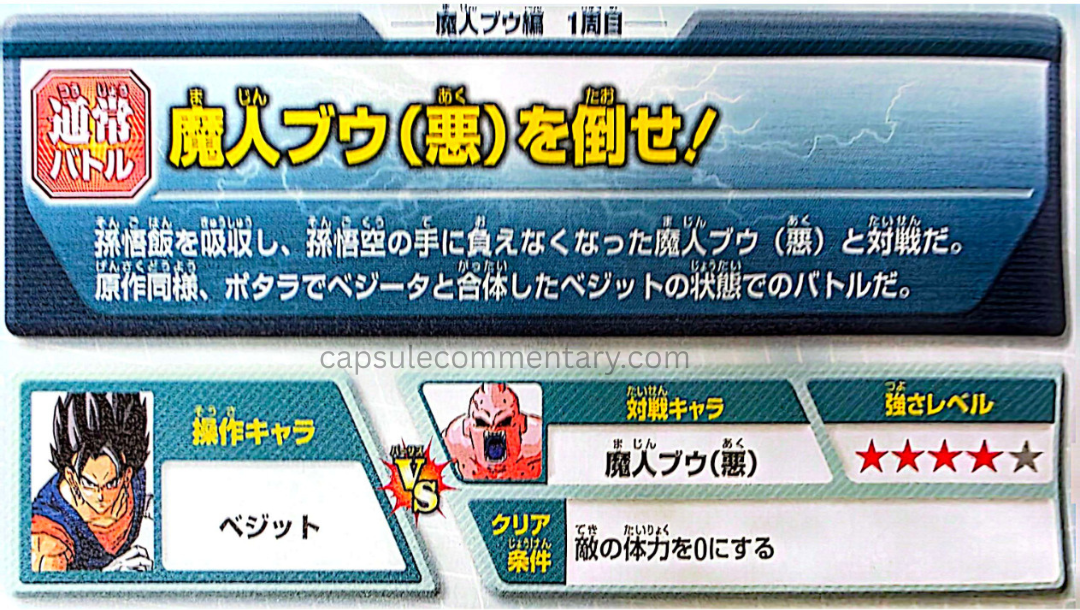
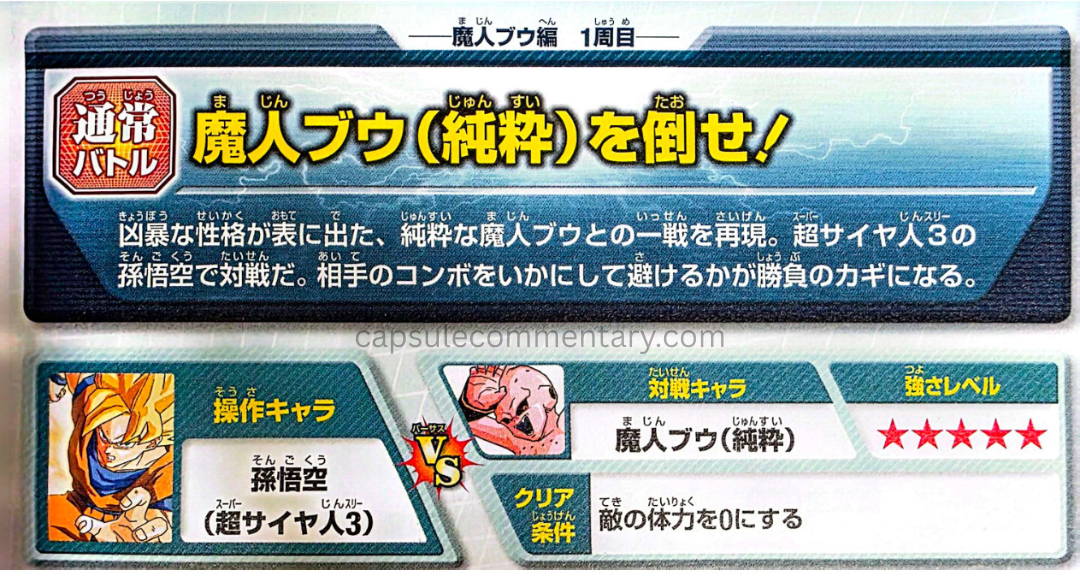
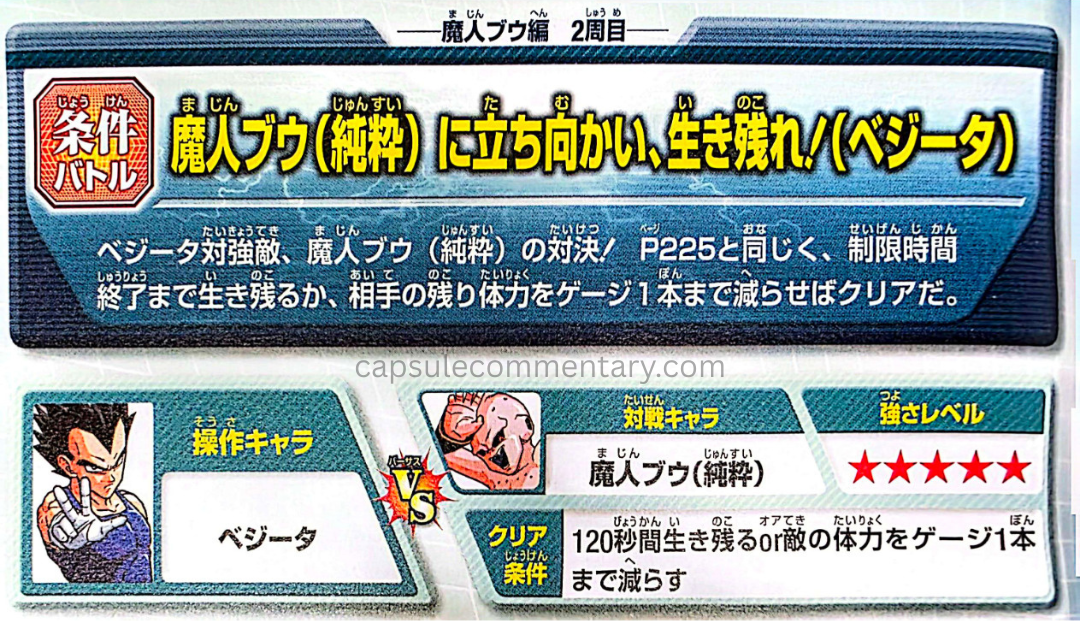

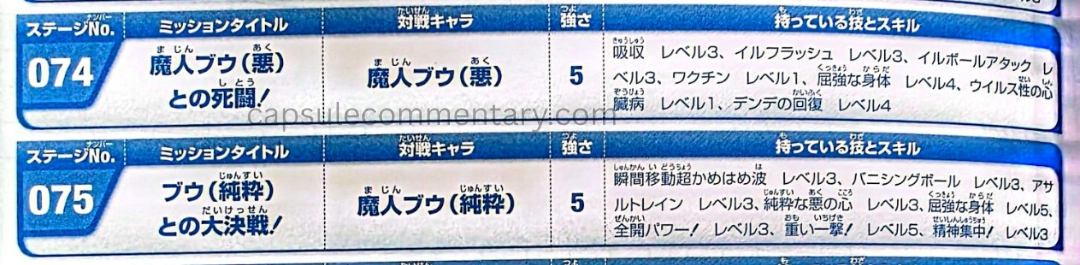
In Dragon Ball Z Kai: Dragon Battlers, there are 5 Buuhan cards: T003-V with an attack power of 3800, B050-1 with an attack power of 3800, B254-5 with an attack power of 3700, B243-5 with an attack power of 4300, and B355-7 with an attack power of 3800. His average attack power is 3880. There are 3 Kid Buu cards (B129-3, B299-6, and B356-7), and they all have an attack power of 3600.
Buuhan: 20.5, Kid Buu: 48.5.
In Dragon Ball Z: Kakarot, Kid Buu’s levels are 75, 76, 77, and 78 and he gives about 2 million EXP each time, while Buuhan’s level is 74 and he gives about 600 thousand EXP. In the card section of the Z-Encyclopedia, for card #963, in Japanese, it reads, “Ha~! Majin Buu bares his demonic fangs!! The shocking unleashing of ultimate power!!!” Curiously, the English translation completely deletes the third sentence, but you can still see it on the card itself (in Japanese text). In the Card Warriors section of the game, the only Buuhan card has an attack of 5000 and the Kid Buu card with the highest attack has an attack of 15000 and he has an average attack of 12000. In an issue of V-Jump promoting the game, the description for Kid Buu reads: “In DBZ, the strongest enemy appears as a boss! The ultimate & invincible warrior joins the battle!!” and “Among the various forms he transformed into, this small figure may look weak, but he is the most vicious and has limitless power!!”46
Buuhan: 20.5, Kid Buu: 49.5.
In the trailer for Funimation’s Dragon Ball Z Kid Buu Saga Boxset on VHS, Kid Buu is referred to as“the most powerful Buu of all.” 47 The VHS tape for Kid Buu – Regression also states “After the chords of attachment to the roly-poly Buu are cut by Vegeta, Majin Buu should mutate into a much weaker form. But instead he gets even stronger! The baffles everyone but Kibito Kai, who discloses Majin Buu’s bizarre history!” This text is repeated in Funimation’s Dragon Ball Z: Season 9 booklet.
Buuhan: 20.5, Kid Buu: 51.5 (2 releases).
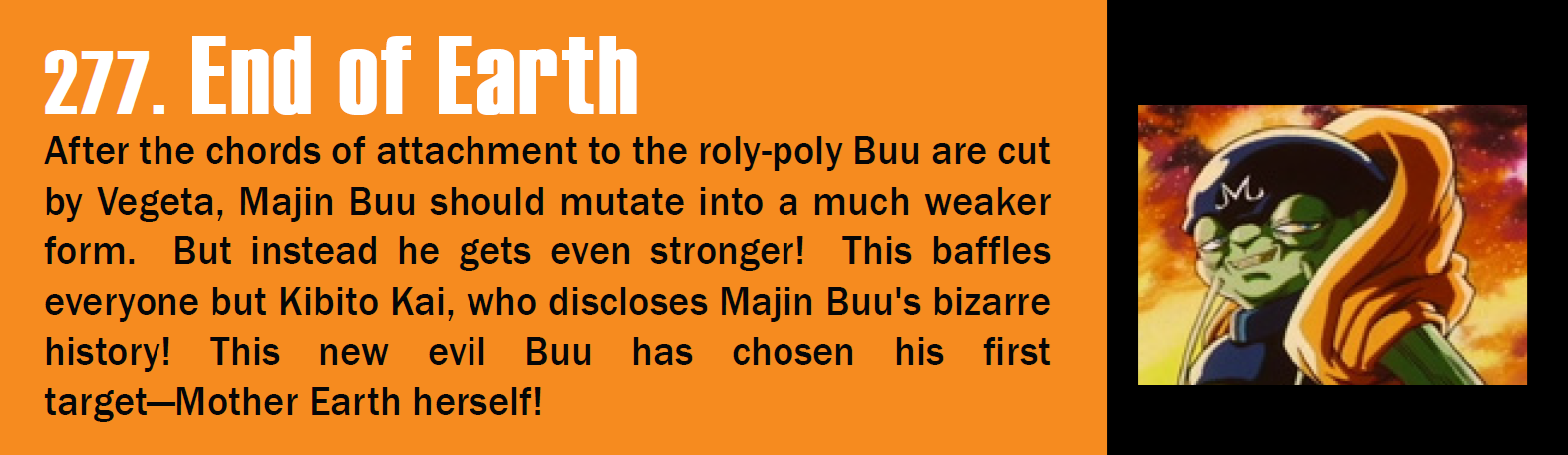
On page 128 of the official game guide for Dragon Ball Z: Legendary Super Warriors, it states Buuhan has a power of 31 in both of his fights. Kid Buu has a power of 26 in both of his fights.
Buuhan: 21.5, Kid Buu: 51.5.
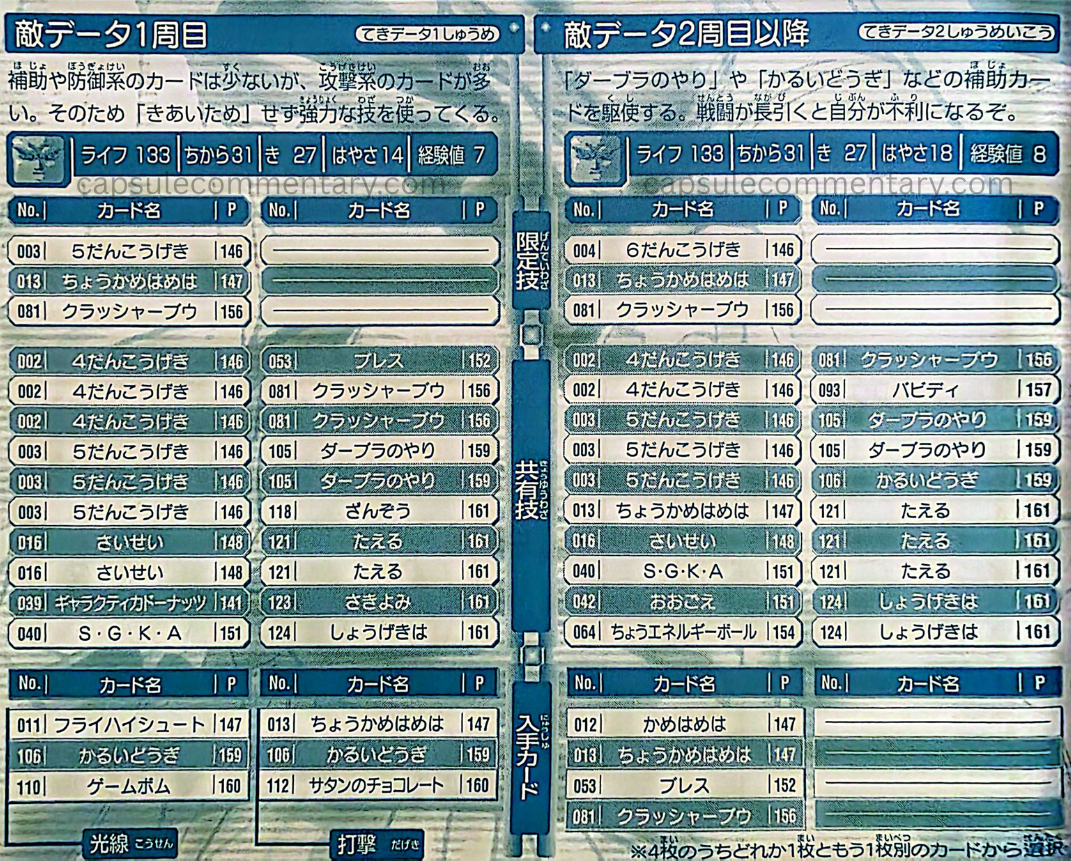
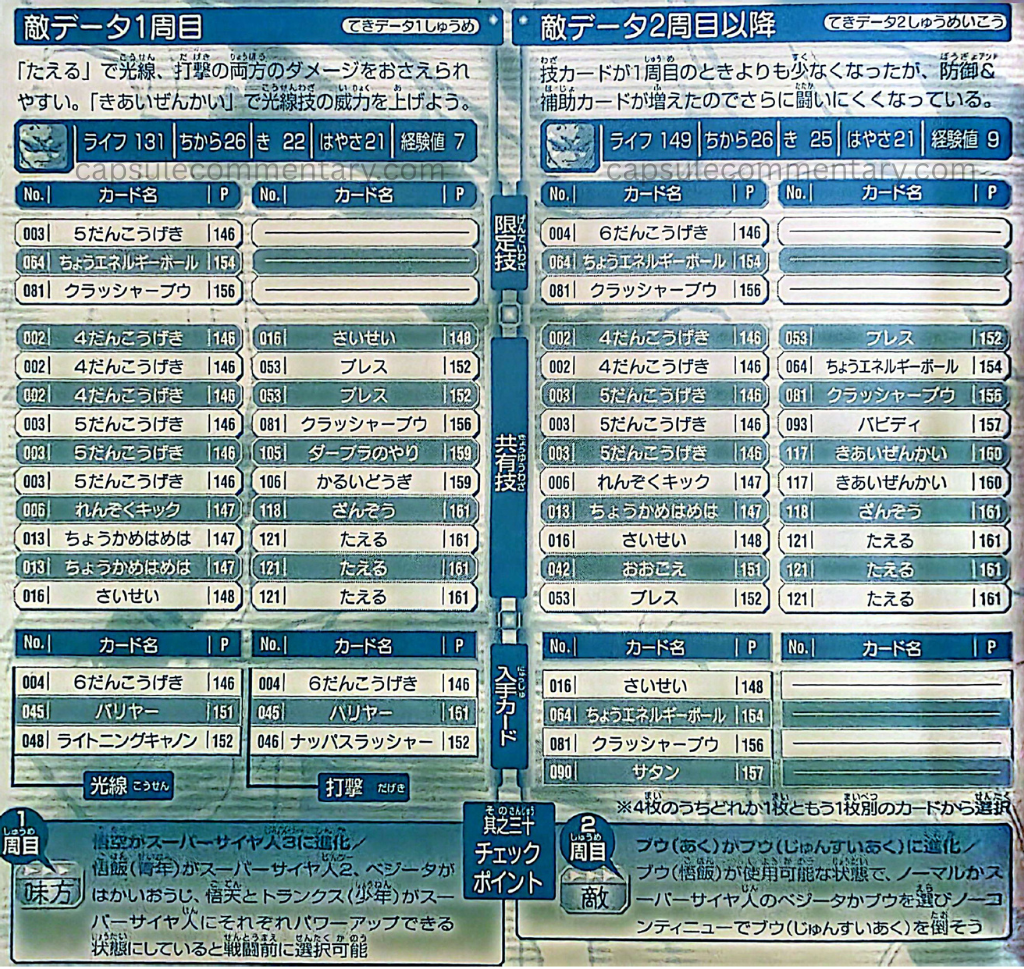
Dragon Ball Z: Shin Budokai has two endings depending on whether the player chooses to become Gogeta or Vegito. If the player chooses to become Vegito, Vegito will comment that he cannot defeat both Kid Buu and Janemba at the same time. First, he defeats Janemba, and then he tells Kid Buu that he will fight him seriously. In the manga, Vegito did not need to fight Buuhan seriously. In fact, he even beat him as coffee candy. If the player chooses to play as Gogeta, Janemba absorbs Kid Buu. The ending with Vegito makes it clear that Kid Buu is over Buuhan.
Buuhan: 21.5, Kid Buu: 52.5.
At the end of chapter 7 of Dragon Ball Z: Shin Budokai Another Road, it says this of Kid Buu: “Buu had grown even more powerful than before, too much so.”48 At the start of the mission, it refers to him as the “ultimate Buu.”
Buuhan: 21.5, Kid Buu: 53.5.
In the Dragon Walker mode of Dragon Ball Z: Tenkaichi Tag Team, it refers to Buuhan as “the ultimate Majin” twice. In the official guidebook for the game, Dragon Ball VS: Tag Battle Navigator, on pages 76 and 77, it shows that the stats between Kid Buu and Buuhan are essentially equal. Buuhan has a marginally better burst duration and rush ki blast rapid-fire count, and Kid Buu has a better initial ability limit value (2 vs. Buuhan’s 0). All of their other stats are equal.
Buuhan: 22.5, Kid Buu: 53.5.
![Dragon Ball Tag VS [Dragon Ball Z: Tenkaichi Tag Team]: Tag Battle Navigator page 76](https://capsulecommentary.com/wp-content/uploads/2025/02/481.png)
![Dragon Ball Tag VS [Dragon Ball Z: Tenkaichi Tag Team]: Tag Battle Navigator page 77](https://capsulecommentary.com/wp-content/uploads/2025/02/484.png)
In the lead-up to episode 8 of Dragon Ball Z: The Legend, the Narrator says, “Final Battle! Z Warriors vs. the Strongest Majin,” and Kid Buu is shown while he says this.
Buuhan: 22.5, Kid Buu: 54.5.
In Dragon Ball Z TV Animation Comic: Majin Buu Fierce Battle Arc Volume 5 on page 88, Kibitoshin says about Kid Buu, “He reverted back to the original Majin Buu, who was the most troublesome and powerful!”49 Also, on page 115, Goku says of Kid Buu, “Majin Buu… a ridiculous guy, but his power, his speed, and even his recovery are incredible…! He’s on a completely different level from the Buus up to now! Unbelievably strong!!” And on page 130, he says, “Majin Buu… he’s… stronger than any enemy I’ve fought up until now…!!” In Volume 4 on page 178, the preview for the next volume reads, “Goku & Vegeta’s greatest crisis! Buu becomes the ultimate Majin!!”
Buuhan: 22.5, Kid Buu: 55.5.*

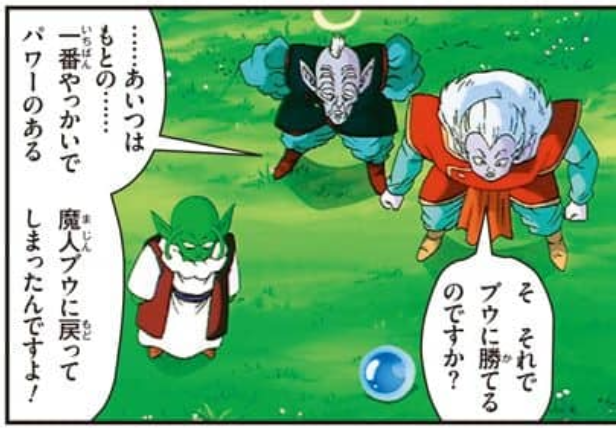


In the Character Encyclopedia of Dragon Ball Z: Ultimate Tenkaichi, the character profile for Buuhan reads, “He is truly the supreme Majin!” In Japanese, it says something similar, calling him “the strongest Majin.” Just like with the Budokai Tenkaichi series, this game also mistakenly refers to Super Buu as the Southern Kaiōshin Buu. It also changes the text on the Kid Buu profile from“He is truly a being worthy of the name ‘Demon of Destruction’ !” in Japanese to“The most destructive of Majins!” in English. However, in the January 2012 issue of V-Jump, it displays the stats of both of these fighters. Kid Buu has a B rank for both melee attack and ki attack, while Buuhan has a D rank for melee attack and an A rank for ki attack. Overall, Kid Buu actually has better attack stats (and stats in general) compared to Buuhan.
Buuhan: 23 (profile text), Kid Buu: 56 (stats).
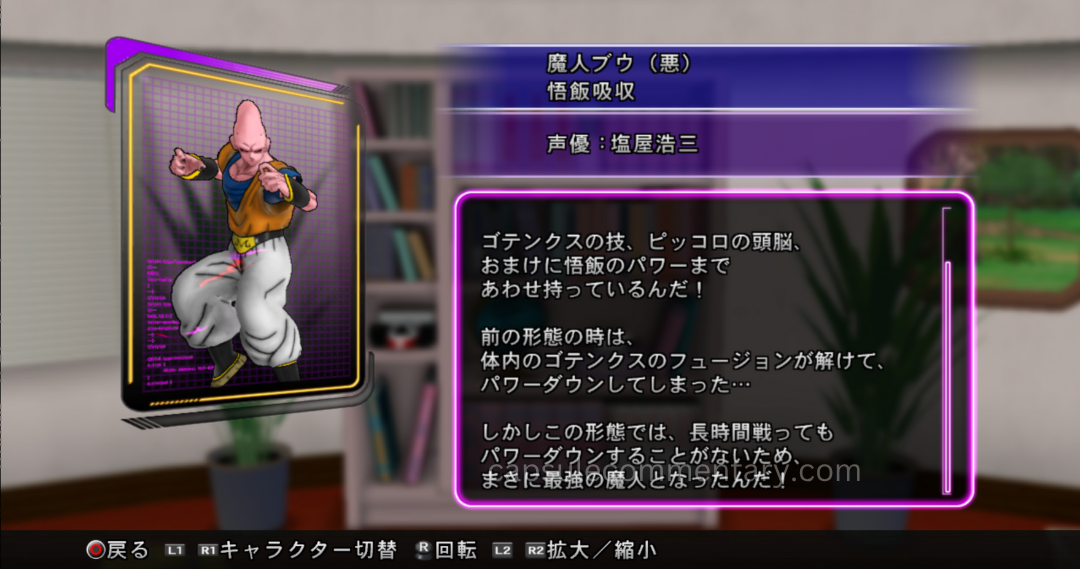

InDragon Ball Z Volume #47’s Dragon Ball Z Fact File 47 (each DVD of this series came with a fact file), in the description for Kid Buu, it states, “After absorbing fighters like Gohan, he sheds all unnecessary elements. His body becomes smaller than any of the previous Buus, taking on a childlike appearance. However, this form wields the greatest raw power and combat strength.With no intelligence or emotions left, he cannot communicate or understand words. He exists solely as an embodiment of destruction and chaos, revelling in annihilation.”
Buuhan: 23, Kid Buu: 57.*
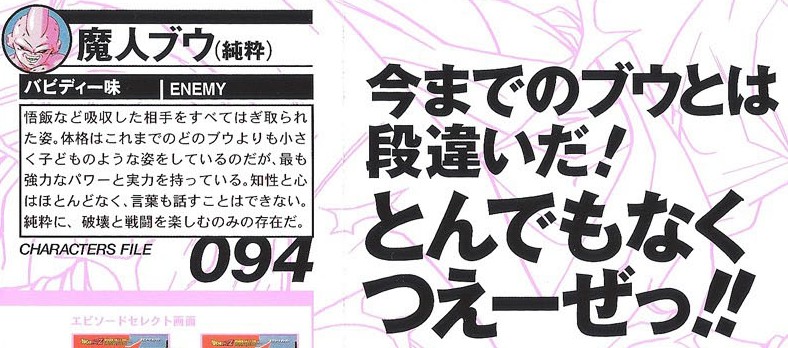
In Dragon Ball Z: W Bakuretsu Impact, there are 3 Kid Buu cards: 196-IV and 249-IV with attack powers of 2400 each, and SP-027-IV with an attack power of 2800. There are also 3 cards of Buuhan: 143-IV and 248-IV with attack powers of 2500 each, and SP-031-IV with an attack power of 2600. They both have an average attack of 2533, but Kid Buu has the card with the highest attack power.
Buuhan: 23, Kid Buu: 58 (highest attack).
In Jumputi Heroes, Kid Buu’s attack is 2225 and Buuhan’s attack is 2261.
Buuhan: 24, Kid Buu: 58.
Le Manga de Légende (Το θρυλικό Manga in Greek, Il Manga Leggendario in Italian, and El Manga Legendario in Spanish) was an officially-produced line of toys by the French company, Hachette Collections. There were 50 toys and each of them came with a booklet that was written in French, Greek, Italian, or Spanish. As this was produced by a French company, the French editions are the originals. Hachette also produced the Greek and Italian translations in-house, which is why they more-or-less match the original French verbatim. However, the Spanish translation was offshored to Salvat, a Hachette subsidiary which apparently has some degree of editorial freedom. Unfortunately, El Manga Legendario goes beyond translation, rewriting passages to make Kid Buu appear weaker and to obfuscate Majin Buu’s absorption mechanics. These aren’t mistakes. They’re deliberate mistranslations.
- On page 15 of Issue 48 of Le Manga de Légende, it writes: “When one breaks the organs in which they are captive, Buu’s strength decreases.”
Il Manga Leggendario preserves this text with: “It seems that by tearing out the organs that keep them immobilized, Buu can no longer obtain energy from them.”50
El Manga Legendario changes this text to: “Gohan and the others are unconscious inside Buu. Their size is no bigger than a flea.”
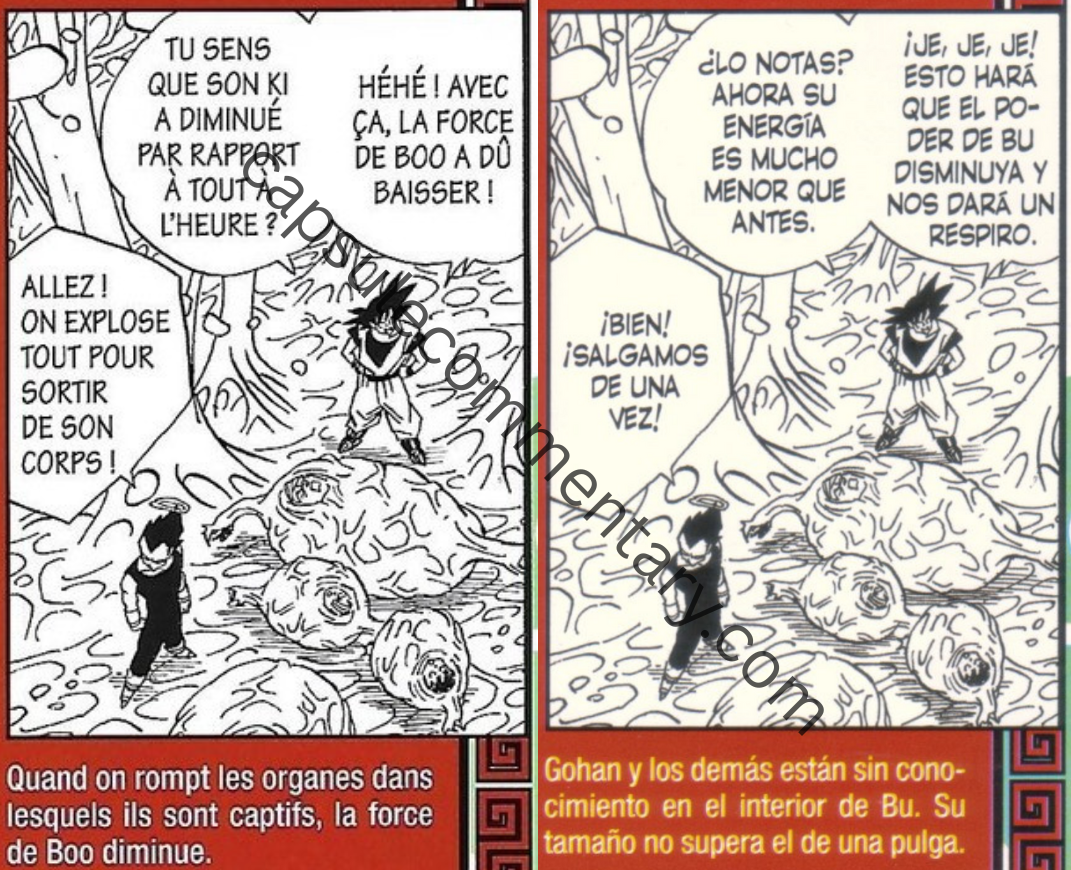
- On page 7 of Issue 49 of Le Manga de Légende, it writes: “But as soon as Fat Buu was freed, the other Buu began to suffer.”
Το θρυλικό Manga preserves this text with: “At that moment Vegeta also finds Fat Buu shut inside his body. Buu, who came to defeat Goku, after he felt something strange in his body, begins to suffer until Fat Buu is freed.” However, it changes later text to make Kid Buu appear stronger: “Seeing their enemy’s form, Goku and his companion are convinced that they can defeat him, but in reality Buu has returned to his original stage, when he was stronger than ever!”
Il Manga Leggendario preserves this text with: “Buu, having come to fight Goku, and after feeling something strange within his own body, begins to suffer and contort himself as soon as Fat Buu is freed.”
El Manga Legendario changes this text to: “Realizing something was wrong, Buu tried to finish Goku and Vegeta, but once Fat Buu was freed, his power decreased.”
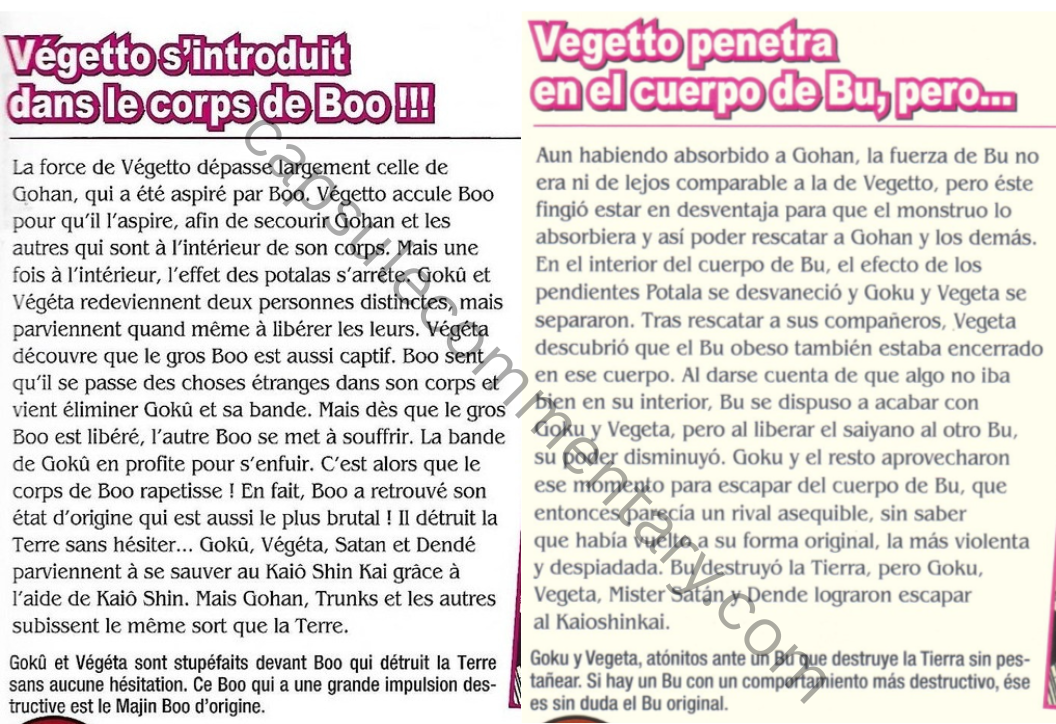
- On page 17 of Issue 49 of Le Manga de Légende, it writes: “Majin Buu has the peculiarity of changing appearance when he absorbs other people.”
El Manga Legendario changes this text to: “Buu increases his power by absorbing his adversaries.“
Il Manga Leggendario marries the two ideas from the French and Spanish versions: “Majin Buu has a characteristic that makes it possible for him to power up by changing his appearance through the absorption of others.”51
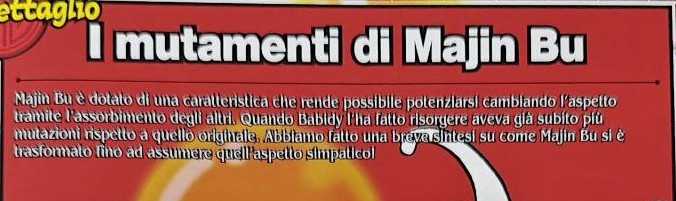
- On page 19 of Issue 49 of Le Manga de Légende, it writes: “Even if Buu had returned to his most aggressive state, he was still an opponent Goku could defeat with the help of Gotenks and Gohan.”
Το θρυλικό Manga preserves this text with: “Even realistically, although Buu returned more violent, if Gotenks and Gohan had been there, they could have defeated him.”
Il Manga Leggendario preserves this text with: “Even reasoning realistically, even if Buu has returned as the most violent one, if Gotenks and Gohan had been there, it would have been possible to defeat him.”
El Manga Legendario changes this text to: “Thinking about the situation, in which Buu had returned to his more violent but not as strong form, with Gotenks and Gohan it would have been enough to defeat him.”
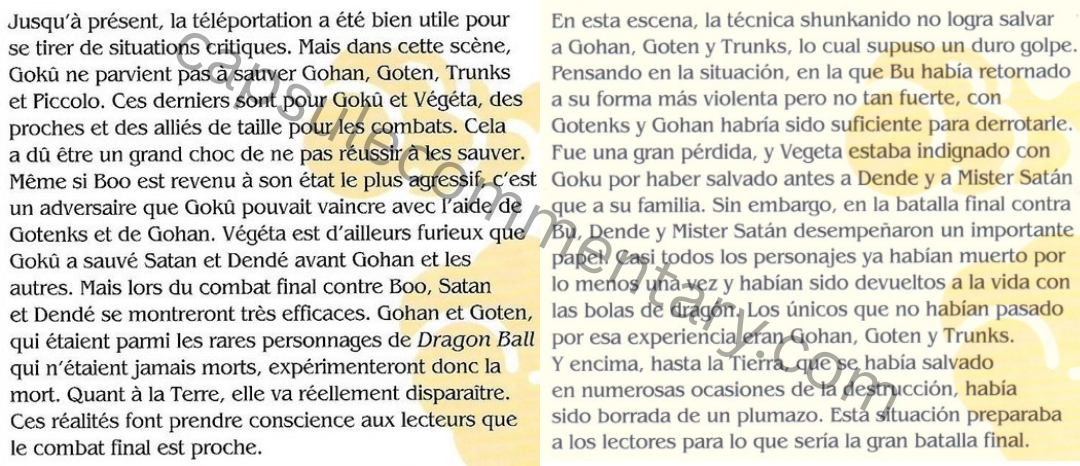
The French, Greek, and Italian booklets make it clear that removing Good Buu from Super Buu made Majin Buu stronger, not weaker. This is accurate to the manga and both anime adaptations. The Spanish mistranslation explicitly states the opposite occured — that Majin Buu’s power decreased. This is directly refuted by every official adaptation of Dragon Ball. The French, Greek, and Italian booklets agree that Kid Buu was the most violent, dangerous, etc. form, but only the Spanish mistranslation adds the caveat that he was not the strongest. The original French describes how Kid Buu changed his appearance after absorbing the two Kaiōshin. The Spanish mistranslation changes this to say that Kid Buu got stronger with each absorption of them. In both the manga and anime, it is explicitly established that absorbing a Kaiōshin weakened Buu.

All four versions of Issue 49 agree that Kid Buu could have been defeated if both Gohan and Gotenks were there to help fight. As established earlier when discussing Goku, the statement about Gohan and Gotenks is directly refuted by the mangaand both anime series (Z and Kai). On page 7 of Issue 1, next to a picture of Kid Buu, it states that Buu continued to get stronger and stronger and doesn’t list a sudden exception for Kid Buu. On page 15 of Issue 48, it states that Buuhan would be “unbeatable” without Vegito and calls Gohan the “perfect warrior,” and on page 14, it describes Buutenks as “the strongest of the demons.” However, because no exception was stated for Buu’s power growing in Issue 1 on page 7 and it was next to an image of Kid Buu, the original French is ultimately in Kid Buu’s favor, so this point goes to him.
Buuhan: 24, Kid Buu: 59.
In a 2019 issue of Saikyō Jump, they introduced Dragon Ball GT to the readers as they were beginning a serialization of the manga adaptation of that series. In this issue, Kid Buu is specifically referred to as the “strongest enemy.”
Buuhan: 24, Kid Buu: 60.*
As quoted previously in this article, in Issue 59 of the English Shonen Jump, when asked why the most powerful characters are the smaller, cuter, younger-looking ones (including Majin Buu), Toriyama answered, “I wanted to go against people’s expectation that the strong ones always get stronger and bigger. I consciously tried to switch between telling a straightforward story and telling one that was unconventional and contradictory.”52 Also previously mentioned, in Vol. 1 #1 on page 8, Toriyama says that, “In a fighting manga, stronger and stronger enemies keep appearing. If a new enemy is weaker than a previous one, the readers won’t be satisfied.” Also on page 147 when discussing the anime, it reads, “[Vegeta] rips the ties that bind the earlier form of Buu to the later form, thinking the move will weaken the monster. Boy, is he wrong! In End of Earth, Buu gets even more powerful…”
Buuhan: 24, Kid Buu: 61.*
In episode 41 of Super Dragon Ball Heroes (based on Super Dragon Ball Heroes: Ultra God Mission!!!!),the Super Space-Time Tournament is announced with the intent to find the strongest fighter across the Dragon Ball multiverse. Kid Buu appears in this tournament and fights a visibly struggling Super Janemba, while no variation of Super Buu appears. This scene is exclusive to the anime as only Fat Buu appears during this story arc in chapters 14 and 15 of the manga. An alternate form of Kid Buu generally referred to as “Majin Buu: Xeno” does appear in chapters 4, 5, 7, and 8 of Super Dragon Ball Heroes: Dark Demon Realm Mission!, but this is not being considered for the tally as it’s not the Kid Buu we know.
Buuhan: 24, Kid Buu: 62.
In Super Dragon Ball Heroes Carddass and only looking at cards that exclusively feature either Buuhan or Kid Buu, the Buuhan card with the strongest attack is JPBC5–12 with 4800 and the average attack of all Buuhan cards is 4278. For Kid Buu, the card with the highest attack is BM9–045 with 6000 and the average attack of all Kid Buu cards is 4339. On page 69 of the September 2023 issue of Saikyō Jump, they display the new Buuhan card and the text reads, “The Evolving Majin.” But on page 210 of the October 2024 issue of Saikyō Jump, the text box describing the new cards, one of which features final form Freeza, Perfect Cell, and Kid Buu, reads, “The Strongest, Most Powerful, and Emotional!”
Buuhan: 24, Kid Buu: 63.
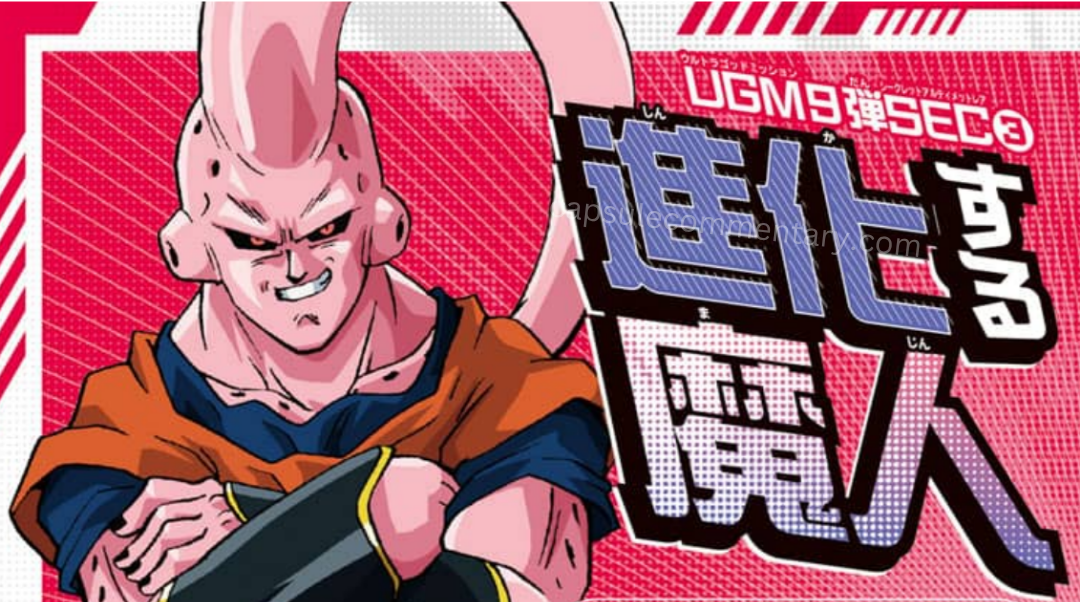
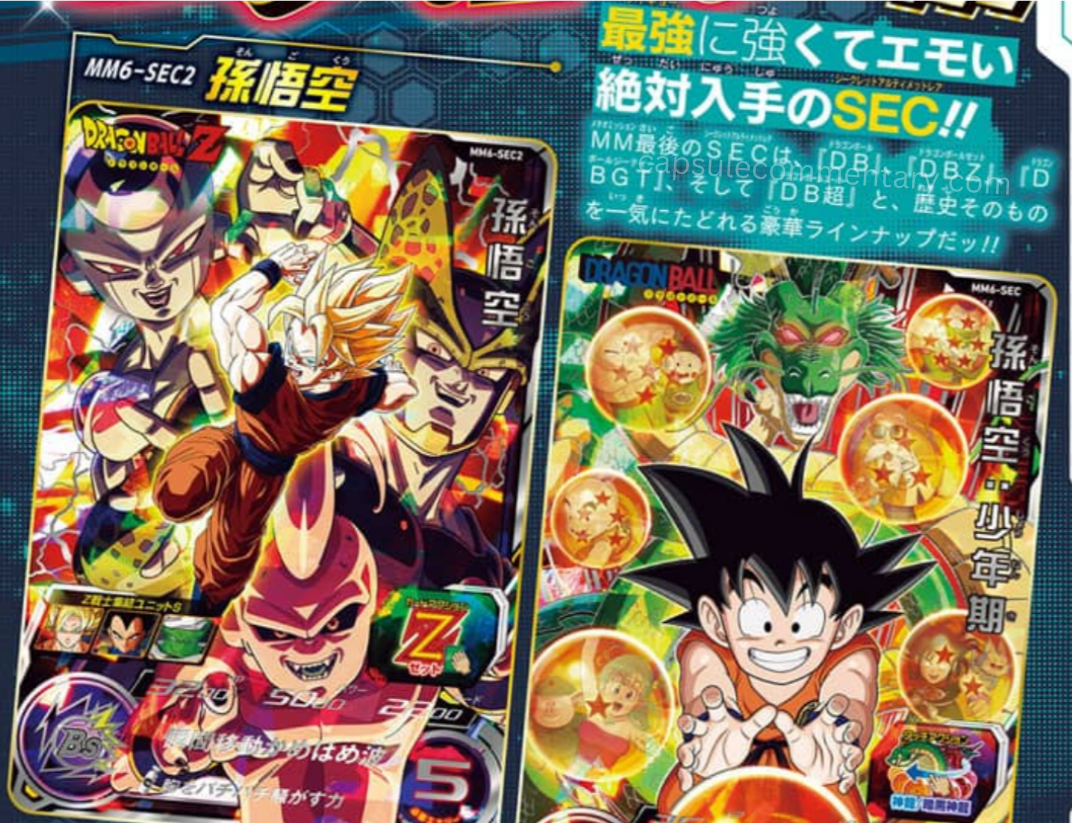
In Super Dragon Ball Heroes: World Mission, there are a bunch on unreleased cards that many players have never seen, which include Buuhan cards. The Buuhan card with the highest power is H6–46 and it has a power of 4600. The average for all Buuhan cards is 3633. There are 4 Kid Buu cards tied for the highest power at 5000: HGD2–45, HGD3–42, UM3–064, and PUMS5–07. The average for all Kid Buu cards is 4467. The English translation of this game also changes some dialogue to make Kid Buu appear stronger than how he is presented in the Japanese version (even though his cards are stronger). Hoi refers to Kid Buu as “the ultimate Majin” in English, while in Japanese he just refers to him as “Majin Buu.” If you’ve never played the game, you might think Hoi and Dabura are referring to Fat Buu, but Kid Buu is the one that is revived.
Buuhan: 24, Kid Buu: 64.
On page 12 of the pamphlet for the Spring 1996 Toei Anime Fair (Path to Power), it says of Kid Buu’s appearance, “Buu transforms into his ultimate form.”
Buuhan: 24, Kid Buu: 65.
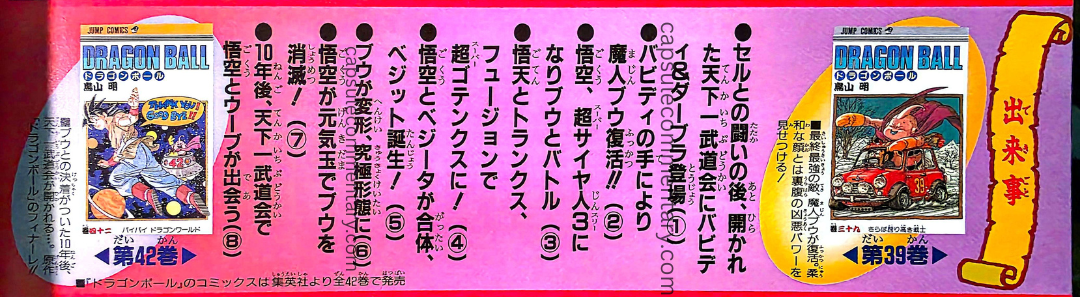
The original English broadcast of Dragon Ball Z was on Cartoon Network’s Toonami. In the intro for Dragon Ball Z, Toonami included the following line by Goku about Kid Buu, “Majin Buu’s so much stronger than anyone I’ve ever faced before…”
Buuhan: 24, Kid Buu: 66.
In TV Anime Guide: Dragon Ball Z Son Goku Densetsu on page 13, the description for an image of Super Saiyan 3 Goku fighting Kid Buu reads, “It was at this moment that he fought the strongest [form of] Majin Buu.” On page 213, in the episode description for episode 277, it states,“The true Majin Buu [Kid Buu], possessing the strongest power, finally appears.”53
Buuhan: 24, Kid Buu: 67.*
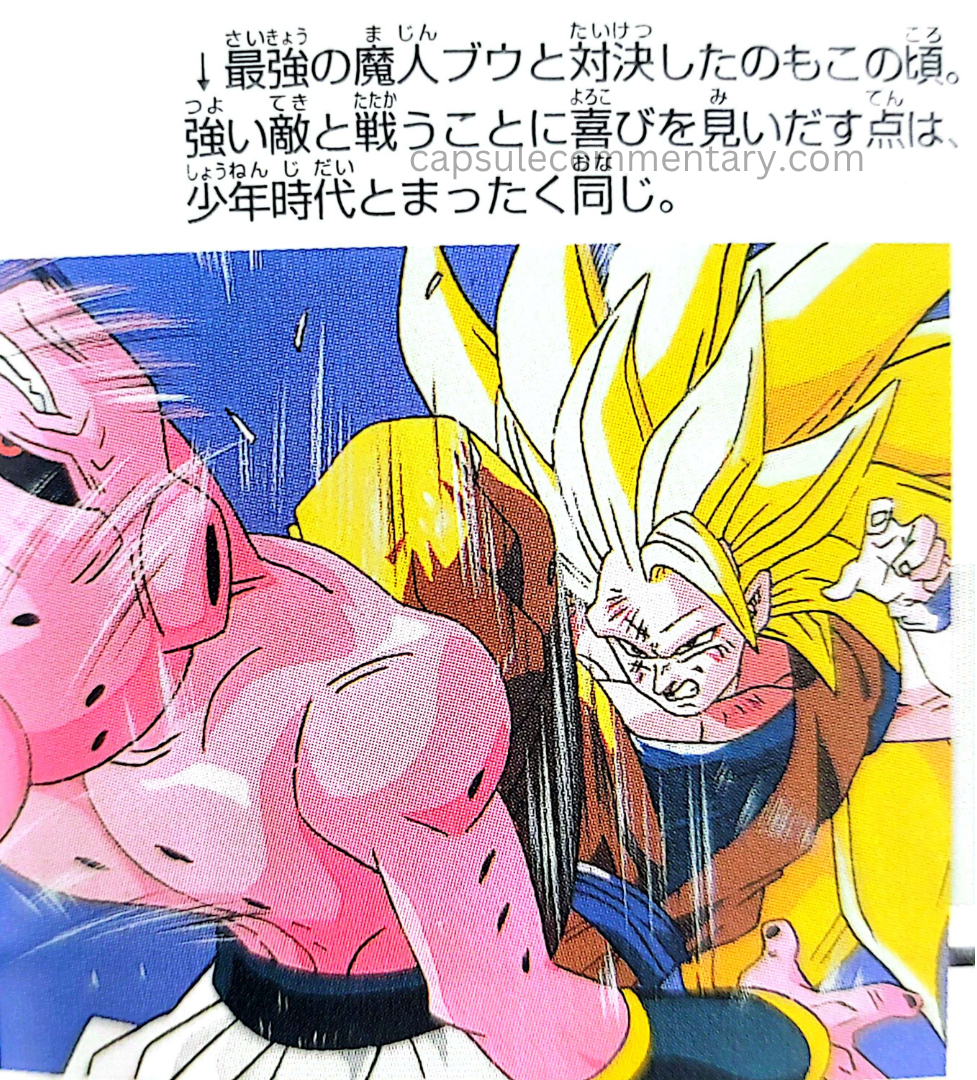
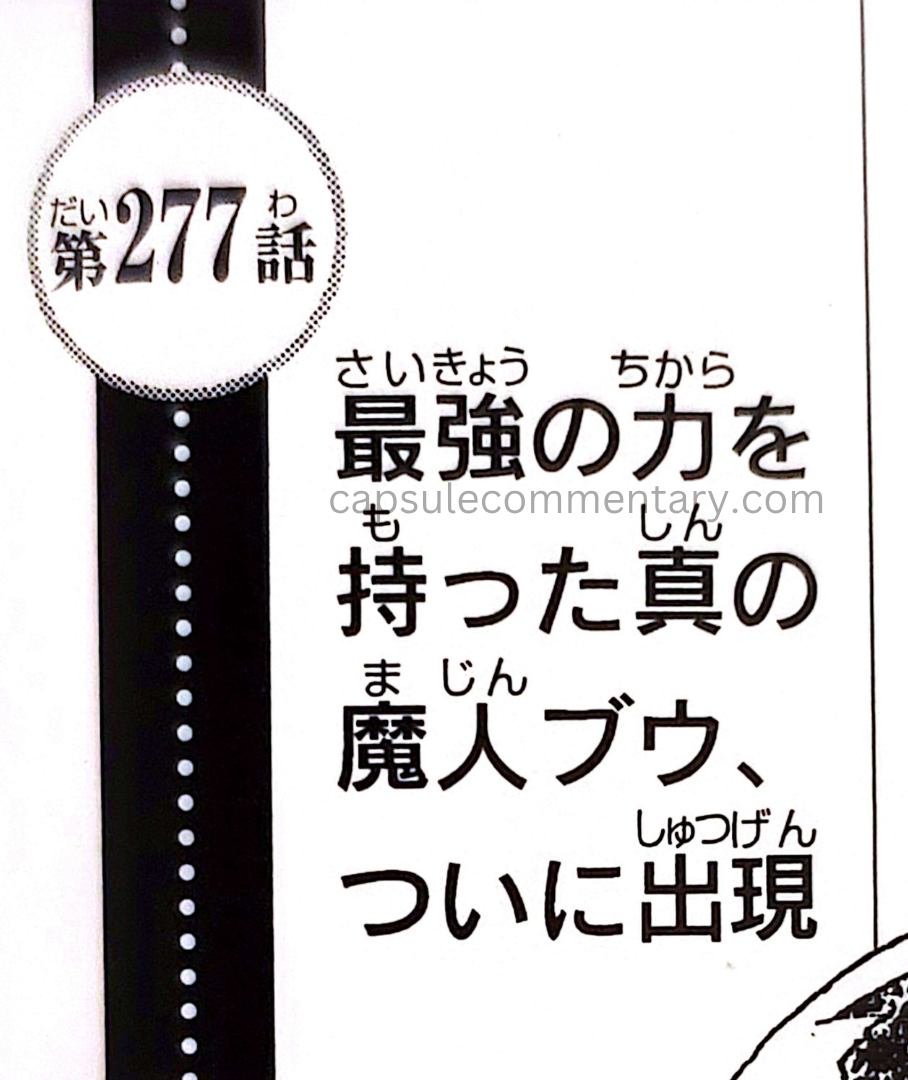
There are several issues of V-Jump relevant to this. In the May 2014 issue, as previously mentioned in this article, Toriyama says, “Check out both sides, which keep transforming to become stronger and stronger, and the Genki-dama at the end.” In the December 2018 issue, as previously mentioned in this article, it describes Buuhan as being on par with Super Saiyan 3 Goku, and we know that Goku lost to Kid Buu in their 1-on-1 battle. In the September 1995 issue detailing the events of the Majin Buu Saga in the anime up to Buuhan but not Kid Buu, it writes of Buuhan: “Complete! The Ultimate Super Majin!!” Also, in the January 1996 issue on page 145, while introducing Dragon Ball GT, it says of Kid Buu,“The Buu that reverted to his original form is a far cry from the one seen before. When he returned to his initial state — the form Bibidi created — his power and regeneration abilities were further enhanced, making him an incomparable force!”54 V-Jump is also inseparable from Toriyama (see image). In the July 1998 issue, Toriyama’s 5-year anniversary message to V-Jump was: “Congratulations on V-Jump’s 5th Anniversary! I am grateful for having been involved since the first issue. I look forward to working with you from here on as well.”
Buuhan: 24 (September 1995), Kid Buu: 68 (Everything Else).*
If you’ve read the Dragon Ball manga, it was most likely the Tankōbon release. There are several releases of Dragon Ball, including the Tankōbon, Kanzenban, Full Color, and Sōshūhen releases. However, Dragon Ball was originally serialized in and for Shueisha’s Weekly Shōnen Jump. The Tankōbon and Kanzenban releases (and their derivatives) removed the text on the side of the pages added by Shueisha. While the Sōshūhen edition, as previously mentioned in this section, leaves the original pages intact, it does not contain the information found on the other pages of Weekly Shōnen Jump and it also includes the changes made for the Kanzenban edition. These magazines are prohibitively expensive and quite difficult to come by, so most fans will have never seen them. As these magazines contain the original materials with commentary from Dragon Ball’s original editors, it is my opinion that these issues hold more weight in this debate than everything except Akira Toriyama.
In Weekly Shōnen Jump 1995 Issue 21–22, which is where chapter 516 was first released (the chapter in which Kid Buu dies), on page 1, the Action Card (or telephone card) depicting Goku and Vegeta as they were in the fight against Kid Buu states, “Son Goku & Vegeta. The ultimate battle with the strongest enemy, Majin Buu!! Who will emerge victorious in the end……!?” As previously mentioned in this article, page 483 also refers to Kid Buu as the strongest Buu. And as also previously mentioned, page 87 ofWeekly Shōnen Jump 1995 Issue15 states, “Beyond the limit, even further beyond!!The gong of battle resounds!!,” thus describing both Goku and Kid Buu as being at their absolute strongests yet. Weekly Shōnen Jump 1995 Issue 13 page 45 says that Majin Buu transformed into“a God of Destruction” by becoming Kid Buu, and Weekly Shōnen Jump 1995 Issue 18 page 97 calls Kid Buu the “source of all evil.”
Buuhan: 24, Kid Buu: 69.*
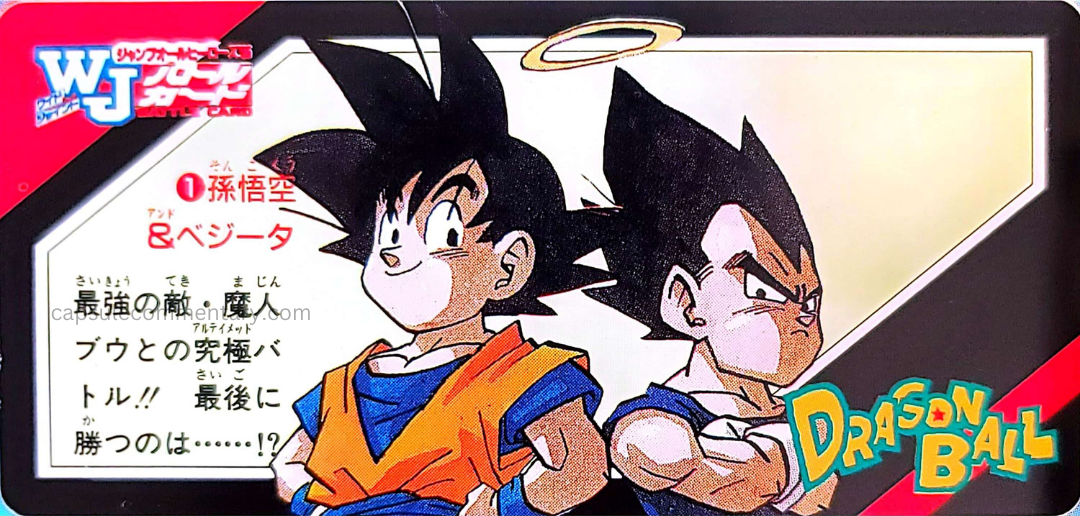
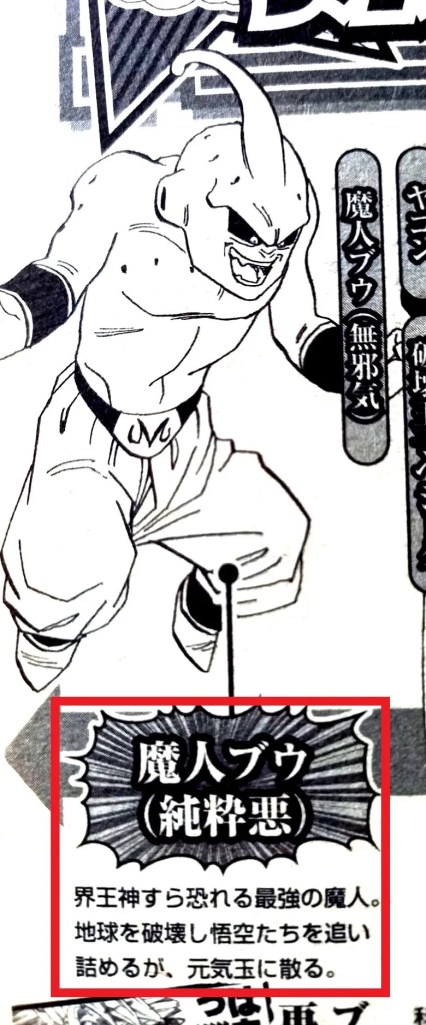
In Weekly Shōnen Jump 50th Anniversary Dragon Ball Best Scenes Top 10 on page 141, it refers to Kid Buu as the “strongest Majin.”55
Buuhan: 24, Kid Buu: 70.*
Final Tally for Other Media: Buuhan 24, Kid Buu 70.
If this tallying were weighted on how accurate or reliable each source is, the final tally would lean even more heavily in Kid Buu’s favor. You will also notice that a lot of official Dragon Ball media is absent, such as Trivial Pursuit: Dragon Ball Z Edition. This is not because I forgot about them, but rather because Buuhan is most likely not in whatever media you’re thinking of. It is telling in its own right that Dragon Ball media opt to include Kid Buu over Buuhan.
You may have noticed that I grouped decades of V-Jump issues, for example, into just “V-Jump,” instead of counting each issue separately, like: “V-Jump January 1996,” “V-Jump December 2018,” etc. The reason for this is that these magazines have shown remarkable consistency in their views on Kid Buu and Buuhan, even across decades and different editors. V-Jump, in effect, has had a consistent, singular voice. If I treated each issue as its own tally mark, it would look like I was artificially inflating Kid Buu’s numbers. Dragon Ball media already heavily favor Kid Buu as it is. Therefore, I chose to measure the consensus of the source.
The Suspension of Disbelief
For one last point before the conclusion, I feel it’s important to address the inconsistencies, retcons, and contrivances of the manga. Some fans believe that because the text of the Tankōbon and Kanzenban editions of the manga do not explicitly say, “Kid Buu is the strongest,” that this means it must not be true. The previous sections thoroughly debunk this, but I want to use this section to demonstrate why secondary sources (like the Chōzenshū) are useful. The following are some examples from only after Majin Buu appears.
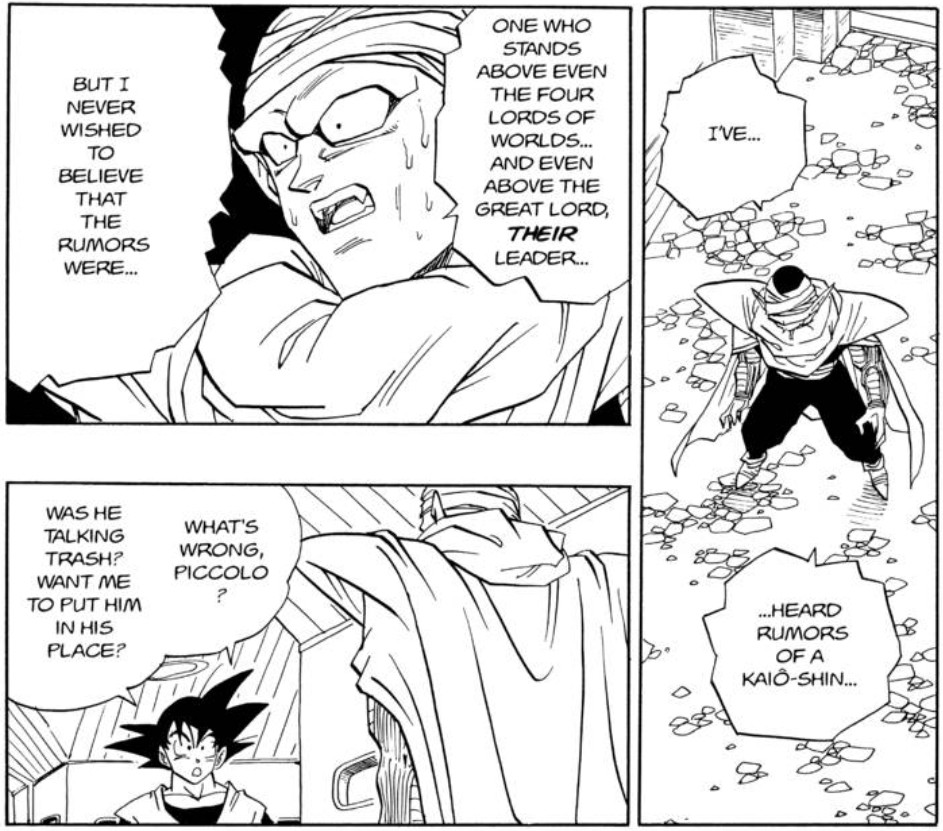
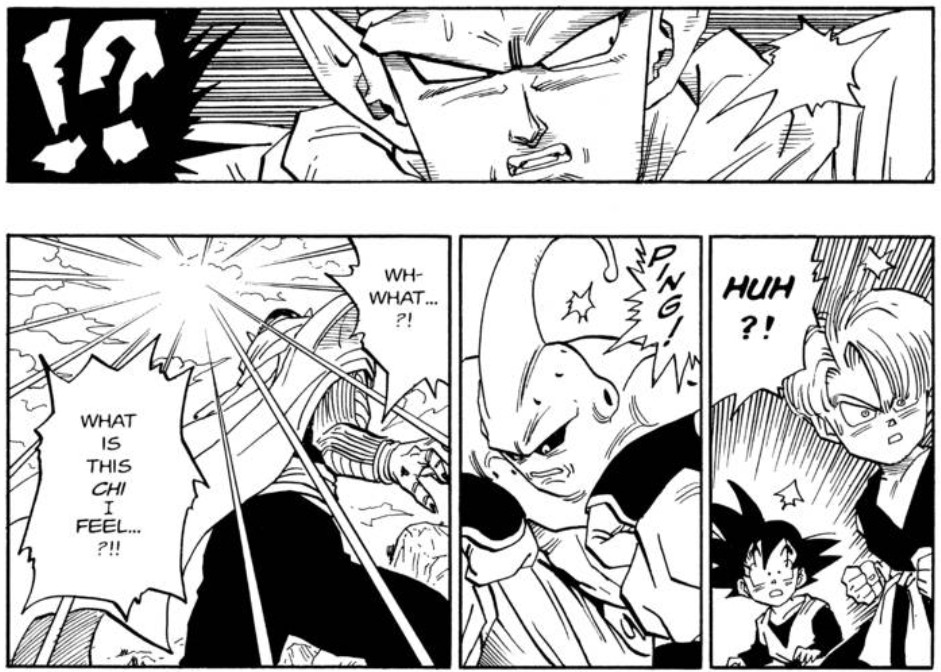
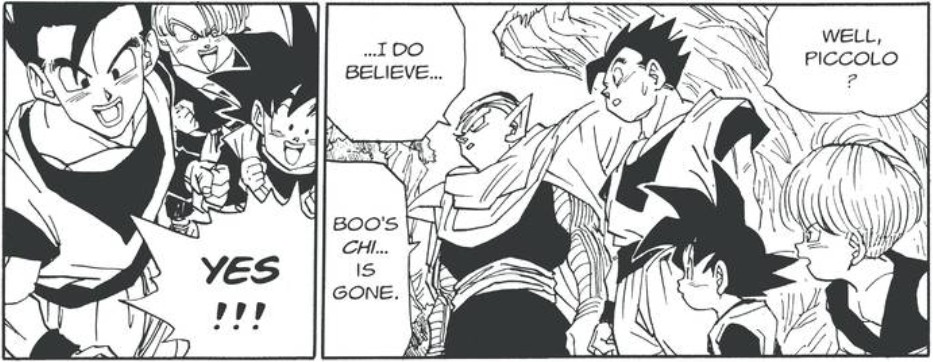
In chapter 437 on page 12, Piccolo shows that he doesn’t know who Kaiōshin and Kibito are. Next, on page 6 of chapter 440, he says he had only ever heard rumors of the Kaiōshin’s existence. Then, on page 13 of chapter 496, Piccolo shows that he couldn’t feel Gohan powering up on the Kaiōshin’s planet, even though Super Buu could. He only notices Gohan once he returns to Earth. Finally, on page 1 of chapter 517, Piccolo somehow is able to tell Kid Buu died on the Kaiōshin’s planet, despite never going there himself, not even knowing about the Kaiōshin until a day earlier, and never once demonstrating he could even sense ki there.
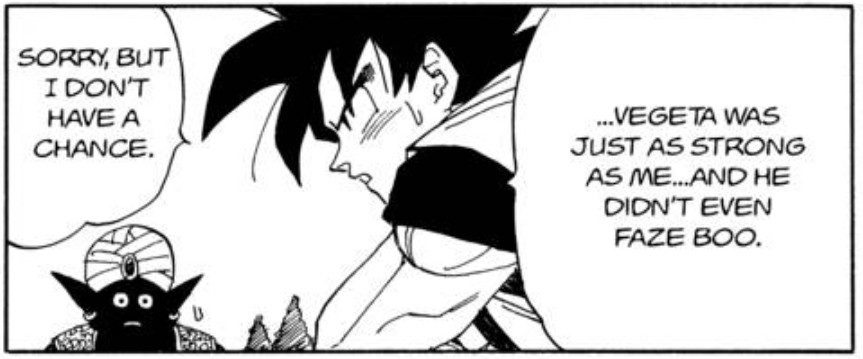
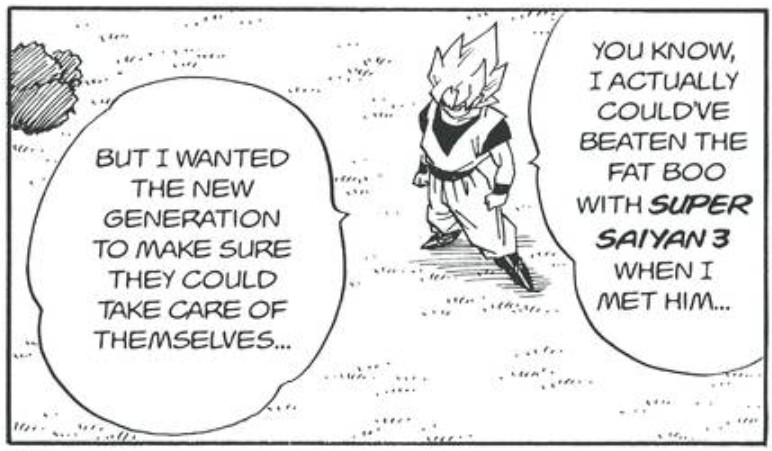
In chapter 469 on page 5, Goku says he cannot beat Fat Buu. He insists fusion is the only way to defeat Fat Buu on page 7 of chapter 471. He again says he can’t beat Fat Buu on page 9 of chapter 472. Next, he says he’ll manage against Fat Buu on page 6 of chapter 473, while also saying that he and Vegeta underestimated Fat Buu on page 8 of the same chapter. After that, he thinks to himself that he really doesn’t want to fight Fat Buu on page 1 of chapter 474. Then on pages 10 and 11 of 476, he tells Piccolo coyly that he wouldn’t be able to beat Fat Buu with Super Saiyan 3. Finally, he tells Vegeta that he could have beaten Fat Buu with Super Saiyan 3 on page 11 of chapter 509.
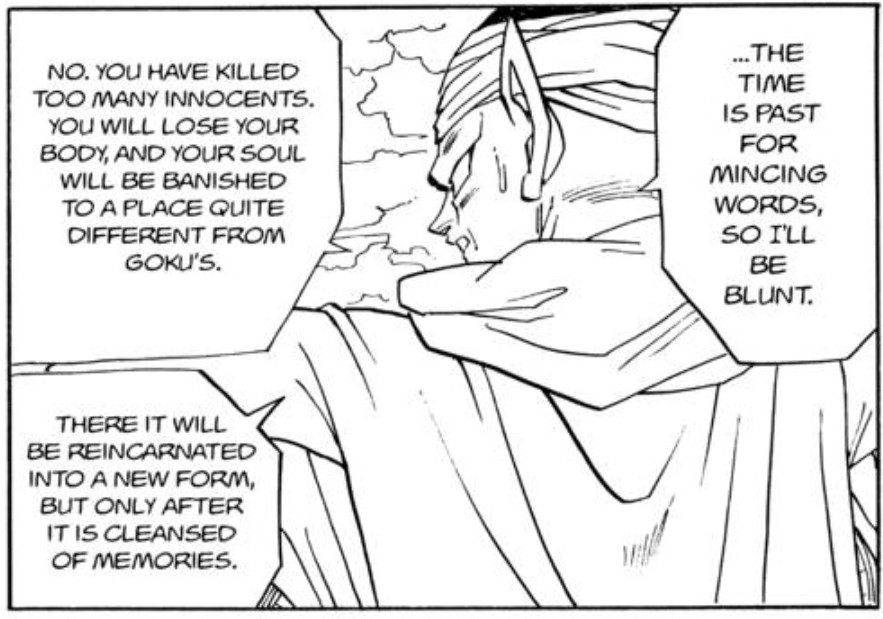
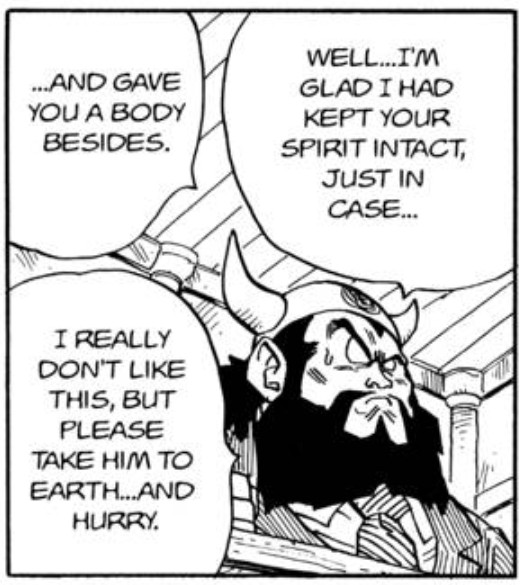
On page 5 of chapter 467, Piccolo tells Vegeta that his soul will transmigrate after his death, and reconfirms on page 7 of chapter 469 that Vegeta is going to Hell. But then Vegeta suddenly reappears on page 12 of chapter 500 because Enma Daiō preserved his soul and body.
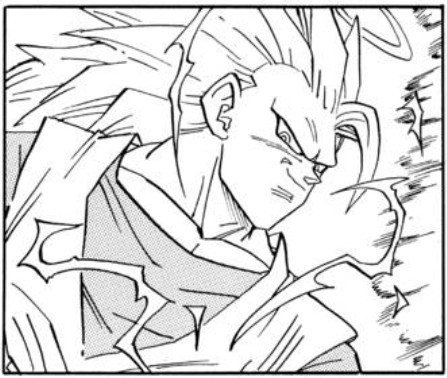
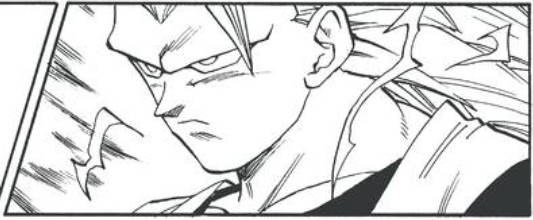
Throughout Goku’s entire fight with Fat Buu, his Super Saiyan 3 form has pupils. However, throughout the entire fight with Kid Buu, it doesn’t have pupils.
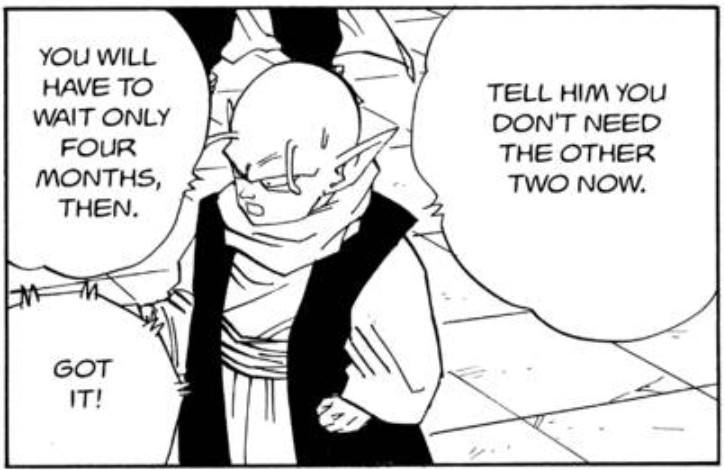
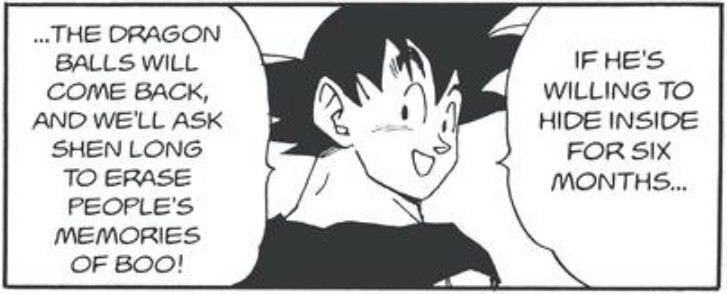
Dende, the creator of the Earth’s Dragon Balls, says it will only take 4 months for the Dragon Balls to reappear on page 12 of chapter 469. But then on page 5 of chapter 517, Goku says the Dragon Balls will come back after 6 months instead. On page 11 of the same chapter, the Narrator then re-confirms what Goku said.
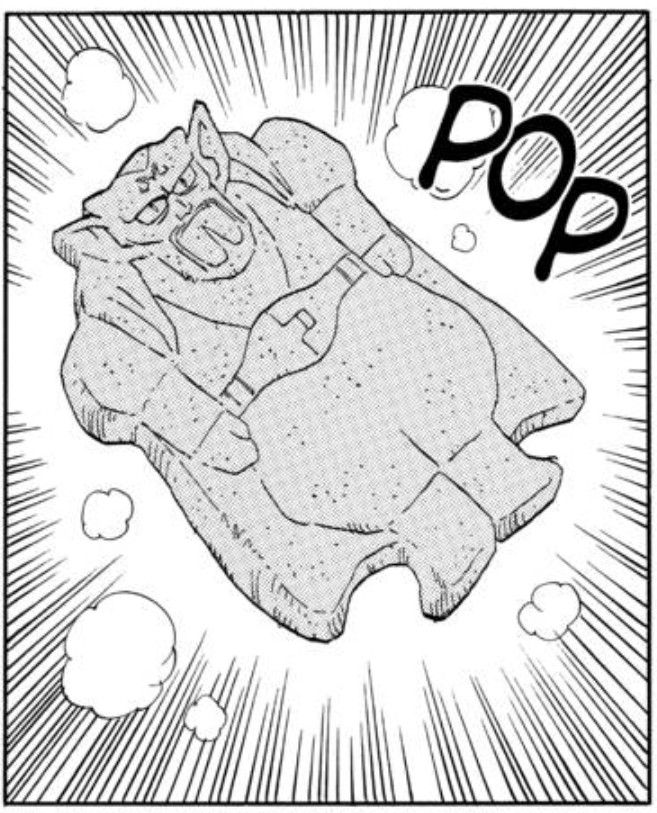
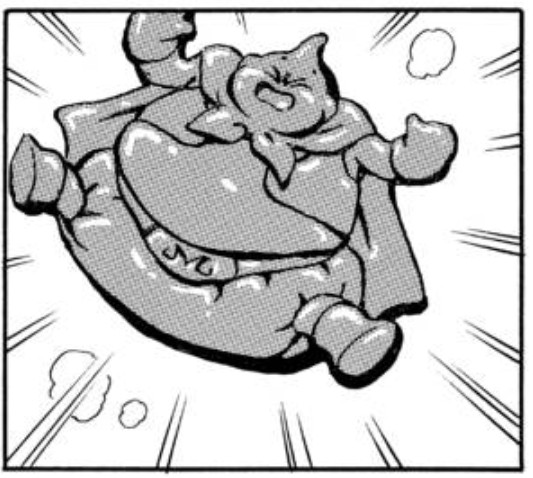
Majin Buu eats both Dabura (as Fat Buu) in chapter 464 on page 3 and Good Buu (as Evil Buu) in chapter 485 on page 9 after turning them into cookies, as well as countless others by turning them into various snacks. But then on page 1 of chapter 507, Super Buu explains that, despite every other absorption working by a piece of his body engulfing his target, he was somehow able to selectively absorb Good Buu by eating him.

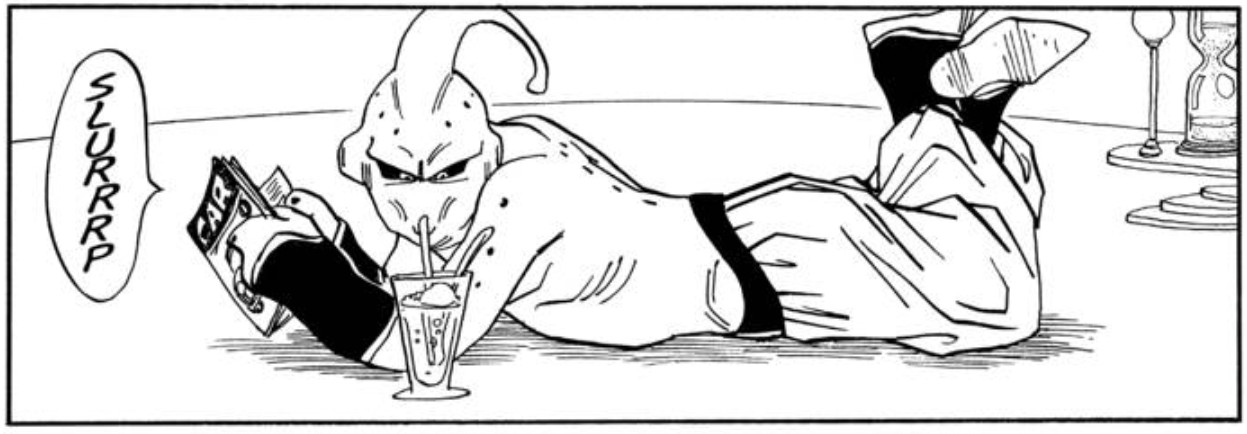
Trunks comments that the Room of Spirit and Time only has flour (“gross-looking powder” in Japanese) and water in chapter 488 on page 8. But then Super Buu is seen drinking an ice cream float (cream soda in Japanese) in that very same room on page 7 of chapter 491. (I know this is just a visual gag.)
Elder Kaiōshin says that Majin Buu will eventually make it to the Kaiōshin’s planet on page 10 in chapter 500. Goku then says Kid Buu can’t go there on page 7 of chapter 509. Then, everyone is shocked, including Elder Kaiōshin, when Kid Buu appears on the Kaiōshin’s planet on page 8 of the same chapter.


Vegito recognizes the Super Ghost Kamikaze Attack as Gotenks’s move on page 3 of chapter 505, but on page 1 of chapter 492, Goku establishes that he cannot see or sense what is happening in the Room of Spirit and Time, and Vegeta never once comments on if he could. On page 10 of chapter 503, Vegeta comments that he saw Goku’s Super Saiyan 3 form, but was shocked to find out that Bulma was eaten (among others), which means he stopped watching sometime between chapter 474 and chapter 493. The only way for this to logically work would be for Vegeta to watch all of the battle in the Room of Spirit and Time and then immediately stop watching once Super Buu escaped, which seems extremely unlikely.
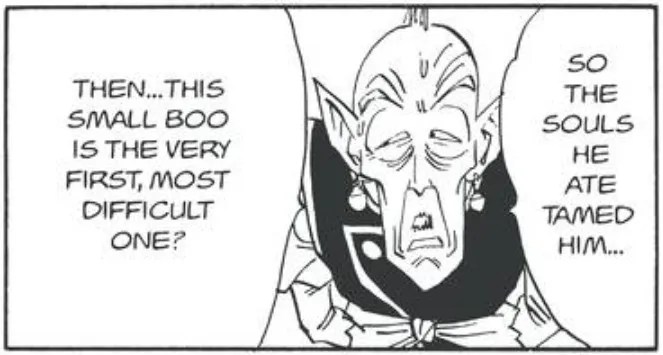
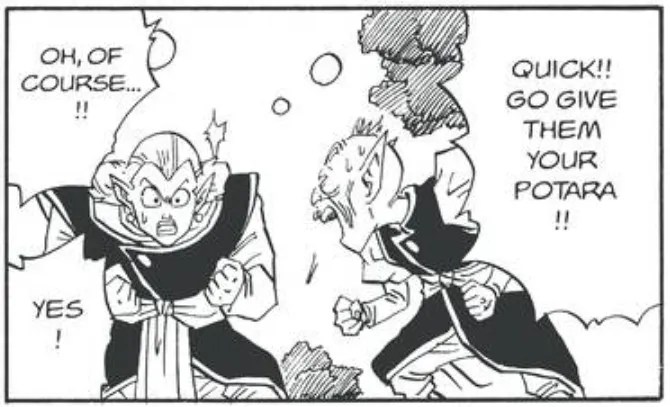
In chapter 501 on page 7, Elder Kaiōshin gives Goku his Potara earrings. Next, in chapters 504 and 505, he is seen wearing the Potara again. Then, in chapter 506, he doesn’t have any Potara again. Finally, just in chapter 508 alone, on page 1 he does not have Potara, on page 4 he has Potara, and on page 9 he does not have Potara again.
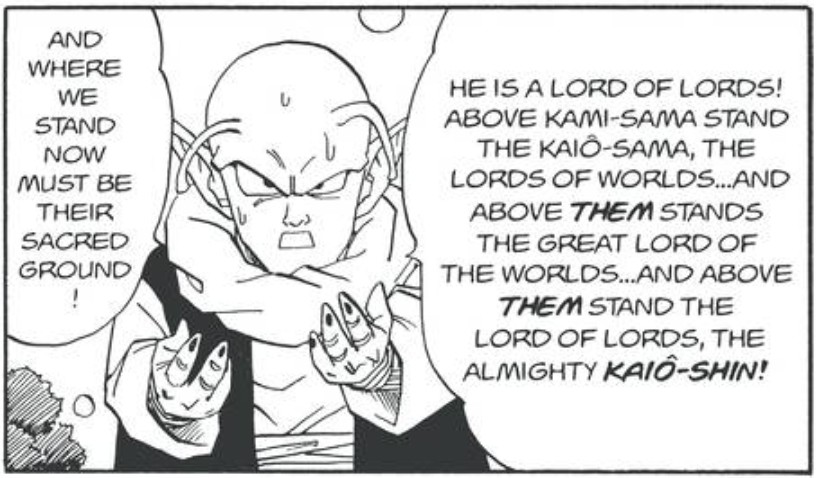
Dende mentions the “anime only” Dai Kaiō on page 2 of chapter 509. Notably, Toriyama also added Bardock to chapter 307 after watching Dragon Ball Z: Bardock — The Father of Goku. Thus, separating the anime and manga into separate continuities isn’t as well-defined as some fans think.
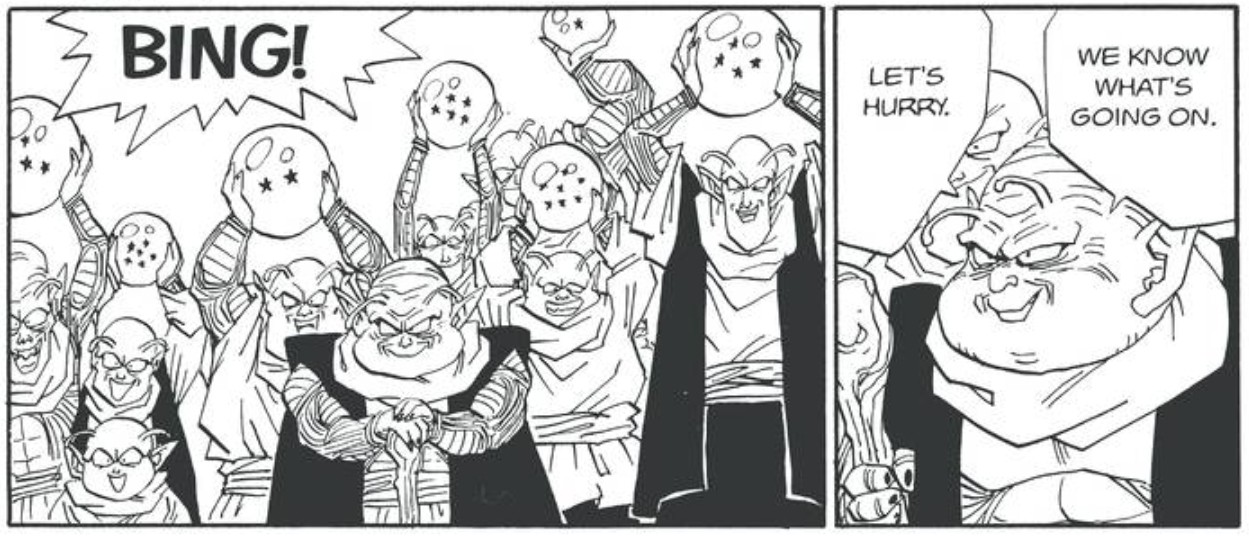
On pages 8 and 9 of chapter 513, the Namekians somehow knew what was happening not only on Earth but also on the Kaiōshin’s planet, despite having no means to watch these events unfold. They had already gathered all of their Dragon Balls in advance, and on page 11 of the same chapter, they mention having upgraded Porunga.
#17 says he hasn’t heard Goku’s voice in a long time on page 7 of chapter 515, but literally the day before, we know that everyone on Earth (which includes #17) could hear Goku’s voice when he was fighting Fat Buu. We know this because Babidi was broadcasting that fight and Trunks reacted to Goku scolding him through this broadcast on page 2 of chapter 474. While #17 and Goku never met during the Cell Saga, #17 tells Goku in Dragon Ball Super chapter 31 on page 32 that he saw him and heard his voice while inside of Cell.

And finally, Kuririn (and Tori-Bot) breaks the fourth wall on page 9 of chapter 480.56 Was Tori-Bot on God’s Temple? Obviously, this is a Dr. Slump-esque gag, but I am highlighting this as it demonstrates the inconsistency in some fans’ approach where they take some moments as verbatim canon while dismissing others, like this one, and dismissing statements by Toriyama.
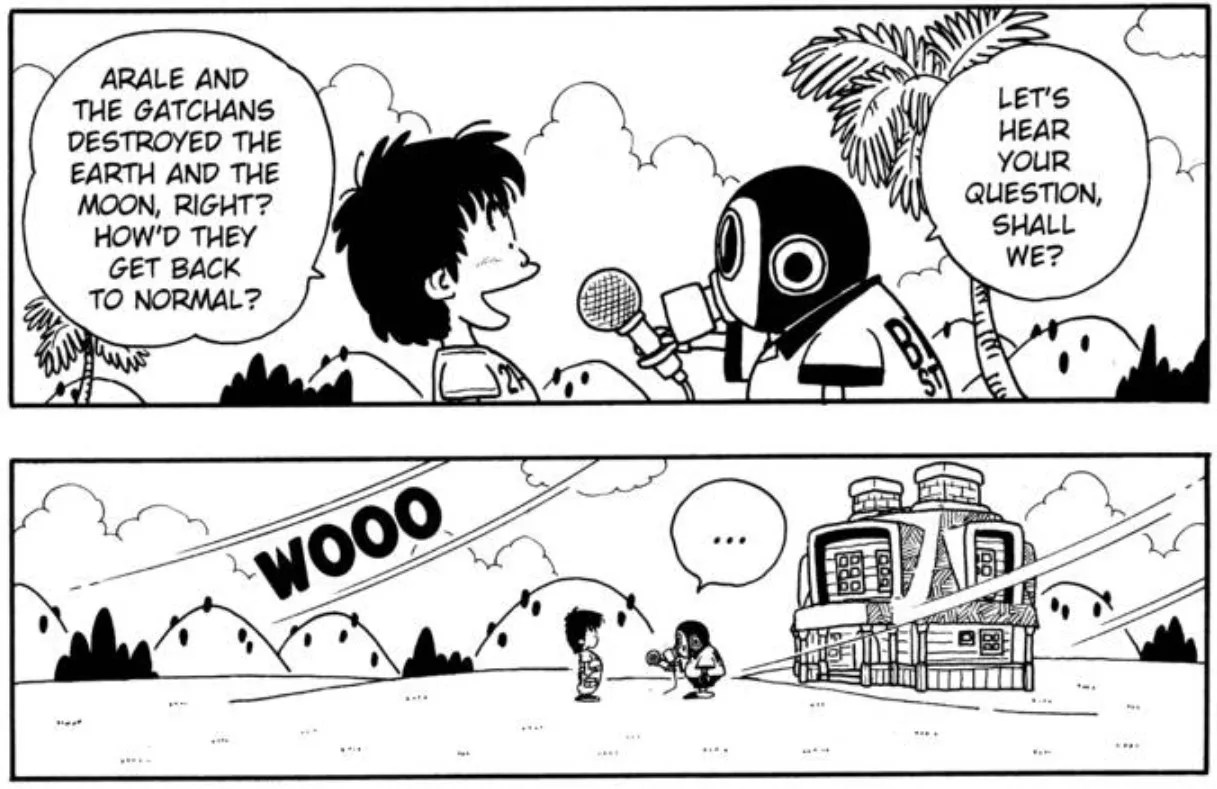
Keep in mind that all of these are only from after Majin Buu appears. There are another 400+ chapters of inconsistencies, retcons, and contrivances, such as Dende being a young adult in chapter 426 and a kid again in chapter 469, Future Trunks saying the androids from his timeline are #19 and #20 in chapter 335, and Kaiōshin and Kibito having regular earrings in chapter 446. Secondary sources, such as interviews, help resolve these inconsistencies and contrivances by allowing Toriyama and Shueisha to establish what is actually canon.
As an aside, Shueisha also had more creative influence over the story than some fans may know. Torishima, Toriyama’s first editor, even refers to Dragon Ball as a work he and Toriyama built together. Kondō, Toriyama’s second editor, explained in his interview for Dragon Ball 30th Anniversary: Super History Book how he essentially created the character motivation of Freeza, saying: “Once I was assigned the series, the question was, ‘What should the Saiyans come for?’ Around the time of the Bubbles stuff, I thought, ‘Let’s go with space real estate agents.’ Toriyama-sensei found that funny, and that’s how Freeza came to be. When it came to big story beats, we’d meet in person, but normally, we communicated by phone. The future developments were never fully planned out…”
The Buu Saga alone is rife with inconsistencies: unexplained changes in established rules (the Dragon Balls, etc.), selective absorption mechanics (gaining Good Buu’s power after transforming him into a cookie, not absorbing others that same way, etc.), and wildly inconsistent power levels (Tenshinhan stopping an attack that a fully-healed Gohan couldn’t, Gotenks using Super Saiyan 3 despite him and his halves not even knowing Super Saiyan 2, Buutenks explaining he absorbs the second strongest fighter and then absorbing Gohan instead of Goku, etc.) There isn’t even consistency in a single chapter on whether or not Elder Kaiōshin is wearing the Potara.57 As Torishima explained to Koji Inada on page 174 of Dr. Mashirito’s Ultimate Manga Techniques: “You’re not as level-headed as Mr. Toriyama or Mr. Katsura. Or rather, if they realize, ‘Nope, this character’s no good,’ they’ll switch gears relatively quickly.” So, with all of these blatant inconsistencies and contrivances, the question that remains is: Why do some fans ONLY lose their suspension of disbelief when it comes to Kid Buu?
Conclusion: Kid Buu is Stronger than Buuhan!
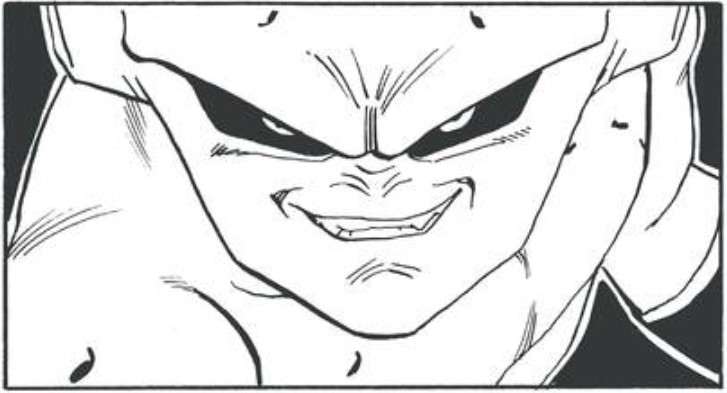
Conclusion: Kid Buu is Stronger than Buuhan!
Dragon Ball fans have debated this for 3 decades with many articles and videos claiming to end the debate. However, this article has gone into far,far more depth than anything else covering this debate by examining hundreds of sources, and importing guidebooks. So, objectively considering all of the evidence carefully, Kid Buu is stronger than Buuhan. Although there is some evidence that says Buuhan is stronger, the evidence for Kid Buu is so overwhelming that it supports him both qualitatively and quantitatively. And so, the debate is officially over!
Some of the people who believe Buuhan is stronger are following good logic: in the manga, Goku only had 2 fights to surpass Gohan (vs. Buuhan as Vegito and vs. Kid Buu), and Super Buu absorbing Gohan is a considerable power boost. Following “good logic” does not work with the Buu Saga or Saiyans though. For the first case: removing Good Buu should have made Super Buu revert back into Evil Buu, but instead Kid Buu was revealed. For the second case: Goku went from being weaker than Super Buu to being just as strong as Buuhan in a single fight without a new transformation (according to V-Jump). And as a second example about Saiyans: Gohan also rose from being weaker than himself 7 years earlier to being stronger than Goku (before the Kid Buu fight) in a single day. I have purposefully excluded the Potara argument here, as this argument only works in the anime and does not work in the manga. The logic employed by Buuhan supporters also ignores basic tropes we’ve seen repeated again and again throughout all of Dragon Ball: underestimating the final form of a villain, small characters being surprisingly powerful, etc. Thus, the pro-Buuhan perspective can only logically work within a vacuum of just the Buu Saga. In short: believing Buuhan is stronger than Kid Buu is a reasonable conclusion to come to if you’ve only read the Buu Saga in the Tankōbon or Kanzenban versions of the manga, have never read any other Dragon Ball story arc, have never engaged with any other Dragon Ball content (such as the anime), and/or have never read any of Toriyama’s other works.

![Dragon Ball: Chōzenshū 2 page 348. Toriyama: "...Even when I draw the manga, [Nozawa's] voice kind of floats into my mind... By now, Nozawa-san and Goku are completely inseparable."](https://capsulecommentary.com/wp-content/uploads/2025/02/toriyamanozawa.png)
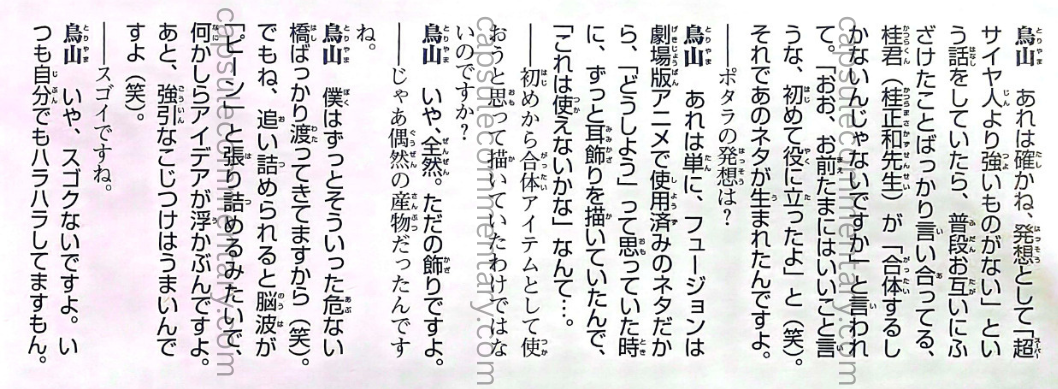
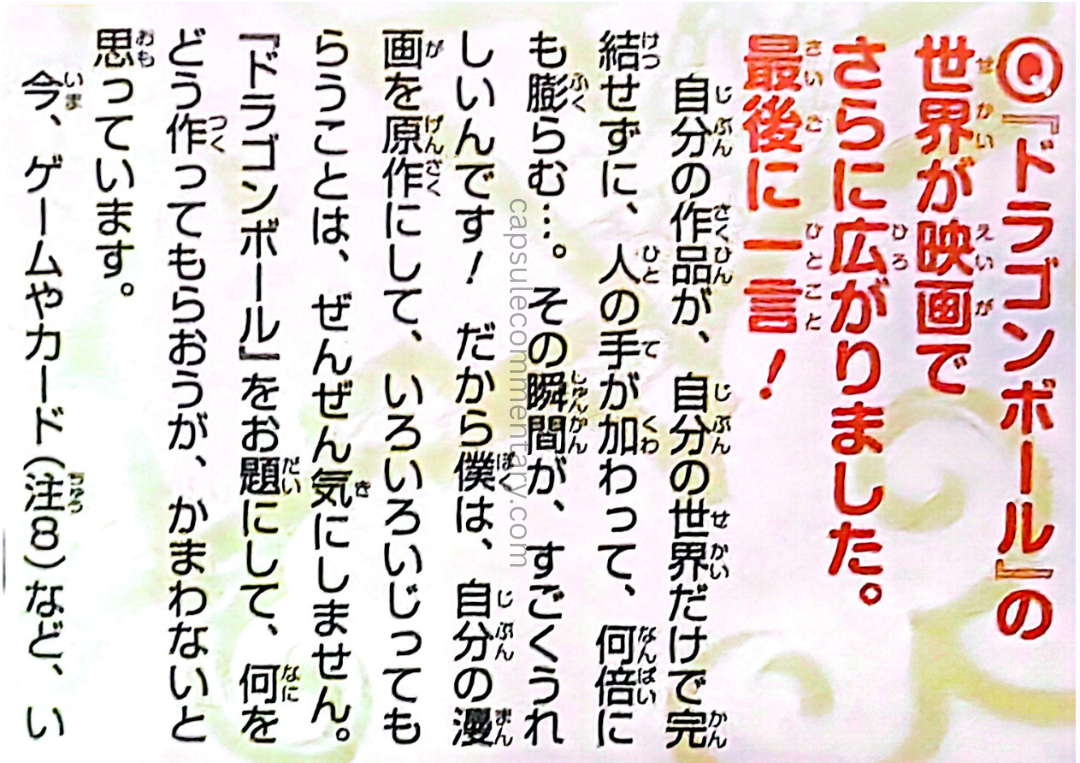
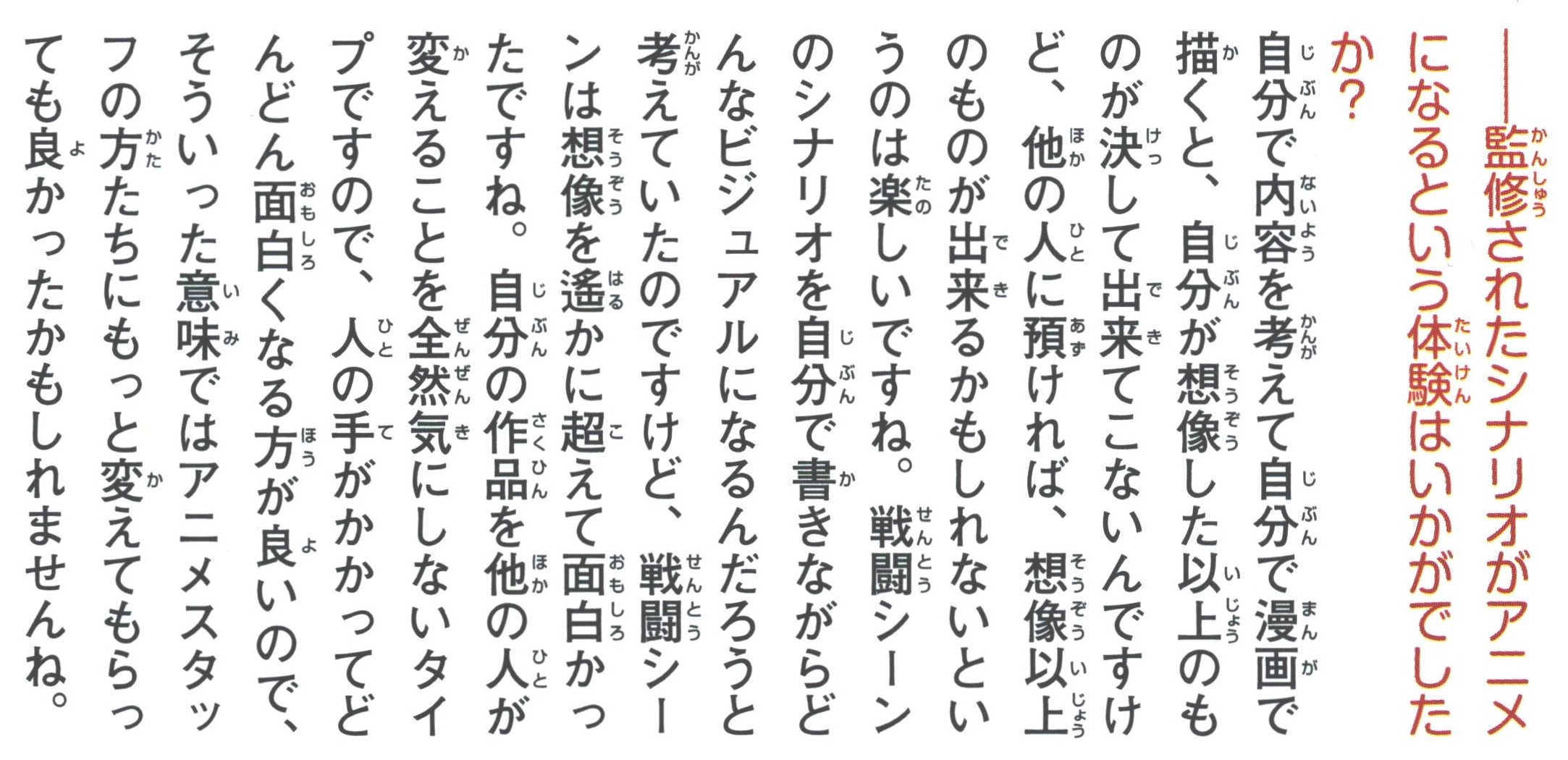
![Rejected: The 'Unpopular' Work Techniques of the Legendary Editor-in-chief of Weekly Shōnen Jump page 89. Ryū Amano (Interviewer): "So… was it something that absolutely had to be done?" Torishima: "In the manga, [Goku killing Piccolo Daimaō] was an extremely intense scene. But in the anime, they softened the direction, and it turned into something like, 'This is already no good.' So I replaced the producer." Amano: "You really replaced him?" Torishima: "Yes. I replaced him. I’d been dissatisfied for a long time already, but I thought leaving it like that any longer would be bad. When it came to that, I said, 'Alright, that’s enough. Let’s stop.' I was prepared to pull everything. Because the original work is everything. You can’t neglect protecting the work itself or the creator’s brand."](https://capsulecommentary.com/wp-content/uploads/2026/01/162.png)
![TV Anime Guide: Dragon Ball Tenka’ichi Densetsu page 111. Interviewer: "After Kuririn died, you went on to play Yajirobe, right?" Tanaka: "Yajirobe was personally chosen for me by Toriyama-sensei, so I was really happy! Even in the manga, Goku says to Yajirobe, 'Hey, your voice sounds like Kuririn's,' right? So they said, 'Then let's make the anime cast the same [voice actor] as Kuririn," and that's how it happened! (laughs)"](https://capsulecommentary.com/wp-content/uploads/2025/02/409.png)
Some Buuhan supporters (who are unaware of the statements in Kid Buu’s favor in Weekly Shōnen Jump, the Sōshūhen edition of the manga, and the Full Color edition of the manga) argue for a distinct separation between the anime and manga, and prefer to see them as separate continuities, despite the evidence that shows they are interrelated. This stance is likely in response to the anime’s many statements on Kid Buu’s superiority, and to limit the amount of evidence applicable to Kid Buu. This is something unique to the Dragon Ball fandom as most other large fandoms are able to accept sequels as canon and retcons as valid (e.g., Darth Vader being the killer of Luke’s father in Star Wars: A New Hope and Luke’s father in The Empire Strikes Back). As referenced earlier in this article, Toriyama’s Dragon Ball manga was also influenced by the anime, the anime’s scripts were personally approved of by his editors, and his first editor replaced the entire anime staff when they weren’t able to adapt the manga faithfully. Toriyama even heard Nozawa’s voice when he wrote Goku’s lines, changed the way he depicted fights after watching fights animated, and made Yajirobe and Kuririn have the same voice actor.
Here are some examples of how the manga was influenced by the anime:
- Dai Kaiō (“the Great Lord of Worlds” in the official English translation), which Toriyama created for the anime’s Other World filler arc is referenced multiple times in the manga despite never appearing in it. Dende, Elder Kaiōshin, Kaiōshin, Kibito, and Piccolo all acknowledge his existence in chapters 440, 470, and 509.
- Launch stopped appearing in the manga because her voice actor, Mami Koyama, asked Toriyama to write her out.
- On page 348 of Dragon Ball: Chōzenshū 2, Toriyama explained that he heard Nozawa’s voice when he wrote Goku’s dialogue.
- On page 349 of Dragon Ball: Chōzenshū 2, Toriyama explained that he changed the way he depicted fights after seeing how they were animated in the anime.
- On page 350 of Dragon Ball: Chōzenshū 3 and on page 5 of Le Manga de Légende No. 42, Toriyama explained that Vegito only exists because of Gogeta in Dragon Ball Z: Fusion Reborn. Gogeta is the Metamoran Fusion of Goku and Vegeta, so Toriyama invented the idea of Potara Fusion. If you only look at the release dates, it may seem like Vegito was the original, but you have to keep in mind that it takes months to produce a movie.
- On page 78 of Dragon Ball: Episode of Bardock, Toriyama explained that Bardock was originally from the anime. Bardock, who first appeared in the anime TV special, Dragon Ball Z: Bardock – The Father of Goku, later appeared in chapter 307 because of how much Toriyama enjoyed the special.
- Page 5 of Dragon Ball Super chapter 3 shows Kid Vegeta and King Vegeta as they were depicted in the anime.
- Page 2 of Dragon Ball Super chapter 52 has the Yardratian designs first created by the anime.
- Olibu, a character from the Other World filler arc, appeared as a statue in Dragon Ball Super chapter 104 on pages 11 and 12, and is mentioned by Wu Ou, an NPC near Karin’s Tower in Dragon Ball Online. I apologize for not having a picture of Wu Ou saying the story of Olibu because it was during a timed cutscene that I wasn’t expecting. However, I included a picture of the NPC below.
- On page 90 of Jump Comics Deluxe: Akira Toriyama The World, Torishima and Toriyama briefly discuss how he changed how he drew Kintōun after seeing it animated.
- On page 111 of TV Anime Guide: Dragon Ball Tenka’ichi Densetsu, Tanaka (Kuririn’s voice actor) explained that Toriyama essentially chose her to play Yajirobe as Goku explained his voice sounded the same as Kuririn’s in the manga. This was likely done because Kuririn had just died in the story and Tanaka wouldn’t have otherwise been a part of the cast for a while.
- On page 211 of TV Anime Guide: Dragon Ball Z Son Goku Densetsu, South Kaiō is introduced as an anime original character. This character also appears in the manga and technically debuted in it before he appeared in the anime. However, it took Toei approximately three months after the release of a Dragon Ball chapter to create an episode based on it. South Kaiō appeared in the manga only about a month and a half before he appeared in the anime, which means that his production was already well underway for the anime.
These examples demonstrate that the anime and manga are a lot more integrated than some fans want to believe.
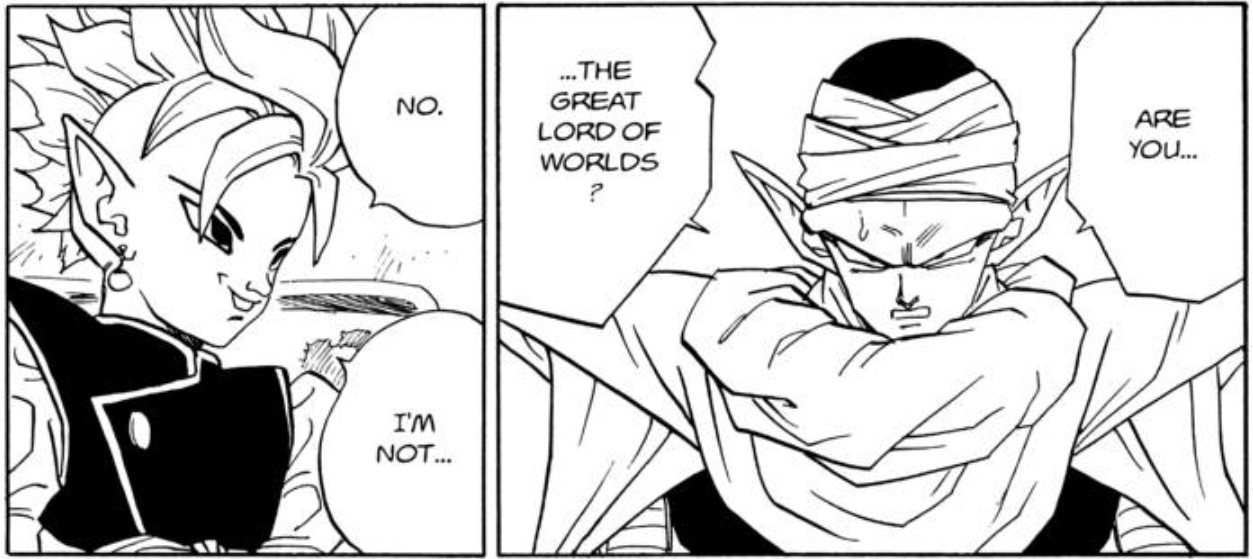
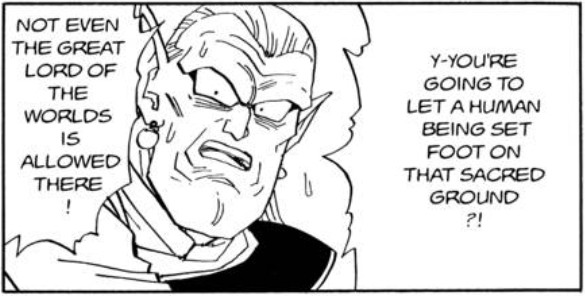


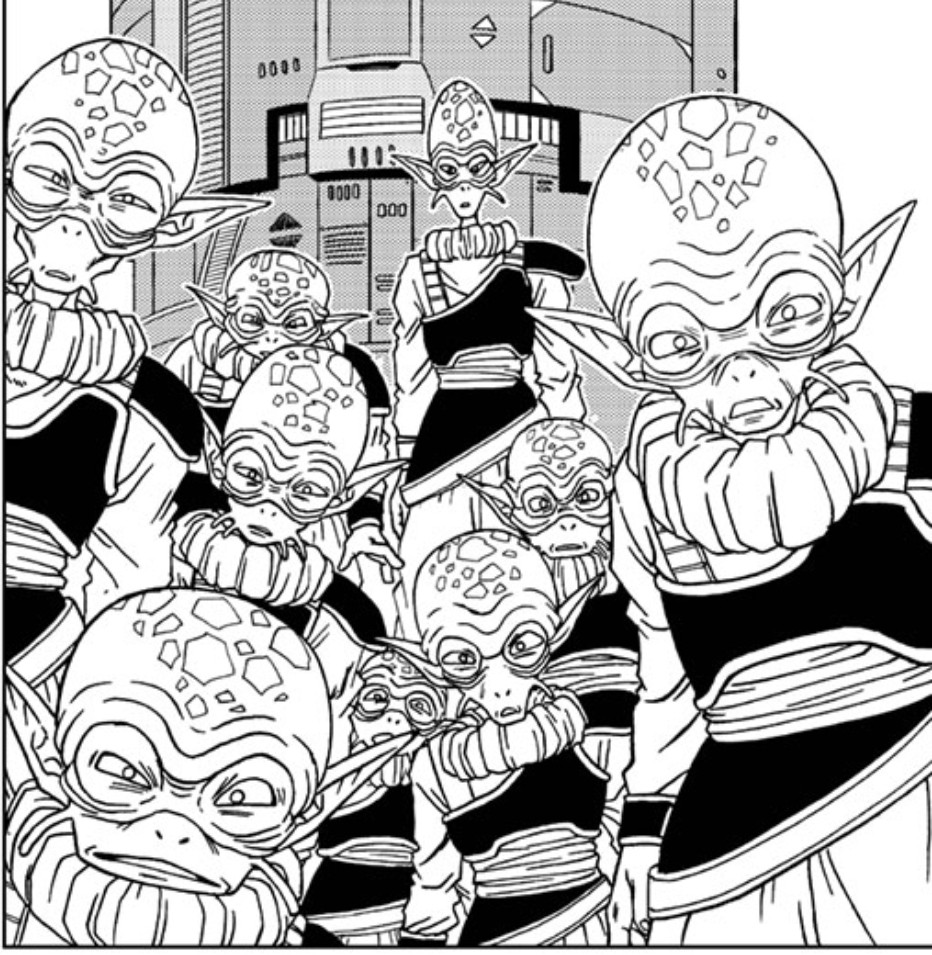
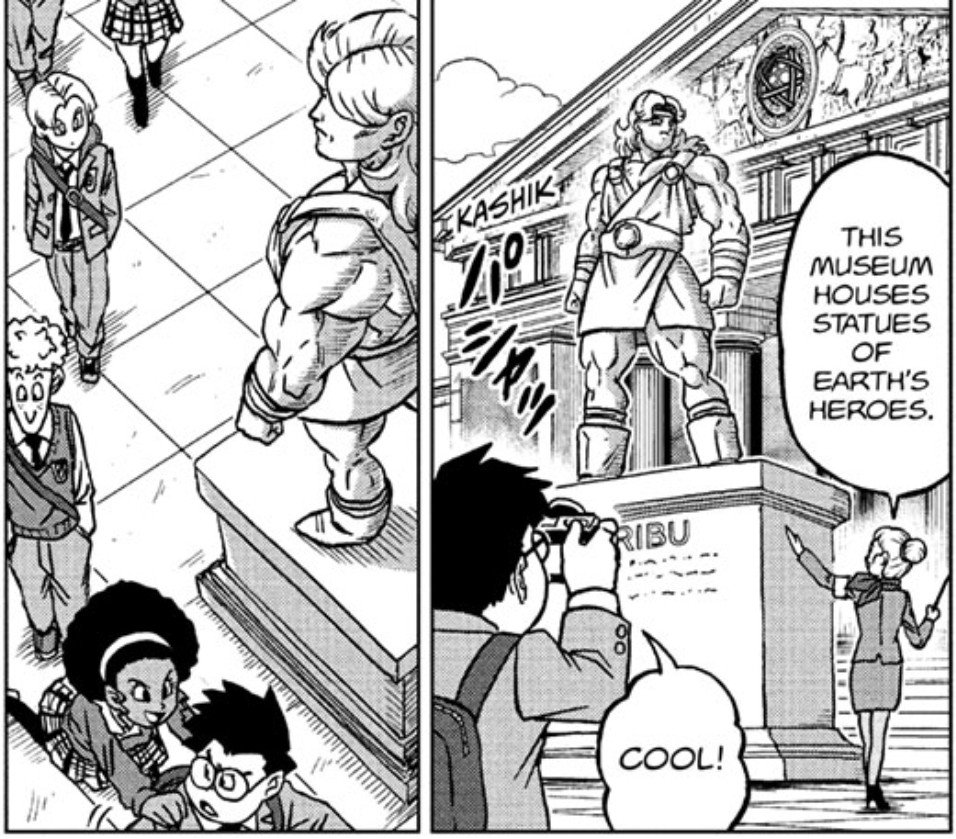

In Saikyō Jump August 2022 on page 613 and repeated in Dr. Mashirito’s Ultimate Manga Techniques on page 169, Torishima explained his grievances with the original Dragon Ball anime and how he exploded at the producers for not matching the manga’s intent. He considered this a second failure as the Dr. Slump anime adaptation also failed to capture the manga’s intent correctly. This was corrected with the production of the sequel series, Dragon Ball Z, where Torishima expressed his satisfaction with it: “In the anime version, unlike before, both the sharpness of the action and the tempo were outstanding.” He also explained in his second book, Rejected: The ‘Unpopular’ Work Methods of Weekly Shōnen Jump’s Legendary Editor-in-chief on page 133: “By that point I already had a certain level of knowledge about anime, so I clearly laid everything out from our side: ‘Do everything the way we say, including the scriptwriter and character designs. Don’t move forward on anything unless we give our OK.’” And on page 149: “With Z, from the very beginning of production, we properly put the original work and the original author front and center and were able to take leadership, so it went well.” Thus, the statements on Kid Buu in the anime hold even more weight as they were not only likely approved of by Takeda, but even Torishima saw Dragon Ball Z as a faithful adaptation of the manga. Of course it’s not a perfect adaptation and has filler content If the anime were to simply make a one-to-one copy of the manga, they would have caught up to it immediately and caused serious issues at Fuji TV. Furthermore, Dragon Ball Kai, an even more faithful adaptation of the manga, preserved most of those lines on Kid Buu.

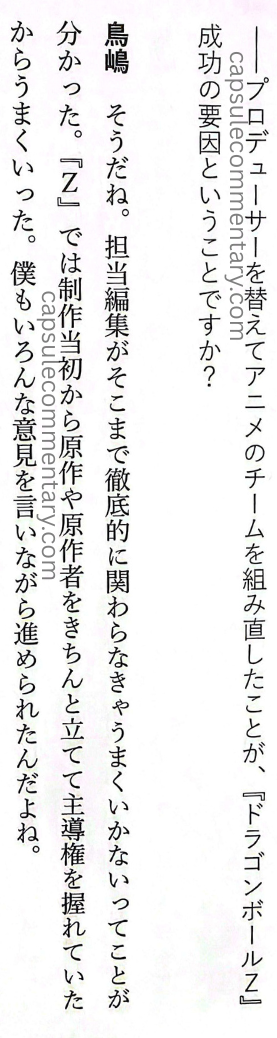

The other issue with this argument is that there isn’t a single version of “the manga” — there are four: the original version published in Weekly Shōnen Jump, the Tankōbon (most familiar to English readers), the Kanzenban (which the digitally colored editions are based on), and the Sōshūhen (Weekly Shōnen Jump meets Kanzenban). So when Buuhan supporters call for a strict, literal view of the manga, it needs to be understood that there isn’t even a single version of it. And most importantly, Toriyama is on record multiple times ENDORSING filler additions to his work. Relatedly, at Japan Expo 2025, Torishima said that there is “no strict continuity,” and Toyotarō said, “… for me, everything is more-or-less canon.” For those of you familiar with biblical debates, this argumentation by Buuhan supporters is similar to the inerrancy argument: only what is written in the Bible itself matters and there are no errors, and what I’ve constructed in this article is similar to the historical-critical argument: many considerations, like context, are required for a true understanding and errors exist. If Toriyama himself acknowledges outside materials such as the anime, even adjusting his manga due to them, and has endorsed filler material — and if his editors were directly involved in approving anime scripts — then why should we act as though the manga exists in a vacuum, or that filler is always wrong?
To briefly return to the Southern Kaiōshin Buu now in the conclusion, we know that there is not even a single official statement anywhere that says this form is the strongest form of Majin Buu. I personally have not seen any fans ever argue this case either. However, let’s discuss Majin Buu’s absorptions one last time. It is well-established that absorbing Dai Kaiōshin weakened Majin Buu and also that Kid Buu is the strongest form. Page 110 of Chōzenshū 4 also states that absorbing the Southern Kaiōshin made Buu become more docile. And as shown earlier, Dragon Ball: Forever on page 140 directly compares Kid Buu to the Southern Kaiōshin Buu (and the other forms of Buu) by saying he has “powered-up” after becoming Kid Buu. If absorbing the Southern Kaiōshin strengthened Majin Buu, then this would undoubtedly be the strongest form because it would be extra power on top of Kid Buu’s power. Therefore, due to the overwhelming evidence in Kid Buu’s favor and little to no evidence in the Southern Kaiōshin Buu’s favor58, it can be concluded without a shadow of a doubt that the Southern Kaiōshin must have also weakened Majin Buu.
Toriyama himself has said many times that he only wrote simple manga. The next bad guy, the next transformation, etc. is always stronger than the last. It’s really as simple as that. During the Cell Games, Perfect Cell spat out #18, reverted to Semi-Perfect Cell, but then returned for the final fight as Super Perfect Cell instead of as Super Semi-Perfect Cell because the bad guys in Dragon Ball need to constantly keep getting stronger and be defeated at their absolute strongest, even if it isn’t “logical.” So Toriyama couldn’t have Super Buu return to Evil Buu because that form was weaker than Super Buu, and he couldn’t have Goku be weaker than Gohan because then why wouldn’t they just bring Gohan to fight Kid Buu? This was a conscious effort by Toriyama to keep his young audience satisfied with an escalating foe, and why it was necessary for so many characters to plainly state that Goku and Kid Buu were the strongest (or “number one”) throughout different mediums. One may deride this as “bad writing,” but that doesn’t change the fact that this was Toriyama’s decision and is a well-established trend within Dragon Ball.
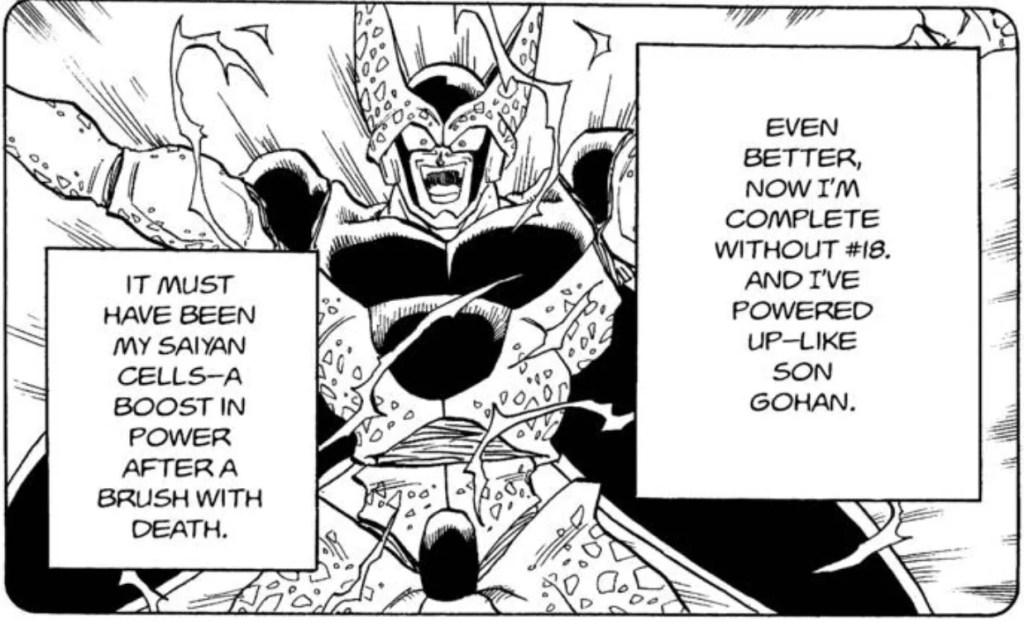
This panel of Cell serves as a prominent example of an arc’s final villain becoming their strongest despite how “illogical” it may seem. Cell lost #18 and should not be able to be in his Perfect form, and yet he is, and even stronger than before. Similar to Kid Buu, we are only given a few lines of exposition to explain this. The key difference between the two villains (Super Perfect Cell and Kid Buu) is that Cell actually speaks and Kid Buu doesn’t. So readers believe Cell when he says that he is stronger, while Kid Buu is either incapable of speaking or sees no reason to. This is why Kibitoshin needed to explain it to the readers. Cell and Majin Buu also follow a similar story arc. They both start out with absorbing characters to gain strength, but then they both lose these absorptions and somehow get even stronger without them.
Stan Lee, the iconic creator of many Marvel superheroes, succinctly and jocularly described his position on hero versus hero questions saying, “These are fictitious characters. The writer can do whatever he wants with them.” Power-scaling by fans means nothing to the creators of these characters. As Stan Lee explains, if he wants Spider-Man to beat the Thing, then he will, and likewise, if Toriyama wants Kid Buu to be the strongest form of Majin Buu, then he is. It is similar to how Toriyama says that Kuririn is the strongest Earthling despite Tenshinhan having greater feats than him. The author decides what is true for their story, and Toriyama is on record stating that he changed their power dynamics constantly as he wrote. This is also why Toriyama, as the designer for Dragon Ball Online, made Kid Buu the power-up transformation for the Majin race, and not an absorption of other characters.
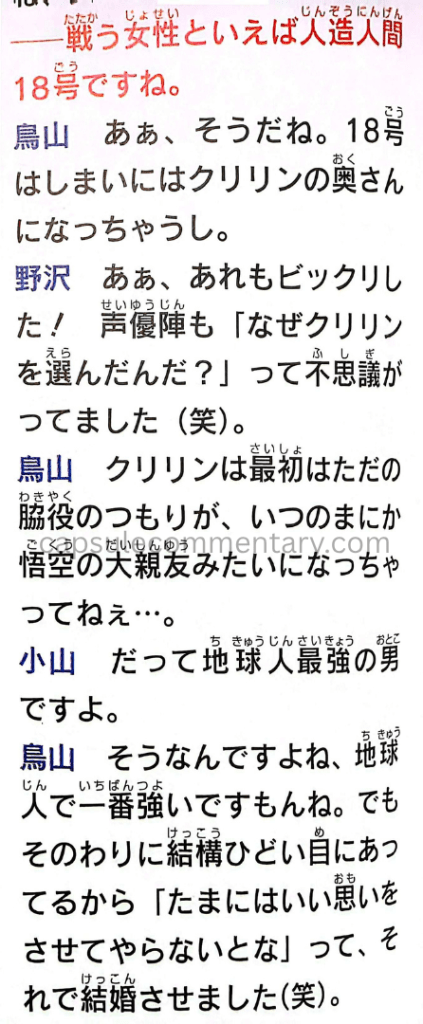
A power-scaler’s personal definition of strength doesn’t outweigh the author’s. Power-scaling catchphrases like “feats > statements” are not actually useful for understanding in-franchise debates, such as Kid Buu vs. Buuhan, because they impose external standards for measuring internal strength differences. In the case of Dragon Ball, Toriyama, Shueisha, Toei, Bird Studio, and Capsule Corporation Tokyo define the power dynamics used and those internal choices are not open to reinterpretation through external metrics. Popular fan or power-scaling interpretations do not override the intent nor the authority of the creators of Dragon Ball. If a fan interpretation contradicts what is explicitly stated dozens and dozens and dozens and dozens of times across multiple mediums, then that fan interpretation cannot be considered valid, no matter how widespread or popular it is.
Appeals to modern online consensus over which Buu is the strongest are also not methodologically sound. Polls conducted on YouTube, Reddit, Facebook, etc. represent non-random self-selecting samples of highly engaged fans — not the original and intended readership of Dragon Ball (Japanese boys aged roughly 7 to 15 years old). These modern fan communities are also shaped by existing discourse on this debate, creating echo chambers and feedback loops that reinforce whatever the dominant interpretation may be over time. It is impossible to say with certainty what most fans believe and even if a majority of today’s fans favor one position, that does not retroactively determine authorial intent from the mid-1990s. Toriyama’s intent can only be evaluated through his own statements, his editor’s statements, the manga’s internal logic, and official content by Shueisha — not through YouTube polls59 or Reddit upvotes.
With that said, while Buuhan being the strongest Buu is certainly a popular opinion online, there is no reliable correlation between an opinion being popular and its correctness. Early interpretations, especially when they are promoted by prominent members of a fandom, can shape discourse for years (or in our case, decades) to come. In social settings like a fandom, making a claim early and repeating it often is an effective strategy for controlling discussion. Here is an example of a prominent Dragon Ball content creator making the claim that Buuhan is stronger than Kid Buu early and often: one, two, three, four, five, six, seven, and eight. The reason this works is due to cognitive effects called the primacy effect, anchoring, and the illusory truth effect. The first claim people hear, regardless of its validity, tends to stick disproportionately in their minds simply because they heard it first (the primacy effect). At the same time, it sets the boundaries on how a topic can be discussed (anchoring). Repetition further increases the perceived credibility of a claim by making a claim appear true simply because it is heard so often (illusory truth effect). These techniques are widely used in politics where early framing and repeated claims can shape the public’s perception of an issue. In fandom spaces with highly engaged fans, such as a Dragon Ball power-scaling community, this creates feedback loops where the same interpretations are echoed until they become “common knowledge,” even when some of these ideas greatly diverge from the consistent messaging from Toriyama and Shueisha. In this particular case, that Kid Buu is the strongest Buu.
Dragon Ball was written primarily for Japanese elementary and middle school boys, and Toriyama consistently emphasized in interviews that manga should be “easy to understand.” He’s also stated that readers expect progressively stronger enemies, and that transformations exist as a visual shorthand for power amplification. Dragon Ball consistently reinforced these ideas over its 10-year run: new forms are a visual representation of an increase in strength, while any loss of power is always explained through (1) established weaknesses (Great Ape to base form), (2) fusion timers running out (Buutenks to Buuccolo), (3) the removal of absorbed fighters (Buuhan to Super Buu), or (4) the deliberate division of power (Fat Buu splitting into Good and Evil Buu). At the same time, Toriyama consistently used character sizes to subvert expectations. Large, bulky characters are weak while small, child-like characters are strong. He’s used this size discrepancy in essentially everything he’s ever worked on. Kid Buu is the culmination of Toriyama’s manga philosophy: new transformations are stronger and small, child-like characters are stronger.
What did Toriyama believe? At the start of the fight between Goku and Kid Buu on page 87 of Weekly Shōnen Jump 1995 Issue 15, it confirms Kid Buu is stronger than any previous form of Buu, writing: “Beyond the limit, even further beyond!! The gong of battle resounds!!” In Dragon Ball Super chapter 31 on page 13, Dende calls Kid Buu the “most formidable enemy,” and besides the fact that Toriyama approved of this text, Toyotarō has also stated this chapter is the first time he felt praised by Toriyama. While Toriyama admits to working on the Dragon Ball: Daizenshū in Shenron Times Vol. 7, it was almost certainly restricted to Daizenshū 1, 2, 4, 6, and 7. The other volumes deal with the anime and card games. Daizenshū 2 calls Kid Buu the strongest on two different pages (139 and 242) and never once refers to Buuhan as being the strongest. Only the anime-specific Daizenshū 5, which doesn’t even cover the Kid Buu story arc, calls Buuhan the strongest. Toriyama also supervised the Dragon Ball: Super Exciting Guides and Dragon Ball Online. In Dragon Ball: Super Exciting Guide: Story Volume on page 40, Kid Buu is called the “strongest enemy” and nothing of the sort is applied to Buuhan. In Dragon Ball Online, the Majin race’s power-up transformation is to become “pure” and look identical to Kid Buu. They do not power up by absorbing other beings. In two separate interviews (Dr. Mashirito’s Ultimate Manga Techniques page 124 and Shonen Jump Vol. 5 Issue 11 (#59) page 388), Toriyama was asked a question whose premise was that Majin Buu kept getting stronger without listing an exception. The implication thus being that Kid Buu is stronger than Buuhan. Despite Toriyama’s documented history of rejecting, contradicting, and correcting questions and of clarifying character strengths, he didn’t challenge the premise of these questions. He even said the exact same thing in an official statement in V-Jump May 2014 on page 42! Notably, this statement was made after Toriyama re-read Dragon Ball for the production of Battle of Gods and realized all of the things he forgot about. Please see my article on Broly for a timeline on Toriyama post-Dragon Ball. You can do a ctrl+f for “YSG” to find it quickly. And finally, when Koyama was asked on Twitter who he thought Toriyama believed to be the strongest, he said it was Kid Buu. This means that it’s been indicated Toriyama believes that Kid Buu is the strongest form of Buu at least 9 times: in the original text of the manga itself, by Koyama on Twitter, in Dr. Mashirito’s Ultimate Manga Techniques, Dragon Ball: Daizenshū 2, Dragon Ball Online, Dragon Ball Super (manga), Dragon Ball: Super Exciting Guide: Story Volume, Shonen Jump (English), and V-Jump.
Even if Toriyama had originally intended for Kid Buu to be weaker than Buuhan, it’s highly doubtful this decision would have ever passed editorial review. Shueisha’s battle manga philosophy for Weekly Shōnen Jump has always revolved around escalating the threat; the final villain represents the ultimate threat in that story. Naturally, this doesn’t always include final battles, which are often more thematic than climactic, see: Goku vs. Uub or Naruto vs. Sasuke. But when it comes to final villains, the pattern is consistent: DIO in JoJo’s Bizarre Adventure Part 3, Hades in Saint Seiya, Kaguya in Naruto, Raoh in Fist of the North Star, Yhwach in Bleach, etc. Ending Dragon Ball, Shueisha’s crown jewel, with a weaker form of Majin Buu would have been unthinkable. This is likely why Shueisha has been remarkably consistent for three decades in their messaging on Kid Buu being the strongest Buu — even including such a statement in their 50th anniversary book on Dragon Ball. It’s almost exclusively in products made by Bandai and Dimps — not Shueisha — that Buuhan is presented as the strongest.
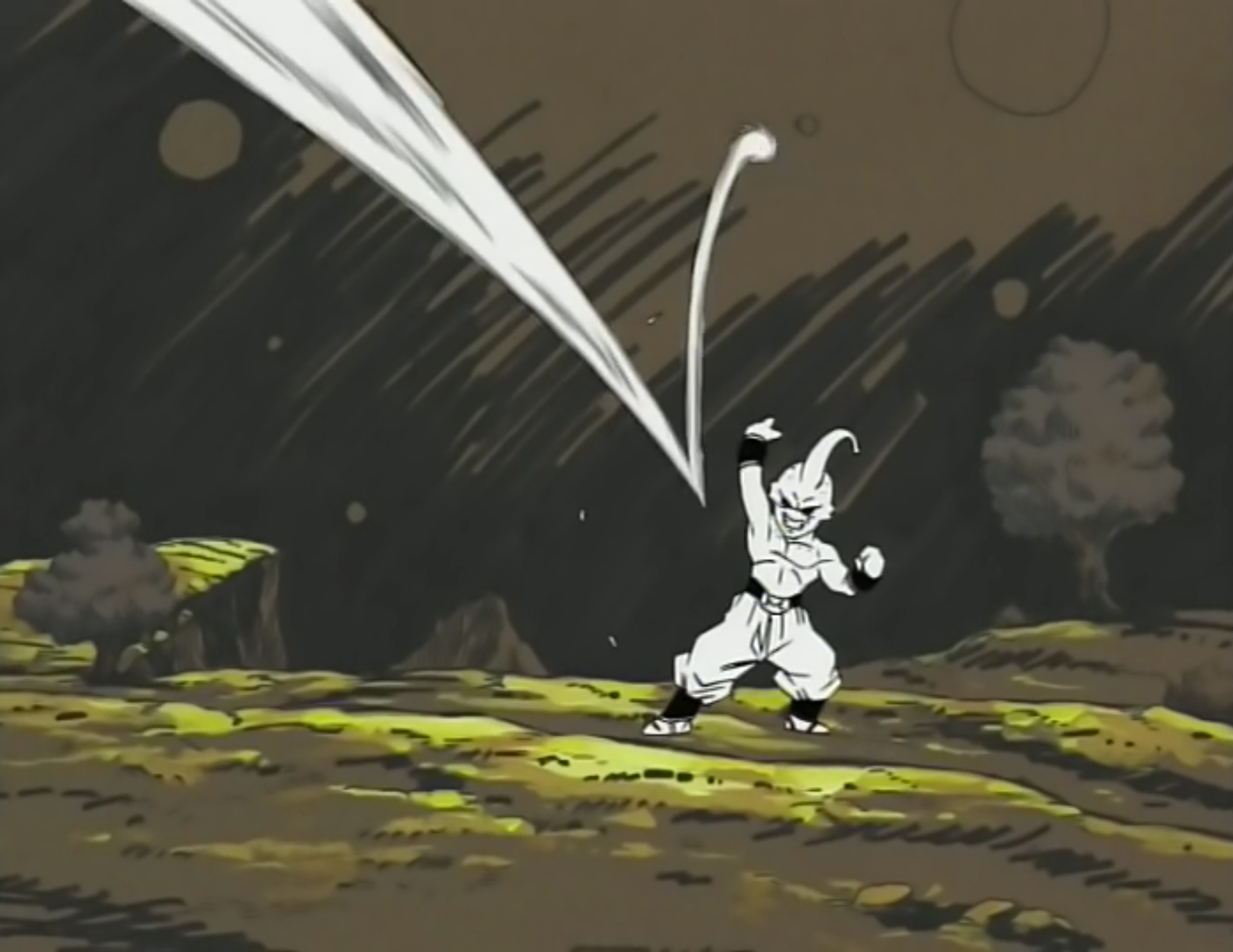
Some of you may be wondering when exactly this debate even started. Did it actually start in 1995, like I suggested? The answer to that is: sort of. I’ve found Usenet posts from as early as 1995 and 1996 that showed English-speaking fans had already begun to compare the different forms of Majin Buu. This shows the foundations of this debate were already in place following Dragon Ball‘s original run. I don’t know if this debate existed within Japan at that time, and only a single official source, Dragon Ball: Daizenshū 5 (which does not include the Kid Buu Saga), stated that any form other than Kid Buu was the strongest back then. What is clear though is that this debate gained significant traction following the Funimation dub of the Fusion Saga in 2002. So, while the foundation for this debate existed all the way back in 1995, I don’t think it exploded in intensity until American Gohan fans watched the Fusion Saga 7 years later.
I specify Gohan fans because this debate is inextricably linked to Gohan (Buu-HAN). Funimation took many liberties with their original dub (such as turning Goku into a superhero), and one of those was hyping Gohan up more than the Japanese version ever did. Another piece of evidence that points towards this debate starting in the United States is the fact that we are even discussing them as “Kid Buu” and “Buuhan” instead of “Majin Buu (Pure)” and “Majin Buu (Gohan Absorbed).” While the use of “Kid Buu,” for example, is a fan name that preceded the Funimation dub, it was also popularized by it, and Funimation even renamed episode 276 of Dragon Ball Z to “Evil Kid Buu!” Before “Kid Buu” stuck as Majin Buu (Pure)’s English name, names like “True Buu” and “Original Buu” were being floated within early Dragon Ball fan discussions. “Kid Buu” was even sometimes used to refer to Uub. French fans also refer to Kid Buu as “Kid Buu” despite his official French name being “Buu enfant.”







Here are examples from episodes 263 and 264 (Gohan vs. Super Buu) that highlight the difference in how Gohan is spoken of in the original Japanese and Funimation’s dub.
Narrator in Episode 263: “The ultra power of Super Gotenks had finally cornered Majin Buu. However, at the moment when he was about to finish him off, his fusion dissolved, and Gotenks returned to Trunks and Goten. Elsewhere, in the Kaiōshin Realm, Gohan finally completed his power-up.”
Funimation’s Narrator in Episode 263: “On the last episode of Dragon Ball Z, Gotenks, the super being formed by the fusion of Goten and Trunks, had achieved the level of Super Saiyan 3 and was giving Majin Buu the fight of his life. The seemingly invincible Buu had finally met his match. But when the fusion began to wear off and Gotenks had to power down, the situation went from bad to worse. Until finally, to their dismay, the duo came unraveled. But when it seemed that all was lost, Gohan completed his power-raising under the dubious guidance of the Elder Kai and unleashed a sample of his newfound ability. And just as his father had so many times before, Gohan arrived on Earth in the nick of time. After supplying him with a new uniform identical to Goku’s, Kibito left the new savior alone to contemplate his mission. Look out, Majin Buu! Here he comes.“
Piccolo in Episode 263: “…He has a different sort of ki than before, too.”
Funimation’s Piccolo in Episode 263: “…and your [Gohan’s] power has increased dramatically.“
Kibito in Episode 263: “Still, Kaiōshin-sama, when you first said you were going to bring Gohan-san to the holy region, the Kaiōshin realm, I was thinking, ‘What could come of this?’ … Yes. Not only did he pull out the legendary Z Sword, which even successive generations of Kaiōshin-sama were unable to do, but he also released the Elder Kaiōshin-sama that was sealed within it!”
Funimation’s Kibito in Episode 263: “[Gohan] is an extraordinary man. Who would have thought a mere mortal could have progressed so rapidly? It is amazing, and bringing him here was a brilliant move. … Yes. Finding a man who could remove the Z Sword was remarkable in itself, but when Gohan shattered the sword and released the Elder Kai, I realized then that we were witnessing a living legend.“
Narrator in Episode 264: “With the fusion being broken and as everyone began to wonder if this was the end of the Earth… At last, having completed his training in the Kaiōshin realm, Gohan had returned! Will the extraordinarily powered-up Gohan be able to completely defeat Majin Buu and become a true savior?”
Funimation’s Narrator in Episode 264: “On the last episode of Dragon Ball Z, an incredible force [Gohan] descended from the sky. Piccolo and the boys thought it was Goku, but it was none other than his son, Gohan! And with the confidence of his father, Gohan arrived at the scene to fight Majin Buu, the seemingly invincible enemy who had annihilated the entire population of the Earth. And without even transforming into a Super Saiyan, Gohan took control of the battlefield in commanding fashion. Yes, it was a nice day to subdue to the subduer, to destroy the destroyer. Majin Buu’s evil deeds had finally come back to haunt him. But is the battle really over?”
Super Buu in Episode 264: “Far, far, in a very far-away place, I felt a strong power.”
Funimation’s Super Buu in Episode 264: “Even while I was fighting, I could sense your power in a far-away place. I could feel it growing. I knew you’d be coming here. Opposites attract one another. (Chuckles) Yes, yes. I’ve been waiting for you the whole time.”

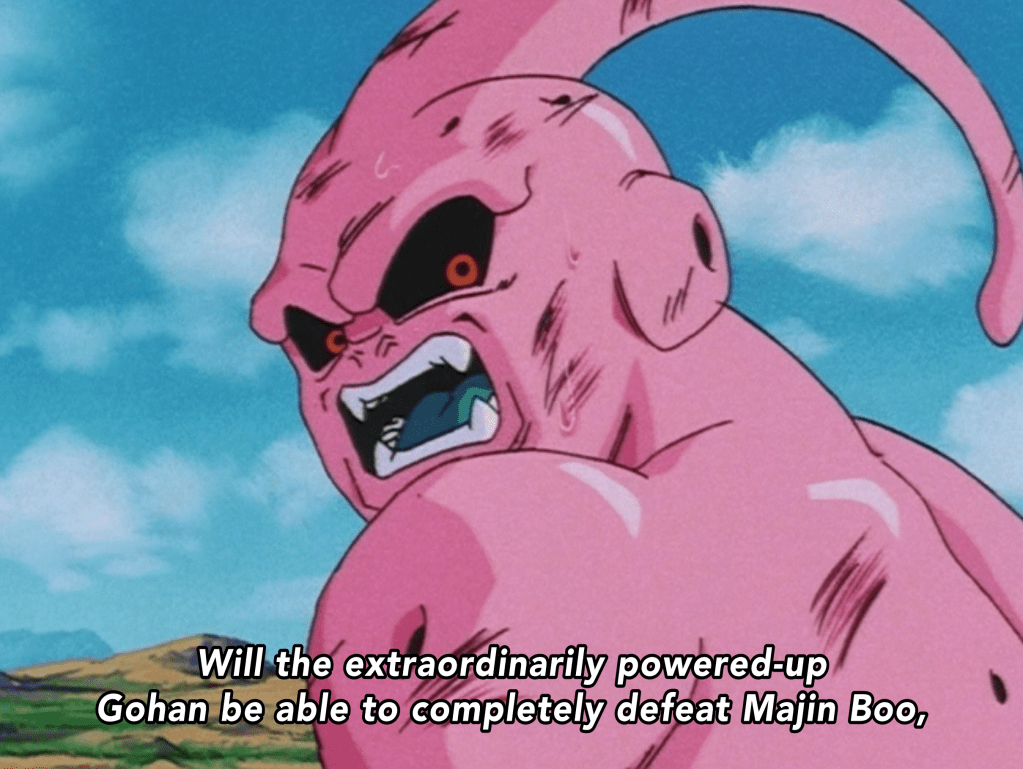
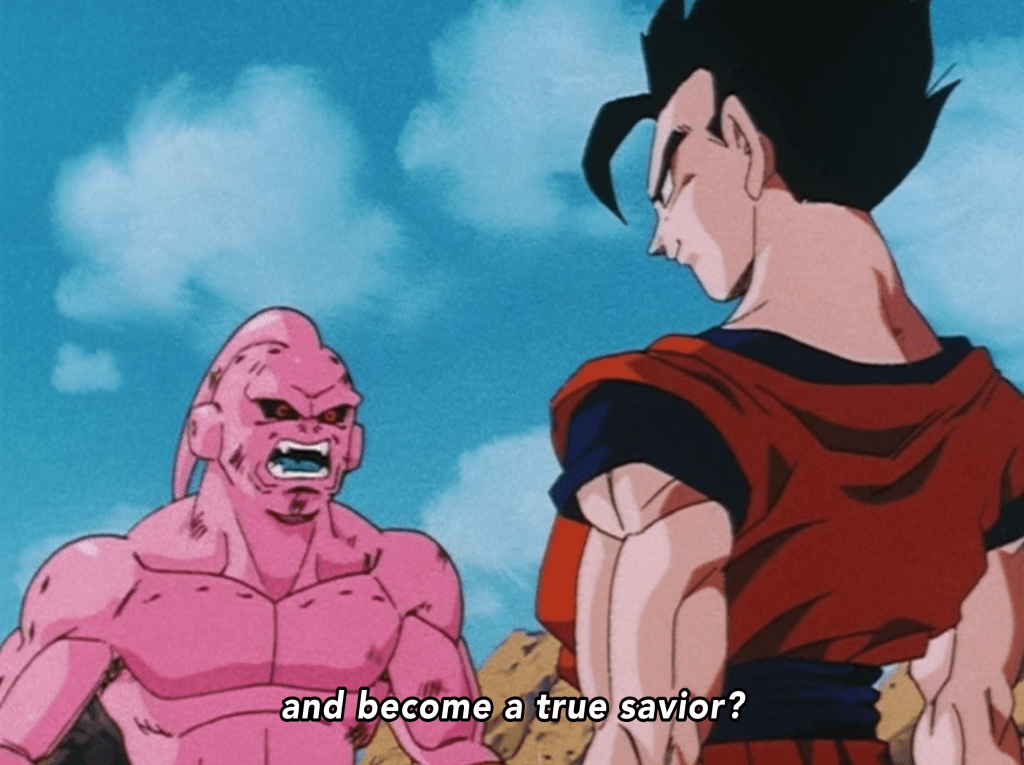

As shown with the official English translations of Dragon Ball chapters 470 (see below), 503 (see below), 508, 510 (see below), and 514, the English translation of the Dragon Ball Legends article on the official site, the information of mission 35 and Goku’s dialogue in mission 39 of Dragon Ball Z: Battle of Z, the English translation of Kid Buu’s entry in the Character Illustrations of Dragon Ball Z: Budokai Tenkaichi 3 and Dragon Ball Z: Ultimate Tenkaichi, the English translation of the Kid Buu card in Dragon Ball Z: Kakarot60, the English and French translation of Bulma’s Girl Talk comment on Kid Buu in Dragon Ball: Sparking! Zero, and in the Spanish translation of Le Manga de Légende (El Manga Legendario), some official translations alter (or completely delete) key sentences in such a way to make Kid Buu appear weaker than he is depicted in Japanese. In the case of chapter 470’s translation, Fat Buu is also downgraded. While in chapter 503, Buuhan’s threat is upgraded.
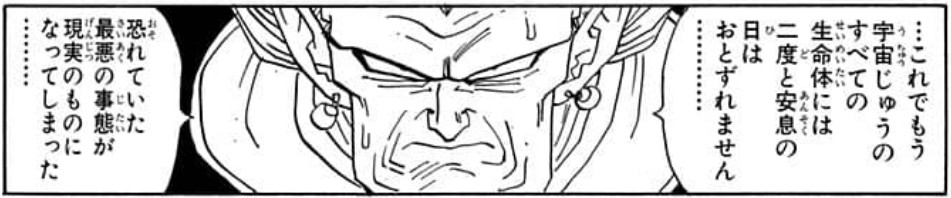
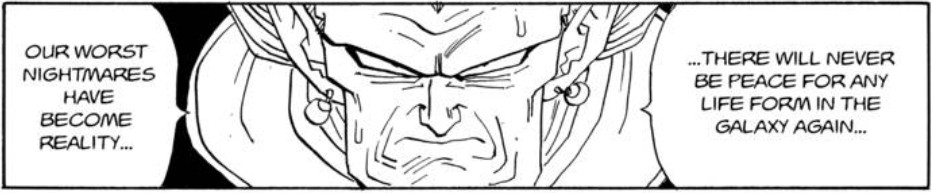
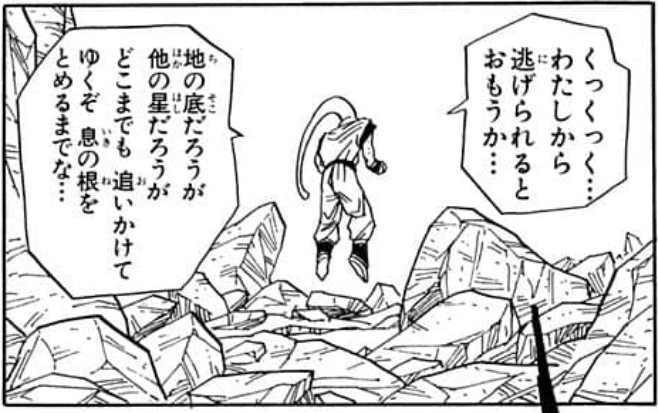
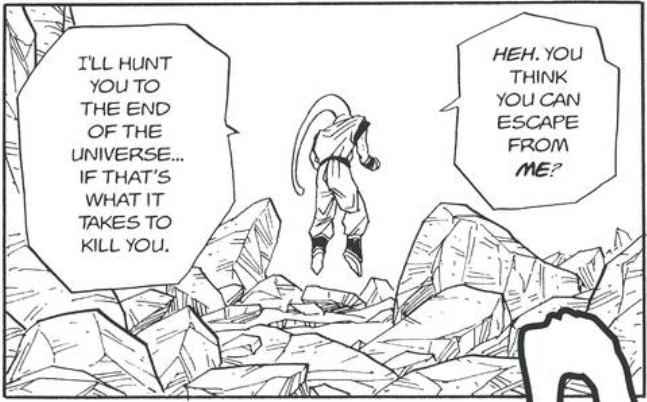
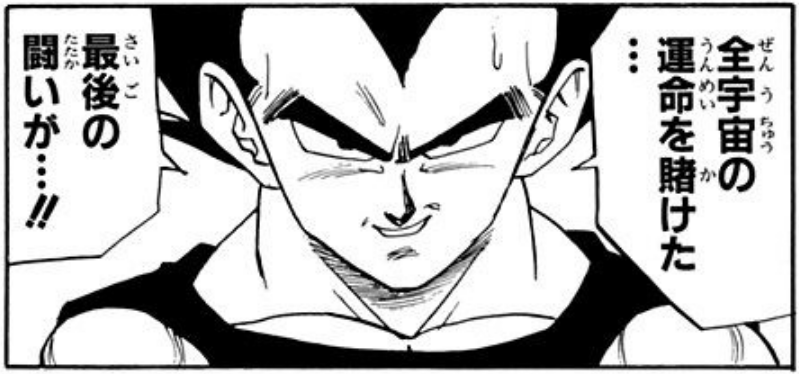
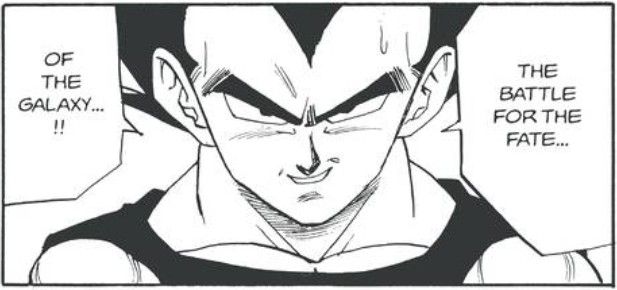
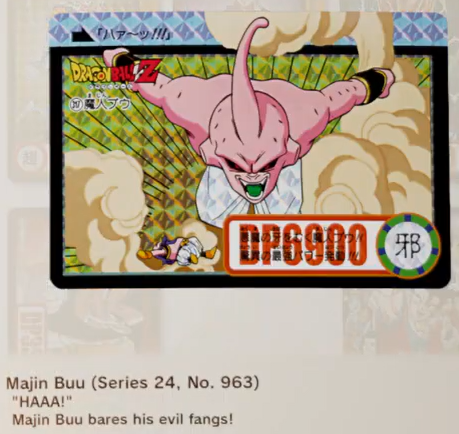
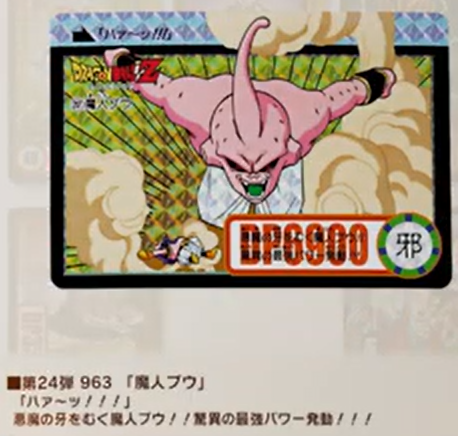
Kid Buu being downplayed is also the case in many of the official French translations, such as the Kanzenban and Full Color versions of chapter 508, Dragon Ball: Chōzenshū, and Dragon Ball Forever. The Hong Kong Tankōbon, Chinese Tankōbon, and Hong Kong Kanzenban also change the meaning of what Kibitoshin says in chapter 508, with one of them changing it to: “Although the power gained through absorption has disappeared, he has, because of this, returned to his true nature.” The Korean and Taiwanese translations seem to be faithful, but excluding them, the mistranslation issue seems to be a global problem. To be fair, there are also 3 examples of Kid Buu being presented as stronger in English than he is in Japanese. As stated previously, they are Dragon Ball Z: Budokai Tenkaichi 2 and 3 (even though the third game also downplays Kid Buu in English), and Super Dragon Ball Heroes: World Mission (which Kid Buu is stronger in anyway). However, the changes that make Kid Buu look weaker are more egregious than the changes that make Buuhan look weaker as they are written within official translations of the manga and guidebooks, instead of being limited to video games. The examples downplaying Kid Buu are also much more common than those that downplay Buuhan.
So essentially, my little conspiracy theory is that these American Gohan fans were (and still are) upset that Gohan lost to Majin Buu after getting a huge power-up, took to the internet to argue that Buuhan is the strongest in order to defend Gohan, and that this opinion has influenced how accurately some sentences about Kid Buu are now translated.61 I think it’s clear these strong feelings still exist because a brief look at the comment section of any online forum or post that even mentions Kid Buu will, without fail, have at least one Buuhan supporter calling Kid Buu supporters illiterate. Again: if you look at the evidence between 1995 and 2003 (when Funimation was well into the Buu Saga), ALL of it supports Kid Buu, except Daizenshū 5 (which, again, does not include the Kid Buu Saga). To summarize: this debate is technically 30 years old, but it likely didn’t explode in intensity until American Gohan fans watched the Funimation dub. These fans have either directly or indirectly influenced how accurately — or rather, inaccurately — lines about Kid Buu are now translated. In my opinion, Viz should completely retranslate Dragon Ball with a talented modern translator, such as Caleb Cook, rather than continue to use the translations done by a convicted criminal — to put it very mildly — who used horribly localized names like “Boo the Djinn” and “Vegerot.”
To be fair to those who may be upset at the conclusion of this article, while believing Buuhan is stronger than Kid Buu is not true, it follows a concept in literary criticism called “the Death of the Author,” wherein primacy is given to the readers’ interpretation of a work over the author’s intent. This is sometimes done purposefully, such as with the ending to The Sopranos. Other times this happens when the readers do not fully understand what they are reading, such as early fans of Frank Herbert’s Dune misinterpreting Paul Atreides as a hero. There are even times when what the readers want becomes canon, such as Marvel having Boba Fett survive the Sarlacc Pit in issue 81 of Star Wars (1977) only 7 months after he “died” in Return of the Jedi. This also even applies to Dragon Ball, as Vegeta was originally meant to die to Goku during the Saiyan Saga, but due to his immense popularity, was kept around. It’s fine if you want to still believe that Buuhan is the strongest, but it is important to do so with the understanding that the evidence overwhelming supports Kid Buu as the strongest, EVEN IN THE MANGA (Full Color edition, Sōshūhen edition, and Weekly Shōnen Jump).
So, do I truly believe this article will end Dragon Ball fans debating this for years to come? Of course not. To be honest, I don’t even expect people to read this entire article as it grew quite long after the months to years of research that went into it. My hope is that this article will help settle this debate between friends, as I know people may be unlikely to alter their beliefs when presented with any evidence that goes against them. You are free to share this article online, and I would also be grateful if you did, but if others start reacting callously to you, please don’t waste your time, energy, and sanity trying to engage them. In the end, this is a very niche subject in pop culture, and it’s not the end of the world if they don’t change their minds. Those that are inclined to read this article will, and those that aren’t won’t.
Some fan interpretations will draw a different conclusion by ignoring any and all evidence. So it’s important to understand how overwhelming the evidence they are ignoring actually is and thus why this article was so exhaustive in its research.
The evidence in favor of Kid Buu come from:
- Akira Toriyama
- Chio Dragon Ball Z Card Game
- Data Carddass Dragon Ball Z 1
- Data Carddass Dragon Ball Z 2
- Dr. Mashirito’s Ultimate Manga Techniques
- Dragon Ball Carddass
- Dragon Ball Carddass Remix
- Dragon Ball: Chōzenshū 1
- Dragon Ball: Chōzenshū 3
- Dragon Ball: Daizenshū 2
- Dragon Ball: Daizenshū 8
- Dragon Ball: Daizenshū 10
- Dragon Ball Sōshūhen — Super Goku Legend
- Dragon Ball: Full Color
- Dragon Ball GT: Final Bout
- Dragon Ball GT: Perfect File 1
- Dragon Ball: Jumbo Carddass
- Dragon Ball Kai (anime)
- Dragon Ball Kai Miracle Battle Carddass
- Dragon Ball Kai: Ultimate Butōden
- Dragon Ball Legends
- Dragon Ball Online
- Dragon Ball PP Cards
- Dragon Ball: Sparking! Zero
- Dragon Ball Staks
- Dragon Ball Super (anime)
- Dragon Ball Super (manga)
- Dragon Ball: Super Battle Carddass
- Dragon Ball Super Divers
- Dragon Ball: Super Exciting Guide: Story Volume
- Dragon Ball: The Breakers
- Dragon Ball Xenoverse 2
- Dragon Ball Z (anime)
- Dragon Ball Z: Battle Taikan Kamehameha — Omee to Fusion
- Dragon Ball Z: Battle Taikan Kamehameha 2 — Ossu Omee Gokū Tenkaichi Budōkai
- Dragon Ball Z: Bucchigiri Match
- Dragon Ball Z: Budokai 2
- Dragon Ball Z: Budokai 3
- Dragon Ball Z: Buu’s Fury
- Dragon Ball Z Collectible Card Game
- Dragon Ball Z: Dragon Box (English and Japanese)
- Dragon Ball Z: Infinite World
- Dragon Ball Z: Kakarot
- Dragon Ball Z: Kid Buu Saga Boxset
- Dragon Ball Z: Scouter Battle Taikan Kamehameha — Ora to Omee to Scouter
- Dragon Ball Z: Season 9 Booklet
- Dragon Ball Z: Shin Budokai
- Dragon Ball Z: Shin Budokai Another Road
- Dragon Ball Z: The Legend
- Dragon Ball Z TV Animation Comics
- Dragon Ball Z Volume #47
- Dragon Ball Z: W Bakuretsu Impact
- Le Manga de Légende
- Saikyō Jump
- Shonen Jump (English)
- Spring 1996 Toei Anime Fair (Path to Power) pamphlet
- Super Dragon Ball Heroes (anime)
- Super Dragon Ball Heroes Carddass
- Super Dragon Ball Heroes: World Mission
- Toonami
- Toyotarō
- TV Anime Guide: Dragon Ball Z Son Goku Densetsu
- V-Jump
- Weekly Shōnen Jump
- Weekly Shōnen Jump 50th Anniversary Dragon Ball Best Scenes Top 10
They are the creator of Dragon Ball, the co-creator of Dragon Ball Super, 4 anime series, 34 games, 12 guidebooks, 4 manga magazines, 4 manga series, 1 television programming block, and 3 video collections.
If we refine this to evidence that has nothing to do with the anime and nothing to do with Dragon Ball sequels (Super, Daima, etc.), the evidence in Kid Buu’s favor are: Akira Toriyama, Dr. Mashirito’s Ultimate Manga Techniques, Dragon Ball: Chōzenshū 1, Dragon Ball: Daizenshū 2, Dragon Ball Sōshūhen — Super Goku Legend, Dragon Ball: Full Color, Dragon Ball: Super Exciting Guide: Story Volume, Le Manga de Légende, Saikyō Jump, Shonen Jump (English), V-Jump, Weekly Shōnen Jump, and Weekly Shōnen Jump 50th Anniversary Dragon Ball Best Scenes Top 10.
The evidence in favor of Buuhan come from:
- Dragon Ball Card Game
- Dragon Ball Chōgashū: Super Art Collection
- Dragon Ball: Daizenshū 5
- Dragon Ball Heroes: Ultimate Mission
- Dragon Ball Heroes: Ultimate Mission 2
- Dragon Ball IC Carddass
- Dragon Ball Lamincards
- Dragon Ball: Raging Blast
- Dragon Ball: Super Warrior Sticker Wafer Z
- Dragon Ball Z Anime Kids Comic (Spanish)
- Dragon Ball Z: Bakuretsu Impact
- Dragon Ball Z: Budokai Tenkaichi
- Dragon Ball Z: Budokai Tenkaichi 2
- Dragon Ball Z: Budokai Tenkaichi 3
- Dragon Ball Z: X Keeperz
- Dragon Ball Z Kai: Dragon Battlers
- Dragon Ball Z: Legendary Super Warriors
- Dragon Ball Z: Tenkaichi Tag Team
- Jumputi Heroes
They are 15 games, 2 guidebooks, 1 children’s book, and 1 sticker collection.
If we refine this to evidence that has nothing to do with the anime and nothing to do with Dragon Ball sequels (Super, Daima, etc.), the evidence in Buuhan’s favor is only Dragon Ball Chōgashū: Super Art Collection, which also is likely referring to Majin Buu as a whole.
In summary, the evidence for Kid Buu being stronger than Buuhan and for Goku being stronger than Gohan is overwhelming, remarkably consistent, and undeniable. To argue otherwise is not fact-based as it requires one to reject virtually all Dragon Ball content ever created, including statements from Akira Toriyama. Excluding Vegito, Toriyama and Shueisha have repeatedly affirmed over the past 30 years that both Goku and Kid Buu were the strongest.
Did I miss something? Was something new released? Let me know in the comments! The images from Dragon Ball Chōgashū: Super Art Collection, Dragon Ball: Extreme Battle Collection: Round 02, Dragon Ball GT DVD Box Set Dragon Book, the Dragon Ball GT: Perfect Files, the Dragon Ball: Super Exciting Guides, and the Dragon Ball Super: Super Hero booklet, and some of the Japanese translations and insights were provided by anonymous sources to protect their privacy. The information in this article has been verified many times over, so please do NOT contact me for a correction unless you are absolutely sure a mistake was made. Thank you to everyone who read and shared this article!
If you liked this Deep Dive, please consider supporting me on Ko-fi or Patreon. Your support would help free up my time so that I can focus on this website. Subscribers on Patreon get to chat with me, vote on future Deep Dives, get sneak peeks at upcoming content, get to see every update I make to the website, and more. Thank you!
- The website itself says as much. ↩︎
- One critic of this article asked how I came to the conclusion that these sources are based on the anime because this critic did not click on the links provided. Everything mentioned in this article either has a link for you to click on or has the pictures provided. I fully encourage every reader to fully engage with everything provided. Many of the links were quite difficult to find, so I would actually really appreciate it if you clicked on them. If your intent is to critique or otherwise critcize this article, I will expect you to first engage with its content. ↩︎
- The first image is from http://www.dragonballcn.com/ and was shared with me by xenoverse2015 on Bluesky. ↩︎
- In the official English translation, Buuhan does say “being,” but he says “Majin” in Japanese. ↩︎
- Obrigado to xenoverse2015 on Bluesky for finding this. ↩︎
- Thanks to my patron on Patreon, MrPerfectCell, for sharing this book with me. ↩︎
- Obrigado to xenoverse2015 on Bluesky for originally finding a link that shared this before I bought the pamphlet itself. ↩︎
- Obrigado to xenoverse2015 on Bluesky for having me re-check the Dragon Ball 590 Quiz Book. ↩︎
- The description for Goku changes a little with the different introductions of the episodes. For example: episode 6 doesn’t use the word “strongest” when describing Goku. ↩︎
- Panzy and Kaiōshin do not literally say the words for “strength” or “strong” here. My Japanese is not good, so please leave a comment in this article to correct me if I’m wrong, but this is what I heard them say:
Panzy:「あいつで、すごい奴なんどやな。」
Kaiōshin: 「私の知る限りでは、宇宙一かと。」
If my transcription is correct, this is what it literally translates to:
Panzy: “That guy is an amazing one, isn’t he?”
Kaiōshin: “As far as I know, he is number one in the universe.”
This is an example of why localization is important. Japanese speakers will most likely understand this as referring to Goku’s power or strength. In context, what else is there for Panzy to really find amazing about Goku anyway? So changing the words here to “strongest” is not actually a mistranslation, but rather a way for English speakers to understand the sentences better. For example: let’s say you have a Korean colleague and they say to you, “힘들어…” If we translate this literally, it means “Energy stops…” This is nonsense in English. Why would they say that? 힘들어 in English, in this context, would translate better as “I’m exhausted” or “[Whatever situation we’re in] is too difficult.” This is why localization is so important. For another example: let’s say a French person wants to say the number 80, which is “quatre-vingt” in French. If they translate this literally into English, it would be “4-20.” An English speaker would most likely assume they are referring to something else entirely if they said that. So, while there are definite examples of works being translated incorrectly (which is referenced in the Conclusion), you can’t always just translate words one-to-one between languages, and this is especially true between European and Asian languages. ↩︎ - Obrigado to xenoverse2015 on Bluesky for finding this. ↩︎
- Obrigado to xenoverse2015 on Bluesky for sharing this link. ↩︎
- Thanks to my patron on Patreon, MrPerfectCell, for sharing this book with me. ↩︎
- Obrigado to xenoverse2015 on Bluesky for finding this. ↩︎
- Obrigado to xenoverse2015 on Bluesky for having me check this. ↩︎
- Obrigado to xenoverse2015 on Bluesky for finding the original links. ↩︎
- Obrigado to xenoverse2015 on Bluesky for having me recheck this page. ↩︎
- Thanks to user Juub on Fanverse for mentioning this. ↩︎
- Hvala to Jovan for pointing me in the right direction to find this. ↩︎
- However, page 87 also clarifies that Kai Kai can’t move between lower worlds, ex: moving from Earth to New Namek. ↩︎
- Thanks to Mark on Bluesky for sharing this image with me. ↩︎
- Obrigado to xenoverse2015 on Bluesky for sharing the DBK, Tankōbon, and Toei links. ↩︎
- Merci to Majin Facts on YouTube for sharing pictures of this book with me. ↩︎
- Obrigado to xenoverse2015 on Bluesky for sharing the first link. ↩︎
- Goku says here what would literally be translated as “amazing,” (You can see it in the picture, too.) but it’s important to understand that “amazing” here is used with reference to strength. Obrigado to xenoverse2015 on Bluesky for finding this link that confirms that. ↩︎
- Merci to Majin Facts on YouTube for sharing pictures of this book with me. ↩︎
- Thanks to Weeaboo Warrior on YouTube for sharing this idea with me. ↩︎
- Obrigado to xenoverse2015 on Bluesky for finding this. ↩︎
- The most vocal critics of this article always ignore this sentence. I added this footnote just to put extra emphasis onto it. You will also notice that video games are mentioned exactly once before this section where I write of Toriyama’s involvement with Dragon Ball Online. ↩︎
- Many people in this debate ignore Koyama’s response to user @Kenji_Toon here and only use his first tweet. This could be done out of ignorance, but from what I’ve personally seen online is that it’s done in bad faith. Some people who support Buuhan try to suppress as much evidence as they can for Kid Buu. This section about official Dragon Ball media does the exact opposite. I am showing you absolutely everything and have included placeholder paragraphs acknowledging the gaps that exist. ↩︎
- Koyama’s opinions on power should be taken with a grain of salt. Even though he is indicating that he thinks Toriyama believes Kid Buu is the strongest here, Koyama also tweets things like, “In my own interpretation of the Dragon Ball world (up to Z), Broly is the strongest warrior.“ This is why he no longer has an asterisk next to his point. ↩︎
- Thanks to Weeaboo Warrior on YouTube for pointing out the Scouter mechanics to me. ↩︎
- One criticism this article receives is that I am “attempting to force” an interpretation on the reader. This book is such an example. It could mean that Majin Buu as a whole is the “greatest enemy,” or it could mean that Super Buu and his various forms are. I am including all relevant sources to be as unbiased as possible. ↩︎
- Merci to Jordan for finding this statement. ↩︎
- Obrigado to xenoverse2015 on Bluesky for making me recheck this book. ↩︎
- Obrigado to xenoverse2015 on Bluesky for making me recheck this book. ↩︎
- Obrigado to xenoverse2015 on Bluesky for finding this. ↩︎
- Obrigado to xenoverse2015 on Bluesky for finding this. ↩︎
- Merci to Kenji for finding this. ↩︎
- Obrigado to xenoverse2015 on Bluesky for finding this. ↩︎
- Obrigado to xenoverse2015 on Bluesky for finding this. ↩︎
- Obrigado to xenoverse2015 on Bluesky for finding this. ↩︎
- Obrigado to xenoverse2015 on Bluesky for having me replay Budokai 2. ↩︎
- Obrigado to xenoverse2015 on Bluesky for suggesting I look at the Japanese dialogue. ↩︎
- Obrigado to xenoverse2015 on Bluesky for finding this. ↩︎
- Merci to Jerycolt on Bluesky for finding this. ↩︎
- Merci to Yondaine for finding this. ↩︎
- Merci to Kenji for sharing this with me. ↩︎
- Grazie to Dragon Ball – Canale Italiano on YouTube for sharing this with me. ↩︎
- Grazie to Dragon Ball – Canale Italiano on YouTube for sharing this with me. ↩︎
- Obrigado to xenoverse2015 on Bluesky for finding the second quote. ↩︎
- Obrigado to xenoverse2015 on Bluesky for finding the January 1996 issue. ↩︎
- Merci to Majin Facts on YouTube for finding this, and Jerycolt on Bluesky for sharing this with me. ↩︎
- Gohan also breaks the fourth wall during the Great Saiyaman story arc twice. The first is on page 15 of chapter 424 when he tells a bad guy that he’ll reveal his identity on the next page in Japanese or the next chapter in English. The second is on page 8 of chapter 426 when he speaks directly to the reader to explain that Kuririn grew his hair out. ↩︎
- My favorite inconsistency in Dragon Ball comes from chapter 17. Goku’s Nyoibō (Power Pole) extends all the way to the Moon and Goku brings the Rabbit Mob there. In later chapters, we find out that Goku can’t survive in outer space, despite him doing so already. Kame-Sennin later kills the Rabbit Mob unintentionally when he blows up the Moon in chapter 51. ↩︎
- I am leaving open the possibility that there is a card game or something where the Southern Kaiōshin Buu is presented as being stronger than Kid Buu. I did not look at games when researching this form of Majin Buu. ↩︎
- Just as an anecdote, I am obviously a highly engaged fan and I use YouTube daily, but I have never even seen a single poll related to this debate (as of February 18, 2026). So the sample population who participate in these polls is a lot less representative of actual fan consensus than some may understand. ↩︎
- Both pictures come from the same entry in the Z-Encyclopedia of Dragon Ball Z: Kakarot. Even without knowing Japanese, it’s clear that the third sentence — stating that Kid Buu has the ultimate or strongest power — was completely removed from the English translation. The English screenshot is from West Coast Games and the Japanese screenshot is from ムツゲーム【レベルファイブ公認総合アンバサダー】on YouTube. ↩︎
- I just wanted to add a footnote here to address my own biases and make them known. I am obviously also a human who is subject to biased judgements. I remember seeing this debate maybe once or twice before the spring of 2024, but it wasn’t until then that I really took an interest in it. If you asked me before that time who I thought was the strongest, I would have said Kid Buu, but this would be because I never once thought about it. But during that spring, I read a lot of convincing threads and comments on Reddit that were extremely adamant about not only Buuhan, but also Super Buu being stronger than Kid Buu. Their points made sense to me, so then I started to agree with them. But then, a downvoted comment on Reddit made the argument that Toriyama and the people responsible for creating Dragon Ball are the ones who get to decide what’s true for their story. Inspired by that comment, I decided I would research what exactly is said about both of these forms. So my opinion went from: Kid Buu is the strongest (using just my vague memory of DBZ) to Buuhan (due to Reddit overwhelmingly favoring him at that time) to Kid Buu again (after reviewing hundreds of sources). Because I invested so much time (and money ㅜㅜ) into this article and included every single argument in favor of Buuhan, I like to think that this was made as objectively as an article of this nature could be made. If you disagree, that’s fine, no one is perfect. But, there is literally nothing on the Internet in any language that even approaches the depth of this article regarding this debate. ↩︎

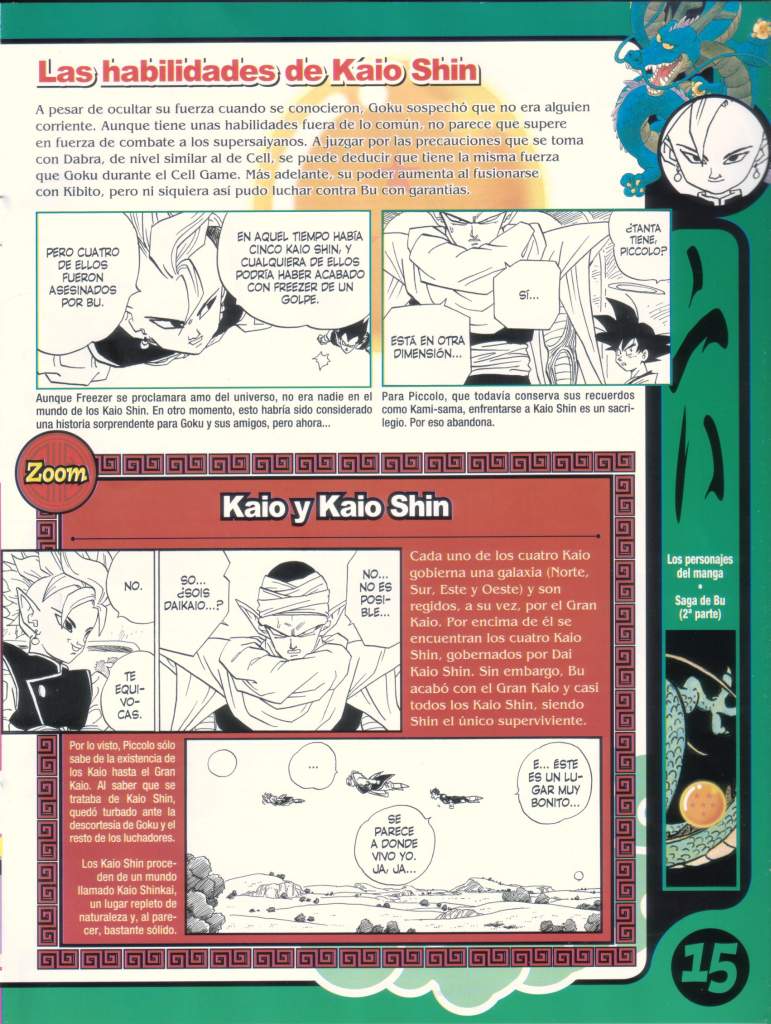

Leave a reply to Daniel Cancel reply